cheap wine that gets you drunk is any low-cost bottle around 12%–14% ABV that delivers alcohol efficiently, not a special category. Alcohol content, serving size, drinking speed, food intake, and body weight matter more than the price tag.
A $7 California red at 13.5% ABV can contain the same alcohol per 5-ounce pour as a $40 bottle. Sweetness can make fast drinking easier, while boxed wine can hide portion size because glasses are refilled casually.
This guide explains which inexpensive wines tend to hit hardest, how many standard drinks are in common bottles, and how to avoid unsafe choices while still buying on a tight budget.
What Cheap Wine ABV Actually Means
ABV means alcohol by volume: the percentage of a wine that is pure ethanol. A cheap bottle is not automatically stronger. Price mostly reflects production, branding, packaging, region, and taxes, not intoxication potential.
For intoxication, ABV matters because it changes how much alcohol is in each pour. A 5-ounce serving of 12% wine contains meaningfully less alcohol than the same pour of 15% wine.
In the U.S., table wine usually falls around 11% to 14.5% ABV. Fortified wines such as Port or Sherry are higher, often 17% to 20% ABV. Moscato, many rieslings, and some boxed wines can sit lower, around 5.5% to 10% ABV.
ABV does not tell the whole story. Glass size, refill habits, carbonation, sweetness, body weight, food intake, and drinking speed all affect how drunk someone feels. Still, ABV is the cleanest label number for comparing bottles.
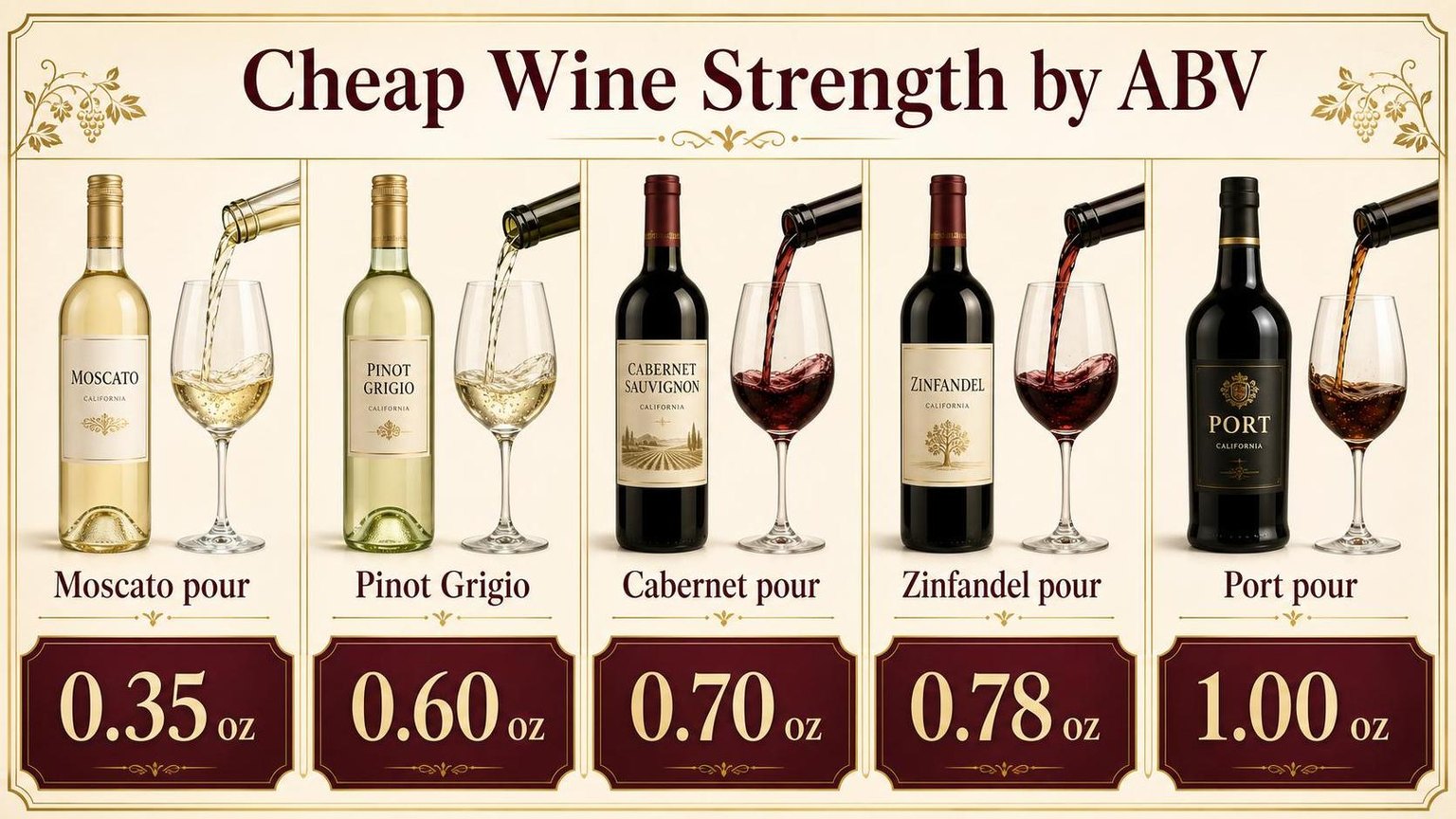
| Wine style | Typical ABV | Pure alcohol in 5 oz pour |
| Low-alcohol Moscato | 7% | 0.35 oz |
| Typical Pinot Grigio | 12% | 0.60 oz |
| Typical Cabernet Sauvignon | 14% | 0.70 oz |
| High-ABV Zinfandel | 15.5% | 0.78 oz |
| Fortified Port | 20% | 1.00 oz |
That difference adds up fast over a full bottle. A standard 750 mL bottle equals about 25.4 fluid ounces, or roughly five 5-ounce pours. At 12% ABV, that bottle contains about 3.0 fluid ounces of pure alcohol. At 15%, it contains about 3.8 ounces.
| Bottle size | ABV | Approximate pure alcohol in bottle |
| 750 mL | 10% | 2.5 oz |
| 750 mL | 12% | 3.0 oz |
| 750 mL | 14% | 3.5 oz |
| 750 mL | 15% | 3.8 oz |
For context, the U.S. standard drink contains about 0.6 fluid ounces of pure alcohol. That means one 5-ounce pour of 12% wine is about one standard drink. A 5-ounce pour of 15% wine is about 1.25 standard drinks.
Cheap wine labels can legally vary from the stated ABV by a limited margin, depending on category and federal labeling rules. That means a bottle labeled 12% is useful for comparison, but not a precision instrument.
- Lower ABV wines usually intoxicate more slowly per glass.
- High-ABV bargain reds often deliver more alcohol without looking stronger.
- Boxed wine can be cost-efficient, but the ABV is often average, not extreme.
- Sweetness can mask alcohol, making stronger cheap wine easier to overdrink.
If the goal is understanding strength, ignore the price tag first. Check ABV, serving size, and bottle volume, because those three numbers explain far more than “cheap” ever will.
Why Fortified Wine Hits Harder
Fortified wine hits harder because it contains more alcohol in every pour than standard table wine.
Port, sherry, madeira, and marsala are made by adding distilled grape spirit, which raises alcohol by volume and concentrates the effect of each glass.
Most table wines land around 11% to 14% ABV. Fortified wines usually sit between 15% and 22% ABV, so the same small glass delivers substantially more ethanol.
That difference matters fast. In the US, one standard drink contains about 14 grams of pure alcohol, and fortified wine reaches that threshold in a smaller serving.
| Drink type | Typical ABV | Serving | Pure alcohol |
| Table wine | 12% ABV | 5 oz | 0.6 oz ethanol |
| Table wine | 14% ABV | 5 oz | 0.7 oz ethanol |
| Fortified wine | 18% ABV | 3.5 oz | 0.63 oz ethanol |
| Fortified wine | 20% ABV | 3.5 oz | 0.7 oz ethanol |
The math is simple: ounces multiplied by ABV equals ounces of pure alcohol. A 3.5-ounce pour at 20% ABV contains about the same ethanol as a 5-ounce pour of 14% wine.
Fortified wine can also feel easier to overdrink because the serving size looks small. People often pour it like regular wine, not like the 2.5- to 3.5-ounce portion commonly used for stronger dessert and aperitif styles.
Sweetness changes perception too. Ruby Port, cream sherry, and some marsala styles carry noticeable residual sugar, which can mask alcohol heat and make the wine taste softer than its strength suggests.
How fortification is done also affects the final style. In Port, spirit is often added during fermentation, stopping yeast early and leaving natural grape sugar behind while pushing alcohol to roughly 19% to 20% ABV.
Dry sherry works differently. Fermentation finishes first, then the wine is fortified, but many bottles still land around 15% to 18% ABV, above most table wines.
- Higher ABV means more alcohol per sip.
- Smaller traditional pours are easy to ignore at home.
- Sweetness can hide strength.
- Cheap fortified bottles often deliver more alcohol per dollar than standard wine.
That is why fortified wine “hits harder.” It is not mysterious. It is stronger by volume, often sweeter on the palate, and easy to pour too generously.
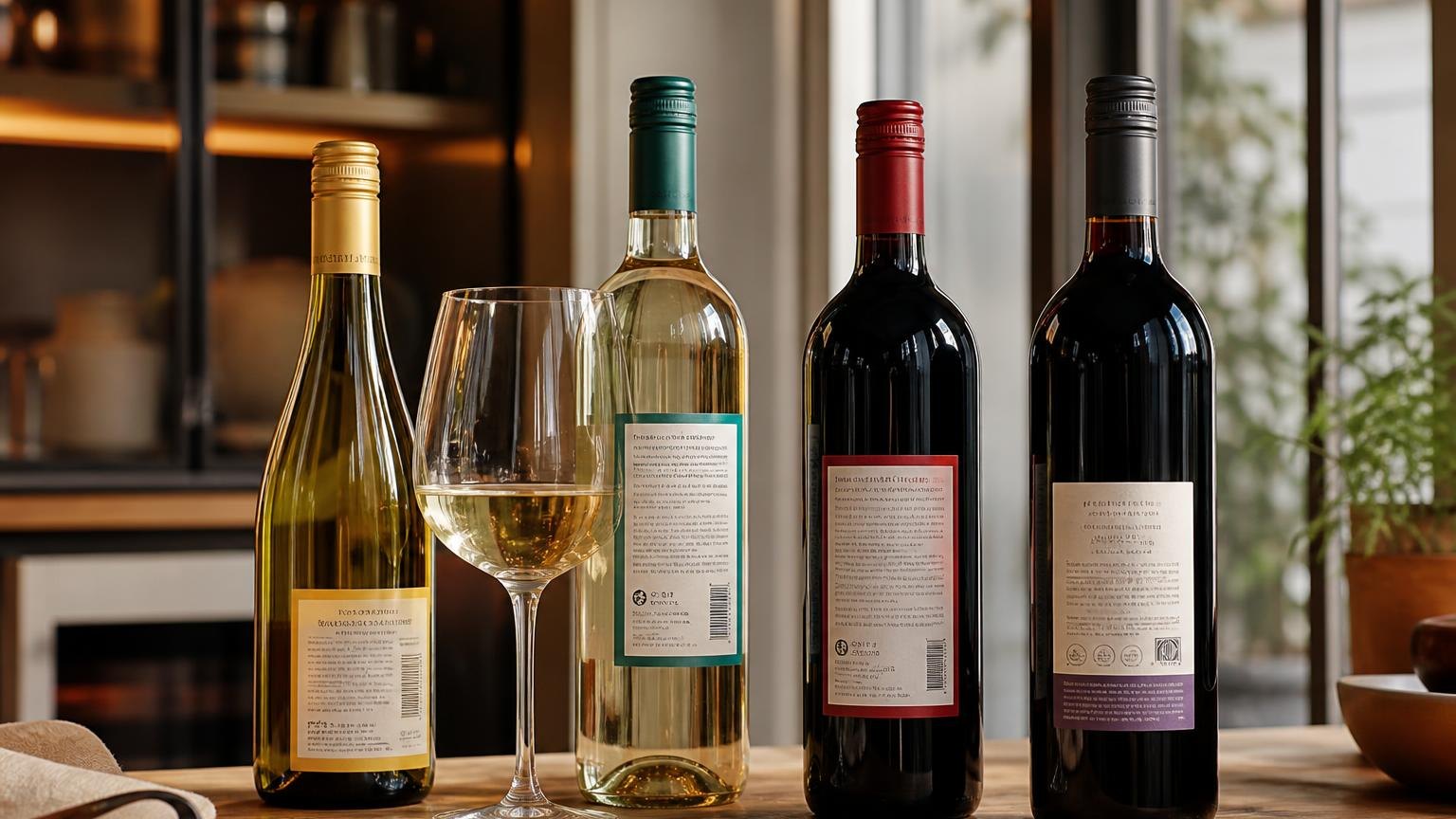
Lowest Cost Per Standard Drink
“Cheap” changes fast when you price wine by standard drinks, not shelf price. In the U.S., one standard drink contains 0.6 fluid ounces of pure alcohol, so larger, higher-ABV bottles usually win on value.
The best bargain is often boxed wine or a large-format bottle with moderate alcohol. Tiny bottles, premium packaging, and low-ABV styles cost more per drink even when the sticker price looks low.
Use this formula: bottle volume in milliliters × ABV × 0.0338 = fluid ounces of pure alcohol. Then divide by 0.6 to estimate standard drinks, and divide shelf price by that number.
| Format | ABV | Price | Pure alcohol (fl oz) | Approx. standard drinks | Cost per standard drink |
| 750 mL bottle | 12% | $6 | 3.04 | 5.1 | $1.18 |
| 1.5 L bottle | 13% | $10 | 6.59 | 11.0 | $0.91 |
| 3 L box | 12.5% | $18 | 12.68 | 21.1 | $0.85 |
| 750 mL fortified wine | 17% | $8 | 4.31 | 7.2 | $1.11 |
A 3-liter box usually delivers the lowest cost per standard drink. It contains four 750 mL bottles’ worth of wine, so packaging and shipping costs are spread across far more alcohol.
Fortified wine can also score well because of its higher ABV. An $8 bottle at 17% ABV beats a $6 table wine at 12% ABV on drinking power, even though the shelf price is higher.
Dryness does not determine intoxication. Sugar changes taste and calories, but ABV and total volume determine how much ethanol you get for the money.
Look for a few signals on the label and shelf tag before buying:
- ABV around 12.5% to 14% for regular table wine gives solid value without jumping into dessert-wine sweetness.
- 1.5 L bottles and 3 L boxes usually beat 750 mL bottles on cost per drink.
- Avoid mini bottles and single-serve cans if the goal is lowest cost.
- Check state alcohol taxes and control-state pricing, which can change the math.
For fast buying, compare only two numbers: total price and total standard drinks. The lowest cost per standard drink is the cheapest way to buy wine alcohol, regardless of whether the package looks budget or premium.
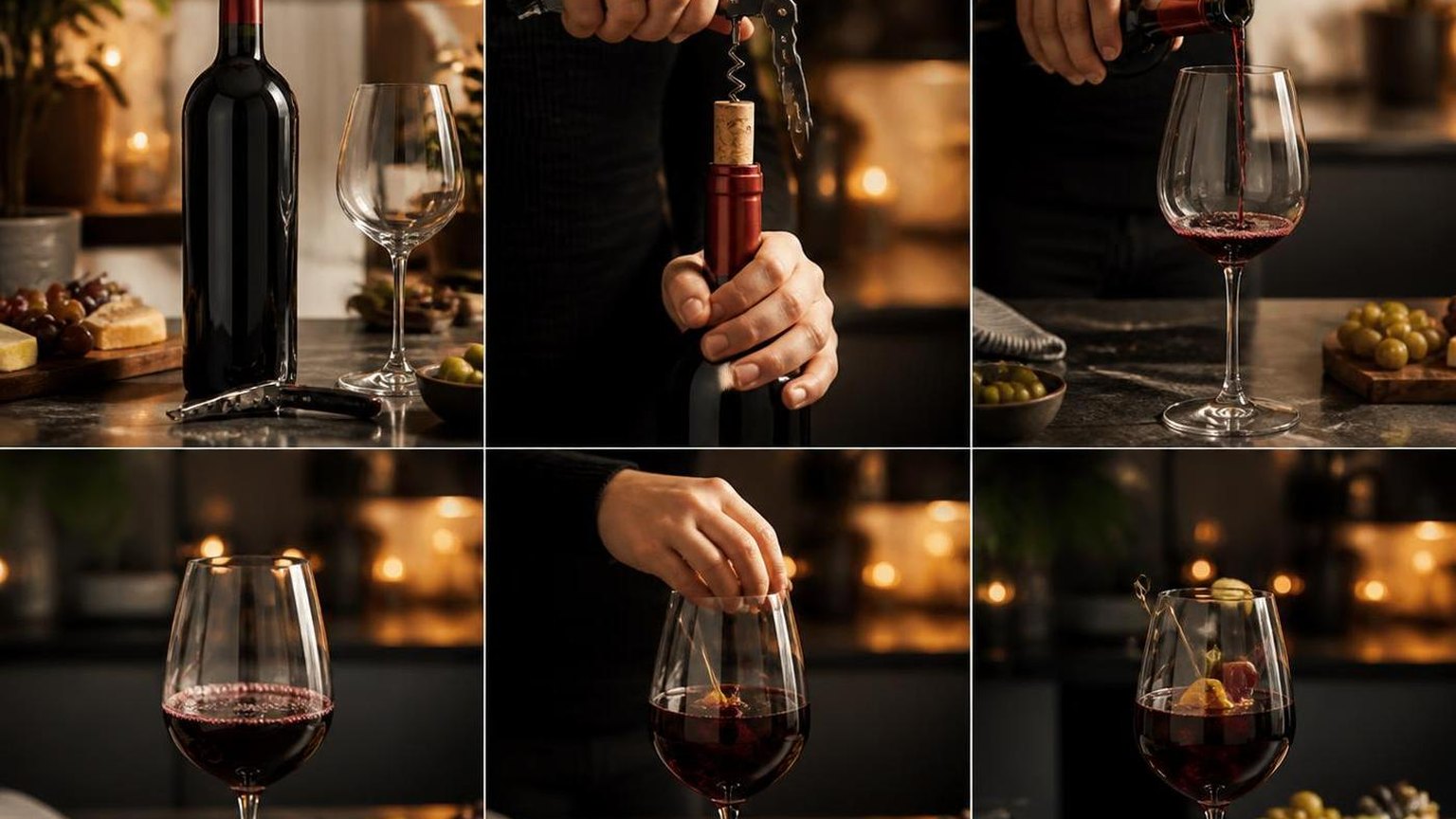
Box Wine Versus Bottled Bargains
Box wine usually wins on cost per glass. A standard 3-liter box holds 4 standard 750 mL bottles, so the shelf price often looks higher while the actual price per ounce is lower.
Bottled bargains can still make sense when the bottle is deeply discounted or when you want better control over how much you open. The practical difference is volume, oxidation, and alcohol per dollar.
A 750 mL bottle contains about 25.4 ounces. At 12.5% ABV, that equals roughly 3.18 ounces of pure alcohol before serving losses.
A 3-liter box contains about 101.4 ounces. At the same 12.5% ABV, that is roughly 12.68 ounces of pure alcohol, exactly four times a 750 mL bottle because the volume is four times larger.
| Format | Wine volume | Equivalent bottles | ABV example | Pure alcohol |
| Budget bottle | 750 mL | 1 | 12.5% | 93.75 mL |
| Standard box | 3,000 mL | 4 | 12.5% | 375 mL |
Price is where boxes usually pull ahead. Many national box brands land around $16 to $25 for 3 liters. Cheap bottled wine often lands around $5 to $8 per 750 mL.
| Purchase | Total price | Total volume | Price per 750 mL | Price per ounce |
| 3 L box at $20 | $20 | 3,000 mL | $5.00 | $0.20 |
| 4 cheap bottles at $6 each | $24 | 3,000 mL | $6.00 | $0.24 |
| 4 cheap bottles at $8 each | $32 | 3,000 mL | $8.00 | $0.32 |
If the goal is the most alcohol for the fewest dollars, compare ABV and total volume, not package style. A 3-liter box at 13% ABV beats a 750 mL bottle at 11% ABV on both total alcohol and value.
Freshness matters too. A sealed bottle is best within a few days after opening. A bag-in-box system limits oxygen exposure, so many producers state the wine stays usable for about 3 to 6 weeks after opening.
- Choose box wine when price per ounce matters most and you want several days or weeks of pourable wine.
- Choose bottled bargains when the discount is steep, the ABV is higher, or you want portion control.
- Check the label for ABV. A one-point jump from 11% to 12% adds about 9% more alcohol at the same volume.
Sweet Cheap Wines Mask Alcohol
Sweet cheap wines often taste less alcoholic than they are. Sugar reduces the sharp, hot sensation ethanol creates, so a wine can seem soft and easy to drink even when its alcohol is moderate or high.
That matters because drinkers often pace by taste, not by math. A bottle that tastes like peach, berries, or candy can hide how quickly standard drinks add up.
In sensory terms, sweetness lowers the perception of bitterness and alcohol burn. Cheap sweet wines also tend to be served cold, and lower temperature further mutes aroma and heat, making each sip feel lighter than the label suggests.
| Wine style | Typical ABV | Sweetness level | Why it can seem less boozy |
| Moscato d’Asti | 5.0% to 6.5% | Sweet | Low alcohol, high fruitiness, light bubbles |
| Still Moscato | 7% to 10% | Sweet | Peach and grape notes soften alcohol perception |
| Sweet Riesling | 8% to 11% | Off-dry to sweet | High acidity plus sugar makes it feel crisp, not hot |
| Fruit-flavored “wine beverage” | 6% to 13% | Sweet | Added flavorings and sugar cover ethanol bite |
| Sangria-style bottled wine drink | 7% to 12% | Sweet | Citrus and berry flavors distract from alcohol warmth |
The speed issue is volume. A standard 750 mL bottle at 12% ABV contains about 90 mL of pure alcohol, which equals roughly five U.S. standard drinks. If that wine tastes like juice, people often pour larger glasses and finish the bottle faster.
| Pour size | ABV | Approx. U.S. standard drinks |
| 5 oz | 8% | 0.8 |
| 5 oz | 10% | 1.0 |
| 5 oz | 12% | 1.2 |
| 8 oz | 10% | 1.6 |
Acidity also changes the impression. Sweet Riesling, for example, can taste bright and refreshing at 9% ABV, while a cheap red at the same alcohol may taste heavier and make the ethanol more obvious.
- Look at ABV, not only flavor words like “peach,” “berry,” or “smooth.”
- Check bottle size; 1.5 L doubles the alcohol of a 750 mL bottle.
- Cold serving temperature can make sweet wine seem weaker than it is.
- Large goblets often hold 8 to 12 oz, far more than a standard 5 oz pour.
Sweetness does not increase alcohol. It hides it. That is why cheap sweet wine can feel easy to drink while still delivering the same or more alcohol than drier bottles.
How Much Gets You Drunk
“Drunk” has no fixed number of glasses. It depends on alcohol by volume, pour size, body weight, food intake, drinking speed, medications, and sex-based body-water differences.
For wine, the most useful measure is standard drinks, not bottle price.
In the U.S., one standard drink contains 14 grams of pure alcohol. A typical 5-ounce pour of 12% ABV wine is about one standard drink. Stronger cheap wines, fortified wines, and oversized pours raise intake faster than many people expect.
| Wine serving | ABV | Pure alcohol | Approx. U.S. standard drinks |
| 5 oz table wine | 12% | 0.6 oz ethanol | 1.0 |
| 5 oz table wine | 14% | 0.7 oz ethanol | 1.2 |
| 5 oz table wine | 16% | 0.8 oz ethanol | 1.3 |
| 750 mL bottle | 12% | 3.0 oz ethanol | 5.0 |
| 750 mL bottle | 14% | 3.5 oz ethanol | 5.8 |
| 750 mL bottle | 16% | 4.1 oz ethanol | 6.7 |
Many adults start feeling noticeably impaired around a blood alcohol concentration of 0.05%. In the U.S., 0.08% BAC is the legal driving limit in most states, but coordination, judgment, and reaction time worsen before that point.
A rough rule: one standard drink raises BAC by about 0.02 to 0.03 for many adults before metabolism. Most people metabolize alcohol at about 0.015 BAC per hour.
That means two fast glasses can hit much harder than two glasses stretched across an evening.
| Body weight | Approx. drinks that may cause clear impairment if consumed quickly |
| 120 lb | 2 to 3 standard drinks |
| 160 lb | 3 to 4 standard drinks |
| 200 lb | 4 to 5 standard drinks |
Those ranges are not guarantees. Drinking on an empty stomach, taking sedatives, choosing 14% to 16% wine, or pouring 6 to 9 ounces instead of 5 ounces can move impairment up fast.
A “big glass” of cheap high-ABV wine may equal nearly two standard drinks.
- Check the ABV on the label before counting glasses.
- Measure pours. Home pours often exceed 5 ounces.
- Eat before and during drinking to slow absorption.
- Do not drive after drinking. Use a rideshare, taxi, or designated driver.
- Get urgent help for vomiting, slow breathing, confusion, seizures, or trouble waking someone.
Safer Buying and Drinking Limits
Cheap wine can carry the same alcohol load as expensive wine, so the price tag does not make it safer. The key numbers are alcohol by volume, serving size, and how many standard drinks are in the bottle.
In the U.S., one standard drink contains about 14 grams of pure alcohol. For wine, that is typically 5 ounces at 12% ABV, but many bargain bottles now run 13.5% to 15% ABV.
| Wine bottle | ABV | Bottle size | Approx. U.S. standard drinks |
| Table wine | 12% | 750 mL | 5.0 |
| Table wine | 13.5% | 750 mL | 5.7 |
| Table wine | 15% | 750 mL | 6.3 |
| Fortified wine | 20% | 750 mL | 8.4 |
That matters because drinking “one bottle” can mean consuming five to more than six standard drinks. At 15% ABV, two large 8-ounce pours equal about 2.6 standard drinks, not two.
Federal dietary guidance says adults who drink should limit intake to 2 drinks or less in a day for men and 1 drink or less in a day for women. That is a health guideline, not a guarantee of low risk.
Risk rises faster with speed. NIAAA defines binge drinking as a pattern that brings blood alcohol concentration to 0.08%, typically about 4 drinks for women or 5 for men in around 2 hours.
- Check the ABV before buying. A $7 bottle at 15% ABV delivers about 26% more alcohol than a 12% bottle of the same size.
- Choose screw-cap half bottles or 375 mL formats when you want portion control. A 375 mL bottle at 12% ABV contains about 2.5 standard drinks.
- Measure pours. A restaurant-style “generous” pour can reach 6 to 9 ounces, which can turn one glass into 1.2 to 1.8 standard drinks.
- Eat before and during drinking. Food slows alcohol absorption, especially meals with protein, fat, and fiber.
- Stop completely if you are driving, pregnant, taking sedatives, or under the legal drinking age.
If your goal is safer drinking, buy lower-ABV bottles, smaller formats, and count standard drinks, not glasses. If your goal is intoxication, the safer limit is to stop before that point.
Questions Readers Ask
What makes a cheap wine feel stronger than another bottle at the same price?
Alcohol by volume matters most. A $6 bottle at 14.5% ABV delivers more ethanol per 5-ounce pour than one at 9% ABV, and sweetness can mask alcohol so a wine tastes softer while hitting harder.
How much alcohol is in a typical bottle of inexpensive wine?
A standard 750 mL bottle contains about five 5-ounce servings. At 12% ABV, that bottle holds roughly 90 mL of pure alcohol; at 15% ABV, it holds about 112.5 mL, which is materially more.
Are boxed wines and large-format bottles a better value than the cheapest 750 mL bottle?
Often yes, because the price per ounce is usually lower. A 3-liter box equals four standard bottles, and many boxed wines stay usable for weeks after opening, which can reduce waste if you are serving groups.
Is fortified wine stronger than regular cheap table wine?
Yes. Fortified wines such as port or sherry often range from about 17% to 20% ABV, versus roughly 11% to 15% for most table wines, so the same volume contains more alcohol.
Does sweet cheap wine get you intoxicated faster than dry wine?
Not inherently; ABV determines alcohol content more than sweetness. Sweetness can make alcohol less noticeable, which may lead some people to drink faster than they would with a drier, more obviously alcoholic wine.
How can you compare cheap wines without guessing from the label design?
Check the ABV, bottle size, and total servings. A simple comparison is cost per standard pour plus ABV, because a lower-priced bottle with modest alcohol may be less potent overall than a slightly pricier bottle with a much higher ABV.
What is the safest way to approach inexpensive high-ABV wine?
Measure pours, eat before drinking, and alternate with water, because many people underestimate wine servings when using large glasses. In the U.S., a standard drink is about 5 ounces of 12% wine, and larger pours can double that quickly.
Related Reading
- How Many Fl Oz In A Bottle Of Wine?
- How Much Wine To Get Drunk?
- Beer Cave Wine and Spirits Store Near You
- What A Good Sweet Wine? – The Definitive Answer
- What Does Port Taste Like? Most Correct Answer
- What Does Wine Taste Like? – 2026
- How Many Drinks in Bottle of Wine?
- All Alcohol Guides
- National Institute on Alcohol Abuse and Alcoholism (2025)
- Centers for Disease Control and Prevention (2024)
- U.S. Food and Drug Administration (2023)
- MedlinePlus (2024)
- Harvard T.H. Chan School of Public Health (2024)
- University of California, Davis (2024)
- U.S. Department of Agriculture FoodData Central (2019)
- National Highway Traffic Safety Administration (2023)
- World Health Organization (2024)