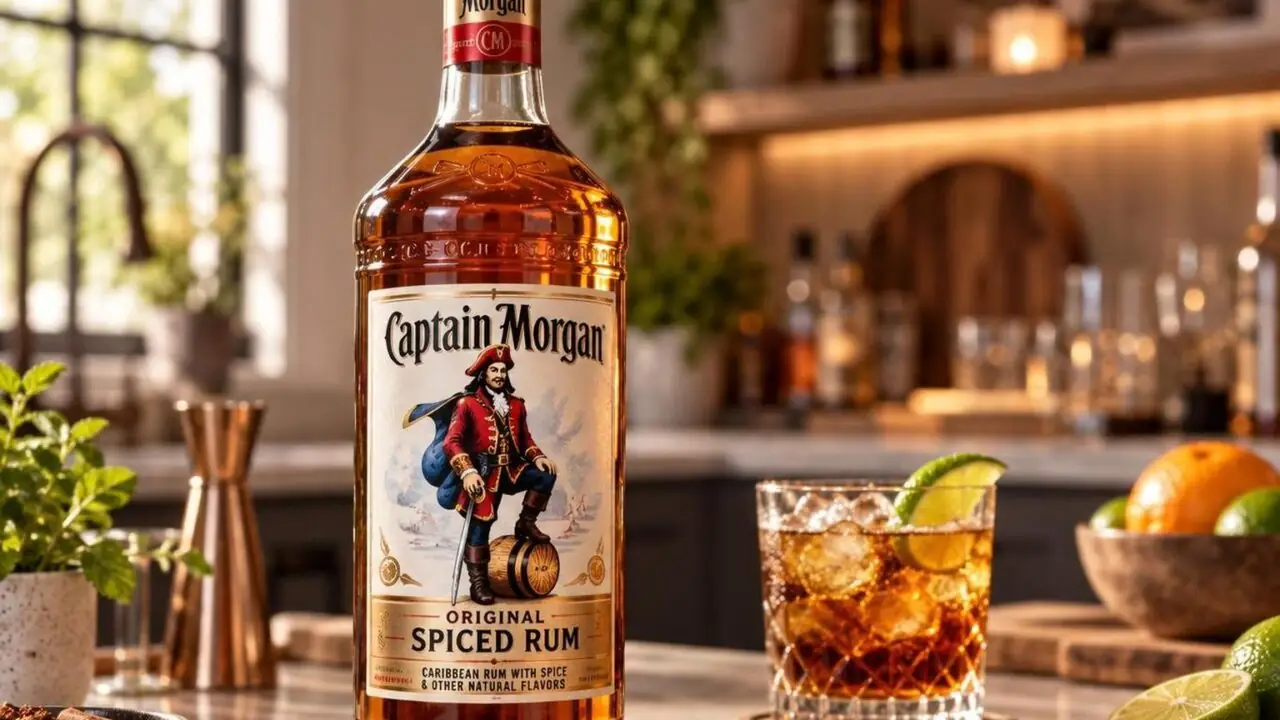
Does Captain Morgan Go Bad? is answered by this: sealed Captain Morgan stays safe indefinitely if stored properly, while opened rum mainly loses aroma, flavor, and color rather than spoiling.
Its 35% alcohol by volume helps prevent microbial growth, but oxygen, heat, sunlight, and a loose cap can flatten the spiced notes.
Check the bottle before pouring: look for cloudiness, sediment, a damaged seal, leakage, or a sharp off-smell. Store Captain Morgan upright, tightly closed, and away from light at steady room temperature.
This guide explains shelf life, opened-bottle quality, storage mistakes, and when discarding it is the safer choice.
Does Captain Morgan Actually Expire
Captain Morgan does not expire in the way perishable foods do, but it does degrade over time. The 35% ABV (70 proof) in Original Spiced Rum acts as a preservative, yet oxidation and evaporation gradually diminish flavor and quality after opening.
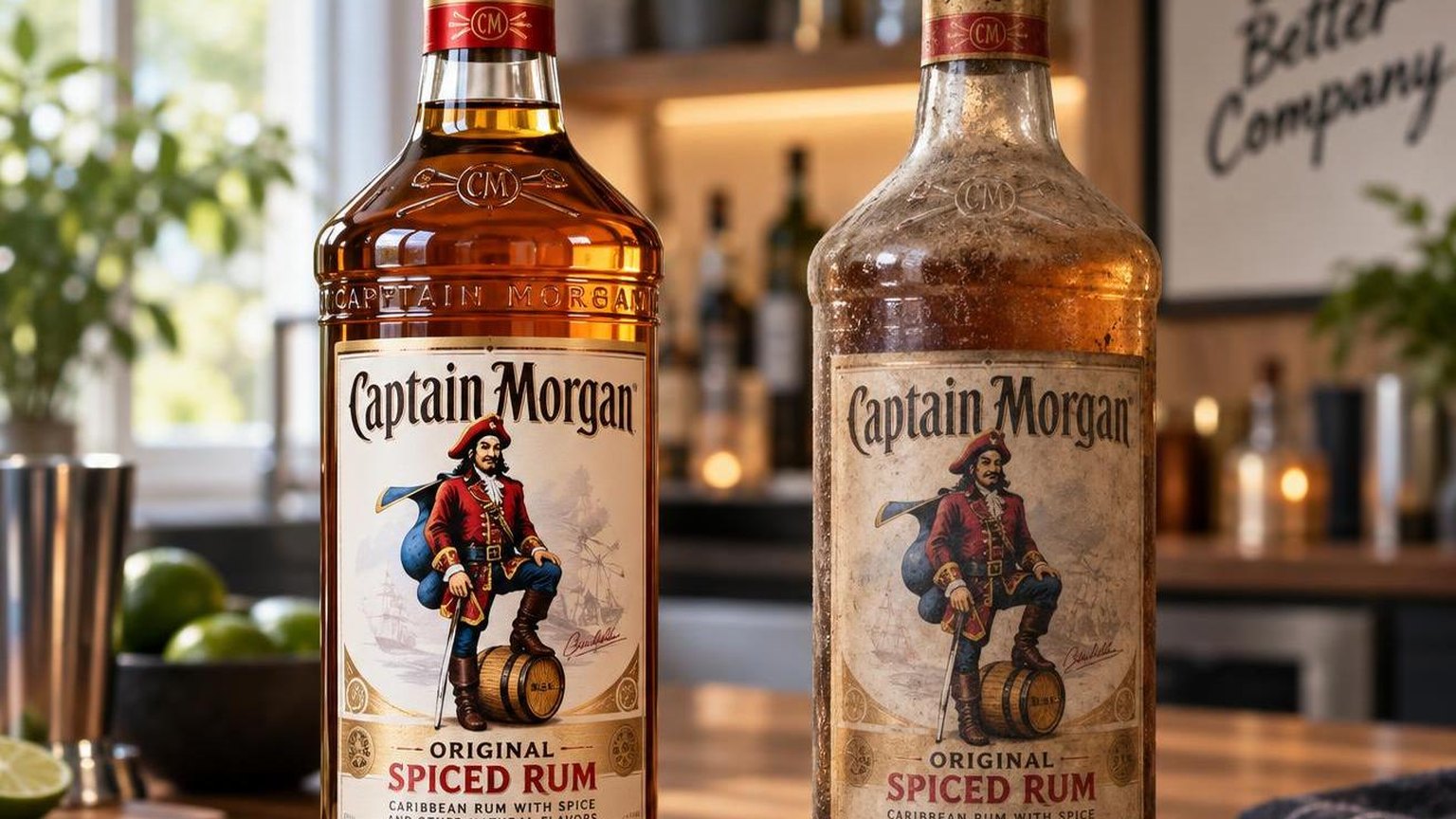
Unopened Captain Morgan stored properly remains safe to drink indefinitely. Diageo, the parent company producing Captain Morgan, does not print an expiration date on bottles—only a lot code for production tracking.
Opened vs. Unopened Shelf Life
The critical distinction is whether the bottle has been opened. Air exposure triggers oxidation, which breaks down flavor compounds in the spiced rum over months and years.
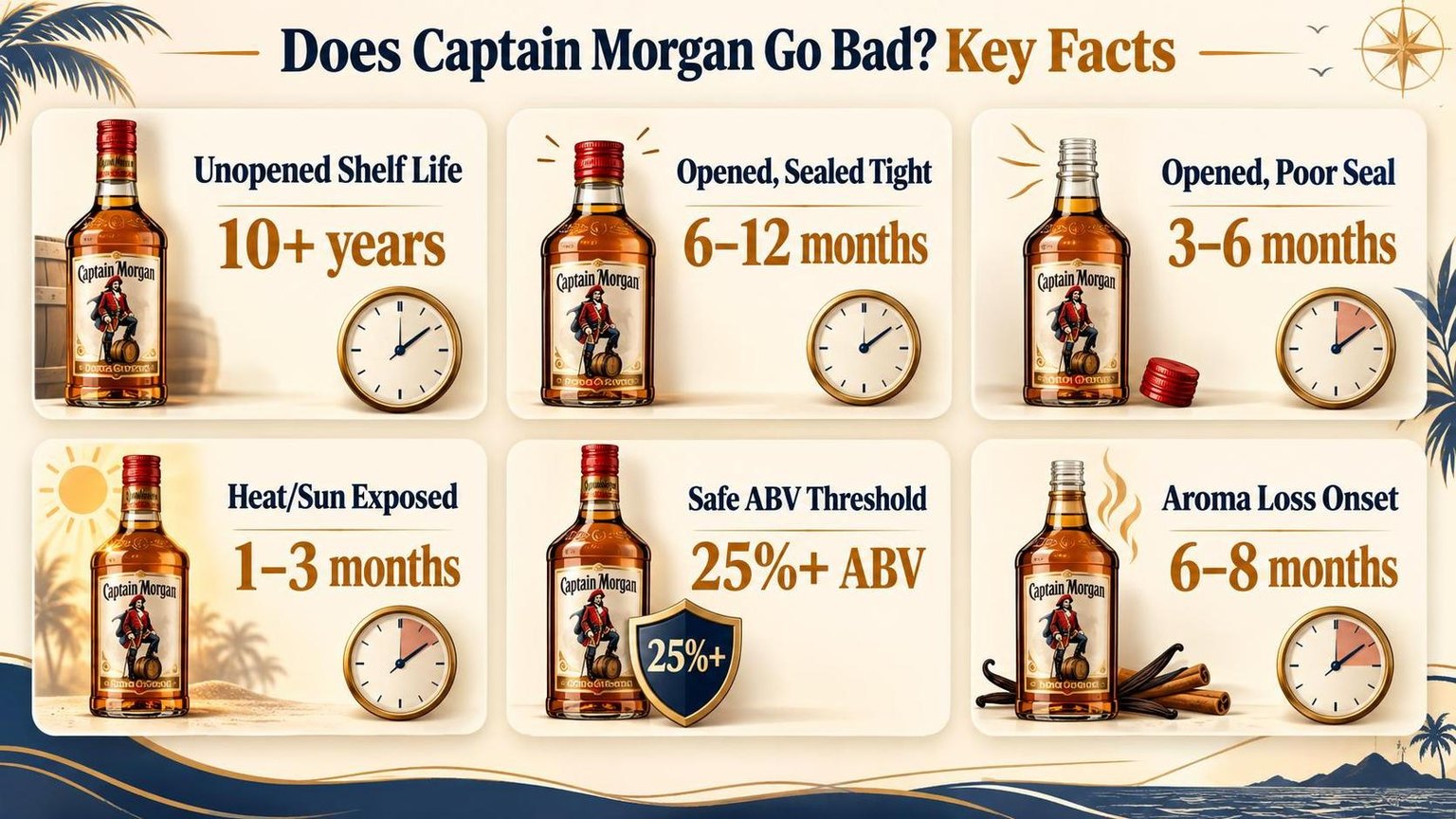
| Condition | Expected Quality Window | Safety Risk |
| Unopened, stored properly | Indefinite (10+ years) | None |
| Opened, sealed tightly | 6–12 months for peak flavor | None |
| Opened, poorly sealed | 3–6 months before noticeable decline | None, but accelerated quality loss |
| Opened, exposed to heat/sunlight | 1–3 months before significant degradation | None, but taste may become unpleasant |
Why 35% ABV Matters
Spirits above 25% ABV do not support bacterial or microbial growth. Captain Morgan Original Spiced Rum at 35% ABV sits well above that threshold, making spoilage in the food-safety sense virtually impossible.
However, Captain Morgan’s lower-proof variants behave differently. Captain Morgan Sliced Apple at 25% ABV and Captain Morgan Cannon Blast at 35% ABV have different degradation timelines due to added sugars and flavorings.
What Actually Degrades
- Volatile aromatics: Vanillin and spice-derived esters evaporate first, flattening the signature Captain Morgan nose within 6–8 months of opening.
- Color: UV light breaks down caramel coloring (E150a), causing fading over prolonged sun exposure.
- Sweetness perception: Oxidation of sugar-based additives can produce slightly bitter or stale off-notes after 12+ months open.
- Alcohol content: Evaporation through an imperfect seal can reduce proof by 1–2% over several years, subtly altering mouthfeel.
The Bottom Line on Expiration
Captain Morgan will not make you sick regardless of age. The alcohol content prevents pathogenic contamination. “Going bad” refers exclusively to flavor and aroma loss, not safety.
A bottle opened and resealed within the past year will taste nearly identical to a fresh pour.
Beyond 18–24 months open, most drinkers notice a flatter, less vibrant profile—especially in the vanilla and cinnamon spice notes Captain Morgan is known for.
For cream-based variants like Captain Morgan Original Rum & Cola premixed drinks, expiration dates do apply.
These contain dairy or perishable ingredients and should be consumed by the printed date, typically within 12–18 months of production.
Unopened Captain Morgan Shelf Life
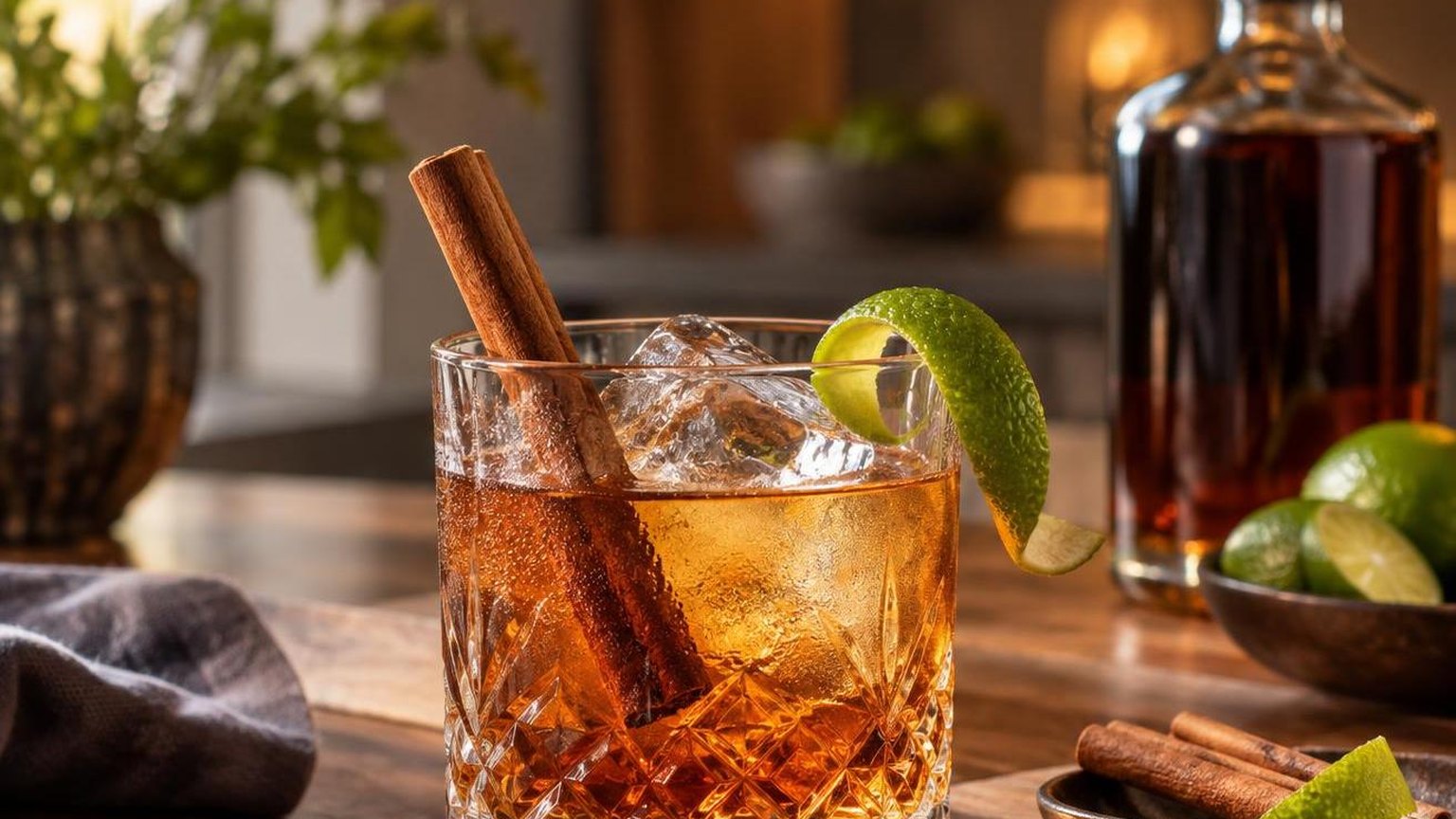
Unopened Captain Morgan Original Spiced Rum, bottled at 35% ABV (70 proof), remains safe to drink indefinitely when stored correctly.
The alcohol content acts as a preservative, preventing microbial growth and maintaining structural stability for years beyond any printed date.
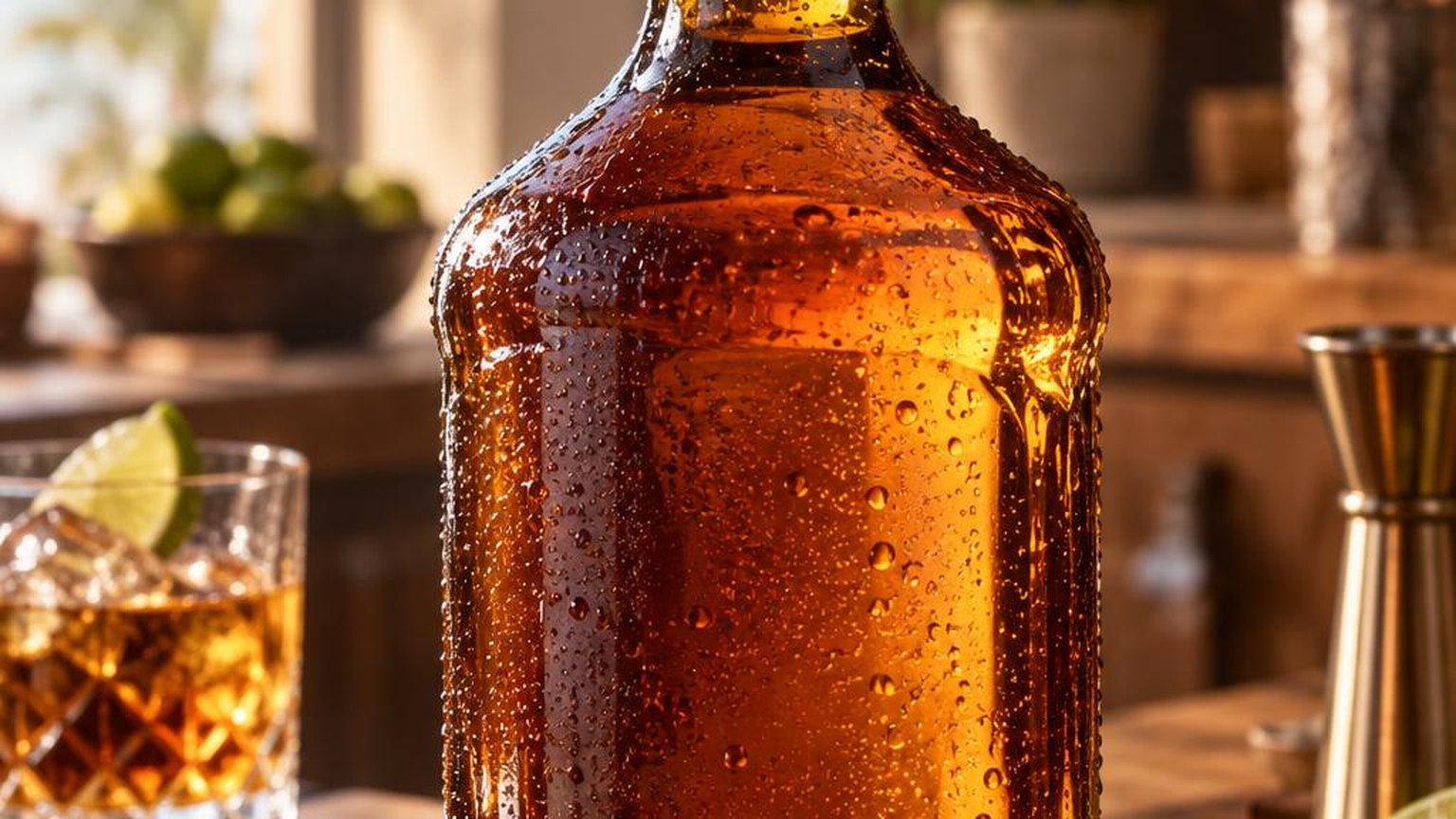
Diageo, the parent company that owns Captain Morgan, does not print expiration dates on its rum bottles. Instead, most bottles carry a lot code indicating the production date.
This is standard practice across distilled spirits regulated by the TTB (Alcohol and Tobacco Tax and Trade Bureau), which does not require expiration dating on spirits above 20% ABV.
Shelf Life by Product Variant
Not all Captain Morgan products share the same longevity. Higher sugar content and lower ABV reduce shelf life, even unopened.
| Product | ABV | Unopened Shelf Life | Notes |
| Captain Morgan Original Spiced Rum | 35% | Indefinite | Stable due to sufficient alcohol content |
| Captain Morgan White Rum | 40% | Indefinite | No added sugars; longest stability |
| Captain Morgan Private Stock | 40% | Indefinite | Higher proof offsets added caramel and vanilla |
| Captain Morgan Sliced Apple | 25% | Indefinite, but quality declines after 2–3 years | Flavoring compounds degrade faster |
| Captain Morgan Long Island Iced Tea | 17% | 12–18 months for best quality | Low ABV and mixed ingredients reduce stability |
| Captain Morgan Rum Punch (RTD cans) | 5.8% | 9–12 months | Malt-based; treat like a canned cocktail |
Key Storage Conditions for Unopened Bottles
Proper storage directly determines whether an unopened bottle maintains its original flavor profile over decades or degrades prematurely.
- Temperature: Store between 15–20 °C (59–68 °F). Sustained heat above 30 °C accelerates oxidation of spice-derived flavor compounds like vanillin and eugenol.
- Light exposure: UV light breaks down terpenes and phenolic compounds responsible for Captain Morgan’s signature spiced character. Keep bottles away from direct sunlight or fluorescent lighting.
- Orientation: Store bottles upright. Prolonged contact between high-proof spirits and the cork or plastic seal degrades the closure, potentially allowing micro-oxidation or tainting the rum with cork residue.
- Seal integrity: Inspect the tamper-evident plastic shrink band around the cap. A compromised seal allows slow evaporation — the “angel’s share” effect that reduces both volume and ABV over time.
Does the “Best By” Code Matter?
Some Captain Morgan bottles display a Julian date code stamped on the bottom or label edge. This indicates production date, not expiration. A bottle produced in 2015 and stored upright in a cool, dark cabinet remains perfectly drinkable in 2025.
The one exception involves Captain Morgan’s ready-to-drink (RTD) products.
These malt-based or wine-based beverages contain perishable mixers and should be consumed within the timeframe on the can — typically 9 to 12 months from the production date stamped on the bottom.
Opened Bottle Storage Timeline
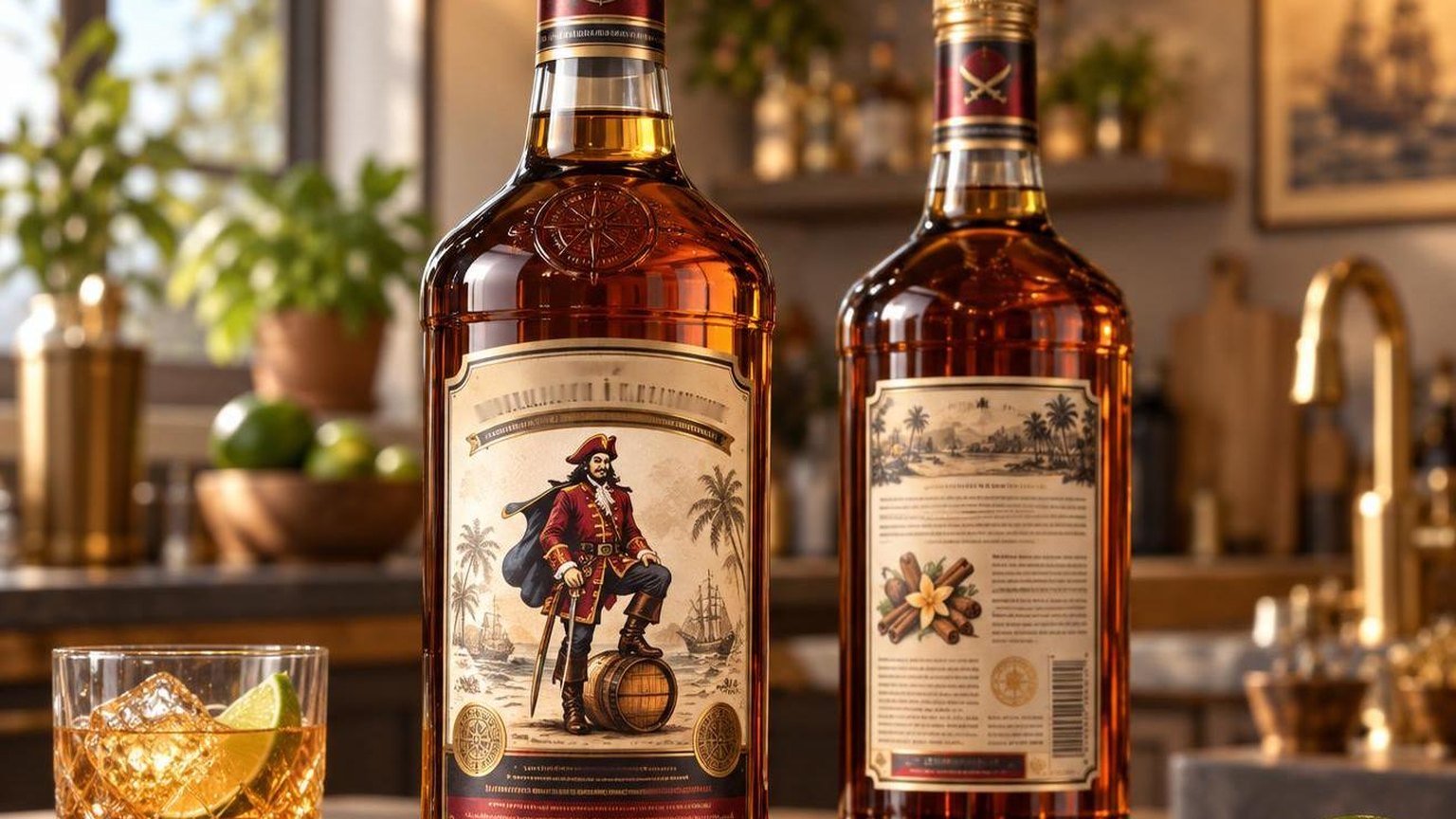
Once you crack open a bottle of Captain Morgan, oxidation and evaporation begin altering the liquid inside.
The spirit won’t become unsafe to drink, but flavor quality follows a predictable decline curve that depends on the specific product’s alcohol content.
Captain Morgan’s lineup spans a wide ABV range, and higher-proof expressions retain their character longer after opening. Here’s a practical breakdown:
| Product | ABV | Peak Quality After Opening | Acceptable Quality |
| Captain Morgan Original Spiced Rum | 35% | 6–8 months | Up to 12 months |
| Captain Morgan White Rum | 40% | 8–12 months | Up to 18 months |
| Captain Morgan Private Stock | 40% | 8–12 months | Up to 18 months |
| Captain Morgan 100 Proof Spiced Rum | 50% | 12–18 months | Up to 24 months |
| Captain Morgan Sliced Apple | 25% | 3–4 months | Up to 6 months |
| Captain Morgan Coconut Rum | 21% | 3–4 months | Up to 6 months |
Lower-ABV flavored varieties like Coconut (21% ABV) and Sliced Apple (25% ABV) degrade fastest because they contain more sugar and flavoring compounds susceptible to oxidation.
What Changes After Opening
Every time you uncap the bottle, fresh oxygen enters the headspace. This triggers three measurable effects over time:
- Flavor flattening: Volatile aromatic compounds — the vanilla, caramel, and spice notes in Original Spiced — evaporate through the bottle neck. A half-empty bottle loses aromatics roughly twice as fast as a three-quarters-full one.
- Oxidation of esters: The fruity and spicy ester compounds that define Captain Morgan’s flavor profile break down when exposed to oxygen, producing duller, slightly cardboard-like off-notes.
- Alcohol evaporation: Ethanol evaporates faster than water at room temperature. Over 12+ months, an opened bottle can lose 1–2% ABV, subtly thinning the body and mouthfeel.
How to Maximize Shelf Life After Opening
Store the opened bottle upright — never on its side. Rum in prolonged contact with the cap’s liner can develop off-flavors from plastic or cork degradation.
Keep the bottle in a cool, dark location between 15–20°C (59–68°F). Heat accelerates both oxidation and evaporation. Direct sunlight breaks down color compounds in darker rums like Private Stock.
Transfer remaining rum to a smaller bottle when it drops below one-third full. Reducing headspace limits the oxygen-to-liquid ratio, the single biggest factor in flavor decline.
Seal tightly after every pour. A loose cap allows continuous air exchange, effectively halving the timeline in the table above. Parafilm wrap around the closure provides an extra barrier used by spirit collectors.
None of these changes make opened Captain Morgan dangerous. At 35–50% ABV, the ethanol concentration remains hostile to pathogenic bacteria indefinitely. Quality loss is purely sensory — not a food safety concern.
Spoilage Signs In Captain Morgan
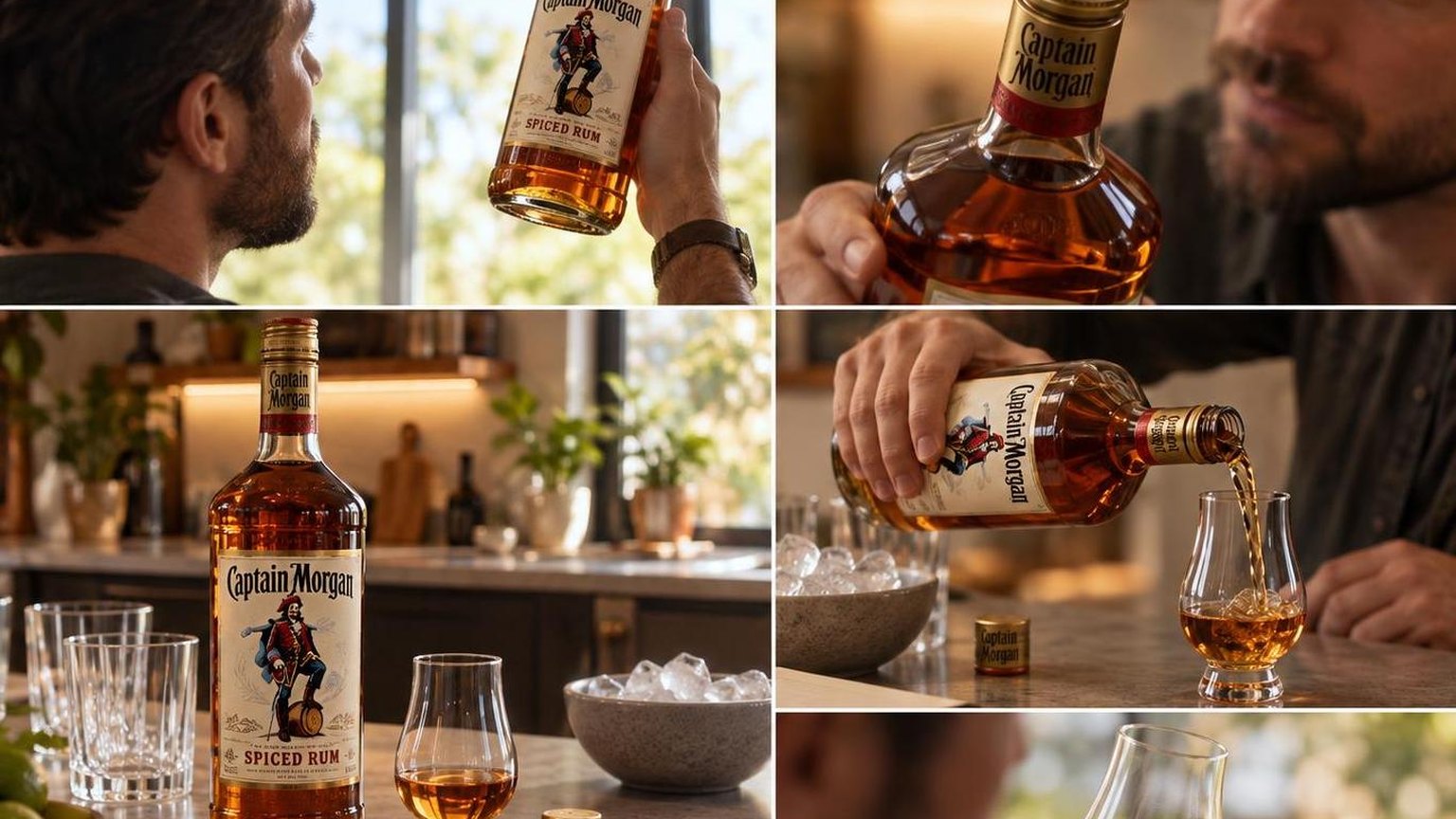
Captain Morgan Original Spiced Rum at 35% ABV resists microbial spoilage but degrades organically over time. Recognizing deterioration requires evaluating appearance, aroma, and taste against the product’s original profile.
Visual Changes
Fresh Captain Morgan Original Spiced displays a consistent amber-gold color. Degradation introduces visible shifts that signal chemical breakdown.
- Cloudiness or haze: Precipitation of dissolved flavor compounds, particularly vanillin and caramel colorants, produces turbidity absent in fresh bottles.
- Sediment formation: Particulate matter settling at the bottom indicates spice extracts have fallen out of solution — common in bottles open longer than 12 months.
- Color fading: Prolonged UV or fluorescent light exposure breaks down caramel color (E150d), shifting the liquid from rich amber toward pale straw over 6–12 months.
Aroma Deterioration
Captain Morgan’s signature nose blends vanilla, cinnamon, and clove. Oxidation fundamentally alters these aromatics after prolonged air exposure.
- Flat or muted smell: Volatile aromatic esters evaporate first. A bottle at half-fill loses noticeable aroma intensity within 6–8 months due to the increased oxygen-to-liquid ratio.
- Acetaldehyde sharpness: Ethanol oxidizes into acetaldehyde, producing a harsh, nail-polish-like note absent in fresh product.
- Cardboard or wet-paper smell: Advanced oxidation of spice-derived terpenes generates stale, papery off-odors.
Taste Degradation
Flavor changes confirm what visual and aromatic cues suggest. A small sip is the definitive test.
| Attribute | Fresh Bottle | Degraded Bottle (12+ Months Open) |
| Sweetness | Balanced, caramel-forward | Thin, muted, or cloying |
| Spice notes | Distinct cinnamon, nutmeg, clove | Blended into dull, indistinct warmth |
| Finish | Smooth vanilla with mild burn | Harsh, solvent-like, or hollow |
| Mouthfeel | Medium body, slight viscosity | Watery, flat |
When Captain Morgan Is Truly Unsafe
At 35% ABV, Captain Morgan cannot support pathogenic bacterial growth. Spoilage is a quality issue, not a safety hazard, for the base spirit.
The exception involves Captain Morgan flavored variants with lower ABV.
Products like Captain Morgan Sliced Apple at 25% ABV or pre-mixed cocktails below 15% ABV have higher sugar content and lower alcohol — conditions that can support mold if contaminated.
- Mold on the cap or bottle neck: Discard immediately. This occurs almost exclusively in low-ABV flavored products stored with loose caps.
- Fermented or yeasty smell: Residual sugars in flavored variants can referment if contaminated, producing CO₂ pressure and an off-putting sour tang.
Any bottle showing mold growth, regardless of remaining alcohol content, should be discarded entirely rather than filtered or salvaged.
When To Toss Captain Morgan
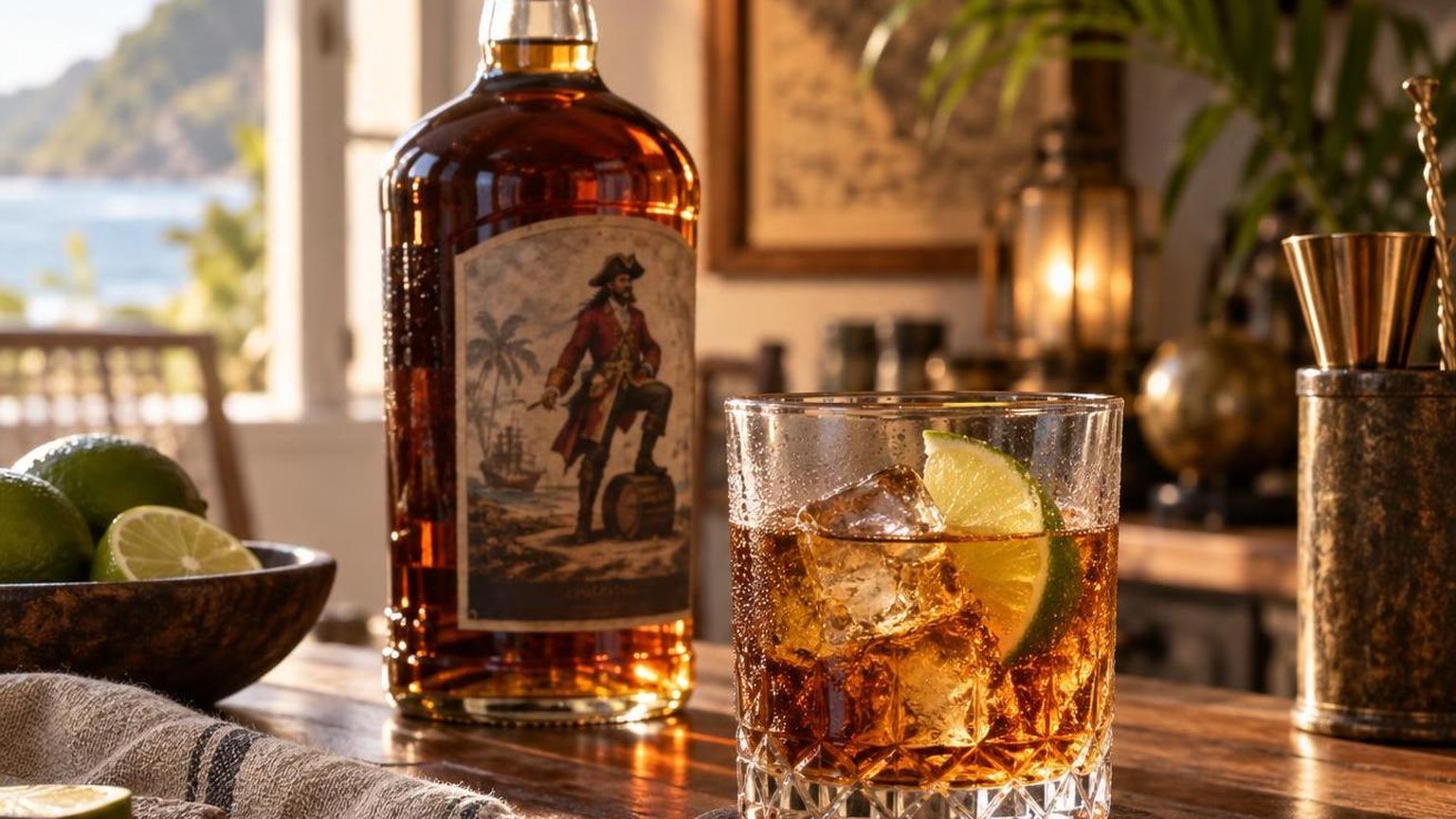
Captain Morgan won’t spoil like milk, but it does degrade. Knowing when to discard a bottle prevents serving rum that tastes flat, harsh, or chemically off. These concrete benchmarks apply to all Captain Morgan variants.
Timeline by Product Type
| Product | Unopened Shelf Life | Opened Shelf Life | ABV |
| Captain Morgan Original Spiced Rum | Indefinite (best within 10 years) | 6–12 months for peak quality | 35% |
| Captain Morgan White Rum | Indefinite (best within 10 years) | 6–12 months for peak quality | 40% |
| Captain Morgan Private Stock | Indefinite (best within 10 years) | 6–12 months for peak quality | 40% |
| Captain Morgan Sliced Apple | 2–3 years | 3–6 months | 25% |
| Captain Morgan Long Island Iced Tea | 1–2 years | 1–3 months | 17.5% |
| Captain Morgan Cannon Blast | 2–3 years | 3–6 months | 25% |
Lower-ABV products degrade faster because alcohol is the primary preservative. Anything below 30% ABV has a noticeably shorter window once opened.
Visual Red Flags
- Color shift: Spiced rum darkening beyond its original amber or developing a murky, cloudy appearance signals oxidation or contamination.
- Sediment or particles: Floating debris, clumps, or a filmy layer on the surface means the bottle should go straight into the trash.
- Damaged seal or cork: A cracked cap, shrunken cork, or visible gap between the closure and bottle neck allows air and bacteria entry.
Smell and Taste Indicators
Pour a small amount into a clean glass. Fresh Captain Morgan Original Spiced Rum should smell of vanilla, cinnamon, and caramel with a warm alcohol note.
Discard the bottle if you detect any of these:
- Sharp, nail-polish-remover aroma (ethyl acetate from excessive oxidation)
- Flat, cardboard-like smell indicating stale volatile compounds
- Sour or vinegar-like tang, especially in lower-proof flavored variants
- Complete absence of the characteristic spice profile
A tiny sip of degraded rum won’t harm you. Spirits above 25% ABV don’t harbor dangerous pathogens. The issue is purely quality.
When Evaporation Settles the Question
A half-empty bottle stored for 2+ years loses volume to evaporation through micro-gaps in the cap. If the liquid level has dropped noticeably without anyone drinking it, oxidation has had proportional exposure. Toss it.
Rum that has been mixed with juice, cola, or cream in a batch pitcher should be discarded within 24–48 hours. The perishable mixers spoil long before the alcohol does.
The Bottom Line
Full-proof Captain Morgan (35–40% ABV) stays drinkable for years if sealed and stored properly. Flavored and lower-proof versions under 30% ABV deserve a 3–6 month deadline after opening.
When in doubt, trust your nose before your optimism.
Questions Readers Ask
Does Captain Morgan expire?
Captain Morgan rum does not expire in the traditional sense because its 35% ABV (70 proof) inhibits bacterial growth indefinitely. An unopened bottle stored upright in a cool, dark place retains its original flavor profile for decades.
However, once opened, oxidation gradually dulls the spice and caramel notes over 1–2 years.
How long does Captain Morgan last after opening?
An opened bottle of Captain Morgan maintains peak flavor for approximately 6–12 months when stored properly with the cap tightly sealed.
After 12–24 months, noticeable flavor degradation occurs—the vanilla and cinnamon spice notes flatten—though the rum remains safe to drink. Minimizing headspace by transferring to a smaller bottle slows oxidation.
Can old Captain Morgan make you sick?
Distilled spirits at 35% ABV or higher do not harbor pathogens, so old Captain Morgan will not cause foodborne illness. The only health concern arises if the bottle was stored with a compromised seal, allowing contaminants or insects inside.
Off flavors from oxidation are a quality issue, not a safety one.
How should you store Captain Morgan to maximize shelf life?
Store bottles upright at 15–20 °C (59–68 °F), away from direct sunlight and heat sources like stovetops or radiators.
UV light breaks down flavor compounds in the spice blend, and temperature swings above 25 °C accelerate evaporation of volatile aromatics.
Never store rum on its side—prolonged contact with the cap’s seal can degrade it and introduce off-flavors.
Does Captain Morgan Spiced Rum go bad faster than Captain Morgan White Rum?
Captain Morgan Original Spiced Rum contains added vanilla, caramel, and spice flavorings that are more susceptible to oxidation than the neutral profile of Captain Morgan White Rum.
In practice, the spiced variant loses noticeable complexity 2–3 months sooner after opening. Both share the same 35% ABV, so safety is identical; the difference is purely sensory.
Can you freeze Captain Morgan, and does freezing affect its quality?
Captain Morgan’s 35% ABV freezes at approximately −23 °C (−9 °F), which most home freezers (set around −18 °C / 0 °F) cannot reach, so the rum becomes viscous but rarely solidifies.
Storing it in the freezer is safe and popular for cocktails, though extreme cold mutes the spice aromatics that define the brand. Repeated freeze-thaw cycles are unnecessary to worry about since the bottle rarely fully freezes.
How can you tell if Captain Morgan has gone bad?
Check for a flat, cardboard-like smell replacing the characteristic warm cinnamon-vanilla nose—this indicates heavy oxidation.
Visual changes like cloudiness, floating particles, or a color shift from amber to pale straw suggest contamination or degradation of the caramel coloring.
A small sip that tastes harsh, acetone-like, or completely flavorless confirms the rum is past its prime.
Does the “best by” date on Captain Morgan bottles mean the rum is unsafe afterward?
Diageo, the parent company that produces Captain Morgan, does not print expiration or “best by” dates on its rum bottles—only a lot code for production tracking.
If you see a date on the packaging, it is a batch or bottling code, not a safety deadline. Rum is classified by the TTB (Alcohol and Tobacco Tax and Trade Bureau) as shelf-stable indefinitely when sealed.
Related Guides
- How Much Rum Do You Put In A Strawberry Daiquiri?
- How Much Is A Liter Of Captain Morgan Rum?
- How Much Does Bacardi 151 Rum Cost?
- Is Bay Rum Good for Hair Growth? 21 Evidence-Backed Facts You Need to Know (2026 Guide)
- What To Mix With Coffee Rum?
- Does Rum Chata Get You Drunk?
- How Many Carbs In Bacardi Limon Rum?
- Is Rum Good For Upset Stomach? 11 Important Facts You Must Know (2026 Guide)
- What Mixes Well With Malibu Mango Rum?
- All Alcohol Guides
- U.S. Food & Drug Administration – CPG Sec 510.400 Dealcoholized Wine and Malt Beverages (2005)
- National Institutes of Health / NIAAA – Alcohol's Effects on Health: Understanding Alcohol (2024)
- U.S. Department of Agriculture – FoodData Central: Distilled Spirits, Rum, 80 Proof (2019)
- MedlinePlus / U.S. National Library of Medicine – Alcohol Use and Safe Drinking (2023)
- Purdue University Extension – Shelf Life of Distilled Spirits (2021)
- The Spruce Eats – Does Liquor Go Bad? What You Should Know (2023)
- MasterClass – Does Rum Go Bad? Guide to Storing Rum (2022)
- Healthline – Does Alcohol Expire? Tips for Storage and Shelf Life (2023)