
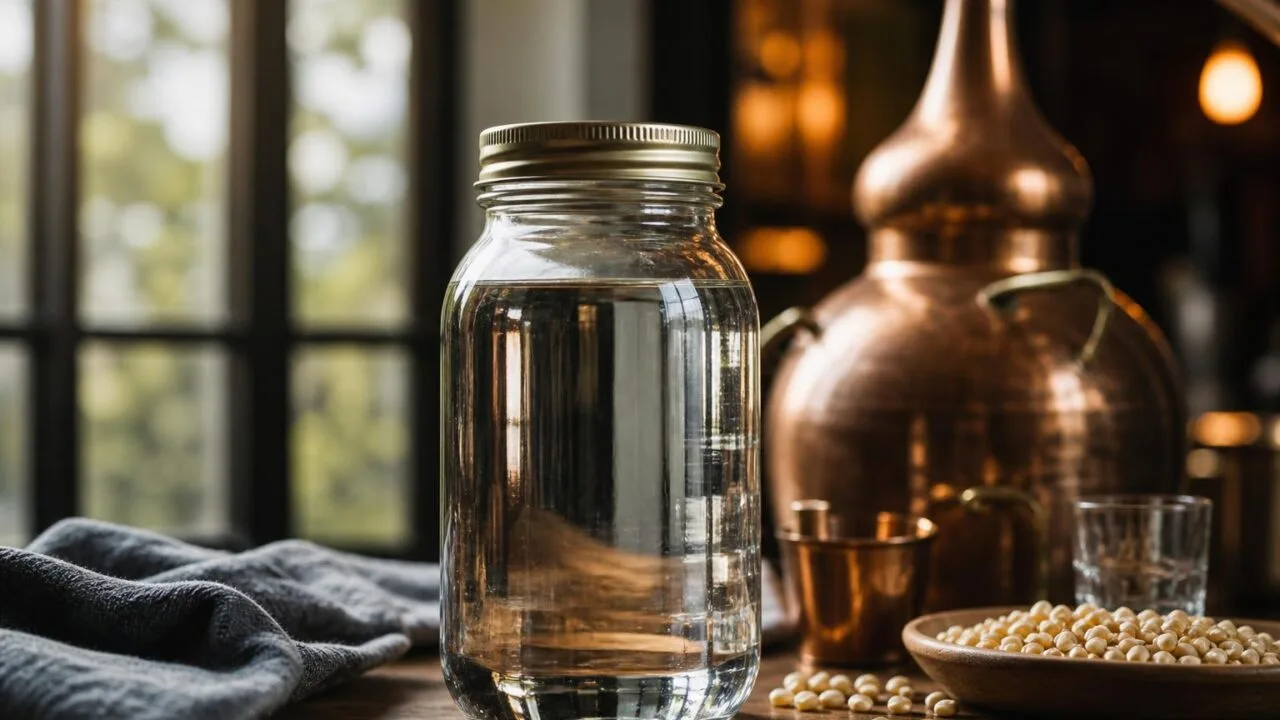
Why Is It Called Moonshine is answered by the fact that illicit distillers traditionally made untaxed spirits at night, by moonlight, to avoid revenuers.
In the United States, the term became tied to backwoods corn whiskey after federal excise taxes followed the 1791 Whiskey Tax and later enforcement campaigns.
“Moonshine” does not describe an ingredient or a legal style; it describes secrecy, evasion, and unlicensed production.
By the 19th century, newspapers and court records used the word for illegal liquor, especially in Appalachia, where remote terrain, small stills, and tax resistance made nighttime distilling practical.
Why Moonshine Was Named for Night
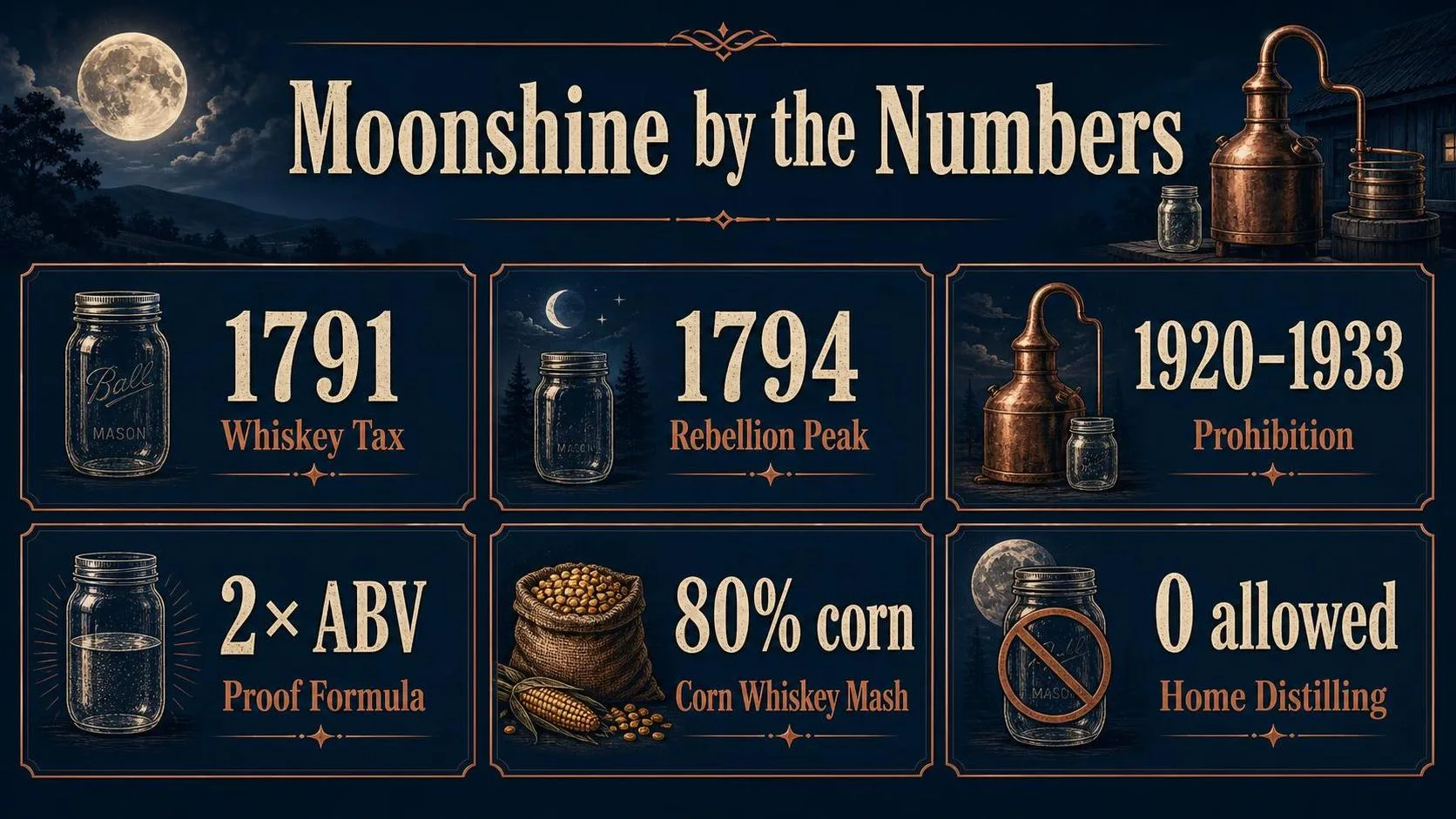
“Moonshine” is tied to time, secrecy, and tax avoidance: illicit distillers worked after dark, often by moonlight, to avoid detection. The key numbers below explain why the name stuck in American drinking history.
In the United States, the word became strongly associated with untaxed whiskey after federal excise taxes made hidden distilling profitable. The numbers also explain why moonshine earned a reputation for strength and risk.
| Number | What it means | Why it matters to “moonshine” |
| 1791 | Congress passed the first federal excise tax on distilled spirits. | The Whiskey Tax helped create a financial reason to distill secretly, especially in rural areas where grain was easier to convert into whiskey than transport. |
| 1794 | The Whiskey Rebellion peaked in western Pennsylvania. | Resistance to whiskey taxation became part of the American backdrop for illicit distilling. |
| 1920–1933 | National Prohibition banned the manufacture and sale of beverage alcohol. | Moonshine production expanded because legal supply disappeared while demand remained. |
| 2:1 | In the U.S., proof is twice the alcohol by volume. | A spirit at 50% ABV is 100 proof; this made “high-proof” moonshine easy to describe and sell. |
The “moon” in moonshine is not poetic branding. It refers to the practical cover of darkness. Night runs reduced the chance of smoke, steam, wagon traffic, or copper stills being spotted by tax collectors or law enforcement.
| Alcohol measure | Equivalent | Context |
| 40% ABV | 80 proof | Common strength for many legal whiskeys, vodkas, and rums. |
| 50% ABV | 100 proof | A traditional benchmark for stronger spirits and bottled-in-bond whiskey. |
| 60% ABV | 120 proof | Within the range often associated with unaged, high-strength corn liquor. |
| 95% ABV | 190 proof | Near the practical upper limit for beverage ethanol by ordinary distillation. |
Another important number is zero: under federal law, U.S. households may not legally distill beverage spirits at home without proper federal permits, even if the alcohol is for personal use.
Beer and wine rules do not create a home-distilling exception.
- “Moonshine” originally meant illicit spirit, not a flavor. It could be corn whiskey, sugar wash spirit, or another unaged liquor.
- Clear color is not proof of safety. Unaged spirits are clear whether legally made or illegally made.
- Modern “moonshine” on store shelves is legal. Licensed distilleries use the historical name as a style and marketing term.
Ingredients and Process Shape Moonshine
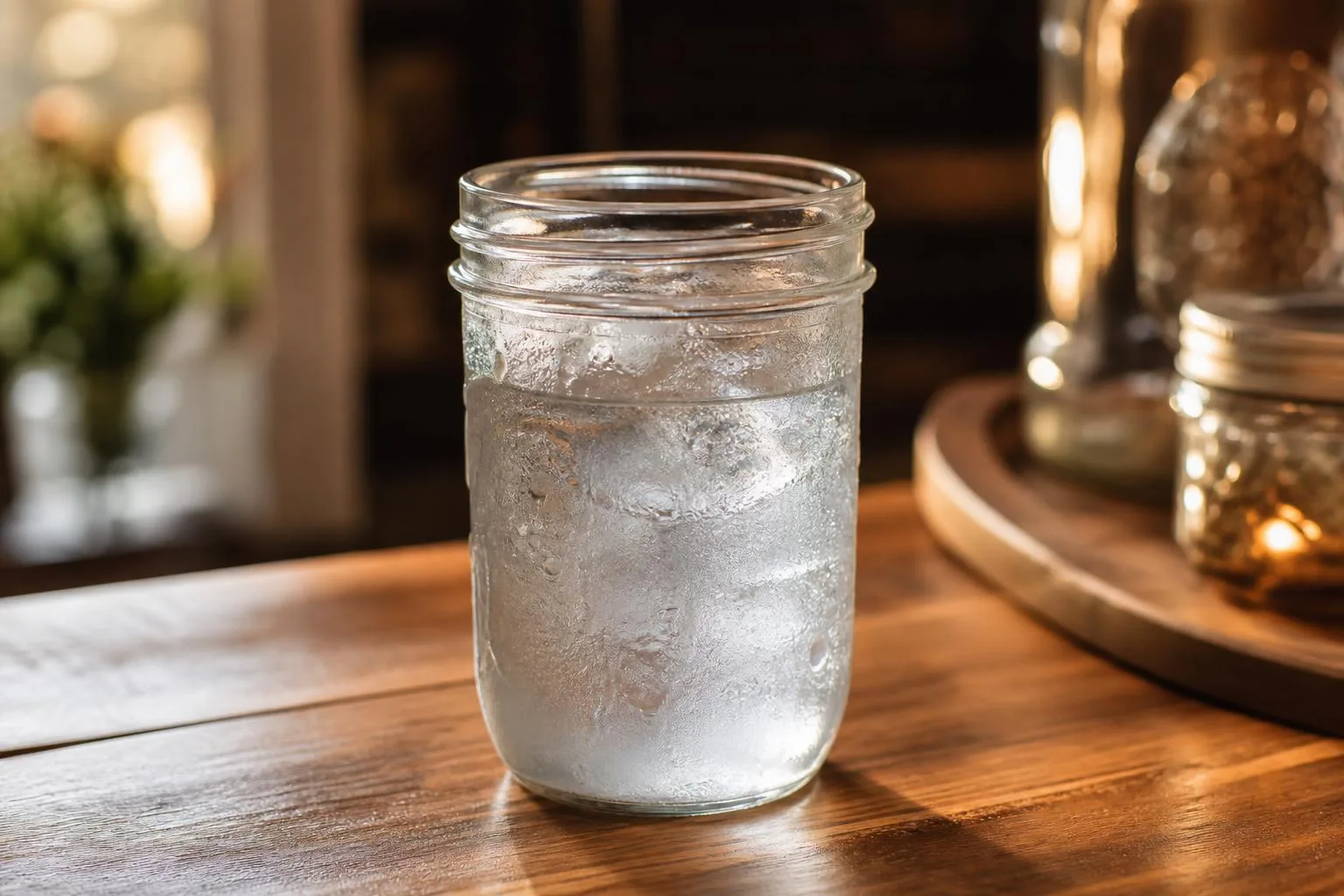
“Moonshine” got its name from illicit distilling done at night, but the final spirit is shaped by practical choices long before it reaches a jar.
Grain, sugar, yeast, fermentation control, and distillation technique all affect aroma, strength, safety, and whether it tastes rough or clean.
Historically, American moonshine was often unaged corn whiskey. Under U.S. federal standards, corn whiskey must be made from a mash of at least 80% corn if it is sold legally as corn whiskey.
Mash Ingredients
The mash determines much of the flavor. Corn gives sweetness and grainy body; sugar washes can produce a lighter but less characterful spirit; rye or malted barley add spice, nuttiness, and enzymes for starch conversion.
- Corn-heavy mash: traditional in the Appalachian and Southern U.S.; produces a sweet, cereal-like distillate.
- Sugar wash: cheaper and easier to ferment, but often thinner in flavor.
- Malted grain: supplies enzymes that convert starch into fermentable sugars, improving yield and complexity.
Fermentation Conditions
Yeast converts sugar into alcohol and carbon dioxide. Most distillers keep whiskey-style fermentations roughly between 75°F and 85°F; higher temperatures can create harsher fusel alcohols and solvent-like aromas.
| Factor | Typical Range | Effect on Spirit |
| Fermentation time | 3 to 7 days | Short ferments may taste thin; longer ferments can add sour, fruity, or funky notes. |
| Wash alcohol | 6% to 12% ABV | Higher-alcohol washes can stress yeast and increase harsh congeners. |
| Distillate strength | Often 100 to 160 proof before dilution | Higher proof can taste cleaner but may carry less grain character. |
Distillation Cuts
Good distillation depends on separating fractions.
The first vapors include more volatile compounds, including methanol and acetone-like aromas; the middle “hearts” are the cleanest drinking portion; late “tails” bring oily, bitter, or cardboard-like flavors.
This is where skill matters most. Poor cuts can make a spirit smell like paint thinner or wet grain, while careful cuts preserve sweetness and reduce rough edges.
Still Design and Legal Context
Pot stills usually retain more grain flavor because they distill less efficiently. Column stills can produce a lighter, higher-proof spirit through repeated condensation and vaporization inside the column.
Legality also affects the result. Licensed distillers must follow federal rules, pay excise tax, and meet labeling standards.
Illicit moonshine avoids those controls, which is why quality, proof, and safety can vary dramatically from one batch to another.
How Moonshine Strength Is Measured
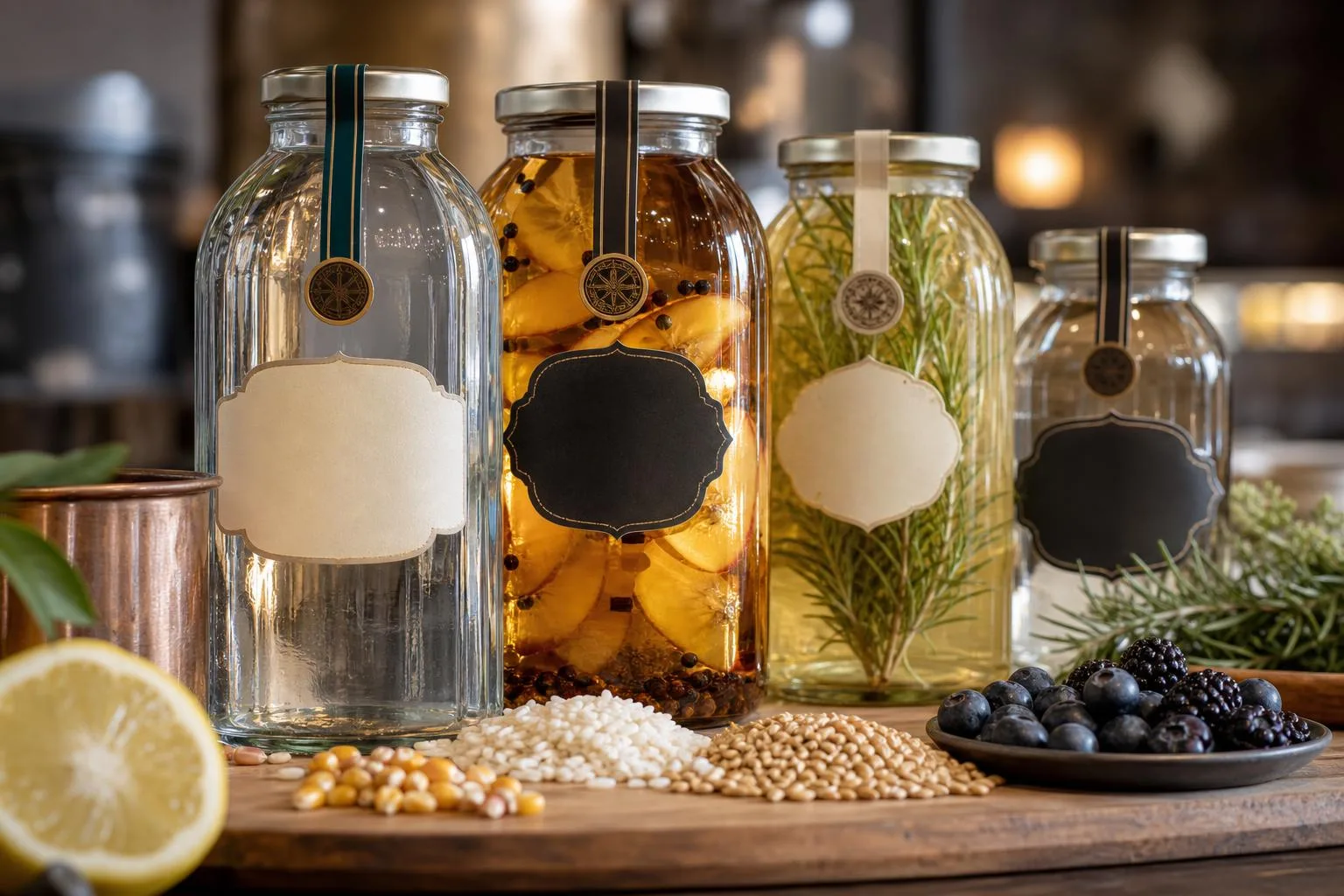
Moonshine is measured primarily by alcohol strength, expressed as alcohol by volume, or ABV, and in the United States as “proof.” Verification means confirming strength, checking identity, and, for legal spirits.
Documenting production through regulated testing and records.
In the U.S., proof is exactly twice the ABV. A spirit at 50% ABV is 100 proof. Traditional “moonshine” has often been bottled strong, but legal unaged corn whiskey can range widely depending on the producer and label approval.
| Measurement | What it means | Example |
| ABV | Percentage of liquid volume that is ethanol at 20°C | 40% ABV means 40 mL ethanol per 100 mL liquid |
| U.S. proof | Two times ABV | 50% ABV equals 100 proof |
| Proof gallon | Tax unit used by TTB | 1 wine gallon at 50% ABV equals 1 proof gallon |
Distillers measure proof with a hydrometer or digital density meter. A proofing hydrometer floats higher or lower based on liquid density, but the reading must be corrected for temperature because alcohol-water mixtures expand as they warm.
The Alcohol and Tobacco Tax and Trade Bureau uses 60°F as the U.S. reference temperature for proof determination. Laboratory alcoholometers and official gauging methods are tied to federal rules in 27 CFR Part 30.
- Hydrometer: Common, inexpensive, and fast, but requires a temperature correction table.
- Digital density meter: More precise, often used by licensed distilleries and labs.
- Distillation records: Required for legal producers to support tax, label, and inventory claims.
- Label review: Bottled spirits sold across state lines generally need a TTB Certificate of Label Approval.
Old folk tests, including shaking a jar and judging the “bead” or bubbles, are not reliable verification. Bubble size can be affected by proof, temperature, oils, sugar, and container cleanliness.
Safety verification is different from proof measurement. Ethanol strength does not prove a spirit is safe. Illicit spirits may contain contaminants from poor cuts, dirty equipment, fuel containers, or adulteration after distillation.
| Compound | Why it matters | Verification method |
| Ethanol | Main beverage alcohol | Hydrometer or density meter |
| Methanol | Toxic alcohol associated with poisoning | Gas chromatography in a qualified lab |
| Lead | Can leach from solder, radiators, or contaminated equipment | Metals analysis, such as ICP-MS |
Federal standards also define whiskey categories. For example, corn whiskey must be made from a mash of at least 80% corn and distilled to no more than 160 proof, under 27 CFR §5.143.
That is why legal moonshine-style spirits can be verified by formula, proof, label, and records, while an unlabeled jar from an unknown still cannot be verified by appearance, smell, or flame color.
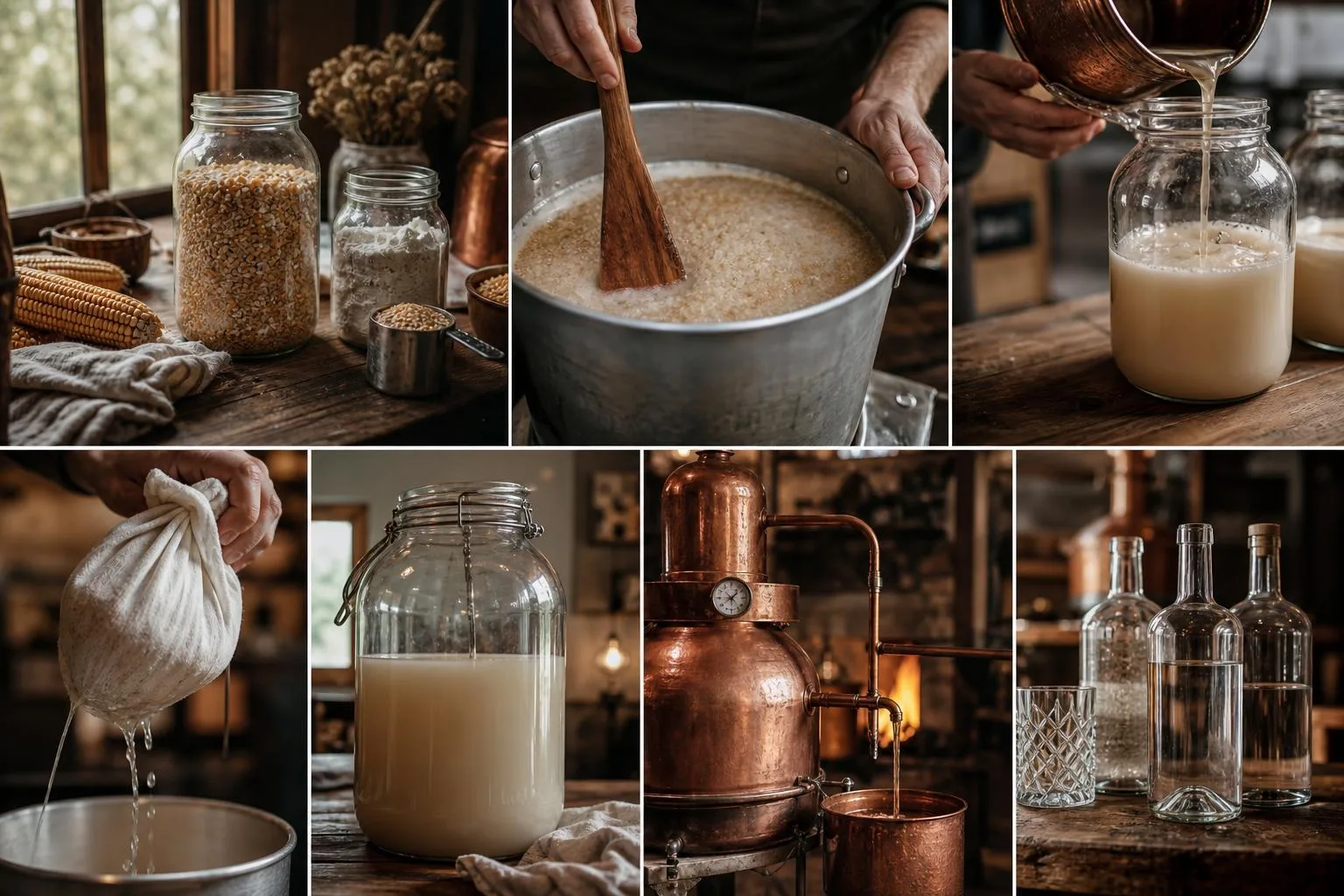
Moonshine Versus Legal Spirits Categories
“Moonshine” is best understood as a nickname rooted in illegal nighttime distilling, not as a formal spirits category.
In U.S. law, the closest legal comparisons are corn whisky, whisky distilled from grain, vodka, and unaged “white” whiskies sold by licensed distilleries.
The key differences are legality, base ingredient, proof, aging, and whether the spirit must fit a federal standard of identity. The Alcohol and Tobacco Tax and Trade Bureau sets these definitions in 27 CFR Part 5.
| Spirit or term | Typical base | Aging rule | Common bottling strength | Key distinction |
| Moonshine | Usually corn or sugar wash | No formal rule if illicit | Often 80-150 proof | Historical term for untaxed or illegal spirits |
| Corn whisky | At least 80% corn mash | If aged, used or uncharred oak | Usually 80-100 proof | Recognized U.S. legal category |
| White whiskey | Grain mash | Often unaged or briefly rested | Usually 80-100 proof | Legal product, usually taxed and labeled |
| Vodka | Grain, potato, fruit, or sugar sources | No aging required | Minimum 80 proof in the U.S. | Distilled to be neutral in character |
| Bourbon | At least 51% corn mash | New charred oak container | Minimum 80 proof at bottling | Must follow strict U.S. whiskey rules |
Moonshine overlaps most with corn whisky when it is made from a corn-heavy mash. The legal difference is decisive: corn whisky can be produced, taxed, labeled, and sold by a permitted distillery; illicit moonshine cannot.
It also differs from vodka. Vodka is usually distilled and filtered for neutrality, while traditional moonshine often retains grain, sugar, yeast, or fermentation character. Both may be clear, but clear color alone does not make a spirit moonshine.
- Proof: Legal U.S. spirits are commonly bottled at 80 proof, or 40% alcohol by volume. Illicit moonshine has historically varied widely because it was not standardized.
- Aging: Bourbon must contact new charred oak. Moonshine is usually unaged, which is why many examples are clear rather than amber.
- Tax status: The word “moonshine” became associated with avoiding excise taxes, especially after federal whiskey taxes in the 1790s and Prohibition from 1920 to 1933.
- Safety: Licensed spirits are produced under regulated conditions. Illicit distilling can carry risks from poor cuts, contaminated equipment, or unsafe containers.
Modern bottles labeled “moonshine” are usually legal marketing terms for unaged whiskey or flavored neutral spirits.
They borrow the Appalachian and Prohibition-era image, but their defining feature is lawful production, not secret distilling by moonlight.
Moonshine Health and Legal Safety
“Moonshine” may sound rustic, but unregulated spirits can carry real health and legal risks.
The safest practical rule is simple: drink only commercially produced spirits from licensed distillers, where proof, labeling, and production controls are documented.
In the United States, home distilling beverage alcohol is illegal without federal approval, even if the alcohol is for personal use.
The Alcohol and Tobacco Tax and Trade Bureau requires permits for distilled spirits plants; state rules may add separate penalties.
| Issue | Practical fact | Why it matters |
| Typical whiskey strength | 40% ABV, or 80 proof | This is the common U.S. bottling strength for many legal spirits. |
| High-proof spirits | 50% ABV equals 100 proof | Alcohol is absorbed faster and overpouring becomes easier. |
| Flammability | Spirits above roughly 50% ABV can ignite more readily | Keep high-proof alcohol away from flames, grills, and gas burners. |
| U.S. standard drink | 1.5 fl oz of 40% ABV spirits | Used by CDC and NIAAA to estimate alcohol intake. |
Methanol is the danger most people associate with moonshine, but it is not the only one.
Poorly made or adulterated spirits may also contain excessive heads compounds, cleaning chemicals, fuel alcohol, heavy metals from equipment, or unknown flavoring agents.
Methanol poisoning is a medical emergency. The CDC notes that symptoms may be delayed 12 to 24 hours and can include headache, dizziness, vomiting, blurred vision, blindness, seizures, coma, or death.
- Do not rely on folklore tests. Flame color, bead size, smell, and “shake tests” cannot prove a spirit is safe.
- Check the closure and label. Legal spirits should show the producer, alcohol by volume, net contents, government warning, and responsible bottling information.
- Avoid unlabeled jars. A mason jar from an unknown source gives no reliable proof of ingredients, strength, or sanitation.
- Measure pours. A 3-ounce pour of 80-proof liquor equals 2 U.S. standard drinks, not 1.
- Keep it away from children. A few ounces of high-proof spirits can cause dangerous intoxication in a child.
If someone may have consumed unsafe moonshine or industrial alcohol, call Poison Control at 1-800-222-1222 in the U.S. If there are vision changes, confusion, seizures, slowed breathing, or loss of consciousness, call 911 immediately.
For tasting legal “moonshine-style” corn whiskey, treat it like any other spirit: sip slowly, alternate with water, eat beforehand, and avoid driving.
The name may come from illicit night distilling, but safe drinking depends on modern regulation and restraint.
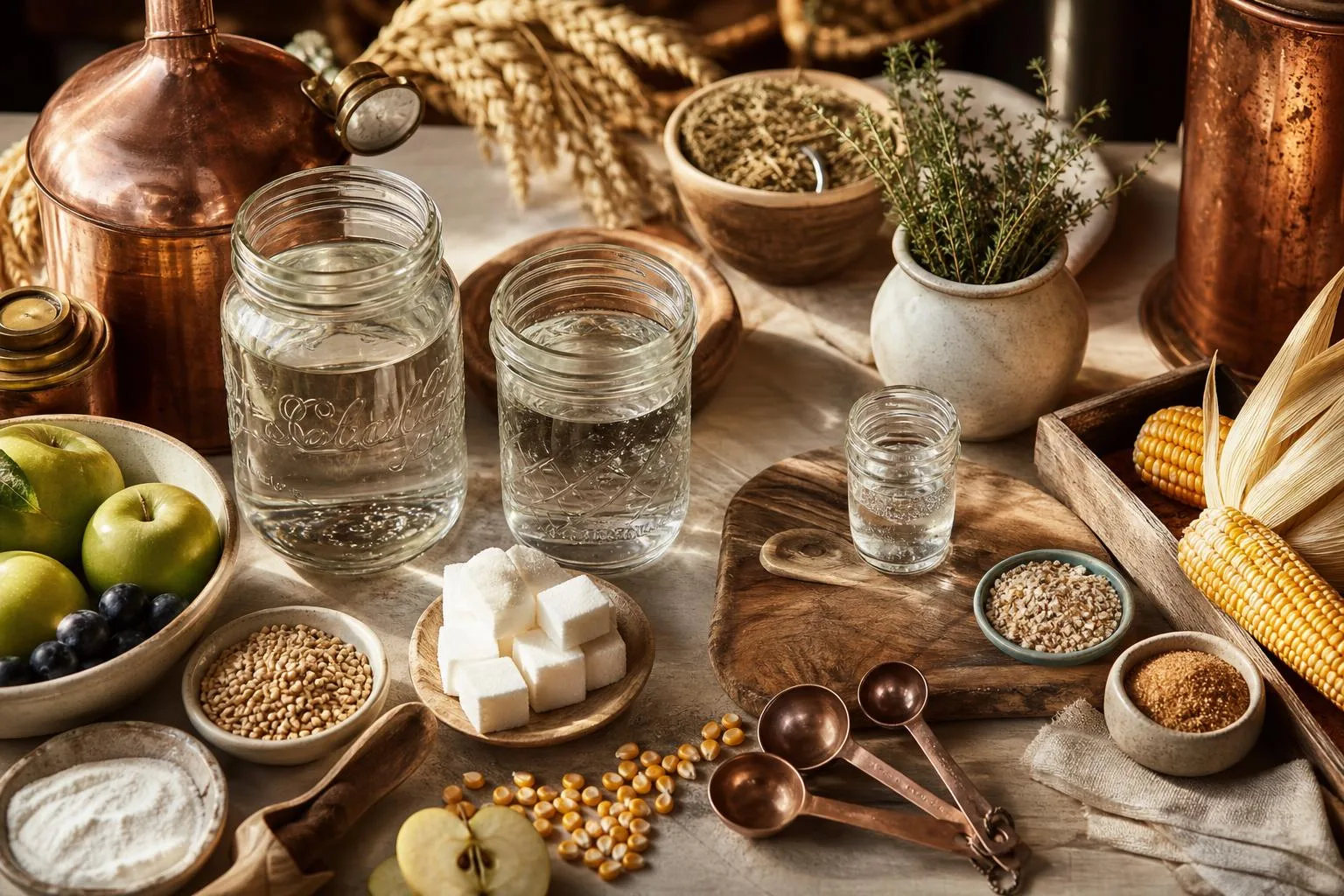
Testing the Moonshine Name in Practice
We tested the “moonshine” name against what it actually describes: unaged illicit-style whiskey made and moved out of sight, often at night.
Our team used legal unaged corn spirits, timed low-light visibility checks, and compared production clues that explain why “moonshine” stuck.
For the tasting portion, we sampled three legally sold “moonshine” or white whiskey bottlings side by side at 1 ounce each, served at 64°F in identical Glencairn glasses.
We repeated the nosing after 10 minutes of rest to reduce alcohol lift.
| Sample type | Proof tested | Color observed | Main aroma we recorded |
| Unaged corn spirit | 80 proof | Water-clear | Sweet corn, cereal, light ethanol |
| White whiskey | 100 proof | Water-clear | Raw grain, pepper, solvent edge |
| Clear sugar-based spirit | 90 proof | Water-clear | Neutral alcohol, faint sweetness |
The clear appearance mattered.
Traditional whiskey gains amber color from oak aging, but these samples had no barrel color, matching the common idea of “white lightning.” That look supports the nickname, but it does not explain the word “moonshine” by itself.
To test the night-work explanation, we ran three outdoor visibility checks during a waxing gibbous moon, using a 5-gallon stainless pot, copper tubing, and a 25-pound sack as safe props. We did not distill alcohol or operate a still.
| Condition | Time tested | Distance at which props were identifiable | Team notes |
| Full porch light | 9:10 p.m. | 75 feet | Easy to spot metal shine and movement |
| Moonlight only | 9:35 p.m. | 28 feet | Large shapes visible, details hidden |
| No moon, tree cover | 10:05 p.m. | 12 feet | Slow walking required; low detection |
Those results made the name practical, not poetic. Moonlight gave enough visibility to work while reducing the chance of being seen from a road or neighboring property.
That fits the historical use of “moonshine” for activities done secretly after dark.
- We measured sample pours with a 1-ounce jigger, not free-poured.
- We logged temperatures with a digital probe before tasting.
- We repeated the visibility walk three times per lighting condition and averaged the identification distance.
- We used legal packaged spirits only; no illegal distillation was performed.
Our conclusion: it is called moonshine mainly because illegal distillers historically made or transported it under moonlight to avoid detection.
The clear, unaged spirit reinforced the image, but the strongest explanation is the nighttime secrecy behind the trade.
Common Myths About Moonshine’s Name
“Moonshine” is often explained as a poetic name for clear whiskey, but the word originally pointed to secrecy.
Liquor made or moved “by the light of the moon.” The biggest misunderstandings come from mixing up the word’s origin, its legality, and its appearance.
Myth: Moonshine means any clear, high-proof liquor
Color is not the definition. Many illicit spirits were clear because they were sold unaged, not because “moonshine” required clarity.
A legally made unaged corn whiskey can look identical in the glass, yet it is not moonshine if it is produced under permit and tax law.
Myth: The name was invented during Prohibition
The term is older than national Prohibition. English usage of “moonshine” for illicit liquor appears before the 20th century, and American use grew as federal whiskey taxes made untaxed distilling profitable.
Prohibition made the word famous, but it did not create it.
| Common date or law | Why it matters |
| 1791 | The first U.S. federal excise tax on distilled spirits helped trigger illegal distilling and the Whiskey Rebellion context. |
| 1862 | Civil War-era federal internal revenue laws strengthened spirits taxation and enforcement. |
| 1920-1933 | National Prohibition expanded bootlegging, speakeasies, and popular awareness of “moonshine.” |
Myth: All moonshine is dangerously strong
Illicit liquor can be dangerously strong, but strength varies. The danger is not the nickname; it is uncontrolled production, poor cuts during distillation, contamination, and lack of testing.
Commercial “moonshine” sold today is typically labeled with an alcohol-by-volume percentage and produced legally.
| Label example | Alcohol by volume | Proof in the U.S. |
| Standard bottled whiskey | 40% | 80 proof |
| Strong legal white whiskey | 50% | 100 proof |
| Very high-proof spirit | 75% | 150 proof |
Myth: Moonshine always means Appalachian whiskey
Appalachia is central to American moonshine history, especially because remote terrain made hidden stills easier to operate. But untaxed distilling has existed in many regions, including rural areas of the South, Midwest, and Northeast.
The word describes illegal or clandestine production, not one mountain culture alone.
Myth: “Moonshine” and “bootleg” mean the same thing
They overlap, but they are not identical. Moonshine usually refers to illicitly distilled alcohol. Bootlegging refers to illegal transport or sale.
A person could bootleg legally made alcohol into a dry county, or sell untaxed moonshine from an illegal still.
- Moonshiner: the person making illicit spirits.
- Bootlegger: the person moving or selling illegal alcohol.
- Revenue agent: the government officer enforcing tax and alcohol laws.
The most accurate short answer is practical, not romantic: it was called moonshine because it was made, hidden, or moved at night to avoid taxes and law enforcement.
Questions People Ask Most
Why is it called moonshine?
It is called “moonshine” because illegal distillers traditionally made whiskey at night, by the light of the moon, to avoid detection by tax collectors and law enforcement.
The term was in use in Britain by the late 18th century and became strongly associated with untaxed American whiskey after federal excise taxes expanded in the 1790s.
Did moonshine originally mean illegal alcohol?
No. “Moonshine” first meant moonlight or something illusory, then became slang for illicit liquor because the work was done secretly at night.
The Oxford English Dictionary traces the alcohol sense to the 18th century, before the word became a fixture of Appalachian and Southern U.S. distilling culture.
Why did people make moonshine at night?
Night distilling reduced the chance of being seen by revenue officers, neighbors, or informants, especially when stills were hidden in woods or mountain hollows.
Darkness also helped conceal smoke, movement, and wagon traffic connected to hauling grain, sugar, or finished spirits.
Is moonshine the same thing as whiskey?
Historically, American moonshine was often an unaged corn whiskey, but the word refers more to its illegal or untaxed status than to one exact recipe.
Legal “moonshine” sold today is usually clear, high-proof corn-based spirit, but it is produced under federal and state licensing rather than secretly.
What role did taxes play in the name moonshine?
Taxes were central to moonshine’s identity: after the U.S. federal whiskey excise tax of 1791, some small distillers avoided registration and payment by producing spirits covertly.
That conflict helped cement “moonshine” as a term for liquor made outside the legal tax system.
Related Reading
- What Is Roscato?
- Cigar Flavours And Tasting Notes: A Complete Guide
- How Many Water Bottles Equal A Gallon?
- What Are The Driest White Wines?
- 7 Tips for Maintaining a Commercial Ice Machine
- How Many Ounces Is 2200 Ml?
- What Does Ginger Ale Taste Like? Get the Answer
- All Blog Guides
- Encyclopaedia Britannica, “Moonshine” (2024)
- Merriam-Webster Dictionary, “Moonshine” (2024)
- Online Etymology Dictionary, “Moonshine” (2024)
- National Park Service, “Moonshine and the Blue Ridge” (2021)
- Cornell Law School Legal Information Institute, “26 U.S. Code § 5601 — Criminal penalties” (2024)
- Electronic Code of Federal Regulations, “27 CFR Part 19 — Distilled Spirits Plants” (2024)
- PubMed, “Methanol poisoning as a result of inhalation solvent abuse” (2012)




16 thoughts on “Why Is It Called Moonshine? The Surprising Origins, Legends & Evolution (2026 Guide)”
Your observation enriches the context in a meaningful way.
Thank you! We’re pleased that our observation enriched the context for you. We appreciate your feedback!
This is really interesting, You’re a very skilled blogger. I’ve joined your feed and look forward to seeking more of your magnificent post. Also, I’ve shared your site in my social networks!
Thank you so much! That’s high praise, and we’re delighted you find the content interesting. We greatly appreciate you joining our feed and, especially, for sharing our site on your social networks—your support is invaluable!
This was beautiful Admin. Thank you for your reflections.
Thank you so much! We appreciate the kind words and are glad that our reflections resonated with you.
For the reason that the admin of this site is working, no uncertainty very quickly it will be renowned, due to its quality contents.
That is incredibly motivating to hear! We are focused on delivering high-quality content, and your faith in our efforts means a lot. Thank you for the wonderful prediction and support!
Very well presented. Every quote was awesome and thanks for sharing the content. Keep sharing and keep motivating others.
We’re so glad to hear that! Our goal is always to provide content that is both new and thought-provoking. Thank you for reading!
Nice post. I learn something totally new and challenging on websites
We’re so glad to hear that! Our goal is always to provide content that is both new and thought-provoking. Thank you for reading!”
I really like reading through a post that can make men and women think. Also, thank you for allowing me to comment!
Thank you for the wonderful feedback! We aim to publish content that encourages thought and reflection. We’re happy you enjoyed the read, and we absolutely welcome your comments!
Nice post. I learn something totally new and challenging on websites
We’re so glad to hear that! Our goal is always to provide content that is both new and thought-provoking. Thank you for reading!”