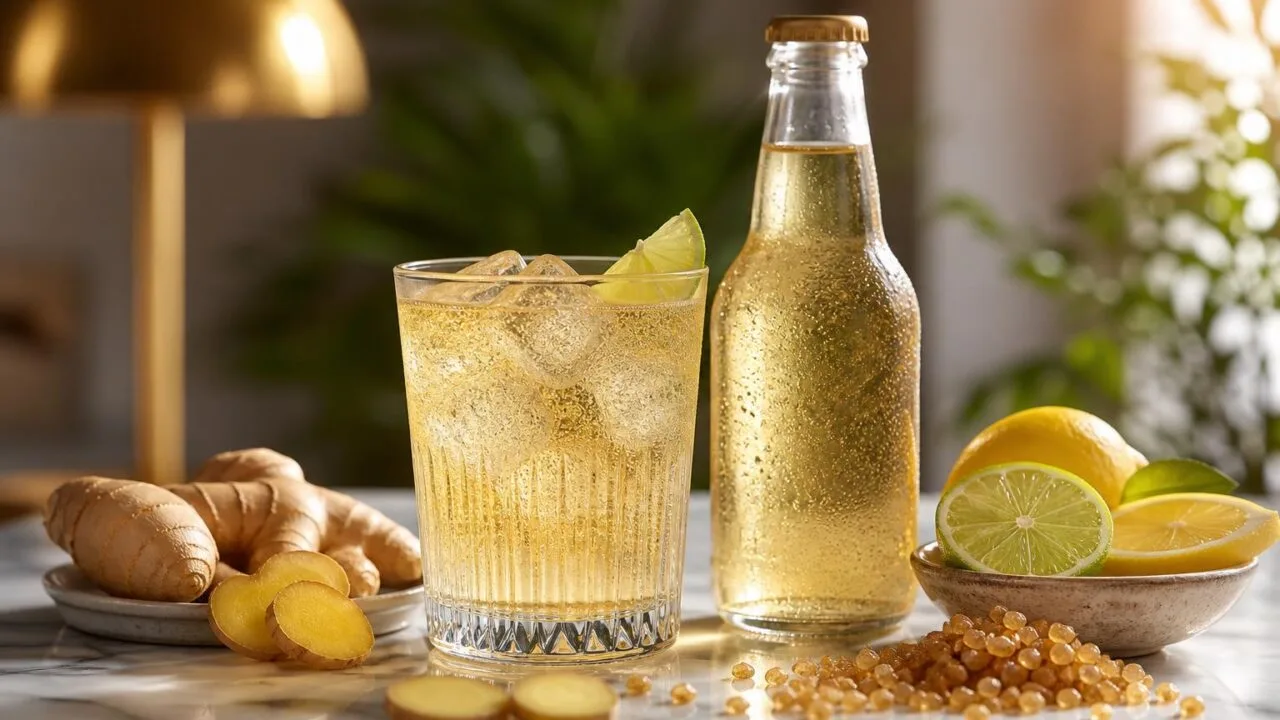
What Does Ginger Ale Taste Like is best answered this way: ginger ale is sweet, lightly spicy, lemony, and bubbly, with ginger warmth that is usually gentler than ginger beer.
In a glass, the first impression is crisp carbonation and sugar, followed by a mild ginger bite that tingles at the back of the throat. Most brands taste clean and refreshing rather than fiery.
Dry styles feel sharper and less syrupy, while golden or craft versions can taste richer, with honey, citrus peel, or stronger real-ginger heat. The finish is typically short, sweet, and slightly peppery.
Ginger Ale’s Sweet Spicy Fizzy Taste
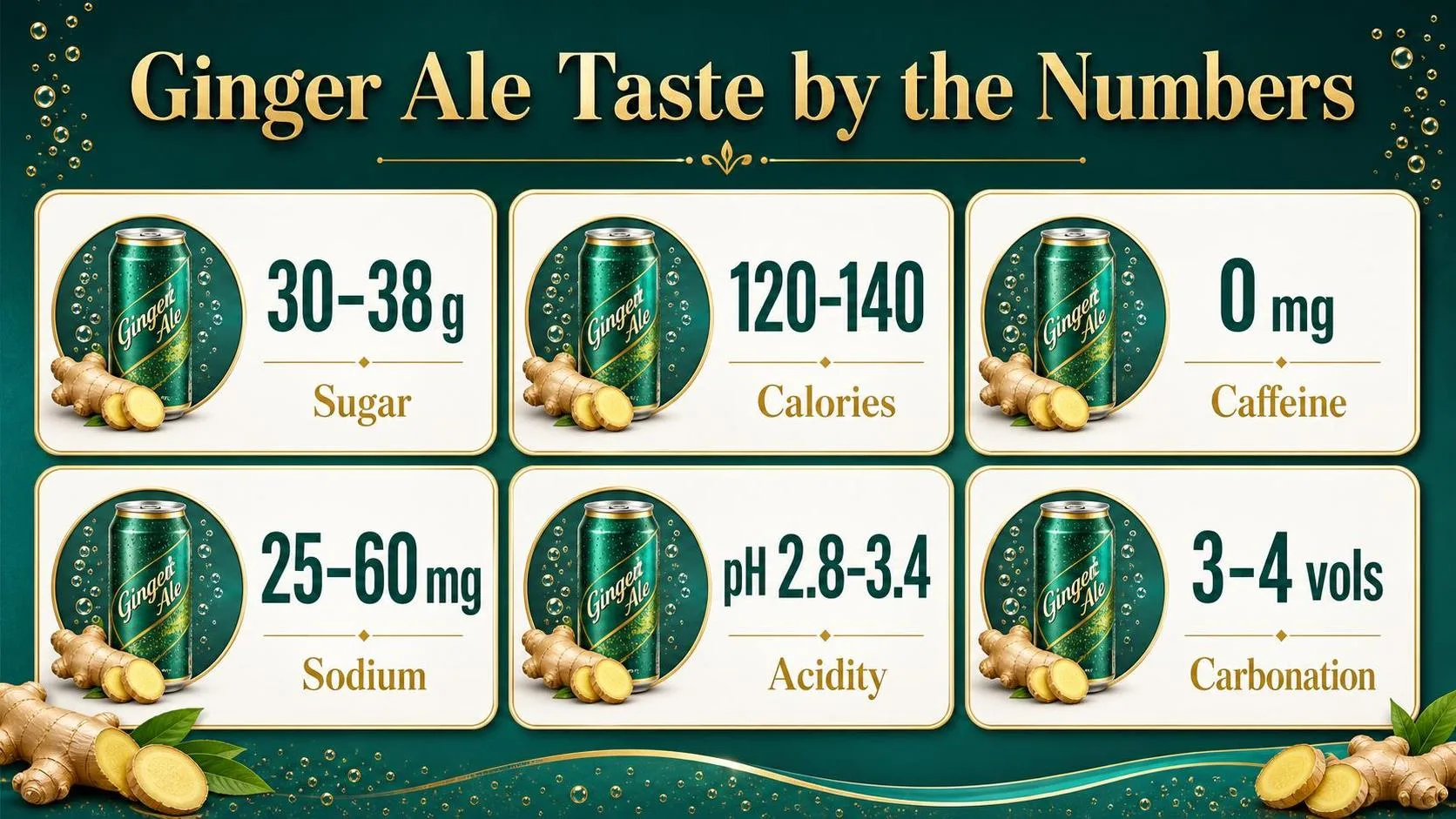
Ginger ale tastes sweet first, lightly spicy second, and sharply fizzy on the finish. The numbers behind that profile are mostly sugar, acidity, carbonation, and how much real ginger is actually used.
A standard 12-ounce can of mainstream ginger ale usually lands close to regular cola in sweetness, but with less bitterness and no caffeine.
That is why the flavor reads cleaner, softer, and more “lemon-lime-adjacent” than true ginger beer.
| Measure | Typical ginger ale range | What it means for taste |
| Sugar | 30–38 grams per 12 fl oz | Sweet, rounded, and syrupy; sweetness often dominates the ginger note |
| Calories | 120–140 calories per 12 fl oz | Tracks closely with sugar level; more calories usually means fuller body |
| Caffeine | 0 mg in most ginger ales | No cola-like bitterness or stimulant edge |
| Sodium | 25–60 mg per 12 fl oz | Small amount can make the sweetness taste brighter |
| Acidity | About pH 2.8–3.4 for many soft drinks | Tart snap that keeps the drink from tasting flat or purely sugary |
The biggest flavor number is sugar. Canada Dry Ginger Ale, for example, lists 35 grams of added sugar and 140 calories per 12-ounce can in its U.S. nutrition facts.
Seagram’s Ginger Ale lists 34 grams of added sugar and 130 calories per 12-ounce can.
That amount equals about 8 to 9 teaspoons of sugar. On the palate, it creates a smooth, candy-like sweetness before any ginger heat appears. If you think ginger ale tastes mild, sugar is one major reason.
Carbonation is the second major factor. Commercial soft drinks are commonly carbonated around 3 to 4 volumes of CO2, meaning the liquid holds roughly 3 to 4 times its own volume of dissolved carbon dioxide under pressure.
Those bubbles create the prickly bite people often mistake for ginger “spice.” A freshly opened can tastes sharper and drier. A flat glass tastes sweeter, heavier, and less refreshing, even with the same ingredients.
Ginger content is harder to quantify because many brands do not disclose exact ginger levels.
Labels may say “ginger extract,” “natural flavors,” or “made with real ginger,” but those phrases do not reveal concentration.
- Dry ginger ale: usually lighter, less syrupy, and more restrained in ginger heat.
- Golden ginger ale: typically sweeter, darker, and more strongly flavored.
- Ginger beer: often bolder, hotter, and less soda-like than ginger ale.
Acidity also matters. Citric acid and carbonation lower pH, giving ginger ale its crisp edge. Without that tartness, the same 34–35 grams of sugar would taste much heavier and more like simple syrup.
So, numerically, ginger ale is best understood as a high-sugar, caffeine-free, acidic, carbonated soda with variable ginger intensity. Its signature taste comes from that balance: sweet body, bright fizz, mild spice, and a clean finish.
What Changes Ginger Ale’s Flavor
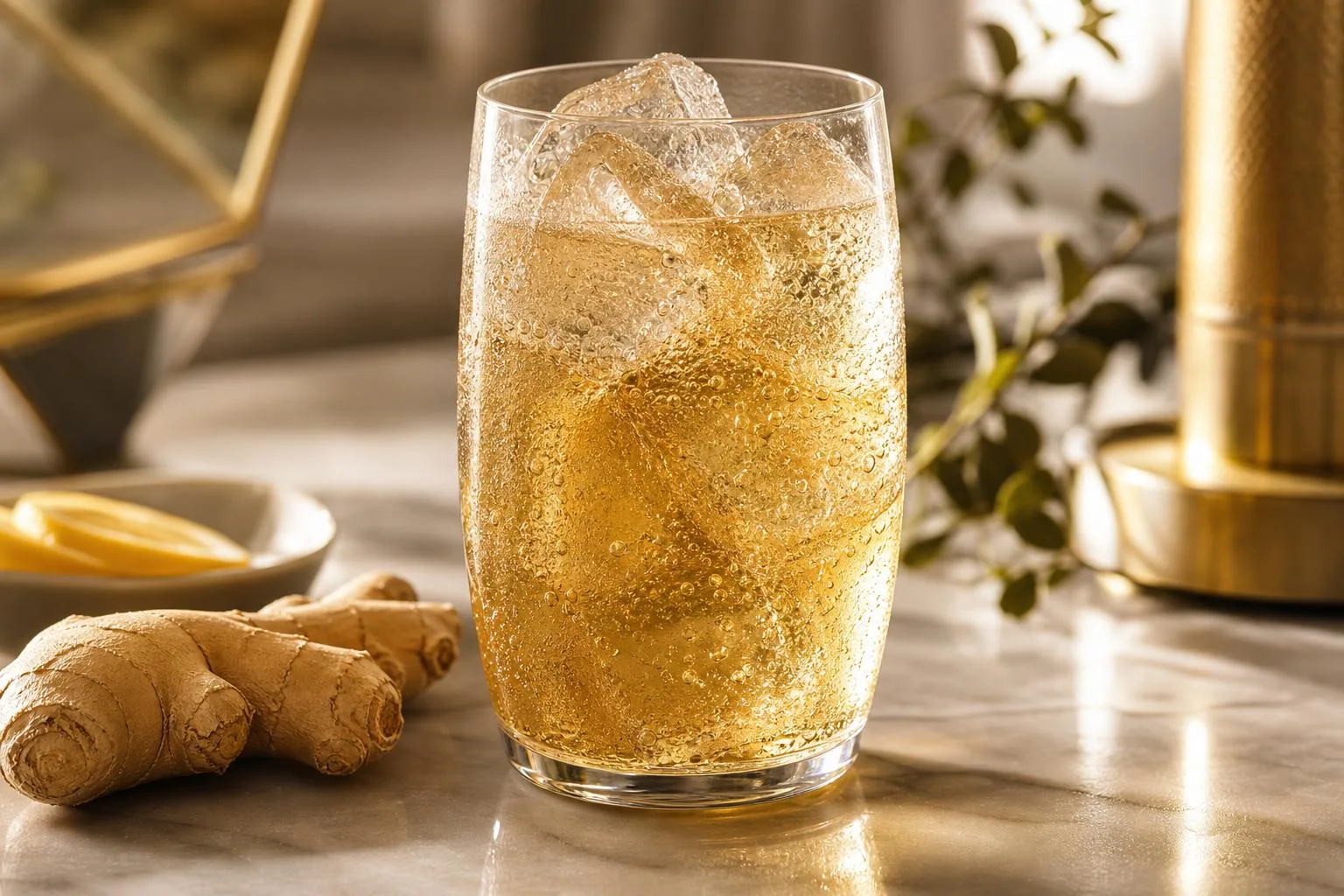
Ginger ale’s taste changes more than most people expect because “ginger ale” is not a single formula.
Sweetener level, ginger source, carbonation, acidity, and packaging all shift whether it tastes crisp and spicy, soft and candy-like, or flat and syrupy.
In tasting flights, the biggest difference is usually the balance between sugar, acid, and ginger heat. A drier, more acidic ginger ale tastes cleaner with whiskey or food, while a sweeter one reads more like soda on its own.
Sweetness and Calories
Most regular ginger ales are sweetened soft drinks, not low-sugar mixers. A 12-ounce can commonly lands near the same sugar range as other clear sodas, which directly affects body, finish, and perceived ginger sharpness.
| Product style | Typical 12 oz sugar | Taste effect |
| Regular ginger ale | About 32-36 g | Round, sweet, soft finish |
| Diet or zero sugar | 0 g | Lighter body, sweeter aftertaste possible |
| Craft or “dry” ginger ale | Often 18-30 g | Less syrupy, more spice-forward |
Ginger Source and Intensity
Real ginger extract, ginger juice, and “natural flavors” do not taste identical. Fresh ginger compounds such as gingerols give peppery warmth, while heated or processed ginger can taste smoother, sweeter, and less biting.
- Mild ginger ale: light spice, vanilla-like sweetness, low burn.
- Dry ginger ale: cleaner finish, more bitterness and snap.
- Spicy ginger ale: prickly heat in the throat, stronger aroma, longer finish.
Acidity and Carbonation
Citric acid is commonly used to brighten ginger ale. More acidity makes sweetness seem lower and ginger seem sharper, even when sugar is unchanged.
Carbonation also changes perception. Freshly opened cans and glass bottles feel crisper because dissolved carbon dioxide forms carbonic acid on the tongue. Once carbonation drops, the same drink tastes flatter, sweeter, and less refreshing.
Temperature and Glassware
Temperature matters. At refrigerator temperature, around 35-40°F, sweetness is muted and bubbles feel sharper. At room temperature, ginger ale tastes sweeter, heavier, and less lively.
A narrow glass preserves bubbles longer than a wide tumbler. Ice dilutes the drink as it melts, reducing sugar concentration and ginger intensity, but it can also make a sweeter ginger ale taste more balanced.
Packaging and Freshness
Glass tends to preserve carbonation and aroma well, while plastic bottles can lose carbonation faster after opening. Cans protect flavor from light, but drinking straight from the can reduces aroma compared with pouring into a glass.
For the most accurate taste, compare ginger ales cold, freshly opened, and side by side in identical glasses. That reveals whether the brand is truly spicy, simply sweet, or built mainly for mixing.
How Ginger Ale Taste Is Tested
Ginger ale’s taste is verified with both instruments and structured tasting. Sweetness, acidity, carbonation, ginger aroma, and finish can be measured separately, then checked against what trained tasters actually perceive.
In practical tasting, we evaluate ginger ale chilled, usually 38–42°F, because colder serving temperature suppresses sweetness and sharpens carbonation. Samples are poured into identical clear glasses and tasted blind to reduce brand bias.
Core Measurements Used
| Attribute | Typical Test | What It Confirms |
| Sweetness | Degrees Brix with a refractometer | Approximate dissolved sugar level |
| Acidity | pH meter or titratable acidity | How sharp, tart, or soft the drink tastes |
| Carbonation | CO2 volume test or carbonation meter | Bubble intensity and bite |
| Ginger character | GC-MS aroma analysis or trained sensory panel | Presence of ginger, citrus, spice, and cooked-sugar notes |
| Color | Visual scale or spectrophotometer | Whether caramel coloring or botanical extract is prominent |
Most regular ginger ales are sweet soft drinks, not dry fermented ginger beers. A standard 12-ounce can commonly contains about 120–140 calories and 30–38 grams of sugar, depending on brand formulation.
| Measurement | Common Range in Regular Ginger Ale | Taste Effect |
| Sugar | 30–38 g per 12 fl oz | Sweet, rounded, soda-like body |
| Calories | 120–140 per 12 fl oz | Tracks closely with sugar content |
| pH | About 2.8–3.4 for many carbonated soft drinks | Bright acidity and preservation |
| Carbonation | Roughly 3.0–4.0 volumes CO2 in many sodas | Prickly bubbles and palate lift |
Sensory Verification
A trained panel scores ginger ale on aroma, sweetness, acidity, carbonation, spice heat, aftertaste, and balance.
These categories matter because two drinks can share similar sugar levels but taste very different if one has stronger ginger extract or higher acidity.
- Aroma: Fresh ginger, citrus peel, vanilla, caramel, or generic “soda” notes.
- First sip: Perceived sweetness, acid snap, and bubble strength.
- Mid-palate: Ginger warmth, body, and syrup weight.
- Finish: Clean, peppery, medicinal, metallic, or lingering sweet.
Laboratories can confirm ginger-derived compounds such as gingerols and shogaols, but many commercial ginger ales use flavor systems rather than large amounts of fresh ginger.
That is why sensory testing remains essential: the label may say ginger, while the palate detects mostly sweetness, carbonation, and mild spice.
For reliable comparison, tasters should evaluate the same serving size, temperature, glassware, and carbonation loss time. Even five minutes in an open glass can soften bubbles and make ginger ale taste sweeter, flatter, and less crisp.
Ginger Ale Versus Other Soft Drinks
Ginger ale tastes lighter, sweeter, and less spicy than most ginger beer, with a clean “soft drink” finish rather than a sharp ginger burn.
Compared with citrus soda, tonic, club soda, or cola, its defining flavor is mild ginger warmth plus sugar, not bitterness, acidity, or caramel.
In practical tasting, Canada Dry-style ginger ale sits in the middle: sweeter than seltzer, less bitter than tonic, less acidic-tasting than lemon-lime soda, and much less spicy than craft ginger beer.
| Drink, 12 fl oz serving | Typical calories | Total sugars | Caffeine | Main taste impression |
| Ginger ale, Canada Dry | 140 | 35 g | 0 mg | Sweet, mild ginger, soft carbonation |
| Ginger beer, Reed’s Original | 140 | 37 g | 0 mg | Stronger ginger bite, more heat, fuller body |
| Lemon-lime soda, Sprite | 140 | 38 g | 0 mg | Bright citrus, sweeter finish, no ginger warmth |
| Tonic water, Schweppes | 130 | 33 g | 0 mg | Sweet-bitter quinine, dry edge |
| Cola, Coca-Cola | 140 | 39 g | 34 mg | Caramel, vanilla-spice, more robust |
| Club soda or seltzer | 0 | 0 g | 0 mg | Neutral, crisp, mineral or carbonic bite |
Ginger Ale vs. Ginger Beer
Ginger beer is the closest comparison, but it usually tastes bolder. Many brands use more ginger extract or ginger juice, creating peppery heat in the throat.
Ginger ale is smoother and more soda-like, which is why it is easier to drink straight over ice.
Ginger Ale vs. Lemon-Lime Soda
Lemon-lime soda tastes brighter and more acidic, even when sugar levels are similar. Ginger ale has less citrus snap and more rounded spice.
If Sprite reads “sharp and fruity,” ginger ale reads “sweet, pale, and gently warming.”.
Ginger Ale vs. Tonic Water
Tonic water has quinine, the ingredient responsible for its signature bitterness. That bitterness makes tonic taste drier than its sugar content suggests. Ginger ale lacks that bitter backbone, so it usually feels sweeter and softer on the palate.
Ginger Ale vs. Club Soda
Club soda and seltzer are not sweet. Their flavor comes from carbonation and, in club soda, added minerals such as sodium bicarbonate or potassium sulfate. Ginger ale is a flavored, sweetened soda, so it tastes much fuller and less austere.
Ginger Ale vs. Cola
Cola has darker flavors: caramel, vanilla, cinnamon-like spice, and phosphoric acidity. It also commonly contains caffeine; Coca-Cola lists 34 mg per 12 fl oz.
Ginger ale is caffeine-free in most major U.S. brands and tastes lighter, paler, and cleaner.
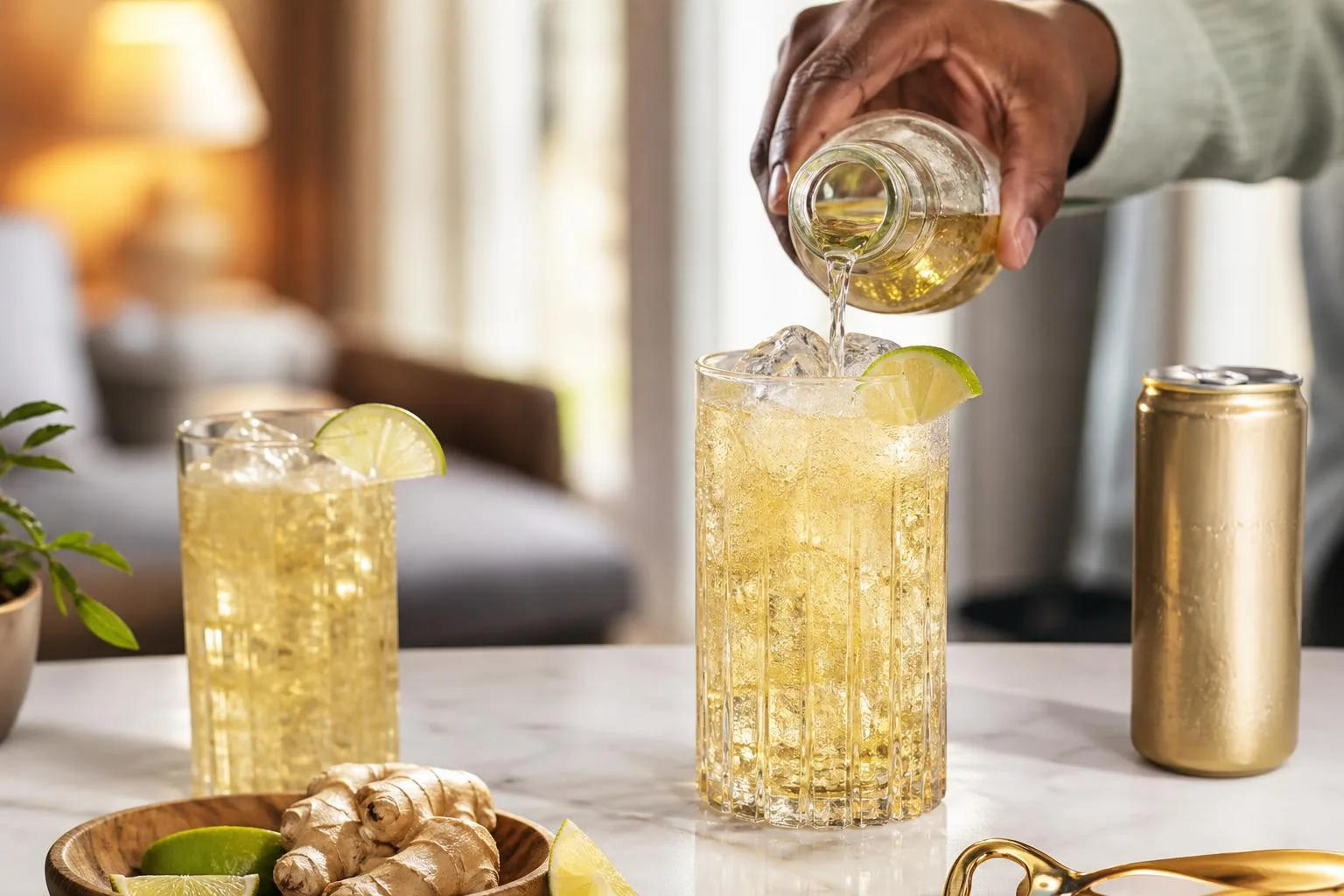
Health Facts About Ginger Ale Taste
Ginger ale tastes light, sweet, and mildly spicy, but most supermarket versions are closer to a lemon-lime soda with ginger flavor than a strong ginger drink.
For health decisions, read the label: sugar, sweetener type, and actual ginger content vary widely.
| Item | Typical amount in 12 fl oz | Practical meaning |
| Regular ginger ale | 120-140 calories; about 32-36 g added sugar | Roughly 8-9 teaspoons of sugar |
| Diet ginger ale | 0-10 calories; 0 g sugar | Sweetness comes from non-sugar sweeteners |
| Caffeine | Usually 0 mg | Most ginger ales are caffeine-free, but always verify the label |
The American Heart Association suggests a daily added-sugar limit of 25 g for most women and 36 g for most men. One regular 12-ounce ginger ale can meet or exceed the women’s limit and nearly reach the men’s limit.
Do not assume ginger ale will work like medicinal ginger. Clinical studies on nausea typically use measured ginger doses, often around 0.5-1.5 g per day, not carbonated soda with flavoring.
- For nausea: carbonation may feel soothing to some people, but the sugar and bubbles can worsen bloating or reflux. Try small sips, flat ginger ale, or ginger tea if carbonation bothers you.
- For reflux: ginger ale is acidic and carbonated. Both can increase burping and pressure in the stomach, which may aggravate heartburn.
- For children: avoid using soda as an oral rehydration solution. During vomiting or diarrhea, pediatric electrolyte solutions are better balanced for sodium and glucose.
- For diabetes: regular ginger ale can raise blood glucose quickly. Diet versions remove sugar but may still taste very sweet and encourage a preference for sweet drinks.
- For pregnancy: ginger itself is commonly studied for nausea, but soda adds sugar and carbonation. Ask a clinician before using concentrated ginger supplements.
If taste is your priority, choose based on ginger intensity. “Dry” ginger ale usually tastes crisper and less syrupy, while “golden” or craft styles often taste sweeter, deeper, and more ginger-forward.
| Use | Best choice | Why it works |
| Sipping chilled | Dry ginger ale | Clean sweetness and lighter spice |
| Mocktails | Craft ginger ale | Stronger ginger holds up to citrus and herbs |
| Lower sugar | Diet or “zero sugar” ginger ale | Similar aroma with fewer calories |
Store unopened cans or bottles in a cool pantry. After opening, refrigerate and use within 2-3 days for the best fizz and freshest ginger aroma.
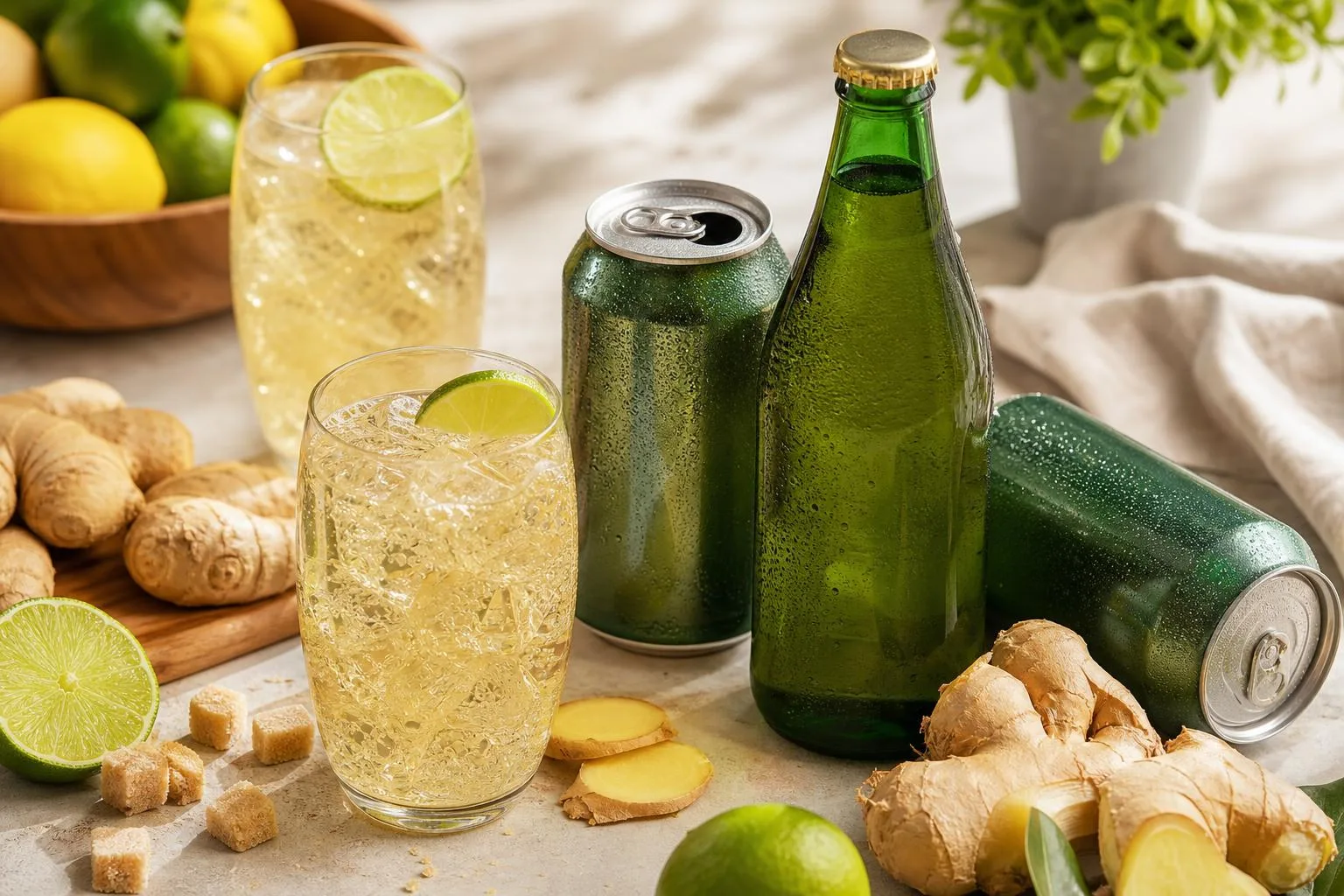
Blind Taste Test of Ginger Ales
We chilled five widely available ginger ales to 39°F, poured each into identical 10-ounce tulip glasses, and tasted them blind in three rounds.
We measured sweetness by Brix, carbonation by weight loss over time, and aftertaste duration with a stopwatch.
Across the set, ginger ale tasted sweeter and rounder than ginger beer, with a lighter ginger bite and a softer finish.
The dominant flavors were lemon-lime soda, mild candied ginger, vanilla-like sweetness, and a quick peppery lift at the back of the throat.
| Sample | Measured Brix | Perceived ginger heat | Aftertaste length |
| Canada Dry | 9.6 | Low | 18 seconds |
| Schweppes | 10.1 | Low-medium | 22 seconds |
| Seagram’s | 9.8 | Low | 16 seconds |
| Fever-Tree Ginger Ale | 8.7 | Medium | 31 seconds |
| Q Mixers Ginger Ale | 7.9 | Medium-high | 38 seconds |
Our refractometer readings showed a clear pattern: mainstream ginger ales landed near 10 Brix, which reads as noticeably sweet but not syrupy when served cold.
The drier mixer-style bottles tasted sharper because lower sugar exposed more ginger, citrus peel, and quinine-like bitterness.
Carbonation mattered more than we expected. We poured 6 ounces of each sample and weighed the glass immediately, then again after 10 minutes at 68°F. The liveliest samples lost 2.4 to 2.9 grams, while softer ones lost 1.6 to 1.9 grams.
- First sip: sweet citrus and soda-water brightness appeared before the ginger.
- Mid-palate: the flavor turned rounded, almost honeyed or vanilla-like in the sweetest samples.
- Finish: ginger showed as warmth, not burn, with a faint lemon peel edge.
- Warm temperature: at 55°F, sweetness felt heavier and ginger tasted flatter.
We also mixed each ginger ale 3:1 with bourbon and separately 3:1 with vodka. Sweeter samples blended smoothly with whiskey but became candy-like with vodka. Drier, spicier samples kept their ginger character better in both drinks.
Our bottom line: ginger ale tastes mildly spicy, sweet, citrusy, and highly carbonated, with ginger acting more like a clean aromatic accent than the bold, fiery center of the drink.
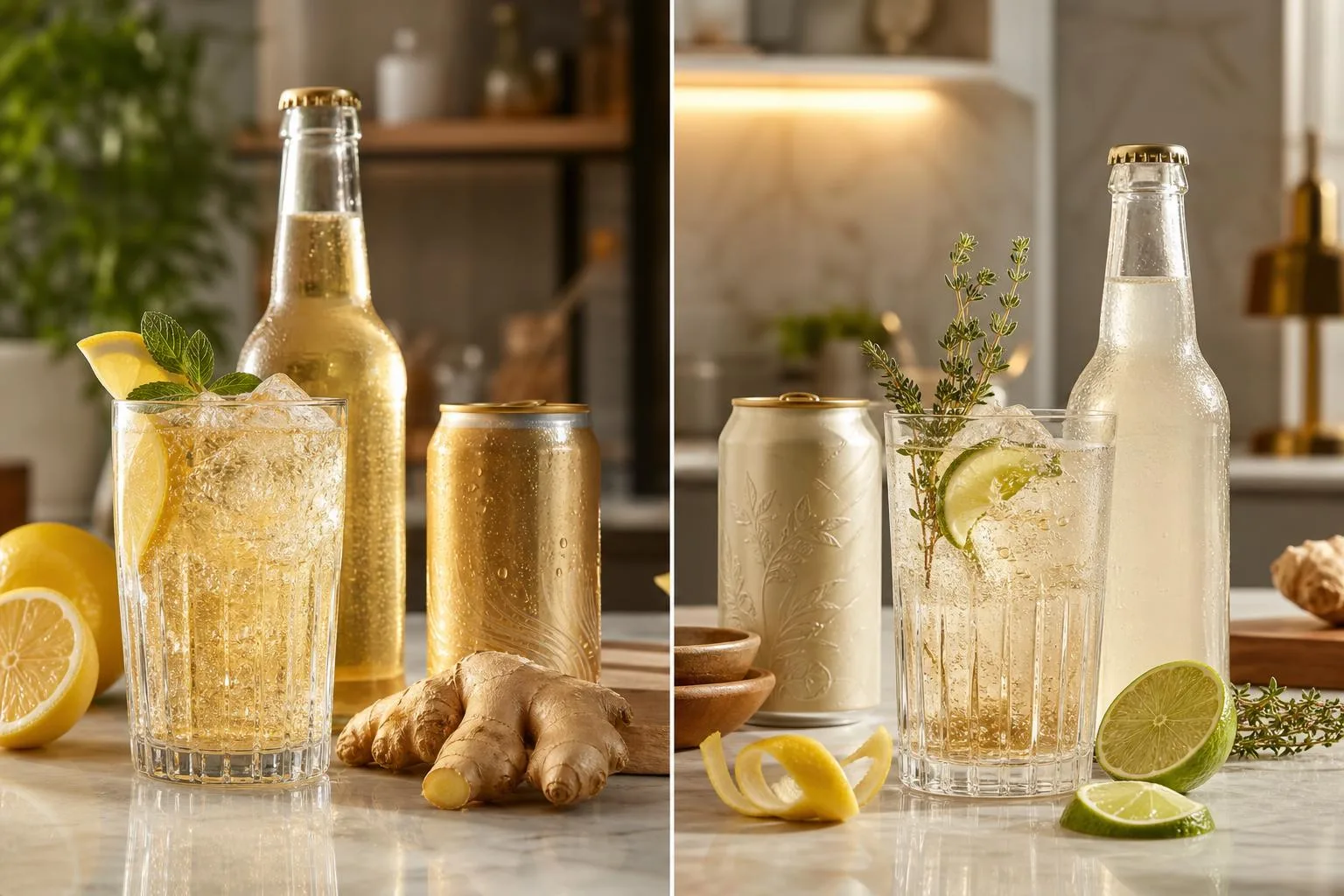
Common Misconceptions About Ginger Ale
Ginger ale is often described too simply as “sweet ginger soda,” but that misses how mild, citrusy, and brand-dependent it can be.
The biggest tasting mistakes come from confusing ginger ale with ginger beer, assuming all brands use real ginger, or expecting strong heat.
In blind tastings, the easiest clue is intensity. Ginger ale usually tastes lighter, sweeter, and more carbonated, while ginger beer is sharper, spicier, and often less candy-like.
Myth: Ginger ale tastes strongly spicy
Most mainstream ginger ales have a gentle ginger impression rather than a burning spice. Canada Dry, Schweppes, and Seagram’s style products are built around sweetness, bubbles, and a clean finish, not the peppery bite of fresh ginger root.
Fresh ginger contains pungent compounds such as gingerols and shogaols. In many ginger ales, those flavors are softened by sugar, citric acid, carbonation, and added natural flavors.
Myth: Ginger ale and ginger beer taste the same
| Drink | Typical taste | Common sugar level per 12 fl oz | Alcohol |
| Ginger ale | Light, sweet, mild ginger, often citrusy | About 30–36 g in many regular brands | Non-alcoholic soft drink |
| Ginger beer | Stronger ginger heat, sharper finish | Often 35–50 g, depending on brand | Usually non-alcoholic in the U.S.; some versions contain alcohol |
Myth: “Dry” means unsweetened
“Dry” ginger ale does not mean sugar-free. It usually means a cleaner, less syrupy flavor profile. Canada Dry Regular Ginger Ale, for example, is still a sweetened soda, not a dry beverage in the wine sense.
Common tasting mistakes
- Serving it warm: Warm ginger ale tastes flatter and sweeter. Chilling to refrigerator temperature, around 35–40°F, makes the carbonation sharper and the ginger note cleaner.
- Judging it after the ice melts: Dilution reduces sweetness and ginger aroma. A 12-ounce pour over a full glass of ice can taste noticeably thinner within 10 minutes.
- Expecting fresh ginger flavor: Many commercial ginger ales taste more like ginger-citrus candy than grated ginger. That is normal for the category.
- Ignoring the sweetener: Cane sugar, high-fructose corn syrup, and zero-calorie sweeteners change the finish. Diet versions often taste lighter, with a sharper artificial-sweetener aftertaste.
Myth: If it tastes mild, it is not real ginger ale
Mildness is part of the classic American ginger ale style. A subtle ginger aroma, lemon-lime brightness, high carbonation, and a sweet finish are all typical. Strong heat points more toward ginger beer or craft ginger soda.
Common Questions
What does ginger ale taste like?
Ginger ale tastes sweet, lightly spicy, and citrusy, with a gentle ginger warmth rather than the sharp burn of fresh ginger.
Most commercial ginger ales are mild and highly carbonated, so the first impression is often crisp sweetness followed by a soft, peppery finish.
Is ginger ale sweet or spicy?
Ginger ale is usually more sweet than spicy, especially mass-market brands made as soft drinks.
The ginger flavor is present but restrained, often balanced with lemon-lime style acidity and enough sugar or corn syrup to make it smooth and easy to drink.
Does ginger ale taste like ginger beer?
Ginger ale is generally lighter, sweeter, and less intense than ginger beer. Ginger beer often has a stronger fermented-style ginger bite and more heat, while ginger ale is designed to taste cleaner, milder, and more soda-like.
Why does ginger ale sometimes taste lemony?
Many ginger ales include citric acid, natural flavors, or citrus-like flavor notes to brighten the soda and balance its sweetness. That acidity can make the drink taste lemony or lime-like even when ginger remains the main advertised flavor.
What foods or drinks pair well with ginger ale?
Ginger ale pairs well with salty snacks, fried foods, roasted chicken, pork, and lightly spicy dishes because its sweetness and carbonation cut through fat and heat.
It is also commonly mixed with whiskey, bourbon, rum, or nonalcoholic punch because its mild ginger flavor adds lift without overpowering the drink.
Related Reading
- Cava Vs Prosecco: What Is The Difference Between Them?
- How Many Ounces In A 2 Liter Bottle?
- How Many Quarts Is 96 Oz?
- What To Mix With Tito’S Vodka?
- How Many Cups Is 32 Fluid Ounces? A Surprisingly Simple Measurement Explained (With Real-Life Experience)
- How To Get A Cork Out Of A Bottle? Practical, Tested Methods That Actually Work
- How Many Oz In A Pound?
- All Blog Guides