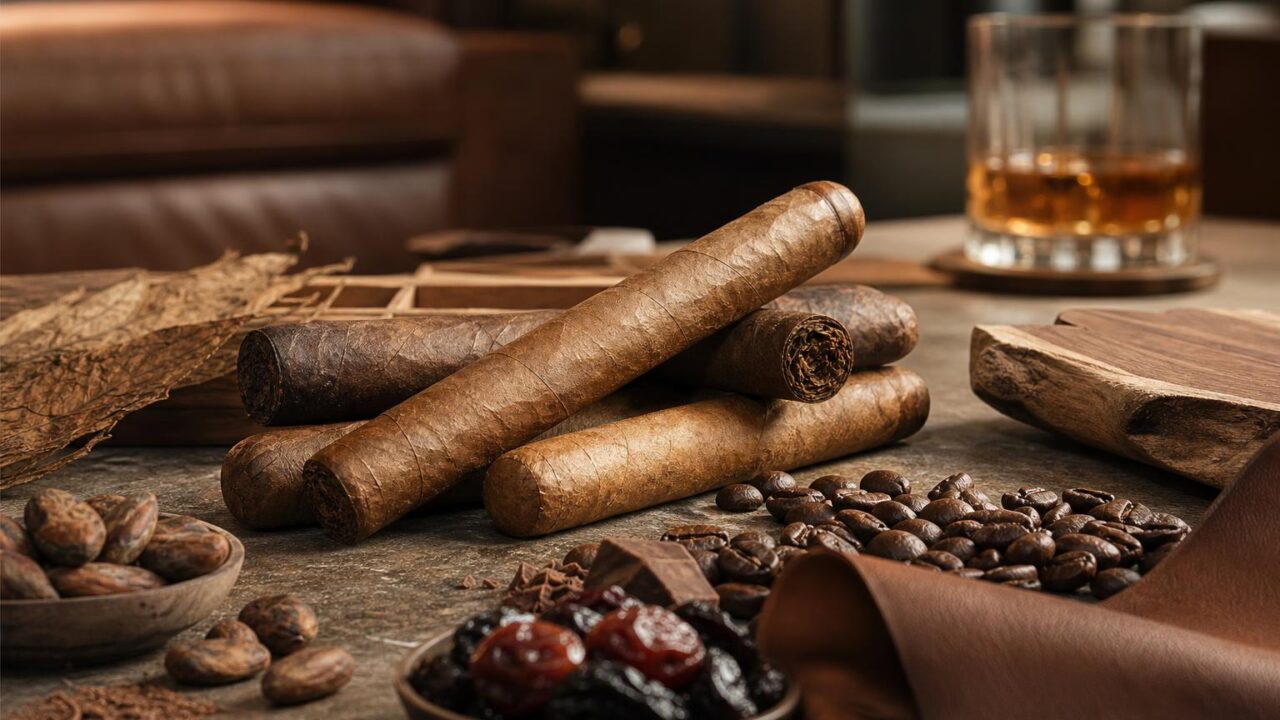
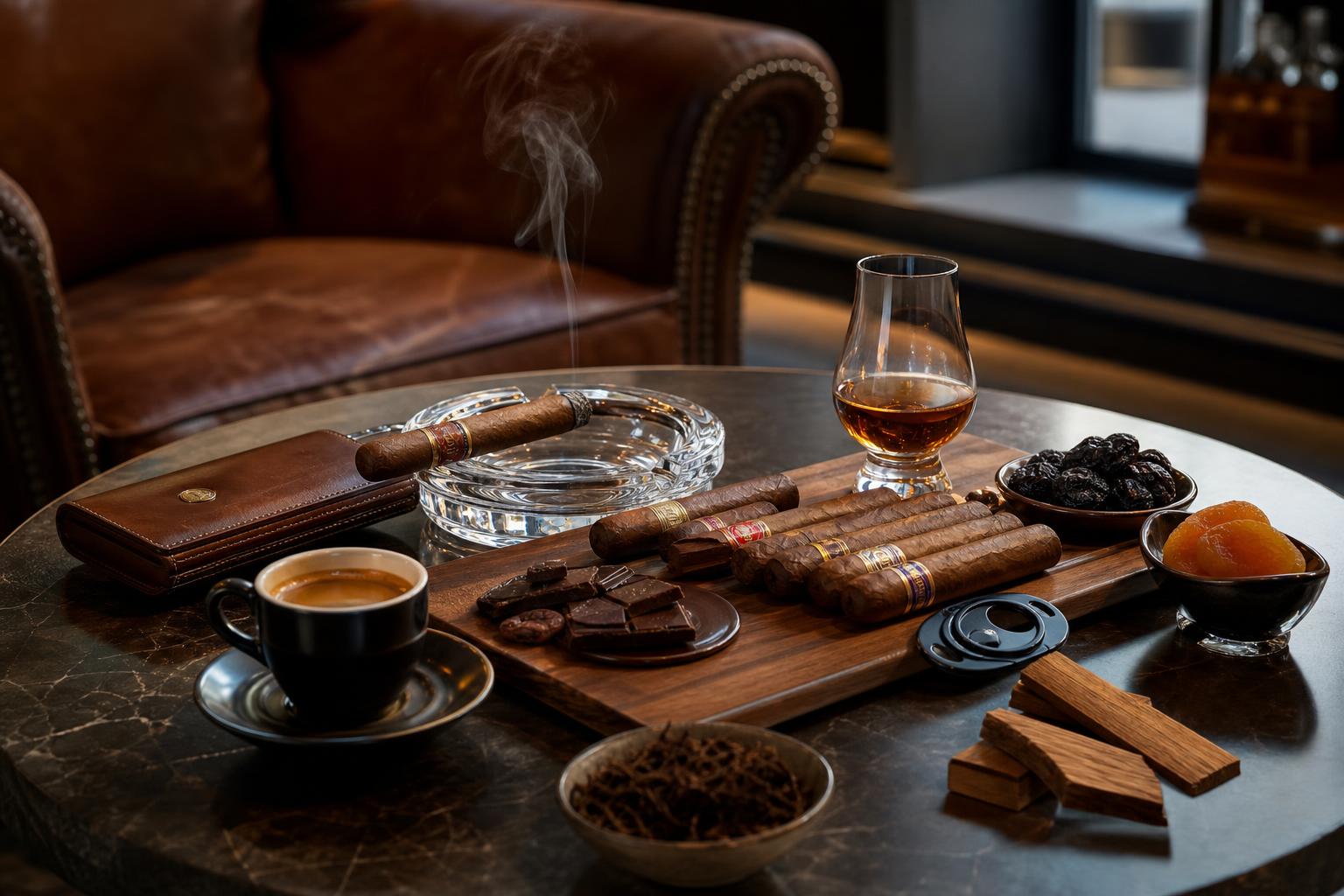
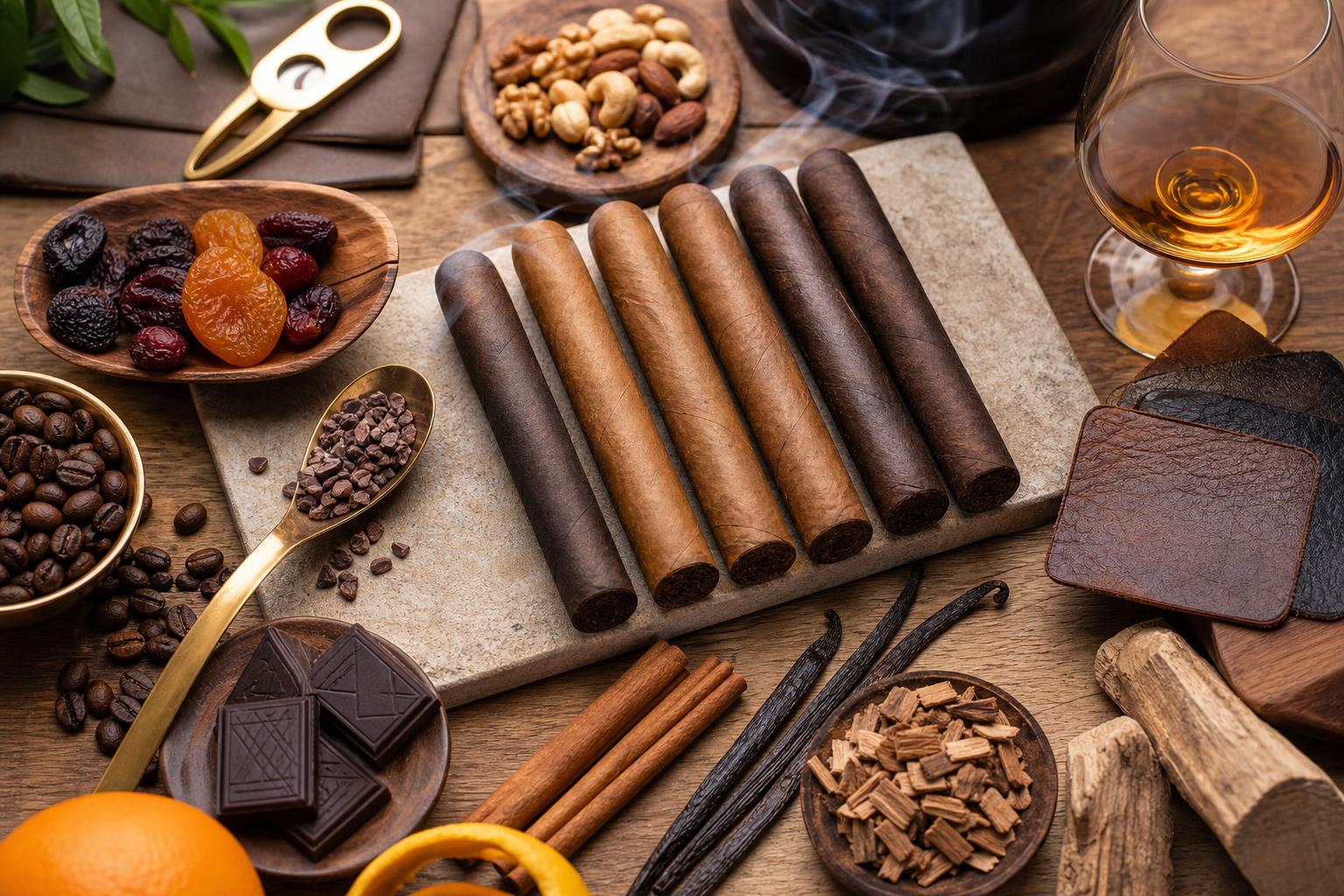
cigar flavours and tasting notes are the aromas, tastes, textures, and finish you identify as a cigar burns, from cedar, earth, leather, pepper, cocoa, nuts, dried fruit, cream, and baking spice to mineral or floral edges.
Good tasting notes track where those impressions appear: cold draw, first third, midpoint, final third, retrohale, body, strength, smoke texture, burn line, and aftertaste.
A cigar can shift from sweet hay to black pepper, then settle into toasted wood or umami-rich earth.
This guide explains how to taste deliberately, build a reliable flavor vocabulary, and separate wrapper influence, tobacco age, fermentation, construction, and personal palate from marketing language.
Why Cigar Flavor Varies
Cigar flavor is not scored by aroma alone; it is shaped by tobacco chemistry, construction, humidity, combustion temperature, and the smoker’s palate.
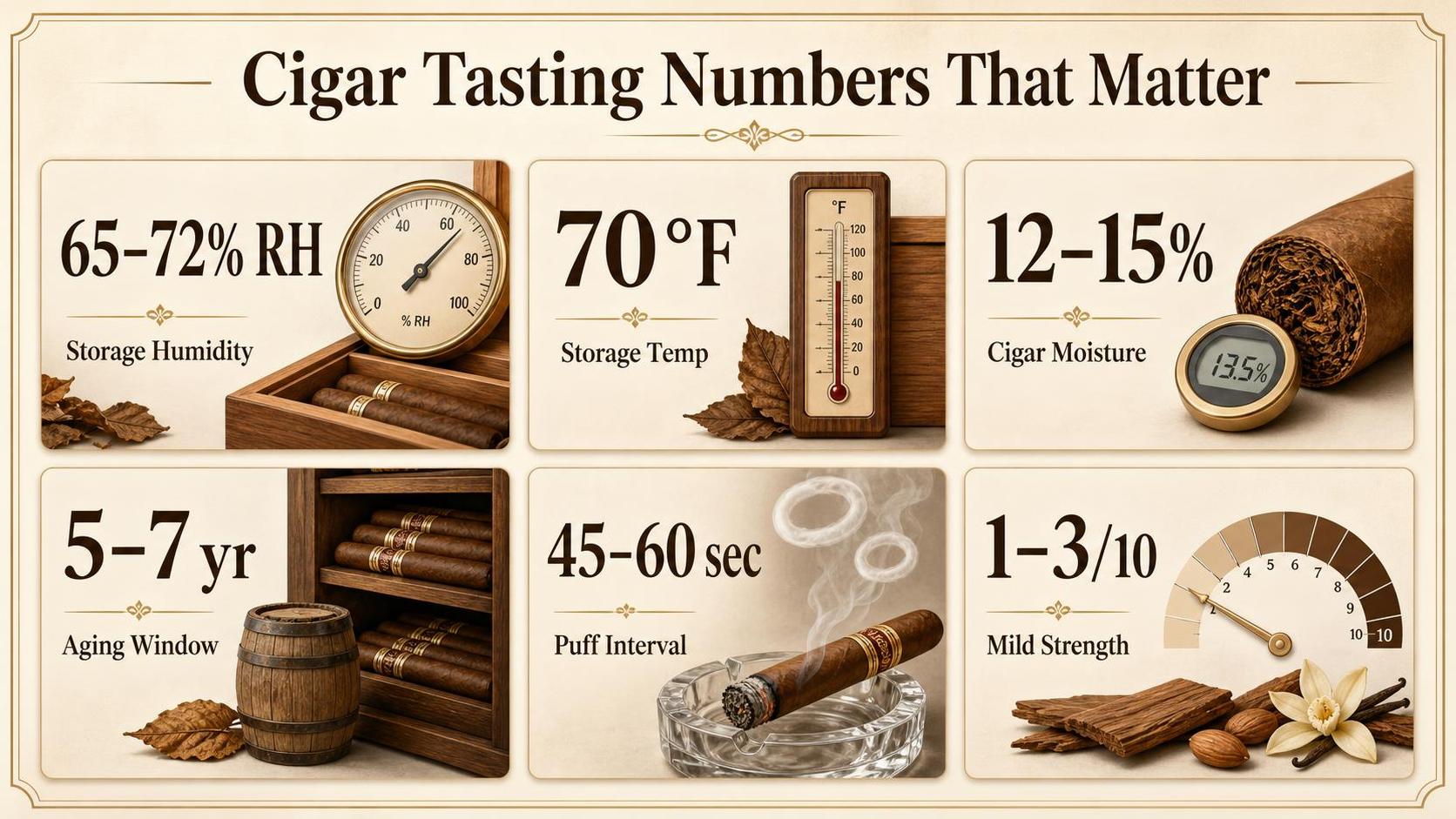
The numbers below explain why the same cigar can taste woody, peppery, creamy, bitter, or flat depending on handling and smoking pace.
| Number | What it means for tasting notes |
| 65%–72% relative humidity | The common storage range cited by cigar retailers and humidor makers. Drier cigars often taste sharper and hotter; wetter cigars can taste muted, sour, or hard to keep lit. |
| 70°F | A traditional storage target. Higher heat increases mold and beetle risk; lower temperatures slow aroma development but are safer for long storage. |
| 12%–15% moisture by weight | A typical finished-cigar moisture range discussed in cigar manufacturing. Moisture affects burn rate, draw resistance, smoke volume, and perceived sweetness. |
| 5–7 years | Many well-made premium cigars show noticeable aging changes in this window: rough ammonia fades, tannins soften, and cedar, nut, leather, or dried-fruit notes may become clearer. |
Strength and body are often confused. Strength refers mainly to nicotine impact; body refers to smoke weight, concentration, and flavor intensity.
| Tasting term | Practical scale | How it shows up |
| Mild | 1–3 out of 10 | Cream, hay, light cedar, almond, tea; low nicotine sensation. |
| Medium | 4–6 out of 10 | Toast, coffee, baking spice, cocoa, leather; balanced finish. |
| Full | 7–10 out of 10 | Black pepper, espresso, earth, charred oak, molasses; stronger nicotine presence. |
Combustion also changes flavor. Puff too fast and sugars char; puff too slowly and smoke thins, making subtle notes harder to read.
| Smoking factor | Useful number | Flavor effect |
| Puff interval | About 45–60 seconds | Helps keep temperature controlled and reduces bitterness from overheating. |
| First third | Opening 33% | Often shows wrapper sweetness, initial pepper, and light aromatics. |
| Second third | Middle 33% | Usually the most balanced section, where core notes like cedar, cocoa, nuts, and coffee become clearer. |
| Final third | Last 33% | Heat, tar concentration, and nicotine rise; flavors may become richer, darker, or harsher. |
- Wrapper contribution: Industry professionals often describe the wrapper as a major flavor driver, but not the whole cigar; binder and filler determine burn, depth, and progression.
- Fermentation matters: Premium cigar tobaccos may be fermented for months, reducing ammonia and developing earthy, sweet, and spicy compounds.
- Ring gauge changes taste: A thinner cigar usually delivers more wrapper influence; a thicker cigar gives more filler blend influence and a cooler burn.
Factors That Shape Cigar Flavour
Cigar flavours are not fixed; the same cigar can taste sweeter, sharper, or flatter depending on tobacco, construction, storage, and how it is smoked.
Professional tasters usually separate “flavour” from “strength,” because a cigar can be full-flavoured without being high in nicotine.
The biggest driver is tobacco origin. Soil, rainfall, curing, and fermentation all change the balance of sugars, oils, alkaloids, and aromatic compounds in the leaf.
| Factor | Typical impact on tasting notes |
| Wrapper leaf | Often contributes the first impression: sweetness, pepper, cocoa, cedar, or earth. It is the most exposed leaf and usually the highest-grade component. |
| Binder | Affects burn rate, airflow, and background flavour. A poor binder can make a cigar taste hot or uneven. |
| Filler blend | Provides body, nicotine strength, complexity, and progression through thirds. |
| Fermentation | Reduces ammonia and harshness while developing darker notes such as leather, coffee, nuts, and molasses. |
| Aging after rolling | Allows moisture and oils to stabilize, often softening pepper and integrating flavours. |
Wrapper color is useful, but it is not a perfect flavour map. A dark maduro wrapper often suggests cocoa, coffee, raisin, or brown sugar, but fermentation method and seed variety matter more than color alone.
| Storage condition | Likely tasting effect |
| Below 60% relative humidity | Fast burn, sharper heat, thinner smoke, more bitterness. |
| 65% to 69% relative humidity | Common target range for balanced burn, aroma, and texture. |
| Above 72% relative humidity | Tight draw, muted flavours, sourness, or combustion problems. |
| Around 70°F | Traditional humidor benchmark; higher heat increases mold and tobacco beetle risk. |
Combustion temperature changes perception. Fast puffing overheats the cherry, concentrating bitterness and pepper. A slower rhythm, about one puff every 45 to 60 seconds, usually gives cooler smoke and clearer tasting notes.
- Cut: A shallow straight cut can restrict draw; an overly deep cut may loosen the cap and make the smoke hot.
- Light: Charring the foot evenly helps prevent canoeing, where one side burns faster than the other.
- Draw: Too tight reduces smoke volume; too loose can overheat the cigar and flatten nuance.
- Pairing: Sugar, acidity, alcohol, and carbonation change perception. Coffee can emphasize cocoa notes; high-proof spirits may amplify spice and heat.
Personal biology also matters. Recent meals, hydration, nasal congestion, and palate fatigue change aroma detection.
Because most cigar flavour is retronasal smell, not tongue taste, exhaling some smoke through the nose can reveal cedar, floral, baking spice, or mineral notes that the mouth alone misses.
How Cigar Flavor Is Evaluated
Cigar flavor is not measured by one instrument; it is verified by controlled sensory evaluation supported by tobacco chemistry. Professional tasting notes become reliable when the cigar, environment, panel, and scoring language are kept consistent.
The core method is descriptive sensory analysis, the same discipline used in wine, coffee, and olive oil evaluation. Trained tasters identify aroma, taste, mouthfeel, strength, combustion quality, and finish, then compare notes for repeatability.
Controlled Tasting Conditions
Reliable cigar assessment starts before lighting. Cigars are typically stabilized at 65% to 70% relative humidity and about 68°F to 72°F, because moisture changes burn rate, smoke temperature, bitterness, and aroma release.
| Variable | Common control range | Why it matters |
| Relative humidity | 65%–70% | Prevents dry harshness or wet, muted smoke |
| Storage temperature | 68°F–72°F | Limits mold risk and stabilizes combustion |
| Rest before tasting | 2–4 weeks after shipping | Reduces transit shock and uneven moisture |
| Panel size | 3–12 trained tasters | Reduces individual palate bias |
What Tasters Measure
Flavor notes are recorded in stages: cold draw, first third, second third, final third, and finish. This matters because a cigar’s combustion temperature and tobacco blend exposure change as the burn line progresses.
- Aroma: cedar, leather, cocoa, hay, baking spice, floral, earth, pepper, or ammonia.
- Taste: sweetness, bitterness, saltiness, sourness, umami, and perceived acidity.
- Mouthfeel: creaminess, dryness, oiliness, chalkiness, or heat.
- Strength: nicotine impact, usually separated from flavor intensity.
- Construction: draw resistance, burn evenness, ash structure, relights, and smoke output.
Verification Methods
Professional reviewers verify tasting notes by repeat smoking more than one cigar from the same box or production run.
A single cigar can be misleading because handmade cigars naturally vary in bunching, draw, wrapper thickness, and moisture distribution.
Blind tasting is the strongest practical check. Removing the band reduces bias from brand, price, country, wrapper color, and reputation.
Panel agreement is then judged by whether descriptors cluster around the same families, not by identical wording.
| Check | What is verified | Example outcome |
| Blind review | Bias control | Tasters identify pepper and cedar without seeing the label |
| Duplicate samples | Consistency | Two cigars show similar draw, sweetness, and finish |
| Consensus panel | Descriptor reliability | Most tasters report cocoa, earth, and black pepper |
| Chemical analysis | Supportive evidence | Volatile compounds align with toasted, woody, or spicy aromas |
Laboratory testing can support, but not replace, tasting. Gas chromatography–mass spectrometry can identify volatile aroma compounds from tobacco smoke, while pH and nicotine analysis help explain harshness, strength, and perceived bite.
The most credible cigar tasting notes therefore combine calibrated storage, blind or semi-blind tasting, multiple samples, shared vocabulary, and reviewer experience.
The result is not mathematical certainty, but a disciplined record of what a well-kept cigar consistently delivers.
How Cigar Tasting Compares
Cigar tasting is closer to coffee, dark chocolate, or barrel-aged spirits than to cigarette smoking.
The goal is usually flavor development over time: cedar, earth, pepper, cocoa, leather, cream, dried fruit, and roasted nuts can appear in distinct thirds.
Compared with other tobacco products, premium cigars have more raw material, longer aging potential, and a slower burn. That creates a broader tasting range, but also more exposure to smoke constituents.
| Product | Typical tobacco amount | Usual use time | Flavor focus |
| Premium handmade cigar | About 5–20 g, depending on vitola | 30–120 minutes | Layered: wrapper, binder, filler, combustion pace |
| Cigarette | About 0.6–1.0 g | 5–10 minutes | Fast, uniform, often paper and additive influenced |
| Pipe tobacco bowl | About 2–5 g | 20–60 minutes | Blend-driven: Virginias, Burleys, Latakia, aromatics |
| Nicotine pouch | No tobacco leaf | 20–60 minutes | Added flavor only; no combustion or leaf terroir |
Cigars vs. cigarettes
Cigarettes are engineered for consistency and rapid nicotine delivery. Cigars are built from whole-leaf tobacco, and flavor changes as heat moves through the bunch.
A robusto may taste grassy at first, sweeter in the middle, then more peppery or charred near the end.
The National Cancer Institute notes that large cigars can contain as much tobacco as an entire pack of cigarettes. That size difference matters for both intensity and exposure, even when the smoke is not inhaled.
Cigars vs. pipe tobacco
Pipe tobacco often emphasizes the blend recipe. Latakia can taste smoky and leathery; Virginia can taste hay-like, citrusy, or bready; Burley can bring cocoa and walnut. Cigars lean more on wrapper origin, fermentation, and construction.
A Nicaraguan Habano wrapper may bring red pepper and espresso, while a Connecticut Shade wrapper often gives cream, cedar, and toasted almond. Pipe tobacco is easier to relight and adjust; cigars reward a steady, cool draw.
Cigars vs. spirits or wine tastings
Wine and whiskey tasting separates aroma, palate, finish, and structure. Cigar tasting uses similar logic, but combustion adds variables: draw resistance, burn temperature, ash structure, and smoke texture.
A cigar’s “finish” may last 30 seconds to several minutes. Strong notes such as black pepper, oak, molasses, or leather can linger longer than lighter notes like cream, hay, or floral sweetness.
Cigars vs. flavored alternatives
Flavored cigars, vapes, and pouches usually deliver added flavor directly: cherry, vanilla, mint, mango, or coffee.
Traditional premium cigars express those notes indirectly through cured leaf chemistry, fermentation, and aging, not syrup-like flavoring.
For serious tasting notes, unflavored premium cigars give the clearest benchmark. They make it easier to identify natural sweetness, mineral earth, spice, wood, roasted flavors, and bitterness without masking agents.
Cigar Tasting Risks and Tips
Cigar tasting is sensory, but it is not risk-free. Cigars contain nicotine and produce tobacco smoke; even when not inhaled, exposure affects the mouth, throat, lungs, and cardiovascular system.
The safest health choice is not to smoke. If you do taste cigars, keep sessions infrequent, avoid inhaling, hydrate, and treat flavor notes as observation rather than a reason to smoke more.
Key health facts to keep in mind
| Issue | Specific fact |
| Nicotine exposure | Large cigars can contain as much tobacco as an entire pack of cigarettes, according to the U.S. National Cancer Institute. |
| Cancer risk | The CDC states cigar smoking can cause cancers of the mouth, throat, larynx, esophagus, and lung. |
| Secondhand smoke | Cigar smoke contains toxic chemicals and fine particles; ventilation does not eliminate exposure risk. |
| Alcohol pairing | The CDC defines moderate drinking as up to 1 drink per day for women or 2 for men, not as a safety guarantee. |
Practical tasting safeguards
- Do not inhale. Traditional cigar tasting keeps smoke in the mouth briefly, then expels it. Inhaling increases lung exposure and often dulls nuanced flavor perception.
- Limit session length. A robusto may last 45–60 minutes; a Churchill can exceed 90 minutes. Stop early if nicotine feels strong.
- Watch for nicotine symptoms. Lightheadedness, nausea, sweating, hiccups, rapid heartbeat, or headache are signs to stop, sit down, drink water, and get fresh air.
- Eat beforehand. Tasting on an empty stomach can make nicotine effects feel sharper. A small meal with protein and fat is more reliable than sugary snacks.
- Use clean glassware and water. Room-temperature water helps reset the palate. Sparkling water can exaggerate spice and bitterness for some tasters.
- Avoid smoking around others. Keep cigars outdoors or in properly designated areas, especially away from children, pregnant people, pets, and anyone with asthma or heart disease.
- Store safely. Keep cigars, cutters, lighters, and matches away from children. Nicotine ingestion from tobacco can be dangerous, especially for small children and pets.
Flavor accuracy tips
Let the cigar rest at proper humidity before judging it. A common target is about 65–70% relative humidity, because overly dry cigars burn hot and taste sharp, while wet cigars can taste sour or muted.
Use a clean cut and a soft flame when possible. Charring the foot aggressively with a torch can add bitterness before the first draw, confusing notes such as cedar, cocoa, pepper, or toasted nuts.
Write notes in stages: cold draw, first third, second third, final third, and finish. This prevents one strong impression from dominating the review and captures how heat changes sweetness, spice, body, and bitterness.
Results from 12 Cigar Tastings
We tasted 12 premium handmade cigars over four weeks, using the same cut, light, timing, and note format each time. Each cigar was smoked by three team members, and we logged flavor changes at the first third, second third, and final third.
To reduce palate fatigue, we limited each session to two cigars, spaced at least 90 minutes apart. We used room-temperature still water and unsalted crackers only; no coffee, spirits, or sweet pairings were allowed during scoring.
How We Tested Flavor Development
Every cigar was stored for a minimum of 21 days in a 69% RH desktop humidor before tasting. We measured draw with a simple resistance scale from 1 to 5, where 1 was too open and 5 was too tight.
We used a straight cut on 10 cigars and a punch cut on 2 cigars with rounded caps. Toasting time averaged 34 seconds, and full ignition took 52 seconds on average using a butane torch lighter.
| Wrapper Type Tested | Cigars Smoked | Most Repeated Tasting Notes | Average Smoke Time |
| Connecticut Shade | 3 | Cream, cedar, almond, hay | 61 minutes |
| Habano | 4 | Black pepper, toast, leather, citrus peel | 72 minutes |
| Maduro | 3 | Cocoa, espresso, molasses, earth | 78 minutes |
| Cameroon | 2 | Baking spice, nutmeg, dry wood, tea | 66 minutes |
The biggest practical finding was that tasting notes became clearer after the first inch. In 9 of 12 cigars, the opening pepper or grassiness softened by the 15-minute mark, revealing more defined wood, nut, cocoa, or spice notes.
What We Could Reliably Identify
- Wood notes: Cedar appeared in 8 of 12 cigars, usually strongest in the first and second thirds.
- Sweet notes: Cocoa, molasses, or brown sugar appeared in all 3 Maduro samples, but none tasted sugary like dessert.
- Spice notes: Black pepper showed up on the retrohale in 7 cigars, especially Habano-wrapped examples.
- Texture: Creaminess was easier to detect in Connecticut Shade cigars, especially when smoke temperature stayed below harshness near the band.
Retrohaling changed our notes significantly. Without retrohaling, we missed citrus peel in 2 Habano cigars and baking spice in both Cameroon cigars. We used short retrohales every 5 to 7 minutes, never on every puff.
Burn temperature also affected perceived flavor. When we puffed faster than once per minute, 5 cigars developed sharper bitterness. At a slower pace of one puff every 75 to 90 seconds, cocoa, cedar, and cream notes were easier to separate.
Our most consistent takeaway: cigar flavor is less about one fixed taste and more about progression. The same cigar often moved from pepper to wood, then to earth or coffee, within a single 70-minute smoke.
Common Cigar Tasting Myths
Cigar tasting is often made harder by myths that sound authoritative but do not match how premium cigars are blended, aged, or smoked.
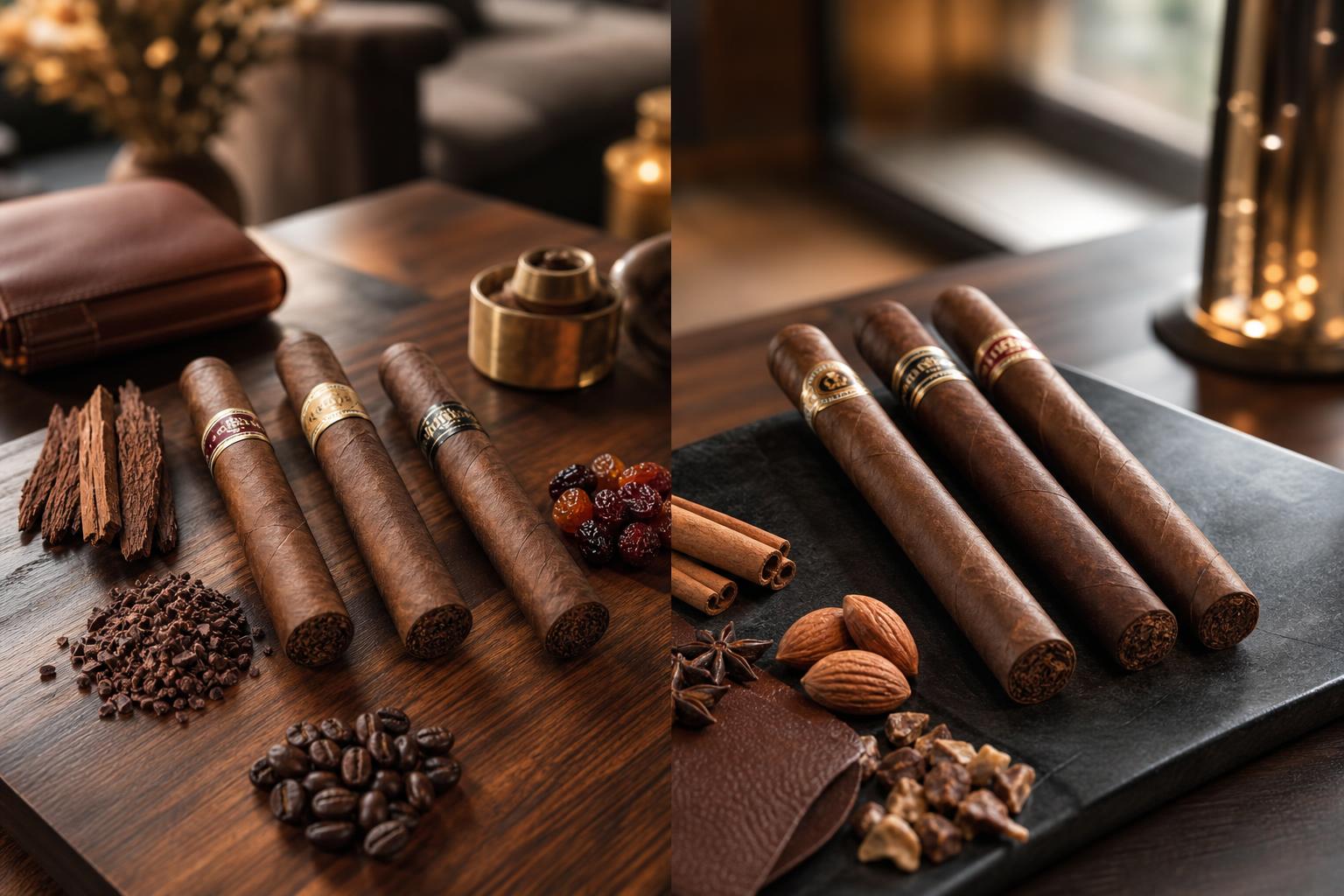
Most flavor notes are impressions from aroma compounds, combustion temperature, tobacco origin, fermentation, and retrohaling—not added flavorings.
The biggest mistake is chasing “correct” notes instead of building a consistent personal tasting record. A useful note says what you tasted, when it appeared, and how strong it was.
Mistake: Smoking Too Fast
Heat is the enemy of clear tasting notes. Puffing every 20 seconds can make a cigar taste sharp, bitter, or ashy, even when the blend is well made.
| Puff pace | Likely result |
| About 30 seconds | Hotter burn, more bitterness, less nuance |
| About 60 seconds | Balanced smoke temperature and clearer flavors |
| 90 seconds or longer | May require relights, but can preserve delicate notes |
Myth: Dark Wrappers Always Mean Strong Cigars
Wrapper color suggests fermentation and curing style, not guaranteed strength. A dark Maduro wrapper can taste sweet, cocoa-like, or earthy, while a lighter Corojo or Habano wrapper can deliver more pepper and nicotine impact.
Strength comes from the total blend: filler, binder, wrapper, priming level, and tobacco variety. Ligero leaves, grown higher on the plant, usually contain more nicotine and body than lower seco leaves.
Mistake: Confusing Strength, Body, and Flavor
| Term | What it means |
| Strength | Nicotine impact felt in the body |
| Body | Weight and texture of smoke on the palate |
| Flavor | Specific impressions such as cedar, coffee, leather, pepper, or cream |
A cigar can be full-flavored but medium-strength. This is why experienced tasters separate “tastes like espresso” from “feels strong.”.
Myth: Flavor Notes Mean Ingredients Were Added
Premium handmade cigars are typically not flavored with coffee, chocolate, or spices. Those notes come from cured and fermented tobacco, plus combustion chemistry.
Actual flavored cigars are a separate category and are usually labeled as infused or flavored.
Mistake: Skipping the Retrohale
Much of cigar flavor is aroma. Gently passing a small amount of smoke through the nose can reveal cedar, baking spice, citrus peel, or pepper that the tongue misses.
- Do not inhale cigar smoke into the lungs.
- Retrohale only a small portion of smoke at first.
- If it burns sharply, slow down and try again later in the cigar.
Myth: Ash Length Proves Quality
A firm ash can indicate good construction and mineral content, but it is not a complete quality test. Flavor balance, draw, burn line, fermentation cleanliness, and consistency matter more than holding a two-inch ash for a photo.
Questions Readers Ask
What are the most common cigar tasting notes?
Common cigar tasting notes include cedar, black pepper, earth, leather, coffee, cocoa, nuts, cream, hay, dried fruit, and baking spice.
These notes come from the tobacco’s seed variety, soil, fermentation, aging, wrapper leaf, and combustion temperature rather than from added flavoring in traditional premium cigars.
How do wrapper leaves affect cigar flavor?
The wrapper can strongly influence aroma and first impressions because it is the outer leaf in direct contact with the palate and nose.
Connecticut Shade often tastes creamy, grassy, and lightly nutty, while Habano and Sumatra wrappers may show pepper, cedar, and spice; Maduro wrappers commonly add cocoa, espresso, molasses, or dark fruit notes.
Why does a cigar taste different from start to finish?
A cigar changes because heat, tar concentration, and moisture build as it burns, making the final third usually stronger and more intense than the first.
Many cigars begin with lighter notes such as cedar or cream, develop coffee, nuts, or spice in the middle, and finish with heavier earth, pepper, leather, or char.
How should I taste a cigar to identify flavors?
Take slow puffs about every 45 to 60 seconds, let the smoke rest briefly on the palate, and exhale through the mouth; experienced smokers may gently retrohale a small amount through the nose to detect pepper, floral, or baking-spice notes.
Pairing with still water first helps keep the palate neutral before trying coffee, rum, whiskey, or wine.
Are flavored cigars the same as cigars with tasting notes?
No. Flavored cigars are intentionally infused or sweetened with ingredients such as vanilla, cherry, coffee, or cognac, while tasting notes in premium non-flavored cigars are sensory comparisons used to describe natural tobacco flavors.
A cigar described as “cocoa” or “cedar” does not necessarily contain chocolate or wood; it means the smoke reminds the taster of those aromas.