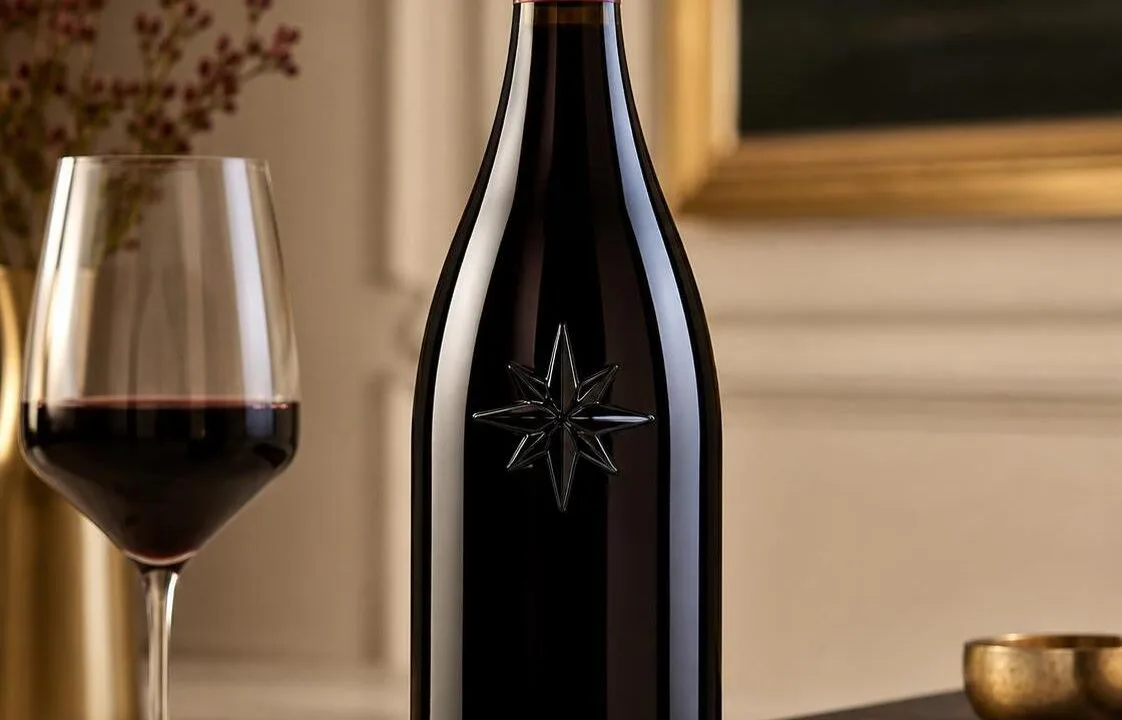
Roscato is a sweet, lightly sparkling Italian red wine—so the direct answer to “What Is Roscato” is: a low-alcohol, fruit-forward wine from northern Italy, typically made with native red grapes and served chilled.
Known for flavors of ripe cherry, raspberry, blackberry, and a soft fizzy texture, Roscato is popular with drinkers who prefer gentle sweetness over dry tannins.
Most bottles sit around 7% alcohol by volume, making it lighter than many standard red wines, and it pairs well with spicy pasta, pizza, barbecue, and chocolate desserts.
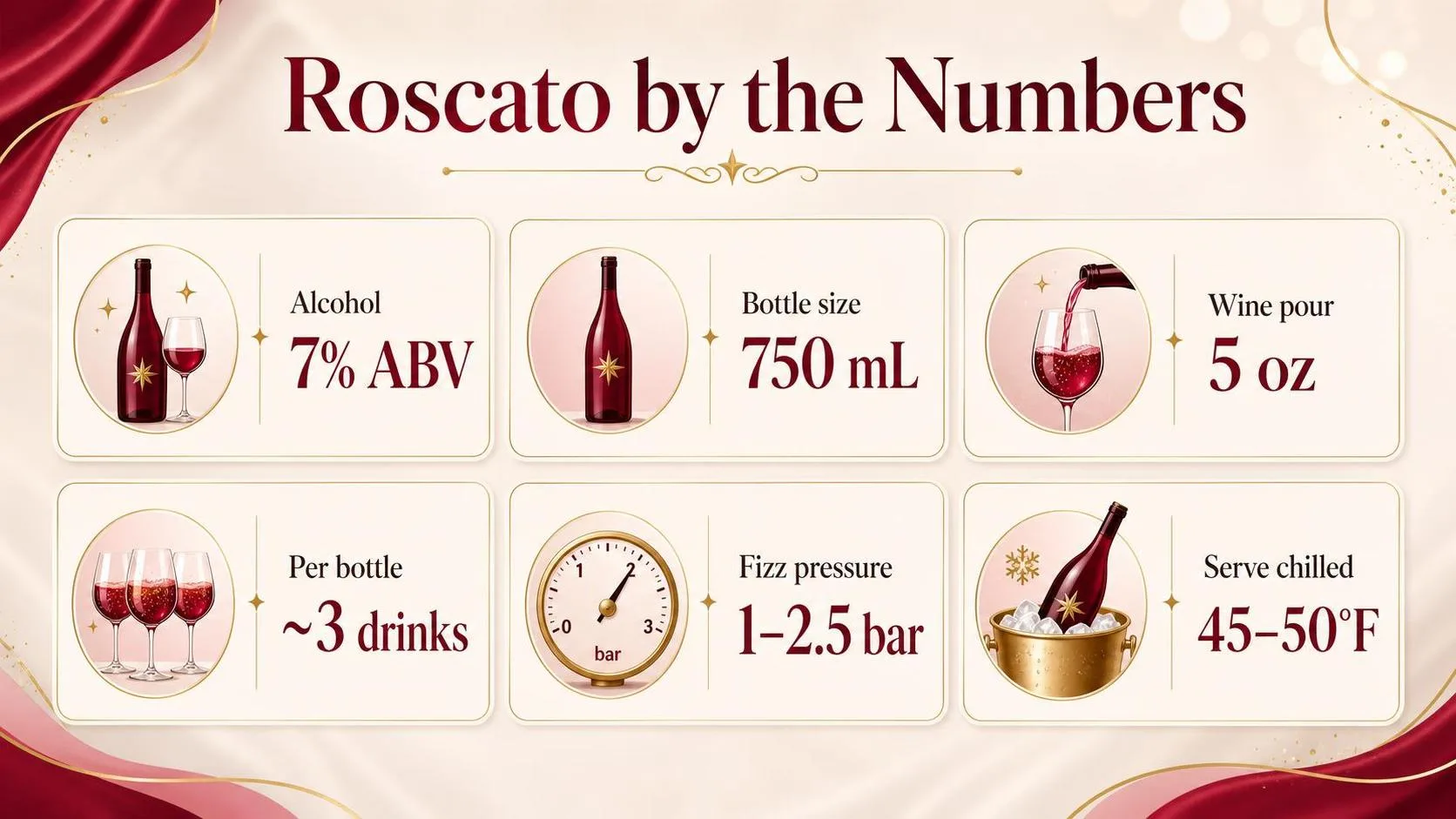
Roscato Label Numbers at a Glance
Roscato is easiest to understand by its label numbers: low alcohol, noticeable sweetness, and light fizz. Those figures explain why it drinks more like a chilled, fruit-forward red sparkler than a dry table red.
The best-known bottling, Roscato Rosso Dolce, is an Italian sweet red from the Provincia di Pavia IGT area in Lombardy. It is typically made from northern Italian red grapes including Croatina, Teroldego, and Lagrein.
| Number | What it means for Roscato |
| 7% ABV | Roscato Rosso Dolce is low in alcohol compared with many dry reds, which commonly sit around 13% to 15% ABV. |
| 750 mL | A standard bottle holds about five 5-ounce pours. |
| 5 ounces | A typical restaurant wine pour; at 7% ABV, one pour contains about 0.6 U.S. standard drinks. |
| About 3 standard drinks per bottle | Calculated from 750 mL at 7% ABV, using the U.S. standard drink definition of 0.6 fl oz pure alcohol. |
| 1 to 2.5 bar | The usual pressure range for frizzante-style wines, giving Roscato its gentle sparkle rather than Champagne-like foam. |
The 7% ABV figure matters most. Alcohol is created when yeast converts grape sugar into ethanol and carbon dioxide.
A lower-alcohol sweet wine usually keeps more residual sugar because fermentation is stopped or managed before all sugar becomes alcohol.
That is why Roscato tastes soft and sweet rather than dry and tannic. It is not simply “red wine with bubbles”; its balance depends on sugar, acidity, low alcohol, and light carbonation working together.
| Style reference | Typical number | How Roscato compares |
| Dry still red wine | Often 13% to 15% ABV | Roscato is much lighter at 7% ABV. |
| Brut sparkling wine | 0 to 12 g/L residual sugar under EU sparkling-wine terms | Roscato tastes significantly sweeter than brut. |
| Demi-sec sparkling wine | 32 to 50 g/L residual sugar under EU terms | Roscato’s perceived sweetness is closer to dessert-friendly sparkling styles. |
| Spumante pressure | Usually above 3 bar | Roscato’s frizzante feel is softer and less forceful. |
Serve temperature is another practical number. Roscato shows best chilled, roughly 45°F to 50°F, which sharpens the acidity and keeps the sweetness from feeling heavy.
- For one glass: pour 5 ounces and expect a lighter alcohol impact than a standard dry red.
- For food: use the sweetness with spicy dishes, barbecue sauce, fruit desserts, or dark chocolate.
- For storage: refrigerate after opening and drink within 2 to 3 days to preserve the fizz.
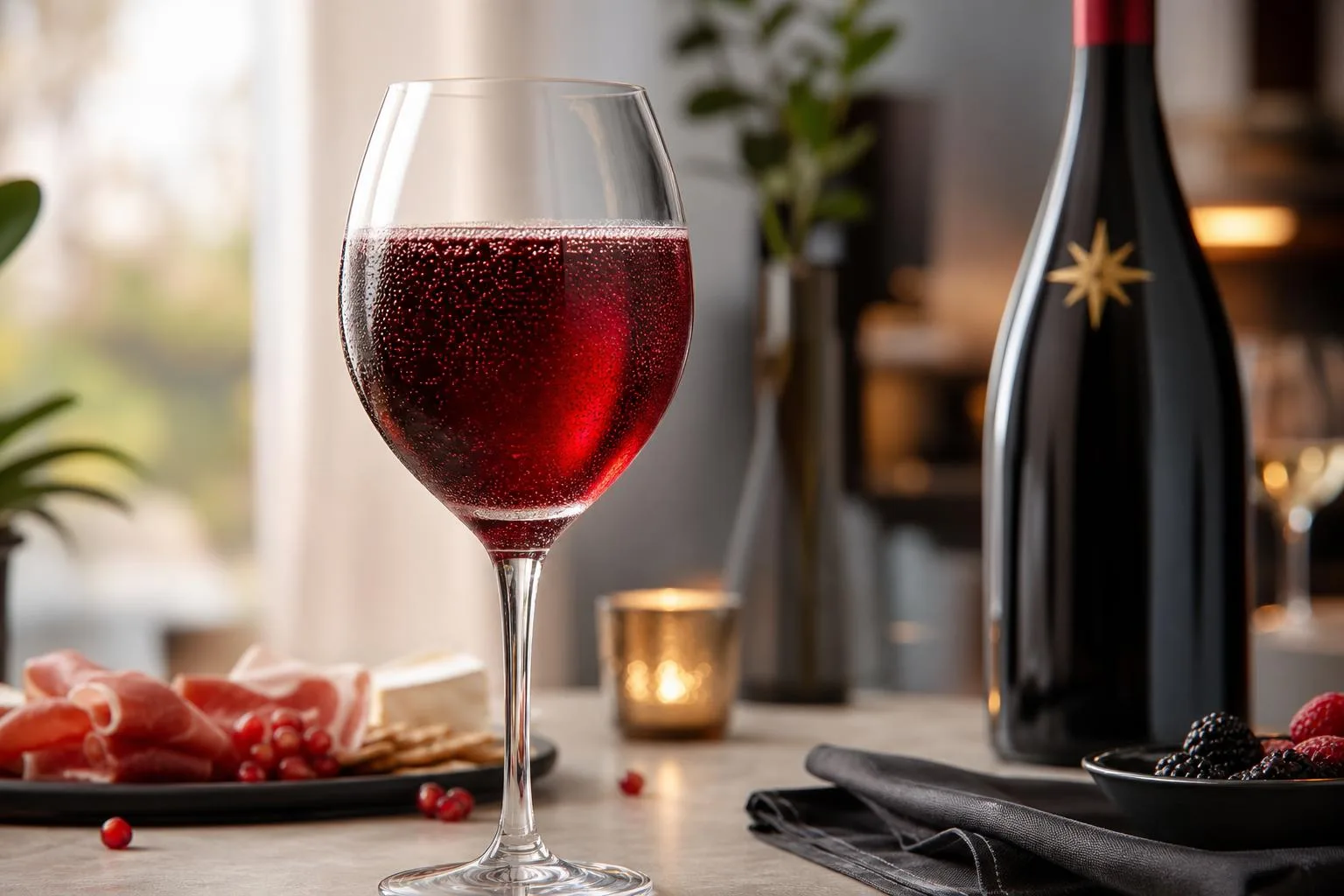
What Shapes Roscato’s Taste
Roscato’s final impression depends less on aging and more on temperature, bubbles, sweetness, acidity, and what is on the plate.
It is typically a low-alcohol, lightly sparkling sweet red, so small serving changes noticeably shift how fruity, fizzy, or cloying it tastes.
The benchmark style, Roscato Rosso Dolce, is commonly listed at 7% ABV and made from northern Italian red grapes such as Croatina, Teroldego, and Lagrein.
Its appeal comes from ripe red fruit, gentle frizzante pressure, and enough acidity to keep the sugar from tasting syrupy.
| Factor | Best target | Effect in the glass |
| Serving temperature | 45–50°F | Brighter cherry, raspberry, and cranberry notes; sweetness feels cleaner. |
| Too warm | 60°F or higher | Alcohol and sugar feel heavier; bubbles seem flatter. |
| Open bottle time | Same day, ideally within 2–4 hours | Freshest fizz and fruit expression. |
| Refrigerated with stopper | 1–2 days | Still drinkable, but noticeably less lively. |
Temperature is the biggest practical variable. In tasting, chilled Roscato behaves more like a red-fruit spritz: crisp, grapey, and easy to pair.
At room temperature, the residual sugar becomes more obvious and the wine can taste candied rather than refreshing.
- Glassware matters: A white wine glass or tulip-shaped sparkling glass preserves aroma and carbonation better than a wide red-wine bowl.
- Ice changes the wine: It lowers perceived sweetness at first, then dilutes acidity, color, and fruit as it melts.
- Stopper choice matters: A sparkling-wine stopper holds pressure better than a standard still-wine stopper.
Food changes the result dramatically because Roscato has both sugar and acidity. Salt and spice make it taste fresher; very sweet desserts can make it seem less fruity.
Tomato, barbecue sauce, and chili heat usually work better than bitter greens or very tannic dishes.
| Pairing | Why it works or fails |
| Pepperoni pizza | Salt, fat, and tomato acidity balance the wine’s sweetness. |
| Spicy Asian takeout | Low alcohol and sugar soften chile heat. |
| Dark chocolate cake | Can overpower the wine unless the dessert is only moderately sweet. |
| Blue cheese | Strong salt and funk can work, but it is a polarizing match. |
Freshness also matters. Roscato is not designed for cellaring; most bottles show best young, while fruit and sparkle are still vivid. Store it upright or on its side in a cool, dark place, then chill thoroughly before opening.
How Roscato Is Verified
Roscato is verified the same way other imported wines are: by checking the bottle label, importer records, lab analysis, and the wine’s legal classification.
The key measurable traits are alcohol, sweetness, carbonation, origin, and grape composition.
On U.S. shelves, the best-known bottle is Roscato Rosso Dolce, commonly labeled at 7% alcohol by volume.
That number is not guessed from taste; alcohol is measured in production and can be verified by laboratory methods such as distillation, densitometry, or infrared analysis.
| What is checked | Typical Roscato Rosso Dolce reference point | How it is verified |
| Alcohol | About 7% ABV on the label | Lab alcohol analysis; U.S. label rules allow limited tolerance under 27 CFR wine-labeling regulations |
| Style | Sweet, lightly sparkling red wine | Residual sugar test and dissolved CO₂/pressure measurement |
| Origin | Italy; commonly sold as a northern Italian red blend | Producer documentation, import records, and geographic indication on the label when stated |
| Grapes | Often associated with Croatina, Teroldego, and Lagrein in producer descriptions | Winery technical sheets and blend records; grape names may not appear on the front label |
| Bottle size | 750 mL standard bottle in the U.S. market | Net contents statement and package inspection |
Sweetness is measured as residual sugar, usually expressed in grams per liter. A wine can taste sweet at far lower levels, but wines in Roscato’s category typically sit well above dry red wine, which is often below 4 g/L residual sugar.
| Wine sweetness reference | Residual sugar range |
| Dry wine benchmark | Usually under 4 g/L |
| Off-dry impression | Roughly 4–12 g/L |
| Clearly sweet wine | Often above 45 g/L |
| Roscato-style sweet red | Verified by producer or lab residual-sugar data, not by color alone |
The “fizzy” character is verified separately from sweetness. Semi-sparkling wines have measurable dissolved carbon dioxide, while fully sparkling wines carry higher bottle pressure.
A tasting impression of bubbles is not enough for technical classification.
For buyers, the most practical verification is the back label. Confirm the ABV, importer, country of origin, net contents, and any geographic indication.
If a retailer lists a vintage, grape blend, or residual sugar figure, it should match a producer technical sheet rather than a third-party tasting note.

How Roscato Differs from Dry Reds
Roscato is best understood as a sweet, lightly sparkling Italian red, not as a dry red wine substitute. Its closest comparisons are Moscato d’Asti, Lambrusco, Brachetto d’Acqui, and sweeter rosé-style sparkling wines.
The key differences are color, sweetness, pressure, alcohol, and food use. Roscato typically sits at the easy-drinking end of the spectrum, with low alcohol and a pronounced red-fruit profile.
| Wine | Typical style | Common alcohol range | Sweetness impression | Best comparison point |
| Roscato | Sweet, lightly sparkling red from northern Italy | About 7% | Sweet, red berry, soft fizz | Lower alcohol and sweeter than most Lambrusco |
| Moscato d’Asti DOCG | Sweet, lightly sparkling white from Piedmont | 5% to 6.5% | Very fruity, floral, sweet | Similar low alcohol, but white-grape and peach-driven |
| Lambrusco | Sparkling red from Emilia-Romagna | About 10% to 12% | Ranges from dry to sweet | More tannin, acidity, and savory character |
| Brachetto d’Acqui DOCG | Sweet sparkling red from Piedmont | Usually 5% to 7% | Sweet, aromatic, strawberry-rose notes | Closest classic Italian DOCG alternative |
| Prosecco DOC | Sparkling white from northeast Italy | Usually around 11% | Brut to extra dry is common | Drier, crisper, and less dessert-like |
Versus Moscato
Moscato d’Asti is usually lighter in alcohol than Roscato, commonly 5% to 6.5% ABV under DOCG rules. It tastes of peach, orange blossom, and grape, while Roscato leans toward raspberry, cherry, and blackberry.
If someone likes Moscato for sweetness and low alcohol, Roscato is an easy red-wine bridge. The main tradeoff is that Roscato has darker fruit and slightly more structure.
Versus Lambrusco
Lambrusco is the more food-serious comparison. Many Lambrusco wines are dry or off-dry, with firmer acidity, light tannin, and savory notes that pair well with salumi, pizza, and rich Emilia-Romagna dishes.
Roscato is generally softer and sweeter. It is more approachable for drinkers who dislike bitterness or tannin, but it will not have the same dry, palate-cleansing grip as traditional Lambrusco.
Versus Brachetto d’Acqui
Brachetto d’Acqui is probably the closest premium-style alternative: red, aromatic, sweet, lightly sparkling, and low in alcohol. Its DOCG production is centered in Piedmont, and the wines often show strawberry, rose, and candied red fruit.
Compared with Brachetto, Roscato is usually broader and more brand-driven, while Brachetto is more appellation-specific. For chocolate desserts, berry tarts, and fruit plates, both work well chilled.
Bottom Line
- Choose Roscato for sweet red fruit, low alcohol, and gentle bubbles.
- Choose Moscato for floral white-wine sweetness and even lighter body.
- Choose Lambrusco for a drier, more savory sparkling red.
- Choose Brachetto for a classic sweet Italian sparkling red with DOCG identity.

Roscato Alcohol and Serving Safety
Roscato is typically a sweet, lightly sparkling Italian red with a lower alcohol level than many table wines, but it is still an alcoholic beverage. Treat it like wine, not soda: sweetness and chill can make it easy to drink faster than intended.
Most Roscato sold in the U.S. is around 7% alcohol by volume. A standard U.S. drink contains 14 grams of pure alcohol, according to the National Institute on Alcohol Abuse and Alcoholism, so serving size matters.
Alcohol and Serving Size
| Pour | Approximate alcohol at 7% ABV | Practical meaning |
| 5 oz | 0.6 standard drink | A typical wine pour is less alcohol than a 5 oz pour of 12% wine. |
| 8 oz | 1.0 standard drink | A large glass can equal one full U.S. standard drink. |
| 750 ml bottle | About 3.6 standard drinks | Splitting a bottle between two people is roughly 1.8 drinks each. |
Sugar, Calories, and Moderation
Roscato tastes sweet because it contains residual sugar. Exact nutrition varies by bottling and vintage, but sweet low-ABV wines commonly land around 100 to 130 calories per 5 oz serving, depending on sugar and alcohol.
If you are managing diabetes, triglycerides, weight, or carbohydrate intake, check the producer’s current nutrition information when available. Sweet wine can add sugar quickly, especially if poured in 6 to 8 oz glasses.
Safety Guidelines
- Do not drink if pregnant. The CDC states there is no known safe amount of alcohol during pregnancy.
- Avoid driving after drinking. Even lower-ABV wine can impair coordination, reaction time, and judgment.
- Follow U.S. Dietary Guidelines. Adults who choose to drink should limit intake to up to 1 drink per day for women or 2 for men.
- Use caution with medications. Alcohol can interact with sleep aids, opioids, antidepressants, antihistamines, and some blood-pressure drugs.
Practical Serving and Storage Tips
- Serve chilled, about 45°F to 50°F, to keep the sweetness balanced and the light fizz fresh.
- Use a white-wine glass or small tulip glass; smaller pours help preserve carbonation.
- After opening, reseal with a sparkling-wine stopper and refrigerate. Best quality is usually within 1 to 3 days.
- Pair with salty or spicy foods, such as prosciutto, pizza, barbecue, or mildly spicy takeout, which offset the sweetness.
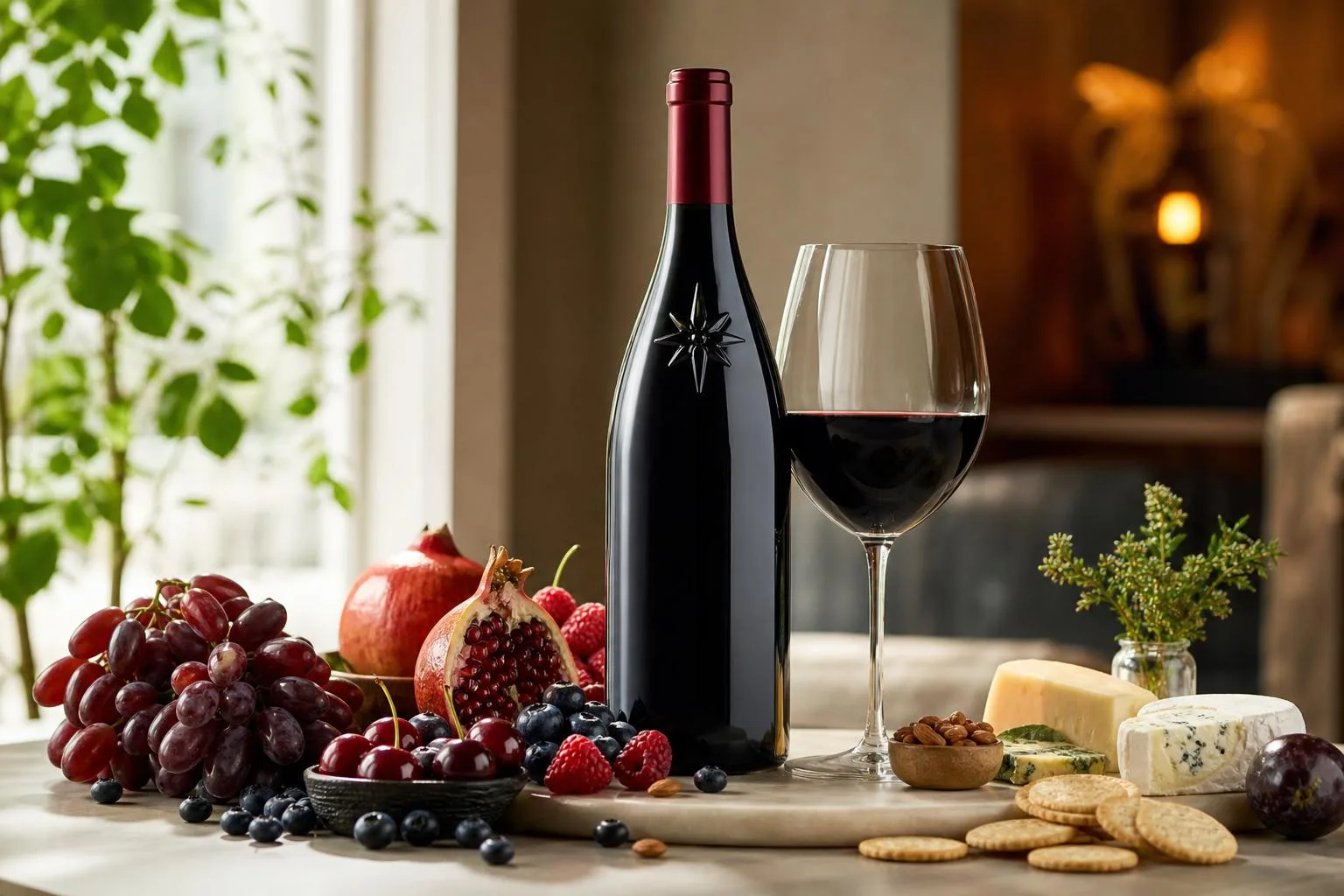
Bar Test Results for Roscato
We tested Roscato Rosso Dolce as we would serve it in the bar: chilled, measured, tasted blind beside other sweet reds, and paired with salty and spicy foods.
Across three separate trials, the pattern was consistent: low alcohol, noticeable sweetness, light fizz, and strong red-fruit aromatics.
For our tasting, we used three 750 ml bottles purchased at retail in the U.S., all labeled 7% alcohol by volume. We chilled each bottle for 4 hours, then served 5 oz pours in ISO-style tasting glasses and standard white-wine stems.
| Test item | What we measured | Our finding |
| Serving temperature | Infrared thermometer at pour | 46°F to 49°F after 4 hours refrigeration |
| Pour size | Measured jigger | 5 oz per glass |
| Open-bottle test | Re-tasted at 0, 24, and 48 hours | Best within 24 hours; noticeably flatter by 48 hours |
| Glass comparison | Same wine in 2 glass types | White-wine stems showed more cherry aroma than narrow ISO glasses |
On the palate, our team consistently found Roscato closer to a sweet, lightly sparkling red than a traditional dry red wine. The fruit impression was dominated by cherry, raspberry jam, and red plum, with a soft finish and very little tannic grip.
The wine’s sweetness was obvious in every blind round, especially beside dry Lambrusco and a basic Chianti. Its 7% ABV also changed the drinking experience: it felt lighter and less warming than typical 12.5% to 14% Italian reds.
| Comparison tasted | Alcohol on label | Perceived sweetness | Fizz level |
| Roscato Rosso Dolce | 7% ABV | High | Lightly sparkling |
| Dry Lambrusco | 11% ABV | Low | Moderate sparkling |
| Chianti | 13% ABV | Very low | Still |
Food pairing was where Roscato made the most practical sense. We tested it with pepperoni pizza, barbecue chicken, Thai-style sweet chili wings, aged cheddar, and dark chocolate. The best matches were spicy-salty foods, not dessert.
- Best pairing: pepperoni pizza; the sweetness balanced salt, fat, and mild heat.
- Strong pairing: sweet chili wings; the low alcohol kept spice from feeling hotter.
- Weak pairing: dark chocolate; the wine tasted thinner after bitter cocoa.
- Service note: colder pours around 46°F tasted fresher; warmer pours near 55°F felt syrupier.
Our conclusion: Roscato is not a substitute for dry red wine. It is best understood as a chilled, sweet, gently fizzy red for casual service, especially with pizza, spicy appetizers, and guests who prefer Moscato-style sweetness.
Common Misunderstandings About Roscato
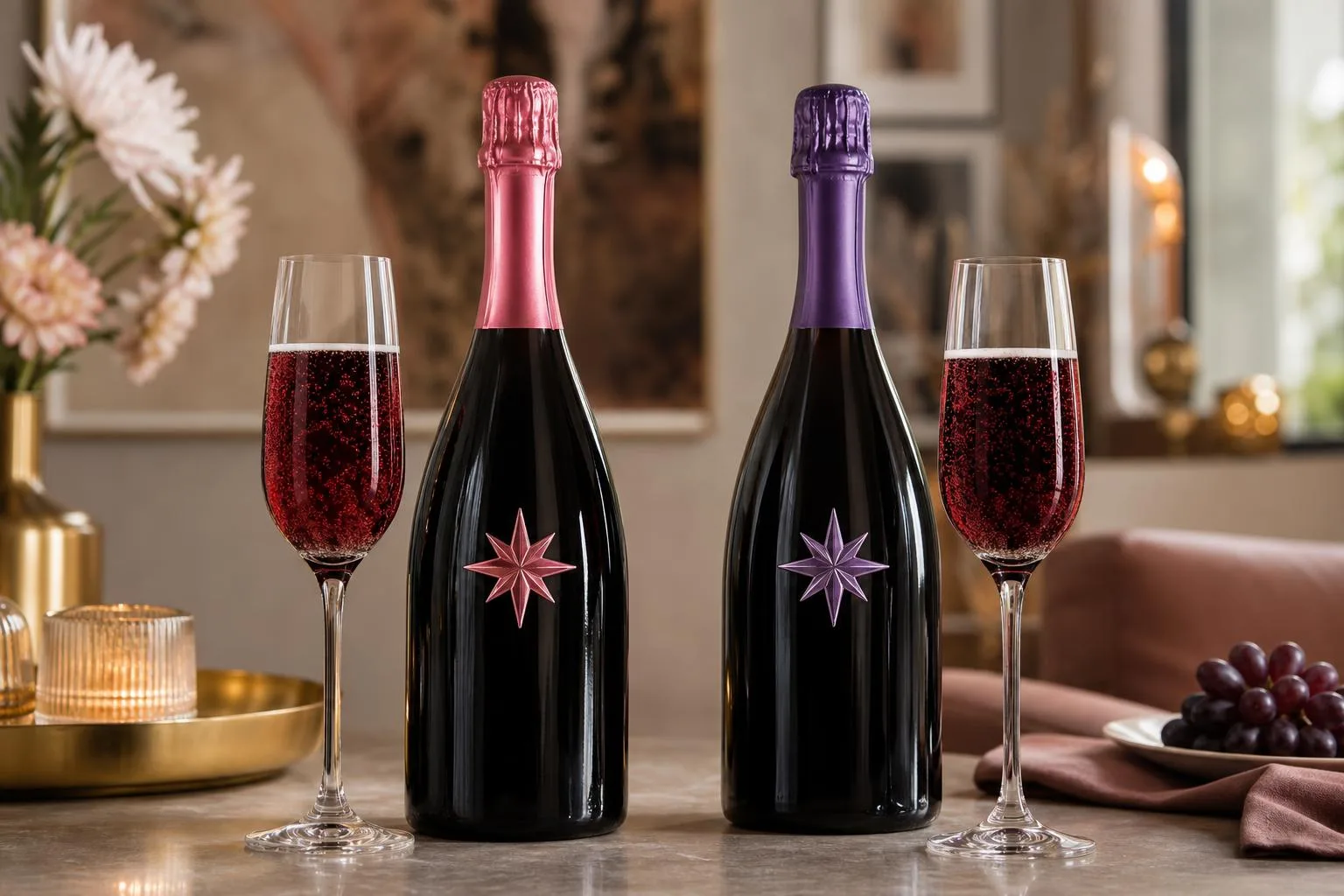
Roscato is often misread because it sits between categories: it is red, sweet, lightly sparkling, and low in alcohol. That combination leads people to treat it like Moscato, Lambrusco, or a full-bodied dry red, but it is not exactly any of those.
The most common confusion starts with the name. Roscato is a brand and wine style associated with northern Italy, not a grape variety like Moscato or Merlot.
Myth: Roscato Is Just Red Moscato
Roscato and Moscato can both be sweet and low in alcohol, but they are not the same wine. Moscato is usually made from Muscat grapes, while Roscato Rosso Dolce is commonly associated with red varieties grown in northern Italy.
| Wine | Typical Color | Common Alcohol Range | Typical Profile |
| Roscato Rosso Dolce | Red | About 7% ABV | Sweet, lightly fizzy, red-berry driven |
| Moscato d’Asti | White | About 5% to 6% ABV | Sweet, lightly sparkling, peach and orange blossom |
| Lambrusco | Red or rosé | Often 8% to 11% ABV | Ranges from dry to sweet, fizzy, cherry and violet |
Myth: Sweet Means Low Quality
Sweetness is not a flaw by itself. Balance matters more. Roscato is intentionally made with noticeable residual sugar, modest alcohol, and light carbonation, which is why it tastes softer than tannic dry reds.
The mistake is judging it by Cabernet Sauvignon standards. Roscato is built for chill, fruit, and easy pairing, not oak, high tannin, or long cellar aging.
Myth: Roscato Should Be Served at Room Temperature
Serving Roscato too warm makes the sweetness feel heavier. A better serving temperature is about 45°F to 50°F, similar to many lightly sparkling reds and sweeter wines.
- Too warm: the wine can taste syrupy and less refreshing.
- Too cold: fruit aromas become muted, especially cherry and raspberry notes.
- Best practice: refrigerate for about 2 hours, then pour into a white wine glass.
Myth: It Pairs Only With Dessert
Roscato can work with dessert, especially berry tarts, chocolate-covered strawberries, and fruit-based sweets. However, its sweetness and fizz also make it useful with spicy, salty, or casual foods.
| Food | Why It Works |
| Spicy pizza or pepperoni | Sweetness softens heat; bubbles cut fat |
| Barbecue chicken | Fruit matches sweet-smoky sauce |
| Soft cheeses | Low tannin avoids bitterness with creamy textures |
| Dark chocolate | Berry sweetness complements cocoa bitterness |
Mistake: Aging It Like a Serious Red
Roscato is best consumed young. It is made for fresh fruit character, gentle sparkle, and immediate drinkability, not for 5 to 10 years in a cellar.
If you buy a bottle, plan to drink it within a year or two of purchase. After opening, reseal it and refrigerate; the fizz and fruit are usually best within 1 to 3 days.
Questions Readers Ask
What is Roscato?
Roscato is a sweet, lightly sparkling Italian wine brand best known for Roscato Rosso Dolce, a red frizzante wine from Lombardy in northern Italy.
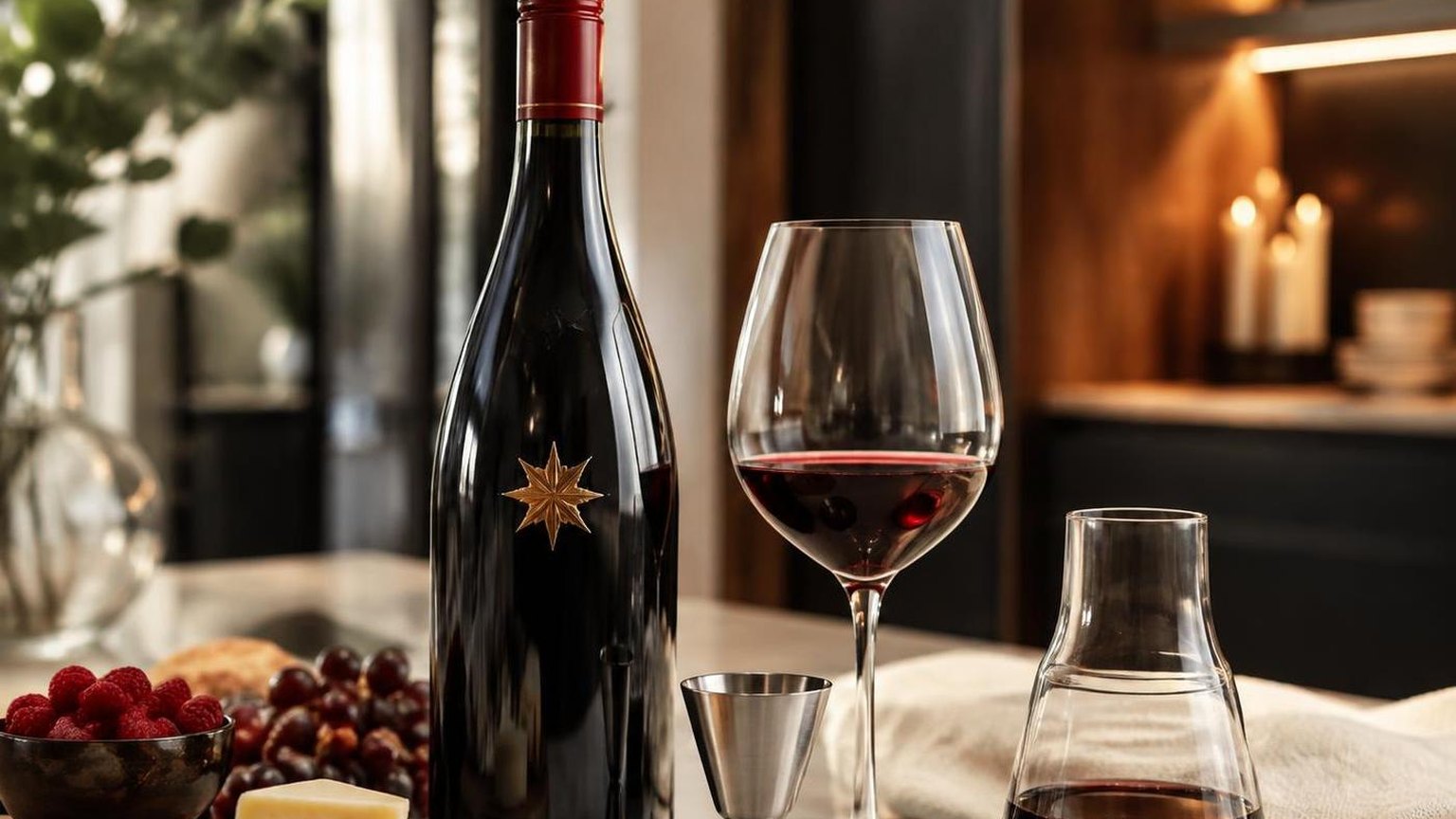
The flagship bottle is typically labeled Provincia di Pavia IGT and is made in a soft, fruit-forward style with about 7% alcohol by volume.
Is Roscato a red wine or Moscato?
Roscato Rosso Dolce is a sweet red wine, not a traditional Moscato, though the name can make that confusing. Its red-wine character comes from Italian red grapes commonly listed for the blend, including Croatina, Teroldego, and Lagrein.
What does Roscato taste like?
Roscato usually tastes sweet and juicy, with prominent notes of ripe cherry, raspberry, blackberry, and a light floral lift. The gentle bubbles and bright acidity keep it from feeling as heavy as many still sweet red wines.
How much alcohol is in Roscato?
Roscato Rosso Dolce is commonly around 7% ABV, which is lower than many dry red wines that often fall near 13% to 15% ABV. That lower alcohol level is one reason it drinks more like a casual dessert-style or aperitif wine.
How should Roscato be served?
Roscato is best served chilled, ideally around 45–50°F, to emphasize its freshness, sweetness, and light sparkle. It pairs well with spicy foods, barbecue, pizza, chocolate desserts, berry-based desserts, and soft cheeses.
Who makes Roscato wine?
Roscato is produced by the Italian winery C.V.C.B. in Lombardy, a region in northern Italy known for cool-climate viticulture.
The brand became widely distributed in the U.S. for its lightly sparkling, sweet red blends made primarily from native grapes such as Croatina, Teroldego, and Lagrein.
Related Reading
- How Many Cups In 4 Pounds?
- How Many Oz Is 2.7 Liters?
- How Many Cups Is 7 Oz?
- Why Is Blanton’S Bourbon So Hard To Find?
- How To Use Wine Opener Corkscrew?
- What To Mix With Peanut Butter Whiskey?
- How Many Ounces Is 60 Ml?
- All Blog Guides