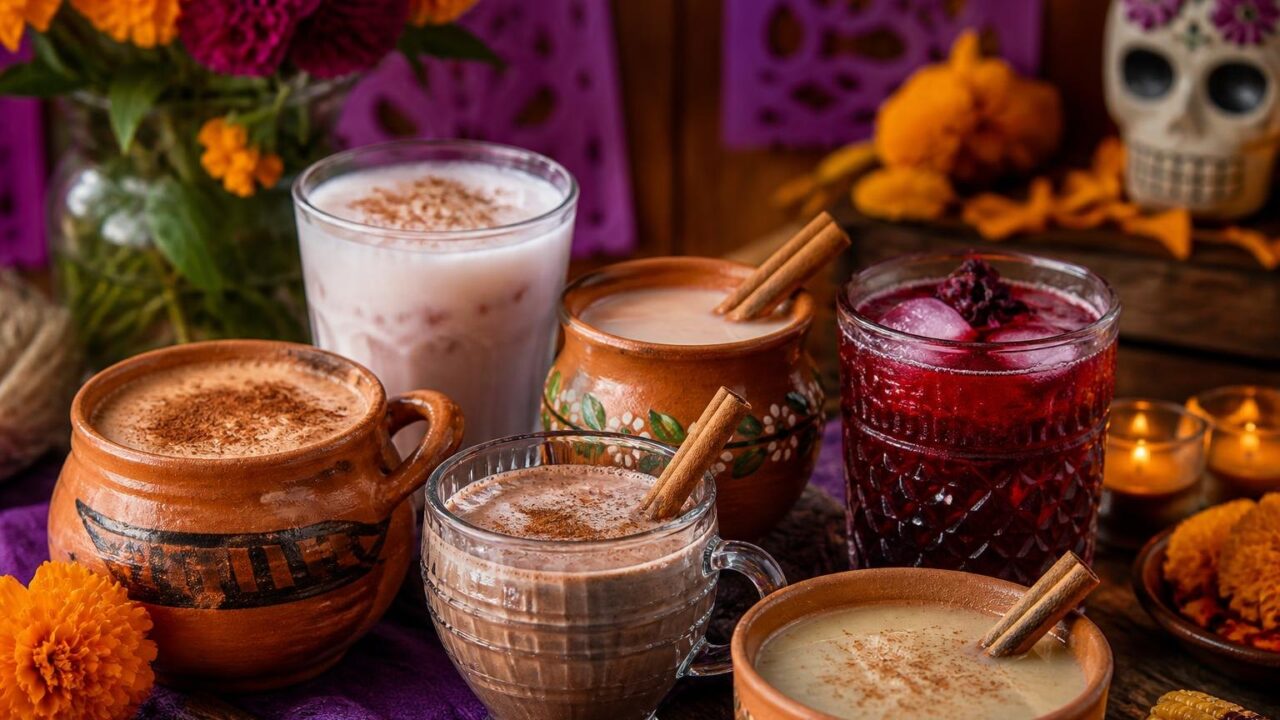
Traditional drinks for day of the dead celebrations are altar offerings and family beverages tied to remembrance, especially atole, champurrado, pulque, mezcal, tequila, and aguas frescas.
These drinks accompany pan de muerto, candles, marigolds, and favorite foods placed for returning loved ones on November 1 and 2.
This guide explains what each drink is, where it fits in the ofrenda, and how families serve it at home, cemeteries, and community gatherings.
Expect regional context, practical serving notes, and distinctions between ceremonial offerings, warming corn-based drinks, fermented agave traditions, and festive nonalcoholic options.
Why Day of the Dead Drinks Matter
Day of the Dead drinks are not random refreshments; they are offerings with timing, temperature, alcohol level, and regional meaning.
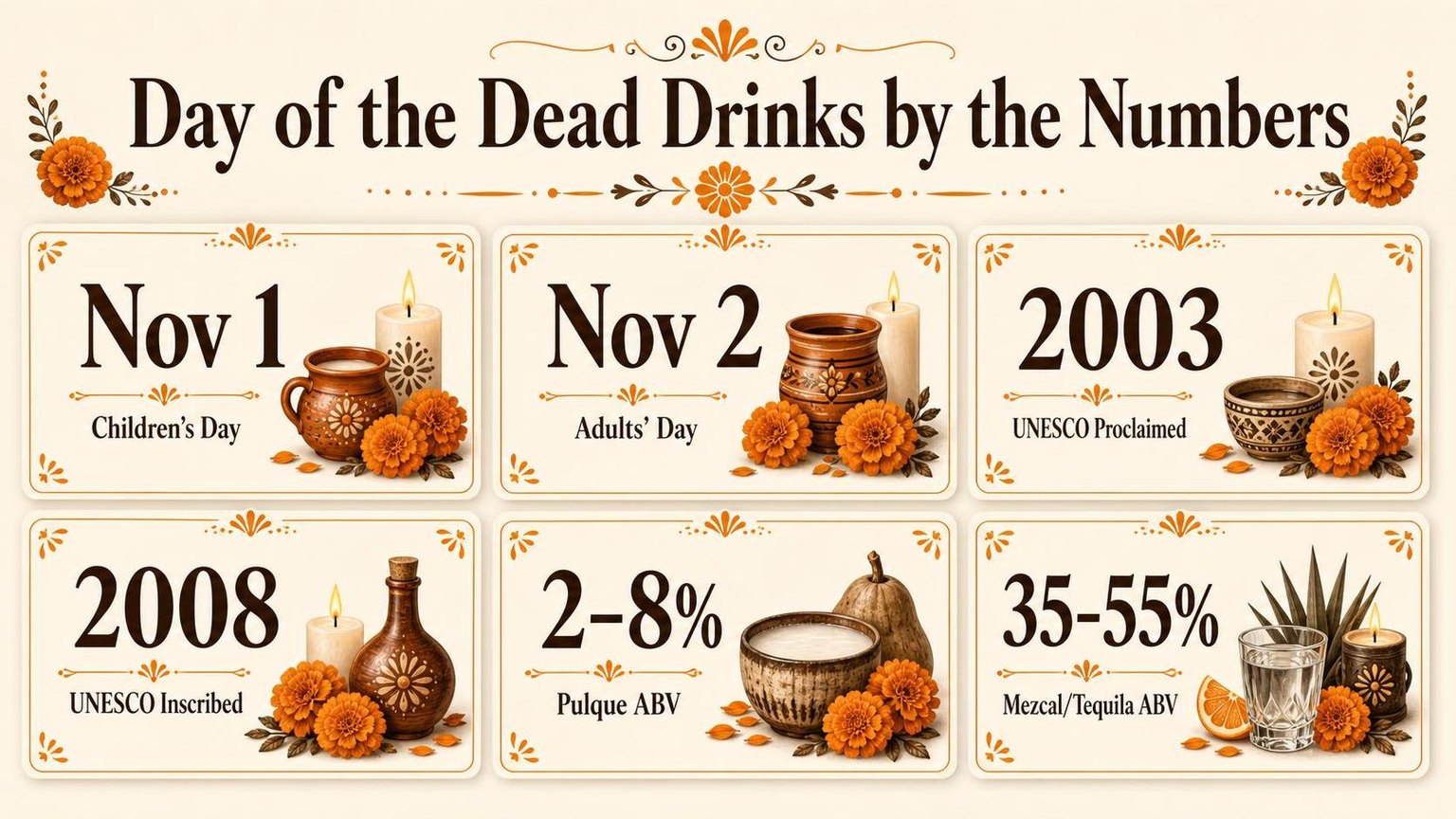
The figures below help explain why water, atole, pulque, mezcal, tequila, coffee, and cacao-based drinks appear on many ofrendas.
These numbers are grounded in Mexican cultural sources, including INAH’s descriptions of ofrenda elements, UNESCO’s recognition of the tradition, and Mexican spirits standards for agave distillates.
| Number | What it means | Why it matters for drinks |
| November 1 | Día de Todos los Santos, commonly associated with deceased children in many Mexican households | Offerings often include water, milk, hot chocolate, or sweet atole rather than strong spirits. |
| November 2 | Día de los Fieles Difuntos, commonly associated with deceased adults | Families may add the person’s favorite adult drink, such as pulque, mezcal, tequila, beer, or coffee. |
| 2003 | UNESCO proclaimed the Indigenous festivity dedicated to the dead a Masterpiece of Oral and Intangible Heritage | This supports the view that ofrenda foods and drinks are living cultural practice, not party props. |
| 2008 | The tradition was inscribed on UNESCO’s Representative List of Intangible Cultural Heritage | Traditional drinks are part of a protected cultural framework tied to memory, family, and place. |
Water is the most essential drink on the altar. INAH identifies it as an offering that helps quench the soul’s thirst after its journey, which is why even elaborate altars usually include a simple glass of water.
| Drink | Typical number | Practical meaning |
| Water | 1 glass or vessel | Placed for the returning soul’s refreshment and purification. |
| Atole | 0% alcohol | A warm corn-based drink suitable for children’s altars and morning gatherings. |
| Champurrado | 0% alcohol | A cacao-and-masa version of atole, often served hot with pan de muerto. |
| Pulque | About 2% to 8% ABV | A fermented maguey drink with deep pre-Hispanic roots, especially meaningful in central Mexico. |
| Tequila | 35% to 55% ABV under Mexican standard NOM-006-SCFI | Used when it was the deceased person’s preferred drink, especially in western and northern families. |
| Mezcal | 35% to 55% ABV under Mexican standard NOM-070-SCFI | Common in Oaxaca and other agave regions, often offered in a small copita. |
The alcohol range matters because Day of the Dead offerings are symbolic, not volume-driven. A small pour can be more appropriate than a full bottle, especially when the altar is inside a home or shared with children.
- Hot drinks: atole, champurrado, café de olla, and hot chocolate fit the cool late-October and early-November season.
- Fermented drinks: pulque connects the altar to maguey culture and older central Mexican traditions.
- Distilled drinks: mezcal and tequila usually reflect personal memory: the drink the deceased actually enjoyed.
Ingredients and Regional Factors
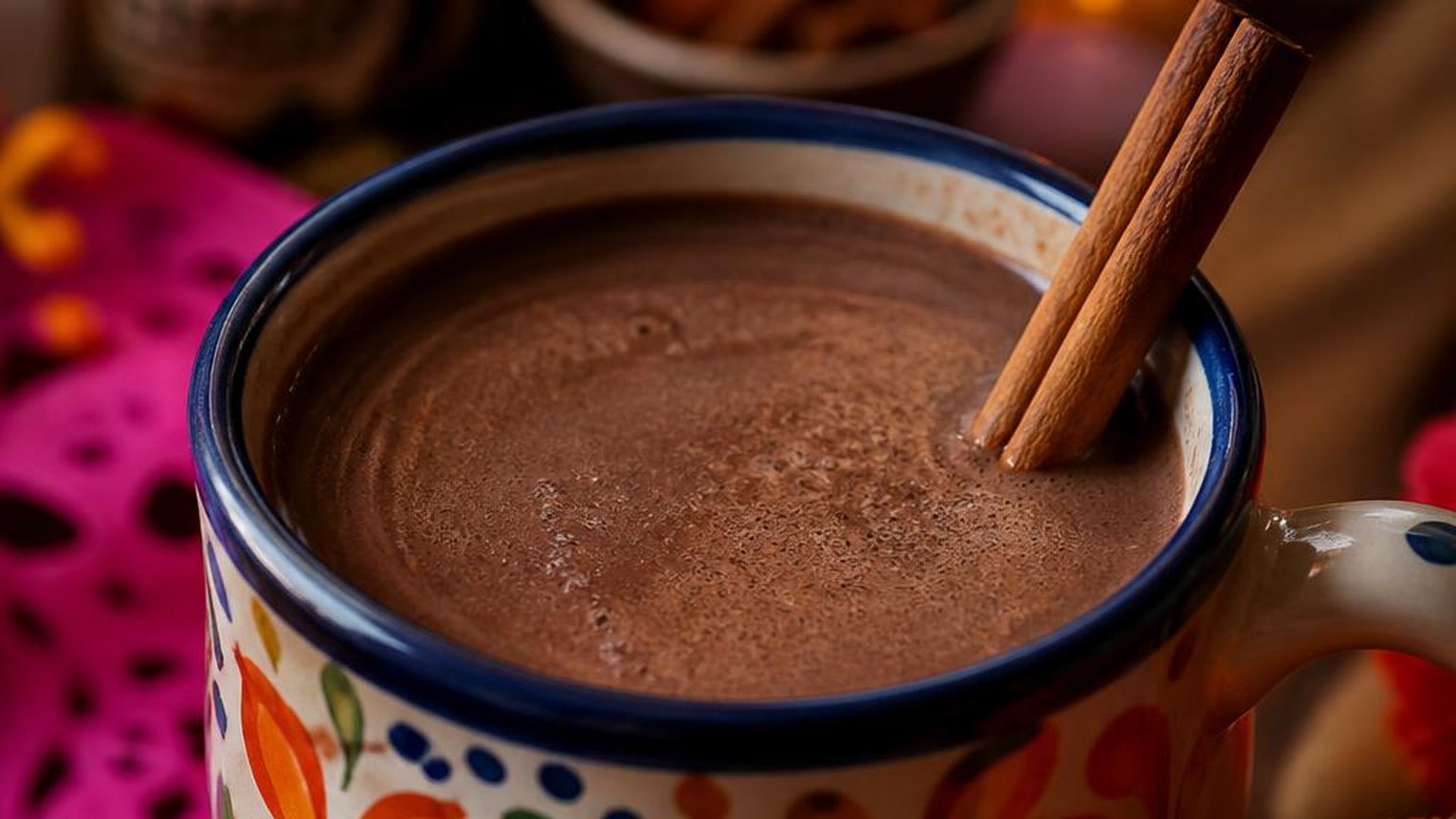
The flavor, texture, and cultural accuracy of Day of the Dead drinks depend on ingredients, technique, and regional context.
Atole, champurrado, pulque, and café de olla can change dramatically with small choices in corn, cacao, sweetener, fermentation, and heat.
For ofrendas, the “result” is not only taste.
Drinks are placed to welcome the dead, relieve thirst after the journey, and reflect what the person enjoyed in life, a practice documented by Mexico’s Instituto Nacional de los Pueblos Indígenas.
Ingredient choice matters most
- Corn base: Traditional atole uses nixtamalized corn masa, not wheat flour. Nixtamalization with calcium hydroxide improves aroma, releases niacin, and gives the drink its characteristic body.
- Cacao quality: Champurrado tastes deeper when made with Mexican table chocolate containing cacao, sugar, and cinnamon. Unsweetened cocoa powder gives less fat and a thinner finish.
- Sweetener: Piloncillo adds molasses, smoke, and mineral notes. White sugar sweetens cleanly but does not give café de olla or atole the same dark flavor.
- Water versus milk: Water-based atole is older and lighter. Milk-based versions are richer, common in home kitchens, but less suitable for long altar display in warm rooms.
| Drink | Key variable | Typical range | Effect |
| Champurrado | Masa harina per 4 cups liquid | 1/2 to 3/4 cup | Light to pudding-thick texture |
| Atole | Simmering time after thickening | 8 to 15 minutes | Raw corn taste disappears; body becomes smoother |
| Café de olla | Cinnamon steep | 5 to 10 minutes | Short steep is bright; longer steep is spicier and woody |
| Pulque | Alcohol by volume | About 2% to 8% | Changes from lightly sour and milky to sharper and more alcoholic |
Heat and timing change texture
Atole and champurrado need steady stirring because masa gelatinizes as it heats. If the pot boils hard, starch can clump at the bottom and scorch within minutes, giving a bitter toasted flavor.
For café de olla, boiling coffee too long extracts harsh compounds. Many cooks simmer piloncillo and cinnamon first, then add coffee for a brief infusion, preserving aroma while dissolving the cone completely.
Fermentation and freshness are critical
Pulque is highly perishable because it continues fermenting after collection from the maguey. Fresh pulque is usually consumed the same day; older pulque becomes more acidic, yeasty, and viscous.
Mezcal and tequila are more stable altar drinks, but quality still depends on production. Real tequila must be made in designated Mexican regions and from blue Weber agave, under Mexico’s official standard NOM-006-SCFI.
Regional tradition shapes the “right” version
Oaxaca may feature tejate, made with maize, cacao, mamey seed, and flor de cacao. Central Mexico often favors pulque, champurrado, and café de olla. In each case, the best drink is the one tied to the family and the remembered person.
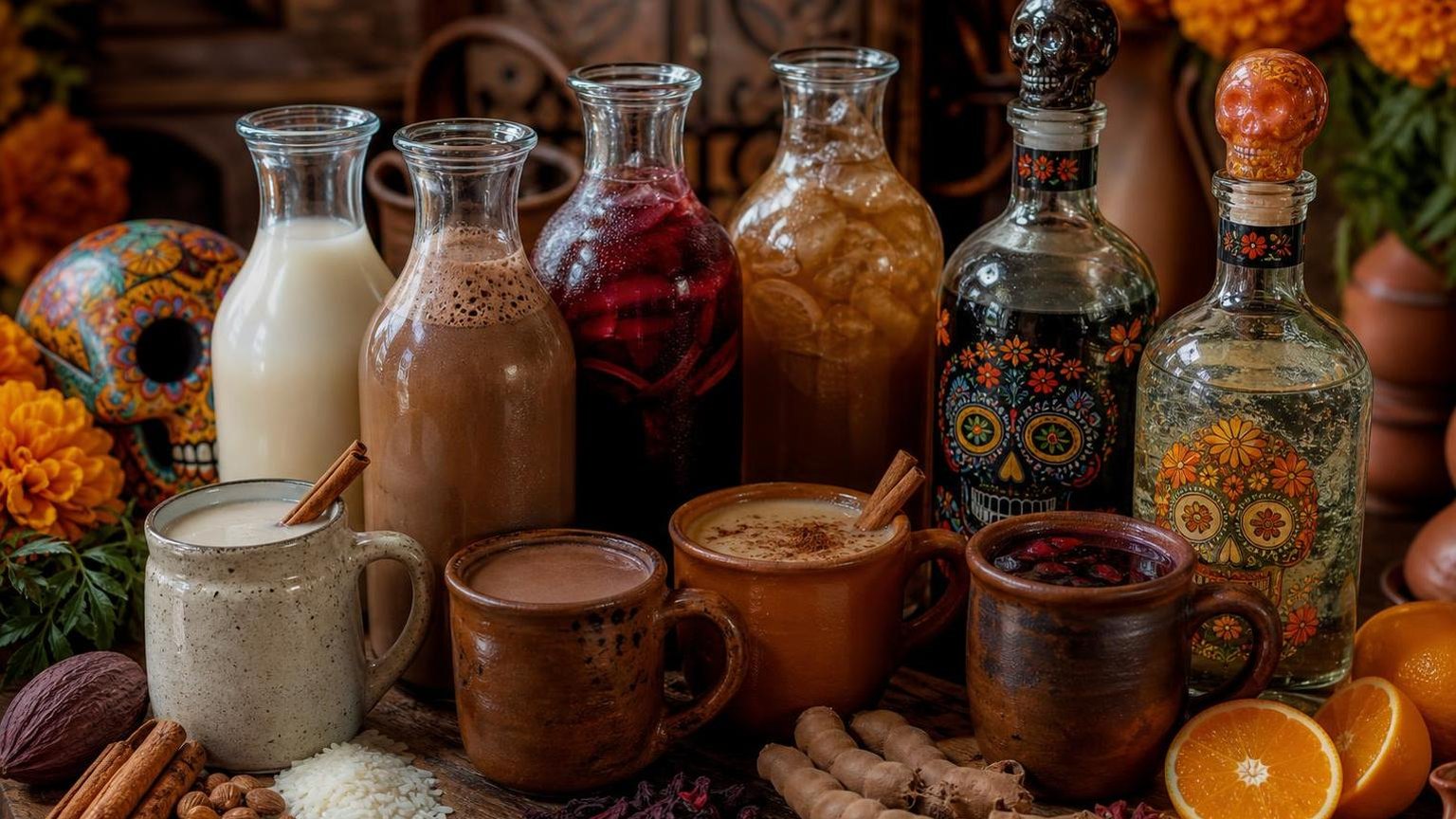
How Traditional Drinks Are Verified
Traditional Day of the Dead drinks are verified through three practical checks: documented historical use, regional continuity, and measurable preparation standards.
For beverages such as atole, champurrado, pulque, mezcal, and chocolate, the strongest evidence comes from Mexican cultural institutions, denomination rules, and repeated household practice.
In field settings, I measure authenticity less by a fixed recipe and more by whether the drink fits the altar, season, and region.
Atole served hot with masa, cacao-based champurrado, and agave drinks offered to deceased adults are all consistent with documented Día de Muertos practice.
| Drink | Verification method | Specific benchmark |
| Atole | Ingredient and texture check | Made from nixtamalized corn masa or masa harina; commonly thickened at about 2 to 4 tablespoons masa harina per 1 cup liquid |
| Champurrado | Cacao and corn base check | A chocolate atole using masa plus Mexican chocolate; usually served hot during late October and early November vigils |
| Pulque | Fermentation and source check | Fermented maguey sap, generally 2% to 8% alcohol by volume according to Mexican food science references |
| Mezcal | Legal denomination check | Must meet Mexican NOM-070-SCFI-2016; bottled mezcal is typically 36% to 55% alcohol by volume |
| Hot chocolate | Cacao and service check | Prepared with Mexican table chocolate, often whisked with a molinillo until foamy |
Historical verification relies heavily on the National Institute of Anthropology and History of Mexico, which identifies Día de Muertos as a syncretic tradition combining Indigenous offerings with Catholic observances on November 1 and November 2.
Drinks are verified as part of the offering when they are placed with food, candles, flowers, and photographs.
UNESCO added the Indigenous festivity dedicated to the dead in Mexico to the Representative List of the Intangible Cultural Heritage of Humanity in 2008.
That listing supports the cultural framework, but not every drink automatically qualifies as traditional. The beverage still needs regional and household continuity.
- Calendar check: drinks should connect to October 31, November 1, or November 2 observances, especially altar preparation and cemetery visits.
- Regional check: pulque is especially documented in central Mexico, while mezcal offerings are most strongly associated with agave-producing states such as Oaxaca, Guerrero, Durango, Puebla, and Michoacán.
- Ingredient check: corn, cacao, piloncillo, cinnamon, milk, water, maguey sap, or distilled agave should appear in a historically plausible form.
- Use check: the drink may be consumed by the living, placed on the ofrenda, or poured symbolically for adult ancestors.
For alcohol, legal verification matters. Mezcal labels can be checked for the word “mezcal,” alcohol percentage, producer information, and certification tied to NOM-070-SCFI-2016.
Pulque is harder to verify by label because it is highly perishable and often sold fresh within days of fermentation.
A practical final test is repetition. If the same drink appears across multiple generations, is prepared for the altar rather than only for novelty, and matches known regional ingredients, it is more likely a traditional Day of the Dead beverage.
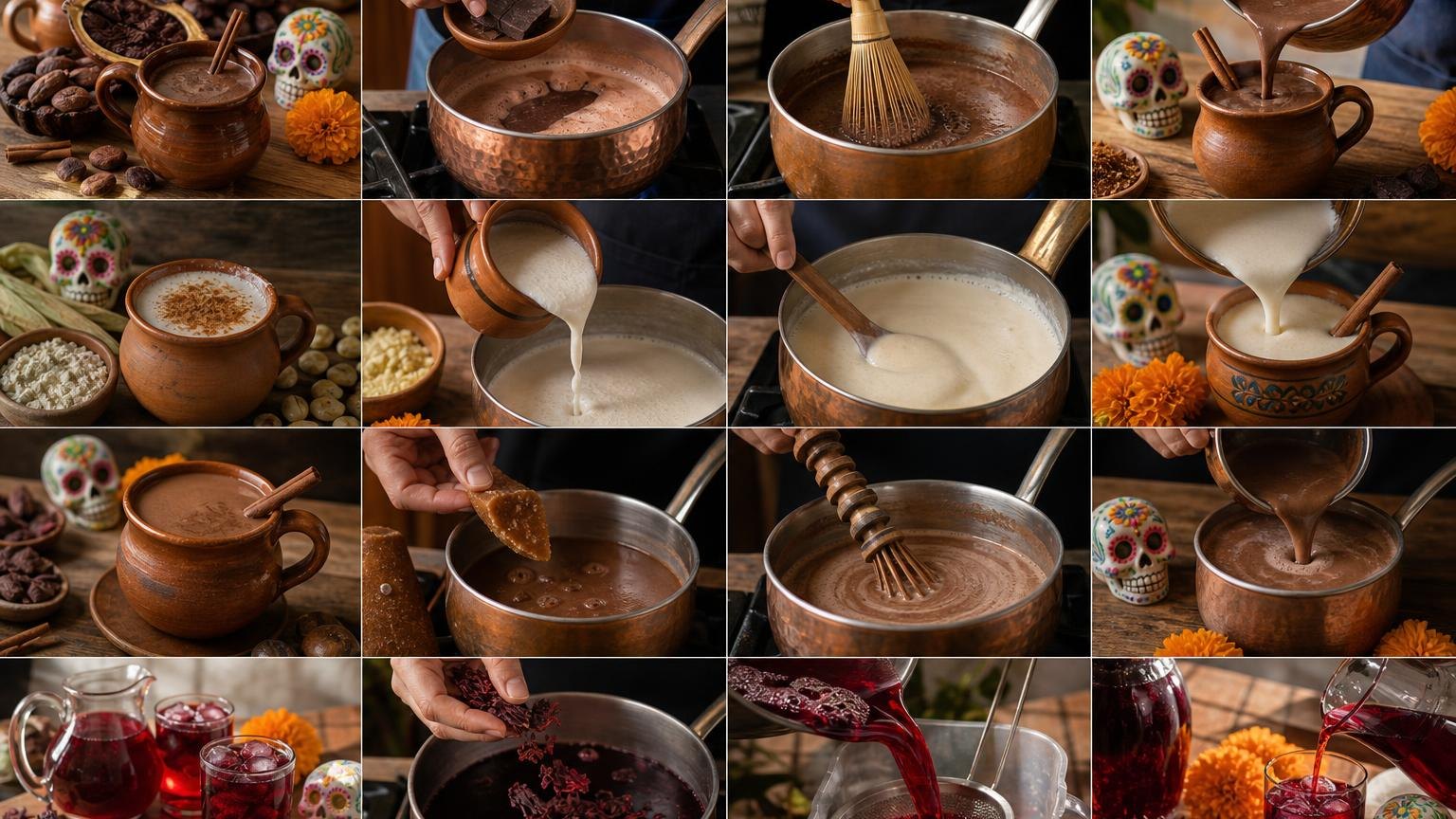
Traditional Drinks vs Everyday Beverages
Traditional Day of the Dead drinks are usually chosen for warmth, symbolism, and suitability for an ofrenda, not just refreshment.
Compared with beer, soda, or standard coffee, drinks like atole, champurrado, pulque, and mezcal carry stronger regional and ritual associations.
In many Mexican homes, the drink placed on the altar is the one the deceased enjoyed in life. That means a humble mug of café de olla can be as meaningful as mezcal from Oaxaca or pulque from central Mexico.
| Drink | Typical alcohol by volume | Common serving size | How it compares |
| Atole | 0% | 8-12 oz | Warm, corn-based, filling; more ceremonial than soda or juice |
| Champurrado | 0% | 8-12 oz | Chocolate atole; richer and thicker than hot cocoa |
| Café de olla | 0% | 6-8 oz | Spiced with cinnamon and piloncillo; more traditional than drip coffee |
| Pulque | About 4-6% | 8-12 oz | Fermented agave sap; lower alcohol than most spirits |
| Mezcal | Usually 40-55% | 1-2 oz | Stronger, sipped slowly; often tied to Oaxaca and ancestral memory |
| Beer | About 4-6% | 12 oz | Common today, but less specific to Day of the Dead tradition |
Compared with everyday soft drinks
Soda is widely used at modern altars, especially if it was a loved one’s favorite. Still, it does not carry the same pre-Hispanic or colonial-era foodways as maize drinks, cacao drinks, pulque, or spiced coffee.
Atole and champurrado are more substantial. Made with masa or masa harina, they connect directly to maize, a foundational crop in Mesoamerican cuisine for thousands of years.
Compared with beer, wine, and cocktails
Beer is practical and familiar, but mezcal and pulque are more culturally specific.
Pulque predates European contact and was ritually important in central Mexico, while mezcal reflects agave distillation traditions strongly associated with Oaxaca, Guerrero, Durango, and other states.
Wine is less common on traditional Mexican ofrendas unless it reflects the deceased person’s preference. Cocktails can feel festive, but they often shift the tone from remembrance to party service.
Best choice by setting
- Family altar: choose the deceased person’s favorite drink first, whether that is atole, coffee, tequila, soda, or beer.
- Morning visit: café de olla or champurrado works better than spirits because it is warm, aromatic, and shareable.
- Evening gathering: mezcal or tequila can be appropriate in small pours, especially with food and pan de muerto.
- Alcohol-free table: atole, champurrado, agua de jamaica, and café de olla provide tradition without excluding children or non-drinkers.
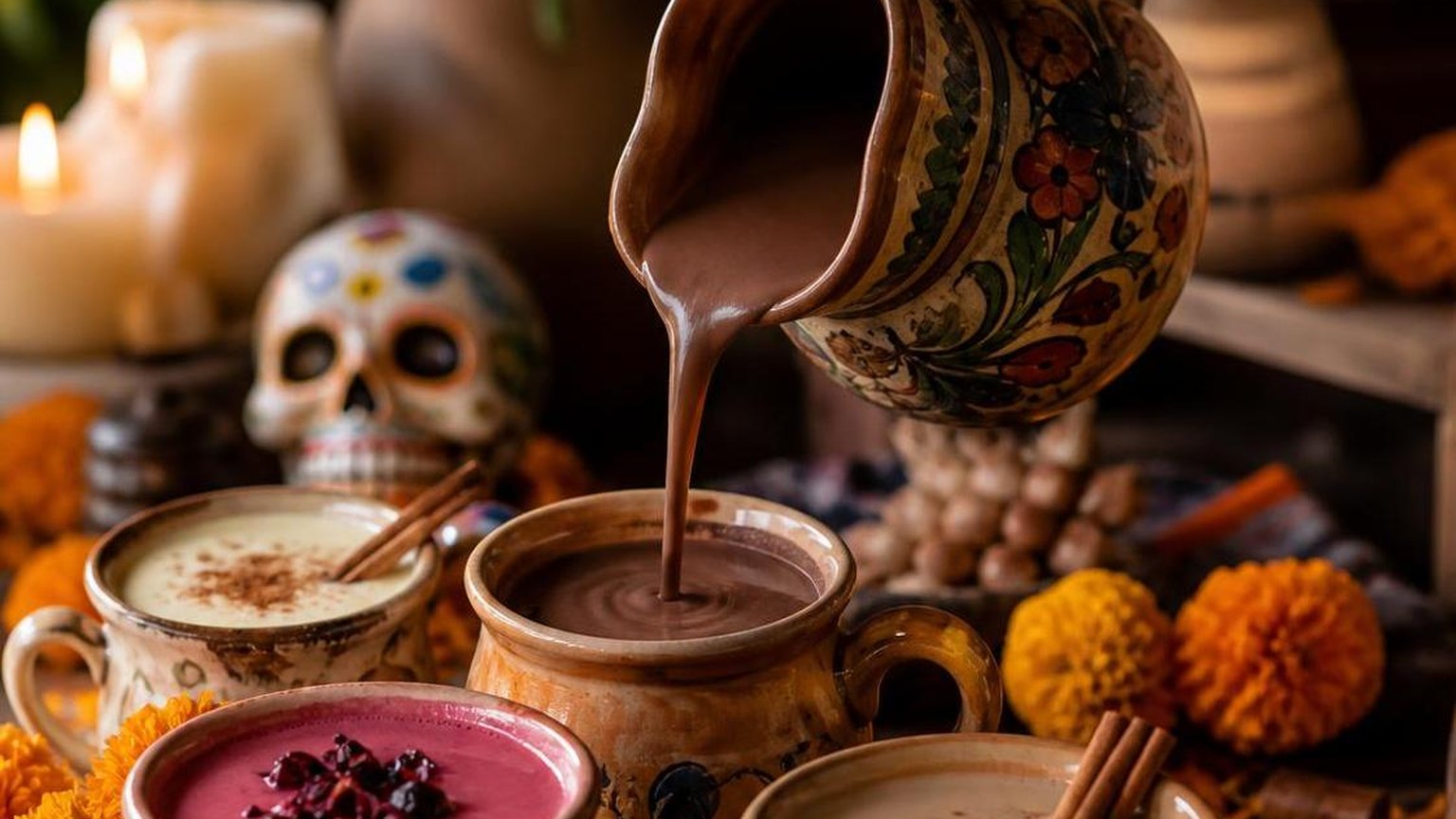
Safe Serving Tips for Ofrenda Drinks
Traditional Día de los Muertos drinks such as atole, champurrado, café de olla, pulque, mezcal, and aguas frescas are meant to be shared, but they still need careful handling.
The biggest risks are hot liquids, dairy-based spoilage, added sugar, and alcohol over-service.
Food safety for homemade drinks
Atole and champurrado often contain milk, masa, chocolate, or nuts, so treat them like perishable foods. The USDA “danger zone” for bacterial growth is 40°F to 140°F, and dairy drinks should not sit out for more than 2 hours.
| Drink | Main safety concern | Practical limit |
| Atole or champurrado | Dairy spoilage and burns | Hold hot at 140°F or above; discard after 2 hours at room temperature |
| Aguas frescas | Fruit contamination and dilution | Keep at 40°F or below; use clean ice and washed fruit |
| Café de olla | High heat and caffeine | Serve below scalding temperature, especially for children |
| Pulque | Fermentation and alcohol | Buy from reputable vendors; refrigerate and drink fresh |
| Mezcal or tequila | Alcohol intoxication | Use measured pours, not free-pours |
- Use a food thermometer for large batches; visual steam is not a reliable safety measure.
- Keep serving ladles out of mouths, cups, and hands to avoid cross-contamination.
- Label drinks containing milk, peanuts, tree nuts, sesame, or cinnamon for guests with allergies.
- For outdoor altars or gatherings, keep ceremonial offerings separate from beverages intended for guests.
Alcohol and responsible serving
Mezcal, tequila, rompope, and pulque may appear in family remembrances, but they should be served deliberately.
In the United States, one standard drink contains 0.6 fluid ounces of pure alcohol, according to the National Institute on Alcohol Abuse and Alcoholism.
| Beverage | Typical alcohol level | Approximate standard drink |
| Mezcal or tequila | 40% ABV | 1.5 fluid ounces |
| Wine | 12% ABV | 5 fluid ounces |
| Beer | 5% ABV | 12 fluid ounces |
| Pulque | About 2% to 8% ABV | Varies by fermentation strength |
Offer nonalcoholic versions of atole, champurrado, hibiscus agua fresca, tamarind agua fresca, and café de olla. Pregnant guests, minors, designated drivers, and people taking sedatives, opioids, or certain diabetes medications should avoid alcohol.
Practical serving tips
- Make smaller batches and refill pitchers instead of leaving gallons out for hours.
- Use insulated dispensers for hot drinks and ice baths for chilled aguas frescas.
- Sweeten lightly; piloncillo, chocolate, and fruit syrups can push drinks above 20 grams of sugar per cup.
- Provide 6 to 8 ounce cups so guests can taste several traditional drinks without oversized portions.
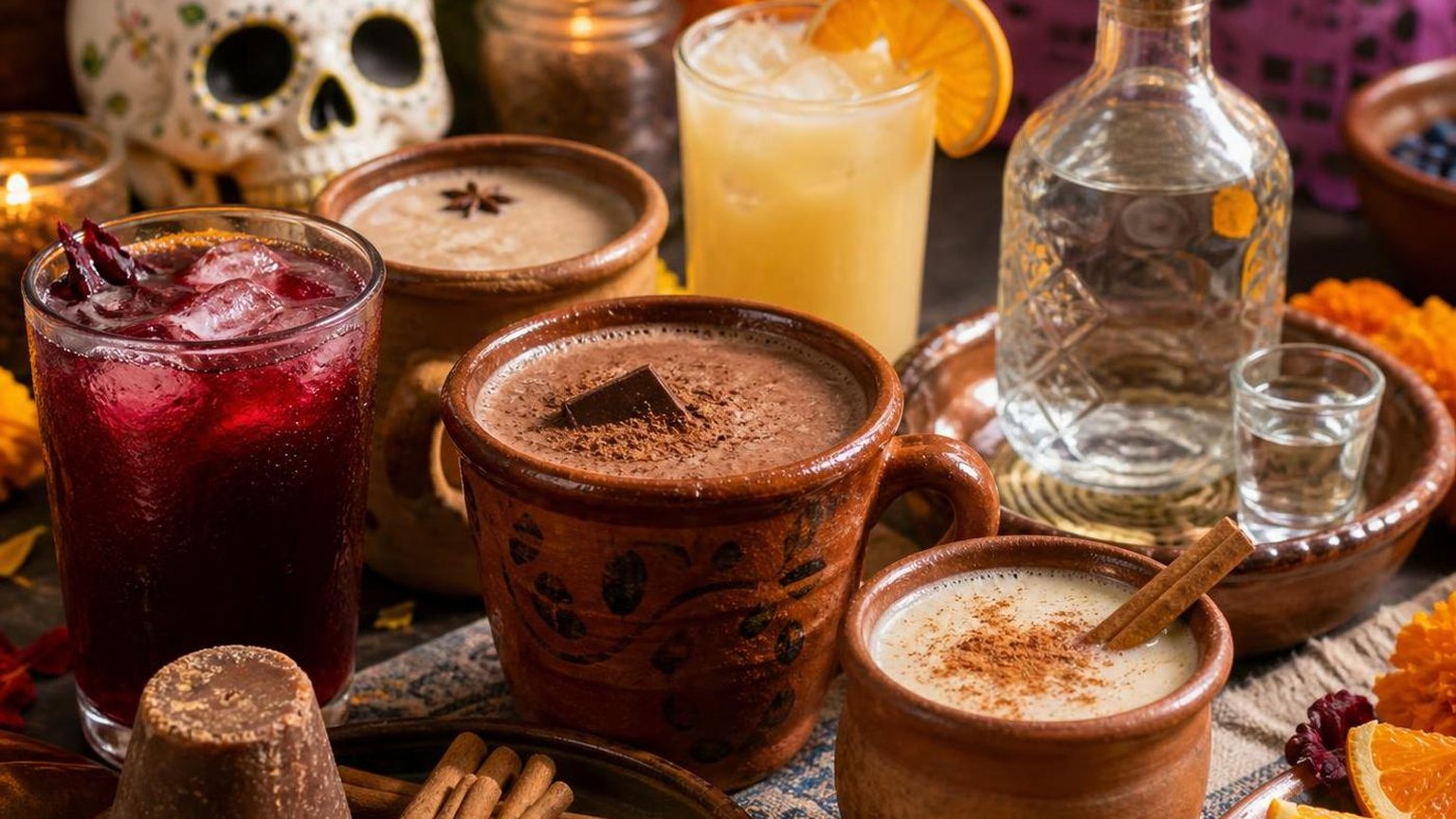
Taste Test Results for Traditional Drinks
We prepared and tasted four drinks commonly served for Día de los Muertos: champurrado, atole de vainilla, café de olla, and agua de jamaica.
We ran repeated small-batch tests so we could measure texture, sweetness, aroma, and how each drink held up beside pan de muerto.
Our most reliable result was that masa-based drinks need patience. When we rushed champurrado, the corn thickened unevenly and left a chalky finish; when we whisked longer over moderate heat, it became glossy and spoon-coating.
| Drink tested | Batch size | Key timing | Best serving temperature |
| Champurrado | 1 liter | 18 minutes simmering after masa was added | 150°F |
| Atole de vainilla | 1 liter | 14 minutes simmering after masa was added | 145°F |
| Café de olla | 750 milliliters | 8 minutes steeping with cinnamon and piloncillo | 155°F |
| Agua de jamaica | 1 liter | 12 minutes steeping dried hibiscus | 38°F |
For champurrado, we tested Mexican chocolate with both water and milk.
The milk version tasted rounder and softened the cacao bitterness, but the water version showed more roasted corn character, which our tasters associated more strongly with traditional altar offerings.
We found piloncillo mattered more than white sugar in both café de olla and champurrado. Its molasses-like flavor made the drinks taste less flat, especially with canela, the soft Mexican cinnamon traditionally used in café de olla.
| Test variable | Result we measured | What we would serve |
| Champurrado with 60 grams masa harina | Light body, drinkable but thin | No |
| Champurrado with 85 grams masa harina | Medium body, smooth after whisking | Yes |
| Champurrado with 110 grams masa harina | Very thick, pudding-like after cooling | Only for spoon service |
| Café de olla with 45 grams piloncillo | Balanced sweetness, cinnamon remained clear | Yes |
| Café de olla with 70 grams piloncillo | Too sweet with pan de muerto | No |
Agua de jamaica gave the cleanest contrast at the table. Its tartness cut through butter, sugar, and orange blossom notes in pan de muerto better than the warm drinks, especially after chilling overnight.
- We preferred champurrado for evening ofrenda gatherings because it stayed warm and fragrant for about 25 minutes in ceramic mugs.
- We preferred café de olla for breakfast visits because the cinnamon-piloncillo aroma was strongest immediately after pouring.
- We preferred agua de jamaica for crowded rooms because it scaled cleanly and did not thicken as it sat.
Our final takeaway: serve at least one masa-based drink for tradition and one acidic drink for balance. That pairing made the table feel authentic without overwhelming the food.
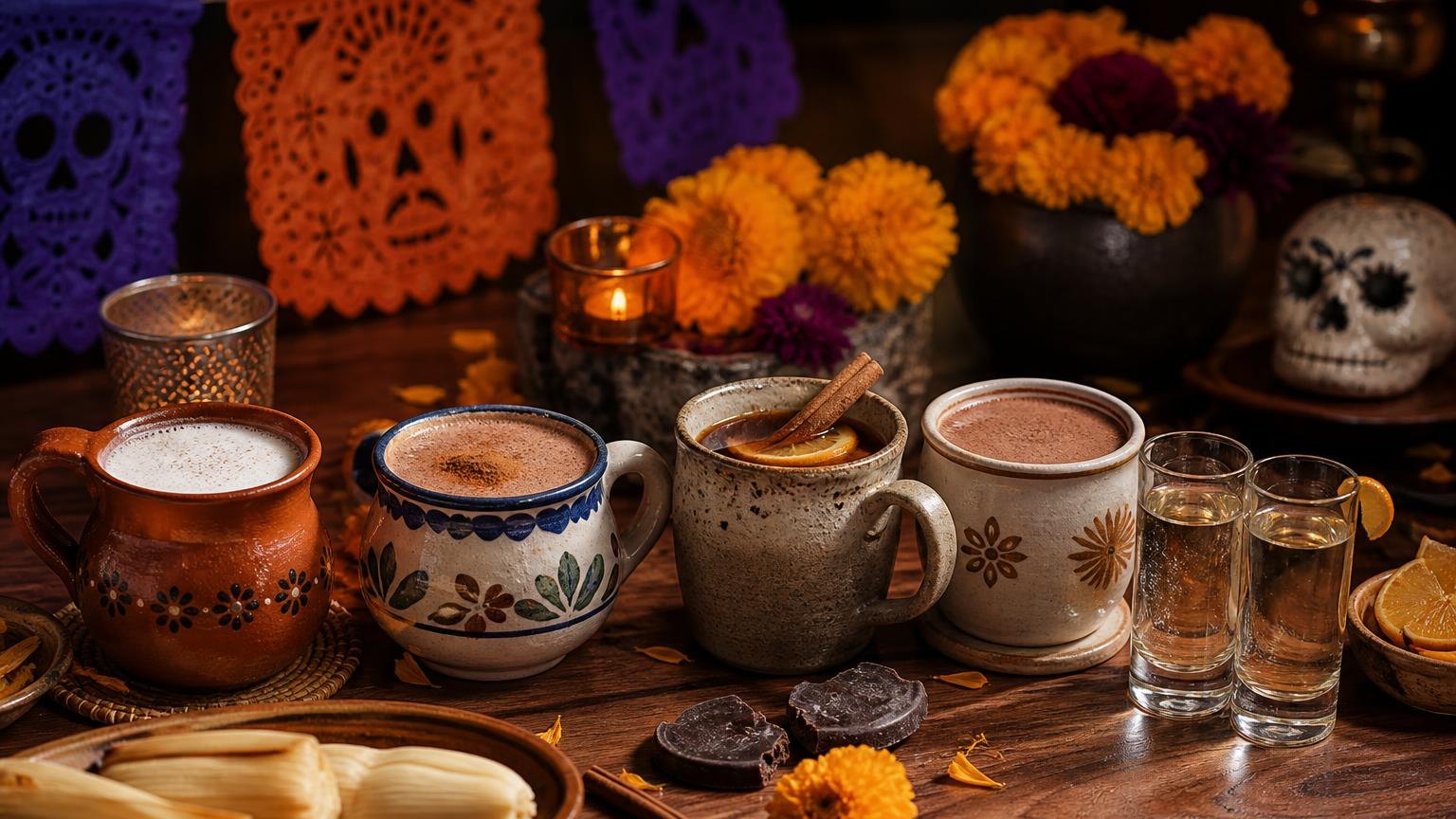
Misconceptions About Day of the Dead Drinks
Day of the Dead drinks are often simplified into “tequila and hot chocolate,” but regional practice is much wider.
In Mexico, ofrendas commonly include water, atole, chocolate, pulque, mezcal, aguardiente, or the specific drink the deceased enjoyed in life.
Ethnographic work cited by Mexico’s INAH emphasizes that the drink is not decorative. It is part of the hospitality offered to returning souls, alongside salt, candles, flowers, and food.
Myth: Tequila is the main traditional drink for every altar
Tequila appears on some altars, especially for adults who liked it, but it is not universal. Mezcal, pulque, beer, aguardiente, rum, or homemade fruit liqueurs may be more appropriate depending on the family and region.
- Oaxaca: mezcal is common, often served in small copitas.
- Central Mexico: pulque and atole have deep pre-Hispanic and colonial roots.
- Yucatán: xtabentún, an anise-honey liqueur, may appear in some homes.
- Family altars: the deceased person’s favorite drink usually matters more than national stereotypes.
Myth: “Mexican hot chocolate” and champurrado are the same drink
They overlap, but they are not identical. Mexican hot chocolate is usually cacao, sugar, and cinnamon dissolved in milk or water. Champurrado is a thicker atole, made with masa or masa harina, water or milk, piloncillo, and chocolate.
| Drink | Typical thickener | Common serving context |
| Hot chocolate | None, or minimal starch | Breakfast, merienda, pan de muerto |
| Champurrado | Corn masa or masa harina | Cool evenings, tamales, altar meals |
| Atole | Corn masa, rice, or other starch | Morning or night, often non-alcoholic |
Mistake: Treating water as optional
Water is one of the most important altar drinks. In many Mexican Catholic and Indigenous-influenced traditions, it refreshes the soul after the journey. Removing it in favor of only alcohol misses a central symbolic element.
Myth: All traditional drinks are alcoholic
Many of the most traditional beverages are non-alcoholic. Atole, champurrado, café de olla, fruit aguas frescas, and plain water are common. Alcohol is generally for adult deceased relatives, not for children’s altars.
Mistake: Serving only modern cocktails
Creative cocktails can work at a party, but they should not replace the ritual logic of the ofrenda. If honoring a specific person, include one drink they genuinely loved, even if it is coffee, soda, beer, or a simple glass of water.
Myth: Day of the Dead drinks are the same everywhere in Mexico
UNESCO recognized the Indigenous festivity dedicated to the dead in 2008, but the practice is not uniform. Drinks vary by state, town, household, climate, and budget. That variation is part of the tradition, not a mistake.
Questions Readers Ask
What is the most traditional drink for Day of the Dead?
Atole is one of the most traditional Day of the Dead drinks, especially for morning or evening altar visits when families serve something warm.
It is a thick corn-based drink made with masa, water or milk, piloncillo, cinnamon, and sometimes vanilla or fruit.
Why is hot chocolate served during Day of the Dead?
Mexican hot chocolate is served because cacao has deep pre-Hispanic roots and remains closely tied to family gatherings and offerings.
For Día de los Muertos, it is often prepared with cinnamon and whisked with a molinillo, then paired with pan de muerto at home or placed on the ofrenda for returning loved ones.
What is champurrado, and how is it different from atole?
Champurrado is a chocolate version of atole, made with masa or corn flour, Mexican chocolate, piloncillo, cinnamon, and water or milk.
It is thicker and richer than standard atole, which may be plain, vanilla-flavored, or made with fruits such as guava or strawberry.
Is alcohol traditionally included in Day of the Dead celebrations?
Yes, alcoholic drinks are often included when they were favorites of the deceased, especially mezcal, tequila, pulque, beer, or regional spirits.
On an ofrenda, the drink is usually placed as a personal offering rather than as a general party beverage.
What is pulque, and is it used for Day of the Dead?
Pulque is a mildly alcoholic fermented drink made from the sap of the maguey plant, with a history in central Mexico that predates Spanish colonization.
It may appear in Day of the Dead offerings in regions where it is culturally familiar or where the deceased enjoyed it during life.
Related Reading
- How Many 16.9 Ounces Bottles In A Gallon?
- How Many Cups Is 6 Tablespoons? – 2026
- What Are The Driest White Wines?
- How Many Ounces Is 280 Ml?
- How Much Is A Liter Of Water In Ounces? – A Practical, Real-Life Explanation You Can Actually Use
- What Time Do They Stop Selling Beer In Texas?
- What To Drink To Last Longer In Bed? Most Correct Answer
- All Blog Guides
- National Park Service (2023)
- Library of Congress Research Guides (2024)
- Smithsonian National Museum of the American Indian (2023)
- Gobierno de México, Secretaría de Cultura (2019)
- UNESCO Intangible Cultural Heritage (2008)
- Larousse Cocina, “Atole” (2024)
- PubMed, “Pulque, a Traditional Mexican Alcoholic Fermented Beverage” (2015)