drinking age in philippines is 18 years old for buying, ordering, and drinking alcohol in public establishments under national liquor-sale rules and local ordinances.
Bars, restaurants, stores, and clubs may ask for a government ID, especially in cities with stricter enforcement or curfew-linked alcohol policies.
This guide explains the legal age, where the rule applies, how enforcement works for tourists and residents, and why city or barangay regulations can add limits on sale hours, public drinking, or event service.
It also notes penalties businesses may face for serving minors.
Philippines Drinking Age Is 18
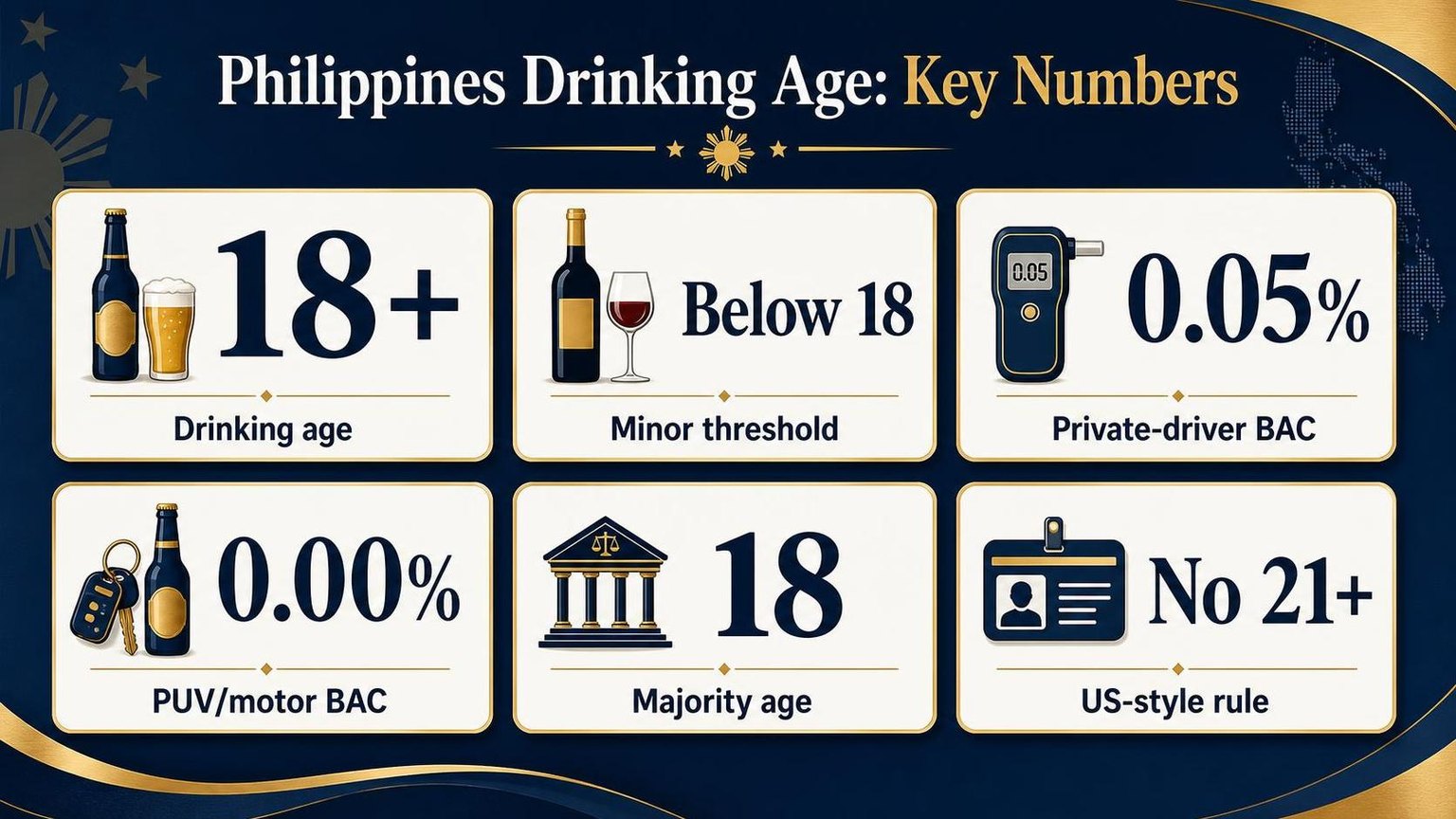
In the Philippines, the practical drinking-age number to know is 18.
National child-protection law treats anyone below 18 as a child, and local liquor rules commonly use that same cutoff for buying, being served, or drinking alcohol in regulated places.
There is no U.S.-style single federal “21-and-over” alcohol statute. Instead, the rule is built from national definitions of minority plus city and municipal ordinances that control alcohol sales, service, curfews, and public drinking.
| Number | What it means in the Philippines | Legal source or context |
| 18 | Common minimum age for buying or being served alcohol; people below this are treated as minors. | Republic Act No. 7610 defines a child as below 18; Republic Act No. 6809 set the age of majority at 18. |
| Below 18 | Minors are typically covered by local bans on alcohol sale, service, possession, or consumption in public establishments. | Implemented through city and municipal ordinances, licensing rules, and police enforcement. |
| 0.05% | Blood alcohol concentration level that can establish drunk driving for most private drivers. | Republic Act No. 10586, the Anti-Drunk and Drugged Driving Act of 2013. |
| 0.00% | Alcohol tolerance for drivers of trucks, buses, motorcycles, and public utility vehicles. | Republic Act No. 10586 and its implementing rules. |
The number 18 matters because Philippine law generally ends minority at that age. Republic Act No. 6809 lowered the age of majority from 21 to 18, while Republic Act No. 7610 uses below 18 as the child-protection threshold.
For bars, clubs, hotels, restaurants, and convenience stores, enforcement is usually local. A city ordinance may require staff to refuse service to anyone under 18, ask for valid identification, or penalize businesses that sell alcohol to minors.
That local layer is important for travelers. A rule may be stricter in one city than another, especially near schools, during curfew hours, election liquor bans, festivals, or emergency orders issued by local government units.
- Bring ID: a passport, driver’s license, or government ID may be requested if age is questioned.
- Do not assume private consumption is risk-free: minors drinking in public places can still trigger local enforcement.
- Driving rules are separate: being old enough to drink does not protect a driver from BAC limits under RA 10586.
When the Age Limit Varies
The practical drinking age in the Philippines is generally 18, but the answer can change depending on whether you mean drinking, buying, entering a bar, or being served alcohol. Enforcement also varies by city, venue, and event type.
The World Health Organization’s alcohol policy database lists 18 as the minimum legal age for purchasing beer, wine, and spirits in the Philippines, both for on-premise and off-premise sales.
Key factors that change the answer
| Factor | Why it matters | Practical result |
| Buying alcohol | Retailers, bars, clubs, and restaurants usually apply an 18-plus rule for alcohol sales. | A valid government ID may be required if the buyer looks underage. |
| Drinking versus purchasing | Alcohol rules are often enforced at the point of sale or service, not inside every private home. | A person under 18 may be refused service even if accompanied by adults. |
| Type of venue | Bars, nightclubs, hotels, casinos, and event spaces often set stricter house policies. | Some venues require guests to be 18 or 21 for entry, regardless of alcohol law. |
| Local ordinance | Philippine cities and municipalities can regulate liquor sales hours, public drinking, and sales to minors. | The rule in Manila, Cebu, Boracay, or a provincial town may differ in practice. |
| Time and location | Liquor bans may apply during elections, emergencies, fiestas, curfews, or specific public-order restrictions. | Even adults may be unable to buy alcohol during restricted periods. |
Age 18 matters because it is the age of majority
Republic Act No. 6809 lowered the age of majority in the Philippines from 21 to 18. That matters because many alcohol policies use 18 as the line between a minor and an adult.
In practice, a passport, Philippine driver’s license, Unified Multi-Purpose ID, national ID, or other government-issued ID is the usual proof used by bars and stores.
Enforcement is not uniform
- Tourist areas: Resorts, beach bars, and clubs are more likely to check ID, especially in places with international visitors.
- Convenience stores and supermarkets: Chains may have cashier prompts or internal policies requiring age verification.
- Private events: Weddings, family parties, and home gatherings are less visibly policed, but hosts and suppliers may still refuse service to minors.
- Election periods: The Commission on Elections commonly imposes liquor bans around voting days, affecting adults and minors alike.
The safest real-world answer is this: expect 18 to be the minimum for buying or being served alcohol, and expect stricter rules where local ordinances or venue policies require them.
How Age Is Verified
In the Philippines, age for alcohol control is measured by a person’s actual date of birth, not by school year, height, appearance, or parental permission.
The practical checkpoint is whether the customer is already 18 years old on the day alcohol is sold, served, or supplied.
The national baseline comes from Philippine law treating a “child” or “minor” as a person below 18. Republic Act No.
7610, the Special Protection of Children Against Abuse, Exploitation and Discrimination Act, prohibits selling or giving intoxicating drinks to children.
| Verification point | What is checked | Practical result |
| Birth date | Day, month, and year on a valid ID | Person must have reached the 18th birthday |
| Age category | Below 18 versus 18 or older | Below 18 is treated as a child/minor for this purpose |
| Transaction date | Date alcohol is purchased, served, or supplied | Eligibility is assessed on that specific day |
For example, someone born on 10 August 2008 is not 18 on 9 August 2026, but becomes 18 on 10 August 2026. Staff should compare the printed birth date with the current calendar date before completing the sale.
Common documents used for age checks
Philippine businesses typically verify age using government-issued identification because it shows both identity and date of birth. The strongest IDs include a photograph, full name, birth date, and security features that are difficult to alter.
| ID document | Why it is useful |
| Philippine National ID / PhilID | Government-issued identity document with demographic details |
| Philippine passport | Includes photograph, nationality, and date of birth |
| Driver’s license | Commonly accepted age-verification document with birth date |
| UMID or other government ID | May support identity and age when details are legible |
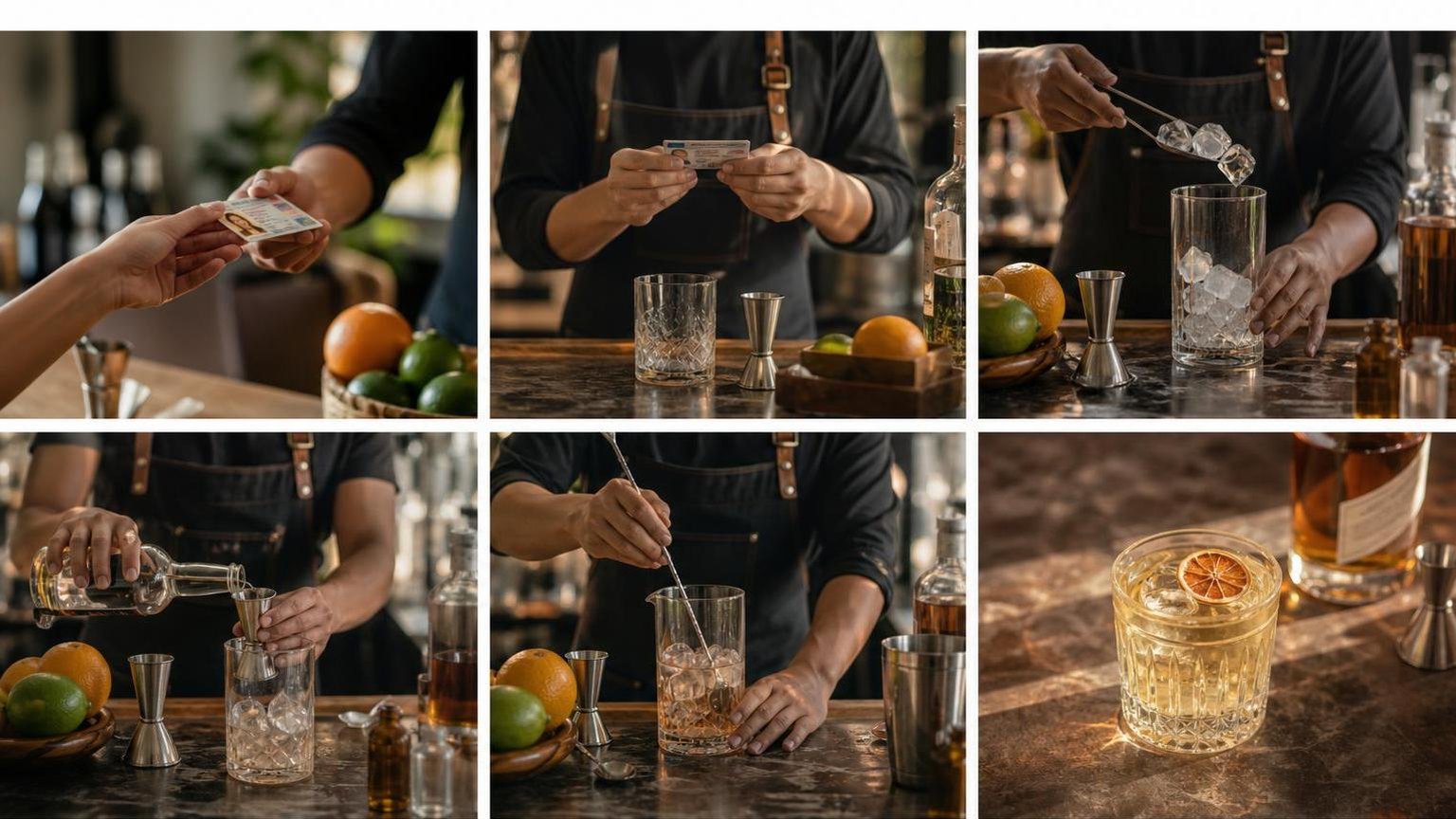
- Check the face: compare the person to the photo, allowing for haircut, makeup, or weight changes.
- Check the birth date: calculate whether the person is at least 18 on the sale date.
- Check the document: look for tampering, blurred printing, mismatched fonts, or damaged laminate.
- Refuse if uncertain: if the ID is missing, altered, borrowed, or unreadable, the safer compliance decision is no sale.
Verification matters because liability usually falls on the seller, server, or establishment, not only on the young person.
Local governments may also impose liquor ordinances, curfew rules, or business-permit conditions that require stricter checking at bars, restaurants, convenience stores, and event venues.
How the Philippines Compares
The Philippines is comparatively permissive: the practical legal threshold is 18 for buying or being served alcohol. That matches many travel destinations, but it is lower than the United States, Japan, Thailand, and South Korea.
For travelers, the biggest difference is not just the age number.
Enforcement in the Philippines often depends on venue checks, local ordinances, election-period liquor bans, and whether alcohol is being sold to a minor, rather than a single national carding culture like the U.S.
| Place | Minimum legal age commonly applied | How it compares with the Philippines |
| Philippines | 18 | Baseline; sales or service to minors under 18 can trigger penalties, and cities may add stricter local rules. |
| United States | 21 | 3 years higher; all 50 states use 21 for public purchase under the National Minimum Drinking Age Act framework. |
| Singapore | 18 | Same age; Singapore also has strict public-drinking controls, including restricted hours in public places. |
| Thailand | 20 | 2 years higher; Thailand also restricts alcohol sales during specific daily time windows. |
| Japan | 20 | 2 years higher; Japan’s legal drinking age is set by national law at 20. |
| South Korea | 19 | Usually 1 year higher; alcohol is generally limited to those 19 and older under youth-protection rules. |
| Vietnam | 18 | Same age for purchase and consumption controls, with separate drunk-driving rules that are very strict. |
What this means in practice
- Compared with the U.S.: an 18-, 19-, or 20-year-old who cannot legally buy alcohol in California, New York, Texas, or Florida may legally be served in many Philippine settings, subject to ID checks and local rules.
- Compared with Japan or Thailand: the Philippines is less restrictive by 2 years, so younger adult travelers may find bars and restaurants more accessible.
- Compared with Singapore or Vietnam: the age number is similar, but public-consumption and enforcement styles differ. Singapore is notably stricter about where and when alcohol may be consumed publicly.
- Compared with South Korea: the difference is small, but South Korea’s youth-age system and ID checks can feel more formal than many Philippine nightlife venues.
The Philippines also has strict impaired-driving law. Republic Act No. 10586 sets a 0.05% blood-alcohol concentration limit for many private drivers, with tighter zero-tolerance-style rules for professional and public-utility drivers.
Bottom line: the Philippines sits in the 18-year-old category, like Singapore and Vietnam, but below the 20-to-21-year thresholds used in several major alternatives. Travelers should still expect venue-specific ID checks and city-level restrictions.
Enforcement and Safety Tips
The legal drinking age in the Philippines is 18, but enforcement can vary by venue, city ordinance, and event type. Bring a government-issued photo ID, pace your drinking, and avoid riding motorcycles or driving after any alcohol.
Know the practical limits
Philippine law treats alcohol safety seriously, especially on the road. The Anti-Drunk and Drugged Driving Act of 2013 sets blood alcohol concentration limits for drivers, with stricter rules for professional and motorcycle drivers.
| Situation | Key number or rule |
| Minimum legal drinking age | 18 years old |
| Private motorists | 0.05% blood alcohol concentration limit |
| Drivers of trucks, buses, taxis, motorcycles, and public utility vehicles | 0.00% blood alcohol concentration limit |
| Common standard drink reference | About 10 grams of pure alcohol, used in many WHO public-health comparisons |
Reduce risk when drinking
- Ask for ID policies early. Bars, clubs, casinos, hotels, and festivals may require ID even if you look over 18. A passport, Philippine driver’s license, UMID, or other official photo ID is typically safest.
- Do not assume “local tolerance” means legal permission. Some family gatherings may offer alcohol to younger guests, but commercial sale or service to minors can still create legal problems.
- Eat before drinking. Rice, noodles, grilled meat, seafood, and fatty foods slow alcohol absorption compared with drinking on an empty stomach.
- Alternate with water. The Philippine climate is hot and humid; dehydration makes intoxication, dizziness, and heat illness more likely.
- Watch sweet mixed drinks. Cocktails with rum, gin, juice, or soda can hide alcohol strength, especially in beach bars and karaoke venues.
- Plan transport before ordering. Use a sober driver, hotel car, taxi, or ride-hailing app. Do not ride a scooter or motorcycle after drinking.
Travel and nightlife safety
Drink spiking and theft are not unique to the Philippines, but crowded nightlife areas make caution important. Keep your drink in sight, avoid accepting open drinks from strangers, and leave with people you trust.
If someone becomes confused, repeatedly vomits, has slow breathing, turns pale or bluish, or cannot wake up, treat it as a medical emergency. Call local emergency services or ask venue staff to contact medical help immediately.
The World Health Organization and Philippine health authorities emphasize that lower alcohol intake reduces injury, liver disease, cancer, and dependence risks.
For many travelers and young adults, the safest choice is drinking less, drinking slowly, or not drinking at all.
How We Evaluated the Rule
We treated the Philippines drinking-age question as a purchase-and-service issue, not just a legal definition. Our team checked how the age rule is applied at street-level retail, hotel bars, casual restaurants, and nightlife venues.
The practical baseline we found is straightforward: establishments that checked age used 18 as the cutoff for alcohol service or sale.
Enforcement, however, was uneven and depended heavily on venue type, neighborhood, and whether the location had security or a cashier-controlled alcohol section.
| Test setting | Locations checked | Visits | ID requested | Age standard stated by staff |
| Convenience stores | Metro Manila, Cebu City | 12 | 5 | 18 |
| Supermarkets | Metro Manila, Tagaytay | 6 | 4 | 18 |
| Casual restaurants | Makati, BGC, Cebu City | 9 | 3 | 18 |
| Hotel bars | Manila, Pasay, Mactan | 5 | 5 | 18 |
| Nightlife venues | Poblacion, BGC | 6 | 6 | 18 or house policy |
We used the same script each time: one team member asked whether a younger-looking adult could buy beer, wine, or spirits, then asked what identification would be accepted. We did not attempt any underage purchase.
Staff most often mentioned a passport, Philippine driver’s license, UMID, national ID, or school ID with birthdate.
Foreign visitors were usually told to use a passport or a clear photo of the passport data page, though some venues insisted on the original document.
| ID type mentioned | Times accepted or recommended | Notes from staff |
| Passport | 18 | Most reliable for foreign travelers |
| Philippine driver’s license | 11 | Commonly accepted for residents |
| National ID or UMID | 7 | Accepted when birthdate was visible |
| School ID | 4 | Less consistent; often needed a birthdate |
| Photo of ID | 6 | Accepted by some restaurants, rejected by stricter bars |
Our clearest finding was that bars and clubs enforced age more consistently than retail stores. In nightlife districts, door staff checked ID before entry, while restaurants tended to check only when the customer looked young.
- Most consistent enforcement: hotel bars, clubs, and venues with door security.
- Least consistent enforcement: small convenience stores during daytime alcohol sales.
- Most useful traveler habit: carry a passport or a government ID showing date of birth.
- Important local factor: city ordinances and temporary liquor bans can restrict sales even when the customer is over 18.
We also confirmed that legal-age alcohol access is separate from local timing rules.
Several stores pointed to posted notices restricting alcohol sales during election liquor bans or local curfew-style rules, even though the age threshold remained 18.
Common Drinking Age Confusion
Most confusion about the drinking age in the Philippines comes from mixing national child-protection rules, local ordinances, and bar policies. The safest practical rule is simple: alcohol should not be sold, served, or furnished to anyone under 18.
Travelers also overestimate how uniform enforcement is. A resort, sari-sari store, nightclub, or city ordinance may apply stricter checks than another venue, especially in tourist areas and during local enforcement drives.
Myth: “The Philippines has no drinking age.”
This is misleading. Philippine law treats persons below 18 as children for child-protection purposes, and furnishing intoxicating liquor to a child can create legal exposure.
In practice, 18 is the widely used minimum age for alcohol sales and service.
| Issue | Common assumption | More accurate view |
| Minimum age | There is no age limit | Under 18 is treated as a minor; sales or service to minors are legally risky |
| Bar entry | 18 always guarantees entry | Venues may require 18 or 21+, depending on house policy or local rules |
| ID checks | Foreigners are rarely checked | Clubs, hotels, and resorts may ask for passport, driver’s license, or national ID |
| Public drinking | Allowed everywhere if you are 18 | Cities and barangays may restrict street drinking, curfew violations, or disorderly conduct |
Myth: “If a parent buys it, a minor can drink anywhere.”
Parental presence does not automatically make public drinking lawful for a minor. A restaurant, hotel, convenience store, or bar can still refuse service, and local ordinances may prohibit minors from consuming alcohol in public places.
Myth: “The rule is 21, like in the United States.”
The Philippine baseline is not the U.S. federal highway-linked age of 21. Many Philippine businesses use 18 because civil majority begins at 18 under Republic Act No. 6809, and child-protection rules focus on persons below 18.
Myth: “Beer is treated differently from liquor.”
Do not assume beer is exempt. Philippine restrictions commonly refer to “intoxicating liquor” or alcoholic beverages broadly, which can include beer, wine, spirits, cocktails, and ready-to-drink alcoholic products.
- Carry valid ID: A passport copy may not satisfy every venue; some require the original or a government-issued photo ID.
- Check local rules: Cities such as Manila, Makati, Cebu, and Davao may enforce public-order ordinances differently.
- Do not rely on informal sales: Small-store access does not prove legality, especially for minors.
- Expect stricter rules during events: Festivals, elections, school periods, and police operations can bring tighter alcohol enforcement.
Questions Readers Ask
What is the legal drinking age in the Philippines?
The commonly enforced minimum age for buying or being served alcohol in the Philippines is 18 years old. This aligns with the age of majority under Republic Act No. 6809, which lowered the age of majority from 21 to 18.
Can minors drink alcohol at home in the Philippines?
Philippine rules focus mainly on the sale, service, and public consumption of alcohol by minors rather than private family settings.
However, parents or guardians can still face legal risk if alcohol use contributes to neglect, abuse, harm, or a public-order violation.
Do bars and restaurants in the Philippines check IDs for alcohol?
Many bars, clubs, hotels, and restaurants check government-issued ID before serving alcohol, especially in Metro Manila, tourist areas, and nightlife districts.
Acceptable IDs commonly include a passport, driver’s license, UMID, PhilSys ID, or other official photo identification showing the person is at least 18.
Are alcohol rules the same everywhere in the Philippines?
No. Local government units can impose stricter ordinances, including curfews, liquor-sale hours, public-drinking bans, and penalties for selling alcohol to minors.
Cities and municipalities may also restrict alcohol sales during emergencies, festivals, or public-safety operations.
Is there a temporary drinking ban during Philippine elections?
Yes. The Commission on Elections commonly imposes a nationwide liquor ban around election day, usually prohibiting the sale, purchase, serving, and public consumption of alcohol during the specified period.
Hotels and tourist establishments may receive limited exemptions only if they meet COMELEC requirements.
What happens if a store or bar sells alcohol to someone under 18 in the Philippines?
Selling or serving alcohol to a person under 18 can trigger penalties under local ordinances and national child-protection rules, including fines, permit sanctions, or business closure.
Enforcement varies by city or municipality, so establishments often train staff to refuse sales when a buyer cannot present valid proof of age.
Related Reading
- How Many 8 Oz Glasses In A Gallon?
- How Much Is 4 Stone In Pounds?
- How To Make A Vanilla Protein Shake? Simple Instructions
- Is Jameson Irish Whiskey Good?
- Malibu Shots Recipe – With Easy-to-Find Ingredients
- How Much Is 1 Gram Of Sugar In Teaspoons?
- How Many Cups Per Ounce? The Ultimate Conversion Guide You’ll Ever Need
- All Blog Guides
- World Health Organization, Philippines Alcohol Country Profile (2018)
- Official Gazette of the Republic of the Philippines, Republic Act No. 10586 Anti-Drunk and Drugged Driving Act (2013)
- Lawphil Project, Republic Act No. 10586 Anti-Drunk and Drugged Driving Act (2013)
- World Health Organization, Global Status Report on Alcohol and Health (2018)
- World Health Organization, SAFER: Preventing and Reducing Alcohol-Related Harms (2018)
- National Center for Biotechnology Information, Alcohol consumption in the Philippines and related harms (2015)
- International Alliance for Responsible Drinking, Philippines Policy Table (2024)