How Many Cups Per Ounce is 0.125 cup per 1 fluid ounce. That means 8 fluid ounces equal 1 US cup, the standard liquid-measure conversion used in American recipes, nutrition labels, and kitchen measuring tools.
For dry ingredients, ounces measure weight, not volume, so the cup amount changes by ingredient density. One ounce of flour, sugar, butter, or chopped nuts will not occupy the same space.
This guide explains the exact liquid conversion, when to use a measuring cup, when to use a scale, and how to avoid common mistakes in US customary measurements.
Fluid Ounces to Cups Conversion
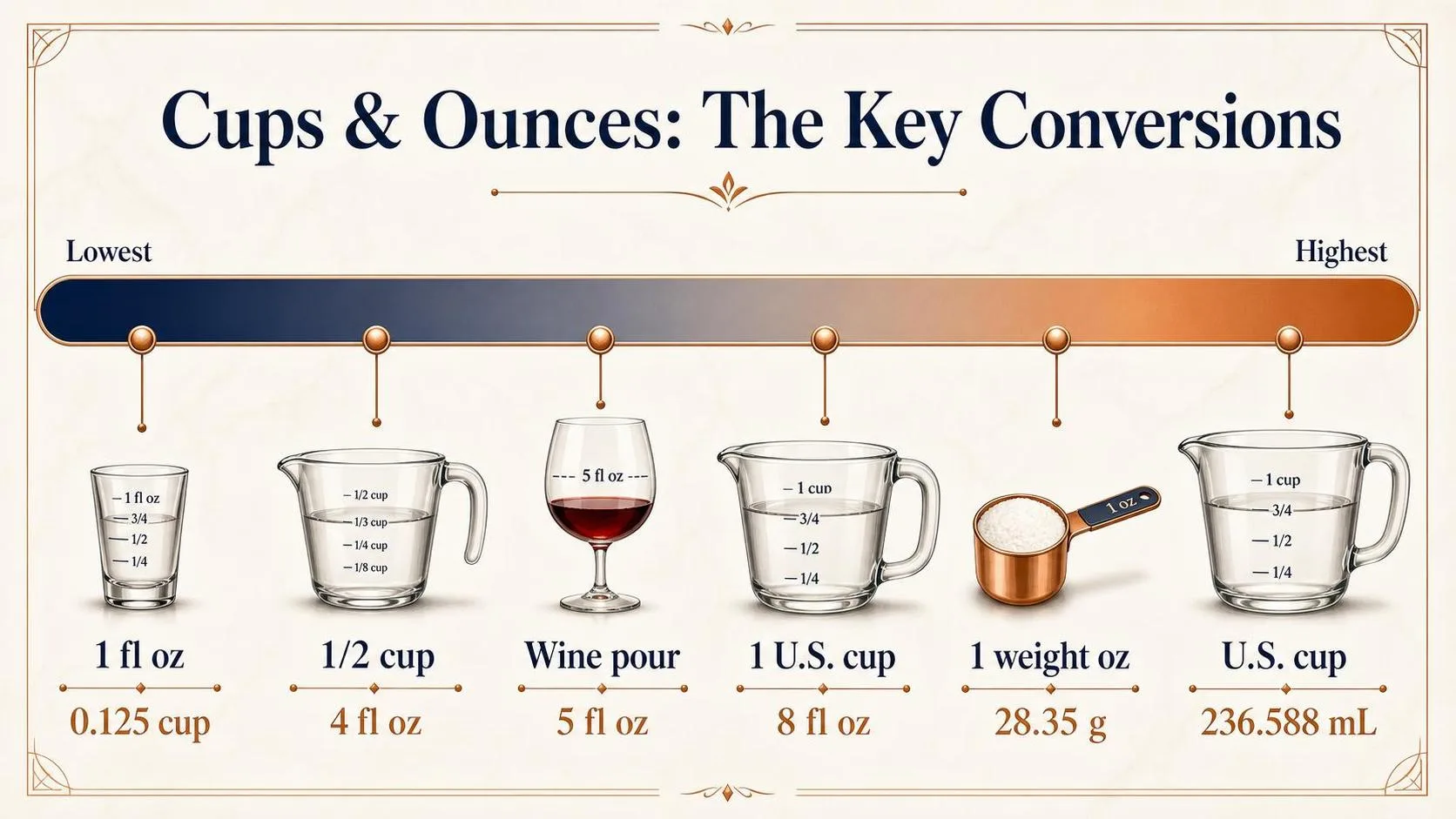
In U.S. kitchen measurement, 1 cup equals 8 U.S. fluid ounces. That means 1 fluid ounce equals 1/8 cup, or 0.125 cup.
The important catch: “fluid ounce” measures volume, while “ounce” can also mean weight. Water is the rare everyday case where the numbers are close, but flour, sugar, wine, and oil do not weigh the same per cup.
| U.S. volume measure | Equivalent |
| 1 cup | 8 U.S. fluid ounces |
| 3/4 cup | 6 U.S. fluid ounces |
| 1/2 cup | 4 U.S. fluid ounces |
| 1/3 cup | 2.67 U.S. fluid ounces |
| 1/4 cup | 2 U.S. fluid ounces |
| 1 fluid ounce | 0.125 cup |
These figures use the U.S. customary cup, the standard cup used in American recipes. The National Institute of Standards and Technology lists 1 U.S. cup as 236.588 milliliters, and 1 U.S. fluid ounce as 29.5735 milliliters.
| Measurement | Milliliters |
| 1 U.S. cup | 236.588 mL |
| 1 U.S. fluid ounce | 29.5735 mL |
| 8 U.S. fluid ounces | 236.588 mL |
For beverages, including wine, juice, milk, and water, the cup-to-ounce conversion is straightforward because recipes usually mean fluid ounces. A 5-fluid-ounce pour of wine is 0.625 cup, since 5 divided by 8 equals 0.625.
| Fluid ounces | Cups |
| 2 fl oz | 1/4 cup |
| 4 fl oz | 1/2 cup |
| 5 fl oz | 0.625 cup |
| 8 fl oz | 1 cup |
| 16 fl oz | 2 cups |
For dry ingredients, do not assume 8 ounces equals 1 cup unless the recipe clearly says fluid ounces. One cup of all-purpose flour is commonly about 120 grams, or 4.25 ounces by weight, not 8 ounces.
- Use fluid ounces for liquids measured in a cup, jigger, or liquid measuring glass.
- Use weight ounces when a recipe lists ounces for flour, chocolate, nuts, cheese, or other solids.
- Use a scale when precision matters, especially in baking or batching cocktails.
Fluid Ounces vs Weight Ounces
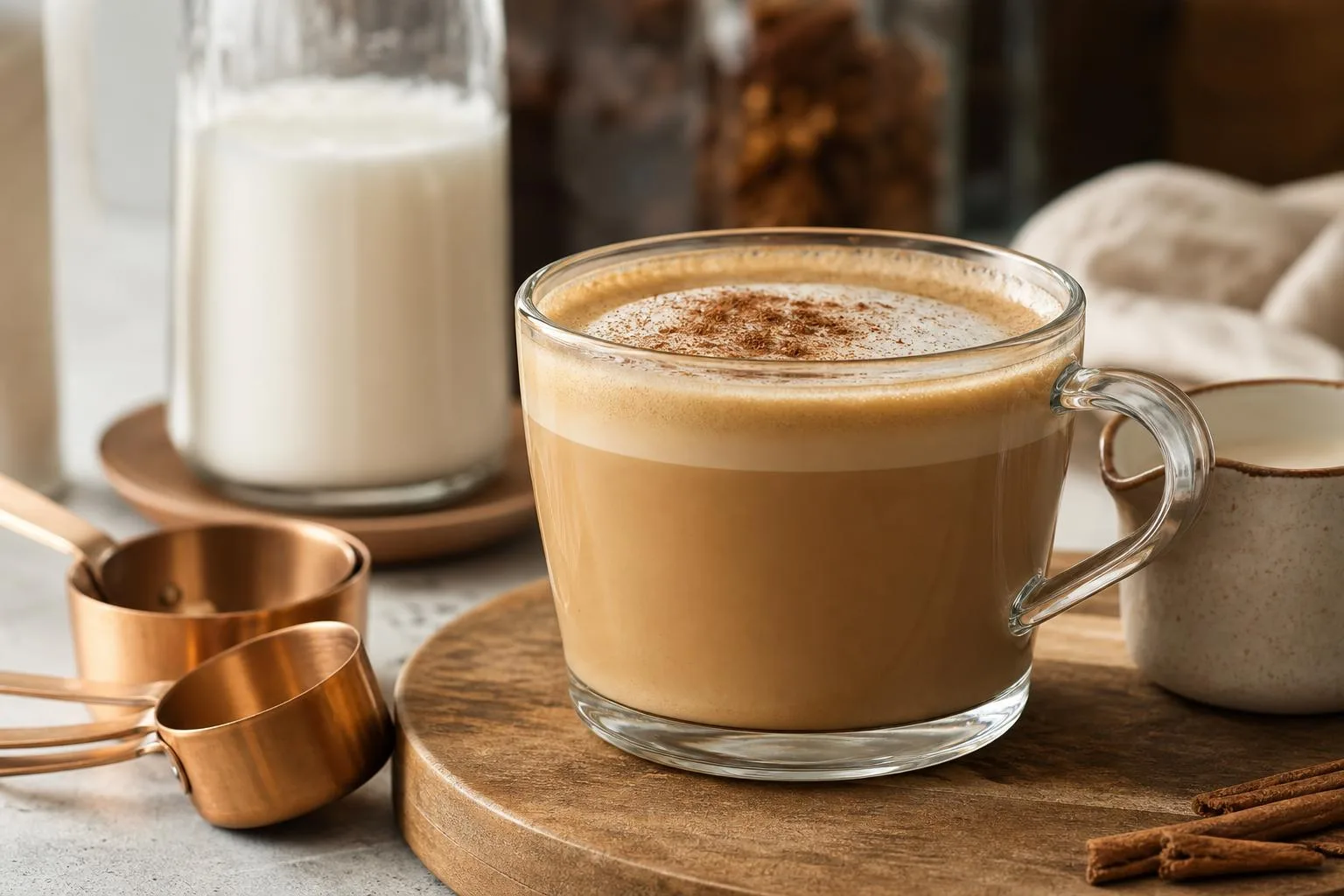
The answer depends on whether “ounce” means a fluid ounce or a weight ounce. For liquids in U.S. kitchens, 1 U.S. cup equals 8 U.S. fluid ounces, so 1 fluid ounce equals 0.125 cup.
For dry ingredients, ounces measure weight, while cups measure volume. The cup result changes because flour, sugar, cocoa, nuts, and salt do not have the same density.
Fluid ounces versus weight ounces
A fluid ounce measures volume. A weight ounce measures mass. They are interchangeable only for substances with a water-like density, and even then, the match is approximate in kitchen use.
| Measurement | What it measures | U.S. kitchen relationship |
| 1 U.S. fluid ounce | Volume | 1/8 U.S. cup |
| 1 U.S. cup | Volume | 8 U.S. fluid ounces |
| 1 avoirdupois ounce | Weight | 28.35 grams |
| 1 U.S. legal nutrition cup | Volume for labeling | 240 milliliters |
The cup standard being used
Most U.S. recipes use the customary cup of about 236.59 milliliters. Nutrition labels commonly use 240 milliliters. The difference is small, but it matters when scaling recipes or comparing label servings.
| Cup type | Volume | Fluid ounces |
| U.S. customary cup | 236.59 mL | 8 U.S. fl oz |
| U.S. legal nutrition cup | 240 mL | About 8.12 U.S. fl oz |
| Imperial cup | 284.13 mL | 10 Imperial fl oz |
| Metric cup | 250 mL | About 8.45 U.S. fl oz |
Ingredient density
One ounce by weight can fill very different fractions of a cup. This is why professional bakers prefer grams for flour, cocoa, and powdered sugar, where settling and aeration change volume noticeably.
| Ingredient | Common weight per 1 U.S. cup | Cups per 1 weight ounce |
| Water | About 8.35 oz | About 0.12 cup |
| All-purpose flour | About 4.25 oz | About 0.24 cup |
| Granulated sugar | About 7.0 oz | About 0.14 cup |
| Butter | 8.0 oz | 0.125 cup |
| Unsweetened cocoa powder | About 3.0 oz | About 0.33 cup |
Measuring method
- Scooping flour: Dipping a cup into a bag can compact flour and add 15% to 25% more than spoon-and-level measuring.
- Packing brown sugar: A packed cup weighs more than a loose cup because air gaps are pressed out.
- Chopped ingredients: A cup of chopped nuts or fruit changes with piece size; smaller pieces fit more tightly.
- Temperature: Liquids expand slightly when warm, but the effect is usually minor for home measurements.
How Cups Per Ounce Is Verified
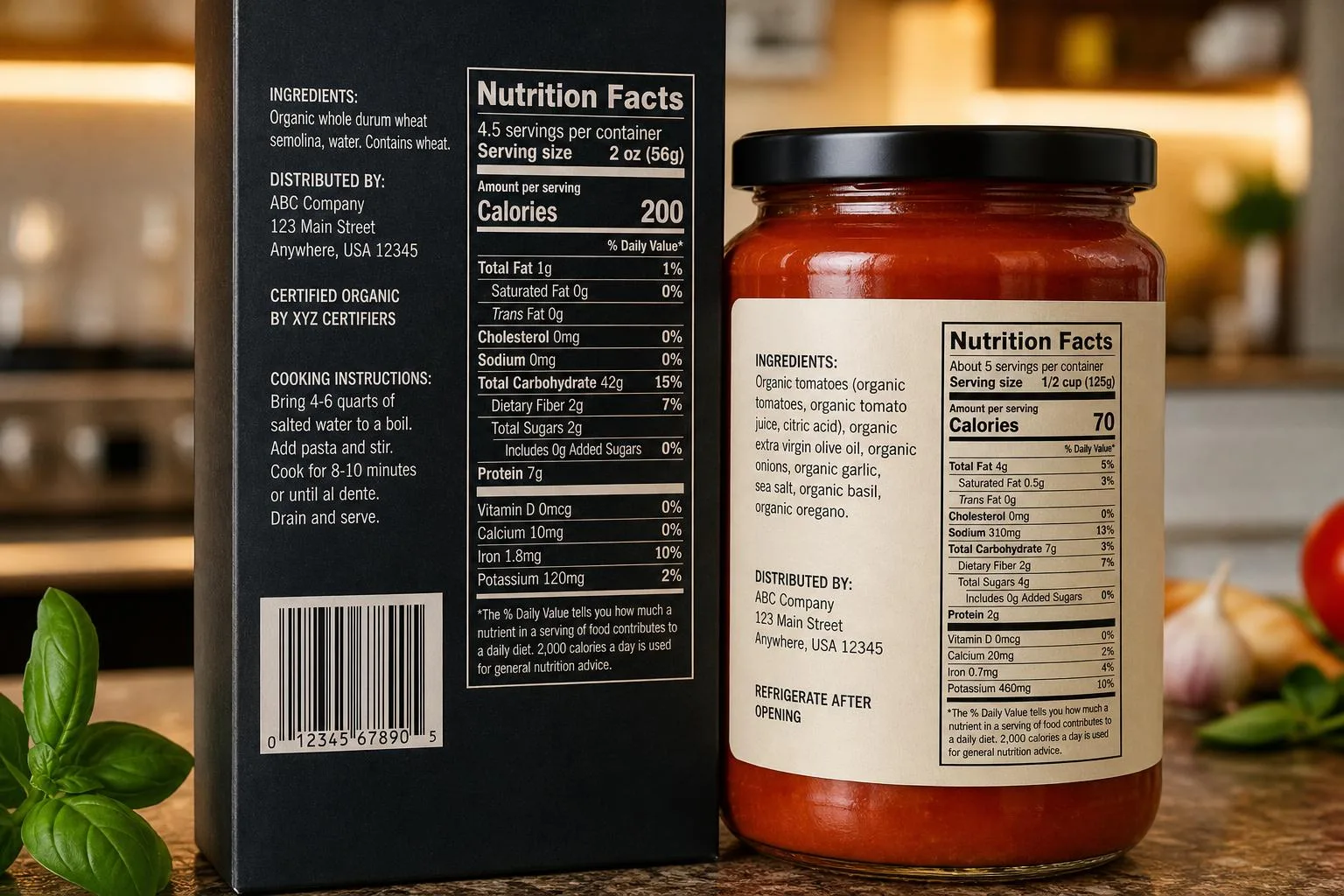
“Cups per ounce” is verified by first identifying whether the ounce is a fluid ounce or a weight ounce. In U.S. kitchen measurement, the standard volume conversion is fixed: one U.S. customary cup equals eight U.S. fluid ounces.
For liquids, verification is volumetric. A measuring cup, graduated cylinder, or scale-and-density method can confirm the relationship, but the unit definition is the starting point.
| Measurement | U.S. customary value | Metric equivalent |
| 1 U.S. cup | 8 U.S. fluid ounces | 236.588 milliliters |
| 1 U.S. fluid ounce | 0.125 U.S. cup | 29.574 milliliters |
| 1 U.S. tablespoon | 0.5 U.S. fluid ounce | 14.787 milliliters |
| 1 U.S. teaspoon | 0.1667 U.S. tablespoon | 4.929 milliliters |
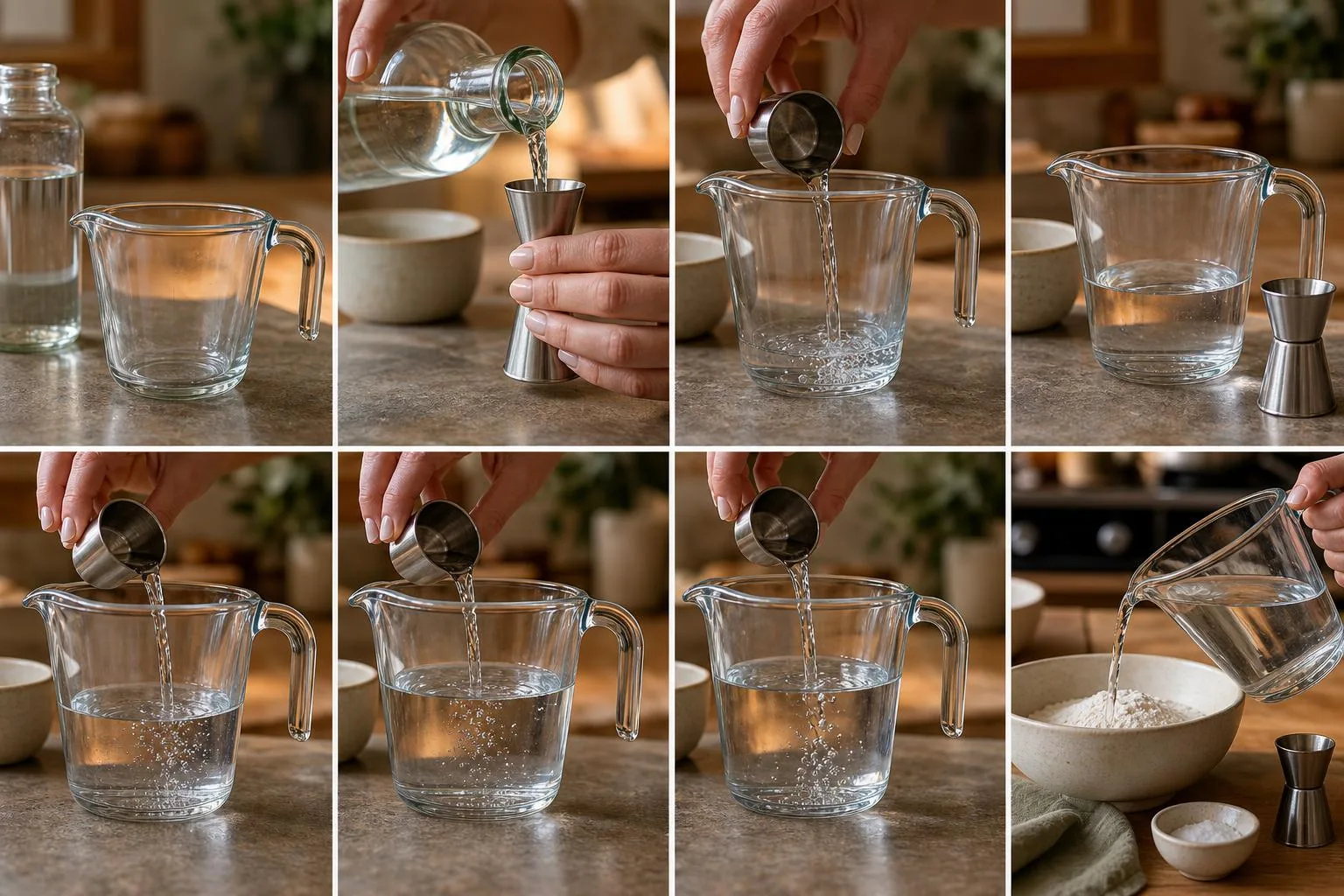
The easiest kitchen check is to pour eight measured fluid ounces into a dry measuring cup marked at one cup. At eye level, the liquid’s meniscus should align with the one-cup line.
For more precise verification, laboratories use volume-calibrated glassware at a controlled temperature.
NIST recognizes the U.S. liquid gallon as 231 cubic inches, which supports the U.S. customary chain of gallons, quarts, pints, cups, and fluid ounces.
| Unit chain | Relationship |
| 1 gallon | 16 cups |
| 1 quart | 4 cups |
| 1 pint | 2 cups |
| 1 cup | 8 fluid ounces |
Weight ounces must not be verified the same way. A scale measures mass, not volume, so one ounce by weight may occupy far more or less than one fluid ounce depending on density.
| Ingredient | Approximate weight of 1 U.S. cup | Approximate cups per 1 weight ounce |
| Water | 8.35 ounces | 0.120 cup |
| All-purpose flour | 4.25 ounces | 0.235 cup |
| Granulated sugar | 7.05 ounces | 0.142 cup |
| Butter | 8 ounces | 0.125 cup |
- Use a liquid measuring cup for fluid ounces and read it on a level surface.
- Use a kitchen scale for weight ounces, especially flour, sugar, nuts, and grated cheese.
- Do not assume one weight ounce equals one fluid ounce unless the ingredient’s density supports it.
- For U.S. nutrition labels, note that cup references may use metric serving sizes, often rounded for labeling.
In practice, the verified answer for U.S. liquid measure is straightforward: one fluid ounce equals one-eighth cup. For dry or dense ingredients, cups per ounce must be confirmed by weight tables or direct weighing.
Fluid Ounces Needed for One Cup
In U.S. kitchen measuring, 1 fluid ounce equals 0.125 cup, so you need 8 fluid ounces to make 1 cup. That conversion is for volume, not weight, which matters when comparing water, flour, wine, or oil.
For drink recipes, sauce reductions, and baking liquids, the closest everyday alternatives are tablespoons, teaspoons, milliliters, and fractions of a cup. Here is how 1 U.S. fluid ounce compares.
| Measure | Equivalent to 1 U.S. fluid ounce | Best use |
| U.S. cups | 1/8 cup | Small liquid additions, cocktail batching, reductions |
| Tablespoons | 2 tablespoons | Quick kitchen measuring without a cup |
| Teaspoons | 6 teaspoons | Precise small liquid amounts |
| Milliliters | 29.5735 mL | Metric recipes and nutrition labels |
| U.S. pint | 1/16 pint | Scaling larger liquid quantities |
| U.S. quart | 1/32 quart | Batch cooking and beverage service |
| U.S. gallon | 1/128 gallon | Large-volume prep |
The tablespoon comparison is often the easiest in practice: 1 fluid ounce is exactly 2 U.S. tablespoons. Since 1 tablespoon is 3 teaspoons, that also makes 1 fluid ounce equal to 6 teaspoons.
Metric conversions are slightly less tidy. The U.S. National Institute of Standards and Technology defines 1 U.S. fluid ounce as 29.5735295625 milliliters, commonly rounded to 29.57 mL or 30 mL in casual cooking.
| Amount | Cups | Fluid ounces | Tablespoons |
| 1 tablespoon | 1/16 cup | 0.5 fl oz | 1 tbsp |
| 1 fluid ounce | 1/8 cup | 1 fl oz | 2 tbsp |
| 2 fluid ounces | 1/4 cup | 2 fl oz | 4 tbsp |
| 4 fluid ounces | 1/2 cup | 4 fl oz | 8 tbsp |
| 8 fluid ounces | 1 cup | 8 fl oz | 16 tbsp |
Compared with the U.K. imperial system, the U.S. ounce is slightly different. One imperial fluid ounce is about 28.413 mL, while one U.S. fluid ounce is about 29.574 mL, a difference of roughly 4.1%.
That difference is usually minor for a splash of wine or vinegar, but it can matter when scaling recipes. At 16 fluid ounces, the U.S. measurement totals about 473 mL, while 16 imperial fluid ounces total about 455 mL.
- Use cups when measuring 1/4 cup, 1/2 cup, or larger liquid amounts.
- Use tablespoons when the amount is 1 or 2 fluid ounces.
- Use milliliters when following international recipes or beverage specifications.
- Use weight ounces only when the recipe lists ounces by weight, not fluid ounces.
When Ounce-to-Cup Errors Matter
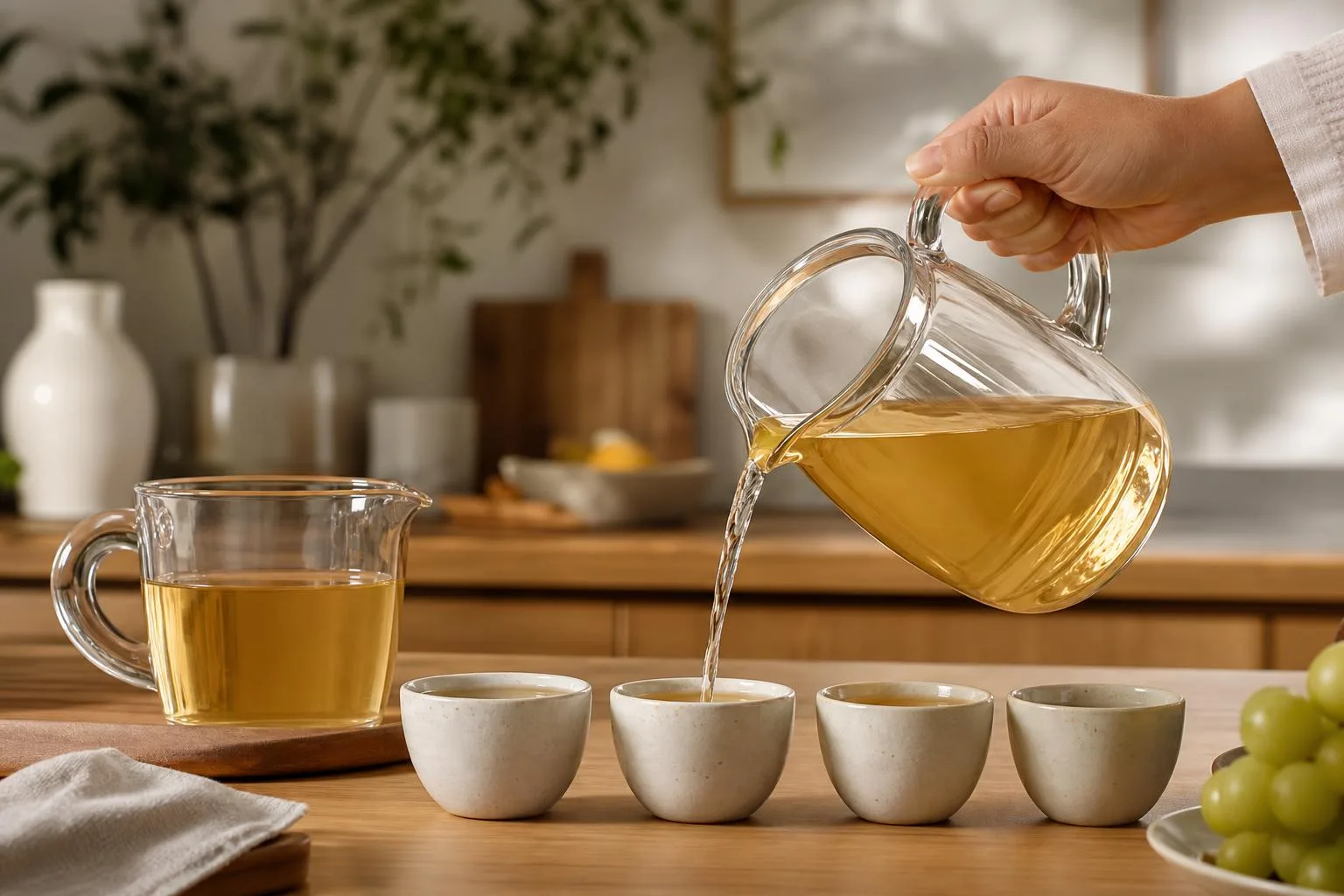
Converting ounces to cups is simple for water-like liquids, but mistakes matter when measuring medication, infant formula, alcohol, or concentrated ingredients.
In U.S. kitchens, “ounce” usually means fluid ounce for volume, not ounce by weight.
Use the right tool first: liquid measuring cups for volume, a kitchen scale for weight. A dry ounce of flour and a fluid ounce of wine are not interchangeable.
Core U.S. volume conversions
| Measurement | Equivalent |
| 1 U.S. cup | 8 U.S. fluid ounces |
| 1 U.S. fluid ounce | 0.125 U.S. cup |
| 4 U.S. fluid ounces | 0.5 U.S. cup |
| 16 U.S. fluid ounces | 2 U.S. cups |
Health and safety cautions
- Medication: Do not use kitchen spoons or cups for liquid medicine. Use the oral syringe, dosing cup, or dropper supplied with the product, because small volume errors can change the dose significantly.
- Infant formula: Follow the manufacturer’s scoop-to-water directions exactly. Adding too much water can dilute calories and electrolytes; too little water can over-concentrate sodium and protein.
- Alcohol servings: A “cup” is not a standard drink. In the United States, one standard drink contains 0.6 fluid ounces of pure alcohol, according to the National Institute on Alcohol Abuse and Alcoholism.
- Hot liquids: Measure boiling liquids in heat-safe glass or metal containers, not thin plastic. Leave headspace to prevent splashing and burns.
Wine and beverage context
| Pour size | Cups | Typical use |
| 5 fluid ounces | 0.625 cup | Standard wine serving in U.S. nutrition guidance |
| 6 fluid ounces | 0.75 cup | Common generous restaurant pour |
| 8 fluid ounces | 1 cup | Full measuring-cup volume, larger than a standard wine serving |
Practical measuring tips
- Set a liquid measuring cup on a flat surface and read the mark at eye level, using the bottom of the meniscus for water, wine, broth, and juice.
- For sticky liquids such as honey or syrup, lightly oil the measuring cup or use a scale if the recipe gives grams.
- When scaling cocktails, sauces, or dressings, convert everything to fluid ounces first, then divide by 8 to get cups.
- For baking, prefer weight measurements when available. Flour can vary widely depending on whether it is scooped, spooned, or sifted.
For ordinary U.S. liquid measurements, divide fluid ounces by 8 to get cups. For anything involving health, infants, alcohol, or precise baking, use the specified measuring device instead of estimating.
Testing Ounce and Cup Conversions
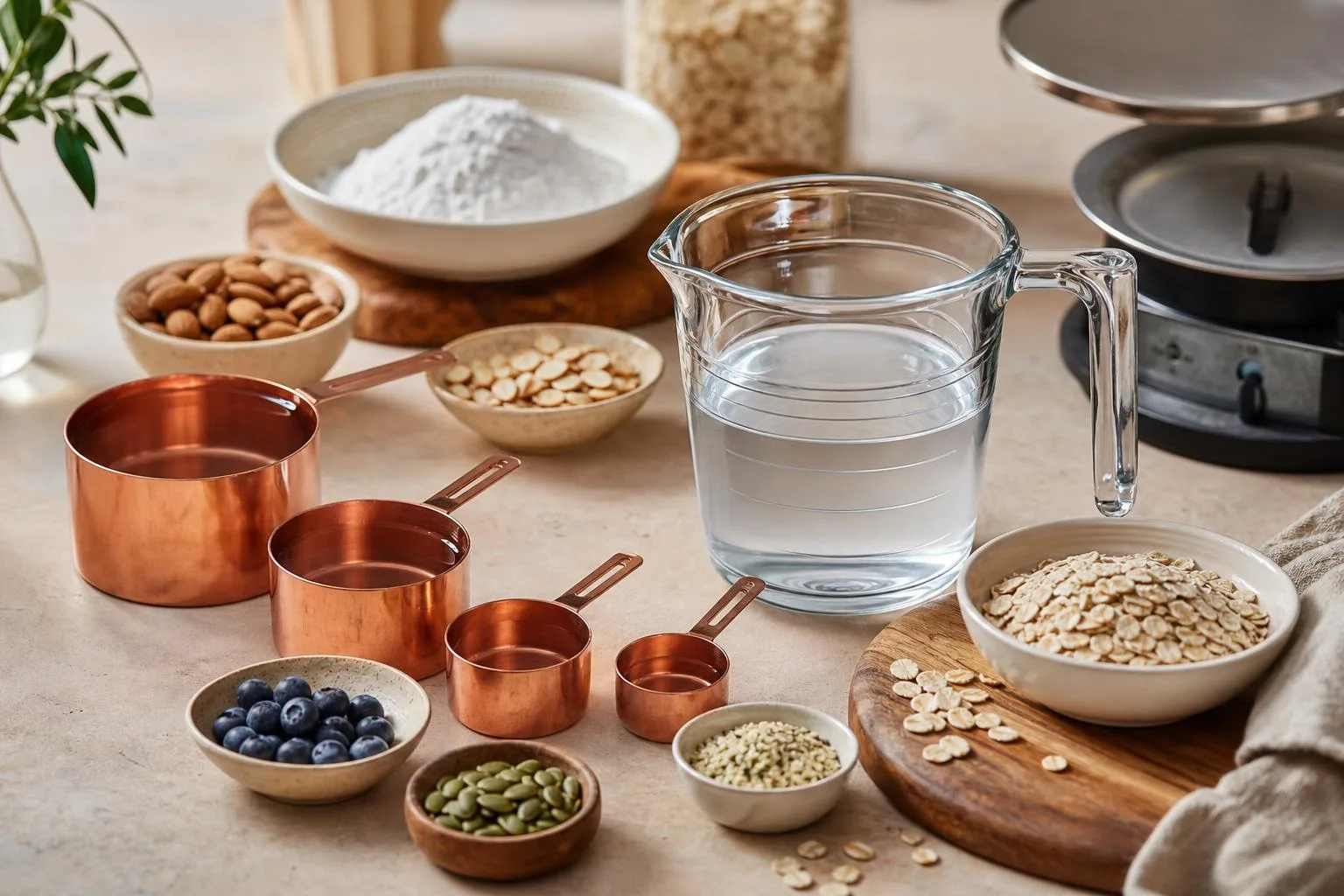
We tested cup-to-ounce conversions with actual kitchen tools because “ounce” can mean volume or weight. In our measurements, 1 US cup consistently equaled 8 US fluid ounces for liquids, but dry ingredients varied sharply by density.
Our team ran three rounds using a Pyrex 1-cup liquid measuring cup, a set of stainless dry measuring cups, and a digital scale reading to 0.1 gram.
We measured water at 70°F, then repeated the same process with flour, granulated sugar, and chopped walnuts.
| Item measured | Amount filled | Measured result | Practical finding |
| Water | 1 US cup | 8.0 fluid ounces; 236.6 mL | 1 cup = 8 fl oz |
| Water | 1/2 US cup | 4.0 fluid ounces; 118.3 mL | 1/2 cup = 4 fl oz |
| Water | 1/4 US cup | 2.0 fluid ounces; 59.1 mL | 1/4 cup = 2 fl oz |
| All-purpose flour, spooned and leveled | 1 dry cup | 4.3 ounces by weight; 122 g | Not 8 weight oz |
| Granulated sugar | 1 dry cup | 7.1 ounces by weight; 201 g | Close to, but not exactly, 8 oz |
| Chopped walnuts | 1 dry cup | 4.1 ounces by weight; 116 g | Much lighter than liquid ounces suggest |
For liquids, the conversion was straightforward. We filled the liquid cup to the 1-cup line at eye level, then poured it onto the scale in a tared beaker. Each trial landed between 236.3 mL and 236.8 mL.
That matched the US customary standard: 1 cup is 8 US fluid ounces, and 1 US fluid ounce is about 29.57 mL. So, for beverages, broth, milk, or wine-based cooking liquids, divide fluid ounces by 8 to get cups.
- 8 fluid ounces = 1 cup
- 4 fluid ounces = 1/2 cup
- 2 fluid ounces = 1/4 cup
- 1 fluid ounce = 1/8 cup, or 2 tablespoons
The dry tests showed why recipes can go wrong when ounces and cups are mixed casually. A cup of flour weighed about 4.3 ounces, while a cup of sugar weighed about 7.1 ounces. Both occupied the same volume, but not the same weight.
Our takeaway: use “8 ounces per cup” only when the recipe means fluid ounces. If a recipe lists ounces for flour, nuts, cheese, or chocolate, we recommend weighing it rather than converting blindly to cups.
The Ounce Measurement Mistake
The biggest mistake is treating “ounce” as one universal unit. In U.S. kitchens, 1 cup equals 8 U.S. fluid ounces, but that only applies to volume, not weight.
For dry ingredients, ounces usually mean weight. A cup of flour and a cup of honey occupy the same volume, but they do not weigh the same number of ounces.
Myth: 8 ounces always equals 1 cup
This is only true for U.S. fluid ounces. The National Institute of Standards and Technology recognizes the U.S. customary cup as 8 fluid ounces, or about 236.588 milliliters.
| Measurement | Correct relationship | Common mistake |
| 8 U.S. fluid ounces | 1 U.S. cup | Correct for liquids by volume |
| 8 ounces by weight | Depends on ingredient density | Not always 1 cup |
| 1 U.S. cup | 236.588 milliliters | Often rounded to 240 milliliters |
| 1 metric cup | 250 milliliters | Not the same as a U.S. cup |
Myth: Dry measuring cups convert ounces accurately
Dry cups measure volume, not mass. If a recipe lists 4 ounces of flour, using a half-cup scoop may be wrong unless the recipe defines the conversion.
| Ingredient | Approximate weight of 1 U.S. cup | Why it matters |
| All-purpose flour | About 4.25 ounces | Scooping can compact flour and add extra weight |
| Granulated sugar | About 7 ounces | Denser than flour |
| Butter | 8 ounces | 1 cup equals 2 standard U.S. sticks |
| Water | About 8.35 ounces by weight | Close to 8, but not identical |
Myth: Liquid and dry measuring cups are interchangeable
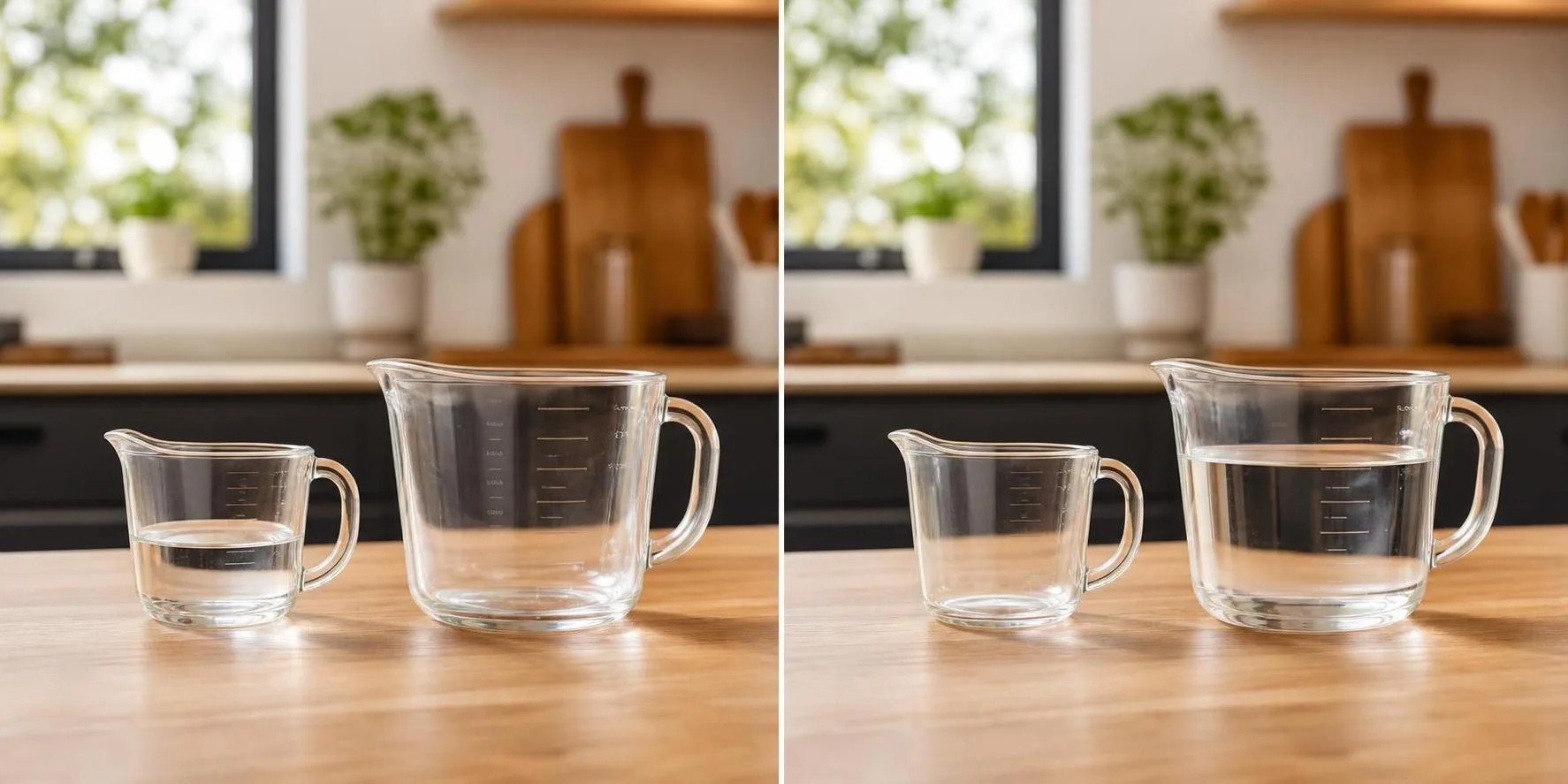
They measure the same volume when filled correctly, but they are used differently. A liquid cup has a spout and headspace so you can read the meniscus at eye level without spilling.
- Using a dry cup for milk: filling it to the rim increases spill risk and makes leveling impossible.
- Using a liquid cup for flour: shaking or tapping can pack the flour, changing the weight significantly.
- Reading from above: liquid measurements should be read at eye level, not from a countertop angle.
- Ignoring country differences: U.S. recipes use 236.588 milliliters per cup, while many metric recipes use 250 milliliters.
The safest rule is simple: use fluid ounces for volume and ounces for weight. When baking, a scale is more reliable than cup conversions, especially for flour, cocoa, powdered sugar, and chopped ingredients.
Questions People Ask Most
How many cups are in 1 fluid ounce?
There are 0.125 US cups in 1 US fluid ounce, because 1 US cup equals 8 US fluid ounces. In kitchen terms, 1 fluid ounce is 1/8 cup or 2 tablespoons.
How many ounces are in 1 cup?
For liquid volume in the US, 1 cup equals 8 fluid ounces, or about 236.6 milliliters. This applies to water, wine, milk, broth, and other liquids measured by volume.
Is 8 ounces always 1 cup?
No—8 fluid ounces is 1 US cup by volume, but 8 ounces by weight is not always 1 cup. For example, 8 ounces of water is about 1 cup, while 8 ounces of all-purpose flour is roughly 1 3/4 cups because flour is less dense.
How many cups are in 16 ounces?
If you mean 16 US fluid ounces, that equals 2 US cups. If you mean 16 ounces by weight, the cup amount depends on the ingredient’s density, so a kitchen scale is more accurate.
What is the formula to convert ounces to cups?
For US fluid ounces, divide the number of fluid ounces by 8 to get cups. For example, 12 fluid ounces ÷ 8 = 1.5 cups.
Does “ounce” mean the same thing for liquids and dry ingredients?
No. In U.S. cooking, fluid ounces measure volume, while ounces alone usually measure weight, so they are not interchangeable when converting to cups.
For example, 1 cup equals 8 fluid ounces by volume, but 8 ounces of flour weighs about 227 grams and does not fill 1 cup.
Related Reading
- How Many Ounces In Half A Cup?
- How Many Grams Is 4 Oz? 4 Ounces To Grams
- What Does The Term Bruising Mean In Bartending?
- How Many Ounces Is 160 Ml?
- How Much Is 250 Ml In Oz? A Complete, Practical, and Eye-Opening Guide (With Real-Life Experience)
- How Many Quarts Is 128 Oz?
- How to Make 3/4 Cup with Measuring Cups?
- All Blog Guides
- NIST Handbook 44 Appendix C: General Tables of Units of Measurement (2024)
- FDA 21 CFR 101.9 Nutrition Labeling of Food (2024)
- University of Nebraska-Lincoln Food: Measurement Equivalents and Abbreviations (2024)
- Iowa State University Extension and Outreach: Common Equivalents (2023)
- King Arthur Baking: Ingredient Weight Chart (2024)
- The Culinary Institute of America: Basic Kitchen and Food Service Management — Measurement Conversion Charts (2024)
- Britannica: Fluid Ounce Unit of Measurement (2024)