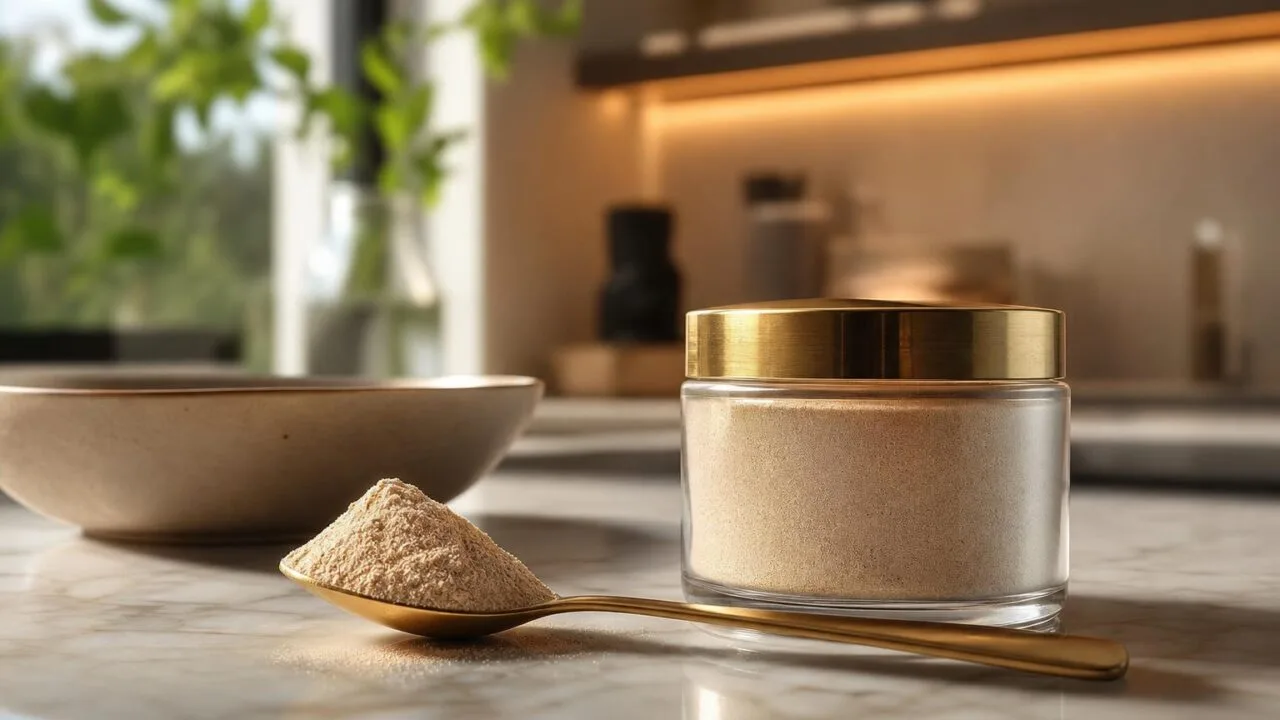
How Many Grams In A Teaspoon Of Powder is typically 2.5–5 grams per level U.S. teaspoon (4.928 mL), depending on the powder’s density, grind size, settling, and whether it is leveled or heaped.
A fine, compact powder can weigh nearly twice as much as a fluffy or aerated one in the same spoon. That is why nutrition labels, recipes, and lab-style measurements use grams instead of spoon volume when accuracy matters.
This guide explains practical teaspoon-to-gram estimates, why powders vary so widely, and when you should use a kitchen scale for safer, more repeatable measuring.
Why Teaspoons Don’t Equal Grams
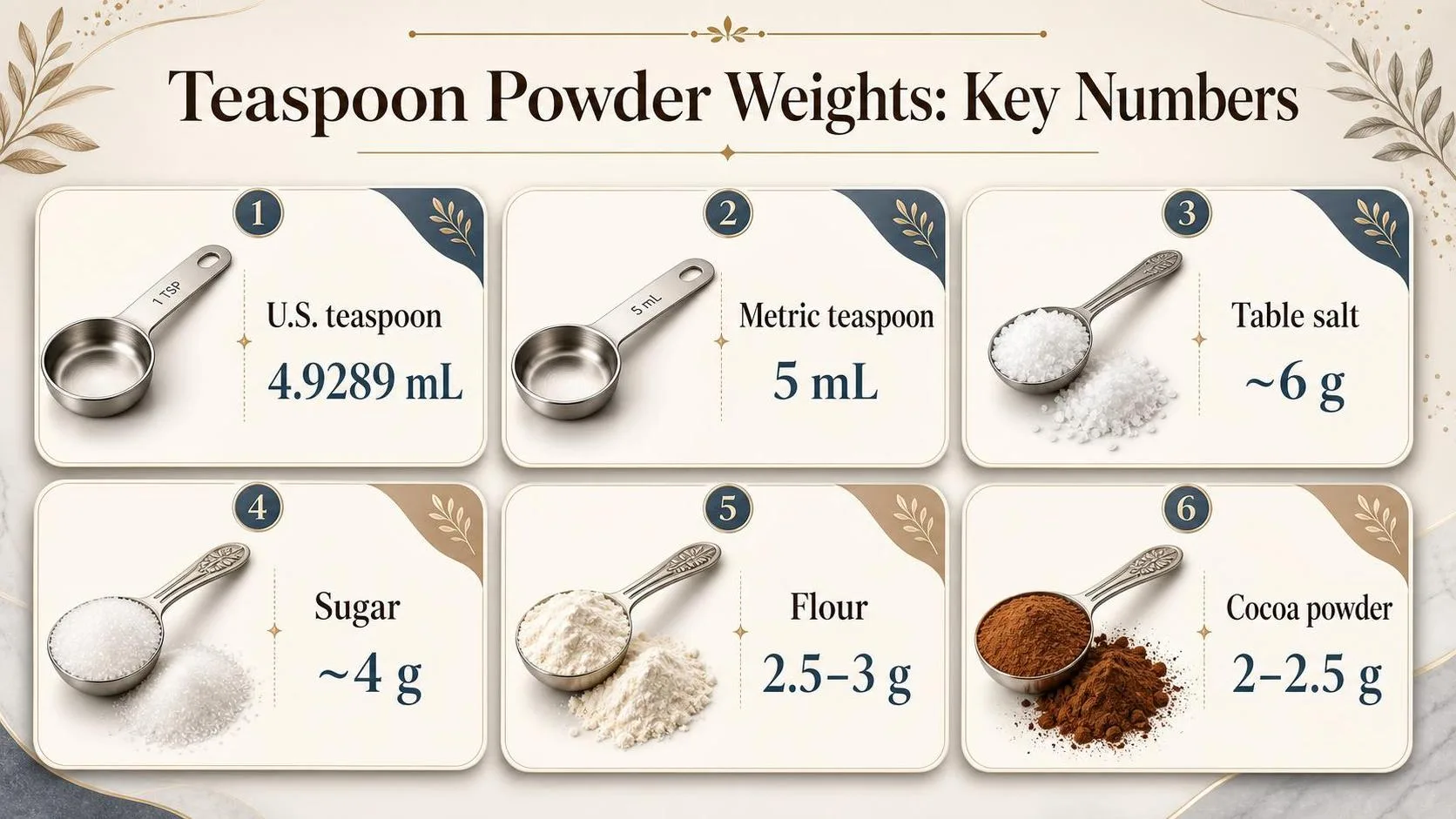
A teaspoon measures volume, not weight, so there is no single gram answer for “a teaspoon of powder.” In U.S. cooking, 1 teaspoon is 4.9289 milliliters; on nutrition labels, it is usually rounded to 5 milliliters.
Grams depend on bulk density: how tightly the powder packs, its particle size, moisture, and whether it is leveled or heaped. That is why flour, salt, sugar, and cocoa all weigh differently in the same spoon.
| Measurement | Exact or common value | What it means |
| U.S. teaspoon | 4.9289 mL | Legal U.S. customary teaspoon volume |
| Metric teaspoon | 5 mL | Common nutrition and laboratory rounding |
| Difference | About 1.4% | Usually small, but visible in precise formulas |
The practical formula is simple: grams equal milliliters multiplied by density in grams per milliliter. For a 5 mL teaspoon, a powder with a density of 0.8 g/mL weighs about 4 grams.
| Powder or ingredient | Approximate grams per level U.S. teaspoon | Why it differs |
| Table salt | About 6 g | Dense crystals pack tightly |
| Granulated sugar | About 4 g | Moderately dense, uniform crystals |
| Baking powder | About 4 g | Fine powder with added starches |
| Baking soda | About 4.6 g | Fine, relatively dense alkaline powder |
| All-purpose flour | About 2.5 to 3 g | Fluffy particles trap air easily |
| Unsweetened cocoa powder | About 2 to 2.5 g | Low-density powder, often clumpy |
| Instant dry yeast | About 3 g | Granular, lighter than salt or sugar |
These values align with standard kitchen-weight references from USDA FoodData Central and major baking test kitchens, but they remain approximations.
A spoon dipped into a compacted bag can hold noticeably more than a spoon filled by sifting or sprinkling.
- Level teaspoon: fill the spoon, then sweep the top flat with a straight edge.
- Heaped teaspoon: not standardized; it may hold 25% to 100% more, depending on the powder.
- Packed teaspoon: unreliable for dry powders unless a recipe explicitly says to pack it.
For medicine, supplements, winemaking additives, yeast nutrients, acids, or sulfites, use a gram scale instead of a teaspoon. A 0.01 g scale is appropriate for small chemical additions; a 1 g kitchen scale is often too coarse.
Factors That Change Powder Weight
A teaspoon measures volume, while grams measure mass. For powders, the conversion changes because density, particle size, moisture, and how the spoon is filled all affect how much material fits into the same 4.92892 mL US teaspoon.
Powder Density
The biggest factor is bulk density: how much a powder weighs per unit of volume, including the tiny air spaces between particles. This is why one teaspoon of salt weighs far more than one teaspoon of powdered sugar.
| Powder | Approximate grams per US teaspoon | Why it differs |
| Table salt | About 6 g | Dense, fine crystals pack tightly |
| Granulated sugar | About 4 g | Moderately dense crystals |
| All-purpose flour | About 2.6 g | Light particles with more trapped air |
| Powdered sugar | About 2.5 g | Very fine, aerated, often includes cornstarch |
| Baking powder | About 4 g | Fine chemical leavener, moderately compact |
| Cocoa powder | About 2.5 g | Low-density, fluffy particles |
Scooping, Leveling, and Packing
Technique can change the result even when the powder is the same. A level teaspoon is the standard for recipes and nutrition labels, while a heaped teaspoon can hold substantially more.
| Measuring method | Effect on grams |
| Spoon filled and leveled | Most consistent; matches recipe assumptions |
| Scooped directly from a bag | Often heavier because the powder compresses |
| Heaped teaspoon | Can add roughly 25% to 100% more, depending on powder shape |
| Packed teaspoon | Can weigh much more for flour, cocoa, brown sugar, and drink powders |
Moisture and Clumping
Humidity adds weight and makes powders clump. Flour, cocoa, protein powder, powdered milk, and powdered sugar can all absorb moisture, increasing grams per teaspoon without visibly changing the spoonful very much.
- Dry, aerated powder: lighter per teaspoon because more air is trapped between particles.
- Settled powder: heavier because storage and vibration compact it.
- Humid or clumped powder: heavier and less consistent from spoon to spoon.
Teaspoon Size and Standards
A US measuring teaspoon is 4.92892 mL, commonly rounded to 5 mL in labeling and cooking references. Household flatware teaspoons are not reliable measuring tools because their bowl size varies widely by pattern and manufacturer.
For accuracy, weigh powders on a digital scale. This matters most for baking, supplements, caffeine powders, medications, and any ingredient where a few grams can noticeably change safety, flavor, or texture.
How Powder Gram Weight Is Verified
A teaspoon is a volume measure, while a gram is a mass measure, so there is no single correct conversion for “powder.” The verified answer depends on the powder’s bulk density, grind size, moisture.
And whether the spoon is leveled or packed.
In U.S. measuring practice, 1 teaspoon equals about 4.93 milliliters. Nutrition labeling often rounds this to 5 milliliters, which is why small differences appear between lab values, recipes, and supplement labels.
| Reference | Teaspoon volume | Use |
| NIST / U.S. customary measure | 4.9289 mL | Precise volume conversion |
| FDA food-label serving convention | 5 mL | Rounded nutrition and supplement labeling |
| Kitchen measuring spoon | Usually marked 5 mL | Practical recipe measurement |
To verify grams per teaspoon, weigh the powder rather than relying on a chart. Use a digital scale readable to 0.01 g for spices, powders, and supplements; a 1 g kitchen scale is too coarse for teaspoon-size samples.
- Place a clean weighing boat, small cup, or parchment square on the scale.
- Press tare so the display returns to 0.00 g.
- Fill a standard teaspoon with the powder using the same method you plan to use: loose, leveled, heaped, or packed.
- Level it with a straight edge if you need a recipe-style teaspoon.
- Transfer the powder to the scale and record the weight.
- Repeat at least 3 times and average the results.
This repeat-weighing method matters because powders settle differently. A teaspoon of powdered sugar may weigh about 2.5 g, while a teaspoon of table salt commonly weighs about 6 g, even though both occupy nearly the same 5 mL volume.
| Powder | Approx. grams per level teaspoon | Why it differs |
| Powdered sugar | 2.5 g | Fine, aerated, low bulk density |
| Baking powder | 4 g | Moderately dense chemical leavener |
| Unsweetened cocoa powder | 2.5 g | Light, easily compacted powder |
| Table salt | 6 g | Dense crystalline granules |
For the most defensible result, report the measurement as “grams per level U.S. teaspoon, measured at 5 mL,” and note the brand or lot when precision matters.
For medications, supplements, and curing salts, use the labeled scoop or a scale, not a teaspoon estimate.
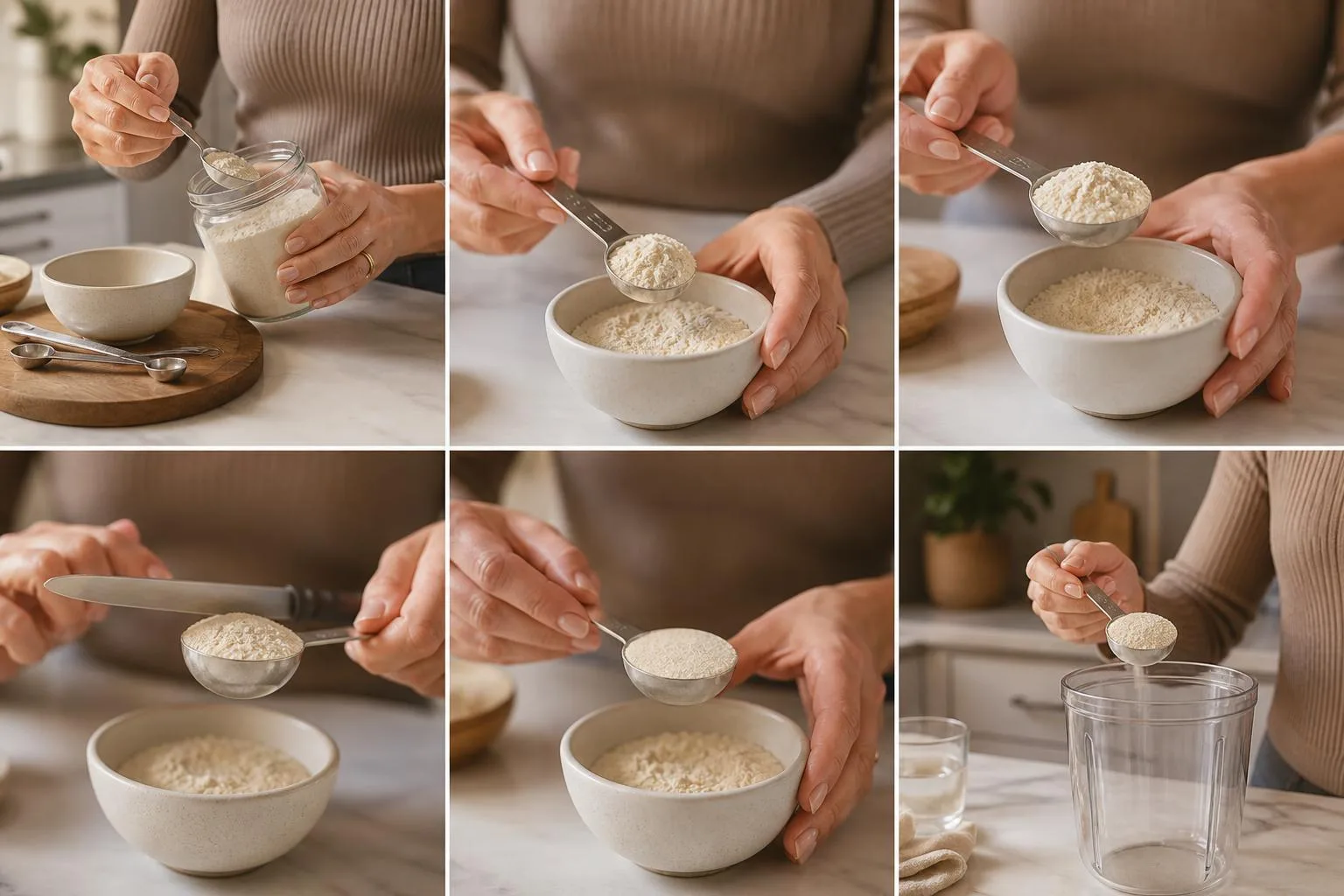
Teaspoons Versus Other Powder Measures
A teaspoon is a volume measure, not a weight measure. In the U.S., 1 teaspoon equals 4.92892 mL, so the grams in a teaspoon of powder change with density, grind size, settling, and whether the spoon is leveled or heaped.
For accuracy, a digital gram scale is the best alternative. In baking, nutrition tracking, and supplements, the difference between 2.5 g and 6 g per teaspoon can materially change texture, sodium, caffeine, or active-ingredient intake.
| Measure | U.S. volume | Equivalent teaspoons | What it means for powders |
| 1 U.S. teaspoon | 4.92892 mL | 1 tsp | Baseline kitchen measure; grams depend on the powder |
| 1 metric teaspoon | 5 mL | 1.014 U.S. tsp | About 1.4% larger than a U.S. teaspoon |
| 1 U.S. tablespoon | 14.7868 mL | 3 tsp | Roughly triples the teaspoon weight |
| 1 U.S. cup | 236.588 mL | 48 tsp | Useful for converting package serving data to teaspoons |
| 1 Australian tablespoon | 20 mL | About 4.06 U.S. tsp | Larger than U.S. tablespoons; can over-measure powders |
Compared with a teaspoon, a tablespoon is often the easiest mental conversion: multiply by 3. If 1 teaspoon of baking powder is about 4 g, then 1 tablespoon is about 12 g when measured the same way.
| Powder | Approx. grams per level U.S. teaspoon | Approx. grams per U.S. tablespoon | Why it differs |
| All-purpose flour | About 2.6 g | About 7.8 g | Light, aerated, and easily compacted |
| Powdered sugar | About 2.5 g | About 7.5 g | Very fine particles with trapped air |
| Unsweetened cocoa powder | About 2.5 g | About 7.5 g | Fine but relatively fluffy |
| Baking powder | About 4 g | About 12 g | Denser chemical leavener blend |
| Table salt | About 6 g | About 18 g | Dense crystals; brand and grain size matter |
Pinches and dashes are less reliable alternatives. A common cooking pinch is often treated as about 1/16 teaspoon, while a dash is commonly around 1/8 teaspoon, but neither is standardized across hands, spoons, or shaker tops.
- For recipes: use level teaspoons for small amounts, but weigh flour, cocoa, protein powder, and sugar when precision matters.
- For supplements: do not assume “1 tsp = 5 g.” Many powders are lighter or heavier than that.
- For nutrition labels: use the listed serving weight in grams when available; it is more dependable than spoon volume.
The practical rule is simple: teaspoons compare well for volume, not mass. A scale removes the biggest source of error, especially with powders that settle, clump, or compress between scoops.
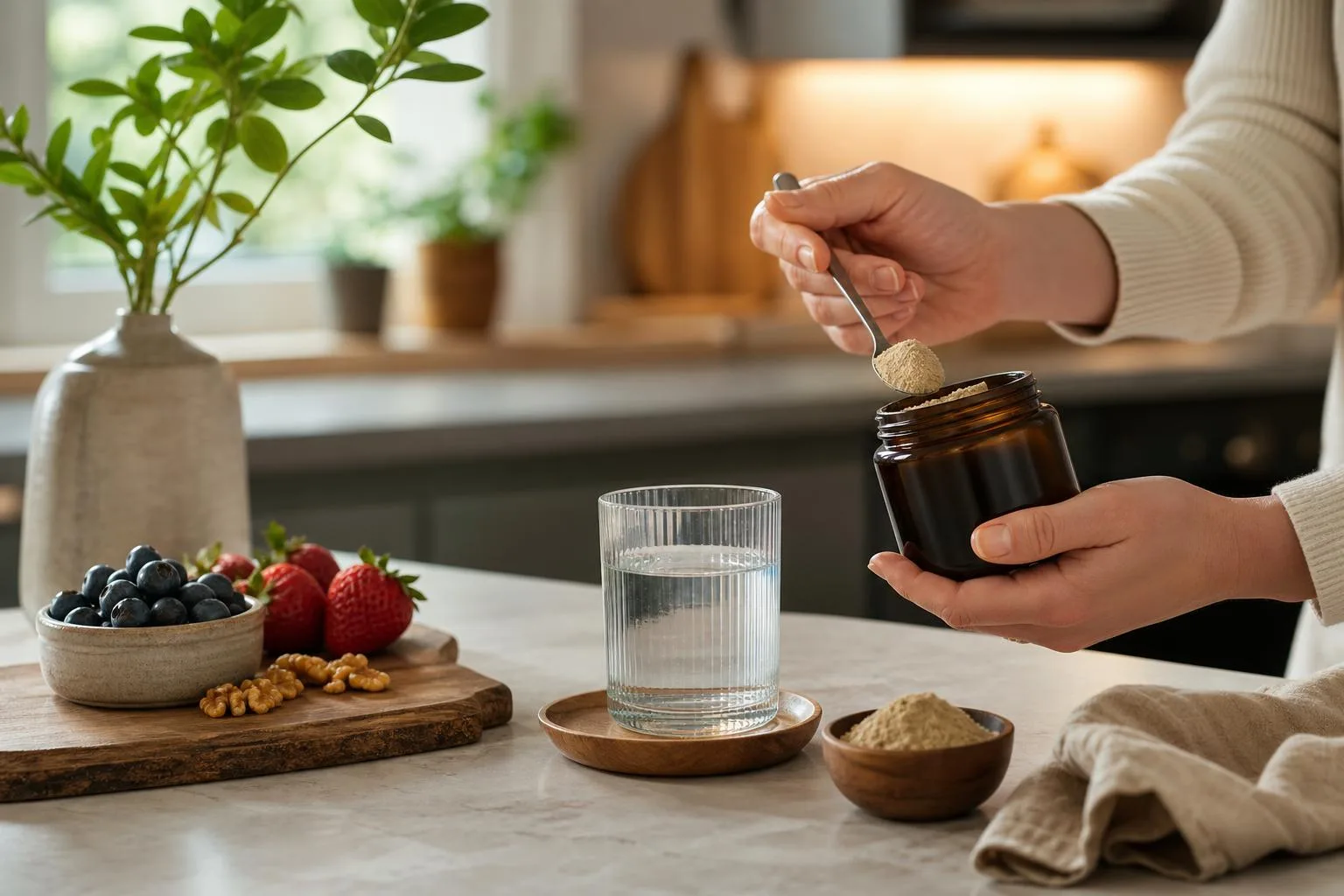
Practical Tips for Measuring Powder
A teaspoon of powder is not a fixed weight; it depends on density, grind size, moisture, and how tightly it is packed. For food, supplements, and especially medicines, weighing in grams is safer than relying on spoon volume.
In U.S. cooking, 1 teaspoon equals 4.92892 milliliters, according to NIST measurement standards. That volume can weigh less than 2 grams for fluffy powders or more than 7 grams for dense crystalline powders.
| Powder | Typical grams per level teaspoon | Practical safety note |
| Table salt | About 6 grams | High sodium: 1 teaspoon salt contains about 2,300 mg sodium, the FDA Daily Value. |
| Granulated sugar | About 4 grams | Used for nutrition labels: 4 grams sugar is commonly treated as 1 teaspoon. |
| Baking powder | About 4 grams | Too much can make food bitter and overly alkaline. |
| All-purpose flour | About 2.5 to 3 grams | Scooping can compact flour and change results by 20% or more. |
| Cocoa powder | About 2 to 2.5 grams | Clumps easily; sift before measuring for consistency. |
When accuracy matters
- Use a digital scale for supplements and medications. A kitchen teaspoon is not a dosing tool. For powders such as creatine, caffeine, electrolytes, or powdered medicines, follow the product label and use the supplied scoop or a gram scale.
- Do not convert medical doses casually. Milligrams and grams measure weight, while teaspoons measure volume. A 500 mg dose is 0.5 grams, but its teaspoon volume depends entirely on the powder’s density.
- Choose a scale with 0.1 gram resolution for cooking and supplements. For very potent powders, use a milligram scale with 0.001 gram resolution, not a kitchen scale.
How to measure powder more consistently
- Use level teaspoons, not heaping teaspoons. A heaping spoon can hold 30% to 100% more powder depending on particle size and shape.
- Stir or loosen the powder first. Powders settle during shipping and storage. Fluffing before measuring reduces compression errors.
- Spoon into the teaspoon, then level with a straight edge. Do not dip the spoon into the container for flour, cocoa, protein powder, or powdered sugar.
- Watch humidity. Salt, sugar, drink mixes, and powdered seasonings absorb moisture, increasing clumping and changing spoon weight.
- Label your own conversions. If you use the same powder often, weigh 10 level teaspoons, divide by 10, and record your average grams per teaspoon.
For recipe work, small teaspoon errors usually affect texture or flavor. For sodium, caffeine, infant formula, electrolytes, and medicines, those same errors can become health and safety issues.
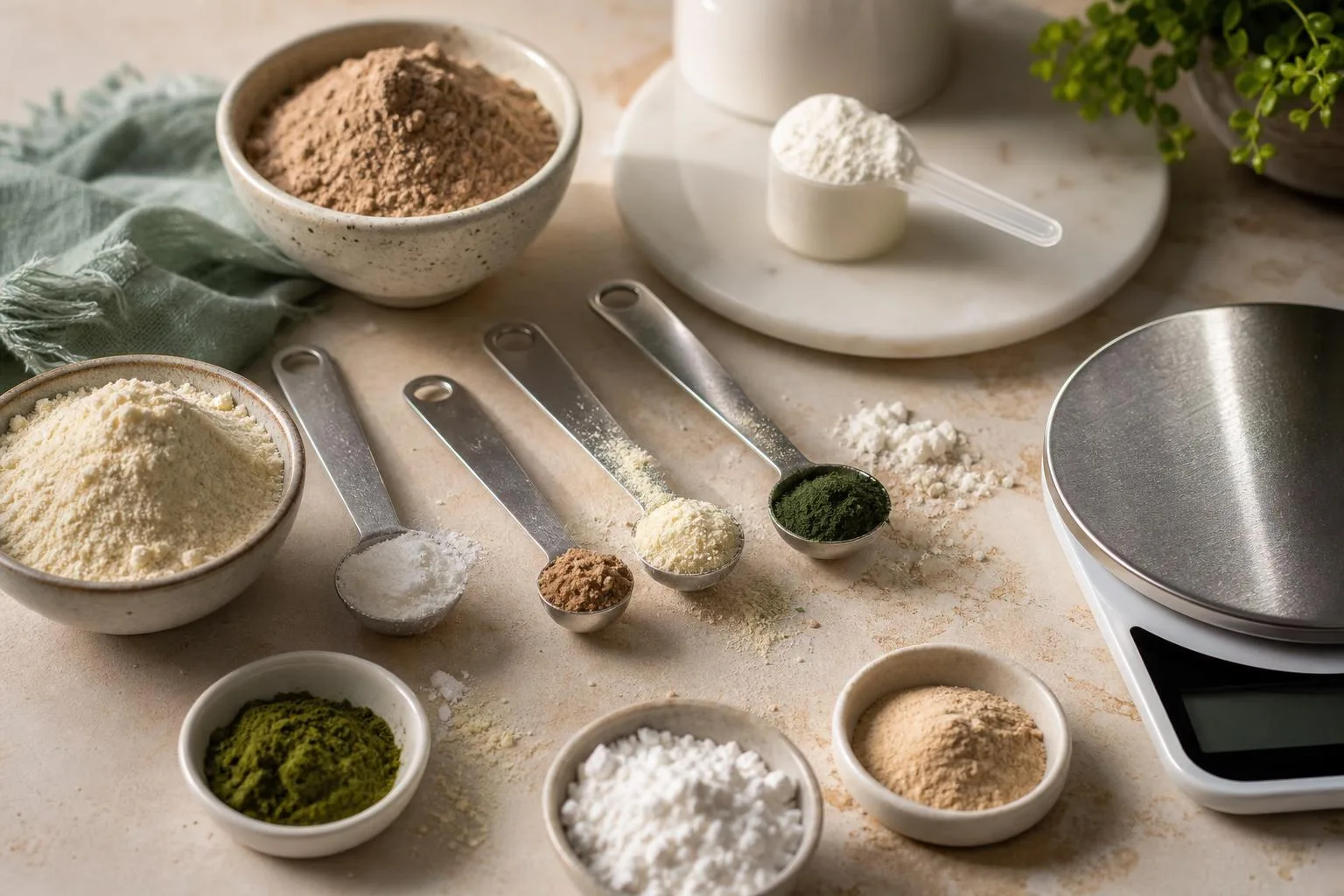
Our Teaspoon Powder Test Method
We tested powdered ingredients the way a home cook usually measures them: scooped into a U.S. teaspoon, then leveled with a straight edge.
Our biggest takeaway was clear: a teaspoon is a volume measure, so grams changed sharply with powder density, grind, and compaction.
For consistency, we used a stainless U.S. measuring teaspoon, a 0.01-gram digital scale, and unopened or recently opened pantry ingredients. Each powder was measured in repeated trials, with the spoon tared empty before every fill.
| Powder tested | Average grams per level U.S. teaspoon | Lowest trial | Highest trial |
| Baking soda | 4.62 g | 4.50 g | 4.75 g |
| Baking powder | 4.08 g | 3.92 g | 4.21 g |
| Fine table salt | 6.14 g | 6.02 g | 6.29 g |
| All-purpose flour | 2.61 g | 2.43 g | 2.78 g |
| Powdered sugar | 2.54 g | 2.35 g | 2.74 g |
| Unsweetened cocoa powder | 2.38 g | 2.20 g | 2.55 g |
| Ground cinnamon | 2.67 g | 2.49 g | 2.86 g |
| Garlic powder | 3.28 g | 3.08 g | 3.47 g |
The heaviest teaspoon in our test was fine table salt, which packed tightly and flowed cleanly into the spoon. The lightest were cocoa powder and powdered sugar, both of which trapped more air and showed visible clumping before leveling.
We also ran a small compaction check. After filling the spoon level, we tapped it lightly on the counter before adding more powder and leveling again. That changed the weight enough to matter in baking and seasoning.
| Ingredient | Level spoon, no tapping | After tapping and re-leveling | Increase |
| All-purpose flour | 2.61 g | 3.02 g | 0.41 g |
| Cocoa powder | 2.38 g | 2.83 g | 0.45 g |
| Baking powder | 4.08 g | 4.36 g | 0.28 g |
- We do not recommend one universal conversion. In our measurements, a teaspoon of powder ranged from 2.38 g to 6.14 g.
- For leaveners, weigh when precision matters. Baking soda and baking powder differed by more than half a gram per teaspoon.
- Do not tap unless a recipe says so. Tapping increased our teaspoon weights by roughly 10% to 19% for airy powders.
- Use “level teaspoon” literally. Rounded spoonfuls were too inconsistent for us to treat as a reliable conversion.
Our practical rule: if the powder is dense and granular, expect more grams per teaspoon; if it is fluffy, starchy, or clumpy, expect fewer. For exact work, especially baking, grams are the safer measurement.
Common Teaspoon Conversion Mistakes
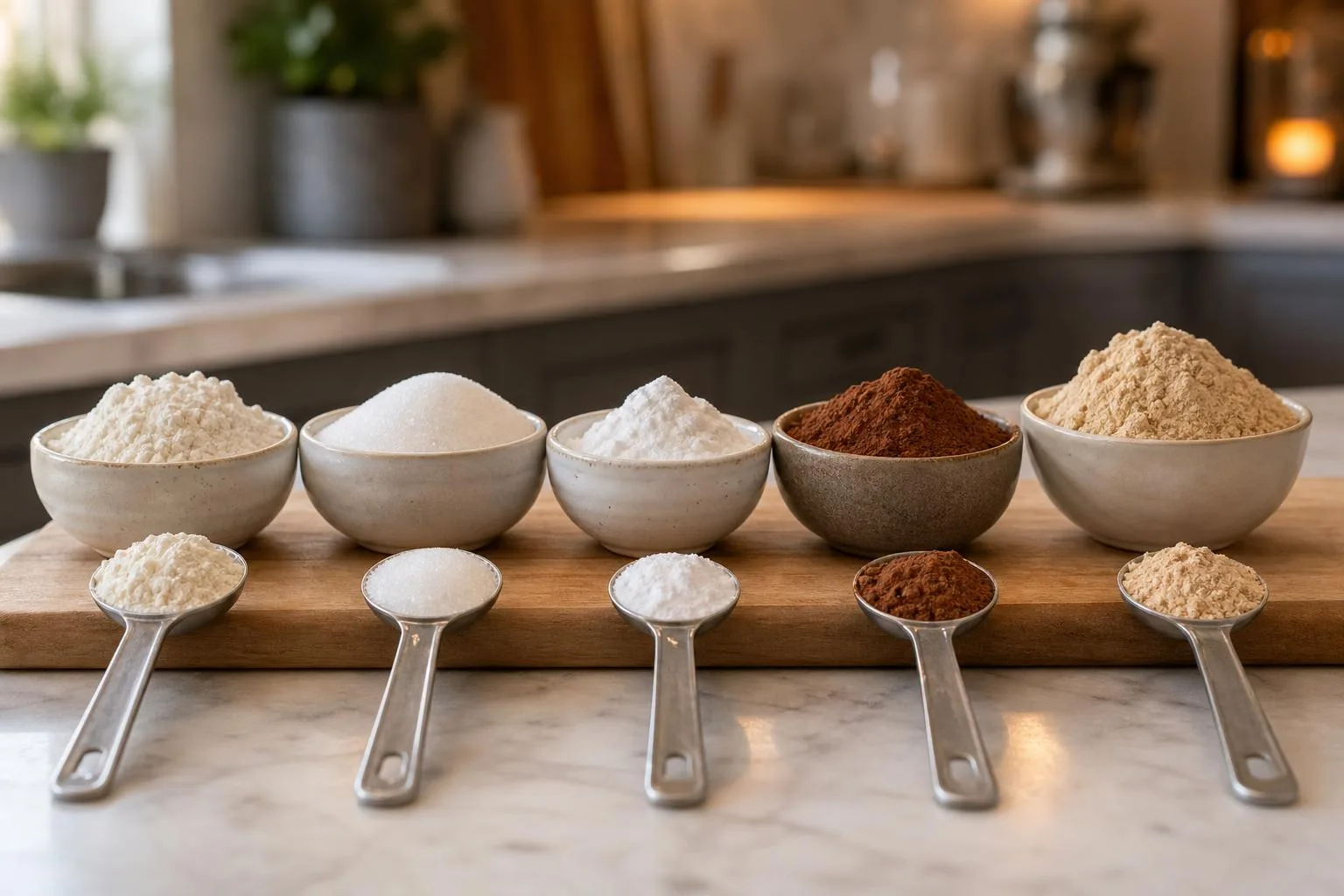
The biggest mistake is treating “1 teaspoon” as a fixed gram weight. A US teaspoon is a volume measure equal to 4.92892 mL, but grams measure mass, so the answer changes with powder density, grind, moisture, and packing.
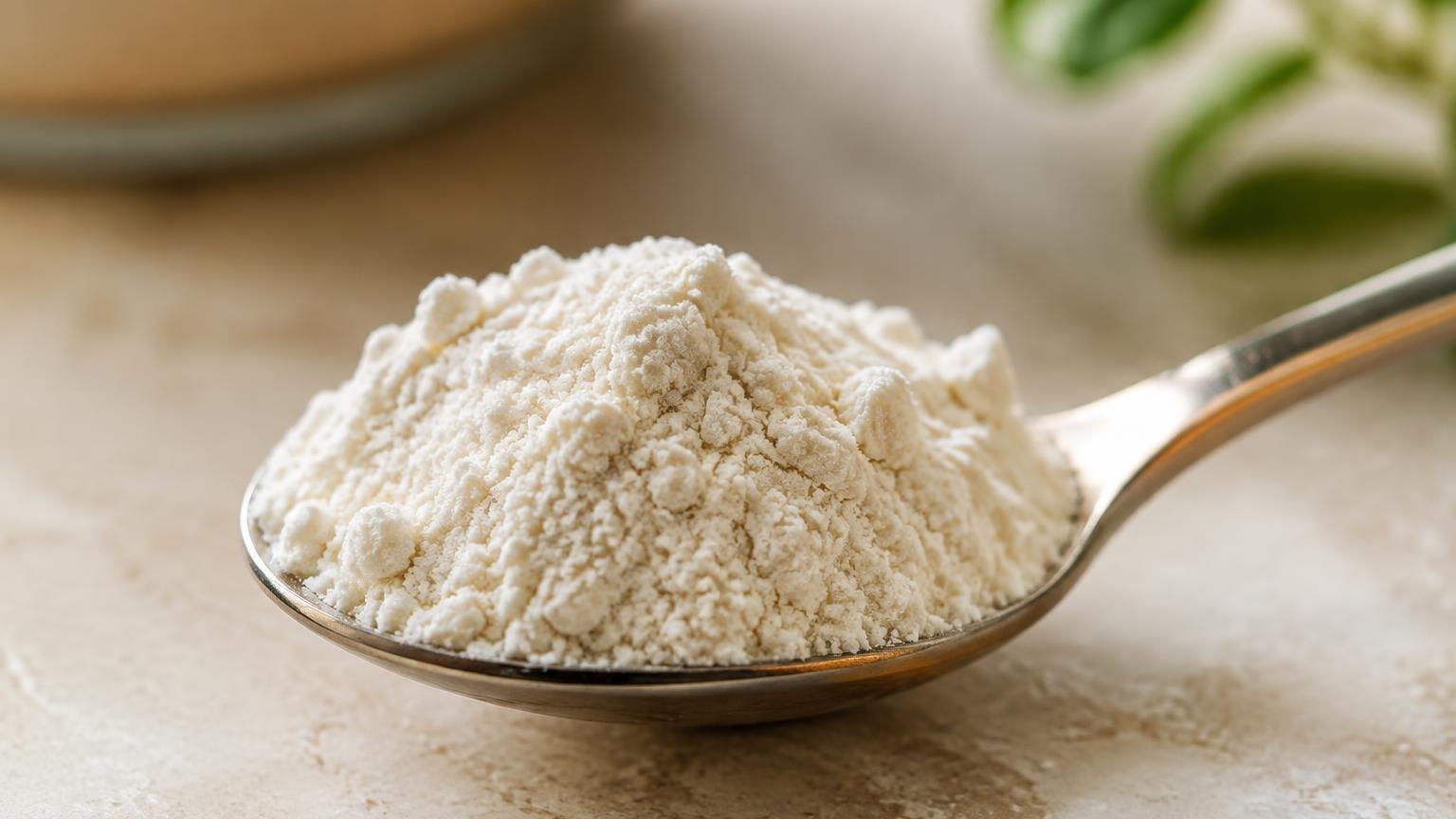
For reference, FDA nutrition labeling rounds 1 teaspoon to 5 mL. That shortcut is useful for liquids, but it can mislead badly with powders because a loose teaspoon and a packed teaspoon may differ by 20% or more.
| Powder | Approx. grams per level US teaspoon | Why it varies |
| Table salt | About 6 g | Fine crystals pack tightly |
| Granulated sugar | About 4 g | Uniform grains, moderate density |
| All-purpose flour | About 2.6 g | Traps air easily; scooping compacts it |
| Baking powder | About 4 g | Fine powder, usually measured level |
| Cocoa powder | About 2.5 g | Light, clumpy, moisture-sensitive |
- Myth: one teaspoon always equals 5 grams. This is only close for water, where 1 US teaspoon weighs about 4.93 g at typical kitchen temperatures. Salt, flour, cocoa, protein powder, and spices do not weigh the same as water.
- Mistake: using heaping teaspoons for supplement powders. A heaping teaspoon can hold 1.5 to 2 times a level teaspoon, depending on particle size. For caffeine, creatine, electrolyte mixes, or powdered medications, that difference can be significant.
- Myth: all teaspoons in the drawer are accurate. Flatware teaspoons are eating utensils, not calibrated measuring tools. A real US measuring teaspoon is 4.92892 mL; household spoons commonly hold more or less than that.
- Mistake: scooping flour straight from the bag. Scooping compresses flour. A spooned-and-leveled teaspoon of all-purpose flour is roughly 2.6 g, while a compacted teaspoon can be noticeably heavier.
- Myth: “powdered” means consistent density. Powder density changes with grind size, anti-caking agents, humidity, and settling during shipping. A freshly opened container may measure differently from one that has been shaken or stored for months.
- Mistake: copying conversions between ingredients. If a recipe says 1 teaspoon baking powder is 4 g, that does not mean 1 teaspoon cinnamon, collagen powder, or instant yeast is also 4 g.
The most reliable method is to weigh the powder with a digital scale accurate to 0.1 g, especially for small quantities. Use level measuring spoons only when the recipe or label was designed for volume measurement.
Questions Readers Ask
How many grams are in a teaspoon of powder?
A level U.S. teaspoon holds 4.9289 mL, but grams depend on the powder’s density, so there is no single conversion.
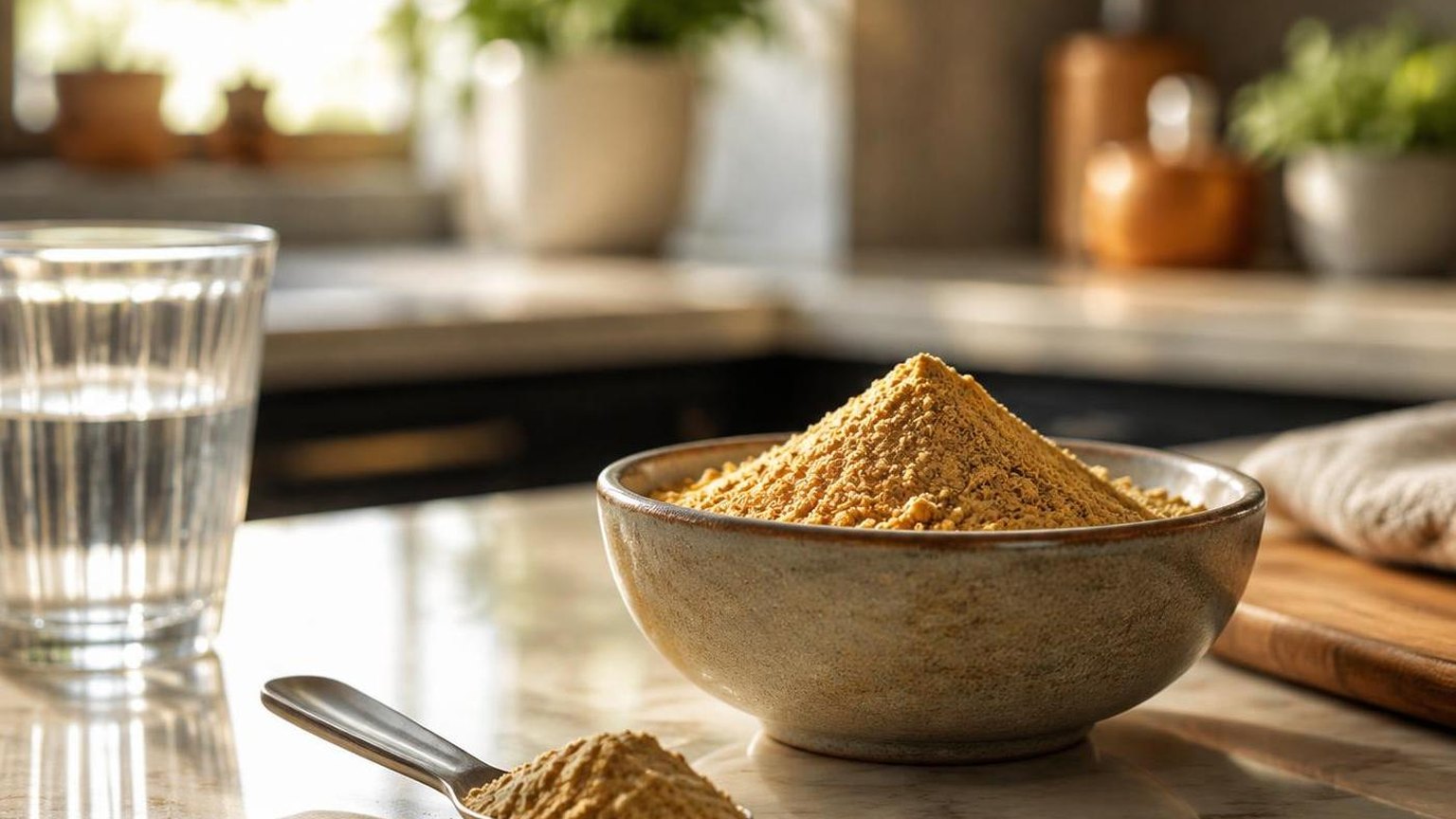
As a practical kitchen range, 1 teaspoon of many dry powders weighs about 2 to 5 grams, with fine dense powders weighing more than fluffy or aerated ones.
How many grams is 1 teaspoon of baking powder?
One level teaspoon of baking powder is commonly about 4 grams. This is why many baking formulas treat 1 teaspoon baking powder as roughly 4 g when converting spoon measurements to weight.
How many grams is 1 teaspoon of powdered sugar?
One level teaspoon of powdered sugar is about 2.5 grams. It weighs less than granulated sugar per teaspoon because powdered sugar is very fine and includes air spaces, and many U.S. brands also contain a small amount of cornstarch.
How many grams is 1 teaspoon of cocoa powder?
One level teaspoon of unsweetened cocoa powder is about 2 to 2.5 grams. The exact weight varies by brand, fat content, and whether the cocoa has been packed down or simply spooned level.
What is the most accurate way to measure a teaspoon of powder in grams?
Use a digital kitchen scale that reads in 0.1 g increments, then weigh the powder instead of relying on volume. For small amounts, place a container on the scale, tare it to zero, and add powder until you reach the target gram weight.
Why does one teaspoon of different powders weigh different amounts?
A teaspoon measures volume, not mass, so the gram weight changes with each powder’s density, particle size, and how tightly it settles.
Fine, compact powders can weigh around 4 to 5 grams per teaspoon, while lighter powders may be closer to 2 to 3 grams, making ingredient-specific conversion charts more reliable.
Related Reading
- What Are The Best Cigars For Special Occasions?
- Sour Mash Vs Bourbon: Which is Best?
- How Often Should Ice Machines Be Cleaned?
- How Many Liters Is 48 Oz?
- What Kinds Of Red Wine Are Dry?
- How Many Gallons Is 35 Liters?
- How Many Pounds In A Bushel Of Apples? Most Correct Answer
- All Blog Guides
- NIST Guide to the SI, Appendix B: Conversion Factors (2024)
- Electronic Code of Federal Regulations, 21 CFR §101.9 Nutrition Labeling of Food (2024)
- USDA FoodData Central (2024)
- USDA National Nutrient Database for Standard Reference Legacy Documentation (2018)
- Harvard T.H. Chan School of Public Health: Measuring Ingredients (2023)
- King Arthur Baking: Ingredient Weight Chart (2024)
- Baking Industry Research Trust: Weights and Measures in Baking (2020)