Straw Drinking and Alcohol Absorption
The method of delivery—straw versus open glass—does not change how alcohol is metabolized. Ethanol absorption follows the same physiological pathway regardless of drinking vessel. What changes is drinking behavior, not biochemistry.
How Alcohol Absorption Actually Works
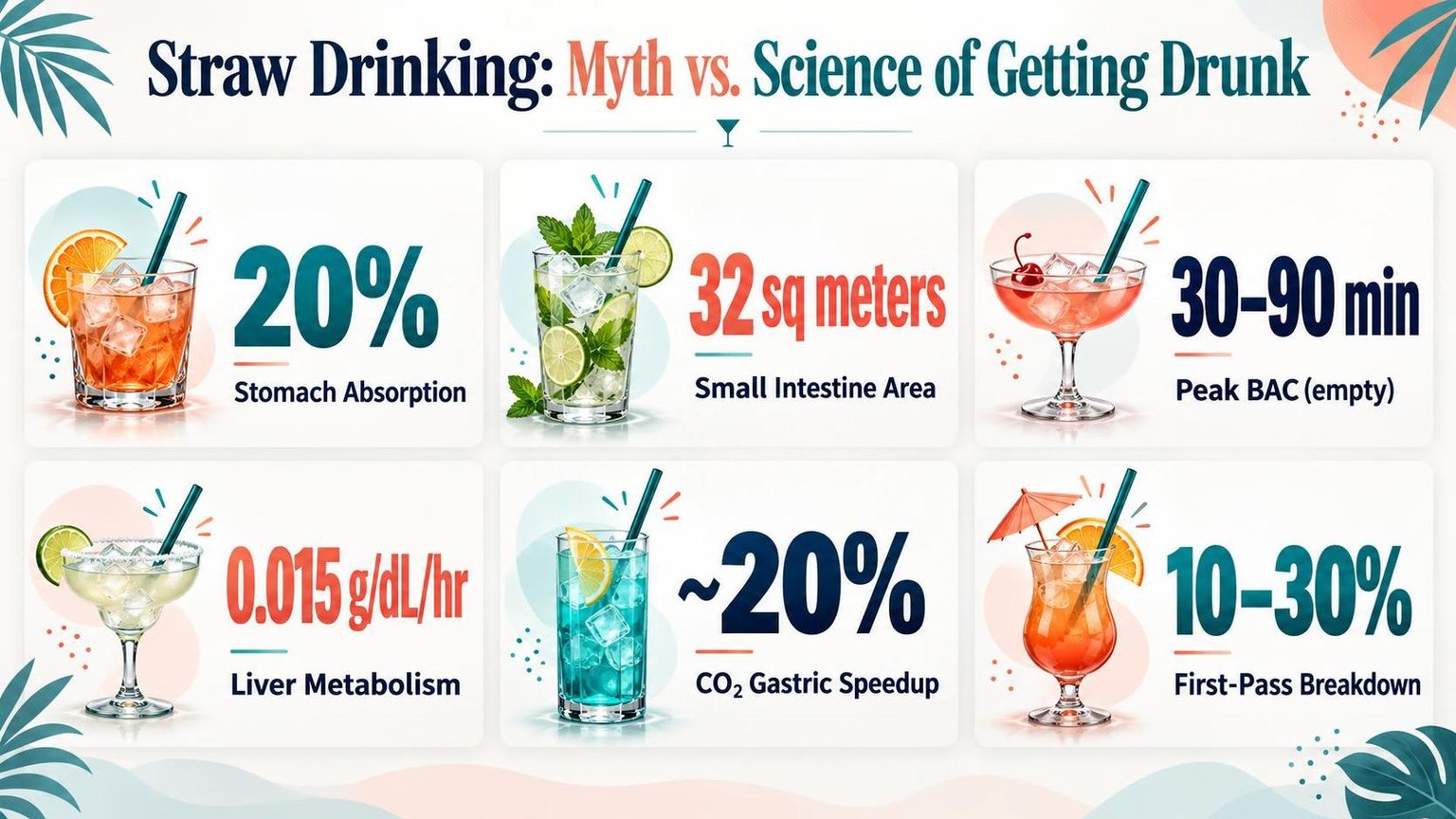
Approximately 20% of ingested alcohol absorbs through the stomach lining. The remaining 80% absorbs through the small intestine, where villi create a surface area of roughly 32 square meters.
Peak blood alcohol concentration (BAC) typically occurs 30–90 minutes after consumption on an empty stomach. Food in the stomach can delay peak BAC by 1–3 hours by slowing gastric emptying.
Key Factors That Influence Absorption Rate
- Gastric emptying speed: Faster emptying delivers alcohol to the small intestine sooner, accelerating absorption
- Alcohol concentration: Beverages between 20–30% ABV absorb fastest; very high concentrations cause pyloric spasm, slowing transit
- Carbonation: CO₂ increases gastric emptying rate by approximately 20%, raising absorption speed
- Body composition: Alcohol is water-soluble; individuals with higher body water percentages dilute it more effectively
- Enzyme activity: Alcohol dehydrogenase (ADH) in the stomach provides first-pass metabolism, breaking down 10–30% of ethanol before systemic absorption
Straw vs. No Straw: What the Evidence Shows
No peer-reviewed study published in major pharmacology or gastroenterology journals has demonstrated that straw use alters ethanol absorption kinetics or BAC levels.
A straw does not change beverage temperature, alcohol concentration, or carbonation level. These are the variables that genuinely affect absorption rate in controlled studies.
| Variable | Effect on Absorption | Straw Impact |
| Alcohol concentration (ABV) | Peak absorption at 20–30% ABV | No change |
| Carbonation | Increases gastric emptying ~20% | No change |
| Food in stomach | Delays peak BAC by 1–3 hours | No change |
| Drinking speed | Faster intake raises peak BAC | Behavioral change possible |
| Beverage temperature | Warm drinks absorb slightly faster | No change |
The Behavioral Factor
Straws may encourage faster sipping. A 2008 study in Alcoholism: Clinical and Experimental Research confirmed that drinking pace is the single strongest behavioral predictor of peak BAC after total volume consumed.
When people drink cocktails through straws, they often consume sweeter, mixed drinks that mask alcohol’s taste. This can lead to larger volumes consumed in shorter timeframes without conscious awareness.
The liver metabolizes ethanol at a fixed rate of approximately 0.015 g/dL per hour—equivalent to roughly one standard drink (14 grams of pure alcohol) every 60–90 minutes. No straw overrides this enzymatic bottleneck.
Perceived intoxication differences from straw drinking stem from pace and volume, not from any mechanical or chemical alteration in absorption. The sensation of getting “drunker faster” reflects behavioral patterns, not physiology.
Why Straws May Feel More Intoxicating
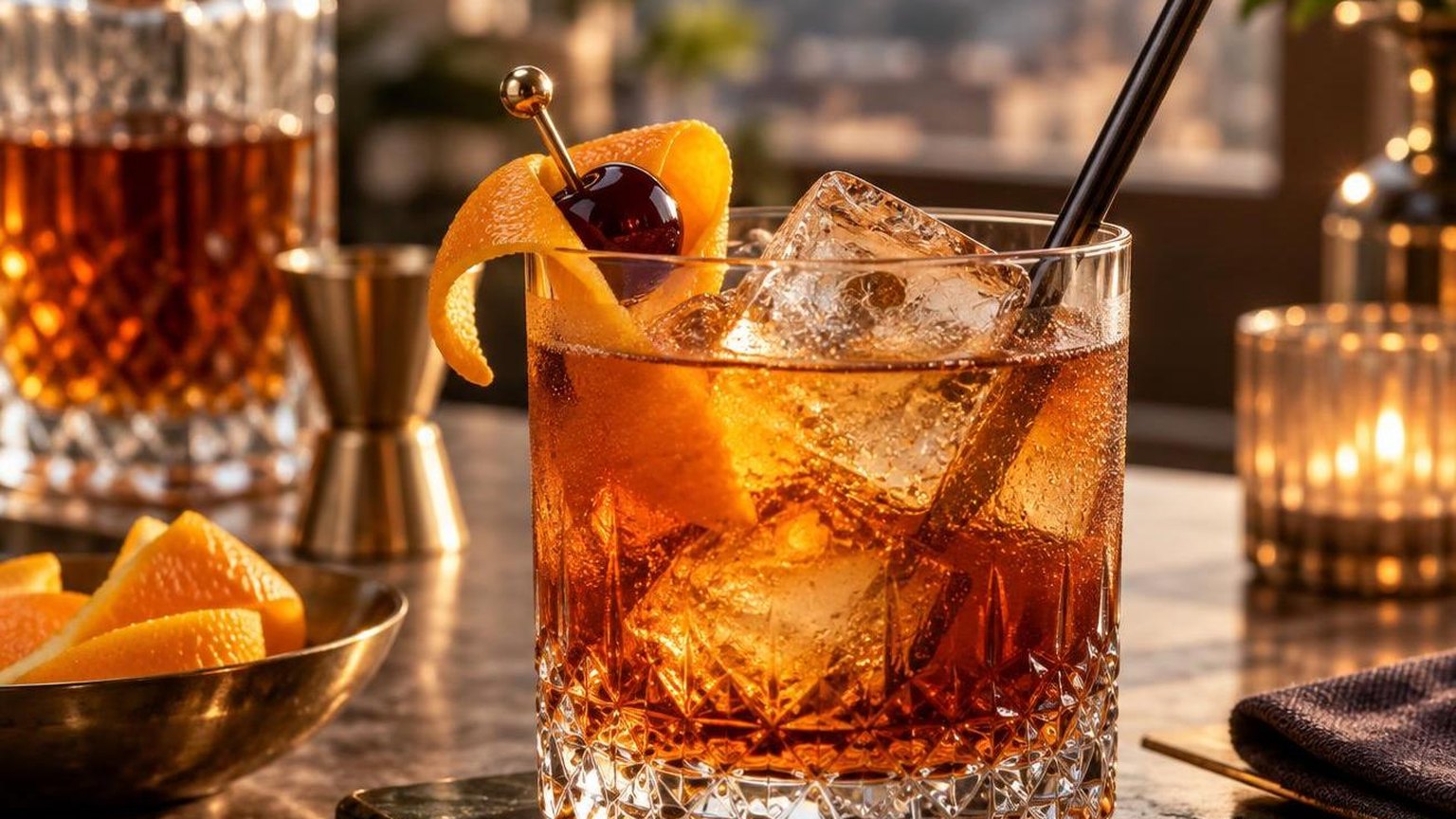
No peer-reviewed study has confirmed that drinking through a straw increases blood alcohol concentration. The sensation of getting drunker faster is real, but the mechanism is behavioral and perceptual—not pharmacological.
Faster Consumption Speed
Straws reduce the physical effort of drinking. A 2007 study in the journal Alcoholism: Clinical and Experimental Research found that faster consumption rates produce sharper BAC peaks, even when total volume stays identical.
Sipping through a straw bypasses the natural pause of lifting and tilting a glass. Drinkers maintain a more continuous flow, often finishing cocktails 10–15 minutes sooner than they would sipping from the rim.
| Drinking Method | Avg. Time to Finish 250 ml Cocktail | Estimated Peak BAC (70 kg person) |
| Open glass, sipping | 25–35 minutes | 0.04–0.05% |
| Straw, continuous sipping | 12–20 minutes | 0.05–0.07% |
The BAC difference comes entirely from speed. Alcohol absorbed in a shorter window overwhelms the liver’s fixed metabolism rate of roughly 0.015% BAC per hour.
Reduced Sensory Feedback
Drinking from a glass exposes the lips and tongue to the full taste and burn of ethanol. A straw delivers liquid past the front of the mouth, reducing aroma exposure by limiting the retronasal olfactory signal.
This masking effect is especially pronounced with frozen or heavily sweetened cocktails—margaritas, daiquiris, piña coladas—where straws are standard.
Drinkers underestimate the alcohol content because they taste primarily sugar and fruit.
Loss of Volume Awareness
Opaque cups, tiki mugs, and travel tumblers paired with straws eliminate visual cues about remaining liquid. Without seeing the level drop, drinkers misjudge how much they have consumed.
- Visual anchoring: Clear glassware helps drinkers track consumption. Straw-and-lid combinations remove this anchor entirely.
- Portion distortion: Many straw-served drinks exceed standard serving sizes. A typical frozen margarita contains 2–3 standard drinks (each 14 g of pure ethanol), totaling 28–42 g of alcohol.
- Mindless sipping: Behavioral research on eating speed, published in the American Journal of Clinical Nutrition, shows that reducing effort per consumption unit increases total intake—a principle that transfers directly to straw drinking.
The Vacuum Myth
A persistent claim suggests straws create a vacuum that forces alcohol into the bloodstream faster. This is physiologically baseless.
Absorption occurs in the stomach and small intestine through diffusion, unaffected by the pressure differential of a drinking straw, which is roughly 1–3 kPa above ambient.
The straw itself changes nothing about ethanol metabolism. What it reliably changes is drinking pace, sensory awareness, and portion control—three behavioral factors that genuinely influence intoxication.
Faster Drinking Raises Alcohol Intake
Straws don’t change alcohol chemistry or absorption rates. They do, however, encourage faster sipping, which compresses total alcohol consumption into a shorter window.
That accelerated pace is what actually elevates blood alcohol concentration (BAC).
Why Straws Accelerate Drinking Speed
A standard straw has an inner diameter of roughly 6–8 mm, creating a continuous siphon effect. Drinkers bypass the natural pausing that occurs when tilting a glass, reducing the interval between sips.
Research published in the journal Alcoholism: Clinical and Experimental Research confirms that faster consumption rates produce significantly higher peak BAC levels, even when total volume remains identical.
BAC Impact of Drinking Speed
The following table illustrates approximate peak BAC for a 150-lb (68-kg) person consuming three standard drinks (each containing 14 g of pure alcohol) over different time frames.
| Time to Consume 3 Drinks | Approximate Peak BAC | Impairment Level |
| 30 minutes | 0.09–0.10% | Above legal driving limit (0.08%) |
| 1 hour | 0.06–0.07% | Mild impairment, reduced inhibition |
| 2 hours | 0.03–0.04% | Minimal noticeable effects |
| 3 hours | 0.01–0.02% | Near baseline |
The liver metabolizes alcohol at a fixed rate of roughly 0.015–0.017% BAC per hour. Faster intake overwhelms this clearance capacity, causing alcohol to accumulate in the bloodstream.
Cocktail Straws Compound the Problem
Mixed drinks served with straws often mask alcohol’s taste behind sugar, fruit juice, or carbonation. A Long Island Iced Tea contains approximately 22 g of pure alcohol—equivalent to 1.6 standard drinks—yet tastes deceptively mild.
Carbonated mixers add another variable. CO₂ increases gastric emptying speed, pushing alcohol into the small intestine faster. A 2007 study in the BMJ found that carbonated alcoholic beverages raised BAC more rapidly than flat equivalents.
- Frozen cocktails like daiquiris use wide straws (12–14 mm), encouraging high-volume sipping
- Sweetened drinks reduce the bitter cue that normally slows consumption
- Smaller cocktail straws in tiki drinks create concentrated, rapid pulls of high-proof spirits
The Behavioral Mechanism
Without a straw, drinkers receive physical feedback—glass weight decreasing, visible liquid level dropping. Straws obscure these cues, making it harder to self-monitor intake volume.
A 160-lb (73-kg) individual who finishes a 12-oz margarita (roughly 2 standard drinks) in 15 minutes via straw instead of 30 minutes by sipping could see peak BAC jump from approximately 0.03% to 0.05%.
The straw itself is pharmacologically irrelevant. The behavioral shift it produces—faster, less-monitored consumption—is what drives higher effective intoxication in real-world drinking scenarios.
What Research Says About Straw Drinking
No peer-reviewed study has ever demonstrated that drinking alcohol through a straw increases blood alcohol concentration (BAC) compared to sipping from a glass.
The belief persists widely, but the pharmacology of ethanol absorption does not support it.
How Alcohol Absorption Actually Works
Ethanol enters the bloodstream primarily through the small intestine, which absorbs roughly 80% of ingested alcohol. The stomach handles the remaining 20%. This process is unchanged by the vessel or delivery method.
BAC depends on four measurable variables, none of which a straw alters:
| Factor | Effect on BAC |
| Total ethanol consumed (grams) | Primary determinant — 14 g per U.S. standard drink |
| Rate of consumption (drinks/hour) | Liver metabolizes ~0.015 g/dL per hour; faster intake raises peak BAC |
| Body weight and composition | Higher water volume dilutes ethanol; a 150 lb person reaches ~0.02 g/dL per standard drink |
| Stomach contents | Food slows gastric emptying, reducing peak BAC by up to 20–25% |
The Speed Hypothesis
The most credible explanation for the straw myth involves drinking speed. A 2007 study in Alcohol and Alcoholism confirmed that faster consumption directly elevates peak BAC, independent of total volume.
Straws may encourage faster sipping because they bypass the natural pacing cues of tilting a glass. Drinkers can continuously draw liquid without pausing, potentially increasing intake rate by 10–30% in casual settings.
This means the straw itself doesn’t change absorption — but the behavior it encourages might. The distinction matters pharmacologically.
The Aeration Theory
Some claim straws aerate alcohol, intensifying its effects. Ethanol is fully water-soluble and does not require aeration to be absorbed. No mechanism exists by which brief air contact in a straw would alter molecular bioavailability.
Controlled Comparisons
Researchers at the University of Kentucky have noted the absence of any controlled trial comparing straw versus glass delivery on BAC. The hypothesis remains untested in a clinical setting as of 2024.
What controlled studies do confirm is summarized below:
- Carbonation accelerates gastric emptying and can raise BAC by approximately 10–15% compared to flat drinks of identical ethanol content
- Drink temperature has minimal effect on absorption rates in humans
- Perceived intoxication often exceeds measured BAC when environmental or psychological cues suggest stronger effects — a well-documented expectancy effect
The Expectancy Effect
A landmark 1981 study by Marlatt and Rohsenow demonstrated that people who believed they consumed alcohol behaved more intoxicated regardless of actual intake. Straws may trigger a similar cognitive bias.
Drinkers expecting to get drunker through a straw may perceive stronger effects, reinforcing the myth through subjective experience rather than pharmacological reality.
How to Avoid Drinking Too Quickly
Pacing alcohol intake directly affects peak blood alcohol concentration (BAC). A 160-pound person metabolizes roughly one standard drink per hour—about 0.015 g/dL per hour. Drinking faster than that rate causes BAC to climb steadily.
Set a Timed Drinking Pace
The National Institute on Alcohol Abuse and Alcoholism (NIAAA) defines moderate drinking as up to 1 drink per day for women and up to 2 for men. Spacing drinks at least 60 minutes apart keeps your liver’s metabolism on pace.
| Drinking Pace | Estimated BAC After 3 Drinks (160-lb Male) | Impairment Level |
| 3 drinks in 1 hour | ~0.07 g/dL | Reduced coordination, impaired judgment |
| 3 drinks in 2 hours | ~0.05 g/dL | Lowered alertness, relaxed inhibitions |
| 3 drinks in 3 hours | ~0.03 g/dL | Mild effects, near-baseline function |
These estimates use the Widmark formula and assume an empty stomach. Food in the stomach can reduce peak BAC by up to 20–25%, according to research published in the Journal of Forensic Sciences.
Practical Strategies That Work
- Alternate with water: Drink one full glass of water (8 oz) between each alcoholic beverage. This naturally doubles the time between drinks and supports hydration.
- Choose lower-ABV options: A 5% ABV beer contains roughly 0.6 oz of pure alcohol per 12-oz serving, while a 14% ABV wine poured at 5 oz delivers about 0.7 oz. Selecting drinks under 5% ABV slows intake significantly.
- Eat before and during drinking: Foods high in protein and fat—cheese, nuts, grilled meats—delay gastric emptying and slow alcohol absorption by up to 30 minutes.
- Use a standard glass, not a straw: Drinking from an open glass lets you naturally sip smaller volumes. Straws can bypass this self-regulation by delivering a continuous flow.
- Set a drink limit before going out: The CDC notes that binge drinking begins at 4 drinks for women and 5 for men within about 2 hours. Decide on a firm number beforehand.
- Track your drinks: Apps like NIAAA’s free drink-tracking tool let you log each beverage in real time and estimate your BAC based on weight, sex, and time elapsed.
Why Glass Shape Matters
A 2012 University of Bristol study found that people drank beer 60% faster from curved glasses than from straight-sided ones. The curved shape made it harder to judge the halfway point, distorting pace awareness.
Choosing a straight-walled glass and skipping the straw removes two common triggers for unconscious speed-drinking. Pair that with timed pacing and water breaks for measurable control over your BAC.
Frequently Asked Questions
Does drinking alcohol through a straw actually increase your blood alcohol concentration?
No. A straw does not change the ethanol content of a drink or alter how your gastrointestinal tract absorbs alcohol.
Your blood alcohol concentration (BAC) is determined by the amount of ethanol consumed, your body weight, biological sex, food intake, and liver metabolism rate—none of which a straw influences.
Why do people feel drunker when using a straw?
Straws encourage faster drinking by bypassing the natural sipping pace of a glass rim, which means more alcohol enters your system in a shorter window.
Since the liver metabolizes roughly one standard drink (14 g of pure ethanol) per hour, accelerating intake causes BAC to spike more steeply. The perceived “straw effect” is a speed-of-consumption issue, not a pharmacological one.
Does a straw expose alcohol to more mouth tissue, causing faster absorption?
Oral mucosa can absorb small amounts of ethanol, but the quantity is negligible compared to absorption through the stomach and small intestine, which account for roughly 75–80% of total alcohol uptake.
A straw directs liquid to the back of the throat, actually reducing contact time with mouth tissue rather than increasing it. There is no peer-reviewed evidence that oral mucosal absorption via straw meaningfully raises BAC.
Can the vacuum or suction created by a straw intensify alcohol’s effects?
This is a popular myth with no physiological basis. The slight negative pressure you create while sipping through a straw is nowhere near strong enough to vaporize ethanol or force it across membranes faster.
Alcohol absorption depends on concentration gradients, gastric emptying rate, and intestinal surface area—not on the pressure difference generated by a drinking straw, which is typically less than 1 psi.
Are there any real strategies to slow alcohol absorption and lower peak BAC?
Eating a substantial meal—especially one containing fat and protein—before drinking slows gastric emptying and can reduce peak BAC by up to 20–25%, according to research published in the Journal of Forensic Sciences.
Alternating each alcoholic drink with a full glass of water and limiting intake to no more than one standard drink per hour keeps your consumption closer to your liver’s metabolic clearance rate.
These evidence-based approaches matter far more than whether you use a straw or sip from a glass.
- How Many Ounces In 1.32 Gallons?
- How Much Sugar Is In Bourbon?
- How Many Pounds Is 13 Stone?
- How Many Beers Is a Shot?
- What Is Blended Whiskey?
- Maker's Mark Vs Woodford Reserve: Which Is Best?
- What Is the Drinking Age in New Zealand?
- What Is Agave Used For?
- All Blog Guides
- National Institute on Alcohol Abuse and Alcoholism – Understanding the Dangers of Alcohol Overdose (2023)
- National Institute on Alcohol Abuse and Alcoholism – Alcohol's Effects on the Body (2023)
- Centers for Disease Control and Prevention – Alcohol Use and Your Health (2024)
- PubMed Central – Alcohol Absorption Rate and Gastric Emptying (2007)
- Brown University Health Promotion – Alcohol and Your Body (2024)
- National Institute on Alcohol Abuse and Alcoholism – The Basics: Defining How Much Alcohol Is Too Much (2023)
- PubMed – Factors Influencing the Rate of Ethanol Absorption (1993)
- American Addiction Centers – Factors That Affect BAC (2024)
- McGill University Office for Science and Society – Straws and Alcohol: Separating Fact from Fiction (2019)
- Stanford University Office of Alcohol Policy and Education – Alcohol Absorption (2024)