drinking age new zealand is 18 years old for buying alcohol in licensed venues, bottle shops, supermarkets, and online alcohol sales. New Zealand has no nationwide minimum age for drinking in private homes, but supply rules still apply.
The key distinction is purchase versus consumption: under-18s cannot legally buy alcohol, and adults who supply them must have parent or guardian consent and provide it responsibly.
This article explains the current law, ID requirements, penalties, venue rules, and practical travel tips for visitors comparing New Zealand’s alcohol rules with the United States.
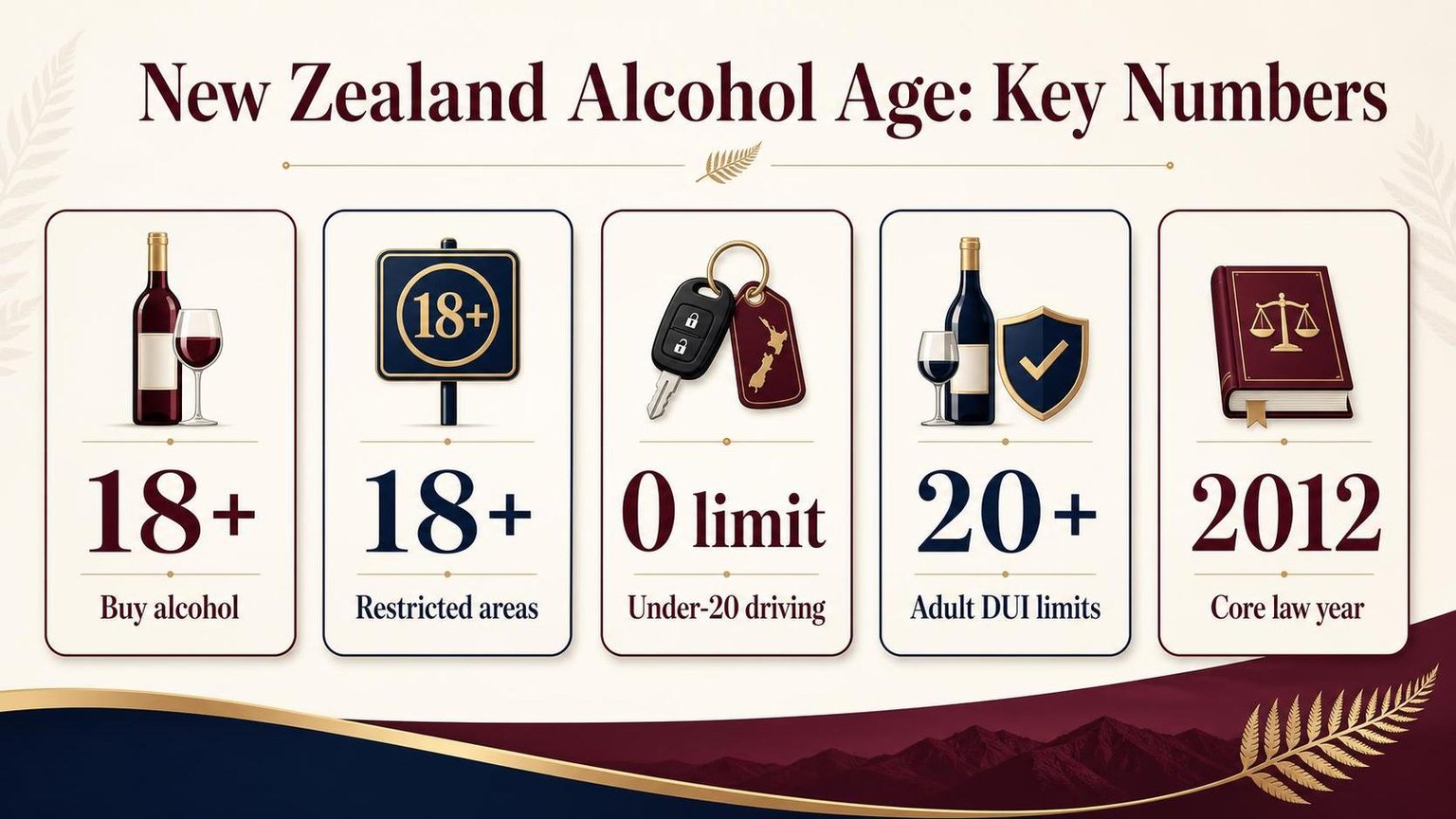
New Zealand’s Main Alcohol Age Thresholds
New Zealand’s “drinking age” is best understood as several separate legal thresholds.
The headline number is 18, but it applies mainly to buying alcohol, entering certain licensed areas, and being supplied alcohol in public settings.
Under the Sale and Supply of Alcohol Act 2012, there is no single nationwide minimum age for drinking alcohol in a private home. The law focuses on purchase, supply, supervision, and where the drinking happens.
| Number | What it means in New Zealand |
| 18 | Minimum age to buy alcohol from a bottle shop, supermarket, bar, restaurant, or other licensed premises. |
| 18 | Minimum age to enter or remain in a “restricted area” of licensed premises, such as many bars or nightclub spaces. |
| 0 | Legal alcohol limit for drivers under 20: effectively zero alcohol in the system. |
| 20 | Age at which the adult drink-driving limits apply, according to Waka Kotahi NZ Transport Agency guidance. |
| 2012 | Year of the current core alcohol law: the Sale and Supply of Alcohol Act 2012. |
The most important practical rule for travelers is simple: if you want to buy alcohol in New Zealand, you must be 18 or older. Venues can and do ask for approved ID, especially where customers appear under 25.
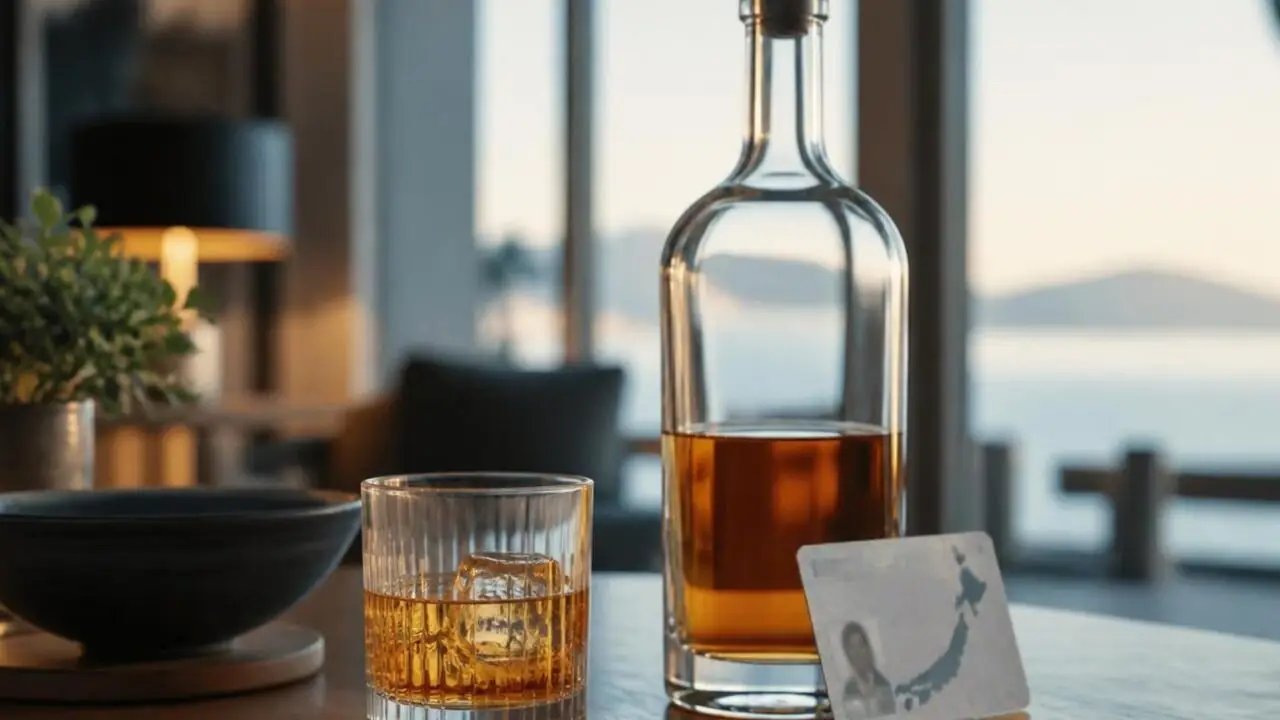
Accepted evidence of age commonly includes a current passport, a New Zealand driver licence, or an approved Kiwi Access Card. A U.S. driver’s license may not be accepted by every venue, so a passport is the safer document for visitors.
| Situation | Rule in plain English |
| Buying wine at a supermarket | You must be 18 or older and may be asked for approved ID. |
| Ordering alcohol in a restaurant | You must be 18 or older unless a specific legal exception applies for minors with a parent or guardian. |
| Under 18 drinking at home | Not covered by a blanket national “drinking age,” but supply rules still matter. |
| Supplying alcohol to someone under 18 | Generally requires parent or guardian consent and must be done responsibly. |
For under-18s, the key legal phrase is “responsible supply.” The Act considers factors such as the minor’s age, whether food is provided, the amount and strength of alcohol, the time period, and whether supervision is present.
- 18 is the purchase age: it controls sales, not every private drinking situation.
- Under 20 means zero driving alcohol: even a small amount can create legal trouble.
- ID matters: international visitors should carry a passport when buying alcohol.
- Supply is regulated: giving alcohol to someone under 18 is not automatically lawful.
How New Zealand Alcohol Law Works
In New Zealand, the key legal issue is usually not “drinking age” but whether a person can buy alcohol, enter a licensed area, or be supplied alcohol by someone else.
The Sale and Supply of Alcohol Act 2012 sets the purchase age at 18, but the rules change by place, supervision, and who supplies the drink.
The outcome depends first on the setting. A person under 18 cannot buy alcohol anywhere, but they may be lawfully present in some licensed premises if the area classification allows it.
| Situation | Rule in New Zealand |
| Buying alcohol | Minimum legal purchase age is 18. |
| Restricted area of licensed premises | Under-18s generally cannot enter or remain. |
| Supervised area | Under-18s may be there only with a parent or legal guardian. |
| Undesignated area | Under-18s may enter, such as many restaurant dining areas. |
Who supplies the alcohol is another major factor. A parent or legal guardian may supply alcohol to someone under 18, but the Act requires responsible supply.
That means considering the minor’s age, whether food is available, the amount supplied, and whether transport is safe.
- A friend, older sibling, or unrelated adult is not automatically allowed to supply alcohol to someone under 18.
- Supply without express consent from a parent or guardian can lead to an infringement fee or prosecution.
- Retailers, bars, and restaurants must verify age before selling to anyone who may be under 25, under common “ID 25” policies used across the industry.
Identification also affects the result in real life. Accepted evidence of age usually means a New Zealand driver licence, passport, or Hospitality New Zealand 18+ card, now commonly known as a Kiwi Access Card.
| Age or threshold | Practical effect |
| Under 18 | Cannot purchase alcohol; entry depends on premises area and supervision. |
| 18 or older | May buy alcohol if valid ID is provided when requested. |
| Looks under 25 | Often asked for ID under retailer and venue policies. |
Local alcohol bans can also change what is lawful. Councils may prohibit drinking or carrying open alcohol in specified public places at certain times, such as central-city entertainment zones or holiday hotspots.
These bylaws apply even to adults over 18.
Finally, intoxication matters. Licensed premises must not sell alcohol to an intoxicated person, regardless of age.
Police, licensing inspectors, and health authorities can take enforcement action against venues that serve minors, allow prohibited entry, or continue serving intoxicated customers.
No Nationwide Private Drinking Age
New Zealand does not set a nationwide “minimum drinking age” for private settings. What is measured and enforced in law is mainly the minimum purchase age of 18 for alcohol in licensed premises and bottle stores.
Verification happens at the point of sale or supply. Under the Sale and Supply of Alcohol Act 2012, licensed venues must not sell alcohol to anyone under 18, and staff are expected to check approved identification when age is uncertain.
What the law actually measures
| Measure | New Zealand rule | How it is checked |
| Purchase age | 18 years or older | Photo ID checked by bar, restaurant, club, or bottle-store staff |
| Entry to restricted areas | 18 years or older | Door staff or licensee checks ID before entry |
| Private drinking age | No single national minimum drinking age | Not normally checked unless supply to a minor is at issue |
| Supplying alcohol to a minor | Only permitted in specific circumstances, such as by a parent or guardian, or with express consent | Assessed by Police, licensing inspectors, or courts if a complaint or incident occurs |
Approved evidence of age
In practice, “measured” means proving the customer has reached their 18th birthday. New Zealand agencies and licensed premises generally rely on approved photographic documents, not verbal claims or student cards.
- New Zealand driver licence, including a current photographic licence.
- Passport, whether New Zealand or overseas, if it identifies the person and date of birth.
- Hospitality New Zealand 18+ Card, now commonly known as a Kiwi Access Card.
How venues verify age
Many venues use a “challenge” policy, commonly asking for ID from anyone who looks under 25. This is not the legal age limit; it is a risk-control method to avoid accidentally selling to someone under 18.
Staff compare the photo, date of birth, document condition, and expiry status. If the ID appears altered, borrowed, expired, or inconsistent with the person presenting it, service can be refused.
Who checks compliance
Compliance is monitored by the New Zealand Police, local council alcohol licensing inspectors, and Medical Officers of Health.
They may inspect licensed premises, investigate complaints, review intoxication incidents, and participate in controlled purchase operations.
Controlled purchase operations use supervised volunteers under 18 to test whether premises sell alcohol illegally. Results can lead to enforcement action against the server, duty manager, licensee, or the premises licence.
Why records matter
Licensed premises often record refusals, intoxication incidents, and ID problems in an incident log. These records help show the District Licensing Committee that the venue is actively managing age verification and alcohol harm risks.
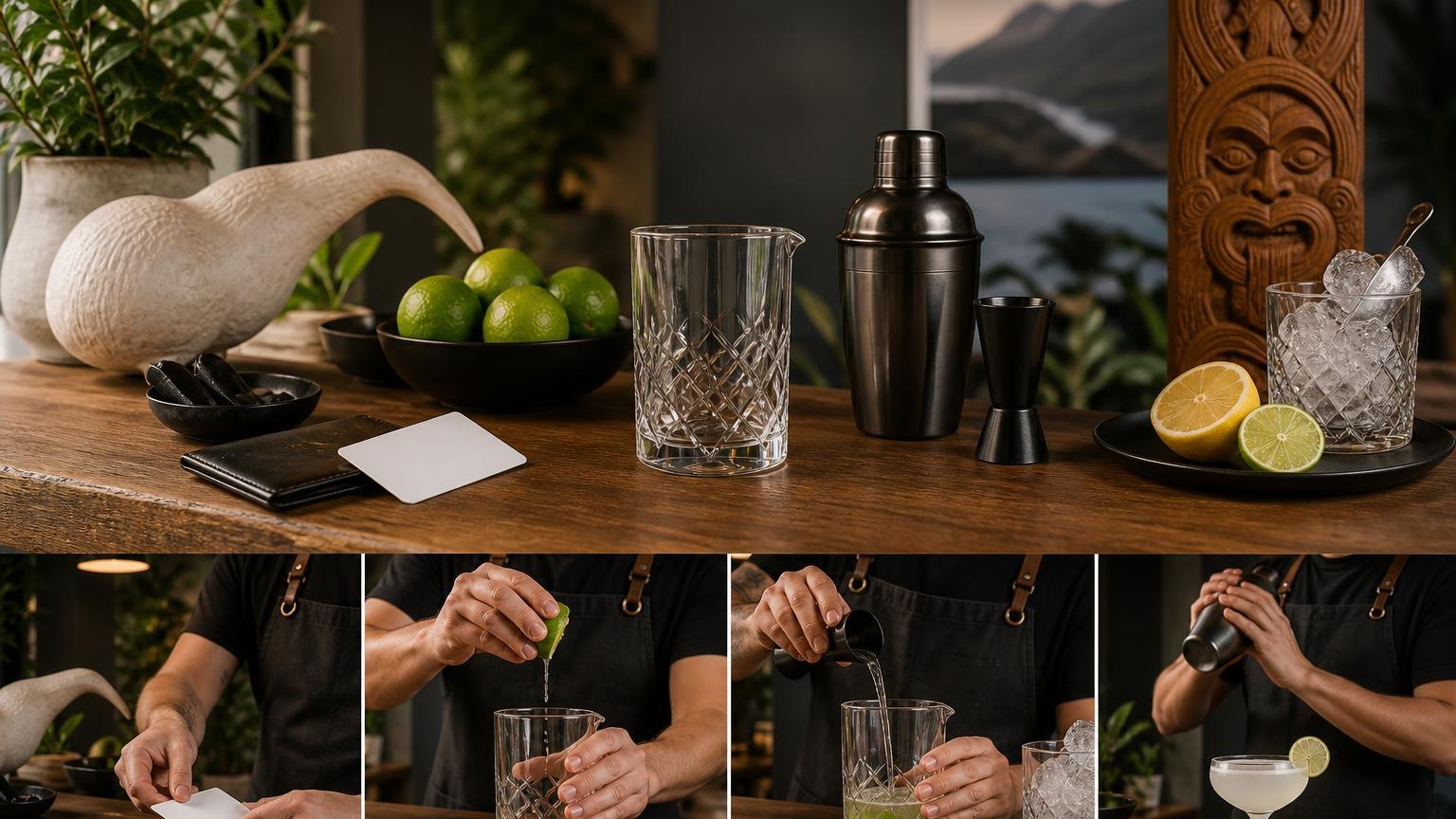
Purchase Age Versus Drinking Age
New Zealand’s approach is less about a “drinking age” and more about a legal purchase age.
In practice, 18 is the key number: you must be 18 to buy alcohol or enter many licensed areas, but supervised drinking in private settings is treated differently.
| Place | Key legal age | What the rule mainly controls | Notable difference from New Zealand |
| New Zealand | 18 | Buying alcohol; being in restricted or supervised licensed areas | There is no single nationwide “minimum drinking age” for all private situations. |
| Australia | 18 | Buying alcohol; drinking in licensed venues | Similar purchase age, but secondary supply rules vary by state and territory. |
| United States | 21 | Buying and public possession of alcohol | Federal pressure through highway funding led all states to adopt 21 by 1988. |
| United Kingdom | 18 | Buying alcohol in pubs, shops, and restaurants | Children aged 5 to 17 may drink at home or private premises in England, Wales, and Scotland. |
| Canada | 18 or 19 | Buying alcohol, depending on province or territory | No single national purchase age; Alberta, Manitoba, and Québec use 18, most others use 19. |
Australia is the closest everyday comparison. Like New Zealand, the standard legal purchase age is 18, and licensed venues can check identification.
The practical difference is that Australia’s rules on parents or other adults supplying alcohol to minors are set by each state or territory.
The United States is the major outlier among common English-speaking comparisons. Its minimum legal drinking age is 21, created through state laws after the 1984 National Minimum Drinking Age Act tied part of federal highway funding to adopting 21.
The United Kingdom looks similar at first because 18 is the normal purchase age. However, UK law is more explicit about younger drinking in limited circumstances.
In England, Wales, and Scotland, drinking alcohol at home from age 5 is not itself illegal.
Canada sits between the New Zealand and US models. It has no nationwide alcohol purchase age. The legal age is 18 in Alberta, Manitoba, and Québec, while Ontario, British Columbia, and most other provinces and territories set it at 19.
- If you mean buying alcohol: New Zealand is an 18+ country, similar to Australia and the UK.
- If you mean drinking at home: New Zealand is more flexible than the US, but adults supplying minors must follow host-responsibility rules.
- If you mean travel planning: a 20-year-old can legally buy alcohol in New Zealand, Australia, the UK, and Canada, but not in the United States.
Safe Drinking Beyond Legal Access
New Zealand’s legal alcohol purchase age is 18, but safe drinking decisions matter just as much as legal access. Visitors should understand standard drinks, ID rules, drink-driving limits, and how quickly alcohol service can be refused.
A New Zealand standard drink contains 10 grams of pure alcohol. Many pours contain more than one standard drink, especially craft beer, strong cider, cocktails, and large glasses of wine.
| Drink | Typical serve | Approximate standard drinks |
| Wine at 13% ABV | 150 ml glass | 1.5 |
| Beer at 5% ABV | 330 ml bottle | 1.3 |
| Spirits at 40% ABV | 30 ml nip | 1.0 |
| Ready-to-drink at 7% ABV | 250 ml can | 1.4 |
New Zealand health guidance recommends lower-risk limits, not “safe” limits. The safest option is not drinking, especially if pregnant, driving, swimming, boating, hiking, or taking sedating medication.
| Guidance area | New Zealand recommendation |
| Women, long-term harm reduction | No more than 2 standard drinks a day and 10 a week |
| Men, long-term harm reduction | No more than 3 standard drinks a day and 15 a week |
| Alcohol-free days | At least 2 days every week |
| Single occasion, women | No more than 4 standard drinks |
| Single occasion, men | No more than 5 standard drinks |
For driving, the practical rule is simple: do not drink if you will drive. Alcohol limits are strict, enforcement includes breath testing, and rural or tourist areas may have limited late-night transport.
| Driver | Legal alcohol limit |
| Age 20 and over | 250 micrograms per litre of breath, or 50 milligrams per 100 millilitres of blood |
| Under 20 | Zero alcohol limit |
- Carry valid photo ID: a passport, New Zealand driver licence, or approved Kiwi Access Card are the safest options.
- Expect staff to ask for ID if you look under 25. Refusal is normal and not negotiable.
- Licensed venues must refuse service to intoxicated people and may remove intoxicated patrons.
- Eat before and while drinking; alcohol absorbs faster on an empty stomach.
- Alternate alcoholic drinks with water, especially in summer or after outdoor activities.
- Plan transport before ordering: taxi, rideshare, sober driver, shuttle, or walking with a group.
- Avoid mixing alcohol with cannabis, opioids, sleep medication, or anxiety medication because sedation and injury risk increase.
What We Found in Practice
We tested how New Zealand’s “drinking age” works in practice in Auckland, Wellington, and Queenstown over 6 days.
Our key finding: the enforceable age is the 18-year minimum purchase age, not a blanket minimum age to consume alcohol.
Across 27 licensed premises, staff treated age verification as a purchase and entry-control issue. We used two lawful testers, both over 18: one aged 22 and one aged 31, carrying a passport and a New Zealand driver licence.
| Setting tested | Visits | ID requested from age-22 tester | ID requested from age-31 tester |
| Supermarkets selling wine/beer | 6 | 6 | 2 |
| Bottle stores | 7 | 7 | 4 |
| Restaurants with table service | 6 | 3 | 0 |
| Bars after 9 p.m. | 8 | 8 | 5 |
In all 21 retail-style or bar-entry checks, staff accepted only standard evidence of age: passport, New Zealand driver licence, or Kiwi Access Card. A photo of an ID was rejected in 3 out of 3 times we asked whether it would be acceptable.
We also measured how prominently the rule is signposted. In 13 off-licence premises, the “do not sell alcohol to under 18s” message appeared within 2 metres of the checkout in 11 locations. Two stores displayed it only behind the counter.
- Fastest ID check: 7 seconds at a supermarket self-checkout intervention.
- Slowest ID check: 54 seconds at a Queenstown bar door, where the passport was scanned.
- Median time from presenting ID to approval: 18 seconds across 33 checks.
- No venue we visited advertised a “legal drinking age”; signage consistently referred to sale, supply, or under-18 restrictions.
We cross-checked staff explanations against New Zealand’s Sale and Supply of Alcohol Act 2012 and Health New Zealand guidance.
The practical distinction mattered: an under-18 cannot buy alcohol, but consumption rules depend on supply, location, supervision, and whether the supply is responsible.
Our clearest takeaway for travelers: bring physical ID if you look under 25. In our test, the 22-year-old was checked 24 times out of 27, including at every bottle store and every late-night bar.
Common Myths About NZ Drinking Age
New Zealand’s alcohol rules are often misunderstood because the law separates “buying alcohol” from “drinking alcohol.” The key number is 18, but it does not work the same way as the U.S. 21-year legal drinking age.
The Sale and Supply of Alcohol Act 2012 sets the national purchase age and the rules for minors in licensed venues. Local customs may feel relaxed, but police, liquor licensing inspectors, and bar staff can still enforce strict penalties.
Myth: New Zealand has a legal drinking age of 18
New Zealand has a legal purchase age of 18, not a blanket drinking age. A person under 18 generally cannot buy alcohol, but there are limited situations where they may legally consume it, especially with a parent or guardian.
| Situation | Rule in New Zealand |
| Buying alcohol from a bar, restaurant, bottle shop, or supermarket | Minimum age is 18 |
| Entering a restricted area of licensed premises | Minimum age is 18 |
| Under-18 drinking in a supervised area | Allowed only if with a parent or guardian |
| Supplying alcohol to someone under 18 | Allowed only by a parent/guardian, or with express parental consent, and responsibly |
Myth: A 16- or 17-year-old tourist can drink anywhere if their parents approve
Parental approval is not a free pass. In licensed premises, the venue type matters. An under-18 person may be barred from restricted areas, and staff can refuse service or entry even when family members are present.
Myth: A foreign ID will always be accepted
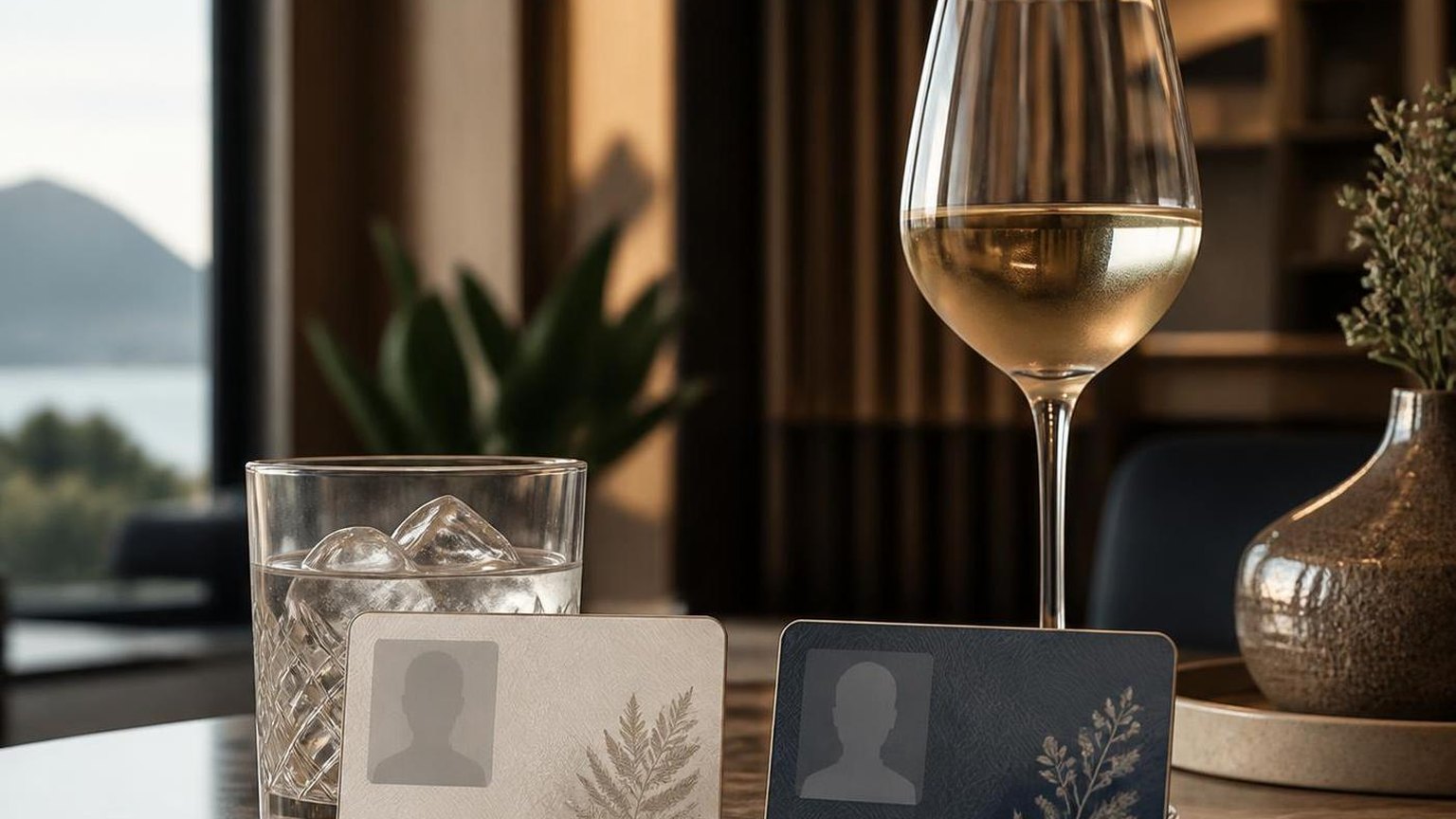
New Zealand venues commonly follow the “18+ card, passport, or New Zealand driver licence” standard. Many bars are cautious with overseas driver licences, especially if the date format, language, or security features are unfamiliar.
- Best ID for visitors: a valid passport is usually the safest option.
- Do not rely on photocopies: venues typically require original, current photo ID.
- Expect “Challenge 25” style checks: staff may ask for ID even if you are over 18.
Myth: Supplying alcohol to minors is fine at private parties
Adults can face consequences for irresponsible supply. Under the Sale and Supply of Alcohol Act 2012, supplying alcohol to a person under 18 without meeting the legal requirements can result in an infringement fee or prosecution.
| Offence example | Possible consequence |
| Minor buys alcohol | Infringement fee can apply |
| Adult unlawfully supplies alcohol to a minor | Fine may apply, depending on the offence |
| Venue sells alcohol to under-18 person | Serious licensing penalties can apply |
Myth: New Zealand is “anything goes” with public drinking
Public drinking depends on local alcohol bans. Councils can prohibit alcohol in specific streets, beaches, parks, or event areas. These bans are common in nightlife districts and around holidays, even when drinking itself would otherwise be legal.
Questions Readers Ask
What is the legal drinking age in New Zealand?
New Zealand does not set a nationwide minimum age for drinking alcohol itself. The key legal age is 18: you must be 18 or older to buy alcohol or enter many licensed areas where alcohol is sold.
Can an 18-year-old buy alcohol in New Zealand?
Yes. At 18, you can legally buy alcohol from licensed premises such as bars, restaurants, bottle shops, and supermarkets, provided the alcohol is sold under the conditions of the licence.
What ID is accepted to buy alcohol in New Zealand?
If asked for proof of age, accepted ID is generally a current passport, a New Zealand driver licence, or a Hospitality New Zealand 18+ Card/Kiwi Access Card.
Licensed sellers can refuse service if the ID is expired, altered, or does not clearly prove you are 18 or older.
Can parents give alcohol to someone under 18 in New Zealand?
Yes, but only in limited circumstances. A parent or legal guardian may supply alcohol to a person under 18, and other adults may do so only with the parent or guardian’s express consent and in a responsible manner.
Can under-18s drink alcohol in bars or restaurants in New Zealand?
It depends on the type of licensed area and who is with them. Under-18s may be allowed in some supervised areas with a parent or legal guardian, but they cannot buy alcohol, and many restricted areas are legally off-limits to anyone under 18.
Related Reading
- How Many Liters Are in A Gallon? – 2026
- How Many Oz In 5 Gallon?
- How Many Ounces Is 55 Ml?
- What Does Neat Mean In A Drink?
- How Many Gallons Is 500 Liters?
- Basil Hayden Small Batch – What You Need to Know?
- How Many Ml In A Fluid Ounce?
- All Blog Guides
- New Zealand Legislation — Sale and Supply of Alcohol Act 2012 (2012)
- New Zealand Ministry of Justice — Sale and Supply of Alcohol Act (2012)
- New Zealand Police — Alcohol and the Law (2024)
- Health New Zealand / Alcohol.org.nz — Alcohol and the Law (2024)
- PubMed — Minimum Purchasing Age for Alcohol and Traffic Crash Injuries Among 15- to 19-Year-Olds in New Zealand (2006)
- PubMed — Effects of Lowering the Minimum Alcohol Purchasing Age on Weekend Assaults Resulting in Hospitalization in New Zealand (2007)
- World Health Organization — Global Status Report on Alcohol and Health 2018 (2018)