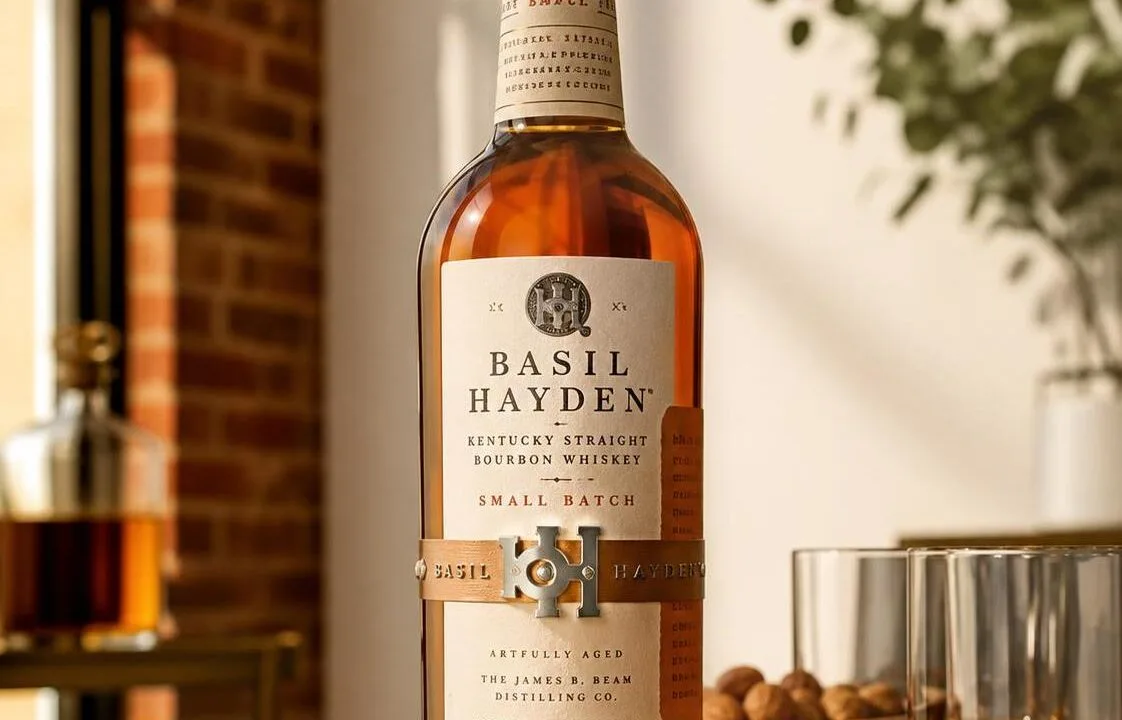
Basil Hayden Small Batch is an 80-proof Kentucky straight bourbon from the James B. Beam Distilling Co., known for a high-rye mash bill and a lighter, spicy profile.
Part of Beam’s Small Batch Bourbon Collection, it uses a mash bill commonly cited as 63% corn, 27% rye, and 10% malted barley.
Expect gentle caramel, pepper, citrus peel, and toasted oak—an approachable bourbon for sipping neat, over ice, or in spirit-forward cocktails.
Basil Hayden Small Batch at 80 Proof
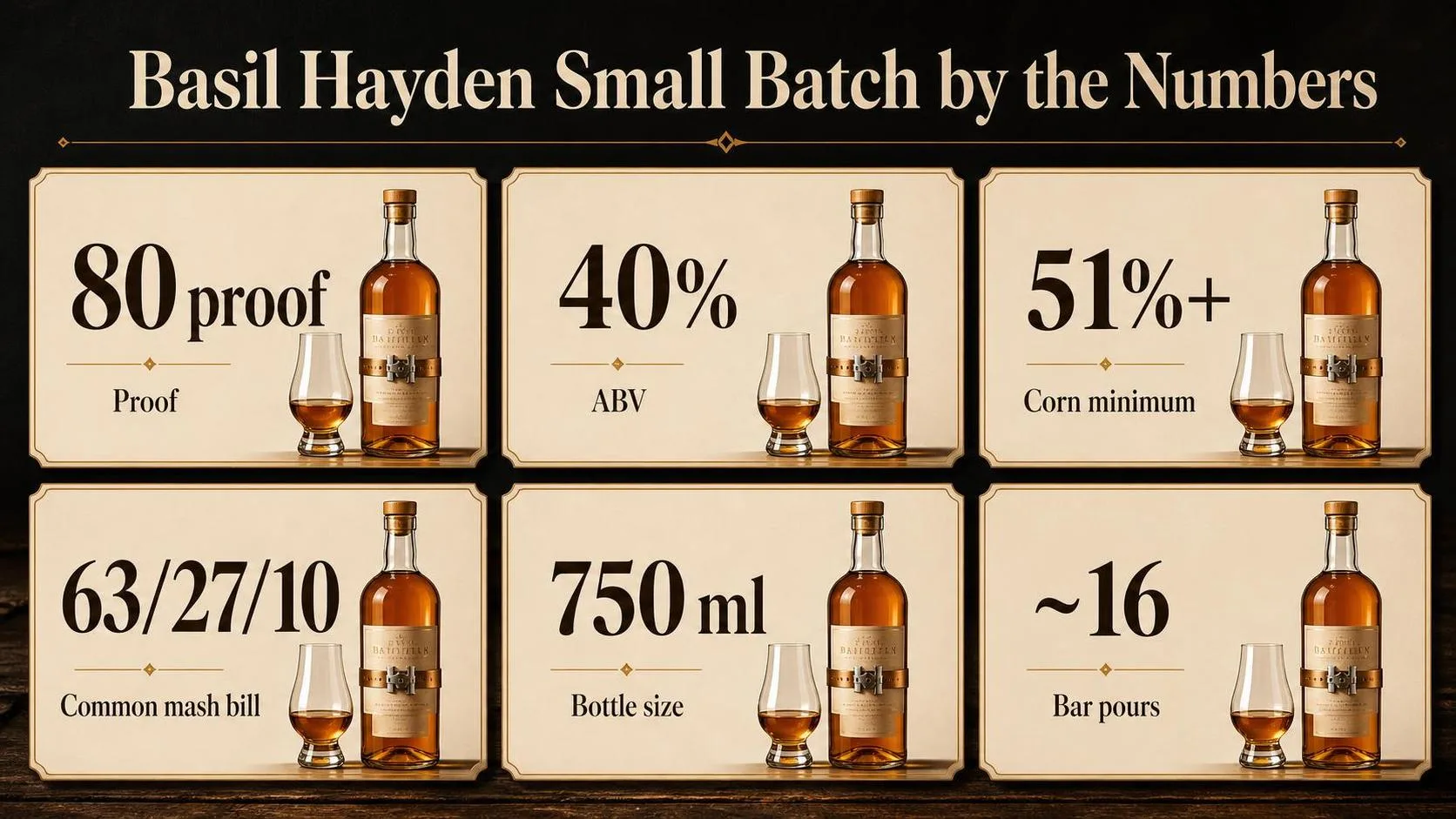
Basil Hayden Small Batch is built around one deliberately gentle number: 80 proof. That lower bottling strength, paired with a high-rye bourbon recipe, is why it drinks lighter than many Kentucky bourbons in the same price tier.
The label gives you some legally meaningful facts, but not everything. Here are the numbers that matter most when evaluating the bottle.
| Number | What it means | Why it matters |
| 80 proof / 40% ABV | The whiskey is bottled at the U.S. legal minimum strength for bourbon. | Expect less heat and body than 90–100 proof bourbons, but easier sipping neat or over ice. |
| At least 51% corn | Federal bourbon rules require a mash bill of not less than 51% corn. | This anchors Basil Hayden in bourbon’s sweet-grain profile, even though rye is prominent. |
| High-rye recipe | Basil Hayden uses Beam’s Old Grand-Dad-style high-rye bourbon profile, commonly cited at 63% corn, 27% rye, and 10% malted barley. | The elevated rye content explains the pepper, tea, and baking-spice notes that cut through the lighter proof. |
| No age statement | The current Basil Hayden Small Batch label does not state an exact age. | Because it is labeled “Kentucky Straight Bourbon Whiskey,” federal rules require it to be aged at least 2 years; if under 4 years, an age statement is required. A no-age-statement straight bourbon is therefore understood to be at least 4 years old. |
| New charred oak | Bourbon must be aged in new, charred oak containers under U.S. regulations. | Vanilla, light caramel, toasted oak, and soft tannin come from this mandatory maturation method. |
| 750 ml | The standard U.S. bottle size contains about 25.4 fluid ounces. | At a 1.5-ounce pour, one bottle yields roughly 16 standard bar pours. |
The most important comparison is proof. Basil Hayden sits at 80 proof, while many mainstream bourbons land at 90, 94, 100, or higher. That 10–20 proof-point gap changes texture, aroma intensity, and cocktail performance.
- Neat: the 40% ABV format makes Basil Hayden approachable, with less ethanol sharpness than higher-proof bottles.
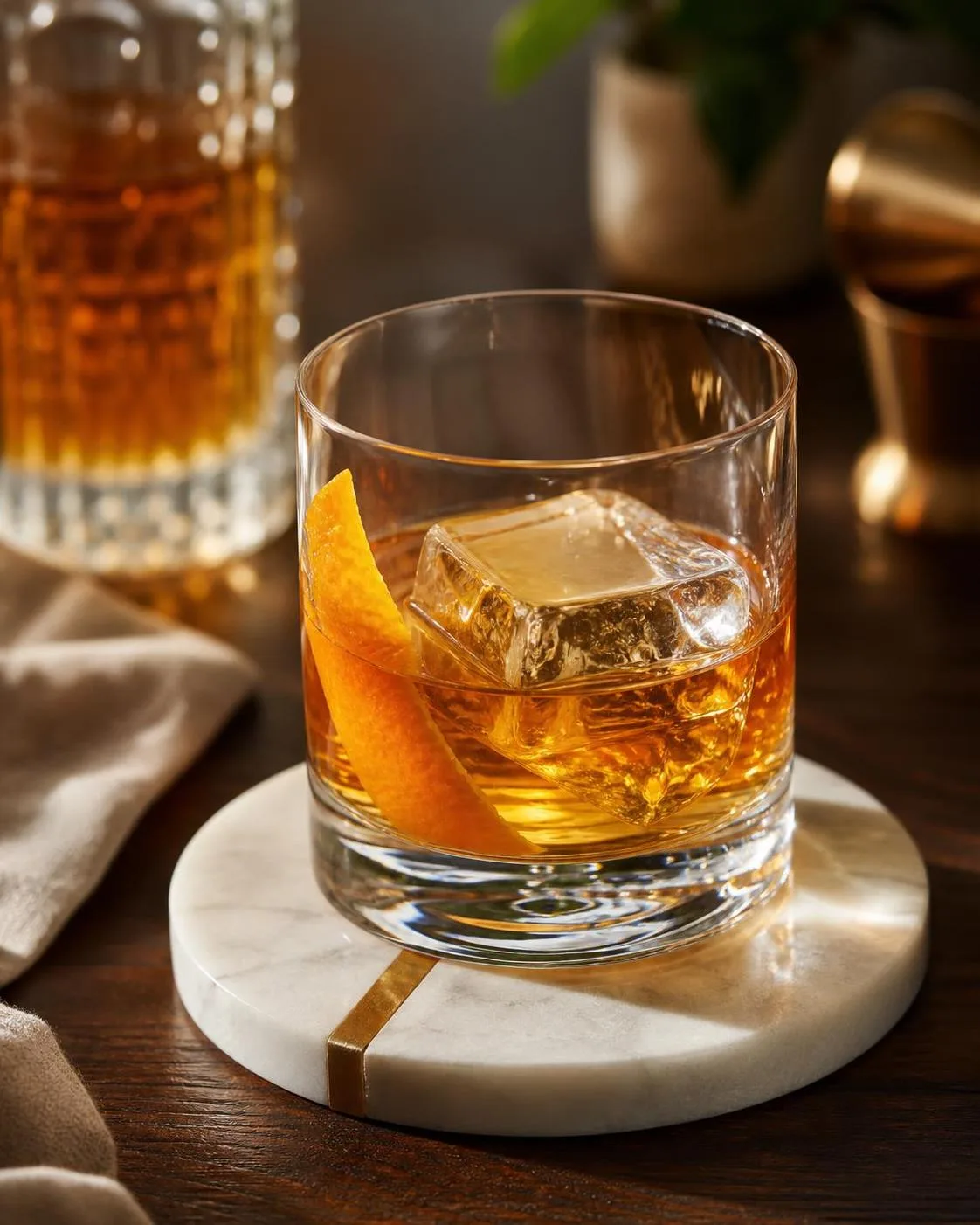
- On ice: dilution happens quickly, so use one large cube if you want to preserve flavor.
- In cocktails: it works best in lighter drinks, but may get muted in spirit-forward recipes like an Old Fashioned.
Price is the other practical number. In many U.S. markets, Basil Hayden Small Batch commonly shelves around the mid-$30s to mid-$40s for 750 ml, though control states and local taxes can move that figure noticeably.
Why Basil Hayden Tastes Light and Spicy
Basil Hayden Small Batch tastes lighter, drier, and spicier than many Kentucky bourbons because it combines a high-rye mash bill with a low bottling proof.
The final glass is shaped most by grain recipe, barrel maturation, proofing water, and batch selection.
Grain recipe and fermentation
Basil Hayden is part of the Jim Beam family and is widely associated with the Old Grand-Dad high-rye bourbon mash bill. That recipe is commonly reported as 63% corn, 27% rye, and 10% malted barley.
| Component | Approximate share | Effect in the glass |
| Corn | 63% | Light caramel, honeyed sweetness, soft body |
| Rye | 27% | Black pepper, baking spice, dry finish |
| Malted barley | 10% | Fermentation support, cereal notes, texture |
That 27% rye content is the main reason Basil Hayden reads spicier and leaner than sweeter wheated bourbons. In tasting, expect cinnamon, mint, pepper, citrus peel, and a relatively crisp finish rather than heavy oak or syrupy vanilla.
Proof and dilution
Basil Hayden Small Batch is bottled at 80 proof, or 40% alcohol by volume. That is the legal minimum for bourbon in the United States, and it strongly affects texture, aroma intensity, and perceived heat.
| Bourbon factor | Basil Hayden Small Batch | Practical result |
| Bottling proof | 80 proof / 40% ABV | Gentle heat, easy sipping, lighter mouthfeel |
| Legal bourbon minimum | 80 proof / 40% ABV | No extra proof cushion for intensity |
| New barrel requirement | Charred new oak | Vanilla, toast, light tannin, caramel color |
Because it is proofed down more than higher-strength bourbons, some oak and spice compounds feel softer. This makes Basil Hayden approachable neat, but it can become muted in cocktails with heavy citrus, sugar, or bitters.
Barrel aging and warehouse conditions
Bourbon must age in charred new oak containers, but Basil Hayden Small Batch does not carry a current age statement. Older labels carried an 8-year statement; today, the bottle relies on batch consistency rather than a guaranteed stated age.
- Higher warehouse floors: typically experience warmer swings, accelerating evaporation and oak extraction.
- Lower floors: tend to mature more slowly, often preserving lighter grain and fruit notes.
- Charred oak: contributes vanillin, caramelized sugars, toast, clove, and drying tannin.
- Batching: multiple barrels are combined to keep the Basil Hayden profile consistent from release to release.
The best result comes from treating it as a delicate high-rye bourbon. Use a tulip glass, pour 1.5 to 2 ounces, and taste at room temperature before adding ice.
A few drops of water can open citrus and spice without overwhelming the 80-proof structure.
How Basil Hayden Label Terms Verify It
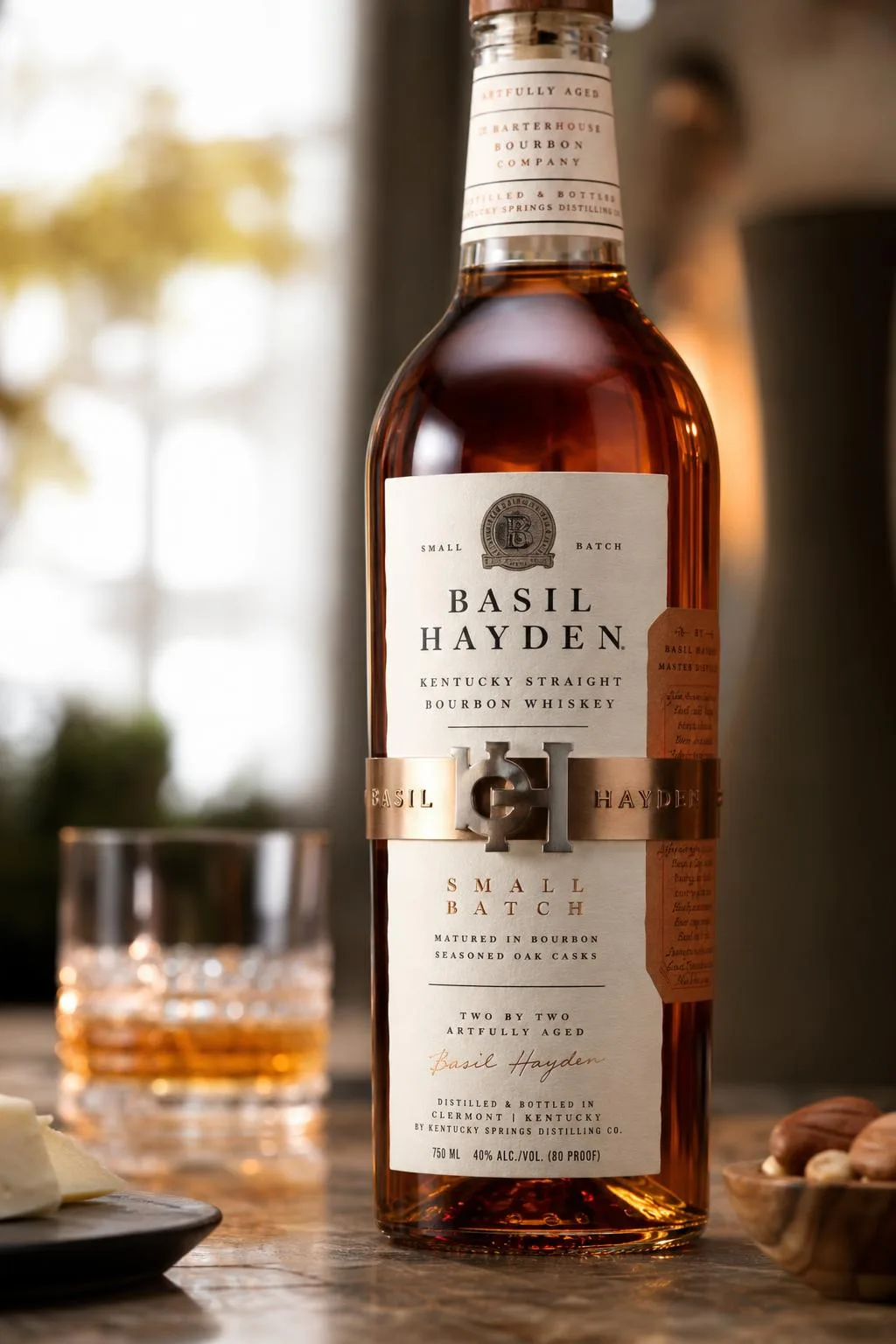
Basil Hayden Small Batch is verified first by its legally controlled label terms: “Kentucky Straight Bourbon Whiskey,” “small batch,” and its stated bottling proof.
The most reliable checks are the bottle label, the TTB-approved COLA record, and U.S. bourbon identity standards.
Regulatory measurements on the label
The proof statement is the easiest measurement to verify at home or in trade records. Basil Hayden Small Batch is bottled at its long-running lower-proof style, which is part of the brand’s lighter-bodied profile.
| Measured item | Basil Hayden Small Batch | How to verify |
| Alcohol by volume | 40% ABV | Front or back label; TTB COLA image |
| U.S. proof | 80 proof | Proof equals ABV multiplied by 2 |
| Whiskey type | Kentucky Straight Bourbon Whiskey | Label class/type statement |
| Minimum bourbon bottling strength | 40% ABV | 27 CFR §5.143 bourbon standard |
For bourbon, federal rules require the whiskey to be made in the United States from a mash of at least majority corn, distilled below the maximum allowed bourbon proof.
And aged in new charred oak containers. “Straight” bourbon also carries aging requirements under federal standards.
| Legal requirement | Federal standard | Relevance to Basil Hayden |
| Corn in mash | At least 51% | Required for any bourbon label claim |
| Distillation proof | No more than 160 proof | Part of bourbon identity standard |
| Barrel entry proof | No more than 125 proof | Required before aging in new charred oak |
| Bottling proof | At least 80 proof | Basil Hayden meets this at 80 proof |
Age and “straight bourbon” verification
Basil Hayden Small Batch does not carry a front-label age statement in its standard U.S. form. Because it is labeled “straight bourbon,” federal labeling rules matter: straight bourbon under four years old must disclose its age.
That means the absence of an age statement is a meaningful verification point, not just packaging design.
It indicates the whiskey is not required to disclose youth under the straight whiskey age-statement rule, while the exact blend age remains undisclosed.
Producer and batch checks
Authenticity is usually verified through the producer line and packaging controls. Current bottles are associated with James B.
Beam Distilling Co. in Kentucky, part of the Beam Suntory portfolio, and should show consistent labeling, fill level, closure, and tax-compliant warnings.
- Check the COLA: Search the TTB public COLA database for the brand name and label images.
- Check proof consistency: Standard Basil Hayden Small Batch should read 40% ABV and 80 proof.
- Check the class statement: The bottle should say Kentucky Straight Bourbon Whiskey.
- Check the age disclosure: A missing age statement is consistent with a straight bourbon not required to state an age under federal rules.
How Basil Hayden Compares by Proof
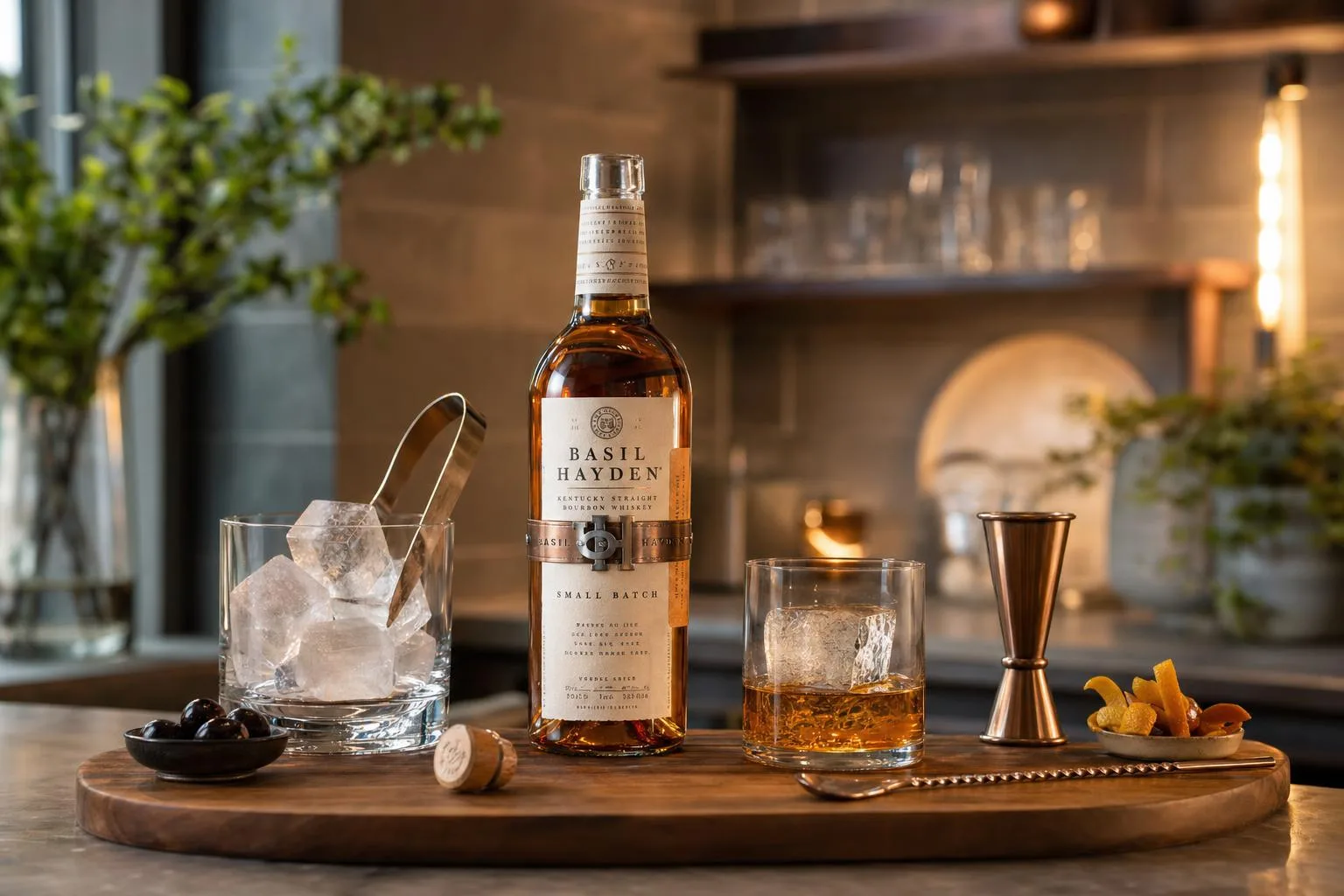
Basil Hayden Small Batch is one of the lightest mainstream Kentucky straight bourbons by proof: 80 proof, or 40% ABV. That matters more than the “small batch” label, because proof drives body, finish length, and cocktail performance.
Its closest shelf competitors usually deliver more alcohol, more oak, or a different grain profile at a similar 750 ml price.
Basil Hayden’s advantage is approachability: low heat, dry spice, and an easy pour for drinkers who find 90–100 proof bourbons too forceful.
| Bourbon | Proof / ABV | Style point | Typical US 750 ml price |
| Basil Hayden Small Batch | 80 / 40% | High-rye Beam bourbon; light body | $40–$50 |
| Buffalo Trace Bourbon | 90 / 45% | More caramel and fruit; fuller mid-palate | $25–$35 |
| Maker’s Mark | 90 / 45% | Wheated bourbon; softer, rounder sweetness | $25–$35 |
| Four Roses Small Batch | 90 / 45% | Rye spice plus red fruit; more aromatic | $35–$45 |
| Woodford Reserve Bourbon | 90.4 / 45.2% | Toasted oak, cocoa, orange peel | $35–$45 |
| Knob Creek 9 Year | 100 / 50% | Age-stated, oakier, much bigger finish | $35–$45 |
Best comparison by flavor
Four Roses Small Batch is the most natural alternative if you like Basil Hayden for spice rather than sweetness. It is also 10 proof points higher, so its clove, red berry, and rye notes feel more concentrated neat or over ice.
Best comparison by smoothness
Maker’s Mark is often the better pick for drinkers who want softness. Its wheat-forward recipe avoids rye’s peppery edge, while the 90 proof bottling gives more texture than Basil Hayden without becoming aggressive.
Best comparison by value
Buffalo Trace usually beats Basil Hayden on price-to-proof. At 90 proof and commonly $10–$20 less per bottle, it offers more weight for Old Fashioneds, Manhattans, and highballs, though availability varies sharply by state.
Best comparison within the Beam family
Knob Creek 9 Year is the stronger sibling in practical terms. It is 100 proof, carries a 9-year age statement, and shows deeper oak, peanut brittle, and char. Basil Hayden is easier; Knob Creek is more bourbon for the money.
- Choose Basil Hayden for low-heat sipping, first pours, or guests who prefer lighter whiskey.
- Choose Four Roses Small Batch for similar spice with more aroma and structure.
- Choose Maker’s Mark for a sweeter, gentler wheated profile.
- Choose Knob Creek 9 Year when proof, age statement, and cocktail strength matter most.
Serving and Drinking Basil Hayden Safely
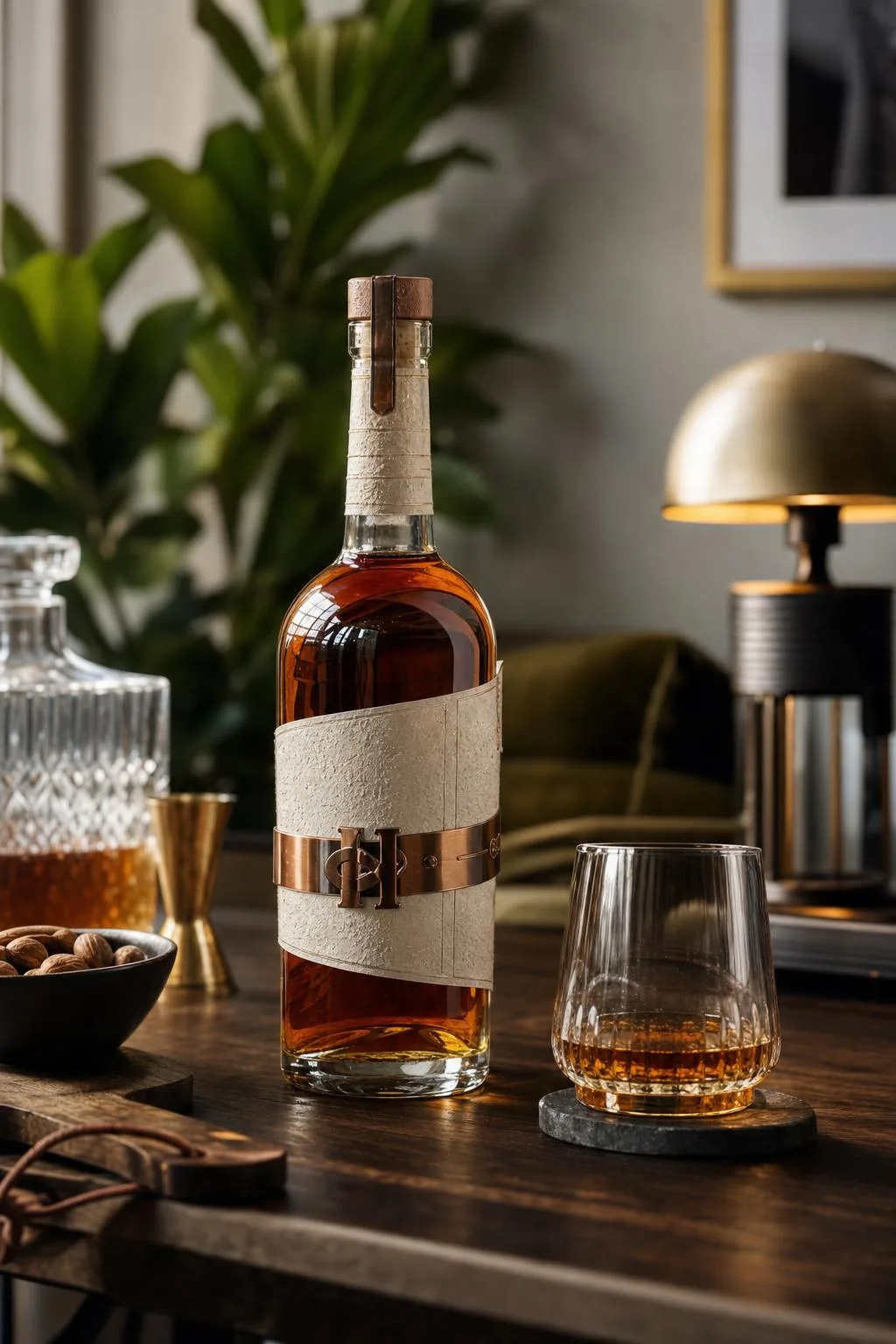
Basil Hayden Small Batch is bottled at 80 proof, or 40% alcohol by volume, which makes serving size easy to calculate but not “light” in health terms.
Treat it like any straight bourbon: measure pours, pace consumption, and avoid driving after drinking.
A standard U.S. drink contains 0.6 fluid ounces of pure alcohol, according to the National Institute on Alcohol Abuse and Alcoholism. For 40% ABV whiskey, that equals a 1.5-ounce pour.
| Pour size | Approx. pure alcohol | Standard drinks |
| 1 ounce | 0.4 fluid ounces | 0.67 |
| 1.5 ounces | 0.6 fluid ounces | 1.0 |
| 2 ounces | 0.8 fluid ounces | 1.33 |
Responsible Serving
- Use a jigger. A “two-finger” pour can vary widely by glass size and often exceeds 2 ounces.
- Serve water alongside neat bourbon. A few drops of water can open aroma without materially lowering alcohol intake.
- Eat before tasting. Food slows alcohol absorption, especially protein- and fat-containing snacks such as cheese, nuts, or charcuterie.
- Plan transportation before the first drink. In all 50 U.S. states, the legal blood alcohol concentration limit for most drivers is 0.08%, and impairment can occur below that.
Health Guidance
The CDC’s dietary guidance defines moderate drinking as up to 1 drink per day for women and up to 2 drinks per day for men. It also states that drinking less is better for health than drinking more.
People who are pregnant, under 21, taking interacting medications, managing alcohol use disorder, or advised by a clinician not to drink should avoid bourbon entirely.
Alcohol can interact with sedatives, opioids, antidepressants, sleep aids, and some allergy medications.
Storage and Practical Handling
- Store Basil Hayden upright, not on its side. High-proof spirits can degrade corks during long contact.
- Keep the bottle away from direct sunlight and heat. A cabinet at normal room temperature is ideal.
- After opening, quality is usually best within 1 to 2 years if the bottle is kept tightly sealed and not nearly empty.
- If less than one-quarter remains, oxidation can dull aroma faster. Transfer to a smaller glass bottle if you plan to keep it for months.
- For tasting, start with 0.5 to 1 ounce in a tulip-shaped glass, then add water gradually if the spice or alcohol feels sharp.
Our Basil Hayden Tasting Process
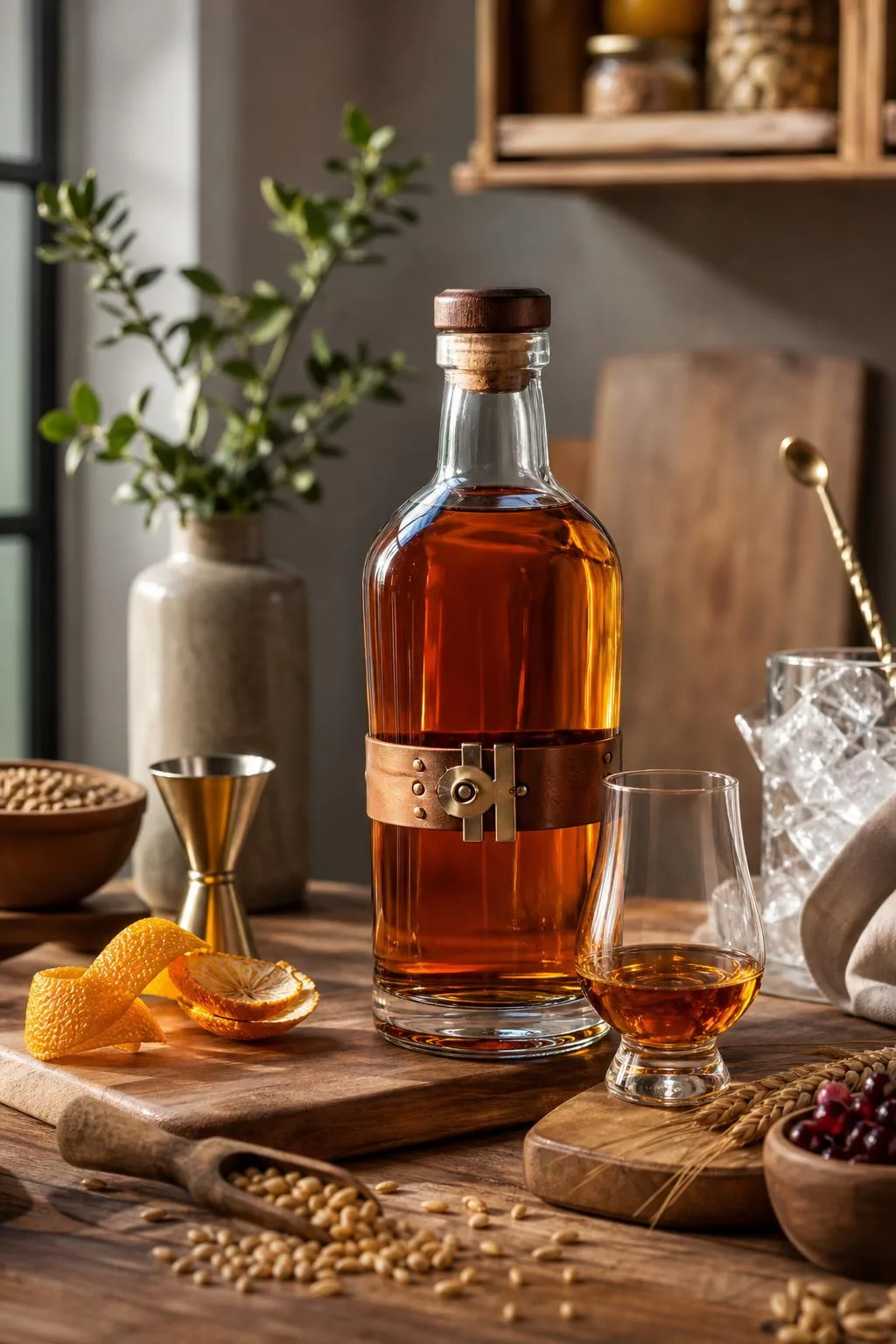
We evaluated Basil Hayden Small Batch over three tasting sessions using two recently purchased 750 ml bottles, both labeled 40% ABV / 80 proof.
We tasted it neat, with measured dilution, and in two bourbon cocktails to see where its lighter proof helps or hurts.
For consistency, we poured 1.5 oz samples into identical Glencairn glasses and rested them for 12 minutes at 68–70°F.
Each trial used fresh pours, and we recorded aroma, palate, finish length, and cocktail performance separately before comparing notes.
| Test | Quantity / Timing | What We Found |
| Neat pour | 1.5 oz, rested 12 minutes | Light-bodied, low ethanol heat, with orange peel, toasted oak, tea, peanut shell, and peppery rye showing early. |
| Water dilution | 3 drops added to 1.5 oz | Softened the pepper and pushed forward honey, vanilla wafer, and cereal grain; the finish shortened noticeably. |
| Large ice cube | 2 oz over one 2-inch cube, 8 minutes | Very easy to sip, but oak and spice thinned quickly as dilution increased. |
| Finish timing | Measured across 6 neat pours | Average perceptible finish was 24–31 seconds, mostly dry oak, black pepper, and faint caramel. |
The main takeaway from our neat tasting was balance, not intensity.
Basil Hayden’s 80 proof kept alcohol sting low, which made it approachable for mixed-experience tasters, but it also limited texture and mid-palate weight compared with higher-proof bourbons.
We tested an Old Fashioned using 2 oz bourbon, 0.25 oz 2:1 demerara syrup, 2 dashes Angostura bitters, and an expressed orange peel. The drink was polished and aromatic, but the whiskey’s oak and rye spice sat behind the sugar and bitters.
In a Manhattan-style build, we used 2 oz Basil Hayden, 1 oz Carpano Antica, and 2 dashes Angostura. That was less successful: the vermouth dominated after 5 minutes, leaving the bourbon mostly as a soft vanilla-and-grain base.
- Best use we found: neat or on one large cube for drinkers who prefer lighter bourbon.
- Best cocktail fit: a restrained Old Fashioned with less sweetener than usual.
- Weak point: limited concentration; dilution and bold modifiers can flatten it fast.
- Serving note: we preferred a 1.5–2 oz neat pour rested at least 10 minutes.
Our team would classify Basil Hayden Small Batch as a gentle, high-rye bourbon for low-proof sipping rather than a bottle for proof-driven enthusiasts. Its strengths are accessibility, clean spice, and minimal burn; its tradeoff is depth.
Common Misunderstandings About Basil Hayden
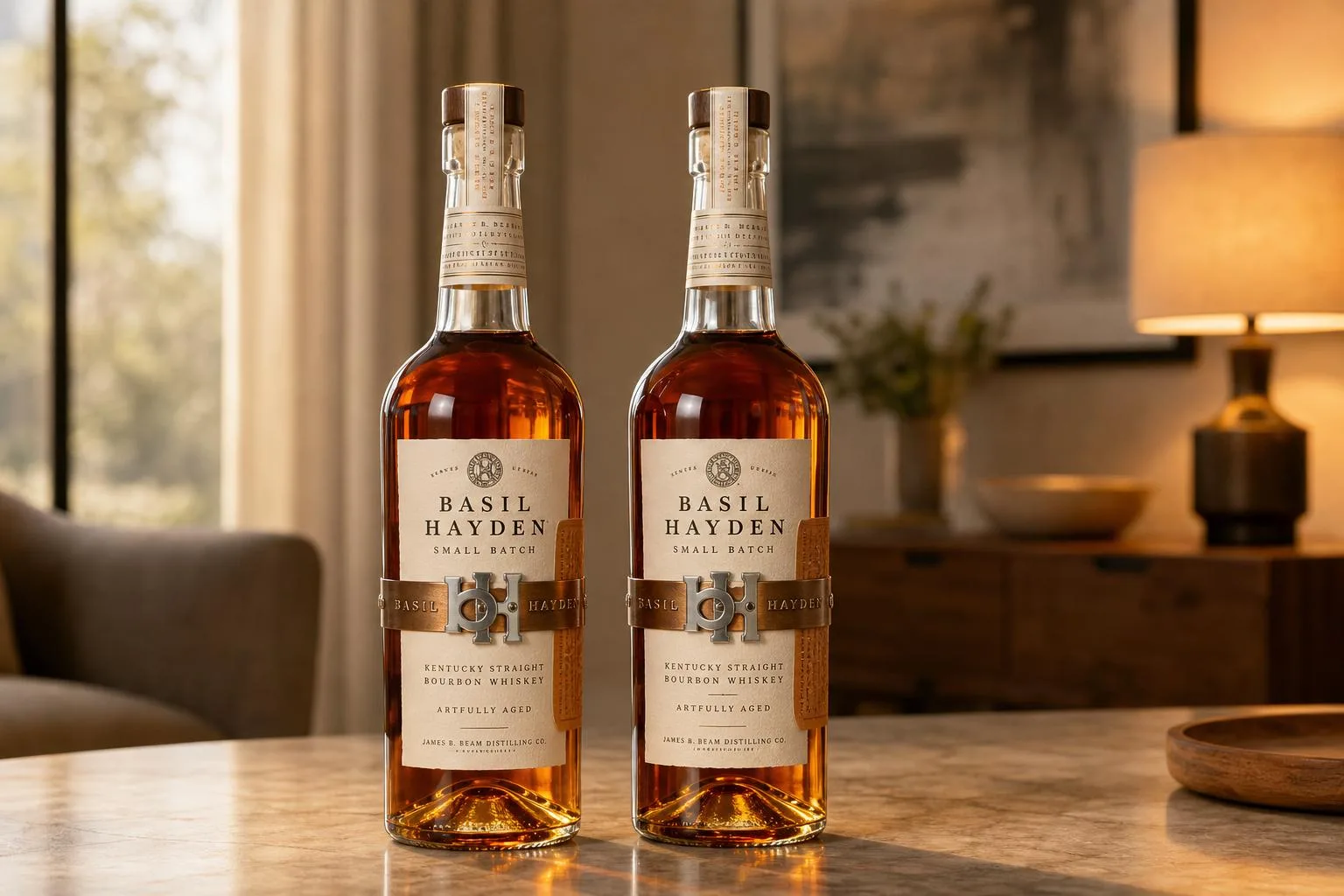
Basil Hayden Small Batch is often misunderstood because it is lighter in proof and positioned as an approachable premium bourbon.
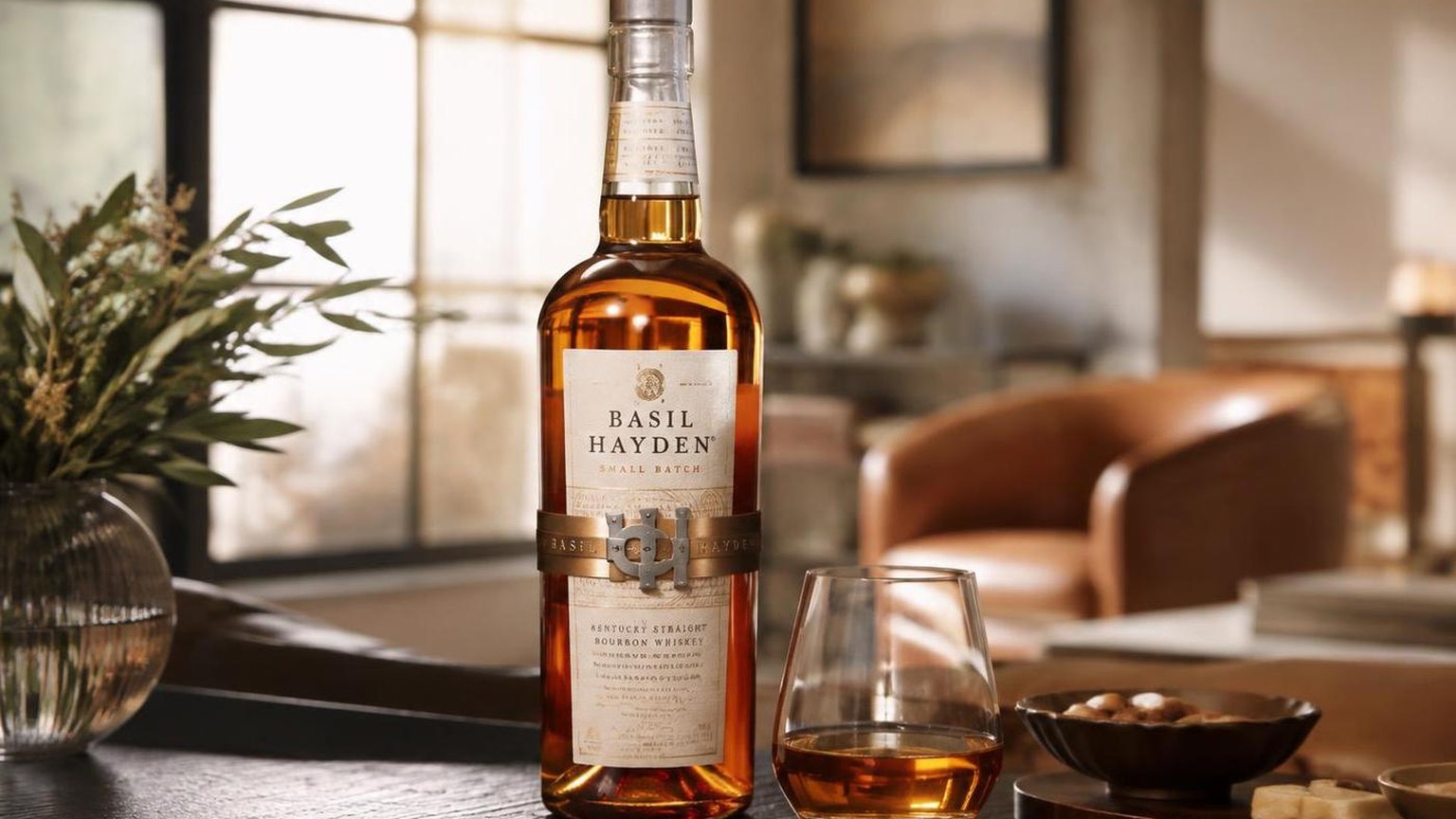
The biggest mistakes come from assuming “small batch,” “high rye,” or the Basil Hayden name tells you more than the label actually guarantees.
Here are the myths worth clearing up before you buy, pour, or recommend it.
Myth: Basil Hayden is weak because it is 80 proof
It is 80 proof, or 40% ABV, which is the legal minimum for bourbon in the United States. That does not make it “not bourbon”; it simply means it is diluted to a lower bottling strength than many enthusiast bottles.
| Whiskey | Proof | ABV |
| Basil Hayden Small Batch | 80 | 40% |
| Knob Creek 9 Year | 100 | 50% |
| Booker’s Bourbon | Usually about 120-130 | About 60-65% |
The lower proof is intentional. Basil Hayden is built for a lighter profile: more tea, spice, citrus peel, and gentle oak than dense caramel, heat, or barrel char.
Myth: “Small batch” has a fixed legal meaning
“Small batch” is not defined by federal bourbon regulations. It does not legally require a specific number of barrels, a certain age, or a minimum proof. For Basil Hayden, it is a brand style, not a regulated category.
- Bourbon rules: at least 51% corn, new charred oak containers, distilled at no more than 160 proof, entered into barrel at no more than 125 proof.
- Straight bourbon rule: at least 2 years old; if under 4 years, an age statement is required.
- Basil Hayden label: no age statement, so it is at least 4 years old if labeled straight bourbon.
Myth: High-rye bourbon means rye whiskey
Basil Hayden is commonly described as a high-rye bourbon, but it is still bourbon. The mash bill must remain at least 51% corn. Rye is a secondary grain used to add pepper, baking spice, and a drier finish.
Myth: It should taste like Old Grand-Dad
Basil Hayden and Old Grand-Dad are both tied to the Beam family’s high-rye bourbon heritage and the historical figure Meredith Basil Hayden Sr. That does not mean they taste identical.
Proof, blending targets, age selection, and barrel choice change the final whiskey.
Myth: It is only for beginners
Basil Hayden is beginner-friendly, but that is not an insult. Its low alcohol burn makes it useful for neat pours, lighter Old Fashioneds, highballs, and tasting flights where you want spice without palate fatigue.
Common Questions
What is Basil Hayden Small Batch bourbon?
Basil Hayden Small Batch is an 80-proof Kentucky straight bourbon made by the James B. Beam Distilling Co. in Clermont and Frankfort, Kentucky.
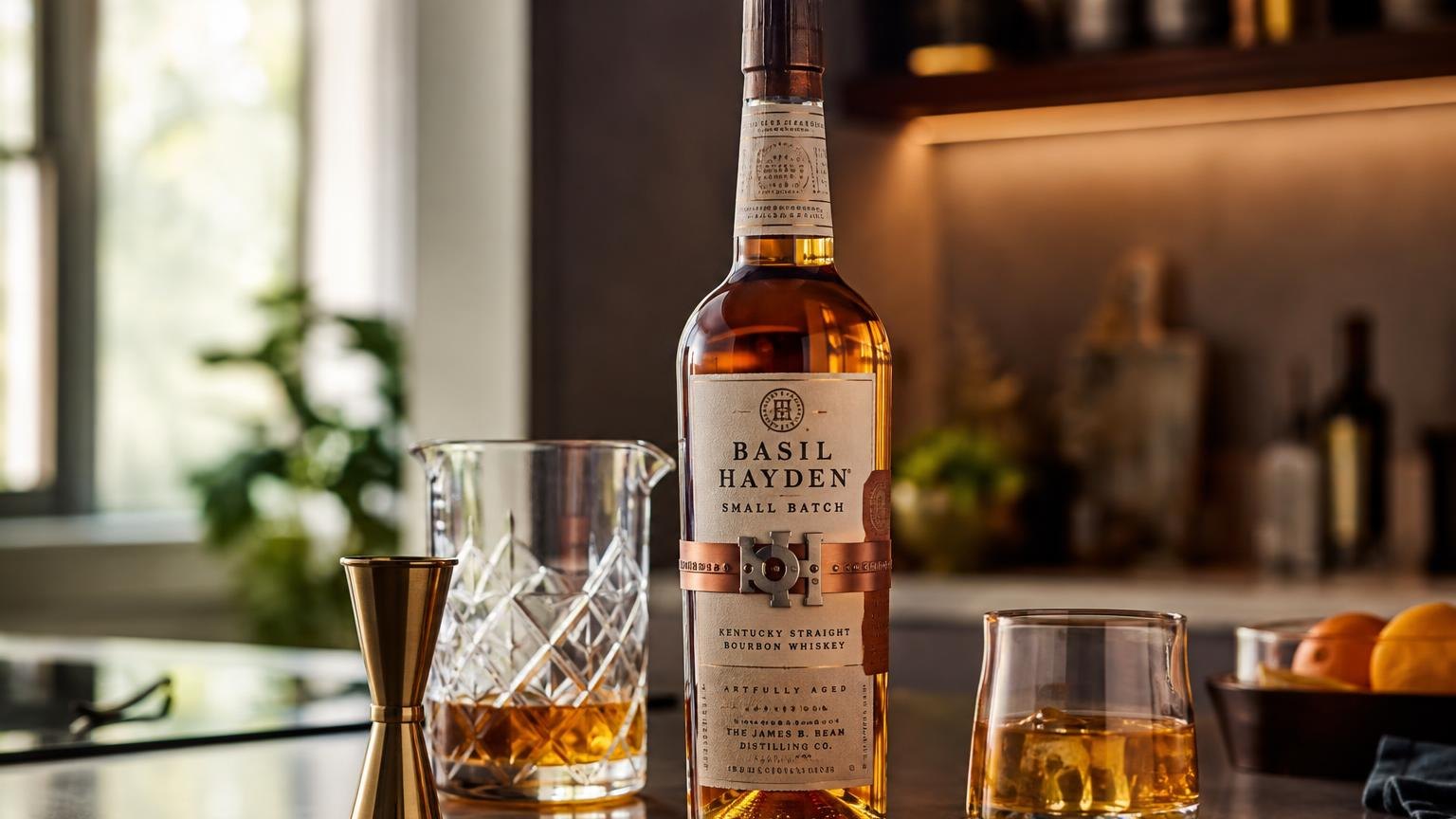
It is part of the Jim Beam family and is positioned as a lighter-bodied, high-rye bourbon with a softer profile than many 90- to 100-proof bourbons.
What does Basil Hayden Small Batch taste like?
Expect gentle caramel, vanilla, toasted oak, light baking spice, and a dry rye-pepper finish. Because it is bottled at 40% ABV, the texture is lighter and less oily than higher-proof bourbons, making the spice noticeable but not aggressive.
What is the mash bill for Basil Hayden Small Batch?
Basil Hayden is widely reported as using Jim Beam’s high-rye bourbon mash bill: 63% corn, 27% rye, and 10% malted barley.
That 27% rye content is high for a Kentucky bourbon and explains the drier, spicier edge compared with sweeter, lower-rye bourbon styles.
Does Basil Hayden Small Batch have an age statement?
No, current Basil Hayden Small Batch does not carry an age statement, which means it must be at least 4 years old under U.S. labeling rules for straight bourbon if no younger age is disclosed.
Earlier Basil Hayden bottlings carried an 8-year age statement, but that was removed in the 2010s.
Is Basil Hayden Small Batch good for cocktails or sipping neat?
It works best neat, on a large cube, or in lower-intensity cocktails where its delicate profile will not be buried.
In spirit-forward drinks like an Old Fashioned or Manhattan, use a restrained hand with bitters, vermouth, or sweetener because the 80-proof bourbon can get overshadowed quickly.
What proof is Basil Hayden Small Batch?
Basil Hayden Small Batch is bottled at 80 proof, which equals 40% alcohol by volume.
That makes it one of the lower-proof bourbons in Jim Beam’s Small Batch Collection, alongside higher-proof stablemates such as Knob Creek 9 Year at 100 proof and Booker’s at barrel strength.
Related Reading
- How Many Oz Is 15 Ml? The Ultimate, Experience-Based Guide You Can Trust
- How Many Bottles In A Gallon?
- 11 Essential Facts About How Much Is 12 Ounce (2026 Complete Conversion, Daily Use, Food & Beverage Guide)
- What Is Single Malt Whisky?
- How Many Cinder Blocks On A Pallet? Find Out Now
- How Many Oz Is 450 Ml?
- Patron Silver Price Guide – What Are The Prices Of Patron Silver Tequila?
- All Blog Guides