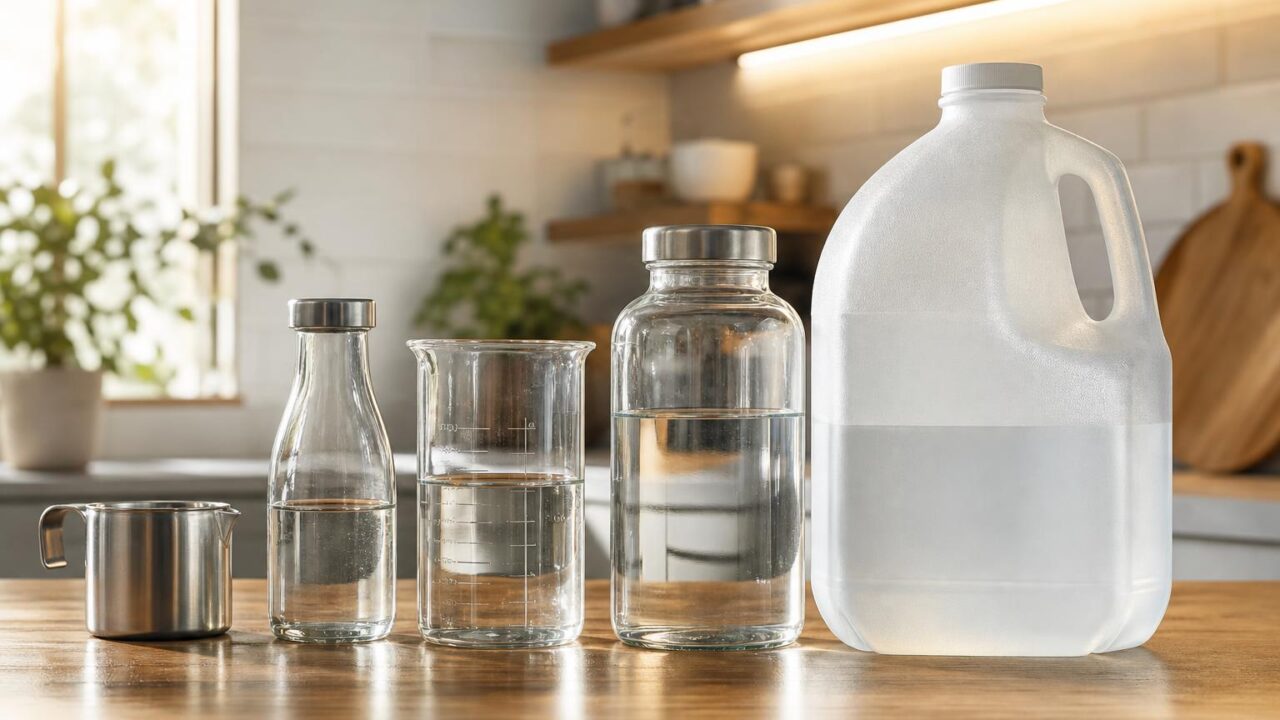
How Many Liters Are in A Gallon is 3.785411784 liters in the U.S. liquid gallon. That is the gallon used for most American recipes, fuel sales, and packaged-liquid labels, so it is usually the conversion you need in the United States.
The imperial gallon used in the United Kingdom and some Commonwealth contexts is larger: 4.54609 liters.
This article separates U.S. liquid gallons, U.S. dry gallons, and imperial gallons so you can convert accurately without mixing measurement systems.
U.S. and Imperial Gallon Sizes
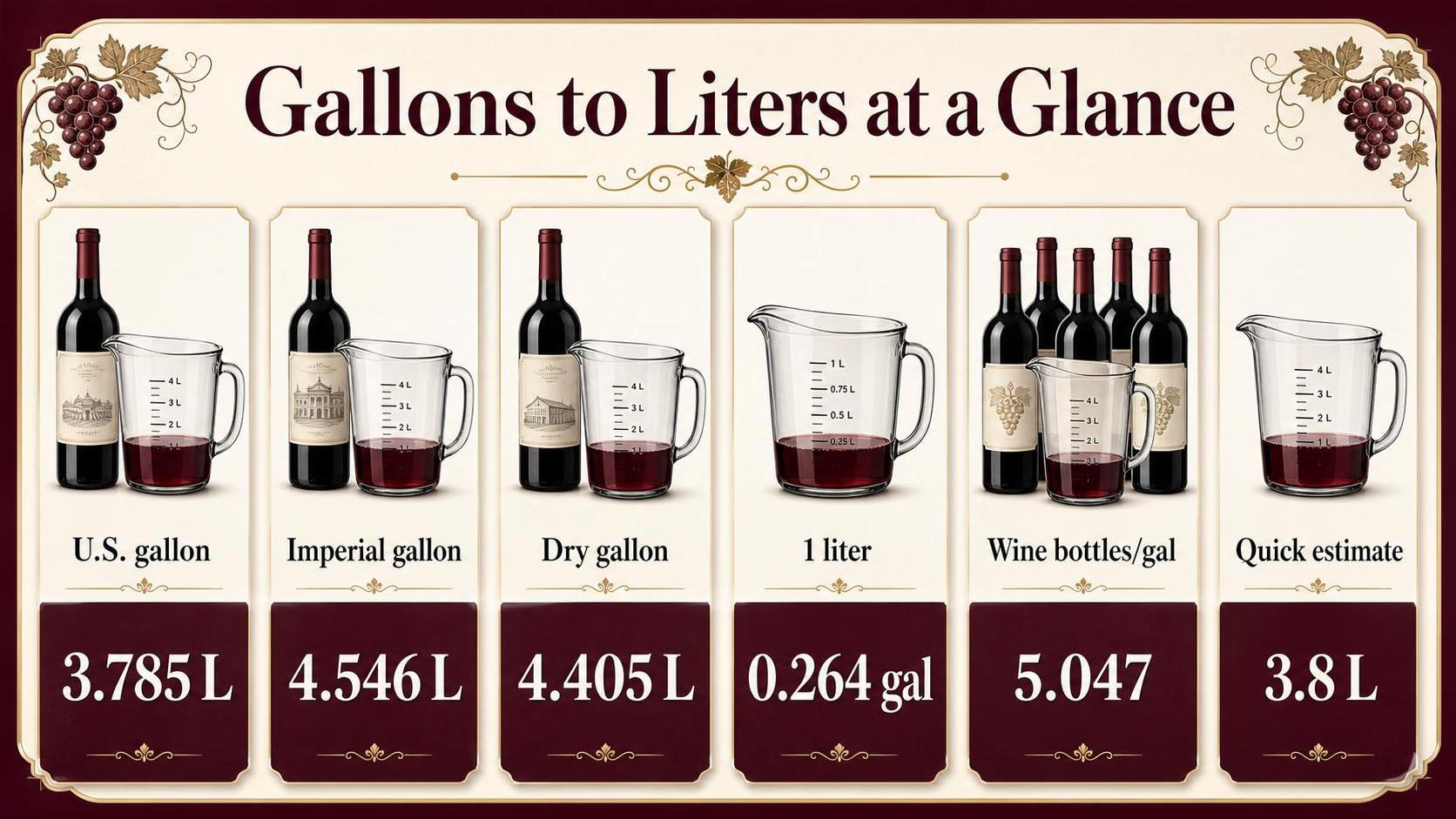
In the United States, “a gallon” almost always means the U.S. liquid gallon. That gallon contains exactly 3.785411784 liters, because it is legally defined as 231 cubic inches.
The important catch: not every gallon is the same. The U.K. imperial gallon is larger, and the rarely used U.S. dry gallon is different again.
| Gallon type | Liters | Where it matters |
| U.S. liquid gallon | 3.785411784 L | U.S. milk, gasoline, beverages, recipes |
| Imperial gallon | 4.54609 L | United Kingdom and some Commonwealth references |
| U.S. dry gallon | 4.40488377086 L | Older dry-volume measures; uncommon in daily use |
For everyday kitchen or bar math, round the U.S. gallon to 3.785 liters. If you need a fast mental estimate, 1 gallon is about 3.8 liters, and 1 liter is about 0.264 U.S. gallons.
| Conversion | Exact or practical value |
| 1 U.S. liquid gallon to liters | 3.785411784 L |
| 1 liter to U.S. liquid gallons | 0.2641720524 gal |
| 1 U.S. liquid quart to liters | 0.946352946 L |
| 1 U.S. liquid pint to liters | 0.473176473 L |
| 1 U.S. fluid ounce to milliliters | 29.5735295625 mL |
Wine is usually labeled in milliliters or liters, not gallons. A standard wine bottle is 750 mL, which equals 0.75 liters, so one U.S. gallon holds a little more than five standard bottles.
| Wine volume comparison | Amount |
| 1 standard wine bottle | 750 mL, or 0.75 L |
| 1 U.S. gallon | 3,785.411784 mL |
| Standard 750 mL bottles in 1 U.S. gallon | 5.047 bottles |
| Five 750 mL bottles | 3.75 L |
| Difference between five bottles and 1 U.S. gallon | 35.411784 mL |
The imperial gallon is about 20% larger than the U.S. liquid gallon. That difference is big enough to affect fuel economy, beverage production, and any recipe scaled by the gallon.
- Use 3.785411784 liters when the source is U.S.-based and says “gallon.”
- Use 4.54609 liters when the source specifically says “imperial gallon.”
- Use 3.8 liters for quick estimates when exact measuring is not required.
Which Gallon Changes the Answer
The result depends mainly on which “gallon” you mean. In the United States, a gallon usually means the U.S. liquid gallon, but the U.K. and some Commonwealth contexts use the larger imperial gallon.
For wine, spirits, beer, water, and recipe work in the U.S., use 1 U.S. liquid gallon = 3.785411784 liters. That definition is exact under U.S. customary measurement references used by NIST.
Type of gallon
| Gallon type | Liters | Where it matters |
| U.S. liquid gallon | 3.785411784 L | U.S. beverages, cooking, fuel, retail liquids |
| Imperial gallon | 4.54609 L | United Kingdom, some Canadian historical or specialty references |
| U.S. dry gallon | 4.40488377086 L | Rare; dry-volume commodities, not normal beverage measurement |
The imperial gallon is about 20.0% larger than the U.S. liquid gallon. That difference is large enough to change purchasing, recipe scaling, and inventory counts if the gallon type is not stated.
Rounding and precision
Many everyday conversions round 1 U.S. gallon to 3.79 L or 3.8 L. That is fine for casual estimates, but less ideal for batching cocktails, calculating tax-relevant beverage volume, or reconciling inventory.
| Conversion used | Liters for 1 U.S. gallon | Error versus exact value |
| Exact | 3.785411784 L | 0 L |
| Rounded to 3.79 | 3.79 L | +0.004588216 L |
| Rounded to 3.8 | 3.8 L | +0.014588216 L |
That 3.8 L shortcut overstates a gallon by about 14.6 mL. Across 100 gallons, the difference becomes about 1.46 L, nearly two standard 750 mL wine bottles.
Liquid temperature and commercial labeling
Liquids expand and contract with temperature, so high-accuracy trade measurement may specify a reference temperature.
In the U.S., wine and distilled spirits labeling is generally stated by metric net contents, commonly 750 mL for a standard wine bottle.
- Use U.S. liquid gallons for American recipes, bar prep, keg yield estimates, and most U.S. consumer questions.
- Use imperial gallons only when the source is British, clearly imperial, or tied to older Commonwealth measures.
- Avoid dry gallons for beverages; they are not the practical unit for wine, beer, cocktails, or water.
- Keep more digits when scaling large volumes; rounding errors grow with every gallon converted.
Legal Definitions Fix the Conversion
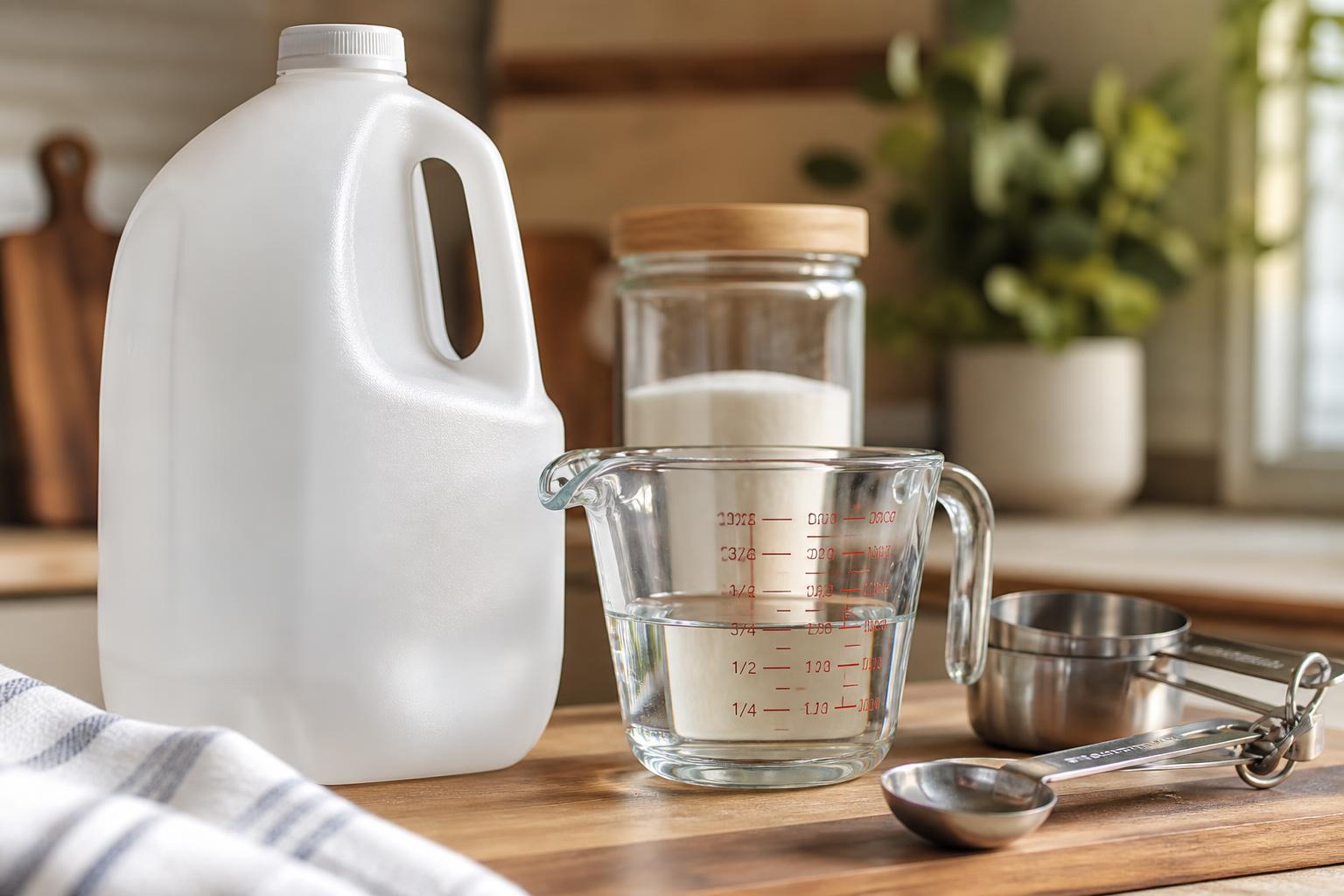
A gallon-to-liter conversion is not estimated; it is fixed by legal definitions. In the United States, 1 U.S. liquid gallon is exactly 231 cubic inches, which equals exactly 3.785411784 liters.
The liter is tied to the metric system as a volume of 1 cubic decimeter. Because 1 inch is legally defined as exactly 2.54 centimeters, the U.S. gallon can be verified by length measurements alone.
Official Volume Definitions
| Unit | Legal definition | Equivalent in liters |
| U.S. liquid gallon | 231 cubic inches | 3.785411784 L |
| U.S. liquid quart | 1/4 U.S. gallon | 0.946352946 L |
| U.S. fluid ounce | 1/128 U.S. gallon | 0.0295735295625 L |
| Imperial gallon | 4.54609 liters by definition | 4.54609 L |
| Liter | 1 cubic decimeter | 1.000000000 L |
The arithmetic for the U.S. gallon is direct. Since 1 inch equals exactly 2.54 centimeters, 1 cubic inch equals 16.387064 cubic centimeters. Multiplying 231 by 16.387064 gives 3785.411784 cubic centimeters.
Because 1 liter equals 1000 cubic centimeters, 3785.411784 cubic centimeters becomes 3.785411784 liters. This is why reputable U.S. references, including NIST conversion tables, use that exact value.
How It Is Verified in Practice
- Dimensional verification: A calibrated container can be checked by measuring internal length, width, and height, then calculating cubic inches or cubic centimeters.
- Gravimetric verification: Laboratories often weigh distilled water delivered by a vessel, then correct for water temperature, air buoyancy, and density.
- Temperature control: Liquid volume changes with temperature. Legal metrology work commonly specifies reference temperatures, such as 20°C, to keep measurements consistent.
- Traceable instruments: Calibrations are tied to national standards maintained in the United States by NIST, so a gallon measurement can be traced back to recognized SI units.
For kitchen, beverage, or wine-service use, the key verified number is simple: 1 U.S. gallon equals 3.785411784 liters. Rounded for practical pouring, that is usually stated as 3.785 liters or 3.79 liters.
U.S. Versus Imperial Gallons
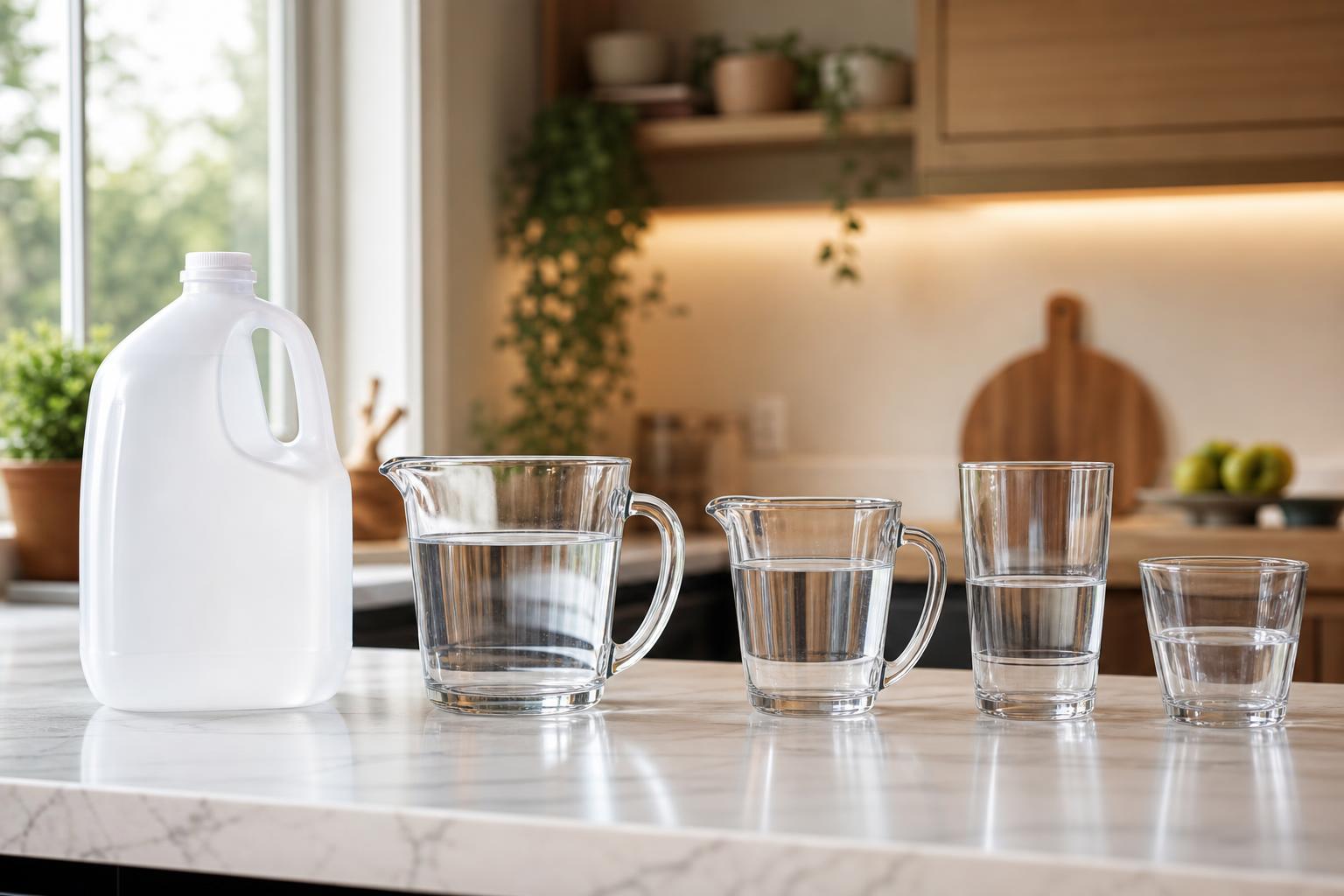
A gallon is not a single universal size: in the United States, 1 U.S. liquid gallon equals exactly 3.785411784 liters. The imperial gallon, still used in some UK and Commonwealth contexts, is larger at exactly 4.54609 liters.
For everyday measuring, the U.S. gallon sits above a 3-liter box of wine and below a 5-liter mini-keg. The differences matter when converting recipes, beverage volumes, fuel economy, or container sizes across U.S. and metric systems.
| Unit or container | Exact or standard volume | Compared with 1 U.S. gallon |
| 1 U.S. liquid gallon | 3.785411784 liters | Baseline |
| 1 imperial gallon | 4.54609 liters | About 20.0% larger than a U.S. gallon |
| 1 liter | 1.000 liter | About 26.4% of a U.S. gallon |
| 750 mL wine bottle | 0.750 liter | About 19.8% of a U.S. gallon |
| 1.5 L magnum wine bottle | 1.500 liters | About 39.6% of a U.S. gallon |
| 3 L box wine | 3.000 liters | About 79.3% of a U.S. gallon |
| 5 L mini-keg or boxed beverage | 5.000 liters | About 132.1% of a U.S. gallon |
| 1 U.S. quart | 0.946352946 liter | Exactly 1/4 U.S. gallon |
| 1 U.S. pint | 0.473176473 liter | Exactly 1/8 U.S. gallon |
The U.S. liquid gallon is legally defined from the cubic inch: 1 gallon equals 231 cubic inches. NIST conversion tables give the exact metric equivalent as 3.785411784 liters, which is why rounded answers such as 3.79 liters are common.
The imperial gallon has a different history and size. It is defined as 4.54609 liters exactly, making it noticeably larger than the U.S. gallon used for milk, water, gasoline, and most American beverage packaging.
- For wine bottles: A U.S. gallon equals about 5.05 standard 750 mL bottles, since 3.785411784 divided by 0.750 equals 5.047.
- For liters: A 4-liter container is slightly more than a U.S. gallon, by about 0.2146 liter, or 214.6 milliliters.
- For quarts: 4 U.S. quarts make exactly 1 U.S. gallon, so each quart is just under 1 liter.
- For pints: 8 U.S. pints make exactly 1 U.S. gallon, useful when scaling punch, sangria, or batch cocktails.
In practical terms, if a label says “1 gallon” in the U.S., use 3.785 liters. If the context is British or imperial measurement, use 4.546 liters instead.
Specify the Gallon for Accuracy
For cooking, beverage service, and travel, the safest answer is to specify which gallon you mean. A U.S. liquid gallon is exactly 3.785411784 liters, while an Imperial gallon is exactly 4.54609 liters.
That difference is about 20%, large enough to affect recipes, sanitizer dilution, hydration planning, and alcohol service calculations. When precision matters, use liters or milliliters rather than “gallons.”.
| Measure | Exact liters | Practical use |
| 1 U.S. liquid gallon | 3.785411784 L | Standard for U.S. food, beverage, and fuel labeling |
| 1 Imperial gallon | 4.54609 L | Used historically in the U.K. and still seen in some Commonwealth contexts |
| 1 liter | 0.264172 U.S. gal | Common for bottled water, wine, spirits, and labelling |
Alcohol and beverage safety
In a bar or tasting-room setting, volume conversions affect responsible service. A standard 750 mL wine bottle contains 0.198 U.S. gallons, and a 5-ounce pour is about 148 mL.
| Beverage amount | Metric equivalent | Approximate U.S. gallons |
| 5 fl oz wine pour | 147.9 mL | 0.039 gal |
| 750 mL wine bottle | 0.75 L | 0.198 gal |
| 1.5 L magnum | 1.5 L | 0.396 gal |
- Label containers clearly: Write “U.S. gal” or “L” on house-made syrups, cleaning solutions, and batch cocktails to avoid concentration errors.
- Do not estimate sanitizer dilution: Food-service sanitizers often require concentrations such as 50–100 ppm chlorine or 150–400 ppm quaternary ammonium, depending on product directions.
- Use a calibrated measuring container: Kitchen pitchers and decorative carafes can be off by several ounces; use marked equipment for batches and compliance-sensitive tasks.
- Convert before scaling recipes: Multiplying a recipe written in Imperial gallons as if it used U.S. gallons can short the liquid by about 760 mL per gallon.
- Check medication and supplement labels: Health products should be measured in milliliters, not kitchen spoons or gallon-based approximations.
Practical rounding
For everyday use, 1 U.S. gallon is commonly rounded to 3.79 liters. For purchasing, inventory, or regulatory work, keep at least three decimals: 1 U.S. gallon equals 3.785 liters.
For quick mental math, 4 liters is slightly more than 1 U.S. gallon. The overage is about 214.6 mL, which is roughly 7.3 U.S. fluid ounces.
Bar Prep Water Fill Verification
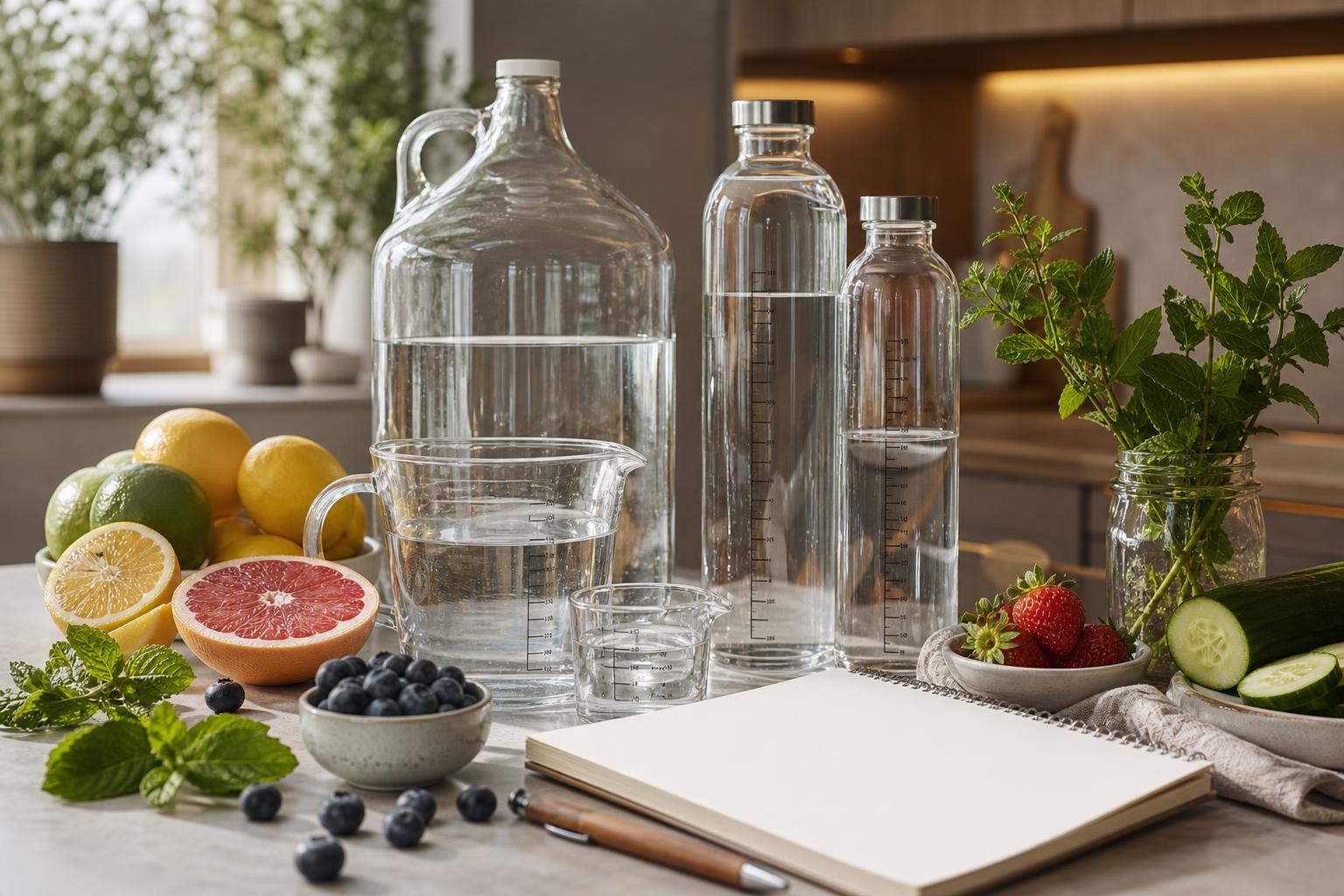
We verified the gallon-to-liter conversion with actual water fills in our bar prep area, not just a calculator. Our team tested U.S. liquid gallons because that is the gallon used on American wine, spirits, and food-service packaging.
We used a 1-gallon HDPE kitchen jug, a 1,000 mL graduated cylinder, a digital scale reading to 0.1 g, and room-temperature filtered water. Each fill was repeated 5 times, then compared with the legal U.S. liquid gallon value: 3.785411784 liters.
| Test item | Measured / reference value | What we found |
| U.S. liquid gallon legal value | 3.785411784 L | This is the exact conversion we used for all comparisons. |
| Our average jug fill | 3.787 L | About 1.6 mL above the exact gallon, within normal kitchen-jug tolerance. |
| Lowest trial | 3.784 L | About 1.4 mL below the exact value. |
| Highest trial | 3.790 L | About 4.6 mL above the exact value. |
| Number of trials | 5 fills | Each was filled to the same molded “1 gal” line and checked twice. |
For the scale check, we weighed water instead of relying only on the jug marking. At about 20°C, water is close to 0.9982 g per mL, so a true U.S. gallon should weigh roughly 3,778.6 g before subtracting container weight.
| Quantity checked | Expected result | Practical takeaway |
| 1 U.S. gallon | 3.785 L | Use 3.785 L for accurate beverage or recipe scaling. |
| 1/2 U.S. gallon | 1.893 L | Close to two 1-liter bottles, but short by 107 mL. |
| 1 quart | 0.946 L | Four U.S. quarts make one U.S. gallon. |
| 1 liter | 0.264 U.S. gal | A liter is a little more than one U.S. quart. |
We also checked how this feels in service. Filling four 750 mL wine bottles gave us exactly 3.000 L, which is still 785 mL short of a U.S. gallon. Five 750 mL bottles reached 3.750 L, only 35 mL short.
- A U.S. liquid gallon is 3.785411784 liters.
- For bar prep, 3.785 L is precise enough for batching.
- For quick mental math, 1 gallon ≈ 3.8 liters.
- Do not use the imperial gallon unless measuring U.K. or Canadian historical references; it is 4.54609 liters.
Our main finding: the printed “1 gallon” line on consumer containers can vary by several milliliters, but the conversion itself does not.
For accurate work, especially batching cocktails or converting inventory, we use 3.785411784 liters per U.S. gallon.
The Most Common Gallon Mistake
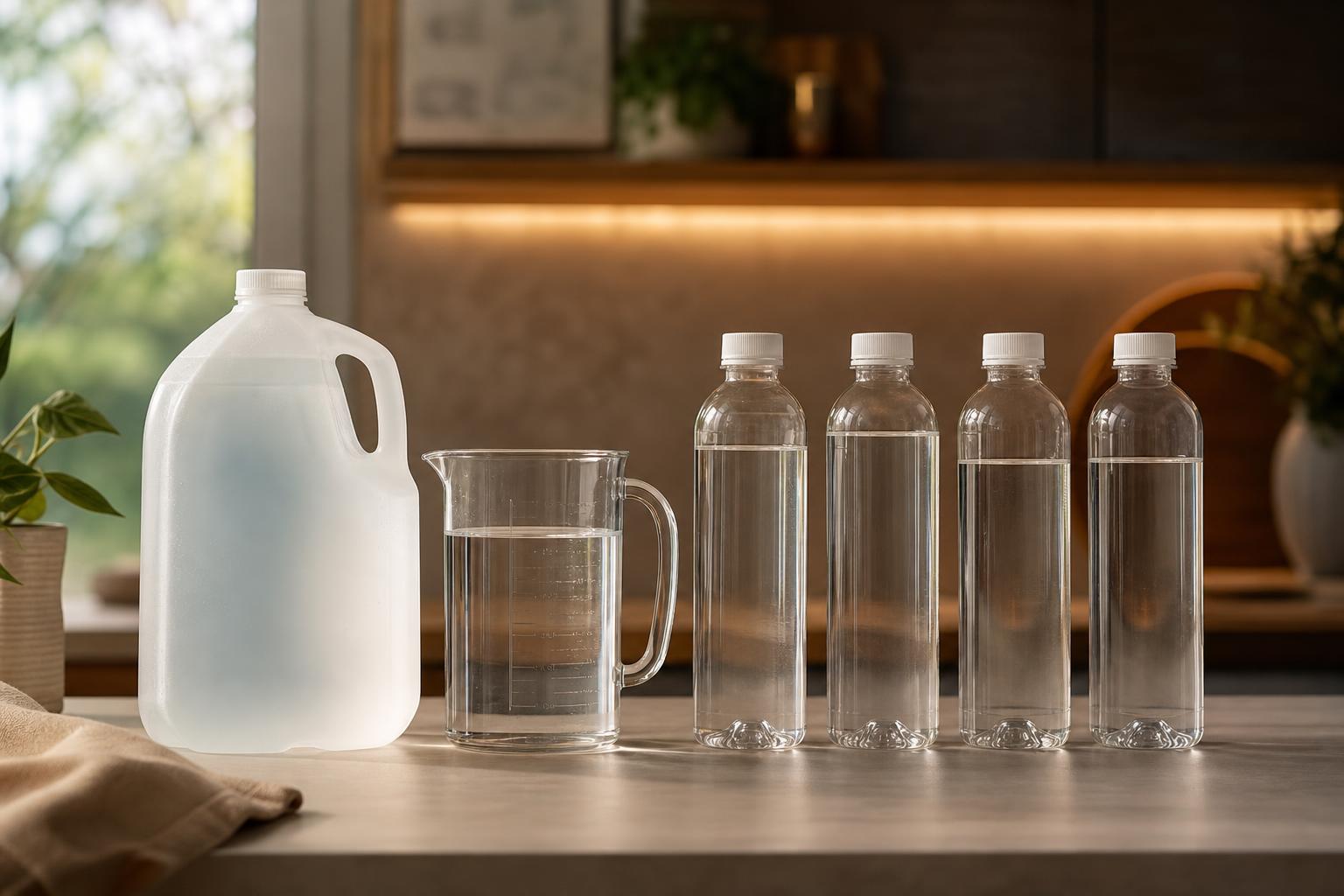
The biggest mistake is asking “how many liters are in a gallon” without naming the gallon.
In U.S. food, beverage, and fuel contexts, “gallon” usually means the U.S. liquid gallon, not the Imperial gallon used historically in the U.K. and still seen in some Commonwealth references.
- Myth: one gallon is always 4 liters. A U.S. liquid gallon is less than 4 liters, while an Imperial gallon is more than 4 liters. Rounding both to 4 liters can create noticeable errors in recipes, beverage costing, and inventory.
- Myth: U.S. and Imperial gallons are close enough. They differ by about 20%. That is not a small rounding issue when scaling cocktails, comparing fuel economy, or converting cellar and bar storage volumes.
- Myth: “gallon” on any label means the same thing worldwide. In the United States, the standard liquid gallon is based on 231 cubic inches. The Imperial gallon is legally defined as exactly 4.54609 liters.
| Gallon type | Liters | Where you may see it |
| U.S. liquid gallon | 3.785411784 L | U.S. beverages, milk, water, gasoline |
| Imperial gallon | 4.54609 L | U.K. and some Commonwealth fuel or legacy measures |
| U.S. dry gallon | about 4.404884 L | Older dry-volume contexts, rarely used in modern retail |
Another common error is converting ounces first without checking which ounce is being used. A U.S. liquid gallon contains 128 U.S. fluid ounces, while an Imperial gallon contains 160 Imperial fluid ounces.
The ounce names sound similar, but the systems are different.
| Measure | U.S. liquid system | Imperial system |
| Fluid ounces per gallon | 128 U.S. fl oz | 160 Imperial fl oz |
| Liters per gallon | 3.785411784 L | 4.54609 L |
- Myth: rounding never matters. Rounding one U.S. gallon to 3.8 liters is fine for quick estimates. Rounding it to 4 liters overstates volume by about 5.7%.
- Myth: a liter is “basically a quart.” One U.S. liquid quart is 0.946352946 liters, so a liter is about 5.7% larger than a quart.
- Myth: wine bottle math uses gallons. Standard wine bottles are metric. A typical bottle is 750 mL, so one U.S. gallon equals about 5.05 standard wine bottles.
For U.S. use, the safest practical answer is: one gallon equals 3.785411784 liters. If the source is British, Canadian, or historical, verify whether it means the Imperial gallon before converting.
Frequently Asked Questions
How many liters are in a U.S. gallon?
One U.S. liquid gallon equals exactly 3.785411784 liters. For everyday use, it is usually rounded to 3.785 liters or 3.79 liters.
How many liters are in an imperial gallon?
One imperial gallon, used in the U.K. and some Commonwealth contexts, equals exactly 4.54609 liters. This is about 20% larger than a U.S. liquid gallon, so the two should not be treated as interchangeable.
How many 750 ml wine bottles are in a U.S. gallon?
A standard wine bottle is 750 ml, or 0.75 liters. Since a U.S. gallon is 3.785411784 liters, one gallon equals about 5.05 standard wine bottles.
How do you convert gallons to liters?
To convert U.S. gallons to liters, multiply the number of gallons by 3.785411784. For example, 2 U.S. gallons equals 7.570823568 liters, which is commonly rounded to 7.57 liters.
Is 4 liters the same as 1 gallon?
No, 4 liters is slightly more than 1 U.S. gallon. Four liters equals about 1.057 U.S. gallons, while 1 U.S. gallon equals about 3.785 liters.
Related Reading
- How Many Ounces Is 7.5 Ml?
- How Much Is A Kilogram In Grams?
- How Many Gallons Is 73 Oz?
- What Is A Wine Cooler? Benefits, Types & How to Choose (2026)
- How To Use A Wine Opener?
- How Many 8 Oz Glasses In A Gallon?
- How Many Oz In A Half Gallon? – 2026
- All Blog Guides
- NIST Handbook 44, Appendix C (2024)
- NIST Special Publication 811, Appendix B (2008)
- TTB / eCFR 27 CFR § 1.10 Definitions (2024)
- U.S. Code 15 USC Chapter 6, Weights and Measures (2024)
- Encyclopaedia Britannica, “Gallon” (2024)
- Oxford Reference, “Gallon” (2024)
- Aqua-Calc Engineering Unit Conversions, “US liquid gallon to liter” (2024)