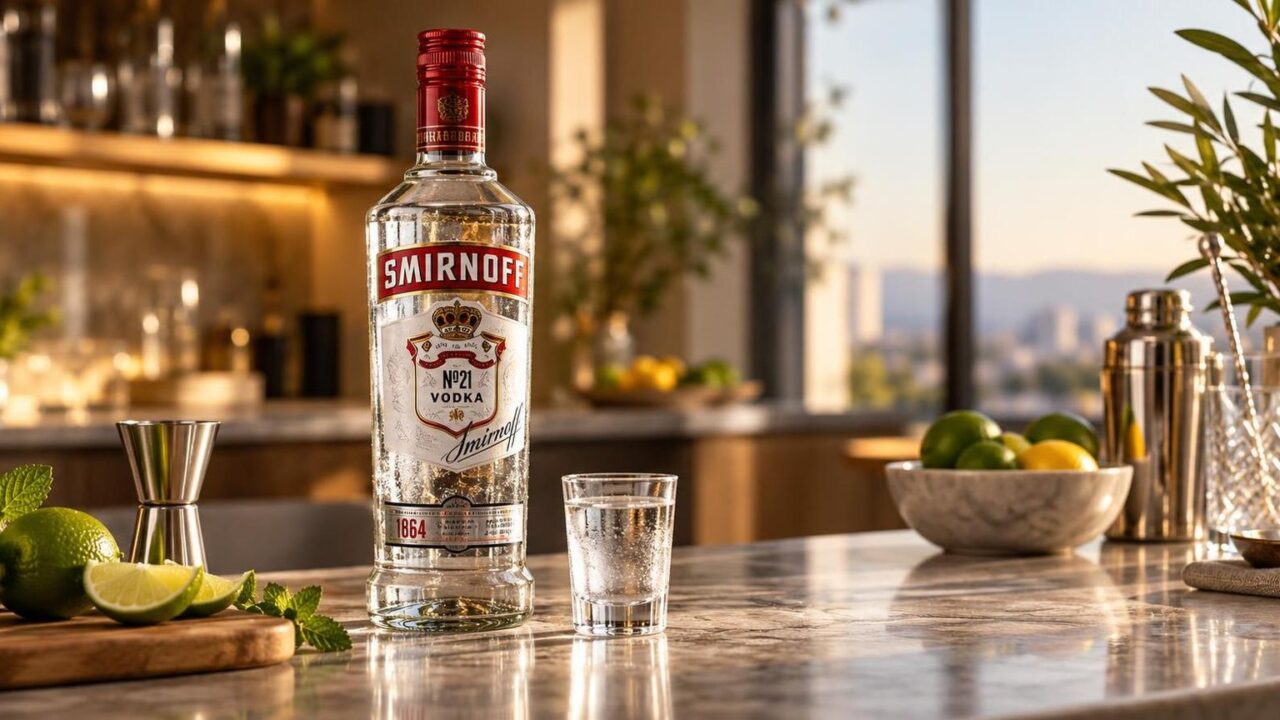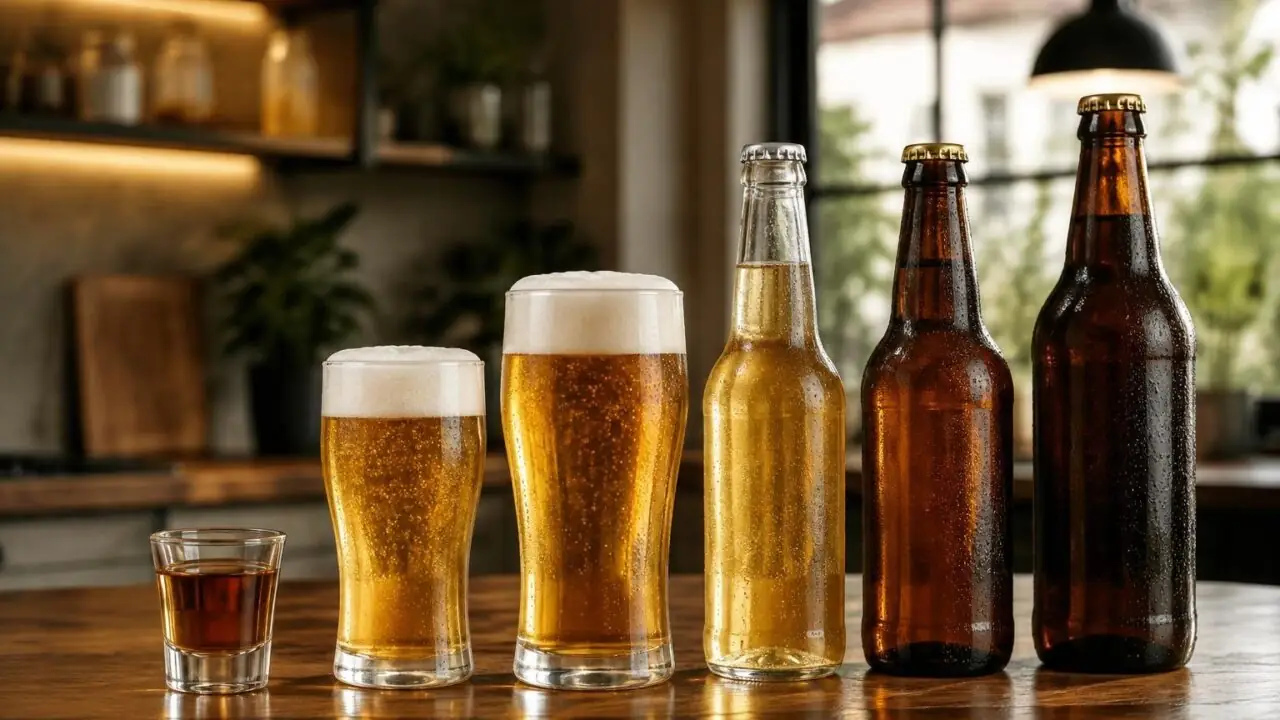
How Many Beers Is a Shot? is 1 standard 12-ounce 5% ABV beer for 1 1.5-ounce 40% ABV shot. Both contain about 0.6 fluid ounces of pure alcohol, the U.S. “standard drink” amount used by the NIAAA and CDC.
This comparison changes when beer strength, pour size, or liquor proof changes. A 16-ounce 7% IPA carries almost 1.9 standard drinks, while a 1-ounce 80-proof pour is about two-thirds of one.
This guide uses alcohol-by-volume math, not guesswork, to compare shots, beer, and real bar pours.
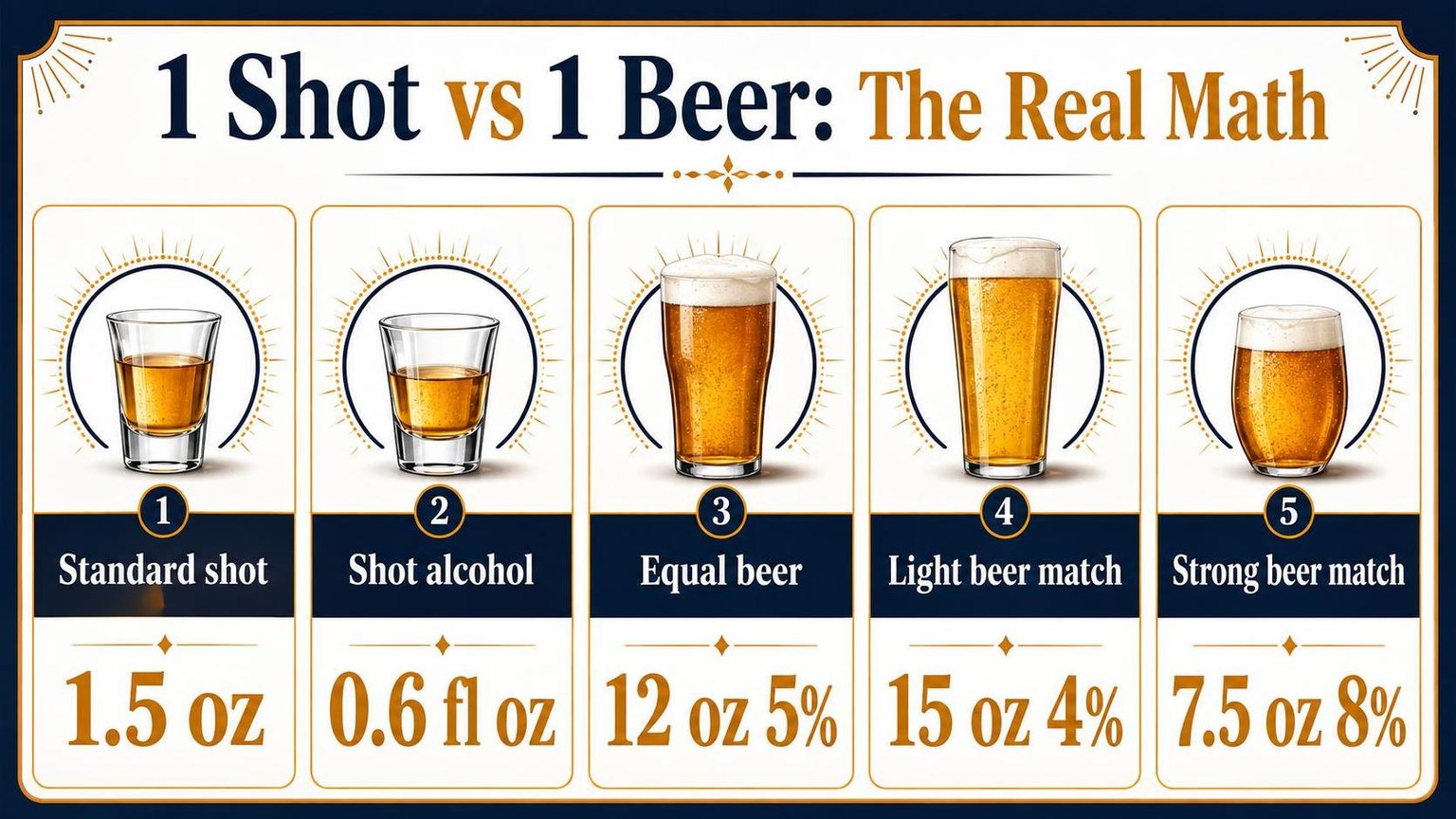
Beer Shot Equivalence by Alcohol Content
A shot and a beer match only when their pure alcohol totals match. The key variable is alcohol by volume, because stronger beer needs less liquid to equal one distilled shot.
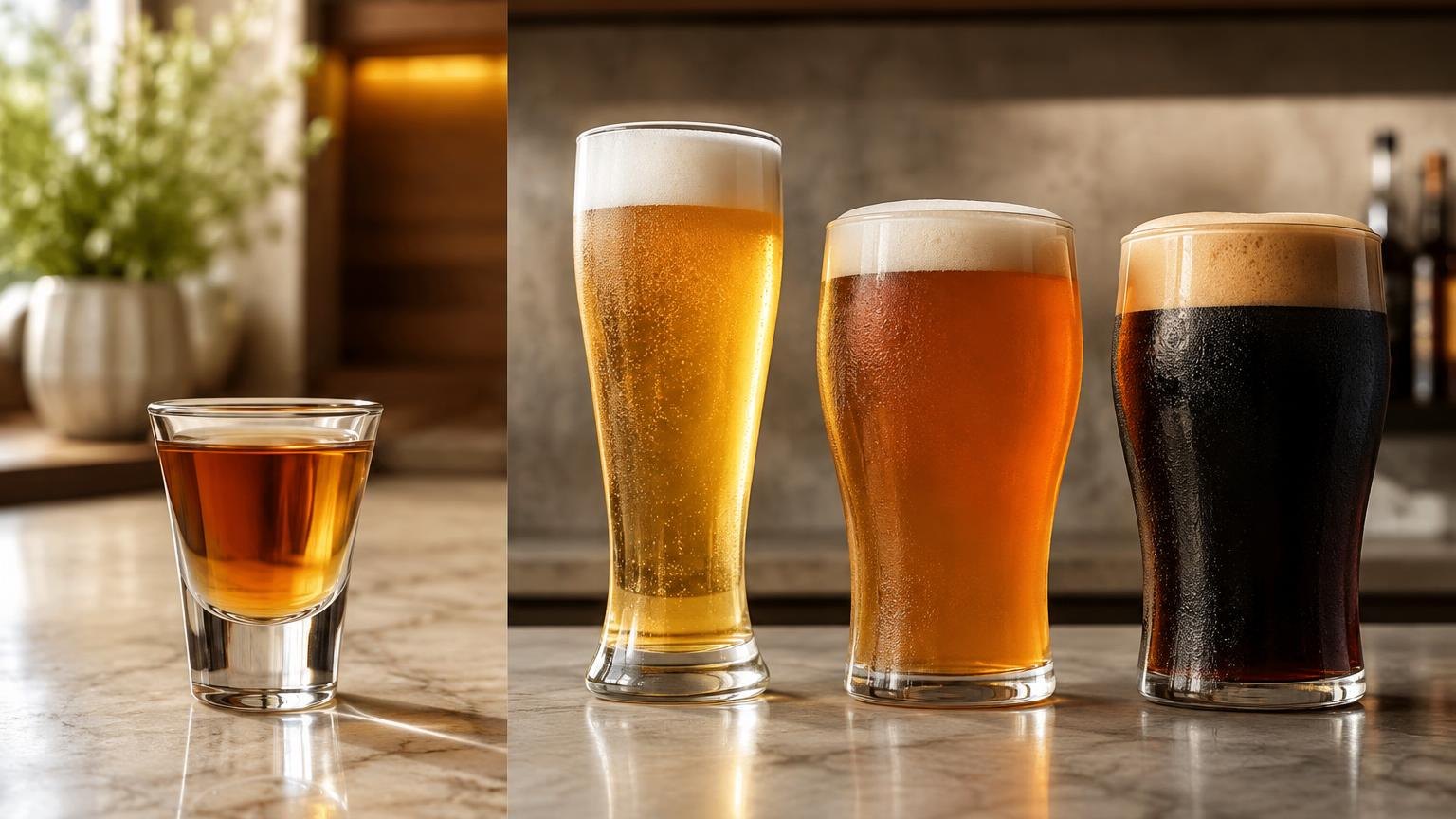
In the U.S., the common benchmark is a standard drink. Federal guidance treats a typical beer and a typical shot as equivalent when each contains the same amount of ethanol.
| Drink type | Typical serving | ABV | Pure alcohol |
| Distilled spirits shot | 1.5 oz | 40% | 0.6 oz |
| Regular beer | 12 oz | 5% | 0.6 oz |
| Table wine | 5 oz | 12% | 0.6 oz |
That is why people often say one shot equals one beer. It is true only for a 1.5-ounce shot of 80-proof liquor and a 12-ounce beer at 5% ABV.
Once beer strength changes, the equivalence changes fast. Lower-ABV beer takes more ounces to equal a shot, while high-ABV beer takes fewer.
| Beer ABV | Beer ounces equal to one 1.5 oz shot at 40% ABV | Approximate 12 oz beer equivalent |
| 4% | 15 oz | 1.25 beers |
| 5% | 12 oz | 1.0 beer |
| 6% | 10 oz | 0.83 beer |
| 7% | 8.6 oz | 0.72 beer |
| 8% | 7.5 oz | 0.63 beer |
| 9% | 6.7 oz | 0.56 beer |
| 10% | 6 oz | 0.5 beer |
The math is straightforward. A standard shot contains 0.6 ounces of pure alcohol, so the matching beer pour is whatever volume delivers that same 0.6 ounces.
This matters most with craft styles. A strong IPA, double IPA, Belgian tripel, imperial stout, or barrel-aged ale can reach shot-level alcohol in much less than a full pint.
| Common serving | ABV | Pure alcohol in serving | Shot equivalent |
| 12 oz light beer | 4.2% | 0.50 oz | 0.84 shot |
| 16 oz pint lager | 5% | 0.80 oz | 1.33 shots |
| 12 oz IPA | 7% | 0.84 oz | 1.4 shots |
| 12 oz double IPA | 9% | 1.08 oz | 1.8 shots |
| 16 oz imperial stout | 10% | 1.60 oz | 2.67 shots |
Serving size changes the answer as much as ABV. A pint at modest strength can contain more alcohol than a small bottle of strong beer, simply because the pour is larger.
Use the label, not the style name, when estimating equivalence. Brewers can produce pale lagers under 4% ABV and hop-forward ales above 10% ABV, so “one beer” is not a reliable alcohol measure.
- One shot equals one beer only at the standard comparison point: 1.5 ounces of 40% spirits and 12 ounces of 5% beer.
- Stronger beer means fewer ounces are needed to match a shot.
- Larger pours can turn a single beer into more than one shot’s worth of alcohol.
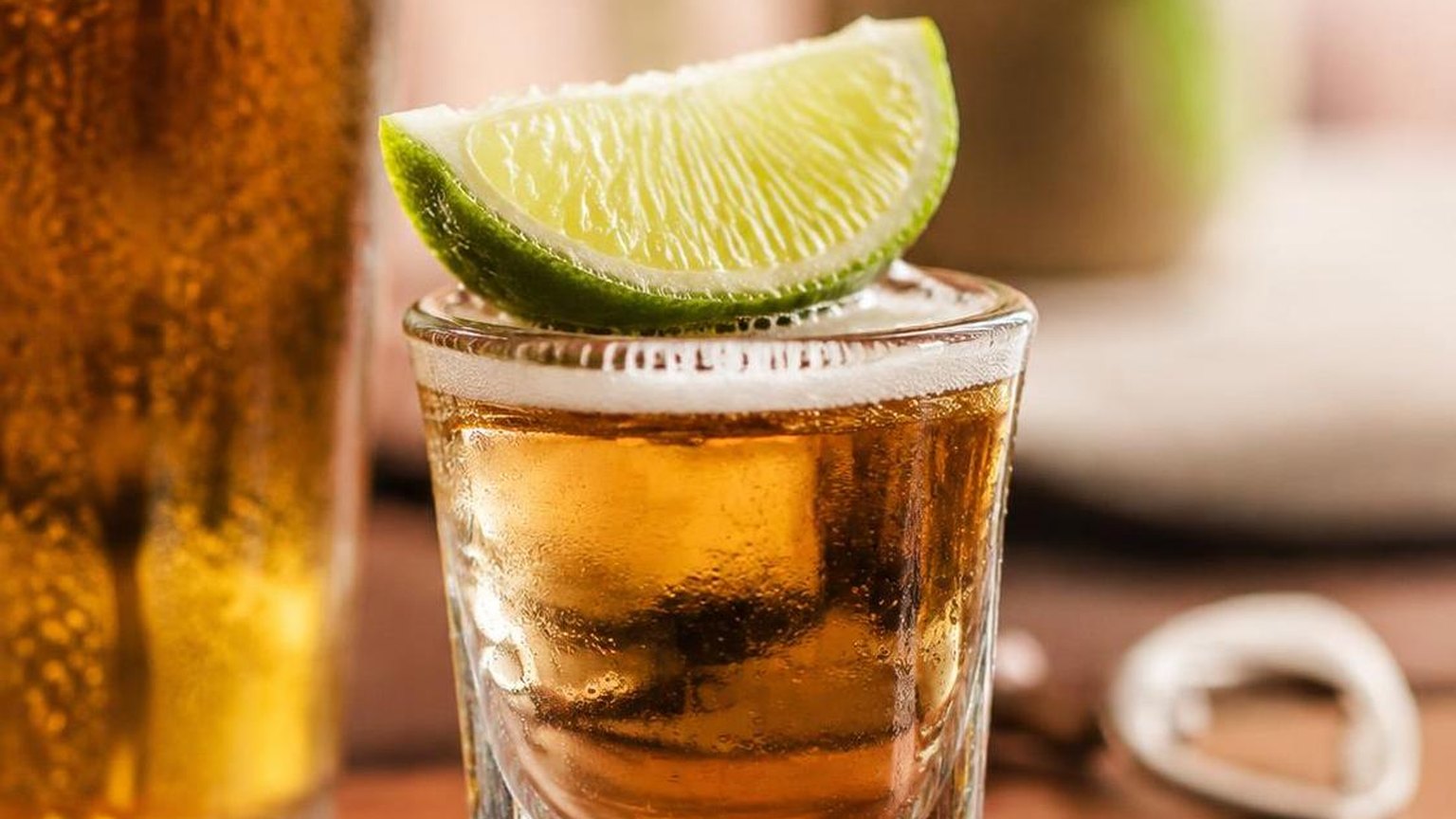
Standard Drink Math for Beer and Shots
In the U.S., a “shot” and a “beer” are only equal when they contain about the same pure alcohol. The benchmark is the standard drink: 0.6 fluid ounces, or 14 grams, of pure alcohol.
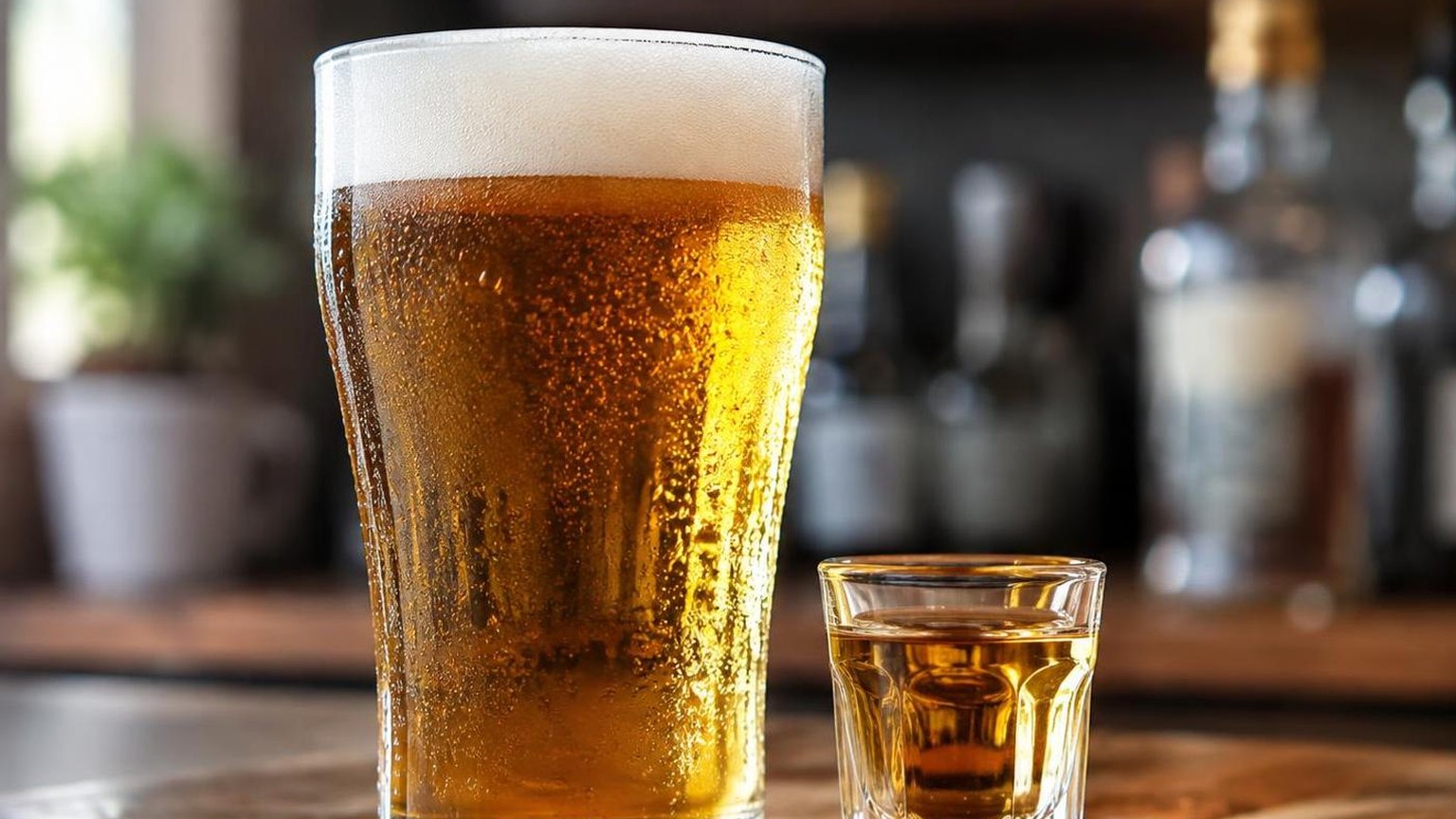
That math explains why one 12-ounce regular beer at 5% ABV is treated about the same as one 1.5-ounce shot of 40% ABV liquor. Change the size or strength, and the comparison changes fast.
The standard-drink formula is simple: container ounces multiplied by ABV, then multiplied by 0.789 to convert ethanol volume to approximate grams.
For quick consumer guidance, U.S. health agencies round that to drink equivalents based on 14 grams of alcohol.
| Beverage | Typical serving | ABV | Pure alcohol | Standard drinks |
| Regular beer | 12 oz | 5% | 0.60 fl oz | 1.0 |
| Liquor shot | 1.5 oz | 40% | 0.60 fl oz | 1.0 |
| Strong beer | 12 oz | 8% | 0.96 fl oz | 1.6 |
| Light beer | 12 oz | 4.2% | 0.50 fl oz | 0.84 |
| Tall boy lager | 16 oz | 5% | 0.80 fl oz | 1.33 |
Using that table, one standard 1.5-ounce shot of 80-proof liquor equals one 12-ounce 5% beer. That is the cleanest answer to “how many beers is a shot?”: about one beer, if both servings are standard and average strength.
But many real pours are not standard. A bar may pour a 2-ounce shot, and many craft beers range from 6% to 9% ABV. Those differences matter more than the beverage type itself.
| If you drink this shot | Pure alcohol | Beer equivalent at 5% ABV |
| 1.0 oz liquor at 40% ABV | 0.40 fl oz | 0.67 of a 12 oz beer |
| 1.25 oz liquor at 40% ABV | 0.50 fl oz | 0.83 of a 12 oz beer |
| 1.5 oz liquor at 40% ABV | 0.60 fl oz | 1.0 beer |
| 2.0 oz liquor at 40% ABV | 0.80 fl oz | 1.33 beers |
Proof also changes the result. In the U.S., 80 proof means 40% ABV, but higher-proof spirits carry more alcohol in the same glass. A 1.5-ounce shot of 50% ABV liquor contains 0.75 fluid ounces of pure alcohol, or about 1.25 standard drinks.
Beer works the same way. A 12-ounce beer at 7% ABV contains 0.84 fluid ounces of pure alcohol. That is about 1.4 standard drinks, which already exceeds one standard 80-proof shot.
- One 12 oz beer at 5% ABV = one U.S. standard drink.
- One 1.5 oz shot at 40% ABV = one U.S. standard drink.
- Bigger pours or higher ABV increase alcohol faster than most people estimate.
- Malt liquor, imperial IPA, doubles, and neat pours often count as more than one drink.
For counting intake, compare ounces and ABV, not beverage labels. “One shot equals one beer” is accurate only for a 1.5-ounce 40% shot and a 12-ounce 5% beer.
Beer ABV Versus Liquor Proof
Beer and liquor are labeled differently, which causes most of the confusion. Beer usually shows alcohol by volume, or ABV, while distilled spirits often show proof, a number that is simply twice the ABV in the United States.
That means 80-proof vodka is 40% ABV, not 80% alcohol. Once both drinks are converted to ABV and then matched by serving size, the comparison becomes straightforward.
ABV measures the percentage of a beverage that is pure ethanol by volume. A 5% ABV beer contains 5% alcohol and 95% water, flavor compounds, and other ingredients.
Proof is a labeling shortcut used mainly for spirits. In the U.S., proof equals ABV multiplied by two, so 90-proof whiskey is 45% ABV and 100-proof bourbon is 50% ABV.
Serving size matters as much as strength. A small pour of strong liquor can contain about the same alcohol as a full bottle or can of average-strength beer.
| Drink | Typical serving | Label shown | ABV | Pure alcohol in serving |
| Regular beer | 12 fl oz | 5% ABV | 5% | 0.60 fl oz |
| Light beer | 12 fl oz | 4.2% ABV | 4.2% | 0.50 fl oz |
| Shot of vodka, whiskey, rum, or gin | 1.5 fl oz | 80 proof | 40% | 0.60 fl oz |
| Higher-proof shot | 1.5 fl oz | 100 proof | 50% | 0.75 fl oz |
The key benchmark in U.S. health guidance is the standard drink. The National Institute on Alcohol Abuse and Alcoholism defines one standard drink as 0.6 fluid ounces, or about 14 grams, of pure alcohol.
By that standard, a 12-ounce beer at 5% ABV equals one 1.5-ounce shot of 80-proof liquor. That is why “one beer equals one shot” is often true, but only under those specific conditions.
It stops being true when the beer is stronger or the liquor pour is larger. An IPA at 7% ABV or a bar pour closer to 2 ounces changes the math immediately.
| Example | Serving size | ABV | Pure alcohol | Equivalent in standard drinks |
| IPA | 12 fl oz | 7% | 0.84 fl oz | 1.4 |
| Double IPA | 16 fl oz | 8% | 1.28 fl oz | 2.1 |
| Craft stout | 12 fl oz | 9% | 1.08 fl oz | 1.8 |
| Whiskey pour | 2 fl oz | 40% | 0.80 fl oz | 1.3 |
Beer labels nearly always use ABV because the category ranges widely, from about 4% in many light lagers to 8% or more in stronger craft styles. Spirits use proof because bottles are sold at much higher strengths, commonly 80 to 100 proof.
Read the label, check the pour, and compare pure alcohol, not container count. One beer is not automatically equal to one shot unless the beer is around 5% ABV and the shot is 1.5 ounces at 80 proof.
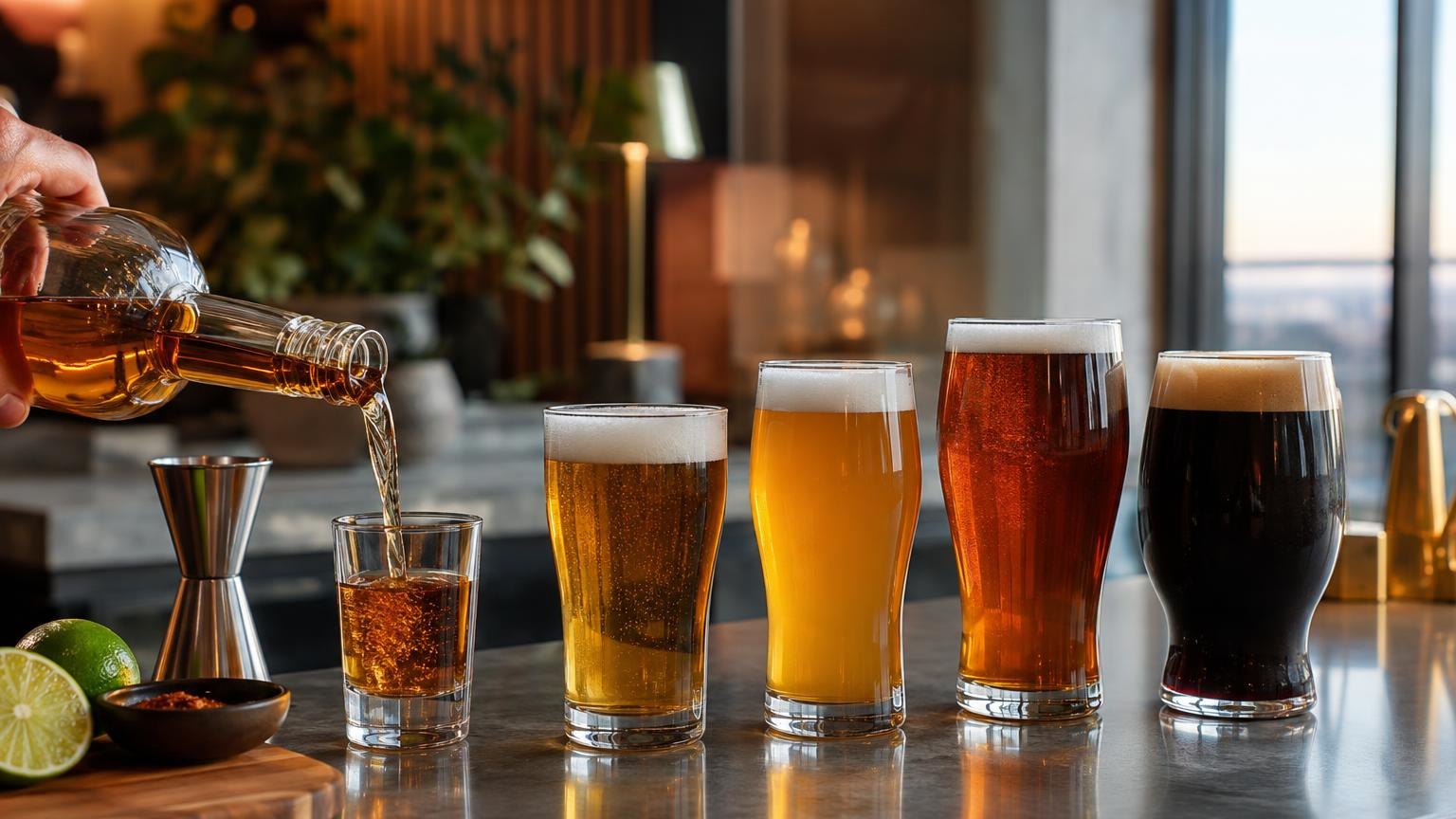
When One Shot Exceeds One Beer
A shot exceeds one beer when it contains more pure alcohol than the beer serving. This occurs with oversized pours, high-proof spirits, smaller or lower-alcohol beers, or combinations of those factors.
In the United States, the National Institute on Alcohol Abuse and Alcoholism defines one standard drink as approximately 0.6 fluid ounces of pure alcohol.
A typical shot and a regular beer each meet that benchmark, but actual bar servings often depart from it.
| Serving | Alcohol by volume | Pure alcohol | U.S. standard drinks |
| Regular beer, 12 fl oz | 5% | 0.60 fl oz | 1.00 |
| Light beer, 12 fl oz | 4.2% | 0.50 fl oz | 0.84 |
| Standard shot, 1.5 fl oz | 40% or 80 proof | 0.60 fl oz | 1.00 |
| Large shot, 2 fl oz | 40% or 80 proof | 0.80 fl oz | 1.33 |
| High-proof shot, 1.5 fl oz | 50% or 100 proof | 0.75 fl oz | 1.25 |
| Large high-proof shot, 2 fl oz | 50% or 100 proof | 1.00 fl oz | 1.67 |
The calculation is serving volume multiplied by alcohol by volume. A generous free-pour can therefore contain substantially more alcohol than its glass size suggests. Proof equals twice the alcohol-by-volume percentage in the United States.
Common situations that change the equivalence
- Oversized pours: A rocks pour or home pour may exceed the standard shot measure. A double is not necessarily two standard drinks; its alcohol content depends on both the measured volume and spirit strength.
- Overproof liquor: Bottled-in-bond whiskey, navy-strength rum, and some cask-strength spirits exceed ordinary 80-proof liquor. The same shot volume delivers more ethanol.
- Low-alcohol beer: Session beer, light lager, and alcohol-reduced beer can contain less alcohol than a standard shot, even when served in a full bottle or can.
- Small beer servings: A tasting pour contains less beer than a standard container. Comparing one tasting glass with one full shot exaggerates the shot’s relative strength.
Glass shape is unreliable. Heavy-bottomed shot glasses, tapered jiggers, and partially filled rocks glasses make visual estimates inaccurate.
Measuring the pour and checking the bottle’s alcohol-by-volume label provide the defensible comparison.
Alcohol equivalence also does not guarantee identical effects. Drinking speed, food intake, body size, medications, and biological sex can alter blood alcohol concentration.
A shot consumed quickly may produce a faster rise than beer sipped over a longer period.
For tracking intake, count pure alcohol rather than containers. Treat a larger or stronger shot as more than one drink whenever its calculated ethanol exceeds the standard-drink benchmark.
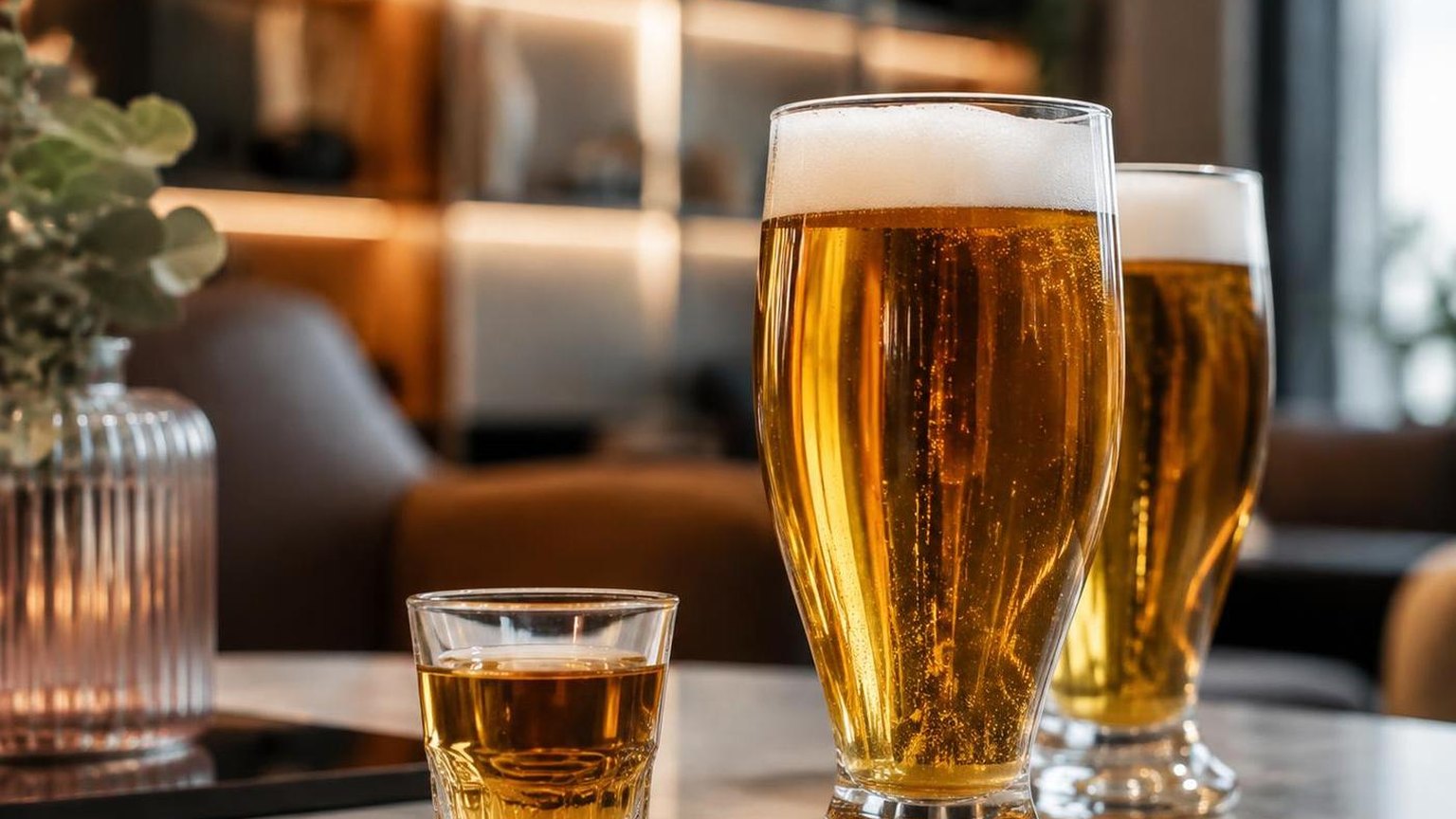
Quick Conversion Chart by Serving Size
A US standard shot is 1.5 fluid ounces of 80-proof liquor, which is 40% alcohol by volume. That serving contains about 0.6 fluid ounces of pure alcohol, the same amount found in one 12-ounce beer at 5% ABV.
Serving size changes the comparison fast. A bigger beer can equal more than one shot, while a smaller or lower-ABV pour can equal less than one.
| Beer serving | ABV | Pure alcohol | Equivalent to 1.5 oz shot? | Shots per beer |
| 12 oz bottle/can | 5% | 0.60 oz | Yes | 1.00 |
| 16 oz pint | 5% | 0.80 oz | More than one shot | 1.33 |
| 22 oz bomber | 5% | 1.10 oz | Almost two shots | 1.83 |
| 24 oz tall boy | 5% | 1.20 oz | Two shots | 2.00 |
| 32 oz crowler | 5% | 1.60 oz | More than two shots | 2.67 |
| 8 oz strong beer | 9% | 0.72 oz | More than one shot | 1.20 |
The math is simple: ounces served × ABV = pure alcohol ounces. For example, 16 ounces × 0.05 = 0.80 ounces of pure alcohol, which is one-third more alcohol than a standard 1.5-ounce shot.
If you want the number of beers that equal one shot, divide 0.6 by the beer’s pure alcohol. That is why one 12-ounce beer at 5% equals exactly one shot, but a 24-ounce can at 5% equals two shots.
| Beer serving | ABV | Pure alcohol | Beers equal to 1 shot |
| 12 oz | 4.2% | 0.50 oz | 1.19 beers |
| 12 oz | 5% | 0.60 oz | 1.00 beer |
| 12 oz | 6% | 0.72 oz | 0.83 beer |
| 16 oz | 4% | 0.64 oz | 0.94 beer |
| 16 oz | 7% | 1.12 oz | 0.54 beer |
These numbers use the US standard drink definition from federal health guidance: 0.6 fluid ounces, or 14 grams, of pure alcohol. That standard lets you compare beer, wine, and spirits on alcohol content instead of container size.
- A 12-ounce regular beer at 5% ABV equals one standard shot of 80-proof liquor.
- A pint is not “one beer” in alcohol terms if it is 16 ounces or stronger than 5% ABV.
- Craft beer often runs 6% to 9% ABV, so one can may equal more than one shot.
Use the label, not the glass, to judge the comparison. Size and ABV together determine whether your “one beer” is equal to one shot, two shots, or more.
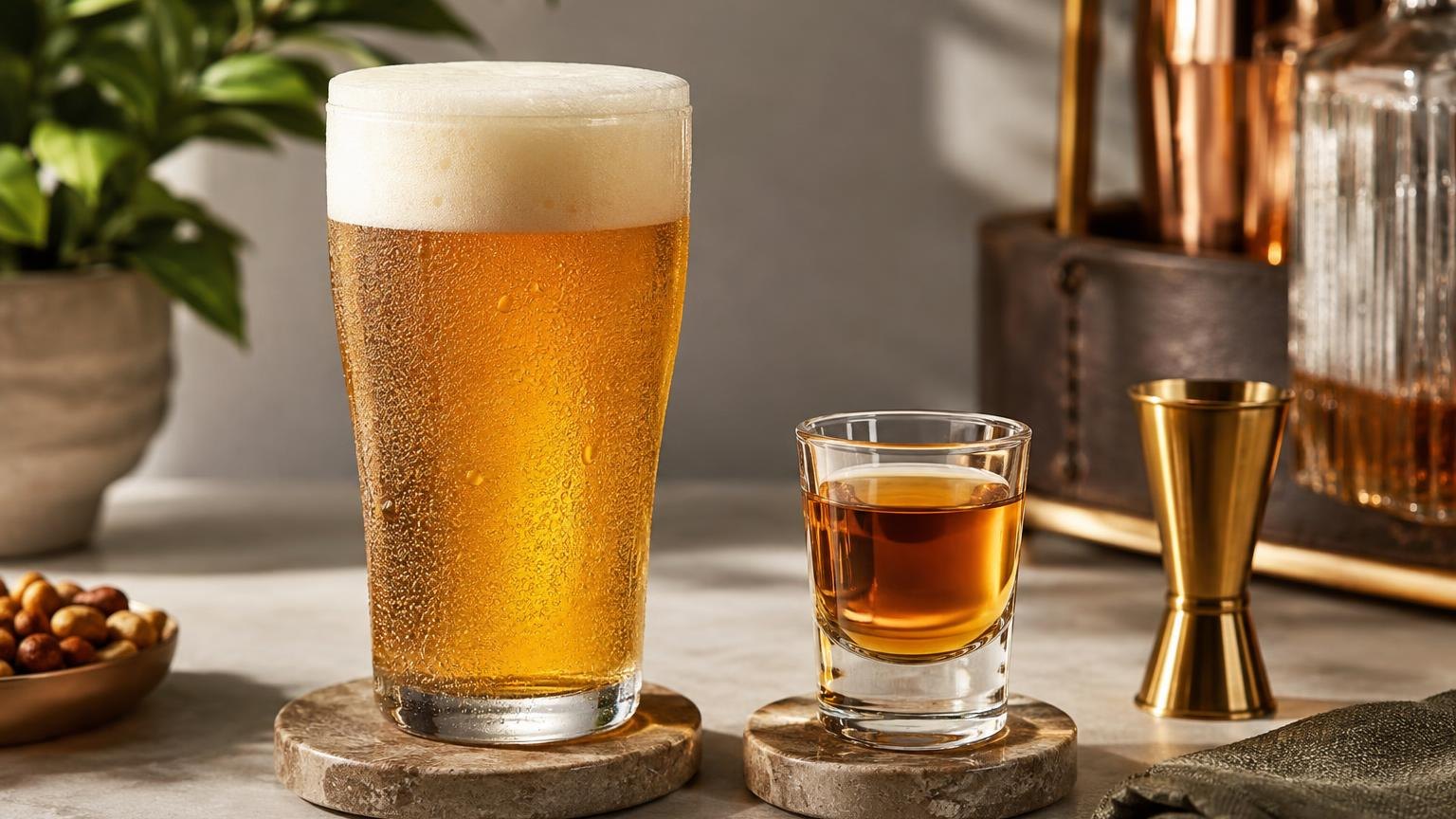
Frequently Asked Questions
How many beers is one shot of liquor?
One 1.5-ounce shot of 80-proof liquor is about equal to one standard 12-ounce beer at 5% ABV.
Each contains roughly 0.6 fluid ounces of pure alcohol, which is the U.S. standard drink measure used by the National Institute on Alcohol Abuse and Alcoholism.
Is a shot always equal to one beer?
No. A shot only matches a beer when the shot is 1.5 ounces at 40% alcohol and the beer is about 12 ounces at 5% ABV.
A stronger beer, such as a 16-ounce pint at 7% ABV, contains closer to 0.94 fluid ounces of pure alcohol, which is more than one standard shot.
How many light beers equal one shot?
A 12-ounce light beer at 4.2% ABV contains about 0.50 fluid ounces of pure alcohol. That means one 1.5-ounce shot of 80-proof liquor, at 0.6 fluid ounces of alcohol, is slightly stronger than one light beer and closer to about 1.2 light beers.
How many beers equal a double shot?
A double shot is usually 3 ounces of 80-proof liquor, which contains about 1.2 fluid ounces of pure alcohol. That is roughly equal to two 12-ounce beers at 5% ABV, because each beer contributes about 0.6 fluid ounces of alcohol.
Does a pint of beer equal a shot?
A U.S. pint is 16 ounces, so the answer depends on the beer’s ABV. At 5% ABV, a 16-ounce pint contains about 0.8 fluid ounces of pure alcohol, making it stronger than one standard shot and closer to about 1.3 shots.
How many shots are in a strong craft beer?
A 12-ounce craft beer at 8% ABV contains about 0.96 fluid ounces of pure alcohol. Since one standard shot of 80-proof liquor contains 0.6 fluid ounces, that beer is equal to about 1.6 shots.
Why can one shot feel stronger than one beer if the alcohol is similar?
The alcohol is delivered faster and in a smaller volume, which can raise blood alcohol concentration more quickly if consumed all at once.
Drinking pace, body weight, food intake, and whether the beer is stretched over 20 to 30 minutes all change how strong it feels.
What is the easiest way to compare beer and shots?
Use pure alcohol, not container size. Multiply the drink size by the ABV: 12 ounces x 5% equals 0.6 ounces of alcohol for a beer, and 1.5 ounces x 40% equals 0.6 ounces for a standard shot.
Related Reading
- How Many Shots In 375 Ml?
- What Is Gin & Juice Drink?
- Maker's Mark Vs Woodford Reserve: Which Is Best?
- How Many Ml Is 3.4 Oz?
- How Many Pounds in A Cup? – 2026
- What Time Can You Buy Alcohol In Wisconsin?
- All Blog Guides
- NIAAA: What Is A Standard Drink? (2025)
- CDC: Drinking Levels Defined (2024)
- SAMHSA: Know the Risks of Drinking Alcohol (2024)
- NIH MedlinePlus: Alcohol (2024)
- Harvard T.H. Chan School of Public Health: Alcohol: Balancing Risks and Benefits (2022)
- University of Notre Dame: Standard Drink Calculator (2024)
- Mayo Clinic: Moderate alcohol use: Where's the limit? (2023)
- Cleveland Clinic: What Counts as One Alcohol Drink? (2023)
- National Center for Biotechnology Information: Alcohol Research: Current Reviews, “Drinking Patterns and Their Definitions” (2018)
- FDA: Serving Sizes of Alcoholic Beverages (2023)