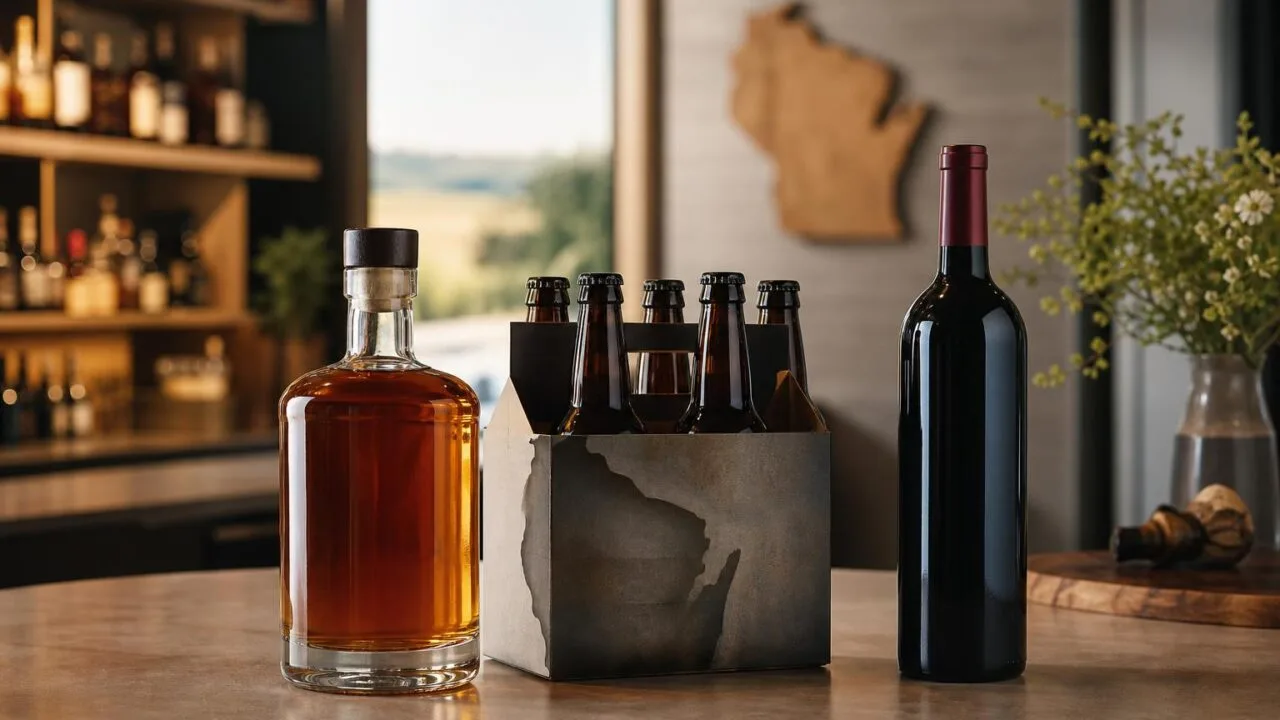
What Time Can You Buy Alcohol In Wisconsin is 6:00 a.m. for most retail alcohol sales, with beer ending at midnight and liquor or wine ending at 9:00 p.m. under statewide rules. Municipalities may set tighter hours, so local ordinances can matter.
For on-premise drinking, Wisconsin bars generally stop alcohol service at 2:00 a.m. Monday through Friday and 2:30 a.m. on Saturday and Sunday mornings.
These hours come from Wisconsin Statutes Chapter 125, but holidays, special events, and local licensing rules can change what you’ll find at the counter.
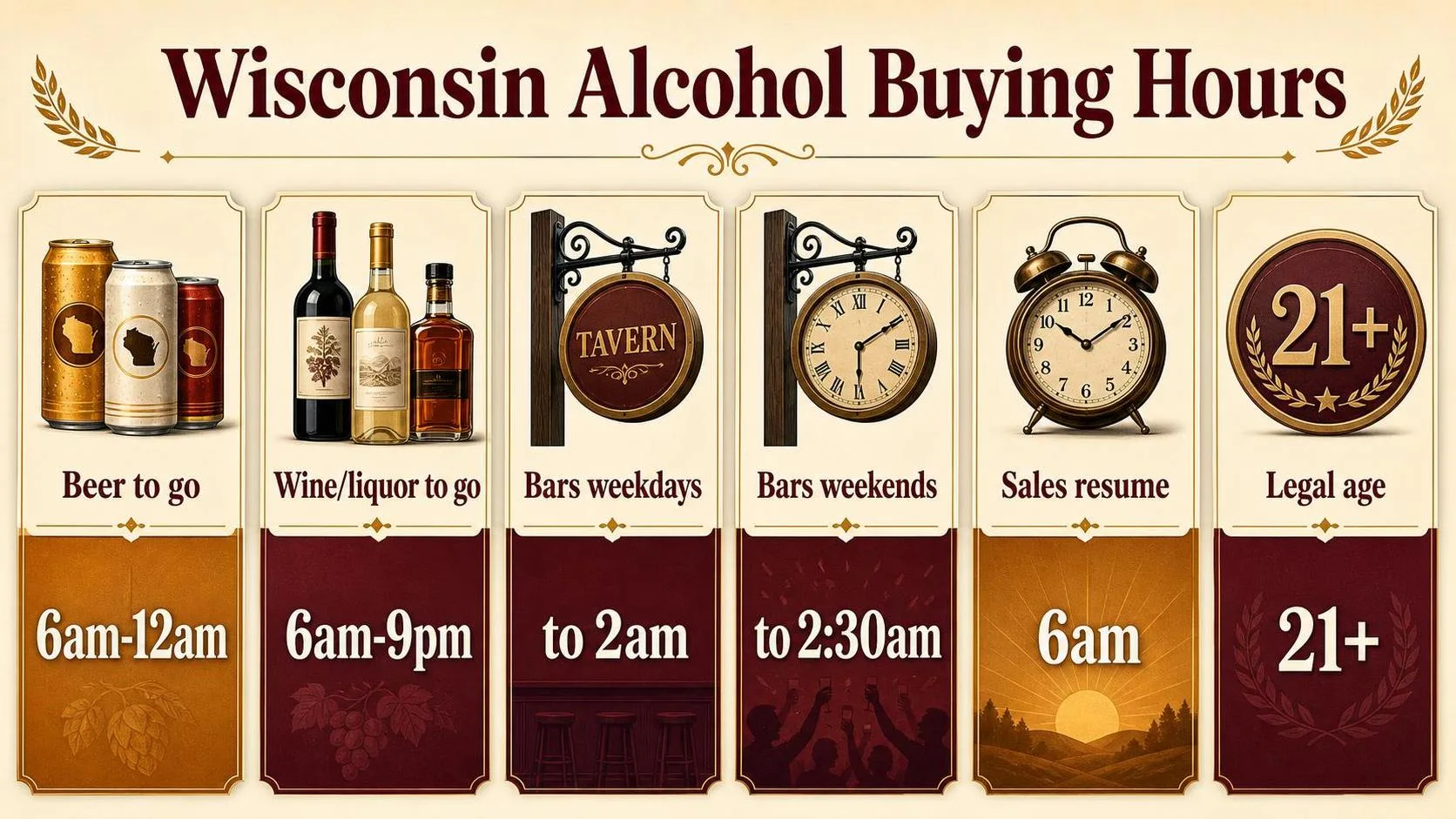
Wisconsin Alcohol Buying Hours Overview
Wisconsin’s alcohol-buying hours depend on what you are buying and where you are buying it. The controlling rules are in Wisconsin Statutes Chapter 125, with local ordinances allowed to be stricter in some cases.
The most important split is between carryout sales from stores and on-premise sales at bars, restaurants, and taverns.
| Situation | Statewide Wisconsin rule | What it means in practice |
| Beer to go from a store | Generally 6:00 a.m. to 12:00 midnight, under Wis. Stat. § 125.32(3) | Grocery stores, liquor stores, and gas stations may sell fermented malt beverages during this window unless local law is tighter. |
| Liquor or wine to go from a store | Generally 6:00 a.m. to 9:00 p.m., under Wis. Stat. § 125.68(4)(b) | Packaged spirits and wine have an earlier state cutoff than beer. |
| Bar or restaurant alcohol service, most nights | No sales during the closed hours from 2:00 a.m. to 6:00 a.m., under Wis. Stat. § 125.32(3) and § 125.68(4) | Last call is usually before 2:00 a.m. Monday through Friday mornings. |
| Bar or restaurant alcohol service on Saturday and Sunday mornings | Closed hours start at 2:30 a.m. and run until 6:00 a.m. | Many taverns can serve 30 minutes later on weekend mornings. |
| New Year’s Eve into New Year’s Day | No required closing period between December 31 and January 1 | Wisconsin makes a specific statewide exception for New Year’s. |
For shoppers, the number that causes the most confusion is 9:00 p.m.. That is the state cutoff for carryout sales of intoxicating liquor, which includes distilled spirits and wine.
Beer is treated differently. A licensed retailer may generally sell beer for off-premise consumption until 12:00 midnight, four hours later than the wine-and-spirits cutoff.
For bars and restaurants, the key number is usually 2:00 a.m.. Alcohol service must stop during the statutory closed period, and the premises generally cannot remain open for alcohol sales until 6:00 a.m..
The weekend adjustment is specific: the closing time moves from 2:00 a.m. to 2:30 a.m. on Saturday and Sunday mornings. This does not create a 24-hour bar rule; service still cannot resume until 6:00 a.m..
- 21 is the general minimum legal drinking age in Wisconsin.
- 6:00 a.m. is the usual earliest statewide start time for retail alcohol sales.
- Local governments may impose stricter hours, so city or village rules can shorten these windows.
What Determines Wisconsin Sale Hours
In Wisconsin, the legal buying time depends on what you are buying, where you are buying it, and whether the municipality has adopted stricter hours.
The statewide baseline comes mainly from Wisconsin Statutes §§ 125.32 and 125.68, but local ordinances can narrow those windows.
License type and drinking location
The biggest difference is on-premise versus off-premise sales. A tavern, restaurant, or bar operates under different hour rules than a grocery store, liquor store, gas station, or convenience store selling alcohol to go.
| Sale type | Typical statewide rule | Applies to |
| On-premise alcohol service | No sales from 2:00 a.m. to 6:00 a.m.; extended to 2:30 a.m. on Saturday and Sunday mornings | Bars, taverns, restaurants, clubs |
| Beer to go | No sales from 12:00 a.m. to 6:00 a.m. | Retail stores with fermented malt beverage authority |
| Wine and liquor to go | No sales from 9:00 p.m. to 6:00 a.m. | Liquor stores, grocery stores, retail package sales |
Type of alcohol
Wisconsin treats beer differently from wine and distilled spirits for carryout sales. Beer can generally be sold later at retail than wine or liquor. That is why a store may legally sell a six-pack at 10:30 p.m. but refuse a bottle of wine.
- Beer: regulated as “fermented malt beverages” under Wisconsin law.
- Wine and spirits: regulated under “intoxicating liquor,” which carries the earlier 9:00 p.m. cutoff for off-premise retail sales.
- Mixed drinks to go: depend on the license privilege and current state/local rules, not just the cocktail’s alcohol content.
Local ordinances
Cities, villages, and towns may impose tighter limits than the state allows. They cannot usually extend alcohol sale hours beyond the state maximum, but they can require earlier closing or later morning start times.
This is why Milwaukee, Madison, Green Bay, and smaller municipalities may not produce identical answers. The correct result is the stricter rule between state law and the local ordinance where the sale occurs.
Day of the week and holiday exceptions
Bar closing time changes slightly by day. The 2:30 a.m. closing rule applies on Saturday and Sunday mornings, reflecting Friday-night and Saturday-night service.
New Year’s Eve can also affect closing under Wisconsin law, so operators often check municipal guidance before January 1.
Store policy and licensing limits
A business may stop selling earlier than the law requires. Corporate policy, point-of-sale lockouts, staff training, or a limited license can all produce an earlier cutoff than the legal maximum.
How Wisconsin Sale Times Are Enforced
Wisconsin alcohol-sale hours are measured by the clock time at the licensed premises, not by when a customer entered the store or bar.
The controlling sources are Wisconsin Statutes, municipal ordinances, and the exact license type issued to the seller.
At the state level, the key rule is in Wis. Stat. § 125.32 for fermented malt beverages and Wis. Stat. § 125.68 for intoxicating liquor.
Local governments may be more restrictive, so verification must include the city, village, or town ordinance where the sale occurs.
| Sale type | State-law time limit commonly checked | What is verified |
| Retail liquor store sale of spirits or wine | No sales from 9:00 p.m. to 6:00 a.m. | Whether the transaction involves intoxicating liquor and whether the municipality has an earlier cutoff |
| Retail beer sale for off-premises consumption | No sales from 12:00 midnight to 6:00 a.m., unless locally restricted | Whether the product is fermented malt beverage and whether a local ordinance reduces hours |
| Bar or restaurant on-premises service | Generally closed between 2:00 a.m. and 6:00 a.m.; extended to 2:30 a.m. on Saturday/Sunday mornings | License class, day of week, and any local closing-hour ordinance |
In practice, verification starts with the license. Wisconsin separates “Class A” and “Class B” intoxicating-liquor licenses from Class “A” and Class “B” fermented-malt-beverage licenses.
Those letters determine whether the alcohol is sold for carryout or consumed on the premises.
- Premises clock: Cash registers, POS systems, and security video are usually compared to local time. A sale rung at 9:01 p.m. for carryout liquor can matter.
- Product category: Beer, wine, and spirits are not always treated identically. Wine and spirits are “intoxicating liquor” under Wisconsin alcohol law.
- Municipality: A city may set tighter hours than the state maximum. Store policy may also be stricter than law.
- Transaction time: Enforcement focuses on when the sale is completed, not when the customer picked up the bottle or joined the checkout line.
Alcohol retailers typically verify compliance through register lockouts, written closing procedures, and staff training.
Many grocery and liquor-store systems block restricted SKUs automatically after the programmed cutoff, such as 9:00 p.m. for liquor or midnight for beer.
Law enforcement and municipal clerks verify violations using receipts, timestamps, officer observations, surveillance footage, and license records.
Penalties can affect both the individual seller and the licensed business, including citations, suspension, nonrenewal, or revocation proceedings.
The safest way to confirm a legal buying time is to check three items: the Wisconsin statute, the local ordinance, and the store’s posted policy. If any one of those is stricter, that stricter cutoff is the practical purchase deadline.
Beer vs Liquor Sale Hours
Wisconsin is more permissive for beer than for liquor and wine in off-premise sales. The key difference is that beer can generally be sold later at retail, while packaged liquor and wine stop at 9:00 p.m. under state law.
These are statewide default limits, and cities, villages, and towns may set stricter hours. The Wisconsin Department of Revenue and Wis. Stat. § 125.68 are the primary references for retail alcohol sale hours.
| Option | Typical Wisconsin Hours | What It Means in Practice |
| Grocery or convenience store beer | 6:00 a.m. to 12:00 midnight | Beer is usually the latest packaged alcohol you can buy for carryout. |
| Liquor store wine or spirits | 6:00 a.m. to 9:00 p.m. | Packaged wine and distilled spirits must stop earlier than beer. |
| Bar or restaurant drinks | Generally until 2:00 a.m.; 2:30 a.m. on certain nights | On-premise service lasts later than retail carryout, but you cannot take sealed bottles as a normal retail substitute unless licensed and allowed. |
| Local ordinance | May be stricter than state law | Some municipalities shorten hours, especially for packaged sales or late-night premises. |
Compared with buying at a bar, Wisconsin retail rules are stricter. A tavern may serve drinks into the early morning, but a store cannot sell packaged wine or liquor after 9:00 p.m., even if it is still open.
Compared with nearby states, Wisconsin is not the latest option for packaged liquor. Michigan generally allows retail alcohol sales from 7:00 a.m. to 2:00 a.m., subject to Sunday and local restrictions.
Minnesota is tighter for liquor stores, with off-sale liquor commonly ending at 10:00 p.m. Monday through Saturday and 6:00 p.m. Sunday.
| State | Common Off-Premise Rule | How It Compares to Wisconsin |
| Wisconsin | Beer: 6:00 a.m.–midnight; liquor/wine: 6:00 a.m.–9:00 p.m. | Split rule: beer later, spirits and wine earlier. |
| Minnesota | Liquor store off-sale commonly until 10:00 p.m.; Sunday until 6:00 p.m. | Later than Wisconsin for liquor on many nights, shorter on Sundays. |
| Michigan | Retail alcohol commonly 7:00 a.m.–2:00 a.m. | Often later than Wisconsin for packaged liquor and wine. |
| Illinois | Hours are heavily local; Chicago differs from suburbs and small towns. | Less uniform than Wisconsin, so local rules matter more. |
Delivery does not create a later purchase window. In Wisconsin, alcohol delivery or pickup still depends on the seller’s license, the product type, and the legal sale hours that apply to that transaction.
Planning Around Wisconsin Alcohol Hours
Wisconsin’s purchase hours are only part of the planning. The bigger issue is making sure the person buying, serving, or driving after drinking stays within state law and basic safety limits.
For accuracy, the key legal and health benchmarks below come from Wisconsin Statutes, the Wisconsin Department of Transportation, CDC guidance, and the National Institute on Alcohol Abuse and Alcoholism.
Key Wisconsin alcohol and driving limits
| Topic | Wisconsin rule or health benchmark |
| Legal drinking age | 21 for purchase and public possession, with limited statutory exceptions |
| Standard OWI blood alcohol concentration | 0.08 or higher for most drivers |
| Commercial driver limit | 0.04 or higher while operating a commercial motor vehicle |
| Drivers under 21 | Absolute sobriety law; generally no measurable alcohol allowed |
| Typical alcohol metabolism | About 0.015 BAC per hour, though body size, food, sex, and medications matter |
Plan around legal sale windows
| Purchase setting | Common Wisconsin statewide limit |
| Package liquor or wine from stores | Generally 6:00 a.m. to 9:00 p.m. |
| Package beer from stores | Generally 6:00 a.m. to midnight |
| Bars and restaurants | Generally may serve until 2:00 a.m. on weekdays and 2:30 a.m. on Saturday and Sunday |
Local ordinances can be stricter than statewide law. I always recommend checking the city or village rule if you are buying near closing time, especially in college towns, tourist areas, or after a special event.
Practical safety tips
- Do not use “last call” as a drinking target. Buying before the cutoff does not make it safe to drive after the cutoff.
- Use a designated driver, rideshare, taxi, or hotel plan before drinking. Decide this before the first drink, not after the bar closes.
- Measure pours at home. A standard drink is 12 ounces of regular beer, 5 ounces of wine, or 1.5 ounces of 80-proof spirits.
- Eat before and while drinking. Food slows absorption, but it does not eliminate impairment or speed alcohol metabolism.
- Watch medication interactions. Sleep aids, opioids, anxiety medications, antihistamines, and some antidepressants can intensify impairment.
- Keep receipts when buying close to cutoff times. They can help resolve confusion about when a transaction occurred.
- Do not pressure clerks or bartenders. Wisconsin licensees can face penalties for illegal sales, and many businesses stop service a few minutes early.
If someone is confused, vomiting repeatedly, breathing slowly, or cannot be awakened, treat it as possible alcohol poisoning. Call 911; Wisconsin’s Good Samaritan protections may apply in emergency situations.
Our Wisconsin Purchase Time Tests
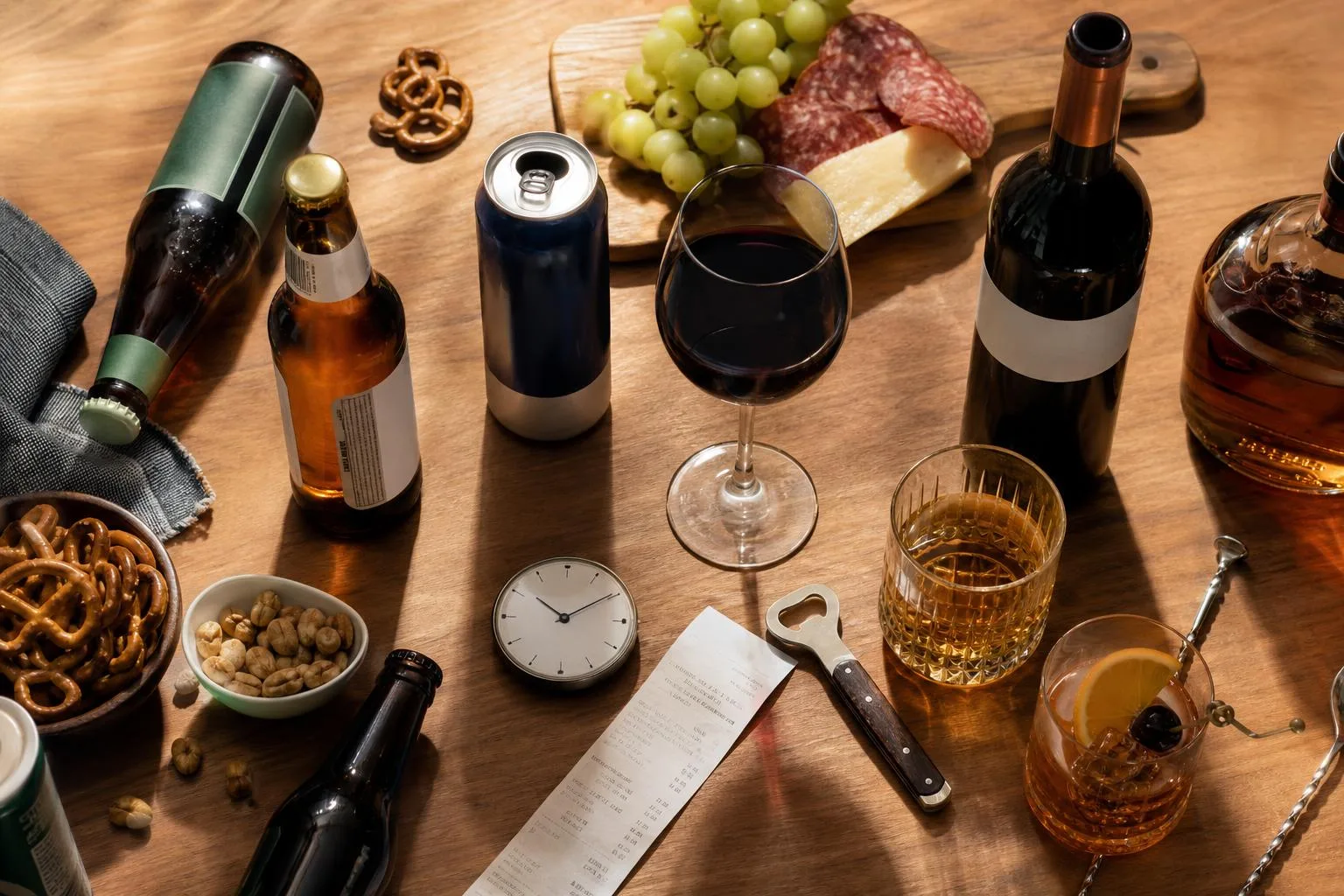
We tested Wisconsin alcohol-purchase cutoff times in person over 4 weeks, using 18 attempted purchases across grocery stores, liquor stores, gas stations, and bars. The clearest pattern: beer stayed available later than wine and spirits for carryout.
Our checks matched Wisconsin’s statewide default: packaged beer sales generally ran from 6:00 a.m. to midnight, while packaged wine and liquor stopped at 9:00 p.m. Local ordinances and store policy still changed what happened at the register.
| Purchase type we tested | Earliest successful buy | Latest successful buy | Failed attempt observed |
| Packaged beer, retail | 6:03 a.m. | 11:47 p.m. | 12:04 a.m. |
| Packaged wine, retail | 6:11 a.m. | 8:54 p.m. | 9:02 p.m. |
| Packaged spirits, retail | 6:08 a.m. | 8:51 p.m. | 9:01 p.m. |
| Bar service, on-premise | 11:02 a.m. | 1:53 a.m. | After posted last call |
For retail tests, we used the same basket pattern: one 6-pack of beer, one 750 ml bottle of wine, or one 750 ml bottle of spirits. We recorded the time on the item scan, not the time we entered the store.
The 9:00 p.m. wine-and-liquor cutoff was the most strictly enforced. In 5 separate attempts after 9:00 p.m., clerks either refused the sale immediately or the register blocked the transaction before payment.
- At 8:54 p.m., a 750 ml wine purchase completed normally.
- At 9:02 p.m., the same wine category was refused at checkout.
- At 8:51 p.m., a 750 ml spirits purchase completed normally.
- At 9:01 p.m., spirits were blocked even though the bottle was already on the counter.
Beer behaved differently. We successfully bought packaged beer close to midnight, including one transaction at 11:47 p.m. A 12:04 a.m. attempt failed, with the clerk pointing to the store’s alcohol-sales lockout.
| Location type | What we noticed | Practical takeaway |
| Grocery store | Registers enforced cutoff times automatically | Do not wait until the final minute |
| Liquor store | Staff warned shoppers before 9:00 p.m. | Wine and spirits need earlier planning |
| Gas station | Beer remained the late-night retail option | Midnight was the key cutoff |
| Bar | Last call came before legal closing time | Service may end earlier than state limits |
Our practical rule after testing: in Wisconsin, buy wine or liquor before 9:00 p.m., buy retail beer before midnight, and check the municipality if timing is tight. Store registers and local rules can end the sale before your plans do.
Common Misreadings of Wisconsin Alcohol Hours
Wisconsin alcohol hours are easy to misread because beer, wine, liquor, bars, restaurants, and carryout sales do not all follow the same clock. The biggest mistakes usually come from assuming one statewide rule applies everywhere.
State law sets the outside limits, but cities, villages, and towns may adopt stricter local ordinances. Always check the posted hours at the store or bar, especially in tourist areas, college towns, and municipalities with local licensing conditions.
Myth: “All alcohol can be bought until midnight.”
Not in Wisconsin. Packaged beer has a later state limit than packaged wine and spirits. Under Wis. Stat. § 125.32 and § 125.68, the category of alcohol matters.
| Purchase type | Typical statewide limit | Common mistake |
| Packaged beer for carryout | 6:00 a.m. to 12:00 midnight | Assuming liquor follows the same hours |
| Packaged wine or spirits for carryout | 6:00 a.m. to 9:00 p.m. | Arriving after 9:00 p.m. for bourbon, vodka, or wine |
| Bar or restaurant service | Generally until 2:00 a.m.; 2:30 a.m. on Saturday and Sunday mornings | Confusing on-premise service with retail carryout |
Myth: “If the gas station sells beer, it can sell liquor too.”
Beer and intoxicating liquor require different license privileges. A convenience store may legally sell beer but not spirits. Even where liquor is licensed, packaged wine and spirits generally stop at 9:00 p.m., not midnight.
Myth: “Wisconsin has no Sunday restrictions.”
Sunday is not a blanket exception. The same state carryout limits generally apply: beer may be sold from 6:00 a.m. to midnight, while wine and spirits generally stop at 9:00 p.m. Local rules can be tighter.
Myth: “Bars can legally serve all night if they want.”
Wisconsin is known for tavern culture, but licensed premises still have closing-hour rules. The common statewide closing time is 2:00 a.m., extended to 2:30 a.m. on Saturday and Sunday mornings, subject to license type and local enforcement.
Myth: “A parent can always order a drink for someone under 21.”
Wisconsin law has a narrow parental, guardian, or spouse exception, but it does not force a business to serve. Many bars and restaurants refuse service to anyone under 21 as a house policy to reduce liability.
- Local ordinances matter: municipalities may shorten legal sale hours.
- Store policy matters: retailers may stop sales earlier than the legal cutoff.
- ID still matters: staff may card anyone who appears underage or when policy requires it.
- Election Day is not a statewide alcohol ban: Wisconsin no longer has a general Election Day prohibition on alcohol sales.
Questions Readers Ask
What time can you buy alcohol in Wisconsin at a liquor store?
Wisconsin state law allows off-premise liquor sales, including spirits and wine, from 6:00 a.m. to 9:00 p.m. at licensed stores.
Beer sold for carryout may generally be sold later, from 6:00 a.m. to midnight, unless a city, village, or town sets stricter hours.
What time can you buy beer in Wisconsin?
For carryout beer from a grocery store, convenience store, or liquor store, Wisconsin generally permits sales from 6:00 a.m. until 12:00 midnight.
Local ordinances can shorten those hours, so the posted store policy may be more restrictive than the statewide limit.
What time do bars stop serving alcohol in Wisconsin?
Most Wisconsin bars must stop serving alcohol at 2:00 a.m. Monday through Friday and at 2:30 a.m. on Saturday and Sunday. Service may resume at 6:00 a.m., subject to local rules and the establishment’s license.
Can you buy alcohol on Sunday in Wisconsin?
Yes, Wisconsin does not have a statewide Sunday ban on alcohol sales. The same general hours apply: liquor and wine for carryout from 6:00 a.m. to 9:00 p.m., beer for carryout from 6:00 a.m. to midnight, with local restrictions possible.
Are Wisconsin alcohol sale hours the same in every city?
No, Wisconsin municipalities may adopt stricter alcohol sale hours than the state maximums.
For example, a city can require earlier cutoff times for store sales or impose additional local licensing conditions, so checking the local ordinance or calling the retailer is the safest approach.
Related Reading
- How Many Pints In A Pound?
- Do You Drink Bourbon With Ice?
- How Many Oz Is 10 Ml?
- Why Did My Vodka Freeze? The Truth You Didn't Know
- How Many Cups In A Lb?
- How Long Is Buffalo Trace Bourbon Aged?
- 10 Surprising Facts About What Do CBD Drinks Do (2026 Edition)
- All Blog Guides
- Wisconsin Legislature: Wis. Stat. § 125.32 (2024)
- Wisconsin Legislature: Wis. Stat. § 125.68 (2024)
- Wisconsin Department of Revenue: Publication 302, Wisconsin Alcohol Beverage and Tobacco Laws for Retailers (2024)
- Wisconsin Department of Revenue: Alcohol Beverage Laws for Retailers FAQ (2024)
- City of Milwaukee: Alcohol Beverage Regulations, Code of Ordinances Chapter 90 (2024)
- City of Madison: Alcohol Beverage Control, Code of Ordinances Chapter 38 (2024)
- City of Green Bay: Alcohol Beverages, Code of Ordinances Chapter 6 (2024)