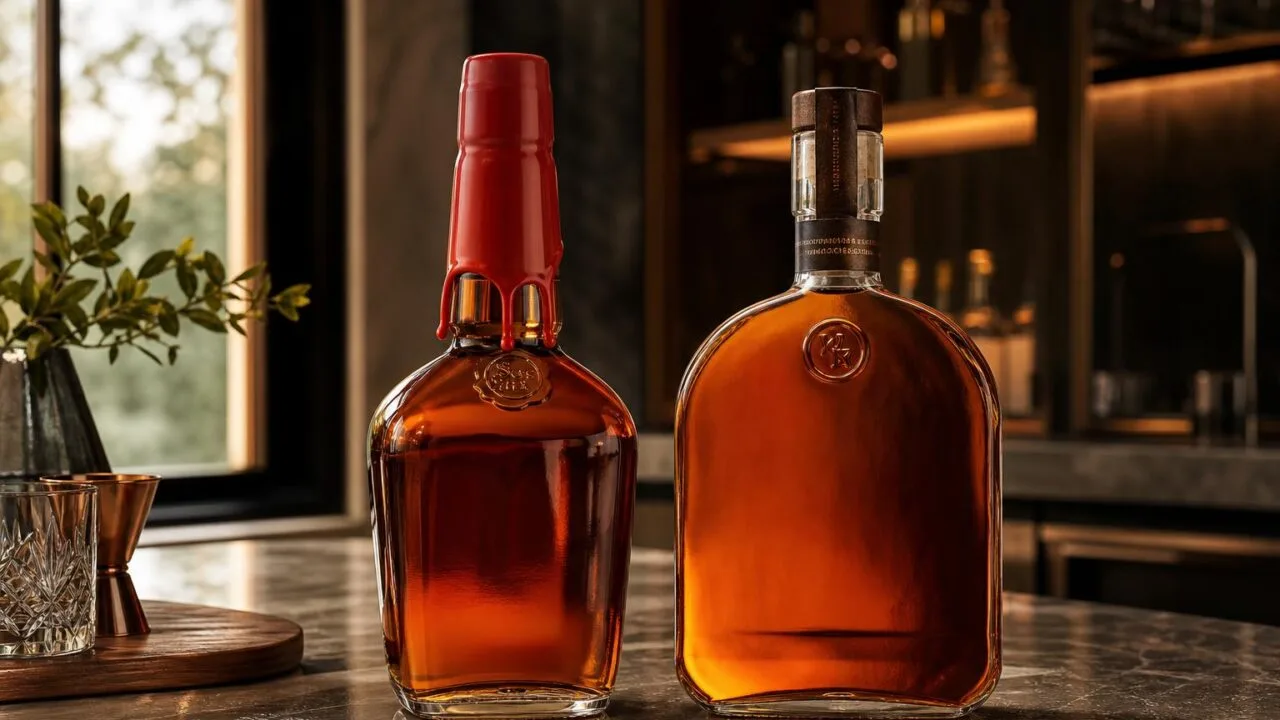
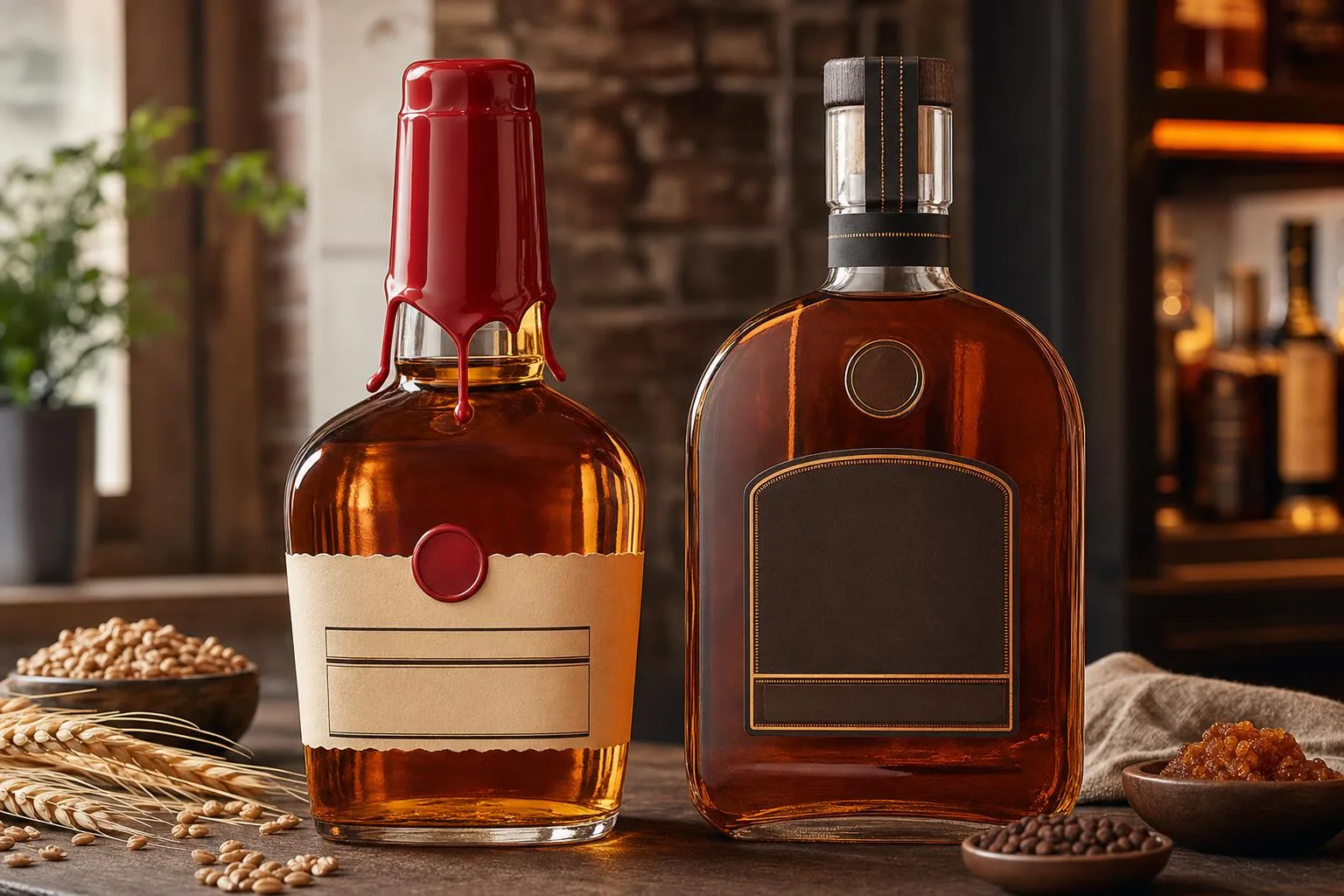
Maker’s Mark Vs Woodford Reserve is a comparison between a softer wheated Kentucky bourbon and a spicier, rye-influenced Kentucky straight bourbon.
Maker’s Mark is bottled at 45% ABV in Loretto, while Woodford Reserve Distiller’s Select is 45.2% ABV from Versailles.
Maker’s Mark uses red winter wheat instead of rye for a rounder profile. Woodford Reserve lists a 72% corn, 18% rye, 10% malted barley mash bill, giving it more baking spice, oak, and structure.
This guide compares flavor, production, price, cocktails, and best use cases so you can choose the bottle that fits your palate.
Mash Bill Proof and Price Differences
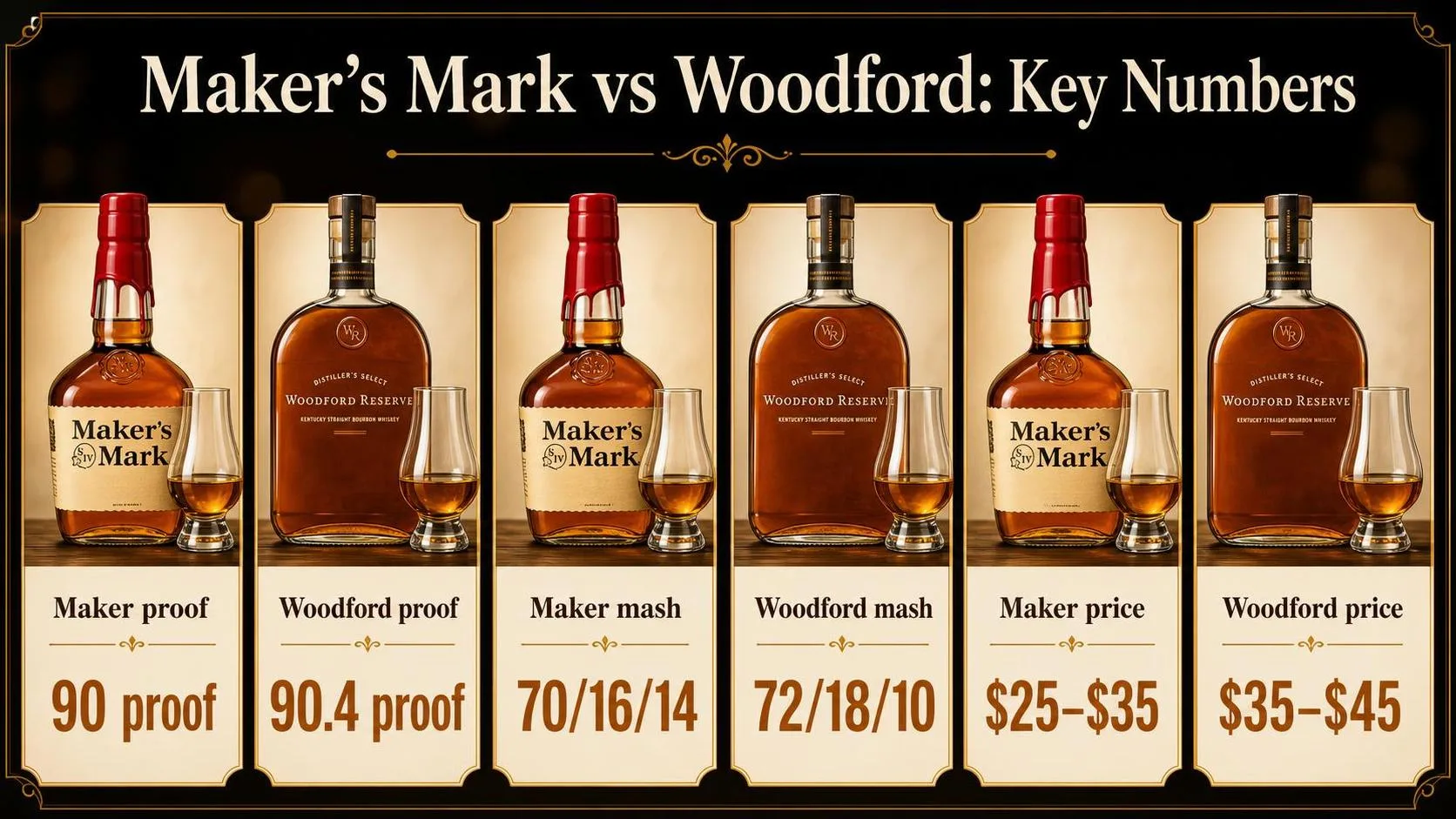
Maker’s Mark and Woodford Reserve look close on the shelf, but their numbers explain why they taste different.
The biggest splits are mash bill, proof, and price, not legal category: both are Kentucky straight bourbon-style, no-age-statement bottlings sold at about 90 proof.
Here are the practical figures to know before comparing them in a glass or buying a bottle.
| Measure | Maker’s Mark Bourbon | Woodford Reserve Distiller’s Select |
| Proof / ABV | 90 proof / 45% ABV | 90.4 proof / 45.2% ABV |
| Mash bill | 70% corn, 16% soft red winter wheat, 14% malted barley | 72% corn, 18% rye, 10% malted barley |
| Age statement | No age statement; therefore at least 4 years under U.S. straight whiskey labeling rules | No age statement; therefore at least 4 years under U.S. straight whiskey labeling rules |
| Standard 1.5 oz pour | About 16.0 grams alcohol; roughly 1.14 U.S. standard drinks | About 16.0 grams alcohol; roughly 1.14 U.S. standard drinks |
| Typical U.S. shelf price, 750 ml | About $25–$35 | About $35–$45 |
The proof difference is tiny: Woodford Reserve is only 0.4 proof higher. In tasting, that gap is functionally negligible.
Texture, sweetness, spice, and finish come more from grain recipe, fermentation, distillation, maturation, and blending than from that 0.2 percentage-point ABV difference.
The mash bill matters more. Maker’s Mark replaces rye with 16% soft red winter wheat, which is why it usually reads softer: caramel, vanilla, baked wheat, and less pepper.
Woodford uses 18% rye, giving more baking spice, dry oak, cocoa, orange peel, and grain bite.
Both exceed the bourbon minimum of 51% corn by a wide margin. Maker’s Mark has 70% corn; Woodford has 72%. That keeps both in the sweet, bourbon-centered lane, even though Maker leans rounder and Woodford leans spicier.
The no-age-statement point is often misunderstood. Under U.S. TTB rules, straight whiskey under 4 years old must carry an age statement.
Since these flagship bottles do not, they are at least 4 years old, though the producers do not publish one fixed age.
- For sweeter, softer cocktails: Maker’s Mark fits whiskey sours, Gold Rushes, and lighter Old Fashioneds.
- For more spice and structure: Woodford Reserve stands up well in Manhattans and spirit-forward Old Fashioneds.
- For value: Maker’s Mark is usually the lower-priced bottle by roughly $5–$15.
Why They Taste Different
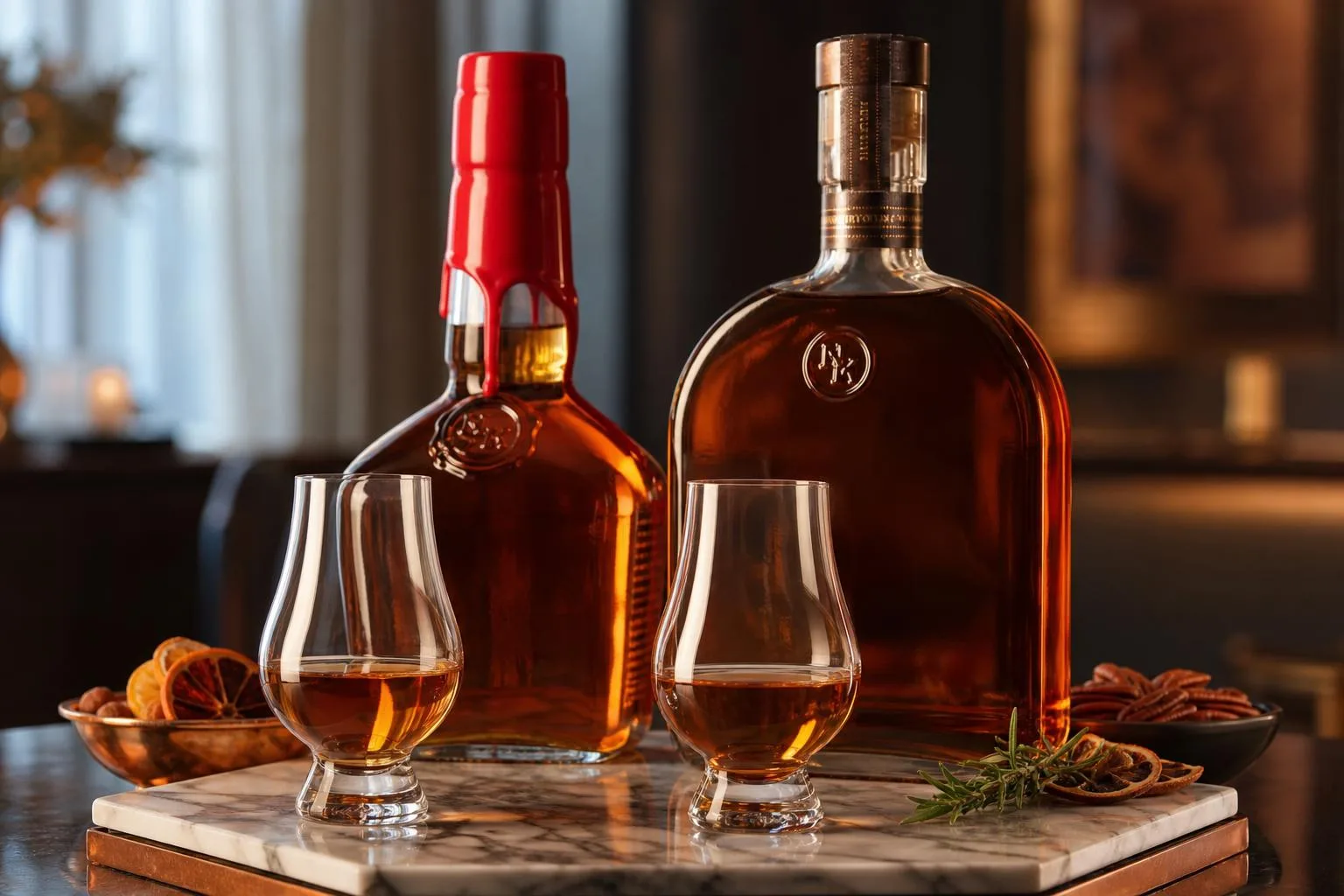
Maker’s Mark and Woodford Reserve are close in bottle strength, but they are built very differently. The biggest variables are grain recipe, still type, barrel management, and how much dilution happens before bottling.
Those production choices change sweetness, spice, texture, and finish more than brand reputation does. In side-by-side tasting, the same glassware, pour size, and rest time also matter.
| Factor | Maker’s Mark | Woodford Reserve Bourbon |
| Mash bill | 70% corn, 16% red winter wheat, 14% malted barley | 72% corn, 18% rye, 10% malted barley |
| Bottling proof | 90 proof, 45% ABV | 90.4 proof, 45.2% ABV |
| Flavor grain | Wheat | Rye |
| Barrel entry proof | 110 proof | 110 proof |
The mash bill is the clearest fork in the road. Maker’s Mark uses wheat instead of rye, which usually gives a rounder profile: caramel, vanilla, soft bread, and less pepper.
Woodford’s 18% rye brings more clove, cinnamon, dried fruit, and sharper oak spice.
Proof is less decisive here because the bottles are nearly identical in strength. Woodford is only 0.4 proof higher, a difference most drinkers will not isolate.
Texture and heat differences usually come from distillation, maturation, and oak extraction instead.
- Distillation: Maker’s Mark uses copper column distillation followed by a doubler, a classic Kentucky bourbon setup. Woodford Reserve is associated with copper pot stills and Brown-Forman’s broader production system, contributing to a denser, more roasted, fruit-and-spice profile.
- Barrel entry: Both brands enter barrels at 110 proof, below the U.S. legal maximum of 125 proof for bourbon. Lower entry proof can preserve more water-soluble sugars and reduce some aggressive tannin extraction.
- Warehousing: Maker’s Mark is known for rotating barrels during aging to reduce floor-to-floor variation. Woodford leans into Brown-Forman’s heat-cycled, oak-driven maturation style, which can emphasize toasted wood, cocoa, and spice.
- No age statement: Neither standard bottle carries an age statement, so flavor target matters more than a fixed age number. Batches are selected to match the house profile, not to meet a label age.
Serving conditions can change the result quickly. A 1.5-ounce pour rested for 10 minutes in a tulip glass will show more aroma than a fresh pour in a rocks glass. One large ice cube will mute grain character and highlight oak sweetness.
For cocktails, the same variables still apply. Maker’s softer wheat profile suits Whiskey Sours and bourbon-forward drinks needing sweetness. Woodford’s rye spice and oak structure tend to stand up better in Old Fashioneds and Manhattans.
Verifiable Production Differences
Maker’s Mark and Woodford Reserve can be compared with verifiable production data, not just tasting notes.
The most reliable checks are label proof, bourbon legal standards, disclosed mash bills, bottle codes, and side-by-side tasting under controlled conditions.
Both bottles are Kentucky straight bourbon whiskies, so they must meet the U.S. federal bourbon standard: at least 51% corn, distilled below 160 proof, entered into new charred oak barrels at no more than 125 proof, and bottled at 80 proof or higher.
| Measure | Maker’s Mark | Woodford Reserve Distiller’s Select |
| Label proof | 90 proof, 45% ABV | 90.4 proof, 45.2% ABV |
| Mash bill | 70% corn, 16% red winter wheat, 14% malted barley | 72% corn, 18% rye, 10% malted barley |
| Flavor grain | Wheat, giving a softer profile | Rye, giving more spice |
| Age statement | No age statement | No age statement |
| Legal age implication | At least 4 years as straight bourbon without an age statement | At least 4 years as straight bourbon without an age statement |
Proof is the easiest number to verify. It appears on the front or side label and can be checked against the Alcohol and Tobacco Tax and Trade Bureau’s Certificate of Label Approval database, commonly called COLA.
Mash bills are verified through producer-published specifications. Maker’s Mark publicly identifies its wheated recipe as 70% corn, 16% soft red winter wheat, and 14% malted barley.
Woodford Reserve lists its bourbon recipe as 72% corn, 18% rye, and 10% malted barley.
Age is less exact because neither standard bottle carries an age statement. Under federal labeling rules, straight bourbon under 4 years old must disclose its age. Since neither does, the verifiable minimum is 4 years, not a precise barrel age.
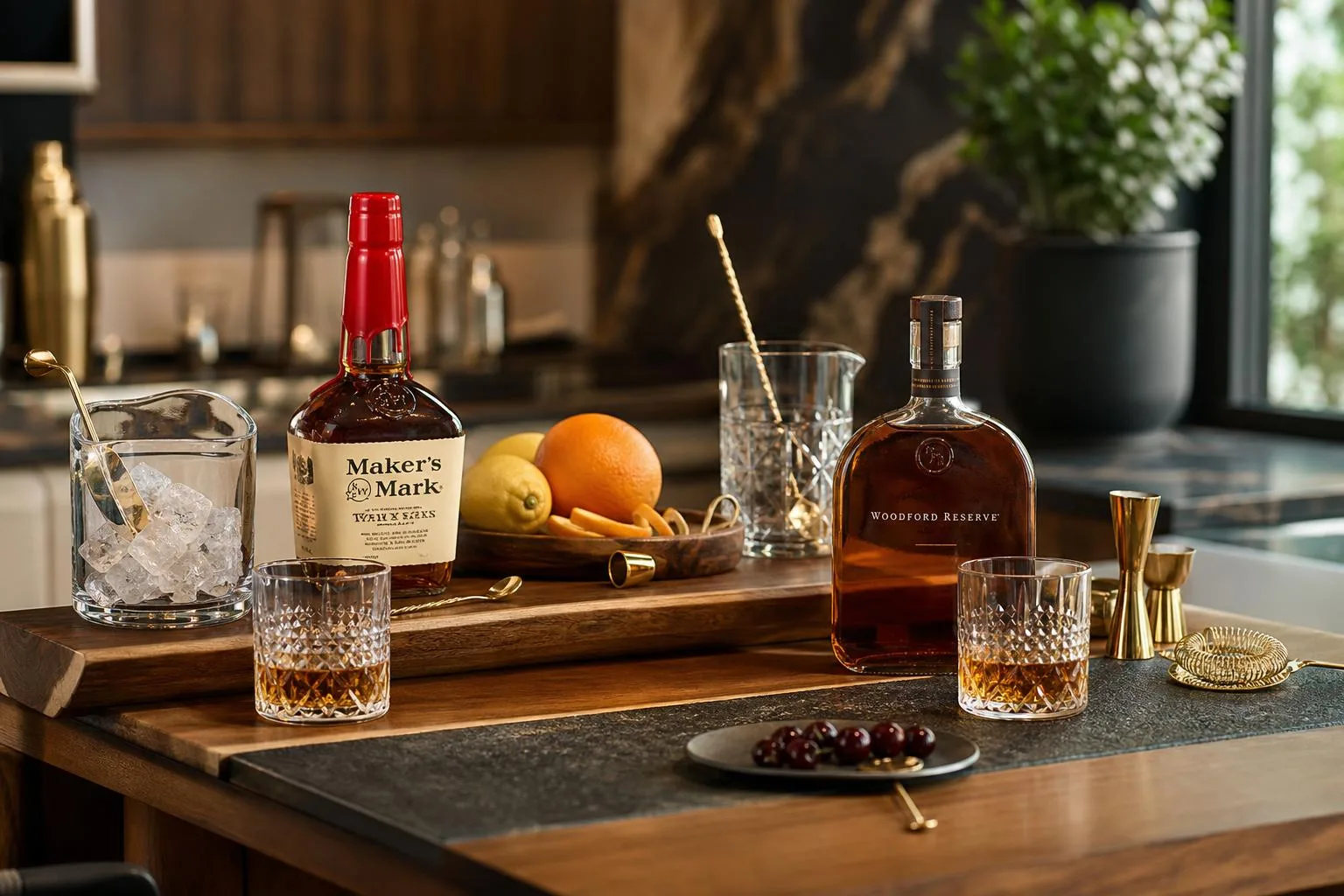
- Check the seal: Maker’s Mark uses its recognizable hand-dipped red wax; Woodford uses a sealed closure and printed labeling. Both should be intact on unopened retail bottles.
- Check the proof: Maker’s Mark should read 45% ABV; Woodford Reserve should read 45.2% ABV.
- Check the label language: “Kentucky Straight Bourbon Whiskey” confirms the stricter straight-bourbon category.
- Check bottle codes: Lot or laser codes help retailers and producers trace production batches if authenticity or storage history is questioned.
For tasting verification, pour equal 0.5-ounce samples into identical glasses at room temperature. Taste neat first, then with two or three drops of water.
Maker’s Mark should show caramel, vanilla, wheat sweetness, and a round finish; Woodford should show vanilla, toasted oak, dried fruit, and rye spice.
Choosing Between Two Premium Bourbons
Maker’s Mark and Woodford Reserve sit in the same mainstream premium bourbon tier, but they solve different problems.
Maker’s is softer and sweeter because it uses wheat instead of rye, while Woodford is spicier, oakier, and built around a more complex grain recipe.
Against other common shelf competitors, the biggest differences are mash bill, proof, and flavor intensity. These factors matter more than age statements, since most of these bottles are non-age-stated bourbons blended for a consistent house profile.
| Bourbon | Proof | Mash bill / grain note | Typical profile | Best use |
| Maker’s Mark | 90 proof | 70% corn, 16% soft red winter wheat, 14% malted barley | Caramel, vanilla, soft baking spice, round finish | Neat, rocks, easy Old Fashioned |
| Woodford Reserve Bourbon | 90.4 proof | 72% corn, 18% rye, 10% malted barley | Dried fruit, cocoa, orange, spice, toasted oak | Manhattan, Old Fashioned, sipping |
| Buffalo Trace | 90 proof | Low-rye bourbon mash bill; exact recipe undisclosed | Brown sugar, light oak, mint, gentle rye spice | Versatile cocktails and neat pours |
| Knob Creek 9 Year | 100 proof | Traditional rye bourbon mash bill; exact recipe undisclosed | Peanut, charred oak, vanilla, fuller spice | Spirit-forward cocktails, higher-proof sipping |
| Four Roses Small Batch | 90 proof | Blend of four recipes using 20% and 35% rye mash bills | Red fruit, honey, clove, floral spice | Neat drinking and balanced cocktails |
Maker’s Mark vs Buffalo Trace
Buffalo Trace is usually the closer all-purpose alternative if you want a 90-proof bourbon with balance. Maker’s tastes rounder and less peppery because of the wheat, while Buffalo Trace brings a little more herbal rye lift and a drier finish.
Woodford Reserve vs Knob Creek 9 Year
Knob Creek 9 Year is the bolder alternative to Woodford. It is 100 proof and carries a stated 9-year age, so it brings more oak, char, and concentration. Woodford is smoother in texture, but Knob Creek stands up better in whiskey-heavy cocktails.
Woodford Reserve vs Four Roses Small Batch
Four Roses Small Batch is more floral and fruit-driven than Woodford. Its high-rye recipes add clove and red-fruit notes without the cocoa-orange character that defines Woodford.
Choose Four Roses for brightness; choose Woodford for richer dessert spice.
- Choose Maker’s Mark if you want a softer wheated bourbon with caramel, vanilla, and minimal rye bite.
- Choose Woodford Reserve if you prefer spice, dried fruit, cocoa, and a slightly more structured finish.
- Choose Knob Creek when proof and oak intensity matter more than smoothness.
- Choose Buffalo Trace for an approachable, balanced house bourbon when available at normal retail pricing.
ABV Calories and Drinking Practicalities
Maker’s Mark and Woodford Reserve are both full-strength bourbons, not “light” spirits.
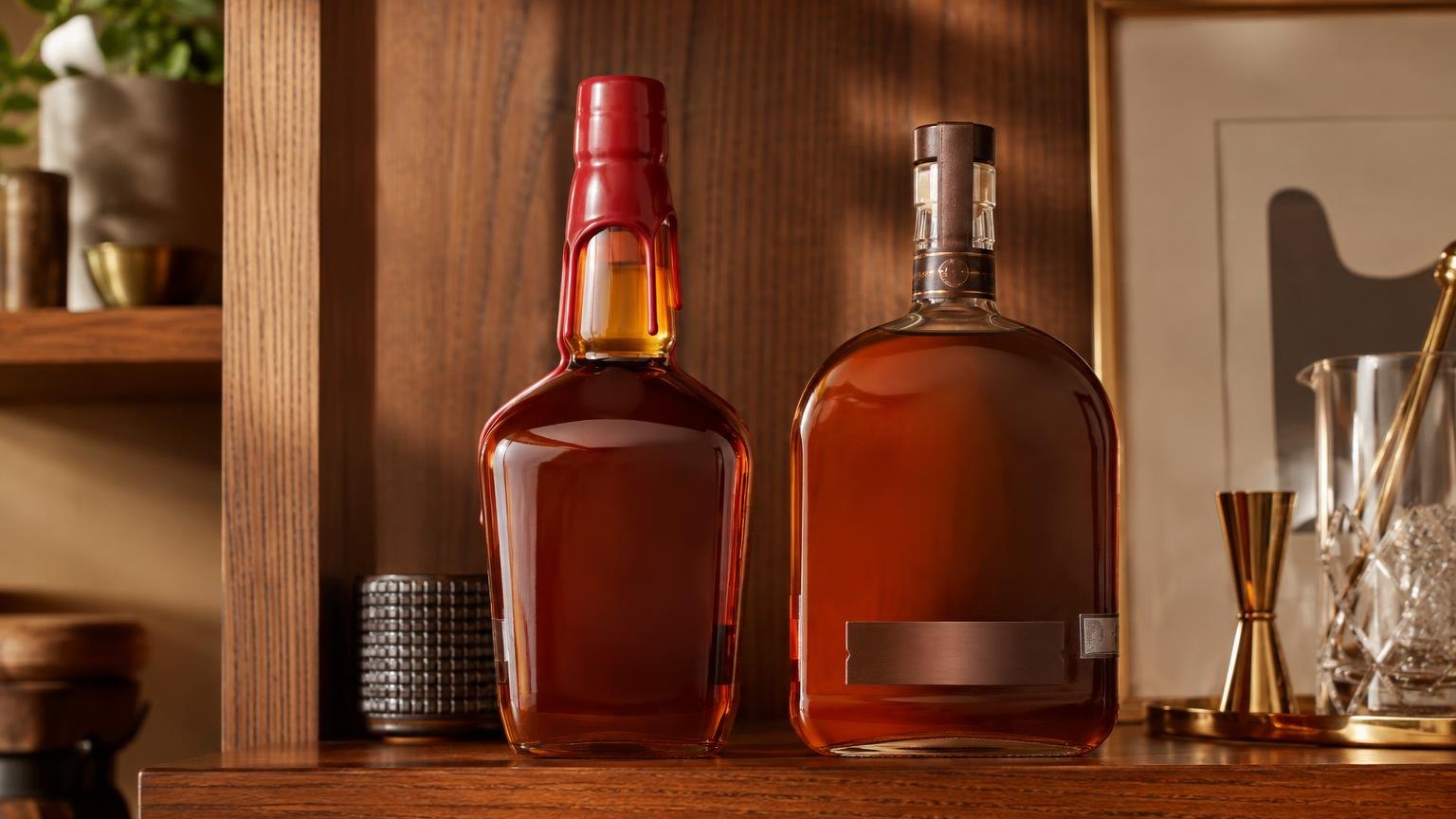
The practical health difference between them is tiny: Maker’s Mark is 45% ABV, while Woodford Reserve Distiller’s Select is 45.2% ABV.
A 1.5-ounce neat pour of either whiskey is slightly more than one U.S. standard drink, because a standard drink contains 0.6 fluid ounces of pure alcohol, according to the CDC and NIAAA.
| Bourbon | ABV / Proof | Alcohol in 1.5 oz | U.S. standard drinks | Approx. calories |
| Maker’s Mark | 45% ABV / 90 proof | 0.675 fl oz ethanol | 1.13 | About 110 |
| Woodford Reserve | 45.2% ABV / 90.4 proof | 0.678 fl oz ethanol | 1.13 | About 111 |
The calorie estimate comes from alcohol itself: ethanol provides about 7 calories per gram. Straight bourbon has no meaningful carbohydrates, fat, or protein, and straight bourbon is not sweetened after distillation.
- Measure pours. Use a jigger. A “home pour” can easily become 2 to 3 ounces, which is 1.5 to 2.25 standard drinks at these proofs.
- Do not drive after tasting. Even one 1.5-ounce pour can impair reaction time, judgment, and lane control. Use a rideshare or designated driver.
- Eat first. Food slows alcohol absorption. High-protein or higher-fat snacks are more useful than tasting whiskey on an empty stomach.
- Add water if needed. A few drops or a small splash can reduce burn and slow sipping without changing the alcohol already consumed.
- Watch medications. Alcohol can interact dangerously with opioids, benzodiazepines, sleep aids, antidepressants, antihistamines, and acetaminophen.
- Avoid alcohol during pregnancy. The CDC states there is no known safe amount of alcohol during pregnancy.
For side-by-side tasting, pour 0.5 ounces of each bourbon rather than 1.5 ounces.
That gives you enough aroma and flavor to compare Maker’s softer wheat profile with Woodford’s spicier rye character while keeping total alcohol near 0.75 standard drinks.
Store both bottles upright, tightly closed, and away from sunlight or heat. Once opened, flavor is usually best within 1 to 2 years if the bottle is less than half full, because oxygen exposure gradually dulls aroma.
Side by Side Tasting Results
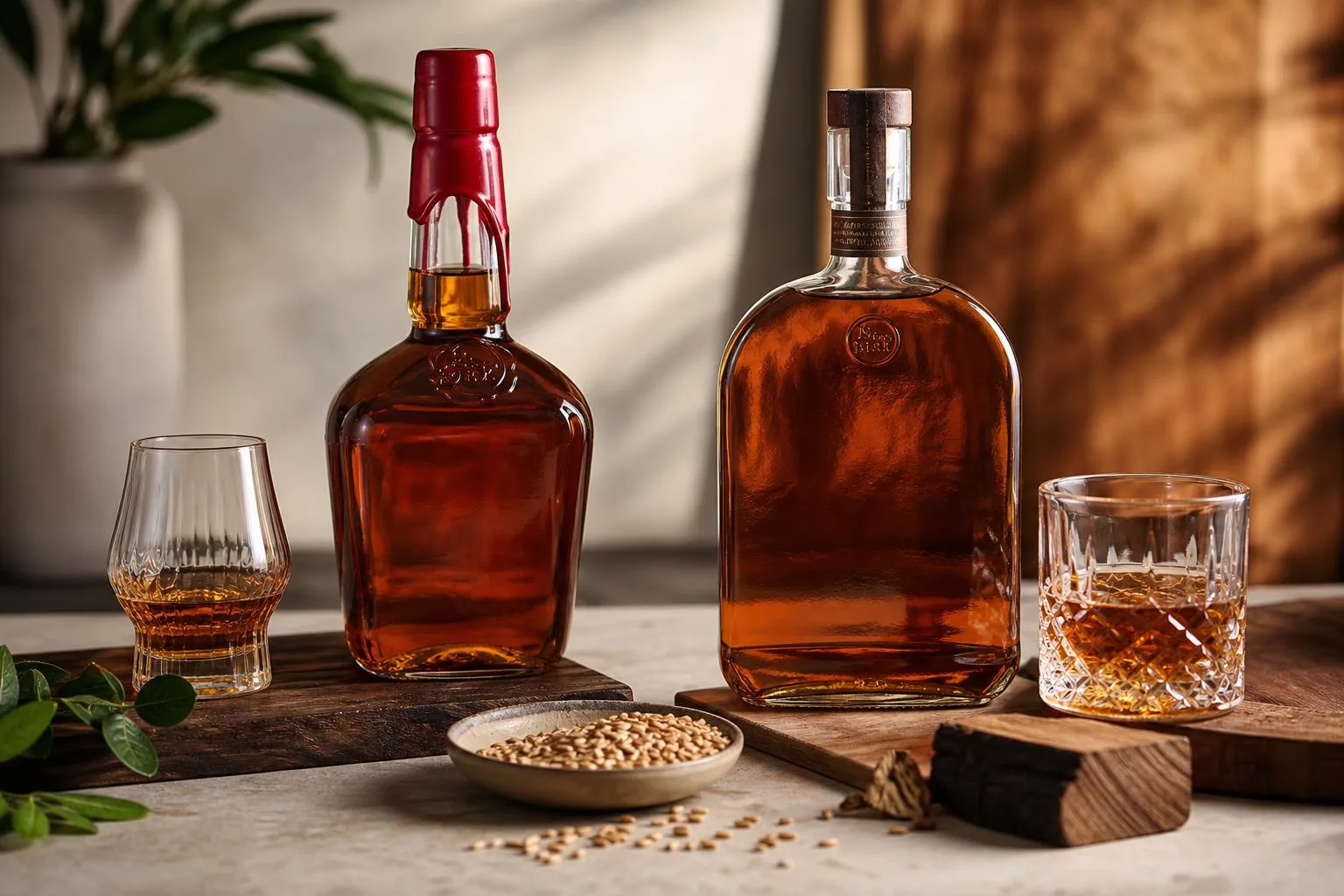
We tasted Maker’s Mark and Woodford Reserve side by side over three sessions, using fresh 750 ml bottles bought in the U.S. retail market.
Each bourbon was poured at 1.5 oz, rested 10 minutes, and evaluated neat, with water, and in two standard cocktails.
Both bottles sit in the same proof range, but they behaved differently in the glass. Maker’s Mark came across rounder and softer, while Woodford Reserve showed more oak, baking spice, and structure.
| Test item | Maker’s Mark | Woodford Reserve |
| Label proof / ABV | 90 proof / 45% ABV | 90.4 proof / 45.2% ABV |
| Known grain profile | Wheated bourbon; red winter wheat replaces rye | 72% corn, 18% rye, 10% malted barley |
| Neat pour tested | 1.5 oz per taster | 1.5 oz per taster |
| Rest time before nosing | 10 minutes | 10 minutes |
| Water trial | 3 drops per 1 oz | 3 drops per 1 oz |
| Old Fashioned trial | 2 oz bourbon, 0.25 oz 2:1 syrup, 2 dashes bitters | 2 oz bourbon, 0.25 oz 2:1 syrup, 2 dashes bitters |
Neat, Maker’s Mark gave us caramel, vanilla, soft wheat bread, orange peel, and a light cinnamon finish. Across repeated pours, it had less mid-palate grip and less drying oak than Woodford Reserve.
Woodford Reserve showed darker notes: toasted oak, cocoa, rye spice, brown sugar, and a slightly nutty finish. Its 0.4-proof advantage was not perceptible as heat, but its rye content made it taste firmer and more aromatic.
- With 3 drops of water, Maker’s Mark opened toward honey and vanilla frosting, but lost some finish length after about 12 minutes in the glass.
- With 3 drops of water, Woodford Reserve kept more spice and oak definition, especially on the second sip after dilution.
- In a 2 oz Old Fashioned, Maker’s Mark produced a softer, sweeter drink that needed less syrup to avoid tasting candied.
- In the same Old Fashioned build, Woodford Reserve gave better bitters integration and a drier finish.
Our practical takeaway: Maker’s Mark is the better pick for drinkers who want a smoother, wheat-forward bourbon under 46% ABV. Woodford Reserve is better when rye spice, oak, and cocktail structure matter more than softness.
Mistakes in Comparing Them
Most bad Maker’s Mark vs Woodford Reserve comparisons start by treating them as interchangeable “premium bourbons.” They are both Kentucky straight bourbon, but their grain recipes, proof, production style.
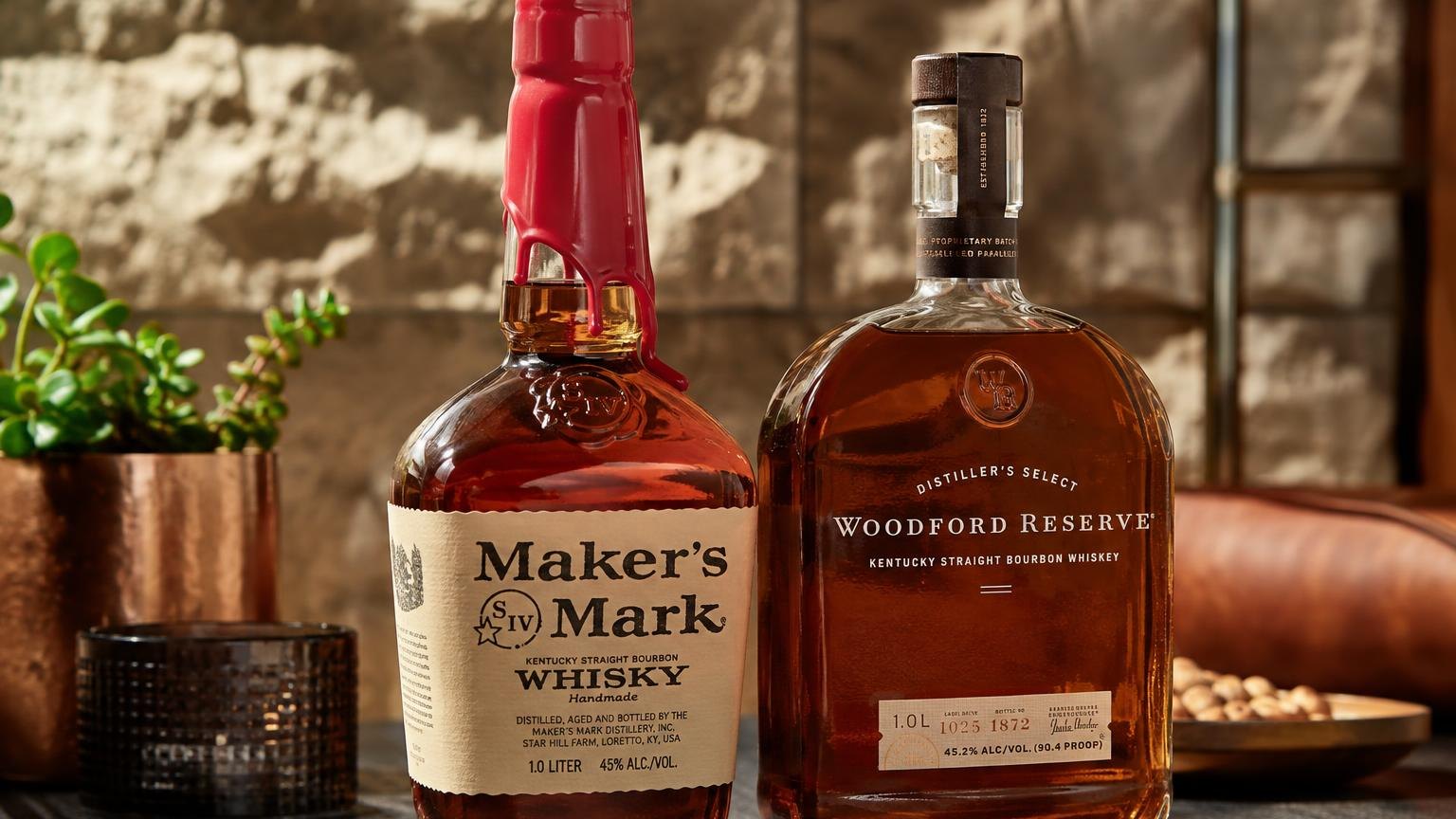
And flavor targets are meaningfully different.
The biggest mistake is assuming price or bottle shape tells you which one is “better.” In tasting, Maker’s Mark usually reads softer and sweeter, while Woodford Reserve often shows more spice, oak, and dried-fruit notes.
| Fact | Maker’s Mark | Woodford Reserve Bourbon |
| Proof | 90 proof, 45% ABV | 90.4 proof, 45.2% ABV |
| Grain profile | Wheated bourbon; wheat replaces rye | Rye-recipe bourbon |
| Commonly cited mash bill | 70% corn, 16% soft red winter wheat, 14% malted barley | 72% corn, 18% rye, 10% malted barley |
| Kentucky production home | Loretto, Kentucky | Versailles, Kentucky |
Myth: Maker’s Mark is “less bourbon” because it uses wheat
False. U.S. bourbon must be made from at least 51% corn, distilled below 160 proof, entered into new charred oak barrels at no more than 125 proof, and bottled at 80 proof or higher.
Wheat is completely legal as a flavoring grain. Maker’s Mark is still bourbon; it simply uses wheat instead of rye to reduce peppery spice and emphasize caramel, vanilla, and roundness.
Myth: Woodford Reserve is stronger because it tastes spicier
Not meaningfully. Woodford is 90.4 proof, only 0.4 proof higher than Maker’s Mark. That equals just 0.2 percentage points more alcohol by volume.
The bolder impression mostly comes from rye, oak structure, fermentation character, and flavor concentration, not a major alcohol difference.
Myth: Maker’s Mark is only for beginners
This is a common bar-room shortcut, not a serious tasting conclusion. Maker’s Mark is approachable, but its consistency, wheated profile, and use in cocktails make it a benchmark bourbon for comparison.
Many experienced drinkers use it to calibrate sweetness, wheat softness, and barrel influence before tasting higher-proof wheated bourbons.
Myth: Woodford Reserve is always the better Old Fashioned bourbon
Woodford’s rye spice and oak work very well with bitters and orange oil. Still, Maker’s Mark can make a rounder, softer Old Fashioned when the drink is built with less sugar.
- Use Woodford Reserve when you want baking spice, orange peel, cocoa, and firmer oak.
- Use Maker’s Mark when you want caramel, vanilla, red fruit, and a gentler finish.
- Avoid over-sweetening Maker’s Mark cocktails; its wheated profile already leans sweet.
Myth: Age statements explain the difference
Neither flagship bottle carries a standard front-label age statement. Both meet Kentucky straight bourbon requirements, meaning at least two years in new charred oak, though typical maturation is longer.
Do not judge these two by age alone. Grain recipe and house style explain more of the difference than the number of years in barrel.
Common Questions
Is Maker’s Mark or Woodford Reserve sweeter?
Maker’s Mark usually tastes sweeter and softer because it uses red winter wheat instead of rye as the secondary grain, with a mash bill of 70% corn, 16% wheat, and 14% malted barley.
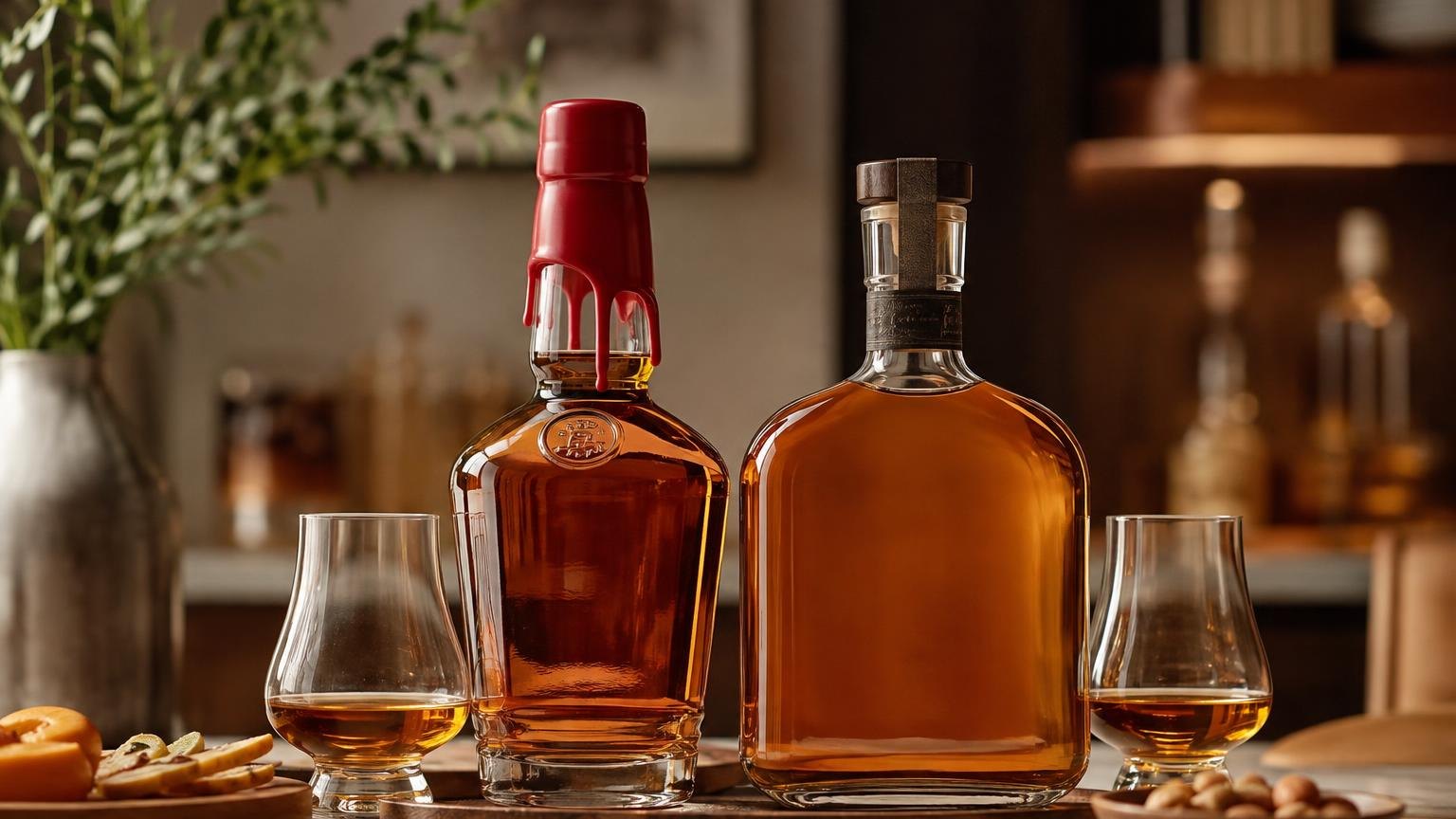
Woodford Reserve is also sweet, but its 72% corn, 18% rye, and 10% malted barley mash bill gives it more spice, cocoa, and dry oak balance.
Which bourbon is stronger, Maker’s Mark or Woodford Reserve?
Standard Maker’s Mark is bottled at 90 proof, while standard Woodford Reserve Bourbon is bottled slightly higher at 90.4 proof.
In the glass, the strength difference is minimal, so the bigger contrast comes from flavor: Maker’s is rounder and wheated, while Woodford is spicier and more oak-forward.
Is Maker’s Mark or Woodford Reserve better for Old Fashioneds?
Woodford Reserve is often the better pick for an Old Fashioned because its rye spice and oak structure stand up well to bitters, sugar, and orange peel.
Maker’s Mark makes a softer, sweeter Old Fashioned, which works well if you prefer less spice and a smoother finish.
Which is more expensive, Maker’s Mark or Woodford Reserve?
In most U.S. retail markets, Maker’s Mark is typically the less expensive bottle, often positioned around the mid-$20s to low-$30s for 750 ml.
Woodford Reserve usually costs a bit more, commonly in the low-$30s to low-$40s range, depending on state pricing, taxes, and store markup.
Which bourbon is better for beginners, Maker’s Mark or Woodford Reserve?
Maker’s Mark is usually more beginner-friendly because its wheated recipe gives it a mellow profile with vanilla, caramel, and less peppery bite.
Woodford Reserve is still approachable, but its higher rye content brings more baking spice, toasted oak, and a drier finish that may appeal more after trying a few bourbons.
Related Reading
- What Is A Good Whiskey For A Gift?
- What Is The Most Expensive Bourbon In The World?
- How Many Cups Is 16 Oz?
- How Many Litres Is 20 Gallons?
- Who Makes Kirkland Champagne?
- How To Drink Rye Whiskey? Answer From Expert
- Cava Vs Prosecco: What Is The Difference Between Them?
- All Blog Guides
- Maker’s Mark Official Product Page (2025)
- Woodford Reserve Distiller’s Select Official Product Page (2025)
- U.S. Electronic Code of Federal Regulations — 27 CFR § 5.143 Whisky Standards of Identity (2025)
- Alcohol and Tobacco Tax and Trade Bureau — Distilled Spirits Beverage Alcohol Manual, Chapter 4: Class and Type Designation (2023)
- National Institute on Alcohol Abuse and Alcoholism — What Is a Standard Drink? (2025)
- PubMed — Intoxication With Bourbon Versus Vodka: Effects on Hangover, Sleep, and Next-Day Neurocognitive Performance in Young Adults (2010)
- Kentucky Distillers’ Association — Bourbon 101 (2025)