Drinking alcohol is not a reliable way to kill bacteria inside the body; alcohol can kill many bacteria on surfaces when used at an appropriate concentration.
Alcohol-based hand sanitizers, for example, generally contain 60% to 95% alcohol, and the CDC recommends them when soap and water are unavailable.
That surface-disinfecting effect does not make alcoholic drinks antiseptics or treatments for infection. Alcohol is diluted in beverages, and drinking it does not disinfect the mouth, stomach, or bloodstream.
It can also harm health, especially in excess. Whether alcohol kills bacteria depends on its concentration, contact time, and the surface being treated; a drink is not a substitute for handwashing, a labeled disinfectant, or medical care.
Alcohol’s Antibacterial Action
Alcohol can kill many bacteria when it touches them at a sufficient concentration for sufficient time. That is why ethanol is used in hand sanitizers and surface disinfectants.
The ethanol in an alcoholic drink, however, is not a practical way to disinfect your mouth, stomach, or body.
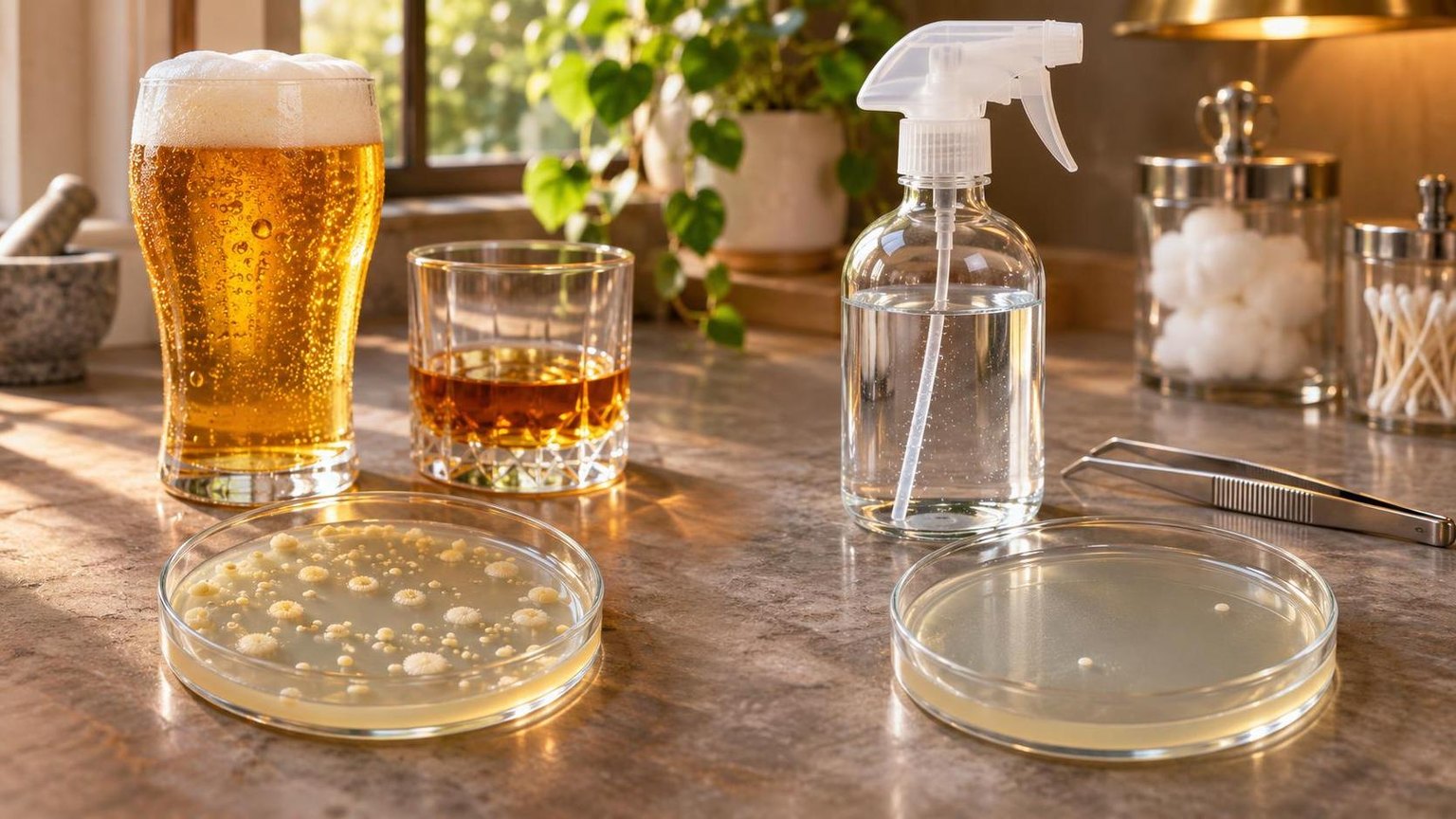
How ethanol damages bacteria
Ethanol disrupts bacterial cell membranes and denatures proteins needed for the cell to function. Water helps this process: pure alcohol is not necessarily a better disinfectant.
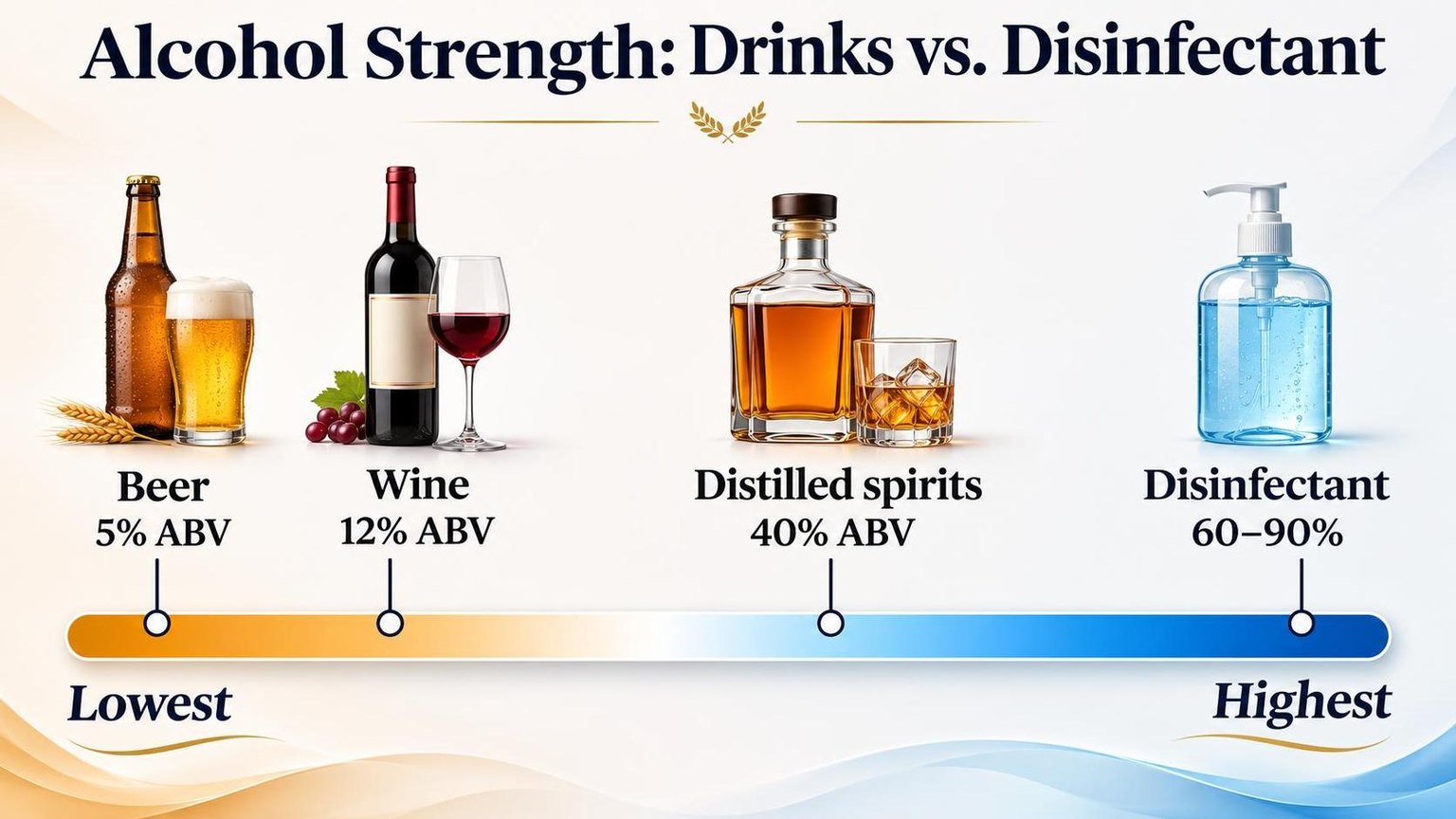
The CDC identifies alcohol solutions within the range shown below as having optimal bactericidal activity under appropriate use conditions (CDC, Guideline for Disinfection and Sterilization in Healthcare Facilities,.
“Chemical Disinfectants: Alcohol”).
| Product or solution | Typical alcohol concentration by volume | What the figure means |
| Beer | 5% ABV | A common drinking strength, not a disinfectant formulation |
| Wine | 12% ABV | Stronger than beer, but not a disinfectant formulation |
| Distilled spirits | 40% ABV | Stronger than wine, but below the CDC’s optimal bactericidal range |
| Alcohol disinfectant solution | 60%–90% alcohol in water | The CDC’s stated range for optimal bactericidal activity |
These figures compare alcohol concentrations, not guaranteed results. A sanitizer’s effectiveness also depends on covering the target surface, using enough product, and allowing it to remain wet as directed.
If hands are visibly dirty or greasy, the CDC recommends washing with soap and water rather than relying on hand sanitizer (CDC, Hand Sanitizer Facts).
What alcohol does not kill reliably
Alcohol is active against many common bacteria, but it does not destroy bacterial spores. The CDC specifically notes that alcohol is not sporicidal and cannot be used to sterilize medical or surgical materials.
Its action against viruses also varies; a claim that alcohol “kills germs” does not mean it kills every pathogen.
Drinking creates a different exposure from disinfecting a surface. Beer, wine, and spirits are diluted further by saliva and stomach contents, while the alcohol itself is absorbed into the bloodstream.
A drink cannot coat every part of the digestive tract at a controlled disinfecting concentration or contact time.
That distinction matters when considering food poisoning or an infection: alcohol in a beverage is not a treatment for bacteria already in the body.
Drinking more will raise your exposure to alcohol, not reliably target the organism causing illness. Use established food-safety practices to prevent infection and seek medical advice for concerning symptoms.
Which Bacteria Alcohol Kills
Alcohol kills many bacteria in their active, growing form, but it does not kill every kind of bacterial cell.
The distinction matters: a hand sanitizer can reduce common bacteria on clean hands, while leaving behind the hardy spores produced by certain other bacteria.
According to the CDC’s Guideline for Disinfection and Sterilization in Healthcare Facilities, ethyl alcohol and isopropyl alcohol are rapidly bactericidal against vegetative bacteria.
At appropriate concentrations, they disrupt cell membranes and denature proteins. Their effectiveness depends on concentration, contact with the organism, and whether dirt or other material interferes.
Examples of bacteria alcohol can kill
- Staphylococcus aureus: Alcohol-based hand rubs act against this common skin bacterium, including methicillin-resistant S. aureus (MRSA). Antibiotic resistance does not, by itself, confer resistance to alcohol disinfection.
- Escherichia coli and Salmonella: These foodborne bacteria are susceptible to properly used alcohol disinfectants. That does not make an alcoholic drink a safe way to disinfect contaminated food or treat an infection.
- Mycobacterium tuberculosis: The CDC classifies appropriately concentrated alcohols as tuberculocidal. This refers to direct disinfection under suitable conditions, not to drinking alcohol as a treatment for tuberculosis.
Concentration is a practical limit. The CDC recommends hand sanitizers containing at least the alcohol concentration shown below when soap and water are unavailable.
Its disinfection guidance describes a higher working range for alcohol solutions used against many microorganisms; neither recommendation applies to beverages.
| Product or solution | Typical alcohol concentration | What the number means |
| CDC-recommended hand sanitizer | At least 60% | Minimum alcohol concentration for consumer hand sanitizer |
| Alcohol disinfectant solution | 60%–90% | Range the CDC describes as optimally bactericidal |
| Standard distilled spirit | 40% alcohol by volume | Below that disinfectant range; not a reliable sanitizer |
| Typical table wine | About 12%–15% alcohol by volume | Far below that disinfectant range |
Alcohol’s major bacterial blind spot is spores. The CDC states that alcohols are not sporicidal.
Bacteria such as Clostridioides difficile and Bacillus species can produce spores that survive alcohol exposure, even though their actively growing forms are more vulnerable.
That is why the CDC advises washing hands with soap and water rather than relying on sanitizer when caring for someone with C. difficile. Soap and water help remove spores physically; an alcohol hand rub cannot be counted on to kill them.
Even for susceptible bacteria, “kills bacteria” does not mean sterilizes a surface or eliminates an infection.
Alcohol must reach the organisms, and hands need enough product to remain wet while it is rubbed over all surfaces until dry. Visibly dirty or greasy hands should be washed with soap and water.
Drinking alcohol is a different exposure altogether. Beer, wine, and spirits are not formulated or used like disinfectants, and alcohol absorbed from a drink does not reach infection sites at bacteria-killing concentrations.
An alcoholic beverage cannot replace food-safety practices, handwashing, or prescribed antibiotics.
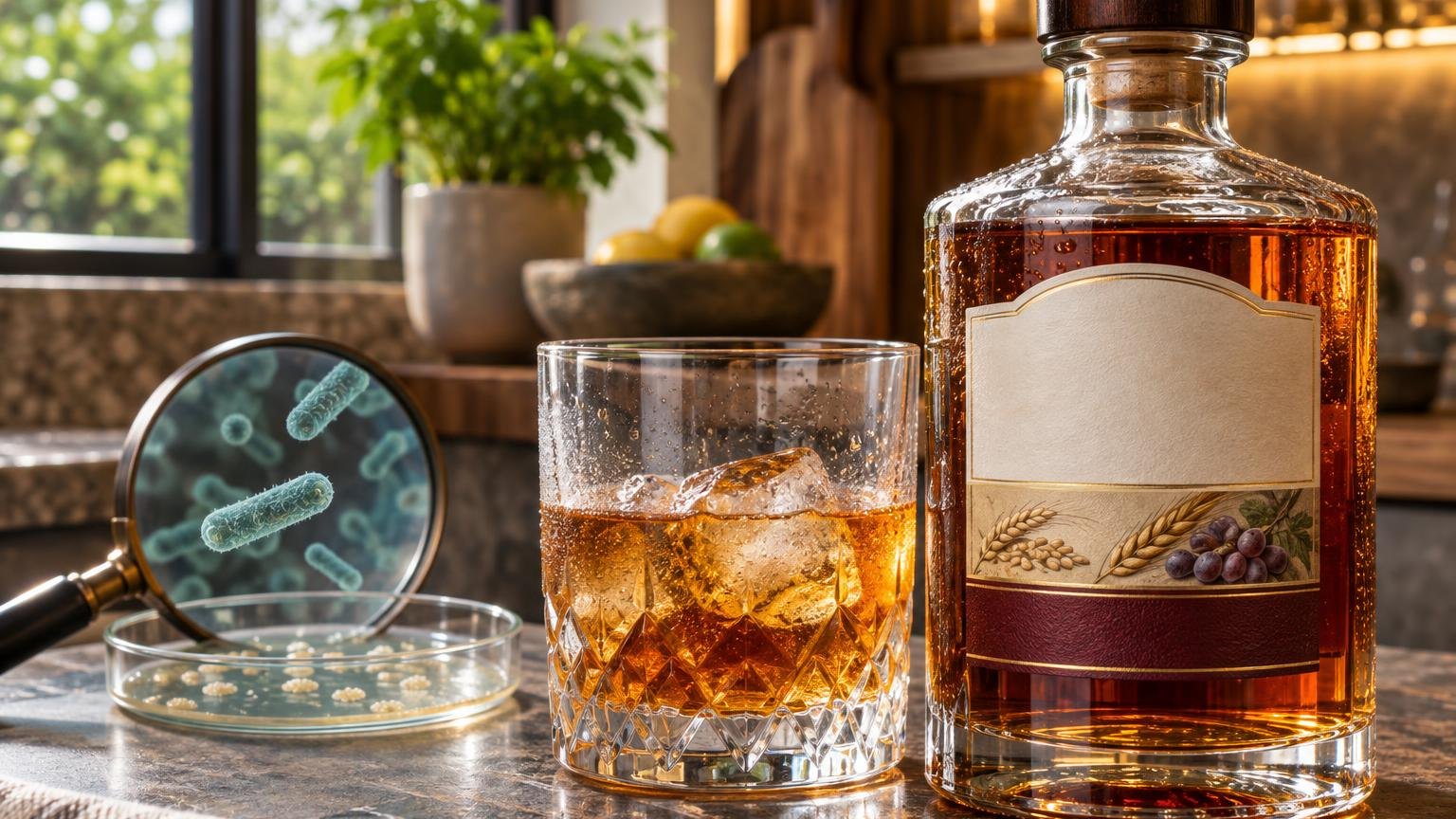
Why Drinking Alcohol Won’t Disinfect You
Alcohol can kill many microbes when applied at an effective concentration directly to a surface. Drinking beer, wine, or spirits does not create those conditions in your throat, stomach, blood, or lungs.
Your body dilutes and processes ethanol rather than using it as a disinfectant.
| Product | Typical or recommended alcohol concentration | What the figure means |
| Beer | About 5% alcohol by volume | Typical beverage strength |
| Wine | About 12% alcohol by volume | Typical beverage strength |
| Distilled spirits | About 40% alcohol by volume | Typical beverage strength |
| Alcohol-based hand sanitizer | At least 60% alcohol | CDC recommendation for use on hands when soap and water are unavailable |
| Alcohol used for healthcare disinfection | Generally 60%–90% alcohol | Range described in the CDC’s disinfection guideline for appropriate external uses |
These figures describe the products before use, not the concentration an organ experiences after a drink.
Hand sanitizer works by contacting microbes on your hands; healthcare disinfection likewise requires an appropriate product, concentration, and application. Neither is a model for treating an infection inside a person.
A drink briefly touches the mouth and throat, then mixes with saliva and stomach contents. Ethanol is absorbed through the digestive tract and enters body fluids at a far lower concentration than the original beverage.
It cannot remain at a disinfecting concentration around bacteria throughout the body without causing severe poisoning.
Consider a throat infection: swallowing spirits cannot reliably reach bacteria embedded in inflamed tissue, and contact with the throat is brief. A lung infection presents an even clearer problem.
The drink travels down the esophagus, not into the airways where the infection is located.
The stomach is not disinfected either. Its contents dilute a drink, and some organisms can survive in protected locations. Helicobacter pylori, for example, lives within the stomach’s mucus layer and can cause ulcers.
The American College of Gastroenterology’s treatment guidance calls for prescribed drug regimens, not alcoholic beverages.
Nor is every microbe equally susceptible to alcohol. The CDC’s Guideline for Disinfection and Sterilization in Healthcare Facilities notes that alcohols are not effective against bacterial spores.
Even an appropriately concentrated disinfectant has limits; a beverage that has been swallowed is not a dependable treatment for any infection.
Drinking to “fight germs” can instead make recovery harder. The National Institute on Alcohol Abuse and Alcoholism states that excessive drinking weakens immune defenses.
Alcohol can also irritate the stomach and cause impairment, while heavy use raises the risk of alcohol poisoning.
Do not drink rubbing alcohol, hand sanitizer, or surface disinfectant in an attempt to increase the dose. These products are not beverages and can cause serious poisoning.
For a suspected bacterial infection, seek medical advice about diagnosis and treatment rather than trying to disinfect yourself by drinking.
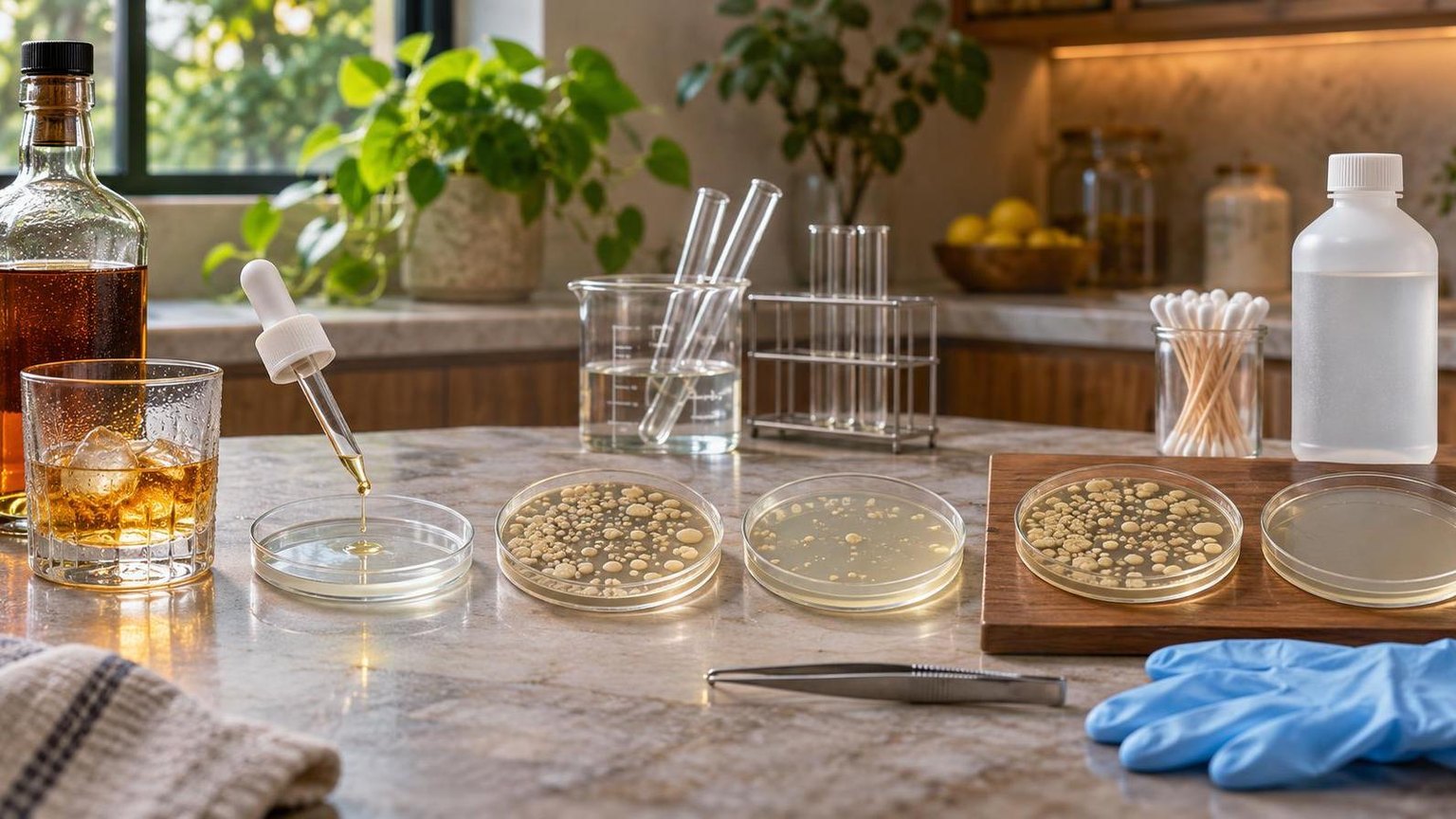
Alcohol Strength and Contact Time
Alcohol can kill many bacteria, but strength alone does not determine whether it works. The alcohol must reach the organism and remain in contact long enough to act.
Those conditions are very different on clean hands, a wet surface, and inside the body.
Strength matters
Alcohol damages bacterial membranes and denatures proteins. Water helps that process, so pure alcohol is not automatically a better disinfectant.
The Centers for Disease Control and Prevention (CDC) identifies the effective range for ethyl and isopropyl alcohol in its Guideline for Disinfection and Sterilization in Healthcare Facilities.
| Product or use | Alcohol concentration | What the number means |
| Typical beer | About 5% ABV | A beverage strength, not a disinfection claim |
| Typical table wine | About 12% ABV | A beverage strength, not a disinfection claim |
| Typical distilled spirit | 40% ABV | Below the CDC’s effective range for alcohol disinfection |
| Alcohol-based hand sanitizer | At least 60% alcohol | The CDC’s minimum recommendation when soap and water are unavailable |
| Alcohol used as a disinfectant | 60%–90% ethyl or isopropyl alcohol in water | The range the CDC identifies as most effective against bacteria |
ABV describes the alcohol in a drink; it does not establish that the drink will disinfect skin or a surface. Nor does swallowing alcohol expose bacteria throughout the body to the concentration in the bottle.
The drink is diluted and absorbed, while the body’s tissues are exposed to alcohol’s harmful effects.
Contact time matters
For hands, the CDC advises applying enough sanitizer to cover every surface and rubbing until the hands are dry, usually about 20 seconds.
Wiping it off early, using too little, or missing fingertips and spaces between fingers reduces the opportunity for alcohol to contact microbes.
For a surface, follow the disinfectant’s label rather than borrowing a hand-sanitizing rule. The surface must stay visibly wet for the listed contact time.
Alcohol evaporates quickly, which can make a long required exposure difficult unless the item remains immersed or the product is reapplied as its directions permit.
Dirt, grease, and other organic material can also shield bacteria. Clean a visibly dirty surface before disinfecting it, following the product label.
On hands that are visibly dirty or greasy, the CDC recommends soap and water instead of relying on sanitizer.
Alcohol has limits even when its strength and contact time are appropriate. The CDC describes it as effective against vegetative bacteria but not bacterial spores.
An alcohol wipe therefore cannot be assumed to sterilize an object, and a drink cannot treat a bacterial infection.
The relevant question is not simply whether alcohol kills bacteria, but which alcohol product reaches which organisms for how long.
Health Risks of Drinking for Germs
Drinking alcohol is not a way to disinfect your body.
Ethanol can kill some bacteria when applied at an effective concentration to a surface, but beer, wine, and spirits cannot reliably treat an infection—and drinking enough to approach disinfectant concentrations would be dangerous.
Why a drink does not work like a disinfectant
The CDC recommends hand sanitizer containing at least 60% alcohol when soap and water are unavailable. The concentrations in familiar drinks are lower, as the examples below show.
Sanitizer works by contacting germs on the hands; drinking alcohol does not give an infected throat, lung, or bloodstream that treatment.
| Product | Typical alcohol concentration | Intended use |
| Beer | 5% alcohol by volume | Beverage |
| Wine | 12% alcohol by volume | Beverage |
| Distilled spirits | 40% alcohol by volume | Beverage |
| Alcohol-based hand sanitizer | At least 60% alcohol | External use on hands |
The beverage figures are examples used in the National Institute on Alcohol Abuse and Alcoholism’s definition of a U.S. standard drink; actual products vary.
The sanitizer threshold comes from the CDC. Never drink hand sanitizer or rubbing alcohol: these products are not beverages and can cause serious poisoning.
Alcohol also enters the bloodstream and is metabolized; it does not remain at a controlled concentration on every germ inside the body.
An infected wound, urinary tract infection, or pneumonia needs an appropriate diagnosis and treatment, not a drink.
Drinking can make recovery harder
Alcohol may impair the defenses needed to fight an infection. According to NIAAA, drinking heavily on a single occasion can slow the body’s ability to ward off infections even after intoxication ends.
Heavy drinking is also associated with greater susceptibility to illnesses such as pneumonia and tuberculosis.
That matters when a sore throat or stomach illness already makes it difficult to eat, drink water, or rest. Alcohol can worsen dehydration and interfere with sleep.
If you are vomiting, have a fever, or feel faint, prioritize fluids and seek medical advice when symptoms are severe or persist.
Alcohol can also complicate medication use. NIAAA warns that mixing it with medicines may cause harmful interactions; risks depend on the specific drug.
Ask a pharmacist or clinician before drinking while taking antibiotics, pain relievers, cough medicines, or sleep aids rather than assuming all combinations are safe.
For example, alcohol can increase the risk of stomach bleeding with some nonsteroidal anti-inflammatory drugs and dangerous sedation with medicines that depress the central nervous system.
Read the label and follow the prescriber’s instructions. Do not stop a prescribed infection treatment in order to drink.
Finally, using alcohol as a recurring “germ killer” adds risks unrelated to the infection.
The National Cancer Institute identifies alcohol consumption as a cause of several cancers, including mouth, throat, esophageal, liver, colorectal, and breast cancers.
Its ability to disinfect a countertop offers no health benefit when swallowed.
Common Questions
Does alcohol kill bacteria?
Yes, when applied directly at the right concentration. The CDC reports that ethyl and isopropyl alcohol at 60%–90% can kill many bacteria on surfaces, but drinking alcohol does not create those conditions throughout the body.
Can drinking vodka disinfect your body?
No. Typical vodka is 40% alcohol by volume, below the CDC’s 60% minimum for alcohol-based hand sanitizer, and swallowing it further dilutes the alcohol in the digestive tract.
A drink is not a substitute for handwashing, wound care or treatment for an infection.
Does alcohol kill bacteria in your stomach?
Drinking alcohol does not reliably disinfect the stomach or prevent a gastrointestinal infection.
Alcohol mixes with food and digestive fluids and is absorbed into the bloodstream; it does not remain in contact with every bacterium at a disinfecting concentration.
Can alcohol in a drink kill food-poisoning bacteria?
No. Drinking beer, wine or spirits with a meal does not make contaminated food safe. To reduce food-poisoning risk, follow food-safety practices instead; the USDA recommends cooking poultry to an internal temperature of 165°F.
Does a sip of alcohol kill bacteria in your mouth?
A sip of wine or spirits is not an effective substitute for an antiseptic mouth rinse.
Formulated rinses use specific ingredients and directions for use; the American Dental Association recommends brushing twice daily with fluoride toothpaste and cleaning between teeth daily as the foundation of oral hygiene.
Does drinking alcohol help balance gut bacteria?
No. Drinking alcohol is not a proven way to remove harmful bacteria while preserving beneficial ones.
The National Institute on Alcohol Abuse and Alcoholism reports that heavy alcohol use can disrupt the gut microbiome and damage the intestinal barrier.
Can drinking alcohol help your body fight a bacterial infection?
No. Alcohol does not act as an antibiotic inside the body, and the CDC says excessive drinking can weaken the immune system. If you suspect a bacterial infection, seek medical advice rather than using alcohol to try to treat it.
Further Reading
- Does Jarritos Have Alcohol?
- How Much Is 64 Oz?
- Bars Near Charlotte Airport for Drinks and Food
- How Many Oz Is A Water Bottle?
- Is Tequila Bad For Gout?
- How Many Pounds Is 23 Kg?
- Beers from the 80's People Still Remember
- Guinness Extra Stout Vs Draught: Which is Best?
- All Blog Guides
- CDC, Guideline for Disinfection and Sterilization in Healthcare Facilities: Chemical Disinfectants (2008)
- CDC, Guideline for Disinfection and Sterilization in Healthcare Facilities: Summary of Recommendations (2008)
- CDC, Hand Sanitizer Facts (2024)
- FDA, Q&A for Consumers: Hand Sanitizers and COVID-19 (2023)
- World Health Organization, WHO Guidelines on Hand Hygiene in Health Care (2009)
- World Health Organization, Alcohol (2024)
- McDonnell and Russell, Antiseptics and Disinfectants: Activity, Action, and Resistance (1999)
- Kampf and Kramer, Epidemiologic Background of Hand Hygiene and Evaluation of the Most Important Agents for Scrubs and Rubs (2004)