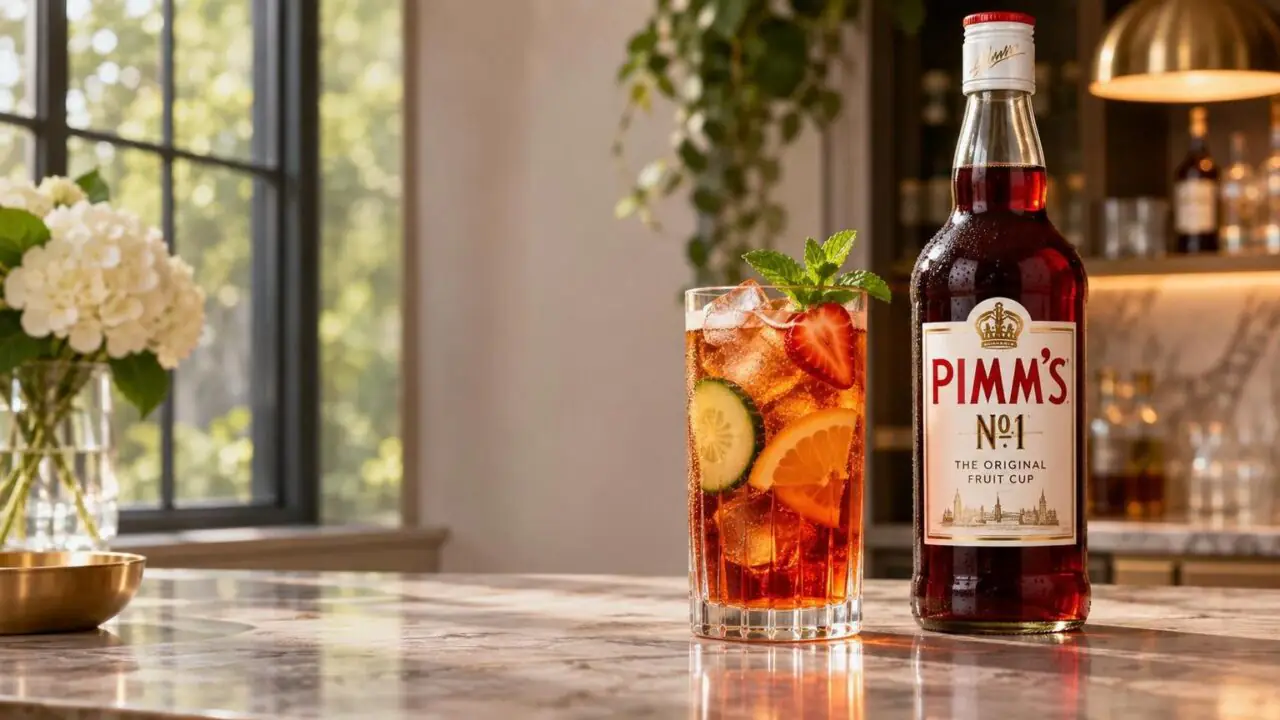
Alcohol content in Pimm’s No. 1 is 25% alcohol by volume (ABV), or 50 proof. That figure applies to the bottled liqueur, not to a finished Pimm’s Cup, which is diluted with lemonade or another mixer and served over ice.
The drink’s final strength depends on the recipe and pour size. A common Pimm’s Cup combines one part Pimm’s No. 1 with three parts lemonade, so the mixture starts at roughly 6.25% ABV before accounting for melting ice.
More Pimm’s or less mixer raises the strength.
Check the bottle label when comparing products: Pimm’s varieties and markets may differ. For a mixed drink, the listed 25% ABV is a useful starting point, but it does not tell you the finished cocktail’s exact alcohol content.
Pimm’s No. 1 Bottled ABV
Pimm’s No. 1 is bottled at 25% alcohol by volume (ABV), or 50 proof in the United States. That means 25% of the liquid in the bottle is pure alcohol by volume—not that a prepared Pimm’s Cup is 25% ABV.
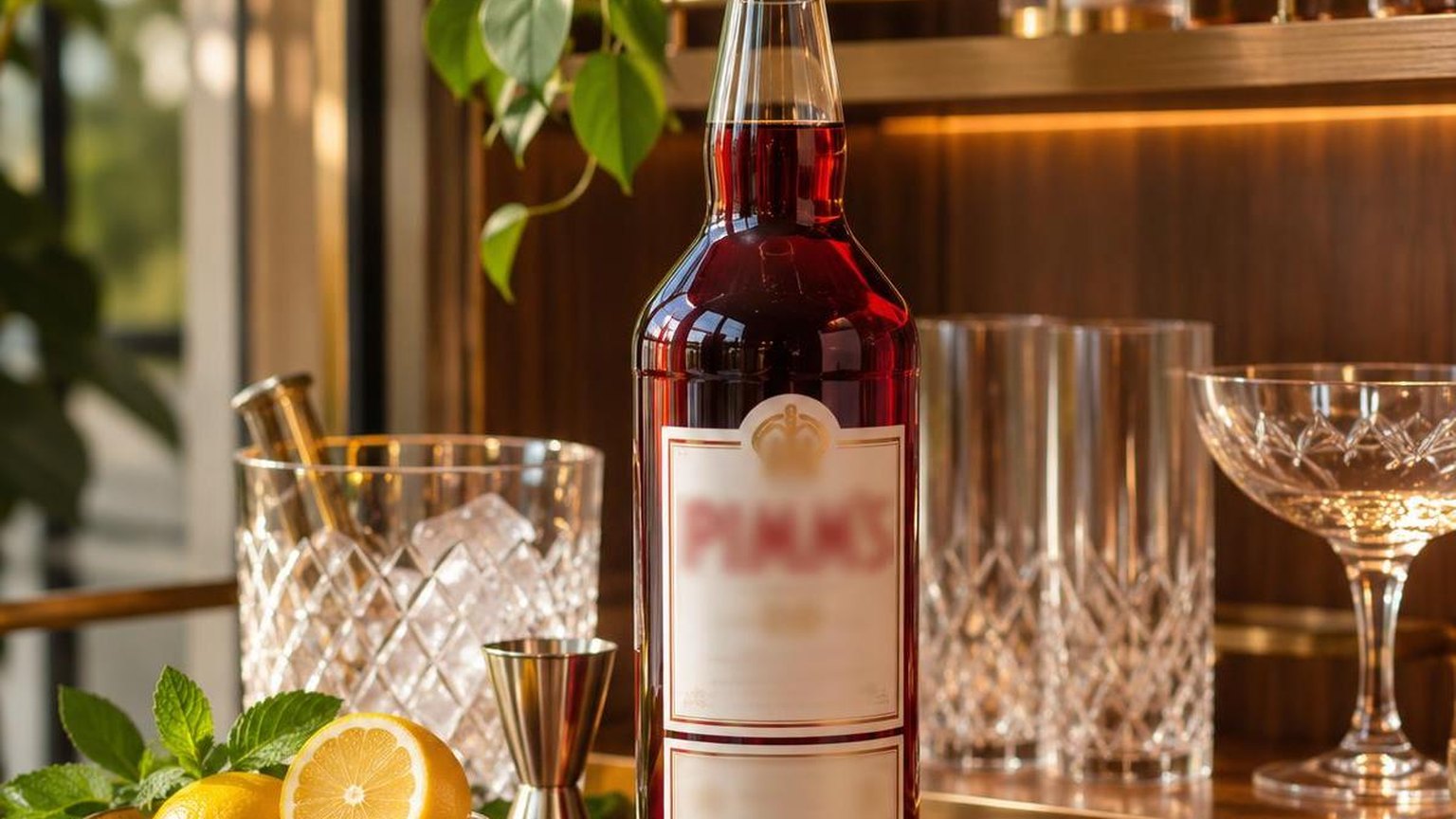
Pimm’s describes No. 1 as a gin-based liqueur. Its bottled strength is lower than the 40% ABV of many standard gins, but it is still a distilled-alcohol product.
The 25% figure applies before you add lemonade, fruit, ice, or any other ingredients.
Pour size determines how much alcohol goes into the glass. The table uses Pimm’s No. 1 at 25% ABV and the U.S. National Institute on Alcohol Abuse and Alcoholism’s definition of one standard drink: 0.6 U.S. fluid ounces of pure alcohol.
| Pimm’s No. 1 poured | Pure alcohol | Approximate U.S. standard drinks |
| 1 fl oz | 0.25 fl oz | 0.42 |
| 1.5 fl oz | 0.375 fl oz | 0.63 |
| 2 fl oz | 0.50 fl oz | 0.83 |
| 3 fl oz | 0.75 fl oz | 1.25 |
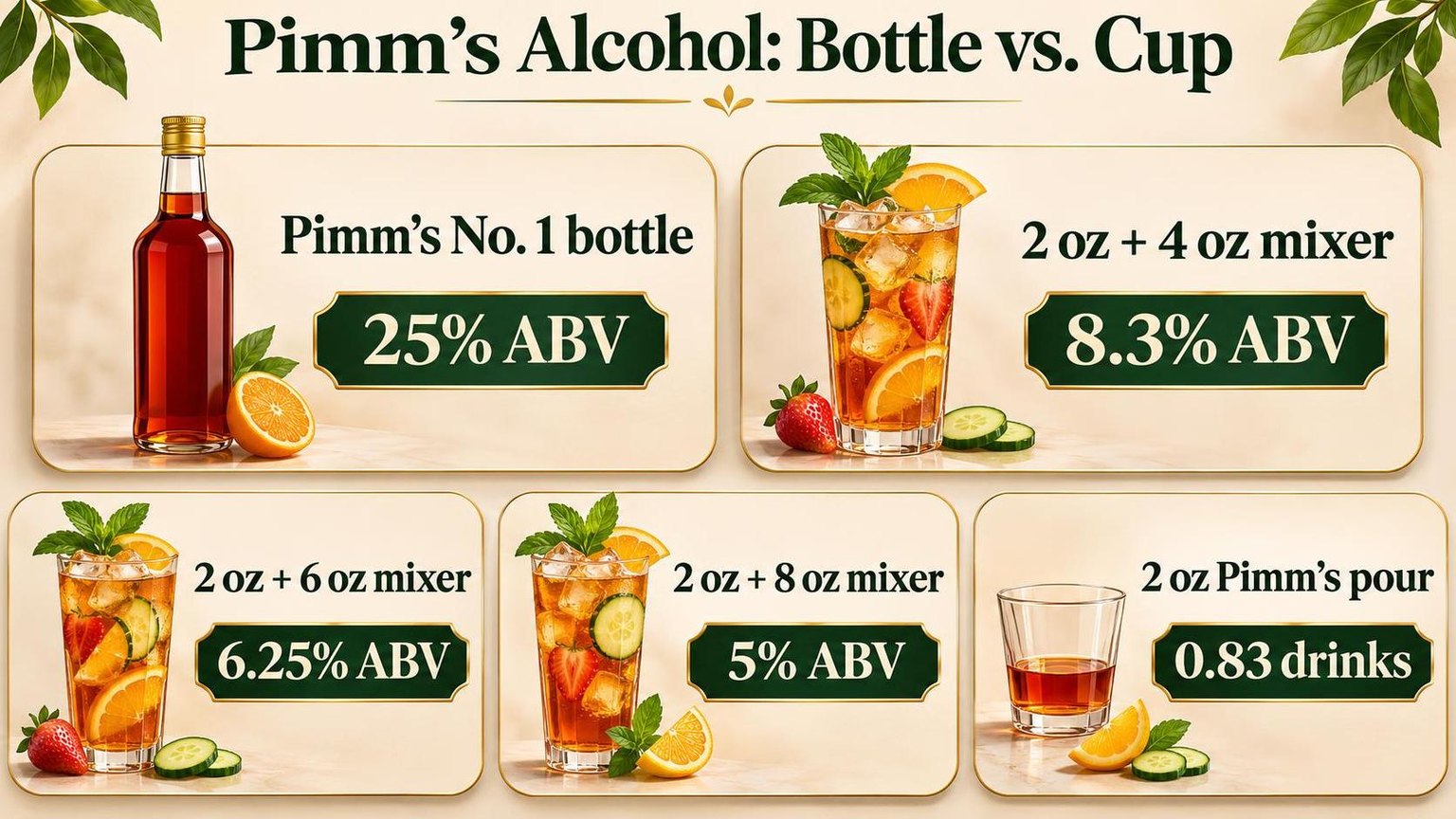
Adding a nonalcoholic mixer lowers the drink’s ABV by increasing its total volume; it does not remove alcohol. For example, a drink made with 2 fluid ounces of Pimm’s No.
1 and 4 fluid ounces of alcohol-free lemonade contains 0.5 fluid ounces of alcohol in 6 fluid ounces of liquid, or about 8.3% ABV before ice melts.
With the same Pimm’s pour and 6 fluid ounces of lemonade, the drink starts at 6.25% ABV. Both versions contain approximately 0.83 U.S. standard drinks.
Melting ice dilutes either drink further, while adding another alcoholic ingredient increases its total alcohol content.
Check the ABV printed on your bottle when calculating a serving. The 25% figure is for Pimm’s No. 1; it should not be assumed for every Pimm’s-branded product or for a premixed, ready-to-drink can.
A cocktail’s strength depends on the specific products and quantities poured.
Pimm’s Cup Alcohol After Mixing
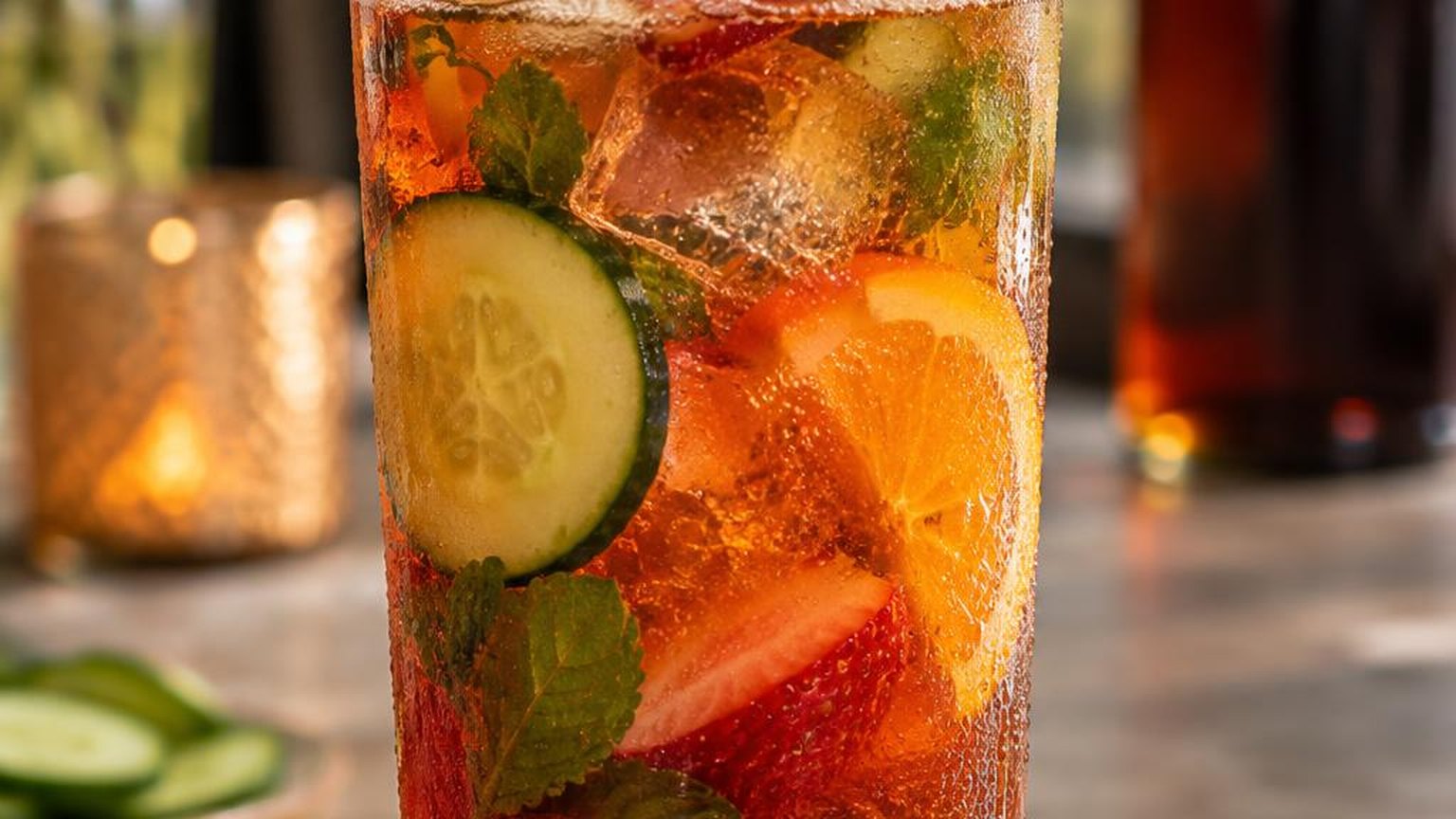
A Pimm’s Cup made with Pimm’s No. 1 and alcohol-free lemonade is much lower in alcohol by volume (ABV) than the spirit-based liqueur in the bottle. Pimm’s No.
1 is 25% ABV; the finished drink’s strength depends chiefly on how much mixer and melted ice are in the glass.
What the mixing ratio changes
Pimm’s serving recipe uses one part Pimm’s No. 1 to three parts lemonade. Before ice melts, that produces a drink at 6.25% ABV: the Pimm’s contributes alcohol, while the lemonade increases the total volume without adding alcohol.
The table assumes a 2-fl-oz pour of Pimm’s No. 1 at 25% ABV and an alcohol-free mixer. Figures are calculated from liquid volumes, not estimated from the size of the glass or the amount of ice added.
| Pimm’s | Alcohol-free mixer | Melted ice water | Finished ABV |
| 2 fl oz | 4 fl oz | None | About 8.3% |
| 2 fl oz | 6 fl oz | None | 6.25% |
| 2 fl oz | 8 fl oz | None | 5% |
| 2 fl oz | 6 fl oz | 2 fl oz | 5% |
To calculate ABV, multiply the Pimm’s volume by 0.25, then divide by the total liquid volume. Ice does not dilute the drink merely by occupying space; it lowers ABV as it melts.
Fruit garnishes add flavor and volume, but they are not a reliable way to measure dilution.
ABV is not the same as alcohol per serving
Every drink in the table contains 0.5 fl oz of pure alcohol because each starts with the same Pimm’s pour.
That is about 0.83 of a US standard drink, using the National Institute on Alcohol Abuse and Alcoholism definition of 0.6 fl oz of pure alcohol per standard drink.
A larger mixer pour lowers ABV without removing alcohol. Conversely, adding gin, sparkling wine, or another alcoholic ingredient raises the alcohol per serving and requires a new ABV calculation.
Check the Pimm’s bottle label, too: these figures apply specifically to Pimm’s No. 1 at 25% ABV.
Alcohol in a Standard Pimm’s Serving
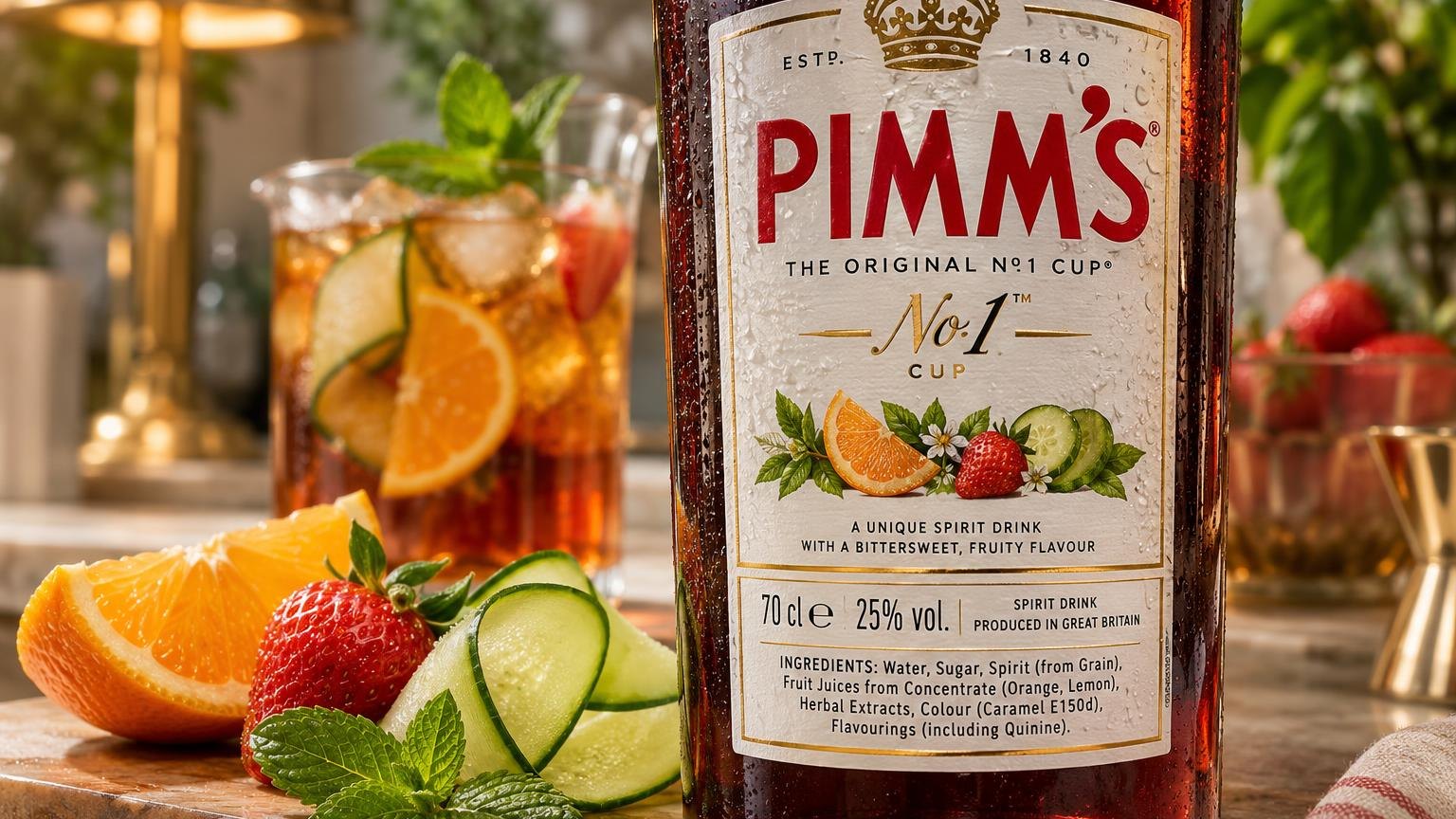
A Pimm’s Cup is usually a mixed drink, not a full-strength pour of Pimm’s. Pimm’s No. 1 is bottled at 25% alcohol by volume (ABV); the alcohol in your glass depends chiefly on how much Pimm’s the bartender pours.
Diageo’s Pimm’s Cup recipe uses 50 milliliters of Pimm’s No. 1 and 150 milliliters of lemonade—a one-to-three ratio.
In Britain, “lemonade” typically means a carbonated lemon-flavored mixer, rather than the still lemonade commonly served in the United States. Either mixer dilutes the drink without changing the amount of alcohol poured.
| Pimm’s No. 1 | Mixer | ABV before ice melts | U.S. standard drinks |
| 1.5 fl oz | 4.5 fl oz | 6.25% | About 0.63 |
| 2 fl oz | 6 fl oz | 6.25% | About 0.83 |
| 2 fl oz | 4 fl oz | About 8.3% | About 0.83 |
The table assumes a 25% ABV bottle, an alcohol-free mixer, and no dilution from melting ice or fruit juice.
It shows why a stronger-tasting cup does not necessarily contain more alcohol: the two-ounce pours contain the same amount of ethanol even though one has less mixer.
According to the National Institute on Alcohol Abuse and Alcoholism, one U.S. standard drink contains approximately 0.6 fluid ounces, or 14 grams, of pure alcohol.
A two-fluid-ounce pour of Pimm’s supplies 0.5 fluid ounces of pure alcohol, equivalent to about 11.7 grams or 0.83 standard drinks. A larger pour increases that total even if the drink is served in a bigger glass with more mixer.
Ice can lower the measured ABV as it melts, but it does not remove alcohol. Strawberries, cucumber, and mint add flavor and volume without materially changing the alcohol calculation.
For a reliable estimate at a bar, ask how much Pimm’s goes into the glass; glass size and sweetness are poor guides to alcohol content.
How Lemonade Changes Pimm’s Strength
Lemonade lowers the alcohol by volume (ABV) of a Pimm’s drink by increasing its volume without adding alcohol. Pimm’s No.
1 is 25% ABV, according to its label; the strength in your glass depends on how much you pour, how much lemonade you add, and whether the ice melts.
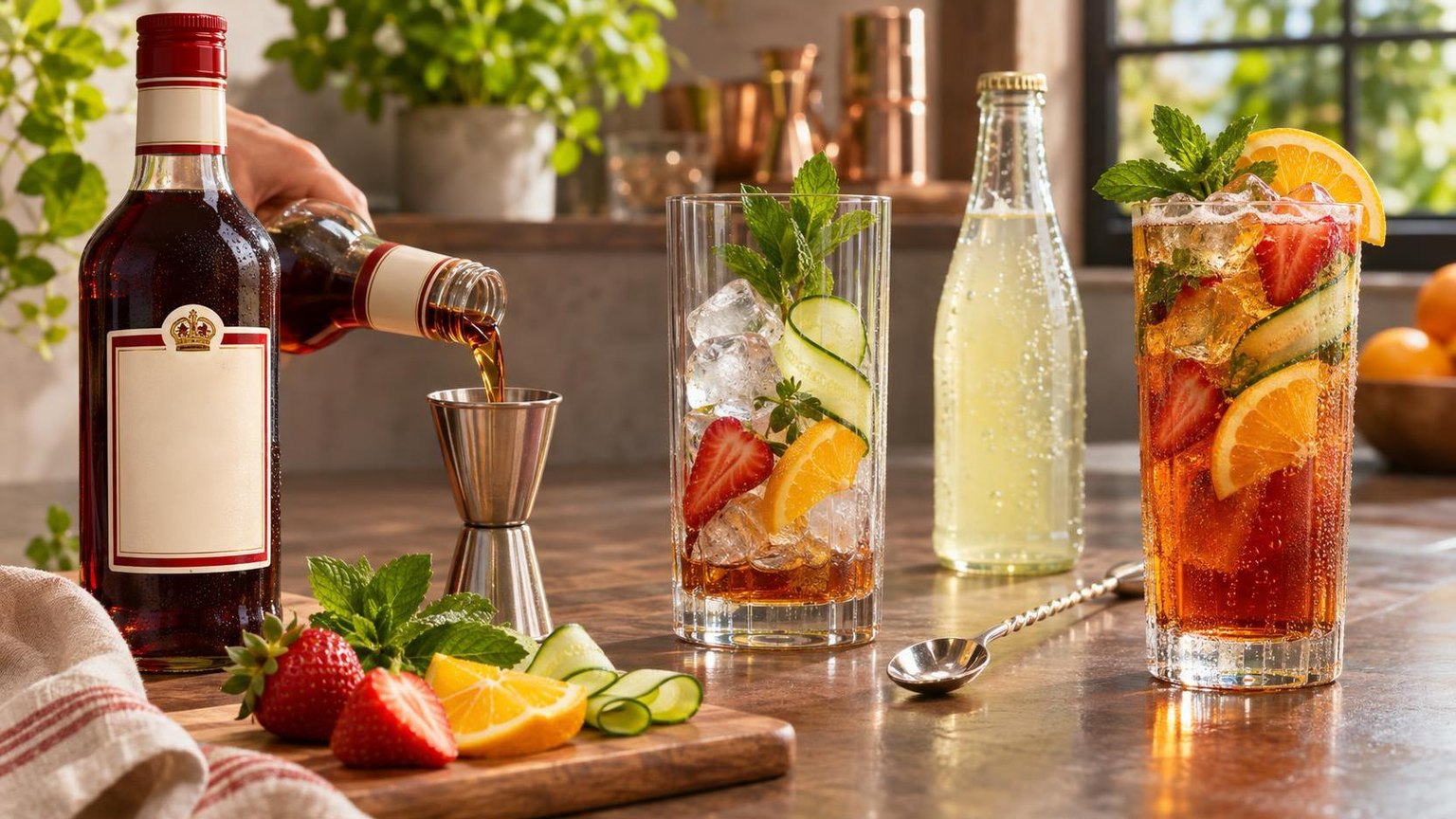
Pimm’s official classic-serve recipe uses one part Pimm’s No. 1 to three parts lemonade. The table shows what happens when the Pimm’s pour stays fixed and the amount of nonalcoholic lemonade changes.
These figures assume the liquids mix evenly and exclude ice melt and fruit.
| Pimm’s No. 1 | Lemonade | Total liquid | Calculated ABV |
| 50 mL | 100 mL | 150 mL | 8.3% |
| 50 mL | 150 mL | 200 mL | 6.25% |
| 50 mL | 200 mL | 250 mL | 5.0% |
The calculation is straightforward: multiply the Pimm’s volume by its 25% ABV to find the volume of pure alcohol, then divide by the total liquid volume.
In the classic serve shown above, the Pimm’s contributes 12.5 mL of pure alcohol. Adding more lemonade changes the drink’s ABV, but not that amount of alcohol.
Ice can dilute it further. If 50 mL of ice melts into the classic serve, its liquid volume increases from 200 mL to 250 mL and its calculated ABV falls from 6.25% to 5.0%.
The actual change depends on how long the drink sits and how much ice melts. Fruit adds volume too, but its effect is difficult to calculate precisely.
In the United States, check what the mixer contains: British-style “lemonade” in Pimm’s recipes generally means a nonalcoholic, carbonated lemon-lime drink, while American lemonade is usually still.
Either can dilute Pimm’s; an alcoholic or “hard” lemonade adds alcohol and requires a different calculation.
Also check the bottle before using these figures: premixed Pimm’s products may have a different labeled ABV than Pimm’s No. 1.
Pimm’s No. 1 Compared With Gin
Pimm’s No. 1 is a gin-based, flavored spirit drink, not a bottle of straight gin.
That distinction matters when estimating alcohol content: the Pimm’s adds less alcohol to a drink than an equal pour of standard-strength gin, even though both may bring botanical flavors.
| Measure | Pimm’s No. 1 | U.S. standard-strength gin |
| Alcohol by volume (ABV) | 25% | 40% |
| Pure alcohol in a 1.5-fl-oz pour | 0.375 fl oz | 0.6 fl oz |
| U.S. standard drinks in that pour | About 0.63 | 1 |
The ABV shown for Pimm’s is the strength commonly listed for Pimm’s No. 1; check your bottle because labeling can vary by market.
U.S. regulations require gin to be bottled at no less than 40% ABV, and individual gins can be stronger. The gin column therefore uses the regulatory minimum, not an average.
The pour calculations use the U.S. National Institute on Alcohol Abuse and Alcoholism definition of a standard drink: approximately 0.6 fluid ounce of pure alcohol.
Multiply the volume poured by the ABV expressed as a decimal to find the pure alcohol. On that basis, an equal-volume pour of standard-strength gin supplies 60% more alcohol than Pimm’s.
Flavor does not reliably signal that difference. Pimm’s has a sweet, fruity, botanical profile, while gin’s defining flavor is juniper.
Adding fruit, cucumber, or herbs to a glass may make a Pimm’s Cup taste lighter, but those garnishes do not remove alcohol from the pour.
Mixer changes the drink’s ABV, not the amount of alcohol already poured. The following example assumes a nonalcoholic mixer and excludes ice melt:
| Pimm’s No. 1 | Mixer | Approximate ABV before ice melts | U.S. standard drinks |
| 1.5 fl oz | 4.5 fl oz | 6.25% | About 0.63 |
For a more accurate estimate at home or in a bar, measure the Pimm’s rather than judging by glass size.
Top-ups can add alcohol without making the drink seem much stronger, particularly when it is served over plenty of ice with a flavorful mixer.
Ready-to-Drink Pimm’s ABV Differences
A ready-to-drink Pimm’s can is much lower in alcohol by volume (ABV) than the Pimm’s No. 1 used to make it, but the two are not served in the same quantities. For a useful comparison, check both the ABV and the volume on the package.
UK product labeling lists Pimm’s No. 1 at 25% ABV and a 250 ml Pimm’s No. 1 & Lemonade can at 5.4% ABV. The table compares those products with two homemade mixes.
Homemade figures are calculated before ice melts and assume the lemonade contains no alcohol.
| Drink | Volume | ABV | Pure alcohol |
| UK Pimm’s No. 1 & Lemonade can | 250 ml | 5.4% | 13.5 ml |
| Pimm’s No. 1, undiluted | 50 ml | 25% | 12.5 ml |
| Homemade: 50 ml Pimm’s plus 150 ml lemonade | 200 ml | 6.25% | 12.5 ml |
| Homemade: 50 ml Pimm’s plus 200 ml lemonade | 250 ml | 5% | 12.5 ml |
The canned drink’s 5.4% ABV is between the two homemade examples, yet its total alcohol is slightly higher. That is because the can holds 250 ml.
Adding more lemonade to a homemade drink lowers its ABV; it does not remove the alcohol already poured from the Pimm’s bottle.
The NHS defines one UK alcohol unit as 10 ml of pure alcohol. On that basis, the 250 ml can in the table contains 1.35 UK units.
A homemade drink made with 50 ml of 25% ABV Pimm’s contains 1.25 UK units, regardless of which lemonade measure shown is used.
These figures describe the specified UK products, not every package bearing the Pimm’s name. Ready-to-drink recipes, container sizes, and labels can differ by product and market.
For a can or bottle bought in the US, use its stated ABV and net volume rather than assuming the UK can’s strength applies.
Checking Alcohol Units on Pimm’s Labels
Start with the alcohol by volume (ABV) printed on the bottle or can, not the strength of a recipe you found online. Pimm’s No.
1 is commonly labeled 25% ABV, meaning that 100 milliliters of the undiluted liqueur contains 25 milliliters of pure alcohol.
Check the exact product and market before calculating: a premixed Pimm’s drink has its own ABV and serving size, which may differ from bottled Pimm’s No. 1.
ABV describes the proportion of alcohol in the liquid; it does not tell you how much alcohol is in a serving until you also know the volume poured.
Calculate units from the amount poured
The UK National Health Service defines one alcohol unit as 10 milliliters of pure alcohol. Its calculation is drink volume in milliliters multiplied by ABV, then divided by 1,000. Using a bottle labeled 25% ABV, the amounts below contain:
| Amount of Pimm’s No. 1 | Pure alcohol | UK alcohol units | Approximate US standard drinks |
| 25 mL | 6.25 mL | 0.625 | 0.35 |
| 50 mL | 12.5 mL | 1.25 | 0.70 |
| 700 mL bottle | 175 mL | 17.5 | 9.9 |
US standard drinks are a different measure. The National Institute on Alcohol Abuse and Alcoholism defines one as about 14 grams, or 0.6 US fluid ounces, of pure alcohol. The US figures in the table are approximate conversions, not UK units.
If a UK bottle shows a total unit count, that figure applies to the entire bottle. Divide it by the number of equal servings to estimate units per serving; do not mistake the bottle total for one glass.
For a premixed can, use its stated ABV and the can’s full volume in the same UK formula.
Adding alcohol-free lemonade increases the drink’s volume but adds no alcohol. A glass made with 50 milliliters of 25% ABV Pimm’s still contains 1.25 UK units after dilution.
An extra pour of Pimm’s, however, increases the units even if the finished drink tastes similarly light.
Common Questions
What is the alcohol content of bottled Pimm’s No. 1?
Pimm’s No. 1 is 25% alcohol by volume (ABV), or 50 proof, according to its product labeling. That figure applies to the bottled spirit before you add a mixer.
What is the alcohol content of a traditional Pimm’s Cup?
Pimm’s recommends one part Pimm’s No. 1 to three parts lemonade. At that ratio, the drink is approximately 6.25% ABV before ice melts, assuming the lemonade contains no alcohol.
How many U.S. standard drinks are in a Pimm’s Cup?
A Pimm’s Cup made with 2 U.S. fluid ounces of Pimm’s No. 1 contains 0.5 fluid ounce of pure alcohol.
That is about 0.83 U.S. standard drinks, using the National Institute on Alcohol Abuse and Alcoholism’s definition of 0.6 fluid ounce of pure alcohol per standard drink.
Is Pimm’s stronger than beer or wine?
In the bottle, Pimm’s No. 1 at 25% ABV is stronger than a typical 5% ABV beer or 12% ABV wine. Mixed with three parts alcohol-free lemonade, however, a Pimm’s Cup is about 6.25% ABV—closer in strength to beer than wine.
Does adding gin increase the alcohol content of a Pimm’s Cup?
Yes. A drink containing 2 ounces of Pimm’s No. 1, 1 ounce of 40% ABV gin and 6 ounces of alcohol-free lemonade is approximately 10% ABV before ice dilution.
The gin also raises its alcohol content to 0.9 fluid ounce of pure alcohol, or 1.5 U.S. standard drinks.
Does melting ice reduce the alcohol in Pimm’s?
Melting ice adds water, so it lowers the drink’s ABV as the drink becomes diluted. It does not remove the alcohol already poured into the glass; fruit garnishes likewise do not change the measured amount of alcohol from the Pimm’s.
Do premixed Pimm’s cans have the same ABV as Pimm’s No. 1?
No. A premixed Pimm’s drink includes a mixer, so its ABV is lower than the bottled spirit’s 25% ABV. Check the specific can’s label for its ABV and volume, since premixed products and serving sizes can differ by market.
- Can You Drink Alcohol with a Straw?
- How Many Shots Are In A Litre?
- What Is A Cigar Ring Gauge & What Does It Mean?
- 7 Essential Reasons Why Do SodaStream Bottles Expire (2026 Guide)
- How Much Is 5 Oz?
- How Many Pounds Is 12 Stone?
- How Many Cinder Blocks On A Pallet? Find Out Now
- How Many Fl Oz In 1 Litre?
- How Many Fl Oz In A Liter?
- All Blog Guides