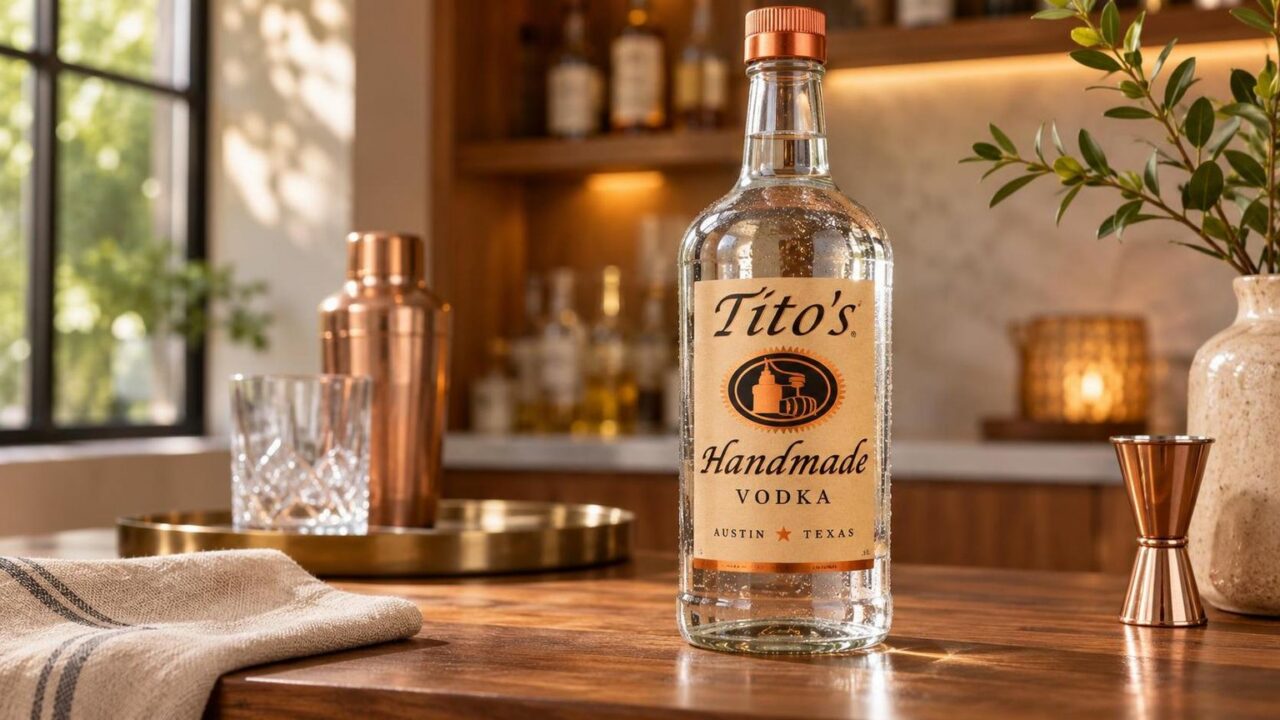
Tito’s Vodka is an unflavored distilled spirit with 0 grams of sugar per serving.
Its ingredient and nutrition information describes the vodka as containing no carbohydrates, including sugar; the corn used to make it does not mean sugar remains in the finished spirit.
A standard 1.5-ounce serving of 80-proof vodka contains about 97 calories, all from alcohol rather than sugar or carbohydrates. Tito’s is bottled at 40% alcohol by volume, or 80 proof.
Those figures apply to the plain, unflavored vodka, not to cocktails or flavored drinks made with it.
Mixers such as juice, soda, and syrups can add substantial sugar, so check those ingredients when estimating a drink’s total.
For a simple low-sugar option, serve Tito’s with soda water and a squeeze of fresh citrus; the vodka itself contributes no sugar.
Does Tito’s Vodka Contain Sugar
No. Tito’s Handmade Vodka reports zero grams of sugar and zero grams of carbohydrates in a standard serving of its unflavored vodka. That does not make it calorie-free: the alcohol itself supplies nearly all of the drink’s energy.
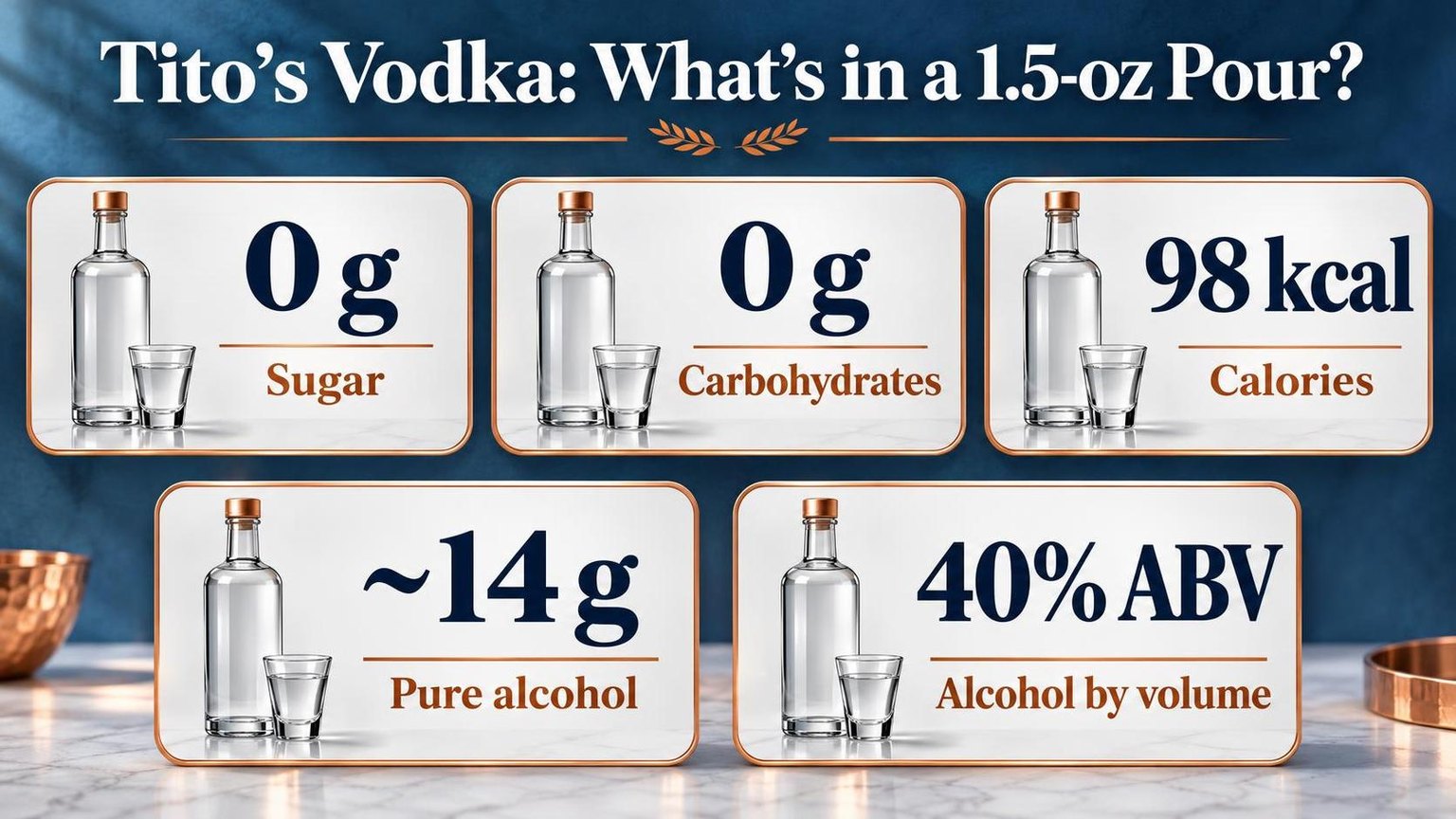
Tito’s lists 98 calories for a 1.5-fluid-ounce serving, along with zero grams of sugar and carbohydrates. Its vodka is bottled at 40% alcohol by volume, or 80 proof.
The larger serving below is a calculation based on doubling Tito’s published serving, not a separate nutrition claim from the brand.
| Amount of Tito’s | Sugar | Carbohydrates | Calories |
| 1.5 fluid ounces | 0 g | 0 g | 98 |
| 3 fluid ounces | 0 g | 0 g | About 196 |
Those figures apply to Tito’s poured straight, over ice, or mixed with plain water or unsweetened sparkling water. A cocktail’s sugar content depends on everything added to the glass.
Juice, regular soda, sweetened tonic water, lemonade, syrups, and liqueurs can add sugar even though the vodka contributes none.
There is a practical reason a vodka made from corn can still have no sugar in the bottle.
During production, fermentable sugars are converted into alcohol; distillation then separates alcohol and other volatile compounds from the liquid left behind.
The fact that corn was the starting ingredient does not mean corn sugar remains in the finished spirit.
Alcohol also explains the calories. A 1.5-fluid-ounce pour of 40% ABV vodka contains approximately 14 grams of pure alcohol, which provides about 98 calories using the standard estimate of seven calories per gram of alcohol.
The National Institute on Alcohol Abuse and Alcoholism identifies that pour as one U.S. standard drink.
“Vodka” alone, however, is not a promise that every brand contains absolutely no sugar. U.S. regulations permit vodka to contain up to two grams of sugar per liter under 27 CFR § 5.142.
Tito’s reported zero-sugar figure is the relevant information for Tito’s; the legal allowance matters when making claims about vodka as an entire category.
A mildly sweet taste is not a reliable sugar test, either. Alcohol, serving temperature, and a mixer can affect perceived sweetness without changing Tito’s published sugar figure.
If you are tracking intake, measure the pour and check the nutrition information for each mixer separately. A generous pour increases alcohol and calories even when sugar stays at zero.
In short, Tito’s unflavored vodka is a zero-sugar, zero-carbohydrate spirit according to Tito’s published nutrition information.
For a drink made with Tito’s, the sugar question is usually about the other ingredients; the calorie and alcohol questions still apply to the vodka itself.
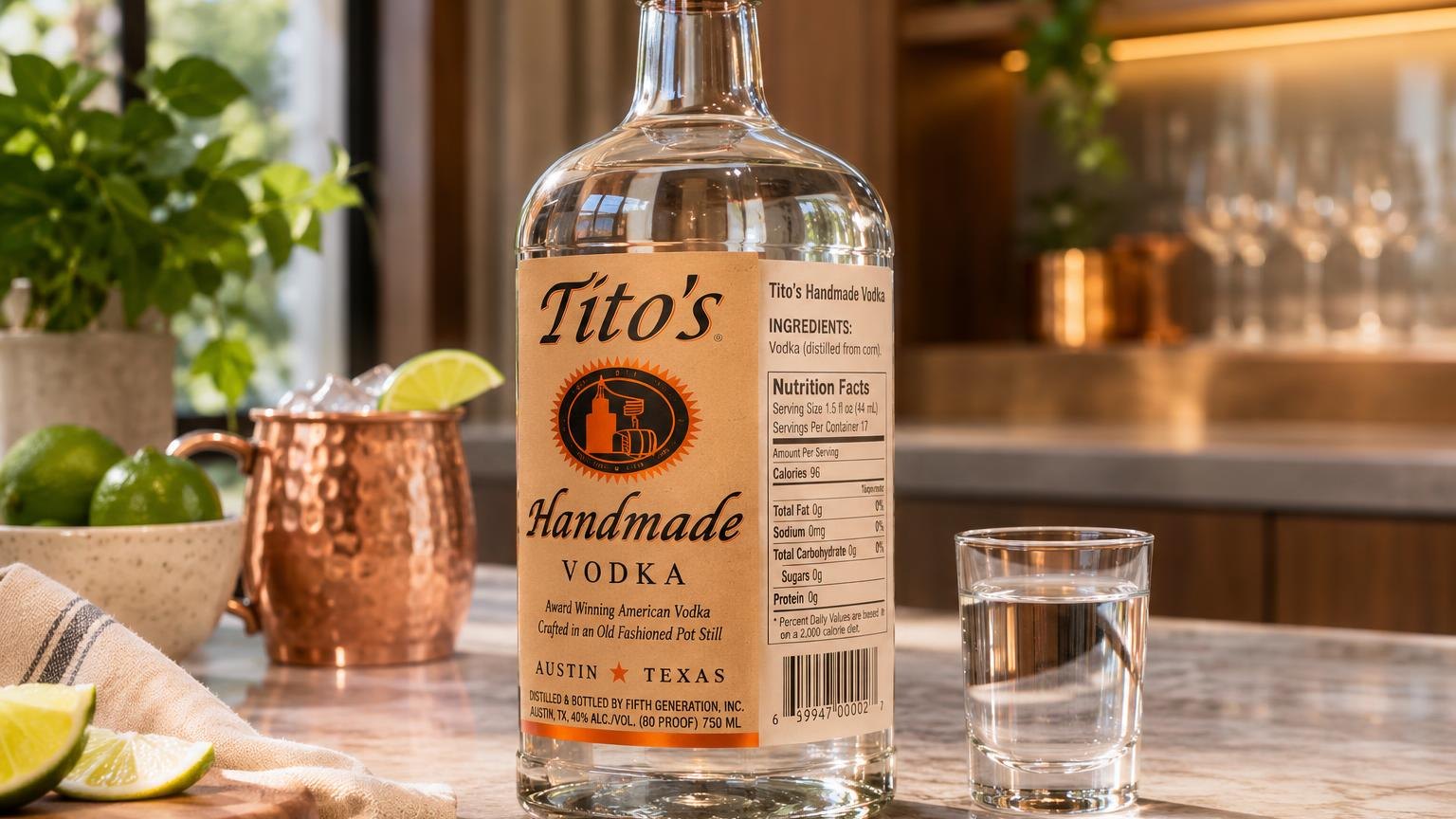
Tito’s Nutrition Facts Per Serving
A 1.5-fl-oz serving of Tito’s Handmade Vodka contains about 98 calories and 0 grams of sugar. Tito’s also reports 0 grams of carbohydrates per serving.
Those calories come from alcohol, not from sugar left over from the corn used to make the vodka.
Calories and nutrients by pour size
Tito’s is bottled at 40% alcohol by volume (ABV), or 80 proof.
Its published nutrition figures use a 1.5-fl-oz serving—the same amount the National Institute on Alcohol Abuse and Alcoholism (NIAAA) defines as one U.S. standard drink of 40% spirits.
| Tito’s pour | Approximate calories | Sugar | Carbohydrates | Approximate pure alcohol |
| 1 fl oz | 65 | 0 g | 0 g | 9.3 g |
| 1.5 fl oz | 98 | 0 g | 0 g | 14 g |
| 2 fl oz | 131 | 0 g | 0 g | 18.7 g |
The 1.5-fl-oz calorie figure and zero-sugar, zero-carbohydrate figures come from Tito’s published product information.
The other calorie figures are proportional estimates, rounded to whole calories; the alcohol amounts are calculated from the pour volume and 40% ABV. Actual pours can be larger than they look.
Alcohol supplies approximately 7 calories per gram, compared with 4 calories per gram from carbohydrate, according to the NIAAA. Roughly 14 grams of pure alcohol in a standard Tito’s pour therefore account for about 98 calories.
Plain Tito’s has no reported fat or protein, either.
What “zero sugar” does—and does not—cover
Tito’s starts with corn, which supplies fermentable material during production.
Fermentation and distillation produce and separate alcohol; the grain’s carbohydrates do not carry over into the finished vodka in a nutritionally meaningful amount.
The relevant number for a drinker is the sugar reported for the bottled spirit, not its starting ingredient.
These figures apply to straight Tito’s, whether served neat, over ice, or mixed with plain water or unsweetened soda water.
A vodka cranberry, lemonade, tonic, or sweetened flavored mixer has a different nutrition profile because the mixer can add sugar, carbohydrates, and calories.
For example, do not use the table’s zero-sugar entry as the total for a mixed drink. Check the mixer’s nutrition label and add its stated serving to the vodka pour.
Likewise, a double made with 3 fl oz of Tito’s contains about 196 calories before any mixer is added.
Finally, “no sugar” does not mean “no calories” or “no alcohol.” Tito’s remains an alcoholic drink at 40% ABV.
If you are tracking intake, measure the vodka as well as the mixer: the difference between a 1.5-fl-oz standard drink and a 2-fl-oz pour is about 33 calories.
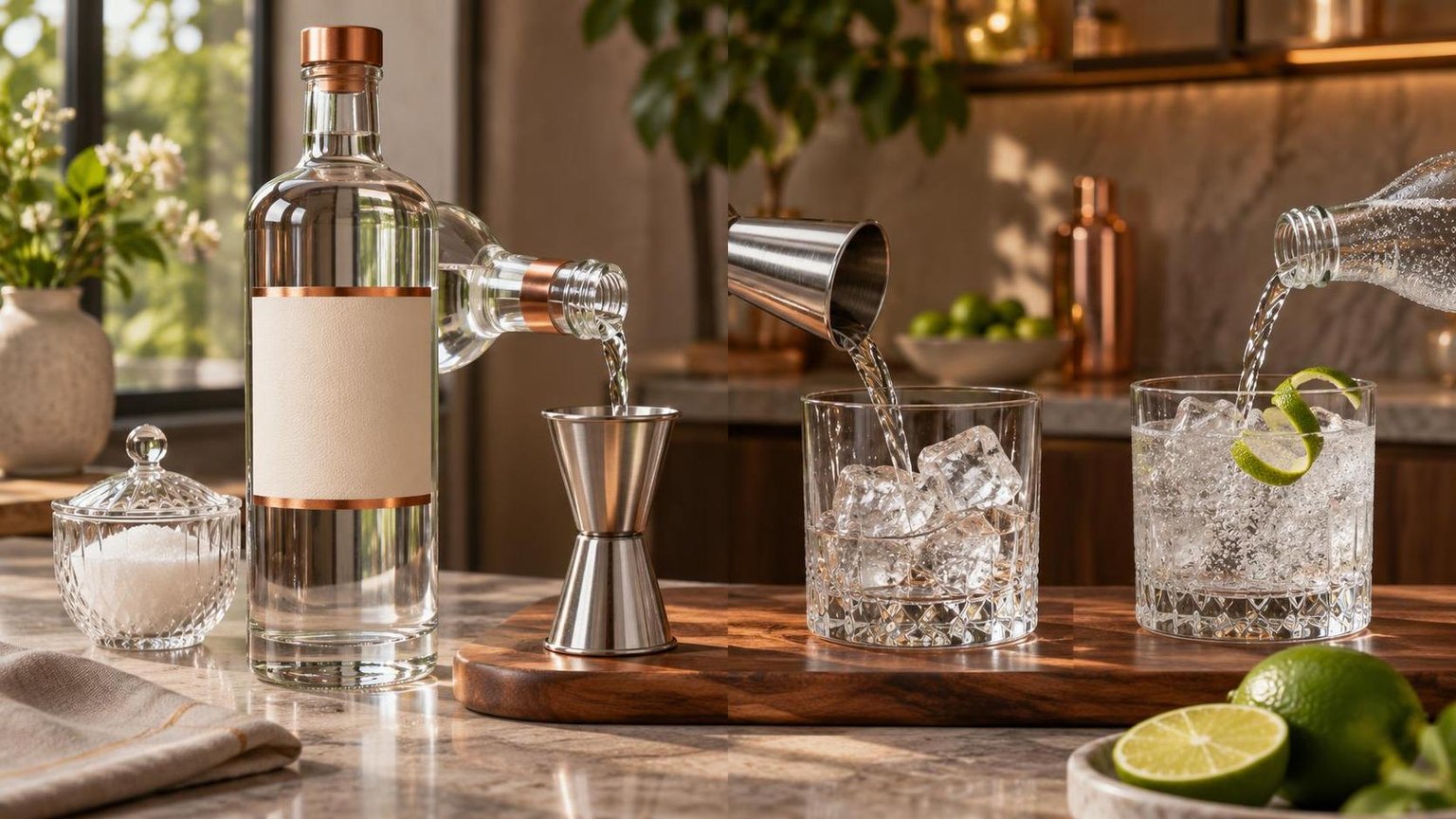
How Distillation Affects Sugar Content
Tito’s starts with corn, but corn’s starch does not become sugar in the finished vodka.
Starch is converted into fermentable sugars before yeast turns much of that sugar into alcohol; distillation then separates the alcohol from the sugary liquid left behind.
From corn to distilled spirit
During production, enzymes break corn starch into smaller sugars that yeast can consume. Fermentation produces ethanol and carbon dioxide, along with other compounds.
Even if some sugar remains after fermentation, that does not mean it will carry into the distilled spirit.
Distillation heats the fermented liquid and collects vapor that is then condensed. Ethanol and water enter that vapor; dissolved sugars are essentially nonvolatile under ordinary distilling conditions and remain in the still.
Distillation therefore removes sugar by separation, not by turning it into alcohol.
Tito’s says its corn-based vodka is distilled six times and bottled at 40% alcohol by volume, or 80 proof (Tito’s Handmade Vodka, product information).
Repeated distillation helps produce a spirit whose composition is dominated by ethanol and water. The number of distillations alone, however, is not a sugar-content test.
Why “distilled” does not always mean “zero sugar”
Ingredients added after distillation can change a spirit’s sugar content. U.S. vodka regulations permit up to 2 grams of sugar per liter in vodka (27 CFR § 5.142).
Flavored vodkas and cocktails also need to be assessed as finished products rather than assumed sugar-free because their base spirit was distilled.
The legal limit is small on a per-pour basis, but it explains why the distillation process alone cannot establish an exact nutrition figure.
Tito’s reports 0 grams of sugar and 0 grams of carbohydrates for its vodka; that brand-specific information is more relevant than a general assumption about all vodkas.
| Example | Sugar in a 1.5-fluid-ounce pour |
| Tito’s Handmade Vodka, as reported by the brand | 0 grams |
| Vodka containing the permitted maximum of 2 grams per liter | Approximately 0.09 gram |
The second row is a calculation from the regulatory limit, not a measurement of Tito’s. A 1.5-fluid-ounce pour is approximately 44 milliliters, so even vodka at that limit would contribute less than one-tenth of a gram of sugar per pour.
Zero sugar also does not mean zero calories.
Ethanol supplies about 7 calories per gram; a 1.5-fluid-ounce serving of 40% ABV vodka contains approximately 14 grams of ethanol, accounting for roughly 98 calories (National Institute on Alcohol Abuse and Alcoholism, standard-drink definition.
USDA FoodData Central, alcohol energy factor).
Sugary mixers add sugar separately.
Tito’s Compared With Flavored Vodkas
Tito’s Handmade Vodka is unflavored and, according to Tito’s, contains zero sugar and zero carbohydrates.
Flavored vodka is not automatically sweeter: some products also contain no sugar, while others use sweeteners or sugar-containing ingredients. The flavor name alone will not tell you which kind is in the bottle.
The clearest comparison is between products with published nutrition information. Tito’s lists approximately 98 calories per 1.5-ounce serving.
Ketel One Botanical, a vodka-based spirit infused with botanicals and fruit essences, lists 73 calories and zero sugar per 1.5-ounce serving.
| Product | Alcohol by volume | Sugar per 1.5 ounces | Calories per 1.5 ounces |
| Tito’s Handmade Vodka | 40% | 0 g | Approximately 98 |
| Ketel One Botanical | 30% | 0 g | 73 |
Those figures come from the brands’ published product information. Ketel One Botanical’s lower calorie count is largely a matter of alcohol strength, not evidence that Tito’s contains sugar.
Alcohol provides about 7 calories per gram, so a 40% alcohol-by-volume spirit generally has more calories per equal-sized pour than a 30% spirit.
Be careful with another label distinction: “no added sugar” is not the same claim as “zero sugar.” Absolut, for example, describes Absolut Citron as having no added sugar.
That tells you sugar was not added during production; it is not, by itself, a quantified total-sugar figure for the serving.
Other flavored products may be sweetened. The reliable way to compare one with Tito’s is to look for a brand-published sugar figure per serving, then check the serving size.
A zero-sugar claim answers a different question from a calorie claim: even a spirit with no sugar still contains calories from alcohol.
Also check the exact bottle name. A flavored vodka, a vodka-based liqueur and a premixed vodka drink are different products, even when they share a brand or flavor.
Nutrition information for one should not be carried over to another. “Zero sugar” on a vodka bottle says nothing about the sugar in a canned cocktail from the same company.
The mixer can change the comparison more than the vodka. An ounce and a half of Tito’s has no sugar on its own, but lemonade, regular soda or sweetened juice adds sugar to the finished glass.
Plain sparkling water keeps the vodka’s sugar contribution at zero; it does not undo sugar from any other ingredient.
For a fair comparison, use the same pour size, identify the exact product and separate sugar from alcohol calories.
Tito’s is a straightforward zero-sugar reference point, but a flavored vodka can match it on sugar—or differ substantially—depending on that product’s formulation.
Sugar Content in Tito’s Cocktails
Tito’s Handmade Vodka contains no sugar, but a cocktail made with it may not be sugar-free. The mixer, sweetener, and serving size determine the drink’s sugar content, so check those ingredients rather than the vodka.
The table estimates sugar in drinks made with Tito’s and a measured mixer. Tito’s contributes zero grams of sugar; the totals therefore come from the other ingredients.
These are ingredient calculations, not laboratory measurements of finished cocktails.
| Drink ingredients | Sugar in mixer | Estimated sugar in drink |
| 2 fl oz Tito’s + 4 fl oz plain club soda | 0 g | 0 g |
| 2 fl oz Tito’s + 4 fl oz Coca-Cola Original Taste | 13 g | 13 g |
| 2 fl oz Tito’s + 4 fl oz Sprite | About 12.7 g | About 12.7 g |
| 2 fl oz Tito’s + 1 fl oz fresh lime juice | About 0.5 g | About 0.5 g |
Coca-Cola lists 39 grams of sugar per 12-fl-oz serving of Original Taste. Sprite lists 38 grams per 12-fl-oz serving. The table scales those label figures to the amount poured; changing the pour changes the result.
The lime-juice estimate uses the U.S. Department of Agriculture’s FoodData Central entry for raw lime juice. Fresh fruit juice contains naturally occurring sugar, even when none is added.
Its sugar content and the amount squeezed into a drink can vary.
Where sweetness enters the glass
Plain club soda adds no sugar, but tonic water is a different product: regular tonic is sweetened. Ginger beer, lemonade, cranberry juice cocktail, and bottled sour mix can also add sugar.
Read the specific brand’s Nutrition Facts panel because similarly named mixers do not necessarily have the same formulation.
House-made drinks require another question: was syrup added? Simple syrup is sugar dissolved in water, so its contribution depends on both the recipe and the bartender’s pour.
A “vodka soda” ordered with syrup or a sweetened fruit purée is no longer a zero-sugar drink.
For perspective, a teaspoon of granulated sugar weighs about 4 grams, according to USDA FoodData Central. If a bartender dissolves two teaspoons in a drink, that adds about 8 grams of sugar before accounting for any juice, soda, or garnish.
When ordering, ask for Tito’s with plain soda water and a squeeze of citrus, and specify “no syrup” if you want to avoid added sugar. If you prefer a sweeter drink, ask which mixer is used and how much is poured.
That information is more useful than the cocktail’s name.
Sugar and calories are separate questions. A drink made with Tito’s and unsweetened soda water can have zero sugar while still containing calories from alcohol.
Likewise, a mixer labeled “no added sugar” may contain naturally occurring sugar from fruit juice; check the total sugars line for the amount in your glass.
Common Questions
Does plain Tito’s Handmade Vodka contain sugar?
No. Tito’s lists 0 grams of sugar per serving for its original, unflavored vodka; that figure applies to the vodka itself, not to a prepared cocktail.
Does Tito’s Vodka have carbohydrates?
Tito’s lists 0 grams of carbohydrates per serving of its original vodka. Distillation separates the alcohol from the corn-based sugars and starches used during production.
How can Tito’s have calories if it has no sugar?
The calories come from alcohol, not sugar. Tito’s lists approximately 98 calories per 1.5-ounce serving, and the USDA estimates that alcohol provides about 7 calories per gram.
Is Tito’s sugar-free because it is made from corn?
No—the ingredient alone does not determine the finished vodka’s sugar content. Corn supplies fermentable material, but fermentation and distillation produce a spirit for which Tito’s reports 0 grams of sugar per serving.
Will a Tito’s cocktail also be sugar-free?
Not necessarily. Tito’s may contain 0 grams of sugar on its own, but tonic water, regular soda, juice, syrups, and sweetened mixers can add sugar; check the mixer’s nutrition label or ask what goes into the drink.
Is Tito’s safe to drink if I have diabetes?
Its reported 0 grams of sugar does not make alcohol risk-free.
The American Diabetes Association notes that alcohol can cause low blood glucose, particularly for people who use insulin or certain diabetes medications, so ask your healthcare professional how drinking applies to you.
Keep Exploring
- What Soda To Mix With Tito's Vodka? Get Answer Now
- Who Owns Grey Goose Vodka?
- Does Vodka Evaporate Over Time?
- Can You Smell Vodka On Your Breath?
- What To Mix With Vodka To Make It Taste Good?
- How Many Smirnoff Ice Does It Take To Get Drunk?
- All Alcohol Guides
- Tito’s Handmade Vodka, FAQs (n.d.)
- Tito’s Handmade Vodka (n.d.)
- USDA, FoodData Central (n.d.)
- National Institute on Alcohol Abuse and Alcoholism, What Is a Standard Drink? (n.d.)
- FDA, Added Sugars on the Nutrition Facts Label (n.d.)
- FDA, How to Understand and Use the Nutrition Facts Label (n.d.)
- CDC, About Alcohol Use (n.d.)
- Alcohol and Tobacco Tax and Trade Bureau, Distilled Spirits Labeling (n.d.)
- National Institute on Alcohol Abuse and Alcoholism, Alcohol’s Effects on Health (n.d.)