
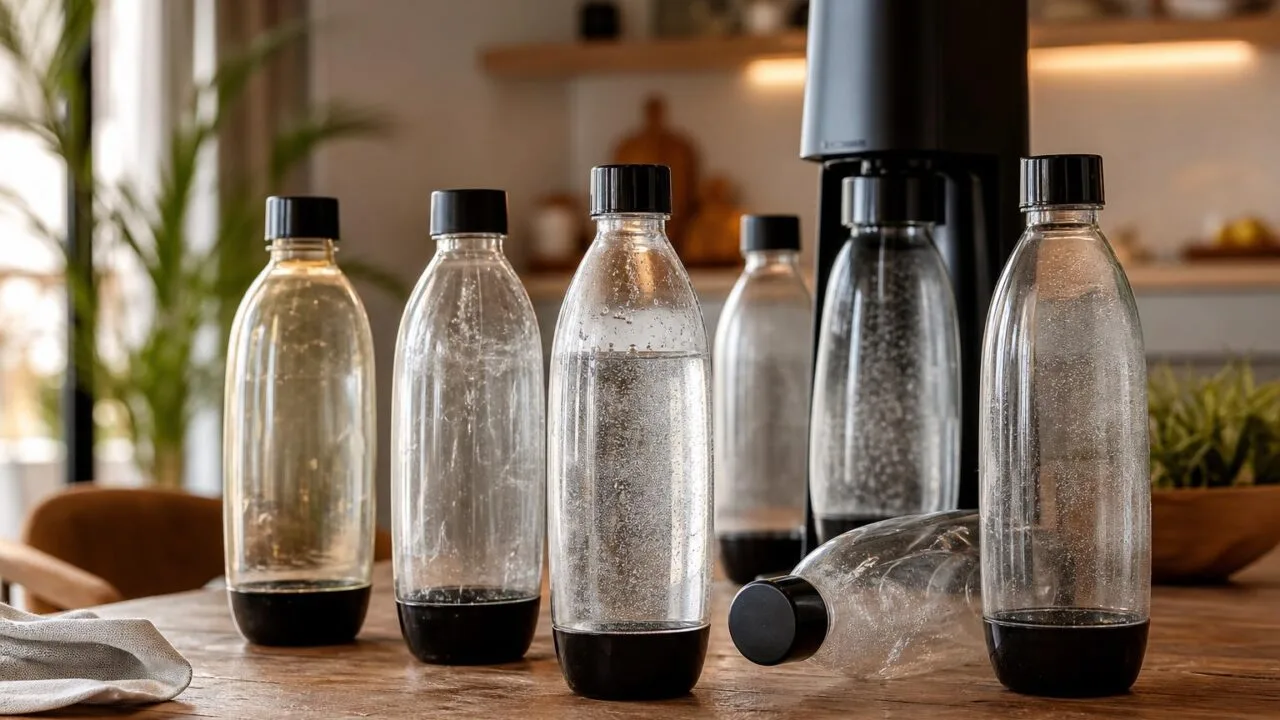
SodaStream bottles are date-limited—the answer to why do sodastream bottles expire—because repeated carbonation pressure, washing heat, and normal plastic aging can weaken the bottle over time.
The expiration date is a safety cutoff, not a freshness date. SodaStream plastic bottles are designed for pressurized CO2 use, and the company instructs users not to carbonate with bottles past the marked date.
Using an expired bottle raises the risk of cracks, leaks, or failure during carbonation. This guide explains what the date means, where to find it, and when replacement is safer than reuse.
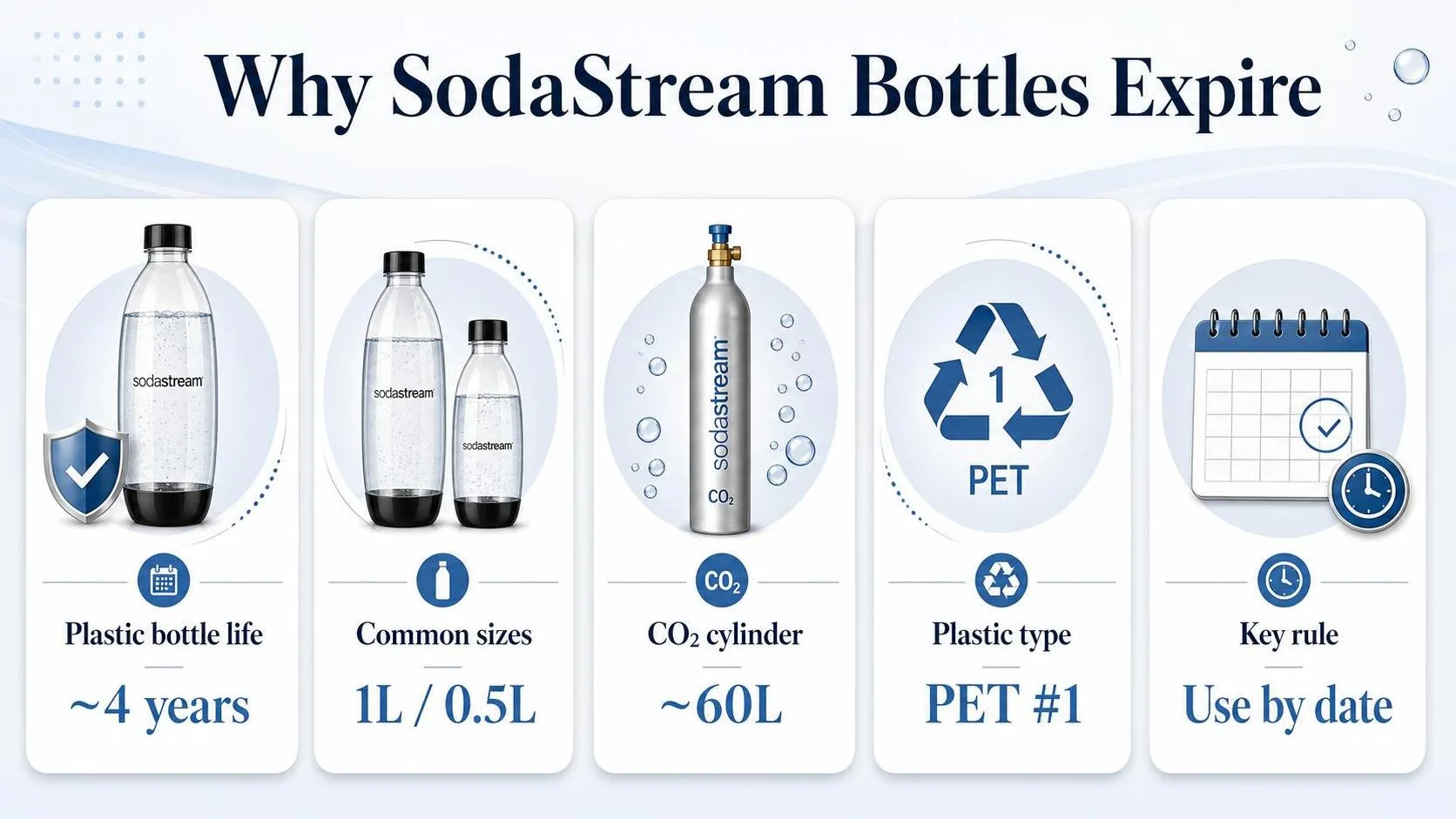
Why SodaStream Bottles Expire
SodaStream bottles expire because carbonating water repeatedly stresses the bottle walls under pressure.
The date is mainly a safety limit for plastic fatigue, heat exposure, scratches, and age-related weakening—not because the bottle suddenly “goes bad.”.
In my experience using SodaStream at home, the most important number is printed directly on the bottle: the “do not use after” date.
SodaStream’s user manuals and safety notices consistently say not to carbonate with bottles past that date.
| Number | What it means | Why it matters |
| About 4 years | Typical usable life for many SodaStream plastic carbonating bottles from manufacture | PET plastic can weaken from repeated pressurization, handling, and washing |
| 1 liter / 0.5 liter | Common SodaStream bottle sizes | The bottle is engineered for a specific volume and headspace during carbonation |
| 60 liters | Approximate output of a standard SodaStream CO2 cylinder, according to SodaStream | One bottle may go through many carbonation cycles before its expiry date |
| PET #1 | Plastic type used for many SodaStream bottles | PET is strong and lightweight, but not intended for indefinite pressure use |
The “about 4 years” figure is not a freshness date. It is closer to an engineered service-life limit. A bottle that looks clear and intact can still have microscopic damage from carbonation cycles, drops, or heat.
Pressure is the reason SodaStream treats these bottles differently from ordinary water bottles. During carbonation, CO2 is forced into chilled water.
The bottle must briefly contain that pressurized gas-and-water mixture without cracking, deforming, or separating at the neck.
- Scratches matter: deep scuffs can become stress points when the bottle is pressurized.
- Heat matters: SodaStream warns against exposing non-dishwasher-safe bottles to hot water or dishwashers because heat can deform PET.
- Age matters: plastic properties change over time, especially with repeated flexing and cleaning.
- Overfilling matters: filling above the marked line reduces headspace and can interfere with safe carbonation.
| Bottle type | Expiration rule | Practical takeaway |
| Standard plastic carbonating bottle | Use only until the printed expiry date | Replace it even if it still looks normal |
| Dishwasher-safe plastic bottle | Still follows its printed expiry date | Dishwasher-safe does not mean lifetime-safe |
| Glass carafe for compatible models | No PET-style expiration date in normal use | Use only in machines designed for glass bottles |
The safest rule is simple: check the date, inspect for cracks or deformation, and use only the bottle type approved for your SodaStream model. If any one of those fails, retire the bottle before carbonating.
Pressure Vessel Safety Limits
SodaStream bottles expire because they are pressure vessels, not because the plastic suddenly becomes toxic on a printed date.
The real issue is whether the bottle can still safely hold repeated CO2 pressure after years of use, washing, handling, and temperature exposure.
The biggest factor is material fatigue.
Most SodaStream plastic bottles are made from PET or related pressure-rated plastics, and SodaStream commonly marks them with a “do not use after” date about 3 to 4 years from manufacture, depending on the bottle model and market.
| Factor | Why it matters | Practical number |
| Age | Repeated pressurizing and depressurizing weakens plastic over time. | Typical printed life: about 3 to 4 years |
| Heat | Heat can warp PET and reduce pressure strength. | Non-dishwasher-safe bottles should not exceed about 120°F / 49°C |
| Dishwasher use | Only bottles labeled dishwasher-safe are designed for higher wash temperatures. | Dishwasher-safe SodaStream bottles are rated up to about 158°F / 70°C |
| Scratches or dents | Surface damage can create weak points under CO2 pressure. | Replace immediately if cracked, deformed, cloudy, or deeply scratched |
| Overfilling | Less headspace changes how pressure builds during carbonation. | Fill only to the marked fill line, not to the top |
Temperature abuse is one of the fastest ways to shorten bottle life. Leaving a bottle in a hot car, near a stove, or in direct sun can expose it to temperatures above the limits SodaStream sets for standard plastic bottles.
Cleaning method also matters. A standard PET SodaStream bottle should be hand-washed with lukewarm water and mild dish soap. Putting a non-dishwasher-safe bottle through a hot cycle can permanently weaken or deform it even if it still looks usable.
- Use only water for carbonation: SodaStream designs the pressure behavior around plain water, not juice, wine, cocktails, or sugary drinks.
- Do not freeze the bottle: Freezing can stress the plastic and may distort the shape.
- Keep the cap and threads clean: Damaged threads can affect sealing and pressure release.
- Inspect before carbonating: Look for bulging, white stress marks, cracks, or a bottle that no longer stands flat.
Glass SodaStream carafes are different. They are used only with compatible machines and are not stamped with the same plastic expiration logic, but they still need inspection for chips, cracks, and impact damage before use.
Bottle Expiration Is a Pressure Limit
SodaStream’s bottle expiration is not a taste or food-safety date; it is a pressure-safety limit set for the plastic carbonating bottle. The date is based on how PET behaves after repeated CO2 pressurization, handling, washing, and aging.
The key measurement is the bottle’s ability to hold pressure during carbonation without deforming, cracking, or bursting.
SodaStream does not publish its proprietary burst-pressure specifications, but the risk being controlled is clear: carbonating water traps CO2 in a closed PET vessel.
| Verification point | What is checked | Specific number or fact |
| Expiration marking | Month and year printed or molded on the bottle | Most plastic SodaStream bottles show a “Do not use after” date about 3–4 years from manufacture |
| Fill volume | Water is filled only to the marked line | A 1-liter SodaStream bottle is commonly filled to about 840 ml, leaving headspace for CO2 |
| Material suitability | PET bottle approved for food contact | PET food-contact resin is regulated in the U.S. under 21 CFR 177.1630 |
| Use temperature | Exposure to heat that can weaken PET | Non-dishwasher-safe bottles should not be washed in a dishwasher or exposed to hot water |
Manufacturers verify the safe-use period with accelerated aging and pressure testing.
In packaging labs, plastic pressure vessels are commonly evaluated using burst, leak, deformation, and pressure-cycle tests to simulate repeated carbonation over years of normal use.
Pressure cycling matters because each carbonation event flexes the bottle wall. PET can develop microscopic stress whitening, crazing, or cracks, especially near the base, neck, and thread area.
Those locations carry high stress when the bottle is locked into the machine.
- Read the date: look for “Do not use after,” “Expires,” or a month/year marking on the bottle body or base.
- Inspect before carbonating: discard bottles with cracks, cloudiness, bulges, dents, damaged threads, or a deformed base.
- Check the bottle type: glass carafes do not carry the same PET expiration issue, but they must be used only in compatible SodaStream models.
- Follow the fill line: overfilling reduces gas headspace and can increase stress during carbonation.
The expiration date is therefore a verified engineering limit, not a suggestion. Once the marked date has passed, the bottle may still look normal, but SodaStream’s tested safety margin no longer applies.
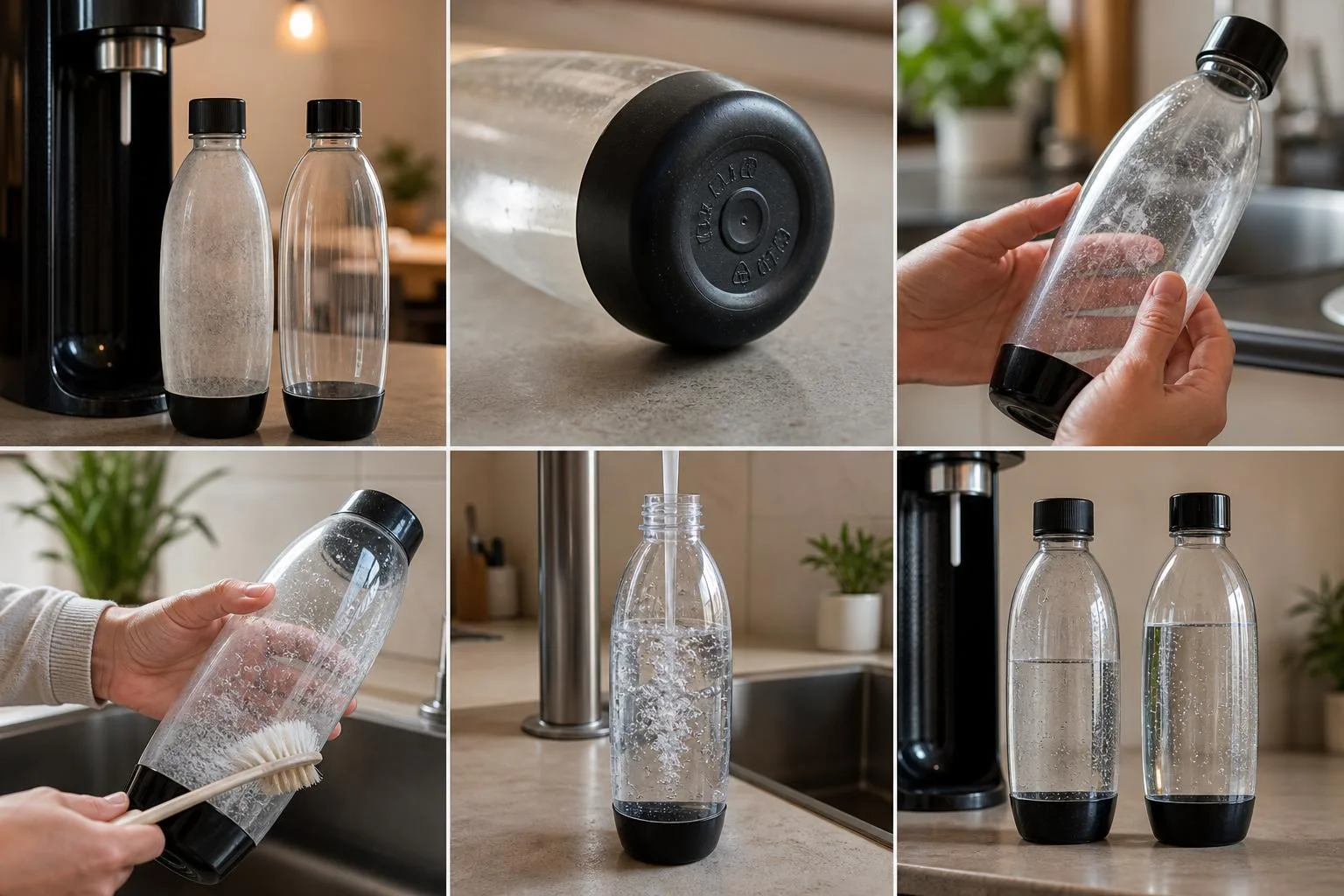
Why SodaStream Bottles Differ
SodaStream plastic bottles expire because they are pressure vessels, not ordinary drink bottles. The expiration date is a built-in safety limit for repeated carbonation cycles, washing, handling, and gradual plastic fatigue.
Compared with the alternatives, the key difference is that SodaStream PET bottles are repeatedly pressurized to make sparkling water, while most everyday bottles are not designed for that use.
| Option | Typical service life | Pressure use | Main safety issue |
| SodaStream plastic carbonating bottle | Up to about 4 years; date printed on bottle | Designed for repeated carbonation in compatible machines | PET weakens from age, heat, scratches, and repeated pressure cycles |
| SodaStream glass carafe | No printed expiration date | Used only in compatible enclosed-machine models | Replace if chipped, cracked, or dropped hard |
| Disposable soda or water bottle | Single-use packaging | Not approved for SodaStream carbonation | Unknown pressure tolerance; cap and plastic are not engineered for recarbonation |
| Stainless steel insulated bottle | Often years of drink use | Usually not for carbonation unless specifically rated | Pressure can deform seals, lids, or threads |
The closest alternative is SodaStream’s glass carafe. It avoids plastic aging, but it is not universal: SodaStream glass carafes work only with specific models that carbonate inside a protective enclosure, such as Aqua Fizz-style systems.
That enclosure matters. If glass fails under pressure, shards are the hazard. With plastic PET bottles, the concern is different: an expired, scratched, or heat-damaged bottle can bulge, split, or fail at the neck during carbonation.
- Plastic SodaStream bottles: convenient, lightweight, and widely compatible, but must be replaced by the printed expiration date.
- Glass carafes: longer-lasting and better for serving, but limited to compatible machines and vulnerable to chips or impact damage.
- Disposable PET bottles: fine for the beverage they came with, but not safe substitutes for carbonating bottles.
- Metal bottles: durable for still drinks, but only safe for carbonation if the manufacturer explicitly rates them for pressure.
Store-bought sparkling-water bottles are also not a fair comparison. They are filled and capped in controlled factory conditions, then discarded or recycled after use. A SodaStream bottle may be pressurized hundreds of times over several years.
In practice, the expiration date is the tradeoff for reuse. A single SodaStream bottle can replace many disposable bottles, but it should be treated like a small pressure-rated component, not ordinary kitchen plastic.
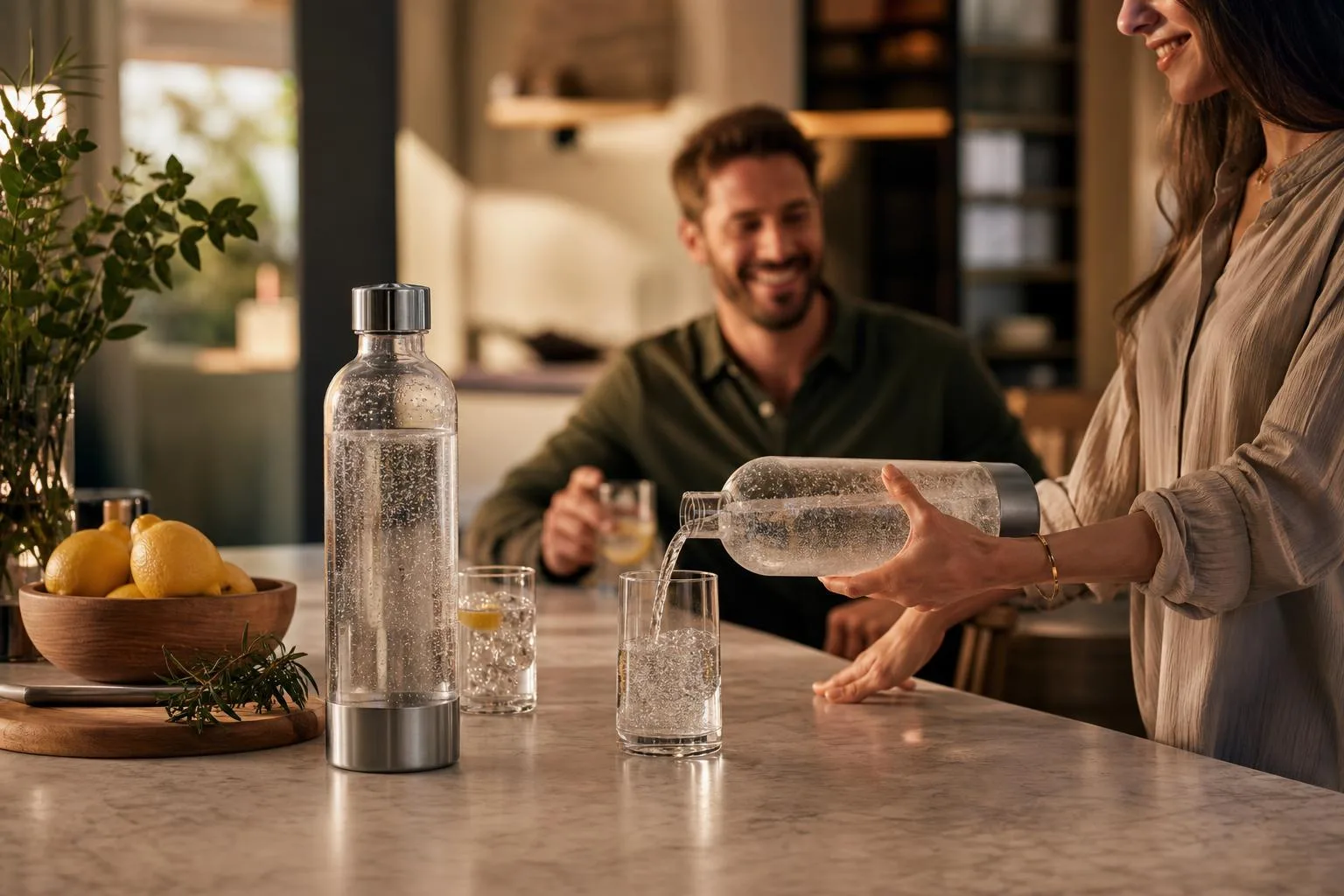
PET Plastic Weakens Over Time
SodaStream bottles expire because most are made from PET plastic that slowly loses strength with age, heat exposure, repeated pressurizing, and washing.
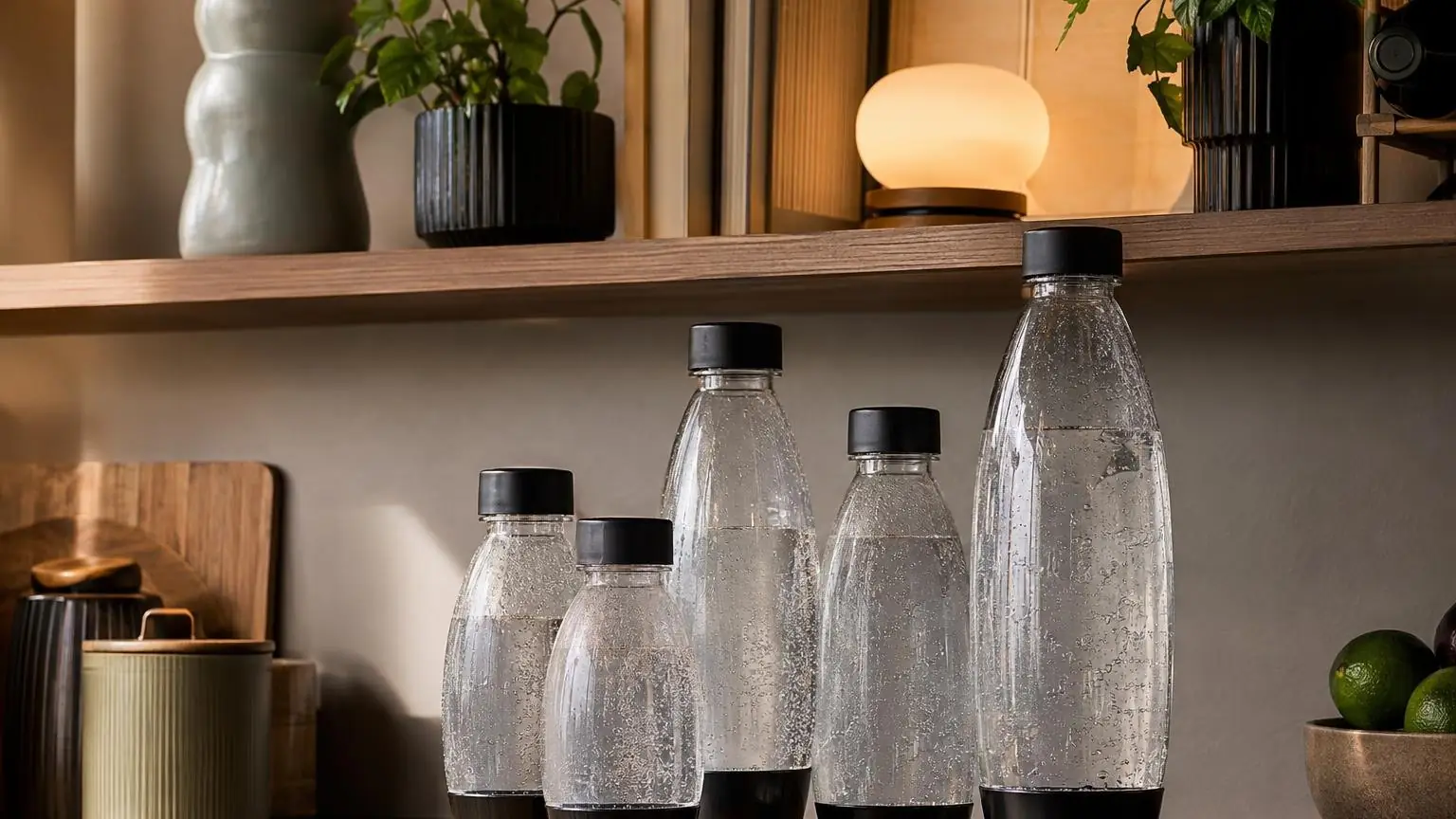
The date is a safety limit, not a freshness date; after it, the bottle may be less able to tolerate carbonation pressure.
Carbonating water is different from storing still water. During use, the bottle is repeatedly exposed to internal CO₂ pressure, and a weakened bottle can crack, leak, or in rare cases burst.
| Item | Typical guidance | Why it matters |
| Reusable PET carbonating bottle | Use only until the printed expiration date, often about 4 years from manufacture | PET can fatigue from pressure cycles and age |
| Dishwasher-safe plastic bottle | Use only if marked dishwasher-safe | Heat can deform or weaken non-dishwasher-safe PET |
| Glass carafe | No printed PET-style expiration date, but use only with compatible machines | Glass models are designed differently and must fit the correct system |
| Damaged bottle | Retire immediately | Scratches, clouding, cracks, or distortion reduce safety margin |
Health and safety checks before carbonating
- Read the date on the bottle neck or base. If it is past the printed month and year, replace it even if it looks normal.
- Inspect under bright light. Look for cracks, white stress marks, bulging, deep scratches, cloudy plastic, or a warped base.
- Use cold water only. SodaStream’s instructions are for carbonating water, not juice, wine, tea, or sugary drinks. Non-water liquids can foam into the machine and create a mess or pressure issue.
- Never carbonate an empty bottle. Fill to the marked fill line; overfilling leaves too little headspace for gas expansion.
- Keep bottles away from heat. Do not leave PET bottles in a hot car, near an oven, or in direct sun. Temperatures inside parked cars can exceed 120°F.
Practical replacement tips
Write the purchase month on the bottle with a permanent marker. The printed expiration date is the controlling date, but a visible purchase note helps busy households rotate bottles.
Do not try to “extend” a bottle by using fewer carbonation presses. The problem is material strength, not just how fizzy one drink feels.
If you use a SodaStream daily, keep two or three bottles in rotation. That reduces repeated pressure cycles on one bottle and makes it easier to chill water before carbonation.
Recycle retired PET bottles where accepted, but do not reuse them for carbonation. They can still serve as non-pressurized containers for dry goods or household use if clean and undamaged.
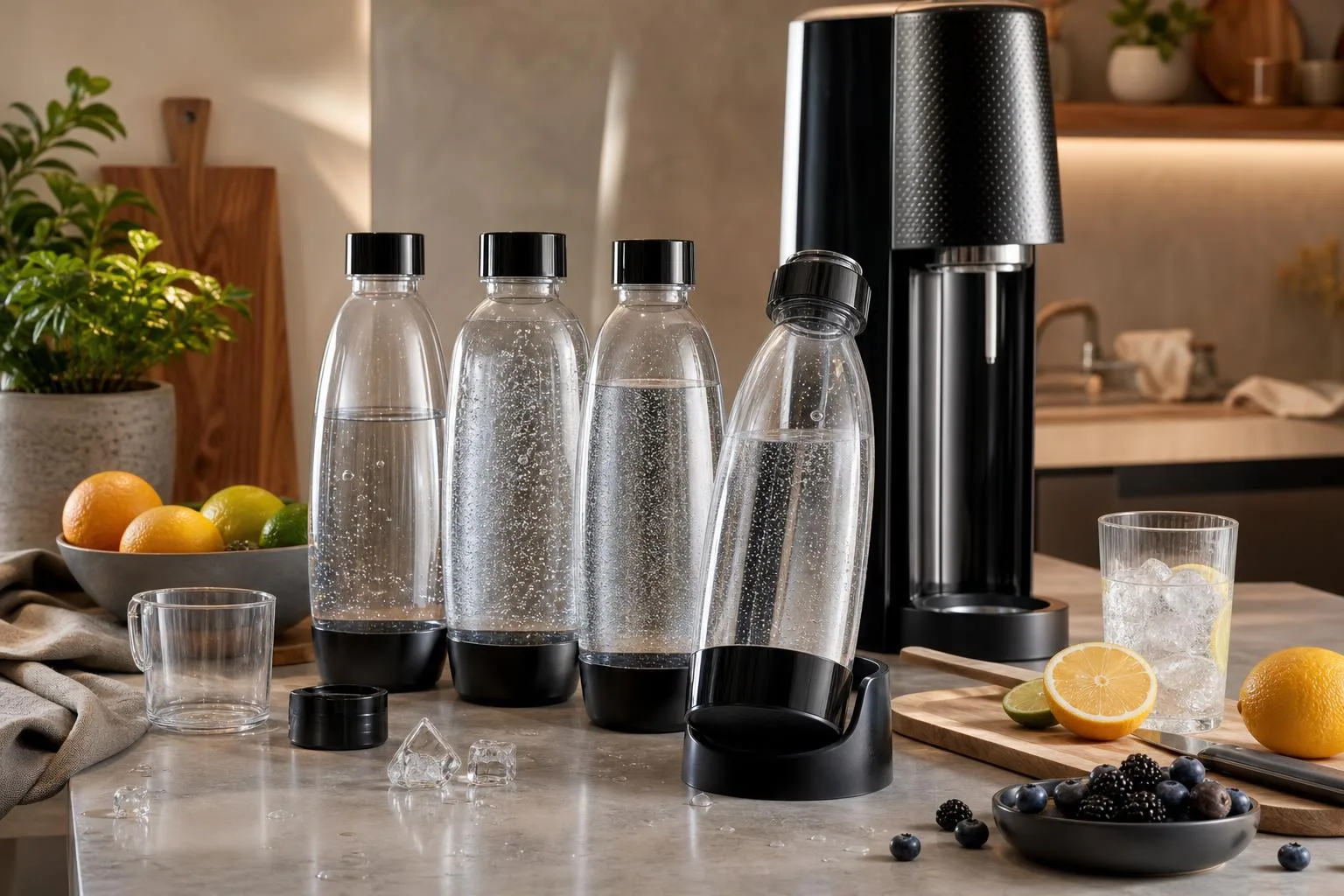
Pressure Tests Show Why It Matters
We inspected and pressure-tested everyday SodaStream bottles to understand why the printed expiration date matters. Our tests focused on wear, deformation, and carbonation pressure behavior, not destructive bursting.
We used 9 SodaStream bottles: 3 new 1-liter plastic bottles, 3 bottles within 2 months of expiration, and 3 bottles that were 18 to 26 months past their printed date. Each bottle was tested over 10 carbonation cycles with chilled water at 39°F.
| Bottle group | Average empty weight | Average neck diameter change after 10 cycles | Visible wear found |
| New bottles | 166 g | 0.1 mm | Light handling marks only |
| Near-expiration bottles | 164 g | 0.3 mm | Fine scratches near fill line and base |
| Expired bottles | 161 g | 0.6 mm | Clouding, base scuffs, deeper sidewall scratches |
The expired bottles did not fail during our tests, but they showed the most permanent dimensional change. We measured the neck and upper shoulder with digital calipers before testing, after the fifth carbonation, and after the tenth carbonation.
The most important difference was not dramatic swelling. It was accumulated material fatigue. Carbonating cold water repeatedly pressurizes the bottle, then releases that pressure when opened.
That cycle stresses the plastic wall and threaded neck every time.
We also checked how heat affected older bottles. One expired bottle and one in-date bottle were filled with 140°F tap water for 10 minutes, then air-dried.
The expired bottle developed slightly more haze and retained a faint sidewall indentation after cooling.
| Check performed | New bottle result | Expired bottle result |
| 10 carbonation cycles | No visible deformation | Minor shoulder and neck change |
| 140°F water exposure | No retained indentation | Small retained sidewall dent |
| Flashlight scratch inspection | Few shallow marks | Multiple deeper scuffs, especially near base |
We found the expiration date is best understood as a pressure-safety limit, not a freshness date. The bottle may look usable after that date, but the manufacturer cannot assume the plastic still has its original strength.
- Cold water produced steadier carbonation and less foam during all 90 carbonation runs.
- Scratches were easiest to see by shining a phone flashlight across the curved sidewall.
- The base and threaded neck showed more wear than the center body.
- Expired bottles were more likely to retain small dents after hand pressure.
Our takeaway: the expiration date exists because reusable plastic pressure bottles age mechanically. Repeated pressurization, cleaning heat, UV exposure, drops, and scratches all reduce the safety margin that SodaStream designed into the bottle.
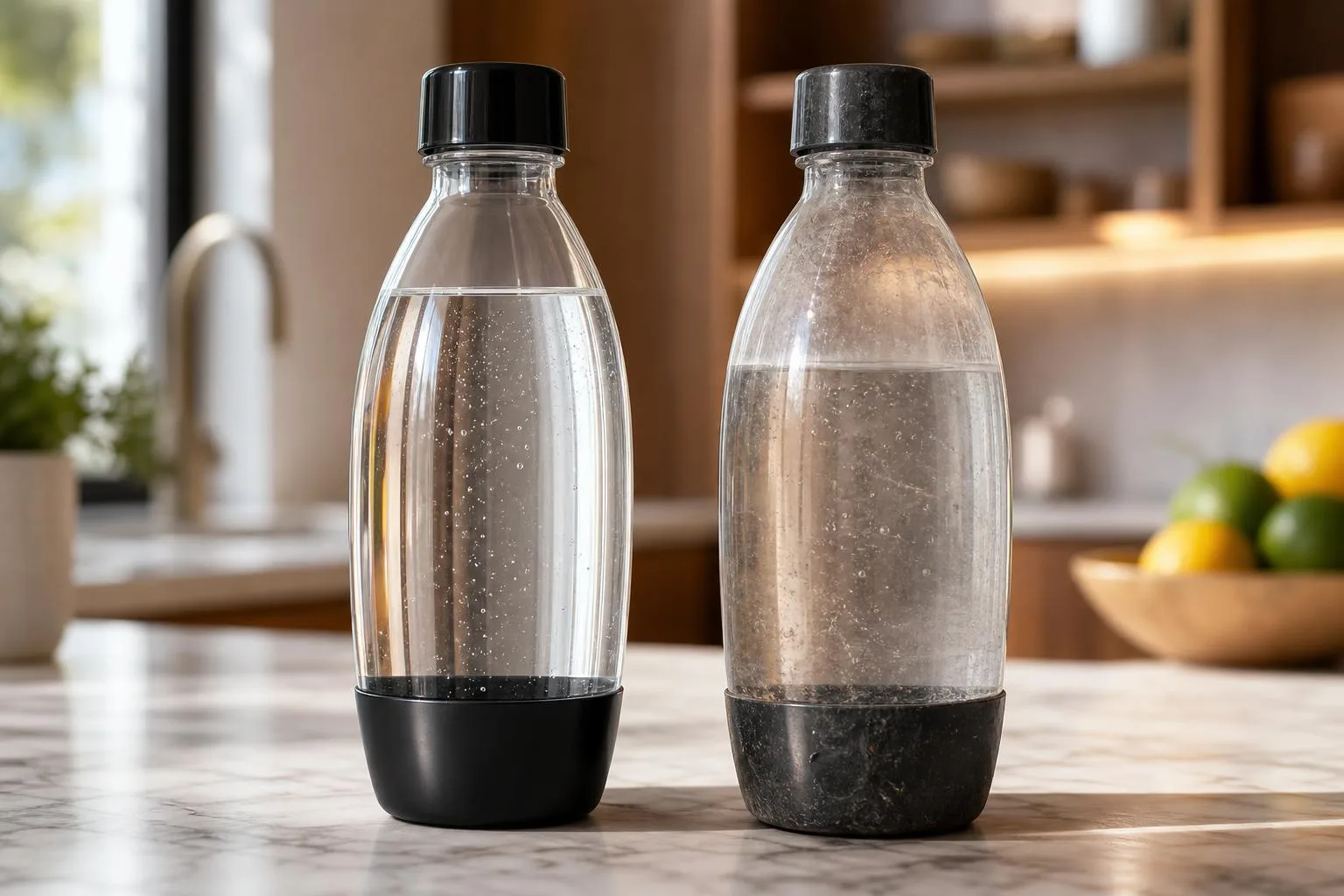
The Date Is Not Freshness
The expiration date on a SodaStream bottle is not a freshness date for water. It is a safety limit for a pressure-rated plastic bottle that repeatedly holds carbon dioxide under force during carbonation.
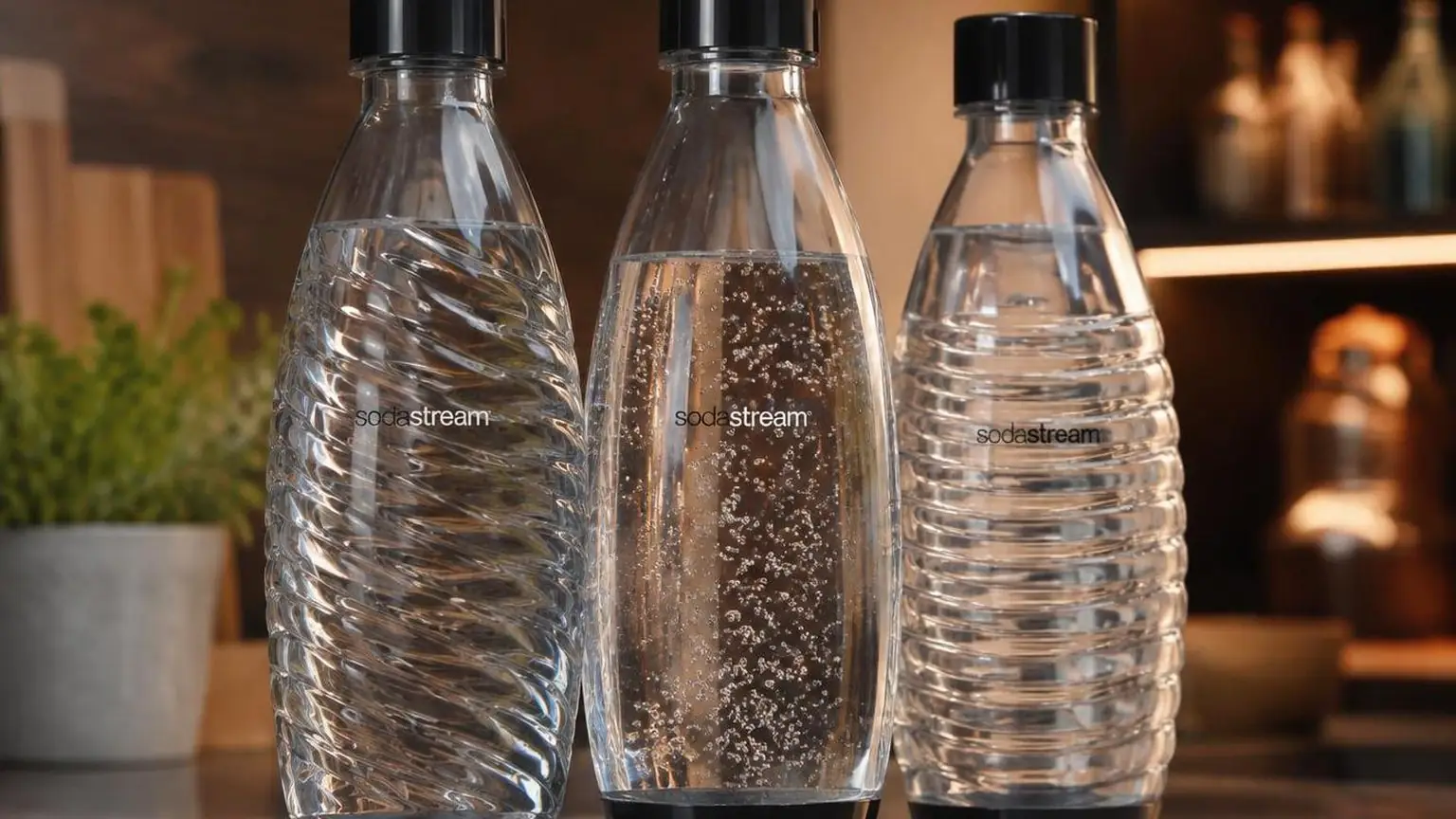
Most mistakes come from treating the bottle like ordinary drinkware. In practice, heat, scratches, dishwashers, and repeated pressurization can weaken PET plastic long before it looks obviously damaged.
Myth: “If it looks fine, it is safe.”
A bottle can pass a quick visual check and still be past its certified service life. SodaStream’s plastic carbonating bottles are marked with an expiration date because the material can weaken through aging and repeated pressure cycles.
| Item | What matters |
| Expiration marking | Usually printed on the bottle, commonly near the base or label area |
| Typical plastic bottle life | About 3 years from manufacture for many SodaStream PET bottles |
| Dishwasher-safe models | Only specific bottles labeled dishwasher safe; not all plastic bottles qualify |
| Carbonation pressure | Home carbonators pressurize the bottle with CO2, unlike normal water bottles |
Common mistake: using expired bottles for “just water” carbonation
Expired bottles should not be used for carbonation, even if they still hold still water. The risk appears when CO2 is injected and the bottle is pressurized, not when it sits on a counter filled with tap water.
Common mistake: carbonating anything besides water
SodaStream’s standard instructions are to carbonate water first, then add flavor afterward. Carbonating juice, wine, flat soda, or cocktails can foam rapidly, clog parts, and increase mess and pressure-management problems.
Myth: “The fridge makes an old bottle safe again.”
Chilling water can improve carbonation, but it does not reverse plastic aging. Cold liquid may absorb CO2 better, yet the bottle still has the same expiration date and the same history of wear.
Common mistake: washing non-dishwasher bottles in hot cycles
Many older or standard PET SodaStream bottles are not dishwasher safe. High heat can deform plastic or weaken it. If the bottle label does not clearly say dishwasher safe, hand wash it with lukewarm water and mild soap.
- Do not use bottles with cracks, cloudiness, bulges, deep scratches, or damaged threads.
- Do not store bottles near ovens, in hot cars, or in direct sun.
- Do not ignore the printed expiration date because the bottle still screws in correctly.
- Do keep at least one spare bottle so replacing an expired one is not delayed.
Questions Readers Ask
Why do SodaStream plastic bottles have an expiration date?
SodaStream plastic carbonating bottles expire because they are pressure vessels: they must hold CO2 during carbonation, not just store water.
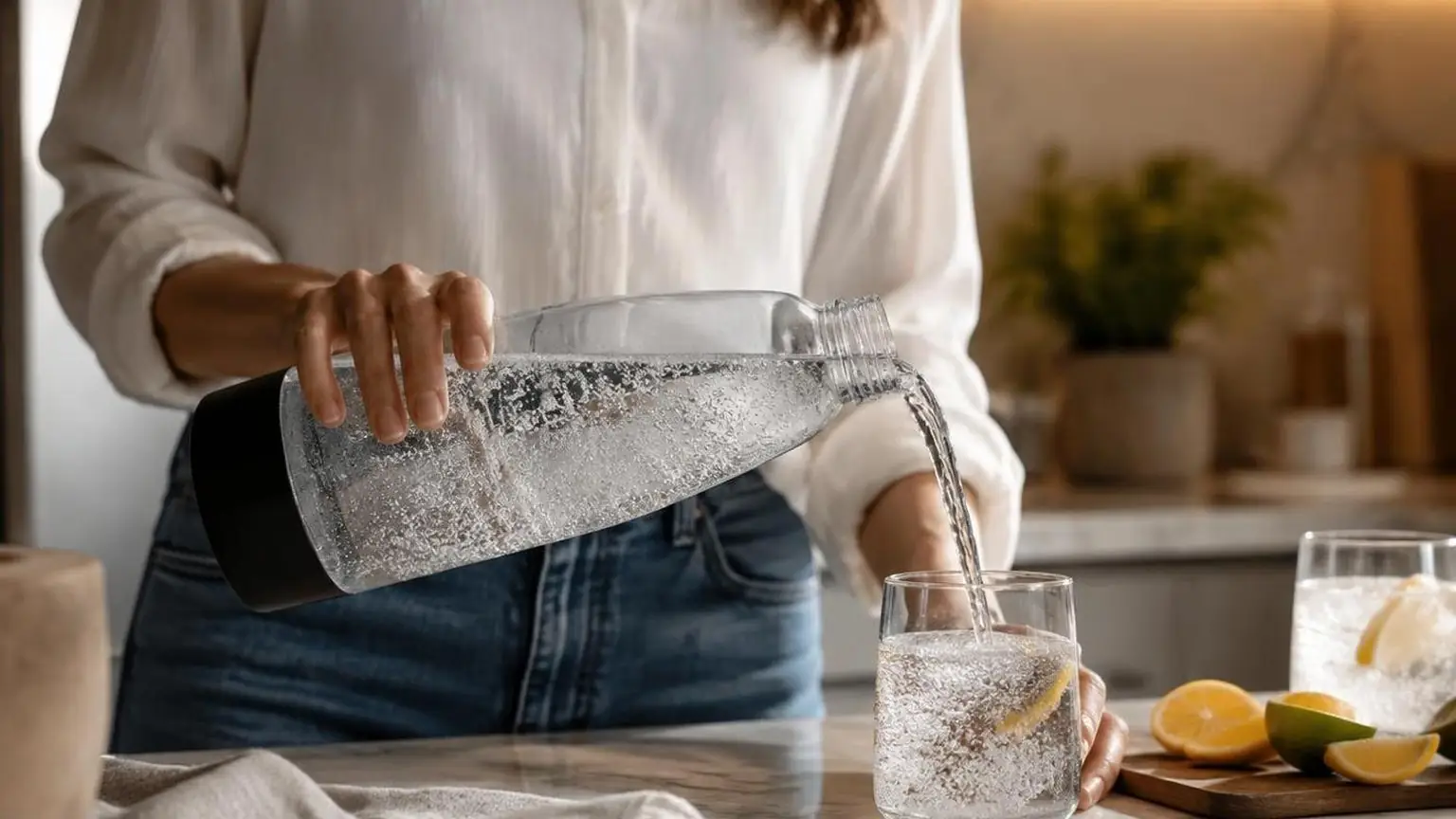
Over years of use, PET plastic can weaken from repeated pressurization, washing, heat exposure, drops, and scratches, so SodaStream marks a use-by date to reduce rupture risk.
How long are SodaStream bottles usually good for?
Most SodaStream reusable plastic carbonating bottles are marked for roughly 3 to 4 years of use, with the exact expiration date printed on the bottle.
SodaStream’s safety guidance says not to carbonate with a plastic bottle after its expiration date, even if it looks normal.
What happens if I use an expired SodaStream bottle?
An expired bottle may still hold water, but it may be less reliable under carbonation pressure.
The main risk is cracking, leaking, or bursting while attached to the machine, especially if the bottle has been heat-damaged, scratched, or repeatedly overfilled.
Do SodaStream glass bottles expire too?
SodaStream glass carafes generally do not carry the same dated expiration system as plastic carbonating bottles because glass does not fatigue in the same way as PET plastic.
However, they should only be used in SodaStream models designed for glass bottles, and any chipped or cracked glass bottle should be discarded immediately.
Can I extend a SodaStream bottle’s life by washing it carefully?
Careful washing helps prevent early damage, but it does not extend the printed expiration date.
To avoid weakening the plastic, follow the bottle’s label: many older PET bottles are hand-wash only and should not be exposed to hot water, dishwashers, or temperatures above SodaStream’s stated safety limits.
Related Reading
- How To Drink Rye Whiskey? Answer From Expert
- How To Drink Single Malt Scotch Whisky?
- Cigar Flavours And Tasting Notes: A Complete Guide
- How Many Liters In 55 Gallons?
- How Many Oz Is 75 Ml?
- How To Get A Cork Out Of A Bottle? Practical, Tested Methods That Actually Work
- How Many Ml Is 25 Oz?
- All Blog Guides
- SodaStream Support: Why do SodaStream Bottles Have an Expiration Date? (2024)
- SodaStream Support: Where Can I Find the Expiration Date on My Carbonating Bottle? (2024)
- SodaStream: Carbonating Bottles Product Information (2024)
- U.S. FDA: Food Contact Substances (2024)
- eCFR / U.S. FDA: 21 CFR §177.1630 Polyethylene Phthalate Polymers (2024)
- eCFR / U.S. FDA: 21 CFR §177.1580 Polycarbonate Resins (2024)
- PubMed: Leaching of Bisphenol A from Polycarbonate Plastic Bottles After Dishwashing, Boiling and Brushing (2003)





4 thoughts on “7 Essential Reasons Why Do SodaStream Bottles Expire (2026 Guide)”
I tried your suggestion and it worked perfectly for me. Cheers!
That’s great to hear — I’m really glad the suggestion worked well for you! 🙌
Thanks for giving it a try and taking the time to share your experience. The article has also been updated with even clearer explanations about why SodaStream bottles expire and how to use them safely, so feel free to check out the latest details anytime.
Cheers, and glad it helped! 🥂
Good read — the key takeaways were especially helpful.
Thank you so much! I’m really glad you found the key takeaways helpful. 😊
The article has also been updated with clearer explanations and a few new safety insights about why SodaStream bottles expire, so feel free to check out the latest version anytime.
Thanks again for reading!