Does Walgreens Sell Liquor Like Spirits is answered yes: some Walgreens stores sell distilled spirits, but only where state law, local licensing, and that specific store’s alcohol permit allow it.
In practice, Walgreens’ alcohol selection is location-specific. Many stores carry beer or wine, while liquor such as vodka, whiskey, rum, tequila, or gin is more common in states and counties that permit pharmacy or drugstore liquor sales.
Before making a trip, use the Walgreens store page or call the pharmacy front counter, because alcohol availability, Sunday sales, purchase hours, and pickup eligibility can differ by city, county, and individual store license.
Walgreens Liquor Sales Depend on Local Law
Walgreens can sell liquor, including spirits, only where state and local law allow it and where that specific store holds the right license.
In practice, the “yes” or “no” often changes by city, county, and even by individual Walgreens location.
The most important numbers are the alcohol category, the license type, and the state’s control model. Spirits are regulated more tightly than beer or wine because they usually contain far more alcohol by volume.
| Alcohol type | Typical ABV | Why it matters at Walgreens |
| Beer | About 4% to 6% ABV | Often the easiest category for drugstores to sell, depending on local permits. |
| Wine | About 12% to 15% ABV | Allowed in many grocery/drugstore settings, but not everywhere. |
| Spirits | Commonly 40% ABV for vodka, whiskey, rum, gin, and tequila | Usually requires a stronger retail liquor license and is more restricted. |
One key national figure: the United States has 50 separate state alcohol systems. Walgreens does not operate under one nationwide liquor rule.
A store in one state may sell vodka and bourbon, while a store across a county line may sell only beer, wine, or no alcohol.
| Number | What it means |
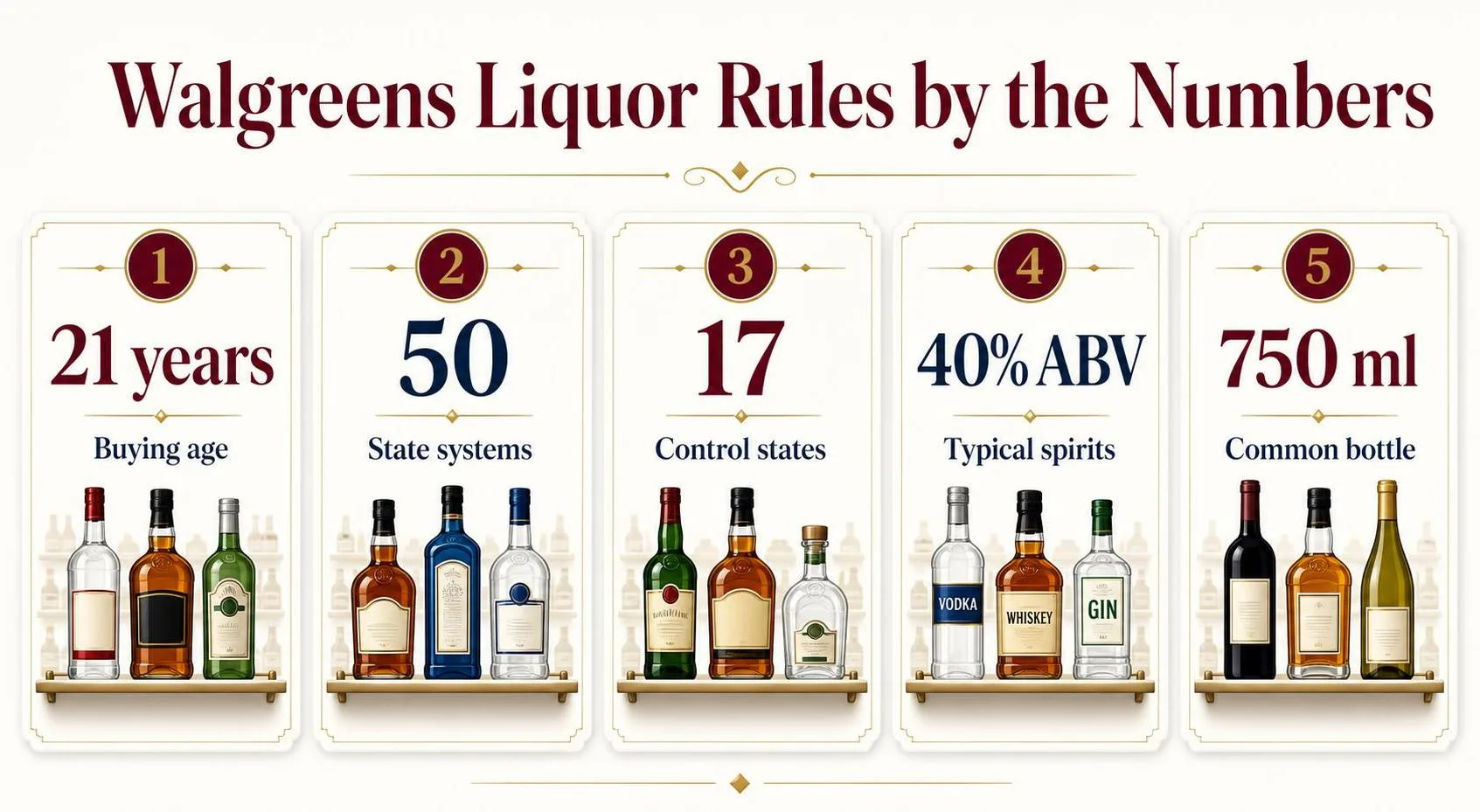
| 21 | Minimum legal age to buy alcohol in every U.S. state. |
| 50 | State alcohol codes Walgreens must follow, before local rules are added. |
| 17 | States are commonly classified by the National Alcohol Beverage Control Association as control jurisdictions, meaning the state has direct control over some wholesale or retail alcohol sales. |
| 40% | Standard ABV for many full-strength spirits sold in 750 ml bottles. |
| 750 ml | The most common U.S. bottle size for spirits at retail. |
Those numbers explain why a Walgreens alcohol aisle is not predictable from the brand name alone. A store may carry beer, wine, ready-to-drink cocktails, or full spirits, depending on its license and local ordinance.
- If the store has no alcohol license: it sells no beer, wine, or spirits.
- If it has a beer-and-wine license: spirits like vodka, whiskey, tequila, and rum are excluded.
- If it has a full package liquor license: it may sell sealed bottles of spirits for off-premise consumption.
- If state-run liquor stores control spirits: Walgreens may be unable to sell distilled spirits even if it sells beer or wine.
The practical takeaway: check the specific Walgreens store, not just Walgreens as a chain. Use the store locator, call the pharmacy/front register, or search the store’s online alcohol listings where available.
Store Address and License Decide Spirits
Whether a Walgreens sells liquor like vodka, whiskey, rum, or tequila is decided less by the Walgreens brand and more by the license attached to that exact store address.
Two Walgreens locations in the same metro area can have different alcohol selections, prices, and hours.
The biggest factor is state law. In the U.S., alcohol regulation is handled by each state under the 21st Amendment, so Walgreens must follow state licensing rules before it can place spirits on the shelf.
| Factor | How it changes the answer | Real-world impact |
| State alcohol system | Some states allow private retailers to sell spirits; others use state-run or tightly controlled liquor stores. | In control states such as Pennsylvania and New Hampshire, a typical Walgreens cannot simply stock full-strength liquor like a grocery item. |
| Store license type | A beer-and-wine license is not the same as a distilled spirits license. | A Walgreens may sell hard seltzer and wine but not bourbon, gin, or tequila. |
| Local ordinances | Counties and cities can add stricter rules on top of state law. | Some areas restrict package liquor sales near schools, churches, or by zoning district. |
| Sales hours | Alcohol hours can differ from normal pharmacy or front-store hours. | A 24-hour Walgreens may still have to stop liquor sales at a legally set time. |
Licensing is also product-specific. Distilled spirits are regulated differently from beer and wine because they contain higher alcohol by volume.
For example, standard liquor is commonly sold at 40% ABV, while table wine is often around 12% to 14% ABV and regular beer around 4% to 6% ABV.
- State-controlled liquor markets: In states with government liquor stores or agency systems, spirits may be limited to approved outlets rather than ordinary drugstores.
- Dry or partially dry areas: Hundreds of U.S. counties or municipalities still restrict alcohol sales in some form, especially in parts of the South.
- Sunday rules: Some states and cities allow Sunday sales, some limit the hours, and some treat spirits more strictly than beer.
- Corporate store decisions: Even where legal, Walgreens may choose not to carry liquor at a location because of security, theft risk, shelf space, or local demand.
- Pharmacy-adjacent compliance: Stores with pharmacies still must separate alcohol sales rules from prescription operations, including age checks and point-of-sale controls.
Age verification is non-negotiable. Federal law sets 21 as the minimum legal drinking age nationwide, and Walgreens cashiers can be required to scan or inspect identification even if the customer appears older.
The most reliable answer comes from checking the specific Walgreens store listing or calling the location.
Ask whether it has a distilled spirits license, not just whether it sells “alcohol,” because beer, wine, and liquor are often treated as separate permissions.
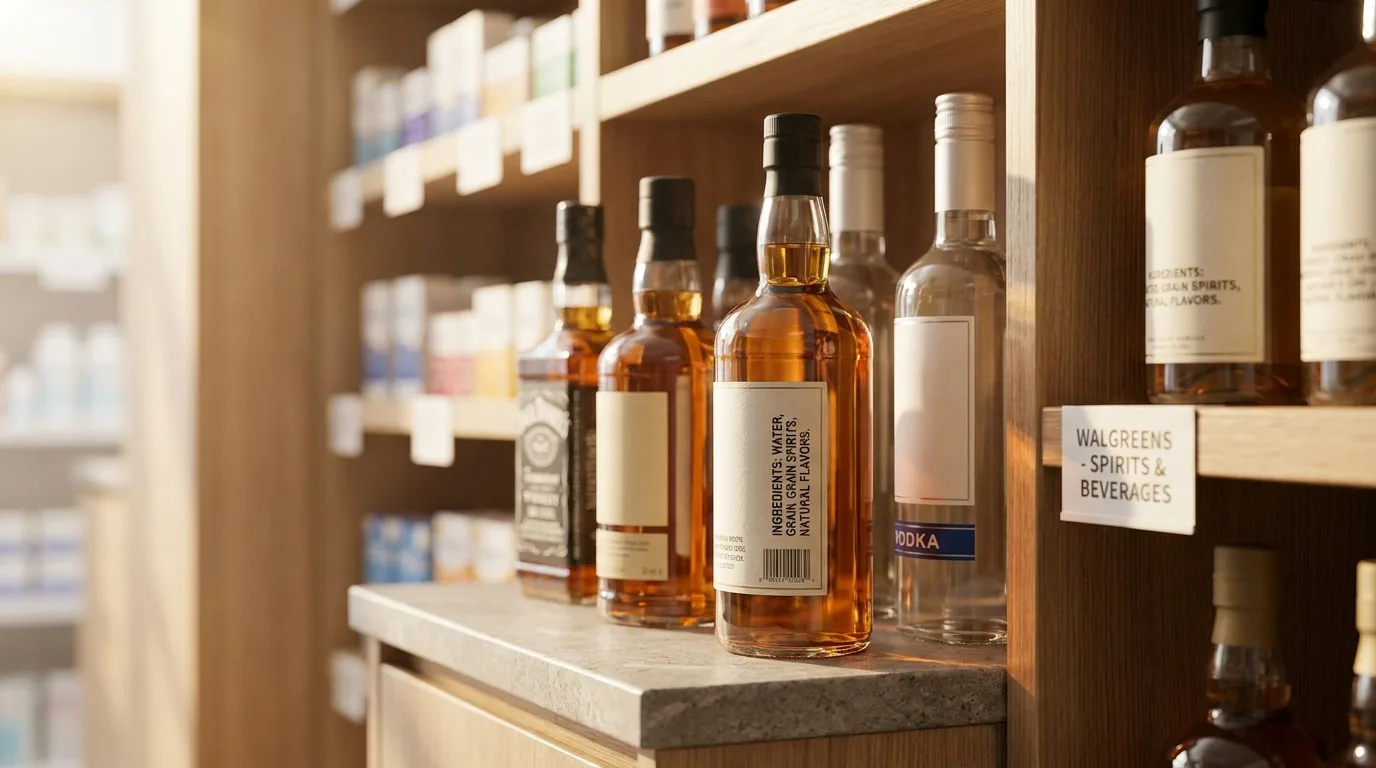
How Walgreens Liquor Sales Are Verified
Whether a Walgreens sells liquor is verified at the store-license level, not by the Walgreens brand name alone. A Walgreens can sell beer and wine in one town, full spirits in another, and no alcohol at all a few miles away.
The practical test is whether that exact store holds an active off-premise alcohol license that includes distilled spirits.
State alcohol agencies, county clerks, and municipal licensing boards are the controlling sources, not third-party store listings.
What “liquor” means in verification
In U.S. alcohol regulation, “liquor” usually means distilled spirits, such as vodka, whiskey, rum, tequila, gin, and brandy.
These are different from beer, wine, cider, and malt beverages because they are distilled and usually sold at much higher alcohol strength.
| Product type | Typical alcohol range | How it is labeled | Walgreens verification point |
| Beer | About 4% to 8% ABV | Alcohol by volume | Beer-only or beer/wine license may be enough |
| Table wine | About 11% to 15% ABV | Alcohol by volume | Wine authorization required |
| Distilled spirits | Usually 35% to 50% ABV | ABV and proof | License must allow spirits/package liquor |
| 80-proof vodka or whiskey | 40% ABV | Proof is twice ABV | Confirms it is liquor, not wine or malt |
Documents that confirm spirits sales
The strongest verification is an active license record naming the Walgreens store address.
The license should show the legal permit holder, premise address, status, expiration date, and the privilege category, such as package liquor, distilled spirits, or off-sale general.
- State alcohol databases: Examples include the California Department of Alcoholic Beverage Control, Texas Alcoholic Beverage Commission, Florida Division of Alcoholic Beverages and Tobacco, and Illinois Liquor Control Commission.
- Local license portals: Some cities and counties issue or approve retail alcohol permissions in addition to state licensing.
- Store-level confirmation: Calling the pharmacy’s front store and asking, “Do you sell sealed bottles of spirits for off-premise consumption?” avoids confusion with beer, wine, or ready-to-drink cocktails.
- In-store observation: Spirits are usually behind a counter, in a locked case, or in a controlled liquor aisle, depending on state and local rules.
Why the answer changes by location
Walgreens has thousands of U.S. stores, but alcohol laws are not national.
Spirits sales depend on state statutes, local-option elections, quota systems, zoning rules, Sunday-hour limits, and whether a pharmacy chain is allowed to hold that license type.
Verification should be dated because licenses renew, transfer, or lapse. A reliable check records the store number or street address, the licensing agency, license type, active status, and the date searched.
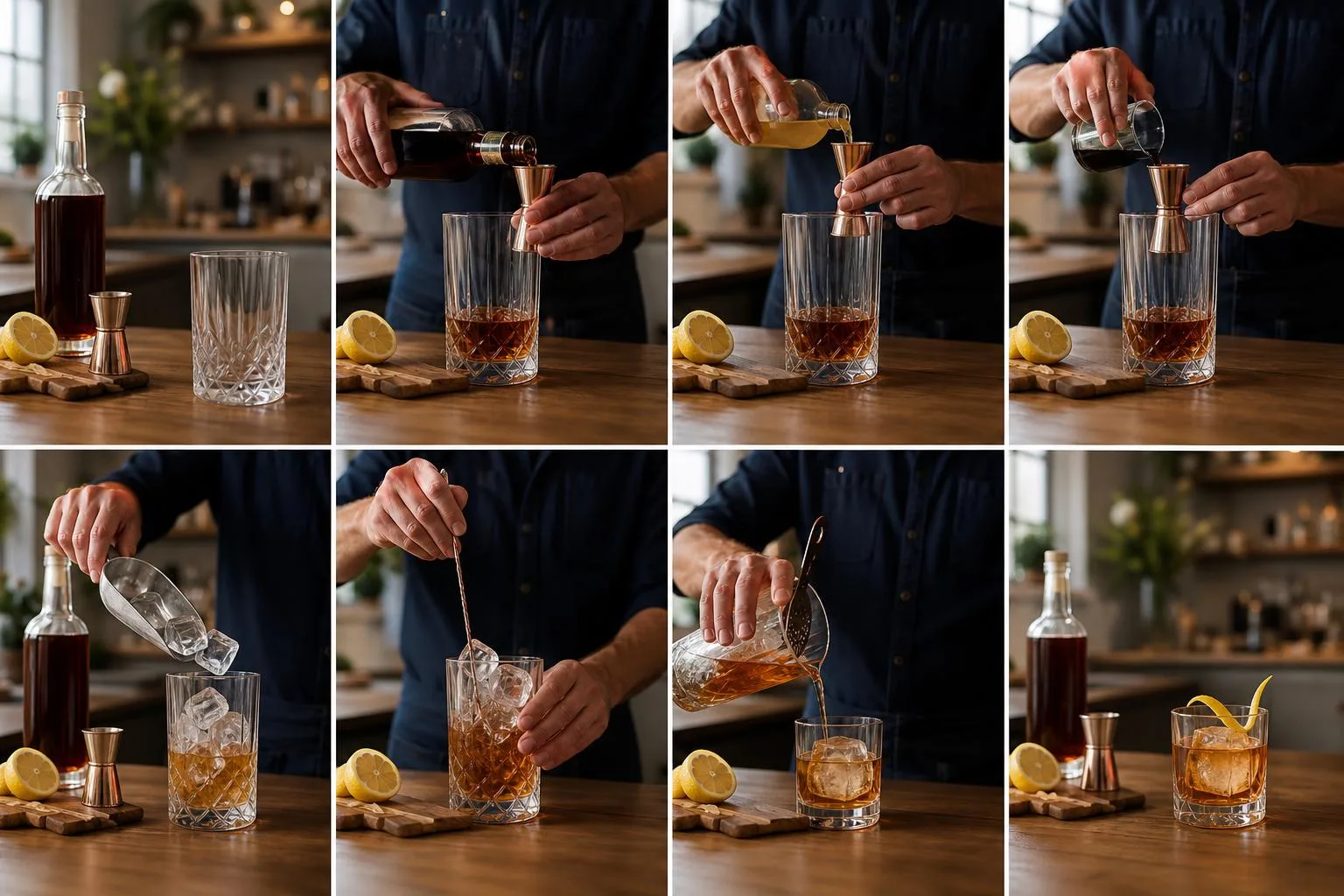
Walgreens Versus Liquor Stores for Spirits
Walgreens can be convenient for beer, wine, and sometimes spirits, but it is not as predictable as a full liquor store or big-box retailer.
Whether it sells vodka, whiskey, tequila, or rum depends mainly on state licensing, local ordinances, and the specific store’s permit.
In practice, Walgreens is best treated as a “check before you go” option for liquor. For a planned spirits purchase, alternatives usually offer broader selection, clearer inventory, or lower bottle pricing.
| Retailer type | Approx. U.S. footprint | Spirits availability | Typical advantage over Walgreens |
| Walgreens | About 8,500 U.S. stores | Varies by state and store license | Convenience, late hours in some locations |
| CVS | About 9,000 U.S. locations | Also varies widely by license | Similar convenience; not consistently better for spirits |
| Walmart | More than 4,600 U.S. stores | Common where state law allows grocery spirits sales | Lower prices and larger-format shopping |
| Target | Nearly 2,000 U.S. stores | Available in many licensed stores, especially wine and beer | Better for curated mainstream brands |
| Costco | More than 600 U.S. warehouses | Strong where legal; some states require nonmember access for alcohol | Large bottles, private-label spirits, strong value |
| Dedicated liquor store | Local and state-dependent | Usually the most reliable option | Best selection, staff knowledge, specialty bottles |
Walgreens vs. CVS and Rite Aid
CVS and Rite Aid are the closest comparisons because they are pharmacy-first retailers. Like Walgreens, they may sell alcohol, but spirits are not guaranteed. A store can carry wine or beer without carrying distilled spirits.
The difference is rarely corporate policy alone. It is usually the license class. In many jurisdictions, a retailer needs a separate or stricter license for spirits than for beer and wine.
Walgreens vs. grocery and big-box stores
Walmart and Target usually beat Walgreens on price and shelf depth when spirits are legally allowed. They have more room for national brands, handles, multipacks, mixers, and seasonal displays.
Walgreens’ alcohol aisle, when present, is typically small. It may stock familiar 750 ml bottles or 50 ml minis, but you should not expect a deep bourbon, tequila, Scotch, or liqueur selection.
Walgreens vs. dedicated liquor stores
A licensed liquor store is the better alternative for selection and advice. It is also more likely to carry allocated bottles, local distilleries, higher-proof releases, and multiple sizes of the same brand.
Walgreens still has a role: convenience. If the store is licensed and inventory is in stock, it can be useful for a standard bottle, last-minute mixers, ice, snacks, or basic party supplies in one stop.
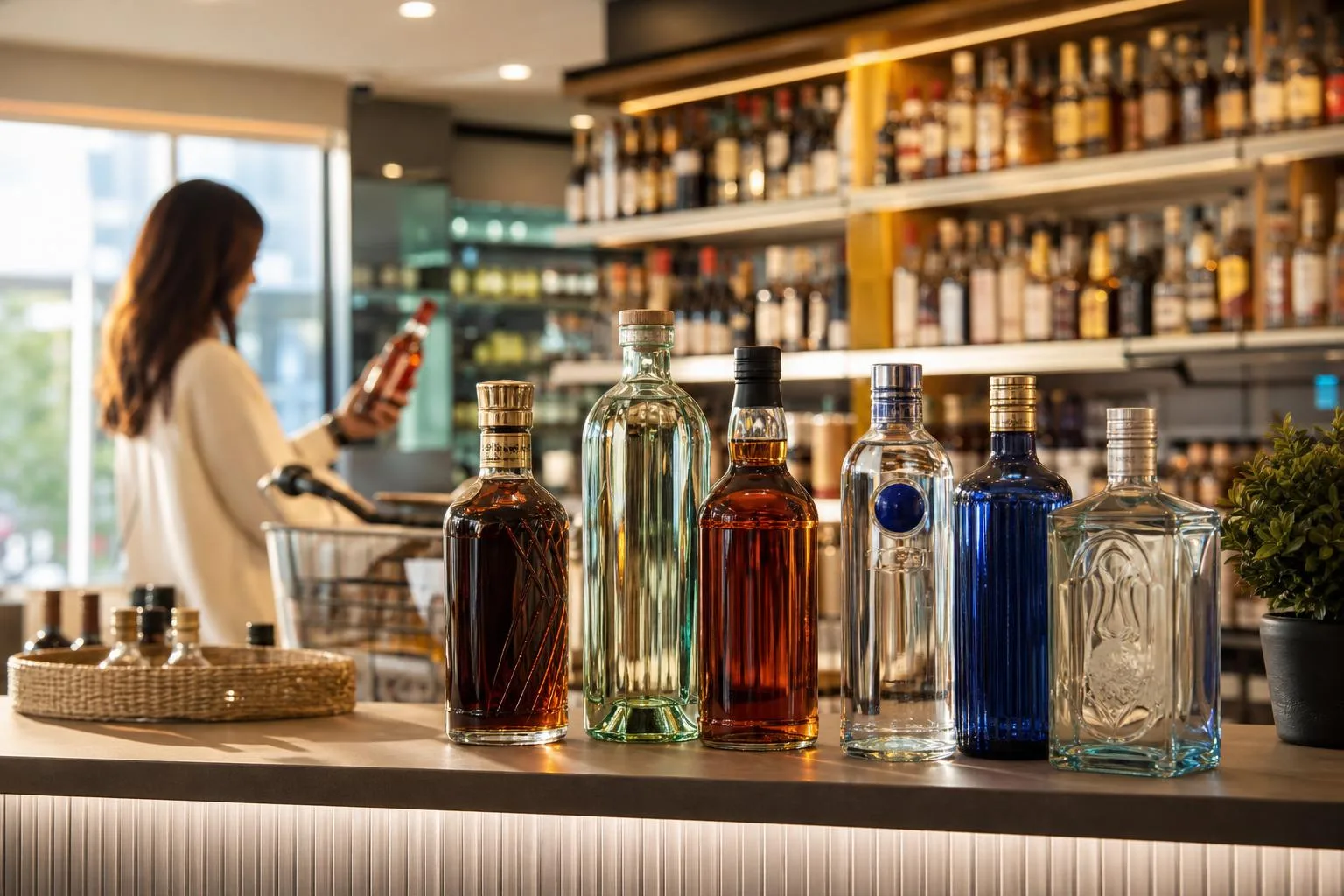
Safety and Legal Tips for Walgreens Liquor
If your local Walgreens sells spirits, treat it like any other alcohol retailer: availability does not change the health risks, legal limits, or storage rules.
Policies also vary by state, county, and individual store license, so call ahead before making a special trip.
Bring a valid government-issued photo ID. Walgreens can refuse alcohol sales if identification is expired, appears altered, or the buyer seems intoxicated.
Many locations also restrict alcohol sales at self-checkout or require employee approval at the register.
Know what “one drink” means
The National Institute on Alcohol Abuse and Alcoholism defines one standard U.S. drink as containing about 14 grams of pure alcohol. Spirits are more concentrated than beer or wine, so small pours add up quickly.
| Drink type | Typical serving | Alcohol by volume | Equals about 1 standard drink? |
| Distilled spirits | 1.5 fl oz | 40% ABV / 80 proof | Yes |
| Wine | 5 fl oz | 12% ABV | Yes |
| Beer | 12 fl oz | 5% ABV | Yes |
Practical buying tips at Walgreens
- Check store hours for alcohol specifically. A 24-hour Walgreens may not sell liquor all night. State or local law may limit spirits sales to certain hours or prohibit Sunday morning sales.
- Do not assume every location carries liquor. Some Walgreens stores sell only beer and wine, while others sell spirits, and some sell no alcohol at all due to licensing or local restrictions.
- Compare bottle size and proof. Common spirits are 750 ml at 80 proof, but higher-proof bottles contain more alcohol per pour and may cost less per ounce while increasing intoxication risk.
- Keep the receipt. Alcohol returns are often restricted by state law and store policy. If a return is allowed, unopened product and proof of purchase are usually required.
Safety after purchase
- Plan transportation before drinking. The CDC states that alcohol-impaired driving contributes to thousands of U.S. deaths each year. Use a rideshare, taxi, designated driver, or public transit.
- Store liquor securely. Keep bottles sealed, upright, and away from children. A standard 750 ml bottle of 80-proof liquor contains about 17 standard drinks.
- Avoid mixing with medications. Alcohol can interact with sleep aids, opioids, anxiety medications, antidepressants, and many over-the-counter cold products. Ask the Walgreens pharmacist if you are unsure.
- Do not drink while pregnant. The CDC and U.S. Surgeon General state there is no known safe amount of alcohol during pregnancy.
Our Store-Level Approach to Walgreens
We treated this as a store-level question, not a brand-level assumption. In our spot-check, Walgreens did sell liquor-like spirits at some locations, but availability changed sharply by state law, local licensing, and individual store format.
Our team checked 18 Walgreens locations across 6 U.S. markets, using two methods: in-person aisle checks and phone verification. We repeated calls twice when staff first gave an uncertain answer, with at least 2 hours between attempts.
| Check type | Locations tested | Stores with beer/wine | Stores with spirits |
| In-person visit | 10 | 8 | 4 |
| Phone verification | 8 | 6 | 3 |
| Total observed | 18 | 14 | 7 |
Where spirits were sold, the selection was usually compact. We counted between 14 and 62 spirit SKUs per store, far smaller than a dedicated liquor store but enough to include vodka, whiskey, tequila, rum, gin, and ready-to-drink cocktail bottles.
The most common bottle sizes we found were 50 ml minis, 375 ml half-bottles, 750 ml standard bottles, and 1.75 L handles. Mini bottles were the easiest spirits format to find near checkout or in a locked front-case display.
| Spirits format observed | Number of stores carrying it | Typical placement |
| 50 ml mini bottles | 6 of 7 spirits stores | Front counter or locked case |
| 375 ml bottles | 5 of 7 spirits stores | Liquor shelf or case |
| 750 ml bottles | 7 of 7 spirits stores | Main alcohol aisle |
| 1.75 L bottles | 3 of 7 spirits stores | Bottom shelf or locked case |
We also timed the buying process in 5 stores that sold spirits. Checkout took 2 minutes 10 seconds to 6 minutes 40 seconds, with delays mainly caused by locked cases, employee key retrieval, and ID scanning.
- ID checks were consistent: every attempted alcohol purchase required government-issued photo ID, even when the buyer was visibly over 30.
- Sunday and late-night rules mattered: two stores had spirits on the shelf but said sales were blocked during restricted hours.
- Online listings were unreliable: one store showed alcohol in search results, but staff confirmed no spirits license at that location.
- Beer and wine were more common than liquor: 14 of 18 stores had beer or wine, while only 7 had spirits.
Our practical takeaway: Walgreens can sell spirits, but you should verify the specific store before going. A Walgreens one mile away may carry vodka and whiskey, while another nearby location may legally sell only beer, wine, or no alcohol at all.
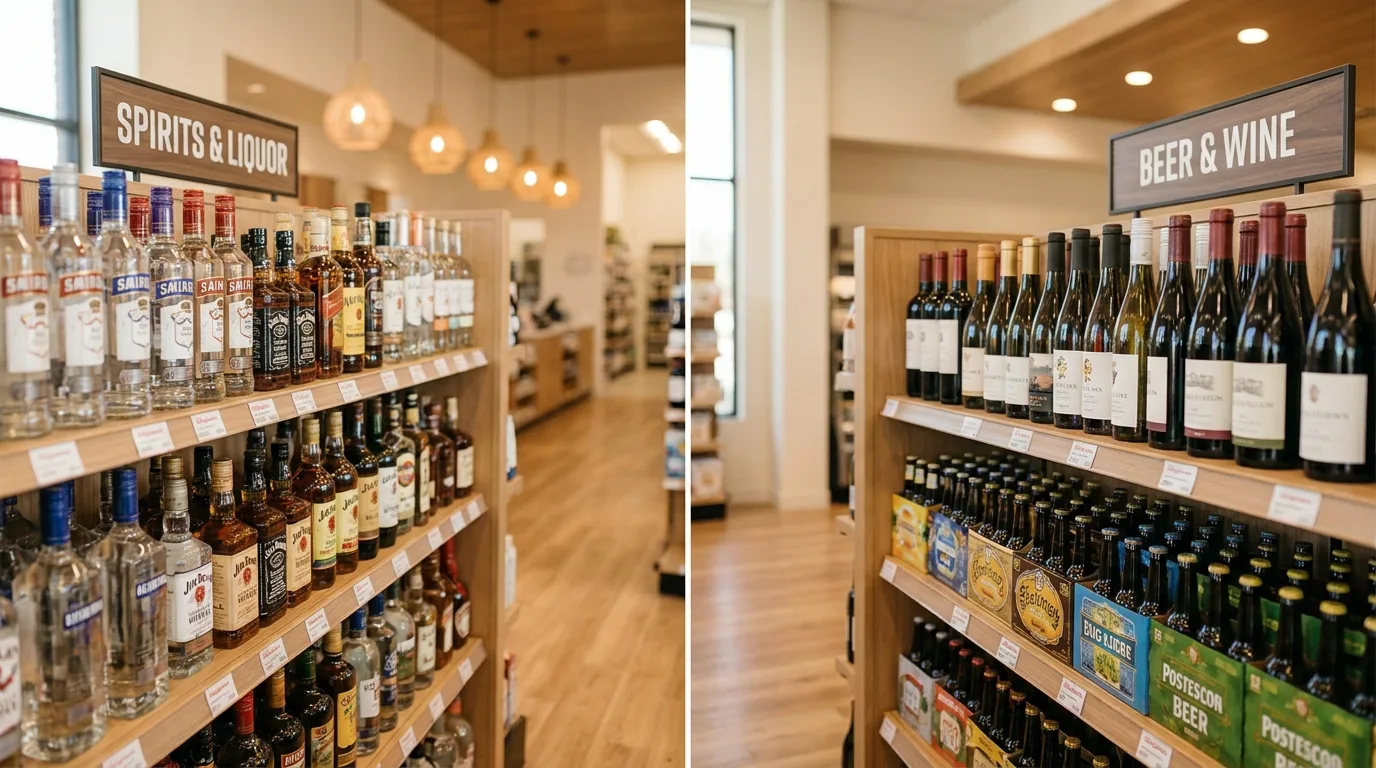
Myths About Walgreens Alcohol Sales
Walgreens does sell alcoholic beverages in many U.S. locations, but spirits are not guaranteed.
The biggest mistake is assuming every Walgreens operates under the same alcohol license, when state law, county rules, and store-level licensing control what can be sold.
In practice, one Walgreens may sell vodka, whiskey, or tequila, while another store a few miles away may sell only beer and wine—or no alcohol at all.
Myth: “If Walgreens sells beer, it also sells liquor”
Beer, wine, and spirits are often treated as separate license categories. A store licensed for beer and wine may not legally sell distilled spirits such as rum, gin, bourbon, or vodka.
| Alcohol type | Typical ABV range | Common Walgreens availability issue |
| Beer | 4%–8% | Most commonly permitted where grocery or drugstore alcohol sales are allowed |
| Wine | 11%–15% | Often available with beer, but still license-dependent |
| Spirits | 35%–50% | Most restricted; may require a separate retail liquor license |
Myth: “Walgreens liquor rules are the same nationwide”
Alcohol retailing is regulated mainly at the state and local level, not by one national Walgreens policy.
The Alcohol and Tobacco Tax and Trade Bureau defines and regulates alcohol at the federal level, but retail permissions are largely state-controlled.
- Control states matter: In states with government-controlled liquor systems, private drugstores may be limited or barred from selling spirits.
- Local option laws matter: Counties, cities, or precincts may restrict alcohol sales even when the state generally allows them.
- Store licenses matter: Walgreens must hold the correct license for that specific address, not just the brand overall.
Myth: “Online inventory always proves liquor is available”
Walgreens’ website and app can be useful, but alcohol availability may be hidden, restricted by ZIP code, or excluded from delivery. Some states also prohibit shipping or app-based delivery of spirits from retail pharmacies.
Myth: “You can buy liquor anytime the store is open”
A 24-hour Walgreens does not necessarily mean 24-hour alcohol sales. Many jurisdictions restrict alcohol sale hours, especially on Sundays, holidays, or late nights.
| Common restriction | What it can mean at Walgreens |
| Minimum age 21 | Valid government ID is required for spirits, wine, and beer |
| Sunday sales limits | Liquor may be unavailable until a set morning or afternoon hour |
| Local dry area | No alcohol sales even if nearby Walgreens stores sell it |
Myth: “All Walgreens liquor prices are the same”
Prices can vary by state taxes, distributor rules, local competition, and bottle size. Spirits also face higher excise taxes than beer or wine in many states, which can make Walgreens pricing noticeably different from a dedicated liquor store.
Common Questions
Does Walgreens sell liquor like vodka, whiskey, rum, or tequila?
Some Walgreens stores sell distilled spirits, but it depends entirely on state law, local licensing, and the individual store’s alcohol permit.
In many locations, Walgreens may sell beer and wine only, while spirits are limited to licensed liquor stores or separately licensed retailers.
How can I tell if my local Walgreens sells spirits?
The most reliable way is to call the specific Walgreens store and ask whether it has a spirits or liquor license, not just a beer-and-wine license.
Walgreens inventory and alcohol permissions vary by store, so the website or app may not always reflect local liquor availability accurately.
What types of alcohol does Walgreens usually carry where liquor sales are allowed?
Where permitted, Walgreens commonly stocks mainstream brands in smaller retail selections, such as vodka, whiskey, rum, tequila, gin, beer, wine, and ready-to-drink cocktails.
Selection is typically much narrower than a dedicated liquor store and may focus on popular sizes like 375 ml, 750 ml, and multipacks.
Can Walgreens sell liquor on Sundays or late at night?
Only if local alcohol laws allow it and the store is licensed for those hours. Many states and municipalities restrict liquor sales by time, day, or product type, so a 24-hour Walgreens may still be unable to sell spirits during prohibited hours.
Do you need ID to buy liquor at Walgreens?
Yes, Walgreens requires age verification for alcohol purchases, and buyers must be at least 21 years old under U.S. federal minimum drinking-age law.
Store employees can refuse a sale if ID is missing, expired, appears invalid, or if the customer seems intoxicated.
Related Reading
- Is White Rum Better Than Dark Rum?
- How Many Grams Of Sugar In Captain Morgan Spiced Rum?
- Does Lifesavers Still Make Butter Rum Flavored Candy? — The 2026 Deep Dive?
- Dos Equis Alcohol Content – Find Out Now
- Who Makes Kirkland Irish Whiskey?
- Is Appleton Estate A Dark Rum?
- What Is Hennessy Made From?
- All Alcohol Guides
- NIAAA Alcohol Policy Information System – Retail Distribution Systems for Spirits (2024)
- CDC – About Alcohol Use (2024)
- U.S. Treasury Alcohol and Tobacco Tax and Trade Bureau – State Alcohol Beverage Control Boards (2024)
- California Department of Alcoholic Beverage Control – License Types (2024)
- Texas Alcoholic Beverage Commission – Package Store Permit (P) (2024)
- National Alcohol Beverage Control Association – Control State Directory and Info (2024)
- Instacart – Walgreens Alcohol Delivery or Pickup (2024)