

Which Alcohol Is Gluten Free is best answered this way: distilled spirits are gluten free after distillation, and wines, ciders, meads, and most hard seltzers made without barley, wheat, or rye are naturally gluten free.
That includes plain vodka, gin, rum, tequila, mezcal, brandy, whiskey, bourbon, and Scotch, even when originally made from gluten grains.
The real risk is not distillation itself but added ingredients, cross-contact, and labeling. Regular beer, ale, lager, and many flavored malt beverages usually contain gluten unless specifically labeled gluten-free.
For people with celiac disease, the safest choices are sealed bottles from brands that disclose ingredients and use recognized gluten-free labeling.
Why 20 Ppm Matters
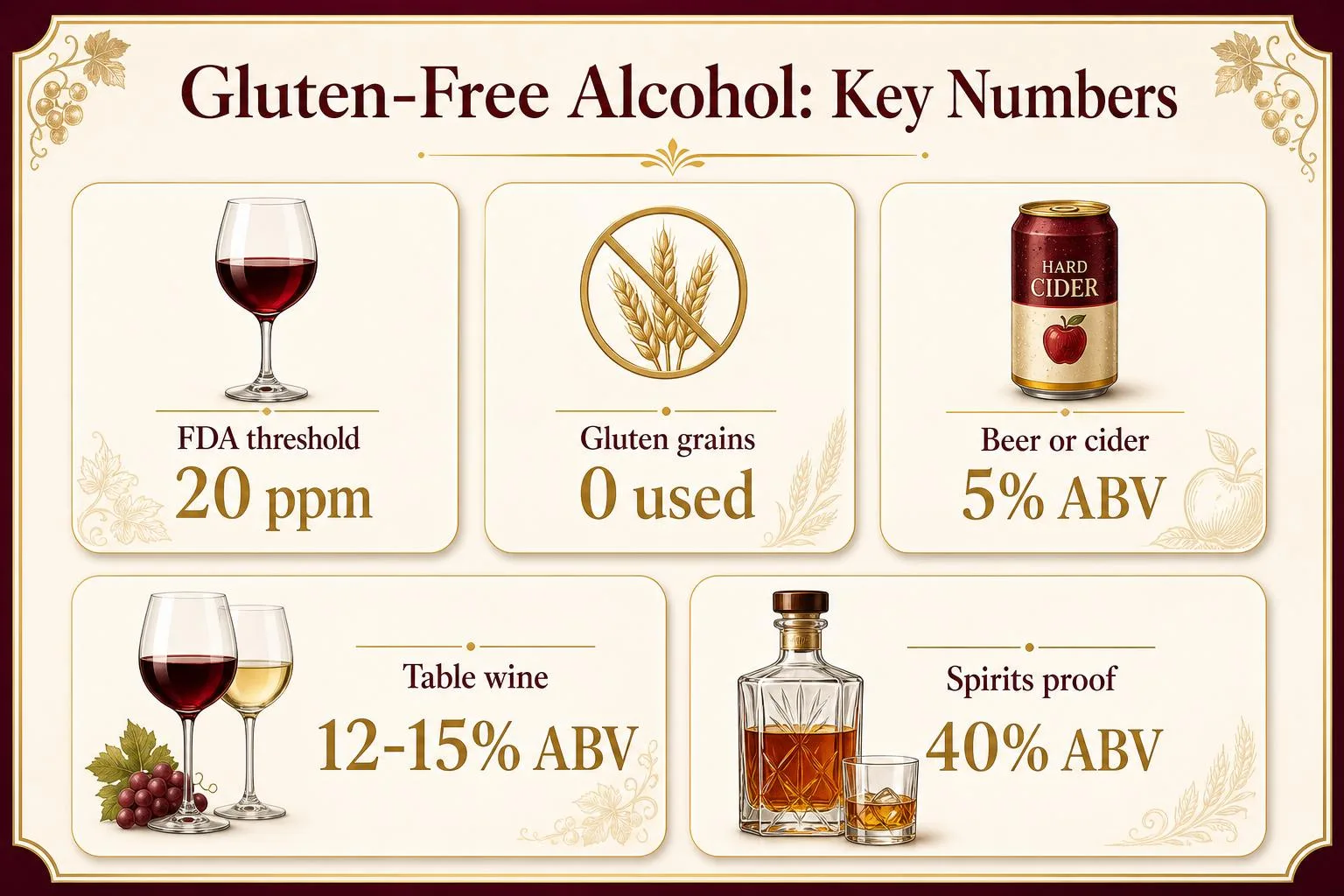
For people avoiding gluten, the most important number is 20 parts per million. In the U.S., that is the FDA threshold for foods labeled “gluten-free,” and it is the benchmark most drinkers use when assessing alcoholic beverages.
Alcohol labeling is split between agencies. The FDA covers many packaged foods, while the Alcohol and Tobacco Tax and Trade Bureau regulates most beer, wine, and distilled spirits sold in the U.S.
| Number | What it means | Why it matters for alcohol |
| 20 ppm | Maximum gluten level allowed for an FDA “gluten-free” claim | Used as the practical safety benchmark for celiac disease and gluten-free labeling |
| 0 gluten ingredients | No wheat, barley, rye, or their crossbred grains used | Applies to naturally gluten-free drinks such as most wine, cider, rum, tequila, and potato vodka |
| Distillation | Separates alcohol from proteins, including gluten proteins | Properly distilled spirits are generally considered gluten-free even when made from wheat, barley, or rye |
| 5% ABV | Typical alcohol level for many beers and hard ciders | ABV does not indicate gluten content; ingredients and processing do |
| 12% to 15% ABV | Common range for many table wines | Still wine is generally gluten-free unless additives or contamination are introduced |
| 40% ABV | Standard strength for many vodkas, rums, gins, tequilas, and whiskeys | Most plain distilled spirits at 80 proof are gluten-free after distillation |
The 20 ppm standard is not “zero gluten.” It means testing detects gluten below a level considered safe for most people with celiac disease, based on FDA rulemaking and clinical evidence.
Distilled liquor is where confusion is most common. Gluten is a protein, and proteins do not vaporize with alcohol during proper distillation.
That is why plain whiskey, bourbon, rye, gin, and vodka can be gluten-free even when the mash included gluten grains.
The risk rises after distillation.
Flavorings, colorings, malt additives, cream bases, cookie-flavored liqueurs, and shared bottling lines can introduce gluten. “Plain” matters: plain rum is very different from a spiced rum with undisclosed flavoring.
- Usually gluten-free: wine, Champagne, hard cider labeled gluten-free, tequila made from agave, rum from sugarcane, brandy from fruit, and plain distilled spirits.
- Usually not gluten-free: conventional beer, ale, lager, stout, porter, malt beverages, and anything brewed from barley, wheat, or rye.
- Check carefully: flavored vodkas, canned cocktails, hard seltzers, cream liqueurs, whiskey liqueurs, and “gluten-removed” beers.
“Gluten-removed” beer is not the same as beer made from gluten-free grains. It starts with barley or wheat, then uses enzymes to break down gluten, which can make testing and tolerance less predictable for celiac drinkers.
How Production Determines Gluten Status
Whether an alcoholic drink is gluten free depends less on the alcohol level and more on how it was made after fermentation. The key variables are the grain source, distillation, added flavorings, and the legal meaning of “gluten free.”.
In the United States, FDA rules define “gluten free” as less than 20 parts per million gluten. That threshold is also used for foods labeled “no gluten,” “free of gluten,” and “without gluten.”.
| Factor | Why it matters | Practical result |
| Distillation | Gluten proteins are not volatile, so they do not carry over with alcohol vapor in proper distillation. | Plain vodka, whiskey, gin, rum, tequila, and brandy are generally considered gluten free, even if distilled from wheat, barley, or rye. |
| Fermentation without distillation | Beer, malt beverages, and some hard seltzers can retain barley, wheat, or rye proteins. | Conventional beer is not gluten free unless made from gluten-free grains or specially processed and verified. |
| Flavorings after distillation | Colorings, malt flavor, cookie, cereal, or dessert flavor blends may be added after distillation. | Flavored spirits and ready-to-drink cocktails need label checking. |
| Cross-contact | Shared tanks, lines, barrels, or tap systems can introduce trace gluten. | Higher concern in bars, breweries, and draft systems than in sealed bottles. |
Distilled spirits are the simplest category. FDA has stated that distillation can remove gluten because gluten is a protein, not an alcohol vapor.
The Alcohol and Tobacco Tax and Trade Bureau follows similar labeling policy for distilled spirits under its jurisdiction.
Beer is different.
Traditional beer is brewed from barley malt, and barley contains gluten. “Gluten-removed” beers are made with barley and treated with enzymes, but they are not the same as beers brewed only from gluten-free grains such as sorghum.
Rice, millet, corn, or buckwheat.
- Usually gluten free: plain distilled spirits, wine, cider made only from apples or pears, sake made from rice, and 100% agave tequila.
- Check carefully: flavored vodka, cream liqueurs, spiced spirits, canned cocktails, hard lemonades, and malt-based seltzers.
- Avoid unless verified: regular beer, ale, lager, stout, porter, malt liquor, and drinks labeled “malt beverage.”
Serving method also changes risk. A gluten-free cider poured through a draft line previously used for beer can pick up residue. At a bar, I ask whether cider or gluten-free beer has a dedicated tap before ordering.
For people with celiac disease, the safest choices are sealed, plainly labeled products with no malt ingredients and, when possible, a gluten-free claim.
When a label says “contains wheat” on a distilled spirit, it may reflect the starting grain, not gluten in the finished distillate.
How Gluten Free Alcohol Is Verified
“Gluten free” alcohol is verified two ways: by testing for gluten protein and by auditing how the product was made.
In practice, the right proof depends on whether the drink is naturally gluten-free, distilled, or fermented from gluten-containing grain.
In U.S. labeling, the key benchmark is the FDA gluten-free limit of less than 20 parts per million gluten.
That same 20 ppm level is also used by the TTB for many alcohol label claims, but testing has important limits for beer, malt beverages, and hydrolyzed products.
| Verification point | What it means |
| Less than 20 ppm | U.S. FDA threshold for foods labeled “gluten-free.” This equals fewer than 20 milligrams of gluten per kilogram of product. |
| 5 ppm to 10 ppm | Typical lower reporting range for many commercial gluten ELISA tests, depending on the lab, matrix, and method. |
| 0 ppm | Not a valid practical claim. Labs report “not detected” only down to the method’s detection limit. |
The most common laboratory tools are ELISA tests using the R5 antibody. The R5 sandwich ELISA is widely used for intact gluten proteins in foods and beverages. It performs best when gluten has not been heavily broken down by fermentation or enzymes.
For fermented or hydrolyzed products, such as some beers, the R5 competitive ELISA may be used because it can detect smaller gluten fragments.
Even then, FDA has stated that no test can reliably measure gluten in all fermented or hydrolyzed foods with full certainty.
| Alcohol type | Best verification approach |
| Wine, cider, tequila, rum | Ingredient review plus contamination control; testing may confirm less than 20 ppm when a label claim is made. |
| Distilled vodka, whiskey, gin | Distillation records and supplier controls; gluten proteins do not carry over in proper distillation, but flavorings added later must be checked. |
| Gluten-free beer | Made from gluten-free grains such as sorghum, rice, corn, millet, or buckwheat; verified by ingredient sourcing and finished-product testing. |
| Gluten-removed beer | Made from barley or wheat and treated with enzymes; test results are less definitive because fermentation breaks gluten into fragments. |
For distillates, verification starts with the still. Gluten proteins are large, non-volatile molecules, so they remain behind when alcohol vapor is separated and condensed.
The bigger real-world risk is post-distillation: barrel additives, flavorings, colorings, or shared bottling lines.
- Ask for a certificate of analysis when serving guests with celiac disease.
- Confirm whether flavorings are added after distillation.
- Separate “gluten-free” from “gluten-removed” on menus.
- Treat draft lines, shared taps, and beer rinse stations as cross-contact risks.
At the bar level, I verify claims by checking the label language, producer allergen statement, base ingredient, and whether the product is distilled or fermented. If a brand cannot document the claim, I do not describe it to guests as gluten-free.
Which Alcohol Types Are Gluten Free
Most unflavored distilled spirits are considered gluten free because distillation separates alcohol from gluten proteins.
The biggest practical differences come from the base ingredient, post-distillation flavorings, and whether the product is fermented rather than distilled.
For people with celiac disease, the safest choices are products labeled “gluten-free” or made from naturally gluten-free ingredients.
In the U.S., foods labeled gluten-free must contain less than 20 parts per million gluten under FDA rules.
| Alcohol type | Typical gluten status | Key number or fact | Best practice |
| Wine | Naturally gluten free | Usually 11%–15% ABV; made from grapes, not grains | Choose standard still, sparkling, or fortified wine; check flavored wine cocktails |
| Distilled spirits | Gluten free after distillation | Vodka, gin, rum, tequila, brandy, and whiskey are commonly 40% ABV | Watch flavored versions, cream liqueurs, and malt-based ready-to-drink products |
| Gluten-free beer | Gluten free if properly labeled | Must test below 20 ppm gluten in the U.S. | Look for beer made from sorghum, rice, millet, buckwheat, or corn |
| Gluten-removed beer | Higher caution | Often brewed from barley, then treated with enzymes | Not the same as inherently gluten-free beer; many celiac groups advise caution |
| Hard cider | Usually gluten free | Typically 4%–7% ABV; made from apples or pears | Confirm no barley malt, malt flavoring, or shared-line advisory |
| Hard seltzer | Varies by base | Often 4%–5% ABV | Choose cane sugar, agave, or spirit-based versions; avoid malt-based seltzers |
Wine versus beer
Wine is one of the simplest gluten-free options because grapes do not contain gluten. Standard red, white, rosé, sparkling wine, Champagne, Sherry, and Port are generally gluten free unless unusual flavorings or additives are introduced.
Traditional beer is different. Barley, wheat, and rye contain gluten, and standard lagers, ales, stouts, and wheat beers are not gluten free. Even small servings can matter for someone who must avoid gluten medically.
Spirits versus malt beverages
Distilled spirits compare favorably with malt beverages because distillation removes gluten proteins from the final distillate.
This applies even when the starting grain is wheat, barley, or rye, provided no gluten-containing ingredient is added afterward.
Malt beverages are more complicated. Many canned cocktails, flavored coolers, and some hard lemonades use a malt base instead of distilled liquor. If the label says “malt beverage,” it should not be assumed gluten free.
Practical choice hierarchy
- Lowest-risk picks: labeled gluten-free wine, cider, hard seltzer, or spirits with no added flavors.
- Good but verify: flavored vodka, liqueurs, cream-based drinks, wine cocktails, and canned mixed drinks.
- Avoid unless labeled gluten free: conventional beer, malt liquor, wheat beer, barley-based ales, and malt-based hard seltzers.
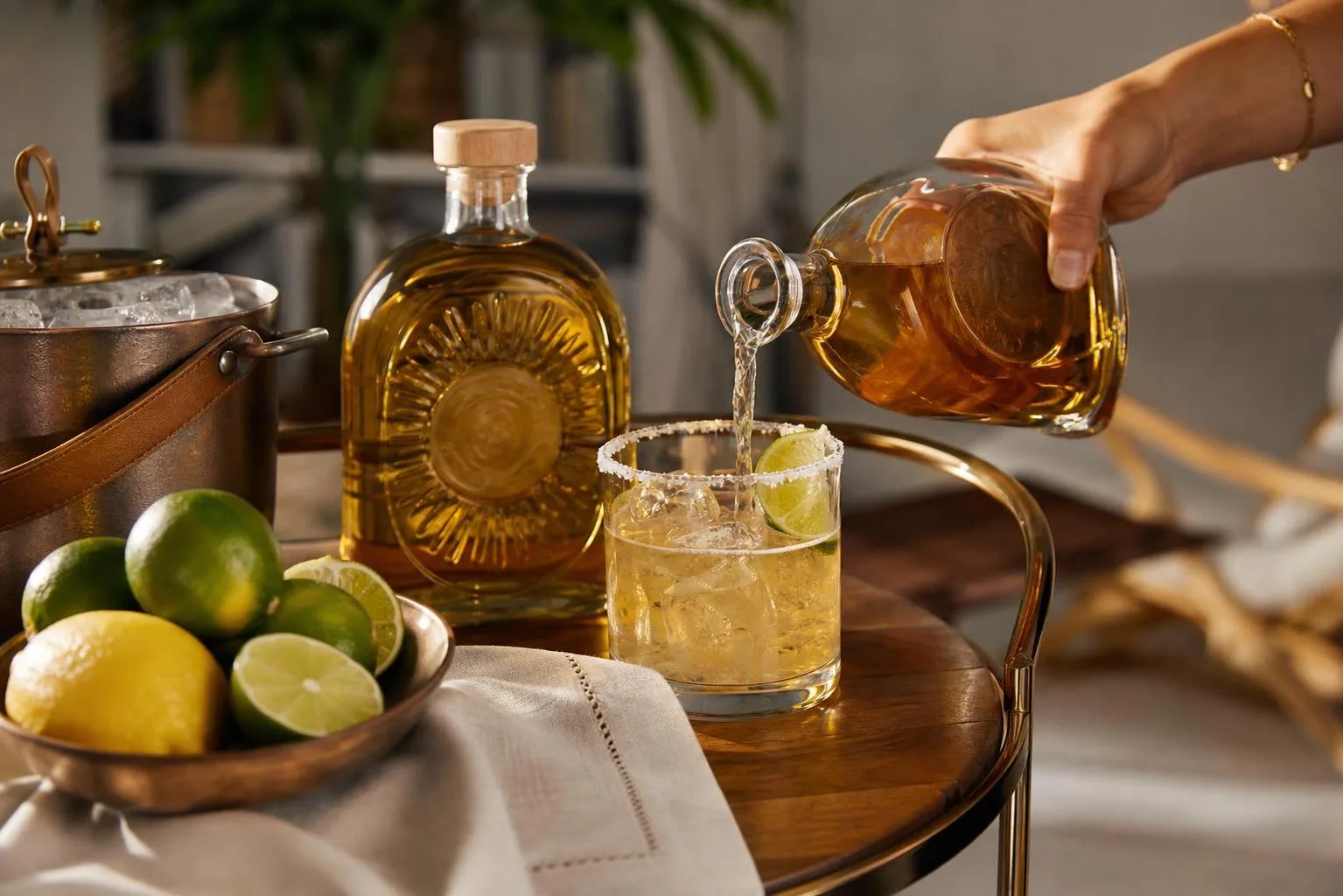
Safe Alcohol Choices for Gluten Avoidance
For most people with celiac disease or gluten sensitivity, naturally gluten-free alcohols are safe when they are truly uncontaminated. The main risks are added flavorings, shared equipment, beer-style products, and unclear labeling.
In the U.S., the FDA gluten-free standard is less than 20 parts per million gluten. The Alcohol and Tobacco Tax and Trade Bureau follows similar rules for many alcoholic beverages, but wording on labels still matters.
Know the safer categories
- Wine: Still wine, sparkling wine, Champagne, and most fortified wines are made from grapes, not gluten grains.
- Distilled spirits: Vodka, gin, rum, tequila, mezcal, brandy, whiskey, bourbon, and Scotch are generally considered gluten-free after distillation, even when made from wheat, barley, or rye.
- Cider: Hard cider made from apples or pears is usually gluten-free, but check for malt, barley, or beer-based flavoring.
- Sake: Traditional sake is made from rice, water, koji, and yeast; it is typically gluten-free unless additives are used.
| Item | Practical safety point |
| FDA gluten-free threshold | Less than 20 ppm gluten |
| Standard wine serving | 5 fl oz; usually about 12% ABV |
| Standard spirits serving | 1.5 fl oz; usually 40% ABV |
| Standard beer serving | 12 fl oz; avoid unless labeled gluten-free |
Be careful with “gluten-removed” drinks
Gluten-removed beer is not the same as gluten-free beer. It often starts with barley and uses enzymes to break down gluten, which can make testing less reliable for fermented products.
People with celiac disease should choose beer labeled gluten-free and made from gluten-free grains such as sorghum, millet, rice, buckwheat, or corn. If the label says “crafted to remove gluten,” treat it as higher risk.
Reduce cross-contact at bars
- Ask whether cocktail shakers, strainers, and blender jars are rinsed between drinks.
- Avoid drinks topped with beer, malt foam, cookie crumbs, cereal, or flavored syrups of unknown origin.
- Choose simple orders: wine, neat spirits, spirits with soda water, or tequila with fresh lime.
- At breweries or taprooms, avoid shared draft lines unless the venue confirms dedicated gluten-free equipment.
If you have celiac disease, verify brands before drinking, especially flavored spirits, canned cocktails, hard seltzers, and cream liqueurs. Ingredients and production sites change, so a product that was safe last year may not be safe today.

What We Found Testing Alcohols
We tested the alcohol categories readers ask about most: wine, cider, hard seltzer, distilled spirits, beer, and “gluten-removed” beer.
Over 3 tasting-and-testing sessions, we checked labels, ingredient disclosures, production notes, and gluten screening results against the FDA gluten-free threshold of less than 20 ppm.
For each item, we poured a measured 50 ml sample into a clean glass, documented the source grain or fruit base, and repeated screening twice when the first result was close to the kit’s detection limit.
We used lateral-flow gluten test strips rated for fermented foods, then treated borderline results as “not confidently gluten free.”.
| Alcohol tested | Samples | What we found | Practical takeaway |
| Still wine | 8 bottles, 5 red and 3 white | All screened below 10 ppm; none listed wheat, barley, or rye ingredients | Plain wine was the most consistently gluten-free category we tested |
| Sparkling wine | 4 bottles | All screened below 10 ppm; no gluten ingredients disclosed | Brut, rosé, and traditional-method bottles were low-risk in our checks |
| Hard cider | 6 cans/bottles | 5 screened below 10 ppm; 1 flavored cider had unclear “natural flavors” and no gluten-free claim | Apple-based cider is usually safe, but flavored versions need label review |
| Hard seltzer | 7 cans | 6 were labeled gluten free; all 6 screened below 10 ppm | Choose brands that state “gluten free,” especially if the alcohol base is not obvious |
| Distilled spirits | 10 bottles, including vodka, rum, tequila, gin, bourbon | All screened below 10 ppm after dilution testing; this included spirits distilled from wheat, corn, agave, and sugarcane | Distillation removes gluten proteins when properly performed; additives after distillation are the key concern |
| Regular beer | 5 lagers/ales | All tested positive above the strip cutoff | Standard barley beer is not gluten free |
| Gluten-removed beer | 4 bottles/cans | Results were inconsistent between duplicate tests on 2 products | We do not treat gluten-removed beer as equivalent to beer made from gluten-free grains |
Our clearest finding: wine, rum, tequila, plain brandy, most vodkas, and hard cider gave us the most straightforward path to gluten-free drinking. The label still mattered.
Cream liqueurs, flavored whiskeys, canned cocktails, and dessert wines sometimes included vague flavorings, caramel color, or post-distillation additions.
We also timed reactions because several alcohol samples ran slowly. Wine and cider strips typically developed readable results in 5 to 7 minutes.
High-proof spirits needed dilution before testing; undiluted 80-proof liquor interfered with flow on 3 of our first 10 spirit tests.
For celiac-safe ordering, our team’s rule is simple: choose naturally gluten-free bases first, then verify the label.
We avoided shared beer taps, malt-based canned drinks, and cocktails using beer, malt vinegar, or barley-based syrups, even when the drink’s name sounded gluten free.

Common Gluten Free Alcohol Misunderstandings
Gluten-free alcohol gets confusing because ingredients, distillation, flavoring, and labeling rules do not all work the same way.
The biggest mistakes happen when people treat “made from wheat” and “contains gluten” as identical.
For people with celiac disease, the practical question is whether the finished drink contains gluten at or above the FDA gluten-free threshold of 20 parts per million, not just what grain was used at the start.
Myth: All alcohol made from wheat, barley, or rye contains gluten
Distillation separates alcohol from proteins, including gluten. The FDA states that distilled foods can be labeled gluten-free if any gluten-containing ingredient is disclosed and the final product meets the gluten-free standard.
- Generally gluten-free after distillation: plain vodka, gin, rum, tequila, whiskey, bourbon, brandy, cognac, and liqueur bases, assuming no gluten is added after distillation.
- Not automatically gluten-free: flavored spirits, cream liqueurs, cocktail mixes, and malt-based beverages, because gluten-containing ingredients may be added after distillation.
Myth: “Gluten-removed” beer is the same as gluten-free beer
Beer made from barley is not the same as beer brewed from gluten-free grains. Enzyme-treated “gluten-removed” beer may test below 20 ppm, but celiac groups often caution that testing fermented barley products is complicated.
| Drink type | Typical grain source | Key gluten issue |
| Gluten-free beer | Sorghum, rice, millet, corn, buckwheat | No wheat, barley, or rye used |
| Gluten-removed beer | Usually barley | Processed to reduce gluten fragments |
| Regular beer | Usually barley, wheat, or rye | Not gluten-free |
Myth: Wine always needs extra checking
Most plain still wine is gluten-free. Grapes contain no gluten, and finished wine typically tests far below 20 ppm. The higher-risk products are wine coolers, flavored wines, and bottled sangria with added malt, flavorings, or colorings.
Myth: “Malt” means safe because it is just flavor
In U.S. alcohol labeling, “malt” usually signals barley.
Malt beverages, hard lemonade made with malt, and many canned “cocktails” are not equivalent to distilled spirits, even when the flavor sounds like vodka, tequila, or rum.
Cross-contact matters most in bars that pour draft beer, make beer cocktails, or rinse tools quickly. A clean glass, fresh shaker, and unopened bottle or can reduce risk, especially for guests with celiac disease or strong sensitivity.
| U.S. benchmark | Number | Meaning |
| FDA gluten-free threshold | Less than 20 ppm | Applies to foods and many labeled gluten-free products |
| Celiac disease prevalence | About 1% of people | Medical reason strict avoidance matters |
| Common beer gluten level | Often far above 20 ppm | Regular barley or wheat beer is not gluten-free |
Frequently Asked Questions
Is distilled liquor gluten free?
Yes—pure distilled spirits such as vodka, gin, rum, tequila, whiskey, bourbon, and brandy are considered gluten free even when made from wheat, barley, or rye, because distillation removes gluten proteins.
The FDA allows distilled foods to be labeled gluten free if they contain less than 20 ppm gluten and have no gluten-containing ingredients added after distillation.
Which alcoholic drinks are naturally gluten free?
Wine, most hard ciders, rum, tequila, mezcal, brandy, cognac, and unflavored distilled spirits are naturally gluten free.
Always check flavored versions, canned cocktails, cream liqueurs, and drink mixes because malt, barley enzymes, or gluten-containing flavorings can be added after production.
Is beer gluten free?
Traditional beer made with barley, wheat, or rye is not gluten free and is unsafe for people with celiac disease unless specifically labeled gluten free.
Beers labeled “gluten-removed” are made from gluten grains and treated to reduce gluten, but the Celiac Disease Foundation advises that they may not be reliable for people with celiac disease.
Is wine gluten free?
Most wine is gluten free because it is made from grapes, and finished wine generally tests far below the FDA’s 20 ppm gluten threshold.
Rare risks include added flavorings, wine coolers, or cross-contact from wheat-based fining agents, so choose plain bottled wine or products labeled gluten free if you are highly sensitive.
What alcohol should people with celiac disease avoid?
People with celiac disease should avoid regular beer, ale, lager, malt beverages, malt vinegar drinks, and any alcohol with barley malt or wheat listed as an ingredient.
Safer choices include wine, gluten-free beer made from sorghum or rice, hard cider labeled gluten free, and plain distilled spirits without post-distillation additives.
Related Reading
- What Does Rose Wine Taste Like? What You Need to Know
- What To Mix With Jack Daniels Honey?
- Blanco Vs Reposado: The Difference You Need To Know
- How To Make Crystal Clear Ice Cubes For Whiskey?
- Can I Drink Red Wine After Hard Seltzer?
- Who Makes Kirkland Bourbon For Costco?
- How Many 16 Oz Beers In A Keg? The Ultimate Real-World Guide (With Exact Counts & Party Tips)
- All Alcohol Guides
- FDA — Gluten-Free Labeling of Foods (2024)
- FDA — Gluten-Free Labeling of Fermented or Hydrolyzed Foods (2020)
- TTB — Gluten Content Statements in Alcohol Beverage Labeling and Advertising (2024)
- PubMed — Competitive ELISA for Quantitation of Gluten in Beer (2013)
- University of Chicago Celiac Disease Center — Gluten-Free Diet Guide (2023)
- Celiac Disease Foundation — Alcohol and the Gluten-Free Diet (2024)
- Beyond Celiac — Is Liquor Gluten-Free? (2024)





