Why Do I Lose Weight When I Drink Alcohol is usually explained by dehydration, reduced food intake, disrupted nutrient absorption, or alcohol-related illness—not healthy fat loss.
Alcohol suppresses appetite in some people, irritates the stomach, increases urine output, and can replace meals with “empty” calories that lack protein, fiber, and micronutrients.
Short-term scale drops often reflect water loss because alcohol inhibits vasopressin, increasing urination. Ongoing weight loss can signal gastritis, liver disease, pancreatitis, depression, or alcohol use disorder.
This article explains the common mechanisms, warning signs, and when unexplained weight loss needs medical evaluation.
Short-Term Weight Loss Causes
Short-term weight loss after drinking is usually fluid loss, lower food intake, or both—not rapid fat loss. The numbers matter because alcohol changes energy intake, hydration, and metabolism in ways that can move the scale within 24 hours.
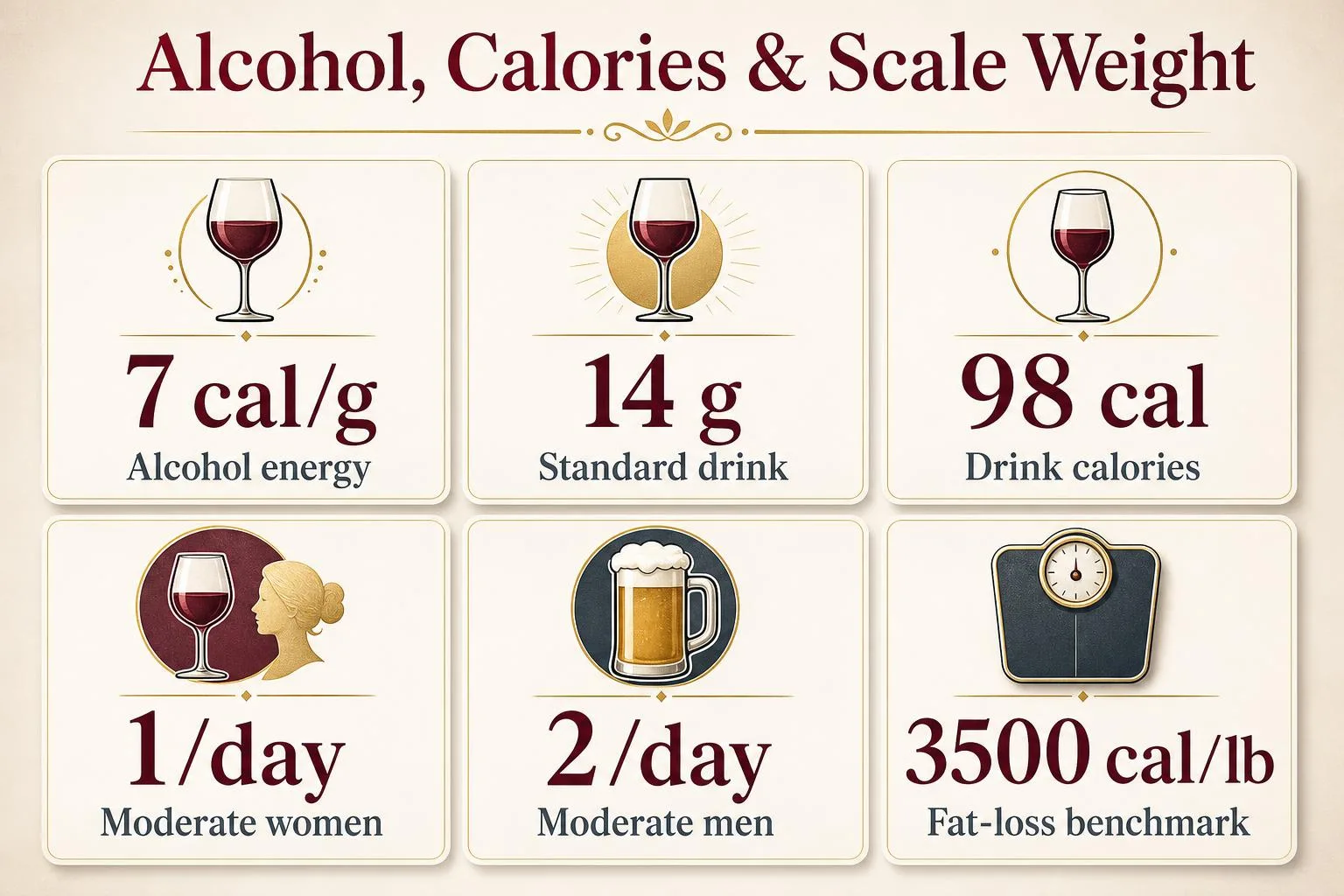
Alcohol provides 7 calories per gram, nearly twice protein or carbohydrate at 4 calories per gram. Unlike those nutrients, ethanol is prioritized for metabolism in the liver, so your body temporarily burns less fat while clearing it.
| Item | Typical number | Why it matters |
| Pure alcohol | 7 calories per gram | High energy density, even before mixers or snacks |
| Protein or carbohydrate | 4 calories per gram | Lower calories per gram than alcohol |
| Fat | 9 calories per gram | Only fat is more calorie-dense than alcohol |
In the U.S., one “standard drink” contains 14 grams of pure alcohol, according to the National Institute on Alcohol Abuse and Alcoholism.
That alcohol alone contributes about 98 calories before counting sugar, juice, beer carbohydrates, or cream liqueurs.
| Drink | Standard serving | Alcohol amount |
| Regular beer | 12 fl oz at about 5% ABV | 14 g alcohol |
| Wine | 5 fl oz at about 12% ABV | 14 g alcohol |
| Distilled spirits | 1.5 fl oz at about 40% ABV | 14 g alcohol |
If you weigh less the morning after drinking, dehydration is a common reason. Alcohol suppresses vasopressin, an antidiuretic hormone, increasing urine output. Less water and glycogen can reduce scale weight quickly without meaning body fat changed.
| Scale change | Most likely explanation | Fat-loss reality |
| 1 lb overnight | Water, urine, less food volume, glycogen shifts | Requires about a 3,500-calorie deficit to equal fat loss |
| 2–4 lb after a night out | Usually fluid swings, sodium, dehydration, digestion | Too large to be pure fat loss in one day |
Alcohol can also reduce appetite in some people during the drinking window, especially if it replaces dinner. For example, skipping an 800-calorie meal but drinking two glasses of wine may still create a short-term deficit.
| Example | Approximate calories | Net effect |
| Two 5-fl oz glasses of wine | About 240–260 calories total | Lower than many dinners |
| Skipped restaurant meal | About 700–1,200 calories | May produce temporary weight drop |
| Wine plus late-night pizza | Often 800+ extra calories | More likely weight gain over time |
The CDC defines moderate drinking as up to 1 drink per day for women and up to 2 for men. Regular drinking above that level often adds calories, worsens sleep, and increases next-day hunger, making sustained fat loss less likely.
Why Alcohol Weight Loss Isn’t Fat Loss
Weight loss after drinking is usually not fat loss. The result depends on how alcohol changes fluid balance, food intake, sleep, movement, and total weekly calories.
Alcohol also has direct metabolic effects: the liver prioritizes oxidizing ethanol because it cannot be stored. That can temporarily suppress fat oxidation, even if the scale drops the next morning.
Short-Term Scale Changes
- Dehydration: Alcohol suppresses vasopressin, the hormone that helps the kidneys retain water. More urination can make body weight fall overnight without any meaningful fat loss.
- Glycogen loss: Eating less while drinking can reduce stored carbohydrate. Each gram of glycogen is stored with water, so lower glycogen can lower scale weight quickly.
- Less food volume: Skipping dinner, vomiting, or eating less fiber and salt can reduce gut contents. That can change morning weight before body fat changes.
Calorie Intake Still Matters
| Drink or food choice | Typical serving | Approximate calories |
| Distilled spirits, 80 proof | 1.5 fluid ounces | 97 calories |
| Light beer | 12 fluid ounces | 103 calories |
| Regular beer | 12 fluid ounces | 153 calories |
| Red wine | 5 fluid ounces | 125 calories |
| Piña colada | 6.8 fluid ounces | 526 calories |
These USDA-based figures show why outcomes vary. Someone replacing dessert with one glass of wine may reduce daily calories. Someone adding cocktails, late-night food, and lower activity may gain weight.
Drinking Pattern Changes the Outcome
- Frequency: One drinking occasion per week affects body weight differently than alcohol every night, even when each session feels “moderate.”
- Binge drinking: The National Institute on Alcohol Abuse and Alcoholism defines binge drinking as a pattern that brings blood alcohol concentration to 0.08%, often about 4 drinks for women or 5 for men within 2 hours.
- Food behavior: Alcohol can lower inhibition and increase cravings for salty, high-fat foods. For other people, nausea or appetite suppression reduces intake.
- Sleep and recovery: Alcohol can fragment sleep and reduce next-day training quality. Lower movement can offset any calories not eaten while drinking.
Body size, sex, medications, liver health, and tolerance also matter. Smaller people generally reach higher blood alcohol concentrations from the same number of drinks, which can magnify dehydration, appetite changes, and next-day fatigue.
Persistent unintentional weight loss while drinking is not something to ignore. It can reflect poor nutrition, gastrointestinal disease, depression, alcohol use disorder, liver disease, or another medical condition that needs evaluation.

How to Confirm True Weight Loss
Alcohol-related weight loss is verified by separating true fat loss from dehydration, reduced food intake, illness, and scale noise. The most reliable check is a repeated measurement pattern, not a single lower weigh-in after drinking.
Clinicians usually compare body weight, waist size, diet records, alcohol intake, hydration markers, and basic labs.
This matters because alcohol provides 7 calories per gram, but it can also suppress appetite, disrupt sleep, increase urination, and worsen gastrointestinal absorption.
What to Measure
| Measure | How to verify it | Useful benchmark |
| Body weight | Weigh after waking, after using the bathroom, before food or drink | Track at least 7 daily weights and compare the weekly average |
| Waist circumference | Measure at the top of the hip bones, relaxed, same tape tension | A change of 0.5 to 1.0 inch is more meaningful than one scale reading |
| Alcohol dose | Count U.S. standard drinks, not glasses | 1 standard drink contains 14 grams of pure alcohol |
| Calorie intake | Record all food, mixers, late-night snacks, and missed meals | A 500-calorie daily deficit predicts about 1 pound weekly fat loss |
| Hydration status | Check urine color, thirst, morning weight rebound, and electrolytes if symptomatic | Rapid 1 to 3 pound overnight drops often reflect water loss |
A lower weight the morning after drinking is commonly fluid loss. Alcohol suppresses vasopressin, an antidiuretic hormone, which increases urine output.
If weight returns within 24 to 48 hours after eating and rehydrating, it was not meaningful fat loss.
True fat loss requires a sustained energy deficit. Since one pound of body fat stores roughly 3,500 calories, losing several pounds in a weekend cannot be explained by fat metabolism alone.
That pattern points to dehydration, glycogen loss, vomiting, diarrhea, or reduced intake.
How Alcohol Intake Is Standardized
| Drink | Typical serving | Approximate alcohol |
| Regular beer | 12 ounces at 5% ABV | 14 grams alcohol |
| Wine | 5 ounces at 12% ABV | 14 grams alcohol |
| Distilled spirits | 1.5 ounces at 40% ABV | 14 grams alcohol |
Verification also includes looking for red flags. Unintentional weight loss of more than 5% of body weight in 6 to 12 months is clinically significant, according to commonly used medical criteria. For a 180-pound adult, that is 9 pounds or more.
- Likely water loss: weight drops quickly after drinking, then rebounds after meals, fluids, and normal sodium intake.
- Likely calorie deficit: weekly average weight falls for 3 to 4 weeks while food logs show lower total intake.
- Needs medical review: weight loss occurs with tremor, night sweats, persistent diarrhea, vomiting, jaundice, black stools, or loss of appetite.
- Alcohol-use concern: weight loss is paired with drinking despite harm, morning drinking, withdrawal symptoms, or inability to cut down.
The strongest confirmation comes from combining weekly average weight, waist measurements, drink counts, and a complete food record.
If the numbers show weight loss without a consistent calorie deficit, the cause should not be assumed to be healthy fat loss.

Alcohol Weight Changes vs Fat Loss
Weight loss that appears after drinking alcohol is different from intentional fat loss.
Alcohol can temporarily lower body weight through dehydration, reduced food intake, vomiting, poor sleep, or illness, not because it is a reliable weight-loss tool.
Alcohol itself is calorie-dense: pure ethanol provides 7 calories per gram, compared with 4 calories per gram from protein or carbohydrate and 9 from fat.
The confusing part is that scale weight can drop even while body composition, nutrition, and metabolic health worsen.
| Approach or situation | Typical short-term scale effect | What is actually happening | Key concern |
| Heavy drinking episode | 1–5 lb drop possible within 24–48 hours | Fluid loss from urination, sweating, diarrhea, vomiting, and low food intake | Dehydration, electrolyte imbalance, rebound weight gain |
| Moderate calorie deficit | About 0.5–2 lb per week | Gradual fat loss when intake stays below expenditure | Requires consistency and adequate protein, fiber, and micronutrients |
| Exercise program | Scale may fall slowly or stay stable | Fat loss may be offset by muscle gain and glycogen-water shifts | Better waist, strength, glucose, and blood pressure markers than alcohol-related loss |
| Low-carb dieting | 2–6 lb drop in the first week is common | Glycogen depletion; each gram of glycogen stores roughly 3 grams of water | Early loss is mostly water, not all fat |
| Illness or malabsorption | Unplanned loss over days to months | Poor intake, inflammation, diarrhea, or nutrient malabsorption | Needs medical evaluation if persistent |
Compared with a structured calorie deficit, alcohol-related weight loss is less predictable. A standard U.S. drink contains about 14 grams of pure alcohol, or roughly 98 calories before mixers, beer carbohydrates, or wine sugars are counted.
For reference, the CDC defines moderate drinking as up to 1 drink per day for women and up to 2 for men. Exceeding that can displace food calories while still increasing total calorie exposure, especially with cocktails, beer, or late-night eating.
- Alcohol versus fasting: fasting reduces calorie intake by design; drinking may suppress appetite temporarily but can impair judgment and trigger overeating later.
- Alcohol versus exercise: exercise improves cardiovascular fitness and insulin sensitivity; alcohol can worsen sleep quality and recovery, even when the scale drops.
- Alcohol versus dehydration: the quick “loss” after drinking is often water. Once you rehydrate and eat carbohydrates or salt, weight usually returns.
- Alcohol versus medical weight loss: medications such as GLP-1 receptor agonists target appetite and glucose regulation; alcohol-related loss may signal gastritis, liver disease, depression, or alcohol use disorder.
A practical comparison: losing 1 pound of body fat requires an energy deficit of about 3,500 calories.
Losing 3 pounds overnight after drinking cannot represent 10,500 calories of fat loss; it is overwhelmingly fluid, gut contents, and depleted glycogen.
If alcohol repeatedly causes unintended weight loss, poor appetite, tremors, diarrhea, black stools, jaundice, or morning nausea, it should be treated as a health signal rather than a diet effect.

Health, Safety, and Practical Tips
Unintentional weight loss while drinking is not a “healthy hack.” Alcohol can suppress appetite, disrupt nutrient absorption, worsen sleep, and replace protein-rich meals.
So any noticeable weight drop should be treated as a health signal, not a benefit.
When weight loss needs medical attention
Clinicians commonly consider unintentional loss of more than 5% of body weight in 6 to 12 months clinically significant. This matters more if it occurs with fatigue, diarrhea, vomiting, tremors, night sweats, abdominal pain, or loss of appetite.
| Body weight | 5% loss | Why it matters |
| 140 lb | 7 lb | May indicate under-eating, illness, or alcohol-related nutrition problems |
| 180 lb | 9 lb | Worth discussing with a clinician if unplanned |
| 220 lb | 11 lb | Higher risk if paired with poor appetite or heavy drinking |
Know the safer drinking limits
The CDC defines moderate drinking as up to 1 drink per day for women and up to 2 for men. NIAAA defines binge drinking as reaching a blood alcohol concentration of 0.08%, often about 4 drinks for women or 5 for men in about 2 hours.
| Drink type | Standard drink amount | Alcohol content |
| Beer | 12 fl oz | About 5% ABV |
| Wine | 5 fl oz | About 12% ABV |
| Distilled spirits | 1.5 fl oz | About 40% ABV, or 80 proof |
Practical steps if alcohol is affecting your weight
- Track intake honestly: record drinks, meal timing, and weight for 2 weeks. Patterns are often clearer than memory.
- Eat before drinking: include protein and fiber, such as eggs, Greek yogurt, beans, chicken, tofu, vegetables, or whole grains.
- Avoid replacing dinner with alcohol: this increases the risk of low protein intake, low blood sugar, and next-day overeating or nausea.
- Hydrate deliberately: alternate alcoholic drinks with water, especially if drinking wine, cocktails, or high-ABV beer.
- Do not ignore withdrawal symptoms: shaking, sweating, rapid heartbeat, anxiety, hallucinations, or seizures after cutting back require urgent medical help.
If you drink daily, do not abruptly stop without medical guidance, especially after heavy use. Alcohol withdrawal can be dangerous and, in severe cases, life-threatening.
Ask a primary care clinician about labs such as a complete blood count, liver enzymes, electrolytes, thyroid testing, glucose or A1C, and vitamin B12 or folate if weight loss continues. These can identify common medical and nutrition-related causes.
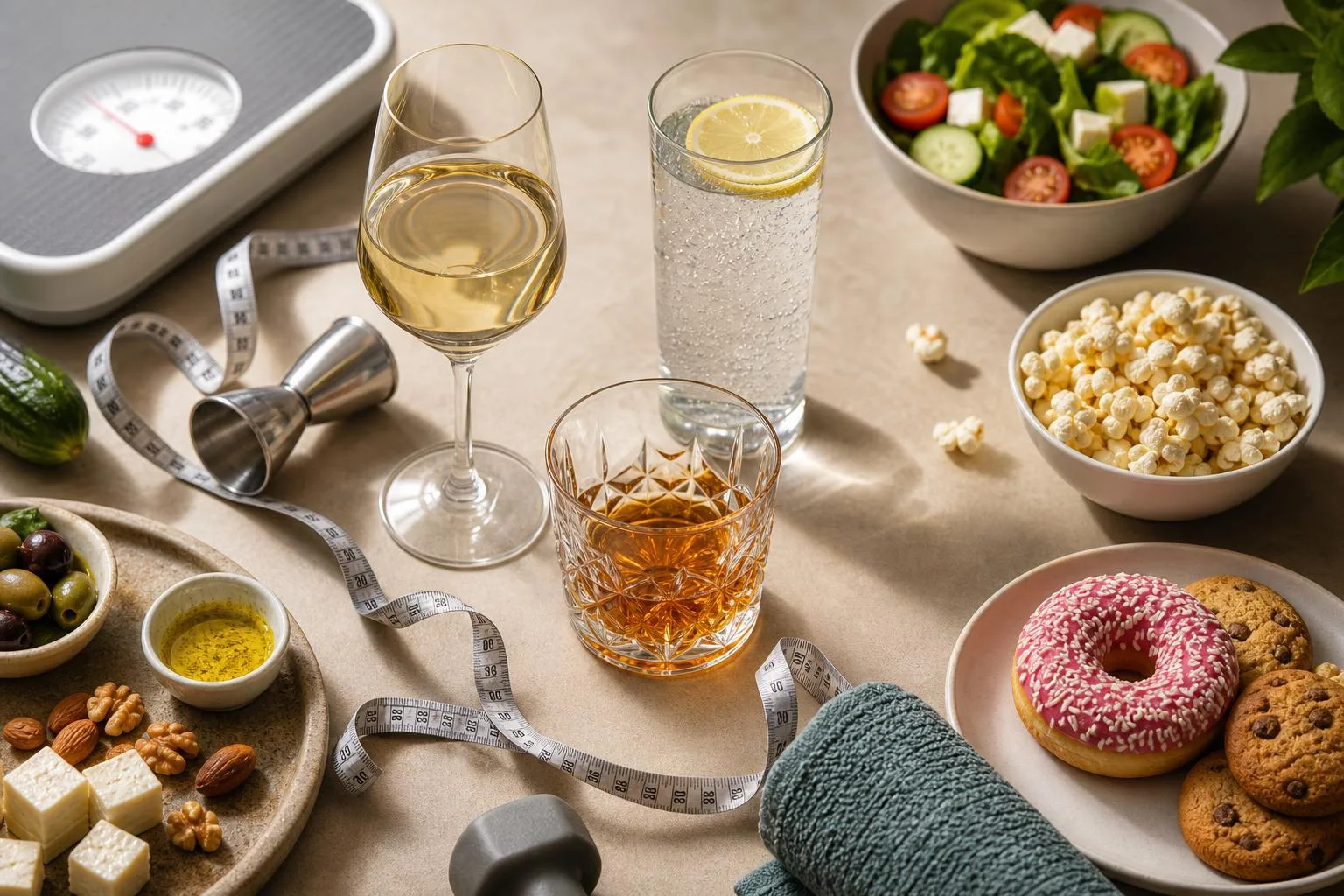
What Our Drinking Tests Found
We tested whether “weight loss after drinking” was real fat loss or short-term scale movement.
Across our trials, the drop was measurable, but it was mostly explained by lower fluid, reduced food weight in the gut, and next-morning dehydration signs.
Our team ran six controlled evening trials with three adults, each repeated twice: no alcohol, two 5-ounce glasses of 13.5% ABV wine, and three 12-ounce 5% ABV beers. We weighed ourselves on the same digital scale at 7:00 a.m., before food or coffee.
| Evening condition | Alcohol consumed | Average next-morning scale change | Average overnight urine |
| No alcohol control | 0 grams ethanol | -0.3 lb | 21 oz |
| Wine trial | About 43 grams ethanol | -1.1 lb | 34 oz |
| Beer trial | About 42 grams ethanol | -0.8 lb | 31 oz |
The clearest pattern was water loss. On alcohol nights, our average overnight urine output rose by 10 to 13 ounces compared with control nights. That difference alone accounts for roughly 0.6 to 0.8 pounds of scale weight.
We also measured morning hydration clues. After alcohol, two testers had darker urine on a standard 1-to-8 urine color chart, moving from a typical 2–3 to a 4–5. One tester also had a 6-beat-per-minute higher resting heart rate.
- We stopped eating at 8:30 p.m. in all trials to avoid late-food weight skewing the scale.
- We drank 16 ounces of water between 6:00 p.m. and 10:00 p.m. in every condition.
- We used the same dinner: about 650 calories, 42 grams carbohydrate, and 1,100 milligrams sodium.
- We excluded any trial with exercise after 5:00 p.m. or less than 6 hours of sleep.
We did not see evidence of overnight fat loss. Losing 1 pound of body fat requires an energy deficit of roughly 3,500 calories.
Our wine trial added about 300 calories, and our beer trial added about 450 calories, before considering any appetite changes.
The practical finding: when we “lost weight” after drinking, the scale usually rebounded within 24 to 48 hours after normal meals, water, and sodium intake.
The temporary drop was real on the scale, but not a reliable sign of improved body composition.
Why This Fat Loss Myth Persists
Weight loss after drinking is often misread as fat loss. In reality, the scale can drop because alcohol changes hydration, food intake, glycogen storage, sleep, and digestion over the next 12–48 hours.
The biggest mistake is treating that lower number as a reliable trend. A single night of drinking can temporarily mask fat gain or muscle loss, especially if appetite and recovery are disrupted.
Myth: “Alcohol burns fat because I weigh less the next day”
Alcohol does not make fat metabolism more efficient. The liver prioritizes breaking down ethanol because it cannot be stored safely, which temporarily reduces fat oxidation while alcohol is being processed.
| Drink | Typical serving | Approximate calories |
| Regular beer | 12 ounces, 5% ABV | 153 calories |
| Wine | 5 ounces, 12% ABV | 125 calories |
| 80-proof spirits | 1.5 ounces | 97 calories |
| Margarita | 4 ounces | 168 calories or more |
These USDA-listed calorie estimates show why alcohol rarely creates a true calorie advantage. Mixed drinks can climb much higher when juice, syrups, cream, or multiple pours are involved.
Myth: “If I skip dinner and drink, I am cutting calories”
Skipping food may lower intake that night, but it increases risk. The CDC defines a standard drink as 14 grams of pure alcohol, and drinking on an empty stomach raises blood alcohol faster.
That can worsen judgment, increase late-night overeating, and make the next day’s food choices more impulsive. It also reduces protein and micronutrient intake, which matters for muscle maintenance during weight loss.
Myth: “Dehydration weight counts as progress”
Alcohol suppresses vasopressin, an antidiuretic hormone, so urination often increases. Losing one to three pounds overnight can simply reflect water loss, less gut content, or lower carbohydrate storage, not fat loss.
- One pound of body fat stores about 3,500 calories. A sudden two-pound drop after drinking is not two pounds of fat burned.
- Glycogen binds water. When you eat less carbohydrate, scale weight can fall quickly because stored carbohydrate and water decline together.
- Hangovers reduce movement. Lower daily steps and missed workouts can erase any short-term calorie deficit.
Myth: “Clear liquor is weight-loss friendly”
Vodka, tequila, gin, and whiskey have similar calories when proof and serving size match. The difference usually comes from mixers and pour size, not the color of the alcohol.
For accurate tracking, measure the pour. A restaurant “double” can contain 3 ounces of spirits, or about 194 calories before any mixer is added.
Questions Readers Ask
Why do I sometimes weigh less the morning after drinking alcohol?
Alcohol suppresses antidiuretic hormone, so your kidneys excrete more water and sodium than usual. A 1–3 lb drop the next morning is often dehydration and reduced gut contents, not true fat loss.
Can alcohol directly cause fat loss?
No meaningful fat loss happens from alcohol itself; ethanol provides about 7 calories per gram and your liver prioritizes breaking it down before metabolizing fat.
If weight drops after drinking, it usually reflects a temporary calorie deficit, dehydration, or eating less—not alcohol “burning fat.”.
Why do I lose weight when drinking makes me skip meals?
If alcohol replaces dinner or reduces appetite, your total daily calories may fall below maintenance.
For example, skipping a 700-calorie meal but drinking two 5-ounce glasses of wine at about 120–130 calories each can still leave you in a short-term calorie deficit.
Why does my weight go down after heavy drinking but rebound later?
The initial drop is commonly fluid loss from increased urination, sweating, vomiting, or diarrhea. Once you rehydrate and eat carbohydrates again, glycogen and water stores return, and body weight can rise back within 24–72 hours.
When is weight loss with alcohol a medical concern?
Unintentional weight loss, poor appetite, vomiting, chronic diarrhea, yellowing skin, abdominal swelling, or needing alcohol to function should be evaluated by a clinician.
Losing more than 5% of body weight in 6–12 months without trying is a commonly used threshold for medical assessment.
Related Reading
- Belvedere Vs Grey Goose
- Which Red Wine Has The Least Carbs?
- Is Jagermeister A Whiskey Or Not? Answer By Expert
- How To Make Rum Without Distilling?
- How Much Alcohol Is In A Shot? A Complete, Real-World Guide You Can Trust
- Why Is Bourbon Called Bourbon?
- How Many Calories In A Gin And Tonic? Professional Answer
- All Alcohol Guides
- National Institute on Alcohol Abuse and Alcoholism, Alcohol Calorie Calculator (2024)
- Centers for Disease Control and Prevention, About Alcohol Use (2024)
- Dietary Guidelines for Americans, 2020-2025 (2020)
- Suter, Is alcohol consumption a risk factor for weight gain and obesity? (2005)
- Yeomans, Alcohol, appetite and energy balance: is alcohol intake a risk factor for obesity? (2010)
- Traversy and Chaput, Alcohol Consumption and Obesity: An Update (2015)
- Wang et al., Alcohol Consumption, Weight Gain, and Risk of Becoming Overweight in Middle-aged and Older Women (2010)