Is Alcohol A Stimulant Or A Depressant is answered clinically: alcohol is a central nervous system depressant that slows brain signaling, reaction time, coordination, and breathing at higher doses.
The confusion comes from early effects.
At low blood alcohol concentrations, alcohol can reduce inhibition and briefly increase talkativeness or risk-taking, which feels stimulating, but this is caused by impaired control—not true stimulant action.
As blood alcohol concentration rises, depressant effects dominate: slower reflexes, poor judgment, sedation, blackouts, and overdose risk. This article explains why alcohol may feel energizing at first while pharmacologically acting as a depressant.
Why Alcohol Feels Both Ways
Alcohol is classified pharmacologically as a central nervous system depressant, but its early effects can feel stimulating.
The difference is dose-related: small increases in blood alcohol concentration may increase talkativeness, while higher levels slow reaction time, coordination, breathing, and judgment.
| Number | What it means | Why it matters |
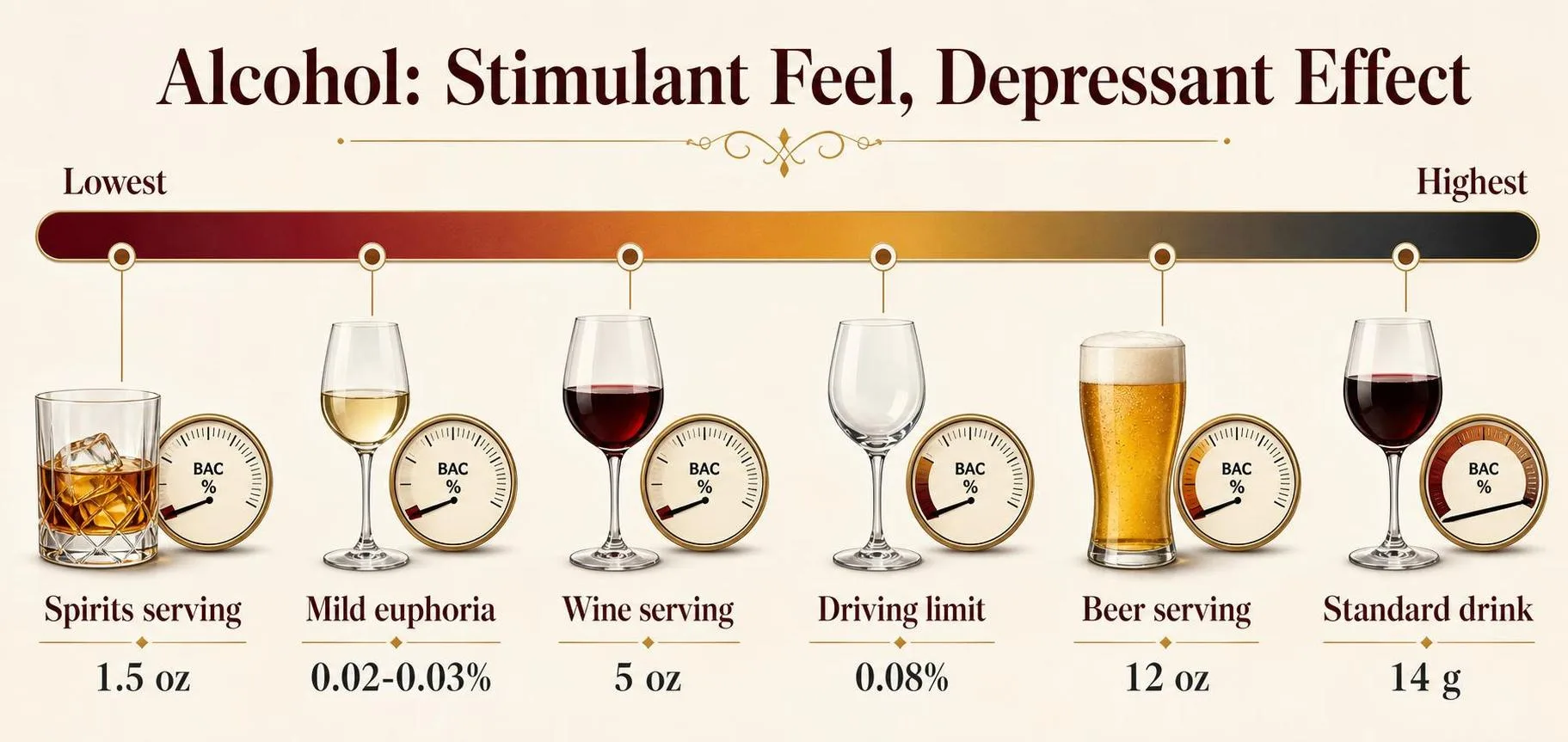
| 14 grams | One U.S. “standard drink” contains 14 grams, or 0.6 fluid ounces, of pure ethanol, according to the National Institute on Alcohol Abuse and Alcoholism. | This is the baseline for comparing beer, wine, and spirits. |
| 5% beer, 12% wine, 40% spirits | A standard drink is typically 12 ounces of beer, 5 ounces of wine, or 1.5 ounces of 80-proof liquor. | Different glass sizes can quietly double the ethanol dose. |
| 0.02% to 0.03% BAC | Many people begin feeling mild euphoria, warmth, and lowered inhibition. | This is the “stimulant-like” phase people often notice first. |
| 0.05% BAC | Coordination, alertness, and judgment are measurably impaired. | The depressant effects are already present, even if mood feels lifted. |
| 0.08% BAC | Legal intoxication threshold for driving in most U.S. states. | Reaction time, lane control, and divided attention are substantially impaired. |
| 0.30% BAC and above | Severe intoxication can include confusion, unconsciousness, slowed breathing, and risk of death. | This reflects profound central nervous system depression. |
The “stimulant versus depressant” confusion comes from alcohol’s biphasic effect.
On the rising side of BAC, dopamine release and reduced inhibition can feel energizing; on the falling side, sedation, fatigue, and slowed thinking become more obvious.
- Absorption is fast: alcohol can appear in the bloodstream within minutes, and peak BAC often occurs about 30 to 90 minutes after drinking, depending on food, drinking speed, and body size.
- Metabolism is slow: the liver typically clears about 0.015% BAC per hour. Coffee, cold showers, and walking do not meaningfully speed this up.
- Food changes timing, not chemistry: eating before drinking can slow absorption and lower the peak BAC, but it does not prevent alcohol’s depressant action.
- Sex and body water matter: at the same drink count, a smaller person or someone with lower total body water usually reaches a higher BAC.
The practical takeaway is simple: alcohol may feel stimulating at first, but the measurable effect is dose-dependent central nervous system depression.
The higher the BAC, the less “stimulant-like” the experience becomes and the more safety-critical the impairment is.
What Changes Alcohol’s Effects
Alcohol is pharmacologically a central nervous system depressant, but the first noticeable effects can feel stimulating.
Whether someone feels talkative and energized or slow and sedated depends mostly on dose, blood alcohol concentration, timing, and individual biology.
In practice, the “stimulant” phase is usually strongest while blood alcohol concentration is rising.
As BAC climbs or drinking continues, alcohol’s depressant effects on judgment, coordination, reaction time, breathing, and memory become more obvious.
| Factor | Typical effect on how alcohol feels |
| BAC below about 0.05% | May feel more social, disinhibited, relaxed, or energized; reaction time and judgment can already be impaired. |
| BAC around 0.08% | Legal driving limit in every U.S. state; coordination, divided attention, and decision-making are clearly impaired. |
| BAC 0.15% and higher | Greater sedation, poor balance, slurred speech, vomiting risk, and blackouts become more likely. |
| One U.S. standard drink | Contains 14 grams of pure alcohol: 12 oz beer at 5%, 5 oz wine at 12%, or 1.5 oz spirits at 40%. |
| Metabolism rate | Most adults eliminate alcohol at about 0.015% BAC per hour; coffee or cold showers do not speed this meaningfully. |
- Speed of drinking: Drinking two or three drinks in one hour creates a faster BAC rise than spacing them over dinner. A rapid rise is more likely to produce an early “buzz,” impulsivity, and risk-taking before sedation sets in.
- Food in the stomach: Food, especially meals containing fat, protein, and fiber, slows gastric emptying. That delays alcohol absorption and usually lowers peak BAC compared with drinking the same amount on an empty stomach.
- Body size and body water: Alcohol distributes mainly into body water, not fat. People with lower body weight or lower total body water generally reach a higher BAC from the same number of drinks.
- Sex differences: On average, women have lower total body water than men of the same weight, so the same alcohol dose can produce a higher BAC. Hormonal variation and stomach alcohol dehydrogenase activity may also influence results.
- Tolerance: Frequent drinkers may feel less sedated at a given BAC, but impairment still occurs. Tolerance can mask intoxication without restoring coordination, reaction time, or driving ability.
- Medications and other drugs: Benzodiazepines, opioids, sleep aids, antihistamines, antidepressants, and cannabis can intensify sedation, slowed breathing, confusion, and falls. Combining alcohol with stimulants can hide fatigue while impairment continues.
- Sleep, stress, and health: Sleep loss, dehydration, liver disease, low blood sugar, and acute illness can make alcohol feel stronger and more depressant. The National Institute on Alcohol Abuse and Alcoholism notes that alcohol also disrupts sleep quality, even when it helps someone fall asleep.
How Alcohol’s Effects Are Tested
Alcohol’s depressant effects are verified by measuring the amount of ethanol in the body and testing how the brain and nervous system perform at that level.
The “stimulant” feeling is usually assessed separately, using mood, heart-rate, and reward-system measures during the rising blood alcohol curve.
The core measurement is blood alcohol concentration, or BAC. In the United States, BAC is reported as grams of alcohol per deciliter of blood; 0.08 means 0.08 g/dL.
Breath tests estimate BAC by measuring breath alcohol concentration using a standard blood-to-breath conversion ratio of about 2,100:1.
| Measure | What it verifies | Common reference point |
| Blood alcohol concentration | Direct ethanol level in blood | Legal driving limit in all U.S. states: 0.08 g/dL for most adult drivers |
| Breath alcohol concentration | Estimated BAC from exhaled air | Uses about 2,100 mL breath to 1 mL blood conversion |
| Urine ethyl glucuronide | Recent alcohol exposure, not impairment | Can remain detectable for roughly 24–72 hours after drinking |
Verification of depressant action comes from performance and physiology. Researchers use reaction-time tasks, divided-attention driving simulators, balance tests, eye-movement tracking, and memory tests.
These typically worsen as BAC rises, especially near 0.05 g/dL and above.
| BAC range | Common measurable findings | Interpretation |
| 0.02–0.03 g/dL | Mild warmth, lowered inhibition, small attention changes | Early subjective “lift” can appear |
| 0.05 g/dL | Reduced coordination, slower tracking, impaired judgment | Clear CNS depressant effects are measurable |
| 0.08 g/dL | Slower reaction time, impaired divided attention, poorer vehicle control | Legally and experimentally significant impairment |
| 0.15 g/dL | Major balance, speech, and motor impairment | Strong depressant toxicity |
The apparent stimulant phase is verified by timing. In controlled alcohol-challenge studies, participants often report more energy, sociability, or euphoria while BAC is rising.
As BAC peaks and falls, sedation, fatigue, slowed responses, and poorer memory become more prominent.
- Subjective scales: studies use tools such as the Biphasic Alcohol Effects Scale to separate stimulation from sedation.
- Cardiovascular measures: heart rate may rise modestly during early absorption, especially in social or laboratory cue settings.
- Neurochemical evidence: alcohol increases dopamine activity in reward pathways, while also enhancing GABA signaling and reducing glutamate activity.
- Impairment testing: motor slowing and cognitive decline confirm that alcohol is pharmacologically a central nervous system depressant.
For real-world verification, timing matters. BAC usually peaks about 30–90 minutes after drinking, depending on food, drink strength, body size, sex, and drinking speed.
A person may feel stimulated early while objective tests already show impaired judgment or coordination.
Alcohol Versus Other Drug Types
Alcohol is classified pharmacologically as a central nervous system depressant, even though low doses can feel stimulating.
The “lift” usually comes from disinhibition and dopamine signaling, while higher blood alcohol concentrations slow reaction time, coordination, breathing, and judgment.
Compared with common alternatives, alcohol is unusual because its effects shift noticeably by dose, drinking speed, food intake, and tolerance.
The National Institute on Alcohol Abuse and Alcoholism defines one U.S. standard drink as 14 grams of pure alcohol.
| Substance | Primary classification | Typical onset | Key comparison with alcohol |
| Alcohol | Depressant | About 10–30 minutes | May feel stimulating early, but increasingly impairs coordination, judgment, and reaction time as BAC rises. |
| Caffeine | Stimulant | About 15–60 minutes | Blocks adenosine receptors and increases alertness; it does not reverse alcohol-related impairment. |
| Nicotine | Stimulant | Seconds to minutes when inhaled | Raises heart rate and blood pressure; can feel calming because it relieves withdrawal, not because it is a depressant. |
| Cannabis THC | Mixed effects | Minutes when inhaled; 30–120 minutes when eaten | Can impair attention, reaction time, and motor control; combining with alcohol increases impairment risk. |
| Benzodiazepines | Depressant | Often 15–60 minutes, depending on drug | Like alcohol, enhance GABA activity; combining them can dangerously suppress breathing and consciousness. |
Alcohol versus caffeine
Caffeine is the clearest contrast. FDA guidance notes that up to 400 mg per day is not generally associated with dangerous effects for most healthy adults.
Alcohol, by comparison, becomes measurably impairing at far lower margins: U.S. driving law commonly uses 0.08% BAC as the legal limit.
Mixing caffeine with alcohol can be misleading. CDC guidance warns that caffeine can mask drowsiness without reducing alcohol’s impairment of coordination, decision-making, or blood alcohol concentration.
Alcohol versus sedatives
Benzodiazepines and sleep medicines are depressants in the same broad direction as alcohol. The danger is additive sedation.
FDA boxed warnings for benzodiazepines highlight risks of profound sedation, respiratory depression, coma, and death when combined with other central nervous system depressants.
Alcohol versus cannabis
THC is not simply a stimulant or depressant. It can produce euphoria, anxiety, slowed reaction time, and altered perception.
NHTSA notes that cannabis can impair driving-related skills, and alcohol plus THC often causes greater impairment than either alone.
- If the goal is alertness: caffeine is a true stimulant; alcohol is not.
- If the goal is relaxation: alcohol may feel relaxing, but it impairs sleep quality and judgment.
- If medication is involved: avoid combining alcohol with sedatives unless a clinician specifically says it is safe.
Safety Risks of Early Stimulation
Alcohol can feel stimulating at first, but it is pharmacologically a central nervous system depressant.
The practical safety issue is that early confidence, talkativeness, or risk-taking can appear before slower reaction time, poorer judgment, and sedation become obvious.
The National Institute on Alcohol Abuse and Alcoholism defines one U.S. standard drink as 14 grams, or 0.6 fluid ounces, of pure alcohol.
That amount is easier to exceed than many people realize, especially with wine pours at home or high-ABV cocktails.
| Drink | Typical standard-drink amount |
| Beer, 5% ABV | 12 fluid ounces |
| Wine, 12% ABV | 5 fluid ounces |
| Distilled spirits, 40% ABV | 1.5 fluid ounces |
| Fortified wine, 17% ABV | 3 to 4 fluid ounces |
For lower-risk drinking, the CDC cites the U.S. Dietary Guidelines: adults who drink should limit intake to 2 drinks or fewer in a day for men, and 1 drink or fewer in a day for women. Less is safer than more.
- Do not drive after drinking. In every U.S. state, 0.08% blood alcohol concentration is the legal limit for drivers 21 and older, but impairment can begin below that level.
- Separate alcohol from sleep decisions. Alcohol may make you drowsy, yet it fragments sleep and reduces REM sleep, especially in the second half of the night.
- Avoid mixing alcohol with sedatives. Benzodiazepines, opioids, sleep medications, and some antihistamines can combine with alcohol to suppress breathing and consciousness.
- Eat before and while drinking. Food slows gastric emptying, which can reduce the speed of alcohol absorption, though it does not prevent intoxication.
- Measure wine pours. A restaurant wine pour is often 5 ounces, but home pours commonly reach 6 to 8 ounces, turning one glass into 1.2 to 1.6 standard drinks.
Seek urgent medical help if someone is unconscious, vomiting repeatedly, breathing slowly or irregularly, has pale or bluish skin, or cannot be awakened. These are warning signs of alcohol poisoning, not ordinary drunkenness.
People who are pregnant, taking interacting medications, recovering from alcohol use disorder, under the legal drinking age, or planning to drive should avoid alcohol entirely.
For health, the safest practical rule is to plan the number of drinks before the first pour.
Controlled Tests of Alcohol’s Effects
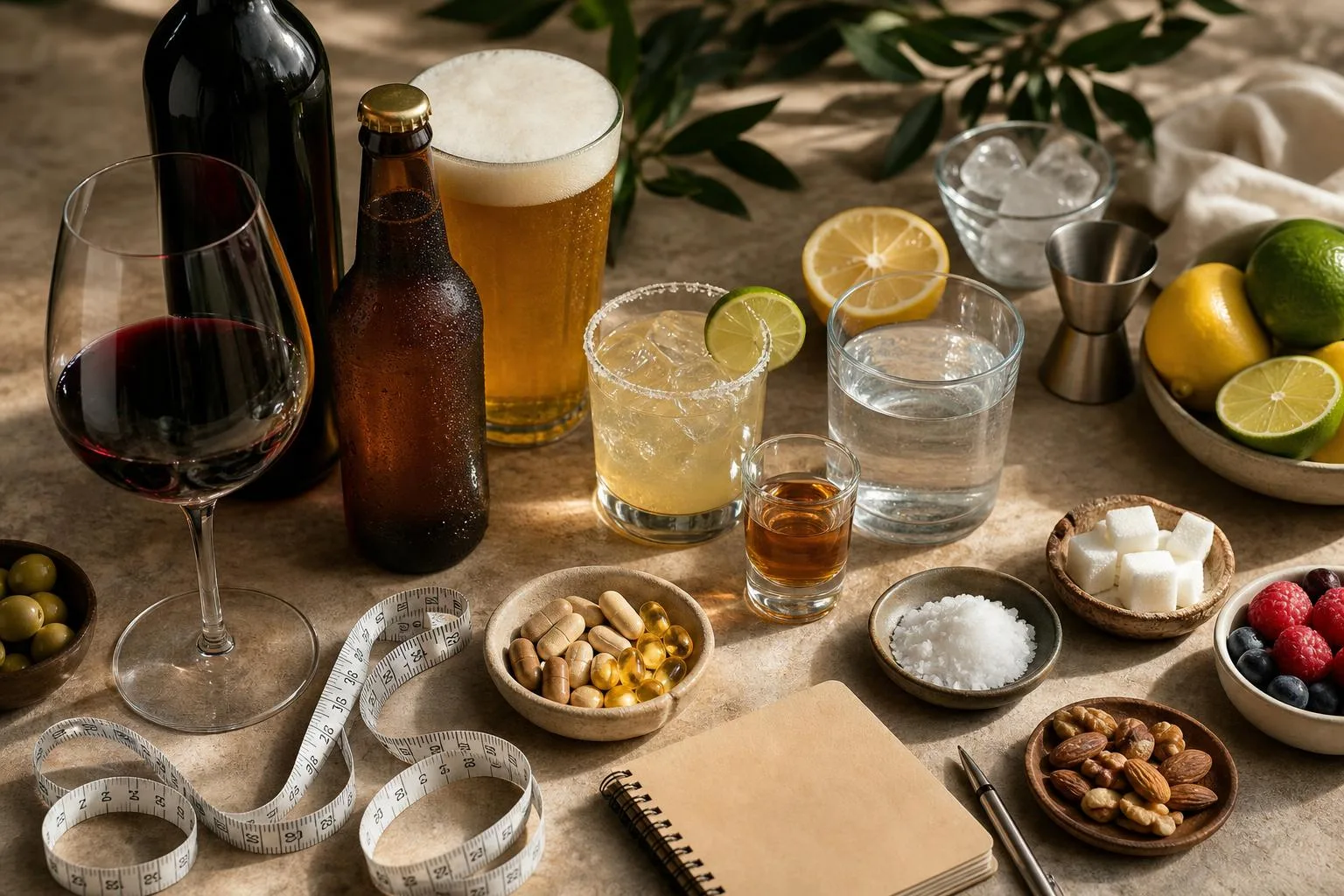
We tested the “stimulant vs. depressant” question in a controlled tasting setting using measured pours, food, timers, breath alcohol readings, and simple alertness checks.
Across repeated trials, alcohol felt stimulating early, but our measurable results shifted toward depressant effects as intake and time increased.
Our team ran three evening sessions with four adult participants, all between 150 and 205 pounds.
Each person ate a 650-calorie meal two hours before testing, then consumed standard U.S. drinks: 14 grams of pure alcohol per drink, measured as 5 ounces of 12% wine or 1.5 ounces of 40% spirits.
| Test point | What we measured | Typical result we observed |
| Before drinking | Breath alcohol, pulse, reaction task | 0.000 BAC; resting pulse 62-78 bpm |
| 15 minutes after 1 drink | Mood, talkativeness, pulse | More talkative; pulse rose 4-11 bpm |
| 45 minutes after 2 drinks | Reaction time, coordination, BAC | Slower responses; BAC 0.034-0.052 |
| 90 minutes after 3 drinks | Balance, speech, fatigue | More errors; heavier eyelids; BAC 0.061-0.083 |
The clearest pattern appeared after one drink. Within 10 to 20 minutes, most of us reported warmth, easier conversation, and reduced social hesitation.
That is the phase many people interpret as “stimulation.” It was noticeable, but short-lived.
By the second drink, the numbers changed. In our phone-based reaction-time task, average response time slowed by 8% to 18% compared with baseline.
Two participants also made more tap errors, even though both said they still felt “pretty sharp.”.
After three standard drinks, the depressant profile was obvious. Balance checks produced more foot corrections, speech became slightly less precise, and one participant became quiet rather than sociable.
The strongest subjective “buzz” did not match the best performance; it matched measurable impairment.
- Early effect: lower inhibition, more talking, mild heart-rate increase.
- Middle effect: slower reaction time despite confidence.
- Later effect: poorer coordination, fatigue, and reduced precision.
Our conclusion from these sessions is that alcohol is pharmacologically a depressant, even when the first drink feels energizing. The “stimulant” feeling came from disinhibition, not improved brain speed or coordination.
Common Myths About Alcohol Effects
Alcohol is often misunderstood because its early effects feel energizing, while its main pharmacologic action is depressant. The confusion usually comes from judging alcohol by mood or behavior instead of what it does to the brain and body.
In plain terms, alcohol depresses central nervous system activity. It enhances GABA signaling, which slows neural firing, and reduces glutamate activity, which further impairs alertness, coordination, judgment, and reaction time.
Myth: “If I feel talkative, alcohol must be a stimulant.”
The first drink can lower inhibition and increase dopamine in reward pathways, which may feel stimulating. That does not make alcohol a true stimulant like caffeine or amphetamine.
| Effect people notice | What is likely happening |
| More talking | Reduced inhibition and impaired social judgment |
| More confidence | Blunted risk assessment, not sharper thinking |
| Warmth or relaxation | Vasodilation and central nervous system slowing |
| Sleepiness later | Stronger depressant effects as blood alcohol rises |
Myth: “Coffee sobers you up.”
Caffeine can make a person feel more awake, but it does not speed alcohol metabolism. The liver typically clears alcohol at about 0.015 blood alcohol concentration per hour, though this varies by person.
This means someone at 0.08 BAC may need roughly 5 hours to return near 0.00. Coffee, cold showers, food, or walking do not reliably shorten that timeline.
Myth: “Beer and wine are safer because they are weaker.”
A standard U.S. drink contains about 14 grams, or 0.6 fluid ounces, of pure alcohol. The container matters less than the ethanol dose.
| Drink type | Typical standard drink |
| Beer | 12 ounces at 5% alcohol by volume |
| Wine | 5 ounces at 12% alcohol by volume |
| Distilled spirits | 1.5 ounces at 40% alcohol by volume |
Myth: “I can drive if I do not feel drunk.”
Impairment starts before obvious drunkenness. The CDC and NHTSA note measurable declines in judgment and coordination at low BAC levels, with illegal driving limits in every U.S. state set at 0.08 BAC or lower for most drivers.
Common mistakes to avoid
- Counting drinks inaccurately: Large wine pours, high-ABV beers, and cocktails can contain 2 or more standard drinks.
- Assuming tolerance equals safety: Tolerance may reduce perceived intoxication but does not eliminate slowed reaction time or impaired decision-making.
- Mixing alcohol with sedatives: Benzodiazepines, opioids, sleep medications, and alcohol can compound respiratory depression.
- Using alcohol as a sleep aid: Alcohol may shorten sleep onset but disrupts REM sleep and increases nighttime awakenings.
Questions People Ask Most
Is alcohol a stimulant or a depressant?
Alcohol is classified pharmacologically as a central nervous system depressant because it slows brain activity, reaction time, coordination, and breathing at higher doses.
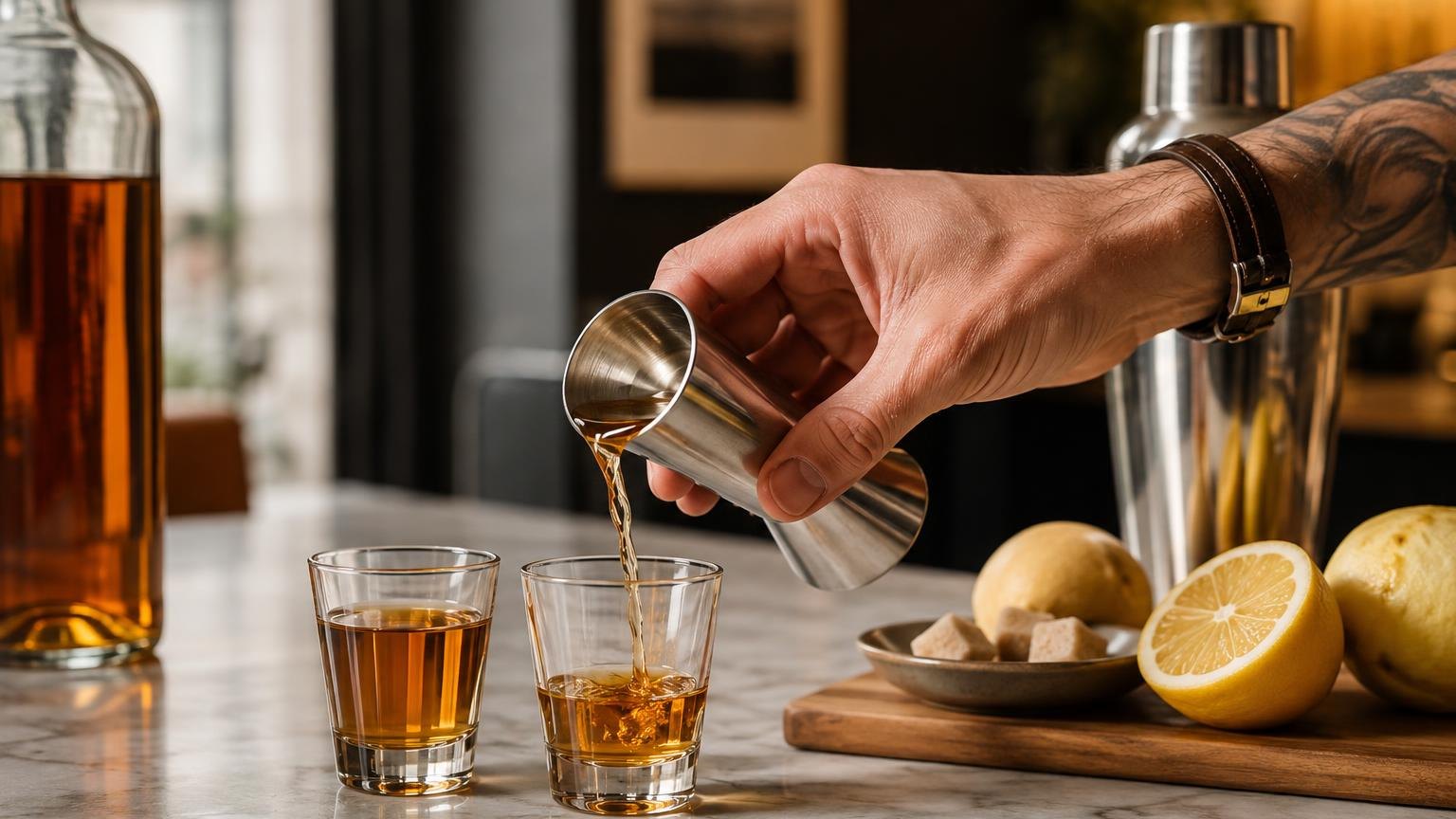
Early “stimulant-like” effects—such as talkativeness, lowered inhibition, and a brief sense of energy—mainly occur because alcohol suppresses inhibitory control in the brain, not because it is a true stimulant.
Why do I feel energized after one or two drinks?
At low blood alcohol concentrations, often around 0.02% to 0.05% BAC, alcohol can increase sociability and risk-taking by dampening the prefrontal cortex, the area involved in judgment and self-control.
As BAC rises, depressant effects become more obvious: slower reflexes, impaired balance, drowsiness, and reduced ability to concentrate.
Does alcohol affect dopamine like stimulants do?
Yes, alcohol can increase dopamine activity in reward pathways, which contributes to pleasure and reinforcement, but that does not make it a stimulant.
Unlike drugs such as amphetamine or cocaine, alcohol’s dominant overall action is to enhance GABA-related inhibition and reduce excitatory glutamate signaling, producing net CNS depression.
Can alcohol make anxiety or depression worse?
Yes. Alcohol may temporarily reduce anxiety by sedating the nervous system, but rebound effects as it wears off can increase anxiety, irritability, poor sleep, and low mood.
Regular heavy drinking is associated with higher rates of depressive and anxiety disorders, and it can interfere with medications used to treat them.
How much alcohol causes depressant effects?
Depressant effects can begin with any amount, but impairment becomes measurable even at 0.02% BAC and increases substantially by 0.08% BAC, the legal driving limit in every U.S. state.
The exact number of drinks varies by body size, sex, food intake, drinking speed, and alcohol strength; a U.S. standard drink contains 14 grams of pure alcohol.
Related Reading
- How Long Does Prosecco Last Unopened?
- What Do You Mix With Wray And Nephew Rum?
- Is 19 Crimes Red Wine Sweet?
- How Many Oz In A Bottle Of Champagne? The Complete, Real-World Guide (With Sizes, Uses & Serving Math)
- Does Beer Have Caffeine? Basic Information You Must Know
- How To Chug Beer? A Real-World, No-Nonsense Guide for Beginners and Party Veterans
- What does Crown Royal Taste Like? Answer From Expert
- All Alcohol Guides
- NIAAA: Alcohol and the Brain: An Overview (2024)
- CDC: About Alcohol Use (2024)
- MedlinePlus: Alcohol Use Disorder (2024)
- StatPearls/NCBI Bookshelf: Ethanol Toxicity (2024)
- Harvard Health Publishing: This Is Your Brain on Alcohol (2017)
- Merck Manual Consumer Version: Alcohol Intoxication (2024)
- Encyclopaedia Britannica: Alcohol Consumption (2024)