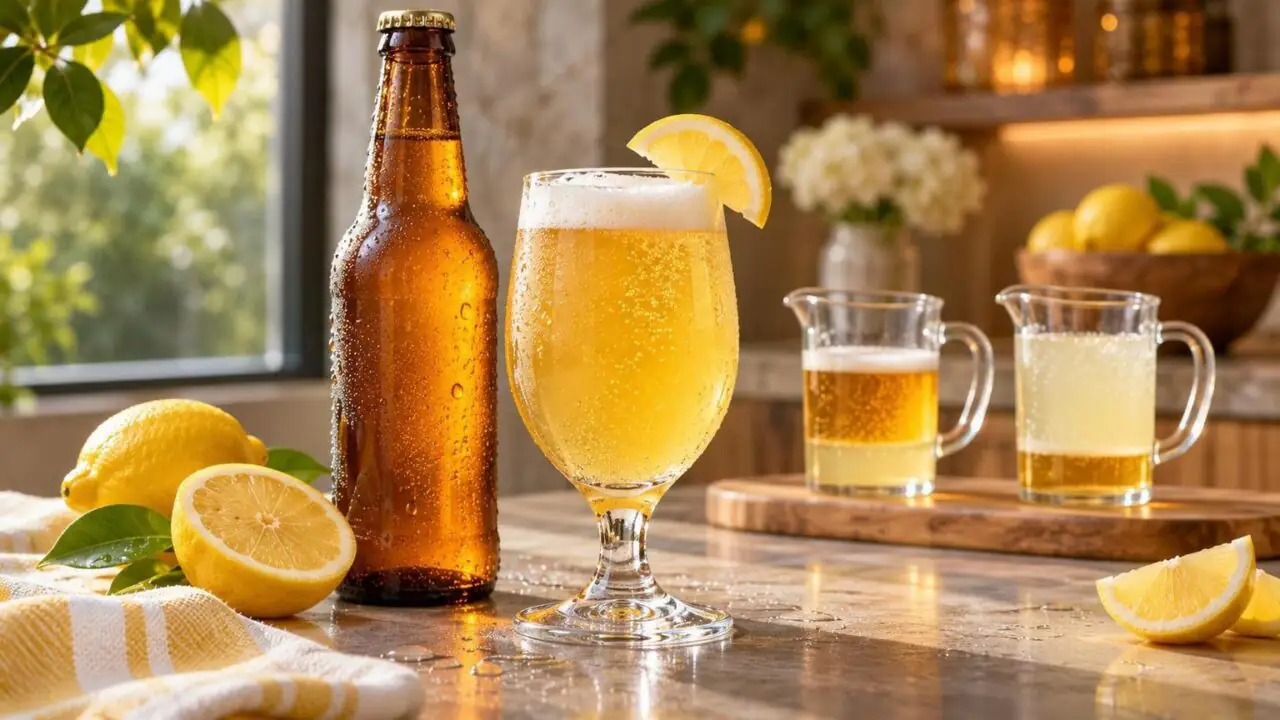
Alcohol content summer shandy is typically about 4.2% ABV, though the exact strength depends on the brand and recipe.
A shandy combines beer with a nonalcoholic mixer, often lemonade, so its alcohol percentage is usually lower than that of the beer used to make it. Check the package label for the specific ABV rather than relying on the style name.
For comparison, a 12-ounce serving at 4.2% ABV contains about 0.5 fluid ounces of pure alcohol, close to the U.S. standard drink amount of 0.6 fluid ounces.
Serving size matters: a larger can or pour delivers more alcohol even when the ABV stays the same.
Homemade shandies can vary substantially, depending on the beer-to-mixer ratio; adding lemonade dilutes the drink but does not remove the alcohol already present.
Typical ABV in Commercial Summer Shandy
Most widely sold U.S. summer shandies contain about 4% to 5% alcohol by volume (ABV), putting them near many light beers rather than near alcohol-free lemonade.
Leinenkugel’s Summer Shandy, for example, is 4.2% ABV; the exact strength depends on the product, not the word “shandy” on its label.
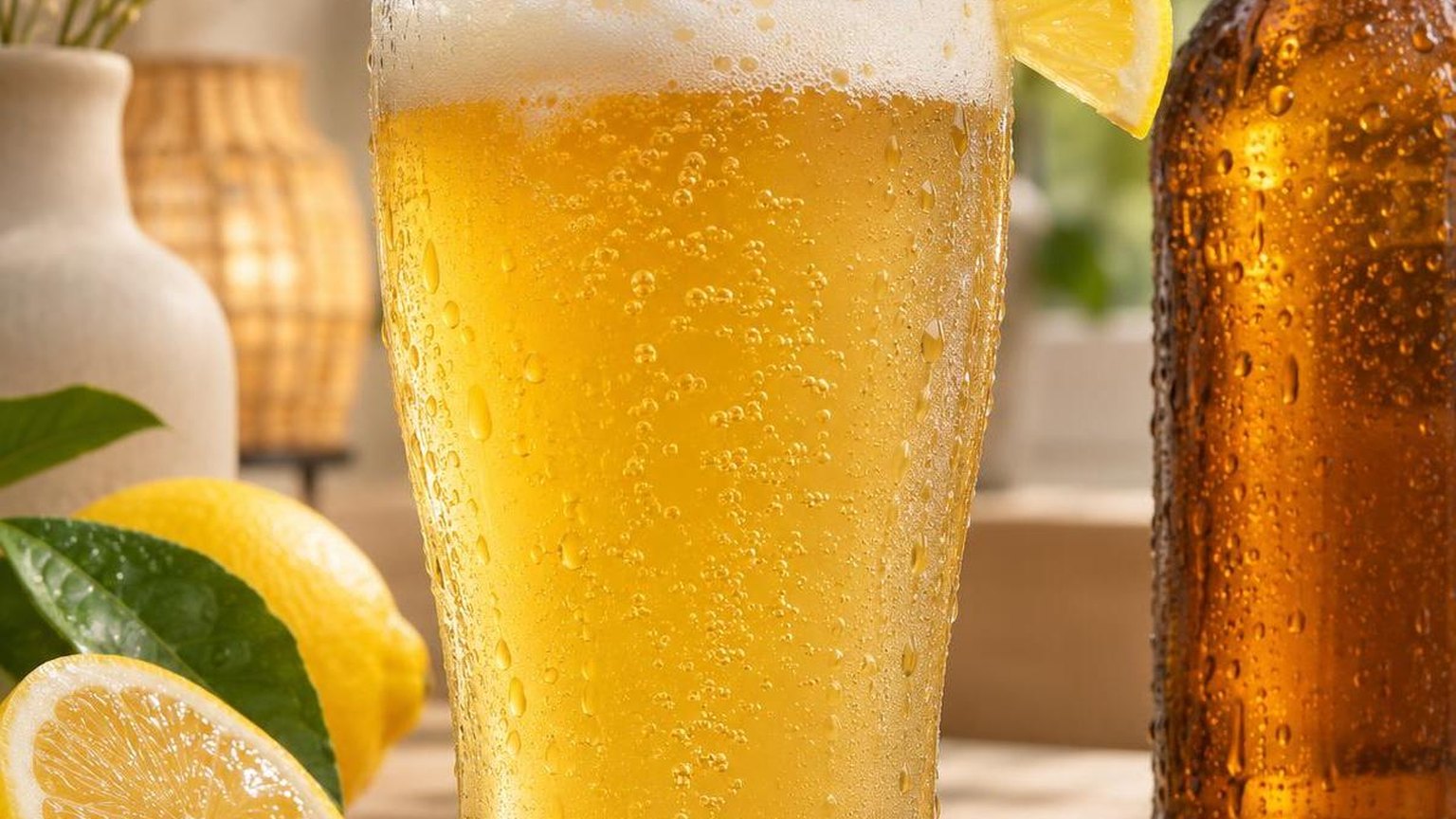
ABV measures the share of a beverage’s volume that is alcohol. The figures below are the strengths published by each brand for its named product.
Check the container when buying: a seasonal release or similarly named variation may have a different ABV.
| Commercial shandy | Published ABV | Alcohol in a 12-fl-oz serving |
| Leinenkugel’s Summer Shandy | 4.2% | About 0.50 fl oz |
| Samuel Adams Porch Rocker | 4.5% | 0.54 fl oz |
| Narragansett Del’s Shandy | 4.7% | About 0.56 fl oz |
Sources: Leinenkugel’s, Samuel Adams, and Narragansett product information.
The serving amounts are calculated by multiplying 12 fluid ounces by the stated ABV; they describe alcohol volume, not the volume of beer or lemonade used to make each drink.
Those numbers help explain why a packaged summer shandy can taste lemony and refreshing without being especially low in alcohol.
A brewery can start with a beer stronger than its target strength, then blend it with lemonade or another nonalcoholic lemon component. The finished drink’s labeled ABV reflects the blend.
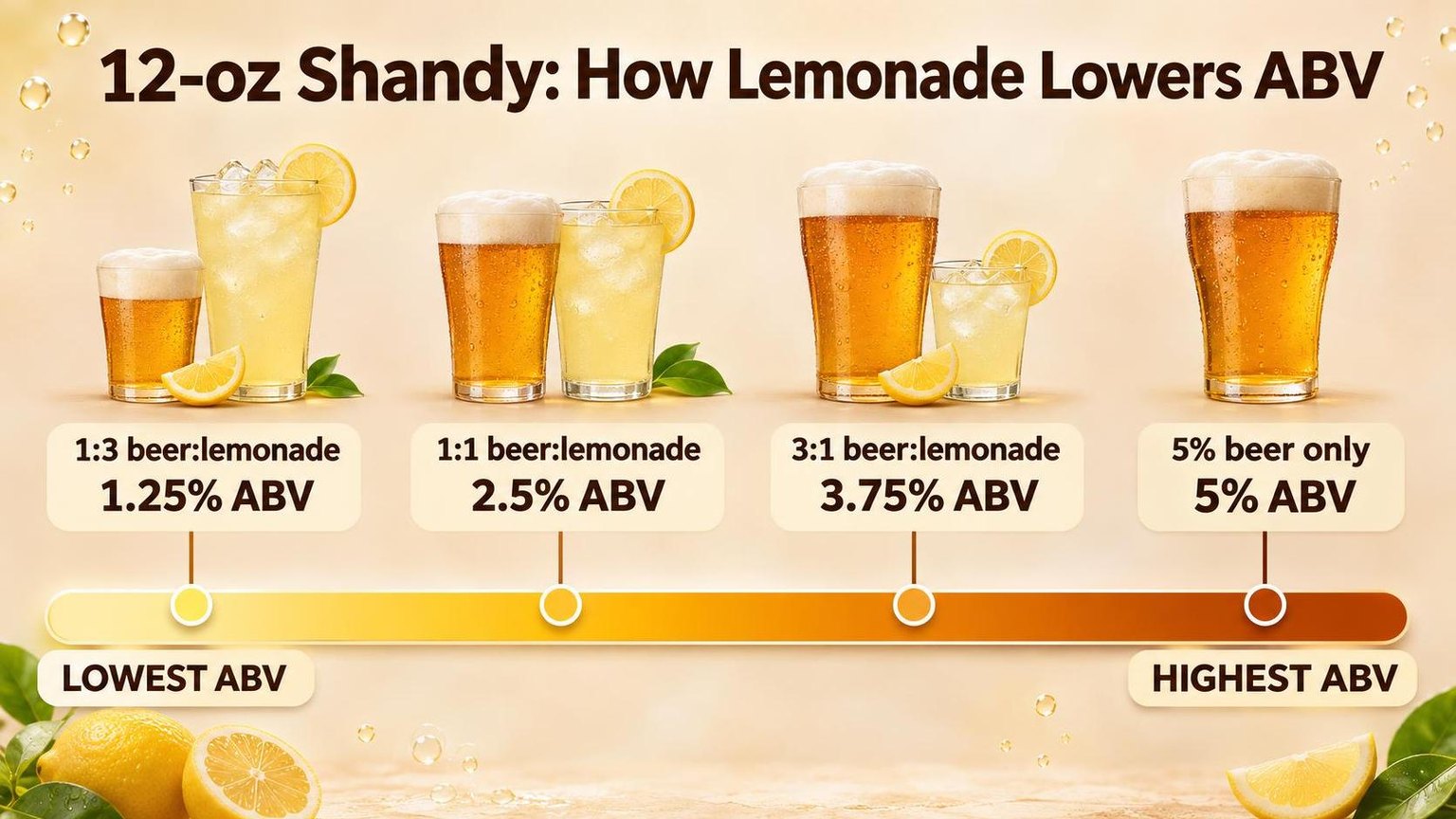
A shandy is not necessarily made by mixing equal volumes of ordinary beer and lemonade. A 50–50 mix of 5% ABV beer and alcohol-free lemonade would be approximately 2.5% ABV.
That calculation does not predict the strength of a commercial recipe unless both the starting beer’s ABV and the blending proportions are known.
For serving context, the National Institute on Alcohol Abuse and Alcoholism defines one U.S. standard drink as containing about 0.6 fluid ounce of pure alcohol.
A 12-fluid-ounce can of 4.2% Summer Shandy contains roughly 0.50 fluid ounce, or about 0.84 standard drink. A 16-fluid-ounce pour at the same strength contains about 0.67 fluid ounce—approximately 1.12 standard drinks.
Do not use citrus flavor, sweetness, or the term “summer” as a shortcut for estimating alcohol content.
Compare the ABV and serving size together: a larger can of a lower-ABV shandy can contain more alcohol than a smaller serving of a stronger one.
How Lemonade Dilution Lowers ABV
Adding nonalcoholic lemonade lowers a beer’s alcohol by volume (ABV) because the alcohol is spread through a larger drink. The amount of alcohol from the beer stays the same; its concentration falls.
The finished strength depends on the beer’s starting ABV and how much lemonade goes into the glass.
For a freshly mixed shandy, use this estimate: finished ABV = beer ABV × beer volume ÷ total drink volume. It assumes the lemonade contains no alcohol and the measured volumes add together.
Ice that melts after mixing dilutes the drink further, although it does not remove any alcohol.
The table uses a 5% ABV beer and a 12-fluid-ounce finished serving in every row. It shows why “half beer, half lemonade” has a different strength from a drink that receives only a splash of lemonade.
| Beer | Lemonade | Beer-to-lemonade ratio | Estimated finished ABV | Fluid ounces of pure alcohol |
| 12 fl oz | 0 fl oz | Beer only | 5% | 0.60 |
| 9 fl oz | 3 fl oz | 3:1 | 3.75% | 0.45 |
| 6 fl oz | 6 fl oz | 1:1 | 2.5% | 0.30 |
| 3 fl oz | 9 fl oz | 1:3 | 1.25% | 0.15 |
The pure-alcohol column also matters. A larger glass of diluted shandy can contain as much alcohol as a smaller glass of undiluted beer.
According to the National Institute on Alcohol Abuse and Alcoholism, a U.S. standard drink contains about 0.6 fluid ounces of pure alcohol.
Lemonade’s sweetness can mask the beer’s flavor, but sweetness is not a reliable measure of strength. Likewise, a canned or bottled summer shandy need not match the half-and-half calculation.
Its labeled ABV describes the packaged product, not a standard recipe that every producer follows.
For example, Leinenkugel’s lists its Summer Shandy at 4.2% ABV on its product information.
That figure should not be treated as the ABV of every homemade shandy: a half-and-half mix made with the beer in the table is 2.5% ABV before any ice melts.
Measure both liquids if strength matters. Pouring lemonade by eye, topping up a foamy glass, or changing the serving size makes a recipe less predictable.
For a packaged drink, use its label; for a freshly mixed one, calculate from the volumes poured and the beer’s stated ABV.
Summer Shandy Compared With Regular Beer
Summer shandy is often described as a lighter alternative to beer, but its alcohol content depends on how it is made.
A shandy mixed from beer and a nonalcoholic lemon drink can be substantially lower in alcohol; a packaged summer shandy may be close to a familiar light lager.
Alcohol by volume (ABV) measures how much of a drink is alcohol. The examples below show why both the ABV on the label and the amount poured matter.
Standard-drink estimates use the National Institute on Alcohol Abuse and Alcoholism (NIAAA) definition: one U.S. standard drink contains about 0.6 fluid ounce of pure alcohol.
| Drink | Serving | ABV | Approximate U.S. standard drinks |
| Leinenkugel’s Summer Shandy | 12 fl oz | 4.2% | 0.84 |
| Bud Light | 12 fl oz | 4.2% | 0.84 |
| Budweiser | 12 fl oz | 5.0% | 1.00 |
| Homemade shandy: equal volumes of 5.0% ABV beer and alcohol-free lemonade | 12 fl oz | 2.5% | 0.50 |
| Leinenkugel’s Summer Shandy, larger pour | 16 fl oz | 4.2% | 1.12 |
Brand ABVs come from Leinenkugel’s and Budweiser product information. The homemade example is a calculation, not a fixed shandy recipe: adding an equal volume of an alcohol-free mixer halves the beer’s ABV.
Changing the beer, mixer, or proportions changes the result.
Packaged shandy should not be assumed to follow that dilution rule. Leinenkugel’s Summer Shandy has the same listed ABV as Bud Light, even though its lemonade flavor makes it taste different.
A sweeter or more citrus-forward flavor does not reliably indicate how much alcohol is present.
Serving size can overturn an ABV-based assumption. The larger shandy pour in the table contains more pure alcohol than the smaller Budweiser serving, despite its lower ABV.
When comparing a can with a draft pour, check the container or menu size as well as the percentage.
For a mixed shandy, calculate the finished ABV by multiplying each alcoholic ingredient’s volume by its ABV, adding those amounts, and dividing by the total finished volume.
For a canned or bottled shandy, use the product’s stated ABV instead of estimating from its flavor or the word “shandy.”.
Calculating Alcohol in Homemade Shandy
A homemade shandy’s alcohol by volume (ABV) depends on how much alcoholic beer goes into the finished drink, not just the ABV printed on the beer can.
If the lemonade contains no alcohol, it dilutes the beer’s ABV without removing any of its alcohol.
Use the finished volume
Multiply the beer’s volume by its labeled ABV, then divide by the total volume of beer and lemonade. Use the same unit for both volumes. For example, a beer labeled 5% ABV contributes 0.05 fluid ounce of pure alcohol per fluid ounce of beer.
The table assumes ordinary, nonalcoholic lemonade and no spilled drink. Its ABV figures describe the finished shandy; they do not mean the alcohol originally present in the beer has disappeared.
| Beer | Lemonade | Finished volume | Shandy ABV | Pure alcohol |
| 6 fl oz at 5% ABV | 6 fl oz | 12 fl oz | 2.5% | 0.30 fl oz |
| 8 fl oz at 5% ABV | 4 fl oz | 12 fl oz | 3.33% | 0.40 fl oz |
| 6 fl oz at 4% ABV | 6 fl oz | 12 fl oz | 2.0% | 0.24 fl oz |
| 12 fl oz at 5% ABV | 12 fl oz | 24 fl oz | 2.5% | 0.60 fl oz |
For a mixed drink, the calculation is: shandy ABV = (beer volume × beer ABV + mixer volume × mixer ABV) ÷ finished volume. Enter percentages as decimals.
If the mixer is nonalcoholic, its ABV term is zero; if it contains alcohol, include the ABV shown on its label.
ABV is not the same as alcohol per serving
A larger glass can have a low ABV but still contain a meaningful amount of alcohol. The National Institute on Alcohol Abuse and Alcoholism defines one U.S. standard drink as approximately 0.6 fluid ounce of pure alcohol, or 14 grams.
The final table row contains that amount.
Measure what you actually pour rather than estimating from a glass’s capacity. Ice occupies space, and a drink topped up after tasting may have a different ratio than planned.
Stir before sampling so the beer and lemonade are distributed evenly; keep track of any additional beer you add.
Start with the beer’s labeled ABV rather than assuming all lagers or wheat beers have the same strength.
If you want to know alcohol per glass, multiply the calculated shandy ABV, expressed as a decimal, by the ounces of finished shandy served in that glass.
Why Summer Shandy ABV Varies by Brand
“Summer shandy” describes a beer-and-citrus style, not a fixed alcohol strength. Brands choose different beer bases, citrus ingredients, and blending methods, so the finished drink’s alcohol by volume (ABV) can vary substantially.
These published figures show why the product name alone is not enough to determine alcohol content:
| Product | Published ABV | Source |
| Leinenkugel’s Summer Shandy | 4.2% | Leinenkugel’s product information |
| Narragansett Del’s Shandy | 4.7% | Narragansett Beer product information |
| Stiegl Grapefruit Radler | 2.0% | Stiegl product information |
Stiegl calls its drink a radler, a closely related beer-and-citrus style, rather than a summer shandy. It is included to illustrate how widely strengths can differ among drinks shoppers may encounter in the same category.
For any purchase, the ABV printed on that container is the figure to use.
The beer base and citrus blend both matter
A brewery can start with a stronger or weaker beer before adding lemonade, citrus juice, syrup, or flavoring. Adding a nonalcoholic liquid generally lowers the finished ABV by increasing the total volume without adding alcohol.
Flavoring added in a small volume may have much less effect.
For a simple homemade example, combining equal volumes of beer at 5.0% ABV and alcohol-free lemonade produces a drink near 2.5% ABV, assuming the volumes combine as measured.
That calculation does not predict a packaged brand’s strength: its starting beer, recipe, and final volume may all differ.
Production method matters, too. A brewery may ferment a beer to its target strength and then blend in citrus ingredients, or formulate the drink so fermentation and blending together reach the intended final ABV.
Sugar contributes alcohol only if yeast ferments it; sweetness left in the finished drink is not a reliable guide to strength.
Finally, ABV is a concentration, not a serving size. A larger can contains more alcohol than a smaller can of the same shandy, even though both labels show the same ABV.
The National Institute on Alcohol Abuse and Alcoholism defines a U.S. standard drink as containing 0.6 fluid ounces of pure alcohol. Check both the container’s ABV and its volume when judging a serving.
Alcohol per Serving of Summer Shandy
Leinenkugel’s Summer Shandy is 4.2% alcohol by volume (ABV), according to the brewery’s product information.
At that strength, a 12-ounce can contains about 0.50 fluid ounce of pure alcohol—less than one U.S. standard drink, but not dramatically less.
The National Institute on Alcohol Abuse and Alcoholism (NIAAA) defines one U.S. standard drink as containing 0.6 fluid ounce, or about 14 grams, of pure alcohol.
To estimate standard drinks, multiply the serving size in fluid ounces by the ABV expressed as a decimal, then divide by 0.6.
| Beverage and serving | ABV | Pure alcohol | U.S. standard drinks |
| Summer Shandy, 12 oz | 4.2% | 0.504 fl oz | 0.84 |
| Summer Shandy, 16 oz | 4.2% | 0.672 fl oz | 1.12 |
| Summer Shandy, 24 oz | 4.2% | 1.008 fl oz | 1.68 |
| Beer at 5% ABV, 12 oz | 5% | 0.600 fl oz | 1.00 |
The figures are calculated from the stated ABV and serving size; actual amounts can vary slightly with production tolerances and how accurately a draft pour is measured.
A larger can or draft serving changes the alcohol total even when the ABV stays the same.
In practice, the glass matters. At a bar, I check the listed pour size rather than treating every glass of shandy as one drink. A tall pour can contain more alcohol than a smaller serving of stronger beer, so ABV alone does not tell the full story.
“Shandy” also describes a style, not a fixed alcohol strength. A homemade mix made with equal volumes of beer and alcohol-free lemonade will have roughly half the beer’s original ABV, assuming the liquids mix evenly.
A packaged Summer Shandy should instead be calculated from the ABV printed on its own container.
Finally, standard drinks measure alcohol, not how quickly someone will feel its effects. Drinking pace, food intake, body size, medications, and individual sensitivity all matter.
If tracking consumption, count each serving’s actual volume and labeled ABV rather than assuming a citrus-flavored beer is low-alcohol.
Questions Readers Ask
What is the alcohol content of Leinenkugel’s Summer Shandy?
Leinenkugel’s lists its Summer Shandy at 4.2% alcohol by volume (ABV). That means alcohol makes up 4.2% of the packaged drink’s volume, not 4.2% of the beer before lemonade flavoring was added.
How does Summer Shandy compare with a 5% beer?
At equal serving sizes, Leinenkugel’s 4.2% ABV Summer Shandy contains 16% less alcohol than a 5% ABV beer. A 12-ounce serving contains about 0.50 fluid ounce of pure alcohol, compared with 0.60 fluid ounce in a 12-ounce, 5% beer.
Is a 12-ounce Summer Shandy one standard drink?
No. Using the National Institute on Alcohol Abuse and Alcoholism’s definition of 0.6 fluid ounce of pure alcohol per U.S. standard drink, a 12-ounce Summer Shandy at 4.2% ABV is about 0.84 standard drinks.
How much alcohol is in a 16-ounce Summer Shandy?
At 4.2% ABV, 16 fluid ounces contains about 0.67 fluid ounce of pure alcohol, or 1.12 U.S. standard drinks. The serving size matters: a 16-ounce pour has one-third more alcohol than a 12-ounce serving of the same shandy.
What is the ABV of a homemade summer shandy?
If you mix equal volumes of 5% ABV beer and alcohol-free lemonade, the resulting shandy is approximately 2.5% ABV. A mix of two parts of that beer to one part lemonade is approximately 3.3% ABV, assuming the volumes combine normally.
Does adding lemonade to bottled Summer Shandy lower its labeled ABV?
Adding lemonade lowers the ABV of the drink in your glass, but it does not remove any alcohol already in the bottled shandy.
For example, mixing 12 ounces of 4.2% ABV Summer Shandy with 4 ounces of alcohol-free lemonade yields approximately 3.15% ABV across the 16-ounce drink.
Can a summer shandy be nonalcoholic?
Yes, if it is made with a nonalcoholic beer and alcohol-free lemonade, but check the beer’s label: in the U.S., a beverage labeled “non-alcoholic” can contain less than 0.5% ABV under Alcohol and Tobacco Tax and Trade Bureau labeling rules.
A “0.0% ABV” claim indicates a different stated alcohol content than “non-alcoholic.”.
Related Reading
- How Many Liters In A 5 Gallon Bucket?
- What Does Ginger Ale Taste Like? Get the Answer
- How Many Gallons Is 73 Oz?
- What Is The Best Way To Drink Brandy?
- How Many Ounces In 1 4 Pound?
- Does Red Bull Have Alcohol?
- The Cigar Accessories You Need In 2026
- Maker's Mark Vs Woodford Reserve: Which Is Best?
- Beers from the 80's People Still Remember
- All Blog Guides
- Leinenkugel’s, Summer Shandy (n.d.)
- National Institute on Alcohol Abuse and Alcoholism, What Is a Standard Drink? (n.d.)
- Centers for Disease Control and Prevention, About Alcohol Use (n.d.)
- Alcohol and Tobacco Tax and Trade Bureau, Beer Labeling (n.d.)
- Alcohol and Tobacco Tax and Trade Bureau, Beer FAQs (n.d.)
- Beer Judge Certification Program, Fruit Beer (2015)
- Brewers Association, Craft Brewer Definition (n.d.)
- National Institute on Alcohol Abuse and Alcoholism, Alcohol’s Effects on the Body (n.d.)