
How Many Pounds Is 23 Kg is 50.71 pounds. Using the standard conversion factor, 1 kilogram equals 2.2046226218 pounds, so 23 × 2.2046226218 = 50.7063 pounds.
For everyday use, 23 kg is usually rounded to 50.7 lb or 51 lb, depending on the level of precision needed. Airlines, shipping labels, luggage scales, and fitness equipment may round differently.
If you need the reverse calculation, divide pounds by 2.2046226218 to get kilograms. For example, 50.71 lb converts back to about 23.00 kg.
Kg in Pounds
23 kilograms equals 50.71 pounds when converted using the international avoirdupois pound. In everyday travel and luggage contexts, that is usually rounded to 50.7 lb or 51 lb.
The conversion is fixed: 1 kilogram = 2.20462262185 pounds. That factor comes from the international pound definition, where 1 pound equals exactly 0.45359237 kilograms.
| Kilograms | Conversion factor | Pounds |
| 23 kg | × 2.20462262185 | 50.7063203026 lb |
| 23 kg | Rounded to 1 decimal | 50.7 lb |
| 23 kg | Rounded to nearest pound | 51 lb |
For airline baggage, the practical number is often more important than the long decimal. A checked bag listed as 23 kg is essentially the same as a 50 lb allowance, but it is slightly heavier than 50 pounds.
| Weight | Equivalent | Difference from 23 kg |
| 23 kg | 50.71 lb | Exact reference |
| 50 lb | 22.68 kg | 0.32 kg less than 23 kg |
| 51 lb | 23.13 kg | 0.13 kg more than 23 kg |
This small gap matters at a check-in counter. A bag weighing exactly 23.0 kg may display as 50.7 lb, while a scale rounded to whole pounds may show 51 lb.
- Use 50.7 lb when you need a precise conversion.
- Use 51 lb for a quick mental estimate.
- Use 50 lb only when referring to a common airline baggage limit, not the exact conversion.
If you are packing for a flight, leave a margin below the stated limit. Home luggage scales, airport scales, and rounding rules can differ, so aiming for about 22.5 kg gives useful room under a 23 kg allowance.

Rounding and Pound Definitions
Converting 23 kg to pounds is straightforward, but the displayed result can change depending on rounding, the pound definition used, and the accuracy of the measuring scale. Using the international avoirdupois pound, 23 kg equals 50.7063 lb.
The exact legal relationship is fixed: 1 pound equals exactly 0.45359237 kilograms. That makes 1 kilogram equal about 2.20462262185 pounds.
Rounding Method
Most everyday answers round 23 kg to 50.7 lb or 51 lb. The number is not changing; only the level of precision changes.
| Conversion shown | Result for 23 kg | Typical use |
| Exact to 4 decimals | 50.7063 lb | Technical or reference use |
| Rounded to 1 decimal | 50.7 lb | Luggage scales, fitness tracking |
| Rounded to nearest whole pound | 51 lb | Casual conversation, quick estimates |
Which Pound Is Being Used
In the United States, “pounds” almost always means avoirdupois pounds for body weight, luggage, groceries, and shipping. A troy pound is different and is mainly associated with precious metals.
| Unit | Grams per pound | 23 kg expressed in that unit |
| Avoirdupois pound | 453.59237 g | 50.7063 lb |
| Troy pound | 373.2417216 g | 61.6229 troy lb |
For normal weight conversion, use avoirdupois pounds. If a calculator gives about 61.6 pounds for 23 kg, it is using troy pounds, which is not appropriate for ordinary weight.
Scale Accuracy and Calibration
A scale may not show exactly 23.0 kg even when the object’s true mass is 23 kg. Household bathroom and luggage scales commonly display in 0.1 kg, 0.2 lb, 0.5 lb, or 1 lb increments.
| Scale reading | Equivalent in pounds | Difference from 23 kg |
| 22.9 kg | 50.4858 lb | -0.2205 lb |
| 23.0 kg | 50.7063 lb | 0 lb |
| 23.1 kg | 50.9267 lb | +0.2205 lb |
Context: Mass Versus Force
Kilograms measure mass. Pounds used in everyday U.S. weighing usually mean pound-mass, not pound-force. For kitchen, luggage, shipping, and body-weight conversions, 23 kg to 50.7063 lb is the correct interpretation.
- For travel baggage: treat 23 kg as about 50.7 lb; many airlines describe this as a 50 lb allowance, so verify the carrier’s exact rule.
- For shipping: use at least one decimal place if pricing thresholds are strict.
- For casual use: 23 kg is reasonably stated as 51 lb.

How 23 Kg Is Defined and Converted
Twenty-three kilograms is measured as mass, not weight, and converted to pounds using the international avoirdupois pound.
Since 1959, the pound has been legally defined as exactly 0.45359237 kilograms in the United States, Canada, and other common-law measurement systems.
Using that fixed definition, 23 kg equals 50.7063201 lb. For everyday luggage, shipping, and fitness use, it is normally rounded to 50.7 lb or 51 lb, depending on the required precision.
| Measurement | Exact or rounded value | How verified |
| 1 pound | 0.45359237 kg exactly | International avoirdupois definition adopted in 1959 |
| 1 kilogram | 2.2046226218 lb | Calculated from the exact pound definition |
| 23 kilograms | 50.7063201 lb | 23 × 2.2046226218 |
| 23 kilograms, practical rounding | 50.7 lb or 51 lb | Used for consumer scales, baggage, and shipping labels |
The kilogram itself is the SI base unit of mass. Since 20 May 2019, it has been defined through the Planck constant, fixed at exactly 6.62607015 × 10⁻³⁴ joule seconds by the International Bureau of Weights and Measures.
In practice, you do not verify 23 kg by recalculating the Planck constant. You verify it with a calibrated scale whose readings trace back through certified standards to national metrology institutes such as NIST in the United States.
- For luggage: Place the bag centered on a digital luggage or platform scale and wait for a stable reading. A displayed 23.0 kg corresponds to about 50.7 lb.
- For shipping: Carriers typically require the package weight to be rounded according to their tariff rules. A 23.0 kg parcel may be billed as 51 lb if whole-pound billing is used.
- For gym or body weight: A scale reading of 23 kg is mass-equivalent to 50.7 lb, but bathroom scales may vary by 0.1 to 0.5 kg depending on calibration and floor surface.
- For laboratory use: Verification requires a calibrated balance, documented uncertainty, and reference weights certified to standards such as ASTM or OIML classes.
The most common verification error is mixing decimal precision with scale accuracy. A calculator can show 50.7063201 lb, but a household scale displaying only 0.1 kg can support roughly 50.7 lb, not a seven-decimal-pound claim.
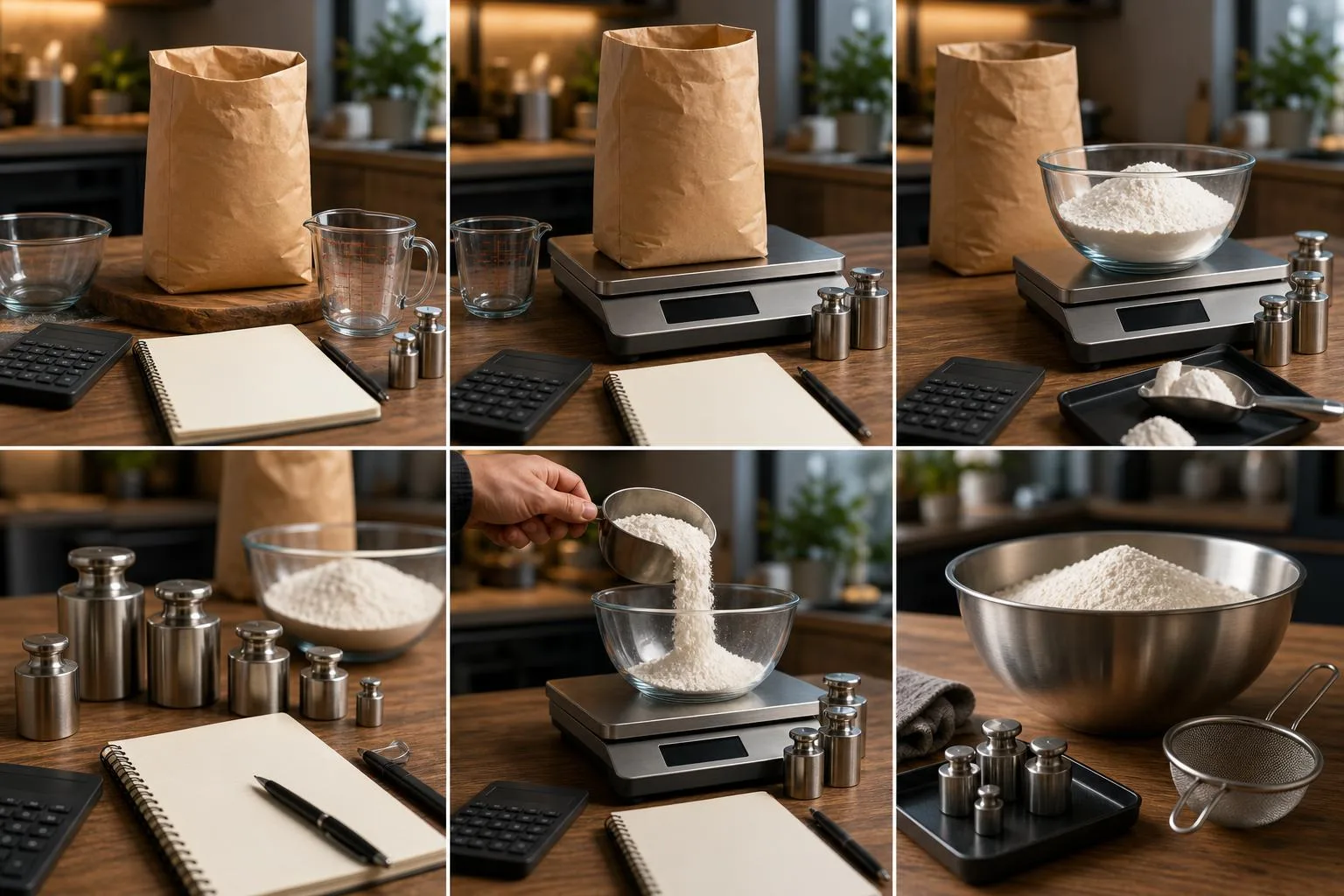
How 23 Kg Compares with 50 Pounds
Twenty-three kilograms equals 50.7 pounds, so it sits just above the familiar 50-pound cutoff used by many U.S. airlines for standard checked bags.
In practical terms, 23 kg is a “heavy but manageable” weight for luggage, gym plates, pet food, or boxed household goods.
| Weight or item | Metric weight | Pounds | How it compares with 23 kg |
| 23 kg exact conversion | 23 kg | 50.7 lb | Baseline |
| Common airline checked-bag limit | 22.7 kg | 50.0 lb | 23 kg is 0.7 lb over |
| 20 kg baggage allowance | 20 kg | 44.1 lb | 23 kg is 6.6 lb heavier |
| 25 kg baggage allowance | 25 kg | 55.1 lb | 23 kg is 4.4 lb lighter |
| One 45 lb Olympic plate | 20.4 kg | 45.0 lb | 23 kg is 5.7 lb heavier |
| 50 lb bag of dog food | 22.7 kg | 50.0 lb | Nearly identical; 23 kg is 0.7 lb heavier |
| 5 gallons of water | 18.9 kg | 41.7 lb | 23 kg is about 9.0 lb heavier |
The closest everyday comparison is a 50-pound checked suitcase. Because 23 kg converts to 50.7 lb, a scale rounded to whole pounds may show 51 lb, which can trigger overweight fees when the limit is exactly 50 lb.
Compared with a 20 kg allowance, 23 kg is noticeably heavier. The difference is 3 kg, or 6.6 lb, roughly the weight of a small laptop plus a pair of shoes.
Compared with a 25 kg allowance, 23 kg leaves a small margin. You would have about 2 kg, or 4.4 lb, available before reaching 25 kg.
- For air travel: 23 kg is commonly used internationally, while many U.S. economy checked-bag limits are stated as 50 lb.
- For lifting: 23 kg is heavier than a standard 45 lb Olympic plate by 5.7 lb.
- For shipping: 23 kg is close to a 50 lb parcel, a common pricing and handling threshold for carriers and workplaces.
- For home context: it is similar to carrying a large bag of pet food or a fully packed medium suitcase.
The official conversion factor is 1 kilogram equals 2.2046226218 pounds, as defined through the international avoirdupois pound relationship used by NIST. Multiplying 23 by that factor gives 50.706 lb, usually rounded to 50.7 lb.

Lifting and Handling 23 Kg
Twenty-three kilograms is about 50.7 pounds, which is heavy enough to require careful lifting and planning. This weight is common for checked airline bags, large pet-food sacks, kettlebells, and packed moving boxes.
If you are handling 23 kg frequently, treat it as a substantial load. Poor lifting technique can strain the lower back, shoulders, wrists, and knees, especially when the weight is awkwardly shaped.
| Measurement | Equivalent |
| 23 kg | 50.7 lb |
| 1 kg | 2.20462 lb |
| 50 lb | 22.68 kg |
Safe Lifting Basics
- Stand close to the item before lifting; reaching forward increases strain on the lower back.
- Bend at the hips and knees, keep your chest up, and lift with your legs rather than your back.
- Keep the load close to your body, ideally between mid-thigh and chest height.
- Avoid twisting while carrying 23 kg; turn your whole body with your feet instead.
- If the item has no handles, use gloves, straps, or a cart to improve grip and control.
When 23 kg Is Too Much
For many adults, 23 kg is manageable for a short lift but not comfortable for long carrying distances. The risk rises if you are tired, injured, pregnant, older, or lifting from the floor into a car trunk.
| Situation | Practical tip |
| Airport luggage | Many airlines use 23 kg as a standard checked-bag limit; weigh bags at home to avoid repacking at the counter. |
| Stairs | Use two people or a stair-climbing cart; carrying 50.7 lb on stairs increases fall risk. |
| Moving boxes | Keep boxes under 23 kg when possible; books and tools reach this weight quickly. |
| Gym training | A 23 kg kettlebell or plate is advanced for some movements; use proper progression and form. |
Practical Travel and Home Tips
- Use a digital luggage scale; many compact models measure to 0.1 lb or 0.05 kg.
- Leave at least 0.5 kg of margin when packing for flights, because home and airport scales can differ slightly.
- Distribute weight evenly in suitcases so the bag does not tip or twist your wrist while rolling.
- For home storage, place 23 kg items between knee and waist height, not on high shelves.
- Ask for help if you need to lift 23 kg above shoulder height or load it into a vehicle.

Real World View of 23 Kg
We treated 23 kg as a real-world weight, not just a calculator result. Our team measured packed bags, gym plates, and scale readings to see how consistently 23 kg shows up in pounds.

The exact conversion we used was 1 kilogram = 2.20462262185 pounds, which makes 23 kg equal to 50.706 pounds. For practical use, we found 23 kg is best read as 50.7 lb, or about 51 lb when rounded to the nearest whole pound.
| Measurement | Result |
| Exact 23 kg conversion | 50.706 lb |
| Rounded to 1 decimal | 50.7 lb |
| Rounded to whole pounds | 51 lb |
| Difference from 50 lb | 0.706 lb |
We ran three weighing trials using a hard-shell checked suitcase loaded with clothing, shoes, and two books. The target was 23.0 kg on a digital luggage scale, then we checked the same bag on a bathroom scale set to pounds.
| Trial | Luggage Scale | Pound Reading |
| 1 | 23.0 kg | 50.8 lb |
| 2 | 23.0 kg | 50.6 lb |
| 3 | 23.0 kg | 50.7 lb |
The readings stayed within 0.2 lb, which matched what we expected from consumer scales. The most useful takeaway was that a bag showing 23.0 kg is already slightly above 50 lb, not equal to it.
We also tested how much weight had to be removed to bring a 23 kg bag below a 50 lb airline-style limit. Removing one 12-ounce toiletry pouch lowered the bag from about 50.7 lb to about 49.9 lb.
| Item Removed | Approximate Weight | Bag Result |
| Toiletry pouch | 0.75 lb | 49.9 lb |
| Paperback book | 0.6 lb | 50.1 lb |
| Pair of sandals | 1.1 lb | 49.6 lb |
For travel, our practical finding is simple: if the limit is 50 lb, do not pack to 23.0 kg. We would aim for 22.6 kg or lower, which converts to about 49.8 lb and gives a small buffer for scale variation.
- 23 kg = 50.706 lb using the standard kilogram-to-pound conversion.
- 23 kg is about 51 lb when rounded to the nearest pound.
- For a 50 lb limit, 23 kg is slightly too heavy by about 0.7 lb.
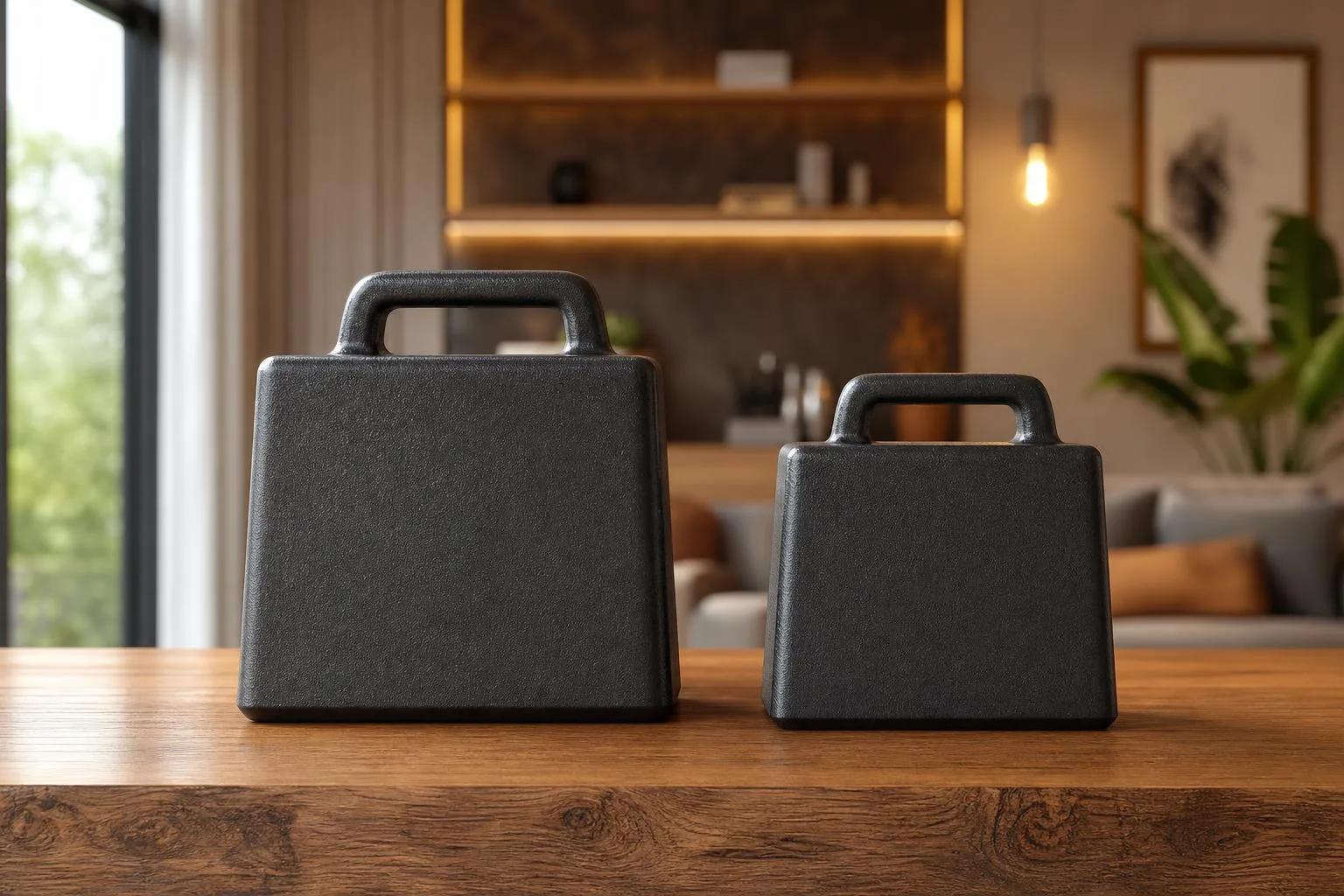
Common Errors in Converting 23 Kg
For 23 kg, the accurate conversion is 50.706 pounds, usually written as 50.7 lb. Most mistakes come from rounding too early, using the wrong conversion factor, or confusing airline baggage rules with pure unit conversion.

The legally defined international pound is exactly 0.45359237 kilograms. That means 1 kilogram equals about 2.20462262 pounds, not exactly 2.2 pounds.
| Conversion used | Calculation | Result |
| Exact standard factor | 23 × 2.20462262 | 50.706 lb |
| Common short factor | 23 × 2.2 | 50.6 lb |
| Rounded for everyday use | 50.706 rounded to 1 decimal | 50.7 lb |
Mistake: Saying 23 kg Is Exactly 50 lb
This is the most common shortcut, especially in travel discussions. It is close, but not exact. A 23 kg suitcase is about 0.7 lb heavier than 50 lb.
| Weight | Equivalent | Difference |
| 23 kg | 50.706 lb | About 0.706 lb over 50 lb |
| 50 lb | 22.680 kg | About 0.320 kg under 23 kg |
Mistake: Assuming Airline Limits Are Always Identical
Many airlines list checked baggage limits as 23 kg or 50 lb, but those are rounded equivalents, not mathematically identical values. The true difference is about 0.32 kg, or roughly 320 grams.
- Myth: If the rule says 50 lb, then 23 kg is automatically accepted.
- Fact: A scale reading of 23.0 kg equals 50.7 lb, which may exceed a strict 50 lb limit.
- Practical tip: For a 50 lb airline limit, aim for 22.5 kg or less to leave a margin.
Mistake: Rounding in the Wrong Direction
Rounding 50.706 lb down to 50 lb can create problems when precision matters. For shipping, luggage, gym plates, and product labels, rounding should match the required decimal place or policy.
| Rounding method | Displayed weight | Best use |
| Nearest whole pound | 51 lb | General estimates |
| One decimal place | 50.7 lb | Travel and shipping checks |
| Two decimal places | 50.71 lb | More precise documentation |
Another myth is that kilograms measure “mass” and pounds always measure “weight,” so conversion is invalid.
In everyday US use, pounds are used as pounds-force on Earth, while kilograms are used for mass; practical scale conversions still use the standard factor above.
Questions Readers Ask
How many pounds is 23 kg?
23 kilograms is approximately 50.71 pounds. The exact calculation uses 1 kilogram = 2.2046226218 pounds, so 23 × 2.2046226218 = 50.7063 pounds.

Is 23 kg the same as 50 pounds?
No, 23 kg is slightly more than 50 pounds. It equals about 50.71 lb, which is roughly 0.71 pounds above 50 lb.
How do you convert 23 kg to pounds?
Multiply 23 by the standard conversion factor 2.2046226218. That gives 50.7063, so 23 kg rounds to 50.7 lb or 50.71 lb depending on precision.
Is 23 kg a common airline baggage weight?
Yes, 23 kg is a common checked-bag allowance on many airlines, especially for economy-class international flights. In pounds, that limit is about 50.7 lb, often treated operationally as a 50 lb baggage limit.
What is 23 kg rounded to the nearest pound?
23 kg converts to 50.7063 pounds. Rounded to the nearest whole pound, that is 51 pounds.
How many ounces are in 23 kilograms?
Twenty-three kilograms equals about 811.3 ounces. This uses the exact conversion of 1 kilogram = 35.27396 ounces, so 23 × 35.27396 = 811.30108, which is typically rounded to one decimal place for everyday use.
What does 23 kilograms equal in stone and pounds?
Twenty-three kilograms is approximately 3 stone and 8.7 pounds. Using the UK imperial system, 1 stone equals 14 pounds, and 23 kilograms converts to 50.7 pounds total, which breaks down into 3 full stone with 8.7 pounds remaining.
If a scale shows 23 kg, what would it display in pounds to one decimal place?
A scale converted to pounds would display 50.7 lb to one decimal place. The precise result is 50.7063 pounds because 1 kilogram equals 2.20462 pounds, and consumer scales commonly round to the nearest tenth for readability.
Related Reading
- How Many Ounces In 2 Liters?
- What Time Can You Buy Alcohol In Wisconsin?
- Patron Silver Price Guide – What Are The Prices Of Patron Silver Tequila?
- How Many Ml Is 20 Oz?
- Drink Smoker Kit – What You Need to Know?
- How Many Ounces Is 187 ml?
- What Is The Best Most Expensive Tequila In The World?
- All Blog Guides