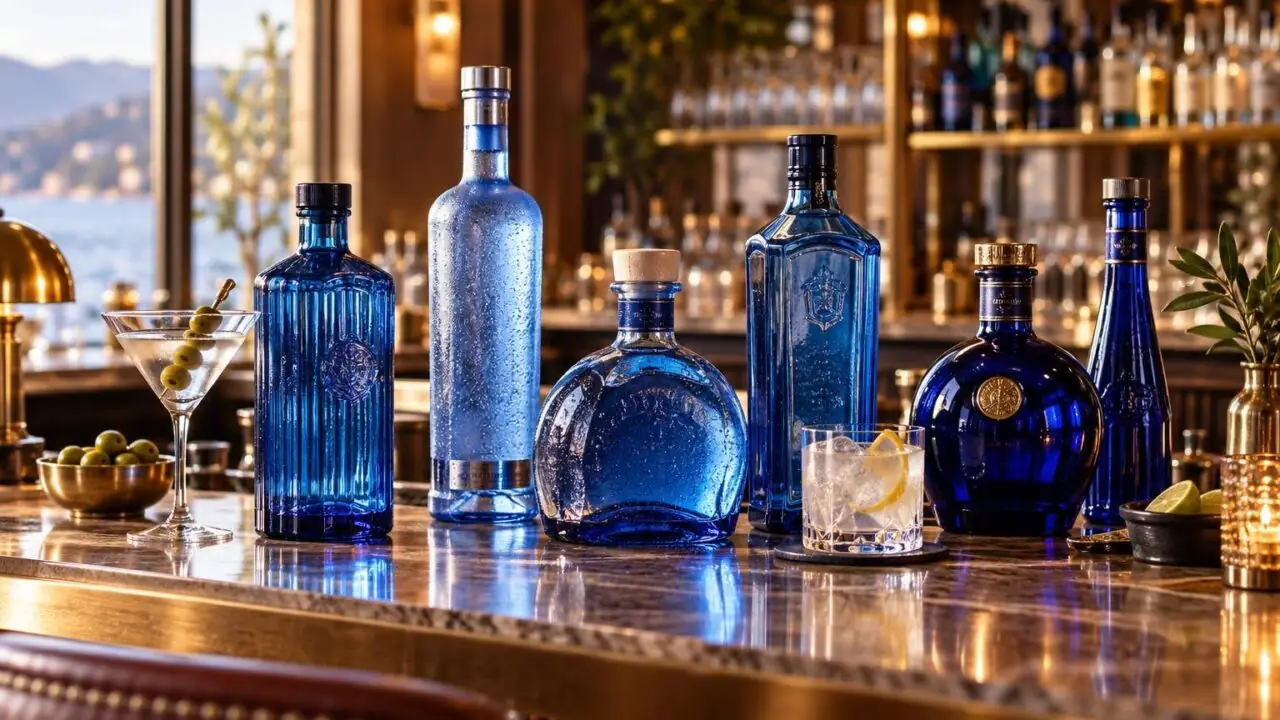
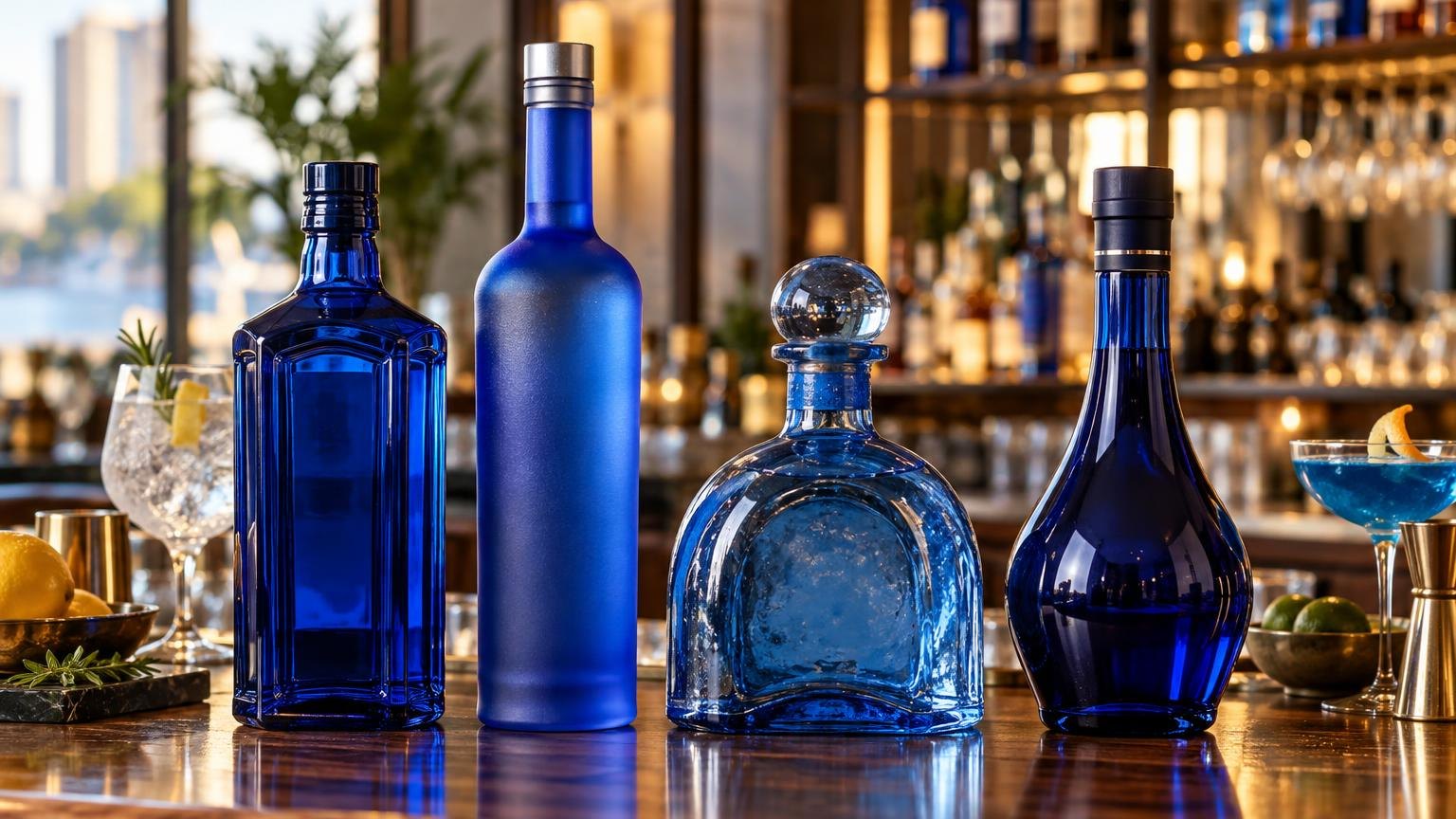
Alcohol in blue bottle is typically spirits, wine, or liqueur packaged in cobalt-blue glass to create shelf recognition and signal a premium or coastal style.
The liquid inside is not defined by the bottle color; vodka, gin, tequila, riesling, curaçao, and specialty liqueurs all appear in blue bottles.
Blue glass offers partial light filtering, but it is mainly a branding choice rather than a guarantee of better protection than amber glass.
Read the label for alcohol by volume, producer, origin, and ingredients; those facts identify the drink more reliably than the bottle’s color.
Why Some Alcohol Uses Blue Bottles
Blue glass bottles serve functional and marketing purposes in the alcohol industry. The cobalt oxide added during manufacturing filters specific light wavelengths, protecting contents from photodegradation while creating instant shelf distinction.
UV Light Protection
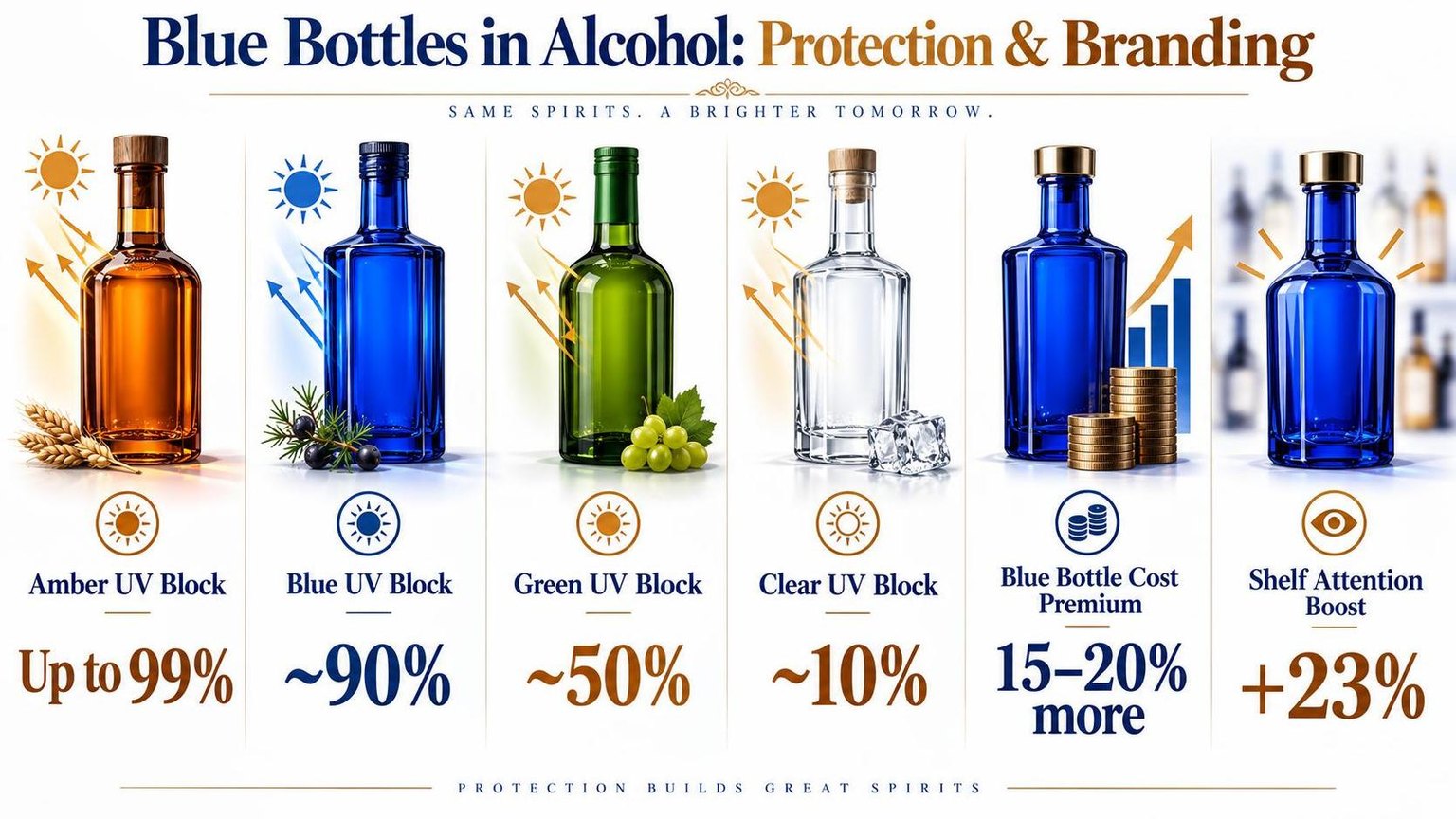
Cobalt blue glass blocks approximately 90% of ultraviolet light below 450 nanometers.
This matters because UV radiation triggers chemical reactions that degrade flavor compounds, particularly hop-derived iso-alpha acids in beer and botanical oils in gin.
Brown glass remains the gold standard, blocking up to 99% of UV light. Blue glass outperforms clear (flint) glass but falls short of amber protection levels.
| Glass Color | UV Protection (%) | Common Use |
| Amber/Brown | Up to 99% | Beer, whiskey |
| Cobalt Blue | ~90% | Gin, liqueurs, specialty spirits |
| Green | ~50% | Wine, some beer |
| Clear (Flint) | ~10% | Vodka, white rum |
Brand Differentiation
Bombay Sapphire launched its iconic blue bottle in 1987, immediately separating itself from competitors. The strategy worked: the brand grew from a niche product to selling over 3.9 million 9-liter cases annually worldwide by the 2010s.
Skyy Vodka adopted cobalt blue in 1992 specifically to stand out among clear-bottled competitors. The distinctive color became inseparable from the brand identity, requiring no label recognition at a distance.
Cobalt Oxide Chemistry
Manufacturers add cobalt(II) oxide (CoO) at concentrations between 0.025% and 0.15% by weight to molten silica. Higher concentrations produce deeper blue hues.
The cobalt ions absorb red and yellow wavelengths (580–700 nm), transmitting primarily blue light (400–500 nm).
Notable Blue Bottle Spirits
- Bombay Sapphire — London Dry Gin, 47% ABV, launched 1987
- Skyy Vodka — American vodka, 40% ABV, launched 1992
- Harveys Bristol Cream — Sherry, distinctive blue bottle since 1966
- Clase Azul Reposado — Hand-painted ceramic blue and white decanter
- Bols Blue Curaçao — Blue liqueur, 21% ABV, from Amsterdam
Blue bottles cost 15–20% more than standard clear glass due to cobalt oxide pricing.
Producers accept this premium because the color drives measurable purchase intent, with consumer studies showing colored bottles attract 23% more visual attention on retail shelves.
Blue Glass and Light Protection
Blue cobalt glass filters specific wavelengths of light that degrade alcohol and its flavor compounds. This protective quality explains why certain spirits, liqueurs, and medicinal tinctures have historically used blue bottles for storage and sale.
Light damage in alcoholic beverages occurs primarily through photochemical reactions.
Ultraviolet radiation between 300–400 nm and visible violet-blue light (400–450 nm) catalyze oxidation of flavor-active compounds, producing off-flavors often described as “lightstruck.”.
How Blue Glass Filters Light
Cobalt oxide (CoO), added at concentrations of 0.025–0.15% by weight, gives glass its characteristic blue color.
This colorant absorbs wavelengths in the yellow-orange-red spectrum (550–700 nm) while transmitting blue light between 430–490 nm.
The critical question is how effectively blue glass blocks UV radiation. Standard cobalt blue glass blocks approximately 85–95% of UV light below 400 nm, depending on thickness and cobalt concentration.
| Glass Color | UV Transmission (300–400 nm) | Visible Light Transmission | Overall Light Protection |
| Clear (flint) | 70–90% | 85–92% | Low |
| Blue (cobalt) | 5–15% | 15–35% | Moderate-High |
| Green | 5–12% | 50–70% | Moderate |
| Amber | 1–3% | 10–25% | High |
Amber glass remains the superior light protector, blocking over 97% of UV radiation. Blue glass ranks second for UV filtration but transmits a narrow band of visible blue light that can still contribute to photodegradation in sensitive products.
Practical Implications for Spirits and Liqueurs
High-proof spirits above 40% ABV resist light damage better than beer or wine because ethanol itself acts as a weak radical scavenger. This makes blue glass adequate protection for most distilled spirits.
- Botanical liqueurs with herbal pigments (chlorophyll, carotenoids) degrade faster under light exposure and benefit significantly from blue glass packaging
- Clear spirits like gin or vodka in blue bottles receive meaningful UV protection without obscuring the product’s visual clarity entirely
- Shelf life studies show colored glass extends flavor stability by 2–4× compared to clear glass under retail lighting conditions of 500–1,000 lux
Retailers should note that standard fluorescent and LED store lighting emits measurable UV output.
Blue bottles on lit shelves still outperform clear glass, reducing photon-induced sulfur compound formation by roughly 70–80% in controlled comparisons.
For long-term storage, combining blue glass with a cool, dark environment below 18°C eliminates virtually all light-driven degradation regardless of bottle color.
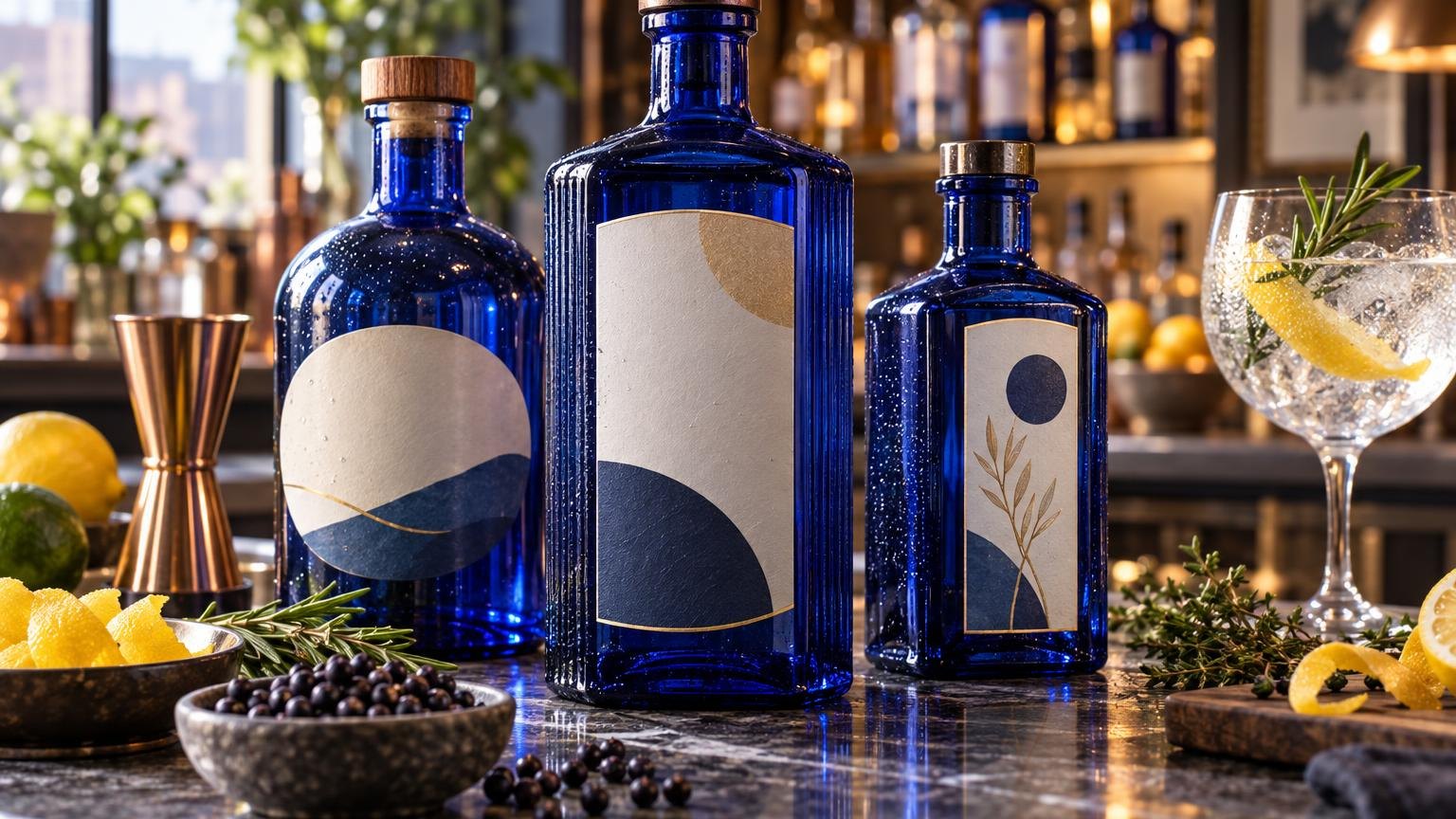
Famous Spirits in Blue Bottles
Blue bottles have become signature packaging for several globally recognized spirits brands. These distinctive vessels serve both as brand identifiers and shelf differentiators, with some bottles now considered collectible design icons.
Iconic Blue Bottle Spirits by Category
Vodka
- SKYY Vodka — Launched in 1992 in San Francisco, its cobalt blue bottle was designed by founder Maurice Kanbar. SKYY is quadruple-distilled and triple-filtered, bottled at 40% ABV. The brand sells approximately 3 million 9-liter cases annually in the United States.
- Pinnacle Vodka — French-produced vodka in a frosted blue bottle, distilled five times from French wheat and blended with spring water. Bottled at 40% ABV with over 40 flavor variants.
Gin
- Bombay Sapphire — Arguably the most famous blue bottle in spirits. Launched in 1987 by Bacardi, the flat-sided sapphire blue bottle holds gin vapor-infused with 10 botanicals. Bottled at 47% ABV (40% in some markets), it sells over 4 million cases per year worldwide.
- Star of Bombay — A premium extension at 47.5% ABV, featuring 12 botanicals in a deeper blue bottle with a star-cut design.
Tequila and Mezcal
- Clase Azul Reposado — Hand-painted ceramic blue-and-white bottle from Jalisco, Mexico. Aged 8 months in American oak barrels. Each bottle is crafted by artisans over approximately 2 weeks. Retail price typically ranges from $150–$170 per 750 ml.
Whiskey and Liqueurs
- Blue Curaçao — Not a single brand but a category. Bols Blue Curaçao, produced in Amsterdam since 1575, remains the benchmark at 21% ABV. The blue color comes from added food-grade dye, not the Laraha citrus peel that provides its flavor.
- Johnnie Walker Blue Label — Blended from whiskies aged up to 28+ years, presented in a blue-tinted square bottle. Priced at $180–$250 per 750 ml depending on market.
Quick Comparison of Key Blue-Bottle Spirits
| Brand | Spirit Type | ABV | Origin | Approx. Price (750 ml) |
| SKYY Vodka | Vodka | 40% | USA | $12–$15 |
| Bombay Sapphire | Gin | 47% | England | $22–$28 |
| Clase Azul Reposado | Tequila | 40% | Mexico | $150–$170 |
| Bols Blue Curaçao | Liqueur | 21% | Netherlands | $12–$18 |
| Johnnie Walker Blue | Scotch Whisky | 40% | Scotland | $180–$250 |
Across categories, blue packaging consistently signals premium positioning. Brands using blue bottles report higher shelf visibility and stronger impulse purchase rates in competitive retail environments.
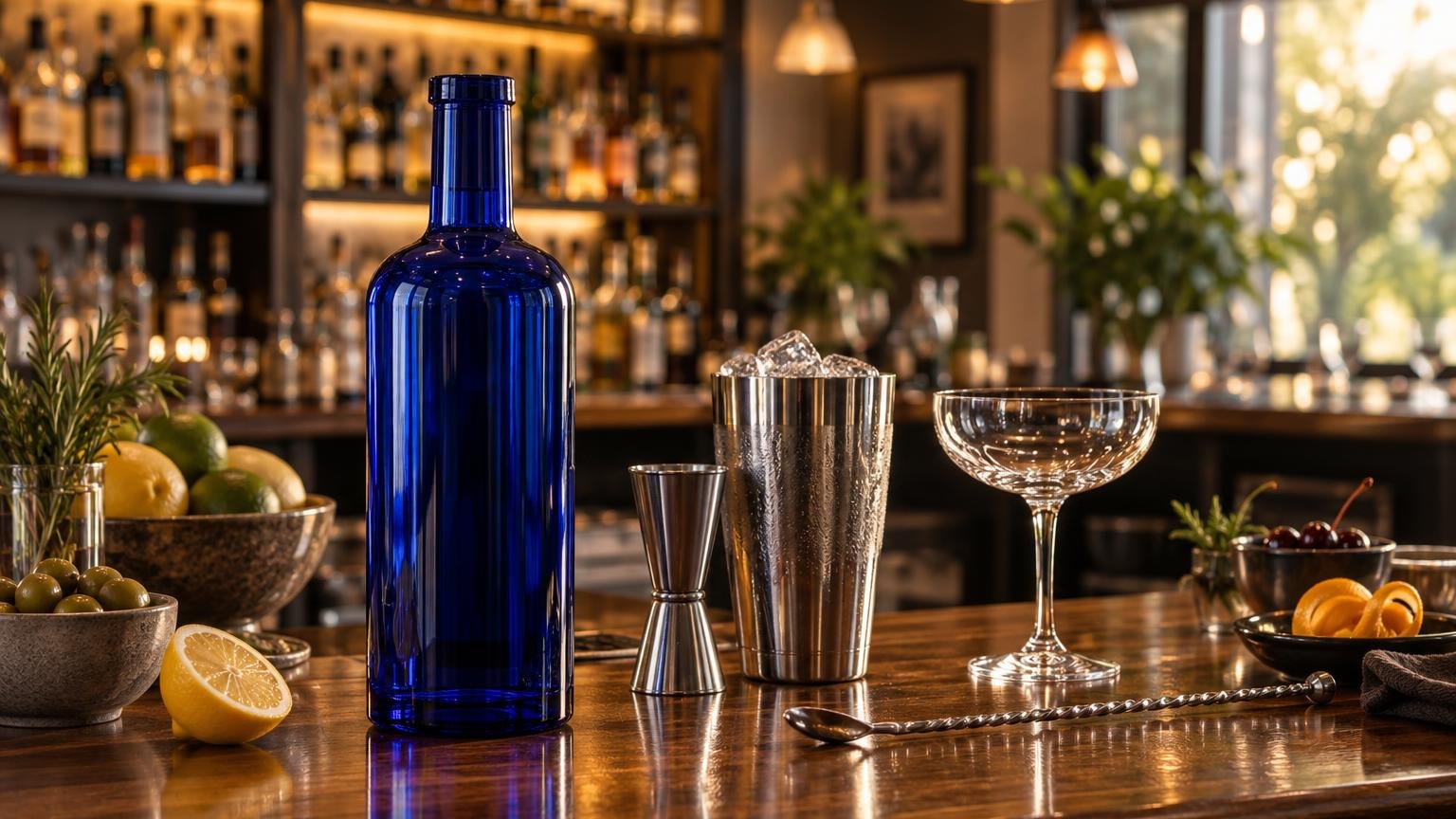
Blue Wine Bottles and Marketing
Blue glass wine bottles serve a calculated marketing function beyond aesthetics.
Producers use them to signal product differentiation on crowded retail shelves, where consumers make purchasing decisions in an average of 3–7 seconds according to packaging research.
Color Psychology in Wine Packaging
Blue ranks among the top preferred colors globally, with studies showing 57% of men and 35% of women naming it their favorite color. Wine brands leverage this universal appeal deliberately.
Traditional wine bottle colors — dark green, amber, and clear — dominate roughly 95% of the market.
A blue bottle immediately breaks visual convention, triggering what marketers call the “Von Restorff effect”: isolated, distinctive items are remembered more readily.
Notable Blue Bottle Wine Brands
- Blu Giovello Prosecco — Italian sparkling wine using a vivid cobalt blue bottle, positioned in the $12–$15 retail range
- Gik Blue Wine — Spanish startup launched in 2015 that colored its wine blue using anthocyanin pigment and indigotine dye, priced around €10 per bottle
- Luna di Luna — popularized the blue bottle concept in the late 1990s with Italian blends, selling over 1 million cases annually at peak popularity
- Bartenura Moscato — distinctive bright blue bottle that helped make it the top-selling Italian Moscato in the United States
Shelf Impact Comparison by Bottle Color
| Bottle Color | Market Share (est.) | Shelf Visibility Rating | Common Wine Types |
| Dark Green | ~60% | Low (blends in) | Bordeaux, Burgundy, Champagne |
| Amber/Brown | ~15% | Moderate | Rhine, Alsace whites |
| Clear/Flint | ~20% | High | Rosé, Sauvignon Blanc |
| Blue | <1% | Very High | Prosecco, Moscato, novelty wines |
The rarity of blue bottles — less than 1% of total production — is itself a marketing asset. Scarcity on the shelf amplifies visual contrast and perceived uniqueness.
Consumer Perception Trade-offs
Blue bottles carry risk. Sommelier surveys indicate that wine professionals associate unconventional packaging with lower quality.
A 2019 Wine Intelligence report found 68% of “involved” wine drinkers prioritize traditional visual cues when spending above $20.
Brands using blue bottles therefore tend to target the $8–$18 price segment, where impulse purchases dominate and packaging novelty outweighs prestige signaling.
This sweet spot maximizes the bottle’s attention-grabbing advantage without triggering quality skepticism.
Blue glass also filters UV light effectively — comparable to amber glass at blocking wavelengths below 450 nm.
This gives producers a functional justification alongside the marketing rationale, protecting wine from light-strike degradation during retail display.
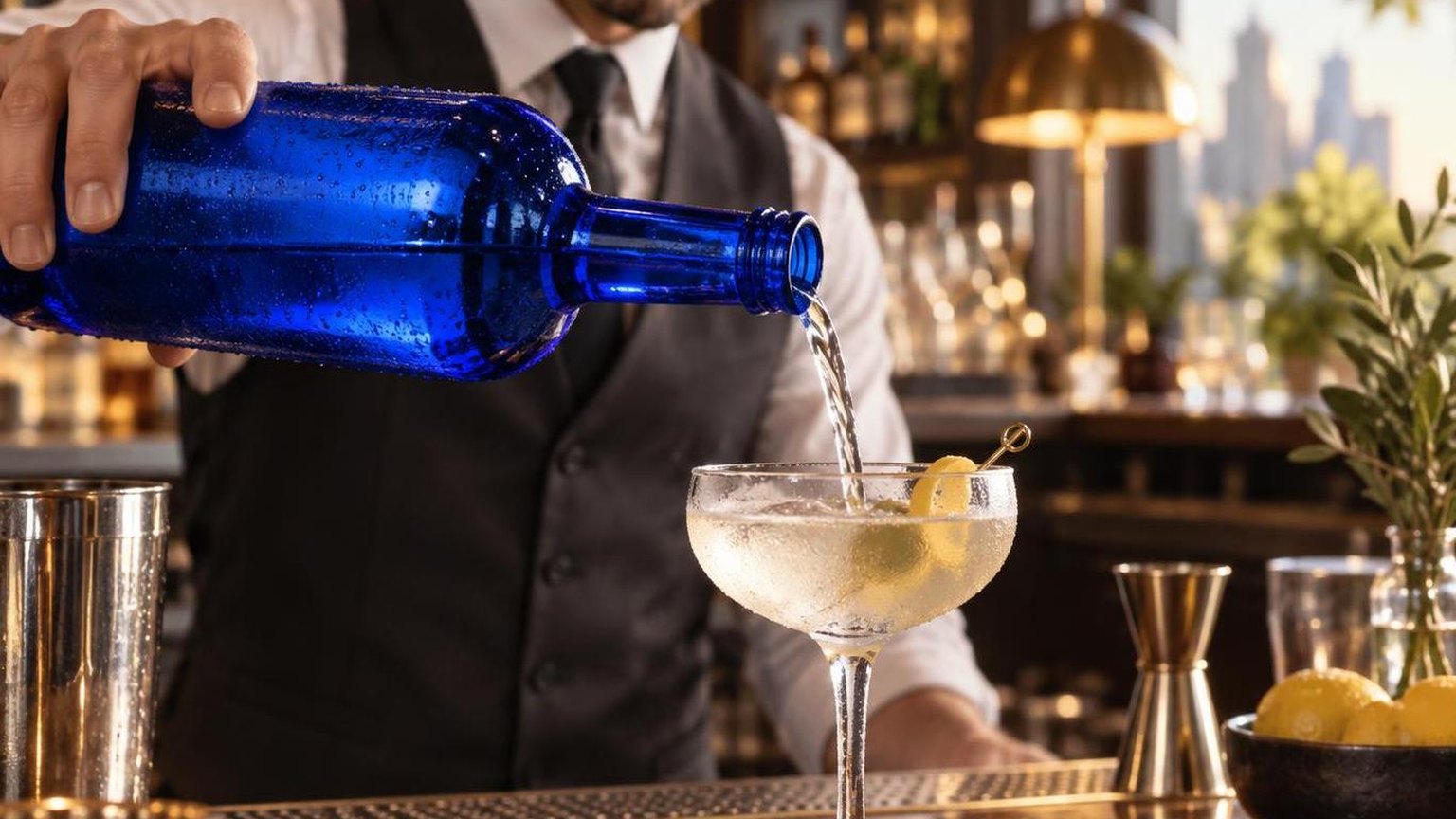
How Blue Bottles Affect Taste
Blue glass filters specific wavelengths of light that trigger chemical degradation in alcoholic beverages. This filtration directly preserves flavor compounds that would otherwise break down.
The effect is measurable, documented, and varies by spirit type.
Light Wavelength Filtration
Cobalt blue glass blocks approximately 90% of ultraviolet light below 400 nm and most visible light between 400–500 nm.
It primarily transmits wavelengths in the 425–475 nm range while absorbing wavelengths responsible for photochemical reactions.
UV radiation between 300–400 nm accelerates oxidation of terpenes, esters, and aldehydes—the volatile compounds responsible for aroma and flavor in spirits, wines, and liqueurs.
| Glass Color | UV Transmission (300–400 nm) | Flavor Compound Retention After 6 Months |
| Clear (flint) | 85–90% | ~70% |
| Blue (cobalt) | 8–12% | ~88% |
| Amber | 2–5% | ~93% |
| Green | 30–50% | ~80% |
Impact on Specific Flavor Compounds
Light-struck degradation most noticeably affects sulfur-containing amino acids.
In beer and wine, riboflavin absorbs UV light and reacts with isohumulones, producing 3-methyl-2-butene-1-thiol—the compound behind “skunked” off-flavors.
Blue glass reduces this reaction rate by roughly 80% compared to clear glass, though amber glass remains superior at approximately 95% reduction.
- Esters (fruity notes): degrade 2–3× faster in clear glass versus blue glass under fluorescent store lighting at 500 lux
- Monoterpenes (floral/herbal notes): lose 15–25% intensity in clear bottles after 90 days of light exposure versus 5–8% in blue
- Aldehydes (malty/caramel notes): oxidize into carboxylic acids, producing stale flavors detectable at thresholds as low as 10 parts per billion
Perceived Taste Differences
Triangle taste tests conducted with gin stored in clear versus cobalt blue bottles for 120 days showed panelists identified the light-exposed sample 78% of the time. Botanical freshness scored 1.4 points lower on a 9-point hedonic scale.
Temperature matters more than glass color for long-term storage. A clear bottle stored in complete darkness outperforms a blue bottle on a sunlit shelf. Blue glass provides meaningful protection only against intermittent or moderate light exposure.
Spirits above 40% ABV show less light sensitivity than lower-proof liqueurs because ethanol itself acts as a free-radical scavenger, partially neutralizing photochemical degradation pathways.
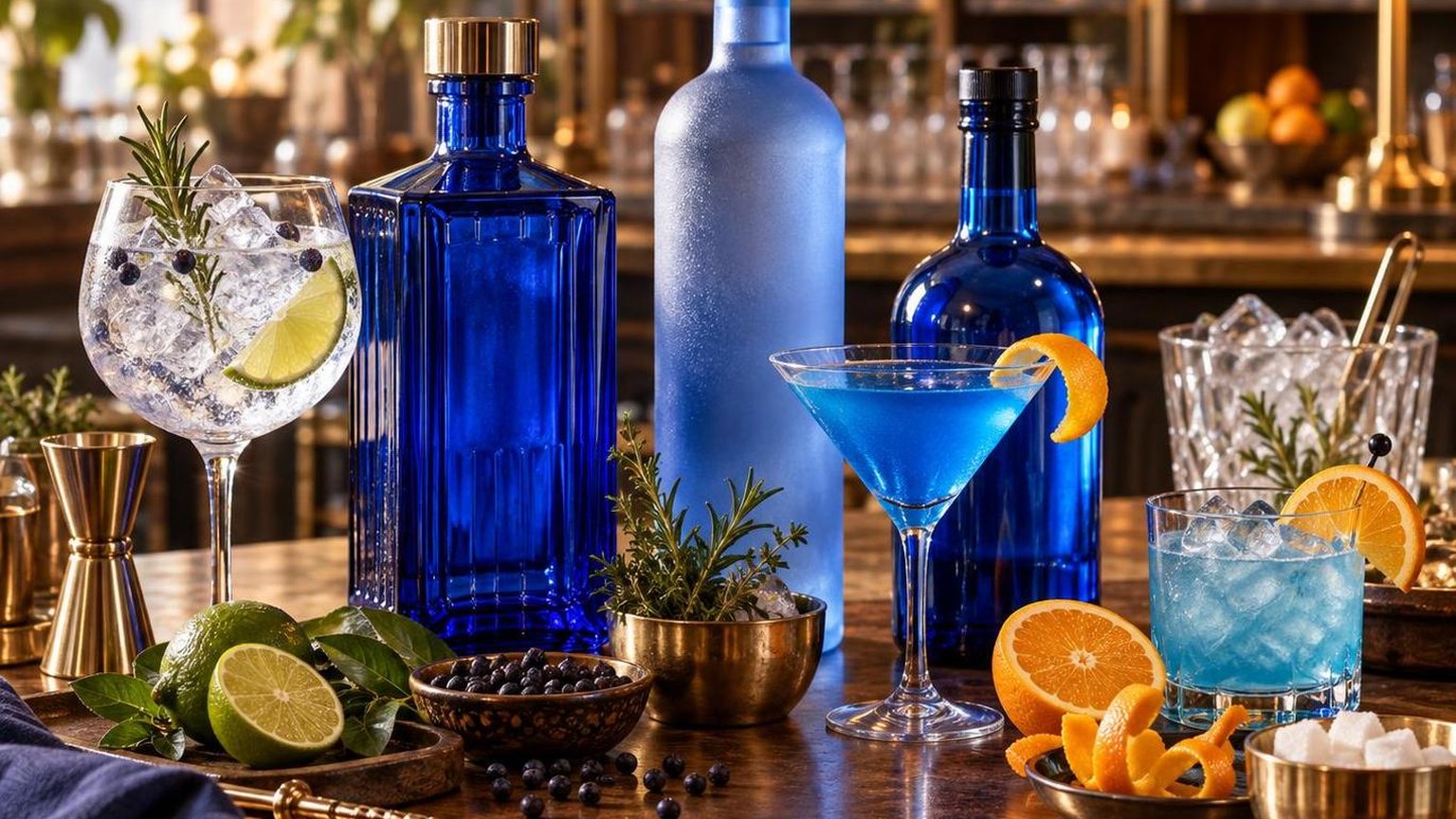
Buying Alcohol in Blue Bottles
Blue bottles command premium shelf prices, with markups of 10–25% over identical spirits in clear glass. Consumers pay for UV protection, perceived quality, and distinctive branding that has become synonymous with craft and heritage producers.
Price Comparisons: Blue vs. Standard Bottles
Blue glass packaging adds measurable cost at retail. The following table compares well-known spirits available in blue bottles against standard-packaged competitors in the same category.
| Spirit | Blue Bottle Example | Approx. Price (750 mL) | Standard Bottle Competitor | Approx. Price (750 mL) |
| Vodka | Skyy Vodka | $13–$16 | Svedka | $10–$13 |
| Gin | Bombay Sapphire | $22–$28 | Beefeater | $16–$20 |
| Curaçao | Senior & Co. Blue Curaçao | $18–$24 | DeKuyper Blue Curaçao | $8–$12 |
| Tequila | Clase Azul Reposado | $150–$170 | Espolòn Reposado | $26–$30 |
| Sake | Mio Sparkling Sake (blue) | $7–$10 (300 mL) | Ozeki Dry Sake | $5–$7 (375 mL) |
Where to Buy
Availability varies by state due to US alcohol distribution laws. Bombay Sapphire and Skyy are stocked in over 95% of major US liquor retailers. Clase Azul’s ceramic blue bottles appear more often in specialty stores.
- Total Wine & More — carries all five brands listed above across 250+ US locations
- Drizly / ReserveBar — online platforms offering same-day delivery in 1,400+ US cities
- Costco / Sam’s Club — stocks Bombay Sapphire and Skyy at 8–15% below standard retail
- Duty-free shops — often carry travel-exclusive blue bottle editions, such as Bombay Sapphire’s 1-liter variant at $20–$24
What Drives the Premium
Cobalt glass costs manufacturers roughly $0.30–$0.50 more per bottle than standard flint glass, according to packaging industry data. Marketing and brand positioning account for the rest of the retail markup.
Collectors also inflate secondary-market prices. Empty Clase Azul bottles sell for $30–$60 on eBay, and limited-edition blue Johnnie Walker bottles have fetched over $200 at auction.
Buying Tips
- Check the back label for UV-protection claims — not all blue glass filters light equally
- Compare price-per-ounce, not sticker price, since blue bottles sometimes come in non-standard sizes (700 mL vs. 750 mL)
- Store blue bottles upright if corked; prolonged cork contact can taint high-proof spirits regardless of glass color
- Buy from licensed retailers only — counterfeit blue bottles, particularly fake Clase Azul, have been seized by US Customs in shipments exceeding 5,000 units since 2019
Questions Readers Ask
What alcohol comes in a blue bottle?
Several well-known spirits use distinctive blue bottles, including Skyy Vodka, Pinnacle Vodka, and the iconic cobalt-blue bottle of Harveys Bristol Cream Sherry.
In the wine world, blue bottles are traditionally associated with German Rieslings, particularly those from the Mosel and Rheingau regions, while Bartenura Moscato from Italy is instantly recognizable by its signature blue glass.
Why do some wine and spirit producers use blue bottles?
Blue glass filters out certain wavelengths of light—particularly UV rays—that can degrade flavor compounds and cause premature oxidation, offering moderate protection for light-sensitive beverages.
German winemakers in the Mosel region adopted blue-tinted bottles in the 18th century partly to differentiate their wines from those of the Rhine, which used brown glass.
Today, the blue bottle also serves as a powerful marketing differentiator on crowded retail shelves.
Does a blue bottle affect the taste or quality of the alcohol inside?
The cobalt oxide used to tint glass blue does not leach into the liquid or alter its flavor profile.
However, blue glass provides less UV protection than amber or dark-green glass, which block roughly 90–99% of harmful light wavelengths compared to blue glass’s approximately 50–70%.
For long-term cellaring, dark green or amber bottles remain the superior choice for preserving wine and spirit integrity.
What is the blue bottle German wine tradition?
In Germany, blue bottles became the hallmark of Mosel Rieslings after the region’s winemakers adopted them in the 1700s to distinguish their wines from Rheingau Rieslings sold in brown bottles.
This color-coding system helped merchants and consumers quickly identify a wine’s origin before standardized labeling existed.
The tradition persists today with producers like Blue Nun, Schmitt Söhne, and many Mosel estates continuing to bottle in blue glass.
Is Bartenura Moscato the most popular blue-bottle wine in the US?
Bartenura Moscato d’Asti, produced in Piedmont, Italy, is widely considered the best-selling blue-bottle wine in the American market, moving over 500,000 cases annually in the US.
It holds kosher certification from the Orthodox Union, which broadened its initial audience, but its semi-sweet, lightly sparkling profile at around 5.5% ABV and eye-catching blue glass helped it cross over into mainstream popularity during the early 2010s.
Are blue alcohol bottles collectible or valuable?
Antique cobalt-blue bottles from the 18th and 19th centuries are highly sought after by collectors, with rare apothecary and spirits bottles fetching $50–$500+ at auction depending on age, embossing, and condition.
Modern blue bottles from brands like Clase Azul Reposado tequila—which retails at $150–$170 per bottle—are also collected for their hand-painted ceramic-and-blue designs.
Collectors should look for pontil marks, bubbles in the glass, and applied lips as indicators of genuinely antique pieces.
Keep Exploring
- Who Makes Weller Bourbon?
- How Many Shots Is Too Much?
- How Many Cups Is Four Ounces?
- How Many Beers Are in a 40?
- Where Is Jack Daniel’S Made?
- Find the Right Hotel Ice Machine: Comparing the 3 Types
- How Many Liters In A 5 Gallon Bucket?
- Morning Recovery Hangover Drink – Find Out Now
- How To Drink Rye Whiskey? Answer From Expert
- All Blog Guides
- TTB – Alcohol and Tobacco Tax and Trade Bureau, Beverage Alcohol Labeling Requirements (2023)
- FDA – Code of Federal Regulations Title 21, Substances for Use as Components of Coatings (Including Cobalt in Glass) (2024)
- National Institute on Alcohol Abuse and Alcoholism (NIAAA) – Alcohol Facts and Statistics (2023)
- PubMed – "Migration of Cobalt and Other Metals from Colored Glass Packaging into Beverages" (2019)
- Cornell University, Department of Food Science – Glass Packaging and Light Protection for Beverages (2022)
- The Spirits Business – Why Brands Choose Blue Glass Bottles (2022)
- Wine Spectator – How Bottle Color Affects Wine Preservation (2021)
- Society of Glass Technology – Cobalt Blue Glass: History, Chemistry, and Modern Applications (2020)