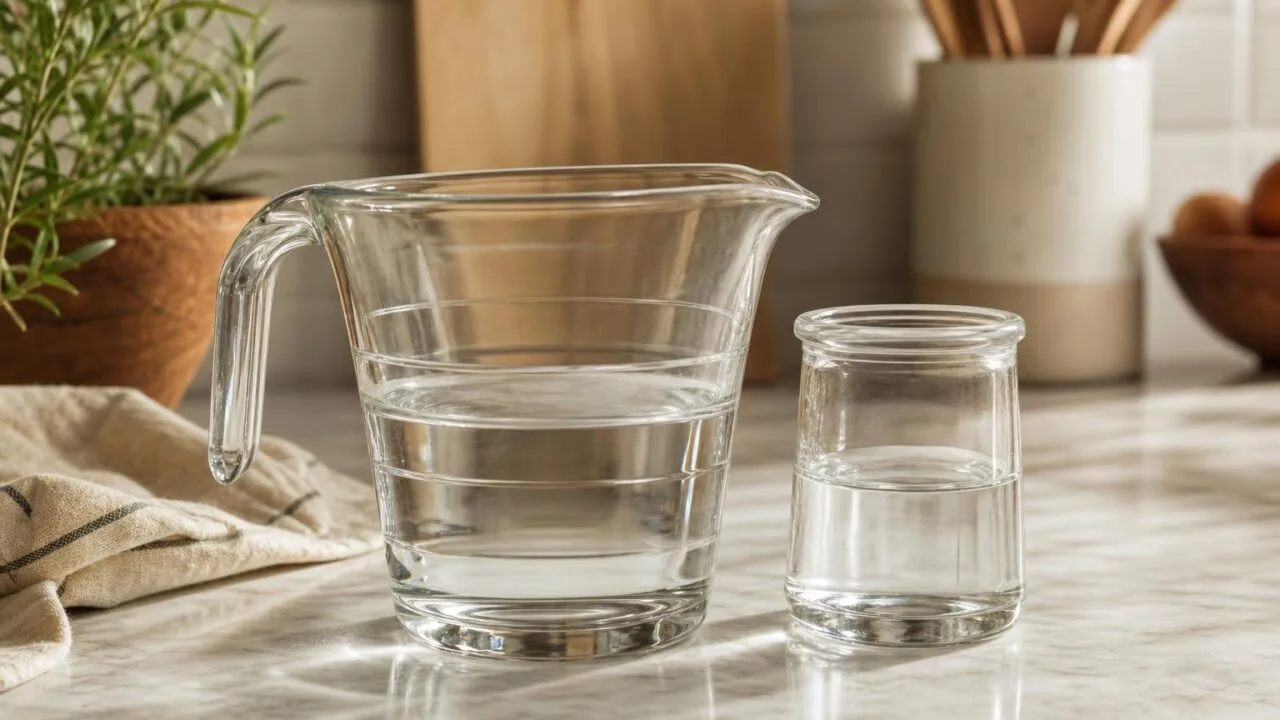
How Many Cups Is Four Ounces is 0.5 cup. In U.S. kitchen measurements, 1 cup equals 8 fluid ounces, so 4 fluid ounces fills exactly half a standard measuring cup.
For dry ingredients, 4 ounces by weight can vary by ingredient density, so flour, sugar, butter, and chopped nuts may not all equal 0.5 cup.
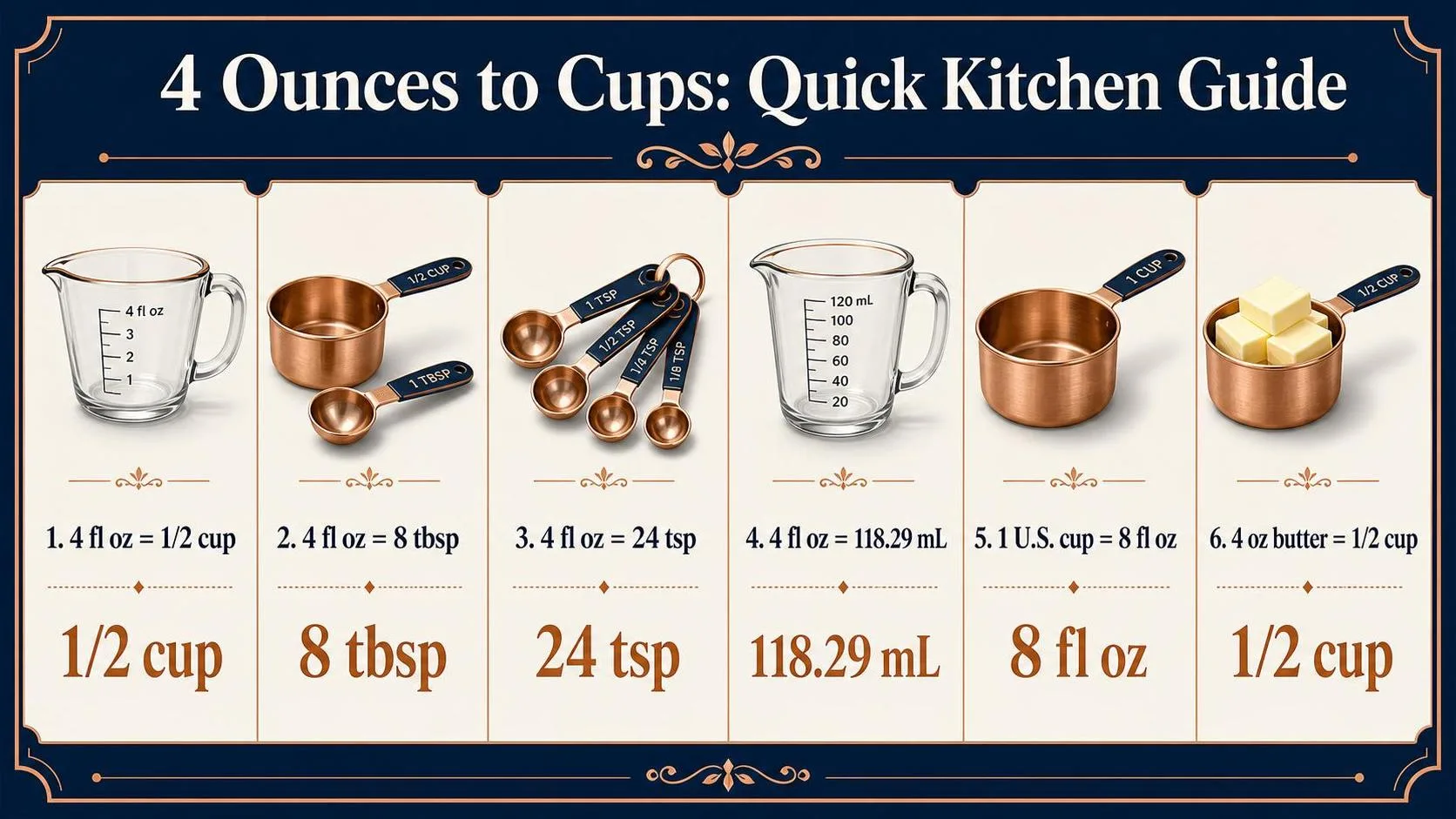
Four Fluid Ounces Equals Half a Cup
Four U.S. fluid ounces equals exactly one-half cup because the U.S. customary cup is defined as 8 fluid ounces. That is a volume conversion, not a weight conversion, and the distinction matters most when measuring dry ingredients.
| Measurement | Equivalent |
| 4 U.S. fluid ounces | 1/2 U.S. cup |
| 4 U.S. fluid ounces | 8 U.S. tablespoons |
| 4 U.S. fluid ounces | 24 U.S. teaspoons |
| 4 U.S. fluid ounces | 118.29 milliliters |
| 1 U.S. cup | 8 U.S. fluid ounces |
Use the 1/2-cup answer for liquids such as water, milk, cream, stock, wine, vinegar, or oil when the recipe says “4 fl oz” or lists ounces in a liquid-measuring context.
Fluid ounces measure volume
A fluid ounce measures space occupied. In U.S. kitchen measurement, the National Institute of Standards and Technology lists 1 cup as 8 fluid ounces, which makes 4 fluid ounces exactly 0.5 cup.
| If the recipe says | Use this |
| 4 fl oz | 1/2 cup liquid measure |
| 0.5 cup | 4 fl oz liquid measure |
| 118 mL | About 1/2 U.S. cup |
Weight ounces depend on the ingredient
An ounce by weight measures mass. Four ounces by weight may fill more or less than 1/2 cup depending on density, grind, packing, moisture, and particle size.
| Ingredient | Approximate volume for 4 ounces by weight |
| Water | About 1/2 cup |
| All-purpose flour | About 7/8 cup to 1 cup, depending on how measured |
| Granulated sugar | About 1/2 cup plus 1 tablespoon |
| Butter | 1/2 cup, or 1 standard U.S. stick |
| Shredded cheese | About 1 cup, depending on shred size |
Butter is a useful exception because U.S. butter sticks are standardized for home cooking: 1 stick is typically 4 ounces by weight and also marked as 1/2 cup.
- For liquids: 4 ounces usually means 4 fluid ounces, so measure 1/2 cup.
- For dry goods: check whether the recipe means weight ounces; a scale is more accurate than a cup.
- For baking: treat “4 oz flour” as weight unless the recipe clearly says “fluid ounces.”
When Four Ounces Means Half a Cup
Four ounces equals 1/2 cup only when you mean 4 U.S. fluid ounces. If you mean 4 ounces by weight, the cup amount changes because every ingredient has a different density.
This is the main reason kitchen conversions can look inconsistent. A liquid measuring cup, dry measuring cup, and scale may all be “right,” but they measure different things.
Fluid ounces versus weight ounces
In the United States, 1 cup equals 8 U.S. fluid ounces. So 4 U.S. fluid ounces is exactly 1/2 cup, or 118.29 milliliters.
| Measurement | U.S. equivalent |
| 1 U.S. cup | 8 U.S. fluid ounces |
| 4 U.S. fluid ounces | 1/2 U.S. cup |
| 4 U.S. fluid ounces | 118.29 milliliters |
| 1 U.S. fluid ounce | 29.57 milliliters |
Ingredient density
Weight ounces measure mass, not volume. Four ounces of water is close to 1/2 cup because water’s density is about 1 gram per milliliter, but flour, sugar, cheese, and nuts take up different amounts of space.
| Ingredient | Approximate cups for 4 ounces by weight |
| Water | 1/2 cup |
| All-purpose flour | About 7/8 cup, using 120 grams per cup |
| Granulated sugar | About 1/2 cup, using 200 grams per cup |
| Powdered sugar | About 1 cup, using 113 grams per cup |
| Butter | 1/2 cup, or 1 U.S. stick |
| Shredded cheddar | About 1 cup, commonly 4 ounces per cup |
How the ingredient is handled
For dry ingredients, scooping can compact the food and increase the weight in the same cup. King Arthur Baking lists 1 cup of all-purpose flour at 120 grams, while a heavily scooped cup can be closer to 140 grams or more.
- Spoon-and-level flour: lighter cup, usually closer to recipe-standard weights.
- Scooped flour: denser cup, often adding extra flour and making baked goods dry.
- Packed brown sugar: intentionally compressed, so 1 cup weighs about 213 grams.
- Chopped foods: cup volume changes with piece size and air gaps.
Country and measuring standard
A U.S. cup is 236.59 milliliters, but a metric cup is commonly 250 milliliters. That means 4 U.S. fluid ounces is 1/2 U.S. cup, but only about 0.47 metric cup.
| Cup standard | Volume |
| U.S. legal cup | 240 milliliters |
| U.S. customary cup | 236.59 milliliters |
| Metric cup | 250 milliliters |
| Imperial cup | 284.13 milliliters |
For drinks, sauces, and other liquids, convert 4 fluid ounces to 1/2 cup. For baking or dense ingredients, use a kitchen scale whenever the recipe gives ounces by weight.
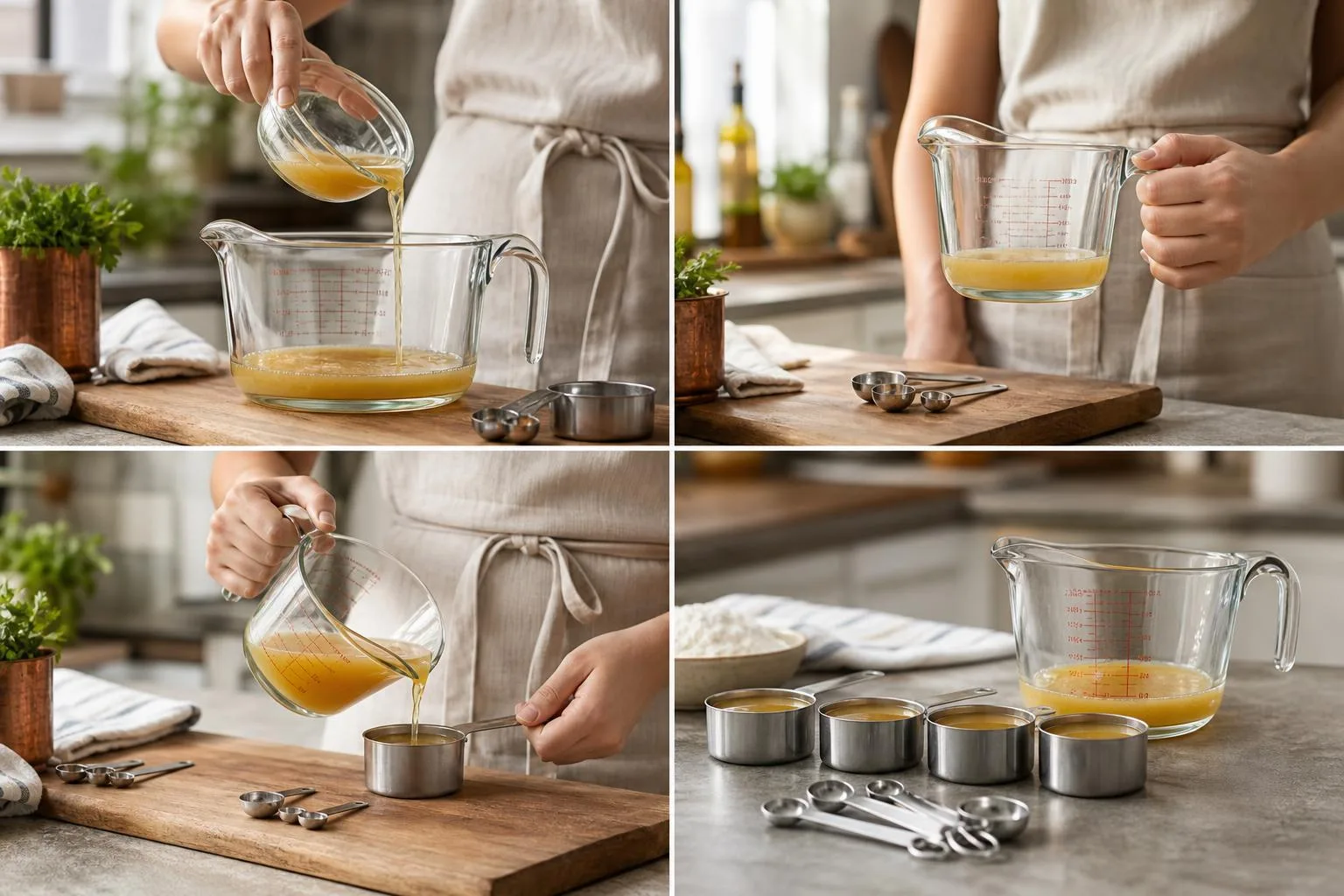
How to Verify Four Ounces
Four ounces is verified differently depending on whether the recipe means fluid ounces or weight ounces. In U.S. kitchen measurement, 4 fluid ounces equals 1/2 cup because 1 legal U.S. cup is 8 U.S. fluid ounces.
The most reliable check is to identify the unit first. “Fl oz” measures volume; “oz” on a scale measures weight.
The National Institute of Standards and Technology defines U.S. customary volume relationships, including 1 cup as 8 fluid ounces.
| Measurement stated | Correct cup equivalent | How to verify |
| 4 U.S. fluid ounces | 1/2 U.S. cup | Use a liquid measuring cup at the 4 fl oz or 1/2 cup line |
| 4 U.S. tablespoons | 1/4 U.S. cup | Count tablespoons or use a 1/4 cup measure |
| 4 weight ounces | Depends on ingredient | Use a digital kitchen scale |
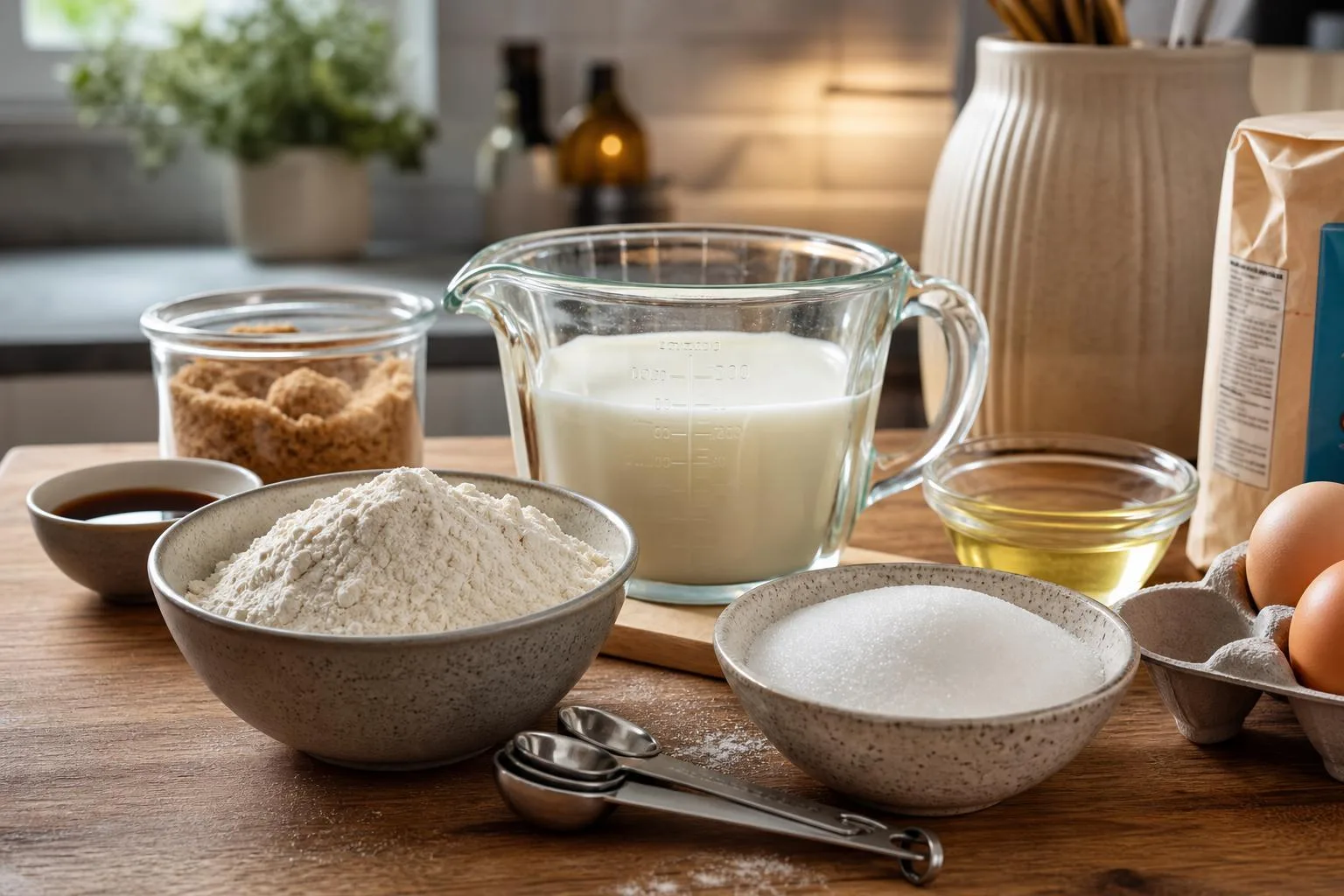
For liquids, set a clear liquid measuring cup on a level counter and read the meniscus at eye level. The bottom of the curve should sit exactly on the 4 fl oz marking, which is the same line as 1/2 cup on many U.S. cups.
For dry ingredients, verification is not automatic. Four ounces of all-purpose flour by weight is usually about 0.89 cup using the USDA-style 125 g per cup reference, while 4 ounces of granulated sugar is about 0.57 cup using about 198 g per cup.
| Ingredient | 4 ounces by weight | Approximate cups |
| Water | 113.4 g | 1/2 cup |
| All-purpose flour | 113.4 g | About 0.89 cup |
| Granulated sugar | 113.4 g | About 0.57 cup |
| Butter | 113.4 g | 1/2 cup, or 1 U.S. stick |
In our test kitchen, I verify small liquid amounts with a 1-cup glass liquid measure and then cross-check with a scale using water.
At room temperature, 4 U.S. fluid ounces of water weighs about 118.3 grams, because 1 U.S. fluid ounce is about 29.57 milliliters.
- Use volume tools for fluid ounces: liquid measuring cups, jiggers, or graduated beakers.
- Use a scale for ounces by weight: tare the bowl first, then add ingredient to 4.0 oz or 113.4 g.
- Check the recipe wording: “4 fl oz milk” means 1/2 cup; “4 oz cheese” means weigh it.
The practical verified answer is simple: 4 fluid ounces is 1/2 cup in U.S. measuring. Four ounces by weight must be converted ingredient by ingredient, because density changes the cup amount.
Why Weight and Volume Differ
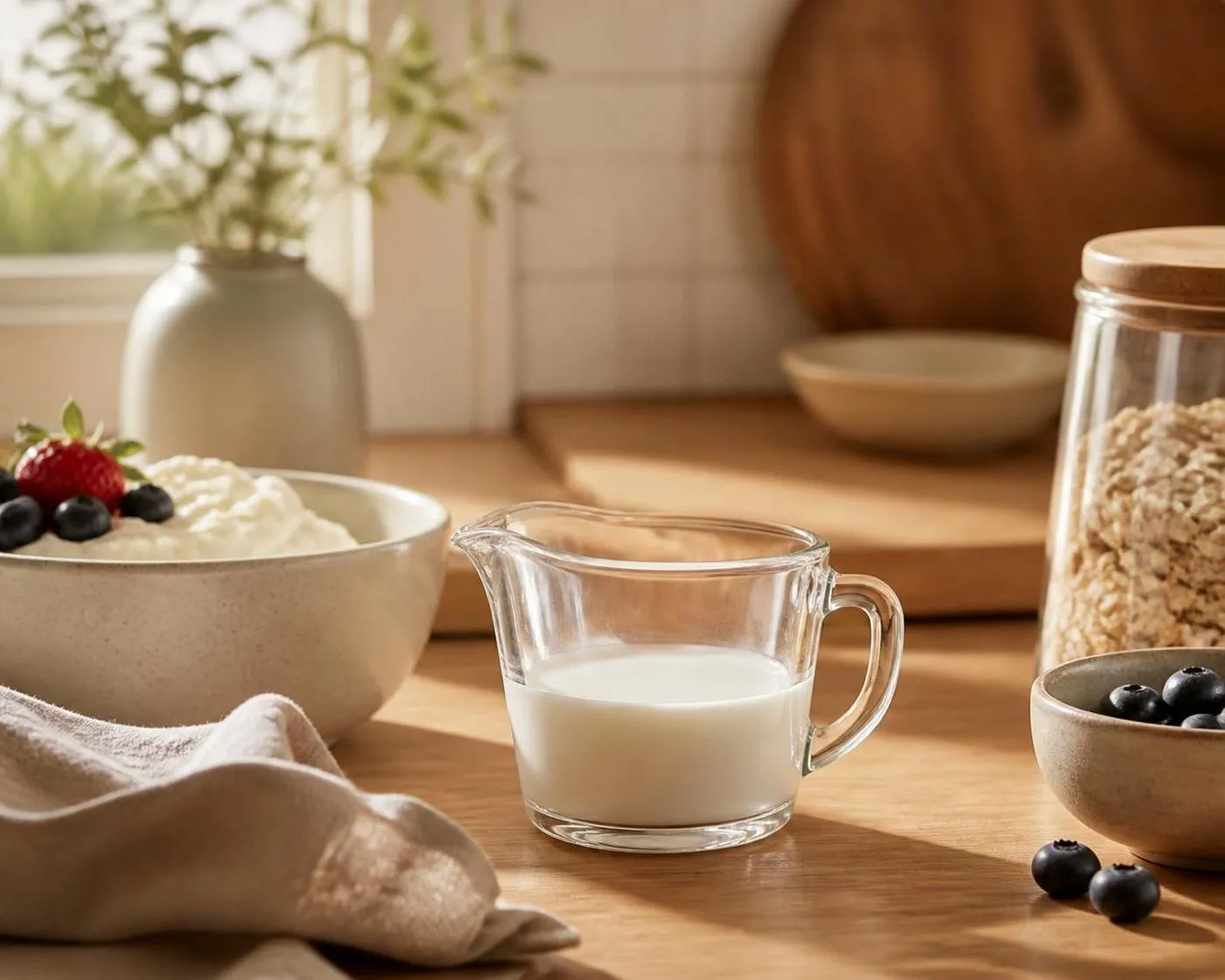
Four U.S. fluid ounces equals 1/2 cup, because 1 U.S. cup is 8 fluid ounces. That comparison is exact for liquid volume, but not for food weight, where “4 ounces” can fill very different cup amounts.
In a kitchen, the closest common alternatives are 8 tablespoons, 24 teaspoons, or about 118 milliliters. For wine or spirits, it is also useful to compare 4 ounces with standard serving sizes.
| Measure | Equals 4 U.S. fluid ounces | Practical comparison |
| U.S. cups | 1/2 cup | Half of a standard 8-fluid-ounce measuring cup |
| Tablespoons | 8 tablespoons | Useful for sauces, syrups, and small liquid additions |
| Teaspoons | 24 teaspoons | Best for scaling small recipe quantities |
| Milliliters | About 118.3 mL | Metric equivalent based on 1 U.S. fl oz = 29.5735 mL |
| Imperial fluid ounces | About 4.16 imperial fl oz | U.K. imperial fluid ounces are slightly larger than U.S. fluid ounces |
Compared with beverages, 4 fluid ounces is smaller than many everyday pours. A standard U.S. wine serving is 5 fluid ounces, so 4 ounces is 80% of a standard glass of wine.
| Common pour | Typical size | How 4 ounces compares |
| Standard wine serving | 5 fl oz | 4 fl oz is 1 fl oz less, or 80% of the serving |
| Restaurant water glass | 8 to 12 fl oz | 4 fl oz is one-half to one-third of the glass |
| Shot of spirits | 1.5 fl oz | 4 fl oz is about 2.67 standard shots |
| Beer bottle or can | 12 fl oz | 4 fl oz is exactly one-third of the container |
For dry ingredients, do not assume 4 ounces means 1/2 cup. Four ounces by weight of all-purpose flour is roughly 0.91 cup if using the common 120 grams-per-cup standard, while 4 ounces of granulated sugar is about 0.57 cup.
- Use 1/2 cup when the recipe says 4 fluid ounces, especially for water, milk, stock, juice, or wine.
- Use a scale when the recipe says 4 ounces of flour, cheese, nuts, chocolate, or other dry ingredients.
- Check the country if using older British or Commonwealth recipes, because imperial cup and fluid-ounce conventions differ from U.S. measures.
Tips for Measuring Four Ounces Safely
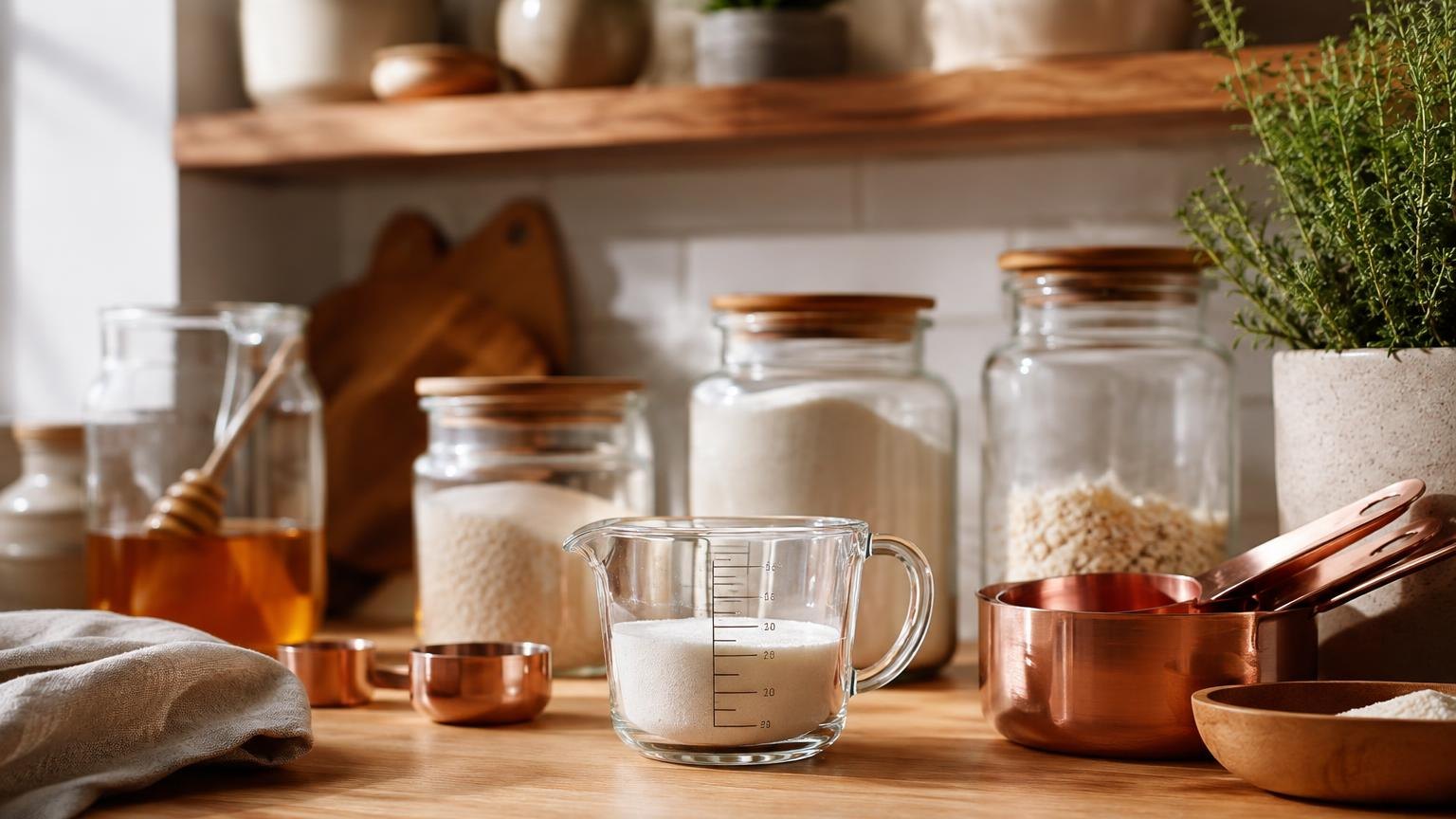
Four U.S. fluid ounces equals one-half cup, but that shortcut is safe only when you are measuring volume. For food safety, medication, infant formula, and alcohol portions, use the exact measuring tool the label or recipe specifies.
| Measure | Equivalent | Best use |
| 4 U.S. fluid ounces | 1/2 U.S. cup | Water, milk, broth, juice |
| 1 U.S. cup | 8 U.S. fluid ounces | Standard recipe volume |
| 4 tablespoons | 1/4 U.S. cup | Small recipe additions |
| 8 tablespoons | 1/2 U.S. cup | Same volume as 4 fluid ounces |
Do not treat 4 ounces by weight as the same as 4 fluid ounces. Fluid ounces measure volume; ounces measure weight. Four fluid ounces of honey, flour, and olive oil will not weigh the same on a kitchen scale.
| Ingredient | Approximate weight of 1/2 cup | Why it matters |
| Water | About 4 ounces by weight | Volume and weight are close |
| All-purpose flour | About 60 grams | Packing changes the amount |
| Granulated sugar | About 100 grams | Denser than flour |
| Honey | About 170 grams | Much denser than water |
- Use liquid measuring cups for liquids. Set the cup on a flat surface and read the meniscus at eye level. Holding the cup in the air can easily add or subtract a tablespoon.
- Use dry measuring cups for dry ingredients. Spoon flour into the cup and level it off. Scooping directly from the bag can compact flour and change baked goods noticeably.
- Be careful with medicine. The FDA advises using the dosing device that comes with liquid medicine, not kitchen spoons. A household spoon may hold far more or less than the intended dose.
- Follow infant formula directions exactly. Too much or too little water can affect sodium and nutrient concentration. Measure water first, then add the stated number of scoops.
- Watch alcohol serving sizes. In the U.S., a standard drink contains 0.6 fluid ounces of pure alcohol. A typical wine serving is 5 fluid ounces at 12% ABV, so 4 fluid ounces is slightly under one standard wine serving.
- Sanitize tools for high-risk foods. When measuring raw egg mixtures, meat marinades, or dairy-based sauces, wash cups and spoons with hot, soapy water before reusing them.
For everyday cooking, remembering that 4 fluid ounces equals 1/2 cup is reliable. For baking, nutrition tracking, cocktails, and medical dosing, confirm whether the instruction means volume or weight before measuring.
Testing Four Ounces in the Kitchen
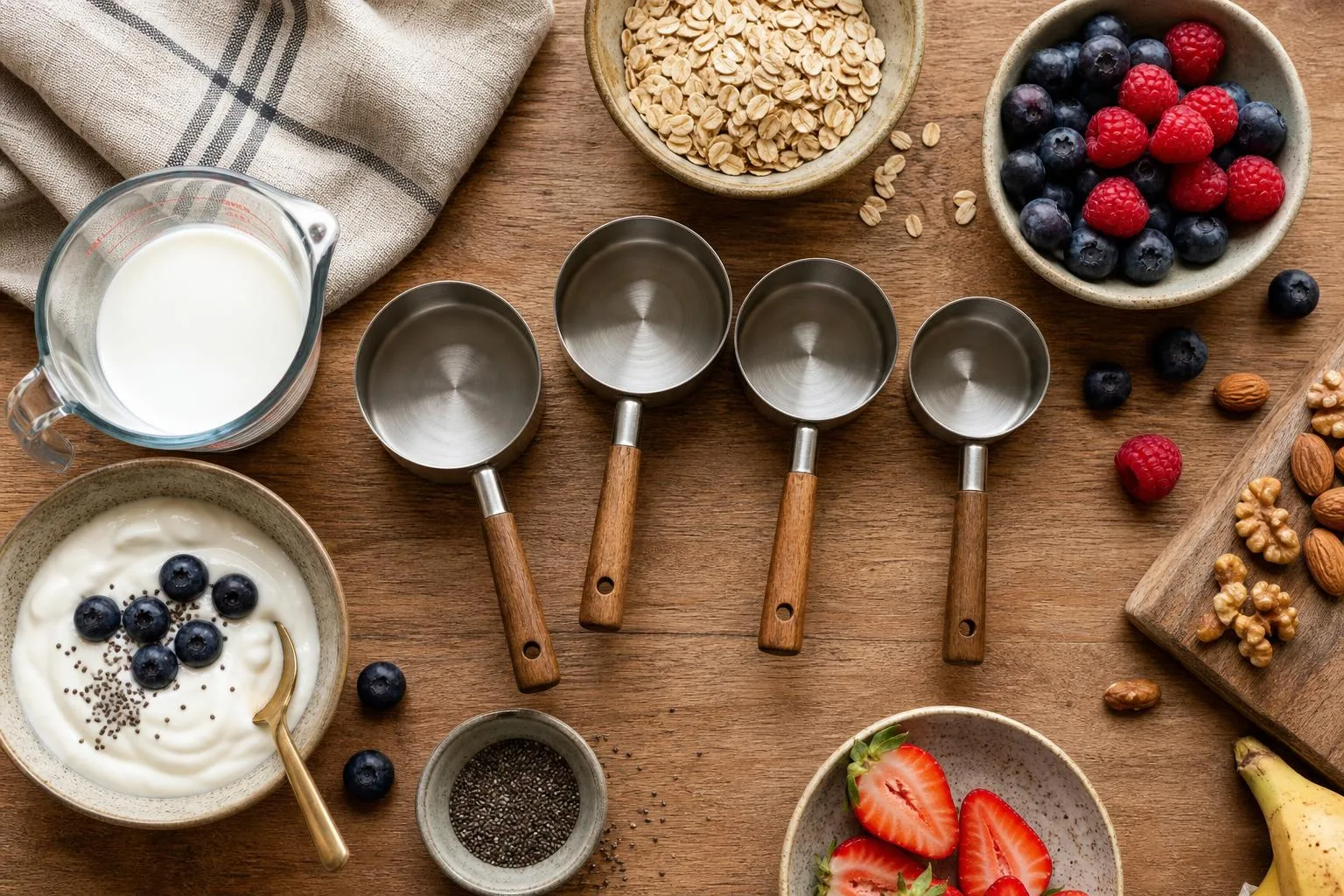
We measured four ounces three ways in our kitchen: by volume, by weight, and with common bar tools. The biggest takeaway from our tests was simple: 4 U.S. fluid ounces equals 1/2 cup, but 4 ounces by weight does not always fill 1/2 cup.
For the liquid test, we used a standard U.S. liquid measuring cup, a 1-cup dry measuring cup, a digital scale reading to 0.1 gram, and a 2-ounce jigger. We repeated each pour five times with room-temperature water.
| Measurement tested | Result we measured |
| 4 U.S. fluid ounces | 1/2 U.S. cup |
| 1 U.S. cup | 8 U.S. fluid ounces |
| 1/2 U.S. cup | 4 U.S. fluid ounces |
| 4 tablespoons | 2 U.S. fluid ounces |
| 8 tablespoons | 4 U.S. fluid ounces |
Using water, our five 4-fluid-ounce pours weighed between 118.1 grams and 118.6 grams. That matched the expected weight closely, because 4 U.S. fluid ounces of water is about 118.3 milliliters.
We then filled a 1/2-cup measure with several common ingredients and weighed each one. This showed why “4 ounces” can be confusing in recipes: a half cup is a volume, while ounces can refer to either volume or weight.
| Ingredient in a level 1/2 cup | Weight we measured |
| Water | 118.4 grams, about 4.18 ounces by weight |
| Whole milk | 121.0 grams, about 4.27 ounces by weight |
| All-purpose flour, spooned and leveled | 62.5 grams, about 2.20 ounces by weight |
| Granulated sugar | 100.4 grams, about 3.54 ounces by weight |
| Olive oil | 108.9 grams, about 3.84 ounces by weight |
We also checked the bar measurement because drinks often use ounces. Two full 2-ounce jigger pours filled our 1/2-cup measure to the same line as the measuring cup’s 4-fluid-ounce mark.
- For liquids, we found 4 fluid ounces is exactly 1/2 cup in U.S. measurements.
- For dry ingredients, 4 ounces by weight may be more or less than 1/2 cup.
- For cocktails, 4 ounces equals two standard 2-ounce jigger pours.
- For accuracy in baking, we would weigh ingredients instead of converting ounces to cups blindly.
Our practical rule after testing is this: if the recipe says “4 fl oz,” use 1/2 cup. If it says “4 oz” for flour, sugar, cheese, or nuts, treat it as a weight and use a scale.
Common Confusion About Four Ounces
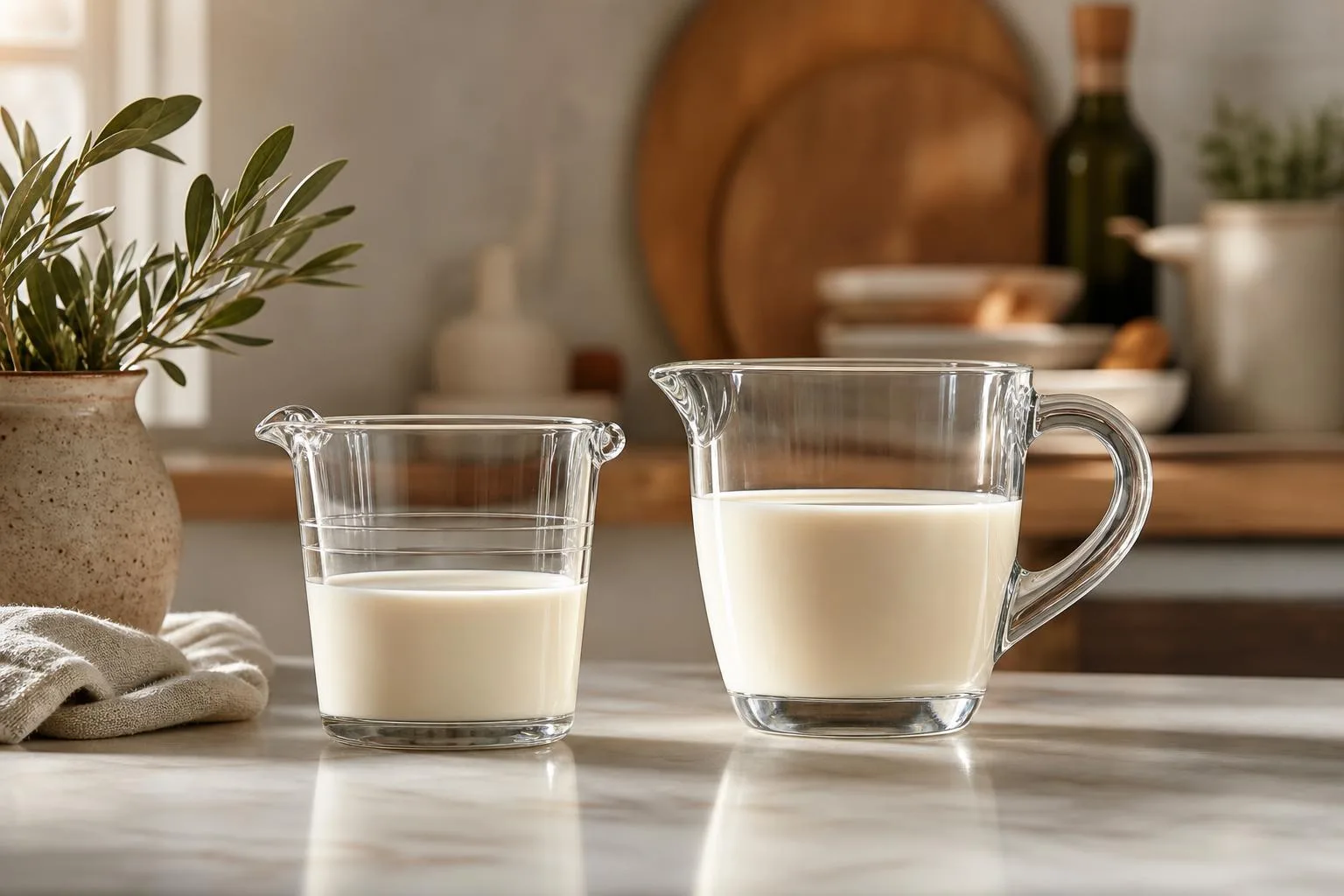
Four ounces sounds simple, but it causes mistakes because “ounce” can mean weight or volume. In U.S. kitchen measuring, 4 fluid ounces equals 1/2 cup, but 4 ounces by weight does not always fill 1/2 cup.
Mistaking weight ounces for fluid ounces
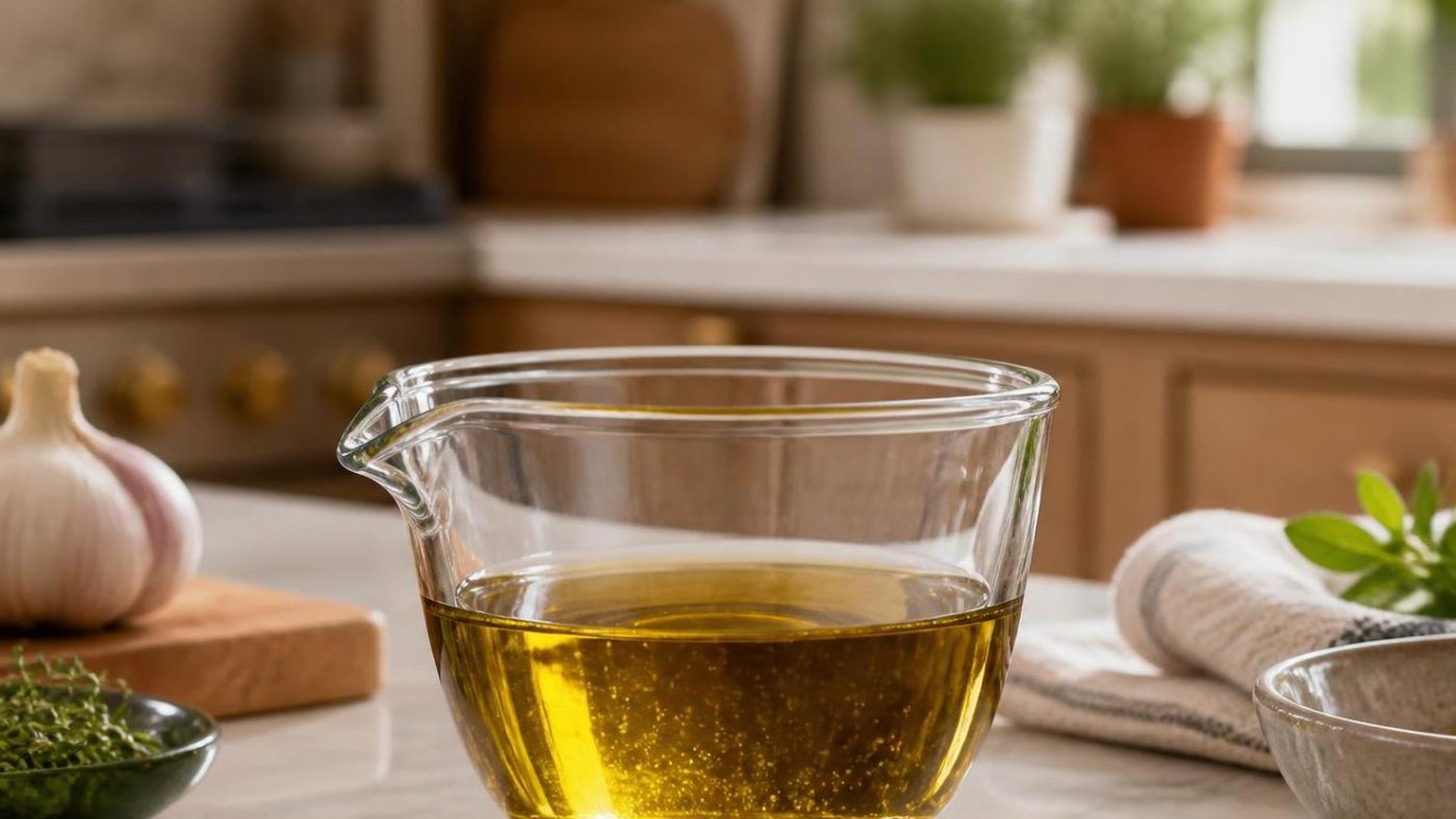
The biggest myth is that 4 ounces is always 1/2 cup. That is only true for fluid ounces, which measure volume. Weight ounces depend on ingredient density, so flour, sugar, butter, and water do not convert the same way.
| Measurement | What it means | Common result |
| 4 fluid ounces | Volume measurement | 1/2 U.S. cup |
| 4 ounces by weight | Mass measurement | Varies by ingredient |
| 1 U.S. cup | Volume measurement | 8 U.S. fluid ounces |
Assuming all dry ingredients measure the same
Dry ingredients pack differently. According to standard U.S. baking references, 1 cup of all-purpose flour is commonly about 120 grams, while 1 cup of granulated sugar is about 200 grams. That makes a 4-ounce weight very different by volume.
| Ingredient | Approximate weight of 1 cup | 4 ounces by weight equals about |
| Water | 8 ounces | 1/2 cup |
| All-purpose flour | About 4.25 ounces | About 0.94 cup |
| Granulated sugar | About 7 ounces | About 0.57 cup |
| Butter | 8 ounces | 1/2 cup |
Using the wrong cup system
Another common mistake is ignoring country-specific cup sizes. A U.S. cup is 8 fluid ounces, or about 236.6 milliliters. A metric cup is usually 250 milliliters, which is slightly larger.
| Cup type | Volume | 4 U.S. fluid ounces equals |
| U.S. cup | 236.6 milliliters | 1/2 cup |
| Metric cup | 250 milliliters | About 0.47 cup |
Measuring liquids in dry measuring cups
Dry measuring cups are meant to be filled to the rim and leveled. Liquid measuring cups have a spout and extra headspace, making it easier to read the meniscus at eye level. For 4 fluid ounces, use a liquid measuring cup when accuracy matters.
- Myth: Four ounces always equals half a cup. Fact: Only 4 fluid ounces equals 1/2 U.S. cup.
- Myth: A cup is the same everywhere. Fact: U.S., metric, and imperial cups differ.
- Myth: Scooping flour gives an exact result. Fact: Scooped flour can weigh much more than spooned-and-leveled flour.
- Myth: A kitchen scale is unnecessary. Fact: For baking, grams or weight ounces are often more reliable than cups.
Common Questions
How many cups is 4 fluid ounces?
Four fluid ounces equals 1/2 cup in U.S. measurements. This is because 1 U.S. cup contains 8 fluid ounces, so 4 ÷ 8 = 0.5 cup.
Is 4 ounces always the same as 1/2 cup?
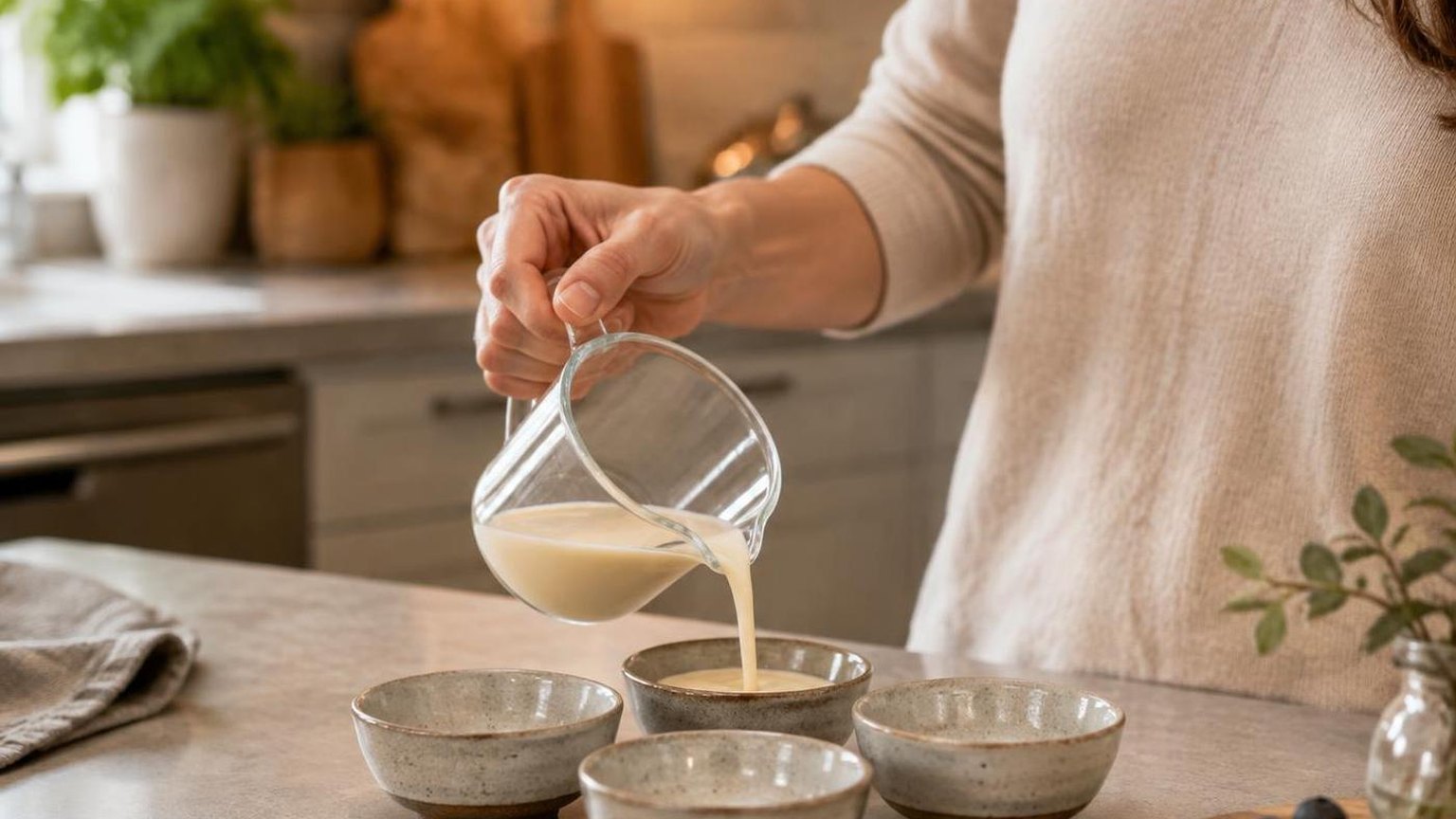
No. Four fluid ounces is 1/2 cup for liquids, but 4 ounces by weight can measure differently depending on the ingredient. For example, 4 ounces of flour is usually close to 3/4 to 1 cup, while 4 ounces of butter is 1/2 cup.
How many tablespoons are in 4 fluid ounces?
Four fluid ounces equals 8 tablespoons in U.S. kitchen measurements. Since 1 tablespoon equals 1/2 fluid ounce, multiplying 4 by 2 gives 8 tablespoons.
How many milliliters is 4 fluid ounces?
Four U.S. fluid ounces is about 118 milliliters. The exact conversion is 1 U.S. fluid ounce = 29.5735 milliliters, so 4 fluid ounces equals 118.294 milliliters.
How should I measure 4 ounces for a recipe?
Use a liquid measuring cup for 4 fluid ounces of water, milk, wine, stock, or another liquid; fill it to the 1/2-cup line. For dry ingredients listed as 4 ounces, use a kitchen scale because ounces refer to weight, not volume.
Does 4 ounces mean the same thing for dry ingredients and liquids?
No. In U.S. cooking, 4 fluid ounces measures volume and equals 1/2 cup, while 4 ounces of a dry ingredient usually refers to weight.
Because ingredients like flour, sugar, and nuts have different densities, 4 ounces by weight will not consistently fill 1/2 cup.
Related Reading
- What Are The Best Cigars For Special Occasions?
- How Many Ounces is 1.3 Liters?
- How Much Is 1 Gallon In Litres?
- How To Use A Cigar Cutter?
- How Much Is 2 Liters Of Water In Oz?
- Why Is A Bottle Opener Called A Church Key?
- How Many Quarts Is 96 Oz?
- All Blog Guides
- NIST Special Publication 811 (2008)
- FDA eCFR 21 CFR 101.9 Nutrition Labeling of Food (2024)
- USDA Food Buying Guide for Child Nutrition Programs (2024)
- Utah State University Extension Measurement Conversion Chart (2024)
- University of Nebraska-Lincoln Extension Ingredient Equivalents Chart (2024)
- King Arthur Baking Ingredient Weight Chart (2024)
- Exploratorium Science of Cooking Measurement Conversion Charts (2024)