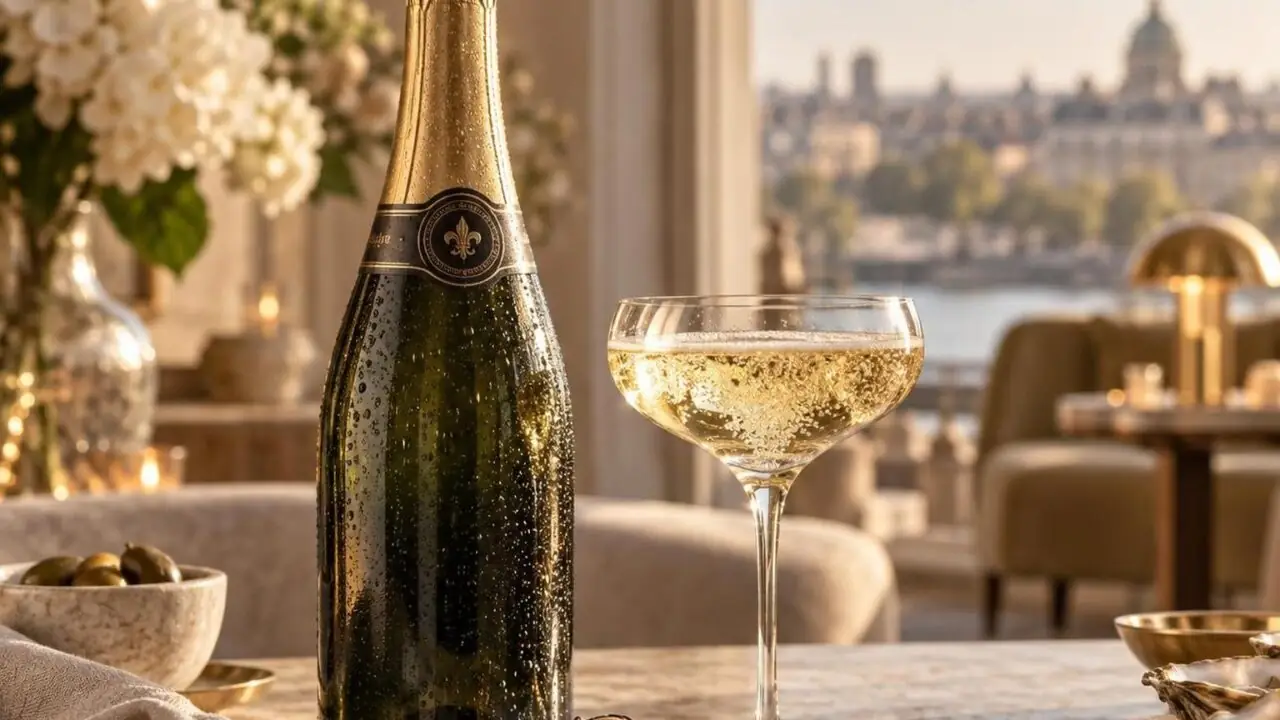
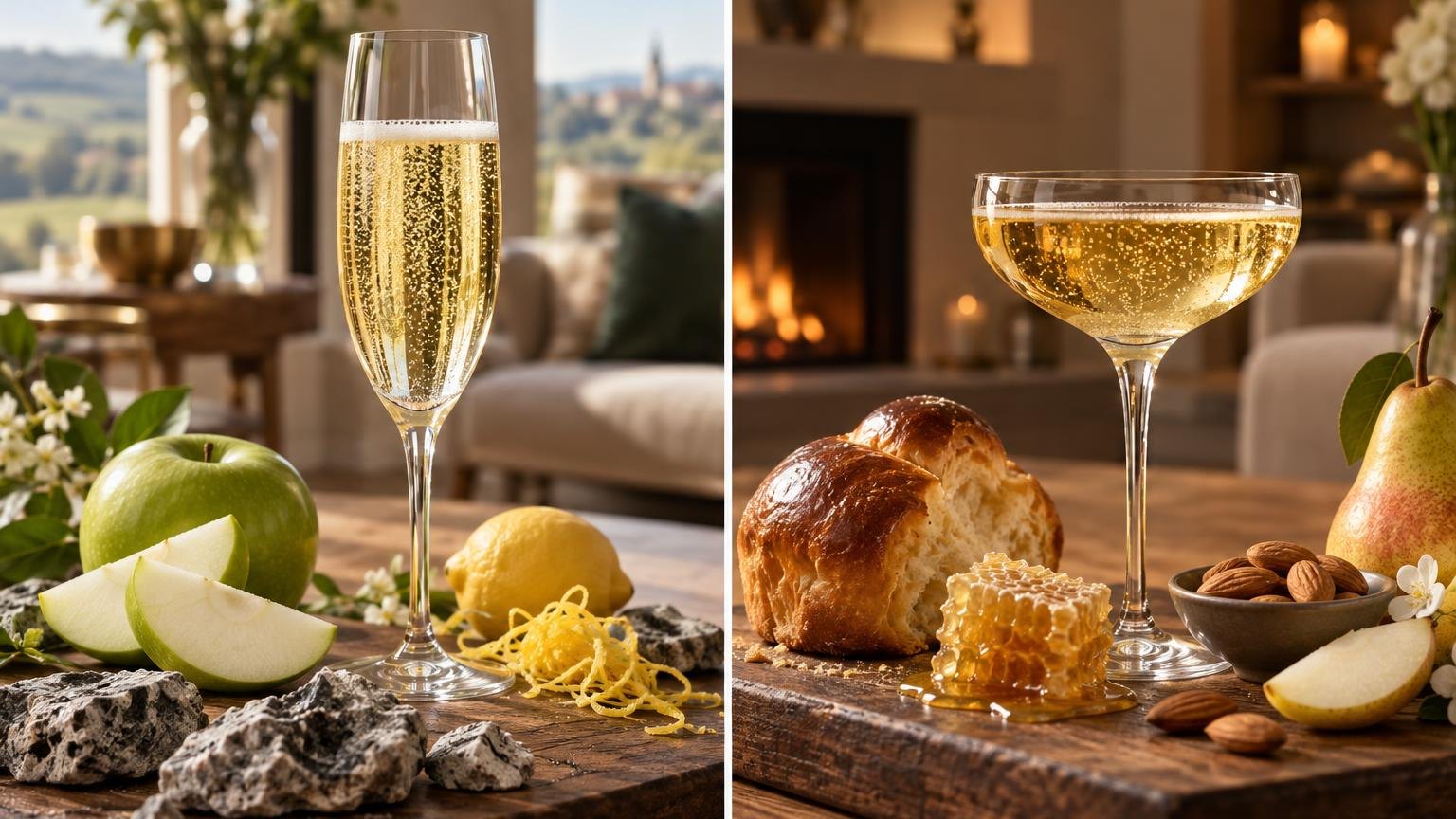
How Does Champagne Taste? is answered by its brisk acidity, fine bubbles, and layered flavors of green apple, lemon zest, brioche, chalk, almond, and sometimes honey or toast.
Non-vintage brut Champagne usually tastes dry, lively, and savory, with about 0–12 grams per liter of residual sugar balancing its sharpness.
Vintage bottles often add deeper notes: baked apple, hazelnut, pastry cream, mushroom, and smoky minerality from longer aging on lees. Blanc de blancs feels citrusy and precise; blanc de noirs tastes broader, with red apple, pear, and subtle spice.
What Champagne Tastes Like First
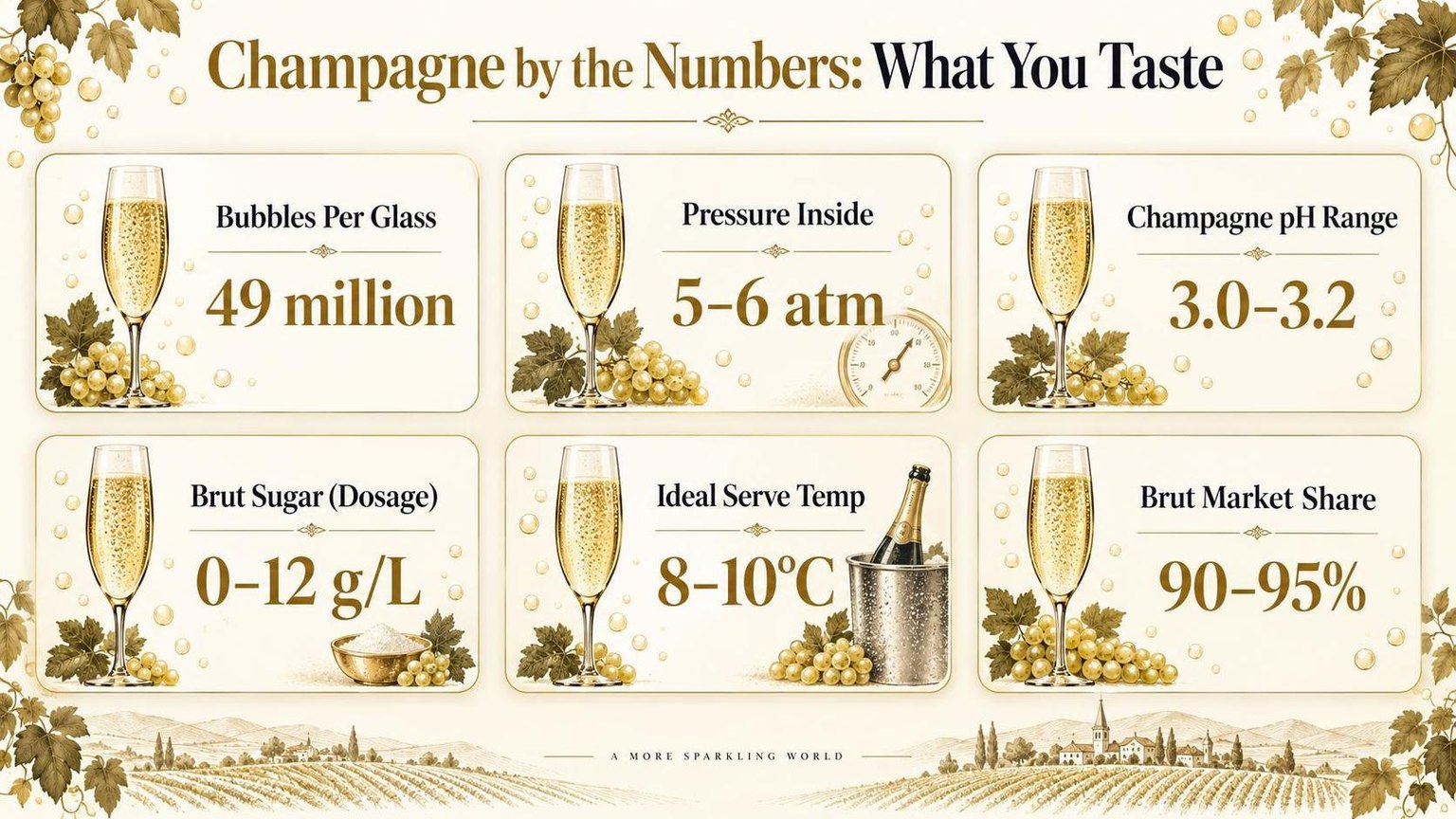
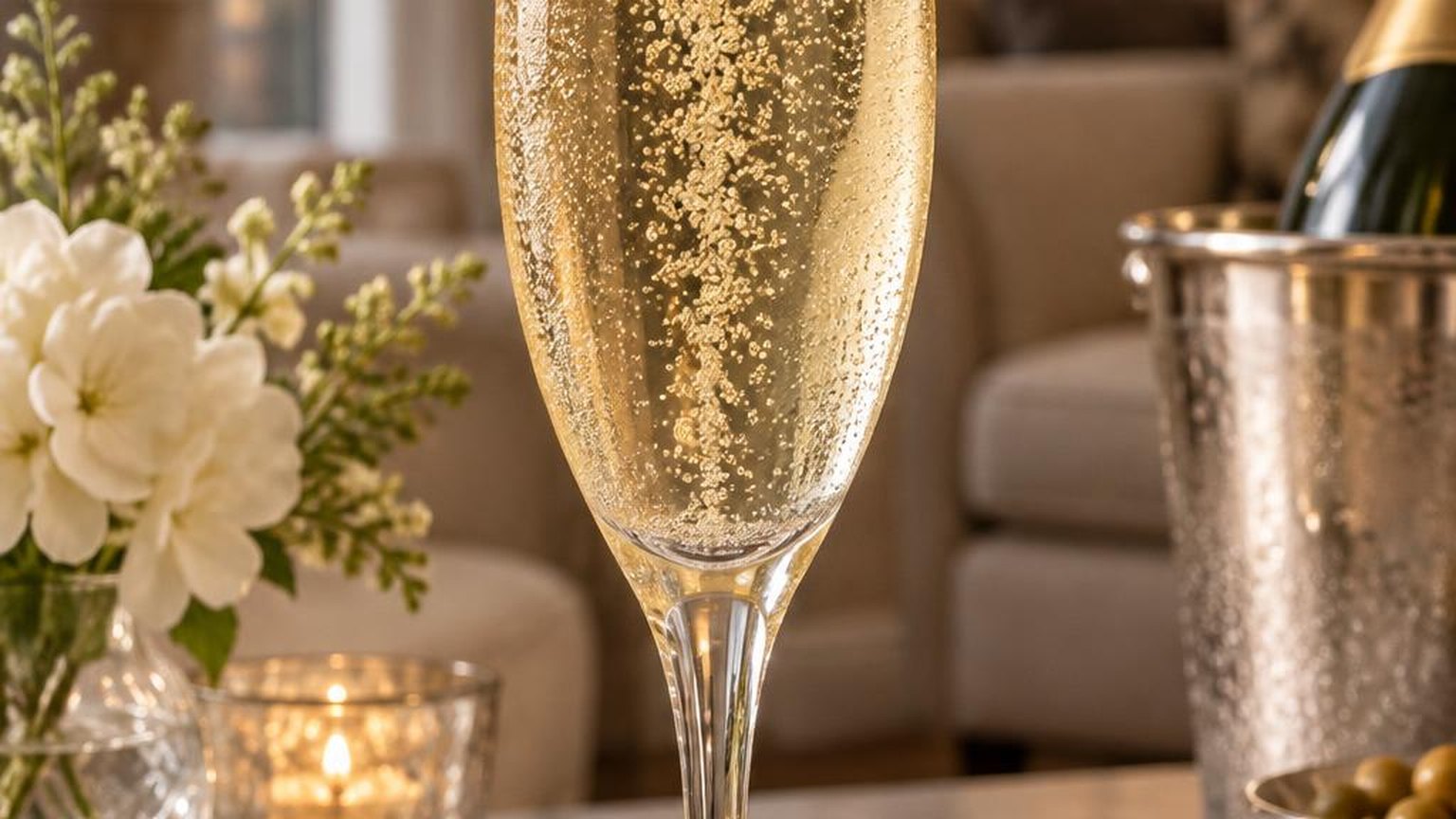
The first sip of Champagne delivers a sensory sequence unlike any still wine. Effervescence hits your palate before flavor registers, with approximately 49 million bubbles released from a single glass over its lifespan.
Carbon dioxide dissolved at 5–6 atmospheres of pressure creates that initial tingling. The bubbles carry volatile aroma compounds directly to your olfactory receptors, amplifying perception before your taste buds fully engage.
The Opening Sensation
Acidity registers first. Champagne’s pH ranges from 3.0 to 3.2, making it one of the most acidic wines produced anywhere. That bright, almost startling sharpness is the hallmark entry point.
Within two seconds, citrus and green apple notes emerge. These come primarily from malic and tartaric acid interacting with the wine’s residual sugar, even in Brut styles containing 0–12 g/L dosage.
Sweetness Levels Shape First Impressions
Dosage — sugar added after disgorgement — fundamentally alters what you taste on first contact. The seven official Champagne sweetness categories span a wide range.
| Style | Sugar (g/L) | First Impression |
| Brut Nature | 0–3 | Razor-sharp acidity, mineral, austere |
| Extra Brut | 0–6 | Lean, citrus-driven, dry |
| Brut | 0–12 | Balanced acidity with subtle fruit |
| Extra Dry (Extra Sec) | 12–17 | Lightly sweet, rounded edges |
| Sec | 17–32 | Noticeably sweet, softer acidity |
| Demi-Sec | 32–50 | Dessert-like sweetness, rich fruit |
| Doux | 50+ | Fully sweet, honeyed, opulent |
Brut accounts for roughly 90–95% of all Champagne produced. Most first-time drinkers encounter this style, where sugar is perceptible only as a softening agent rather than overt sweetness.
Temperature Affects Initial Taste
Serving temperature dramatically shifts first impressions. The CIVC (Comité Interprofessionnel du Vin de Champagne) recommends 8–10°C for non-vintage and 10–12°C for vintage cuvées.
- Below 6°C: carbonation feels aggressive, flavors muted, acidity dominates harshly
- 8–10°C: balanced mousse, clean citrus and brioche notes emerge clearly
- Above 14°C: bubbles dissipate rapidly, wine tastes flat and overly alcoholic
The Textural Element
Mousse — the collective sensation of bubbles on your palate — defines Champagne’s texture from the first moment.
Fine, persistent bubbles indicate longer aging on lees, with non-vintage requiring a minimum 15 months and vintage at least 36 months.
Aged Champagnes deliver a creamier, smaller-bubbled mousse. Younger bottlings feel more prickly and assertive. This textural difference registers before any specific flavor note, making mousse quality the true first impression of any Champagne.
Core Flavors in Champagne
Champagne’s flavor profile emerges from three authorized grape varieties, a cool-climate terroir averaging just 10.2°C annually, and a secondary fermentation that generates approximately 49 million bubbles per bottle.
These factors create a taste architecture unlike any other sparkling wine.
Primary Fruit Flavors
The grape blend dictates the fruit character. Each of Champagne’s three permitted varieties contributes distinct flavor signatures that shift depending on vintage conditions and ripeness levels.
| Grape Variety | Plantings (% of vineyard) | Primary Flavors |
| Pinot Noir | 38% | Red apple, cherry, strawberry |
| Meunier | 32% | Pear, plum, biscuit |
| Chardonnay | 30% | Citrus, white peach, chalk |
Blanc de Blancs (100% Chardonnay) leans toward lemon zest, green apple, and white flower notes. Blanc de Noirs (Pinot Noir and/or Meunier only) delivers richer stone fruit and red berry character.
Acidity and Minerality
Champagne grapes are harvested at pH levels between 2.9 and 3.1—among the lowest in winemaking. This fierce acidity gives the wine its signature crispness and mouthwatering finish.
The region’s chalk subsoil, deposited during the Cretaceous period roughly 70 million years ago, contributes a flinty, saline minerality. Tasters frequently describe this as wet stone or crushed seashell.
Autolytic and Yeast-Derived Flavors
Non-vintage Champagne must age on lees for a minimum of 12 months; vintage Champagne requires at least 36 months. Many prestige cuvées age 5–10 years or longer on lees before disgorgement.
During this extended lees contact, dead yeast cells break down through autolysis. This process releases amino acids and mannoproteins that generate brioche, toasted almond, and fresh bread dough flavors.
Dosage and Sweetness Levels
The dosage—a small addition of sugar solution after disgorgement—calibrates the final sweetness. It profoundly shapes how the other flavors are perceived on the palate.
| Style | Residual Sugar (g/L) | Flavor Impact |
| Brut Nature | 0–3 | Pure, razor-sharp acidity, mineral-driven |
| Extra Brut | 0–6 | Lean, citrus-focused, chalky finish |
| Brut | 0–12 | Balanced, broadest flavor expression |
| Extra Dry | 12–17 | Softer acidity, riper fruit notes |
| Demi-Sec | 32–50 | Honeyed, tropical, candied citrus |
Brut accounts for over 90% of all Champagne produced. At 6–12 g/L residual sugar, it balances the wine’s naturally high acidity without masking fruit or autolytic complexity.
Tertiary and Aged Notes
With bottle age beyond 10 years, Champagne develops oxidative complexity: honey, dried apricot, marzipan, and umami-like mushroom notes. The mousse softens, bubbles become finer, and the palate gains a creamy, almost viscous texture.
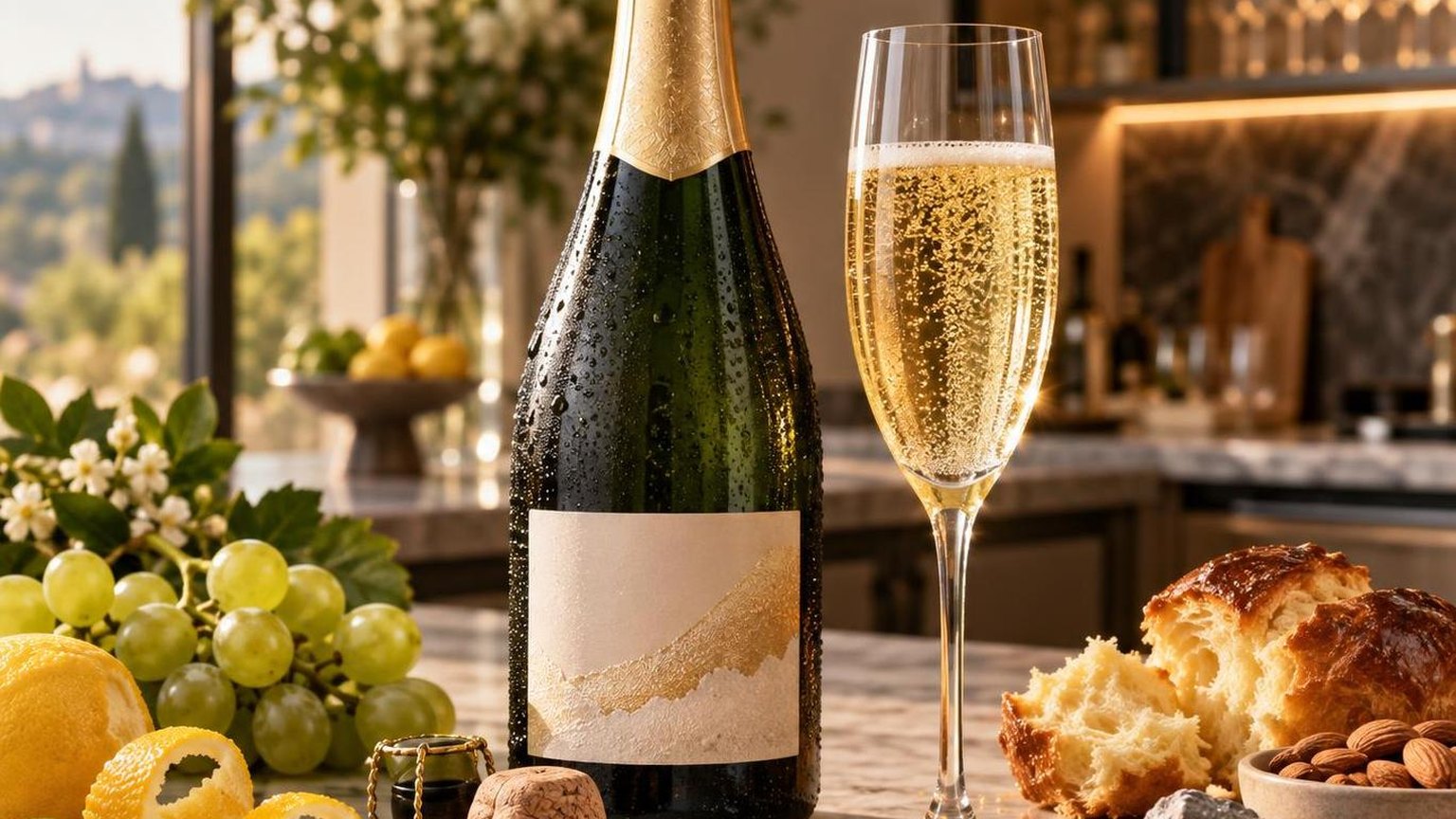
How Sweetness Changes Champagne
Sweetness in Champagne is determined by the dosage—a mixture of wine and sugar added after disgorgement.
This single variable transforms the entire flavor profile, shifting perception of acidity, fruit character, and mouthfeel across seven officially recognized sweetness categories.
The European Union and Comité Champagne regulate these categories by residual sugar content, measured in grams per liter (g/L).
| Category | Residual Sugar (g/L) | Taste Profile |
| Brut Nature | 0–3 | Bone-dry, razor-sharp acidity, mineral-driven |
| Extra Brut | 0–6 | Very dry, lean, pronounced chalky notes |
| Brut | 0–12 | Dry with subtle roundness, most common style |
| Extra Dry (Extra Sec) | 12–17 | Off-dry, softened acidity, riper fruit tones |
| Sec (Dry) | 17–32 | Noticeably sweet, honeyed, broader texture |
| Demi-Sec | 32–50 | Sweet, rich, dessert-friendly, candied fruit |
| Doux | 50+ | Very sweet, rare, lush and syrupy |
Brut accounts for roughly 90–95% of all Champagne production. Most major houses—Moët & Chandon, Veuve Clicquot, Laurent-Perrier—set their Brut dosage between 6 and 9 g/L.
How Dosage Interacts with Acidity
Champagne’s base wine typically has a pH between 3.0 and 3.1, making it among the most acidic wines produced anywhere. Dosage sugar counterbalances that sharp acidity on the palate.
At zero dosage, tartaric and malic acids dominate. The wine can taste austere, even aggressive, especially when young. Extended aging on lees—often 36 months or more—helps soften this perception through autolysis.
At 8–10 g/L, sugar rounds the mid-palate without registering as sweetness. Most tasters perceive this range as “dry” because the acidity masks the sugar entirely.
Impact on Fruit and Aroma Perception
- 0–3 g/L: Citrus peel, green apple, flint, and saline dominate. Fruit stays tightly coiled and secondary aromas (toast, brioche) emerge slowly.
- 6–9 g/L: Orchard fruit (pear, white peach) becomes more expressive. Baked pastry notes appear earlier in the wine’s development.
- 12–17 g/L: Tropical fruit hints surface—mango, guava. Acidity recedes, creating a rounder, more approachable impression.
- 32+ g/L: Candied citrus, quince paste, and honey take center stage. These styles pair with foie gras, fruit tarts, and blue cheese.
Temperature also affects sweetness perception. Serving a Demi-Sec at 6–8°C rather than 10–12°C suppresses sweetness and keeps the wine balanced on the palate.
The trend toward lower dosage has accelerated since the early 2000s.
Houses like Roederer dropped their Brut dosage from approximately 11 g/L to around 7–8 g/L over two decades, reflecting consumer demand for drier, more terroir-transparent styles.
Choosing a dosage level is ultimately choosing what you want Champagne to emphasize—its acidity, its fruit, or its texture. Each category delivers a fundamentally different drinking experience from the same base wine.
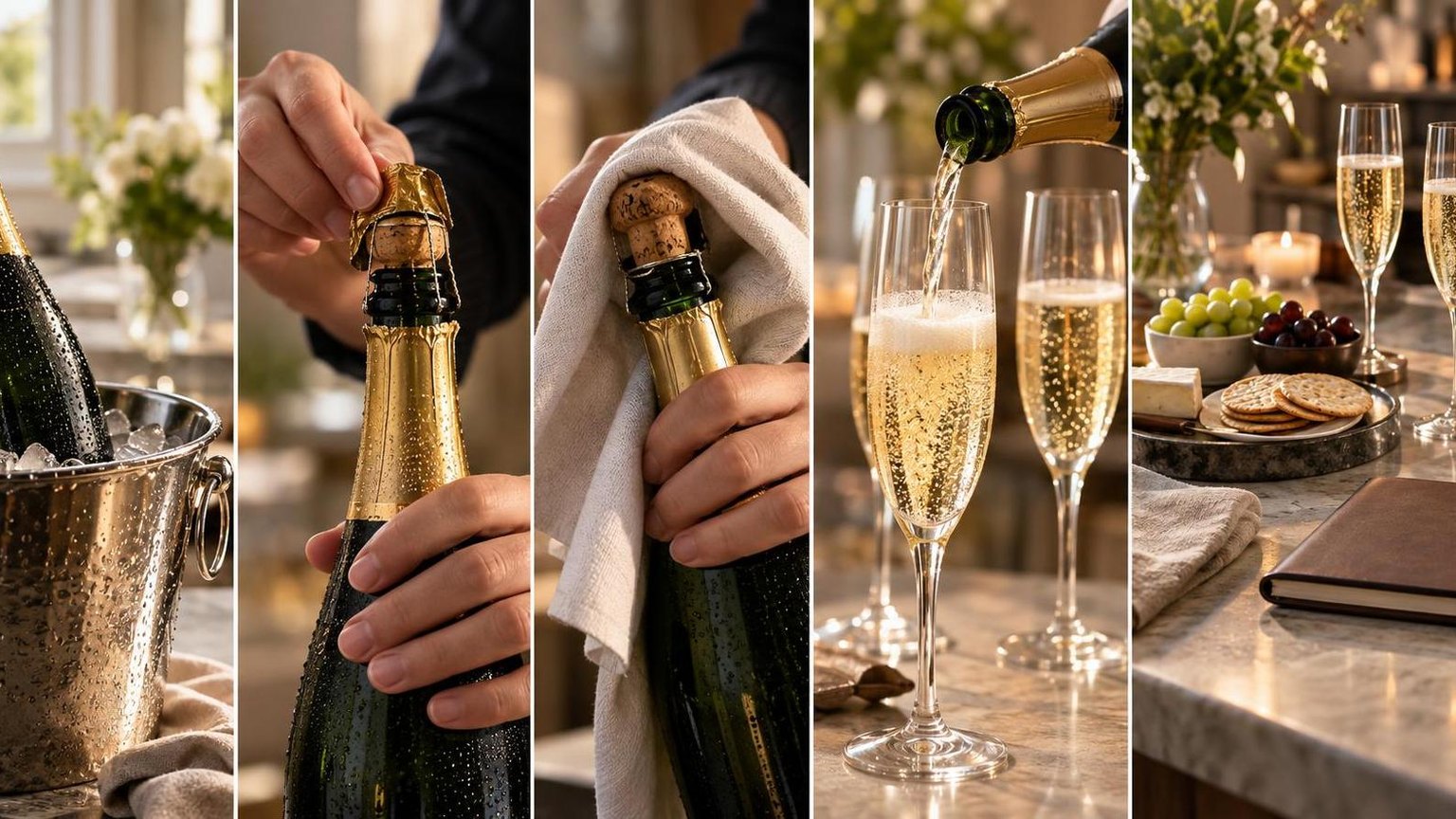
Why Champagne Tastes Bready
That distinctive bready, toasty character in Champagne isn’t accidental. It results from autolysis — the breakdown of dead yeast cells (lees) inside the sealed bottle during secondary fermentation and aging.
After the second fermentation converts sugar to CO₂ and alcohol, spent yeast cells remain trapped inside. Over months and years, enzymes within these cells break down proteins and lipids, releasing specific flavor compounds into the wine.
The Autolysis Process
Autolysis begins roughly 9 months after tirage (bottling for second fermentation). Yeast cell walls rupture, releasing mannoproteins, amino acids, and nucleotides directly into the wine. These compounds transform the flavor profile fundamentally.
Key compounds released during autolysis include glutathione (an antioxidant), polysaccharides that add body and mouthfeel, and amino acids that serve as precursors to Maillard-type reactions during extended aging.
Minimum Aging Requirements and Flavor Impact
Appellation rules dictate minimum lees contact. Longer aging produces more pronounced bready, brioche, and biscuit notes. The differences across categories are significant.
| Champagne Category | Minimum Lees Aging | Typical Autolytic Character |
| Non-Vintage | 12 months (15 months total aging) | Light biscuit, fresh bread dough |
| Vintage | 36 months minimum | Toasted brioche, hazelnut |
| Prestige Cuvée (e.g., Dom Pérignon) | Often 7–10 years | Deep toast, pastry cream, nougat |
| Crémant (other French sparkling) | 9 months | Minimal bready character |
| Cava (Reserva) | 15 months | Moderate bread crust |
Specific Compounds Behind the Bread
- Acetaldehyde: Contributes nutty, bruised-apple aromas that evolve into toasty notes with time.
- 2-acetyl-1-pyrroline: The same molecule responsible for the smell of freshly baked bread crust, detected at concentrations as low as 0.02 µg/L.
- Methionol: Produces cooked-potato and bready aromas; increases measurably after 18 months on lees.
- Mannoproteins: Don’t contribute aroma directly but enhance mouthfeel and stabilize CO₂, making bubbles finer and more persistent.
Why Other Sparkling Wines Taste Less Bready
Prosecco uses the Charmat (tank) method, completing secondary fermentation in large pressurized tanks within 30–60 days. Minimal lees contact means virtually no autolytic character develops.
This explains why Prosecco tastes primarily fruity and floral while Champagne delivers those signature brioche and toast notes. The method and the time on lees — not the grape variety alone — drive the difference.
A 2019 study published in Food Chemistry (Volume 275) confirmed that mannoproteins increase linearly during the first 5 years of lees aging, directly correlating with perceived creaminess and bready complexity in tasting panels.
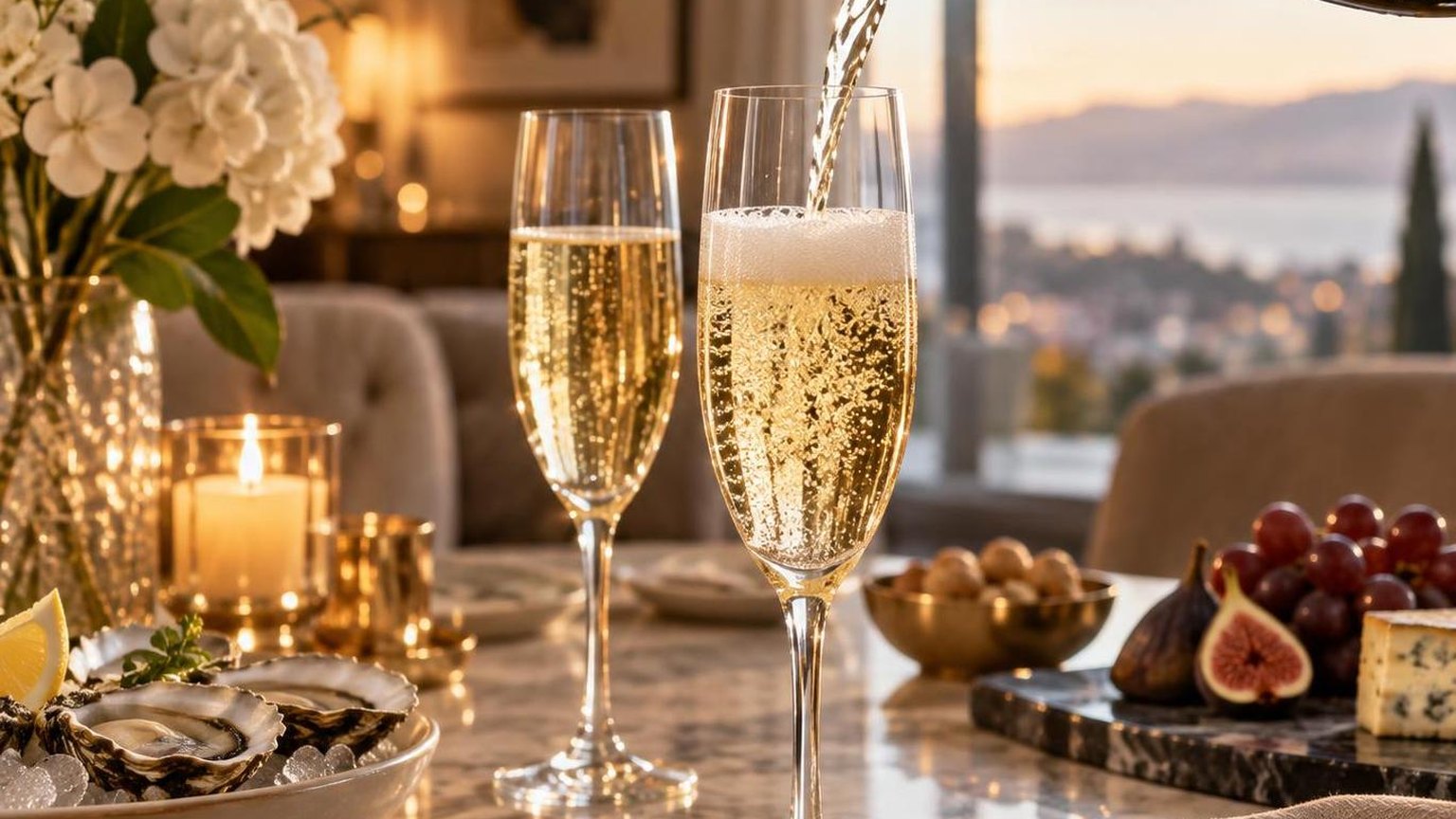
How Aging Changes Champagne Taste
Champagne undergoes profound flavor transformation during aging, driven by autolysis—the breakdown of dead yeast cells (lees) inside the bottle.
Non-vintage Champagne requires a minimum of 15 months on lees; vintage Champagne demands at least 36 months under EU regulations.
Many prestige cuvées far exceed these minimums. Dom Pérignon typically ages 7–8 years before disgorgement. Krug Grande Cuvée spends approximately 6 years on lees.
These extended periods fundamentally reshape the wine’s aromatic and textural profile.
Autolysis and Flavor Development
During autolysis, yeast cells release amino acids, mannoproteins, and polysaccharides into the wine. Mannoproteins increase perceived creaminess and mouthfeel richness. This process intensifies noticeably after 18–24 months on lees.
Research published in the Journal of Agricultural and Food Chemistry identified over 30 volatile compounds generated through autolysis, including benzaldehyde (almond notes) and phenylacetaldehyde (honey aromas).
Flavor Progression by Aging Duration
| Aging Period | Dominant Flavors | Texture |
| 15–24 months | Green apple, citrus, white flowers | Crisp, lean, sharp acidity |
| 3–5 years | Brioche, toasted almonds, pear | Creamier mousse, rounder acidity |
| 7–10 years | Biscuit, honey, dried fruit, hazelnut | Velvety, persistent fine bubbles |
| 15+ years | Coffee, truffle, dried mushroom, caramel | Dense, viscous, reduced effervescence |
The Maillard Reaction
Extended aging triggers the Maillard reaction between amino acids and residual sugars. This non-enzymatic browning produces compounds responsible for toasty, biscuity, and caramelized flavors that define mature Champagne.
Studies at the University of Reims Champagne-Ardenne confirmed that Maillard-derived compounds increase measurably after 5 years of bottle aging, with concentrations continuing to rise through 15–20 years.
Bubble Evolution
CO₂ pressure decreases gradually during long aging. A freshly disgorged young Champagne typically holds around 6 atmospheres of pressure. After 20+ years, pressure can drop to 3–4 atmospheres, producing finer, gentler effervescence.
- Young Champagne (under 3 years): Aggressive, lively mousse with larger bubble streams
- Mid-aged (5–10 years): Persistent, fine bead with creamy integration
- Mature (15+ years): Delicate, whisper-like perlage that dissolves softly on the palate
Post-Disgorgement Aging
Aging continues after disgorgement but follows a different trajectory. Without lees contact, oxidative development dominates. Flavors shift toward dried apricot, tobacco, and umami-rich complexity.
Producers like Bollinger now print disgorgement dates on labels, enabling consumers to track post-disgorgement evolution. A freshly disgorged bottle of the same vintage will taste markedly different from one disgorged five years earlier.
Common Questions
What are the primary flavor notes in Champagne?
Champagne typically presents citrus (lemon, grapefruit), green apple, and white peach on the palate, layered with brioche, toast.
And almond notes that develop during autolysis—the minimum 15 months of lees aging required for non-vintage and 36 months for vintage Champagne.
The three permitted grape varieties—Chardonnay, Pinot Noir, and Pinot Meunier—each contribute distinct characteristics: Chardonnay drives citrus and minerality, Pinot Noir adds red-fruit structure.
And Meunier brings roundness and floral aromatics.
Why does Champagne taste different from other sparkling wines?
Champagne’s distinctive flavor comes from its cool-climate terroir (average annual temperature of roughly 11°C), chalk-and-limestone soils that impart a saline minerality.
And the méthode traditionnelle requiring secondary fermentation inside the bottle.
This in-bottle fermentation produces finer, more persistent bubbles—typically 1–2 million per glass—compared to the larger, shorter-lived bubbles of tank-method (Charmat) sparkling wines like Prosecco.
Directly affecting mouthfeel and flavor release.
How does dosage change Champagne’s taste?
Dosage—the sugar-wine mixture added after disgorgement—is the single biggest lever a cellar master uses to shape Champagne’s final flavor profile.
Brut Nature (0–3 g/L residual sugar) tastes lean, taut, and sharply acidic; standard Brut (6–12 g/L) balances acidity with a subtle roundness; and Demi-Sec (32–50 g/L) delivers an overtly sweet.
Honeyed character suited to pairing with desserts.
Most Champagne sold worldwide falls in the Brut category, accounting for over 90% of production.
Does aged Champagne taste different from young Champagne?
Extended aging transforms Champagne dramatically.
A freshly disgorged non-vintage Champagne emphasizes crisp apple, citrus, and fresh bread, while a bottle aged 10+ years develops pronounced tertiary notes of toasted hazelnut, dried apricot, honey, mushroom.
And even truffle as amino acids from autolysis continue to evolve.
The mousse also softens with age, shifting the texture from lively and prickly to creamy and integrated.
What does the mineral or “chalky” taste in Champagne actually mean?
When tasters describe Champagne as “chalky” or “mineral,” they are referencing a dry, almost saline sensation on the mid-palate and finish—particularly common in Blanc de Blancs from the Côte des Blancs.
Where vines root into belemnite chalk deposits up to 70 million years old.
Research from the University of Reims suggests this perception is linked to the wine’s high tartaric acid content and low pH (typically 3.0–3.1) interacting with dissolved mineral salts.
Rather than a direct transfer of rock flavor into the glass.
- How Many Calories in a Bottle of Champagne? The Eye-Opening Truth You Must Know Before Your Next Celebration
- Best Champagne in Costco: The Ultimate 2026 Guide to Affordable Luxury
- How To Box Chocolate Covered Strawberries And Champagne? The Ultimate Elegant Gift Guide (Step-by-Step Tutorial)
- How Long Does Unopened Champagne Last? 9 Surprising Truths You Need to Know
- How Long Can You Keep Champagne In The Freezer?
- How Many Calories In A Bottle Of Champagne 750Ml? The Surprising Truth You Need to Know (Complete Guide)
- How Long Is Champagne Good For Unopened? 7 Powerful Facts You Must Know Before Storing That Bottle
- How Many Calories Are in a Glass of Sparkling Wine?
- Painted Champagne Bottles – Basic Information You Must Know
- All Alcohol Guides
- University of California Davis – Viticulture & Enology (2023)
- NCBI/PubMed – CO₂ and Perception of Carbonation in Champagne (2013)
- USDA FoodData Central – Champagne Wine Nutrient Profile (2024)
- Cornell University – Sensory Evaluation of Wine (2023)
- NCBI/PubMed – Volatile Compounds and Aroma of Champagne Wines (2009)
- Comité Champagne (CIVC) – Official Appellation & Tasting Guide (2024)
- The Wine Scholar Guild – Champagne Study Guide (2024)
- NCBI/PubMed – Effect of Aging on Lees on Champagne Flavor (2015)
- Jancis Robinson / Oxford Companion to Wine – Champagne Flavor Profile (2023)