How Long Does Mulled Wine Last? Answer: 3–5 days in the refrigerator after heating, or 2 hours at room temperature before safety and flavor decline.
Alcohol, sugar, citrus, and spices do not make opened wine shelf-stable once it has been warmed and exposed to air.
Store cooled mulled wine in a clean, sealed container at 40°F or below. Reheat only what you plan to serve, because repeated warming dulls fruit aromatics, drives off alcohol, and can push the wine into stewed, bitter flavors.
How Long Mulled Wine Lasts
Mulled wine does not keep as long as unopened table wine because heating drives off aroma compounds and speeds oxidation. Once made, it tastes best the same day, but safe storage can keep it usable for several more days.
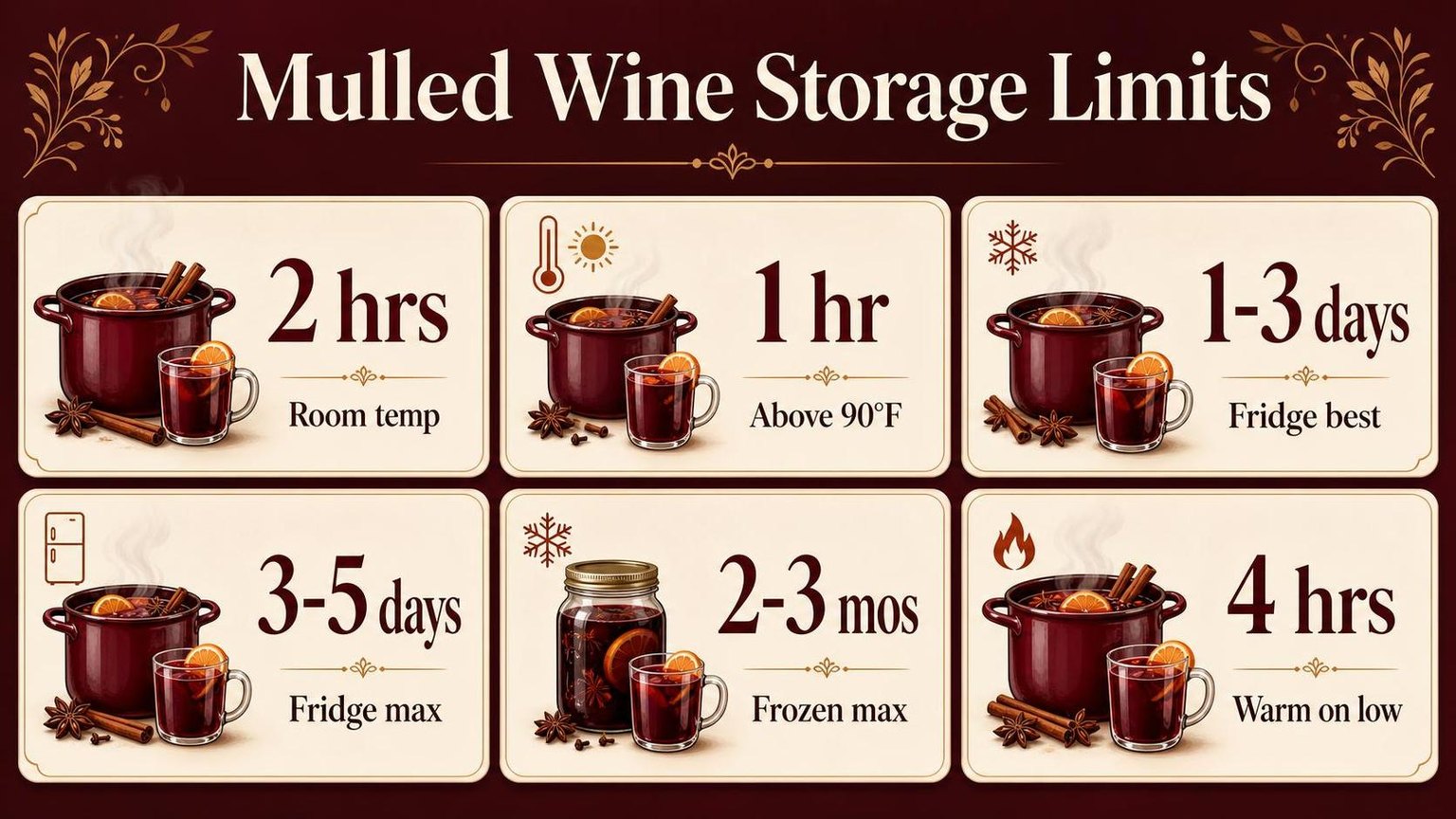
At room temperature, mulled wine should not sit out for more than 2 hours. If the room is above 90°F, the limit drops to 1 hour, following standard U.S. food-safety guidance for perishable beverages and cooked ingredients.
In the refrigerator, most mulled wine keeps well for 3 to 5 days in a sealed container. Quality usually peaks within 1 to 3 days because citrus oils, spice aromas, and fruit notes fade quickly after reheating and storage.
If frozen, mulled wine can last about 2 to 3 months without becoming unsafe. Flavor still declines over time, especially in batches with fresh orange slices, apple pieces, or added sweeteners, which can dull or separate after thawing.
| Storage condition | Best quality window | Upper practical limit |
| Warm on stovetop or in a slow cooker | Up to 2 hours | 4 hours on low heat before flavor noticeably flattens |
| Room temperature | Serve within 2 hours | Discard after 2 hours, or 1 hour above 90°F |
| Refrigerated at 40°F or below | 1 to 3 days | 3 to 5 days |
| Frozen at 0°F or below | Up to 2 months | 2 to 3 months |
Alcohol helps slightly with preservation, but not enough to leave mulled wine out overnight. Most recipes start with wine around 12% to 14% ABV, then lose some alcohol during heating, especially if simmered uncovered for 15 minutes or longer.
Storage time also depends on what is in the pot. Mulled wine made only with wine, sugar, and whole spices keeps longer than versions containing fresh fruit, juice, cider, or garnishes added after heating.
For the longest life, strain out fruit and spices before refrigerating. Transfer the liquid into glass jars or another airtight container, cool it quickly, and refrigerate within 2 hours to slow microbial growth and reduce oxidation.
Reheat only the amount you plan to serve. Repeated heating and cooling shortens shelf life, cooks off more alcohol, and mutes cinnamon, clove, star anise, and citrus aromas that give mulled wine its freshness.
Discard mulled wine if it turns cloudy when it was previously clear, develops fizz, smells sour, or shows any film or mold. Those signs matter more than the exact day count because ingredient mix and storage temperature vary.
Refrigerated Mulled Wine Storage Time
Refrigerated mulled wine usually keeps for 3 to 5 days in a sealed container at 40°F or below. The exact limit depends on whether it was fully heated, how much sugar and citrus it contains, and how quickly it was chilled after serving.
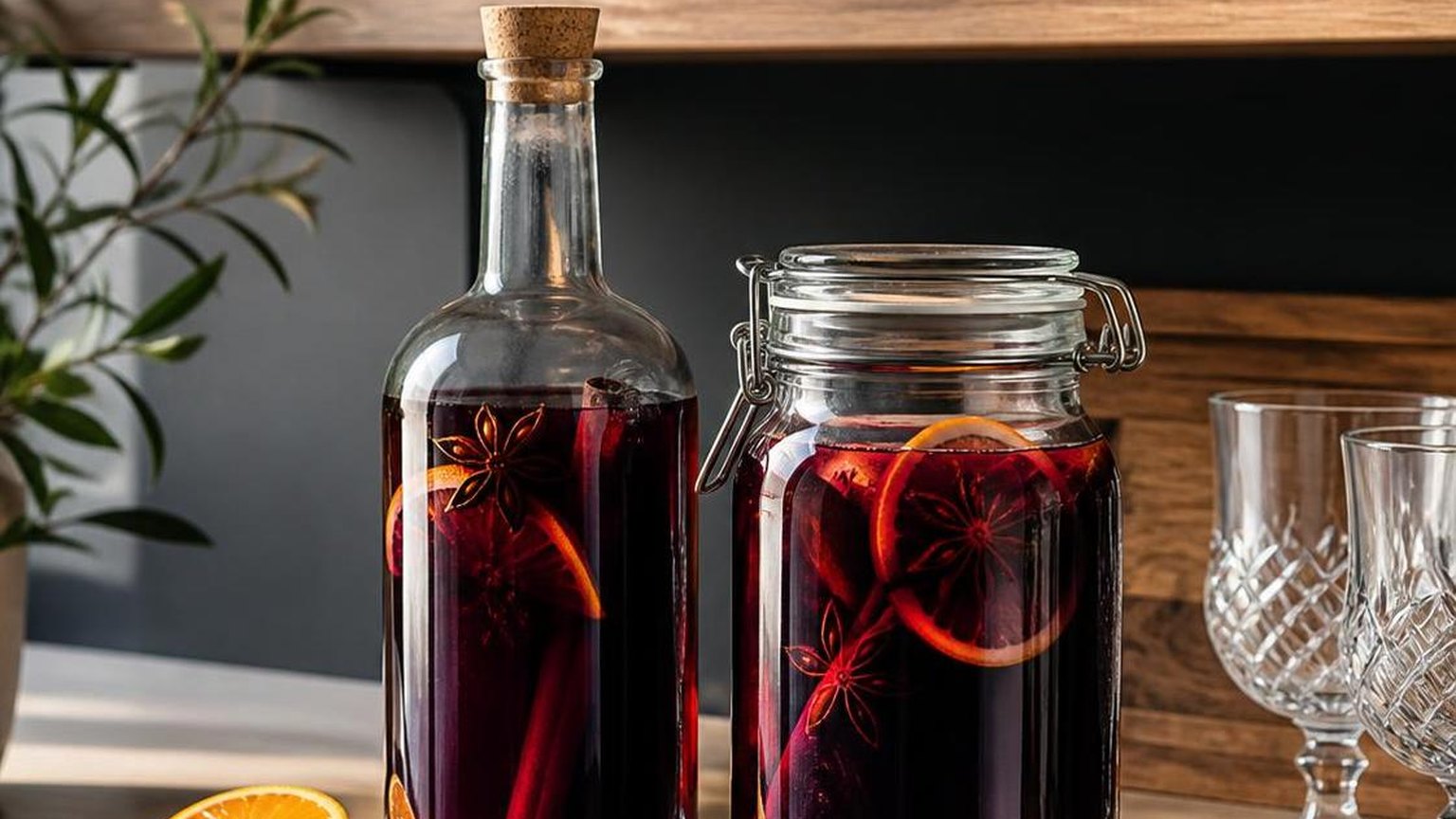
Mulled wine does not become shelf-stable because it contains alcohol.
Most recipes sit around 8% to 12% alcohol by volume after heating, which is far below the level needed to stop yeast, bacteria, and mold once fresh fruit, juice, or spices are added.
The safest quality rule is short storage, cold temperature, and minimal air exposure. Refrigeration slows spoilage, but it does not stop oxidation or microbial growth from orange slices, apple pieces, or added juice.
| Storage condition | Expected refrigerator life | Quality note |
| Sealed, strained mulled wine, no fruit left inside | 4 to 5 days | Best flavor retention and lowest spoilage risk |
| Sealed mulled wine with citrus slices or fruit left inside | 2 to 3 days | Fruit softens, turns bitter, and spoils faster |
| Opened container, repeatedly reheated | 1 to 3 days | Oxidation and contamination increase quickly |
| Left out above 40°F for more than 2 hours | Discard | Follows standard food safety guidance for perishable drinks |
Straining matters. Whole spices can stay in for a day without major risk, but citrus peel, sliced oranges, cranberries, and apples continue releasing bitterness and can shorten usable storage by about 1 to 2 days.
Cool the wine fast after service. Divide large batches into shallow containers and refrigerate within 2 hours, or within 1 hour if the room or patio is above 90°F.
Use glass jars or food-safe containers with tight lids. A nearly full container leaves less oxygen in contact with the wine, which helps preserve aroma compounds and slows the flat, cooked flavor that appears after several days.
- Store at 40°F or colder, with 37°F to 39°F giving better quality retention.
- Label the container with the preparation date.
- Remove fruit before storing if you want the longest refrigerator life.
- Reheat only the portion you plan to serve.
Discard mulled wine if it smells vinegary, looks cloudy when it was previously clear, develops bubbles while cold, or shows surface film or mold. Those changes signal spoilage, not harmless settling.
For best taste, drink refrigerated mulled wine within 72 hours. It may remain safe up to day 5 if handled carefully, but spice definition, fresh citrus character, and overall balance fade before then.
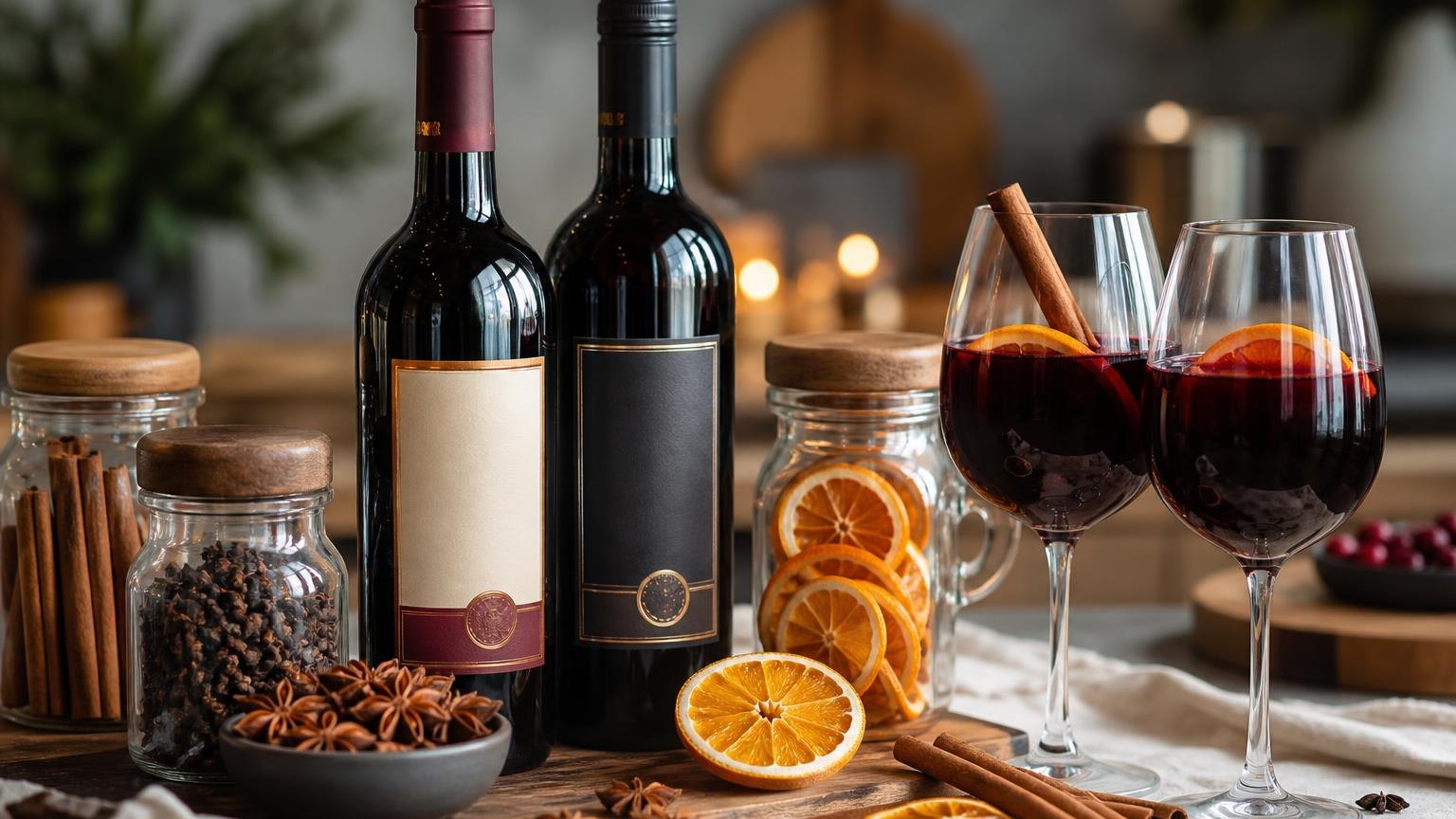
Room Temperature Safety Window
Mulled wine should not sit at room temperature for more than 2 hours. If the room is hotter than 90°F, the limit drops to 1 hour because bacteria and yeasts multiply faster in warm conditions.
Alcohol, sugar, and acidity slow spoilage, but they do not make mulled wine shelf-stable once it has been heated and served. Citrus slices, apples, spices, and repeated dipping with a ladle raise contamination risk.
Food safety guidance centers on the temperature “danger zone” between 40°F and 140°F. In that range, microbes can grow quickly enough to turn a safe batch into one that is risky to drink.
Mulled wine usually starts above 140°F on the stove or in a slow cooker. The clock starts once it drops below 140°F and remains out on the counter or table.
| Condition | Maximum time | Why it matters |
| Below 40°F | Refrigerated storage | Cold temperatures slow microbial growth |
| 40°F to 140°F | 2 hours total | USDA danger zone for rapid growth |
| Above 90°F ambient | 1 hour total | Heat speeds spoilage and contamination |
| Held at 140°F or hotter | Can be held safely for service | Hot holding limits bacterial growth |
That 2-hour limit is cumulative, not per serving round. If the pot sat out for 90 minutes, went back on heat, and later returned to the table for another 45 minutes, it has exceeded the safe window.
A simmering pot is different from a lukewarm pitcher. Keeping mulled wine at 140°F or hotter in a slow cooker or on very low heat is the safer service method for parties.
Do not rely on smell or taste to judge safety. Spoilage yeasts, oxidation, and bacterial growth can dull flavor, but harmful contamination does not always produce an obvious off odor.
Homemade mulled wine with fresh orange wheels, cranberries, or apple slices is more perishable than plain warmed wine. Those additions bring moisture, natural microbes, and sugars that can feed further growth.
- Serve in small batches so the main pot stays hot or refrigerated.
- Use a clean ladle each time; avoid dipping used cups back into the pot.
- Remove fruit garnishes if you plan to cool and store leftovers.
- Discard any batch left out beyond the 2-hour rule, or 1 hour above 90°F.
If service ends, cool leftovers promptly and refrigerate them within the safety window. Waiting “until it cools on its own” on the counter is the step that most often turns salvageable mulled wine into a discard.
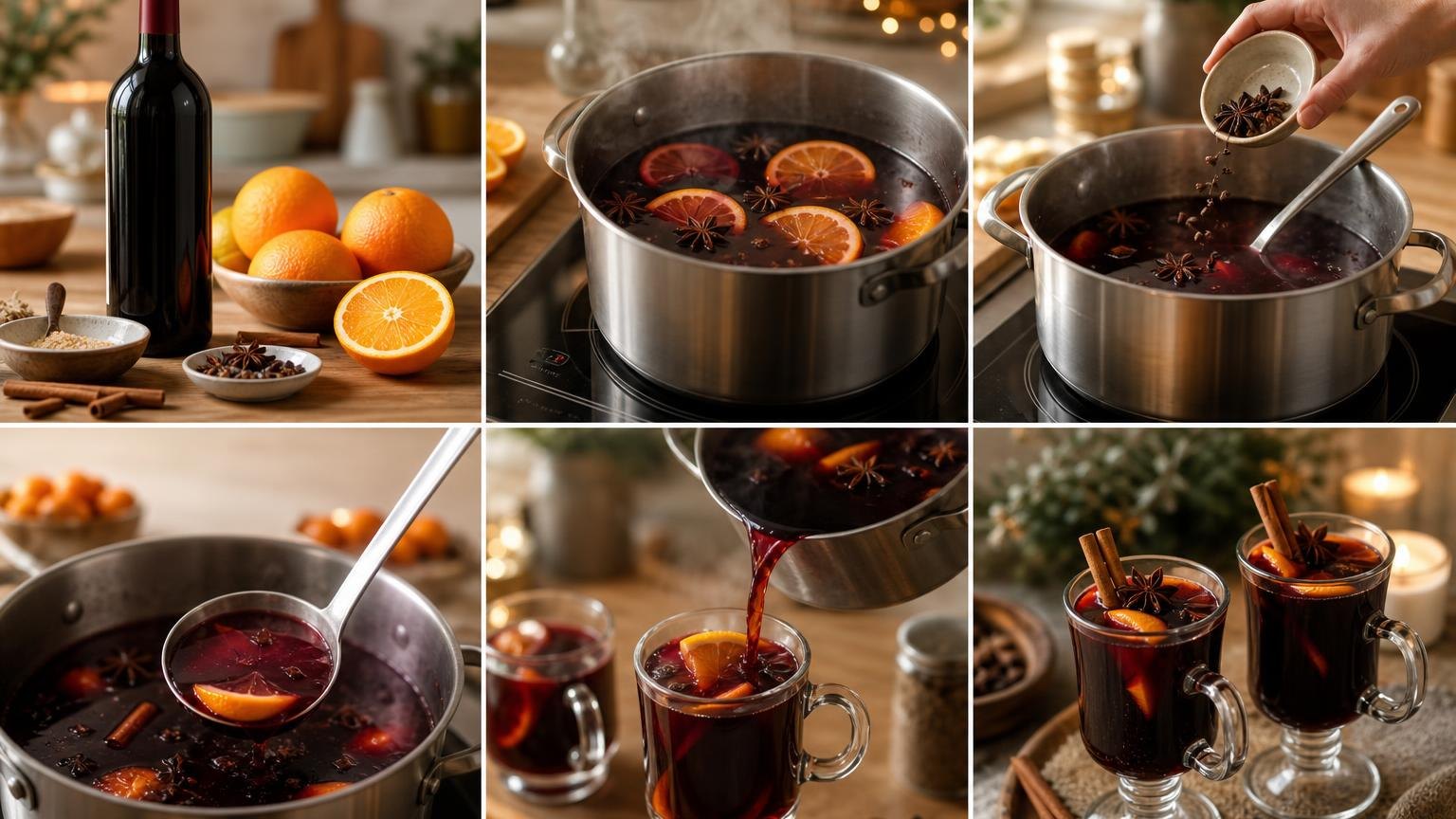
How Reheating Changes Shelf Life
Reheating mulled wine does not reset its storage clock.
Each cooling and warming cycle gives surviving microbes more time in the temperature danger zone and drives off more alcohol and aroma, which reduces both quality and, slightly, preservative effect.
If mulled wine was refrigerated promptly at 40°F or below, one careful reheat is usually safe within the original storage window. Reheating it repeatedly, or holding it warm for hours, shortens that window and makes spoilage more likely.
Food safety rules matter because mulled wine is not sterile after opening and mulling. Fruit slices, sugar, and spices add microbes and nutrients.
Wine’s acidity helps, and alcohol inhibits some organisms, but neither makes a cooked batch shelf-stable once it has been handled and cooled.
| Storage or reheating situation | Best practice | Why it matters |
| Refrigerated within 2 hours, reheated once | Use within 3 to 5 days total | Matches common refrigerated leftover guidance for cooked beverages with added ingredients |
| Left at room temperature above 2 hours | Discard | US food safety guidance uses a 2-hour limit in the 40°F to 140°F danger zone |
| Held at 90°F or above for service | Limit holding to 1 to 2 hours, then chill or discard | Extended warm holding dulls flavor and increases time for microbial growth if temperature drops |
| Reheated multiple times | Avoid; reheat only the portion you will serve | Every cycle increases oxidation, evaporates alcohol, and raises contamination risk |
Temperature control is the deciding factor. Reheat to steaming-hot, about 165°F, if you want a conservative food-safety target. Then serve immediately. Do not let the pot hover lukewarm on the stove, where it may sit below 140°F without looking cold.
Repeated reheating changes the wine itself. Ethanol boils at about 173°F, lower than water’s 212°F, so simmering drives off alcohol first.
That does not make the drink unsafe by itself, but lower alcohol means less antimicrobial protection and a flatter, sweeter taste.
Spices and citrus also degrade with heat. Cinnamon becomes woody, clove turns bitter, and orange peel loses its bright oils. Apples or orange slices soften, leak pectin, and can make the liquid cloudy after the second or third reheat.
- Cool leftovers fast in shallow containers, not in a deep stockpot.
- Remove fruit slices before storing if you want the batch to last closer to 5 days.
- Reheat only what you plan to pour that night.
- If it smells vinegary, looks fizzy, or tastes dull and cooked, discard it.
The practical rule is simple: one reheat is acceptable, repeated reheating is not. Treat mulled wine like any perishable prepared drink and count total refrigerated days from the first batch, not from the last warm-up.
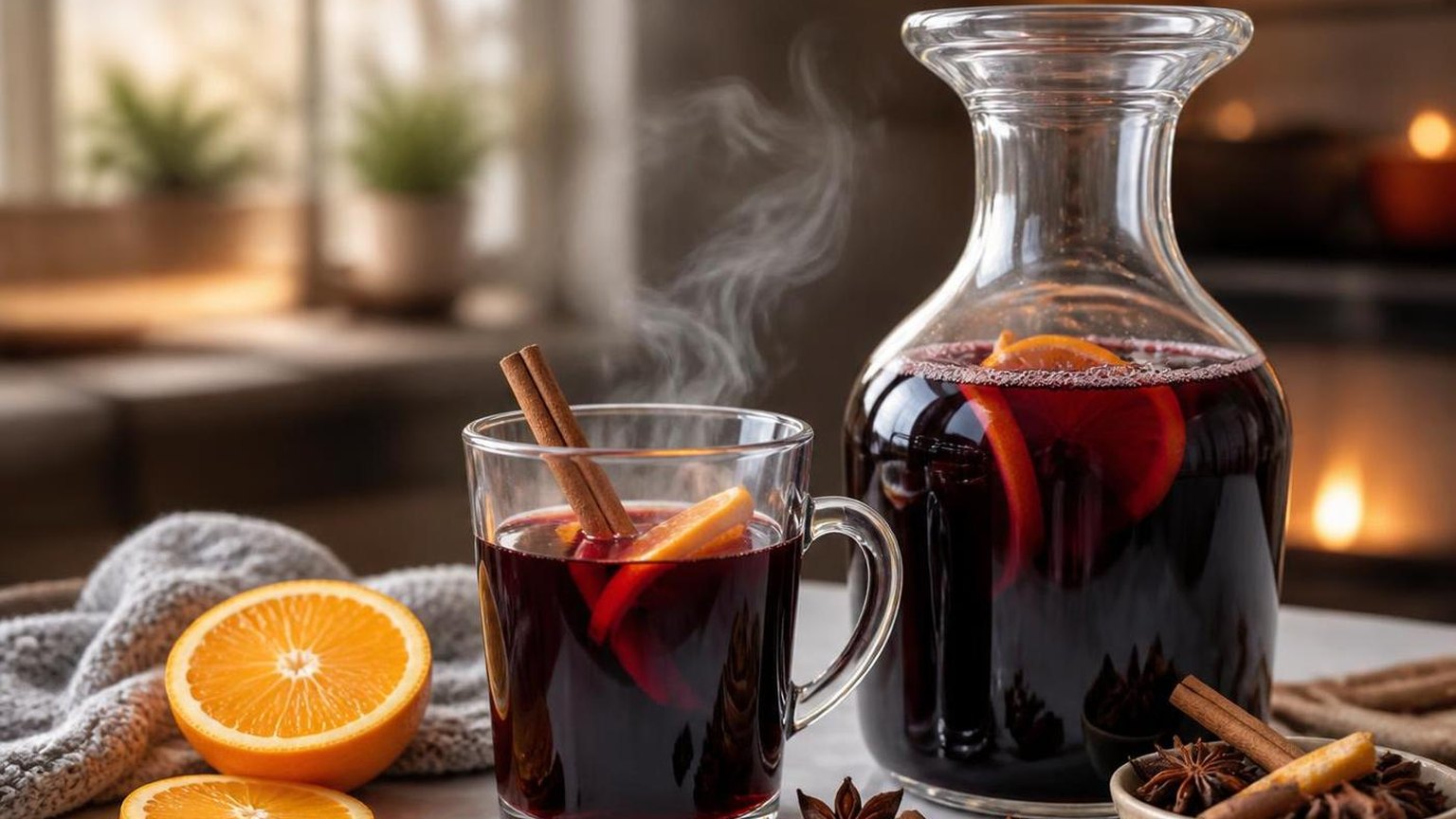
Signs Mulled Wine Has Spoiled
Mulled wine spoils faster than unopened wine because heating drives off some alcohol and the added sugar, citrus, and spices introduce more spoilage risks.
Use your senses first, then compare storage time and temperature before deciding whether to keep or discard it.
The clearest warning sign is smell. Fresh mulled wine should smell warm, spiced, and fruity.
If it smells sharply vinegary, like nail polish remover, wet cardboard, or cooked fruit left out too long, oxidation or microbial spoilage has likely started.
Flavor changes matter too. A dry red wine can taste brighter after mulling, but it should not taste sour, fizzy, or harshly acidic. An unpleasant tang that was not present when first served usually means the drink has passed its safe quality window.
Look at the surface and the container. Mulled wine should remain liquid and glossy. Foam, bubbling in a non-sparkling wine, stringy sediment, or a film on top can indicate fermentation by wild yeast or bacterial activity.
Cloudiness alone is not always spoilage because spices and citrus pulp can make mulled wine hazy. The problem is a sudden change.
If a previously clear batch becomes murky, develops floating particles, or forms clumps after refrigeration, treat that as a spoilage sign.
Color shifts can help. Red mulled wine normally deepens to garnet or brick-red after heating. If it turns dull brown with a flat, faded appearance, that points to heavy oxidation, especially if the aroma and taste have weakened at the same time.
| Sign | What it suggests | Discard? |
| Vinegar smell | Acetic acid bacteria converting alcohol | Yes |
| Fizzy bubbles in still wine | Unwanted fermentation | Yes |
| Surface film or fuzz | Mold or microbial growth | Yes |
| Dull brown color plus stale smell | Advanced oxidation | Yes for quality; safest choice is discard |
| Mild spice sediment only | Normal settling from cloves, cinnamon, citrus | No |
Time and storage give context. At room temperature, mulled wine should not sit out longer than 2 hours. If the room is above 90°F, the food-safety limit drops to 1 hour.
In the refrigerator at 40°F or below, most mulled wine keeps its best quality for about 3 to 5 days in a sealed container. Citrus slices shorten that window because they add moisture, bitterness, and more microbial exposure.
| Storage condition | Typical quality window | Risk notes |
| Countertop, about 68-72°F | Up to 2 hours | After that, spoilage risk rises quickly |
| Hot room, above 90°F | Up to 1 hour | Use or chill promptly |
| Refrigerated, 40°F or below | 3-5 days | Best in airtight glass or food-safe container |
- Discard immediately if you see mold, film, or active bubbling.
- Discard if the smell is vinegary, solvent-like, or distinctly stale.
- Discard if it was left out overnight, even if it looks normal.
- When in doubt, throw it out. Spoilage signs in heated, fruit-added wine are not worth testing by taste.
Freezing Mulled Wine Safely
Freezing extends mulled wine beyond refrigerator storage, but it preserves quality better than it preserves the fresh aroma of citrus and warm spices.
For best flavor, freeze it as soon as it has cooled to room temperature, then use it within 3 months.
Mulled wine remains microbiologically stable in the freezer at 0°F (-18°C), but texture and flavor slowly change. Alcohol does not freeze solid like water, so the mixture often becomes slushy rather than rock hard.
Let the wine cool before freezing. Do not put a hot pot directly into the freezer, because it raises the freezer temperature and can affect nearby food.
Strain out orange slices, lemon peel, cinnamon sticks, cloves, star anise, and other whole spices before freezing. Those ingredients continue extracting flavor, which can push the wine from balanced to bitter during storage.
Use freezer-safe containers, not a filled-to-the-top glass bottle. Liquid expands as the water content freezes, and leaving headspace reduces the risk of cracked jars or broken bottles.
| Storage factor | Best practice | Reason |
| Freezer temperature | 0°F (-18°C) or below | Maintains safe long-term frozen storage |
| Best quality window | Up to 3 months | Limits oxidation and spice flavor loss |
| Headspace | 1/2 to 1 inch | Allows for expansion during freezing |
| Portion size | 1 to 2 cups | Speeds thawing and avoids repeat reheating |
Small portions work best. Freeze leftovers in single-serving or two-serving amounts so you can thaw only what you plan to drink that day.
- Label each container with the freeze date.
- Use airtight containers or heavy freezer bags laid flat.
- Remove as much air as possible to slow oxidation.
- Keep the wine away from foods with strong freezer odors.
If you use freezer bags, set them in a bowl until solid. This prevents leaks and creates stackable flat packs that thaw faster than large rigid containers.
Thaw mulled wine in the refrigerator overnight. For faster use, place the sealed container in cold water, changing the water every 30 minutes until loosened.
Reheat gently on the stove over low heat until steaming, not boiling. Boiling drives off alcohol and strips delicate spice aromas that make mulled wine taste layered instead of flat.
Do not refreeze thawed mulled wine after it has sat in the refrigerator for several days. Repeated thawing and reheating speed flavor decline, especially in wine with citrus juice or fresh fruit added.
If frozen mulled wine smells dull, tastes overly bitter, or shows freezer-burn notes, it is past peak quality. It may still be safe if continuously frozen, but it will not drink like a freshly made batch.
Common Questions
How long does mulled wine last in the fridge?
Homemade mulled wine lasts about 3 to 5 days in the refrigerator when cooled promptly and stored in a sealed container. Quality is best in the first 1 to 2 days because citrus, spices, and heat-sensitive aromas fade quickly after that.
How long can mulled wine sit out at room temperature?
Do not leave mulled wine at room temperature for more than 2 hours, or 1 hour if the room is above 90°F. Alcohol does not make it shelf-stable once fruit slices, sugar, and added ingredients are in the pot.
Can you keep mulled wine warm all day?
You can hold mulled wine warm for about 2 to 4 hours on a low setting, ideally around 140°F, without major quality loss. Avoid simmering or boiling because extended heat cooks off alcohol and gives the wine a flat, stewed taste.
Does mulled wine last longer than regular opened wine?
Not usually. Opened table wine often keeps 3 to 5 days in the fridge, and mulled wine falls in a similar range because oxygen exposure, citrus, and spices do not stop oxidation.
Can you freeze mulled wine?
Yes, mulled wine can be frozen for about 2 to 3 months in an airtight freezer-safe container with headspace for expansion. The flavor stays usable, but the spice profile and fruit notes are usually less bright after thawing.
How do you know mulled wine has gone bad?
Discard it if it smells sour like vinegar, tastes sharply acidic, looks cloudy beyond normal sediment, or shows fizz that was not there before.
Fruit slices that turn slimy or a stale, oxidized smell are also signs the batch is past its safe and best-use window.
Should you store mulled wine with the fruit and spices still in it?
For the best shelf life and cleaner flavor, strain out orange slices, whole spices, and other solids before refrigerating. Leaving them in can make the wine bitter after a day or two and speeds texture and flavor breakdown.
What is the best way to reheat leftover mulled wine?
Reheat it gently on the stove over low heat until steaming, not boiling, usually to about 140°F to 160°F. This preserves more aroma and alcohol than microwaving or bringing the pot to a full boil.
Related Reading
- What Does Zinfandel Taste Like? Find Out Now
- Does Wine Have Caffeine?
- How Did They Make Wine in Biblical Times?
- Does Port Wine Go Bad?
- Is Drinking a Whole Bottle of Wine Bad for You?
- What Does Orange Wine Taste Like? Answer By Expert
- How Many Calories In Bottle Wine? Most Correct Answer
- All Alcohol Guides
- USDA Food Safety and Inspection Service (2013)
- Centers for Disease Control and Prevention (2024)
- National Center for Biotechnology Information (2019)
- University of Georgia Extension (n.d.)
- FDA (2023)
- USDA FoodKeeper App (n.d.)
- Wine Spectator (2023)
- Wine Enthusiast (2023)
- Healthline (2023)
- BBC Good Food (2023)