Good wine for beginners is a low-tannin, fruit-forward bottle with balanced acidity, moderate alcohol, and clear varietal labeling, such as Pinot Noir, Riesling, Sauvignon Blanc, or unoaked Chardonnay.
These wines taste recognizable rather than harsh: red cherry, apple, citrus, peach, or pear instead of heavy oak, bitterness, or heat.
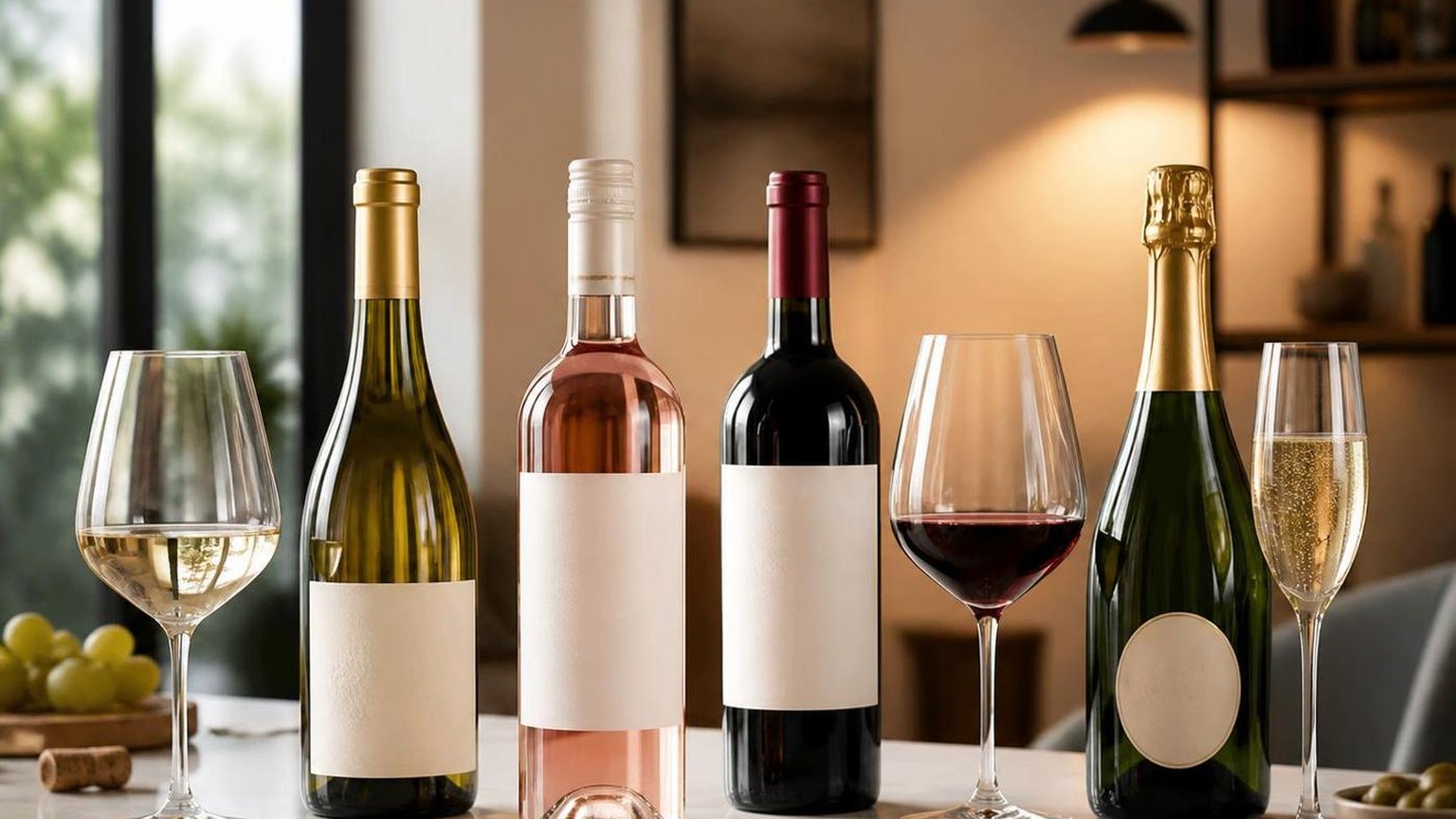
Start with $12–$25 bottles from dependable regions, then compare one dry white, one lightly sweet white, one light red, and one sparkling wine.
Chill whites to 45–50°F, light reds to 55–60°F, and sparkling wine to 40–45°F so the fruit, acidity, and texture stay easy to read.
What Makes a Wine Beginner Friendly
Beginner-friendly wine is usually low in bitterness, moderate in acidity, and easy to recognize on the palate. New drinkers tend to respond best to clear fruit flavors, softer tannins, and alcohol that does not feel hot or harsh.
Sweetness is the first factor. Many beginners confuse fruitiness with sugar, but the two are different. Wines with a small amount of residual sugar, or very ripe fruit character, often taste more approachable than sharply dry, tannic styles.
| Factor | Beginner-friendly range | Why it helps |
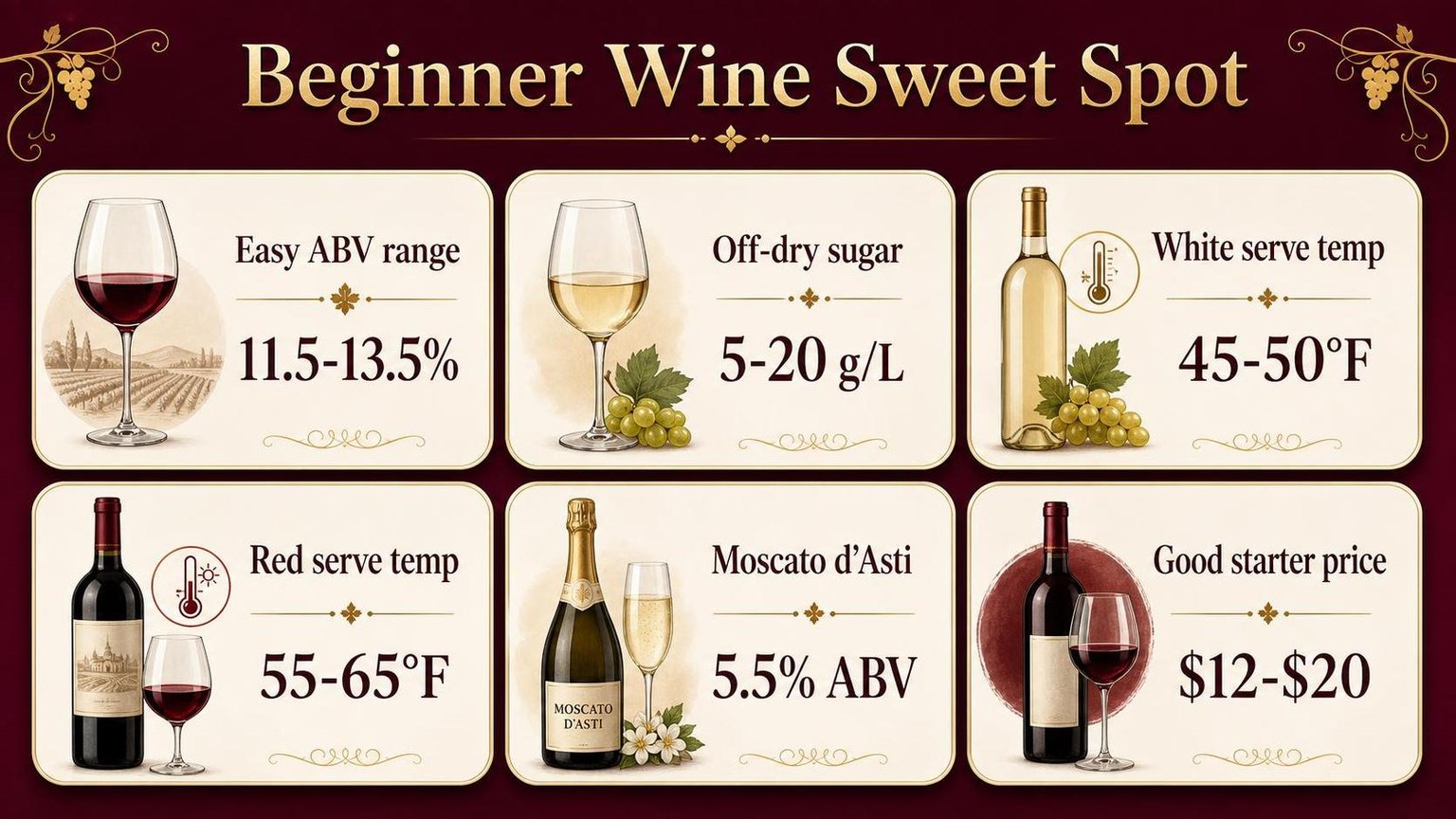
| Alcohol | 11.5% to 13.5% ABV | Usually feels less hot and easier to sip |
| Tannin | Low to medium | Reduces drying, bitter mouthfeel |
| Acidity | Medium | Keeps wine fresh without seeming sharp |
| Residual sugar | Off-dry to dry, about 5 to 20 g/L for off-dry examples | Adds roundness and softens sour or bitter edges |
| Serving temperature | Whites 45 to 50°F, reds 55 to 65°F | Improves balance and aroma clarity |
Tannin matters most in red wine. Tannins come from grape skins, seeds, and oak, and they create a drying sensation similar to strong black tea.
Beginners usually find Pinot Noir, Gamay, and Merlot easier than Cabernet Sauvignon, Nebbiolo, or young Syrah.
Acidity is the second major factor. High-acid wines can taste crisp and food-friendly, but without food they may seem sour to inexperienced drinkers.
That is why wines like Moscato d’Asti, Riesling, or unoaked Chardonnay often feel easier than very lean Sauvignon Blanc.
Alcohol affects comfort and flavor intensity. Once table wine climbs above about 14.5% ABV, many drinkers notice more heat and sweetness perception. Lower-alcohol wines often let fruit show clearly without overwhelming the palate.
- Look for simple fruit notes such as apple, peach, berry, or cherry.
- Choose wines labeled off-dry, smooth, soft, or fruit-forward, but verify the producer style.
- Avoid heavily oaked or highly tannic bottles at first.
- Start with reliable beginner categories: Riesling, Moscato d’Asti, Pinot Grigio, rosé, Pinot Noir, and Beaujolais.
Price can help, but style matters more than cost. A well-made $12 to $20 bottle in an approachable style will teach a beginner more than an expensive, complex wine that needs age, food, or experience to understand.
Best White Wines for Beginners
Beginner-friendly white wines usually share three traits: moderate acidity, obvious fruit, and little or no oak.
The easiest entry points are off-dry or fruit-forward styles, because a small amount of residual sugar softens tartness and bitterness. Most also sit in the 11.5% to 13.5% ABV range, which keeps them approachable.
Riesling is one of the safest starting grapes. German Kabinett and many Washington State Rieslings often show peach, lime, and green apple, with enough acidity to stay fresh.
Off-dry versions commonly carry about 15 to 35 grams per liter of residual sugar, which makes them taste rounder without becoming dessert wine.
Moscato d’Asti is ideal for drinkers who want low alcohol and obvious sweetness. Italian law limits Moscato d’Asti to about 5.5% ABV, and its gentle sparkle reduces the heaviness some beginners dislike.
Expect orange blossom, peach, and grape flavors rather than oak, tannin, or savory notes.
Pinot Grigio works well for beginners who prefer crisp, dry wines. Most Italian examples are light-bodied, high in acidity, and usually fermented in stainless steel, which preserves citrus and pear aromas.
Alcohol often lands around 12% to 12.5% ABV, making it lighter than many California Chardonnays.
Sauvignon Blanc is a strong next step after Pinot Grigio. New Zealand bottlings are known for grapefruit, passion fruit, and cut-grass aromas driven partly by thiol compounds.
These wines are usually dry, but their intense fruit makes them easier for beginners than many neutral, mineral-driven whites.
Unoaked Chardonnay is the best entry to Chardonnay itself. Without barrel influence, it shows apple, lemon, and sometimes pineapple instead of butter and vanilla.
Look for labels that say “unoaked” or “stainless steel fermented” if you want freshness rather than the richer style common in barrel-aged versions.
| Wine style | Typical ABV | Typical sweetness | Why beginners like it |
| Riesling (off-dry) | 8.5%–12% | 15–35 g/L residual sugar | Sweet-tart balance, clear fruit |
| Moscato d’Asti | 5%–5.5% | Medium-sweet | Low alcohol, light fizz, floral fruit |
| Pinot Grigio | 12%–12.5% | Dry | Light body, simple citrus profile |
| Sauvignon Blanc | 12.5%–13.5% | Dry | Vivid aromatics, easy-to-recognize fruit |
| Unoaked Chardonnay | 12.5%–13.5% | Dry | More fruit, less wood and butter |
- Start with Riesling or Moscato d’Asti if you dislike bitterness.
- Choose Pinot Grigio if you want the driest, lightest option.
- Move to Sauvignon Blanc for stronger aroma and more acidity.
- Pick unoaked Chardonnay before trying barrel-aged Chardonnay.
Best Red Wines for Beginners
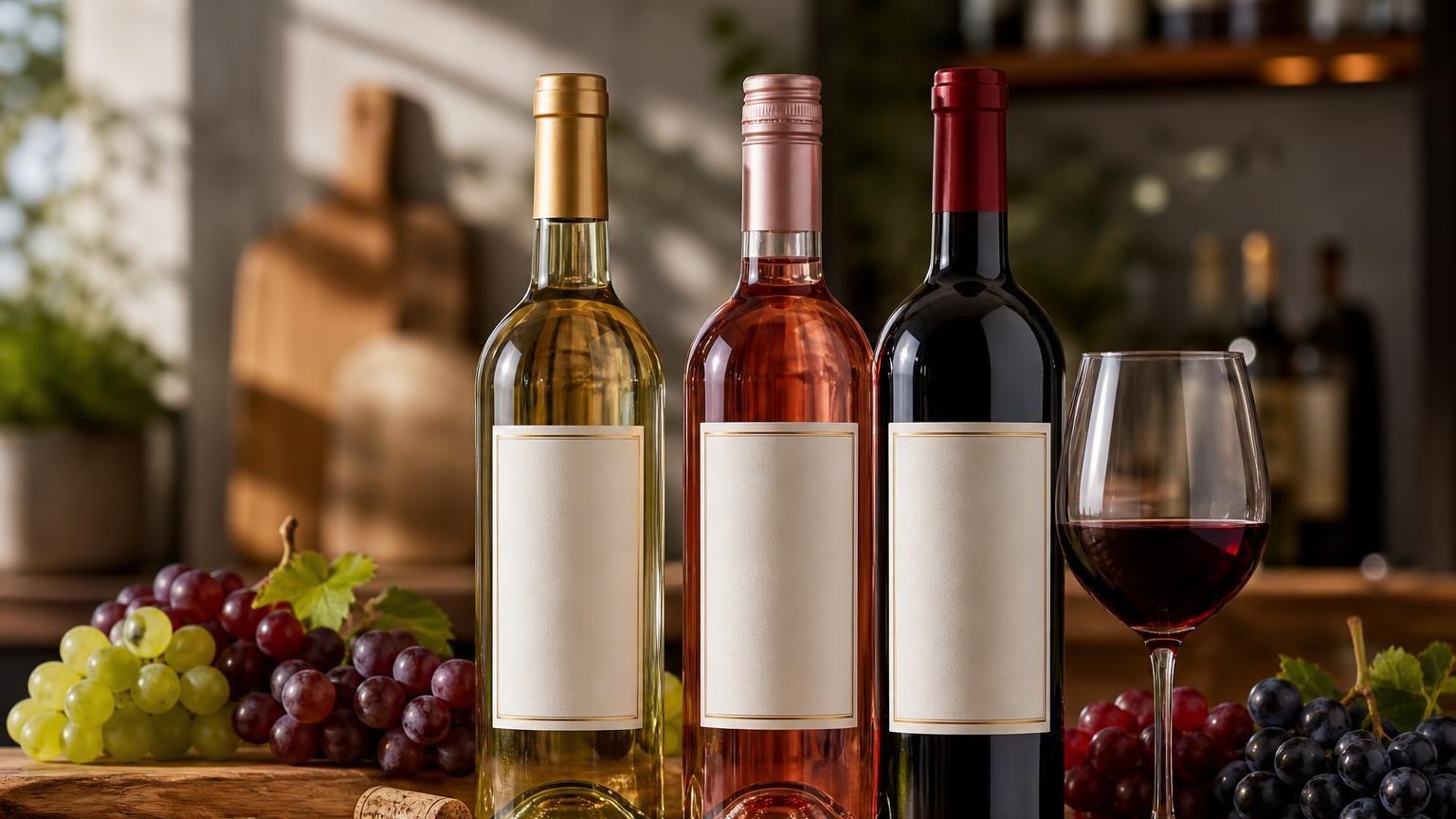
Beginners usually do best with reds that have low to moderate tannin, clear fruit flavors, and moderate alcohol. The goal is an easy first glass, because high tannin, heavy oak, or 15% ABV can make red wine taste harsh before your palate adjusts.
Four grapes consistently work well: Pinot Noir, Merlot, Gamay, and Grenache-based blends. They are widely available in the US, pair easily with food, and usually show soft textures instead of aggressive bitterness.
| Wine style | Typical ABV | Tannin level | Common flavors | Typical US retail |
| Pinot Noir | 12.5% to 14.5% | Low | Cherry, raspberry, mushroom | $15 to $30 |
| Merlot | 13.5% to 14.5% | Low to medium | Plum, black cherry, cocoa | $12 to $25 |
| Gamay (Beaujolais) | 12% to 13.5% | Low | Strawberry, cranberry, violet | $14 to $28 |
| Grenache-based blends | 14% to 15% | Low to medium | Red berry, spice, herbs | $12 to $22 |
Pinot Noir is the safest starting point if you want a lighter body. Its thinner skin produces less tannin than Cabernet Sauvignon, so the wine feels smoother and less drying on the gums.
Merlot is the best beginner red for people who want more body without jumping to astringent styles. Good Merlot gives ripe plum fruit, moderate acidity, and enough softness to work with burgers, roast chicken, or pizza.
Gamay, especially Beaujolais-Villages, is often the easiest red to drink slightly cool, around 55°F to 60°F. That temperature keeps the fruit bright and the finish fresh, which helps new drinkers notice flavor instead of alcohol heat.
Grenache-based blends from Côtes du Rhône are a strong value pick. They often cost under $20, use fruit-forward Grenache as the base, and add Syrah or Mourvèdre for spice without becoming too tannic.
- Avoid starting with young Cabernet Sauvignon, Nebbiolo, or Petite Sirah. Their higher tannin can taste bitter and drying.
- Look for “unoaked” or “lightly oaked” on labels when possible. Heavy new oak can add vanilla and toast, but it can also make wine feel sweeter and less clear.
- Serve red wine slightly below room temperature, about 60°F to 65°F. Warm reds taste more alcoholic and less balanced.
If you are buying one bottle first, choose Pinot Noir or Beaujolais. If you want a richer style for the same learning curve, choose Merlot or a Côtes du Rhône blend.
Sweet Wines That Teach Balance
Sweet wine helps beginners taste the core trade-off in wine: sugar versus acidity. When acid stays high, sweetness reads fresh, not syrupy. That contrast trains your palate faster than many dry wines.
Start with styles where sugar is measurable and structure is obvious. In wine, sweetness is often discussed as residual sugar, or RS, in grams per liter. Good beginner bottles usually pair noticeable RS with moderate alcohol and bright acid.
| Style | Typical RS | Typical ABV | What teaches balance |
| German Riesling Kabinett | 20-60 g/L | 7-10% | High acidity keeps peach and lime flavors lifted |
| Moscato d’Asti | 90-120 g/L | 5-6% | Gentle sparkle and low alcohol prevent heaviness |
| Vouvray Demi-Sec | 10-35 g/L | 11-12.5% | Chenins acid and texture show sweetness without softness |
| Sauternes | 120-220 g/L | 13-14% | Very high sugar still feels precise because acidity remains firm |
German Riesling Kabinett is one of the clearest teaching wines. The Mosel often produces bottles at 7-9% ABV, with enough acidity to make 30-50 g/L RS taste light. You taste apple, citrus, and slate before sugar feels dominant.
Moscato d’Asti teaches a different lesson. Carbon dioxide adds lift, so 100 g/L of sugar can feel playful rather than dense. Serve it at 38-42°F, because colder temperatures sharpen acidity and control the impression of sweetness.
Vouvray Demi-Sec shows that texture matters too. Chenin Blanc naturally carries strong acidity, often around the level that makes quince, pear, and honey flavors feel tense. It is a useful bridge from obvious sweetness to off-dry and dry whites.
Sauternes is richer, but it proves the same principle. Noble rot concentrates sugar and flavor, yet top examples stay vivid. A small 2-3 ounce pour is enough to study how apricot, saffron, and acidity move together.
- Look for “Kabinett,” “Demi-Sec,” or “Moscato d’Asti” on the label.
- Serve sweet whites cold, usually 38-45°F.
- Pair them with salty cheese, spicy food, or fruit desserts to test balance.
- If the wine tastes flat, it lacks acid; if it tastes lively, balance is working.
For beginners, the goal is not “sweet” versus “dry.” The goal is learning when sugar is supported. Once you recognize that structure, buying better wine gets easier.
Sparkling Wines Beginners Usually Enjoy
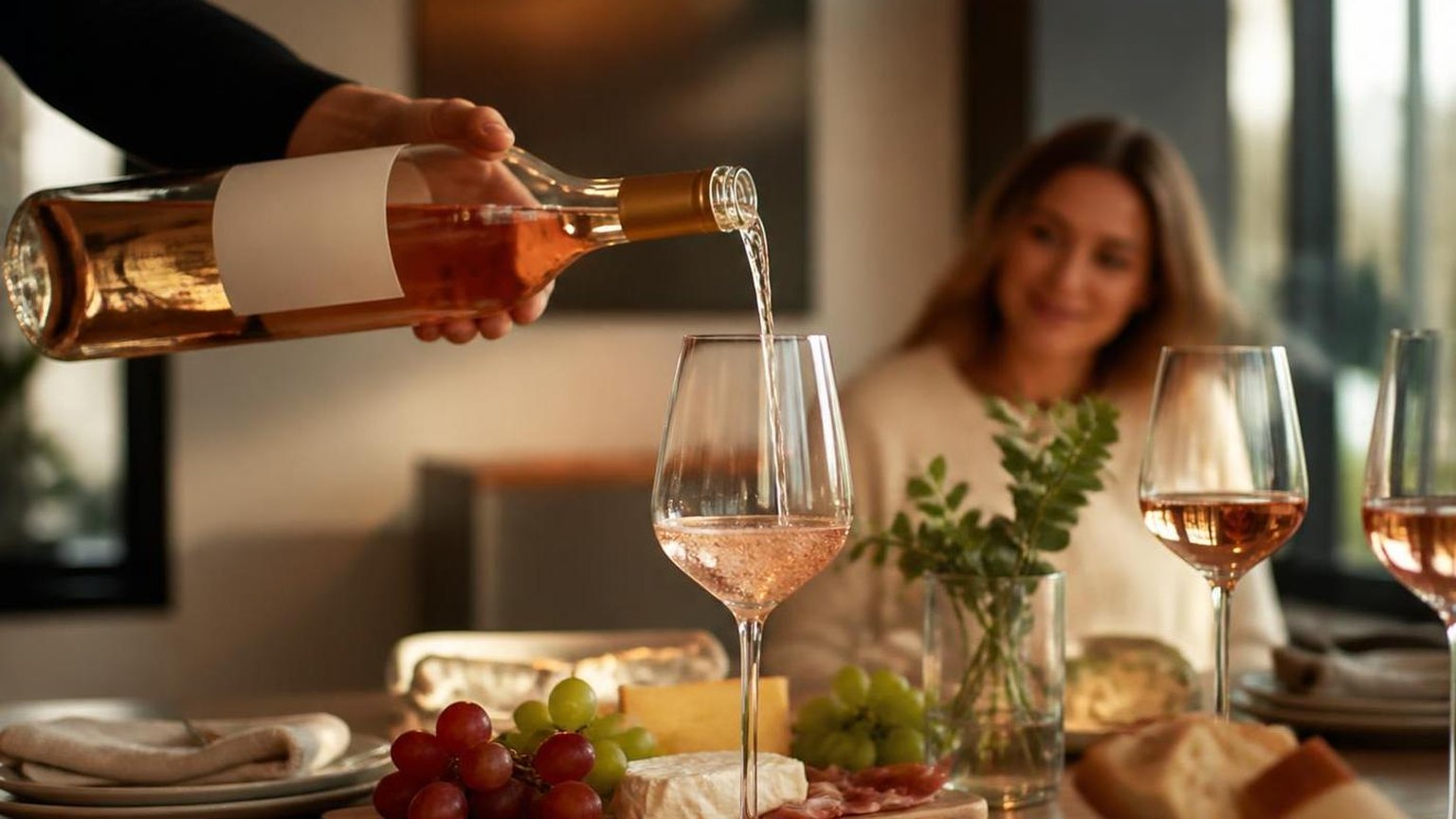
Beginners usually like sparkling wines with soft acidity, obvious fruit, and moderate alcohol.
The easiest starting points are Prosecco, off-dry styles such as demi-sec, and quality Cava with rounder mousse and familiar apple, pear, and citrus flavors.
Sparkling wine also feels less intimidating because production terms give useful clues. Labels such as Brut, Extra Dry, and Demi-Sec refer to sweetness, and that sweetness often matters more to new drinkers than the region name.
Prosecco is the most common beginner-friendly choice in the US market. It is usually made from at least 85% Glera, often by the Charmat method, which preserves peach, pear, melon, and white flower notes instead of adding strong toast flavors.
Extra Dry Prosecco is a strong first bottle. Despite the name, it is slightly sweeter than Brut, which makes acidity feel softer and fruit feel clearer.
Many beginners read that as “smooth” and “easy,” especially when alcohol stays near 11% ABV.
Cava is another smart starting point for drinkers who want more structure without Champagne prices.
Traditional-method Cava gets its bubbles from a second fermentation in bottle, like Champagne, but many entry bottlings still stay bright, lemony, and approachable.
| Style | Typical dosage | Common ABV | Beginner appeal |
| Brut | 0-12 g/L sugar | 11-12.5% | Crisp, less sweet, food-friendly |
| Extra Dry | 12-17 g/L sugar | 11-11.5% | Softer acidity, fruit-forward |
| Demi-Sec | 32-50 g/L sugar | 10.5-12% | Noticeably sweet, easy for sensitive palates |
Moscato d’Asti works for beginners who dislike sharp acidity or bitterness. It is lightly sparkling, usually around 5-6% ABV, and commonly shows peach, apricot, orange blossom, and grape flavors.
That low alcohol makes it easier for casual sipping.
Crémant from France is worth trying after Prosecco. It uses the traditional method, often tastes finer and creamier than tank-made sparkling wine, and usually costs less than Champagne.
Crémant d’Alsace and Crémant de Loire are reliable entry points.
- Choose Extra Dry or Demi-Sec if Brut tastes too severe.
- Look for 10.5% to 11.5% ABV for a softer profile.
- Serve at 43-47°F to keep bubbles precise and fruit fresh.
- Pair with salty snacks, fried foods, or mild cheeses to make acidity feel balanced.
Avoid starting with very dry, autolytic bottles labeled Brut Nature or Extra Brut unless you already like sharp, mineral white wines. Those styles can show 0-6 g/L sugar and often taste leaner, more savory, and less forgiving to new palates.
How to Read Beginner Wine Labels
Wine labels tell you three practical things fast: what the wine should taste like, how strong it is, and where it comes from.
For beginners, the most useful fields are alcohol by volume, region, grape, vintage, and sweetness clues on the front or back label.
Start with ABV, listed as alcohol by volume. It often predicts body and ripeness better than marketing words like “smooth” or “bold.” Lower ABV usually tastes lighter; higher ABV usually feels fuller and warmer.
| ABV | Typical style clue |
| 5.5% to 12% | Many sparkling wines, Moscato, some Riesling; lighter body |
| 12% to 13.5% | Common for Pinot Grigio, Sauvignon Blanc, many rosés; fresh and moderate |
| 13.5% to 14.5% | Common for Chardonnay, Merlot, Pinot Noir; medium to fuller body |
| 14.5% to 16% | Often riper Zinfandel, Shiraz, some Cabernet Sauvignon; fuller and hotter |
Next, look for grape name or place name. In the United States, a bottle labeled with a single grape usually must contain at least 75% of that grape under federal labeling rules. That makes varietal labels easier for beginners to trust.
Region matters because climate changes flavor. A California Chardonnay often shows riper apple and tropical fruit. A Chablis from France is Chardonnay too, but usually leaner, with higher acidity and less obvious oak.
Vintage is the harvest year. Non-vintage, often written as NV, is common in Champagne and other sparkling wines because producers blend multiple years for consistency.
Vintage matters more in weather-sensitive regions and less in large, consistent brands.
Sweetness is often the hardest part. Labels rarely print grams of sugar for still wine, so use style terms and ABV as clues. German Riesling labels are one area where terms help more than color or grape name alone.
| Label term | What it usually signals |
| Dry | Little residual sugar; crisp finish |
| Off-dry | Slight sweetness; good for spicy food |
| Reserve | No universal quality standard in many US wines; verify producer reputation |
| Estate bottled | US term indicating the winery grew and made the wine in one viticultural area |
- Choose bottles with ABV between 11.5% and 13.5% if you want easier-drinking styles.
- Pick a known grape first, then compare two regions to learn faster.
- Treat “old vine,” “reserve,” and “selection” as marketing unless the producer has a strong reputation.
First Wine Flight to Try
A beginner flight should move from light, high-acid wines to softer reds with moderate structure. That order trains your palate to notice sweetness, acidity, body, fruit, and tannin without one wine overpowering the next.
Start with four small pours: off-dry Riesling, Sauvignon Blanc, Pinot Noir, and Malbec. This set works because each wine highlights one clear trait, while staying widely available and reasonably priced in US wine shops and restaurants.
| Wine | Why it helps beginners | Typical alcohol | Serving temperature | Structure snapshot |
| Off-dry Riesling | A little residual sugar softens acidity and makes fruit easier to identify | 8%–11% | 45–50°F | High acid, low tannin, light body |
| Sauvignon Blanc | Shows crisp acidity and clear citrus-herbal aromas without oak | 11.5%–13.5% | 45–50°F | High acid, no tannin, light body |
| Pinot Noir | Introduces red wine with lower tannin than Cabernet Sauvignon | 12%–14.5% | 55–60°F | Medium acid, low tannin, light-medium body |
| Malbec | Adds darker fruit and fuller texture without the firm tannin of many Cabernets | 13.5%–15% | 60–65°F | Medium acid, medium tannin, medium-full body |
Taste in that order. Riesling teaches the difference between fruit sweetness and sugar. Sauvignon Blanc then sharpens the contrast, because its tartness and grassy aromas often read as grapefruit, lime, gooseberry, or fresh-cut herbs.
Pinot Noir is the right first red because tannin stays moderate and alcohol is often controlled. Beginners can focus on cherry, cranberry, mushroom, and spice notes instead of fighting heavy oak or mouth-drying grip.
Malbec finishes the flight with more color, ripeness, and body. Most drinkers notice blackberry, plum, cocoa, and violet. Compared with Pinot Noir, it usually feels rounder and richer, which makes body easier to understand.
- Pour equal small tastes in standard wine glasses.
- Smell before sipping, then take a second sip for texture.
- Drink water between wines to reset acidity and tannin.
- Skip heavily oaked Chardonnay and high-tannin Cabernet in a first flight.
- Pair with mild foods like bread, young cheese, or plain roast chicken.
If one wine stands out, buy a bottle from the same grape and a second bottle from a different region. That next step teaches a core wine fact fast: grape variety matters, but climate and winemaking change the result.
Questions Readers Ask
What is a good first wine if you are completely new to wine?
Start with a low-tannin, fruit-forward style because it tastes softer and is easier to read.
Good beginner bottles include Riesling, Pinot Grigio, Sauvignon Blanc, Moscato, Pinot Noir, and Beaujolais made from Gamay, which usually show fresh fruit, moderate alcohol, and less bitterness than heavily oaked Chardonnay or Cabernet Sauvignon.
Are sweet wines better for beginners?
Slightly sweet wines are often easier at first because sugar softens acidity, alcohol, and bitterness.
Moscato d’Asti usually sits around 5% to 6.5% alcohol and off-dry Riesling often balances sweetness with high acidity, so both can feel more approachable than dry, tannic reds.
Which red wine is easiest for beginners to enjoy?
Pinot Noir is one of the safest first reds because it is typically lighter-bodied, lower in tannin, and more red-fruit driven than Cabernet Sauvignon or Syrah.
Beaujolais and other Gamay-based wines are also strong beginner choices because they are often served slightly cool and emphasize cherry, raspberry, and low oak.
Which white wine is easiest for beginners to understand?
Pinot Grigio and Sauvignon Blanc are good entry points because their flavors are direct and easy to identify.
Pinot Grigio usually shows light citrus and pear, while Sauvignon Blanc often brings grapefruit, lime, and herbs with acidity that makes the wine taste clean rather than heavy.
How much should a beginner spend on a good bottle of wine?
In most U.S. markets, the sweet spot for dependable beginner wine is about $12 to $20.
Below $10, quality can be inconsistent and sweetness or oak may be used to mask flaws; above $20, improvements are often more subtle and easier to appreciate after you have tasted more styles.
Should beginners start with dry or sweet wine?
Start with whichever style keeps you curious, then compare both because preference matters more than rules.
A practical first tasting is one dry white like Sauvignon Blanc and one off-dry wine like Riesling, since side-by-side comparison quickly shows how sugar, acidity, and fruit change the experience.
What foods pair well with beginner-friendly wines?
Match simple wines with familiar foods because balanced pairings make flaws less noticeable and flavors clearer.
Sauvignon Blanc works well with goat cheese, salads, and seafood; Pinot Noir fits roast chicken and salmon; Moscato pairs with spicy takeout and fruit desserts because sweetness helps calm heat.
Related Reading
- How Did They Make Wine in Bible Times?
- What Does Port Taste Like? Most Correct Answer
- How Many Carbs In A Glass Of Pinot Grigio? Answer By Expert
- How To Tell If Wine Is Corked? Information From Experts
- Where Is The Expiration Date On Wine Bottles? Find Out Now
- Biggest Glass of Wine Meme
- What Wine Goes With Chicken?
- All Alcohol Guides
- National Institute on Alcohol Abuse and Alcoholism (2025)
- Centers for Disease Control and Prevention (2024)
- U.S. Department of Agriculture and U.S. Department of Health and Human Services (2020)
- UC Davis Continuing and Professional Education (2024)
- Penn State Extension (2024)
- Cornell Craft Beverage Institute (2024)
- Wine & Spirit Education Trust (2024)
- Wine Australia (2024)
- Wine Institute (2024)