101 liquor and wine is a beginner’s guide to understanding distilled spirits, fermented wine, alcohol by volume, serving sizes, storage, and smart tasting habits.
Liquor is distilled and commonly ranges from 35% to 50% ABV, while most table wines sit between 11% and 15% ABV.
This article explains the practical differences: how whiskey, vodka, rum, tequila, gin, brandy, red wine, white wine, sparkling wine, and fortified wine are made, poured, paired, and evaluated.
Use it to read labels faster, compare strength accurately, choose glassware, avoid storage mistakes, and order with confidence.
What 101 Proof Means
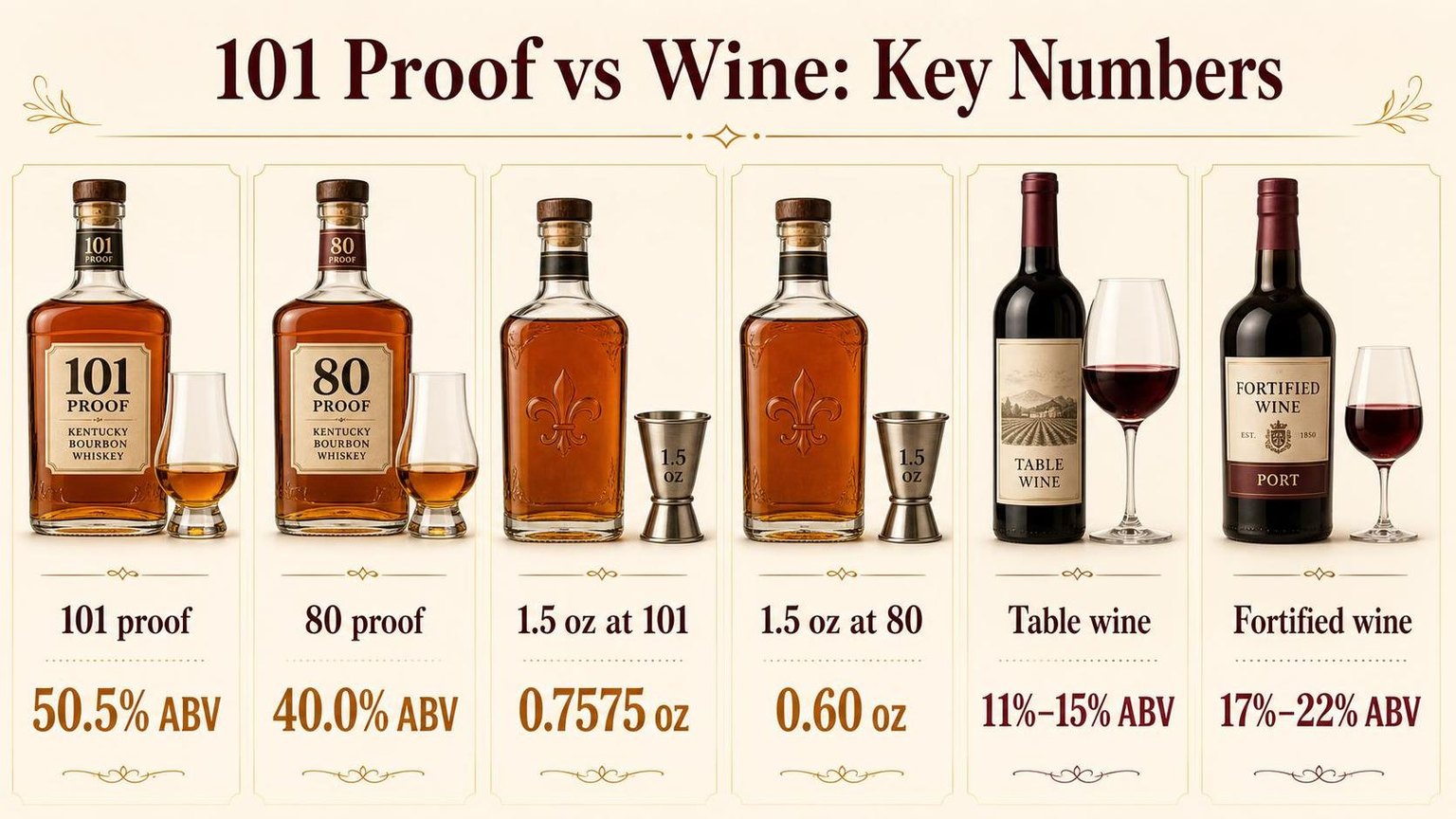
“101 proof” states the alcohol strength of a spirit in the U.S. proof system. In the United States, proof is exactly double the alcohol by volume, so 101 proof equals 50.5% ABV.
That number matters because it tells you how much ethanol is in the bottle, how intense it will taste, and how it will behave in cocktails. Higher proof usually brings more heat, more body, and less dilution from water.
The U.S. standard is straightforward: divide proof by 2 to get ABV. A 101-proof bourbon, rye, or rum contains 50.5% alcohol by volume, which is notably stronger than the common 80-proof baseline sold in many spirits categories.
| Label | Proof | ABV |
| Standard bottle | 80 | 40.0% |
| Higher-proof spirit | 90 | 45.0% |
| 101-proof spirit | 101 | 50.5% |
| Bottled-in-bond spirit | 100 | 50.0% |
That extra strength is small on paper but noticeable in the glass. Compared with 80 proof, 101 proof contains 10.5 percentage points more alcohol by volume, which can increase perceived spice, oak extraction, and finish length.
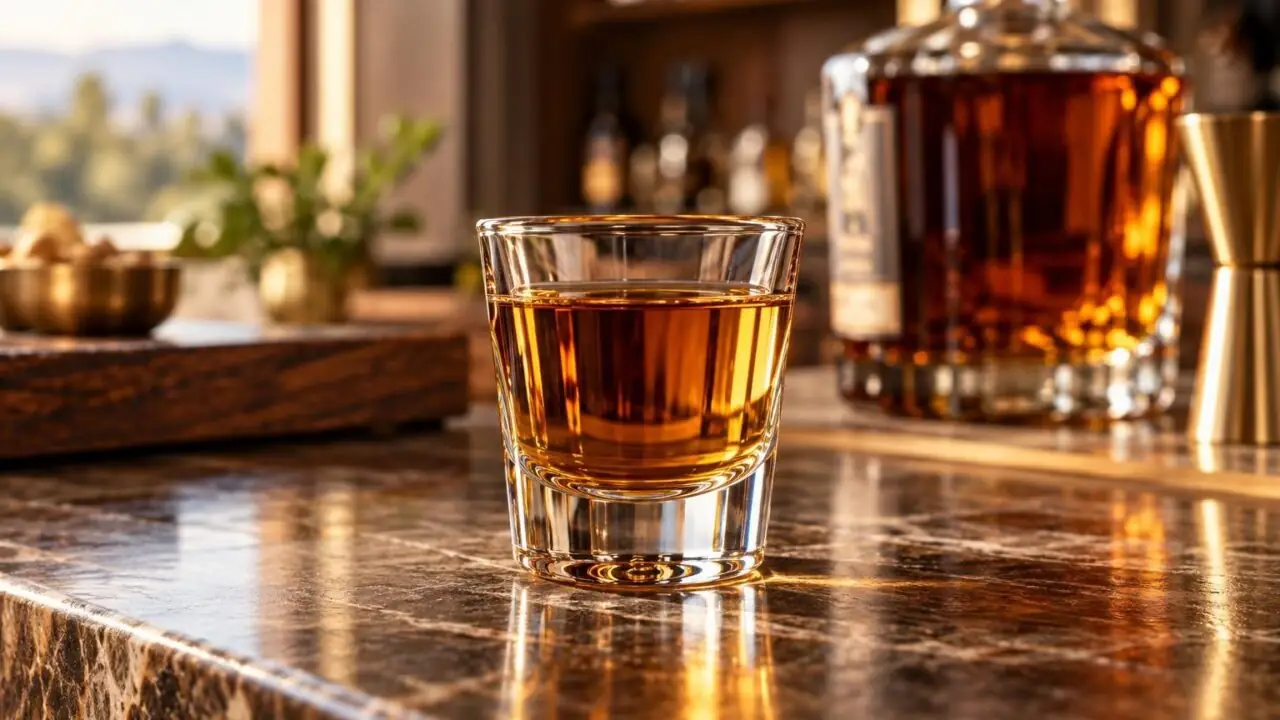
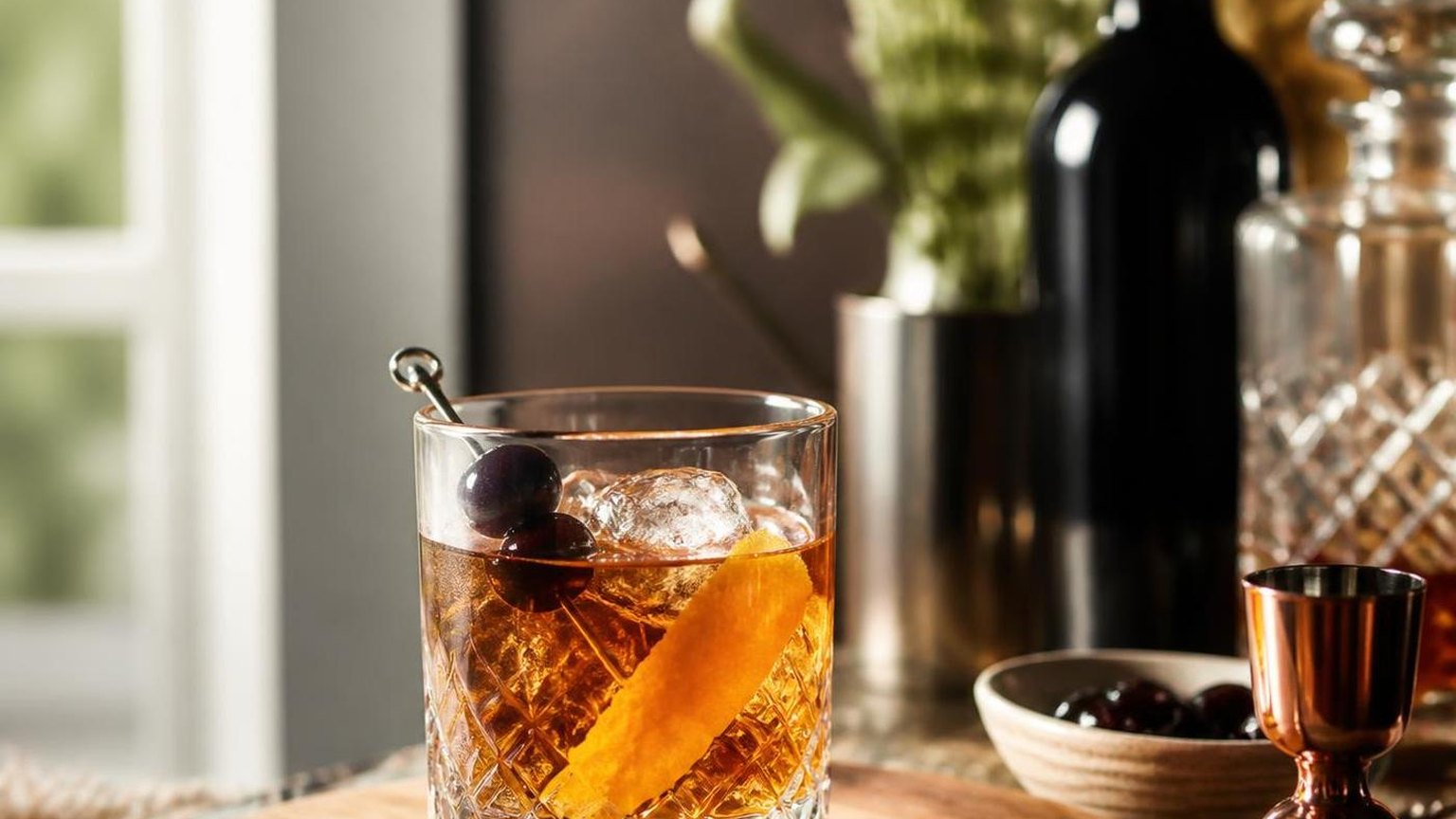
In practical serving terms, a 1.5-ounce pour of 101-proof spirit contains more pure alcohol than the same pour at 80 proof. This helps explain why 101-proof whiskey often stands up better in drinks like an Old Fashioned or Whiskey Sour.
| Serving size | 80 proof | 101 proof |
| 1.5 oz pour | 0.60 oz pure alcohol | 0.7575 oz pure alcohol |
| 750 mL bottle | 300 mL pure alcohol | 378.75 mL pure alcohol |
Proof is used mostly for distilled spirits, not table wine. Wine in the U.S. is usually labeled by ABV, with many table wines falling around 11% to 15% ABV, far below 101-proof liquor.
- For sipping: Expect more aroma concentration, a warmer finish, and a stronger alcohol presence.
- For cocktails: Expect the spirit to remain visible after shaking, stirring, or adding ice.
- For food pairing: Expect bolder flavors to match rich, fatty, smoked, or heavily seasoned dishes.
Historically, “proof” comes from older methods used to verify spirit strength, but modern U.S. labeling is measurement-based and regulated. On a current label, 101 proof is not a style term.
It is a precise statement that the bottle is 50.5% ABV.
Why Wines Rarely Reach 101
“101” usually means 101 proof, which equals 50.5% alcohol by volume in the United States.
Standard table wine sits far below that range because fermentation has hard biological limits, while spirits can be concentrated after fermentation by distillation.
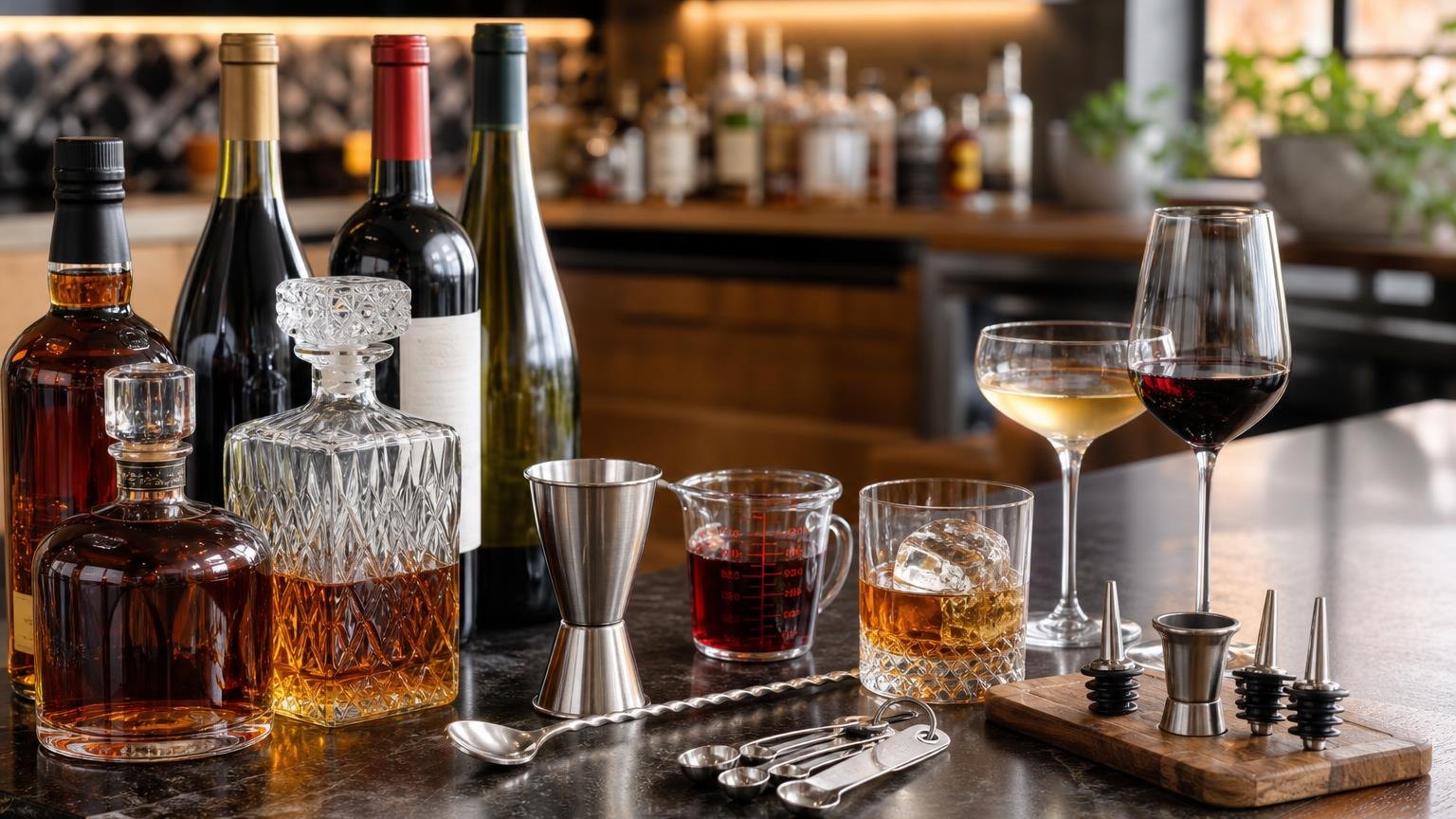
Wine yeast converts grape sugar into ethanol and carbon dioxide. As alcohol rises, most yeast strains slow down or die, so fermentation usually stops well before wine approaches 50.5% ABV.
Most still wines land around 11% to 15% ABV. Fortified wines can climb higher because a distilled grape spirit is added, but even then they are usually sold in the high teens to low 20s, not near 101 proof.
| Category | Typical alcohol level | How it gets there |
| Still table wine | 11% to 15% ABV | Fermentation only |
| High-alcohol table wine | 15% to 16% ABV | Very ripe grapes, yeast-tolerant fermentation |
| Fortified wine | 17% to 22% ABV | Fermentation plus added spirit |
| 101-proof spirit | 50.5% ABV | Distillation, sometimes followed by dilution |
The chemistry explains the gap. To reach 50.5% ABV by fermentation alone, grape must would need an extreme sugar load and yeast able to survive a level far beyond normal winemaking conditions.
Even unusually robust wine yeasts rarely push much past about 16% to 18% ABV without special handling. Dessert wines can taste sweeter and stronger, but residual sugar does not mean they are anywhere close to 101 proof.
Fortification changes the ceiling. Port, Madeira, Marsala, and many aperitif wines use grape spirit to stop fermentation or raise alcohol, which is why bottles often show 18%, 19%, or 20% ABV.
That is still less than half the alcohol in a 101-proof bottle. Under the U.S. proof system, proof is simply double the ABV, so 20% ABV fortified wine equals 40 proof, not 101.
- Wine is limited by yeast alcohol tolerance.
- Grapes do not naturally provide enough fermentable sugar to produce 50.5% ABV wine.
- Distillation, not fermentation, is the standard route to 101 proof.
- Fortified wine is stronger than table wine, but it remains much closer to 40 proof than 101 proof.
That is why consumers almost never see “101” on wine labels. The number belongs to spirits, where distillation can concentrate alcohol to levels fermentation alone cannot reach.
Liquors Commonly Bottled at 101
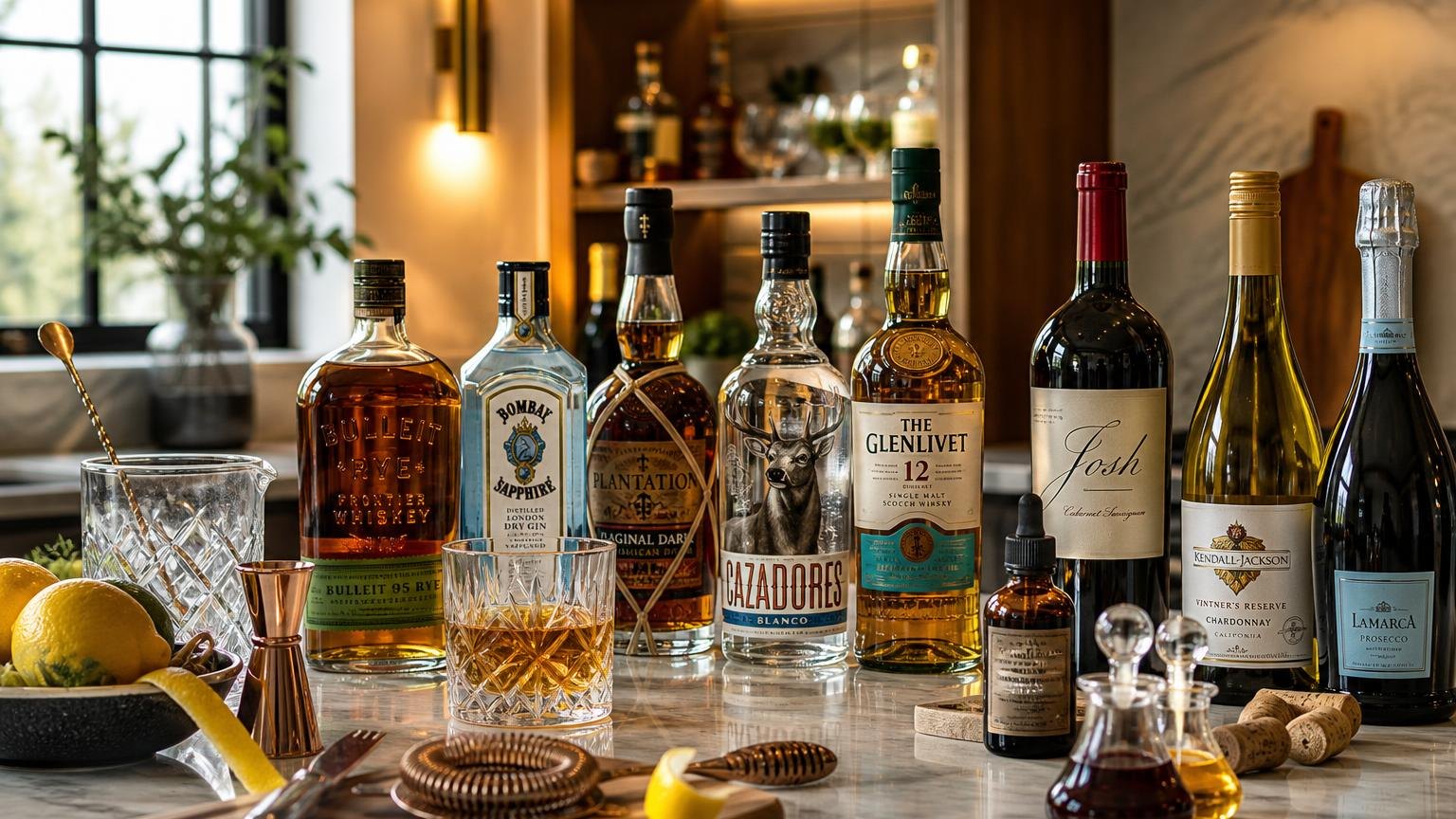
In U.S. labeling, 101 proof means 50.5% alcohol by volume. That strength sits above the 80-proof minimum for most straight spirits, so producers use it when they want more aroma, body, and mixing power without moving into full barrel-proof territory.
The category most closely associated with 101 is American whiskey, especially bourbon and rye. Wine is not part of this segment: table wine usually lands near 10% to 15% ABV, and even fortified wine such as Port or Sherry is far below 101 proof.
| Category | Typical 101 Bottlings | Why 101 Works |
| Bourbon | Wild Turkey 101 Bourbon; Maker’s Mark 101 | Higher proof carries oak, vanilla, and spice through dilution and ice. |
| Rye whiskey | Wild Turkey 101 Rye | Boosts pepper, mint, and grain character in cocktails. |
| Rum | Bacardí Gold 151 is stronger, but 101-proof rum has historically appeared in dark and spiced styles | Extra alcohol supports molasses, caramel, and baking-spice notes. |
| Brandy and liqueurs | Less common at 101 | Most are bottled lower to preserve sweetness or softness. |
Wild Turkey 101 is the benchmark example. The bourbon is bottled at 50.5% ABV and is made from a mashbill of about 75% corn, 13% rye, and 12% malted barley, with barrels aged in heavily charred new oak.
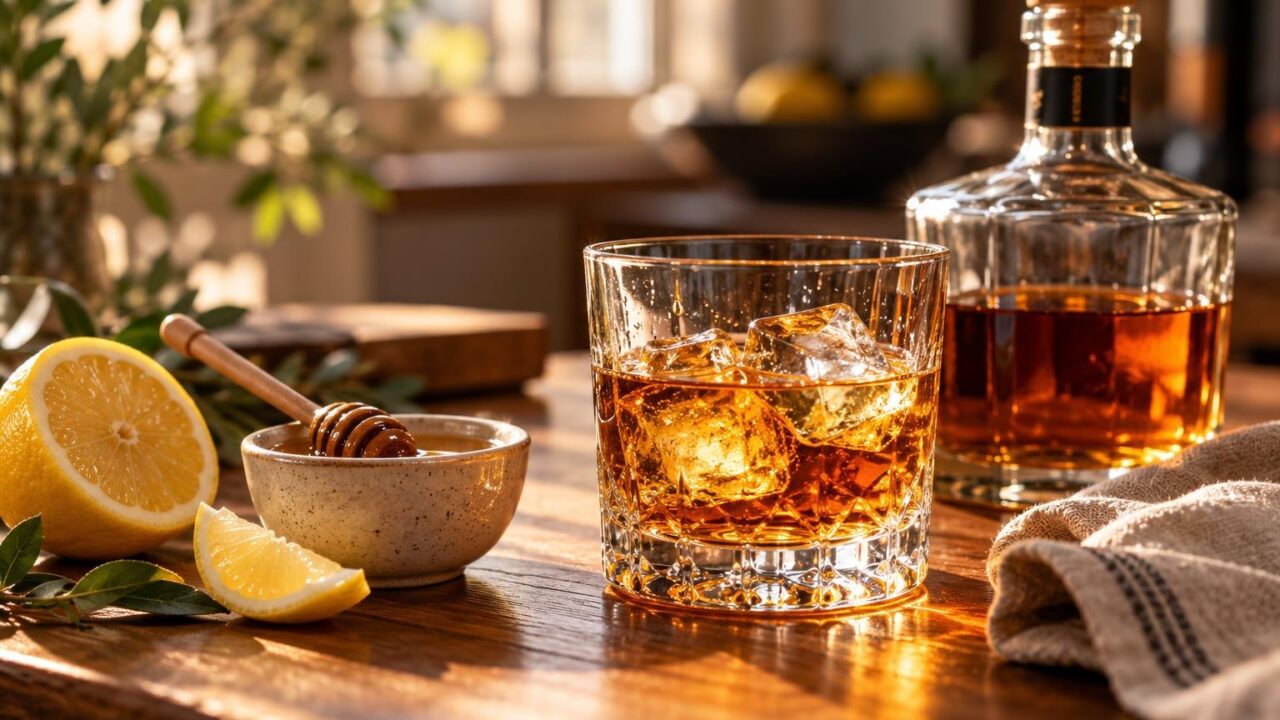
That proof matters in the glass. At 101, bourbon usually shows firmer texture than 80- or 90-proof versions, and it stands up better in drinks such as the Old Fashioned, Whiskey Sour, and Boulevardier after ice and mixers reduce concentration.
Rye also performs well at 101 because its spice-driven profile can thin out at lower strength. Wild Turkey 101 Rye, for example, keeps black pepper, citrus peel, and herbal notes intact when stirred with vermouth or shaken with lemon.
Rum has a smaller 101-proof footprint today than whiskey, but the format has a long retail history in the U.S.
Darker 101-proof rums were favored for punches, tiki drinks, and baking because they delivered more flavor per ounce than standard 80-proof bottlings.
- 101 proof equals 50.5% ABV.
- Bourbon and rye are the most common modern 101 categories.
- Wine is not normally bottled anywhere near 101 proof.
- Higher proof improves cocktail structure and flavor persistence.
Proof Versus ABV
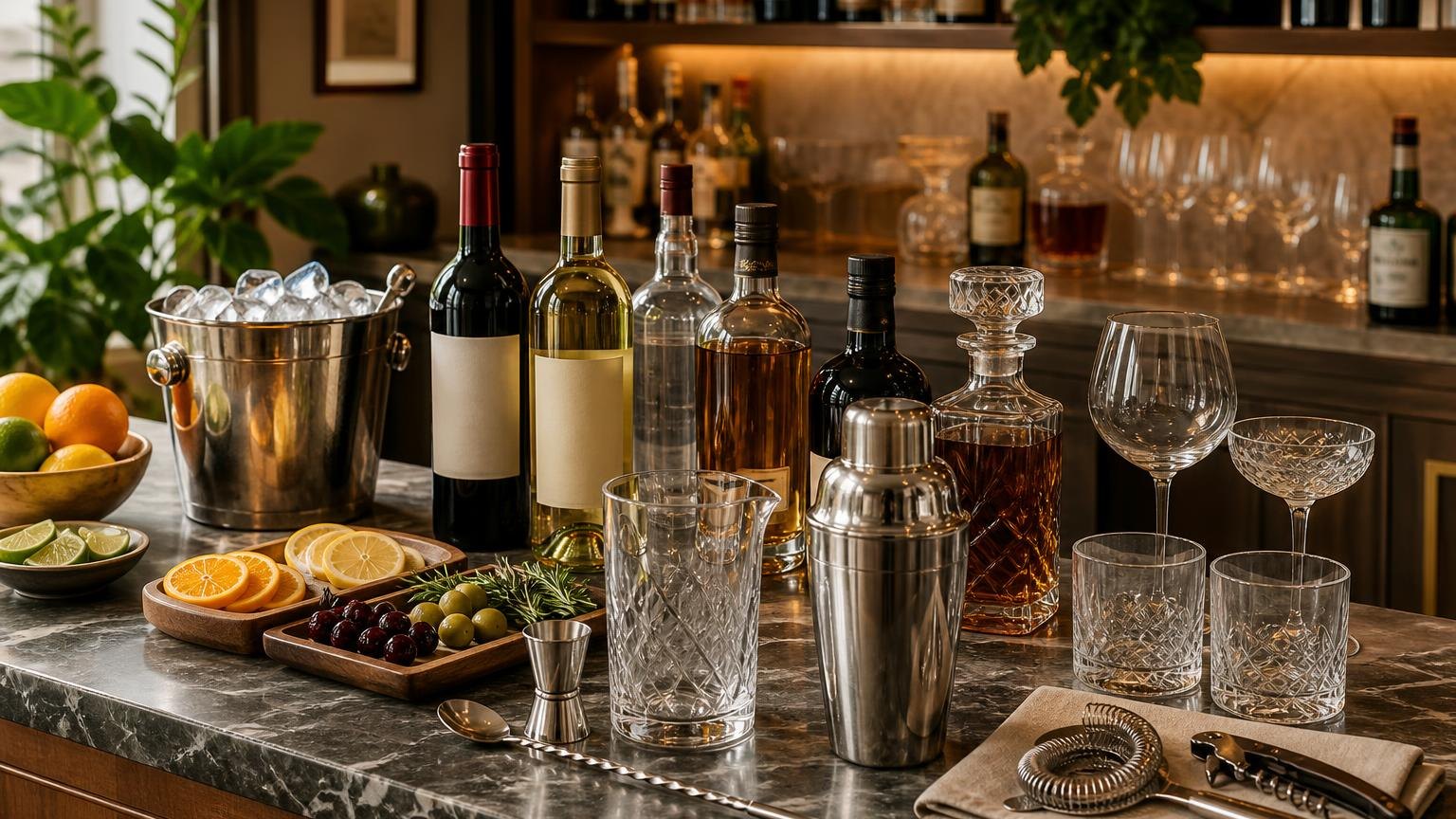
Proof and ABV both measure alcohol, but they are not interchangeable terms. In the United States, proof is exactly double the alcohol by volume number. A bottle labeled 40% ABV is 80 proof, while 50.5% ABV is 101 proof.
ABV means the percentage of a beverage’s total volume that is pure ethanol. It is the standard measure used worldwide for wine, beer, and spirits. Proof survives mostly as a spirits label term in the U.S. market.
| Measure | What it means | U.S. conversion |
| ABV | Percent of total liquid volume that is alcohol | Direct percentage |
| Proof | Alcohol strength scale used mainly for distilled spirits | Proof = ABV × 2 |
The U.S. system is straightforward. Divide proof by 2 to get ABV, or multiply ABV by 2 to get proof. That is why 80-proof vodka contains 40% alcohol by volume, and 101-proof whiskey contains 50.5% ABV.
| Label | ABV | U.S. proof |
| Table wine | 12% | 24 proof |
| High-alcohol wine | 15% | 30 proof |
| Standard spirit | 40% | 80 proof |
| Overproof spirit | 57% | 114 proof |
| “101” spirit | 50.5% | 101 proof |
Wine is almost always discussed in ABV, not proof. Most still wines fall around 11% to 14.5% ABV, though some cool-climate bottles sit lower and some ripe, warm-climate reds or fortified styles run higher.
Saying a wine is “24 proof” is mathematically correct, but uncommon in real service or retail.
Proof matters more with liquor because small ABV changes affect body, aroma release, and drink balance. A whiskey at 43% ABV, 46% ABV, and 50.5% ABV will taste progressively hotter and carry flavors differently, even before dilution in a cocktail.
- Use ABV for wine buying, food pairing, and comparing styles.
- Use proof for quick reading of spirit strength on U.S. bottles.
- Remember that “101” always means stronger than standard 80-proof liquor.
For “101 liquor and wine,” the key takeaway is simple. ABV is the core number, proof is the doubled U.S. shorthand, and wine culture relies on ABV far more than proof.
How 101 Liquor Tastes
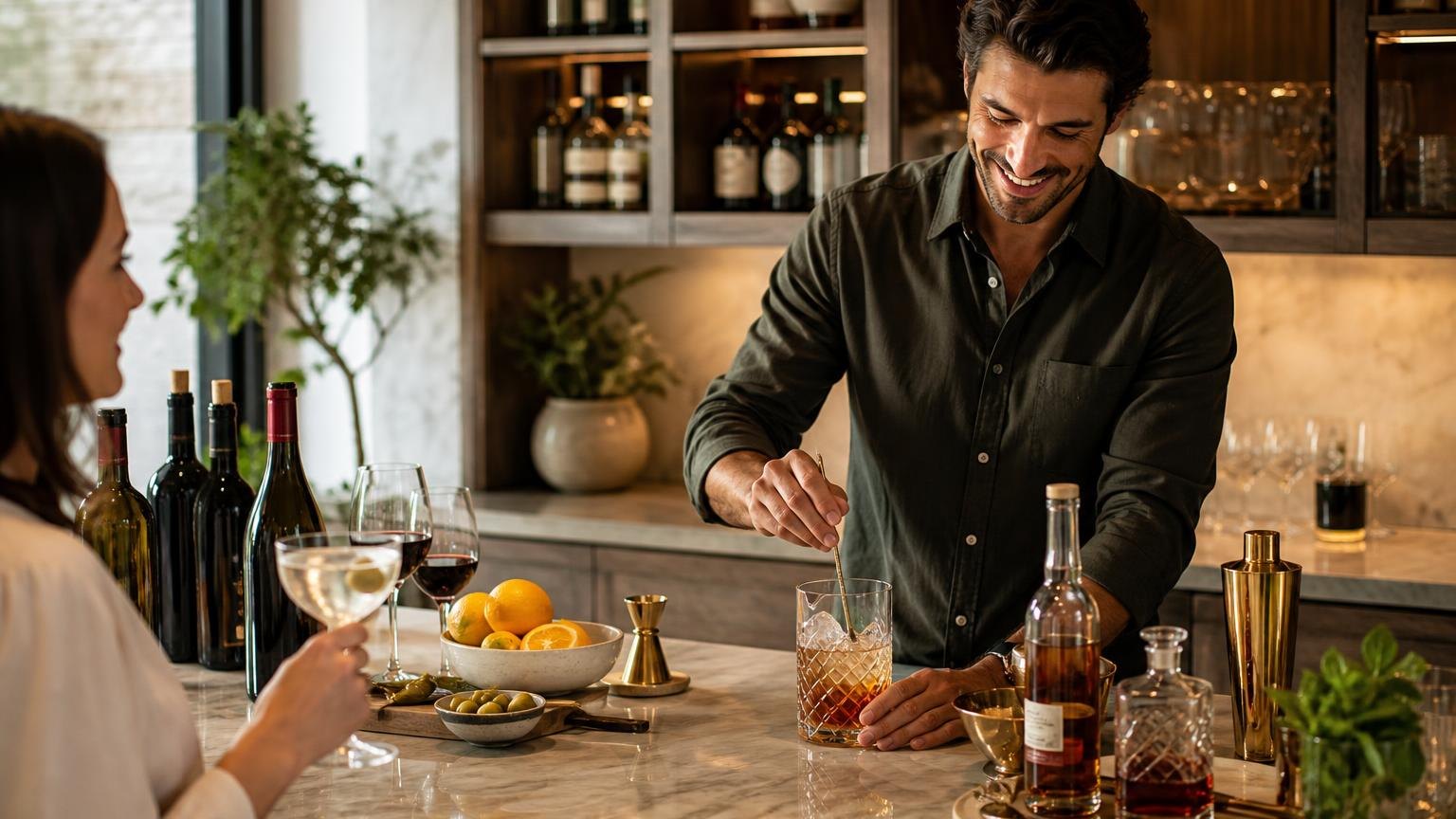
“101 liquor” usually means a spirit bottled at 101 proof, or 50.5% alcohol by volume. At that strength, the first impression is not subtle: more heat, faster aroma release, and a longer finish than standard 80-proof spirits.
The flavor depends on the base spirit, but 101 proof changes texture and intensity in predictable ways.
Ethanol carries aroma compounds aggressively, so caramel, spice, oak, pepper, and dried-fruit notes often smell louder before the liquid even reaches the palate.
Neat, 101 proof typically hits in three stages. First comes a sharp alcohol prickle on the lips and front palate. Then the spirit’s core flavors open, often with sweetness in bourbon or rum, grain in whiskey, or juniper and citrus in gin.
The finish is longer and warmer than lower-proof bottles. Heat can sit on the tongue, cheeks, and throat for 20 to 60 seconds, especially if the spirit is young or oak-forward. Better-made 101-proof bottles feel concentrated, not simply hot.
| Style | Typical ABV | Common taste effect |
| Table wine | 12% to 15% | Soft warmth, clearer fruit, little burn |
| Standard liquor | 40% ABV, 80 proof | Noticeable heat, balanced body |
| 101 liquor | 50.5% ABV, 101 proof | Stronger burn, denser flavor, longer finish |
Sweetness is often perceived differently at 101 proof. Alcohol can suppress delicate fruit while amplifying barrel notes such as vanilla, char, clove, cocoa, and toasted nuts.
In bourbon, that can make the sip feel drier even when the nose suggests brown sugar.
Texture matters. High-proof liquor often feels more viscous because ethanol and dissolved compounds create a heavier mouthfeel. That weight can make rye taste sharper, bourbon taste richer, and overproof rum taste more molasses-driven.
Water changes the experience quickly. A teaspoon added to a 1.5-ounce pour can lower perceived burn and release esters, making citrus, floral, or stone-fruit aromas easier to detect. Bartenders use dilution for the same reason in stirred cocktails.
- Expect more nose intensity than at 80 proof.
- Expect a stronger throat finish than wine or standard spirits.
- Look for concentrated oak, spice, and sugar notes in aged spirits.
- Add a few drops of water if the alcohol masks detail.
Compared with wine, 101 liquor tastes less about acidity and more about impact. Wine usually shows fruit and tannin first. A 101-proof spirit shows alcohol structure first, then the underlying grain, botanical, cane, or barrel character.
Mixing Drinks With 101 Liquor
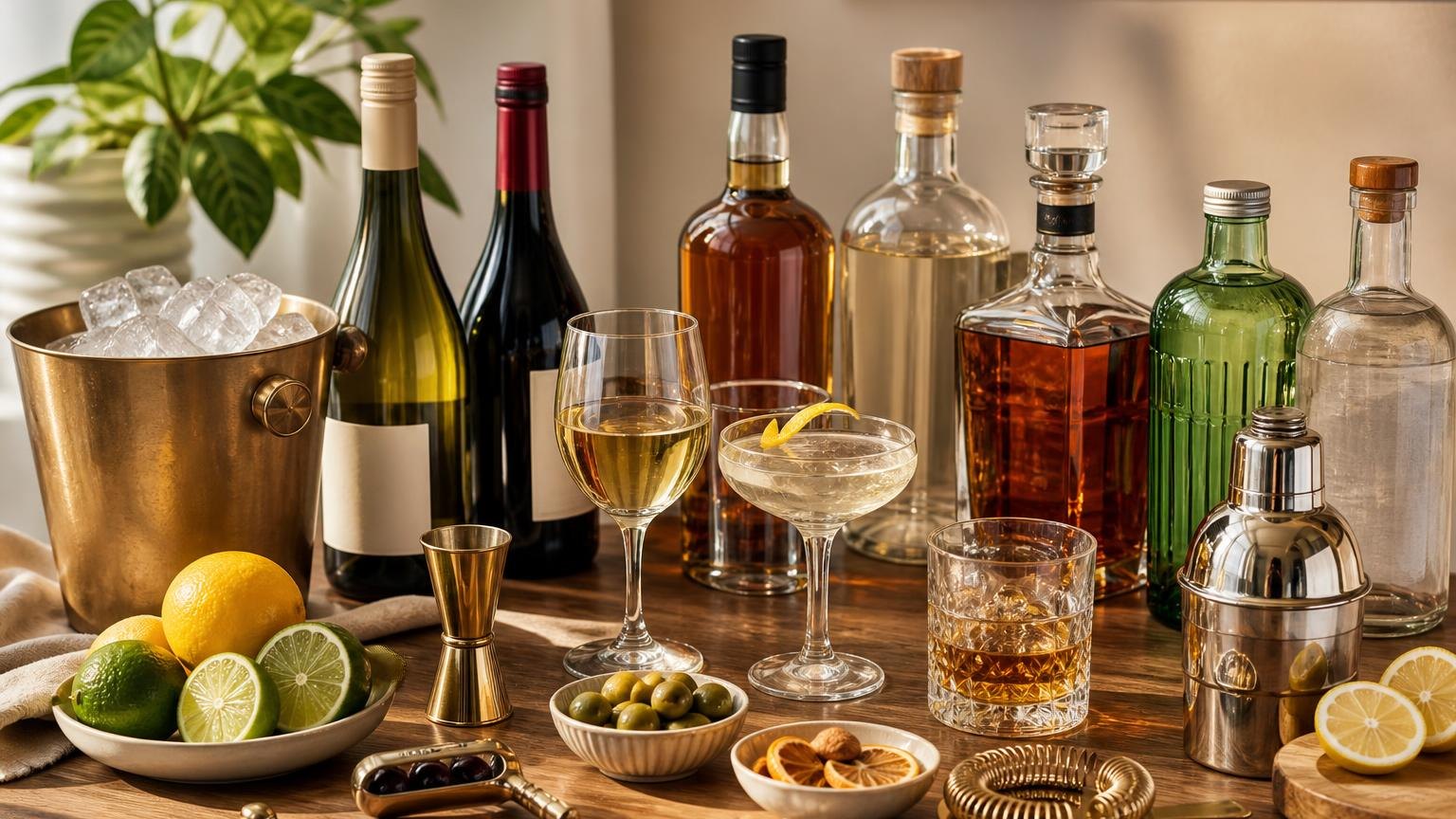
101-proof liquor is 50.5% alcohol by volume, so it hits harder than the 80-proof spirits used in many standard recipes. Mixing it well means controlling dilution, sweetness, and serving size, not simply swapping it ounce for ounce.
A full 1.5-ounce pour of 101-proof spirit contains about 0.76 fluid ounces of pure alcohol. That equals roughly 1.26 U.S. standard drinks, because one standard drink contains 0.6 fluid ounces of ethanol.
Start by reducing the base spirit or increasing water input. In practice, that means smaller pours, longer shaking, more ice, or longer drinks with soda, tonic, or citrus.
| Measure | 80-proof spirit | 101-proof spirit |
| ABV | 40% | 50.5% |
| Pure alcohol in 1.5 oz | 0.60 oz | 0.76 oz |
| Approx. U.S. standard drinks in 1.5 oz | 1.00 | 1.26 |
For spirit-forward cocktails, use 1.25 ounces of 101 proof where a recipe calls for 1.5 ounces of 80 proof. That keeps the drink closer in total alcohol while preserving the spice, oak, or grain intensity that higher proof carries.
Shaken drinks can absorb about 20% to 30% water from ice, depending on ice size, shake time, and temperature. That extra dilution matters with 101-proof bourbon, rye, or rum because it rounds heat and opens aroma.
| Drink style | Practical 101-proof pour | Mixer target |
| Old Fashioned | 1.25 oz | 0.25 oz syrup, 2-3 dashes bitters |
| Whiskey Sour | 1.5 oz | 0.75 oz lemon, 0.5-0.75 oz syrup |
| Highball | 1.5 oz | 4-6 oz soda or ginger ale |
| Tiki-style mix | 1-1.25 oz | 2-4 oz juice plus citrus |
Sweetness needs tighter control. Higher proof can make sugar feel thinner, so bartenders often increase syrup by 0.125 to 0.25 ounce, then taste after dilution instead of building an overly sweet drink from the start.
Wine is a poor mixer for most 101-proof spirits because fortified, tannic, or acidic flavors can clash and alcohol stacks fast. If combining them, use a sangria or punch format with fruit, ice, and a low spirit dose of 0.5 to 1 ounce per glass.
- Use large, solid ice for stirred drinks to chill without excessive melt.
- Use crushed or pebble ice for high-proof tropical drinks to add fast dilution.
- Add soda last to preserve carbonation and avoid flattening the drink.
- Taste after 10 to 15 seconds of shaking or stirring, then adjust sweetness or citrus.
The safest rule is simple: treat 101-proof liquor as a stronger ingredient, not a direct substitute. Smaller pours and deliberate dilution produce a better-balanced drink and a more accurate serving strength.
Buying 101 Liquor and Wine
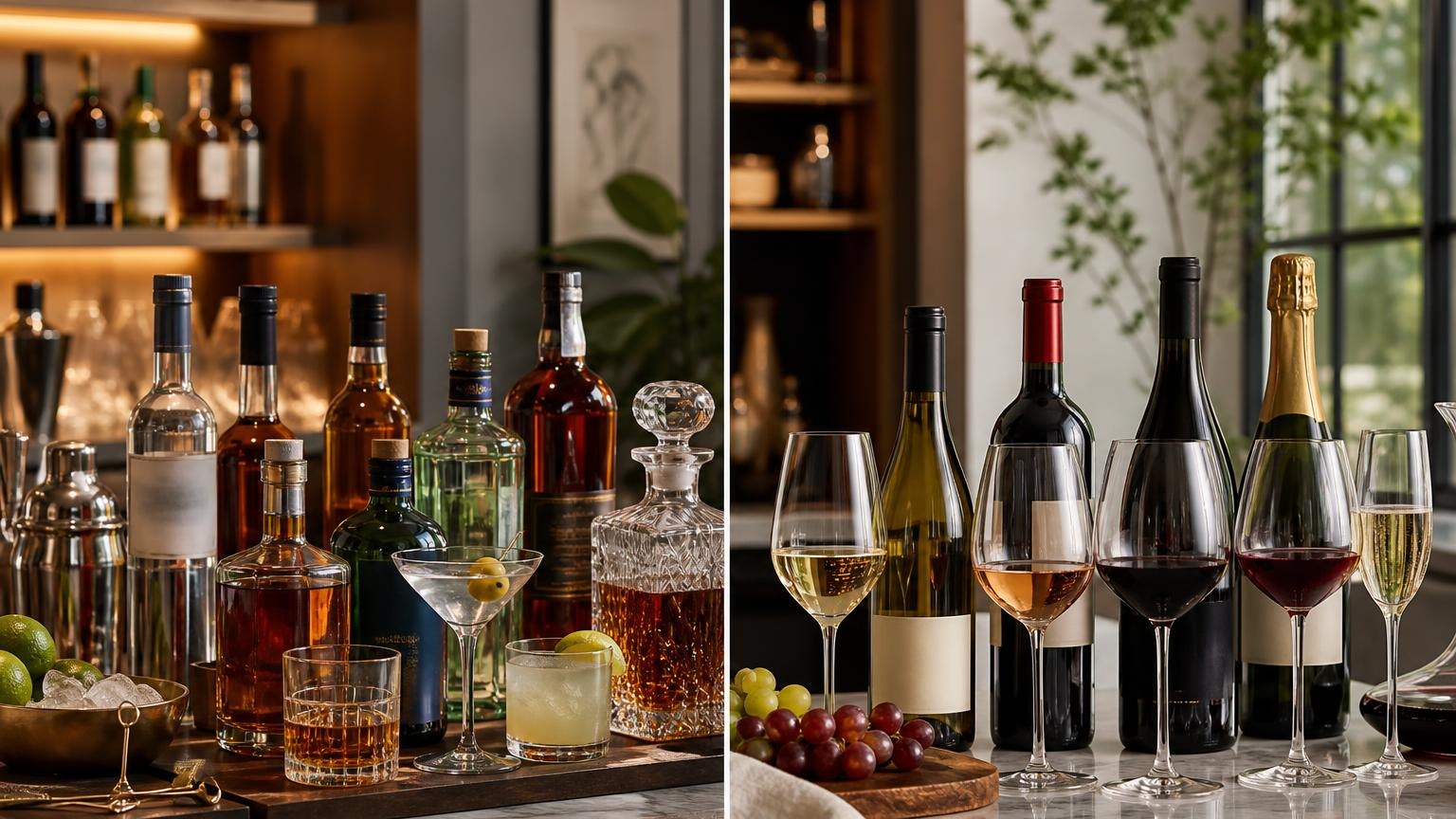
Buy liquor and wine by matching the bottle to the occasion, the alcohol level, and the real pour count. A low shelf price can be misleading if the bottle is small, overproof, or unsuitable for how you plan to serve it.
Start with bottle size and servings. In the U.S., wine is usually sold in 750 mL bottles, while spirits commonly come in 750 mL and 1.75 L formats. A standard wine pour is 5 ounces, and a standard spirits drink contains 1.5 ounces of 80-proof liquor.
| Product | Common bottle size | Typical serving | Approximate servings |
| Wine | 750 mL | 5 oz | 5 servings |
| Spirits | 750 mL | 1.5 oz | 16 servings |
| Spirits | 1.75 L | 1.5 oz | 39 servings |
Read the label before price-comparing. Wine labels usually show alcohol by volume, or ABV, as a percentage. Spirits may show ABV and proof; in the U.S., proof is double the ABV, so 40% ABV equals 80 proof.
| Label term | What it means |
| 12.5% ABV wine | 12.5% alcohol by volume |
| 80 proof vodka | 40% ABV |
| 100 proof whiskey | 50% ABV |
For wine, vintage matters more in some categories than others. Non-vintage Champagne is blended for house consistency, while a single-vintage Pinot Noir or Cabernet can vary noticeably by year, weather, and region.
For spirits, age statements matter when they are legally defined. Straight bourbon must be aged at least 2 years. If it is under 4 years old, the label must state the age. Bottled-in-bond spirits must be 100 proof and aged at least 4 years.
- Check the importer or producer. Reputable names reduce the risk of poor storage or counterfeit packaging.
- Inspect fill level and closure. A low fill or damaged cork can signal heat exposure or oxidation, especially in older wine.
- Compare price per ounce, not only shelf price. Large-format bottles often cut the per-serving cost.
- Ask how you will serve it. Neat pours, cocktails, and food pairing need different bottles.
Store the purchase correctly after checkout. Keep wine away from heat and light, and keep distilled spirits tightly sealed. Bad storage can ruin value faster than buying the wrong label.
Questions Readers Ask
What does “101” mean in liquor and wine education?
“101” signals beginner-level instruction: core definitions, major categories, serving basics, and simple buying guidance.
In alcohol, that usually means learning ABV, standard pour sizes, main wine styles, and the difference between spirits, wine, beer, and liqueurs.
What is the difference between liquor, spirits, and liqueurs?
“Liquor” and “spirits” are commonly used the same way in the U.S.: distilled alcoholic beverages such as vodka, whiskey, rum, gin, and tequila.
Liqueurs are spirits flavored with ingredients like fruit, herbs, cream, or nuts and usually sweetened, such as triple sec, amaretto, or Baileys.
How strong are wine and liquor compared with each other?
Table wine usually ranges from about 11% to 15% ABV, while most straight spirits are bottled near 40% ABV, or 80 proof in the U.S. That strength gap explains why a standard serving is 5 ounces for wine but 1.5 ounces for distilled spirits.
What does “proof” mean on a bottle?
In the U.S., proof is simply double the alcohol by volume number for spirits. A bottle labeled 80 proof is 40% ABV, and 100 proof means 50% ABV.
How should beginners start learning wine styles?
Start with broad categories: red, white, rosé, sparkling, and dessert wine, then compare common grapes such as Cabernet Sauvignon, Pinot Noir, Chardonnay, and Sauvignon Blanc.
Taste two wines side by side, note acidity, body, sweetness, and tannin, and the differences become easier to remember.
What are the main types of liquor a beginner should know?
The six core categories are vodka, gin, rum, tequila, whiskey, and brandy. Each is defined by its base ingredient or production method: rum from sugarcane, tequila from blue agave, whiskey from grain, and brandy from distilled wine or fruit.
How long do wine and liquor last after opening?
Most table wines show best for about 3 to 5 days after opening when recorked and refrigerated, while sparkling wine often fades faster, often within 1 to 3 days.
Distilled spirits last much longer because of higher alcohol; an opened bottle can remain drinkable for years, though air exposure slowly dulls aroma and flavor.
What is the simplest way to pair wine or liquor with food?
Match intensity first: lighter dishes with lighter wines or cocktails, richer dishes with fuller-bodied wines or spirit-forward drinks.
High-acid wines help with salty or fatty foods, while sweeter drinks work better with spicy dishes because sugar softens heat.
Related Reading
- How Much Wine In A Glass?
- Why Store Wine On Its Side? Complete 2026 Guide for Proper Wine Storage
- What Is the Alcohol Content of Black Box Wine?
- Best Buy Wine and Liquor: The Complete 2026 Guide to Quality, Pricing & Top Picks
- Black Friday Wine Deals
- How Many Calories Are in Taylor Port Wine?
- How Many Calories In A Glass Of Prosecco? Get Answer Now
- All Alcohol Guides
- National Institute on Alcohol Abuse and Alcoholism (2025)
- Centers for Disease Control and Prevention (2024)
- U.S. Food and Drug Administration (2024)
- U.S. Department of Agriculture and U.S. Department of Health and Human Services (2020)
- Harvard T.H. Chan School of Public Health (2024)
- Encyclopaedia Britannica (2024)
- Encyclopaedia Britannica (2024)
- Wine & Spirit Education Trust (2024)
- MedlinePlus (2024)