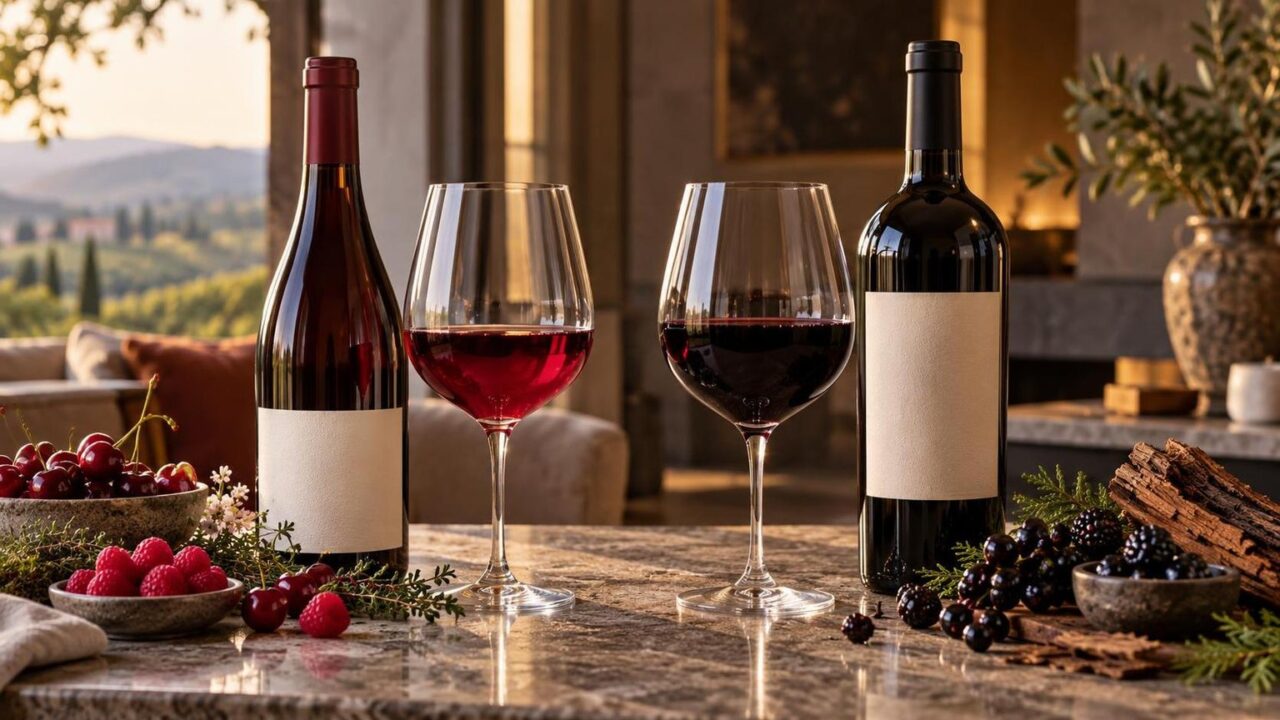
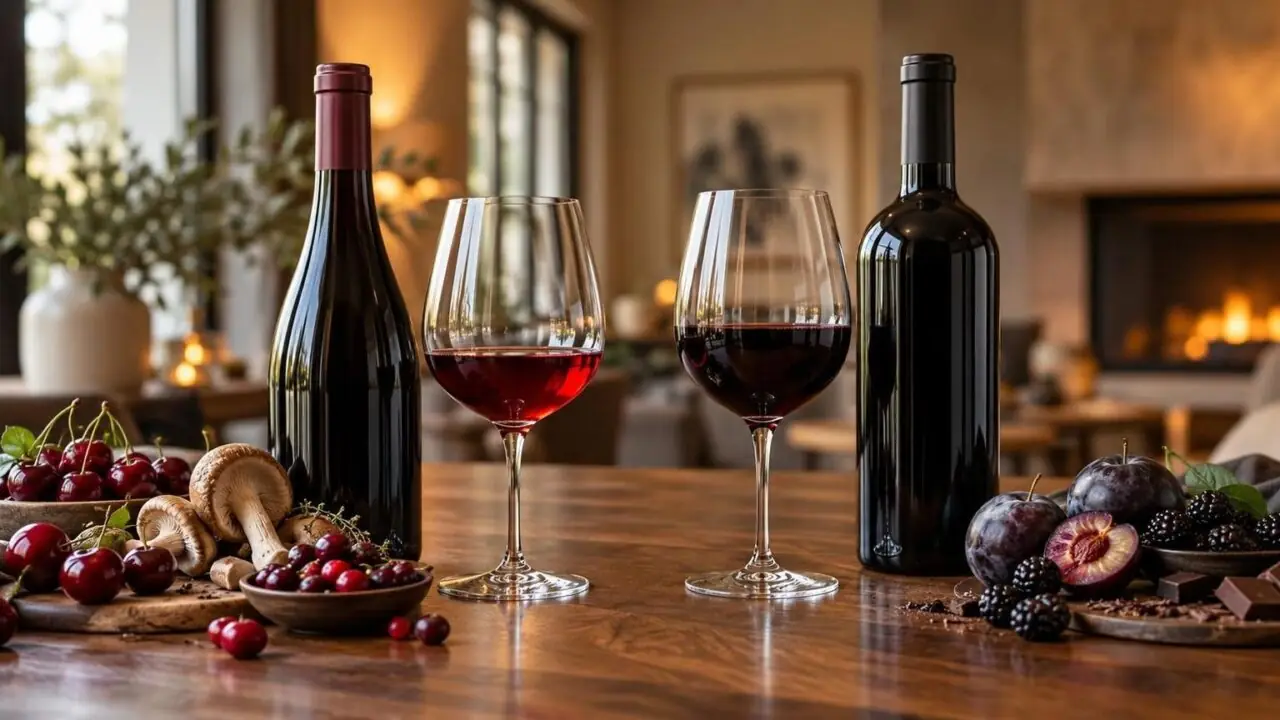
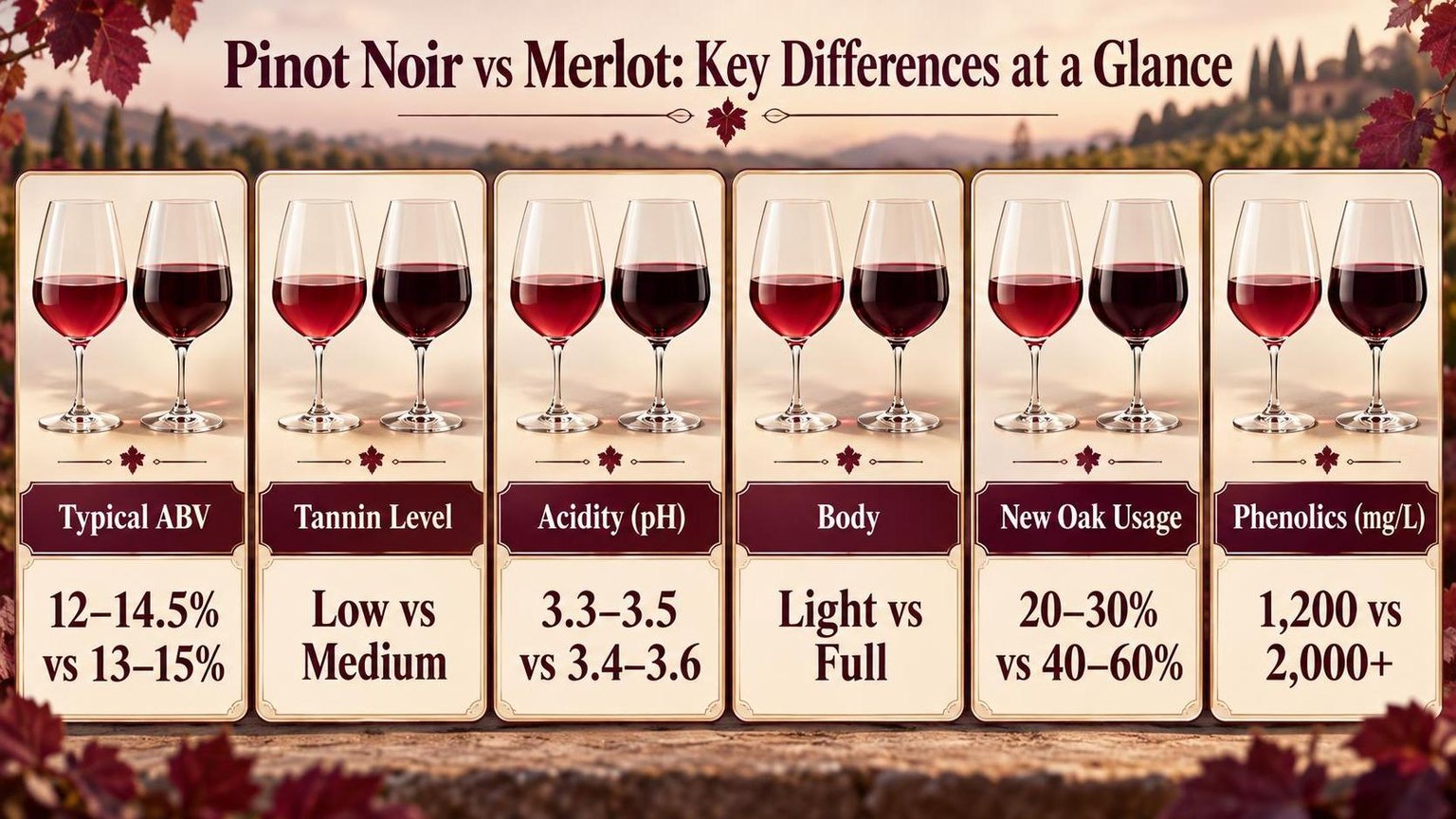
The difference between pinot noir and merlot is that Pinot Noir typically has a lighter body and tart cherry flavors, while Merlot generally feels fuller and tastes of ripe plum.
Pinot Noir usually brings higher acidity and less tannin; Merlot offers a rounder texture and firmer structure.
Those differences shape what you taste and what works alongside dinner. Pinot Noir complements salmon, mushrooms, and roast chicken, while Merlot suits burgers, lamb, and beef.
Climate, ripeness, and oak aging can blur these contrasts, so this guide compares typical styles, food pairings, and practical clues for choosing bottles.
Pinot Noir vs Merlot Flavor Profiles
Pinot Noir and Merlot occupy different ends of the red wine flavor spectrum.
Pinot Noir delivers bright, red-fruit-driven aromatics with earthy undertones, while Merlot leans toward darker fruit, plush texture, and softer tannins that coat the palate.
Primary Fruit Characteristics
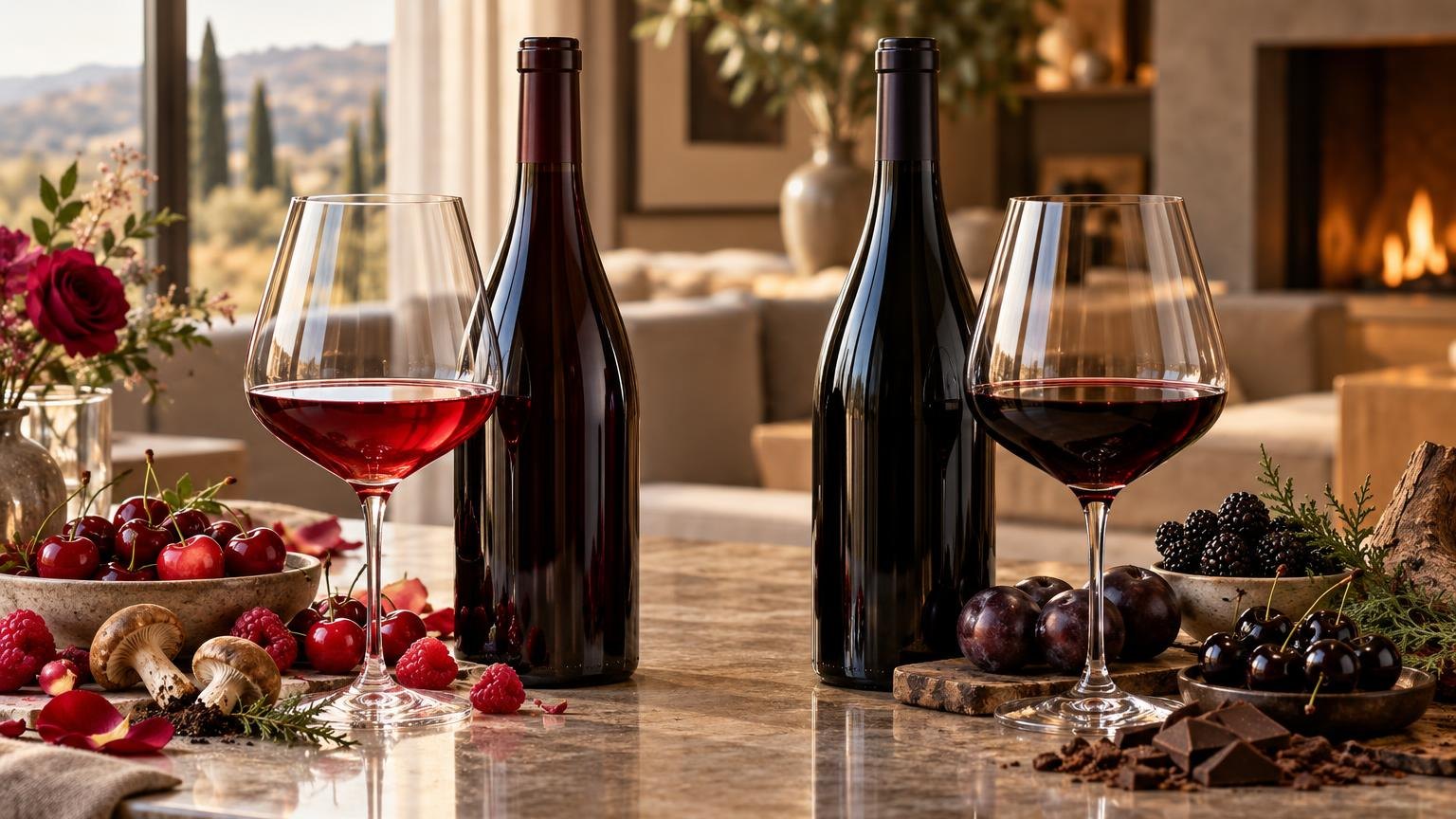
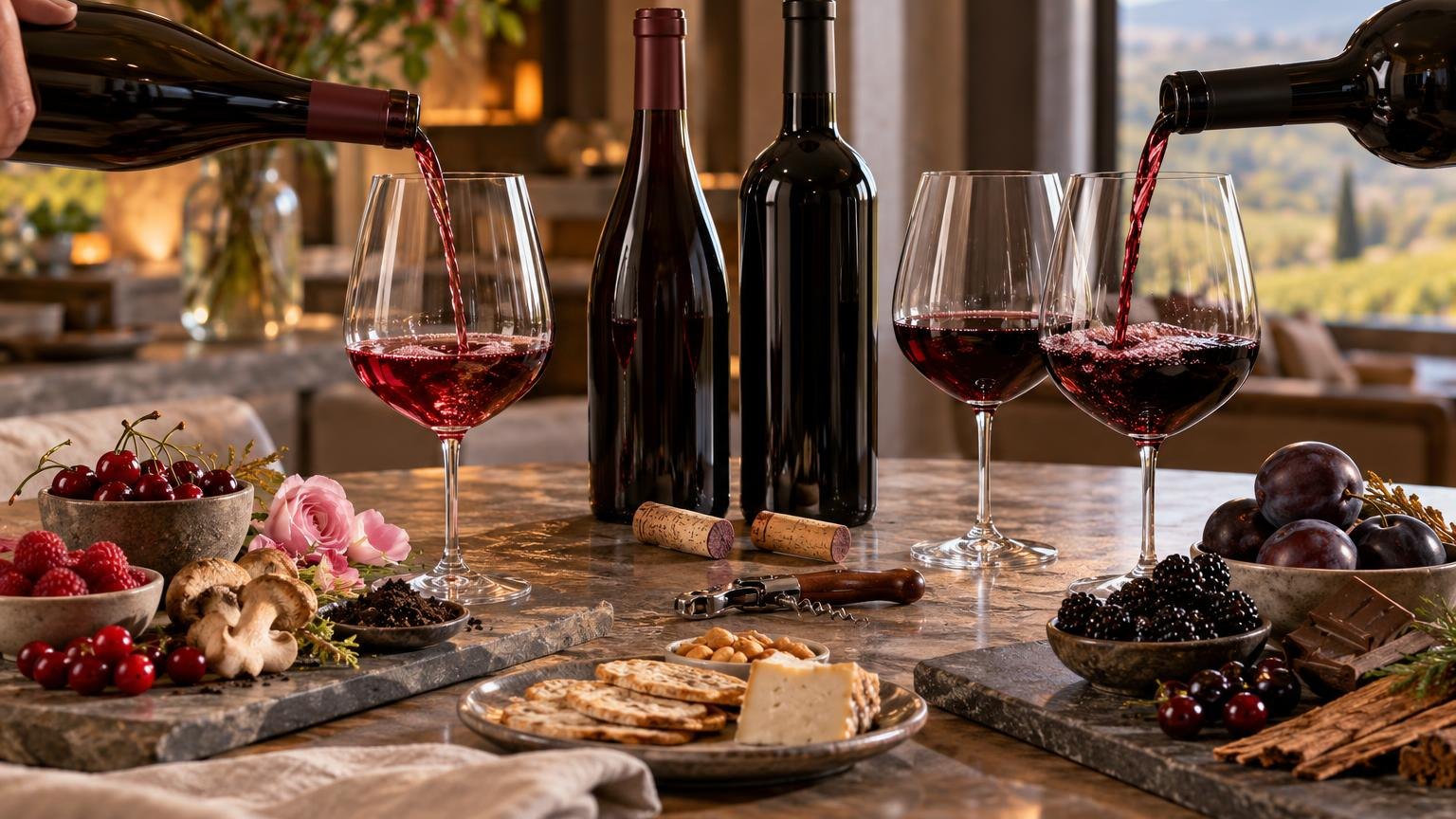
Pinot Noir’s thin skin produces lighter pigmentation and delicate fruit flavors centered on red cherry, raspberry, and strawberry. Cranberry notes emerge in cooler-climate examples from Burgundy or Oregon’s Willamette Valley.
Merlot’s thicker skin generates deeper color extraction and darker fruit profiles. Dominant flavors include black cherry, plum, and blackberry, with ripe fig appearing in warmer-climate bottlings from Napa Valley or Stellenbosch.
Secondary and Tertiary Notes
| Attribute | Pinot Noir | Merlot |
| Earthy notes | Forest floor, mushroom, wet leaves | Graphite, gravel, tobacco |
| Spice notes | Clove, cinnamon, star anise | Vanilla, cocoa, black pepper |
| Herbal notes | Dried rose petal, tea leaf | Bay leaf, mint, eucalyptus |
| Oak influence | Subtle; often aged in neutral or 20–30% new oak | Prominent; commonly aged in 40–60% new French oak |
Aged Pinot Noir (10+ years) develops truffle, leather, and dried cherry complexity. Aged Merlot shifts toward cedar, dark chocolate, and dried herb characteristics over a similar timeframe.
Structural Comparison
| Metric | Pinot Noir | Merlot |
| Typical ABV | 12–14.5% | 13–15% |
| Tannin level | Low to medium | Medium, soft and round |
| Acidity | High (pH 3.3–3.5) | Moderate (pH 3.4–3.6) |
| Body | Light to medium | Medium to full |
| Residual sugar | 1–3 g/L (dry) | 1–4 g/L (dry) |
Pinot Noir’s higher natural acidity creates a lifted, vibrant mouthfeel. Merlot’s lower acidity and rounder tannin structure produce a velvety, approachable texture even in youth.
Climate Impact on Flavor
- Cool-climate Pinot Noir (Burgundy, Sonoma Coast): tart red fruit, minerality, and pronounced earthiness
- Warm-climate Pinot Noir (Central Otago, Santa Barbara): riper cherry, cola, and baking spice
- Cool-climate Merlot (Pomerol, Washington State): firm tannins, blackcurrant, and herbal complexity
- Warm-climate Merlot (Napa Valley, Chile): jammy plum, chocolate, and supple tannins
Pomerol Merlot from Bordeaux’s Right Bank, grown on clay-rich soils, routinely scores 95+ points and commands prices above $200 per bottle. These wines demonstrate Merlot’s capacity for extraordinary complexity.
Burgundy Grand Cru Pinot Noir from vineyards like Romanée-Conti or Chambertin represents the grape’s pinnacle, with prices exceeding $1,000 and aging potential spanning 20–50 years.
How Body and Tannins Differ
Body and tannin levels represent the most immediately perceptible differences between Pinot Noir and Merlot. These structural elements shape how each wine feels in your mouth, influence food pairing decisions, and determine aging potential.
Understanding Wine Body
Wine body correlates directly with alcohol and extract levels. Pinot Noir typically registers 12–13.5% ABV, producing a light-to-medium body. Merlot ranges from 13.5–15% ABV, delivering a medium-to-full body.
| Attribute | Pinot Noir | Merlot |
| Typical ABV | 12–13.5% | 13.5–15% |
| Body Classification | Light to Medium | Medium to Full |
| Tannin Level | Low to Medium-Low | Medium to Medium-High |
| Skin Thickness | Thin | Moderately Thick |
| Total Phenolic Content (mg/L) | ~1,200–1,800 | ~2,000–3,000 |
| Glycerol Content | Lower | Higher |
| Residual Sugar (dry examples) | 0–2 g/L | 0–3 g/L |
Tannin Structure Explained
Tannins are polyphenolic compounds extracted primarily from grape skins, seeds, and stems during fermentation. They create the drying, gripping sensation on your gums and inner cheeks.
Pinot Noir grapes have notably thin skins. This physical characteristic limits tannin extraction, typically yielding total phenolic concentrations around 1,200–1,800 mg/L in finished wines.
Merlot’s moderately thick skins contribute substantially more phenolic material. Finished Merlot wines commonly reach 2,000–3,000 mg/L in total phenolics, roughly 60–70% higher than Pinot Noir.
How This Affects Mouthfeel
Pinot Noir delivers a silky, almost translucent texture. The low tannin grip allows bright acidity to dominate the palate, creating a sensation wine professionals describe as “lifted.”.
Merlot presents a rounder, plusher mouthfeel. Its moderate tannins combine with higher glycerol levels to produce a velvety mid-palate weight that coats the tongue more completely.
- Pinot Noir tannins: Fine-grained, delicate, often described as powdery or chalky; resolve quickly on the finish
- Merlot tannins: Softer and rounder than Cabernet Sauvignon but noticeably firmer than Pinot Noir; linger on the mid-palate
- Oak influence: Merlot more frequently sees 12–18 months in new French or American oak barrels, adding hydrolyzable tannins that reinforce structure
- Aging trajectory: Merlot’s higher tannin reserves allow top examples to age 10–20+ years; most Pinot Noir peaks within 5–12 years
Why Winemaking Amplifies the Gap
Pinot Noir fermentations often use 20–40% whole clusters, adding stem tannins selectively. Maceration typically lasts 10–18 days to preserve the grape’s inherent delicacy.
Merlot undergoes longer maceration periods of 14–28 days at warmer temperatures. Extended skin contact extracts deeper color, more tannin, and greater phenolic complexity from the thicker skins.
These winemaking choices deliberately accentuate each variety’s natural structural profile rather than working against it, which is why the body and tannin contrast remains consistent across most regions and price points.
Pinot Noir vs Merlot Acidity
Acidity defines the structural backbone of red wine and sharply separates Pinot Noir from Merlot. Pinot Noir consistently registers higher total acidity, creating its bright, lifted palate profile.
Merlot sits lower on the acid scale, producing the softer, rounder mouthfeel drinkers associate with the variety.
Measurable Acidity Differences
Total acidity (TA) and pH provide the two standard measurements for comparing wine acidity. Lower pH and higher TA both indicate a more acidic wine.
| Metric | Pinot Noir | Merlot |
| Typical pH range | 3.4–3.6 | 3.5–3.8 |
| Total acidity (g/L) | 5.5–7.0 | 4.5–5.8 |
| Malic acid at harvest (g/L) | 2.0–4.5 | 1.5–3.0 |
| Tartaric acid (g/L) | 2.5–4.0 | 2.0–3.5 |
Pinot Noir’s pH averages roughly 0.2 units lower than Merlot’s. Because the pH scale is logarithmic, that 0.2-unit gap means Pinot Noir can be approximately 1.6 times more acidic in hydrogen ion concentration.
Why Pinot Noir Is Naturally More Acidic
Several viticultural factors drive the acidity gap between these two grapes.
- Ripening climate: Pinot Noir thrives in cool regions like Burgundy (average growing season temperature 14.5–16°C) where acids degrade slowly. Merlot favors warmer sites like Bordeaux’s Right Bank (16–18°C), accelerating acid metabolism.
- Early ripening: Merlot ripens 1–2 weeks before Cabernet Sauvignon, accumulating sugar faster and metabolizing malic acid more rapidly through cellular respiration.
- Skin thickness: Merlot’s thinner skin-to-juice ratio relative to its berry size contributes less tartaric acid extraction during fermentation compared to Pinot Noir’s small, tightly packed clusters.
- Malolactic fermentation effect: Both wines undergo MLF, converting sharp malic acid to softer lactic acid. Pinot Noir starts with more malic acid, so it retains a higher residual acid level post-conversion.
How Acidity Shapes the Tasting Experience
Pinot Noir’s elevated acidity produces a mouthwatering, salivating sensation that lifts red fruit flavors like cranberry and tart cherry. This acid structure also contributes to Burgundy’s legendary aging potential.
Merlot’s moderate acidity lets its ripe plum and black cherry fruit dominate without a sharp acidic edge. The lower TA creates a velvety, approachable texture even in young wines.
At the dinner table, Pinot Noir’s acidity cuts through fatty dishes like roast duck or salmon with a butter sauce. Merlot’s gentler acid profile pairs better with medium-weight proteins such as roasted pork loin or mushroom risotto.
Regional Variations to Consider
Climate overrides variety in extreme cases. A cool-climate Merlot from Washington State’s Columbia Valley (pH 3.45–3.55) can match a warm-vintage Pinot Noir from California’s Russian River Valley.
However, when grown in comparable conditions, Pinot Noir reliably delivers 15–25% higher total acidity than Merlot from the same vintage.
Growing Regions and Climate Preferences
Pinot Noir and Merlot thrive in fundamentally different climates, which directly shapes where each grape dominates globally.
Pinot Noir demands cool conditions that most regions cannot reliably provide, while Merlot adapts across a broader temperature spectrum.
Pinot Noir: A Cool-Climate Specialist
Pinot Noir ripens best at average growing-season temperatures between 14°C and 16°C (57–61°F). It buds early, making it vulnerable to spring frost, and its thin skin invites rot in humid conditions.
Burgundy, France, remains the grape’s spiritual home, with roughly 12,000 hectares planted across the Côte d’Or, Côte Chalonnaise, and Mâconnais sub-regions.
Oregon’s Willamette Valley has emerged as a leading New World counterpart, with over 700 wineries cultivating approximately 7,900 hectares predominantly of Pinot Noir.
Other significant growing regions include New Zealand’s Central Otago and Marlborough (combined ~5,800 hectares), Germany’s Baden and Ahr (known locally as Spätburgunder, ~11,500 hectares nationally).
And California’s Sonoma Coast and Santa Barbara County.
Merlot: Versatile and Widely Planted
Merlot tolerates a wider temperature range, performing well between 15°C and 20°C (59–68°F). It ripens one to two weeks earlier than Cabernet Sauvignon, reducing late-season weather risk in marginal climates.
Merlot is the most planted grape in Bordeaux, covering approximately 66% of the region’s vineyard area—around 69,000 hectares.
It dominates the Right Bank appellations of Saint-Émilion and Pomerol, where clay-rich soils suit its vigorous root system.
Globally, Merlot ranks as one of the top three most planted red varieties, with an estimated 266,000 hectares worldwide.
Major plantings exist in southern France’s Languedoc, Italy’s Veneto and Friuli, Chile’s Colchagua Valley, California’s Napa Valley, and Washington State’s Columbia Valley.
Climate Comparison at a Glance
| Factor | Pinot Noir | Merlot |
| Ideal growing-season temp | 14–16°C (57–61°F) | 15–20°C (59–68°F) |
| Skin thickness | Thin | Medium |
| Frost sensitivity | High (early budding) | Moderate |
| Rot susceptibility | High | Moderate–High |
| Global hectares planted | ~115,000 | ~266,000 |
| Top region | Burgundy, France | Bordeaux, France |
Why Terroir Matters More for Pinot Noir
Pinot Noir’s thin skin and genetic instability—it mutates readily, producing over 1,000 documented clones—make it exceptionally transparent to site conditions.
Subtle shifts in elevation, aspect, or soil drainage produce noticeably different wines even within a single vineyard.
Merlot, by contrast, delivers more consistent results across diverse soils, from Bordeaux’s limestone-clay to volcanic terrain in parts of Chile and Washington State.
This adaptability explains its far larger global footprint and its role as a reliable blending partner worldwide.
Food Pairings for Pinot Noir and Merlot
Pinot Noir and Merlot pair with distinctly different foods because their tannin levels, acidity, and body diverge sharply.
Pinot Noir’s high acidity and light tannins complement delicate proteins, while Merlot’s medium tannins and fuller body stand up to richer, fattier dishes.
Why Structure Dictates the Pairing
Tannins bind to fat and protein molecules, softening perceived astringency. Pinot Noir typically registers 1–2 g/L of tannins; Merlot averages 2–4 g/L.
That measurable difference determines which proteins each wine can match without overwhelming or being overwhelmed.
| Attribute | Pinot Noir | Merlot |
| Tannin level | Low (1–2 g/L) | Medium (2–4 g/L) |
| Acidity (pH range) | 3.2–3.5 | 3.4–3.7 |
| Body | Light to medium | Medium to full |
| Alcohol (typical) | 12–14% | 13–15% |
| Ideal serving temp | 55–60 °F | 60–65 °F |
Best Food Pairings for Pinot Noir
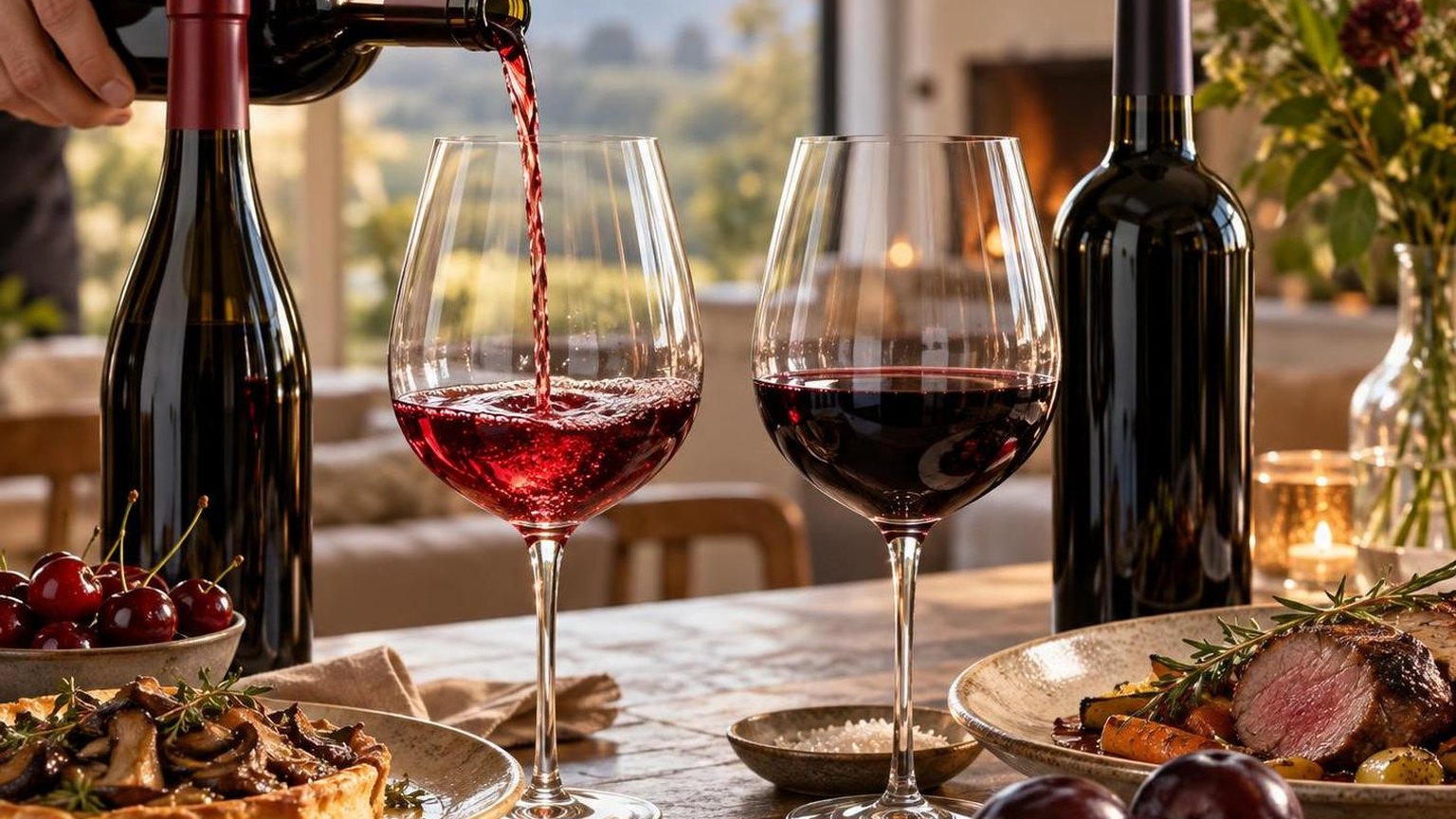
Pinot Noir’s hallmark acidity (pH around 3.3) cuts through moderate fat without clashing with lighter flavors. Earthy undertones of mushroom and truffle in aged Burgundy examples create textbook umami synergy with fungi-based dishes.
- Roast duck — the rendered fat matches Pinot’s acidity; classic in Burgundy for centuries
- Wild salmon — one of few reds that pairs with fish, thanks to tannins below 2 g/L
- Gruyère and Comté cheese — nutty, semi-hard cheeses echo the wine’s earthy notes
- Mushroom risotto — shared forest-floor aromatics amplify both components
- Roast chicken with herbs — thyme and rosemary bridge to Pinot’s herbal finish
Best Food Pairings for Merlot
Merlot’s plush tannins and lower acidity make it forgiving with a wide range of hearty proteins. Its ripe plum and chocolate notes at 13–15% ABV complement caramelized and braised preparations particularly well.
- Braised short ribs — collagen-rich cuts soften Merlot’s tannins, creating velvety texture
- Lamb chops with rosemary — the herbaceous, slightly gamey meat mirrors Merlot’s savory depth
- Beef burgers — charred fat and Maillard crust pair with Merlot’s smoky, fruit-forward palate
- Aged cheddar (12+ months) — the cheese’s sharp fat content balances Merlot’s medium tannins
- Pork tenderloin with plum glaze — echoes the wine’s dominant plum fruit character
Pairings Both Wines Should Avoid
Neither wine pairs well with highly spicy dishes above 30,000 Scoville units. Capsaicin amplifies alcohol’s heat perception.
Avoid heavily vinegar-dressed salads too — acetic acid clashes with both wines’ fruit profiles and strips perceived body.
When choosing between the two at dinner, match the wine’s weight to the dish’s richness. A 2-ounce seared scallop calls for Pinot Noir; a 12-ounce ribeye demands Merlot.
Frequently Asked Questions
What is the primary flavor difference between Pinot Noir and Merlot?
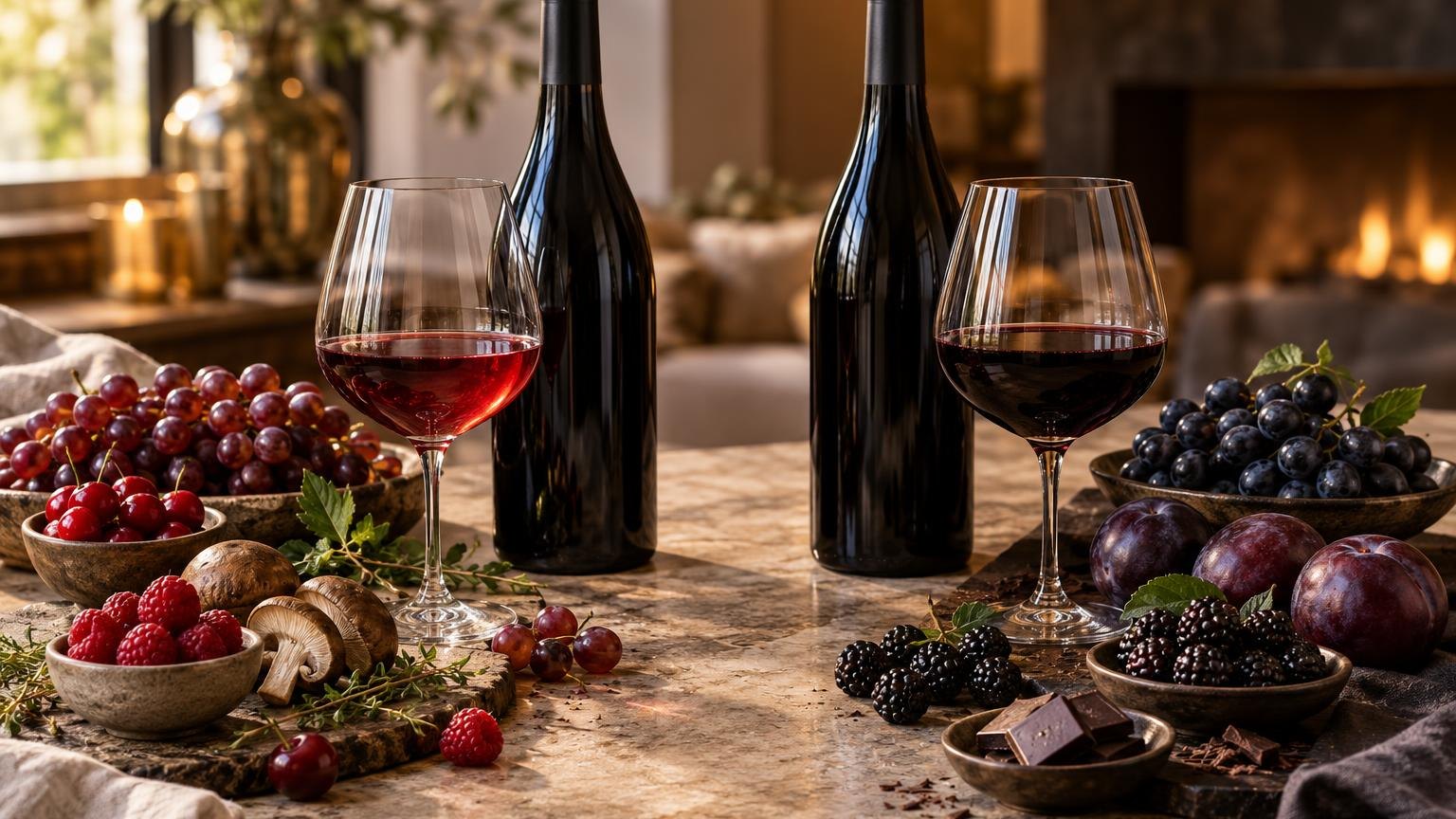
Pinot Noir delivers lighter red fruit flavors—red cherry, raspberry, and cranberry—with earthy undertones of mushroom and forest floor.
Merlot leans toward darker fruit profiles such as black cherry, plum, and blackberry, often accompanied by notes of chocolate and vanilla from oak aging.
Which grape has thicker skin, and why does it matter?
Merlot has noticeably thicker skin than Pinot Noir, producing deeper color, higher tannin levels, and a fuller-bodied wine typically reaching 13.5–15% ABV.
Pinot Noir’s thin skin yields a translucent ruby color, softer tannins, and a lighter body usually between 11.5–14% ABV.
How do the ideal growing climates differ for Pinot Noir and Merlot?
Pinot Noir thrives in cool climates with average growing-season temperatures of 14–16 °C, which is why Burgundy, Oregon’s Willamette Valley, and New Zealand’s Central Otago excel with the grape.
Merlot prefers moderate-to-warm climates around 16–20 °C, flourishing in Bordeaux’s Right Bank, Napa Valley, and parts of Washington State.
Which wine pairs better with red meat and heavier dishes?
Merlot’s higher tannin structure and fuller body make it the stronger match for grilled steaks, braised short ribs, and rich tomato-based pasta sauces.
Pinot Noir pairs more effectively with lighter proteins like roasted duck, salmon, pork tenderloin, and mushroom-based dishes where its acidity and delicacy complement rather than overpower the food.
How do aging potentials compare between the two wines?
Top-tier Pinot Noir from Burgundy Grand Cru vineyards can age 15–20+ years, developing complex tertiary notes of leather, truffle, and dried herbs.
High-quality Merlot-dominant Bordeaux, such as Château Pétrus or Château Le Pin, can age 20–30 years, gaining silky texture and flavors of tobacco and cedar over time.
Entry-level bottles of both varietals are best consumed within 3–5 years of vintage.
Why is Pinot Noir typically more expensive than Merlot?
Pinot Noir is one of the most difficult grapes to cultivate—its thin skin makes it highly susceptible to rot, frost, and disease, resulting in lower yields averaging 2–4 tons per acre compared to Merlot’s 4–6 tons per acre.
These viticultural challenges, combined with the grape’s sensitivity to terroir and its need for meticulous winemaking, drive production costs significantly higher.
Can Pinot Noir and Merlot be blended together?
Traditional European winemaking rules generally keep them separate: Pinot Noir is rarely blended in Burgundy, while Merlot is blended with Cabernet Sauvignon and Cabernet Franc in Bordeaux.
In New World regions like California and Australia, winemakers occasionally blend them in proprietary red blends.
Though this remains uncommon because their structural profiles—Pinot Noir’s high acidity and light body versus Merlot’s tannin and weight—can clash rather than complement each other.
Related Guides
- How Long Does Port Wine Last After Opening?
- Calories Bottle Pinot Noir
- How Many Cups In A Wine Bottle?
- How Many Bottles of Wine for 30 Guests?
- Liquor and Wine 101 Basics for Home Bars
- How Many Bottles of Wine Can I Carry-on a Plane?
- How Many Calories Does A Bottle Of Wine Have? Find Out Now
- What Does Port Wine Taste Like? What You Need to Know
- How To Store Wine At Home? 8 Tips for Storing Wine
- All Alcohol Guides
- UC Davis Department of Viticulture & Enology (2023)
- USDA FoodData Central – Wine, table, red (2024)
- National Institutes of Health / PubMed – "Phenolic composition of red wines: Pinot Noir vs. Merlot" (2006)
- Oregon State University, Linus Pauling Institute – Resveratrol (2024)
- Cornell University, College of Agriculture – Wine Grape Varieties (2023)
- Wine Spectator – "What's the Difference Between Pinot Noir and Merlot?" (2023)
- The Wine Institute – Industry Statistics & Varietal Data (2024)