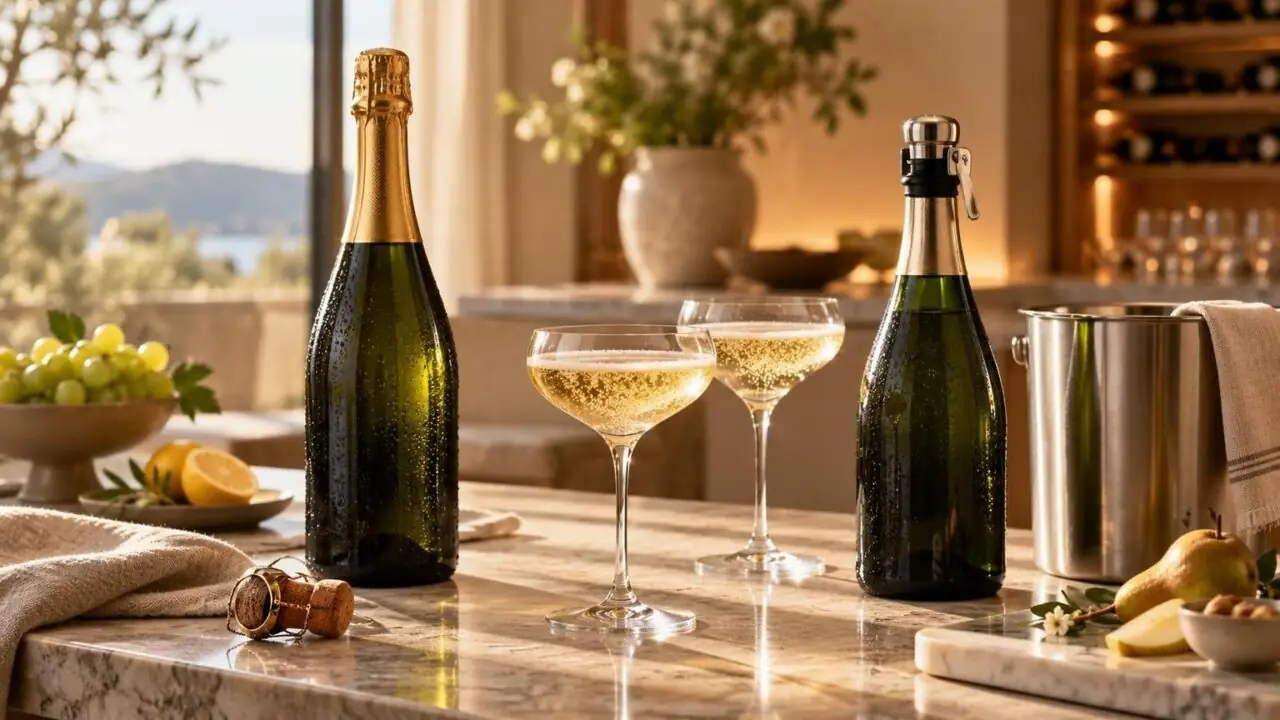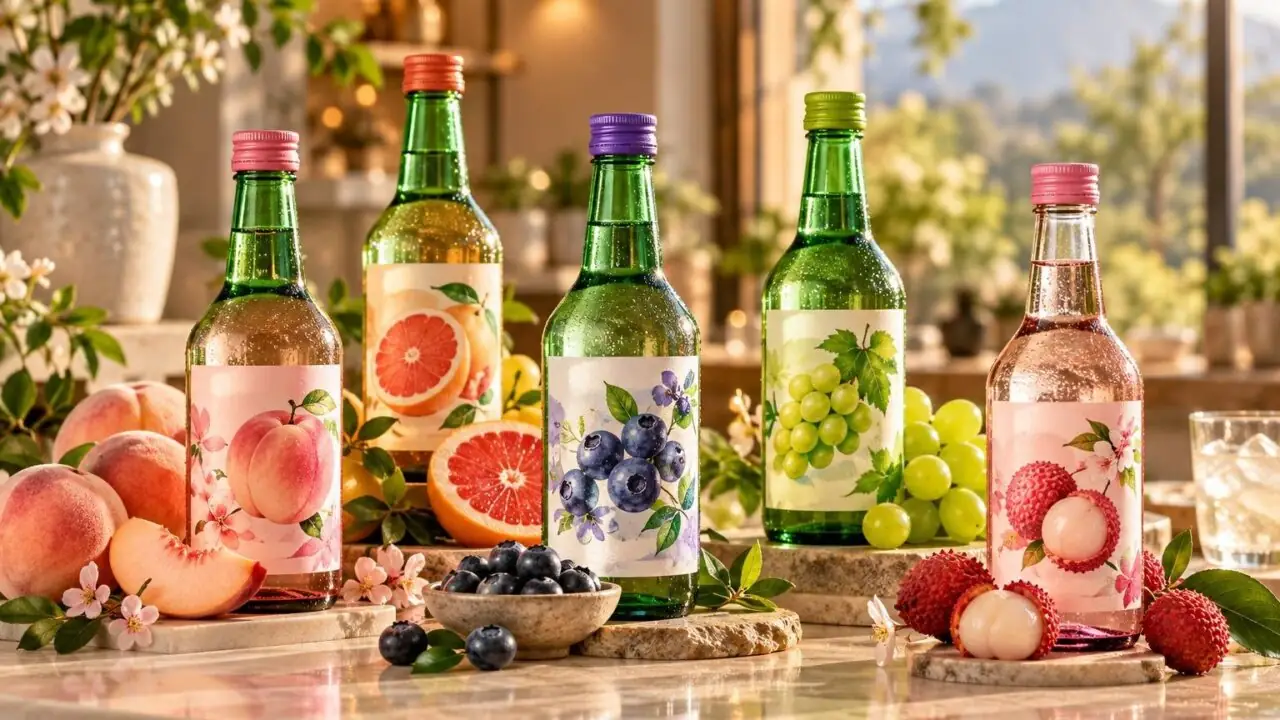
good day soju alcohol content is 13.5% ABV, making it lighter than traditional Korean soju but stronger than most beers.
The brand’s fruit-flavored bottles typically retain the same alcohol level, although availability and product formulas can differ by market.
A 360-milliliter bottle therefore contains about 48.6 milliliters of pure alcohol, or roughly 2.7 standard U.S. drinks.
This guide explains how Good Day compares with regular soju, beer, wine, and other flavored alcoholic drinks.
It also shows how serving size changes the total alcohol intake, why the sweet flavor can make the drink seem weaker than it is, and what to check on the bottle label before drinking.
Use the stated ABV and container size to estimate consumption accurately.
Good Day Soju Alcohol Percentage
Good Day soju, produced by Muhak Brewery in Changwon, South Korea, carries an alcohol by volume (ABV) of 16.9%.
This positions it among the lighter soju brands on the market, reflecting the broader Korean trend toward lower-alcohol spirits over the past two decades.
Muhak introduced Good Day in 2006, and it quickly became one of South Korea’s top-selling soju brands. The 16.9% ABV was a deliberate choice to appeal to drinkers seeking a smoother, less harsh experience.
Good Day Compared to Other Major Soju Brands
Good Day’s 16.9% ABV sits in the middle range among popular Korean soju labels. The following table shows how it compares to its direct competitors.
| Brand | Producer | ABV (%) |
| Chamisul Fresh | HiteJinro | 16.5% |
| Good Day | Muhak | 16.9% |
| Chum Churum | Lotte Chilsung | 16.5% |
| Jinro Is Back | HiteJinro | 16.0% |
| O2 Linn | Muhak | 21.0% |
| Hallasan Soju | Jeju Spirits | 21.0% |
Good Day’s 16.9% is slightly higher than both Chamisul Fresh and Chum Churum at 16.5%, giving it a marginally fuller body compared to those two market leaders.
Flavored Good Day Variants and Their ABV
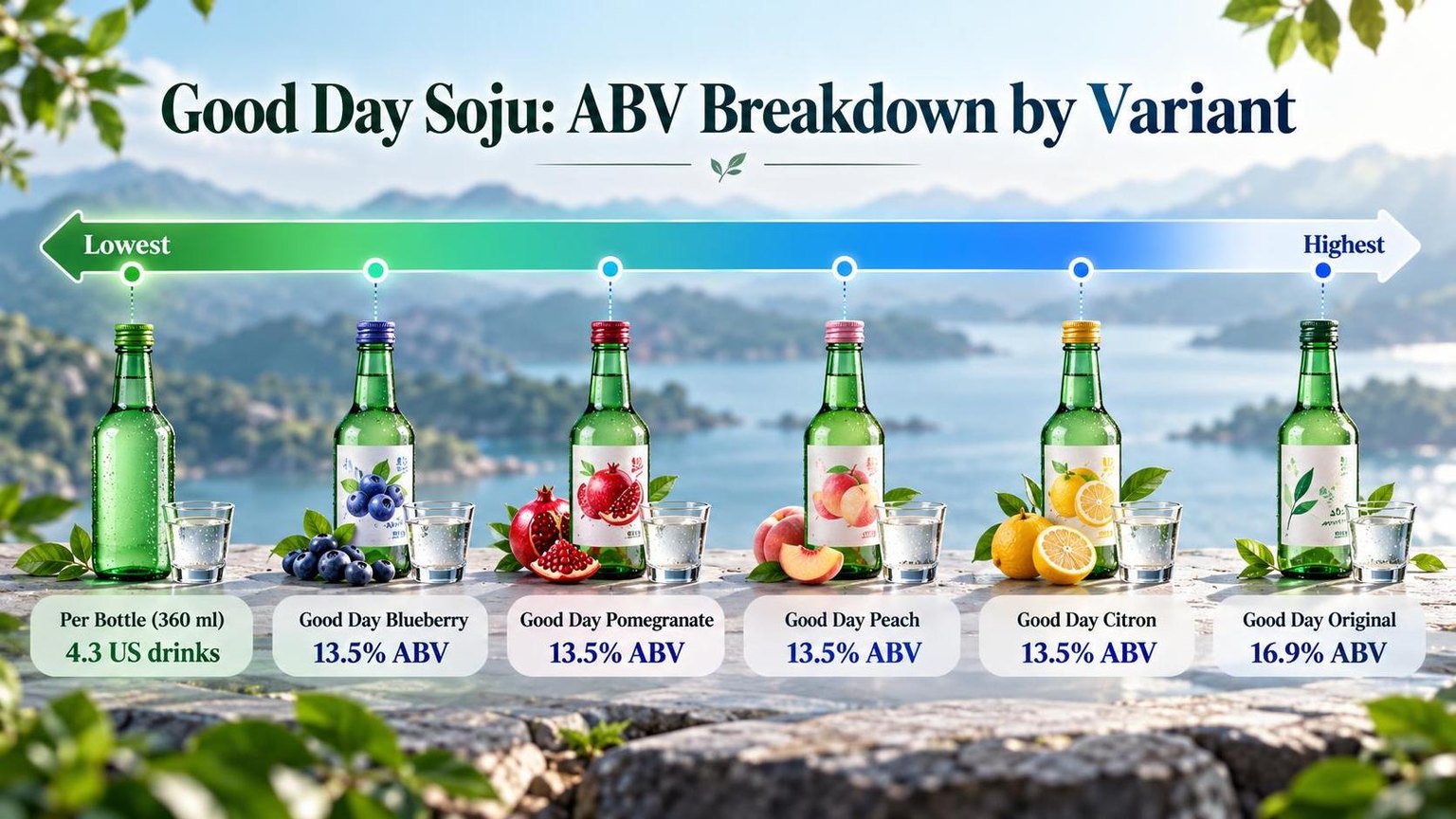
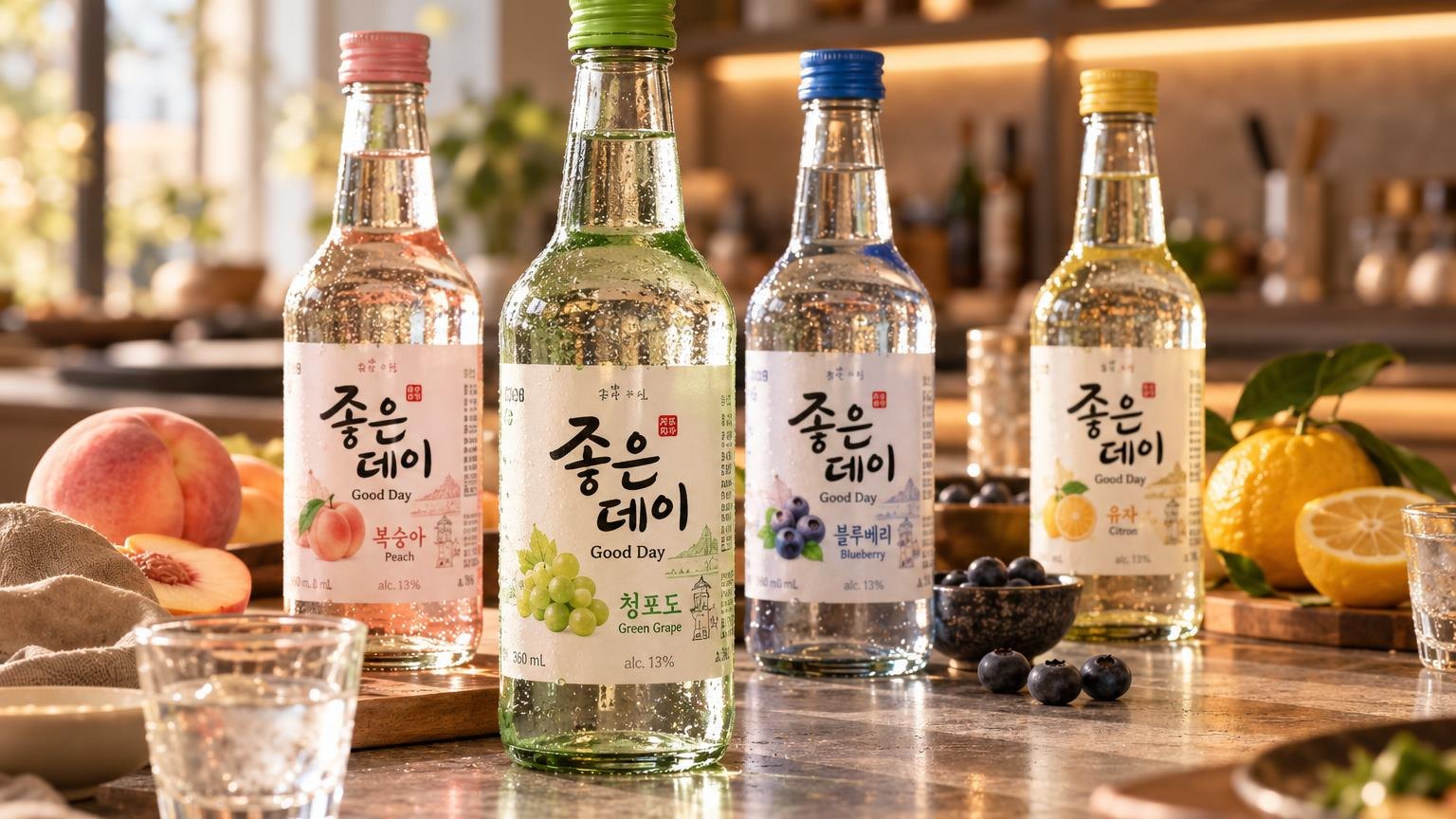
Muhak expanded the Good Day line with fruit-flavored editions that carry lower alcohol content than the original. These flavored versions target younger consumers and casual drinkers.
| Flavor | ABV (%) |
| Good Day Original | 16.9% |
| Good Day Blueberry | 13.5% |
| Good Day Pomegranate | 13.5% |
| Good Day Citrus (Yuzu) | 13.5% |
| Good Day Peach | 13.5% |
The flavored versions all clock in at 13.5% ABV — roughly 3.4 percentage points below the original. This makes them comparable in strength to a fortified wine.
How 16.9% ABV Translates in Practice
A standard 360 ml bottle of Good Day Original contains approximately 60.8 ml of pure alcohol. That equates to roughly 4.3 standard US drinks per bottle (one standard drink = 14 grams of ethanol).
- Per shot (50 ml): approximately 8.45 ml of pure alcohol, or 0.6 standard US drinks
- Per bottle (360 ml): approximately 60.84 ml of pure alcohol, or 4.3 standard US drinks
- Compared to beer (5% ABV): one Good Day shot equals roughly 85 ml of beer in alcohol content
The Korean Low-ABV Trend
In the early 2000s, mainstream soju brands averaged 20–25% ABV. Consumer preference shifted, and producers including Muhak responded by gradually reducing alcohol levels.
Good Day’s 16.9% reflects this trajectory. Muhak has kept this ABV stable since the mid-2010s, balancing drinkability with the expectation that soju should carry more weight than beer or wine.
For wine bar patrons accustomed to still wines at 12–15% ABV, Good Day Original sits just above that familiar range — making it an accessible entry point into Korean spirits without a dramatic jump in strength.
Good Day Flavors and ABV Differences
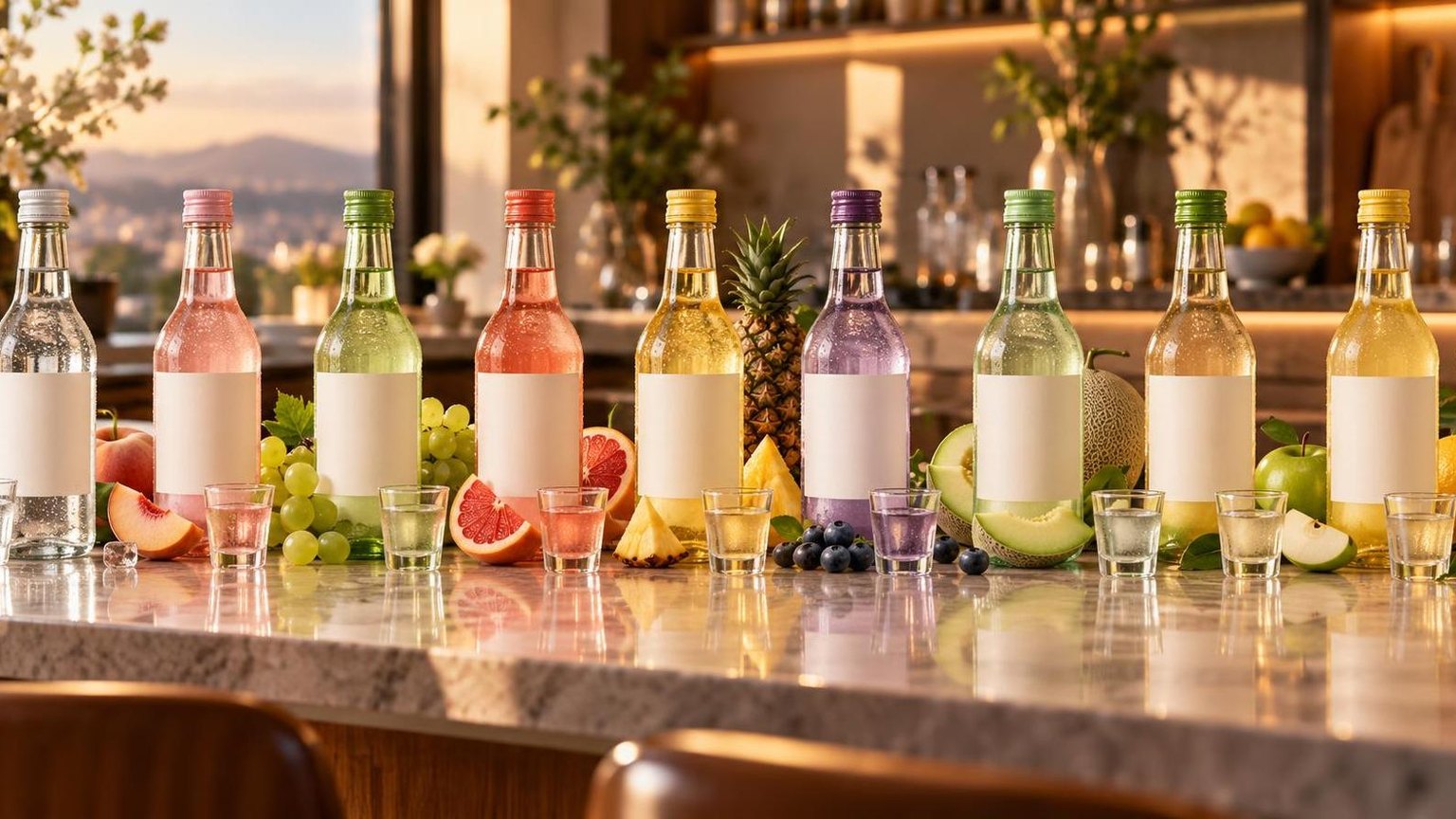
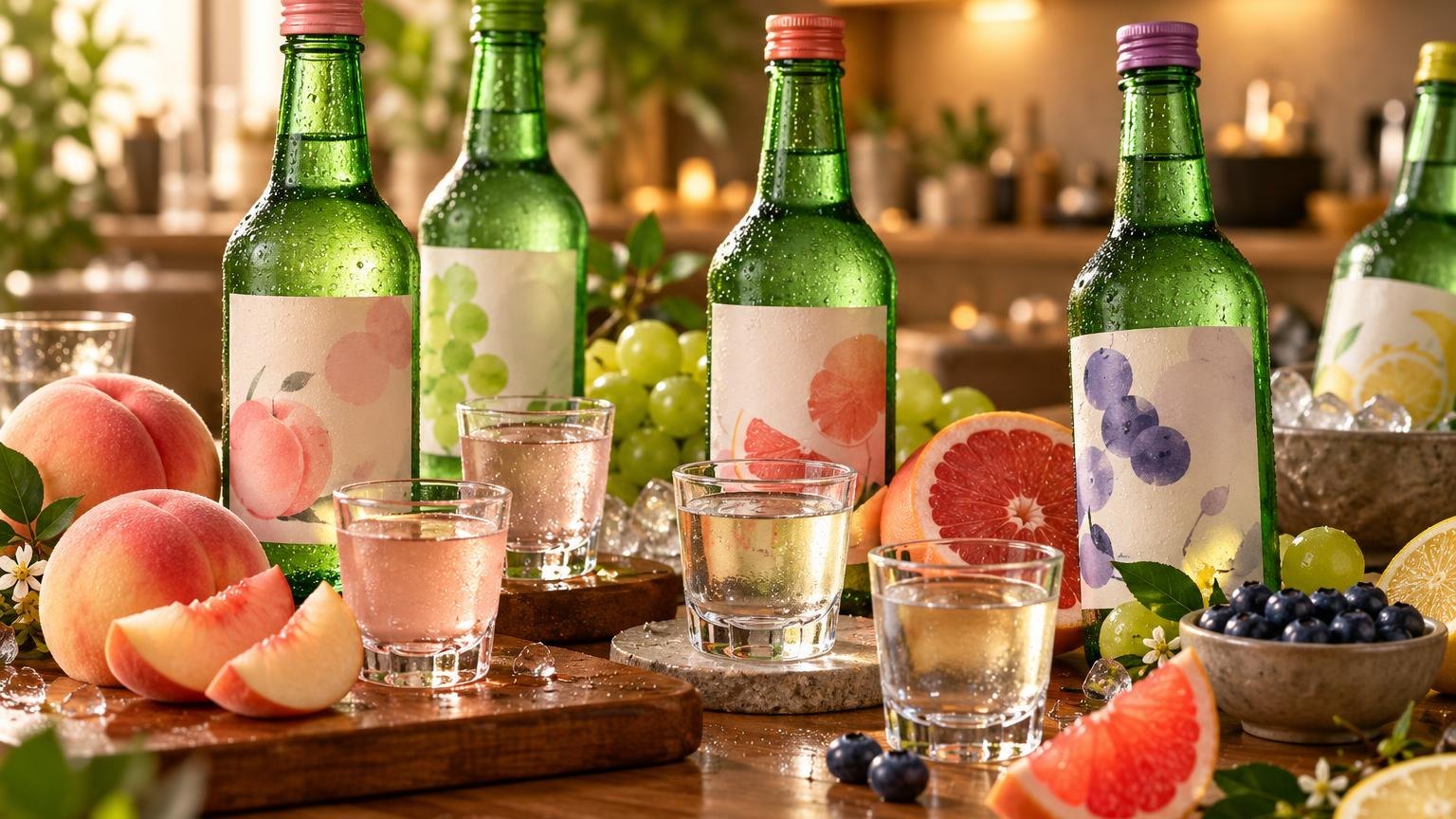
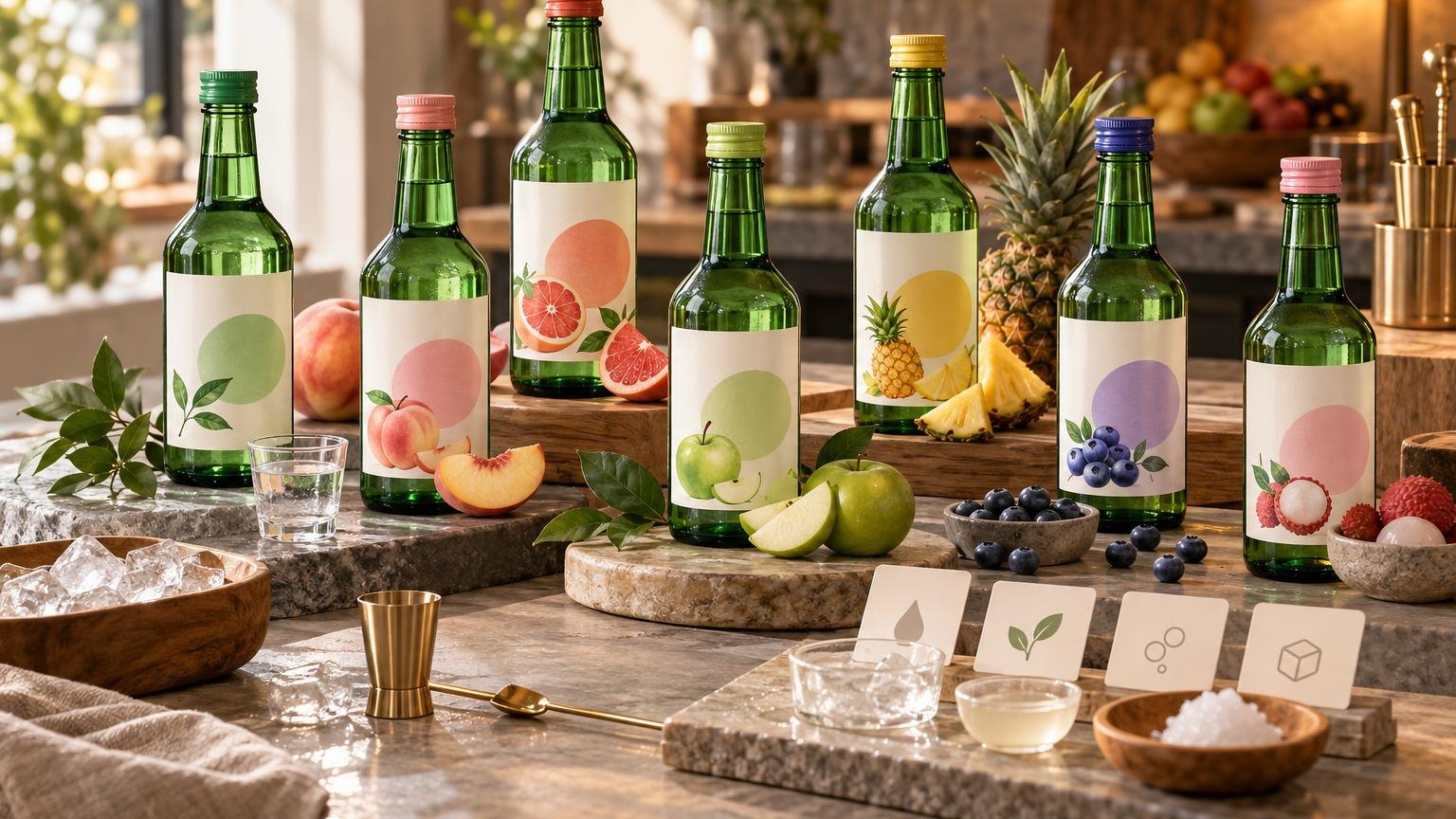
Good Day soju by Muhak Brewery offers one of South Korea’s widest flavored soju lineups, with each variant carrying a distinct ABV.
The original Good Day sits at 16.9% ABV, while flavored versions range from 12.5% to 13.5% depending on the specific fruit expression.
Good Day ABV by Flavor
Muhak has strategically lowered alcohol content across its flavored line to target younger Korean consumers who prefer lighter, smoother drinks. The following table details current ABV levels for each variety.
| Good Day Variant | ABV (%) | Flavor Profile |
| Good Day Original | 16.9% | Clean, neutral grain soju |
| Good Day Blueberry | 13.5% | Sweet berry with mild tartness |
| Good Day Pomegranate | 13.5% | Tart-sweet, fruity finish |
| Good Day Peach | 13.5% | Soft stone fruit sweetness |
| Good Day Citron (Yuja) | 13.5% | Bright citrus, slightly floral |
| Good Day Pineapple | 13.5% | Tropical sweetness, light acidity |
| Good Day Green Grape | 13.5% | Crisp, refreshing grape sweetness |
| Good Day Lychee | 12.5% | Delicate floral-fruit sweetness |
How Good Day Compares to Competitors
Good Day’s original 16.9% ABV sits slightly below the traditional 17–20% range common in older soju formulations.
Its flavored range at 12.5–13.5% directly competes with Chamisul’s flavored lineup and Chum Churum’s fruit variants.
| Brand | Original ABV | Flavored ABV Range |
| Good Day (Muhak) | 16.9% | 12.5–13.5% |
| Chamisul (HiteJinro) | 16.9% | 12–13% |
| Chum Churum (Lotte) | 16.5% | 12–13% |
Good Day’s flavored expressions tend to run 0.5–1 percentage point higher than comparable Chamisul flavors. This subtle difference contributes to a slightly more pronounced alcohol warmth in the finish.
Regional Popularity and Market Position
Good Day dominates in the Gyeongsang Province region of southeastern South Korea, where Muhak Brewery is headquartered in Changwon. Regional brand loyalty remains a defining feature of the Korean soju market.
Muhak holds roughly 10–12% of the national soju market share compared to HiteJinro’s commanding 50%+ share. However, in its home region of Gyeongnam, Good Day regularly outsells all competitors combined.
Key Differences Between Original and Flavored
- Calorie content: Flavored Good Day contains approximately 330–340 kcal per 360 ml bottle, slightly higher than the original due to added sugars.
- Sugar addition: Flavored variants use fructose and fruit concentrate, adding 8–10 grams of sugar per bottle beyond what the original contains.
- Serving temperature: Good Day Original is traditionally served chilled at 4–6°C; flavored versions are often served colder or over ice at 0–3°C.
- Standard bottle size: Both original and flavored Good Day ship in the classic 360 ml green glass bottle used industry-wide in South Korea.
The lower ABV in flavored Good Day makes each bottle contain roughly 25% less pure alcohol than the original — an important distinction for drinkers monitoring intake across multiple rounds.
How Good Day Compares With Other Soju
Good Day soju sits at 16.9% ABV, placing it firmly in the modern low-ABV soju category that has dominated Korean drinking culture since the mid-2010s.
Understanding where it falls against competitors reveals why Muhak’s flagship brand holds steady market share in Korea’s fiercely competitive spirits landscape.
ABV Comparison Across Major Soju Brands
The following table compares Good Day’s alcohol content against Korea’s best-selling soju brands as of their current standard formulations.
| Brand | Producer | ABV | Base Region |
| Chamisul Fresh | HiteJinro | 16.5% | Nationwide |
| Chum Churum | Lotte Chilsung | 16.5% | Nationwide |
| Good Day | Muhak | 16.9% | Gyeongsang |
| Hallasan | Jejudo Soju | 17.5% | Jeju Island |
| O2 Linn | Muhak | 16.5% | Gyeongsang |
| Jinro Is Back | HiteJinro | 16.0% | Nationwide |
| Yipsejoo | Bohae | 16.9% | Jeollanam-do |
Good Day’s 16.9% ABV is slightly higher than the two dominant national brands, Chamisul Fresh and Chum Churum, which both sit at 16.5%.
Why the 0.4% Difference Matters
A 360 ml bottle of Good Day contains approximately 48.7 ml of pure alcohol. A same-sized bottle of Chamisul Fresh contains about 47.5 ml. That 1.2 ml difference per bottle accumulates across multiple rounds.
Korean drinking sessions frequently involve three to five bottles shared among a group. Over that volume, the slightly elevated ABV in Good Day produces a measurably different intake total compared to 16.5% competitors.
Flavor Profile Differences at Similar ABV
Good Day distinguishes itself through alkaline water sourced from Jirisan mountain bedrock. Muhak markets this as producing a cleaner, softer finish than competitors using standard filtered water.
- Good Day (16.9%): Mild sweetness, alkaline mineral water base, slightly dry finish
- Chamisul Fresh (16.5%): Bamboo charcoal filtered, clean and neutral profile
- Chum Churum (16.5%): Alkaline water from Gangwon-do limestone, notably smooth mouthfeel
- Jinro Is Back (16.0%): Retro branding, lightest body among major brands
Historical ABV Trajectory
Good Day launched at 23% ABV in 1999. Muhak reduced it progressively—dropping to 19.5% around 2012, then 17.5%, and reaching the current 16.9% by 2015. This mirrors an industry-wide trend driven by health-conscious younger consumers.
HiteJinro’s Chamisul followed a nearly identical path, dropping from 20.1% in 2006 to 16.5% today. Lotte’s Chum Churum similarly moved from 20% down to 16.5% during the same period.
Good Day’s decision to hold at 16.9% rather than match competitors at 16.5% is a deliberate positioning choice.
Muhak targets drinkers who prefer a marginally fuller body without venturing into the higher-ABV traditional soju territory above 20%.
Good Day Soju Servings and Standard Drinks
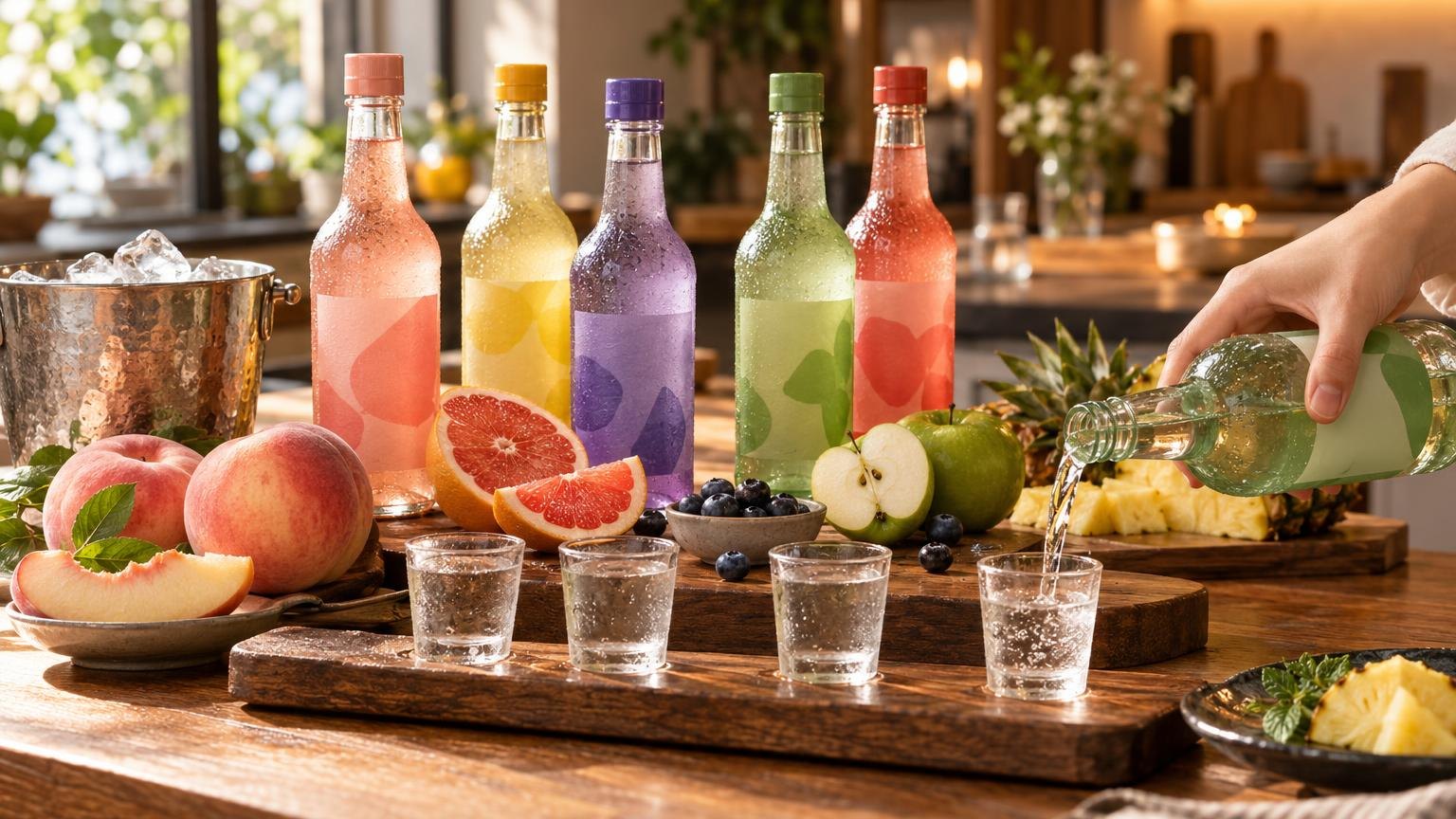
Understanding how Good Day Soju translates into standard drinks prevents overconsumption. A 360 ml bottle at 16.9% ABV contains approximately 2.7 standard drinks by U.S. measurement, making portion awareness essential for responsible enjoyment.
What Counts as a Standard Drink
The National Institute on Alcohol Abuse and Alcoholism (NIAAA) defines one U.S. standard drink as 14 grams (0.6 fluid ounces) of pure alcohol. This benchmark applies universally across beer, wine, spirits, and soju.
Good Day Soju’s 16.9% ABV places it between wine (12–15%) and full-strength spirits (40%). Drinkers accustomed to beer often underestimate soju’s potency per serving.
Standard Drinks per Good Day Soju Serving
| Serving Size | Volume (ml) | Pure Alcohol (g) | U.S. Standard Drinks |
| Single shot (soju glass) | 50 ml | 6.7 g | 0.48 |
| Double shot | 100 ml | 13.3 g | 0.95 |
| Half bottle | 180 ml | 24.0 g | 1.71 |
| Full bottle (360 ml) | 360 ml | 48.0 g | 3.43 |
| Large bottle (640 ml) | 640 ml | 85.3 g | 6.09 |
The formula used: multiply volume in liters × ABV (0.169) × 789.24 g/L (density of ethanol) to calculate grams of pure alcohol per serving.
Comparison with Other Alcoholic Beverages
Placing Good Day Soju alongside common drinks clarifies its relative strength per typical pour.
| Beverage | Typical Serving | ABV | Standard Drinks |
| Regular beer | 355 ml (12 oz) | 5% | 1.0 |
| Glass of wine | 148 ml (5 oz) | 12% | 1.0 |
| Good Day Soju shot | 50 ml | 16.9% | 0.48 |
| Good Day Soju bottle | 360 ml | 16.9% | 3.43 |
| Vodka shot | 44 ml (1.5 oz) | 40% | 1.0 |
One full 360 ml bottle of Good Day equals roughly 3.4 beers or 3.4 glasses of wine. Social settings in Korea often involve consuming a full bottle, which exceeds moderate drinking guidelines.
Moderate Drinking Guidelines
The Dietary Guidelines for Americans recommend no more than two standard drinks per day for men and one for women. A single Good Day bottle surpasses both thresholds.
- Men: Limit intake to approximately 4 soju shots (200 ml) to stay within the two-drink guideline.
- Women: Limit to approximately 2 soju shots (100 ml) for the one-drink guideline.
- Body weight matters: A 60 kg person reaches higher blood alcohol concentration faster than an 80 kg person consuming the same volume.
- Flavored variants: Good Day’s fruit flavors (grapefruit, blueberry, pomegranate) taste sweeter, which can mask alcohol and encourage faster consumption.
Tracking shots rather than pouring freely is the most practical way to manage intake. Traditional 50 ml soju glasses make counting straightforward — each glass equals just under half a standard drink.
Choosing Good Day Soju by Strength
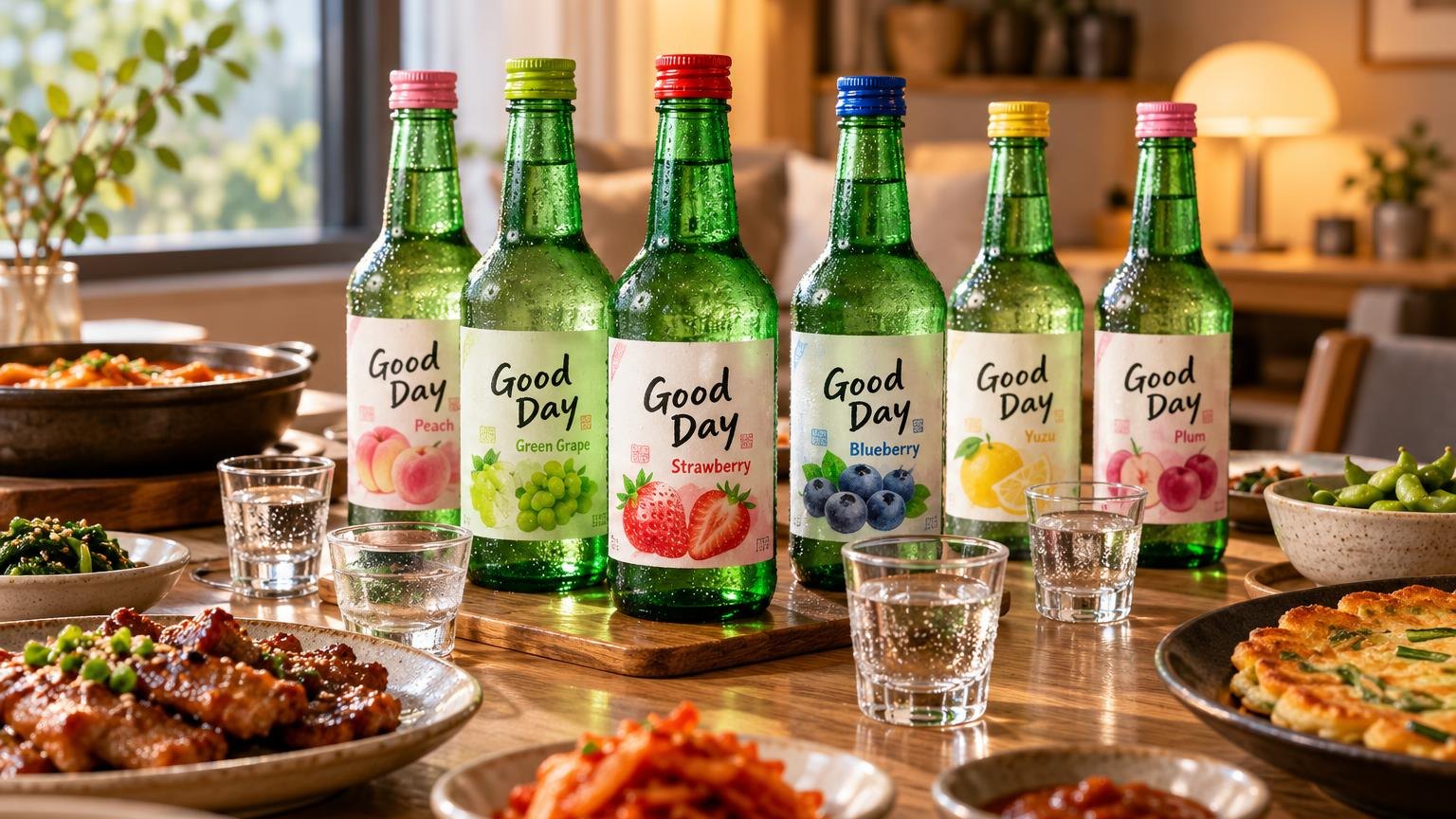
Good Day soju from Muhak Brewery offers a range of alcohol levels across its flavored and original varieties.
Understanding these differences helps you pick the right bottle for your palate, whether you prefer a lighter fruit-forward drink or a stronger traditional pour.
Good Day Soju ABV by Variant
Muhak produces Good Day in several expressions, each targeting a distinct drinking occasion. The table below covers the current lineup available in domestic Korean and export markets.
| Variant | ABV (%) | Flavor Profile |
| Good Day Original | 16.9% | Clean, neutral grain spirit |
| Good Day Blueberry | 13.5% | Sweet blueberry with mild tartness |
| Good Day Pomegranate | 13.5% | Fruity pomegranate, lightly sweet |
| Good Day Peach | 13.5% | Soft peach, smooth finish |
| Good Day Citron (Yuja) | 13.5% | Bright citrus, refreshing |
| Good Day Red | 16.9% | Original profile, red label |
How Good Day Compares to Other Soju Brands
Good Day’s original 16.9% ABV sits in the mid-range among Korean soju brands. Competitor positioning provides useful context for choosing your bottle.
| Brand | ABV (%) |
| Chamisul Fresh (HiteJinro) | 16.5% |
| Good Day Original (Muhak) | 16.9% |
| Chum Churum (Lotte) | 16.5% |
| Jinro Strawberry (HiteJinro) | 13.0% |
| Good Day Flavored (Muhak) | 13.5% |
Good Day’s flavored variants land at 13.5% ABV — slightly higher than HiteJinro’s flavored line at 13.0%. That 0.5 percentage point difference is noticeable over multiple rounds.
Practical Tips for Choosing by Strength
- Casual sipping or mixed drinks: The 13.5% flavored bottles work well over ice or blended into cocktails like a soju highball with sparkling water.
- Traditional Korean BBQ pairing: Good Day Original at 16.9% pairs better with rich grilled meats like samgyeopsal. The higher alcohol cuts through fat more effectively.
- Calorie awareness: A standard 360 ml bottle of Good Day Original at 16.9% contains roughly 400–420 calories. The 13.5% flavored versions drop to approximately 340–360 calories per bottle, though added sugars partially offset the lower alcohol.
- Pacing yourself: One 360 ml bottle of 16.9% Good Day delivers about 4.3 standard drinks (based on a 14 g pure alcohol standard). A 13.5% flavored bottle delivers roughly 3.5 standard drinks.
Storage and Serving Note
Good Day soju is best served chilled between 4–8°C (39–46°F). Cold temperatures mellow the alcohol bite, especially in the 16.9% original.
Opened bottles should be consumed within 1–2 days, as flavor degrades quickly once the seal is broken.
Muhak, based in Changwon, South Gyeongsang Province, has produced Good Day since 2006. The brand dominates soju sales in the Gyeongsang region, holding over 50% market share in its home territory despite trailing HiteJinro and Lotte nationally.
Frequently Asked Questions
What is the alcohol content of Good Day Soju?
Good Day Soju contains 16.9% alcohol by volume (ABV), placing it in the mid-range among Korean soju brands.
This is notably lower than traditional soju recipes from decades past, which often exceeded 25% ABV, reflecting the broader Korean industry trend toward lighter, more approachable spirits.
How does Good Day Soju’s ABV compare to other popular soju brands?
Good Day sits slightly above Chamisul Fresh (16.5% ABV) and Chum Churum (16.5% ABV), while falling below older-style brands like Andong Soju, which reaches 45% ABV.
Among flavored competitors, Jinro’s fruit soju lines drop to around 13% ABV, making standard Good Day roughly 4 percentage points stronger than most flavored sojus on the market.
Does flavored Good Day Soju have a different alcohol percentage than the original?
Yes. Good Day’s flavored varieties—including Blueberry, Pomegranate, Citrus, and Peach—typically contain 13.5% ABV, about 3.4 percentage points lower than the original 16.9% version.
The reduced alcohol allows the fruit sweetness to come through without excessive burn, a deliberate formulation choice by manufacturer Muhak.
How many standard drinks are in one bottle of Good Day Soju?
A standard 360 mL bottle of Good Day Soju at 16.9% ABV contains approximately 60.84 mL of pure alcohol, which equates to roughly 4.3 U.S. standard drinks (one standard drink = 14 grams or about 17.7 mL of pure ethanol).
Drinkers often underestimate intake because soju’s smooth profile masks its potency compared to beer or wine.
Why has Good Day Soju’s alcohol content decreased over the years?
Muhak, the Gyeongnam-based distiller behind Good Day, reduced the ABV in line with a nationwide Korean trend driven by younger consumers preferring lower-proof, easier-drinking spirits.
In the early 2000s, most soju brands sat at 20–23% ABV; successive reformulations across the industry brought mainstream brands below 17% by the mid-2010s.
Tax incentives for lower-alcohol products and public health campaigns by the Korean government also accelerated this shift.
Is Good Day Soju stronger than wine or beer?
Good Day Soju at 16.9% ABV is stronger than nearly all beers (typically 4–6% ABV) and most wines (12–15% ABV), but weaker than standard spirits like vodka (40% ABV).
Because soju is served in small 50 mL shot glasses rather than 150 mL wine pours, a single pour delivers less total alcohol per serving—roughly 8.5 mL of pure ethanol versus about 18 mL in a glass of 12% wine.
How should you pace yourself when drinking Good Day Soju at 16.9% ABV?
Since a full 360 mL bottle equals over four standard U.S. drinks, splitting one bottle across at least two hours with food is a practical guideline to stay within moderate consumption limits.
In Korean drinking culture, soju is traditionally consumed alongside anju (food pairings) like samgyeopsal or chikin, which slows alcohol absorption. The U.S.
Dietary Guidelines define moderate drinking as up to two standard drinks per day for men and one for women, meaning roughly half a bottle represents a moderate session for most men.
Further Reading
- How Many Water Bottles Equal A Gallon?
- How Much Is 1 Liter?
- What Time Can You Buy Alcohol In Ohio?
- 6 Tips for Buying Commercial Ice Machines
- Popular Beers of the 70s That Defined a Decade
- All Blog Guides
- Alcohol and Tobacco Tax and Trade Bureau – TTB (2024)
- National Institute on Alcohol Abuse and Alcoholism – NIAAA (2024)
- Centers for Disease Control and Prevention – Alcohol Basics (2024)
- USDA FoodData Central – Alcoholic Beverages (2024)
- National Center for Biotechnology Information – Alcohol Metabolism Review (2023)
- Cornell University – Alcohol Policy Information System Resource (2023)
- Muhak Company – Good Day Soju Official Product Page (2024)
- Korean Food and Drug Safety Ministry – MFDS Alcohol Labeling Standards (2023)
- Alcohol Professor – Soju Category Guide (2023)
- VinePair – What Is Soju? (2023)