beers of the 70s are the American lagers, light beers, regional ales, imports, and counterculture brews that defined U.S. drinking before the craft-beer boom.
Schlitz, Budweiser, Miller High Life, Coors Banquet, and Pabst Blue Ribbon dominated taps, refrigerators, ballparks, and neighborhood bars.
The decade shifted beer from local loyalty to national advertising. Miller Lite arrived in 1975 and made “light beer” a permanent category.
Coors expanded its mystique beyond the West, while Michelob, Heineken, Lowenbrau, and Guinness signaled premium or imported taste.
Homebrewing legalization in 1978 also changed everything. It gave hobbyists a legal path to make fuller-flavored beer, setting up the microbrewery movement that followed in the 1980s.
America’s Big Lager Landscape
By 1970, the American beer industry had consolidated dramatically.
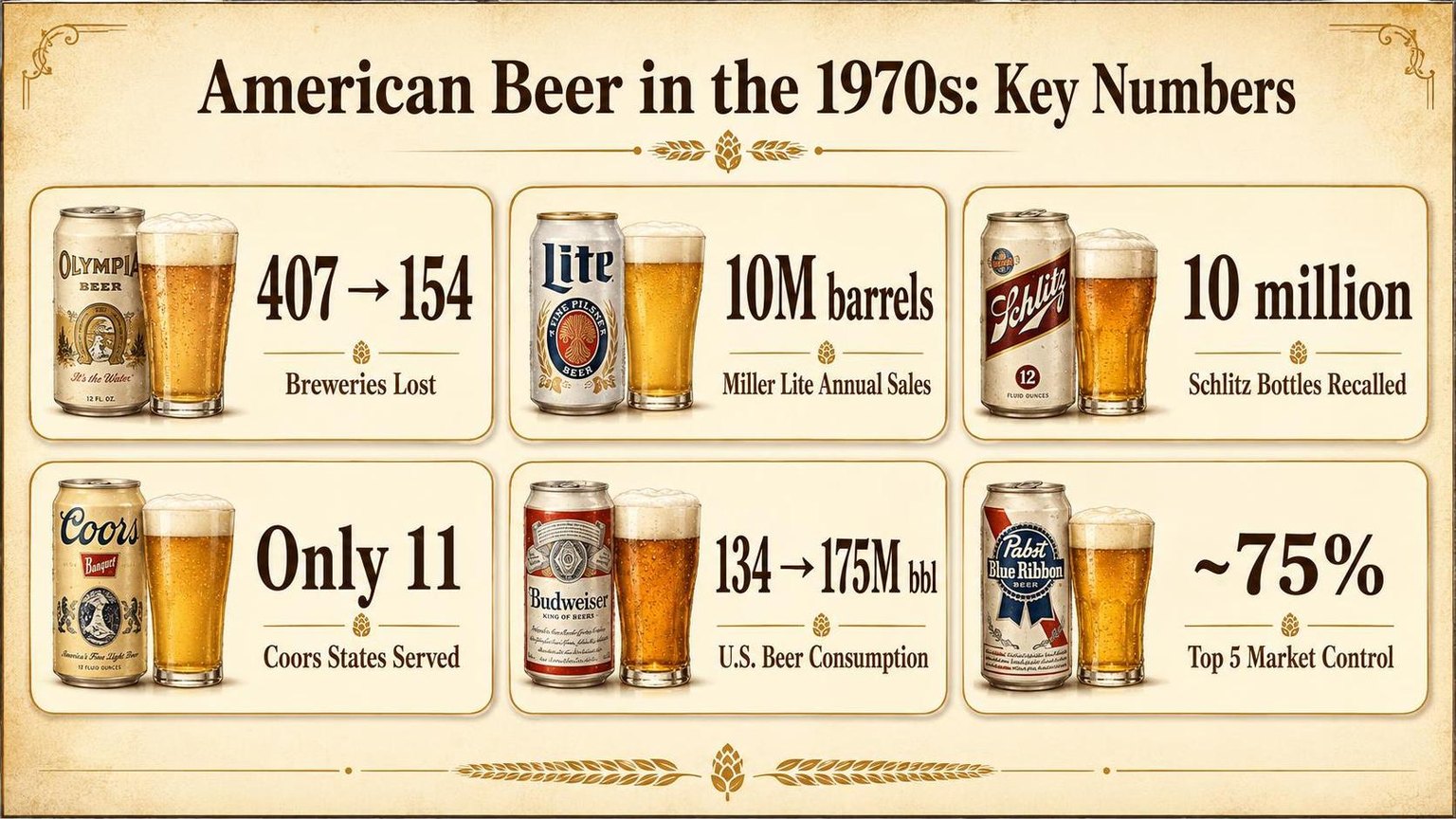
The number of independent breweries dropped from 407 in 1960 to just 154 by 1975, as national brands squeezed out regional players through aggressive advertising and price competition.
Five companies controlled roughly 75% of U.S. beer production by the late 1970s. Their dominance reshaped how Americans drank.
| Brewery | 1970 Market Share | 1979 Market Share |
| Anheuser-Busch | 18% | 28% |
| Schlitz | 15% | 8% |
| Pabst | 10% | 8% |
| Coors | 5% | 8% |
| Miller | 4% | 21% |
Miller’s meteoric rise was the decade’s defining story. Philip Morris acquired Miller Brewing in 1970 for $130 million, then applied cigarette-marketing tactics to beer with stunning results.
Miller Lite, launched nationally in 1975, created an entirely new category. By 1978, Lite sold 10 million barrels annually, proving that calorie-conscious drinkers represented a massive untapped market.
Schlitz’s Spectacular Collapse
Schlitz held the number-two position in 1970. Then management secretly reformulated their flagship lager, replacing barley malt with corn syrup and shortening the brewing cycle from 40 days to 15.
Consumers noticed. Batches developed haze and a strange aftertaste. A 1976 recall of 10 million bottles accelerated the brand’s freefall from 24 million barrels to under 15 million by decade’s end.
Coors: The Mystique Beer
Adolph Coors Company distributed in only 11 western states throughout the 1970s. This scarcity created a cult following — bootleggers smuggled cases east, and the 1977 film Smokey and the Bandit immortalized that underground demand.
- Coors used no pasteurization, requiring constant refrigeration during transport
- The brewery in Golden, Colorado was the single largest brewing facility in the world, producing 12.3 million barrels by 1977
- Coors offered only one product — Coors Banquet — until Coors Light debuted in 1978
Total U.S. beer consumption rose from 134 million barrels in 1970 to 175 million by 1979. The light-lager style dominated overwhelmingly, accounting for the vast majority of every pint poured coast to coast.
Regional Beers That Survived Consolidation
American brewing contracted sharply during the 1970s as national companies expanded distribution and acquired or displaced local rivals.
Several regional beers survived by protecting a loyal home market, maintaining distinctive recipes, or accepting new ownership without abandoning their regional identity.
| Brewery or brand | Location | Key date | Survival strategy |
| Anchor Brewing | San Francisco, California | Liberty Ale introduced in 1975 | Specialty beer and traditional production |
| D.G. Yuengling & Son | Pottsville, Pennsylvania | Founded in 1829 | Family control and concentrated distribution |
| August Schell Brewing | New Ulm, Minnesota | Founded in 1860 | Family ownership and Upper Midwest loyalty |
| Spoetzl Brewery | Shiner, Texas | Shiner Bock became year-round in 1973 | Texas identity and a recognizable dark lager |
| Genesee Brewing | Rochester, New York | Genesee Cream Ale introduced in 1960 | Value pricing and a differentiated ale-lager hybrid |
Distinctiveness mattered
Anchor represented the clearest alternative to standardized light lager. Fritz Maytag acquired control of the struggling brewery in 1965, improved sanitation and packaging, and retained its steam-beer method.
Liberty Ale, first brewed for a commemorative release, showcased Cascade hops and anticipated American craft pale ale.
Yuengling and Schell survived through continuity rather than national scale. Both remained family-controlled while many similarly sized breweries sold to conglomerates or closed.
Their limited territories reduced advertising costs, while returnable bottles, tavern relationships, and multigenerational customer recognition supported repeat sales.
Spoetzl used place as part of the product. Shiner Bock’s malt-forward profile differed from mainstream pale lager, while the Shiner name tied the beer directly to its small Texas hometown.
Making the seasonal bock a permanent offering created a dependable flagship without requiring a national portfolio.
Survival did not always mean independence
Genesee retained a strong northeastern presence through Cream Ale, whose mild fruitiness and crisp finish sat between conventional ale and lager.
The brewery later changed corporate ownership, but the brand and Rochester plant continued, illustrating how regional identity could outlast ownership structures.
Narragansett followed a harsher path. Falstaff purchased the Rhode Island brewery in 1965, and its Cranston plant closed in 1981.
The trademark survived and was revived under new ownership in 2005, showing the difference between preserving a beer name and preserving its original brewery.
These histories are documented in brewery archives, the Brewers Association’s historical materials, and Maureen Ogle’s Ambitious Brew.
For drinkers, surviving regional labels offer useful comparisons: Anchor emphasized hops, Shiner malt, Genesee smoothness, and Yuengling broadly accessible amber-lager character.
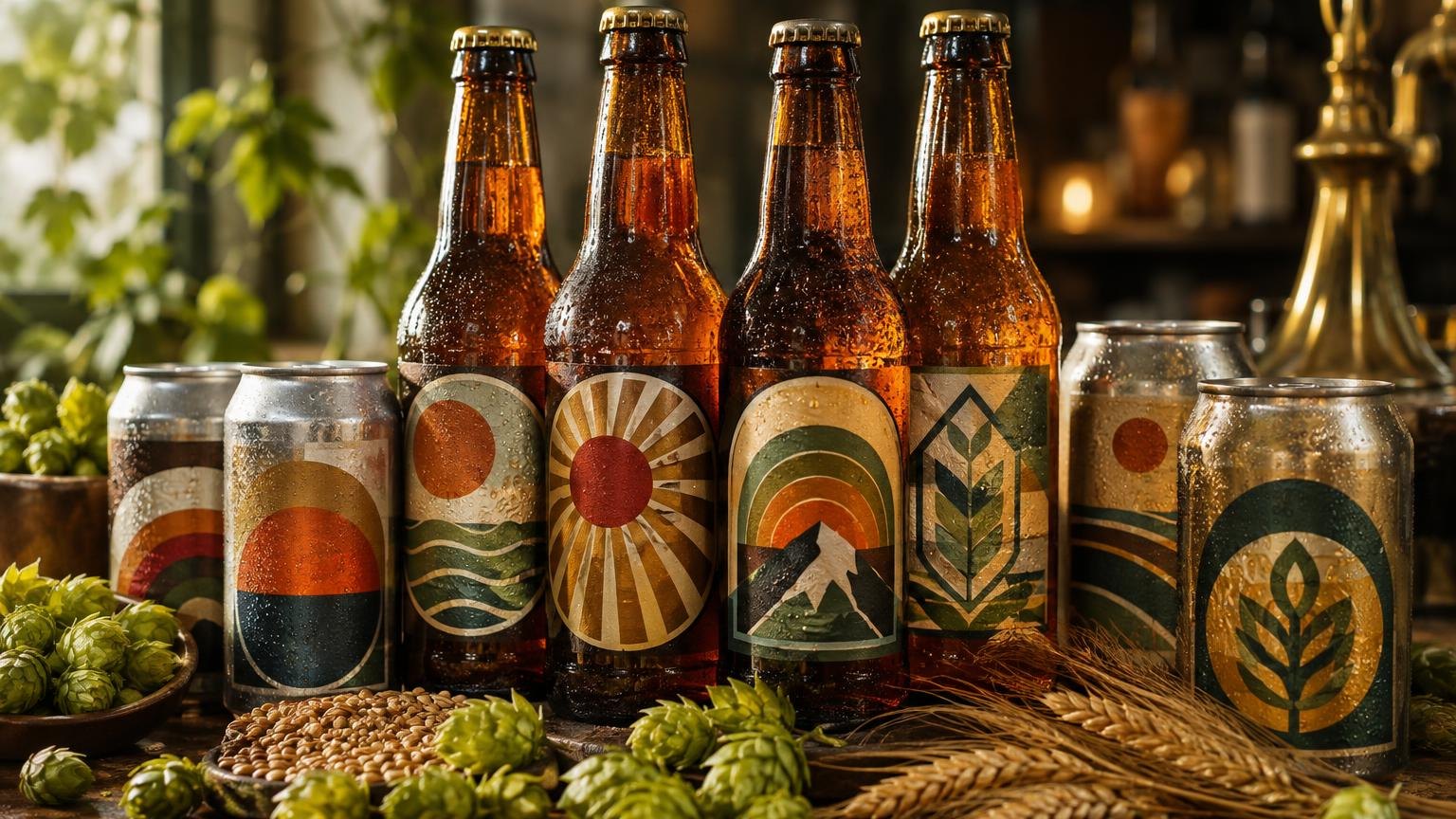
Imported Beers Entering American Bars
Between 1970 and 1979, U.S. beer imports more than tripled in volume. What had been a niche curiosity—European and Mexican lagers tucked behind domestic taps—became a genuine market segment reshaping American drinking habits.
Import Volume Growth
In 1970, imported beer accounted for roughly 1% of the U.S. market. By 1979, that share had climbed past 3%, driven by rising consumer incomes and growing interest in international flavors.
| Year | Estimated U.S. Beer Imports (millions of barrels) |
| 1970 | ~1.5 |
| 1975 | ~3.0 |
| 1979 | ~5.0 |
Leading Import Brands
Heineken dominated the decade. The Dutch brewer held roughly 40% of the entire U.S. import market through most of the 1970s, making it the single most recognized foreign beer in America.
- Heineken (Netherlands) — The top-selling import throughout the decade, distributed by Van Munching & Company since 1933.
- Molson (Canada) — Benefited from geographic proximity and lower shipping costs, gaining strong footholds in northern border states.
- Beck’s (Germany) — Positioned as a premium German pilsner, appealing to consumers seeking Old World authenticity.
- Dos Equis and Corona (Mexico) — Both brands began building U.S. distribution networks in the late 1970s, setting the stage for their 1980s explosion.
Why Imports Gained Ground
Post-Vietnam international travel exposed Americans to European beer culture firsthand. Returning travelers sought the fuller-flavored lagers they had discovered abroad.
Domestic consolidation also played a role. By 1979, the top five U.S. brewers controlled over 75% of production. Bland, light-bodied adjunct lagers pushed flavor-seeking drinkers toward imports.
Pricing reinforced the premium image. A six-pack of Heineken retailed for around $3.50–$4.00 in the mid-1970s, compared to $1.50–$2.00 for Budweiser—creating a status signal at bars and dinner parties.
Lasting Impact
The 1970s import wave proved American palates were not locked into domestic adjunct lager. It cracked open the door that craft brewers like Sierra Nevada and Anchor Steam would push through by the early 1980s.
Light Beer Changes the Market
Miller Lite’s 1975 national launch fundamentally restructured American beer consumption.
Within five years, light beer captured 10% of the entire U.S. beer market — a category shift no single product had achieved since Prohibition’s repeal in 1933.
The concept originated with biochemist Joseph Owades at Rheingold Brewery in the late 1960s. He developed an enzyme process using amyloglucosidase to break down starch into fermentable sugars, producing a beer with fewer residual carbohydrates.
Rheingold first marketed the formula as Gablinger’s Diet Beer in 1967. It failed commercially. Meister Brau acquired the recipe and released Meister Brau Lite in 1967, which also underperformed before the brewery went bankrupt in 1972.
Miller Brewing Company purchased Meister Brau’s brands out of bankruptcy. Under CEO John Murphy and parent company Philip Morris, Miller reformulated the beer and rebranded it as Miller Lite for national distribution in 1975.
The marketing strategy proved decisive. Miller spent $6 million on advertising in 1975 alone, featuring retired athletes like Dick Butkus and Mickey Spillane in the iconic “Tastes Great, Less Filling” campaign created by McCann-Erickson.
| Brand | Year Launched | Calories per 12 oz | Carbs (g) |
| Budweiser (standard) | 1876 | 145 | 10.6 |
| Gablinger’s Diet Beer | 1967 | ~99 | ~2.5 |
| Miller Lite | 1975 | 96 | 3.2 |
| Natural Light | 1977 | 95 | 3.2 |
| Coors Light | 1978 | 102 | 5.0 |
Miller Lite’s sales volume surged from 5 million barrels in 1977 to 24.2 million barrels by 1983. Miller Brewing overall jumped from seventh to second place among U.S. brewers between 1972 and 1978.
- Anheuser-Busch responded with Natural Light in 1977 and Michelob Light in 1978
- Coors introduced Coors Light in 1978, initially only in Western states
- Schlitz launched Schlitz Light in 1976, but declining brand reputation limited traction
- By 1979, every major U.S. brewery offered at least one light variant
Light beer’s rise coincided with the 1970s fitness and calorie-counting movement. The category permanently altered consumer expectations, eventually surpassing regular beer in total U.S. volume sales by 2004.
Craft Brewing Before It Was Craft
The 1970s saw American brewing consolidation reach its nadir—fewer than 89 breweries operated nationwide by 1978.
Yet this decade also planted every seed that would become the craft beer revolution, driven by homebrewers, imported influences, and one critical piece of legislation.
President Jimmy Carter signed H.R. 1337 on October 14, 1978, legalizing homebrewing of up to 200 gallons per household annually.
This single act unleashed thousands of experimental brewers who had been operating in a legal gray zone since Prohibition.
Jack McAuliffe founded New Albion Brewing Company in Sonoma, California, in 1976. It was the first new microbrewery in the United States since Prohibition and produced roughly 450 barrels per year at its peak.
New Albion brewed three styles—pale ale, stout, and porter—at a time when most Americans knew only light lagers.
The brewery closed in 1982, but its blueprint inspired Fritz Maytag’s expansion of Anchor Brewing and future pioneers like Ken Grossman of Sierra Nevada.
Anchor Brewing, purchased by Maytag in 1965 for roughly $10,000, introduced Anchor Liberty Ale in 1975. It was among the first American beers to use Cascade hops for aggressive dry-hopping, a technique now standard in craft IPA.
| Pioneer | Founded/Acquired | Key Contribution |
| Fritz Maytag – Anchor Brewing | 1965 | Revived steam beer; launched Liberty Ale (1975) |
| Jack McAuliffe – New Albion | 1976 | First post-Prohibition microbrewery |
| Charlie Papazian – AHA | 1978 | Founded American Homebrewers Association |
| Ken Grossman – Sierra Nevada | 1979 (planning) | Applied New Albion model at commercial scale |
Charlie Papazian organized the first American Homebrewers Association gathering in 1978 in Boulder, Colorado, with 40 attendees. By decade’s end, homebrew supply shops were opening in most major cities.
- British imports like Bass Pale Ale and Samuel Smith’s Oatmeal Stout exposed Americans to flavor beyond adjunct lagers
- Michael Jackson’s 1977 book The World Guide to Beer cataloged global styles, giving homebrewers a roadmap
- CAMRA (Campaign for Real Ale), founded in the UK in 1971, provided an organizational model for beer advocacy
The macro brewers dominated market share—Anheuser-Busch, Miller, and Schlitz controlled over 50% by 1979.
But beneath that consolidation, the 1970s quietly assembled the people, the knowledge, and the legal framework that would reshape American beer entirely.
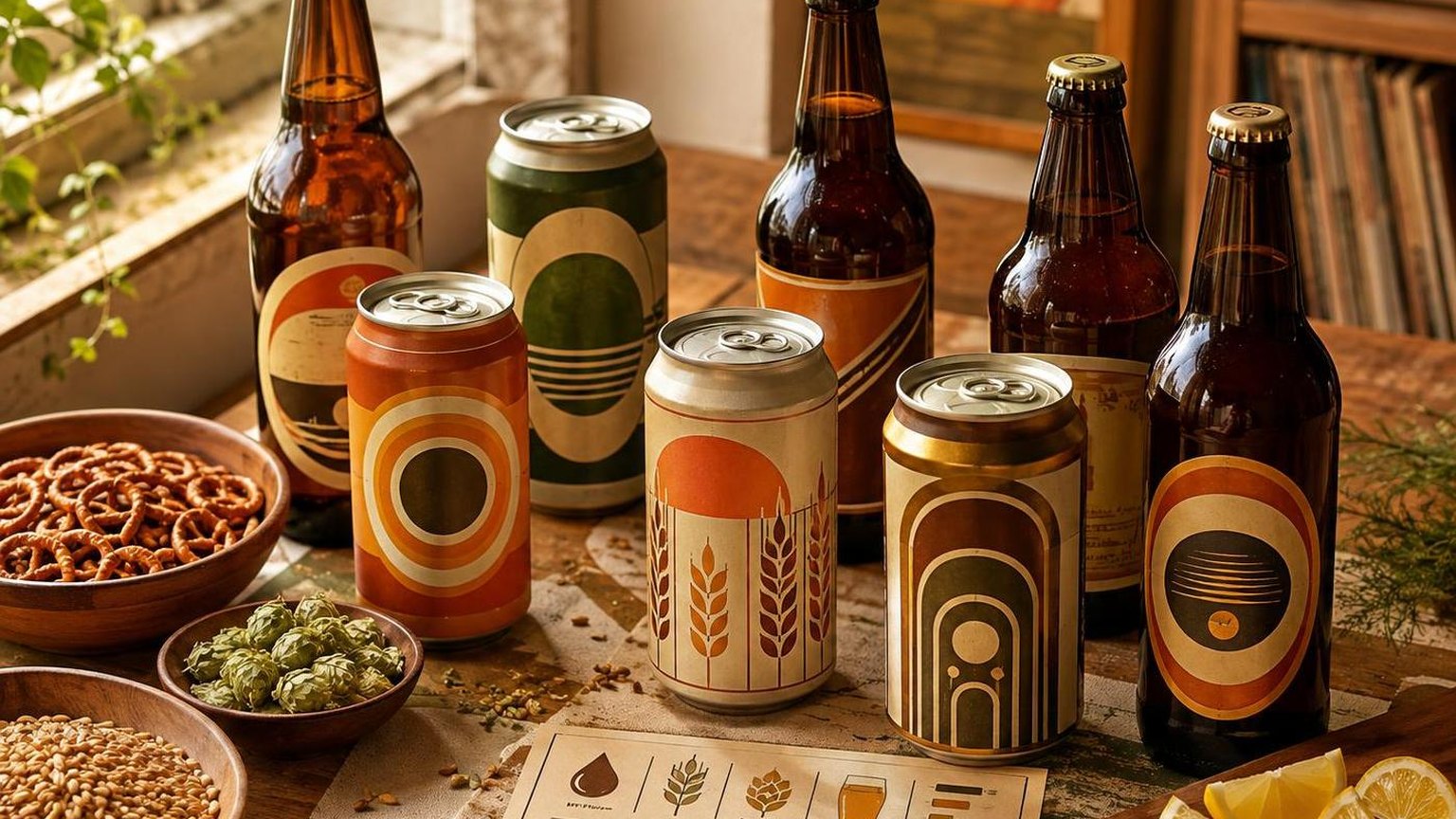
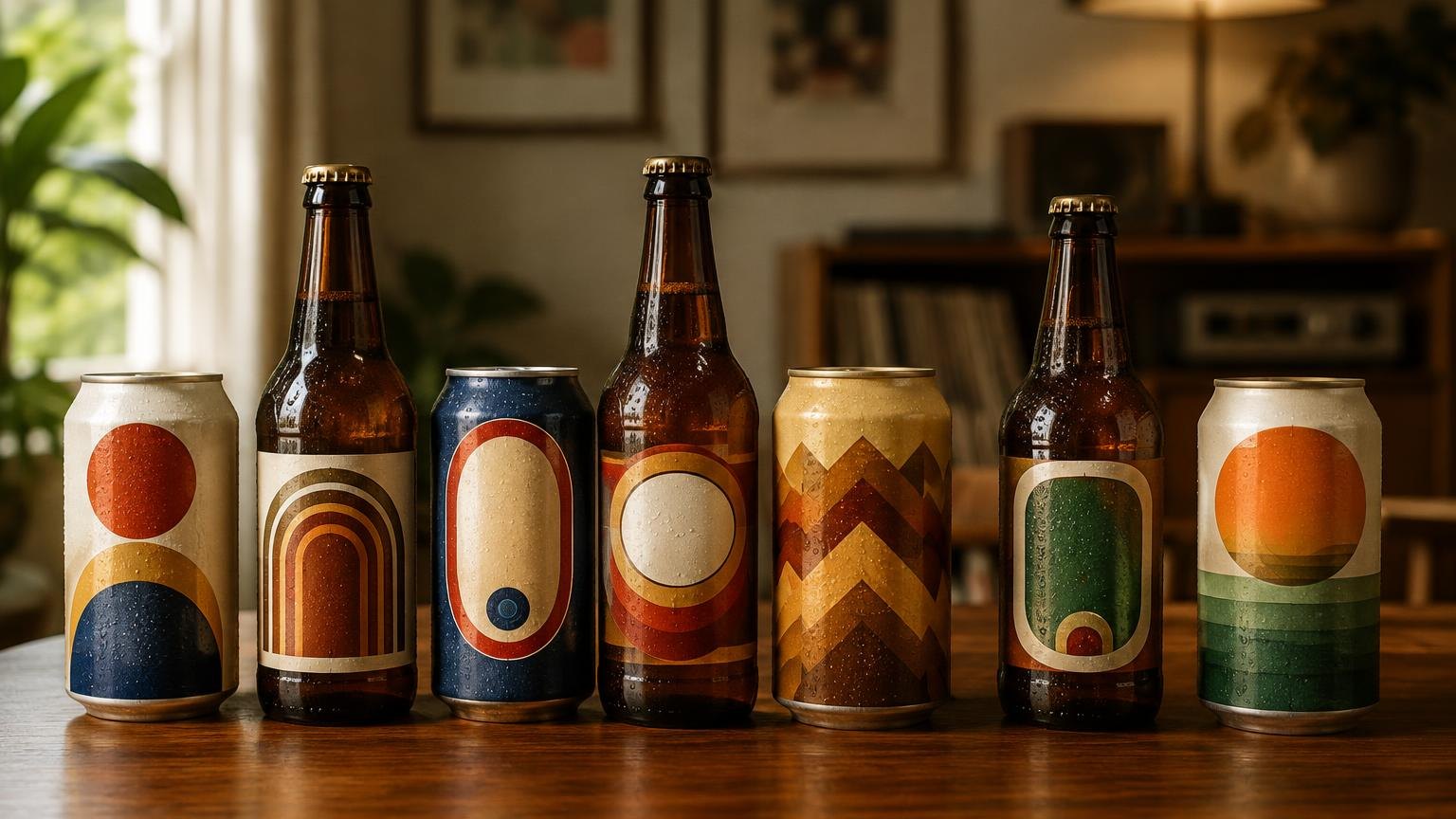
Packaging Shifts in Cans and Bottles
The 1970s transformed how Americans bought beer. Cans overtook bottles as the dominant package format for the first time, driven by the pull-tab revolution and lightweight aluminum technology that slashed production costs.
In 1970, returnable glass bottles still accounted for roughly 40% of beer packaging. By 1979, that figure had collapsed to under 20%.
| Year | Cans (%) | Non-Returnable Bottles (%) | Returnable Bottles (%) |
| 1970 | 39 | 21 | 40 |
| 1975 | 52 | 28 | 20 |
| 1979 | 58 | 27 | 15 |
Two material breakthroughs accelerated the can’s dominance during the decade.
- Two-piece aluminum can: Coors introduced the first all-aluminum two-piece beer can in 1959, but mass adoption hit critical scale in the early 1970s. By 1977, aluminum cans represented over 70% of all beer cans shipped.
- Stay-on-tab (STA): The Falls City Brewing Company debuted the stay-on-tab in 1975, replacing the detachable pull-tab that had generated massive litter. By decade’s end, most major brewers had adopted the design.
Aluminum offered brewers a 30–35% weight reduction over steel, cutting freight costs significantly across distribution networks.
The environmental backlash against throwaway containers shaped legislation. Oregon passed the nation’s first bottle bill in 1971, requiring a five-cent deposit on all beer and soft drink containers.
Vermont followed in 1973, and Maine, Michigan, Connecticut, and Iowa enacted similar laws by 1978.
Returnable bottles didn’t vanish solely because of consumer preference. The consolidation of regional breweries eliminated local distribution loops that made return-and-refill systems economical.
Non-returnable glass bottles carved out a stable niche. Imports like Heineken and Beck’s used distinctive green and brown glass bottles as brand differentiators, resisting the can trend entirely.
The six-pack cardboard carrier also evolved. Hi-cone plastic ring carriers, introduced by ITW in 1960, became ubiquitous by the mid-1970s for canned beer multipacks—another convenience innovation that later drew environmental scrutiny.
What 1970s Beer Tasted Like
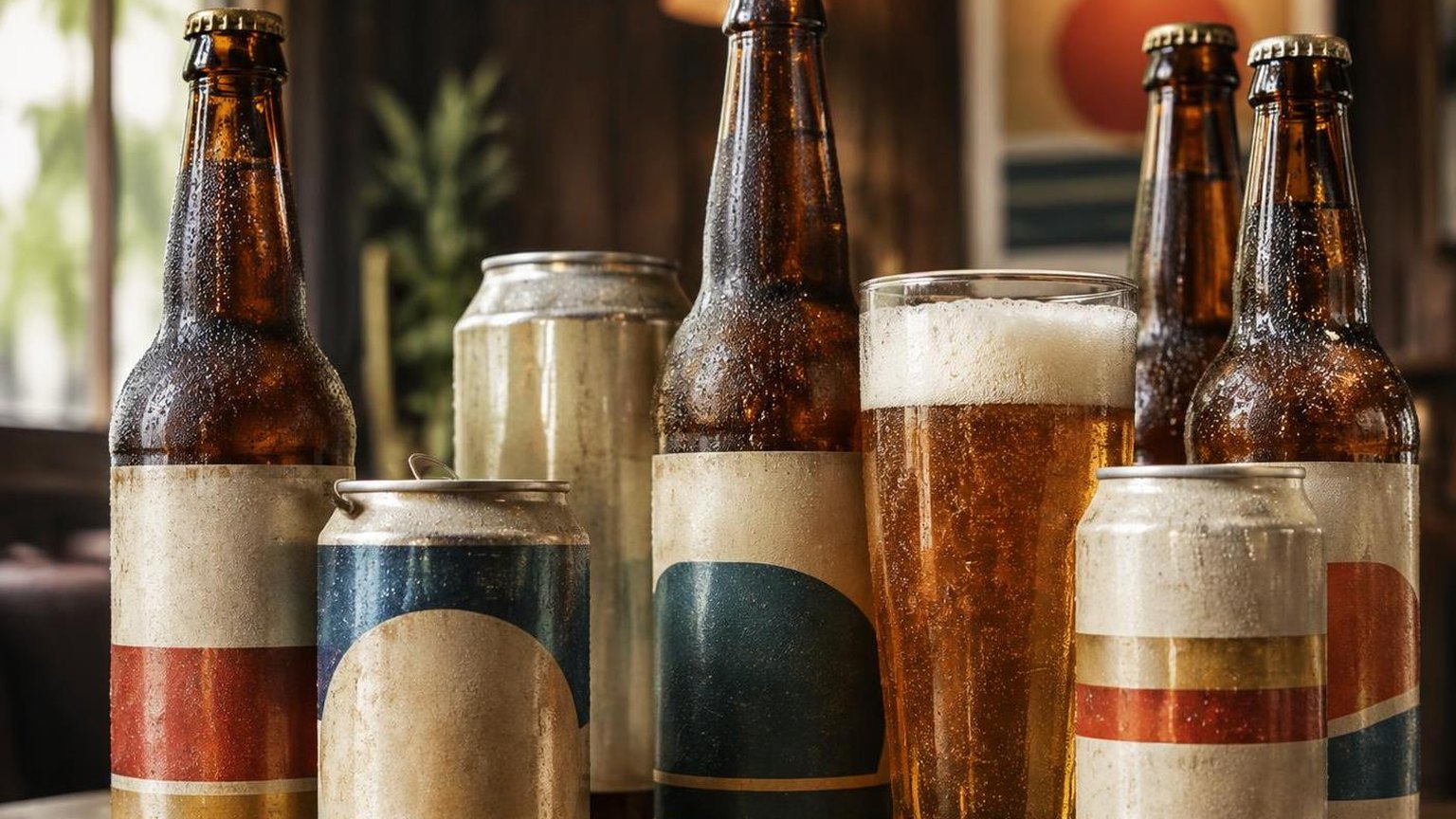
American beer in the 1970s was lighter, blander, and more uniform than any decade before or since. Adjunct lagers dominated, and breweries competed on smoothness rather than flavor complexity.
Most mainstream 1970s beers used 30–40% adjunct grains—rice or corn—replacing barley malt. This reduced body, color, and bitterness substantially.
International Bitterness Units (IBUs) tell the story. The typical American lager of the era registered far below historical and modern benchmarks.
| Beer Style / Era | Typical IBU Range | ABV Range |
| 1970s American Adjunct Lager | 8–15 | 3.2–4.6% |
| 1970s American Light Beer (post-1975) | 5–10 | 2.8–3.5% |
| Pre-Prohibition American Lager (1900s) | 25–40 | 4.5–5.5% |
| Modern Craft Pale Ale (2020s) | 30–50 | 4.8–6.2% |
Miller Lite launched nationally in 1975 at 96 calories per 12-oz serving, pushing the entire industry toward even thinner profiles. By 1978, light beer captured roughly 10% of total U.S. beer sales.
Hop character was minimal. Cluster hops—an old dual-purpose variety—remained the dominant American hop through the decade. They contributed mild, generic bitterness with little aroma complexity.
Carbonation levels ran high, typically 2.6–2.8 volumes of CO₂, creating a crisp, fizzy mouthfeel that masked the thin body. Serving temperature was ice-cold, around 33–38°F, further suppressing whatever flavor existed.
What Drinkers Actually Noticed
- Color: Pale straw to light gold, typically 2–3 SRM (Standard Reference Method)
- Aroma: Faint cereal grain, sometimes a light cooked-corn sweetness from DMS (dimethyl sulfide)
- Finish: Clean, dry, and short with virtually no hop aftertaste
- Mouthfeel: Thin, highly carbonated, deliberately refreshing rather than flavorful
Regional exceptions existed. Anchor Steam in San Francisco, Yuengling in Pennsylvania, and a handful of midwestern breweries still produced fuller-bodied beers with all-malt or near-all-malt recipes.
The decade’s flavor homogeneity had a structural cause. The number of independent U.S. breweries fell to just 44 by 1979, down from 117 in 1970. Fewer producers meant fewer distinct recipes reaching consumers.
Questions Readers Ask
What were the best-selling beer brands in the United States during the 1970s?
Budweiser, Schlitz, and Pabst Blue Ribbon dominated U.S. sales throughout the decade. By 1977, Budweiser overtook Schlitz as the top-selling beer in America, a position Schlitz had held for much of the post-war era.
Miller High Life surged from seventh place in 1970 to second by 1978, fueled by Philip Morris’s aggressive marketing after acquiring Miller Brewing in 1969.
How did Miller Lite change the beer industry when it launched in 1975?
Miller Lite debuted nationally in 1975 with 96 calories per 12-ounce serving—roughly one-third fewer than a standard lager—and created an entirely new category: the light beer segment.
Within three years it captured over 10% of the U.S. beer market.
Its “Tastes Great, Less Filling” campaign, featuring retired athletes like Dick Butkus and Bob Uecker, became one of the most recognized ad slogans of the 20th century and prompted every major brewer to develop a light counterpart.
Why did Schlitz collapse from America’s top beer brand during the 1970s?
Schlitz cut brewing time and substituted cheaper ingredients—corn syrup for malted barley and hop pellets for whole hops—under a cost-reduction program initiated in 1974.
The reformulated beer developed a hazy appearance and sometimes formed mucus-like clumps from a reaction between a new foam stabilizer (Chill-garde) and another additive. Consumer backlash was swift: Schlitz fell from the No.
2 brand in 1976 to No. 7 by 1981, and the company was eventually sold to Stroh’s in 1982.
Were craft or microbreweries active in the 1970s?
The number of independent U.S. breweries hit its all-time low of roughly 44 in 1979, but the decade planted critical seeds for the craft movement.
Jack McAuliffe opened New Albion Brewing Company in Sonoma, California, in 1976—widely recognized as the first American microbrewery of the modern era.
Simultaneously, homebrewing was federally legalized when President Jimmy Carter signed H.R. 1337 in October 1978, effective February 1979, enabling thousands of future craft brewers to begin experimenting.
What popular beer styles and imports gained traction during the 1970s?
Light American lagers overwhelmingly dominated, but imported brands carved out a growing niche: Heineken held the top import spot, while Corona, Molson, and Foster’s expanded U.S. distribution.
Anchor Brewing’s Fritz Maytag revived Anchor Steam Beer and introduced Anchor Liberty Ale in 1975, one of the first American-brewed IPAs in the modern era.
These imports and specialty releases collectively accounted for less than 2% of total U.S. volume but signaled shifting consumer curiosity toward fuller-flavored options.
How much did a six-pack of beer cost in the 1970s?
A six-pack of a mainstream domestic brand like Budweiser or Miller typically cost between $1.50 and $2.50 across the decade, depending on region and year.
Adjusted for inflation, the low end ($1.50 in 1970) equals roughly $12 in 2024 dollars, making 1970s beer comparably priced to today’s mass-market brands.
Premium imports like Heineken ran noticeably higher, often $3.00–$4.00 per six-pack by the late 1970s.
Further Reading
- What To Mix With Maker’S Mark Bourbon?
- What To Mix With Malibu Rum?
- What Does an Aerator Do for Wine? – The Complete Expert Guide to Understanding Wine Aeration
- Who Makes Kirkland Wine At Costco?
- What Does Triple Distilled Mean? Get Answer Now
- How Many Cups Is 34 Oz? Tool-Free Conversion
- All Blog Guides
- Brewing Industry Research Foundation – "The British Brewing Industry 1830–1980" (1983)
- U.S. Bureau of Alcohol, Tobacco and Firearms – "Alcohol Beverage Industry Statistics" (1979)
- USDA Economic Research Service – "U.S. Beer Industry: Recent Trends and Structural Changes" (1978)
- National Institute on Alcohol Abuse and Alcoholism – "Apparent Per Capita Alcohol Consumption: National, State, and Regional Trends, 1977–2020" (2022)
- Brewers Association Historical Data – "Number of Breweries in the United States, 1873–2023" (2024)
- Oregon State University – "A Concise History of America's Brewing Industry" (2003)
- National Bureau of Economic Research – "The U.S. Brewing Industry: Data and Economic Analysis" (2005)
- University of Wisconsin–Madison Center for Demography and Ecology – "Beer Industry Consolidation and Market Structure, 1950–2010" (2014)
- Smithsonian National Museum of American History – "American Brewing History" (2023)
- PubMed / Journal of Studies on Alcohol – "Changes in American Drinking Patterns and Problems, 1967–1984" (1986)