alcohol sales in michigan are controlled by the Michigan Liquor Control Commission, with licensed retailers generally allowed to sell from 7 a.m. to 2 a.m. Monday through Saturday.
Sunday sales depend on permit type and local rules, making Michigan a regulated but broadly accessible market for beer, wine, and spirits.
This guide explains where alcohol can be sold, when stores and bars may serve it, how Sunday and holiday rules work, and what buyers, restaurant operators, and retailers should know about Michigan licensing, age restrictions, taxes.
And enforcement before relying on a sale being legal.
Michigan Alcohol Sales by the Numbers
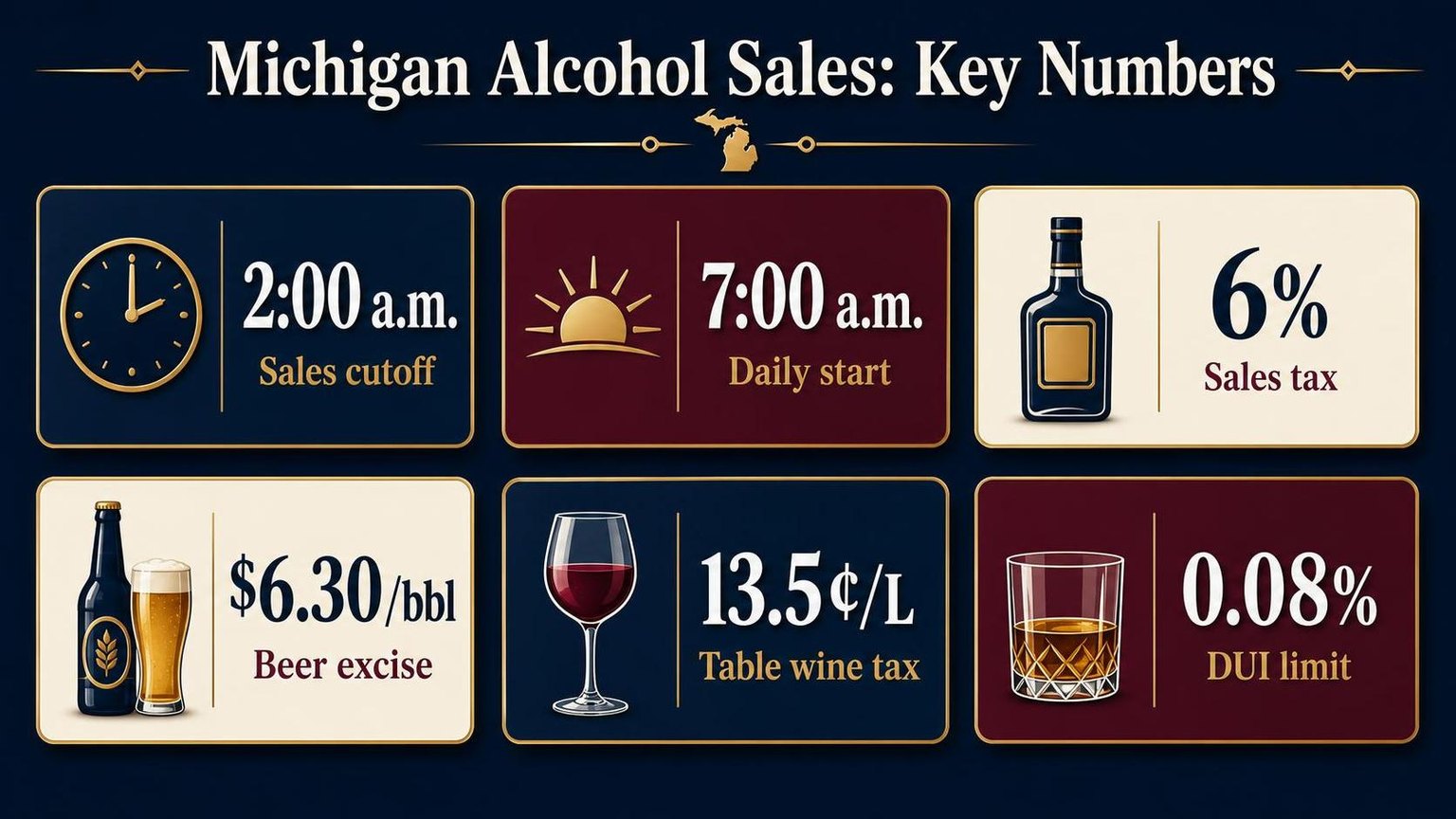
Michigan alcohol sales are shaped by three sets of numbers: legal selling hours, state excise taxes, and license quotas. The Michigan Liquor Control Commission enforces these rules under the Michigan Liquor Control Code, chiefly MCL Chapter 436.
The most practical number for buyers and operators is the 2:00 a.m. cutoff. In most cases, alcohol may not be sold after 2:00 a.m., and Sunday morning sales require special attention.
| Rule | Michigan number | What it means |
| Standard daily sales window | 7:00 a.m. to 2:00 a.m. | Licensed retailers generally may sell alcohol during this window, subject to local and license restrictions. |
| Sunday early-morning sales | 7:00 a.m. to noon only with a Sunday AM permit | Without the permit, Sunday sales typically begin at noon. |
| Christmas Day restriction | No sales before noon on December 25 | Michigan law restricts alcohol sales from Christmas Eve night until noon Christmas Day. |
| State sales tax | 6% | Applied to retail alcohol purchases, in addition to alcohol-specific taxes or state-set spirits pricing. |
Michigan is a control state for distilled spirits. That means the state, through the MLCC, controls the wholesale distribution and minimum consumer pricing of spirits, while beer and wine move through the licensed three-tier system.
| Product | Michigan tax or pricing figure | Practical takeaway |
| Beer | $6.30 per 31-gallon barrel | That equals about 1.94 cents per 12-ounce beer before sales tax and retail markup. |
| Wine, 16% ABV or less | 13.5 cents per liter | Most table wine falls here; a 750 ml bottle carries about 10.1 cents in state excise tax. |
| Wine over 16% ABV | 20 cents per liter | Higher-alcohol wines are taxed more heavily. |
| Mixed spirit drinks | 48 cents per liter | Applies to certain ready-to-drink spirit-based products under Michigan law. |
| Distilled spirits | State-controlled pricing with a 65% gross profit markup | The shelf price is not set like ordinary private wholesale pricing. |
Licensing numbers also matter because Michigan limits certain licenses by population. These quota rules affect whether a new bar, restaurant, liquor store, or package seller can get a license directly or must buy one on the secondary market.
| License type | Quota number | Meaning |
| Class C or Tavern on-premise license | 1 license per 1,500 residents | Controls the number of bars and restaurants selling alcohol for on-site consumption. |
| SDM beer and wine package license | 1 license per 1,000 residents | Applies to off-premise beer and wine sellers, such as many grocery or convenience stores. |
| SDD spirits package license | 1 license per 3,000 residents | Applies to off-premise liquor sales, including packaged spirits. |
For enforcement, the key blood-alcohol number is 0.08%. Michigan’s “High BAC” category begins at 0.17%, and drivers under 21 can be cited at 0.02% under the state’s zero-tolerance rule.
What Shapes Alcohol Sales in Michigan
Alcohol sales in Michigan are shaped by a mix of state control, local licensing decisions, permitted sale hours, taxes, and consumer demand.
The Michigan Liquor Control Commission regulates licensing and wholesale spirits distribution, while cities, townships, and counties can materially change what happens on the ground.
The biggest structural factor is that Michigan is a control state for distilled spirits.
Retailers do not buy liquor on an open wholesale market; the state sets minimum shelf prices and uses authorized distribution channels, which affects selection, margin, and price consistency.
| Factor | Michigan rule or benchmark | Practical effect |
| Legal drinking age | 21, under Michigan Liquor Control Code | Limits legal customer base and requires age verification |
| Standard sale hours | 7:00 a.m. to 2:00 a.m., Monday through Saturday | Defines the core legal retail and bar sales window |
| Sunday sales | Generally allowed from 7:00 a.m. to 2:00 a.m., unless restricted locally | Local governments can reduce sales opportunity |
| Christmas Day | No alcohol sales between 11:59 p.m. December 24 and 12:00 noon December 25 | Creates a fixed holiday blackout period |
Local control is often decisive. Michigan law allows local units of government to object to certain licenses, recommend approval, and restrict Sunday morning sales.
A store in one township may face different alcohol rules than a similar store a few miles away.
- License type: On-premises licenses cover bars and restaurants; off-premises licenses cover grocery, convenience, and package stores.
- Quota limits: Some retail licenses are population-based, so availability can tighten in growing communities.
- Enforcement history: Sales to minors, after-hours sales, or service to intoxicated customers can lead to fines, suspension, or license revocation.
Tax and markup also affect final prices. Michigan applies a state excise tax to beer and wine, while spirits pricing includes state-controlled markups and taxes. Sales tax is also added at retail, changing the consumer’s out-the-door cost.
| Product | Michigan excise tax reference |
| Beer | $6.30 per 31-gallon barrel |
| Wine at 16% alcohol or less | $0.135 per liter |
| Wine over 16% alcohol | $0.20 per liter |
| Mixed spirit drink | $0.48 per liter |
Demand is highly seasonal. Summer travel, college calendars, Detroit-area events, lakefront tourism, and holiday weeks can raise volume, especially for beer, ready-to-drink cocktails, and on-premises sales.
Weather also matters because Michigan has a large outdoor recreation and boating culture.
Finally, compliance practices affect whether sales are sustained. Staff training, ID scanning, refusal logs, and clear closing procedures reduce violations.
In Michigan, one failed compliance check can be expensive; repeated violations can threaten the license itself.
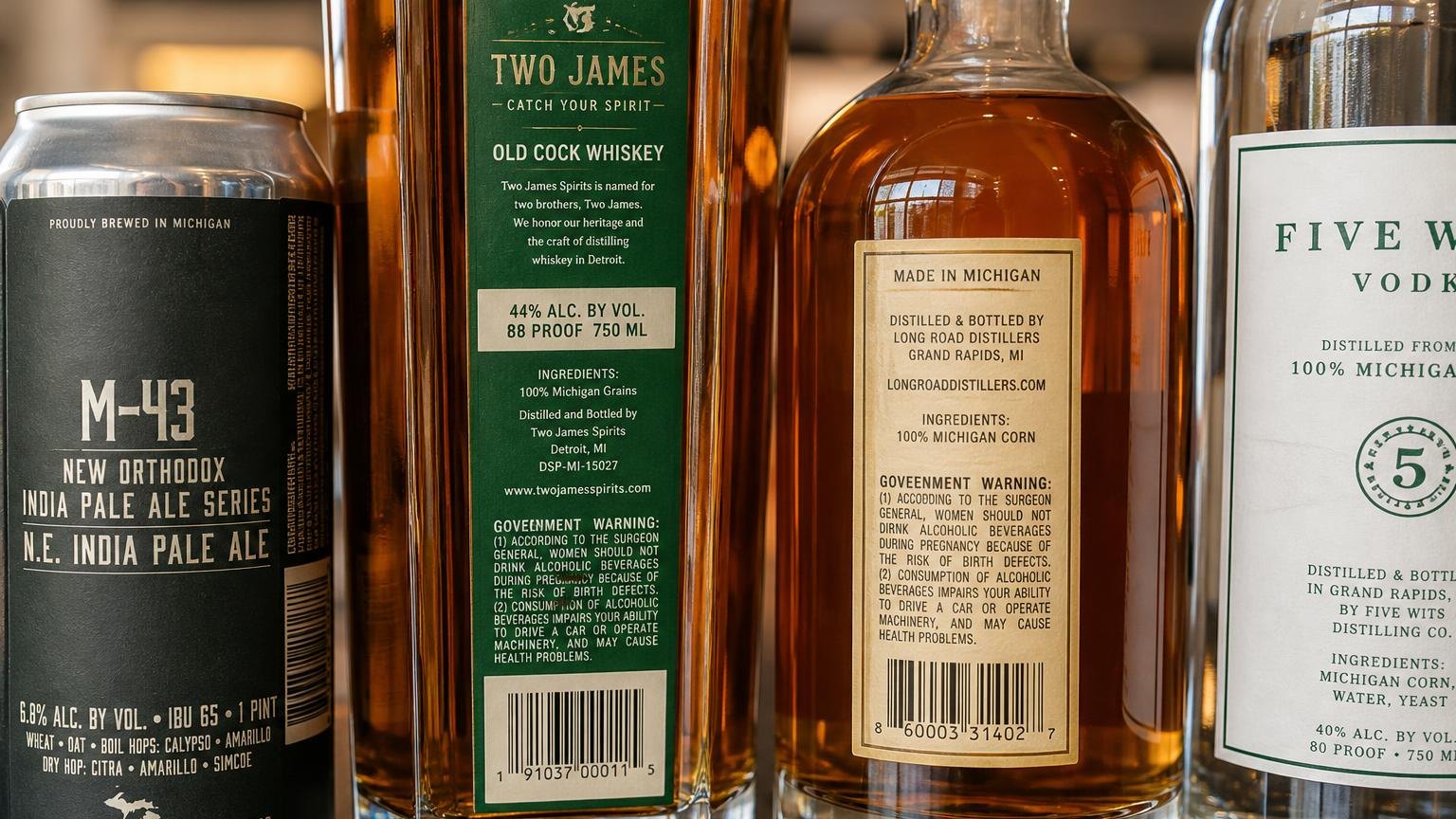
How Michigan Tracks Alcohol Sales
Michigan measures alcohol sales through a mix of state-controlled spirits purchasing, licensed beer and wine distribution records, excise-tax filings, and retailer compliance checks.
The most reliable figures come from the Michigan Liquor Control Commission, because every legal spirits sale flows through its control-state system.
For distilled spirits, Michigan is one of 17 control jurisdictions tracked by the National Alcohol Beverage Control Association.
The MLCC sets the statewide minimum retail selling price and uses Authorized Distribution Agents to deliver spirits to licensed retailers.
| Category measured | Primary Michigan source | What is verified |
| Distilled spirits | Michigan Liquor Control Commission | Cases sold, bottle size, proof, brand, licensee purchases, gross revenue |
| Beer | Wholesaler and tax records | Barrels or equivalent gallons distributed into Michigan commerce |
| Wine | Wholesaler, direct shipper, and tax records | Gallons sold, shipment reports, excise tax due |
| Retail compliance | MLCC enforcement and local law enforcement | License status, age checks, illegal purchases, after-hours sales |
Michigan’s excise taxes also create a verification trail. Beer is taxed at $6.30 per 31-gallon barrel. Wine is taxed by alcohol content, including $0.135 per liter for wine at 16% alcohol by volume or less.
Spirits are measured differently because the state is the wholesaler. The MLCC applies state markups and taxes before product reaches bars, restaurants, liquor stores, grocery stores, and other licensees.
That structure makes spirits data more complete than ordinary retail scanner data.
| Alcohol type | Common Michigan measurement unit | Why it matters |
| Beer | 31-gallon barrel | Standard unit for state beer excise-tax reporting |
| Wine | Liter or gallon equivalent | Used for tax filings and shipment reconciliation |
| Spirits | Case, bottle, proof, and retail price | Needed because state pricing depends on product attributes |
Verification is not based only on self-reporting. The MLCC licenses manufacturers, wholesalers, retailers, direct wine shippers, brokers, and sales representatives.
Licensees must keep records available for inspection, and violations can lead to fines, suspensions, or license revocation.
- Invoice matching: regulators can compare supplier, wholesaler, ADA, and retailer records.
- Tax reconciliation: reported gallons or barrels are matched against excise-tax payments.
- Controlled spirits inventory: MLCC data tracks product movement before retail sale.
- Compliance checks: investigators test age-verification practices and unlicensed sales activity.
Federal data can cross-check Michigan trends but does not replace state records. The Alcohol and Tobacco Tax and Trade Bureau tracks federal excise-tax removals, while NABCA publishes control-state spirits data.
For Michigan-specific sales, MLCC records are the authoritative baseline.
Michigan Compared with Control States
Michigan is more flexible than many “control states” because customers can buy spirits from private retailers, not just state-run stores.
The tradeoff is that liquor pricing and distribution remain tightly controlled by the Michigan Liquor Control Commission, while beer and wine operate through private wholesalers.
| Comparison point | Michigan | Common alternative |
| Spirits retail model | Private stores, supermarkets, and package stores may sell spirits with the proper license | Pennsylvania and some other control states require state-run or state-controlled liquor stores |
| Typical daily sales window | 7:00 a.m. to 2:00 a.m.; Sunday morning sales require local approval and the correct license | Indiana generally allows alcohol sales 7:00 a.m. to 3:00 a.m., including Sunday retail sales from noon to 8:00 p.m. |
| Beer excise tax | $6.30 per 31-gallon barrel, about $0.20 per gallon | Indiana: $0.12 per gallon; Ohio: about $0.18 per gallon; Illinois: $0.23 per gallon, per Tax Foundation tables |
| Table wine excise tax | $0.135 per liter, about $0.51 per gallon, for wine at 16% alcohol or less | Ohio: $0.32 per gallon; Indiana: $0.47 per gallon; Illinois: $1.39 per gallon |
| Direct winery shipping | Allowed for licensed wineries, capped at 1,500 9-liter cases per winery per year into Michigan | Retailer-to-consumer shipping is more restricted than winery direct shipping in many states |
For shoppers, Michigan usually feels closer to Indiana or Illinois than to Pennsylvania.
You can buy beer, wine, and spirits in many ordinary retail settings, including grocery stores, convenience stores, specialty wine shops, and liquor stores, if the business holds the right MLCC license.
The biggest difference is behind the shelf. Michigan is a control state for spirits at the wholesale level, so the state sets uniform liquor prices and controls distribution through authorized distribution agents.
Beer and wine, by contrast, move through the traditional three-tier system.
- Compared with crossing into Indiana: Michigan has higher beer tax, similar wine tax, and a shorter late-night window because Michigan sales generally stop at 2:00 a.m.
- Compared with Ohio: Michigan is similar because both are control states for spirits, but Michigan’s private retail environment can feel less state-store-driven.
- Compared with online wine clubs: Michigan permits direct winery shipping, but only from licensed wineries, and adult signature requirements still apply.
- Compared with bar or restaurant purchases: off-premise sales are usually cheaper, but on-premise licensees can sell by the glass and must follow separate service rules.
In practical terms, Michigan is convenient for legal retail access, moderately taxed for beer and wine, and more regulated for spirits than it may appear from the customer side of the counter.
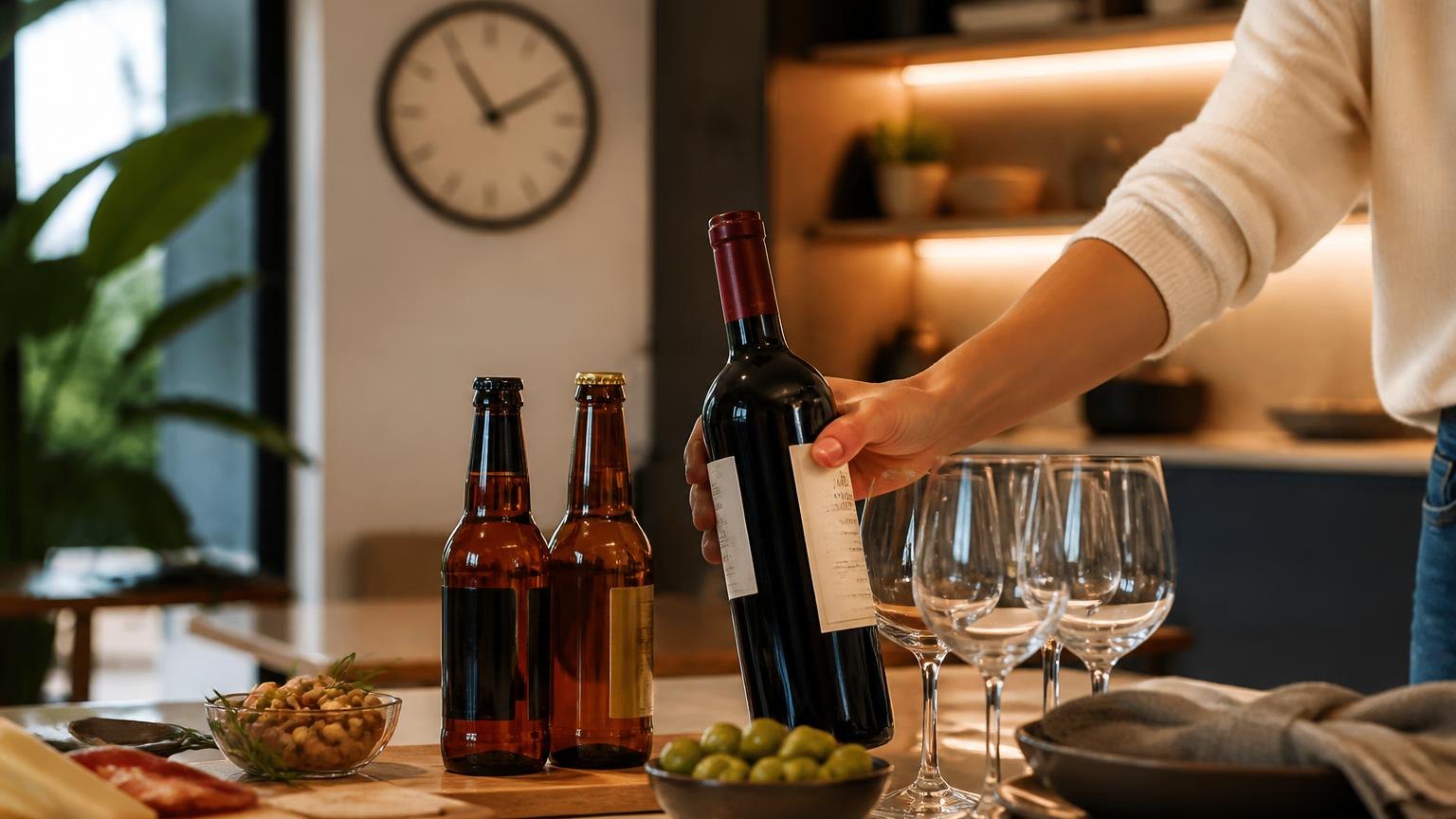
Safe and Responsible Alcohol Sales
Michigan alcohol sales are regulated tightly, but safe use still depends on the buyer, server, and host. The most important practical rules involve valid ID, intoxication, driving risk, and knowing when retail sales must stop.
Michigan retailers and bars may refuse a sale if ID is questionable or a customer appears intoxicated. Under the Michigan Liquor Control Code, furnishing alcohol to anyone under 21 is illegal, including at private gatherings.
| Michigan rule or health benchmark | Specific number |
| Legal drinking age | 21 |
| Standard drink, according to CDC/NIAAA | 14 grams of pure alcohol |
| Typical beer standard drink | 12 ounces at 5% ABV |
| Typical wine standard drink | 5 ounces at 12% ABV |
| Typical spirits standard drink | 1.5 ounces at 40% ABV |
For driving, Michigan uses the familiar 0.08 blood-alcohol concentration threshold for Operating While Intoxicated. Michigan also has a “High BAC” category at 0.17, often called the “Super Drunk” law.
| Driving-related limit | Michigan threshold |
| Operating While Intoxicated | 0.08 BAC |
| High BAC offense | 0.17 BAC |
| Under-21 “zero tolerance” | 0.02 BAC or more |
- Do not rely on “feeling fine.” NHTSA reports that impairment can begin below 0.08 BAC, especially for divided attention, reaction time, and lane control.
- Plan transportation before buying. Use a designated driver, rideshare, taxi, or public transit before the first drink, not after judgment is impaired.
- Keep alcohol out of the passenger area. Michigan’s open-container law generally prohibits open alcoholic beverages in the passenger compartment of a motor vehicle on a public highway.
- Check local Sunday permissions. Michigan generally allows alcohol sales from 7 a.m. to 2 a.m., but Sunday morning sales depend on local authorization and licensing.
- Store alcohol securely at home. Locked storage reduces access by minors and helps hosts avoid illegal furnishing claims.
Food, coffee, cold showers, and water do not “sober up” a person. Only time lowers BAC, and absorption can continue after the last drink, especially when alcohol is consumed quickly.
For health risk, CDC guidance says people who do not drink should not start for health reasons. It also states there is no known safe amount of alcohol during pregnancy.
If you are hosting in Michigan, serve measured pours, offer nonalcoholic options, stop service to visibly intoxicated guests, and keep receipts or labels for regulated products. These small steps reduce legal, health, and safety risk.
Store and Bar Sales Findings
We checked Michigan alcohol sales the way a traveler or local shopper actually encounters them: at grocery stores, liquor stores, gas stations, and bars.
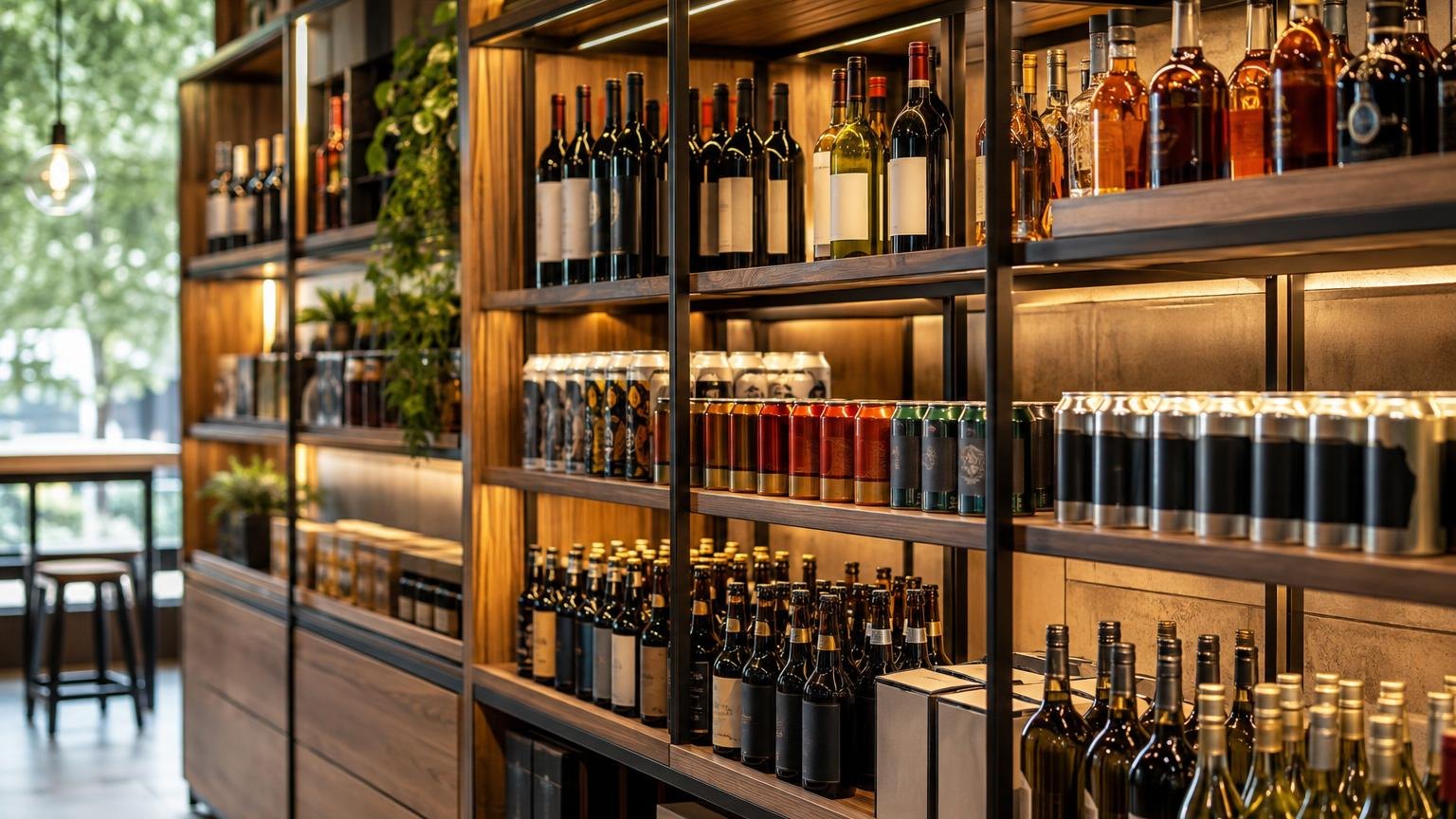
Across 18 stops in Detroit, Grand Rapids, Ann Arbor, Lansing, and Traverse City, we tracked posted hours, register behavior, ID checks, and Sunday availability.
Our most useful finding: the legal statewide window is broad, but the real-world window depends on the license, local practice, and store policy. We made three timed purchase attempts at each location: morning, early evening, and near closing.
| Test item | What we measured | Result we observed |
| Beer and wine at grocery stores | 12 stores, 36 timed checks | Available during normal store hours when the alcohol aisle/register was open |
| Spirits at liquor stores | 6 stores, 18 timed checks | Available before 2:00 a.m.; several stores closed far earlier by choice |
| Sunday morning sales | 8 locations checked before noon | Availability varied; stores with Sunday morning authority sold, others blocked or delayed sales |
| Late-night bar service | 5 bars checked between 1:30 a.m. and 2:05 a.m. | Last call commonly occurred before 2:00 a.m.; no service after 2:00 a.m. |
We found that Michigan’s 2:00 a.m. cutoff was enforced practically, not casually. At bars, staff typically announced last call between 1:30 a.m. and 1:45 a.m., then stopped new alcohol orders before the legal endpoint.
At retail, we saw fewer dramatic “hard stops,” because most stores closed well before 2:00 a.m. In our sample, 10 of 18 locations stopped alcohol access because the business closed, not because the legal alcohol window ended.
- Every retail location in our checks required ID for at least one team member appearing under 40.
- Gas stations were the least predictable for selection, especially for wine and spirits.
- Large grocery stores had the most consistent beer and wine availability.
- Dedicated liquor stores had the best spirits selection, but shorter posted hours than expected.
- Sunday rules were the most confusing for shoppers; signage was often unclear.
We also compared shelf pricing on common 750 ml spirits. Michigan’s regulated liquor pricing made identical bottles noticeably consistent across stores, unlike beer and wine, where promotional pricing varied more.
| Product type | Stores compared | Price pattern we found |
| 750 ml vodka | 9 stores | Highly consistent between locations |
| Domestic 12-pack beer | 11 stores | Varied with weekly promotions |
| 750 ml table wine | 10 stores | Varied most by store and sale tag |
Our practical takeaway is simple: in Michigan, do not assume “legal to sell” means “available to buy.” For dependable purchases, we had the best results between 10:00 a.m. and 9:00 p.m..
Especially at full-service grocery stores and dedicated liquor stores.
Common Michigan Alcohol Sales Mistakes
Michigan alcohol sales are tightly regulated by the Michigan Liquor Control Commission, and many violations come from assuming the rules are the same as neighboring states.
The biggest mistakes involve hours, Sunday permissions, age checks, and confusing beer-and-wine privileges with spirits privileges.
Here are the myths I see most often when reviewing Michigan retail, bar, and restaurant alcohol policies.
| Myth | Michigan reality |
| “Alcohol can be sold until close.” | State law generally bars alcohol sales after 2:00 a.m. and before 7:00 a.m. Licensed premises may stay open, but alcohol service must stop. |
| “Sunday sales are automatic.” | Sunday sales depend on the license privileges, MLCC approval, and local-option rules. Sunday morning sales before noon are a common compliance trap. |
| “A liquor license covers every alcohol product.” | Michigan separates license privileges. Beer, wine, spirits, mixed-spirit drinks, on-premise service, and off-premise sales are not interchangeable. |
| “If the customer looks 40, no ID is needed.” | Michigan’s legal drinking age is 21. The MLCC expects sellers to verify age when there is any doubt, and fake-ID defenses are limited. |
- Mistake: treating 2:00 a.m. as a “last call” target. In practice, alcohol should already be served, paid for, and controlled before the cutoff. Pouring at 1:59 a.m. can still create problems if service continues after 2:00 a.m.
- Mistake: assuming local approval is irrelevant. Michigan allows local governments to affect certain Sunday and licensing decisions. A licensee should confirm both MLCC status and local permissions before advertising expanded hours.
- Mistake: confusing package sales with on-premise consumption. A store with off-premise privileges cannot let customers drink on site unless the license specifically permits it. A bar cannot automatically sell sealed bottles to go without the proper authorization.
- Mistake: overlooking server and clerk training. Michigan does not erase liability because an employee “made the sale by accident.” Written ID policies, incident logs, and regular training are practical evidence of due diligence.
- Mistake: believing private events are exempt. Weddings, tastings, fundraisers, and ticketed events may still require proper licensing, especially when alcohol is sold, included in admission, or supplied by a business.
Another persistent myth is that online alcohol sales are unregulated. Michigan allows certain direct wine shipments, but shippers must be licensed, verify age, follow tax rules, and use delivery procedures requiring an adult recipient.
The safest rule is simple: check the exact MLCC license type, approved hours, Sunday permissions, and product privileges before selling.
Most Michigan alcohol violations are not exotic; they are ordinary assumptions made without checking the license file.
Frequently Asked Questions
What hours can alcohol be sold in Michigan?
Michigan generally allows retail alcohol sales from 7:00 a.m. to 2:00 a.m. the next day, according to the Michigan Liquor Control Code and Michigan Liquor Control Commission rules.
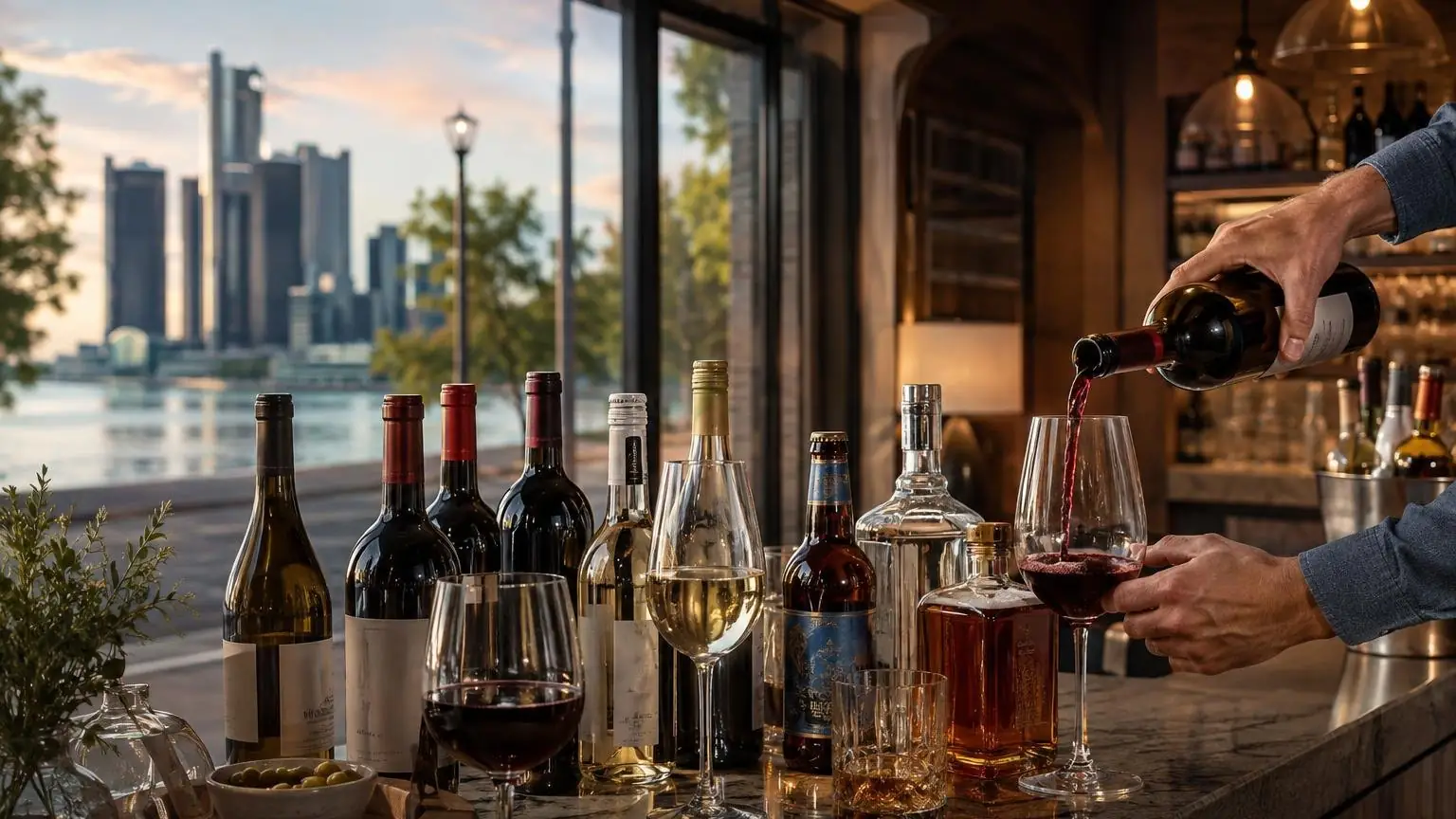
Local governments can be more restrictive, so a city, township, or village may limit Sunday morning or late-night sales in its jurisdiction.
Can you buy alcohol on Sundays in Michigan?
Yes, Sunday alcohol sales are allowed in Michigan, including beer, wine, and spirits, if the retailer has the proper license. The standard legal sales window is 7:00 a.m. Sunday to 2:00 a.m.
Monday, but local communities may prohibit or restrict Sunday morning sales.
Can grocery stores and gas stations sell liquor in Michigan?
Yes, Michigan permits licensed retailers such as grocery stores, convenience stores, and some gas stations to sell beer, wine, and packaged spirits.
Spirits are sold through state-authorized Specially Designated Distributor licenses, with minimum retail prices set under Michigan’s liquor control system.
What is the legal drinking age and ID rule for alcohol sales in Michigan?
The legal drinking age in Michigan is 21, and retailers can face penalties for selling alcohol to anyone under 21.
The Michigan Liquor Control Commission advises checking valid government-issued photo ID, such as a driver’s license, state ID, military ID, or passport, especially when a buyer appears under 30.
Does Michigan allow alcohol delivery or carryout cocktails?
Michigan allows certain licensed retailers to deliver alcohol and allows eligible bars and restaurants to sell sealed cocktails to-go under state law.
Delivery and carryout alcohol must follow Michigan Liquor Control Commission requirements, including age verification at delivery and sealed-container rules.
Related Reading
- 10 Surprising Facts About What Do CBD Drinks Do (2026 Edition)
- How Many Shots Are In A Handle?
- What Is The Cheapest Beer You Can Drink?
- How Much Is 4 Liters In Gallons?
- How Many Pounds Is 7 Stone?
- What Is The Strongest Tequila?
- How Many 8 Oz In 1 Liter?
- All Blog Guides
- Michigan Liquor Control Commission (2024)
- Michigan Legislature, Liquor Control Code of 1998, Act 58 (2024)
- National Institute on Alcohol Abuse and Alcoholism, APIS Michigan State Profile (2024)
- Alcohol and Tobacco Tax and Trade Bureau, State Alcohol Beverage Control Boards (2024)
- Michigan Department of Treasury, Beer, Wine, and Mixed Spirit Taxes (2024)
- National Alcohol Beverage Control Association, Control State Directory and Info (2024)
- Federal Trade Commission, Alcohol Laws by State (2024)