drinking game on the bus is a party-bus activity where passengers follow agreed prompts to sip alcohol while a sober licensed driver handles the route.
It belongs only on legally permitted charter or party buses, not public transit, school buses, rideshares, or any vehicle where open containers are prohibited.
In the U.S., alcohol rules vary by state and city, and operators may ban drinking even when local law allows it.
The safest versions use low-pressure rules, sealed water on board, no driver involvement, seat-first play, and a clear stop time before arrival.
Legal and Safety Factors That Matter
A “drinking game on the bus” is not just a party format; it is a moving-vehicle alcohol scenario with legal, safety, and timing constraints.
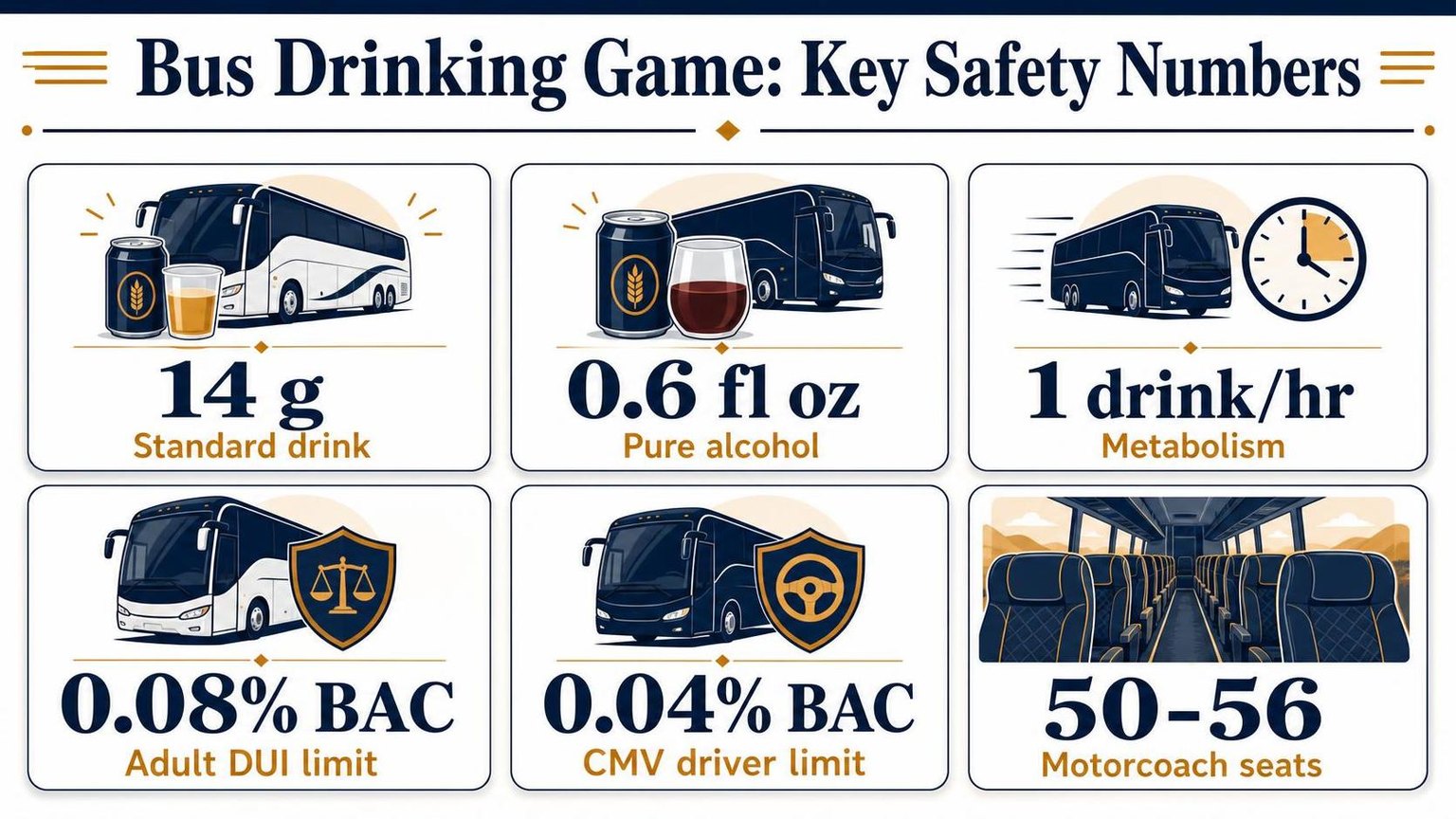
The numbers that matter most are drink size, alcohol absorption, bus capacity rules, and state open-container laws.
In the U.S., one standard drink contains 14 grams, or 0.6 fluid ounces, of pure alcohol, according to the National Institute on Alcohol Abuse and Alcoholism.
Games often obscure that math because pours, cans, and “sips” are not measured consistently.
| Drink type | Typical serving | Alcohol by volume | Approx. standard drinks |
| Regular beer | 12 fl oz | 5% | 1.0 |
| Wine | 5 fl oz | 12% | 1.0 |
| 80-proof spirits | 1.5 fl oz | 40% | 1.0 |
| Strong craft beer | 16 fl oz | 8% | About 1.7 |
BAC rises faster than most games feel. The CDC notes that alcohol is absorbed quickly, and a standard drink generally takes the body about 1 hour to metabolize. Time does not “reset” because the bus arrives at another stop.
| BAC level | Common impairment noted by U.S. safety agencies |
| 0.02% | Decline in visual function and divided attention |
| 0.05% | Reduced coordination, alertness, and response to emergencies |
| 0.08% | Illegal per se driving limit for adults in all U.S. states |
| 0.15% | Substantial impairment, balance problems, and vomiting risk |
The driver’s standard is stricter. For commercial motor vehicle drivers, federal rules prohibit driving with a BAC of 0.04% or higher, and employers may apply even tighter zero-tolerance policies.
- Open-container law: Federal highway rules encourage states to ban open alcoholic containers in passenger areas, but charter buses and limousines may have state-specific exceptions.
- Seat count matters: A typical full-size motorcoach carries about 50 to 56 passengers, so even “one drink each” can mean more than 50 open containers onboard.
- Emergency risk: A 40-foot coach requires clear aisles, stable passengers, and fast exits; drinking games increase tripping, distraction, and spill hazards.
- Venue liability: Some charter companies ban onboard alcohol entirely, while others require deposits, cleaning fees, licensed groups, or written permission.
The practical takeaway: count standard drinks, not turns in the game. Confirm the charter contract, state rules, and driver policy before alcohol is opened, because violations can end the trip immediately.
What Determines the Outcome
The “result” of a drinking game on a bus is not just who wins. It is shaped by alcohol dose, timing, food, body size, motion, heat, and the legal rules that apply to open containers and intoxication in that vehicle.
On buses, the same amount of alcohol can hit harder because people are standing, laughing, dehydrated, and moving.
A moving vehicle also raises the consequences: impaired balance, nausea, falls, conflict with the driver, and possible removal by police or the bus company.
Alcohol Amount and Timing
A standard drink in the United States contains 14 grams, or 0.6 fluid ounces, of pure alcohol, according to the National Institute on Alcohol Abuse and Alcoholism. The body usually metabolizes about one standard drink per hour, though this varies.
| Drink | Typical U.S. Standard Drink |
| Regular beer | 12 fl oz at 5% ABV |
| Wine | 5 fl oz at 12% ABV |
| Distilled spirits | 1.5 fl oz at 40% ABV, or 80 proof |
| Hard seltzer | 12 fl oz at 5% ABV |
Fast rounds matter. Four 1.5-ounce shots taken in 30 minutes are not equivalent in effect to four drinks spread across four hours. Blood alcohol concentration can keep rising for 30 to 90 minutes after the last drink.
Body, Food, and Hydration
Body weight, sex, medications, liver health, and drinking history change impairment. A smaller person generally reaches a higher BAC from the same number of drinks. Food slows absorption but does not “cancel” alcohol already consumed.
| Factor | Practical Effect During a Bus Game |
| Empty stomach | Faster absorption and quicker peak impairment |
| High-proof liquor | More alcohol in smaller volume, easier to overpour |
| Heat or no water | More dehydration, headache, dizziness, and nausea |
| Motion of the bus | Worse balance, higher fall risk, more motion sickness |
| Sleep loss | Stronger sedation and poorer judgment |
Rules, Route, and Enforcement
Public transit and charter buses are treated differently, but many operators ban open alcohol even when state law might allow passengers to drink in limited settings. Company policy can be stricter than the law.
- Open-container laws: Many states restrict open alcohol containers in motor vehicles, and local ordinances may add penalties.
- Driver responsibility: A commercial driver can stop the trip if passengers create a safety risk.
- Age verification: Supplying alcohol to anyone under 21 can trigger criminal and civil liability.
- Destination rules: Stadiums, wineries, breweries, and event venues may refuse intoxicated guests.
- Insurance and deposits: Charter companies often charge cleaning fees for vomit, spills, or damage.
The safest “result” comes from low-proof drinks, measured pours, water breaks, food, seated play, and clear opt-out rules.
Any game involving chugging, shots, or penalties for refusing drinks sharply increases the chance of alcohol poisoning or a trip-ending incident.
How Bus Drinking Is Verified
A “drinking game on the bus” is usually verified through observable behavior, alcohol possession, timing, and, when authorities are involved, alcohol testing.
The strongest findings combine direct evidence from the vehicle with objective measurements such as breath alcohol concentration.
In the United States, alcohol impairment is commonly measured by blood alcohol concentration, or BAC.
The legal driving limit in every state is 0.08% BAC, while commercial drivers are held to 0.04% under Federal Motor Carrier Safety Administration rules.
Primary Ways Alcohol Use Is Measured
| Measurement | What it verifies | Typical standard or fact |
| Breath alcohol test | Recent alcohol in the breath, used to estimate BAC | Police evidential breath instruments report BAC to three decimals in many jurisdictions, such as 0.082% |
| Blood test | Alcohol concentration in blood | Often used after crashes or suspected serious offenses; laboratory testing is more controlled than roadside screening |
| Open-container evidence | Alcohol was present and accessible on the bus | Many state and local transit rules prohibit open alcoholic containers in passenger areas |
| Video or driver report | Participation in a drinking game, disruptive conduct, or rule violation | Transit and charter buses commonly use onboard cameras and incident logs |
| Receipts, photos, messages | Planning, purchase volume, or timing of drinking | Useful for corroborating whether alcohol was consumed before or during the ride |
Breath tests are time-sensitive.
Alcohol typically appears in measurable breath within minutes after consumption, but a proper evidential test normally requires an observation period, often 15 to 20 minutes, to reduce contamination from mouth alcohol.
For a bus operator, verification does not require proving a precise BAC.
A driver, chaperone, or company supervisor may document open cans, spilled alcohol, coordinated game materials, repeated drinking turns, vomiting, harassment, or refusal to stop.
What Investigators Usually Document
- Time and route: pickup time, stops, incident time, and when alcohol was first seen.
- Passenger count: number of riders involved, witnesses, and minors if present.
- Alcohol inventory: bottles, cans, coolers, shot containers, or mixed-drink cups.
- Behavioral signs: slurred speech, loss of balance, aggression, nausea, or unsafe movement in the aisle.
- Digital evidence: bus camera footage, phone videos, group chats, and social media posts.
Verification is stricter when minors, a crash, or a professional driver are involved.
The National Highway Traffic Safety Administration treats 0.08% BAC as the per se impaired-driving threshold, but underage alcohol laws often use lower “zero tolerance” limits, commonly 0.00% to 0.02%.
If the bus crosses state lines, rules can shift.
Charter companies therefore rely on written policies, passenger contracts, and driver incident reports, because company enforcement may be broader than criminal law and can justify removal, trip termination, cleaning fees, or police referral.
Compared with Tastings and Bar Crawls
A drinking game on the bus is usually less controlled than a hosted tasting, but more contained than a bar crawl. The biggest differences are supervision, bathroom access, motion, open-container rules, and how quickly alcohol service can be stopped.
In practice, the safest “bus” version is a chartered party bus with a sober professional driver, written alcohol rules, and no pressure-based drinking.
Public buses are a poor fit because many transit systems ban open containers, intoxication, or disruptive conduct.
| Option | Typical group control | Key alcohol risk | Practical notes |
| Drinking game on a charter bus | Medium, if one organizer enforces rules | Rapid consumption while seated, motion sickness, spills, falls during stops | Best limited to light prompts, water breaks, and no “chugging” rounds |
| Public bus or transit ride | Low | Rule violations, complaints, removal from service | Many agencies prohibit open alcohol and disruptive behavior |
| Party bus with host or attendant | Higher | Over-service if guests bring large quantities | Better for birthdays or wine-country trips when rules are written in advance |
| Bar crawl | Low to medium | Multiple venues, inconsistent pours, walking near traffic | NHTSA reports 13,524 people died in alcohol-impaired-driving crashes in 2022 |
| Home drinking game | High, if hosted responsibly | Binge drinking and delayed recognition of impairment | CDC defines binge drinking as 5 or more drinks for men, or 4 or more for women, in about 2 hours |
Compared with a bar crawl
A bus game reduces the need for guests to drive between stops, which is a major advantage. However, a bar crawl usually has licensed servers who can refuse service, measure pours, and observe intoxication more consistently than friends can.
The tradeoff is mobility. Bar crawls involve sidewalks, crossings, and venue changes, while bus games involve steps, sudden braking, tight aisles, and limited bathrooms. Those risks increase when guests stand while the vehicle is moving.
Compared with drinking at home
Home is easier to control because hosts can stop the game, serve food, and let guests stay overnight. A bus has fixed timing, limited storage, fewer escape options, and more pressure to “keep up” with the group.
Standard U.S. drink sizes matter in both settings: 12 ounces of 5% beer, 5 ounces of 12% wine, or 1.5 ounces of 40% spirits each contain about 0.6 fluid ounces of pure alcohol, according to NIAAA.
Compared with a structured wine tasting
A tasting is usually the better model for adults who want alcohol without escalation. Measured pours, spittoons, food pairing, and pacing make it easier to enjoy the ride without turning the bus into a binge-drinking environment.
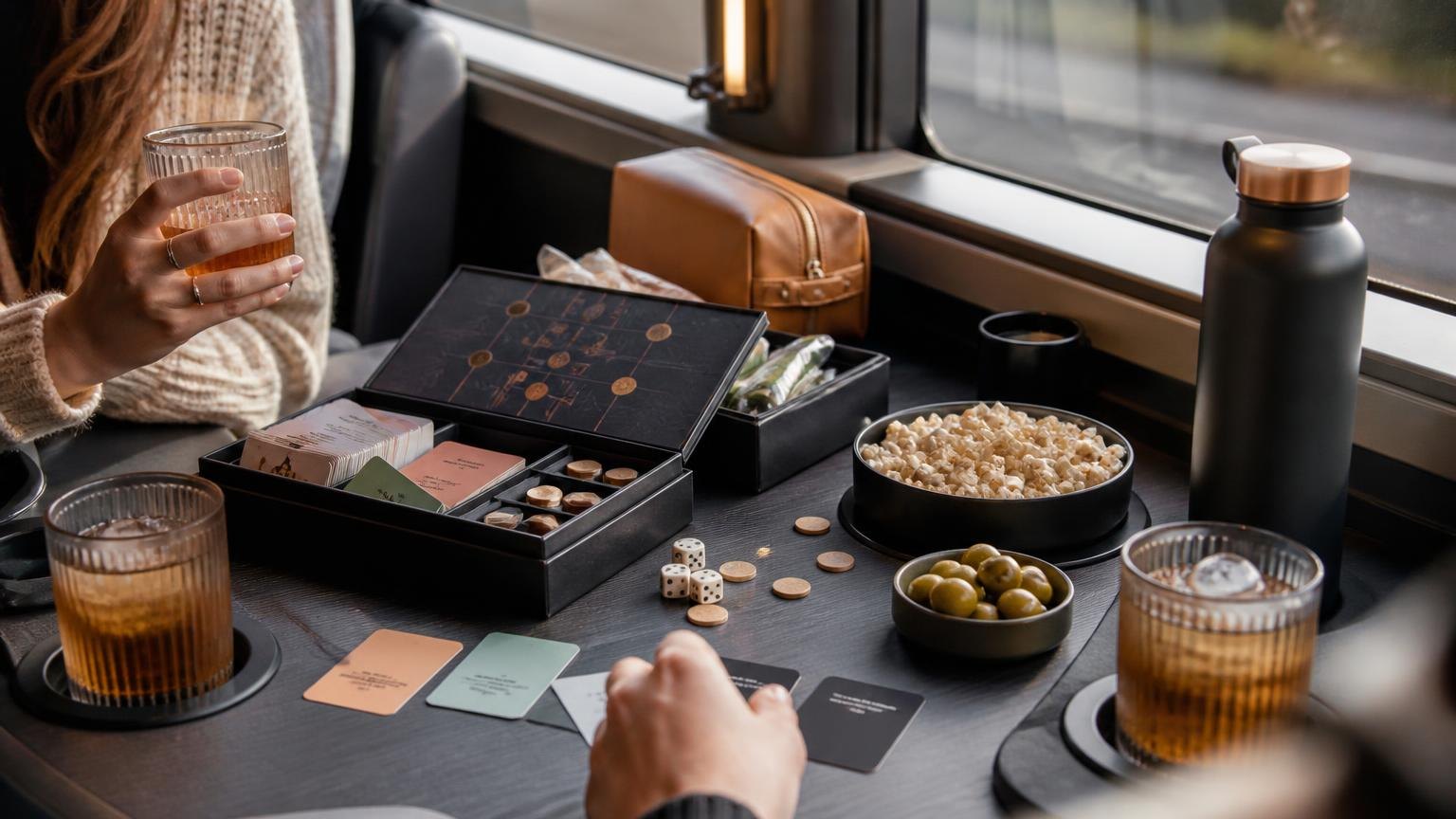
Safety Tips for Drinking on Buses
A drinking game on the bus is higher-risk than the same game at home: riders are moving, exits are shared, and the driver needs a distraction-free cabin. Treat the bus as transportation first and the game as optional entertainment.
Set a hard alcohol plan before boarding
The CDC defines binge drinking as reaching a blood alcohol concentration of 0.08%, typically after this many drinks in about 2 hours:
| Group | Typical binge threshold |
| Adult men | 5 or more standard drinks |
| Adult women | 4 or more standard drinks |
Use standard drinks, not “cups,” as the unit. In the U.S., the National Institute on Alcohol Abuse and Alcoholism defines one standard drink as:
| Drink type | Amount |
| Regular beer | 12 fl oz at 5% ABV |
| Wine | 5 fl oz at 12% ABV |
| Distilled spirits | 1.5 fl oz at 40% ABV |
- Skip shots. They make pacing difficult on a moving vehicle and increase vomiting risk.
- Cap the game. Use a fixed drink maximum per person and switch to water after that.
- Do not mix with cannabis, sedatives, opioids, or sleep aids. Combining depressants raises impairment and breathing-risk concerns.
- Assign a sober organizer. One person should track stops, headcount, trash, and whether anyone needs help.
Protect the driver, passengers, and the vehicle
Many charter companies ban open containers, glass, kegs, hard liquor, or intoxicated passengers. City buses and many interstate carriers prohibit alcohol entirely. Check the written policy before planning anything.
- Never involve the driver. Do not offer alcohol, distract them, crowd the aisle, or block mirrors and steps.
- Keep aisles clear. Bags, coolers, and bottles become trip hazards during braking.
- Avoid glass. Use sealed cans or plastic containers if the operator permits alcohol.
- Plan restrooms. Alcohol is a diuretic, and bathroom emergencies can derail a route quickly.
Have an exit and emergency plan
Alcohol leaves the body slowly. A common estimate is about one standard drink per hour, but this varies by body size, food, medications, and liver function.
- Book rides home in advance. No participant should drive after the bus trip.
- Bring water and food. Salty snacks alone are not enough; include sandwiches, fruit, or other filling options.
- Stop the game if someone slurs, vomits, falls, becomes confused, or cannot stay awake. Call emergency services if breathing is slow, skin is pale or clammy, or the person cannot be roused.
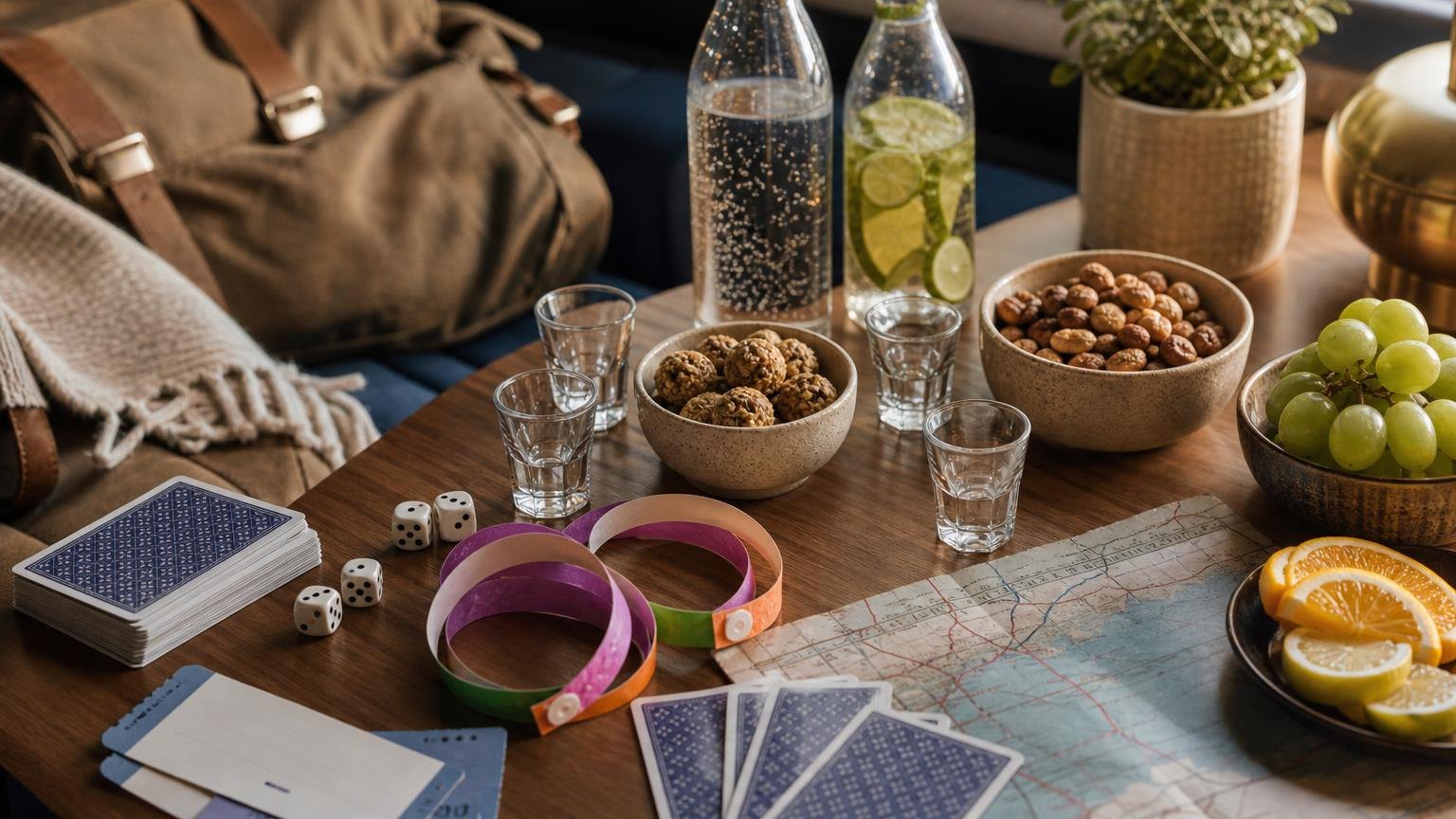
Tabletop Testing of the Bus Game
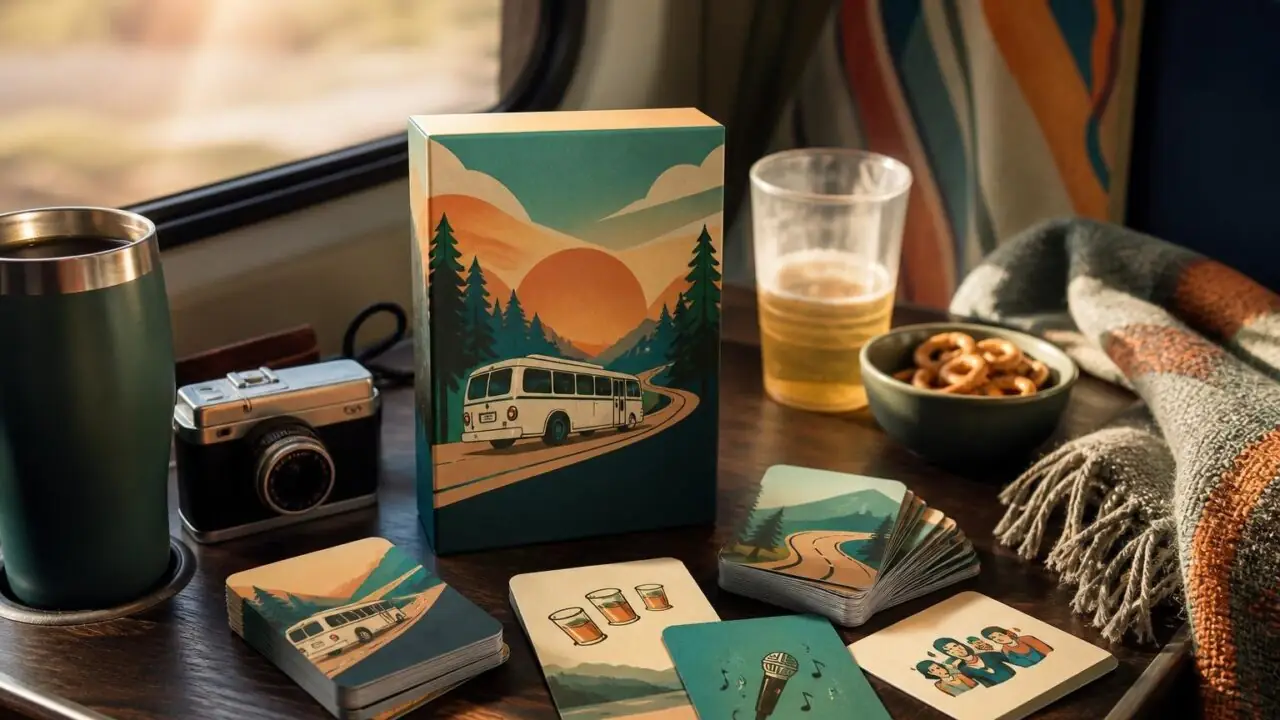
We tested the “bus” drinking game as a tabletop card game, not on a moving public bus. To keep the results measurable and safe, we used water for all penalty sips and tracked timing, penalties, and rule confusion across repeated rounds.
Our team ran 12 full games with 4 players, using one standard 52-card deck, no jokers. Each game used the common format: red/black, higher/lower, in-between/outside, suit, then the pyramid and final “bus ride.”.
| Test variable | What we used | Observed result |
| Players | 4 per game | Best balance of speed and interaction |
| Deck | 52 cards, shuffled 7 times | No reshuffle needed in 12 trials |
| Games measured | 12 total | Reliable average timing |
| Penalty unit | 1 measured 15 ml sip of water | Easy to count consistently |
The average full game took 18 minutes 40 seconds. The fastest round finished in 13 minutes 10 seconds, while the slowest lasted 27 minutes 35 seconds because one player failed the final bus sequence four times.
| Game phase | Average time | Main slowdown |
| Opening 4 questions | 3 minutes 15 seconds | Players asking rule clarifications |
| Pyramid | 9 minutes 50 seconds | Assigning penalties and checking matches |
| Bus ride | 5 minutes 35 seconds | Repeated failed guesses |
Penalty counts varied sharply by phase. Across 48 individual player-games, the median player received 7 penalty sips. The highest single-player total was 18 sips, caused by two failed bus rides and several assigned pyramid penalties.
- The red/black question was guessed correctly 26 out of 48 times, close to the expected 50% probability.
- Higher/lower caused the most disputes, especially when players forgot whether equal cards counted as automatic losses.
- The suit guess was the hardest opening question, with 11 correct guesses out of 48 attempts.
- The pyramid created more social interaction than the bus ride because players chose who received penalties.
We found the game works best when the penalty size is fixed before play starts. Without a measured pour, players interpreted “one drink” inconsistently, which made the game feel uneven within two rounds.
Our practical recommendation is to cap the bus ride at 3 failed attempts, then reset. In our testing, that rule reduced the longest game from 27 minutes 35 seconds to an estimated 21 minutes, while preserving the game’s tension.
Common Risks and Misconceptions
Bus drinking games create risks that feel “minor” until motion, crowding, and unclear rules collide. The biggest mistakes usually involve assuming the bus is legally safe, physically stable, or somehow exempt from normal alcohol judgment.
Here are the myths worth correcting before anyone opens a cooler or starts assigning shots.
Myth: “It’s legal because nobody is driving their own car.”
Being a passenger does not automatically make open alcohol legal. Open-container rules vary by state, city, vehicle type, and whether the bus is chartered, licensed, or operating as public transit.
In many places, public buses ban alcohol entirely under transit authority rules. Charter and party buses may allow alcohol only if the operator permits it and local law does not prohibit it.
Myth: “The driver is sober, so the group is safe.”
A sober driver reduces crash risk, but it does not remove passenger risk. Standing, dancing, walking to the bathroom, or sudden braking can cause falls, especially when alcohol slows reaction time and balance.
The Federal Motor Carrier Safety Administration requires commercial drivers to meet strict alcohol rules, including a 0.04% blood alcohol concentration limit for commercial motor vehicle operation.
That standard protects driving, not passenger behavior.
| Assumption | Reality |
| “Only drivers get in trouble.” | Passengers can be cited for open containers, disorderly conduct, underage drinking, or public intoxication. |
| “One shot per round is harmless.” | A standard shot is 1.5 ounces of 40% liquor, about 14 grams of pure alcohol. |
| “Beer is safer than liquor.” | A 12-ounce 5% beer, 5-ounce 12% wine, and 1.5-ounce 40% spirit contain similar alcohol. |
| “Everyone can keep pace.” | Body size, sex, food intake, medications, sleep, and tolerance change impairment speed. |
Myth: “Rules make the game controlled.”
Rules can actually accelerate drinking. Games tied to passing signs, songs, traffic lights, or route events are unpredictable, so players may drink faster than intended during dense traffic or urban stops.
The CDC defines binge drinking as 5 or more drinks for men, or 4 or more for women, on one occasion. Many bus games can reach that threshold within 60 to 90 minutes.
- Mistake: Using shots instead of measured low-alcohol pours.
- Mistake: Letting penalties stack when someone misses a cue.
- Mistake: Assuming snacks and water “cancel out” alcohol.
- Mistake: Forgetting that motion sickness and alcohol can compound nausea.
- Mistake: Ignoring the bus company’s written alcohol policy.
The safest version is not a drinking game at all: use trivia, music prompts, or prize rounds without mandatory alcohol. If alcohol is allowed, keep it optional, measured, seated, and compliant with the operator’s rules.
Questions People Ask Most
Is it legal to play a drinking game on a bus?
It depends on the bus type, location, and operator rules.
Many charter and party buses allow alcohol only if the company permits it, while public transit systems typically prohibit open containers; several states and cities also enforce open-container laws that can apply to passengers.
Can a bus driver drink if passengers are playing a drinking game?
No. Commercial drivers are subject to strict alcohol rules, including the Federal Motor Carrier Safety Administration limit of 0.04% blood alcohol concentration for commercial motor vehicle operation.
Drivers are also prohibited from using alcohol within 4 hours before going on duty.
What drinking games are safest on a moving bus?
Games that do not require standing, fast movement, glassware, or throwing objects are the safest choice.
Seated trivia, music bingo, or “sip if” games reduce fall risk, which matters because sudden braking can throw standing passengers into seats, poles, or the aisle.
What should be avoided during a bus drinking game?
Avoid hard liquor shots, chugging contests, glass bottles, open cups without lids, and rules that pressure people to drink.
A standard U.S. drink is 12 ounces of 5% beer, 5 ounces of 12% wine, or 1.5 ounces of 40% spirits, and rapid drinking can quickly exceed a person’s tolerance.
How can a group make a bus drinking game more responsible?
Set a written alcohol policy before boarding: no underage drinking, no driver involvement, water available, food on board, and a sober person helping monitor the group.
Plan restroom stops and end-of-ride transportation in advance so no passenger drives afterward.
Related Reading
- How Many 16 Oz Bottles of Water is a Liter?
- How Much Is 1 Oz Dry In Cups?
- How Many Ml Is 8 Ounces?
- How Many Ounces Are In A Quart? – 2026
- How Many Ounces Is 1200 Ml?
- How Many Ounces Is 140 Ml?
- How Much Caffeine In Folgers Instant Coffee? Get the Answer
- All Blog Guides
- National Institute on Alcohol Abuse and Alcoholism (2025)
- Centers for Disease Control and Prevention (2024)
- National Highway Traffic Safety Administration (2024)
- Electronic Code of Federal Regulations, 49 CFR § 392.5 (2025)
- PubMed: Zamboanga et al., “Drinking Game Participation Among College Students: A Systematic Review” (2014)
- Substance Abuse and Mental Health Services Administration, NSDUH Annual National Report (2023)
- Federal Transit Administration, Transit Safety and Oversight (2024)