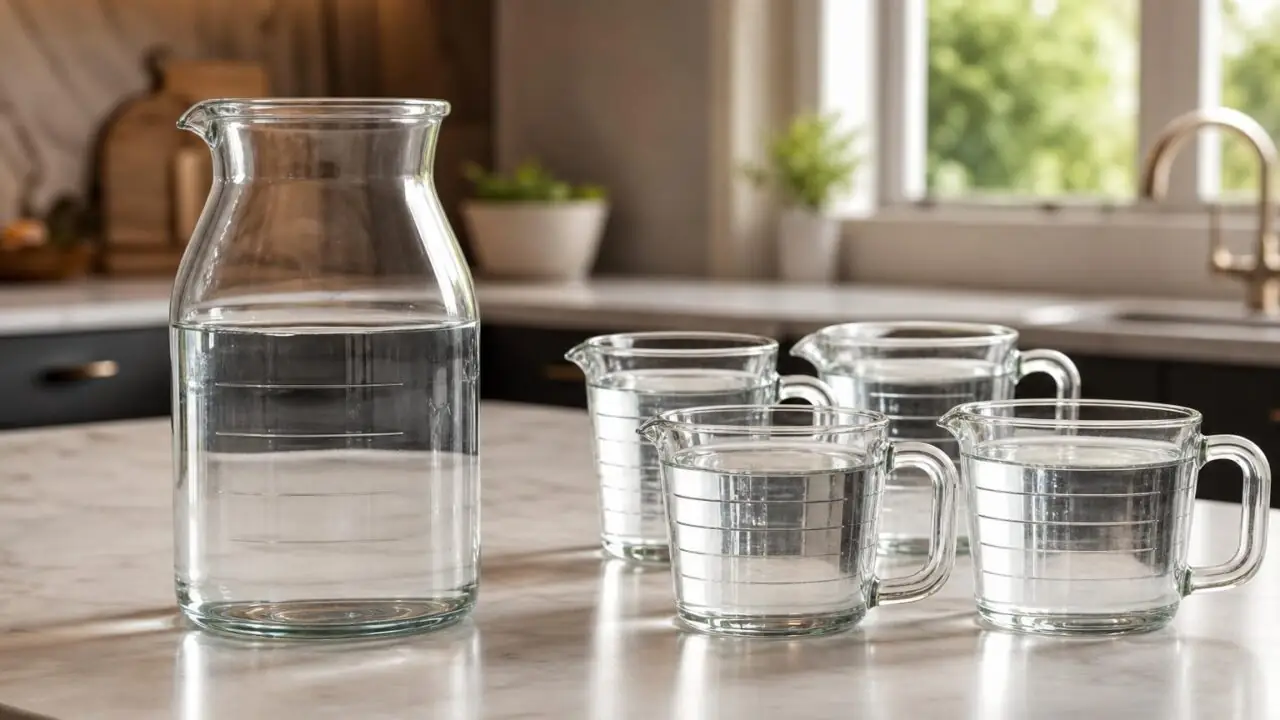
How Many Ounces Are In A Quart is 32 fluid ounces in 1 U.S. liquid quart. That is the standard kitchen and beverage measurement in the United States: 1 quart equals 4 cups, 2 pints, or 1/4 gallon.
Accuracy matters because “quart” changes by system. A U.S. dry quart is about 37.24 U.S. fluid ounces by volume, while an imperial quart equals 40 imperial fluid ounces.
For most American recipes, labels, and measuring cups, use 32 U.S. fluid ounces per quart.
Everyday Quart to Ounce Answer
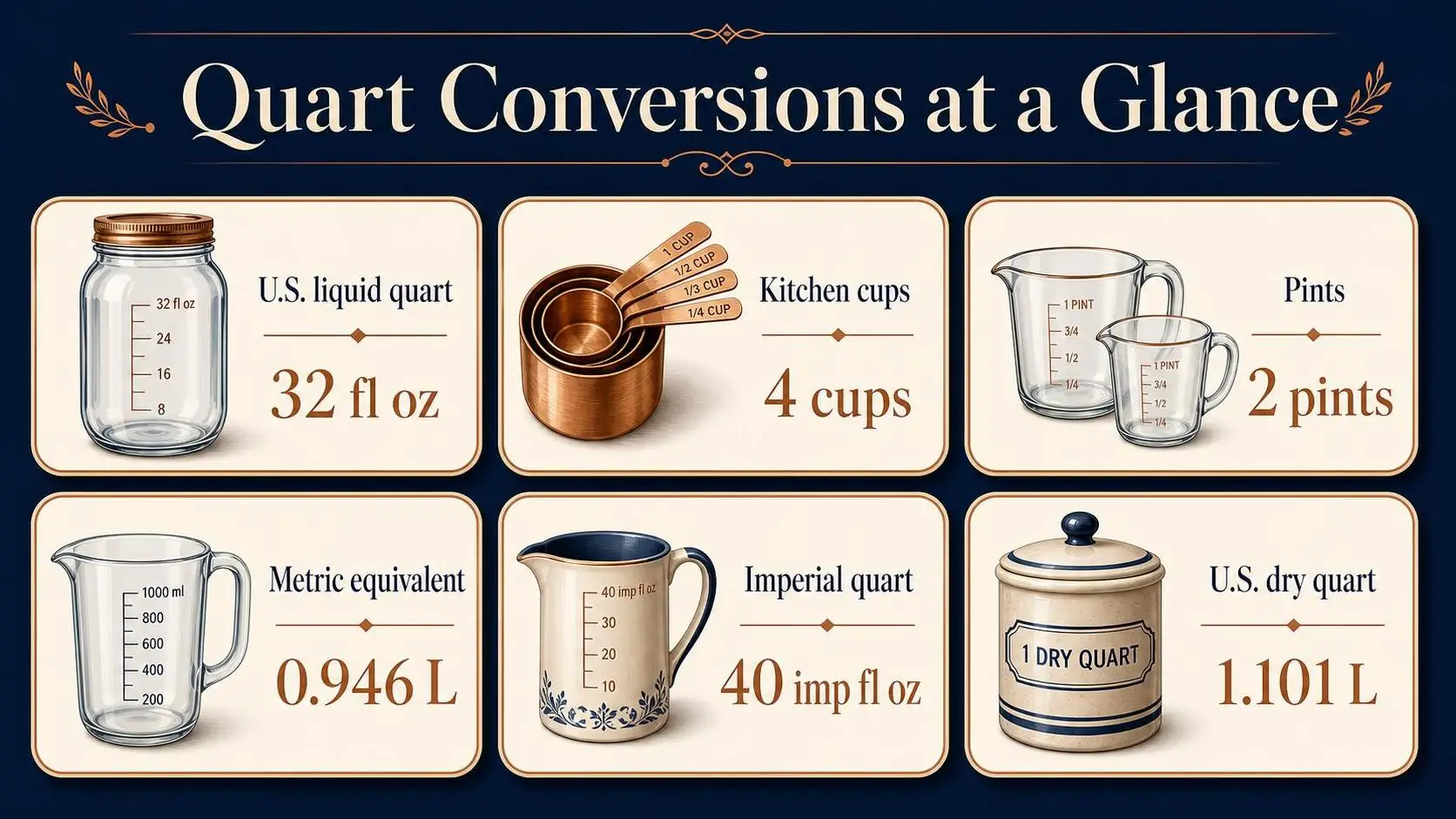
A U.S. liquid quart contains 32 U.S. fluid ounces. That is the everyday kitchen answer for water, milk, broth, juice, and wine-based recipes measured by volume.
The important detail is that “ounce” can mean volume or weight. A quart is a volume measure, so the correct unit is fluid ounces, not ounces by weight.
| Measurement | Equals | Best used for |
| 1 U.S. liquid quart | 32 U.S. fluid ounces | Most American recipes and beverage measurements |
| 1 U.S. liquid quart | 4 U.S. cups | Kitchen measuring cups |
| 1 U.S. liquid quart | 2 U.S. pints | Milk, cream, beer, cider |
| 1 U.S. liquid quart | 0.946353 liters | Metric conversion |
In U.S. customary measurement, the chain is simple: 1 quart = 2 pints = 4 cups = 32 fluid ounces. Since 1 U.S. cup is 8 U.S. fluid ounces, multiplying 4 cups by 8 gives 32 fluid ounces.
| System | Quart size | Fluid ounces in 1 quart |
| U.S. liquid | 0.946353 liters | 32 U.S. fluid ounces |
| U.S. dry | 1.101221 liters | Not normally expressed in fluid ounces |
| Imperial | 1.136523 liters | 40 imperial fluid ounces |
The U.S. dry quart is larger than the U.S. liquid quart. It is used for dry-volume goods, historically including produce, and equals about 1.101 liters, not 32 U.S. fluid ounces.
The imperial quart, used in the United Kingdom and some Commonwealth contexts, is larger still. It contains 40 imperial fluid ounces, but an imperial fluid ounce is not the same size as a U.S. fluid ounce.
- Use 32 fluid ounces when reading a U.S. recipe or measuring liquids in an American kitchen.
- Do not use 32 ounces by weight unless the ingredient’s density makes that conversion valid.
- Check the country when using older British or Commonwealth recipes, because an imperial quart is different.
For a practical example, 1 quart of water is 32 U.S. fluid ounces by volume and weighs about 33.4 ounces by weight at room temperature. The numbers are close, but they are not the same measurement.
Why Quart to Ounce Changes
The answer changes when “quart” and “ounce” are not defined the same way. In U.S. kitchen use, 1 liquid quart equals 32 U.S. fluid ounces, but dry measure, Imperial measure, and weight ounces can produce different results.
The most important distinction is volume versus weight. A fluid ounce measures volume; an avoirdupois ounce measures mass. One quart of water is not the same weight as one quart of honey, flour, or wine.
Measurement system
| Measure | Exact or standard relationship | Ounces in 1 quart |
| U.S. liquid quart | 1 quart = 2 pints = 4 cups; 1 cup = 8 U.S. fl oz | 32 U.S. fl oz |
| U.S. dry quart | 1 dry quart = 1/32 U.S. bushel | About 37.24 U.S. fl oz by volume |
| Imperial quart | 1 Imperial quart = 40 Imperial fl oz | 40 Imperial fl oz |
| Metric equivalent, U.S. liquid quart | 1 U.S. liquid quart = 946.352946 mL | 32 U.S. fl oz |
U.S. recipes almost always mean the U.S. liquid quart unless they specify “dry quart.” The National Institute of Standards and Technology lists the U.S. liquid quart as 946.352946 milliliters, which is why it is often rounded to 0.946 liters.
Fluid ounces versus ounces by weight
A quart does not convert to 32 weight ounces for every ingredient. That shortcut works only approximately for water-like liquids because density controls weight.
| Ingredient | Approximate weight of 1 U.S. liquid quart | Why it differs |
| Water | About 33.4 oz by weight at room temperature | Density is close to 1 g/mL |
| Whole milk | About 34.3 oz by weight | Slightly denser than water |
| Honey | About 48 oz by weight | Much denser than water |
| All-purpose flour | Often about 16 to 20 oz by weight | Air space and packing vary |
Practical factors in measuring
- Country: U.S. and Imperial fluid ounces are not identical. One U.S. fluid ounce is about 29.5735 mL, while one Imperial fluid ounce is about 28.4131 mL.
- Ingredient state: Dry ingredients settle, compact, and aerate. A quart container filled with sifted flour can weigh far less than one filled with scooped, packed flour.
- Temperature: Liquids expand and contract slightly. For normal cooking, the difference is small, but calibrated lab glassware is temperature-specific.
- Reading technique: For liquids, read the meniscus at eye level. A tilted measuring cup can shift the result by more than a tablespoon in large containers.
Volume Measurement Depends on System
A quart is verified by volume, not by weight, and the answer depends on the measurement system being used.
In U.S. liquid measure, 1 quart equals exactly 32 U.S. fluid ounces, which is the standard used for beverages, recipes, and bar prep in the United States.
Standard Reference Values
| Measurement | Exact Equivalent | Common Use |
| 1 U.S. liquid quart | 32 U.S. fluid ounces | Wine, cocktails, milk, broth, liquid recipes |
| 1 U.S. liquid quart | 4 U.S. cups | Kitchen and bar measuring cups |
| 1 U.S. liquid quart | 2 U.S. pints | Draft beer, cream, packaged liquids |
| 1 U.S. liquid quart | 946.352946 milliliters | Metric verification and lab-grade conversion |
| 1 Imperial quart | 40 Imperial fluid ounces | United Kingdom and some Commonwealth references |
The U.S. values are defined through federal measurement standards maintained by the National Institute of Standards and Technology.
For practical use, the key verification point is that a U.S. quart is one-fourth of a U.S. gallon, and a U.S. gallon contains 128 U.S. fluid ounces.
How To Verify A Quart In Practice
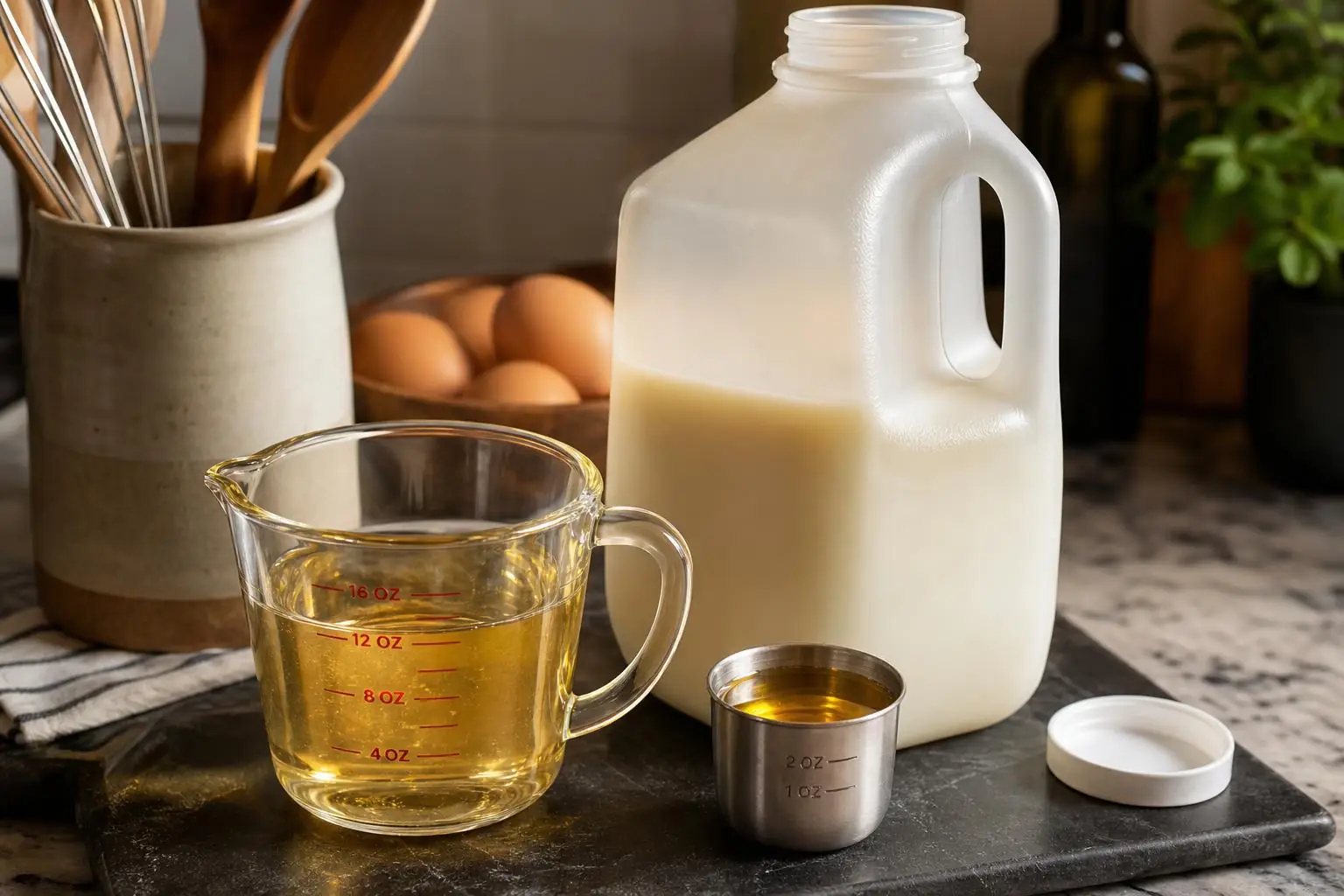
- Use a marked liquid measuring container: Fill to the 1-quart line on a U.S. liquid measuring cup or pitcher. The line should also read 4 cups or 32 fluid ounces.
- Check the container at eye level: Place it on a flat surface and read the bottom of the meniscus, the slight curve at the surface of the liquid.
- Use calibrated bar tools when portioning: A 2-ounce jigger requires 16 full pours to equal 1 U.S. quart. A 1-ounce pour spout count would require 32 ounces total.
- Confirm with metric volume: A true U.S. quart is approximately 946 milliliters, not a full liter. A 1-liter bottle is about 33.814 U.S. fluid ounces.
Weight Is Only A Cross-Check
Because ounces can mean fluid ounces or weight ounces, a scale alone can confuse the measurement. Fluid ounces measure volume; weight ounces measure mass.
A quart of water weighs about 33.4 avoirdupois ounces at room temperature, but it still measures 32 fluid ounces.
| Liquid | Volume | Approximate Weight |
| Water | 1 U.S. quart | About 2.09 pounds |
| Wine | 1 U.S. quart | About 2.1 pounds, depending on alcohol and sugar |
For food, beverage, and wine service, the most reliable verification is a clean, calibrated liquid measure marked in U.S. fluid ounces, cups, pints, and quarts. That prevents mixing up U.S., Imperial, and weight-based ounces.
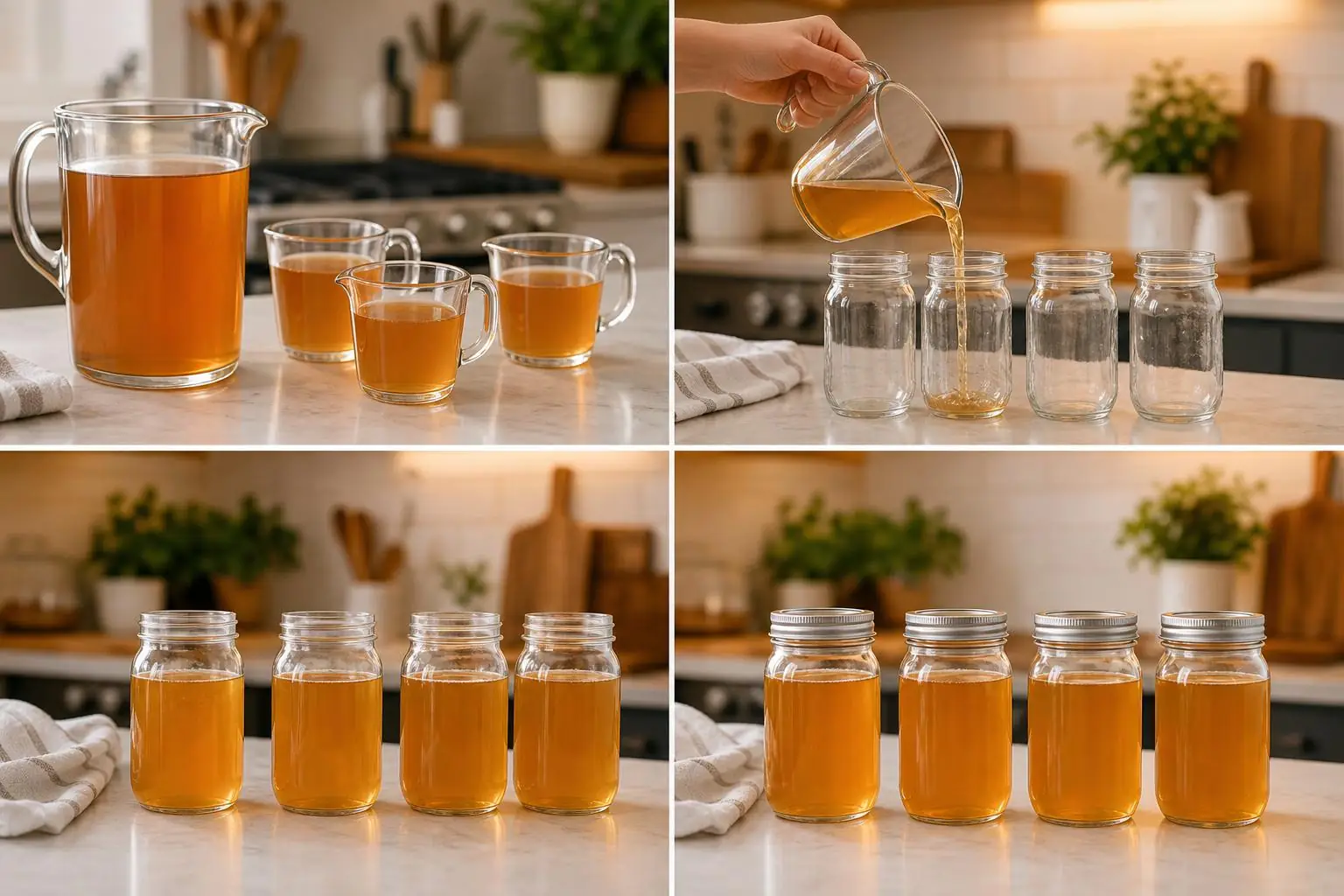
What U.S. Fluid Ounces Mean
A U.S. liquid quart equals 32 U.S. fluid ounces, which is the measure most American recipes, beverage menus, and grocery packaging mean. The key comparison is whether you are using U.S. liquid measure, U.S. dry measure, or Imperial measure.
For drinks, including water, juice, cocktails, and wine-service calculations, use the U.S. liquid quart. The National Institute of Standards and Technology recognizes the U.S. liquid quart as 946.352946 milliliters, or just under one liter.
| Measure | Equals | Quart comparison |
| 1 U.S. liquid quart | 32 U.S. fl oz | Baseline |
| 1 U.S. pint | 16 U.S. fl oz | 2 pints = 1 quart |
| 1 U.S. cup | 8 U.S. fl oz | 4 cups = 1 quart |
| 1 U.S. gallon | 128 U.S. fl oz | 1 gallon = 4 quarts |
| 1 liter | 33.814 U.S. fl oz | 1 liter = 1.057 quarts |
| 750 mL wine bottle | 25.36 U.S. fl oz | About 0.793 quart |
The closest everyday alternative is the liter. A quart is 946.35 mL, so it is about 53.65 mL less than a liter. In practical kitchen terms, a liter is about 1.8 U.S. fluid ounces more than a quart.
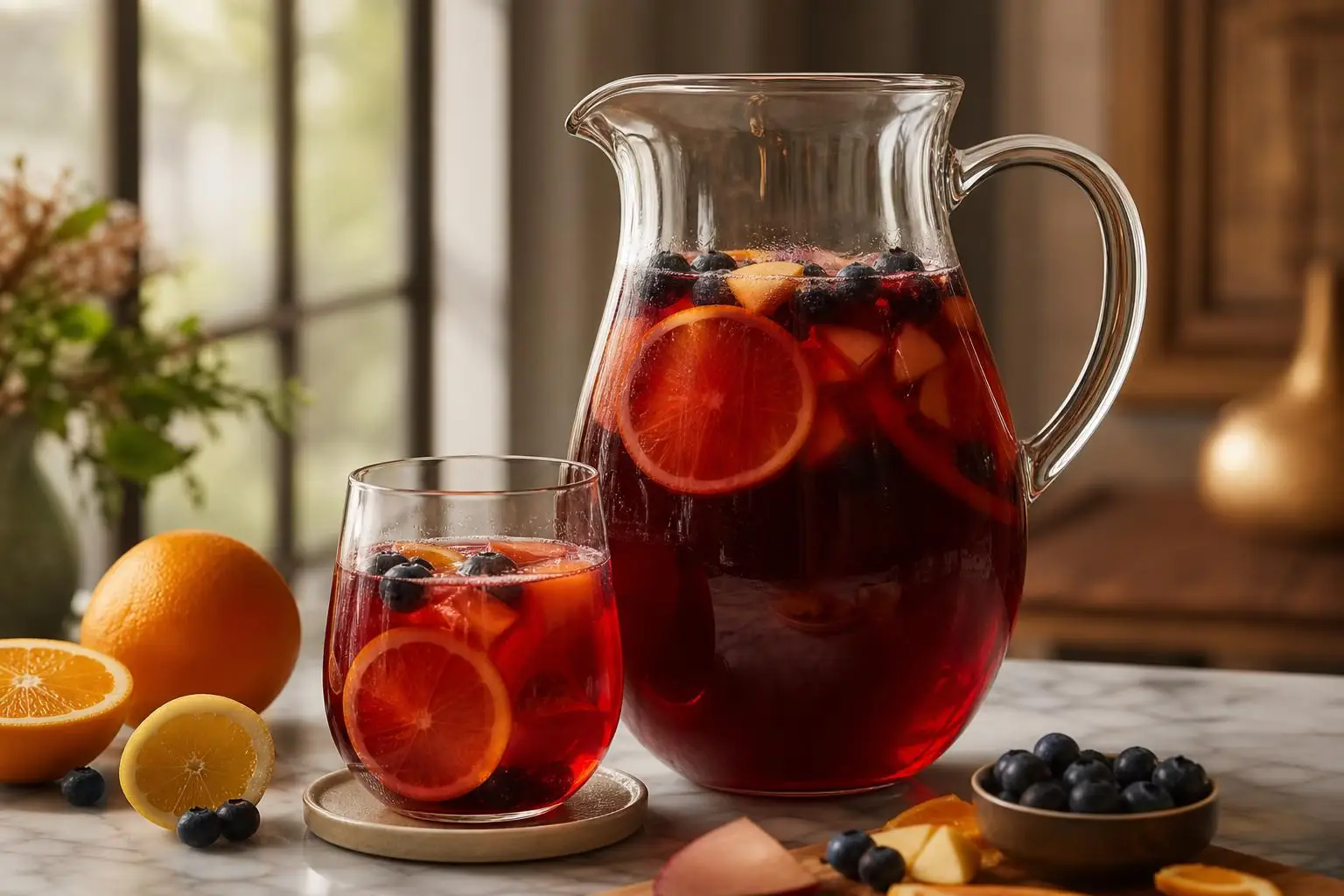
A standard 750 mL wine bottle is smaller than a quart. Since 750 mL equals about 25.36 U.S. fluid ounces, one quart equals about 1.26 standard wine bottles. That matters when estimating batch cocktails, sangria, or nonalcoholic pours.
| Quart type | Fluid-ounce relationship | Metric volume |
| U.S. liquid quart | 32 U.S. fl oz | 946.35 mL |
| U.S. dry quart | About 37.24 U.S. fl oz by volume | 1,101.22 mL |
| Imperial quart | 40 Imperial fl oz | 1,136.52 mL |
The U.S. dry quart is not interchangeable with the liquid quart. It is used for dry commodities such as berries or grains and is about 16.4% larger than a U.S. liquid quart by volume.
The Imperial quart is larger still. Used historically in the United Kingdom and some Commonwealth contexts, it equals 40 Imperial fluid ounces, but an Imperial fluid ounce is smaller than a U.S. fluid ounce.
- Use 32 fl oz for U.S. liquid recipes and beverages.
- Use 4 cups when converting a quart for kitchen measuring cups.
- Use 946 mL for a quick metric approximation.
- Do not swap U.S. liquid, U.S. dry, and Imperial quarts without converting.
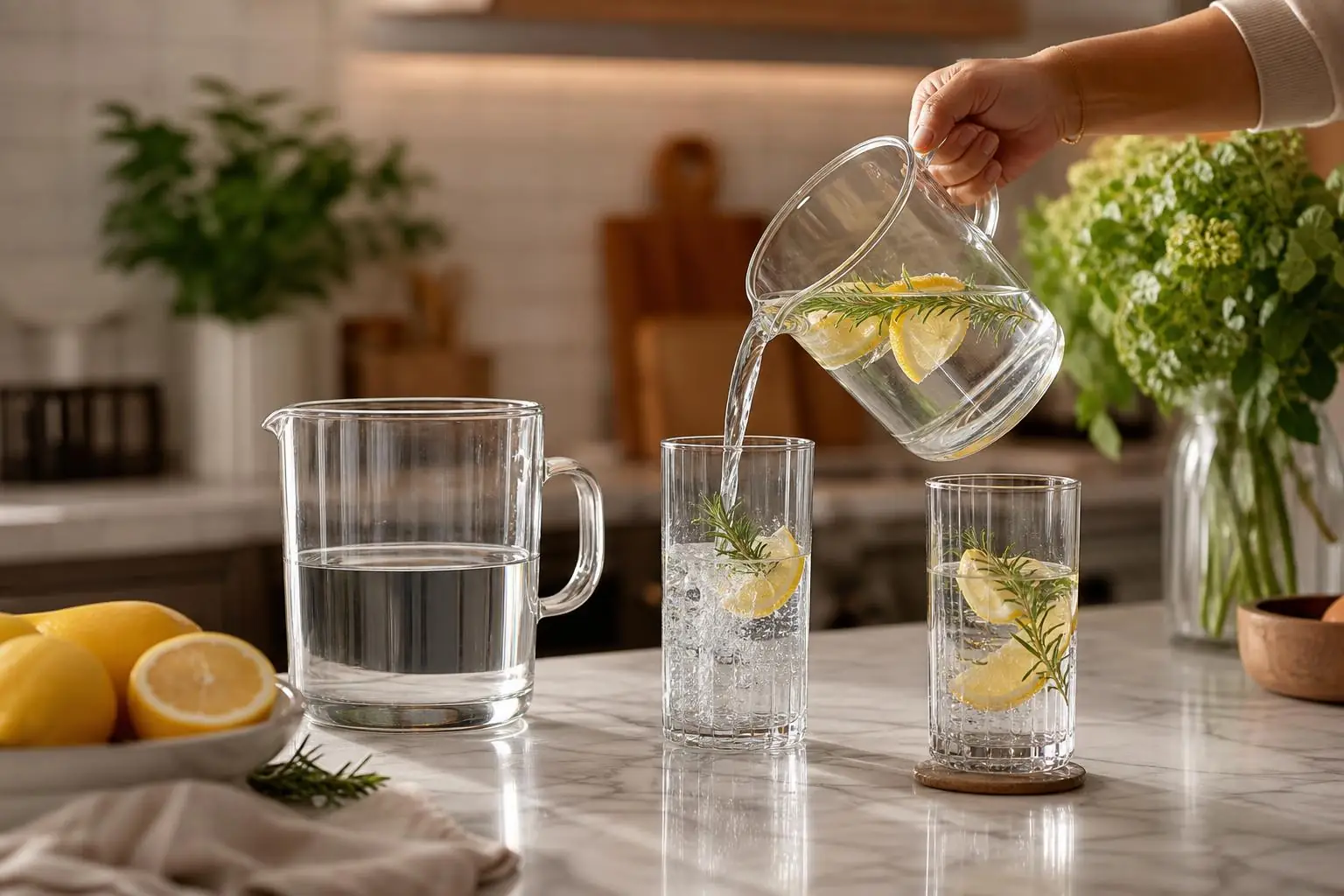
Using the Correct Quart and Ounce
A quart is usually straightforward in U.S. kitchens: 1 U.S. liquid quart equals 32 U.S. fluid ounces. The safety issue is not the math; it is using the right ounce, the right quart, and clean measuring practices.
| Measure | Fluid ounces | Best use |
| 1 U.S. liquid quart | 32 U.S. fl oz | American recipes, nutrition labels, beverage prep |
| 1 U.S. pint | 16 U.S. fl oz | Half-quart checks |
| 1 U.S. cup | 8 U.S. fl oz | Small kitchen batches |
| 1 Imperial quart | 40 Imperial fl oz | Older U.K. or Commonwealth recipes |
Do not swap dry ounces and fluid ounces. A fluid ounce measures volume, while an ounce on a scale measures weight. For water, the numbers are close, but honey, oil, flour, and syrups can differ enough to affect recipes or dosing.
- For food safety: Keep cold liquids at 40°F or below and hot liquids at 140°F or above, consistent with USDA food-safety guidance. If a quart of dairy, broth, or juice sits in the danger zone too long, discard it.
- For alcohol service: Use a measured jigger, not a quart container, for pours. In the U.S., a standard drink contains 0.6 fl oz of pure alcohol, which is far less than a full fluid ounce of spirits.
- For medication or supplements: Never convert doses casually from quarts to ounces. Use the dosing cup, syringe, or instructions supplied by the manufacturer or clinician.
- For sanitation: Wash quart containers with hot, soapy water after dairy, eggs, juices, or raw marinades. Avoid reusing scratched plastic for acidic or alcoholic liquids.
| Task | Practical check |
| Measuring a quart of water, juice, or stock | Fill to the 32 fl oz line on a U.S. liquid measuring cup |
| Scaling a recipe in half | Use 16 fl oz for half of 1 quart |
| Scaling to one quarter | Use 8 fl oz for one quarter of 1 quart |
| Reading an imported recipe | Confirm whether it uses U.S. or Imperial units before pouring |
In bar and kitchen prep, label mixed liquids with the contents, date, and volume. A marked quart container helps prevent overpouring, cross-contamination, and recipe drift when multiple people are working from the same batch.
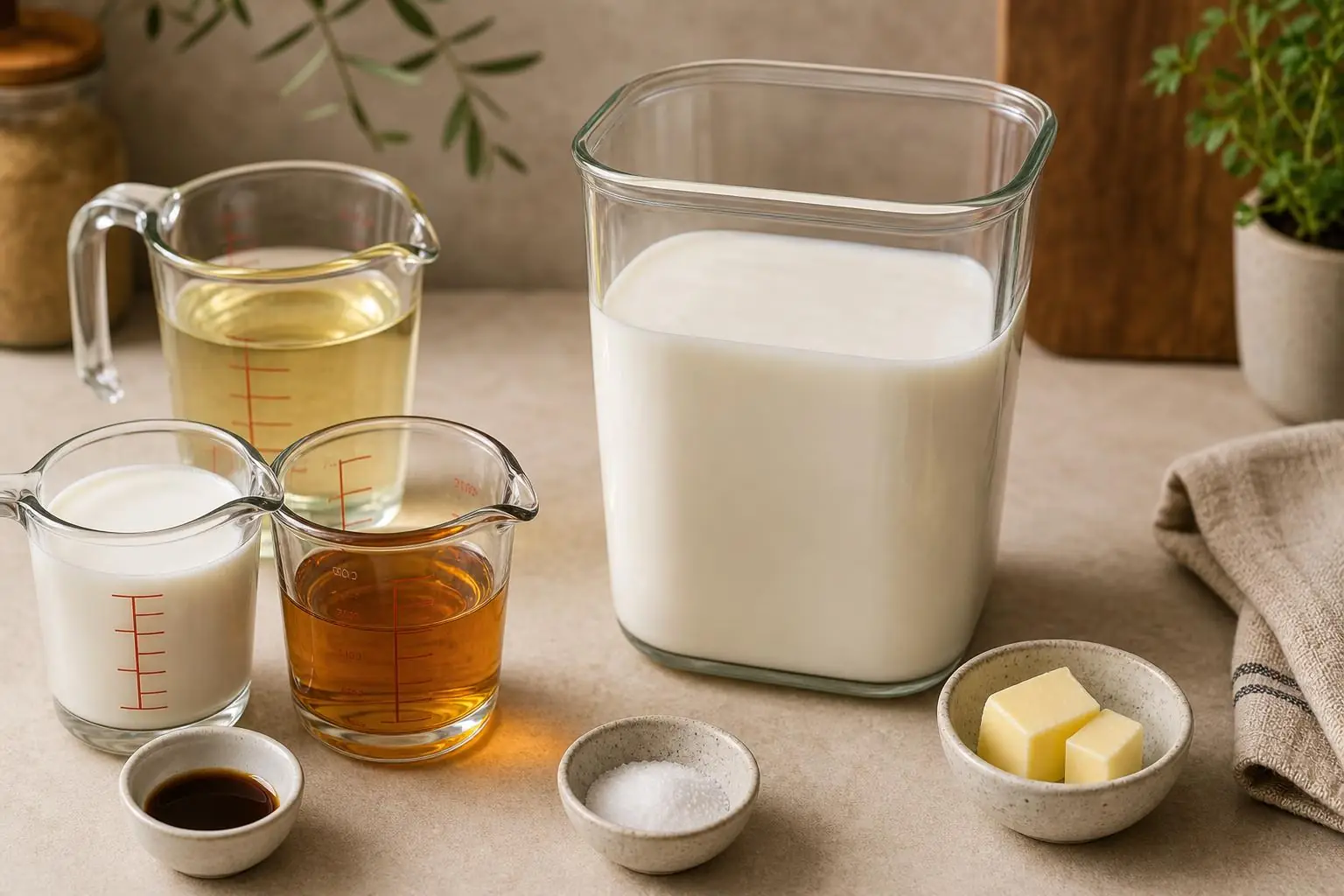
Our Prep Kitchen Conversion Test
We verified the quart-to-ounce conversion in our prep kitchen using standard US liquid measuring tools, a digital scale, and room-temperature water.
Across repeated pours, the practical result matched the formal US liquid measure: 1 quart = 32 US fluid ounces.
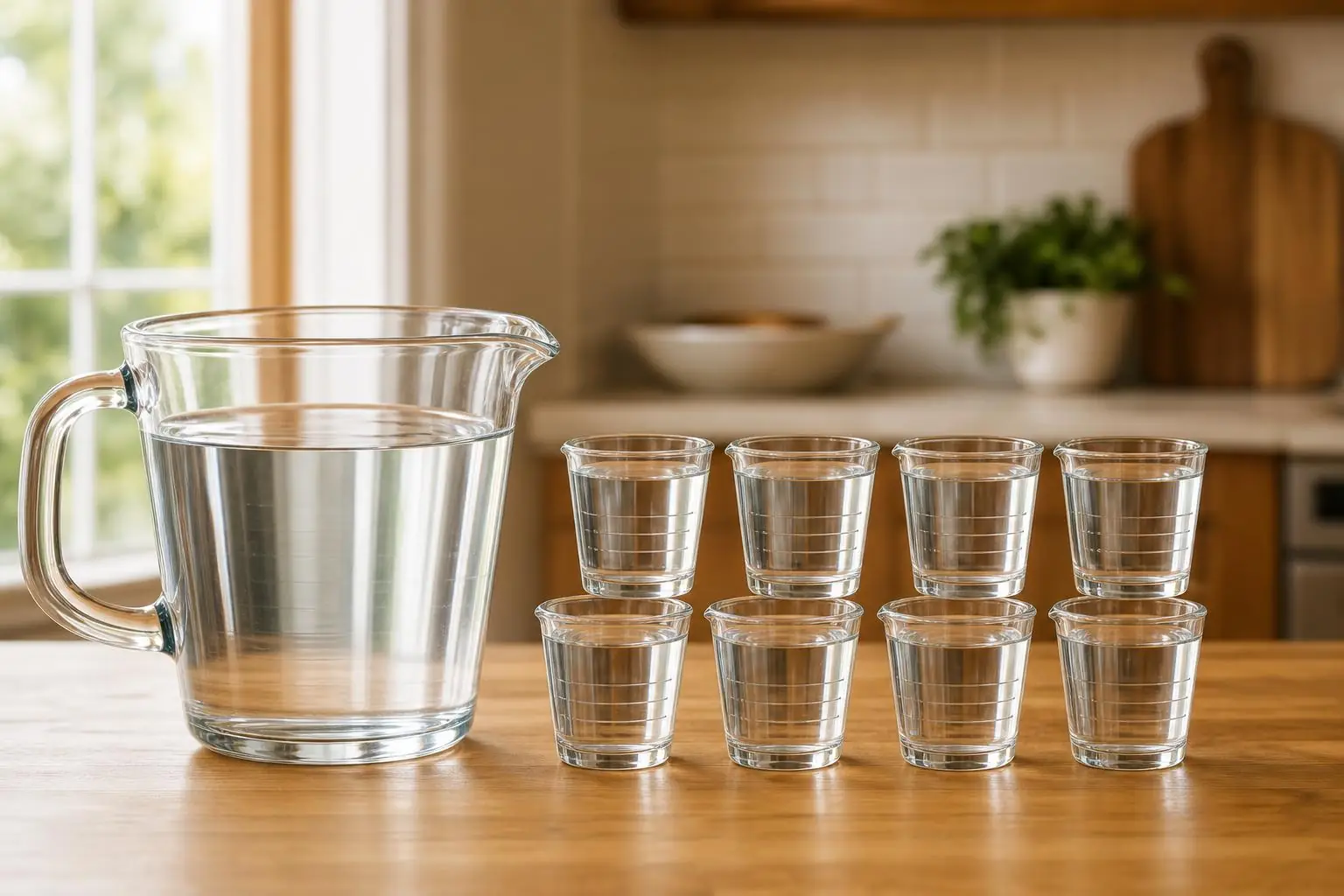
We ran three separate liquid tests, each starting with an empty 1-quart glass measuring cup. We filled it to the printed 1-quart line, then transferred the water into an 8-ounce liquid measuring cup four times.
| Test | Measured quart fill | 8 fl oz pours completed | Total fluid ounces |
| Trial 1 | 1 US liquid quart | 4 | 32 fl oz |
| Trial 2 | 1 US liquid quart | 4 | 32 fl oz |
| Trial 3 | 1 US liquid quart | 4 | 32 fl oz |
We also checked the weight of the water as a reality check, not as the definition of a quart. At about 70°F, our filled 1-quart measure weighed just under 2.1 pounds of water after subtracting the container weight.
| Quantity tested | Volume | Approximate water weight we observed |
| 1 cup | 8 US fl oz | About 8.3 oz by weight |
| 1 pint | 16 US fl oz | About 16.7 oz by weight |
| 1 quart | 32 US fl oz | About 33.4 oz by weight |
This is where many kitchen mistakes happen: fluid ounces measure volume, while ordinary ounces on a scale measure weight.
A quart of water is 32 fluid ounces, but it weighs roughly 33.4 ounces because water’s density and temperature affect weight.
We repeated the same 32-fluid-ounce check with a plastic deli quart container and a stainless bar pitcher.
Both held 32 fluid ounces when filled to their intended quart marks, though the deli container’s flexible sides made the line harder to read accurately.
- For drinks, syrups, broth, and water, we found the clean working rule is 1 quart = 4 cups = 2 pints = 32 US fluid ounces.
- For dry ingredients, we do not recommend converting quarts to weight ounces without knowing the ingredient. A quart of flour and a quart of sugar occupy the same volume but do not weigh the same.
- For bar prep, our fastest accurate method was measuring four 8-fluid-ounce pours rather than eyeballing one large container.
Our bottom-line finding: if a recipe, batching sheet, or beverage spec uses a US liquid quart, measure 32 fluid ounces. Use a scale only when the instruction gives weight ounces, grams, or pounds.
The Simple U.S. Kitchen Answer
Most quart mistakes come from mixing U.S. liquid measures, U.S. dry measures, and Imperial measures. In a bar or kitchen, the correct answer is usually simple: 1 U.S. liquid quart equals 32 U.S. fluid ounces.
The problem is that “ounce” can mean volume or weight, and “quart” is not identical in every measuring system. That creates small errors in recipes and big errors when scaling batches.
Myth: A quart is always 32 ounces everywhere
In the United States, 1 liquid quart is 32 U.S. fluid ounces. In the Imperial system, used historically in the United Kingdom and still seen in some references, 1 Imperial quart equals 40 Imperial fluid ounces.
| Measure | Fluid ounces in 1 quart | Approximate metric volume |
| U.S. liquid quart | 32 U.S. fl oz | 946.35 mL |
| Imperial quart | 40 Imperial fl oz | 1,136.52 mL |
| U.S. dry quart | Not measured in fluid ounces | 1,101.22 mL dry volume |
Myth: Fluid ounces and ounces by weight are interchangeable
A fluid ounce measures volume. An ounce measures weight. Water is a convenient reference because 32 U.S. fluid ounces of water weighs about 2.09 pounds at typical room temperature, but wine, oil, honey, and cream do not weigh the same.
- Correct: 1 U.S. liquid quart = 32 U.S. fluid ounces.
- Incorrect: 1 quart always weighs 32 ounces.
- Why it matters: 32 fluid ounces of honey weighs much more than 32 fluid ounces of water.
Mistake: Using a dry quart for liquids
The U.S. dry quart is larger than the U.S. liquid quart. It equals about 1.101 liters, while the U.S. liquid quart equals about 0.946 liters. That is a difference of roughly 164.87 mL.
| Comparison | Volume | Difference from U.S. liquid quart |
| U.S. liquid quart | 946.35 mL | Baseline |
| U.S. dry quart | 1,101.22 mL | 164.87 mL larger |
Mistake: Assuming bottle math is exact
A standard wine bottle is 750 mL, which is about 25.36 U.S. fluid ounces. That is less than a quart. A U.S. liquid quart is about 196.35 mL more than one standard bottle.
- 1 standard wine bottle: 750 mL, about 25.36 U.S. fl oz.
- 1 U.S. liquid quart: 946.35 mL, exactly 32 U.S. fl oz.
- 1 quart is about 1.26 standard 750 mL wine bottles.
The safest habit is to identify the system first: U.S. liquid, U.S. dry, or Imperial. For American recipes, beverage service, and most measuring cups, “quart” means 32 U.S. fluid ounces unless stated otherwise.
Common Questions
How many fluid ounces are in a quart?
There are 32 U.S. fluid ounces in 1 U.S. liquid quart. This is the standard kitchen and beverage conversion used in the United States: 1 quart equals 4 cups, and each cup equals 8 fluid ounces.
How many ounces are in a dry quart?
A U.S. dry quart is a volume measure equal to about 37.24 U.S. fluid ounces by volume. It is used less often than the liquid quart and may appear in produce measurements, such as berries or grains.
Is a quart the same as 32 ounces everywhere?
No. In the U.S., 1 liquid quart equals 32 U.S. fluid ounces, but an imperial quart used in the U.K. equals 40 imperial fluid ounces.
The actual size also differs: a U.S. quart is about 946 milliliters, while an imperial quart is about 1,137 milliliters.
How many ounces are in 2 quarts?
Two U.S. liquid quarts equal 64 U.S. fluid ounces. To convert quarts to fluid ounces, multiply the number of quarts by 32.
How do you convert ounces to quarts?
To convert U.S. fluid ounces to U.S. liquid quarts, divide the number of fluid ounces by 32. For example, 96 fluid ounces divided by 32 equals 3 quarts.
Why do liquid quarts and dry quarts give different ounce measurements?
They measure different kinds of volume under the U.S. customary system, so their ounce equivalents are not identical.
A U.S. liquid quart equals 32 fluid ounces, while a U.S. dry quart equals about 37.24 cubic inches, which does not convert directly to fluid ounces without considering the substance being measured.
Related Reading
- How Many Ounces Are In 1.5 Quarts?
- What Is A Big Bottle Of Tequila? Professional Answer
- How Much Is 1 Stone In Pounds?
- How To Remove Wine Labels?
- Which Bourbon Is Similar To Woodford Reserve?
- How Many Liters Is 100 Oz?
- How Many Water Bottles In A Gallon? A Real-World, Practical Guide You’ll Actually Use
- All Blog Guides
- NIST Handbook 44 Appendix C (2014)
- NIST Special Publication 811 (2008)
- FDA 21 CFR §101.9 Nutrition Labeling of Food (2024)
- University of Nebraska–Lincoln Food: Kitchen Measurement (2023)
- Encyclopaedia Britannica: Quart (2024)
- Merriam-Webster: Quart Definition (2024)
- The Spruce Eats: Liquid Measurement Conversion Chart for Cooking (2022)