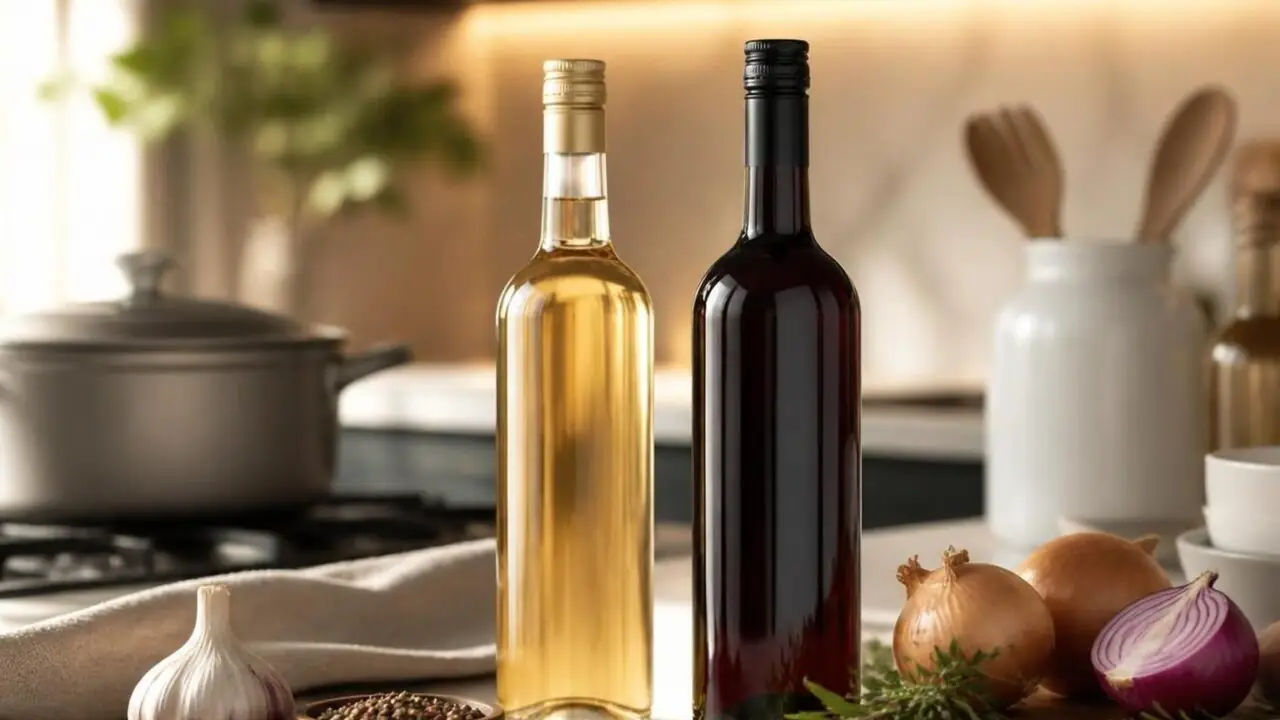
Does Cooking Wine Need to Be Refrigerated? is a yes for opened regular cooking wine, while unopened salted cooking wine is shelf-stable in the pantry. Refrigeration slows oxidation, mold risk, and flavor loss after the seal breaks.
Most supermarket “cooking wine” contains salt and preservatives, so labels often allow pantry storage. Dry table wine used for cooking behaves like drinking wine: oxygen dulls aroma, acidity, and fruit character once opened.
This guide explains how long cooking wine lasts, when refrigeration matters, how to read the label, and when to discard a bottle before it ruins a sauce, braise, or pan reduction.
Does Cooking Wine Need Refrigeration
Cooking wine does not always need refrigeration after opening, but refrigeration helps it stay usable longer.
The deciding factors are the bottle type, the salt level, and whether it is labeled “cooking wine” or regular wine used for cooking.
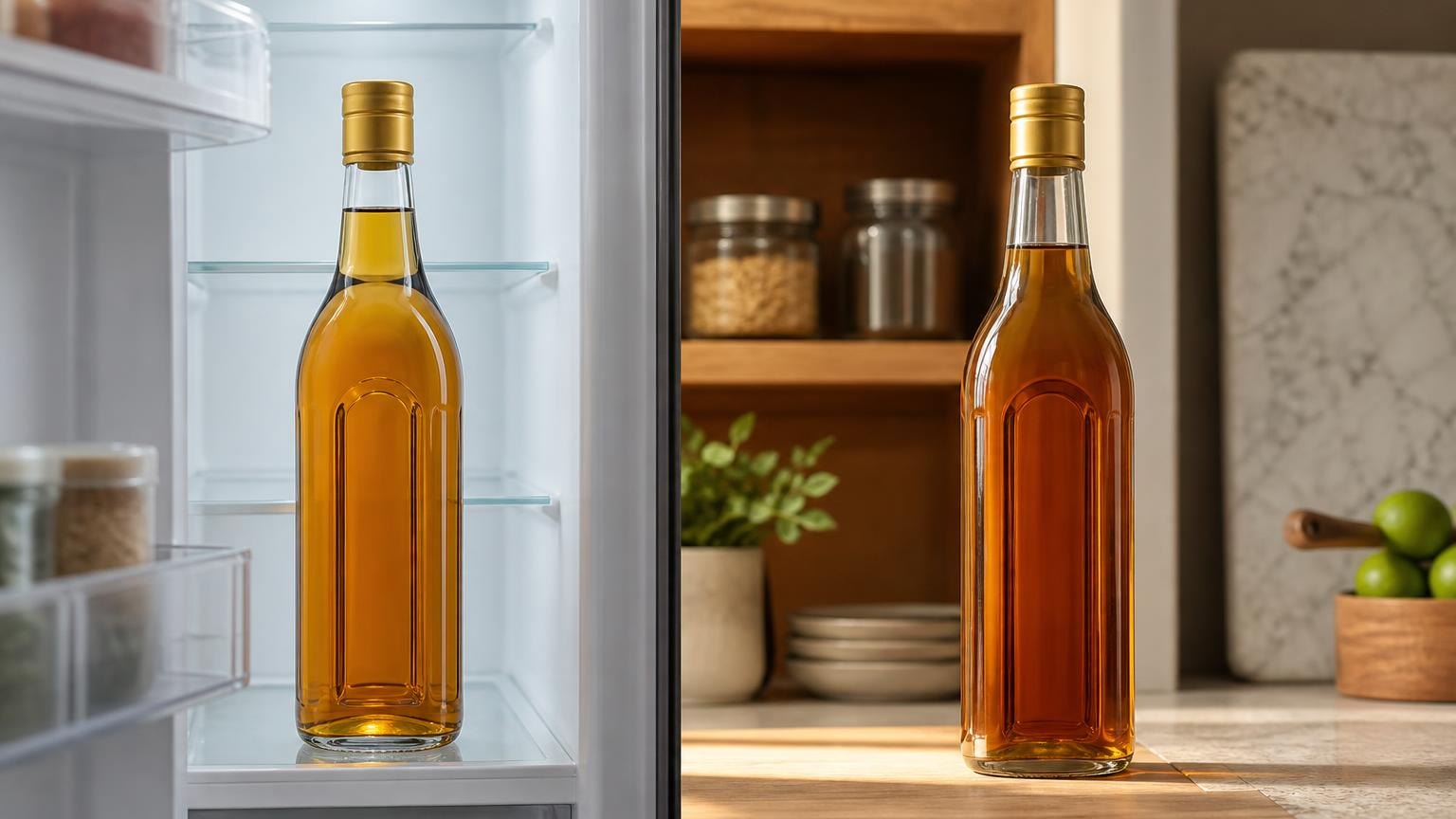
Commercial cooking wine sold in grocery stores is usually shelf-stable before opening because it contains added salt and preservatives.
After opening, it can often stay in a cool, dark pantry for weeks, but the flavor holds up better in the refrigerator.
Regular table wine used for cooking is different. Once opened, oxygen starts breaking down its aroma and flavor compounds, so refrigeration slows that process and extends its useful life.
Most U.S. cooking wines contain enough salt to inhibit some spoilage. Brands commonly list about 1.5% to 2% sodium by weight, which is far higher than standard drinking wine. That extra salt improves shelf life, but it does not stop oxidation.
Oxidation matters more than food safety in many cases. An opened bottle may still be safe for a period, yet taste flat, sharp, or stale. That loss shows up fastest in delicate white cooking wines and vermouth-style products.
| Product type | Unopened storage | After opening | Best-quality window |
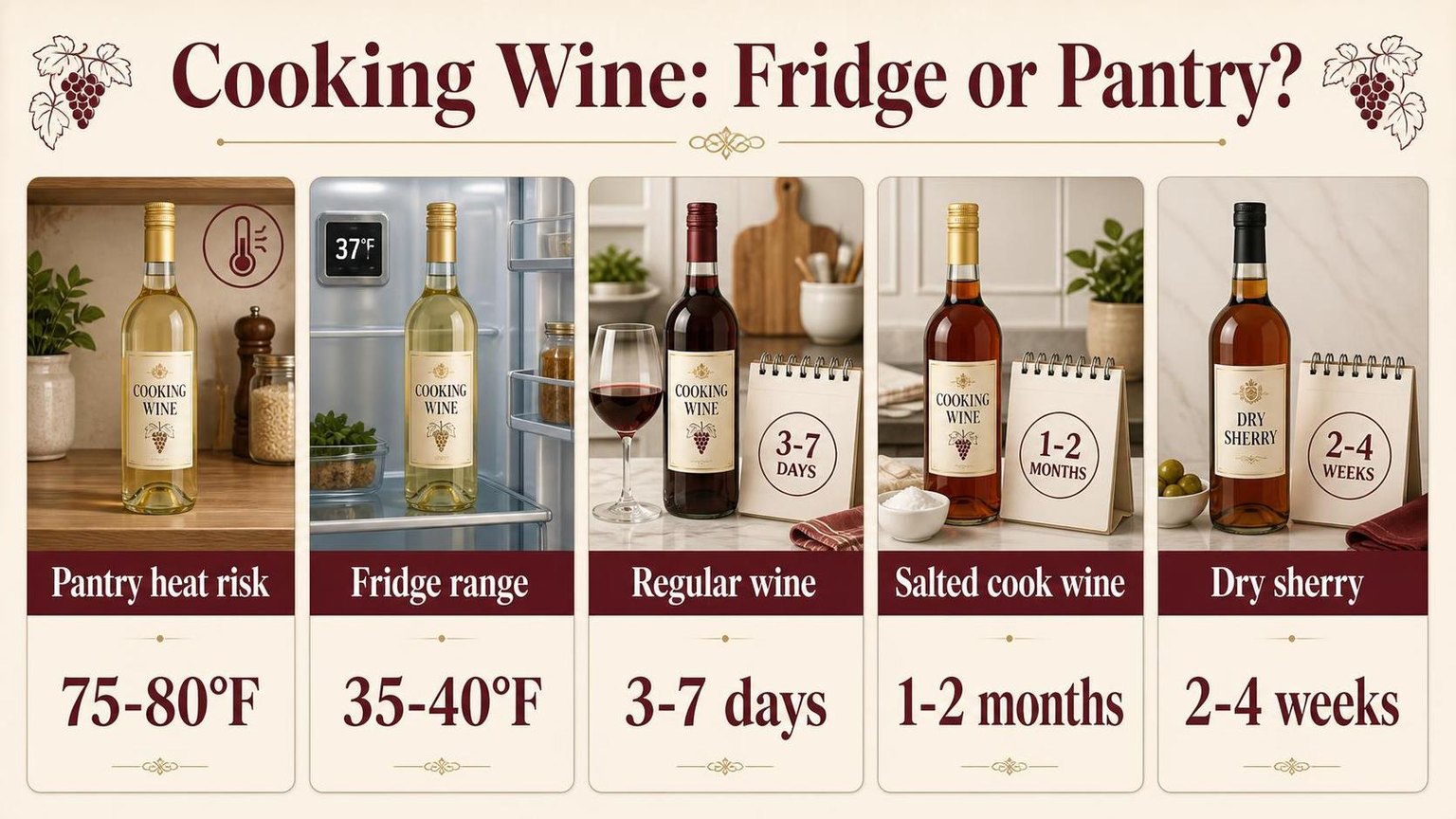
| Commercial cooking wine | Pantry | Pantry or refrigerator | 1 to 2 months refrigerated |
| Regular wine used for cooking | Pantry | Refrigerator | 3 to 7 days |
| Fortified wine for cooking, such as dry sherry | Pantry | Refrigerator | 2 to 4 weeks |
If the bottle says “refrigerate after opening,” follow that label. Manufacturer guidance overrides broad storage rules because ingredient systems differ.
Some cooking wines include preservatives such as potassium sorbate or sodium benzoate, while others rely mainly on salt.
Temperature swings shorten quality life. A pantry that reaches 75°F to 80°F will age opened cooking wine faster than a refrigerator at about 35°F to 40°F. Heat speeds oxidation and can push the wine toward a vinegary smell.
Use your senses before adding old cooking wine to a pan. If it smells sour like vinegar, looks cloudy when it should be clear, or develops off odors, replace it.
Salted cooking wine rarely becomes dangerous quickly, but poor flavor will show up in the dish.
- Refrigerate opened regular wine every time.
- Refrigerate opened cooking wine if you use it less than once a week.
- Keep the cap tightly closed to limit oxygen exposure.
- Store away from the stove, where heat and steam accelerate deterioration.
- Write the opening date on the bottle.
The practical rule is simple. Unopened cooking wine can stay in the pantry, but opened bottles last longer and taste better in the refrigerator. If you care about flavor consistency, cold storage is the safer choice.
Opened Cooking Wine Storage Rules
Opened cooking wine keeps longer than table wine because most commercial bottles contain added salt and preservatives. It still degrades after air enters the bottle, so refrigeration is the safest default for flavor, color, and food safety.
After opening, recap the bottle tightly and refrigerate it at 40°F or below. Cold storage slows oxidation, which is the main reason opened wine turns flat, sharp, or stale.
If the label says “refrigerate after opening,” follow it exactly. That instruction overrides general pantry guidance because formulas vary by brand, alcohol level, salt content, and preservative use.
| Product type | Best storage after opening | Typical quality window |
| Commercial salted cooking wine | Refrigerator, tightly capped | 1 to 2 months for best flavor |
| Commercial salted cooking wine | Cool, dark pantry, tightly capped | About 3 to 4 weeks after opening |
| Dry table wine used for cooking | Refrigerator, tightly capped | 3 to 5 days |
| Fortified wines for cooking, such as sherry or Marsala | Refrigerator or cool dark area | 1 to 2 months |
Those ranges are practical quality rules, not hard expiration dates. The higher salt content in cooking wine helps preservation, but oxygen exposure still strips aroma and leaves harsher cooked flavors.
Store the bottle upright, not on its side. That reduces the amount of wine touching the closure and lowers the chance of seepage, odor pickup, or cork taint from a damaged stopper.
Keep it away from the stove, dishwasher, and sunny windows. Repeated heat swings speed flavor loss faster than a constantly cool refrigerator shelf.
When pantry storage is acceptable
An opened bottle can stay in the pantry only if the room is consistently cool, ideally below 70°F, and the product is a commercial cooking wine with salt and preservatives. Even then, refrigeration gives better retention of flavor.
Do not treat homemade cooking wine or leftover drinking wine the same way. Once opened, unsalted wine lacks the preservative cushion of commercial cooking wine and deteriorates much faster.
Signs the bottle should be discarded
- A strong vinegar smell or solvent-like aroma.
- Cloudiness, stringy sediment, or visible mold around the cap.
- A dramatic color shift, especially brown tones in white cooking wine.
- A swollen cap, leakage, or fizz in a product that was not sparkling.
If any of those signs appear, discard the bottle. Off wine will not usually improve in a simmering sauce, and spoiled flavors concentrate as liquid reduces.
How to extend opened-bottle life
- Transfer leftovers to a smaller bottle to reduce air space.
- Wipe the rim clean before recapping.
- Use clean measuring spoons to avoid food contamination.
- Write the opening date on the bottle.
A simple label matters because most bottles do not show a post-opening deadline. If you cannot remember when it was opened, replace it; cooking wine is inexpensive, and stale wine can flatten an entire dish.
How Salt Changes Shelf Life
Salt is the main reason cooking wine lasts longer than regular table wine after opening.
Most US cooking wines contain added salt at levels high enough to slow microbial growth, which changes how quickly the product spoils at room temperature or in the refrigerator.
Standard table wine usually contains less than 0.1% salt. Commercial cooking wine often contains about 1.5% to 2% sodium chloride by weight, though formulas vary by brand.
That difference matters because salt lowers water activity, making the liquid less hospitable to bacteria, yeast, and mold.
Alcohol and acidity already help preserve wine. Most cooking wines also sit around 10% to 12% alcohol by volume and have a pH commonly near 3 to 4.
Salt adds another preservation hurdle, so spoilage organisms face low pH, ethanol, and reduced available water at the same time.
That does not make cooking wine shelf-stable forever once opened. Salt slows spoilage, but it does not stop oxidation.
Oxygen still degrades aroma compounds, darkens color, and flattens flavor, especially if the bottle is opened often and stored warm.
| Factor | Typical table wine | Typical cooking wine |
| Salt content | Less than 0.1% | About 1.5% to 2% |
| Alcohol by volume | About 11% to 14% | About 10% to 12% |
| Primary post-opening risk | Oxidation and microbial spoilage | Mostly oxidation; microbial spoilage is slower |
| Room-temperature tolerance after opening | Short | Longer than table wine |
US nutrition labels show why the sodium load is significant. A common serving size is 1 tablespoon, or 15 mL.
Many cooking wines list about 180 to 190 mg sodium per tablespoon, which equals roughly 720 to 760 mg per 60 mL, confirming that salt is present in preservative-level amounts.
Higher sodium concentration helps suppress many microbes, but not all spoilage changes are microbial. Vinegar-like notes can still develop as oxygen exposure accumulates.
Flavor loss is the bigger issue for home cooks, because sauces, braises, and pan reductions can pick up stale, harsh, or dull notes from an old bottle.
Refrigeration still improves quality retention. Lower temperatures slow chemical reactions, including oxidation, and further reduce microbial activity.
If a bottle is opened and used over weeks or months, refrigeration gives a measurable safety and quality margin even when salt is already doing part of the preservation work.
| Storage condition after opening | What salt helps with | What salt does not prevent |
| Pantry, tightly capped | Slows growth of many spoilage microbes | Oxygen-driven flavor decline |
| Refrigerator, tightly capped | Adds microbial protection | Does not fully stop oxidation |
For practical use, salt means opened cooking wine is less fragile than drinking wine. It can often remain usable in the pantry longer without obvious spoilage.
Refrigeration is still the better storage choice, because the salt protects safety more than it protects flavor.
- Salt extends shelf life by lowering water activity.
- Typical cooking wine sodium levels are far higher than table wine.
- Salt slows spoilage organisms but does not stop oxidation.
- Refrigeration remains best for maintaining flavor after opening.
Spoilage Signs in Cooking Wine
Cooking wine does spoil, even when salt and preservatives slow microbial growth. The fastest way to judge it is to check color, smell, taste, and the bottle itself before it goes into a pan.
Opened cooking wine usually declines from oxidation first, not from becoming instantly unsafe. Once oxygen enters, aroma compounds fade, acetaldehyde rises, and the wine shifts from useful to flat, harsh, or sour.
Color change is one of the clearest signs. White cooking wine should stay pale straw to gold. If it turns deep amber or brown, oxidation has advanced. Red cooking wine can shift from ruby or garnet to brick-brown at the rim and in the center.
Smell matters more than the label date. Fresh cooking wine should smell wine-like, mildly acidic, and savory.
Spoiled wine often smells like vinegar, bruised apples, nail-polish remover, wet cardboard, or cooked sherry when the style should not smell that way.
Taste confirms what the nose suggests. A small drop should taste salty, acidic, and wine-like if it is a standard supermarket cooking wine. If it tastes sharply vinegary, bitter, maderized, or dull with no fruit left, it is past its best quality.
Texture and clarity also help. Wine should still pour freely. If you see ropey strands, unusual thickness, floating particles not explained by sediment, or persistent cloudiness in a previously clear bottle, discard it.
Those changes can point to contamination or severe breakdown.
Check the closure and bottle condition. A sticky neck, seepage around the cap, or a bulging cap suggests heat exposure or poor storage. Heat speeds oxidation and aroma loss.
Repeated storage above about 70°F can age wine much faster than cool storage near 55°F.
| Sign | What you see or smell | What it usually means | Use it? |
| Color darkening | White turns amber; red turns brownish | Oxidation | No for quality cooking |
| Vinegar smell | Sharp acetic aroma | Acetic acid formation | No |
| Bruised-apple smell | Sherry-like, tired aroma | Acetaldehyde from oxidation | No |
| Cloudiness or strands | Haze, floaters, ropey texture | Contamination or instability | No |
| Flat taste | No fruit, harsh salt and acid only | Volatile aroma loss | Poor result likely |
Crystals alone are not a spoilage sign. Tartrate crystals can form in grape wine, especially after cold storage, and they are harmless. Fine sediment can also appear in red wine.
Those are quality changes, not safety failures, if the smell and taste remain normal.
Salt in cooking wine does not stop oxidation. Many US cooking wines contain about 1.5% to 2% salt, which helps shelf stability before opening. It does not prevent stale flavors after opening, and it does not fix heat damage or prolonged air exposure.
- Discard if it smells like vinegar or solvent.
- Discard if the color has turned distinctly brown.
- Discard if it is cloudy, slimy, or leaking from the closure.
- Keep only if aroma, color, and taste are still clean and wine-like.
If the bottle fails two or more checks, replace it. Cooking concentrates flaws because alcohol evaporates and off-aromas stay in the sauce. Bad cooking wine does not improve in the pan; it becomes more obvious.
When to Discard Cooking Wine
Discard cooking wine when aroma, color, or taste shows clear oxidation, contamination, or spoilage. Refrigeration slows decline after opening, but it does not stop it.
Fortified, salted cooking wine usually lasts longer than regular table wine, yet both have limits.
An opened bottle is past its useful life when it smells sharply like vinegar, nail polish remover, wet cardboard, or cooked fruit. Those are common oxidation markers.
If the wine tastes flat, sour, or harsh instead of wine-like, it will usually make sauces and braises taste dull or acrid.
Look at the bottle before you cook with it. Cloudiness in a wine that was previously clear, unexpected sediment, stringy material, or any fizz in a still cooking wine are warning signs.
Those changes can mean microbial activity or poor storage, especially if the bottle sat warm for weeks.
Salted commercial cooking wine is more shelf-stable than regular drinking wine because salt acts as a preservative. In the U.S., many cooking wines contain about 1.5% to 2% salt by volume.
That helps slow spoilage, but oxidation still happens once oxygen enters the bottle.
| Type | Unopened | Opened, refrigerated | Opened, room temperature | Discard sooner if |
| Regular table wine used for cooking | Best by producer date; quality usually stable 1-3 years if stored cool | About 3-5 days for best flavor | About 1-3 days | Vinegar smell, browning, flat or sour taste |
| Commercial salted cooking wine | Often 1-2 years or by label date | About 1-2 months for acceptable cooking use | About 2-4 weeks | Cloudiness, off odors, sediment, fizz, rancid taste |
Use the table as a practical guide, not a safety guarantee. Storage temperature matters.
Wine kept near 70°F declines faster than wine held around 40°F in a refrigerator, because oxygen-driven flavor loss and microbial growth both move faster at warmer temperatures.
Heat exposure is another discard trigger. If the bottle sat in a hot car, beside a stove, or in direct sun, quality can collapse quickly.
Repeated warming and cooling push the cork or cap to leak tiny amounts of air, which speeds oxidation and can cause stale, stewed flavors.
Discard immediately if the closure is bulging, leaking, or moldy under the cap or cork. Mold on the outside of a cork is not always a problem, but mold inside the neck or floating in the liquid is different. Do not strain it and keep using it.
- Throw it out if it smells like vinegar, solvent, wet paper, or anything unpleasant.
- Throw it out if a still wine turns fizzy without being a sparkling product.
- Throw it out if color darkens dramatically, especially white wine turning deep amber or brown.
- Throw it out if the bottle was opened months ago and stored warm, even if it looks normal.
- When in doubt, taste 1 teaspoon. If you would not cook with that flavor, discard it.
Cooking concentrates flaws. A mediocre wine can still work in a stew, but spoiled wine rarely improves with heat. If the bottle fails the smell-and-taste test, replace it. The cost of a new bottle is lower than ruining a whole pan of food.
Frequently Asked Questions
Does unopened cooking wine need to be refrigerated?
No. Unopened cooking wine is shelf-stable because commercial versions are usually salted and often have enough alcohol to slow microbial growth. Store it in a cool, dark cabinet away from heat, which reduces flavor loss over time.
Does cooking wine need refrigeration after opening?
Refrigeration is not strictly required, but it helps preserve quality after the bottle is opened. Oxygen starts oxidation immediately, so chilling the bottle slows flavor and aroma breakdown and usually extends usable life.
How long does opened cooking wine last in the fridge?
Opened cooking wine commonly stays usable for about 1 to 2 months when tightly sealed and refrigerated. Salted cooking wine often lasts longer than regular table wine, but if it smells sour, tastes flat, or turns brownish, replace it.
Can cooking wine go bad if left at room temperature?
Yes. It is less likely to become unsafe quickly than regular wine, but room-temperature storage after opening speeds oxidation and dulls the flavor.
If you cook with it occasionally, refrigeration gives more consistent results in sauces, braises, and marinades.
Is cooking wine stored differently from regular wine?
Yes. Regular drinking wine usually benefits more from refrigeration after opening because it has no added salt and shows oxidation faster, while cooking wine is formulated for pantry stability.
Even so, both last longer and taste better after opening when the bottle is resealed and chilled.
Related Reading
- What Does Marsala Wine Taste Like? Answer From Expert
- Biggest Glass of Wine Meme
- How Many Calories In A Glass Of Merlot?
- How Many Carbs In A Glass Of Cabernet?
- How Many Calories In 750 Ml Of Wine?
- Does Wine Get You Drunk Fast?
- How Many Fl Oz In A Bottle Of Wine?
- How Did They Make Wine in Bible Times?
- All Alcohol Guides