Drinking whiskey out of the bottle is a practice that bypasses glassware entirely, delivering undiluted spirit at full cask or bottled strength—typically 40–60% ABV—straight to the palate without aeration or nosing.
This method eliminates the aromatic evaluation that a Glencairn or tumbler provides. Without air contact, volatile compounds hit concentrated rather than opening gradually.
The result: intensified alcohol burn, muted flavor complexity, and reduced ability to detect tasting notes like vanilla, oak, or dried fruit that define premium expressions.
Why People Drink Straight From the Bottle
Drinking whiskey directly from the bottle is a practice rooted in convenience, social ritual, and cultural symbolism.
Despite being discouraged by distillers and health professionals alike, it persists across demographics for reasons that are practical, psychological, and deeply embedded in popular culture.
Convenience and Circumstance
The most straightforward reason is lack of glassware. Outdoor settings—camping, tailgating, bonfires—account for a significant share of bottle-drinking occasions.
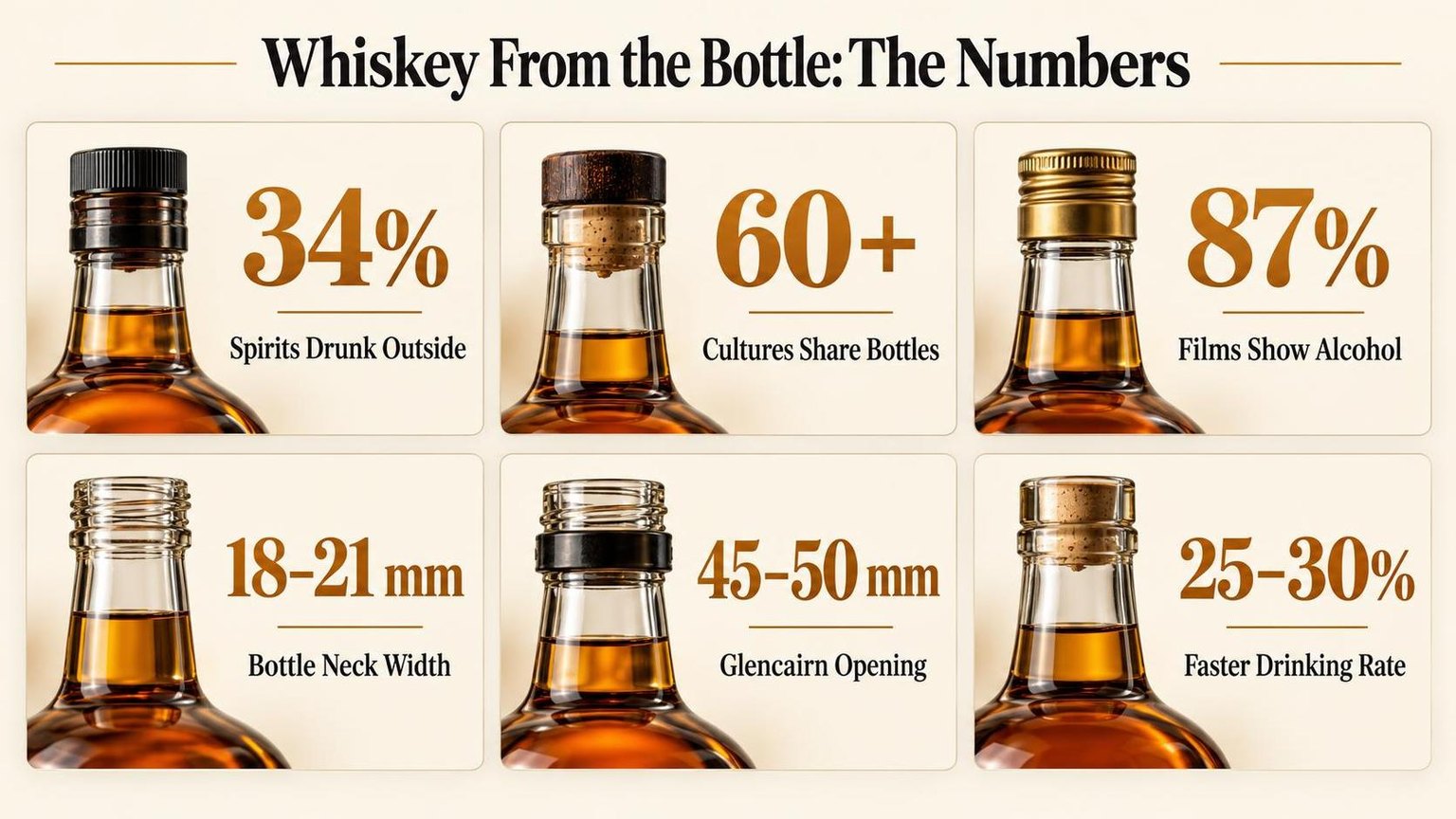
A 2022 IWSR consumer survey found that 34% of spirits consumption in the U.S. occurs outside the home.
Pouring whiskey into a glass requires a stable surface, adequate lighting, and a vessel worth cleaning. Eliminating those steps appeals to drinkers prioritizing speed and simplicity over tasting protocol.
Social Bonding and Ritual
Passing a bottle creates a communal act that individual glasses cannot replicate. Anthropologist Dwight Heath documented shared-bottle drinking across 60+ cultures, noting it functions as a trust signal and social equalizer.
The shared bottle removes hierarchy. Everyone drinks the same pour from the same vessel. This ritualistic element appears in military traditions, fraternity culture, and post-victory celebrations worldwide.
Cultural Reinforcement
Film, music, and television normalize bottle drinking.
A content analysis by the Johns Hopkins Bloomberg School of Public Health found alcohol appeared in 87% of top-grossing U.S. films between 2010 and 2020, with bottle-drinking depicted as rebellious or authentic.
Country music, hip-hop, and rock lyrics frequently reference drinking from the bottle. These depictions associate the act with emotional rawness, defiance, and unfiltered experience.
Perceived Flavor Differences
Some drinkers claim whiskey tastes different from the bottle. The narrow neck concentrates vapor delivery to the nose, while the glass opening width affects aroma dispersion. The comparison breaks down as follows:
| Delivery Method | Opening Diameter | Aroma Exposure | Sip Volume Control |
| Standard bottle neck | 18–21 mm | Minimal | Low |
| Glencairn glass | 45–50 mm | High (concentrated) | High |
| Rocks glass (tumbler) | 75–85 mm | Moderate (dispersed) | High |
The bottle’s narrow opening restricts airflow, suppressing volatile compounds that a proper nosing glass would amplify. Drinkers lose aromatic complexity but gain an undiluted, spirit-forward hit.
Psychological Drivers
Bottle drinking carries connotations of intensity and urgency. Behavioral research published in Alcohol and Alcoholism (2019) linked container size to consumption rate—larger vessels correlated with 25–30% faster drinking speeds.
- Perceived authenticity: The bottle feels unmediated, connecting the drinker directly to the product.
- Emotional coping: Clinical data associates bottle-drinking behavior with higher-risk consumption patterns.
- Identity signaling: The act communicates toughness, nonchalance, or countercultural alignment.
Understanding these motivations matters because they shape consumption habits. Whether driven by practicality or symbolism, bottle drinking bypasses the moderation cues that glassware naturally provides.
Health Risks of Sharing a Bottle
Passing a whiskey bottle mouth-to-mouth transmits bacteria, viruses, and fungi directly between drinkers. Alcohol concentration in whiskey (40–60% ABV) does not sterilize the bottle rim on contact.
Research shows viable pathogens survive on glass surfaces for hours to days.
The human mouth harbors over 700 species of bacteria. Saliva deposited on a bottle rim creates a direct transmission route for several serious infections.
| Pathogen | Disease | Survival on Glass Surface |
| Herpes simplex virus (HSV-1) | Oral herpes (cold sores) | Up to 2 hours |
| Streptococcus pyogenes | Strep throat, scarlet fever | Up to 6 months on dry surfaces |
| Epstein-Barr virus (EBV) | Mononucleosis | Several hours in saliva |
| Neisseria meningitidis | Meningitis | Hours in saliva droplets |
| Influenza A virus | Influenza | 24–48 hours on hard surfaces |
| Candida albicans | Oral thrush | Up to 24 hours |
Why Whiskey Does Not Sterilize the Rim
Effective disinfection requires alcohol concentrations of 60–90% sustained for at least 30 seconds. Standard whiskey at 40% ABV falls well below this threshold.
A quick swig leaves a thin film of liquid on the rim for only 1–2 seconds. This contact time is insufficient to kill even the most fragile enveloped viruses like influenza.
Cask-strength whiskey (50–65% ABV) approaches the lower disinfection range but still lacks adequate contact duration. Saliva dilutes the alcohol further upon mixing.
Documented Outbreak Risks
- HSV-1 prevalence: Approximately 67% of the global population under age 50 carries HSV-1 according to the WHO. Many carriers shed the virus asymptomatically.
- Strep transmission: The CDC reports Group A Streptococcus spreads through saliva and respiratory droplets. Shared drinking vessels are an identified transmission vector.
- Meningococcal disease: The CDC lists sharing drinks as a risk factor for Neisseria meningitidis transmission. Case fatality rates reach 10–15% even with antibiotic treatment.
- Mononucleosis: EBV infects roughly 95% of adults worldwide by age 35. Reactivation and shedding in saliva occur periodically in carriers.
Compounding Factors at Gatherings
Alcohol impairs judgment, making drinkers less cautious about hygiene. Intoxicated individuals are also less likely to notice cold sore symptoms on others.
Immune suppression from heavy drinking compounds infection risk. Ethanol reduces natural killer cell activity by up to 40% after acute binge episodes, per studies published in Alcohol Research.
Outdoor settings—bonfires, tailgates, concerts—add environmental contaminants. Dirt, smoke particles, and insect contact on the bottle rim introduce additional microbial exposure beyond saliva-borne pathogens.
Using individual glasses or disposable cups eliminates the shared-surface transmission pathway entirely. This single step removes the primary vector without changing what or how much you drink.
How Bottle Drinking Alters Flavor Perception
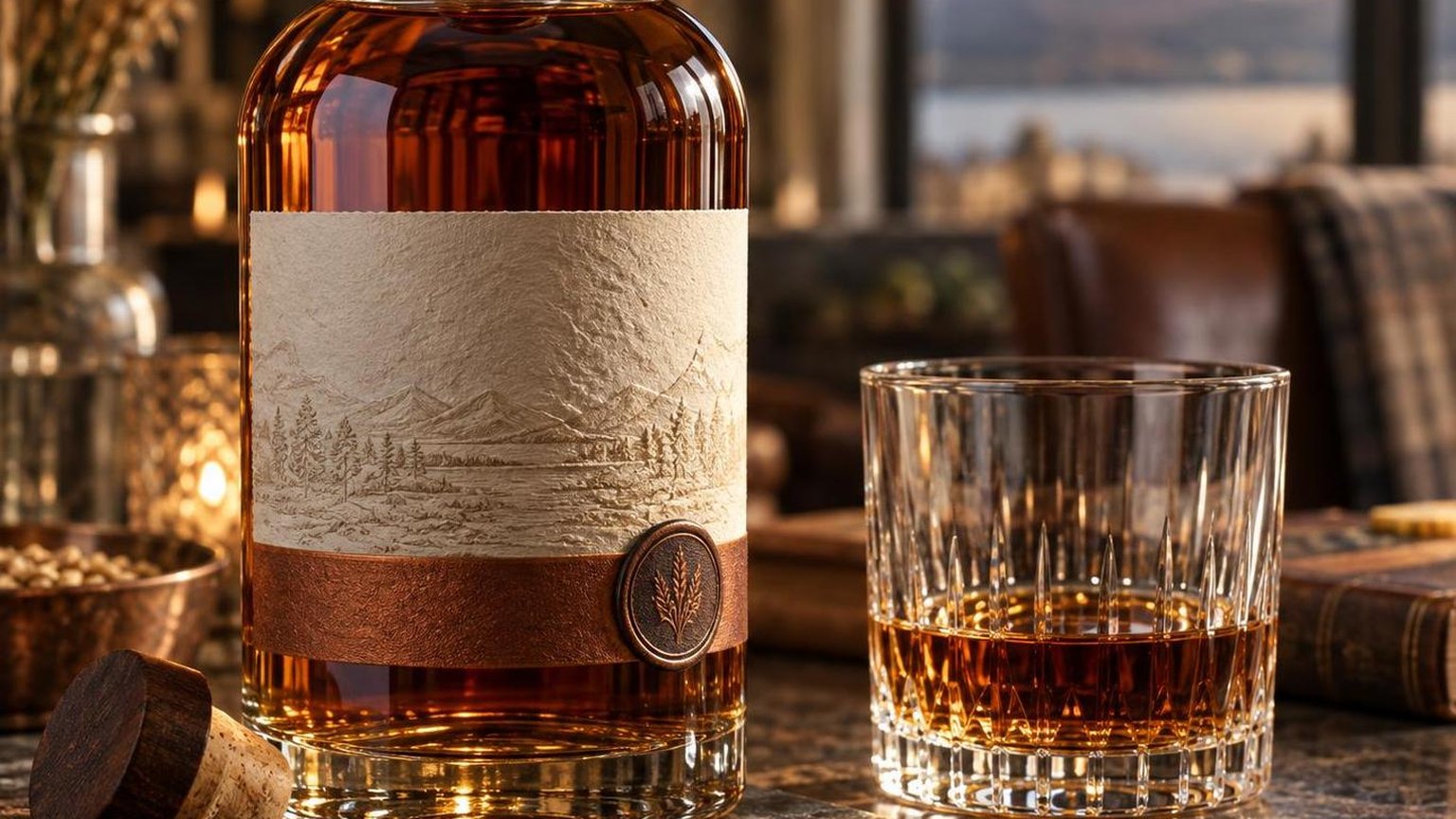
Drinking whiskey directly from the bottle fundamentally changes how your palate registers flavor compounds.
The narrow bottle neck restricts airflow, limits retronasal olfaction, and delivers liquid at a volume and speed your taste receptors cannot properly process.
The Role of Retronasal Olfaction
Humans detect flavor through roughly 400 olfactory receptor types working alongside approximately 10,000 taste buds.
Retronasal olfaction—aroma reaching the nasal cavity from the back of the throat—accounts for an estimated 70–80% of perceived flavor according to research from the Monell Chemical Senses Center.
A standard Glencairn glass has a bowl diameter of 68 mm tapering to a 46 mm rim, concentrating volatile compounds toward the nose. A typical whiskey bottle opening measures just 18–20 mm.
That restriction eliminates the aeration chamber entirely.
| Vessel | Opening Diameter | Aroma Concentration Effect | Retronasal Engagement |
| Glencairn glass | 46 mm | High (tulip shape funnels volatiles) | Full |
| Rocks glass | 75–85 mm | Moderate (wide dispersal) | Moderate |
| Standard bottle neck | 18–20 mm | Minimal (sealed airspace above liquid) | Severely limited |
Volume and Flow Rate Problems
A controlled sip from a glass delivers roughly 5–10 mL of liquid. Tilting a bottle forces a much less controlled pour, often delivering 20–40 mL per swallow.
This overwhelms the lingual papillae and triggers a swallowing reflex before flavor compounds fully register.
Ethanol at 40% ABV already suppresses taste receptor sensitivity. Flooding the palate with a large, rapid volume amplifies that numbing effect, reducing perception of delicate congeners like vanillin, eugenol, and oak lactones.
Temperature and Oxidation Factors
Whiskey in a glass develops a thin surface film that promotes controlled ethanol evaporation. This micro-oxidation softens harsh alcohol notes within 1–2 minutes of pouring. Bottle drinking bypasses this step completely.
Lip contact with a glass rim spreads liquid across the full width of the tongue, engaging all five taste zones simultaneously.
A bottle neck channels whiskey to a narrow central strip, limiting bitter and umami receptor activation along the posterior and lateral tongue surfaces.
What You Actually Miss
- Top notes: Fruity esters and floral aldehydes that require aeration to volatilize at 20–22 °C serving temperature
- Mid-palate complexity: Caramel, spice, and dried fruit layers that need 3–5 seconds of oral contact time
- Finish length: Lingering phenolic and tannic compounds that only emerge when ethanol disperses evenly across mucosal tissue
Bourbon aged 8–12 years develops over 200 identifiable flavor compounds through barrel maturation.
Drinking from the bottle reduces perceivable compounds to primarily ethanol heat, basic sweetness, and residual grain character—sacrificing the complexity that aging created.
The bottle is a storage vessel, not a delivery system. Even pouring whiskey into a simple ceramic cup improves flavor perception measurably compared to drinking straight from the neck.
Proper Whiskey Serving Alternatives Compared
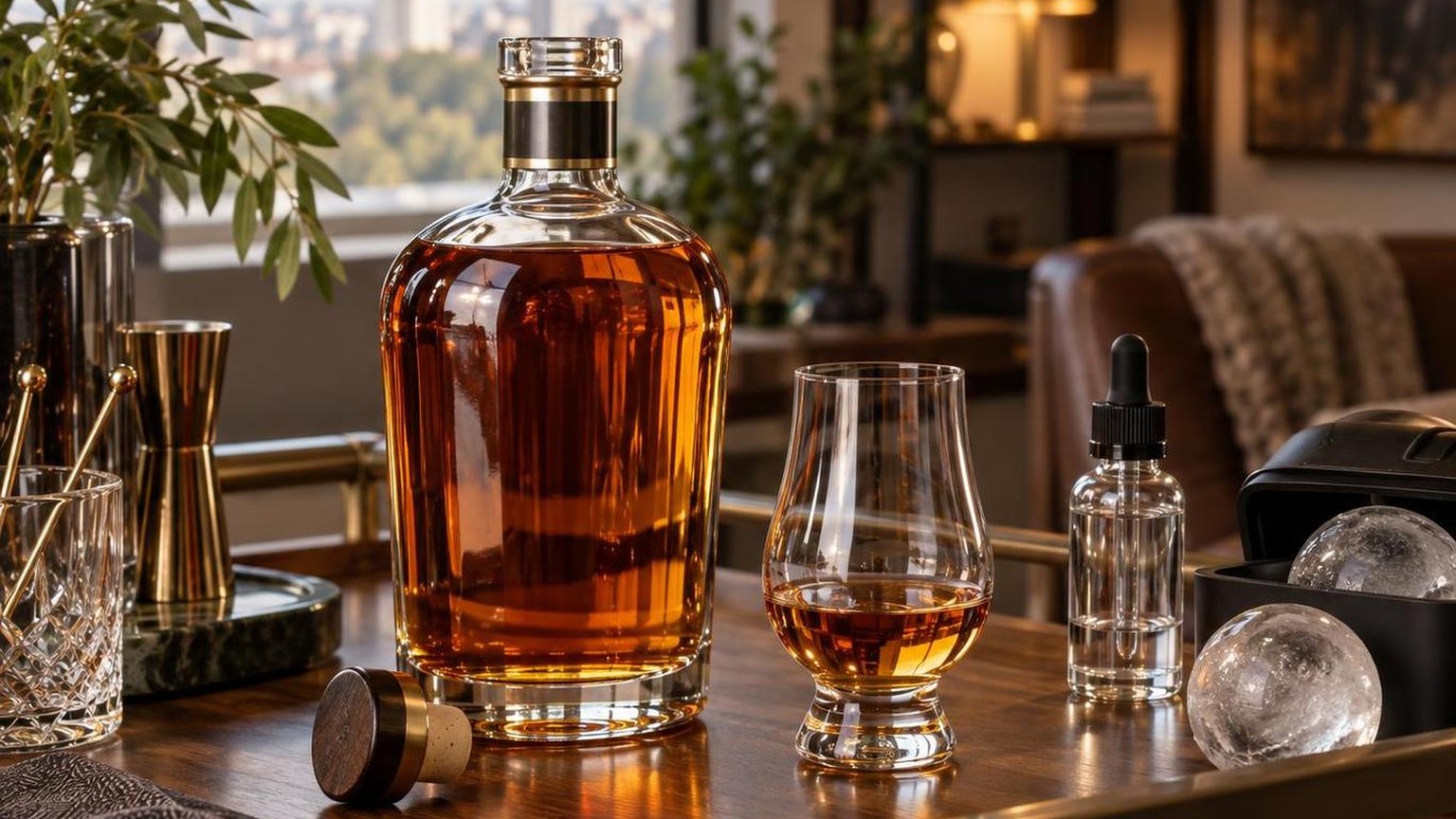
Drinking whiskey straight from the bottle bypasses every element that makes the spirit worth savoring. Proper glassware, measured pours, and controlled dilution unlock flavor compounds that bottle-drinking smothers.
The differences are measurable, not just aesthetic.
Glassware Impact on Aroma and Flavor
Glass shape directly affects how volatile aroma compounds reach your nose.
A 2017 study published in Food Research International confirmed that tulip-shaped glasses concentrate ethanol vapors away from the rim while directing lighter aromatic esters toward the drinker.
| Glass Type | Rim Diameter | Best For | Aroma Concentration |
| Glencairn | ~45 mm | Neat tasting, single malts | High — narrow rim focuses volatiles |
| Copita (nosing glass) | ~40 mm | Professional blending panels | Very high — stemmed, minimal hand heat |
| Tumbler / rocks glass | ~80 mm | Whiskey on the rocks, cocktails | Low — wide opening disperses aromas |
| Bottle opening | ~20 mm | Nothing — restricts airflow entirely | Negligible — trapped ethanol dominates |
The Glencairn glass, developed in 2001 by Glencairn Crystal Studio in Scotland, is now used by over 100 whiskey distilleries worldwide for official tastings.
Standard Pour vs. Bottle Drinking
A standard whiskey pour in the US is 1.5 oz (44 ml). Drinking from the bottle eliminates portion control entirely. A typical 750 ml bottle contains roughly 17 standard pours.
| Serving Method | Typical Volume per Sip | Temperature Control | Oxidation Exposure |
| Neat in Glencairn | 5–7 ml | Gradual warming via palm | Optimal — opens flavor over 15–20 min |
| On the rocks (2 cubes) | 8–10 ml | Chills from ~20°C to ~12°C | Moderate — dilution mutes some esters |
| With a few drops of water | 5–7 ml | Room temperature maintained | Enhanced — water releases guaiacol to surface |
| Straight from bottle | 15–30 ml (uncontrolled) | None | Minimal — liquid barely contacts air |
Why Water Drops Matter
Research from Linnaeus University in Sweden (2017) demonstrated that adding water to whiskey pushes guaiacol — the compound responsible for smoky, peaty flavor — toward the liquid’s surface.
Intensifying taste at concentrations above 45% ABV.
- Cask-strength whiskeys (55–65% ABV) benefit most from 3–5 drops of room-temperature water per 30 ml pour.
- Standard-proof whiskeys (40–43% ABV) need at most 1–2 drops to avoid over-dilution.
- Bottle drinking delivers undiluted, poorly aerated spirit that numbs the palate with concentrated ethanol before flavor compounds register.
Hygiene and Practical Concerns
Backwash introduces oral bacteria — including Streptococcus mutans — into the bottle. At 40% ABV, whiskey does not reliably sterilize these organisms. Shared bottles compound the contamination risk significantly.
Every proper serving alternative outperforms bottle drinking on aroma delivery, portion awareness, flavor development, and basic hygiene. The investment is minimal: a Glencairn glass costs approximately $8–$12 and lasts years.
Cultural History of Bottle Drinking Traditions
Drinking whiskey directly from the bottle carries centuries of cultural weight, spanning frontier survival, military tradition, and countercultural rebellion.
The practice predates standardized glassware and reflects class dynamics that persist today.
Early Bottle Production and Access
Before the 1820s, glass bottles were hand-blown and expensive. Most whiskey was sold from barrels and consumed from shared cups, tin mugs, or wooden noggins. Individual bottles were luxury items.
Sir Kenelm Digby’s coal-fired furnace innovations in the 1630s made dark glass bottles cheaper.
But widespread bottle ownership didn’t arrive until mechanized production began around 1821 with Ricketts’ patent molding machine in Bristol, England.
American Frontier Tradition (1800s)
On the westward trails, glassware was impractical. Settlers, trappers, and prospectors carried whiskey in ceramic jugs or glass flasks and drank directly.
The 1849 California Gold Rush saw saloons selling whiskey at roughly $0.25 per shot—but miners in remote camps shared bottles communally.
By the 1860s, branded whiskey bottles became common. E.G. Booz’s Old Cabin Whiskey, sold in cabin-shaped bottles starting around 1840, popularized the word “booze” and made the bottle itself an identity marker.
Military and Wartime Contexts
Soldiers across conflicts drank from shared bottles out of necessity. During World War I, British officers received rum rations in ceramic jugs marked “S.R.D.” (Supply Reserve Depot).
American GIs in World War II carried pocket flasks, but communal bottle-passing remained standard in field conditions.
| Conflict | Standard Spirit Ration | Container |
| U.S. Civil War (1861–1865) | Whiskey, ~4 oz/day when issued | Shared bottle or canteen |
| World War I (1914–1918) | Rum, ~2.5 oz/day (British) | Ceramic jug |
| World War II (1939–1945) | Whiskey/brandy, variable | Flask or passed bottle |
| Korean War (1950–1953) | Beer/whiskey rations | Individual cans, shared bottles |
20th-Century Counterculture
Prohibition (1920–1933) forced Americans to drink whatever was available, however available. Bootleg whiskey came in unmarked bottles, and drinking from the bottle became associated with defiance of federal law.
Post-Prohibition, Hollywood cemented the image. Films like The Lost Weekend (1945) and later Leaving Las Vegas (1995) used bottle drinking as visual shorthand for desperation or rebellion.
- Blues musicians of the 1930s–1950s Mississippi Delta openly drank from bottles on stage, linking whiskey to artistic authenticity
- The Beat Generation writers of the 1950s—Kerouac notably—romanticized passing bottles of whiskey as communal ritual
- Outlaw country artists like Hank Williams Sr. and later Waylon Jennings reinforced bottle-drinking as anti-establishment identity through the 1970s
Social Signaling Then and Now
Historically, drinking from a bottle signaled either poverty or deliberate rejection of formality.
Today it occupies a more complex space—simultaneously coded as rustic authenticity at tailgates and as problematic behavior in clinical screening tools like the CAGE questionnaire, developed in 1968 by Dr. John Ewing.
Questions Readers Ask
Is drinking whiskey straight from the bottle unhygienic?
Backwash introduces oral bacteria—primarily Streptococcus and Staphylococcus species—into the liquid each time lips contact the rim.
Whiskey’s 40–60% ABV does slow microbial growth but does not sterilize on contact; studies show bacteria can survive in spirits for hours.
Sharing a bottle multiplies the risk of transmitting illnesses like mononucleosis, herpes simplex, and strep throat.
Does whiskey taste different when drunk from the bottle versus a glass?
A bottle’s narrow neck directs the liquid straight to the back of the tongue, bypassing the mid-palate where sweetness and complexity register most strongly.
Glencairn-style glasses, by contrast, concentrate volatile aromatic compounds—ethyl acetate, vanillin, oak lactones—toward the nose, which accounts for roughly 80% of perceived flavor.
Bottle-drinking effectively strips a whiskey of its aromatic profile and flattens the tasting experience.
Can swigging from a bottle cause you to drink too much whiskey too quickly?
Without a measured pour—a standard U.S. serving is 1.5 oz (44 ml)—drinkers routinely underestimate intake by 30–50%, according to research published in Alcoholism: Clinical and Experimental Research.
A 750 ml bottle contains roughly 17 standard drinks; unmetered swigs accelerate consumption and raise blood-alcohol concentration faster than sipping from a glass.
This sharply increases the risk of alcohol poisoning, which kills approximately 2,200 Americans annually per CDC data.
Is it legal to drink whiskey from a bottle in public in the United States?
Open-container laws in 40 of 50 U.S. states prohibit consuming alcohol from any container—bottle, glass, or flask—on public streets and sidewalks.
Penalties range from a $25 fine in New York City to a Class C misdemeanor carrying up to 30 days in jail in Texas.
Exceptions exist in designated entertainment districts such as Bourbon Street in New Orleans, Beale Street in Memphis, and the Las Vegas Strip’s pedestrian zones.
Does drinking from the bottle accelerate whiskey oxidation or spoilage?
Each swig introduces air into the headspace and deposits saliva enzymes (amylase, lipase) onto the rim, both of which degrade flavor compounds over days and weeks.
Once a bottle is below the half-full mark, the increased oxygen-to-liquid ratio accelerates oxidation of congeners like acetaldehyde and furfural, dulling the whiskey noticeably within 1–2 months.
A properly poured and re-sealed bottle, by comparison, retains its profile for 1–2 years.
Why do people associate drinking whiskey from the bottle with cowboys and outlaws?
In the 19th-century American frontier, saloons often sold whiskey by the bottle because individual glassware was scarce and expensive west of the Mississippi.
Hollywood cemented the trope in films like The Good, the Bad and the Ugly (1966) and Tombstone (1993), linking bottle-drinking with rugged independence and disregard for social norms.
The image persists in modern marketing despite the practical reality that glassware improves both safety and flavor.
Further Reading
- What Is Proof In Whiskey?
- Who Makes Kirkland Canadian Whiskey?
- What Whiskey Does Joe Rogan Drink on the JRE Podcast?
- What does Crown Royal Taste Like? Answer From Expert
- What Is the Difference Between Rye and Whiskey?
- What's the Difference Between Whiskey and Cognac?
- Who Owns Howler Head Whiskey?
- Tennessee Whiskey Vs Bourbon: Which Is Best?
- All Alcohol Guides
- National Institute on Alcohol Abuse and Alcoholism – "Drinking Levels Defined" (2023)
- Centers for Disease Control and Prevention – "Fact Sheets: Alcohol Use and Your Health" (2024)
- National Library of Medicine / PubMed – "Alcohol Consumption and Risk of Disease" (2018)
- Substance Abuse and Mental Health Services Administration – "National Survey on Drug Use and Health" (2023)
- Harvard T.H. Chan School of Public Health – "Alcohol: Balancing Risks and Benefits" (2023)
- Mayo Clinic – "Alcohol Use: Weighing Risks and Benefits" (2023)
- World Health Organization – "Alcohol: Key Facts" (2024)
- Stanford University Office of Alcohol Policy and Education (2023)