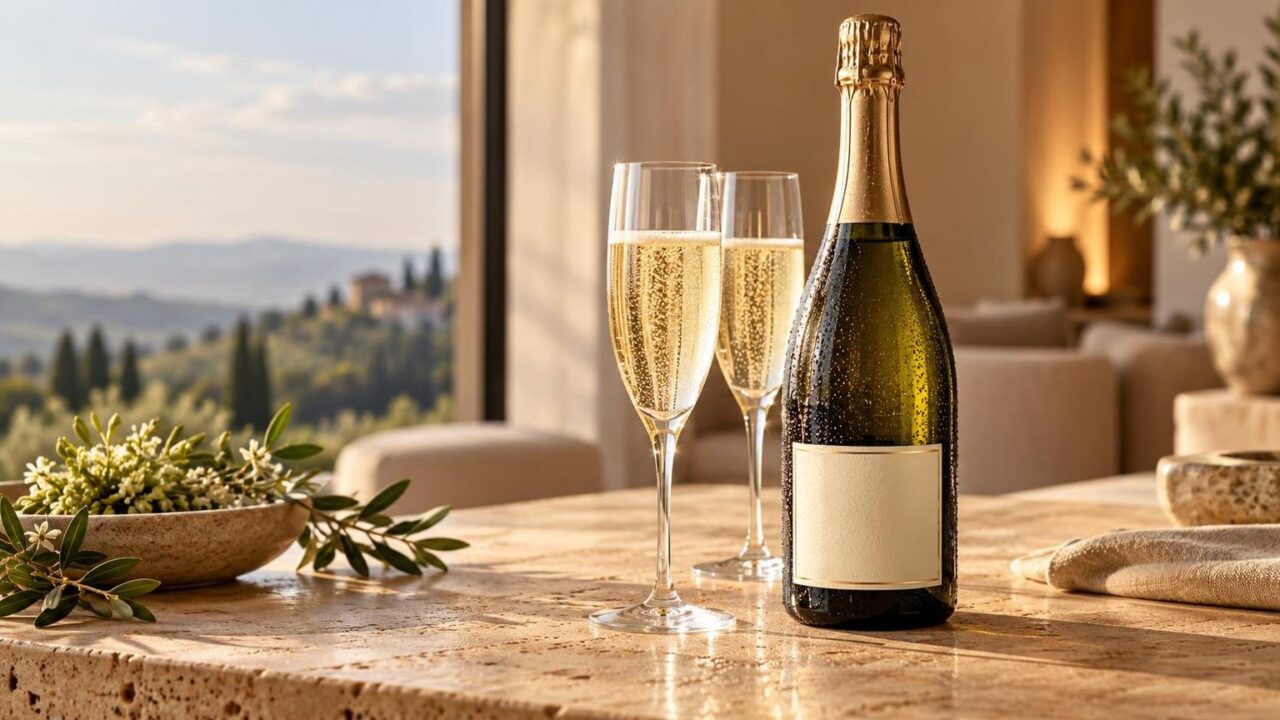
Sparkling wines are typically best within 1–3 years of purchase unopened and 1–3 days refrigerated after opening—the practical answer to “How Long Do Sparkling Wines Last?” These are freshness guidelines.
Not expiration dates; age-worthy vintage Champagne can develop for considerably longer under proper storage.
Style, storage temperature, and closure determine how well a bottle retains its bubbles and flavor. Keep unopened bottles cool and dark; refrigerate opened bottles with a pressure-rated sparkling-wine stopper.
This guide explains storage timelines, signs of deterioration, and when a fading sparkle means declining quality rather than danger.
How Long Unopened Sparkling Wine Lasts
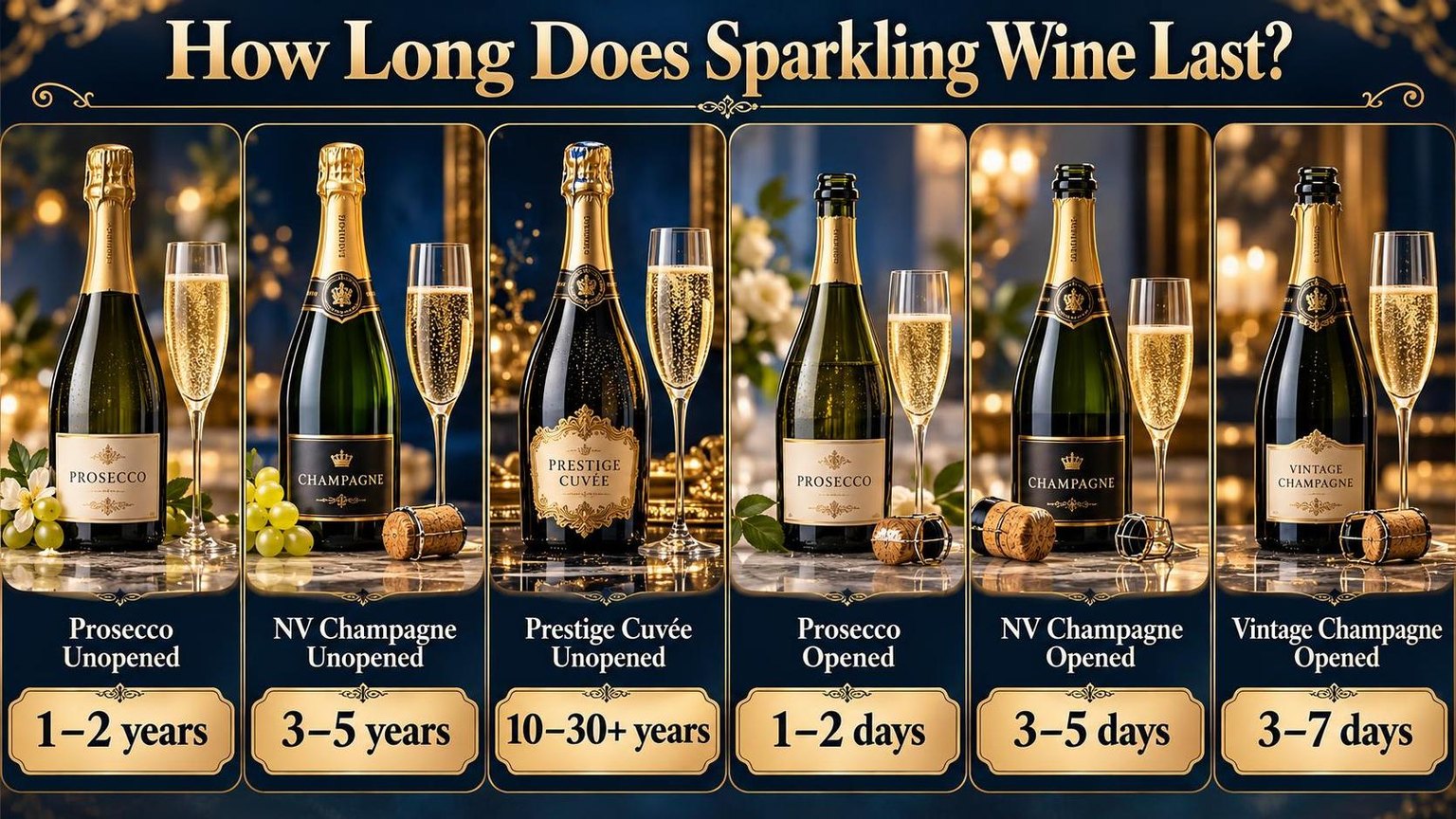
Unopened sparkling wine shelf life varies dramatically by style, quality, and storage conditions. A non-vintage Prosecco and a vintage Dom Pérignon occupy entirely different timelines—one measured in months, the other in decades.
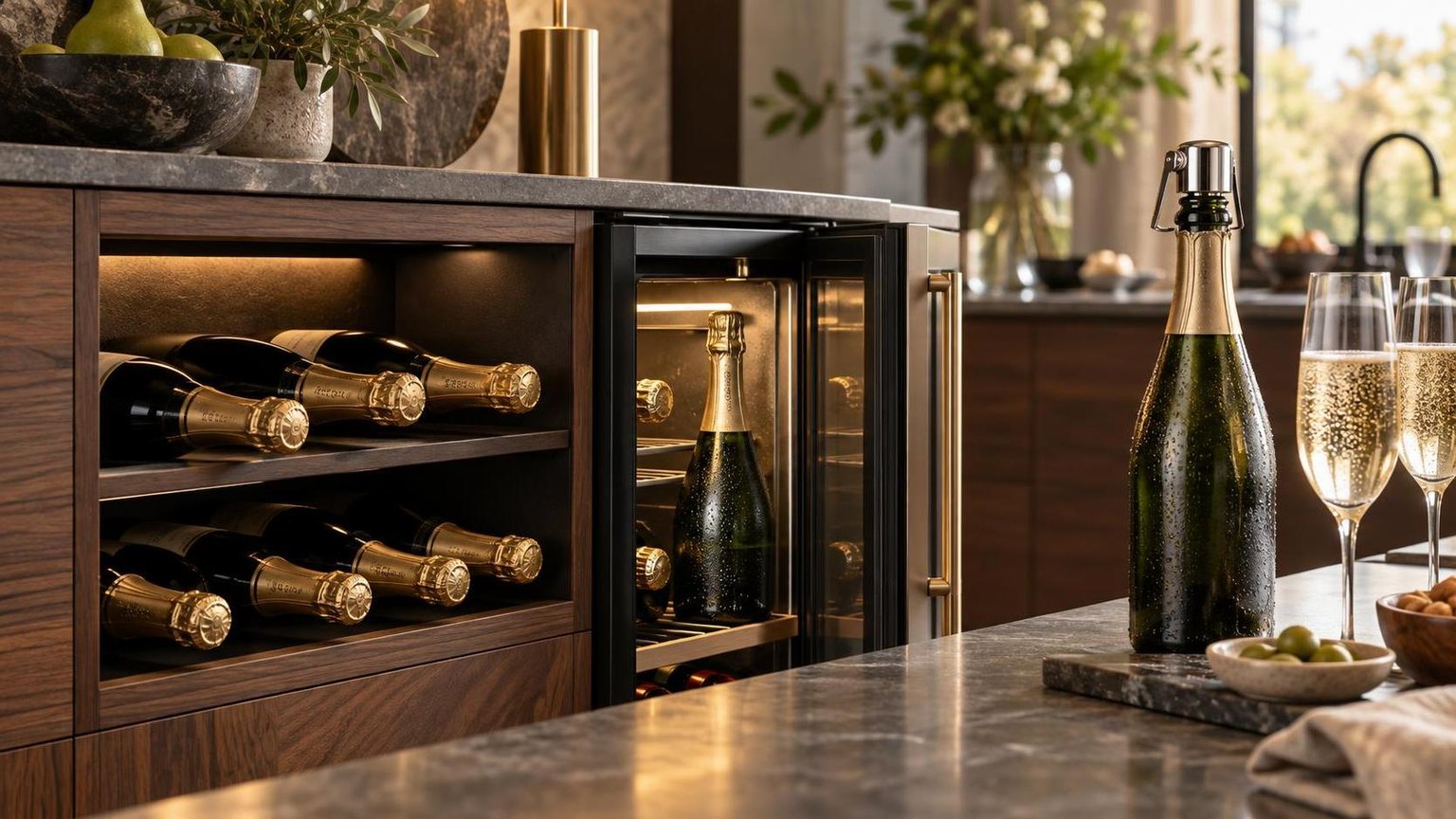
Storage temperature is the single most critical factor. Keep bottles at 45–55°F (7–13°C), on their sides, away from light and vibration.
| Sparkling Wine Type | Shelf Life (Unopened) |
| Prosecco (tank method) | 1–2 years from purchase |
| Cava (non-vintage) | 1–3 years from purchase |
| Non-vintage Champagne | 3–5 years from purchase |
| Vintage Champagne | 7–20 years from vintage date |
| Prestige Cuvée (e.g., Dom Pérignon, Krug) | 10–30+ years from vintage date |
| Crémant (Alsace, Loire, Burgundy) | 2–4 years from purchase |
| Moscato d’Asti | 1–2 years from vintage date |
Why Traditional Method Wines Last Longer
Champagne and other traditional method (méthode champenoise) wines undergo secondary fermentation in the bottle.
Extended lees contact—minimum 15 months for non-vintage Champagne, 36 months for vintage—builds complexity and structural compounds that protect against oxidation.
Prestige cuvées like Krug Grande Cuvée spend approximately 7 years on lees before disgorgement. This extended aging creates remarkable longevity potential after release.
Why Tank-Method Wines Decline Faster
Prosecco and most Moscato use the Charmat (tank) method. Secondary fermentation occurs in pressurized steel tanks, not individual bottles. These wines receive no lees aging benefit and are designed for immediate freshness.
After 18–24 months, tank-method sparkling wines typically lose their aromatic vibrancy. The delicate floral and fruit esters that define Prosecco degrade steadily at room temperature.
Signs an Unopened Bottle Has Gone Past Its Prime
- Deep gold or amber color visible through the glass (in wines meant to be pale straw)
- Cork appears pushed slightly upward—indicating heat damage and possible seal failure
- Leakage or sticky residue around the foil capsule
- Vintage date exceeding the recommended window for that category
When in doubt, check the disgorgement date on the back label. Many Champagne houses now print this. Wines disgorged within 2–3 years generally show the freshest character.
How Long Opened Sparkling Wine Lasts
Opened sparkling wine loses carbonation rapidly because dissolved CO₂ escapes once the bottle is unsealed.
Most styles remain drinkable for 1–3 days when refrigerated with a hermetic sparkling wine stopper, but quality declines measurably within hours.
A standard 750 ml bottle of sparkling wine contains approximately 49 million bubbles at opening. Within 24 hours under a stopper, roughly 40–50% of that carbonation dissipates.
| Sparkling Wine Style | Opened Shelf Life (Refrigerated, Stoppered) |
| Non-vintage Champagne | 3–5 days |
| Vintage / Prestige Cuvée Champagne | 3–7 days |
| Crémant, Cava (traditional method) | 2–4 days |
| Prosecco (Charmat method) | 1–2 days |
| Lambrusco | 1–3 days |
| Pet-Nat / Col Fondo | 1–2 days |
Traditional-method wines (Champagne, Cava, Franciacorta) retain fizz longer because their higher atmospheric pressure—typically 5–6 atm versus 2.5–3.5 atm for Charmat-method wines—provides a larger CO₂ reserve.
Key Factors Affecting Longevity
- Stopper type: A hinged hermetic sparkling stopper preserves pressure far better than plastic wrap or a regular cork. Studies show pressure loss drops by roughly 30% compared to an uncovered bottle.
- Temperature: CO₂ stays dissolved longer at lower temperatures. Store opened bottles at 3–7 °C (37–45 °F). Room temperature accelerates gas loss dramatically.
- Fill level: A half-empty bottle loses carbonation faster because the larger headspace allows more CO₂ to escape from solution.
- Bottle size: Magnums (1.5 L) hold carbonation noticeably longer than standard 750 ml bottles due to a more favorable volume-to-surface-area ratio.
The Silver Spoon Myth
Placing a silver spoon in the bottle neck does not preserve bubbles. Research conducted at Stanford University and the Centre Interprofessionnel des Vins de Champagne (CIVC) confirmed no measurable difference between a spoon and an open bottle.
Once carbonation falls below approximately 2 atmospheres, most tasters perceive the wine as flat. At that point the wine can still be used for cooking—particularly risotto, pan sauces, or vinaigrettes—but offers little drinking pleasure.
Champagne Versus Prosecco Shelf Life
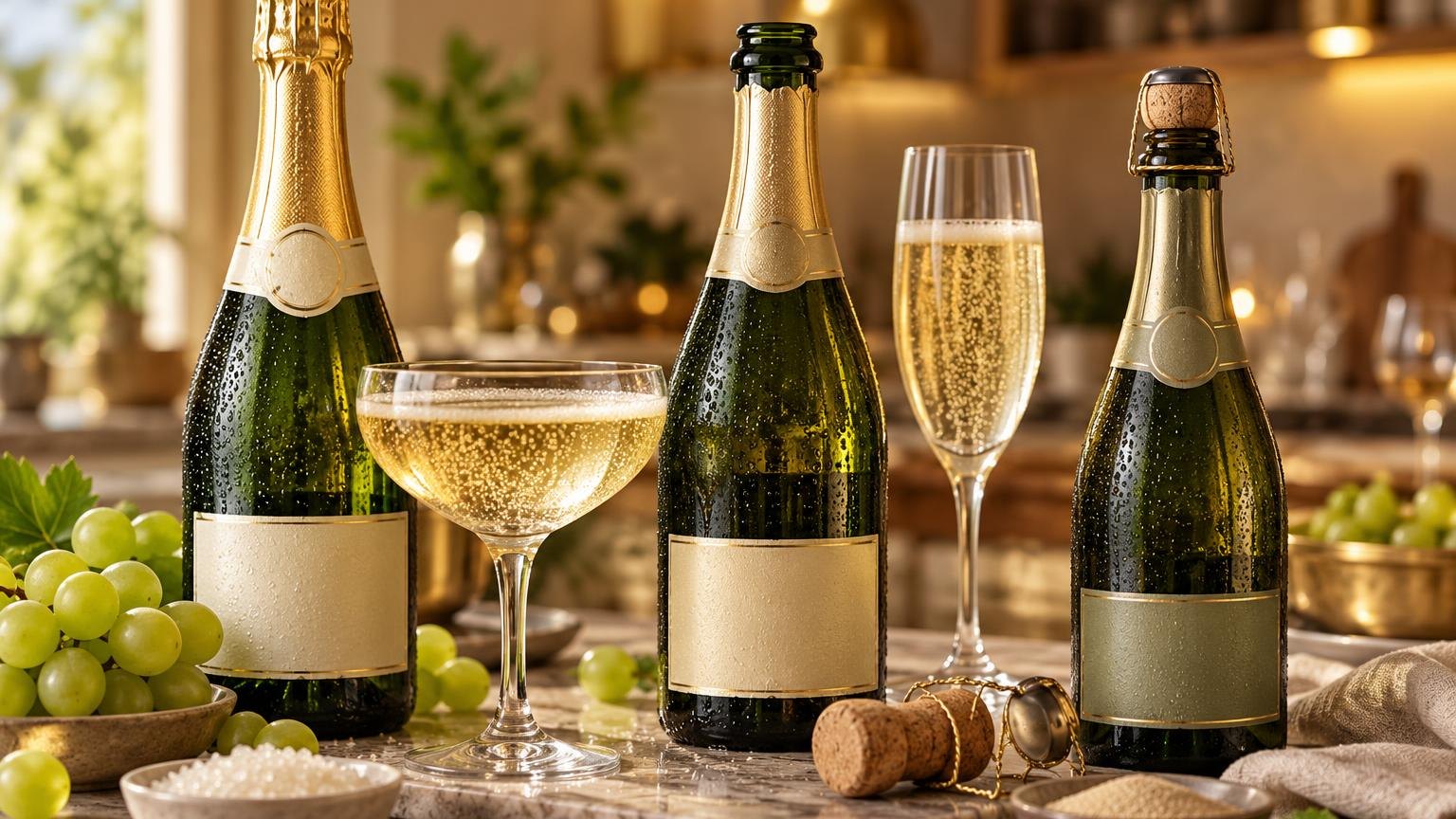
Champagne and Prosecco differ dramatically in longevity despite both being sparkling wines. The production method—traditional method versus Charmat tank method—directly determines how long each wine remains drinkable after purchase.
Champagne undergoes secondary fermentation in the bottle, creating finer bubbles and a more complex yeast-derived flavor profile. This process, combined with higher acidity and typically longer lees aging, gives Champagne superior aging potential.
Prosecco ferments in pressurized stainless steel tanks (Charmat method), preserving fresh fruit aromatics but producing a wine designed for immediate enjoyment rather than cellaring.
Shelf Life Comparison
| Wine Type | Unopened Shelf Life | Opened (Refrigerated) |
| Non-vintage Champagne | 3–5 years from purchase | 3–5 days |
| Vintage Champagne | 5–10+ years from purchase | 3–5 days |
| Prestige Cuvée Champagne | 10–20+ years from purchase | 3–5 days |
| Prosecco DOC | 1–2 years from vintage date | 1–3 days |
| Prosecco Superiore DOCG | 2–3 years from vintage date | 1–3 days |
Why Champagne Outlasts Prosecco
- Atmospheric pressure: Champagne holds approximately 6 atmospheres of pressure versus Prosecco’s 3–3.5 atmospheres, keeping carbonation intact longer once opened.
- Acidity: Champagne’s pH typically ranges from 3.0–3.1, while Prosecco sits around 3.1–3.3. Lower pH acts as a natural preservative.
- Lees aging: Non-vintage Champagne must age on lees for a minimum of 15 months; vintage Champagne requires 36 months. Prosecco has no minimum lees-aging requirement.
- Dosage: The added sugar at disgorgement in Champagne contributes to structural stability over time.
Store both wines upright in a cool environment between 7–10°C (45–50°F). Champagne tolerates slightly warmer cellar temperatures of 10–13°C for long-term aging.
Once opened, use a hermetic sparkling wine stopper. A standard cork or plastic wrap will not maintain adequate pressure to preserve carbonation beyond a few hours.
Drink Prosecco within 18 months of purchase for optimal freshness. The floral, fruit-forward character that defines quality Prosecco fades noticeably after that window closes.
Vintage Sparkling Wine Aging Potential
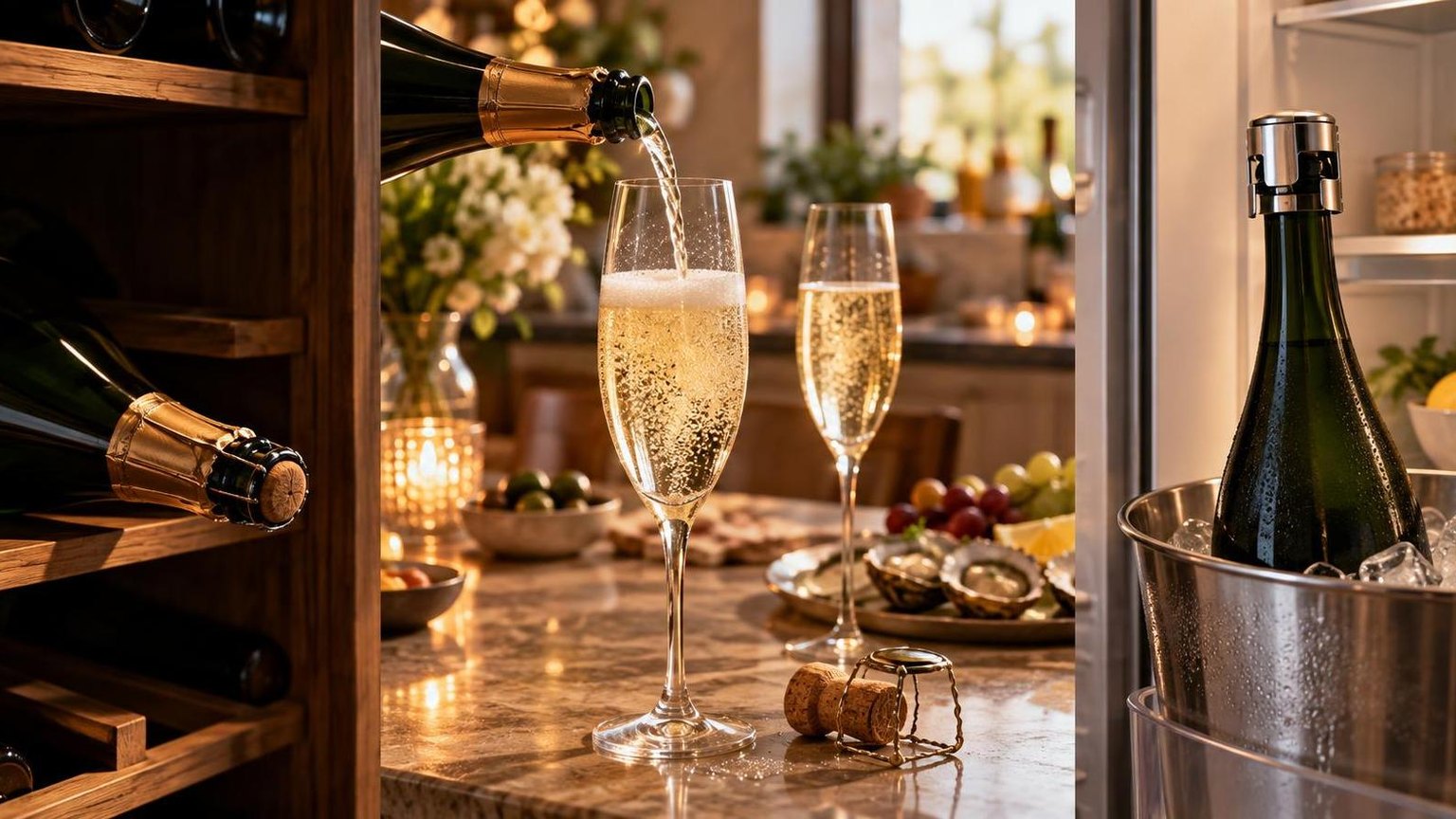
Vintage sparkling wines are produced only in exceptional years, giving them concentrated fruit and structural complexity that reward extended cellaring.
Their aging potential far exceeds non-vintage bottlings, with top examples evolving beautifully over decades.
The key factor is acidity. Vintage Champagnes typically launch with pH levels between 3.0 and 3.1, providing the backbone for long-term development in bottle.
| Sparkling Wine Type | Drinking Window | Peak Complexity |
| Vintage Champagne (standard) | 10–25 years from vintage | 15–20 years |
| Prestige Cuvée (Dom Pérignon, Krug) | 15–40+ years from vintage | 20–30 years |
| Vintage Franciacorta | 8–15 years from vintage | 10–12 years |
| Vintage English Sparkling | 8–15 years from vintage | 10–12 years |
| Vintage Crémant (Alsace, Loire) | 5–10 years from vintage | 6–8 years |
| Vintage Cava Gran Reserva | 5–12 years from vintage | 7–10 years |
EU regulations require vintage Champagne to age a minimum of 36 months on lees before disgorgement. Most quality houses exceed this significantly—Krug ages its vintage wines for roughly 12 years on lees.
What Happens During Extended Aging
Autolysis breaks down dead yeast cells, releasing amino acids and mannoproteins into the wine. This process generates the toasty, brioche, and biscuit notes prized in aged Champagne.
- 5–10 years: Primary fruit softens; baked apple, honey, and almond emerge
- 10–20 years: Oxidative complexity develops with notes of toffee, dried fruit, and mushroom
- 20–40 years: Tertiary aromas dominate—coffee, smoke, truffle, and caramel
Storage Requirements for Long Aging
Sparkling wines are more vulnerable to storage flaws than still wines. The pressurized CO₂ (roughly 5–6 atmospheres) amplifies the effects of temperature fluctuation.
- Maintain 10–13 °C (50–55 °F) consistently
- Store bottles horizontally to keep corks moist
- Avoid vibration, which accelerates premature aging
- Keep humidity between 60–70% to prevent cork desiccation
Late-disgorged bottlings like Bollinger R.D. or Dom Pérignon Plénitude P2 and P3 offer an alternative: extended lees aging managed by the producer, reducing the risk of flawed home storage.
Storage Conditions That Preserve Bubbles
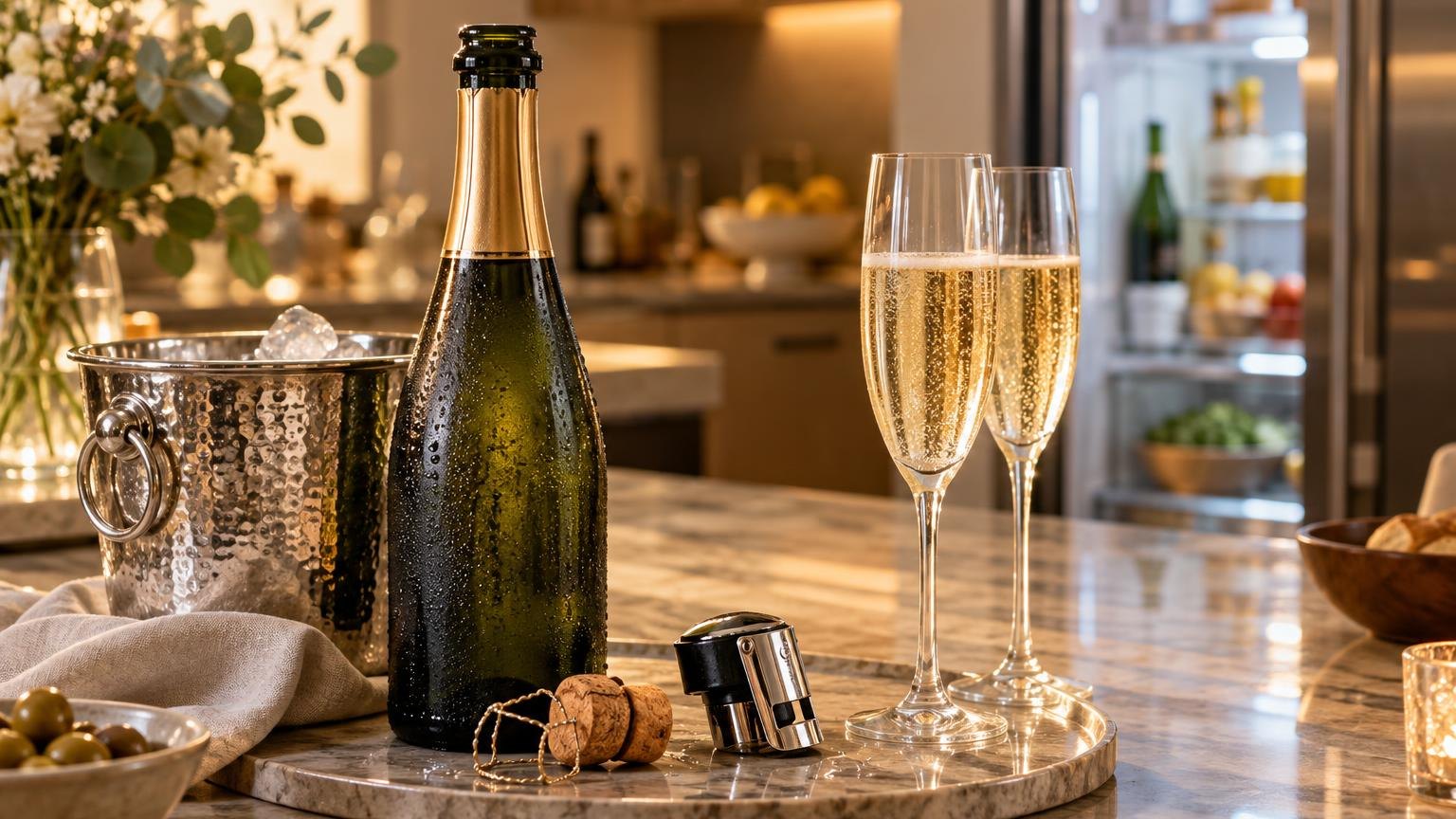
Carbon dioxide dissolves more readily in cold liquid. Every degree of temperature increase accelerates CO₂ escape through the cork, shortening a sparkling wine’s viable lifespan.
Controlling three variables—temperature, humidity, and light—determines whether those bubbles survive months or years.
Temperature
Store sparkling wine between 7°C and 10°C (45–50°F). Wines held at room temperature (21°C) lose carbonation up to twice as fast as those kept at cellar temperature.
Internal pressure in a sealed bottle sits around 5–6 atmospheres at 10°C but climbs above 7 atmospheres at 25°C, stressing the cork seal.
| Storage Temperature | Approximate Internal Pressure | Effect on Longevity |
| 7–10°C (45–50°F) | 5–6 atm | Optimal; preserves CO₂ and freshness for years |
| 12–14°C (54–57°F) | ~6 atm | Acceptable for medium-term storage (1–2 years) |
| 20–25°C (68–77°F) | 7+ atm | Accelerated aging; cork may dry or leak within months |
Humidity
Maintain relative humidity between 60% and 80%. Below 50%, natural corks shrink and allow micro-oxidation, letting dissolved CO₂ escape.
Wine fridges with humidity control outperform standard kitchen refrigerators, which typically run at 30–40% humidity.
Bottle Position
Store sparkling wine on its side or at a slight downward angle. This keeps the cork moist from the inside, maintaining an airtight seal.
Some producers argue the headspace pressure alone hydrates the cork, but horizontal storage remains the industry standard for long-term cellaring.
Light Exposure
UV radiation degrades sparkling wine rapidly. Studies from the University of Burgundy found that clear-glass bottles exposed to fluorescent light for 2 hours developed “light-struck” off-flavors.
Dark cellars or UV-filtered wine cabinets prevent this degradation entirely.
- Avoid vibration: Constant movement disturbs sediment and may accelerate CO₂ loss through the closure.
- Keep away from strong odors: Cork is permeable enough to absorb surrounding aromas over extended storage periods.
- Use a dedicated wine fridge: Compressor-free thermoelectric models minimize vibration while holding 10–12°C steadily.
Signs Sparkling Wine Has Spoiled
Sparkling wine deterioration follows predictable sensory patterns across visual, aromatic, and taste indicators. Recognizing these signs prevents serving a compromised bottle and helps distinguish normal aging from genuine spoilage.
Visual Indicators
Healthy sparkling wine produces persistent, fine bead streams rising from the glass bottom. Spoiled bottles show noticeably fewer bubbles or none at all, indicating CO₂ loss through a failed cork seal.
Color shifts signal oxidation. A young Champagne turning deep gold or amber, or a rosé shifting toward brownish-orange, has likely oxidized beyond drinkability.
| Wine Type | Healthy Color | Spoiled Color |
| Blanc de Blancs | Pale straw to light gold | Deep amber or brown-tinged |
| Brut NV Champagne | Golden yellow | Dark copper or tawny |
| Prosecco | Pale lemon-green | Dull yellow-gold |
| Rosé Sparkling | Salmon to light pink | Brownish-orange |
Aroma Red Flags
A spoiled sparkling wine often emits vinegar-like sharpness, caused by acetic acid bacteria converting ethanol to acetic acid. Concentrations above 1.2 g/L become detectable to most people.
- Wet cardboard or musty basement: indicates cork taint (TCA contamination), detectable at concentrations as low as 2–7 parts per trillion
- Nail polish remover: signals ethyl acetate from bacterial spoilage, noticeable above 150 mg/L
- Sulfur or rotten eggs: hydrogen sulfide formation from reductive conditions, perceptible at just 1–2 µg/L
- Sherry-like nuttiness: acetaldehyde from excessive oxidation, detectable above 100–125 mg/L in white wines
Taste and Texture Clues
Flat mouthfeel confirms dissolved CO₂ has dropped below approximately 1–2 atmospheres of pressure, compared to the 5–6 atmospheres typical in properly sealed Champagne.
A sharp, vinegar-like acidity distinct from the wine’s natural tartness indicates volatile acidity has exceeded acceptable thresholds.
Bitterness or a harsh, astringent finish that was absent when the wine was young suggests phenolic degradation.
Cloudiness or visible sediment in filtered sparkling wines like Prosecco or Cava points to microbial contamination. Vintage Champagne may show harmless fine lees, but chunky particles or haziness warrants caution.
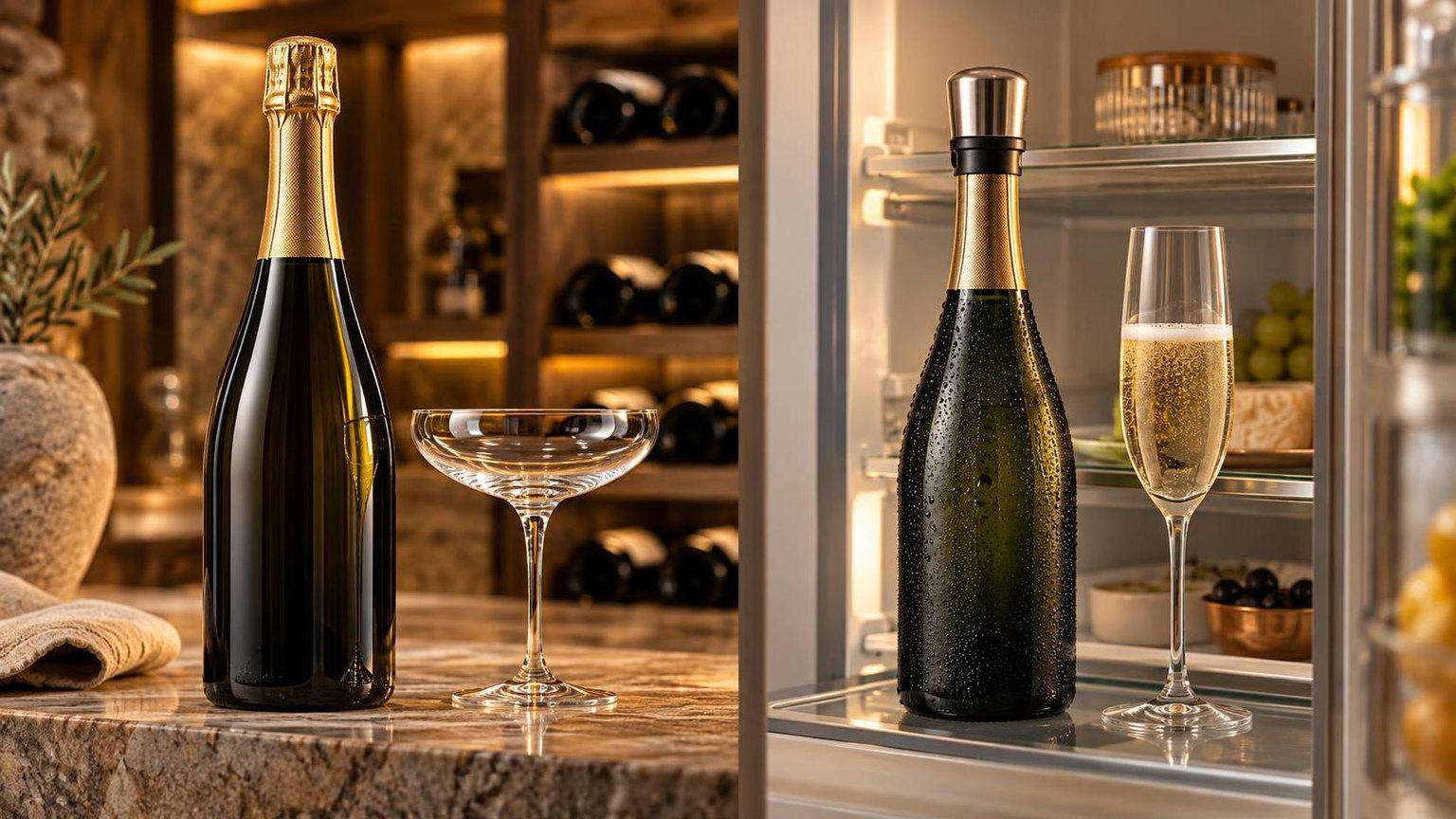
Best Ways to Store Leftover Sparkling Wine
Proper storage directly determines whether leftover sparkling wine stays drinkable for one day or five. Temperature, seal type, and bottle orientation each play measurable roles in CO₂ retention.
Use a Hermetic Sparkling Wine Stopper
A purpose-built sparkling wine stopper with a clamp mechanism maintains approximately 80% of original carbonation for 24–48 hours. Standard cork or plastic wrap fails within hours.
Research from the University of Reims Champagne-Ardenne confirmed that bottles sealed with a proper stopper retained significantly more dissolved CO₂ than those left with a spoon inserted in the neck—a persistent myth with zero proven effect.
Refrigerate Immediately
Cold temperatures slow CO₂ escape. Store opened bottles at 3–7°C (37–45°F). At room temperature (20°C), carbonation dissipates roughly twice as fast compared to refrigerated storage.
Keep bottles upright after opening. This minimizes the surface area of wine exposed to air, reducing both oxidation and carbonation loss simultaneously.
Expected Shelf Life by Storage Method
| Storage Method | Temperature | Carbonation Retained After 24 hrs | Drinkable Window |
| Sparkling wine stopper + fridge | 3–7°C | ~80% | 3–5 days |
| Original cork reinserted + fridge | 3–7°C | ~50% | 1–2 days |
| Plastic wrap + rubber band + fridge | 3–7°C | ~40% | 12–24 hours |
| No seal, room temperature | ~20°C | ~15% | 4–8 hours |
Additional Tips
- Never freeze leftover sparkling wine—expansion can shatter the bottle and destroy the mousse entirely.
- Half-bottle transfers work: pour remaining wine into a clean 375 mL half-bottle, seal tightly, and refrigerate. Less headspace means less CO₂ loss.
- Vintage Champagne and traditional-method sparkling wines hold carbonation longer than tank-method Prosecco due to finer, more persistent bead structure.
- If carbonation is lost, repurpose flat sparkling wine for pan sauces, vinaigrettes, or poaching fruit rather than discarding it.
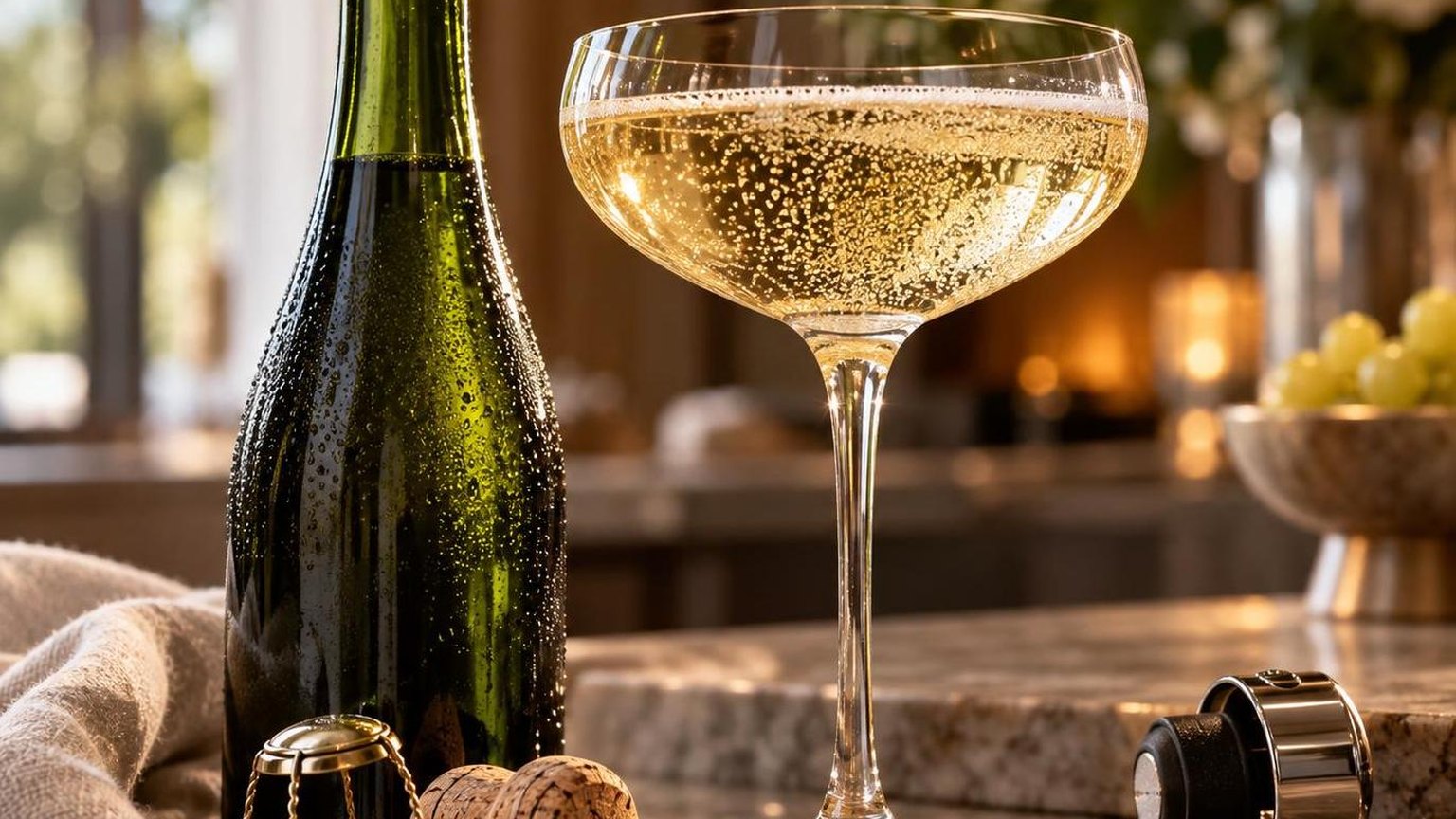
A $6–$10 sparkling wine stopper is the single most effective investment for preserving leftover bubbles. Combined with consistent refrigeration, it extends enjoyment well beyond the first pour.
Common Questions
How long does an unopened bottle of non-vintage sparkling wine last?
Non-vintage Prosecco, Cava, and brut NV Champagne are designed for immediate enjoyment and hold well for 3–4 years from purchase when stored horizontally at 10–13 °C.
After that window, the wine loses freshness and mousse intensity, though it remains safe to drink.
How long can you keep vintage and prestige cuvée Champagne before opening?
Vintage-dated Champagnes such as Dom Pérignon or Krug Grande Cuvée can age 10–25 years under proper cellar conditions (constant 10–12 °C, 70 % humidity, away from light and vibration).
Extended aging develops toasty, brioche, and nutty complexity while gradually softening the mousse.
How long does sparkling wine last after opening?
A re-sealed bottle retains acceptable carbonation for 1–3 days in the refrigerator when closed with a hermetic sparkling-wine stopper. Without a proper stopper, most of the CO₂ dissipates within 4–6 hours.
Champagne holds fizz slightly longer than tank-method wines like Prosecco because its higher atmospheric pressure (roughly 5–6 atm vs. 2.5–3.5 atm) provides a larger CO₂ reserve.
Does the production method affect how long a sparkling wine stays fresh?
Traditional-method wines (Champagne, Crémant, Franciacorta, Cava) undergo secondary fermentation in bottle, producing finer, more persistent bubbles and greater aging potential—often 5–15+ years unopened.
Tank-method wines like Prosecco and most Lambrusco are built for freshness and should be consumed within 1–2 years of the vintage or disgorgement date to preserve their fruit-forward character.
What are the signs that a sparkling wine has gone past its prime?
The first indicator is a noticeably flat pour with large, quickly dissipating bubbles instead of fine, steady bead.
Oxidized sparkling wine shifts from pale straw to deep gold or amber, develops bruised-apple or sherry-like aromas, and loses its crisp acidity.
A vinegar-sharp smell signals acetic acid bacteria have taken hold, at which point the wine is no longer enjoyable.
Related Guides
- How Many Grams In An Ounce Of Gold 18K?
- Beers Like Blue Moon to Try Next
- How Many Ounces In 3 Gallons? 3 Gallons to Ounces – 2026
- 11 Essential Facts About How Much Is 1.5 L (2026 Full Conversion, Hydration, Cooking, Health & Everyday Usage Guide)
- Does Amazon Deliver Alcohol To Your Doorstep?
- How Many Litres Per Gallon?
- What Alcohol Is Made From Potatoes? What You Need to Know
- What Is Don Julio Black Bottle? Professional Answer
- How Many Shots of 40 Alcohol to Get Drunk?
- All Blog Guides
- USDA FoodKeeper App – Food Safety Information (2023)
- National Institute on Alcohol Abuse and Alcoholism – Alcohol Facts and Statistics (2023)
- FDA – How to Cut Food Waste and Maintain Food Safety (2024)
- University of California Davis – Department of Viticulture and Enology (2023)
- Cornell University – Enology Extension Lab (2023)
- USDA FSIS – Wine Storage and Safety Guidelines (2023)
- Wine Spectator – How Long Does Sparkling Wine Last After Opening? (2022)
- Comité Champagne (CIVC) – Conservation du Champagne (2023)
- Decanter – How Long Does Champagne Last? (2023)
- The Australian Wine Research Institute (AWRI) – Shelf Life and Storage of Wine (2023)