The answer to “How Long After Taking Cold Medicine Can You Drink Alcohol?” is at least 24 hours after your last dose for most OTC cold medicines, and 48-72 hours if the product contains acetaminophen, dextromethorphan, doxylamine.
Diphenhydramine, or codeine.
Alcohol can intensify drowsiness, dizziness, slowed breathing, liver strain, and impaired judgment.
Read the Drug Facts label, avoid drinking while symptoms remain active, and ask a pharmacist if you took multi-symptom medicine, prescription cough syrup, sleep aids, or more than one cold product.
Why Cold Medicine and Alcohol Clash
Cold medicines and alcohol both undergo hepatic metabolism, primarily through the cytochrome P450 enzyme system.
Combining them forces the liver to process multiple toxins simultaneously, increasing the risk of organ damage, excessive sedation, and dangerous drug interactions.
Most cold medications contain one or more active ingredients that interact negatively with ethanol. The severity depends on the specific compound, dosage, and amount of alcohol consumed.
Key Ingredients That Interact With Alcohol
| Ingredient | Common Use | Interaction With Alcohol |
| Acetaminophen (Tylenol) | Pain/fever relief | Both metabolized by CYP2E1; combined use increases risk of hepatotoxicity by 2–3× at therapeutic doses |
| Dextromethorphan (DXM) | Cough suppressant | Amplified CNS depression; risk of serotonin-like syndrome, dizziness, impaired motor control |
| Diphenhydramine (Benadryl) | Antihistamine/sleep aid | Sedation compounds additively; reaction time slowed by up to 50% versus either substance alone |
| Phenylephrine | Nasal decongestant | Alcohol blunts decongestant efficacy; may elevate heart rate and blood pressure unpredictably |
| Guaifenesin | Expectorant | Increased gastrointestinal irritation; heightened nausea and stomach bleeding risk |
Central Nervous System Depression
Alcohol is a CNS depressant. Antihistamines like doxylamine and diphenhydramine are also CNS depressants. Taken together, sedation stacks—potentially slowing respiration to dangerous levels.
The National Institute on Alcohol Abuse and Alcoholism (NIAAA) warns that mixing even one standard drink (14 g of pure alcohol) with sedating cold medicines can impair driving ability comparable to a BAC of 0.08% or higher.
Liver Toxicity Risks
Acetaminophen is present in over 600 OTC and prescription products in the United States. The FDA caps the recommended daily dose at 3,000 mg for adults who consume alcohol regularly.
Chronic alcohol use induces CYP2E1 activity, converting more acetaminophen into the toxic metabolite NAPQI. This mechanism accounts for roughly 50% of acute liver failure cases in the U.S. annually—about 29,000 hospitalizations per year.
Additional Compounding Factors
- Dehydration: Alcohol is a diuretic; cold illness already depletes fluids. Combined dehydration thickens mucus and prolongs recovery.
- Immune suppression: Alcohol reduces cytokine production by up to 50%, weakening the immune response your body needs to fight infection.
- Sleep disruption: Alcohol fragments REM sleep by 20–35%, undermining the restorative rest critical during illness.
These overlapping mechanisms explain why physicians and pharmacists consistently advise against mixing cold medicine with any amount of alcohol.
Wait Times by Medication Ingredient
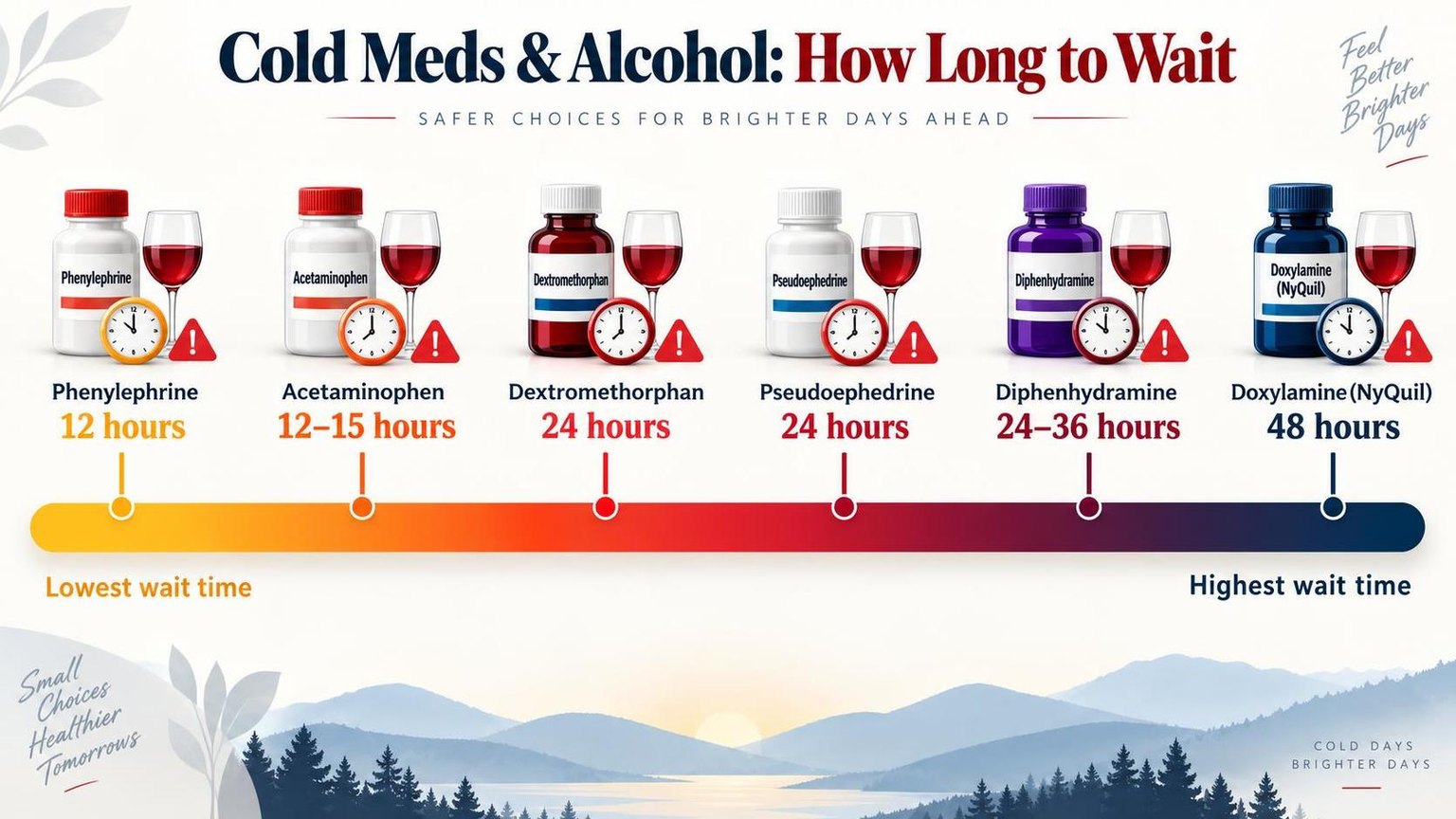
Each active ingredient in cold medicine has a different half-life, which determines how long it stays in your body. The safe window to drink alcohol depends on clearing approximately 4–5 half-lives of the specific compound from your system.
| Ingredient | Half-Life | Minimum Wait Before Alcohol | Primary Risk with Alcohol |
| Acetaminophen (Tylenol) | 2–3 hours | 12–15 hours | Liver toxicity, acute liver failure |
| Dextromethorphan (DXM) | 3–6 hours | 24 hours | Excess sedation, serotonin syndrome |
| Diphenhydramine (Benadryl) | 4–8 hours | 24–36 hours | Severe drowsiness, impaired motor function |
| Doxylamine (NyQuil sleep aid) | 10 hours | 48 hours | Extreme sedation, CNS depression |
| Pseudoephedrine (Sudafed) | 4.3–8 hours | 24 hours | Heart rate irregularities, elevated blood pressure |
| Phenylephrine | 2.5–3 hours | 12 hours | Cardiovascular strain |
| Guaifenesin (Mucinex) | 1–5 hours | 12 hours | Increased GI irritation, nausea |
| Chlorpheniramine | 12–15 hours | 48–72 hours | Amplified sedation, respiratory depression |
Why Acetaminophen Demands Extra Caution
Acetaminophen is metabolized by the liver enzyme CYP2E1. Alcohol uses the same enzyme. When both compete, a toxic metabolite called NAPQI accumulates and can cause irreversible liver damage.
The FDA warns against combining acetaminophen with alcohol. People who have three or more alcoholic drinks daily should consult a physician before taking any acetaminophen-containing product.
Antihistamines Carry the Longest Wait Windows
First-generation antihistamines like doxylamine and chlorpheniramine cross the blood-brain barrier readily. Their sedative effects compound with alcohol’s depressant action on the central nervous system.
Chlorpheniramine, found in Coricidin and some Alka-Seltzer Plus formulations, has one of the longest half-lives at 12–15 hours. A single dose can take up to 72 hours to fully clear.
Multi-Symptom Products Require the Longest Wait
Combination cold medicines like NyQuil contain acetaminophen, dextromethorphan, and doxylamine simultaneously. Your wait time defaults to the ingredient with the longest clearance period—typically 48 hours for doxylamine.
- Always check the Drug Facts label for every active ingredient listed.
- Extended-release formulations (e.g., Mucinex DM 12-hour) add 6–12 hours to standard wait times.
- Liver or kidney impairment slows clearance significantly—consult your pharmacist for adjusted timing.
Nighttime Formulas Need Longer Gaps
Nighttime cold medicines contain sedating antihistamines and higher doses of certain active ingredients that extend the required waiting period before alcohol consumption.
These formulations demand 24 hours or more of separation from alcohol due to compounding central nervous system depression.
What Makes Nighttime Formulas Different
Products like NyQuil, Tylenol PM, and Advil PM include first-generation antihistamines such as doxylamine succinate (6.25 mg per dose in NyQuil) or diphenhydramine (25–50 mg in Tylenol PM).
These drugs cross the blood-brain barrier readily and cause pronounced drowsiness.
Doxylamine has an elimination half-life of approximately 10 hours. Full clearance takes 4–5 half-lives, meaning the drug remains active in your system for roughly 40–50 hours.
Diphenhydramine has a shorter half-life of 4–8 hours but still requires 20–40 hours for elimination.
Recommended Waiting Periods by Formula Type
| Product | Key Sedating Ingredient | Half-Life | Minimum Wait Before Alcohol |
| NyQuil Liquid | Doxylamine succinate (6.25 mg) | ~10 hours | 24+ hours |
| Tylenol PM | Diphenhydramine (25 mg) | 4–8 hours | 24 hours |
| Advil PM | Diphenhydramine (38 mg) | 4–8 hours | 24 hours |
| NyQuil Severe | Doxylamine (6.25 mg) + acetaminophen (650 mg) | ~10 hours | 24–48 hours |
| ZzzQuil | Diphenhydramine (50 mg) | 4–8 hours | 24 hours |
Why the Risk Multiplies at Night
Combining sedating antihistamines with alcohol produces additive CNS depression.
A 2015 study in the Journal of Clinical Pharmacology found that doxylamine plus alcohol impaired psychomotor performance 2–3 times more than either substance alone.
NyQuil Liquid also contains 10% alcohol by volume — roughly equivalent to a glass of wine per standard 30 mL dose. This built-in alcohol content means impairment begins before any additional drinking occurs.
Specific Dangers to Monitor
- Respiratory depression — both alcohol and sedating antihistamines slow breathing rate independently
- Severe drowsiness leading to falls, especially in adults over 65
- Acetaminophen liver toxicity — NyQuil formulas contain 650 mg per dose, and alcohol accelerates hepatotoxic metabolite formation
- Impaired judgment compounding with alcohol-related disinhibition
Daytime formulas using non-sedating ingredients like phenylephrine require shorter gaps of 4–6 hours. Switching to a daytime product when you anticipate evening social drinking is the safer strategy.
Risks of Drinking Too Soon
Combining alcohol with cold medicine — even hours after your last dose — creates compounding effects that strain your liver and central nervous system.
The risks are not theoretical; emergency departments across the U.S. treat over 100,000 acetaminophen-related cases annually, many involving concurrent alcohol use.
Liver Damage from Acetaminophen and Alcohol
Acetaminophen (Tylenol, NyQuil) is processed by the enzyme CYP2E1 in the liver. Alcohol upregulates this same enzyme, increasing production of the toxic metabolite NAPQI by up to 3-fold.
The FDA warns against combining acetaminophen with alcohol. Chronic drinkers (3+ drinks daily) face hepatotoxicity risk at doses as low as 2,000 mg/day — half the standard 4,000 mg maximum.
Central Nervous System Depression
Sedating antihistamines like diphenhydramine (Benadryl) and doxylamine (found in NyQuil) amplify alcohol’s depressant effects. This combination impairs reaction time, coordination, and respiratory drive simultaneously.
| Cold Medicine Ingredient | Effect Alone | Effect Combined with Alcohol |
| Dextromethorphan (DXM) | Mild drowsiness, cough suppression | Severe dizziness, serotonin syndrome risk, respiratory depression |
| Diphenhydramine (25 mg) | Drowsiness, impaired coordination | 2–3× greater psychomotor impairment, extreme sedation |
| Phenylephrine / Pseudoephedrine | Elevated heart rate (5–15 bpm increase) | Irregular heartbeat, dangerous blood pressure fluctuations |
| Acetaminophen (500–1,000 mg) | Normal liver metabolism | Increased NAPQI production, elevated ALT/AST liver enzymes |
Specific Documented Risks
- Respiratory depression: Alcohol plus DXM can slow breathing to below 12 breaths per minute, the clinical threshold for respiratory depression.
- Gastrointestinal bleeding: NSAIDs like ibuprofen combined with alcohol increase GI bleeding risk by 6-fold according to research published in Archives of Internal Medicine.
- Impaired driving: A single 25 mg dose of diphenhydramine impairs driving more than a 0.10% BAC. Adding alcohol compounds this significantly.
- Overdose masking: Alcohol’s sedative effects can mask early overdose symptoms — nausea, confusion, abdominal pain — delaying critical medical intervention.
These interactions are dose-dependent but unpredictable. Individual factors — body weight, liver health, genetics, hydration status — shift the threshold for dangerous reactions considerably.
Safer Choices While Symptoms Last
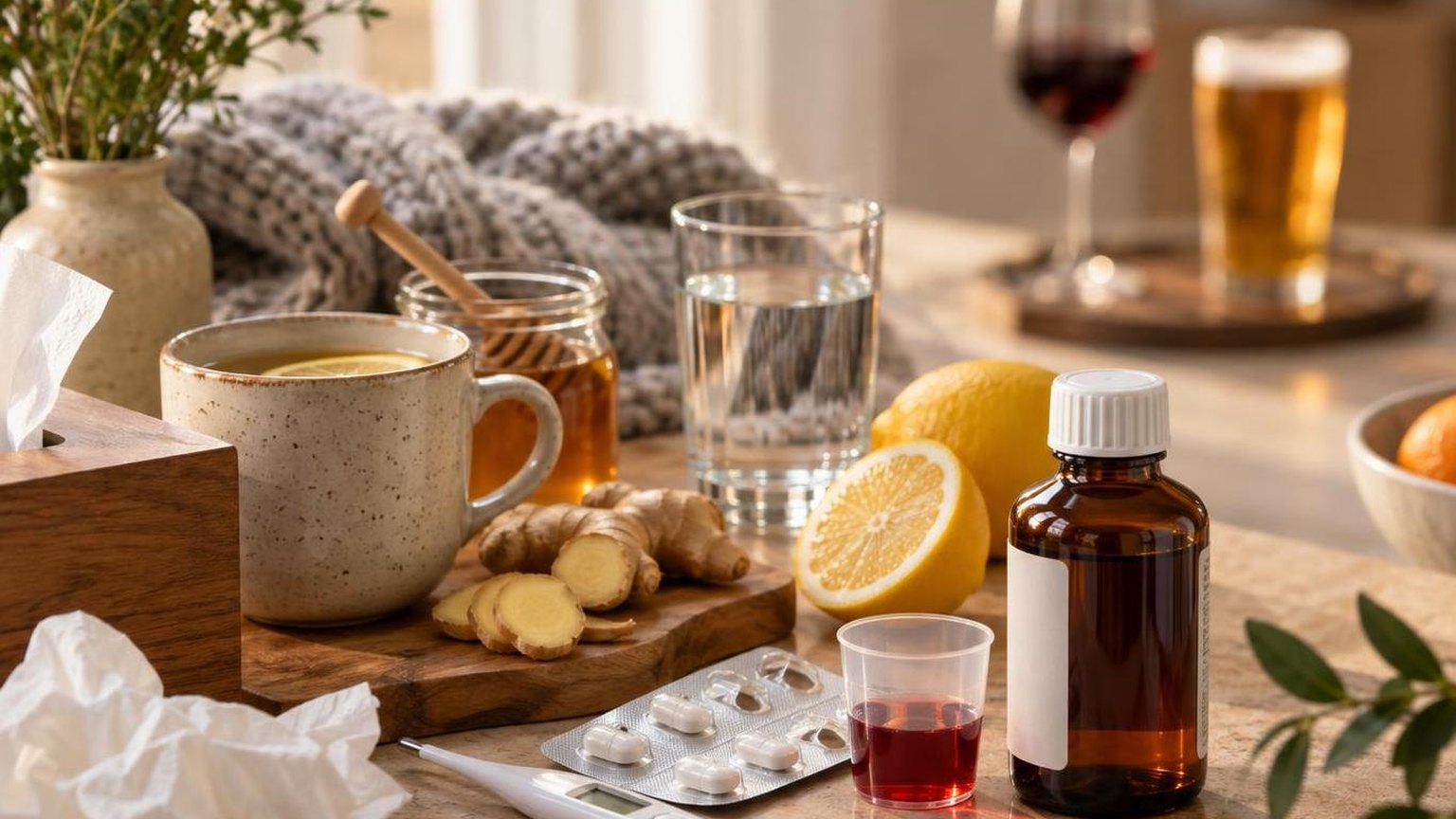
Managing cold symptoms without alcohol interference requires deliberate timing and alternative strategies. The safest approach combines non-interactive remedies with strict separation between any necessary medication and alcoholic drinks.
Non-Alcoholic Symptom Relief Options
Several evidence-backed remedies carry zero alcohol-interaction risk and can replace or supplement cold medicine during social situations.
- Honey: A 2020 BMJ Evidence-Based Medicine systematic review of 14 studies found honey reduced cough frequency and severity more effectively than usual care, including some over-the-counter options.
- Saline nasal irrigation: Rinsing with 0.9% sodium chloride solution reduces nasal congestion without any systemic drug effects.
- Steam inhalation: Breathing steam at 40–47 °C for 10–15 minutes loosens mucus and temporarily relieves sinus pressure.
- Hydration: Consuming 2.5–3.5 liters of fluid daily during illness thins secretions and supports immune function.
- Zinc lozenges: A 2017 meta-analysis in Open Forum Infectious Diseases found zinc acetate lozenges (≥75 mg/day) shortened cold duration by 33%.
Timing Framework If You Choose to Drink
Wait times depend on the specific active ingredient’s elimination half-life. A drug is considered substantially cleared after 4–5 half-lives.
| Active Ingredient | Half-Life | Minimum Wait Before Alcohol |
| Dextromethorphan (DXM) | 3–6 hours | 24 hours |
| Acetaminophen | 2–3 hours | 12–15 hours |
| Diphenhydramine | 4–8 hours | 24–40 hours |
| Pseudoephedrine | 5–8 hours | 24–40 hours |
| Phenylephrine | 2.5–3 hours | 12–15 hours |
| Chlorpheniramine | 12–15 hours | 48–72 hours |
These wait times assume standard adult dosing. Extended-release formulations require an additional 4–8 hours added to each estimate.
Practical Rules to Follow
- Read the Drug Facts label for every active ingredient — multi-symptom products often contain 3–4 compounds simultaneously.
- Use the longest half-life ingredient in a combination product to set your wait time.
- Limit intake to one standard drink (14 g pure alcohol) if you drink within 48 hours of your last dose.
- Avoid all alcohol if you have any liver condition, as acetaminophen-alcohol hepatotoxicity risk increases significantly even at therapeutic doses.
When in doubt, call the Poison Control helpline at 1-800-222-1222 for real-time guidance on specific drug-alcohol interactions.
When to Call a Clinician
Mixing cold medicine with alcohol can escalate from discomfort to a medical emergency within hours. Recognizing which symptoms demand professional intervention versus home monitoring may prevent organ damage, respiratory failure, or death.
Emergency Warning Signs (Call 911 Immediately)
Certain symptoms indicate life-threatening complications requiring immediate emergency care, not a phone call to your doctor’s office.
- Respiratory depression: Breathing rate below 12 breaths per minute (normal adult range is 12–20)
- Loss of consciousness or inability to be awakened
- Seizures of any duration
- Severe abdominal pain in the upper right quadrant, suggesting acute liver injury
- Vomiting blood or material resembling coffee grounds
- Heart rate exceeding 120 bpm or falling below 50 bpm at rest
- Blue or gray discoloration of lips, fingertips, or skin (cyanosis)
Urgent Same-Day Medical Evaluation
These symptoms warrant contacting your physician or visiting urgent care within hours, not days.
- Persistent vomiting lasting more than 2–3 hours
- Confusion, slurred speech, or extreme drowsiness disproportionate to the amount consumed
- Dark urine (cola-colored) or yellowing of eyes, indicating possible hepatotoxicity
- Chest pain or irregular heartbeat
- Severe dizziness preventing safe standing or walking
Risk Severity by Cold Medicine Ingredient
The urgency of seeking care varies by which active ingredient interacted with alcohol.
| Ingredient | Primary Risk with Alcohol | Seek Care If |
| Acetaminophen (APAP) | Hepatotoxicity | Ingested >3,000 mg APAP within 24 hours while drinking |
| Dextromethorphan (DXM) | Serotonin syndrome, CNS depression | Agitation, hyperthermia (>38.5 °C / 101.3 °F), muscle rigidity |
| Diphenhydramine | Severe sedation, cardiac arrhythmia | Heart rate >120 bpm or unresponsiveness |
| Pseudoephedrine | Hypertensive crisis | Blood pressure exceeds 180/120 mmHg |
| Chlorpheniramine | Excessive CNS depression | Breathing <12 breaths/min or extreme sedation |
What to Tell the Clinician
Provide the exact cold medicine brand, dosage taken, and time of last dose. State how many alcoholic drinks were consumed and over what timeframe.
The FDA’s Poison Help hotline (1-800-222-1222) offers 24/7 guidance from toxicology specialists. This service is free and available for situations that feel uncertain but not yet emergent.
Never induce vomiting unless explicitly directed by a medical professional. Aspiration of vomit during impaired consciousness is a leading cause of death in combined sedative-alcohol overdose situations.
Questions People Ask Most
How long should you wait after taking acetaminophen-based cold medicine to drink alcohol?
Wait at least 24 hours after your last dose of acetaminophen (Tylenol, NyQuil, DayQuil) before consuming alcohol.
Both substances are metabolized by the liver, and combining them increases the risk of acute liver damage — the FDA warns that taking more than 3,000 mg of acetaminophen per day with even moderate alcohol use can cause severe hepatotoxicity.
Can you drink alcohol while taking dextromethorphan (DXM) cough suppressants?
No. Alcohol amplifies the central nervous system depressant effects of dextromethorphan, found in products like Robitussin DM and Delsym, potentially causing extreme drowsiness, impaired motor control, and dangerous respiratory depression.
Wait at least 12 hours after your last DXM dose, or longer if you took an extended-release formulation that remains active for up to 12 hours per dose.
Is it safe to drink alcohol after taking cold medicines containing antihistamines like diphenhydramine or doxylamine?
Diphenhydramine (Benadryl) and doxylamine (found in NyQuil) are sedating antihistamines with half-lives of approximately 4–8 hours.
Wait at least 24 hours — roughly three to five half-lives — before drinking, because alcohol compounding their sedative effects can cause profound drowsiness, loss of coordination, and in severe cases, loss of consciousness.
Does pseudoephedrine or phenylephrine in decongestants interact with alcohol?
Pseudoephedrine and phenylephrine raise blood pressure and heart rate, while alcohol initially dilates blood vessels then triggers cardiovascular stress.
Combining them can cause dizziness, irregular heartbeat, and dangerous blood pressure fluctuations. Allow at least 12 hours after your last decongestant dose before consuming any alcoholic beverage.
What happens if you drink alcohol while still taking a multi-symptom cold medicine like NyQuil Severe?
NyQuil Severe contains acetaminophen (650 mg per dose), doxylamine, and dextromethorphan — three ingredients that each independently interact with alcohol.
Drinking while these compounds are active simultaneously risks liver failure from acetaminophen, severe CNS depression from doxylamine and DXM, and dangerously slowed breathing.
The safest approach is to wait a full 24 hours after your final dose before having any alcohol.
Keep Exploring
- Why Is Moscow Mule Served in a Copper Cup? 12 Powerful Reasons You Must Know
- How Many Liters Is 100 Oz?
- What Is Roscato?
- What Is Top Shelf Tequila?
- What Is Reposado Tequila?
- How To Start Your Own Tequila Brand?
- All Blog Guides
- National Institute on Alcohol Abuse and Alcoholism (2014)
- U.S. Food and Drug Administration (2023)
- National Institute on Drug Abuse (2020)
- MedlinePlus – U.S. National Library of Medicine (2023)
- Weathermon R, Crabb DW. Alcohol and Medication Interactions. Alcohol Research & Health. 23(1):40-54 (1999)
- Cleveland Clinic (2022)
- Mayo Clinic (2023)