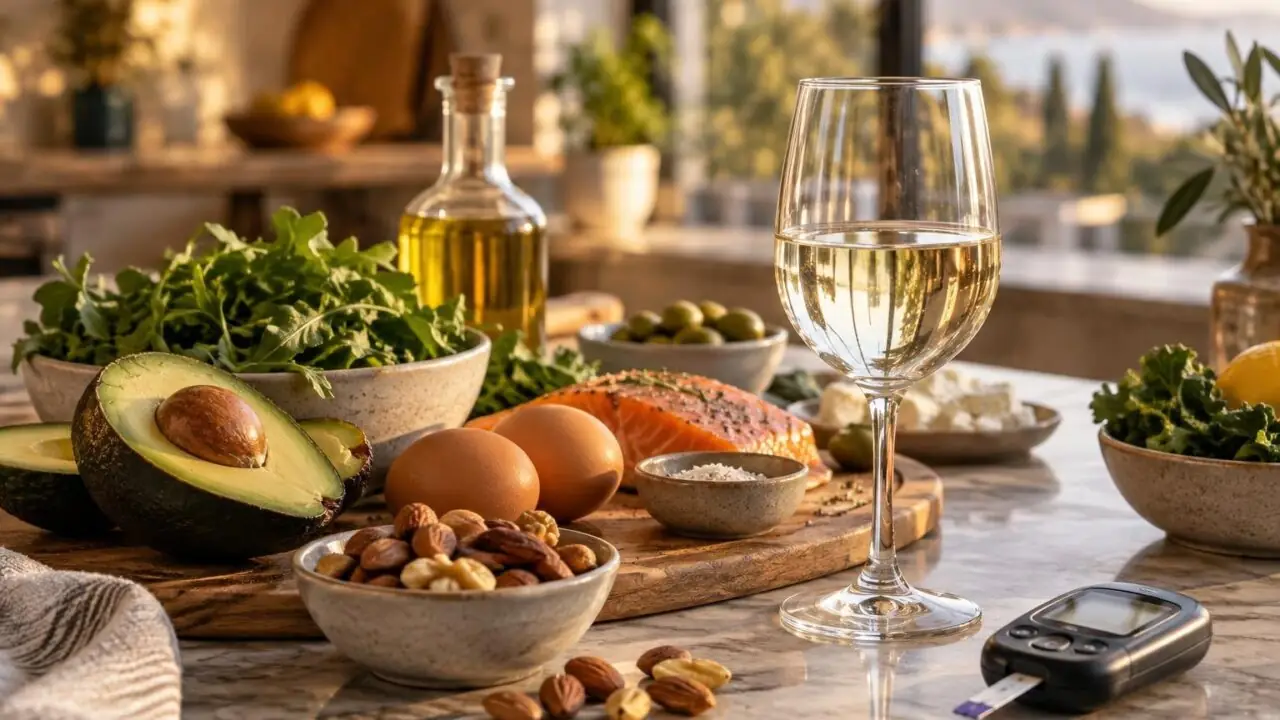
How Long to Get Back into Ketosis After Drinking Alcohol? is typically 24–72 hours for keto-adapted adults after a single drinking episode, assuming carbs stay near 20–50 grams daily and normal eating resumes.
Alcohol pauses fat burning because the liver prioritizes ethanol metabolism before producing ketones. Dry wine or spirits disrupt ketosis less than beer, sweet cocktails, or liqueurs because sugar and starch refill glycogen faster.
Your return depends on alcohol dose, drink carbs, fasting window, activity, sleep, and prior keto consistency. Testing blood beta-hydroxybutyrate gives the clearest answer; nutritional ketosis usually starts at 0.5 mmol/L.
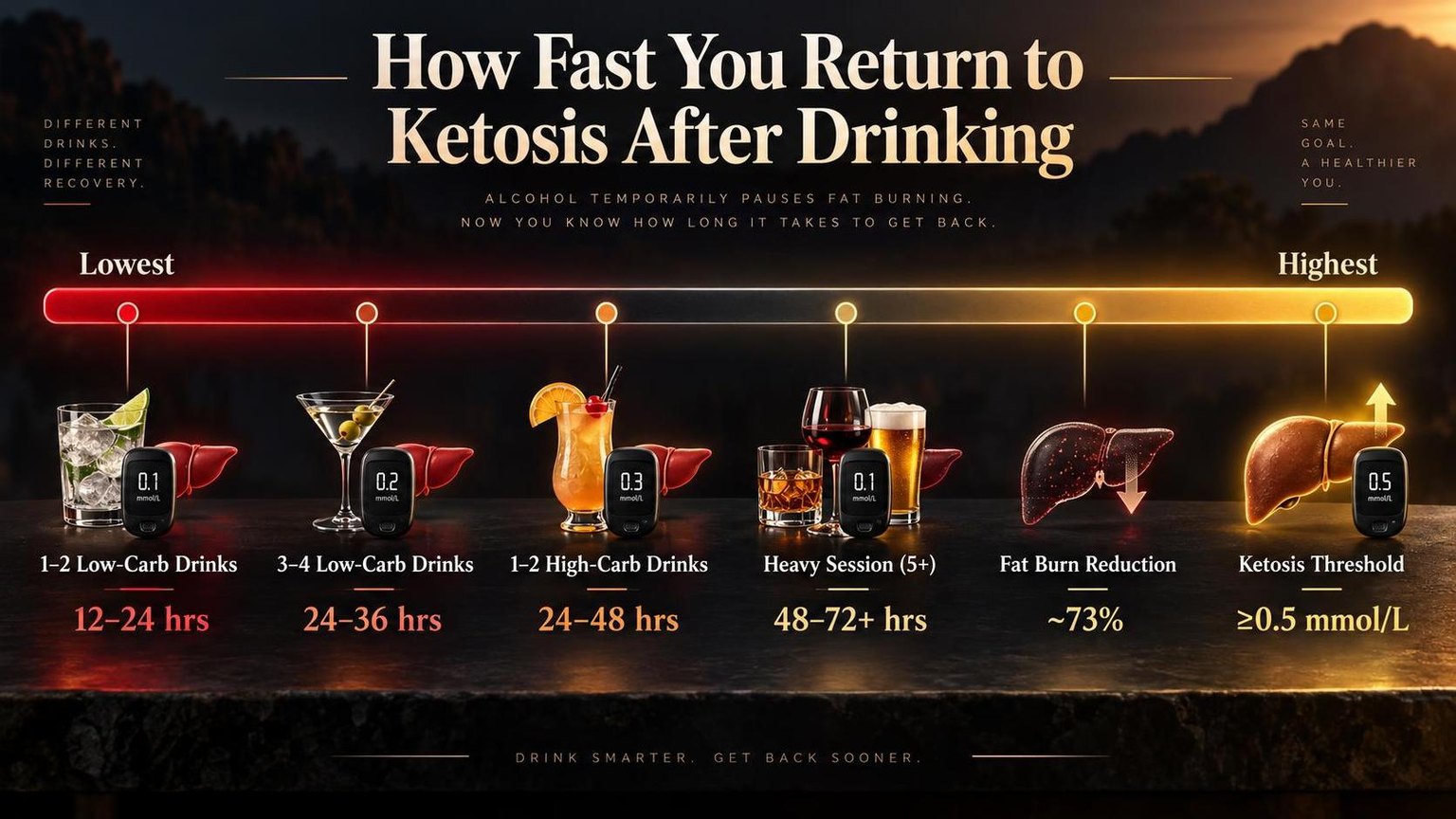
Typical Ketosis Return Timeline After Alcohol
Returning to ketosis after drinking alcohol typically takes 12 to 72 hours, depending on the type and quantity consumed.
The liver must fully metabolize all ethanol before resuming significant ketone production, creating a measurable delay that scales with intake.
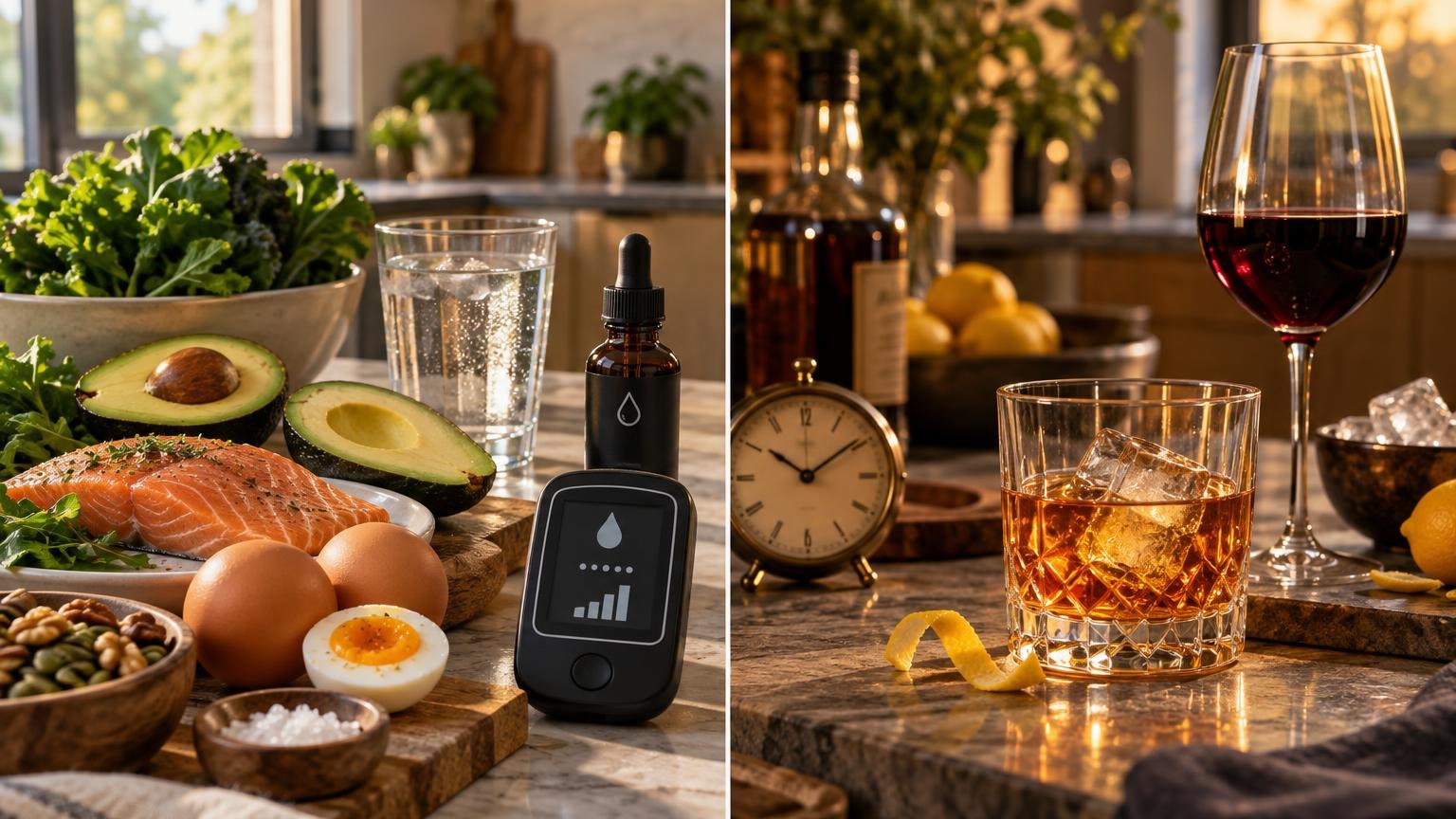
Timeline by Drinking Scenario
The following table outlines estimated return-to-ketosis windows based on common drinking scenarios for someone already fat-adapted.
| Scenario | Example | Estimated Return to Ketosis |
| 1–2 low-carb drinks | 2 glasses dry wine or 2 oz spirits | 12–24 hours |
| 3–4 low-carb drinks | 4 glasses dry wine | 24–36 hours |
| 1–2 high-carb drinks | 2 regular beers or cocktails with mixers | 24–48 hours |
| Heavy drinking session (5+ drinks) | 5+ mixed cocktails or beers | 48–72+ hours |
Why the Delay Occurs
The liver metabolizes ethanol at a fixed rate of roughly 0.015 g/dL blood alcohol concentration per hour, equivalent to about one standard drink every 60–90 minutes.
During this process, the liver prioritizes alcohol over all other metabolic tasks.
Ethanol metabolism produces acetaldehyde, then acetate. Acetate suppresses lipolysis—the breakdown of stored fat—which directly cuts off the substrate supply for ketone body production in hepatic mitochondria.
A 2013 study in the American Journal of Clinical Nutrition found that even moderate alcohol intake reduced whole-body lipid oxidation by approximately 73%. Fat burning essentially halts until the liver clears all ethanol-derived metabolites.
Factors That Shorten or Extend the Timeline
- Prior fat-adaptation: Individuals who have maintained ketosis for 4+ weeks typically return faster than newcomers because their enzymatic pathways for beta-oxidation are upregulated.
- Carbohydrate content of drinks: A standard beer contains 12–15 g carbs; a margarita can exceed 30 g. These carbs trigger insulin, independently delaying ketosis beyond the alcohol effect alone.
- Food consumed while drinking: Pairing alcohol with high-carb snacks like chips or bread compounds glycogen replenishment and extends the timeline by an additional 12–24 hours.
- Physical activity the next day: Moderate exercise depletes liver glycogen faster. A 45-minute brisk walk can accelerate the return by several hours by increasing fatty acid mobilization.
- Individual metabolism: Body weight, liver enzyme activity (alcohol dehydrogenase levels), sex, and age all affect clearance rates. Women generally metabolize alcohol 20–30% slower than men of equivalent weight.
How to Verify You’re Back in Ketosis
Blood ketone meters measuring beta-hydroxybutyrate (BHB) provide the most accurate confirmation. A reading of 0.5 mmol/L or above indicates nutritional ketosis has resumed.
Urine strips are less reliable post-alcohol because dehydration skews results.
Tracking with a blood meter after drinking reveals a consistent pattern: BHB drops below 0.2 mmol/L within hours of consuming alcohol and climbs back above 0.5 mmol/L only after the liver fully clears ethanol and resumes fatty acid oxidation.

Why Alcohol Pauses Ketone Production
Your liver cannot multitask when alcohol enters the bloodstream. It prioritizes ethanol metabolism above all other substrates, including fatty acids—the very fuel source that drives ketone body synthesis.
Ethanol is classified as a toxin by the body. The liver converts it first to acetaldehyde via alcohol dehydrogenase (ADH), then to acetate via aldehyde dehydrogenase (ALDH).
Both reactions consume NAD⁺, a coenzyme essential for beta-oxidation of fatty acids.
A single standard drink (14 g of ethanol) requires roughly 1–2 hours of dedicated hepatic processing. During that window, fatty acid oxidation drops sharply because available NAD⁺ is diverted to alcohol metabolism.
The Metabolic Bottleneck
Beta-oxidation of fatty acids generates acetyl-CoA, which the liver normally converts into the three ketone bodies: acetoacetate, beta-hydroxybutyrate (BHB), and acetone. Alcohol disrupts this at multiple points.
- NAD⁺ depletion: Ethanol metabolism shifts the liver’s NAD⁺/NADH ratio by up to 3-fold, starving beta-oxidation of its required cofactor.
- Acetyl-CoA diversion: Acetate derived from alcohol is converted to acetyl-CoA, but this acetyl-CoA enters the citric acid cycle or lipogenesis rather than ketogenesis.
- Malonyl-CoA elevation: Excess acetyl-CoA raises malonyl-CoA levels, which inhibits carnitine palmitoyltransferase I (CPT-I)—the enzyme that shuttles long-chain fatty acids into mitochondria for oxidation.
- Insulin response: Alcohol can transiently suppress hepatic glucose output while certain mixers trigger insulin secretion, further suppressing lipolysis in adipose tissue.
Ketone Levels Before vs. After Alcohol
Research and clinical measurements show a measurable BHB drop within 30–45 minutes of consuming alcohol. The magnitude depends on the amount consumed.
| Scenario | Blood BHB Before | Blood BHB 2–4 Hours After |
| 1 standard drink (14 g ethanol) | 1.5–3.0 mmol/L | 0.5–1.2 mmol/L |
| 2–3 standard drinks (28–42 g ethanol) | 1.5–3.0 mmol/L | 0.1–0.5 mmol/L |
| 4+ standard drinks (56+ g ethanol) | 1.5–3.0 mmol/L | < 0.1 mmol/L |
At blood BHB below 0.5 mmol/L, the body is functionally out of nutritional ketosis by most accepted thresholds.
The Liver’s Processing Queue
The average adult liver metabolizes ethanol at approximately 7–10 g per hour. A person consuming three drinks (42 g ethanol) occupies the liver’s detox pathway for 4–6 hours minimum.
During every minute of that processing window, ketogenesis remains suppressed or completely halted. Fat is not being burned for ketone production—it is being stored or rerouted.
This is why the total alcohol dose, not the carbohydrate content of the drink, is the primary factor determining how long ketosis stalls. Even zero-carb spirits pause ketone output through this direct hepatic mechanism.

Drinks That Delay Ketosis Longest
Not all alcoholic drinks disrupt ketosis equally.
Sugary cocktails and beer deliver both ethanol and carbohydrates, forcing your liver to process alcohol first while simultaneously spiking insulin—a double mechanism that can delay ketone production by 48 hours or more.
Carb and Calorie Comparison by Drink Type
The following table ranks common alcoholic drinks by total carbohydrate content per standard serving, the primary driver of prolonged ketosis disruption.
| Drink | Serving Size | Carbs (g) | Calories | Est. Ketosis Delay |
| Margarita (classic) | 8 oz | 33–36 g | 280–310 | 36–72 hours |
| Piña Colada | 9 oz | 43–50 g | 490–550 | 48–72+ hours |
| Long Island Iced Tea | 8 oz | 24–33 g | 290–350 | 36–60 hours |
| Regular beer (lager) | 12 oz | 12–14 g | 150–180 | 24–48 hours |
| IPA / craft beer | 12 oz | 15–25 g | 200–300 | 24–48 hours |
| Sweet wine (Moscato, Riesling) | 5 oz | 8–14 g | 130–165 | 18–36 hours |
| Hard cider | 12 oz | 15–25 g | 180–220 | 24–48 hours |
| Whiskey sour | 4 oz | 10–14 g | 165–200 | 18–36 hours |
Why Cocktails Are the Worst Offenders
Blended cocktails combine spirits with fruit juice, simple syrup, and liqueurs. A single piña colada can contain 43–50 g of carbs—exceeding the typical keto daily limit of 20–50 g in one glass.
The sugar triggers an insulin spike that actively suppresses lipolysis, the fat-breakdown process required to generate ketone bodies. Alcohol metabolism simultaneously occupies the liver, compounding the delay.
Beer: A Commonly Underestimated Problem
Standard lagers carry 12–14 g of carbs per 12 oz serving. Drinking three beers adds 36–42 g of carbs plus roughly 462–540 calories, enough to halt ketosis for one to two full days.
Craft IPAs and stouts are worse. Many contain 20–25 g of carbs per pint due to residual malt sugars that remain after fermentation.
Factors That Extend the Delay Further
- Multiple servings: Each additional drink adds roughly 12–24 hours of delay depending on carb content.
- Mixers: Tonic water adds 22 g of sugar per 8 oz; regular cola adds 26 g per 8 oz. These alone can exceed keto carb limits.
- Liqueurs: Baileys Irish Cream contains 11 g of carbs per 1.5 oz pour. Kahlúa packs 22 g per 1.5 oz.
- Late-night eating: Alcohol lowers inhibition, increasing the likelihood of high-carb snacking that stacks additional glucose on top of the ethanol load.
The pattern is clear: the higher the combined carbohydrate and ethanol load, the longer your liver takes to clear both substrates and resume fatty acid oxidation for ketone production.

How to Re Enter Ketosis Faster
Returning to ketosis after alcohol consumption requires deliberate metabolic strategies.
The liver must fully clear acetate and acetaldehyde before resuming ketone production, but specific interventions can compress that timeline from 72+ hours to as little as 24–36 hours.
Immediate Post-Drinking Protocol (First 12 Hours)
Stop all carbohydrate intake immediately. Alcohol already spiked insulin and halted fat oxidation—adding carbs extends the metabolic disruption significantly.
Hydrate aggressively with electrolytes. Alcohol inhibits antidiuretic hormone (ADH), causing losses of sodium, potassium, and magnesium.
Aim for 2–3 liters of water with 1,000–2,000 mg sodium, 300–400 mg magnesium, and 1,000 mg potassium within the first 12 hours.
Fasting as an Accelerator
A 16–24 hour fast after your last drink depletes liver glycogen rapidly.
Research published in the American Journal of Clinical Nutrition shows liver glycogen stores drop by approximately 80% after an 18-hour fast, forcing the body to upregulate ketogenesis.
Extended fasting beyond 24 hours yields diminishing returns for most people and may worsen dehydration already caused by alcohol. A targeted 18–20 hour window hits the optimal balance.
Exercise to Deplete Glycogen
Moderate-intensity exercise (60–70% max heart rate) for 30–45 minutes accelerates glycogen depletion.
A 2015 study in Metabolism demonstrated that a single glycogen-depleting exercise session reduced time to measurable ketosis by roughly 33%.
| Strategy | Estimated Time Saved | Difficulty Level |
| Strict carb restriction (<20 g/day) | 12–24 hours | Moderate |
| 18–24 hour fast | 18–30 hours | Moderate–High |
| Glycogen-depleting exercise | 8–16 hours | High |
| MCT oil supplementation (15–30 g) | 4–8 hours | Low |
| Combined approach (all four) | 36–48 hours | High |
MCT Oil and Exogenous Ketones
Medium-chain triglycerides bypass normal digestion and convert to ketones in the liver within 30–60 minutes.
Taking 15–30 grams of C8 caprylic acid MCT oil can elevate blood beta-hydroxybutyrate (BHB) to 0.5–1.0 mmol/L even before full endogenous ketosis resumes.
Exogenous ketone salts or esters raise BHB levels temporarily but do not restart hepatic ketogenesis. They bridge the gap while your liver clears alcohol metabolites.
What to Eat When You Resume
- High-fat, zero-carb foods first: eggs, avocado, butter, fatty fish
- Keep protein moderate at 0.8–1.0 g per pound of lean body mass to avoid excess gluconeogenesis
- Restrict total carbohydrates to under 20 grams for the first 48 hours
- Include fermented foods like sauerkraut or kimchi to support gut microbiome recovery after alcohol exposure
Verify re-entry with a blood ketone meter. A reading of 0.5 mmol/L BHB or higher confirms nutritional ketosis has resumed. Urine strips lack the precision needed to confirm this transition reliably.

When to Test Ketones After Drinking
Testing ketones too early after alcohol consumption produces misleading results.
Your liver prioritizes ethanol metabolism over ketone production, so readings taken within the first 12 hours often show artificially suppressed levels that don’t reflect your true metabolic trajectory.
Why Timing Matters for Accurate Readings
Alcohol metabolism generates acetate, which blood ketone meters can partially cross-react with. Breath analyzers are even more problematic—residual acetaldehyde inflates readings by up to 0.5 mmol/L above actual beta-hydroxybutyrate levels.
Blood ketone meters measuring beta-hydroxybutyrate (BHB) remain the most reliable method. Urine strips lag 2–4 hours behind blood levels and show what your body excreted, not current ketosis status.
Recommended Testing Schedule After Drinking
| Time After Last Drink | Test Method | Reliability | Expected BHB Reading |
| 0–6 hours | Any | Very low | 0.1–0.2 mmol/L (suppressed) |
| 6–12 hours | Blood meter | Moderate | 0.2–0.5 mmol/L (recovering) |
| 12–18 hours | Blood meter | High | 0.3–0.8 mmol/L (rising) |
| 18–24 hours | Blood or breath | High | 0.5–1.5 mmol/L (approaching baseline) |
| 24–48 hours | Any method | Very high | 0.5–3.0 mmol/L (restored range) |
Nutritional ketosis is generally defined as blood BHB between 0.5 and 3.0 mmol/L. Readings below 0.5 mmol/L indicate you have not yet re-entered ketosis.
Best Practices for Post-Alcohol Ketone Testing
- Wait at least 12 hours after your last drink before taking your first meaningful blood ketone measurement.
- Test fasted in the morning—ketone levels peak after an overnight fast, giving the clearest snapshot of metabolic status.
- Avoid breath analyzers for 18–24 hours post-drinking, as residual alcohol metabolites produce false-high acetone readings.
- Take two readings 6 hours apart to confirm an upward trend rather than relying on a single data point.
- Discard urine strip results from the first 24 hours—they reflect delayed excretion, not real-time blood ketone levels.
What Your First Reliable Reading Tells You
A blood BHB reading of 0.3–0.5 mmol/L at the 12-hour mark suggests your liver has cleared the alcohol and resumed fatty acid oxidation. Full ketosis typically follows within another 12–24 hours.
If your 24-hour reading remains below 0.3 mmol/L, the alcohol likely triggered significant glycogen replenishment.
This happens especially with beer, cocktails, or sugary mixers that add 15–40 g of carbohydrates per serving on top of the ethanol load.
Consistent readings above 0.5 mmol/L on two consecutive tests confirm you’ve re-entered nutritional ketosis.
At that point, resume your normal testing frequency—most practitioners recommend once daily, first thing in the morning before eating.
Common Questions
How many hours does it take to re-enter ketosis after one or two drinks?
A single serving of a low-carb spirit (vodka, tequila, whiskey) typically delays ketosis by 12–16 hours because the liver prioritizes ethanol metabolism over ketone production.
Two drinks can extend that window to 18–24 hours, depending on body weight, metabolic rate, and whether food was consumed alongside the alcohol.
Does the type of alcoholic drink affect how quickly you return to ketosis?
Yes—dramatically. A 1.5 oz shot of plain vodka contains 0 g carbs and roughly 97 calories, so the disruption is limited to the liver processing ethanol itself.
A 12 oz regular beer (≈13 g carbs) or a sweetened cocktail (20–40 g carbs) adds a glycemic load on top of the ethanol burden, potentially pushing re-entry to 48–72 hours.
Why does alcohol knock you out of ketosis even if the drink has zero carbs?
The liver treats ethanol as a toxin and prioritizes converting it to acetate over producing ketone bodies from fatty acids.
While acetate is being cleared—at a fixed rate of roughly one standard drink per hour—fat oxidation and ketogenesis are suppressed. This metabolic “pause” occurs regardless of the carbohydrate content of the beverage.
Can fasting or exercise speed up the return to ketosis after drinking?
Moderate-intensity exercise (brisk walking, cycling at 50–60% VO₂ max) accelerates glycogen depletion and can shorten the timeline by several hours.
Combining a 16–18 hour intermittent fast with light activity the morning after drinking helps restore measurable blood ketone levels (≥0.5 mmol/L) roughly 20–30% faster than passive recovery alone.
Based on self-reported ketone meter data from low-carb communities.
How can you verify you are back in ketosis after consuming alcohol?
Blood ketone meters measuring beta-hydroxybutyrate (BHB) are the most accurate tool; a reading of 0.5 mmol/L or above confirms nutritional ketosis.
Urine strips detect acetoacetate and can show a positive result, but they become less reliable in long-term keto-adapted individuals.
Testing first thing in the morning, at least 12 hours after your last drink, gives the most consistent baseline reading.
Related Reading
- Is Don Julio 1942 Tequila Available At Costco?
- Find the Right Hotel Ice Machine: Comparing the 3 Types
- How Many Pounds Is 10 Stone?
- What To Mix With Spiced Rum?
- How Much Caffeine Is In A Pink Drink? Get the Answer
- How Many Grams Are In A Half Ounce? Half Ounce to Grams – 2026
- How Many Ml Is 4 Oz?
- How Much Caffeine In A Teaspoon Of Instant Coffee?
- What Type Of Beer Is Budweiser?
- All Blog Guides
- National Institute on Alcohol Abuse and Alcoholism (2023)
- Krebs HA – Advances in Enzyme Regulation, PubMed (1968)
- Shelmet JJ et al. – Journal of Clinical Investigation, PubMed (1988)
- USDA FoodData Central – Ethyl Alcohol Nutrient Data (2024)
- Harvard T.H. Chan School of Public Health – Alcohol: Balancing Risks and Benefits (2023)
- Volek JS & Phinney SD – The Art and Science of Low Carbohydrate Living, Virta Health Blog (2023)
- Dashti HM et al. – Experimental & Clinical Cardiology, PMC (2004)