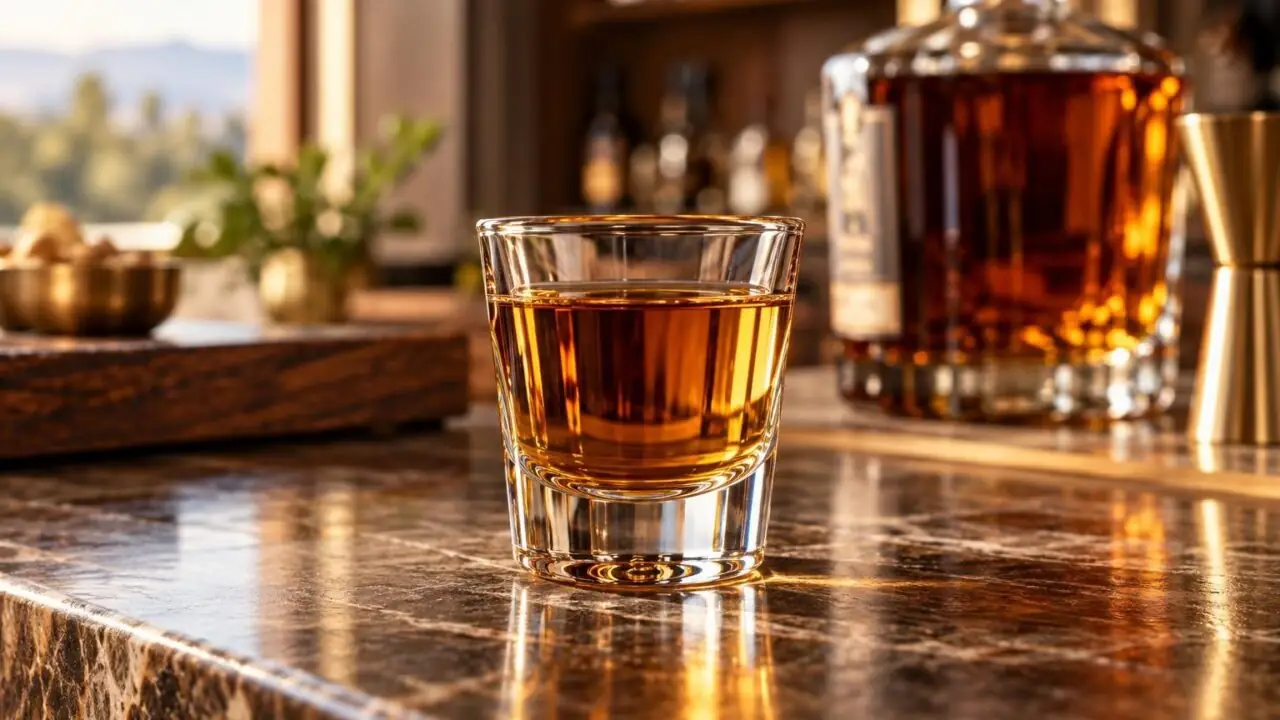
What Is Reposado Tequila is a rested style of tequila aged in oak for at least 2 months and less than 1 year under Mexican tequila regulations.
That time in wood gives it a pale gold color and flavors such as vanilla, cooked agave, light spice, caramel, and toasted oak.
Reposado sits between bright, unaged blanco and richer añejo, making it one of the most versatile tequila categories for sipping or mixing.
Quality examples keep agave at the center while adding barrel softness, which is why bartenders often choose reposado for Margaritas, Palomas, and spirit-forward tequila cocktails.
Reposado Aging Time Requirements
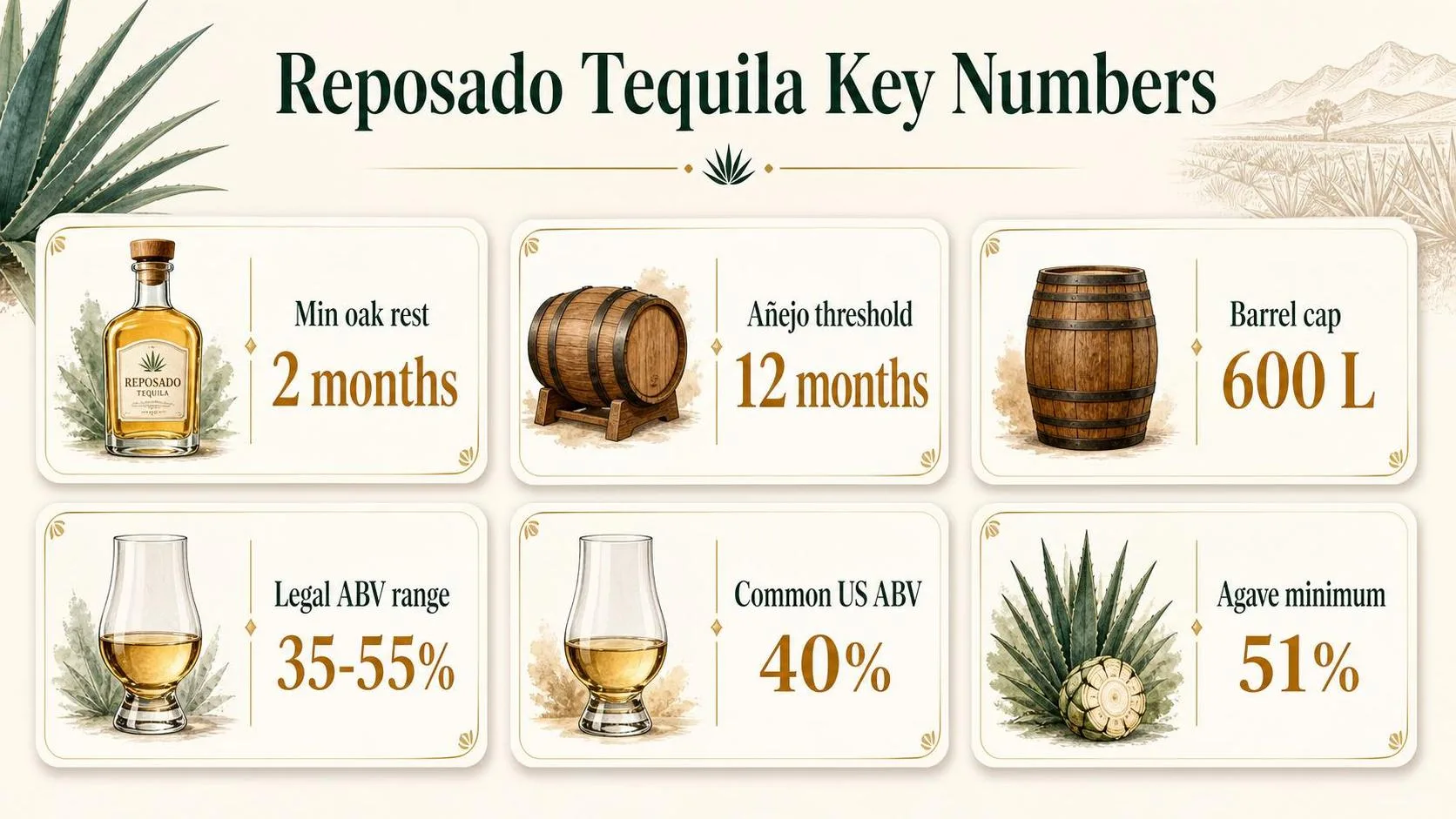
Reposado tequila is defined by time: it must rest in oak for at least 2 months and less than 12 months before bottling.
That aging window is set in Mexico’s official tequila standard, NOM-006-SCFI-2012, which governs production, labeling, and categories.
Those numbers matter because reposado sits between bright, unaged blanco and deeper, longer-aged añejo.
In practice, it keeps cooked agave at the center while adding measurable oak influence: vanilla, baking spice, light caramel, coconut, or toasted wood.
| Tequila category | Minimum oak aging | Maximum / next threshold | Typical profile impact |
| Blanco / plata | 0 months | May be bottled shortly after distillation; if rested, usually under 2 months | Agave, citrus, pepper, herbal notes |
| Reposado | 2 months | Less than 12 months | Agave plus light oak, vanilla, spice, gentle sweetness |
| Añejo | 12 months | Less than 36 months | More pronounced oak, caramel, dried fruit, baking spice |
| Extra añejo | 36 months | No upper legal limit stated for the category | Deep oak, cocoa, leather, concentrated spice |
The oak vessel itself is regulated, too. For reposado, añejo, and extra añejo tequila, NOM-006 requires maturation in direct contact with oak or encino wood. For añejo and extra añejo, container capacity is capped at 600 liters.
That 600-liter limit is important because smaller vessels create more wood contact per liter than giant tanks.
More contact generally means faster extraction of color, tannin, spice, and vanillin, although barrel history and warehouse conditions also matter.
| Number | What it means for reposado |
| 2 months | Legal minimum time in oak before a tequila can be labeled reposado. |
| 12 months | Once aging reaches 12 months, the tequila moves into añejo territory, not reposado. |
| 35% ABV | Minimum alcoholic strength allowed for tequila under the Mexican standard. |
| 55% ABV | Maximum alcoholic strength allowed for tequila under the Mexican standard. |
| 40% ABV | Common U.S. bottling strength for many reposado tequilas, equal to 80 proof. |
Most reposado sold in the United States is bottled around 40% alcohol by volume, but the legal tequila range is broader: 35% to 55% ABV under NOM-006. Export markets can also impose their own minimums.
Another number to watch is 100% agave. If the label says “100% de agave” or “100% agave,” all fermentable sugars must come from Blue Weber agave. If not, it may be “tequila” made with at least 51% agave sugars.
What Shapes Reposado Flavor
Reposado tequila changes dramatically based on the agave, distillation choices, barrel type, and exact time in wood.
By law, reposado must rest in oak for at least 2 months and less than 1 year, according to Mexico’s Norma Oficial Mexicana for tequila.
The most important variables are not abstract tasting-room language. They are measurable production decisions that affect sweetness, spice, color, alcohol warmth, and how much cooked agave remains in the glass.
| Factor | Common range or rule | Effect in reposado |
| Barrel aging time | 2 to under 12 months | Longer aging usually adds more vanilla, toast, oak spice, and amber color. |
| Barrel size | Maximum 600 liters for reposado under NOM rules | Smaller barrels create more wood contact and faster extraction. |
| Alcohol by volume | 35% to 55% ABV permitted for tequila | Higher proof can show more pepper, heat, and concentrated agave character. |
| Agave maturity | Often harvested around 5 to 8 years | Riper agave tends to give richer cooked-agave sweetness and fuller texture. |
Agave and cooking method
Reposado still begins with Blue Weber agave, not the barrel. Agave grown in Jalisco’s Highlands often tastes brighter, fruitier, and more floral, while Lowland agave is frequently earthier, herbal, and mineral-driven.
Cooking also matters. Traditional brick ovens usually cook piñas slowly, often for 24 to 48 hours, encouraging caramelized agave flavors. Autoclaves work faster and can produce cleaner, sharper profiles when carefully managed.
Fermentation and distillation
Fermentation affects aroma before oak is involved. Open-air fermentation, fibers in the tank, yeast selection, and fermentation length can influence citrus, tropical fruit, lactic, peppery, or earthy notes.
Most tequila is distilled twice, commonly in copper pot stills, stainless steel stills, or a combination. Copper can help reduce sulfur compounds, while stainless steel may preserve a more neutral, precise distillate character.
Barrels and additives
Many reposados age in used American oak barrels, including ex-bourbon casks. These often bring vanilla, coconut, caramel, baking spice, and toasted oak without overwhelming the agave as heavily as extended añejo aging can.
Mexican tequila regulations allow certain additives within limits, including caramel color, oak extract, glycerin, and sugar-based syrup, provided they do not exceed 1% by volume. These can change color, sweetness, texture, and perceived smoothness.
- Fresh, agave-forward reposado: shorter rest, older barrels, higher agave clarity, lighter color.
- Rich, dessert-like reposado: newer or more active oak, more extraction, possible sweetness or glycerin influence.
- Spicy, structured reposado: higher proof, assertive distillation cut, noticeable oak tannin.
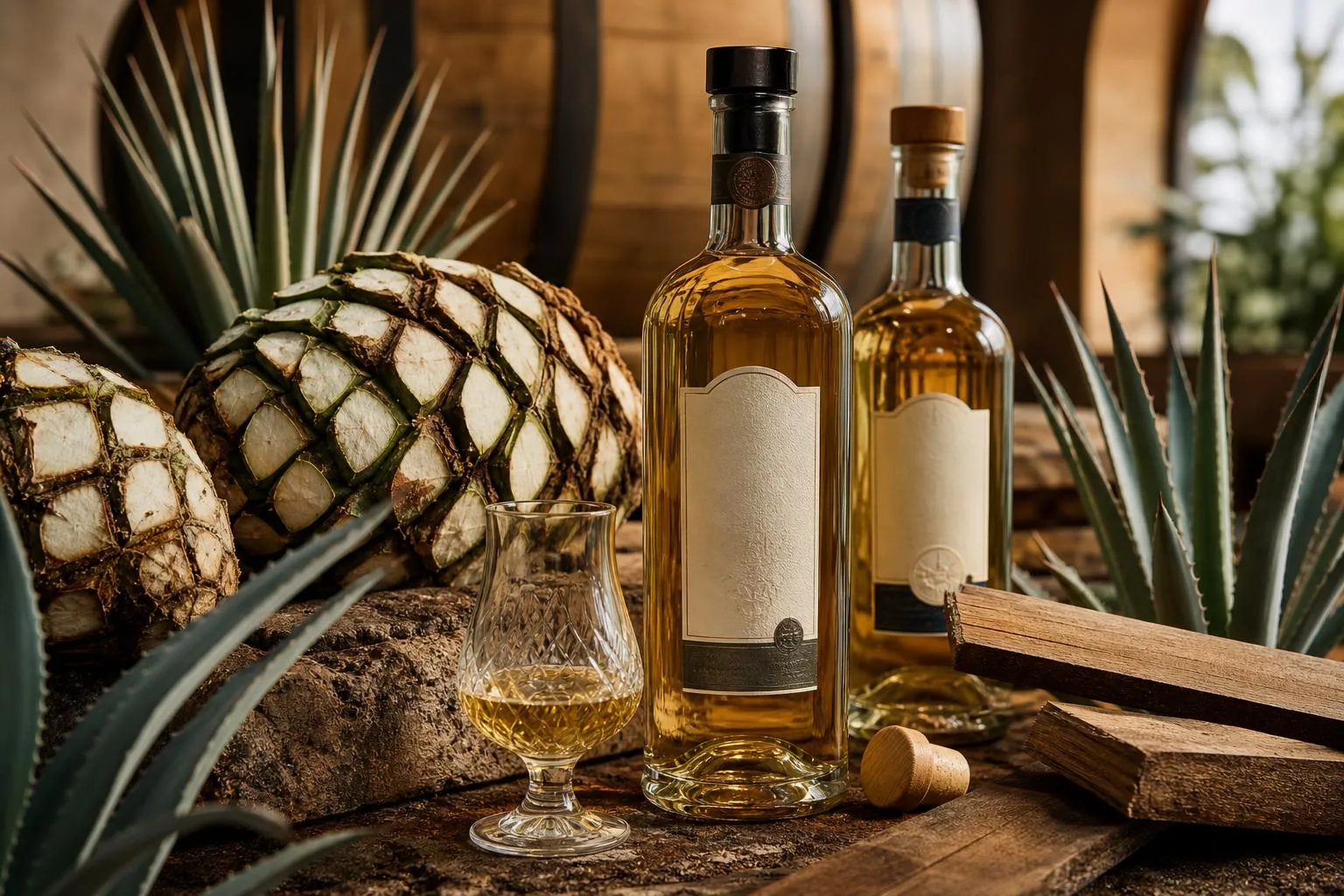
Reposado Is Defined by Aging
Reposado tequila is not defined by color or flavor. It is measured by documented time in wood, legal alcohol strength, approved production records, and verification by Mexico’s tequila regulator.
Under NOM-006-SCFI-2012, the Mexican standard for tequila, reposado must rest for at least 2 months in direct contact with oak or holm oak. The clock starts after distillation, once the tequila enters the wooden vessel.
| Verification point | Reposado requirement | Who checks it |
| Minimum aging time | At least 2 months in oak or holm oak | Consejo Regulador del Tequila, or CRT |
| Alcohol strength in Mexico | 35% to 55% ABV under NOM-006-SCFI-2012 | CRT laboratory and certification review |
| Alcohol strength in the United States | Generally bottled at no less than 40% ABV for U.S. tequila labeling | TTB label approval and import compliance |
| Agave source | Blue Weber agave from the protected tequila region | CRT field and production records |
| Tequila category | Either “100% agave” or “tequila” with at least 51% agave sugars | CRT and producer documentation |
The CRT verifies reposado status through production logs, tank and barrel records, inspections, and laboratory analysis. A producer cannot simply add caramel color and call a spirit reposado; the required wood-resting period must be documented.
On a bottle, the most useful verification mark is the NOM number. “NOM” identifies the authorized distillery, not the brand owner. For example, multiple brands may share one NOM because they are made at the same certified facility.
- Look for “Reposado” on the front or back label.
- Find the NOM number, usually printed as “NOM” followed by 4 digits.
- Check the category: “100% de agave” means all fermentable sugars came from blue agave.
- Check ABV: U.S. bottles are commonly 40% ABV, while Mexican-market bottles may be 35% to 38% ABV.
- Confirm origin: tequila must be produced in authorized areas, primarily Jalisco, plus specified municipalities in Guanajuato, Michoacán, Nayarit, and Tamaulipas.
In bar purchasing, I treat the NOM and category statement as the first quality-control check. If a bottle says reposado but lacks a clear NOM, agave category, or compliant origin statement, it is not something I would present as verified tequila.
Reposado may vary widely in color because barrel history, toast level, oxygen exposure, and batch size differ.
The legal measurement, however, remains simple: certified tequila, aged in approved wood for a minimum of 2 months, and bottled within permitted strength rules.
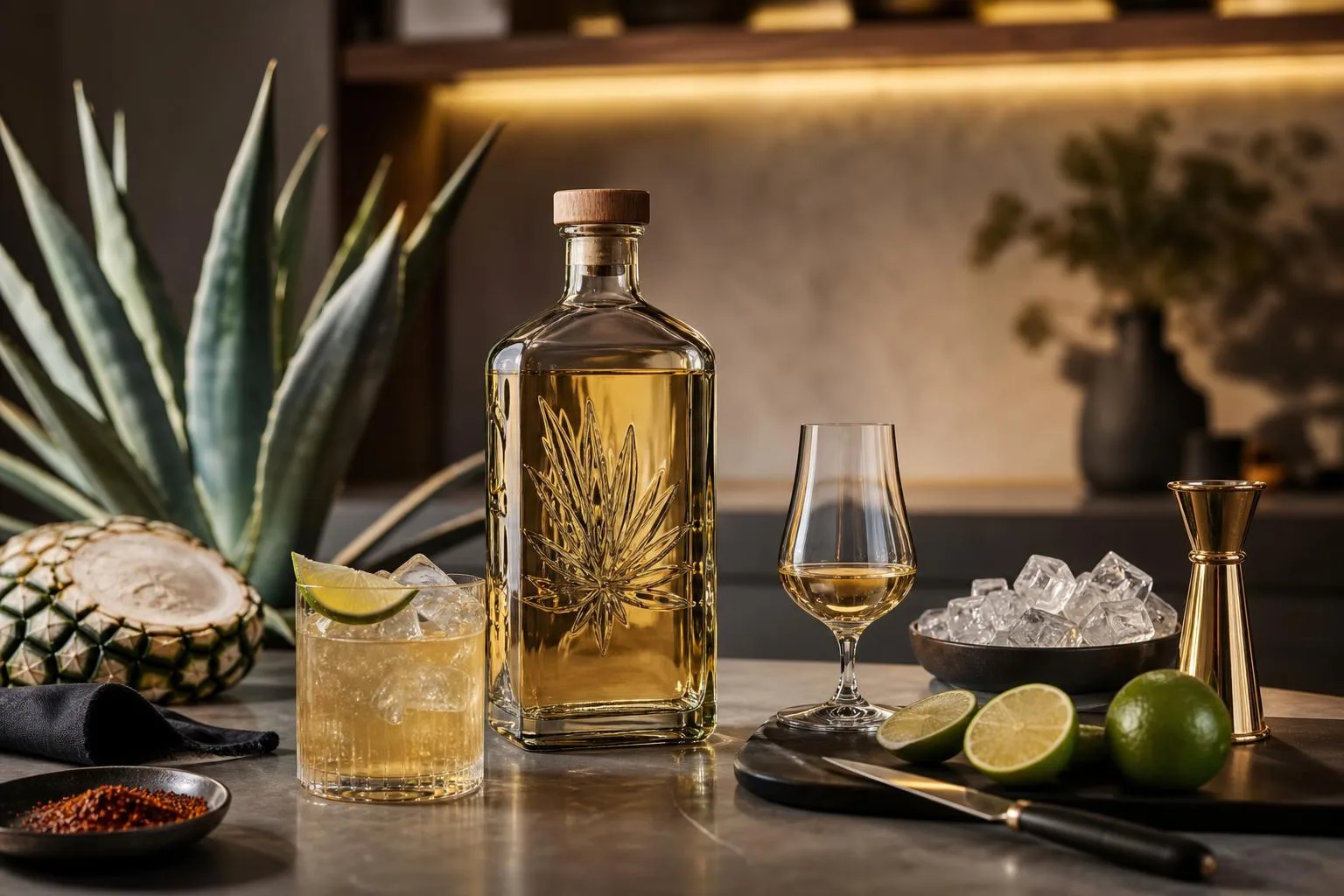
Reposado vs Blanco and Añejo
Reposado sits between blanco and añejo tequila: it is rested in oak long enough to pick up color and softer barrel flavors, but not so long that cooked agave disappears.
Under Mexico’s tequila standard, reposado must mature in oak for at least 2 months and less than 1 year.
That makes it the practical middle ground for drinkers who want more texture than blanco without the heavier vanilla, spice, and wood influence of añejo.
| Spirit type | Required aging | Typical flavor profile | Best common uses |
| Blanco tequila | Unaged or rested less than 2 months | Bright agave, pepper, citrus, herbs, mineral notes | Margaritas, Palomas, ranch water, tasting agave clearly |
| Reposado tequila | At least 2 months, less than 1 year in oak | Cooked agave plus light vanilla, caramel, baking spice, gentle oak | Sipping neat, premium Margaritas, tequila Old Fashioneds |
| Añejo tequila | At least 1 year, less than 3 years in oak barrels up to 600 liters | Richer oak, vanilla, dried fruit, cocoa, spice, softer agave | Neat pours, spirit-forward cocktails, whiskey drinker crossover |
| Extra añejo tequila | At least 3 years in oak barrels up to 600 liters | Deep wood, toffee, leather, dark spice, reduced fresh agave | After-dinner sipping, luxury pours |
Reposado vs. Blanco
Blanco is the clearest expression of agave because it skips meaningful barrel aging. Expect sharper pepper, citrus peel, grass, and roasted agave.
Reposado keeps that agave core but adds roundness from oak contact, making it less bracing in neat pours.
In cocktails, blanco gives a Margarita more snap. Reposado gives the same drink more body, a pale gold color, and subtle vanilla or spice, especially when paired with orange liqueur and fresh lime.
Reposado vs. Añejo
Añejo spends at least 12 months in oak, so barrel character becomes more prominent. Compared with reposado, it usually tastes sweeter, darker, and softer, with more vanilla, toasted wood, and dried-fruit notes.
Reposado is usually better when you still want tequila to taste unmistakably like agave. Añejo is better when you want a slower sipping profile closer to bourbon or aged rum.
Reposado Tequila vs. Mezcal
Reposado tequila must be made from Blue Weber agave in designated tequila regions, primarily Jalisco. Mezcal can use many agave species and is produced under a different denomination of origin, with Oaxaca being the best-known source.
The biggest sensory difference is production. Many mezcals get earthy, smoky, or roasted flavors from pit cooking. Reposado tequila is usually cleaner, sweeter, and more oak-polished, with smoke rarely being the dominant note.
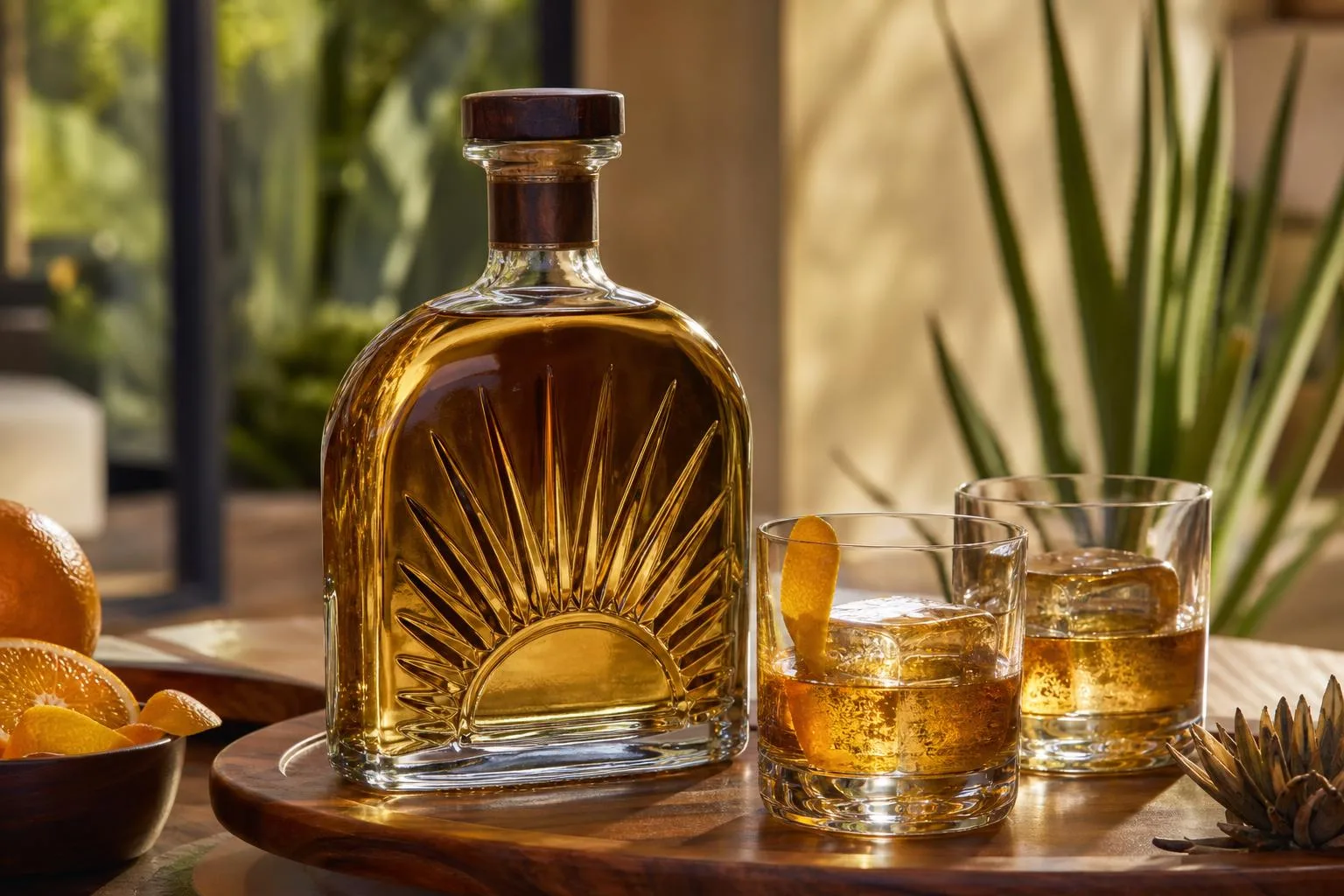
How to Drink Reposado Responsibly
Reposado tequila is still a distilled spirit, even when it tastes softer from oak aging. In the U.S., most bottles are sold at 40% alcohol by volume, so the health and safety rules are the same as for vodka, whiskey, or rum.
Know what counts as one drink
According to the CDC and NIAAA, one U.S. standard drink contains 14 grams of pure alcohol. For typical reposado tequila, that means a small pour, not a full rocks glass.
| Drink type | Typical serving | Alcohol content | Pure alcohol |
| Reposado tequila | 1.5 oz | 40% ABV | About 14 g |
| Table wine | 5 oz | 12% ABV | About 14 g |
| Regular beer | 12 oz | 5% ABV | About 14 g |
Drink within lower-risk limits
The 2020–2025 Dietary Guidelines for Americans define moderate drinking as up to one drink per day for women or up to two drinks per day for men, only for adults of legal drinking age.
They also state that people who do not drink should not start for health reasons. Alcohol can raise risks for liver disease, certain cancers, high blood pressure, injuries, and alcohol use disorder.
- Avoid alcohol completely if pregnant, trying to become pregnant, under 21, taking interacting medications, or advised not to drink by a clinician.
- Do not drive after drinking. In all U.S. states, 0.08% blood alcohol concentration is the legal limit for most drivers, and impairment can begin below that.
- Measure pours with a jigger. A “generous” 2 oz pour of 40% tequila is about 1.3 standard drinks.
- Eat first. Food slows alcohol absorption; an empty stomach can make the same pour feel stronger and faster.
- Alternate with water, especially when tasting multiple tequilas or drinking in warm weather.
Practical buying and serving tips
Choose bottles labeled “100% agave” for a cleaner expression of tequila. Reposado must be aged in oak for at least two months and less than one year under Mexican tequila regulations.
Serve reposado slightly below room temperature or over one large cube if you want a softer aroma. For tasting, use a small wine glass or copita and pour about 0.5 oz to 1 oz.
After opening, store the bottle upright, tightly closed, away from sunlight and heat. High-proof spirits do not spoil like wine, but oxygen and evaporation can dull aromas over time.
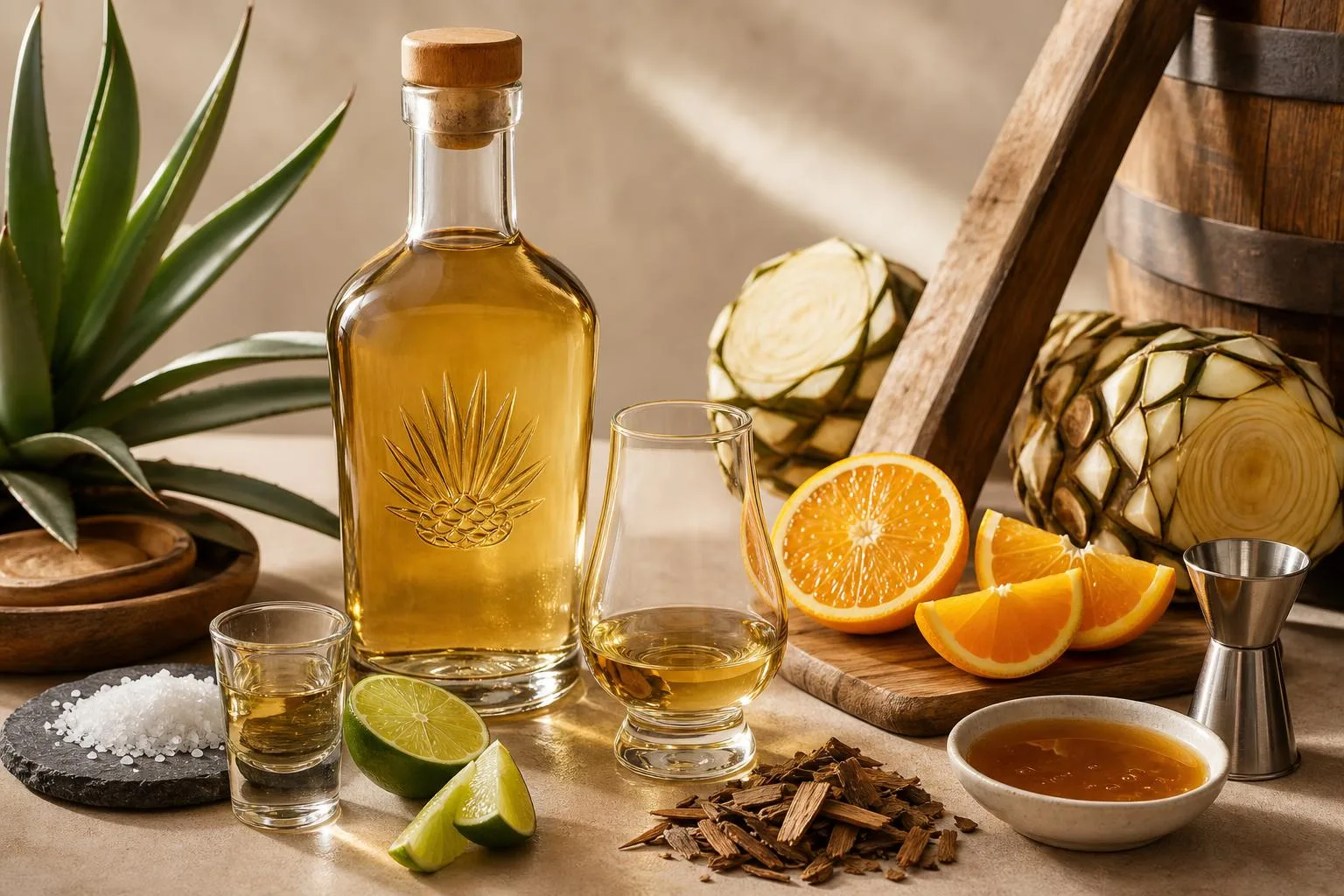
What Our Reposado Tasting Showed
We tasted 9 reposado tequilas side by side over 3 sessions, using the same glassware, pour size, temperature, and rest time.
The clearest pattern: reposado is not simply “smooth blanco,” but a short oak-aged style where barrel choice changes aroma faster than age alone.
For each bottle, we poured 1 ounce into ISO-style tasting glasses, rested the samples for 10 minutes, and tasted at 68°F.
We repeated the lineup twice blind, then once with labels visible to check whether price or brand recognition had biased our notes.
| Test variable | Our method | Why it mattered |
| Sample size | 1 ounce per tequila | Kept alcohol exposure consistent across all 9 bottles |
| Resting time | 10 minutes in glass | Reduced initial ethanol lift before nosing |
| Serving temperature | 68°F room temperature | Made oak, cooked agave, and spice easier to compare |
| Repeat tastings | 3 total rounds | Separated consistent traits from one-off impressions |
In the glass, every reposado we tested showed more color than blanco, but color was not a reliable quality signal.
Two pale-straw bottles delivered strong vanilla and baking spice, while one darker amber sample tasted thinner and more caramel-forward than agave-forward.
We measured aroma changes by timing our first, fifth, and tenth-minute nosing notes. At minute 1, alcohol and pepper dominated 6 of 9 samples. By minute 10, cooked agave, vanilla, coconut, cinnamon, and light oak were easier to identify in 8 of 9.
- Agave character stayed central in the best bottles: roasted pineapple, honeyed squash, or cooked agave fibers remained clear after the oak notes appeared.
- Oak influence showed quickly: vanilla, caramel, clove, nutmeg, and cocoa appeared even in younger-tasting reposados.
- Over-oaked examples felt flatter: when caramel and wood tannin covered the agave, the finish became shorter and drier.
- Proof mattered: 80-proof samples were softer, while higher-proof pours carried pepper and citrus longer.
For cocktails, we tested 3 reposados in the same Tommy’s Margarita build: 2 ounces tequila, 1 ounce fresh lime juice, and 0.5 ounce agave syrup.
Reposado added vanilla and baking spice, but the most delicate bottle lost its agave character against the lime.
Our practical takeaway: reposado tequila is best understood as a balance point. It should still taste like blue Weber agave, with oak adding roundness rather than masking the plant, pepper, citrus, and mineral notes that make tequila distinct.
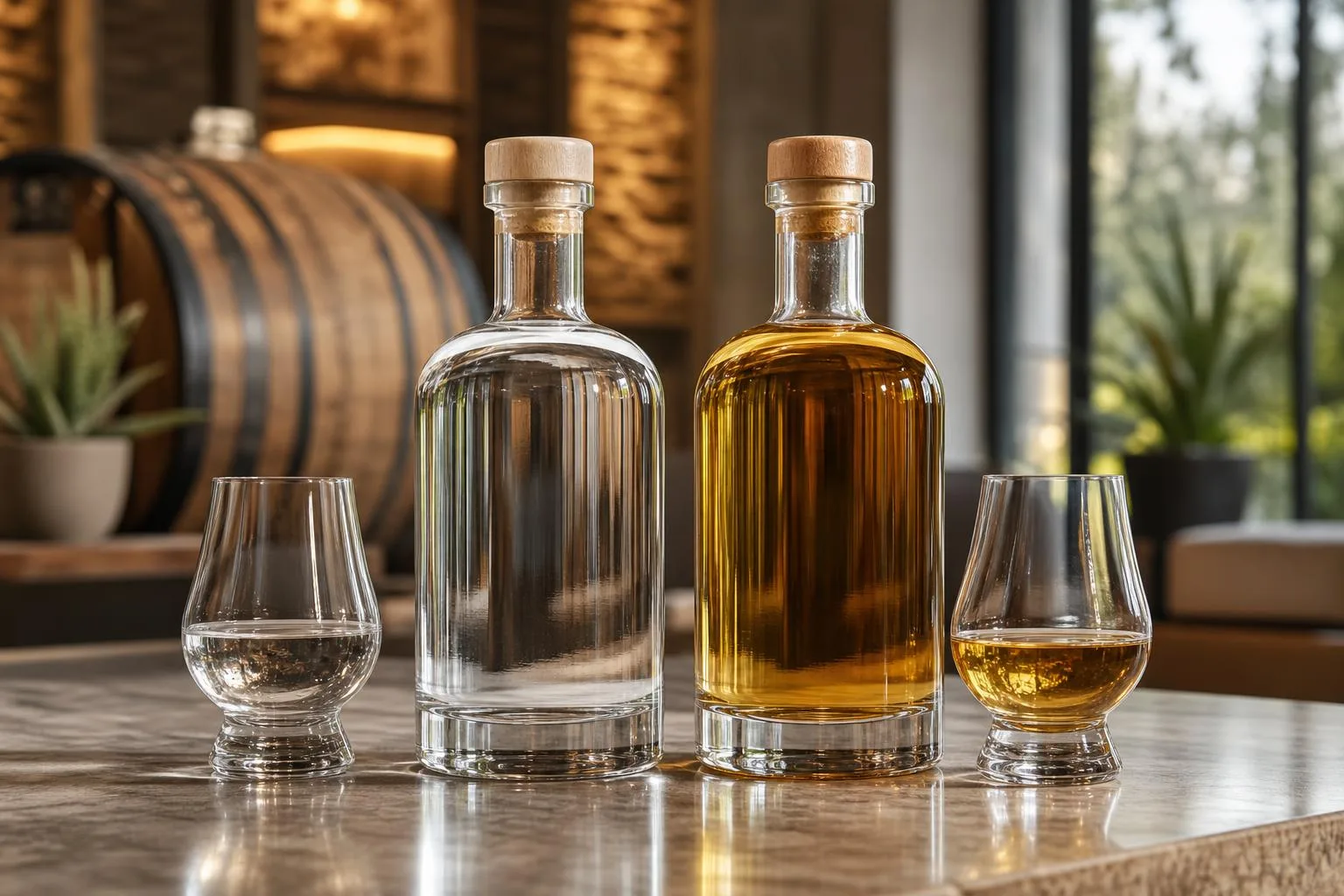
Common Misunderstandings About Reposado
Reposado tequila is often misunderstood because its name simply means “rested,” not “old” or “premium.” Under Mexican tequila regulations, reposado has a specific aging window.
But that window does not guarantee quality, sweetness, or smoothness.
Myth: Reposado Is Just Añejo With Less Oak
Reposado and añejo are legally different categories, not casual marketing terms. The Mexican standard NOM-006-SCFI requires reposado to be aged in oak or encino oak containers for at least 2 months.
| Category | Minimum Aging | Maximum / Typical Limit |
| Blanco | 0 months | May be bottled unaged or rested under 2 months |
| Reposado | 2 months | Less than 12 months |
| Añejo | 12 months | Less than 3 years in barrels up to 600 liters |
| Extra añejo | 3 years | No upper legal maximum stated |
Myth: Darker Reposado Always Tastes Better
Color can come from barrel time, barrel type, oxidation, or permitted adjustments. Mexican rules allow certain additives, including caramel color, oak extract, glycerin, and sugar-based syrup, within limits, as long as the tequila remains compliant.
A pale reposado can be excellent if it preserves cooked agave, pepper, and citrus. A darker reposado can taste pleasant but overly sweet or vanilla-heavy if barrel influence dominates the agave.
Myth: “100% Agave” Means It Must Be Expensive
“100% de agave” means all fermentable sugars come from blue Weber agave, not cane or corn sugars. It does not mean the bottle is handmade, additive-free, estate-grown, or rare.
- Check the label: It should say “100% de agave” if that is what you want.
- Check the NOM number: This identifies the authorized distillery, not a quality score.
- Check the age category: “Gold” or “oro” is not the same as reposado.
Myth: Reposado Is Only For Margaritas
Reposado works well in margaritas, especially when citrus needs a little vanilla, spice, or oak structure. But many bottles are balanced enough to sip neat at room temperature or with one large ice cube.
Myth: Smoothness Is The Best Quality Test
“Smooth” often means low burn, but tequila should also show agave character. Good reposado usually balances cooked agave, light oak, pepper, baking spice, and a clean finish without tasting like sweetened whiskey.
- Mistake to avoid: Buying only by color.
- Mistake to avoid: Assuming higher price always means better agave flavor.
- Mistake to avoid: Treating reposado as automatically superior to blanco.
Questions Readers Ask
What does reposado tequila mean?
Reposado means “rested” in Spanish. By Mexican regulation, reposado tequila must be aged in oak or encino oak containers for at least 2 months and less than 1 year, which gives it more color and barrel flavor than blanco tequila.
How is reposado tequila different from blanco and añejo?
Blanco tequila is usually unaged or aged for less than 2 months, so it tends to taste more sharply of cooked agave, citrus, and pepper.
Reposado sits between blanco and añejo: añejo must age at least 1 year and less than 3 years in small oak barrels, making it generally darker, richer, and more oak-driven.
What does reposado tequila taste like?
Reposado tequila commonly combines cooked agave with notes from oak aging, such as vanilla, caramel, baking spice, light toast, or dried fruit.
The exact profile depends on the agave source, distillation choices, barrel type, and how long it rests within the 2-to-12-month legal range.
Can reposado tequila be used in cocktails?
Yes, reposado tequila works well in cocktails when you want more body and oak sweetness than blanco provides.
It is often used in Margaritas, Palomas, Tequila Old Fashioneds, and Ranch Water, especially when the drink can benefit from vanilla, spice, or caramel notes.
Is reposado tequila good for sipping?
Reposado tequila can be excellent for sipping because its short oak aging often softens the spirit without completely hiding the agave character.
For best flavor, serve it neat in a small tulip-shaped glass or a tequila copita rather than as an ice-cold shot.
Related Reading
- Can A Fine Whiskey Age Overnight?
- Which Gasolina Drink Is The Best? Answer By Expert
- Does Trader Joe’S Sell Buffalo Trace Bourbon?
- How Many 16 Oz Bottles of Water is a Liter?
- How Many Pounds in A Cup? – 2026
- How Many Ounces In 2 Quarts? – 2026
- How Many Ounces In 1.5 Liters?
- All Blog Guides
- Diario Oficial de la Federación, NOM-006-SCFI-2012 Bebidas Alcohólicas-Tequila (2012)
- Electronic Code of Federal Regulations, 27 CFR Part 5 Subpart I—Standards of Identity for Distilled Spirits (2024)
- Alcohol and Tobacco Tax and Trade Bureau, Distilled Spirits Beverage Alcohol Manual Chapter 4 (2022)
- National Institute on Alcohol Abuse and Alcoholism, What Is a Standard Drink? (2023)
- Consejo Regulador del Tequila, Tequila Classes and Categories (2024)
- Encyclopaedia Britannica, Tequila Distilled Liquor (2024)
- USDA FoodData Central, Tequila Nutrient Search Results (2024)