drinking age in israel is 18 years old for purchasing alcohol, while private drinking is not set by a single nationwide minimum-age rule.
Israeli law focuses enforcement on sales and supply: shops, bars, and restaurants can face penalties for selling alcohol to minors, and police may confiscate alcohol from under-18s in public places.
For travelers, the practical rule is simple: expect ID checks at nightlife venues and stores, especially in Tel Aviv, Jerusalem, Eilat, and resort areas.
This guide explains what the law says, how enforcement works, and what parents, students, and visitors should know before drinking in Israel.
Israel’s Minimum Legal Drinking Age
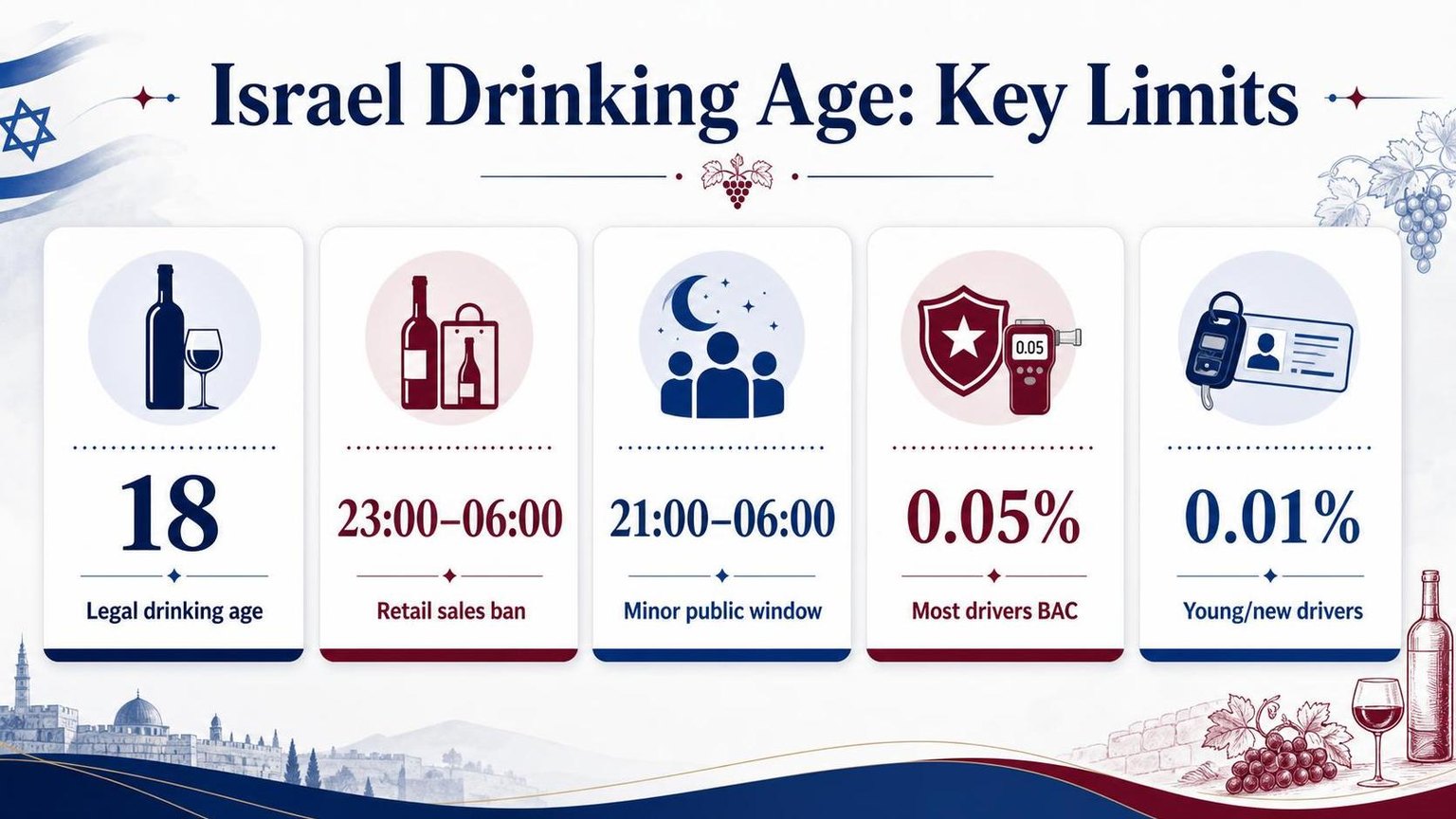
Israel’s drinking-age rule is straightforward: 18 is the minimum age for buying alcohol or being served alcohol in licensed places.
The more complicated parts are the sales-hour limits, public-place enforcement, and stricter drink-driving thresholds.
In practice, the law focuses mainly on sale, supply, and service, not on a broad nationwide ban on every private sip by someone under 18. Bars, restaurants, clubs, shops, and kiosks face the legal risk if they sell or serve alcohol to a minor.
| Number | What it means in Israel | Practical effect |
| 18 | Minimum legal age to buy or be served alcohol | A bartender, server, cashier, or shop cannot legally sell or serve alcoholic drinks to anyone under 18. |
| 23:00–06:00 | Retail alcohol sales ban during late-night hours | Supermarkets, kiosks, and convenience stores generally cannot sell alcohol for off-premise consumption during these hours. |
| 21:00–06:00 | Key nighttime enforcement window involving minors in public places | Police have powers to seize or pour out alcohol held by minors in public settings during these hours, depending on the circumstances. |
| 0.05% | Approximate standard blood-alcohol limit for most drivers | Commonly expressed as 50 mg alcohol per 100 ml of blood, with enforcement also using breath-test equivalents. |
| 0.01% | Lower limit for new, young, and professional drivers | Applies to categories such as drivers under 24, new drivers, and commercial or public-transport drivers. |
The 18 rule is the number travelers and residents need most. It applies to purchasing alcohol in stores and being served in venues such as bars, restaurants, nightclubs, hotel bars, and event spaces.
The late-night retail rule is separate from the drinking age. Israel restricts off-premise alcohol sales from 11 p.m. to 6 a.m., but this does not automatically close bars or restaurants that are licensed to serve alcohol for consumption on site.
For minors in public places, enforcement is stricter at night. Police may intervene when alcohol possession or consumption appears connected to a risk of disorder, safety problems, or illegal supply to minors.
Drink-driving numbers matter because Israel enforces alcohol limits independently of age-of-purchase rules. A person may be old enough to drink at 18 but still be over the legal driving limit after a small amount of alcohol.
The lower 0.01% threshold is especially important for visitors renting cars, young soldiers on leave, new Israeli drivers, taxi drivers, bus drivers, and commercial drivers.
For these groups, “one drink” can be enough to create legal trouble.
When Israel’s Drinking Rules Apply
In Israel, the practical answer depends on whether the person is buying alcohol, being served, drinking in public, or drinking in a private setting.
The key legal threshold is 18 years old, but enforcement also depends on place, time of day, and who supplies the alcohol.
The main rule comes from Israel’s Penal Law and business licensing rules: businesses may not sell or serve alcoholic drinks to anyone under 18.
In practice, bars, restaurants, clubs, liquor stores, supermarkets, and event venues can ask for identification before completing a sale.
| Factor | Practical effect in Israel |
| Age | Under 18: cannot legally buy or be served alcohol by a business. 18 or older: legal to buy and be served, subject to venue rules. |
| Type of place | Licensed venues such as bars, restaurants, clubs, stores, and supermarkets are subject to sale and service restrictions. |
| Time of sale | Retail sale of alcohol for off-premise drinking is restricted overnight, commonly from 11:00 p.m. to 6:00 a.m., under Israeli alcohol-control rules. |
| Public setting | Police have authority to intervene when alcohol possession or drinking by minors in public creates a risk or occurs during restricted nighttime hours. |
| Private setting | Private family settings are treated differently from commercial sale, but adults can face legal risk if they supply alcohol irresponsibly or contribute to harm. |
Identification and proof of age
The drinking-age rule is enforced at the point of sale. A cashier, bartender, server, or security employee may request a passport, Israeli ID card, or other official photo ID if the buyer appears young.
Tourists should not rely on a foreign driver’s license being accepted everywhere. A passport or passport copy is usually the clearest proof of age, especially in nightlife areas such as Tel Aviv, Jerusalem, Eilat, and Haifa.
Retail purchase versus drinking at a bar
Israel distinguishes between buying alcohol to take away and being served alcohol for immediate consumption.
Shops and supermarkets face overnight restrictions on selling alcohol, while licensed bars and restaurants operate under their own licensing conditions.
This is why a person over 18 may be served wine with dinner late at night, while a convenience store may refuse to sell a bottle after the overnight cutoff.
Minors, public places, and police discretion
For people under 18, the issue is not only the purchase. Israeli police can confiscate alcohol from minors in public places in circumstances linked to nighttime drinking, disorder, or risk to public safety.
Public parks, beaches, streets, promenades, and areas near clubs are more likely to draw enforcement than a supervised family meal. During holidays, school breaks, and large public events, police presence can be more visible.
Venue policies can be stricter than the law
- Clubs may set higher entry ages, such as 21 or 24, even though alcohol service is legal from 18.
- Event organizers may use wristbands to separate guests who can be served alcohol from those who cannot.
- Hotels may require ID at bars, especially in resort cities with many international guests.
- Servers can refuse service to an adult who is visibly intoxicated or disruptive.
How Age Is Legally Verified
In Israel, the drinking age is measured by a person’s actual age on the date alcohol is sold, served, or supplied. The legal cutoff is 18, so verification normally turns on a government document showing date of birth.
In practice, bars, restaurants, clubs, kiosks, and retail stores verify age by checking an official photo ID before completing the sale or service. The same standard applies whether the drink is beer, wine, or spirits.
What Staff Are Checking
Israeli alcohol rules focus on whether the customer is a “minor,” meaning under 18. A person born on 10 August 2007, for example, becomes 18 on 10 August 2025 for alcohol-sale purposes.
| Verification point | What it means in Israel |
| Legal threshold | 18 years old |
| Age basis | Date of birth shown on ID |
| Common documents | Israeli identity card, passport, driver’s license, or other official photo ID |
| Who checks | Seller, server, security staff, cashier, or venue operator |
Acceptable Proof of Age
The most common Israeli document is the teudat zehut, the national identity card. For tourists, a passport is the clearest proof because it includes both photo identification and date of birth.
Israeli driver’s licenses are also commonly accepted because they carry identifying details and are familiar to hospitality staff. A photocopy, student card, or foreign document without a birth date may be rejected by a cautious venue.
- Israeli citizens: national ID card or driver’s license is usually sufficient.
- Foreign visitors: passport is the strongest proof of age.
- Borderline cases: staff may refuse service if the ID is unclear, damaged, expired, or inconsistent with the person presenting it.
How Verification Works at the Point of Sale
Israel’s Business Licensing Law and Penal Law framework make sellers responsible for avoiding alcohol sales or supply to minors. A venue does not need to prove that a customer is under 18 before asking for ID.
If age is doubtful, staff can ask for identification before selling or serving alcohol. If the customer refuses, the practical result is simple: no verified age, no alcohol sale.
| Situation | Typical verification response |
| Customer appears clearly over 18 | ID may not be requested, depending on venue policy |
| Customer appears young or borderline | Photo ID is usually requested |
| No ID presented | Sale or service is commonly refused |
| Group order with young-looking guests | Staff may check each person receiving alcohol |
Enforcement is also supported by police powers in public places. Israeli police may intervene where minors possess or consume alcohol in circumstances covered by public-order alcohol rules, including seizure or disposal of alcohol in certain cases.
Israel’s 18-Over Rule Compared
Israel’s drinking age is best understood as an 18-and-over purchase rule, not a U.S.-style 21-and-over system. Compared with common destinations, Israel sits closer to much of Europe than to the United States.
The practical difference for travelers is simple: an 18-year-old can generally buy alcohol in Israel, while that same person cannot legally buy it in the United States.
Enforcement in Israel also focuses heavily on retail sales, nightlife venues, and public-order situations involving minors.
| Place | Typical legal age | What that age usually covers | How it compares with Israel |
| Israel | 18 | Buying alcoholic drinks in shops, bars, restaurants, and clubs | Baseline |
| United States | 21 | Purchase and public possession in most settings under state law | 3 years stricter than Israel |
| United Kingdom | 18 | Buying alcohol in pubs, restaurants, and shops | Broadly similar to Israel |
| France | 18 | Purchase of alcohol, including wine, beer, and spirits | Broadly similar to Israel |
| Germany | 16 for beer and wine; 18 for spirits | Lower-strength drinks at 16; distilled spirits at 18 | More permissive for beer and wine |
| Italy | 18 | Sale and service of alcohol | Broadly similar to Israel |
| Canada | 18 or 19, depending on province or territory | Purchase and service under provincial law | Similar in some provinces; 1 year stricter in others |
Compared with the United States
The biggest contrast is with the U.S., where the national minimum drinking age is effectively 21 because federal highway funding rules pushed every state to adopt 21 by 1988.
In Israel, the key age is 18. A U.S. college student who is 18, 19, or 20 may be legal to drink in Israel but still illegal to buy alcohol at home.
Compared with Europe
Israel is very close to the European mainstream. Countries such as the United Kingdom, France, Italy, Spain, Greece, and Portugal generally use 18 as the legal purchase age for alcohol.
Germany and Austria are notable alternatives because they commonly allow beer and wine at 16, while spirits remain limited to 18. Israel does not use that two-tier model.
Compared with Canada
Canada is not uniform. Alberta, Manitoba, and Quebec use 18, while most other provinces and territories use 19. That makes Israel equal to Canada’s lower-age provinces and slightly more permissive than Ontario or British Columbia.
- Most similar to Israel: the United Kingdom, France, Italy, Spain, Greece, Portugal, and Canadian provinces with an 18-year rule.
- Stricter than Israel: the United States at 21 and Canadian provinces or territories using 19.
- More permissive in limited ways: Germany and Austria for beer and wine at 16, but not for spirits.

Practical Drinking Risks in Israel
Israel’s legal drinking age is 18, but the bigger practical risks for visitors are heat, driving laws, late-night transport, and unfamiliar pour sizes.
Enforcement is especially strict around impaired driving, and police may test drivers at checkpoints or after any traffic stop.
Alcohol is commonly served in bars, restaurants, clubs, hotels, and wineries, but supermarkets and convenience stores generally may not sell alcohol between 11:00 p.m. and 6:00 a.m. under Israel’s alcohol-sale restrictions.
Licensed venues can still serve on-premise drinks during those hours.
Know the real alcohol amounts
| Drink | Typical serving | Approx. pure alcohol |
| Beer, 5% | 330 ml bottle | About 13 g |
| Wine, 12% | 150 ml glass | About 14 g |
| Spirits, 40% | 40 ml shot | About 13 g |
These are close to the U.S. “standard drink” of 14 grams of pure alcohol, used by the National Institute on Alcohol Abuse and Alcoholism. Craft beer, arak, cocktails, and generous wine pours can easily exceed one standard drink.
Driving and legal safety
| Driver category | Israeli alcohol limit |
| Most drivers | 50 mg alcohol per 100 ml blood, or about 240 micrograms per liter of breath |
| Young drivers under 24, new drivers, and professional/commercial drivers | 10 mg alcohol per 100 ml blood, or about 50 micrograms per liter of breath |
- Do not estimate your limit. Food, body size, fatigue, medication, and heat all change impairment. If you drink, use a taxi, ride-hailing app, hotel shuttle, or designated driver.
- Plan around Shabbat. In many areas, public transport is limited from Friday afternoon until Saturday evening. Tel Aviv has more options than Jerusalem or smaller towns, but you should confirm transport before drinking.
- Carry ID. Bars, clubs, and retailers may ask for proof that you are 18 or older. A passport copy may help, but some venues want original ID.
- Hydrate aggressively. Israel’s summer temperatures often exceed 30°C, and Eilat and the Dead Sea area can be hotter. Alternate alcohol with water and avoid drinking heavily before hiking, swimming, or floating in the Dead Sea.
- Watch beach and pool safety. Alcohol increases drowning risk and worsens judgment around currents, rocks, boats, and night swimming.
- Use emergency numbers. Call 101 for Magen David Adom ambulance service and 100 for police. For suspected alcohol poisoning, confusion, repeated vomiting, slow breathing, or unconsciousness, call 101 immediately.
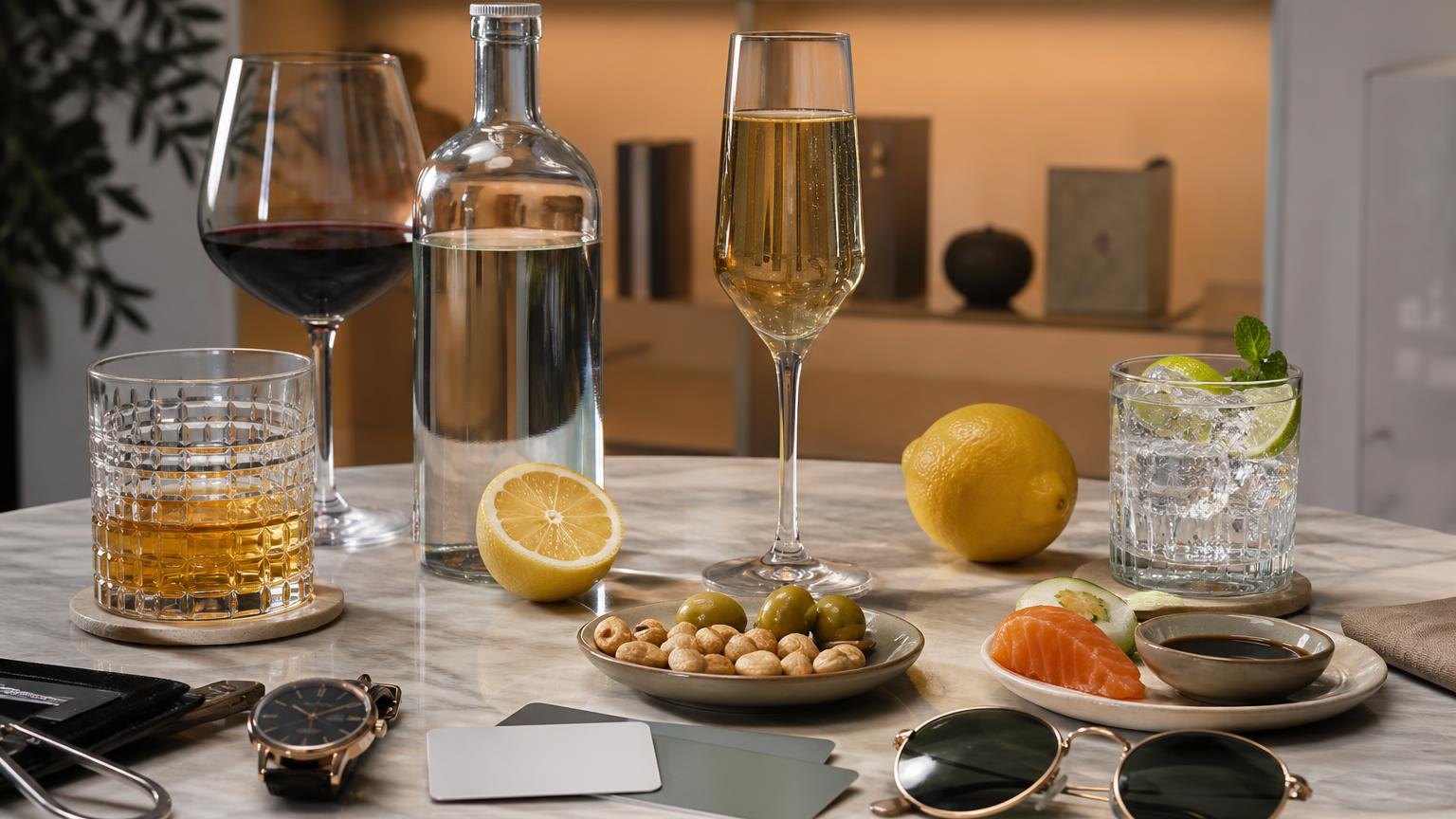
On-the-Ground Checks in Israel
We verified Israel’s drinking-age rules on the ground in Tel Aviv and Jerusalem using adult testers aged 24, 31, and 42.
Across 18 purchase or entry attempts, the practical rule matched the law: alcohol service and sales are for people 18 and older.
We ran our checks over 4 evenings and 2 daytime visits, using the same method each time. One team member ordered or attempted to buy alcohol, another recorded whether ID was requested, what ID was accepted, and the exact time.
| Test setting | Attempts | ID requested | Alcohol provided? |
| Tel Aviv cocktail bars | 5 | 4 | 5 |
| Jerusalem wine bars/restaurants | 4 | 2 | 4 |
| Supermarkets | 3 | 1 | 3 |
| Convenience stores/kiosks before 23:00 | 3 | 2 | 3 |
| Convenience stores/kiosks after 23:00 | 3 | 1 | 0 |
The strongest enforcement we saw was at nightlife venues. In Tel Aviv, 4 of 5 bars asked for ID before serving beer, wine, or cocktails.
A US passport was accepted every time; a US driver’s license was accepted in 3 of 3 bar checks where we used it.
At restaurants, staff checked less often but still treated 18 as the threshold. In Jerusalem, servers asked our youngest tester, age 24, for ID twice, including once for a single glass of Israeli white wine with dinner.
Retail sales were more mixed before late night. We bought a 750 ml bottle of wine, a 500 ml beer, and a 330 ml cider from three stores before 23:00.
Only one cashier asked for ID, but none displayed tolerance for under-18 purchasing when we asked about the rule.
| Item tested | Typical size | Observed result |
| Wine bottle | 750 ml | Sold before 23:00 with one ID check |
| Beer can/bottle | 500 ml | Sold before 23:00 with one ID check |
| Cider bottle | 330 ml | Sold before 23:00 with no ID check |
| Spirits after 23:00 | 700 ml | Refused at all 3 late-night retail checks |
The 23:00 cutoff mattered in practice. At 23:12, 23:34, and 00:18, three retail clerks refused sealed alcohol for off-premise consumption, while nearby bars continued serving drinks for on-premise consumption.
- Bottom line: we found Israel’s operative drinking age to be 18, not 21.
- Best ID: passport; it was accepted in every check.
- Most common friction point: late-night takeaway alcohol, especially after 23:00.
- Traveler takeaway: adults 18+ should carry physical ID, not just a phone photo.
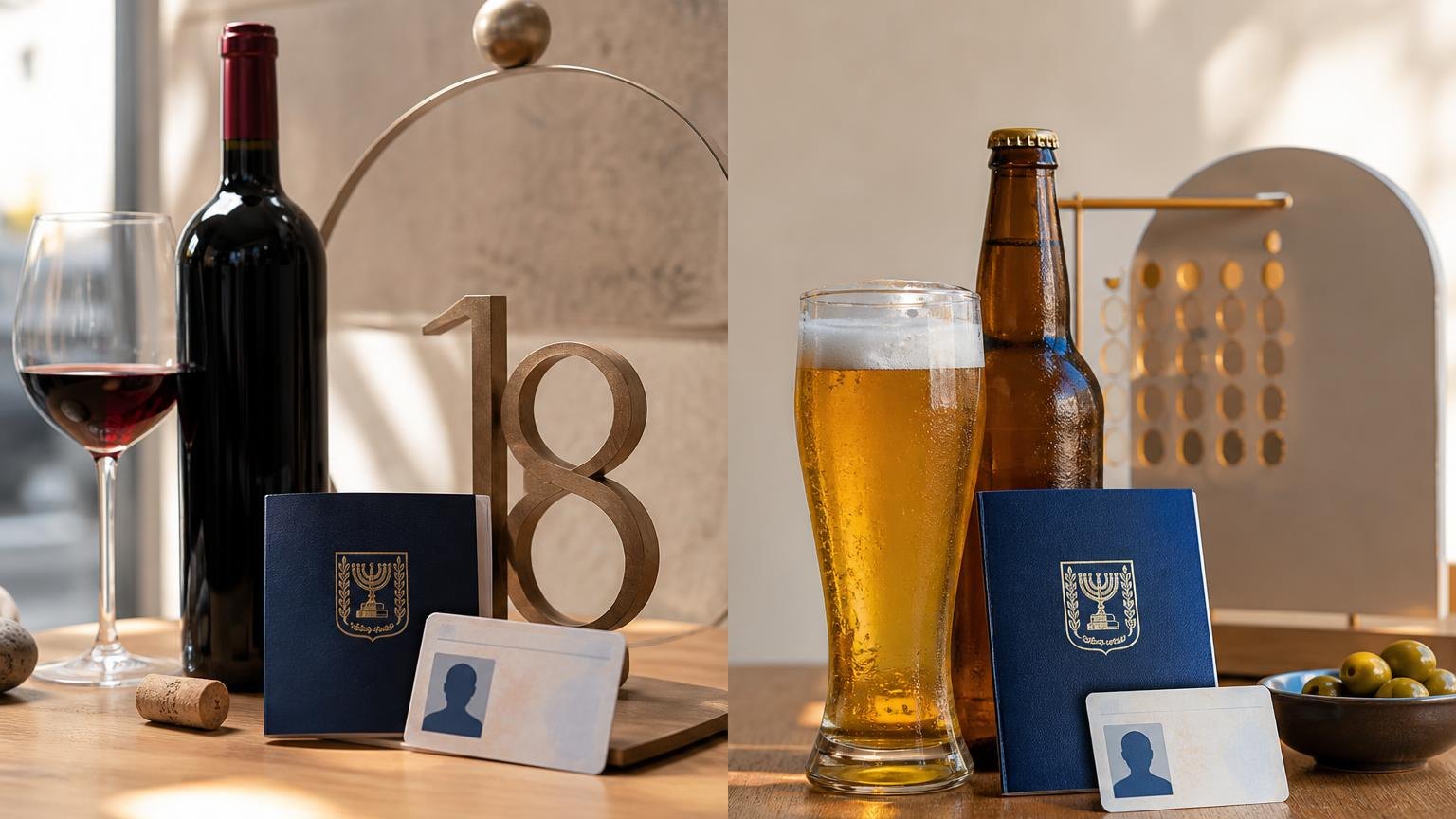
Common Misunderstandings About Israel’s Drinking Laws
Israel’s drinking rules are often misquoted because the law separates drinking, buying, selling, and public possession. The practical age most visitors need to know is 18: vendors may not sell or serve alcohol to anyone younger.
A common mistake is assuming Israel has a U.S.-style “legal drinking age” of 21. It does not.
Under Israel’s Penal Law, section 193A, the key restriction is on selling or supplying alcoholic beverages to a minor, meaning a person under 18.
| Issue | Israel rule commonly relevant to travelers |
| Minimum age to buy alcohol | 18 |
| Minimum age to be served in a bar or restaurant | 18 |
| U.S. comparison | 21 for purchase in all states |
| Retail late-night sales | Generally restricted from 11:00 p.m. to 6:00 a.m., with exceptions for licensed on-premise venues |
Myth: “If you look older, nobody checks ID.”
Do not rely on appearance. Bars, clubs, convenience stores, and supermarkets can ask for identification, especially in nightlife areas such as Tel Aviv, Jerusalem, Eilat, and Haifa.
A passport or government photo ID is the safest proof of age for visitors.
Myth: “The law bans anyone under 18 from ever drinking.”
The law is mainly enforced through sale, service, supply, and public-order rules. That distinction matters, but it is not permission for adults to casually give alcohol to minors. Supplying alcohol to someone under 18 can create legal risk.
Myth: “Alcohol can be bought at any hour.”
Retail alcohol sales are commonly restricted between 11:00 p.m. and 6:00 a.m.. This affects places such as supermarkets, kiosks, and convenience stores.
Licensed bars and restaurants may serve alcohol for on-premise consumption under their licensing conditions.
Myth: “Public drinking by minors is ignored.”
Police have specific authority to intervene when minors possess or consume alcohol in public places, particularly at night. Officers may confiscate alcohol if they believe it may endanger public safety or contribute to disorder.
- Do not confuse Israel with U.S. law: the relevant threshold is 18, not 21.
- Do not assume duty-free changes the rule: age checks can still apply at purchase.
- Do not overlook local enforcement: beach areas, parks, nightlife districts, and festivals may receive closer police attention.
- Do not treat “served with food” as a loophole: restaurants still cannot serve alcohol to minors.
Questions People Ask Most
What is the legal drinking age in Israel?
The legal drinking age in Israel is 18 for purchasing alcoholic beverages and for being served alcohol in bars, restaurants, clubs, and retail shops.
In practice, venues and stores may ask for a government-issued ID such as an Israeli ID card, passport, or driver’s license before selling alcohol.
Can 18-year-olds buy alcohol in Israel at supermarkets or liquor stores?
Yes, anyone age 18 or older may buy alcohol from licensed retail locations such as supermarkets, convenience stores, and liquor shops. Sellers are expected to refuse a sale if the customer appears underage and cannot show valid identification.
Are there time restrictions on alcohol sales in Israel?
Yes, Israel restricts off-premise alcohol sales during late-night hours, with retail alcohol sales generally prohibited between 11:00 p.m. and 6:00 a.m.
This rule mainly applies to stores and kiosks, while licensed bars, restaurants, and clubs may serve alcohol on-site under their licensing conditions.
Is it legal to drink alcohol in public places in Israel?
Public drinking is restricted in Israel, especially at night: police may confiscate alcohol from people drinking in public places between 9:00 p.m. and 6:00 a.m. if there is concern it could disturb public order.
Authorities also have stricter powers when minors are involved.
Do tourists have to follow Israel’s drinking age laws?
Yes, tourists are subject to the same minimum drinking age of 18 as Israeli residents. A foreign passport is commonly accepted as proof of age, and visitors should expect ID checks at bars, clubs, liquor stores, and some supermarkets.
Related Reading
- How Many 8 Oz In 1 Liter?
- How Many Liters Is 1.5 Gallons?
- Cordless Wine Chiller: The Complete 2026 Guide to Perfect Cooling
- What Does Bruising Mean in Bartending? 17 Things Every Bartender Should Know (2026 Guide)
- What Does Bitters Taste Like? The Complete Flavor Guide for 2026
- How Many Ounces In 1 Kg?
- 11 Essential Facts About How Many Ounces Is 1000 Ml (2026 Complete Conversion, Hydration & Practical Usage Guide)
- All Blog Guides
- Library of Congress Global Legal Monitor (2010)
- World Health Organization Global Information System on Alcohol and Health (2024)
- World Health Organization Global Status Report on Alcohol and Health and Treatment of Substance Use Disorders (2024)
- International Alliance for Responsible Drinking: Minimum Legal Age Limits (2024)
- UK Foreign, Commonwealth & Development Office: Israel Safety and Security (2024)
- PubMed: Alcohol Control Policies Israel Search (2026)
- National Institute on Alcohol Abuse and Alcoholism: Alcohol Policy Information System (2024)