The Key Numbers, Explained
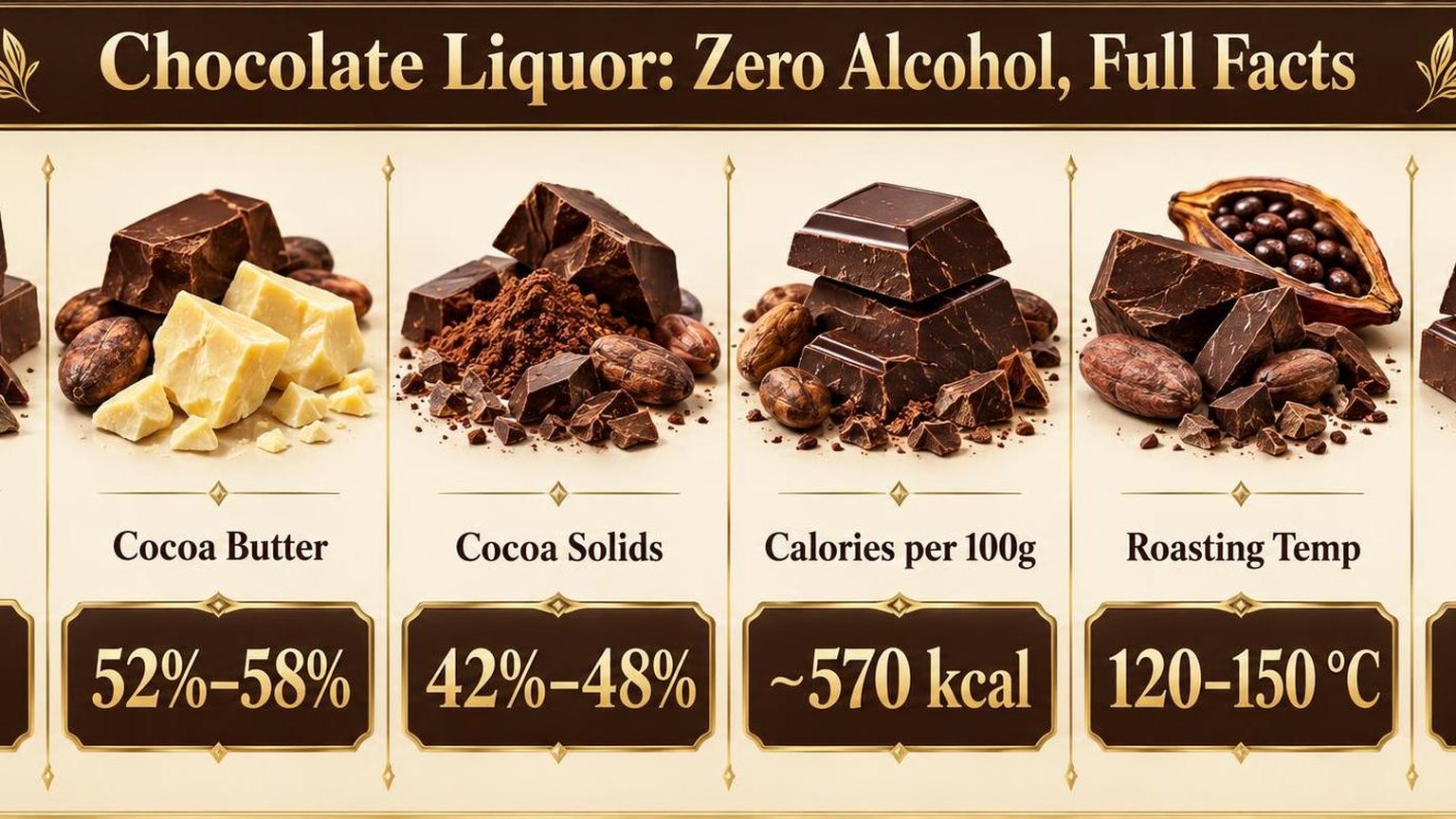
Chocolate liquor contains between 52% and 58% cocoa butter by weight, with the remainder being cocoa solids. Its alcohol content is exactly 0.0% ABV—none whatsoever, despite the misleading name.
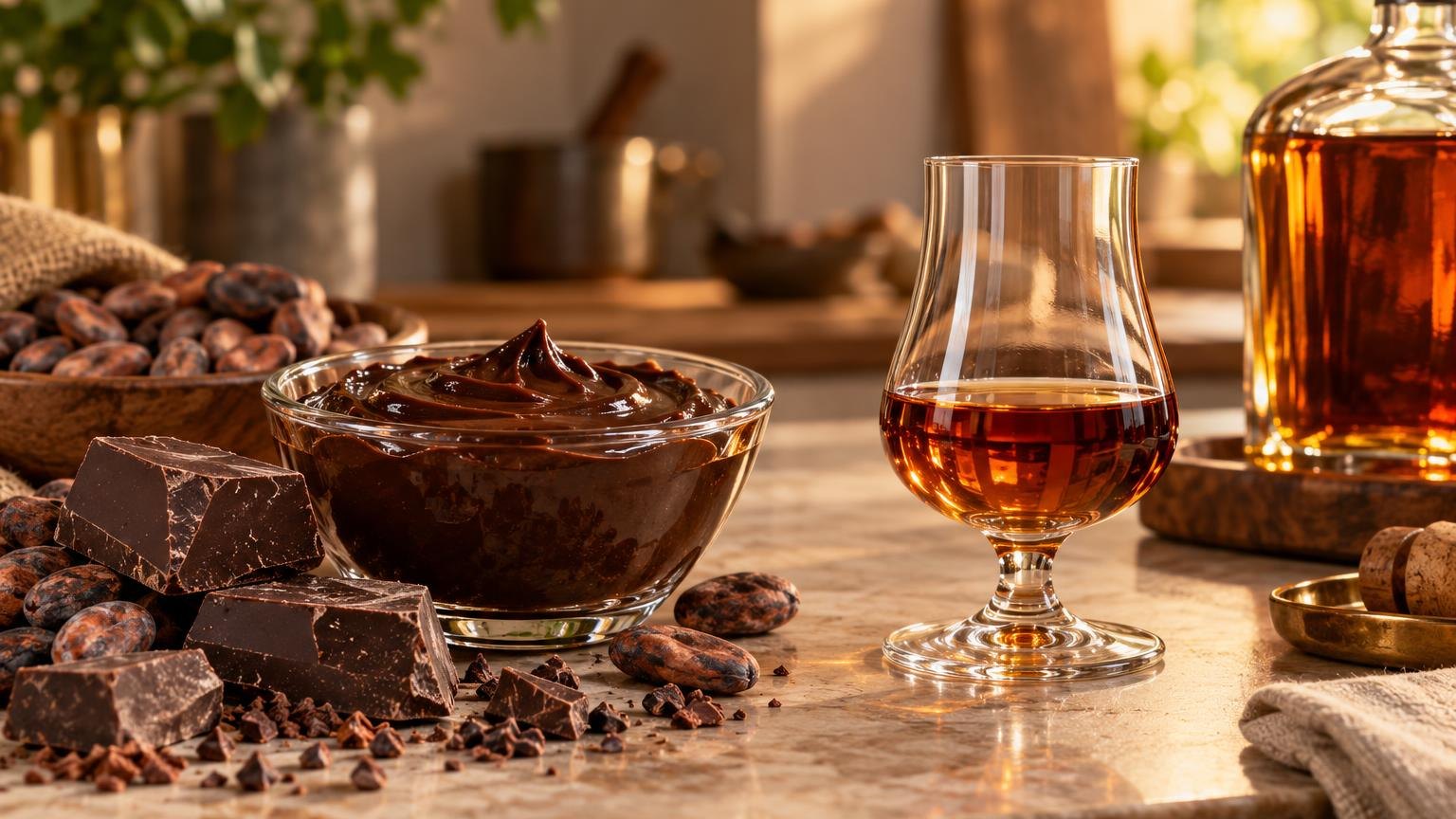
Understanding the numerical breakdown of chocolate liquor versus actual alcoholic chocolate products eliminates confusion at the store and behind the bar.
Chocolate Liquor vs. Chocolate Liqueur: By the Numbers
| Property | Chocolate Liquor | Chocolate Liqueur |
| Alcohol by Volume (ABV) | 0.0% | 15%–25% |
| Cocoa Butter Content | 52%–58% | Varies (minimal) |
| Cocoa Solids Content | 42%–48% | Varies (added as flavoring) |
| Sugar Added | 0 g | High (product-dependent) |
| FDA Classification | Food ingredient | Alcoholic beverage |
| Calories per 100 g | ~570 kcal | ~330 kcal |
The caloric density of chocolate liquor comes almost entirely from fat. Cocoa butter delivers 9 calories per gram, which accounts for the high energy content in a product with zero sugar.
What the FDA Requires
Under 21 CFR §163.111, the FDA defines chocolate liquor as the solid or semi-plastic food prepared by finely grinding cacao nibs. The standard of identity mandates it contain between 50% and 60% cacao fat.
No alcohol is permitted in products labeled “chocolate liquor” under this regulation. Any product combining chocolate with spirits must be labeled differently.
Trace Alcohol From Fermentation
Cacao beans undergo 5 to 7 days of fermentation before processing. This fermentation does produce ethanol, but roasting at temperatures between 120°C and 150°C (248°F–302°F) evaporates virtually all of it.
Residual alcohol in finished chocolate liquor measures below 0.5%, typically closer to 0.1%. This trace amount is comparable to what occurs naturally in ripe bananas and bread.
- Ripe banana: up to 0.4% ABV
- White bread: up to 1.9% ABV
- Chocolate liquor: less than 0.5% ABV
- Apple juice: up to 0.66% ABV
These levels are pharmacologically insignificant. A 100-gram bar of dark chocolate made from chocolate liquor would contain less alcohol than a single slice of sourdough bread.
Dark Chocolate Percentages Decoded
When a label reads “70% cacao,” it means 70% of that bar’s weight comes from chocolate liquor and added cocoa butter combined. The remaining 30% is sugar, vanilla, and lecithin.
| Label Claim | Chocolate Liquor Content | Alcohol Present |
| 55% Dark Chocolate | ~40%–55% | 0.0% (functional) |
| 70% Dark Chocolate | ~50%–65% | 0.0% (functional) |
| 85% Dark Chocolate | ~60%–80% | 0.0% (functional) |
| 100% Cacao Bar | 100% | 0.0% (functional) |
Higher cacao percentages mean more chocolate liquor—but never more alcohol. Every one of these products is safe for consumers avoiding alcoholic beverages.
What Affects the Result
Several variables determine whether a chocolate product contains alcohol. The distinction hinges on processing methods, ingredient formulations, and fermentation chemistry—not simply the word “liquor” in the name.
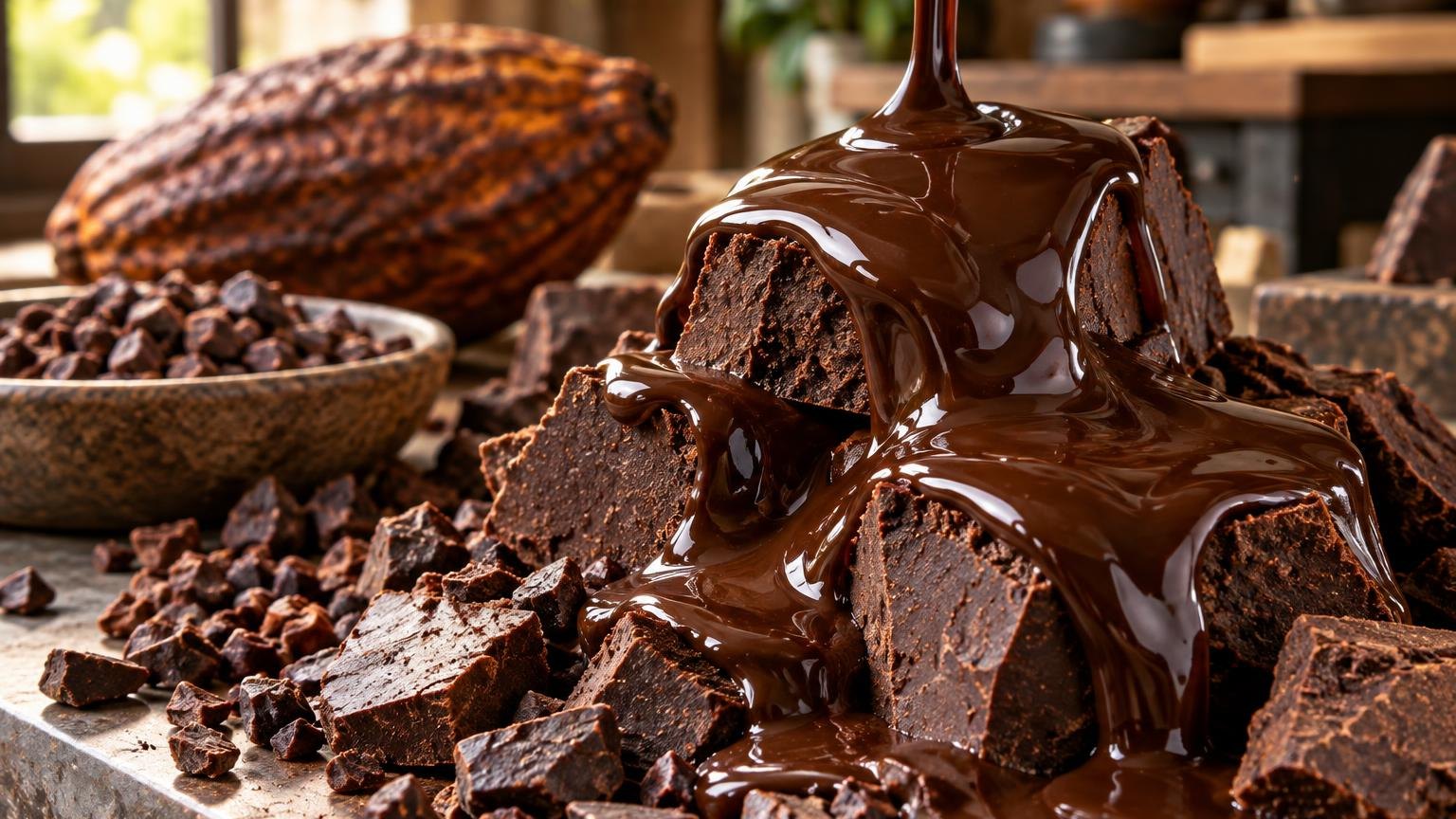
Cacao Fermentation and Residual Alcohol
Cacao beans undergo 5–7 days of heap or box fermentation after harvest. Yeasts convert pulp sugars into ethanol, which peaks around 6–7% concentration within the fermenting mass during days 2–3.
Acetic acid bacteria then oxidize most of that ethanol. By the time beans are dried and roasted at 120–150 °C (248–302 °F), virtually all residual alcohol evaporates.
Finished chocolate liquor typically contains less than 1% ethanol by weight.
Roasting Temperature and Duration
Higher roasting temperatures drive off more volatile compounds, including any trace ethanol. The relationship between roast profile and residual alcohol is measurable:
| Roast Temperature | Duration | Estimated Residual Ethanol |
| 120 °C (248 °F) | 20–30 min | 0.5–0.8% |
| 135 °C (275 °F) | 15–25 min | 0.2–0.5% |
| 150 °C (302 °F) | 10–20 min | <0.2% |
These trace amounts are far below the 0.5% ABV threshold the U.S. TTB uses to classify a beverage as alcoholic. No standard chocolate liquor qualifies as an alcoholic product under federal regulation.
Added Ingredients in Chocolate Liqueurs
Chocolate liqueur—a distinct product—does contain significant alcohol. Manufacturers blend distilled spirits with chocolate liquor, cocoa, cream, or sugar. Alcohol content varies widely by brand:
| Product | ABV | Base Spirit |
| Godiva Chocolate Liqueur | 15% | Neutral spirits |
| Crème de Cacao (dark) | 20–25% | Neutral grain spirit |
| Mozart Dark Chocolate Liqueur | 17% | Grain distillate |
| Baileys (chocolate variant) | 17% | Irish whiskey |
These products fall under TTB jurisdiction and require federal labeling with alcohol content. They are fundamentally different from pure chocolate liquor sold as a baking ingredient.
Other Variables That Matter
- Bean origin: Criollo beans fermented in smaller batches may retain slightly different residual compounds than bulk Forastero beans, though alcohol differences are negligible after roasting.
- Conching time: Extended conching (48–72 hours) further volatilizes trace ethanol through mechanical aeration and sustained heat at 55–90 °C.
- Storage conditions: Sealed, untempered chocolate liquor stored at room temperature undergoes no further fermentation. No new alcohol is generated post-processing.
- Labeling jurisdiction: The FDA regulates chocolate liquor as a food product. The TTB regulates chocolate liqueurs as distilled spirits. This regulatory split determines what appears on the label.
The critical takeaway: processing intensity—fermentation duration, roast temperature, and conching length—collectively reduce any naturally occurring ethanol to physiologically insignificant trace levels in finished chocolate liquor.
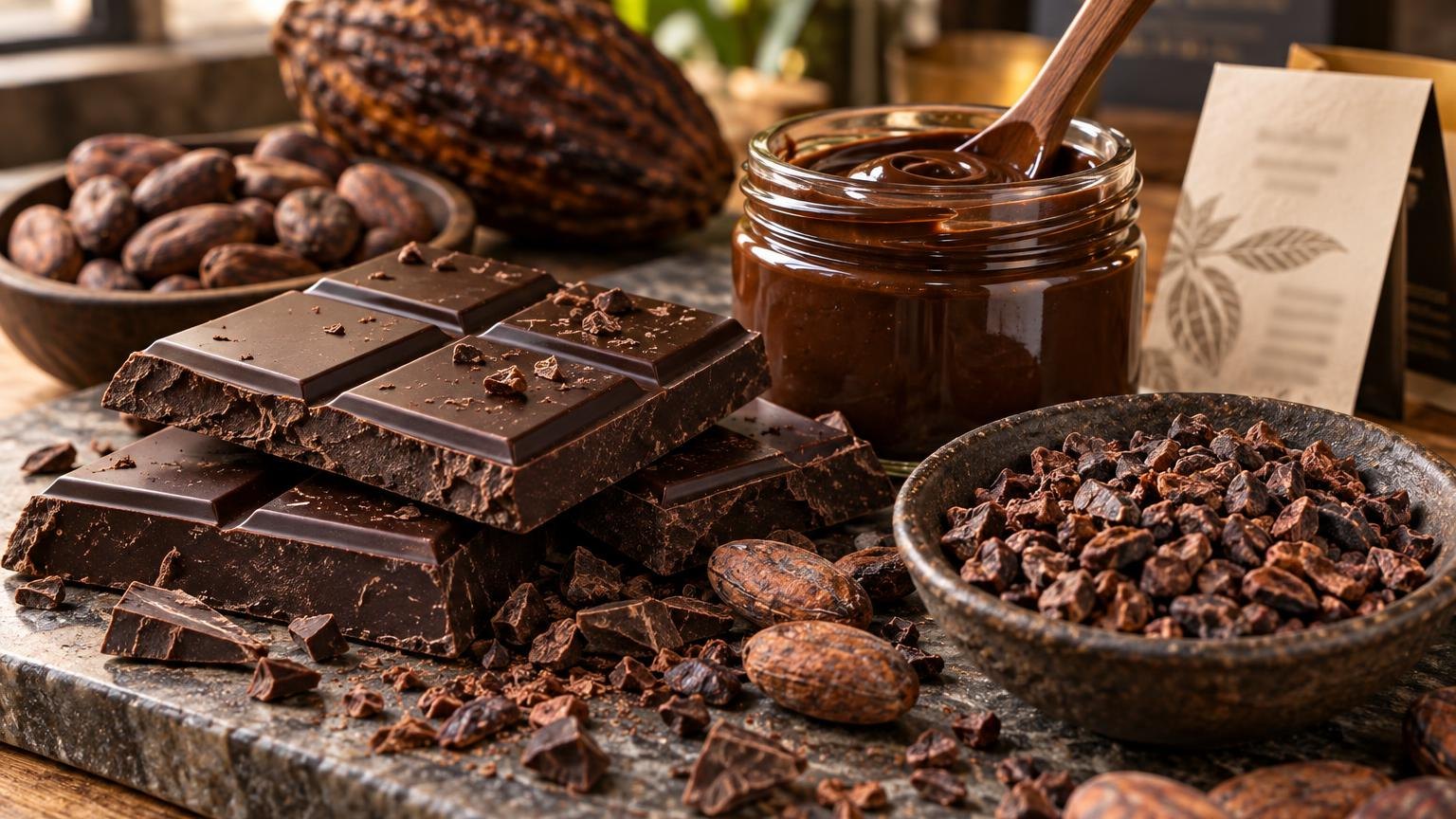
How It Is Measured and Verified
Chocolate liquor’s alcohol content—or lack thereof—can be scientifically verified through standardized laboratory methods.
The FDA and international regulatory bodies maintain strict definitions that distinguish chocolate liquor from alcoholic beverages based on measurable ethanol thresholds.
FDA and Codex Alimentarius Standards
The FDA’s Code of Federal Regulations (21 CFR §163.111) defines chocolate liquor as the solid or semi-plastic food prepared by finely grinding cacao nibs.
No minimum or maximum alcohol percentage is specified because the product is classified as a food ingredient, not a beverage alcohol product.
The Codex Alimentarius standard (CODEX STAN 141-1983) for cocoa mass requires a minimum of 20% cocoa butter content by weight and no more than 5% moisture.
Alcohol is not listed as a compositional factor because it is not expected to be present in meaningful quantities.
Laboratory Testing Methods
Gas chromatography (GC) is the primary analytical method for detecting trace ethanol in cocoa products. Headspace gas chromatography specifically isolates volatile compounds, including ethanol, from the chocolate matrix for precise quantification.
The limit of detection for ethanol using modern GC equipment reaches approximately 0.001% by volume.
Any trace fermentation-derived ethanol in finished chocolate liquor typically falls between 0.0% and 0.5% by weight—well below the 0.5% ABV threshold that the TTB uses to classify alcoholic beverages.
| Testing Method | Detection Limit | Application |
| Headspace Gas Chromatography | ~0.001% v/v | Volatile ethanol in solid foods |
| Enzymatic Assay (NAD+ method) | ~0.005% w/w | Rapid screening of cocoa products |
| Near-Infrared Spectroscopy (NIR) | ~0.01% w/w | Non-destructive inline quality control |
| Distillation + Densitometry | ~0.01% v/v | Official reference method for beverages |
Why Trace Amounts Can Exist
Cacao bean fermentation—a critical step lasting 5 to 7 days at temperatures between 45°C and 50°C—produces ethanol as yeasts convert pulp sugars.
Most of this ethanol evaporates during drying, roasting (at 120°C–160°C), and the conching process.
- Fermentation generates ethanol concentrations up to 6–7% in the surrounding pulp
- Roasting at 130°C or higher volatilizes residual ethanol from the nibs
- Conching at 60°C–80°C for 12–72 hours further drives off remaining volatiles
- Final chocolate liquor retains at most 0.0%–0.5% ethanol by weight
Regulatory Verification in Practice
The Alcohol and Tobacco Tax and Trade Bureau (TTB) only regulates products exceeding 0.5% ABV. Chocolate liquor consistently falls below this threshold, exempting it from federal alcohol labeling, taxation, and age-restricted sale requirements.
Halal certification bodies such as IFANCA and JAKIM independently verify ethanol levels.
Products containing below 0.5% naturally occurring ethanol from fermentation—not added as an ingredient—generally receive halal approval after laboratory confirmation.
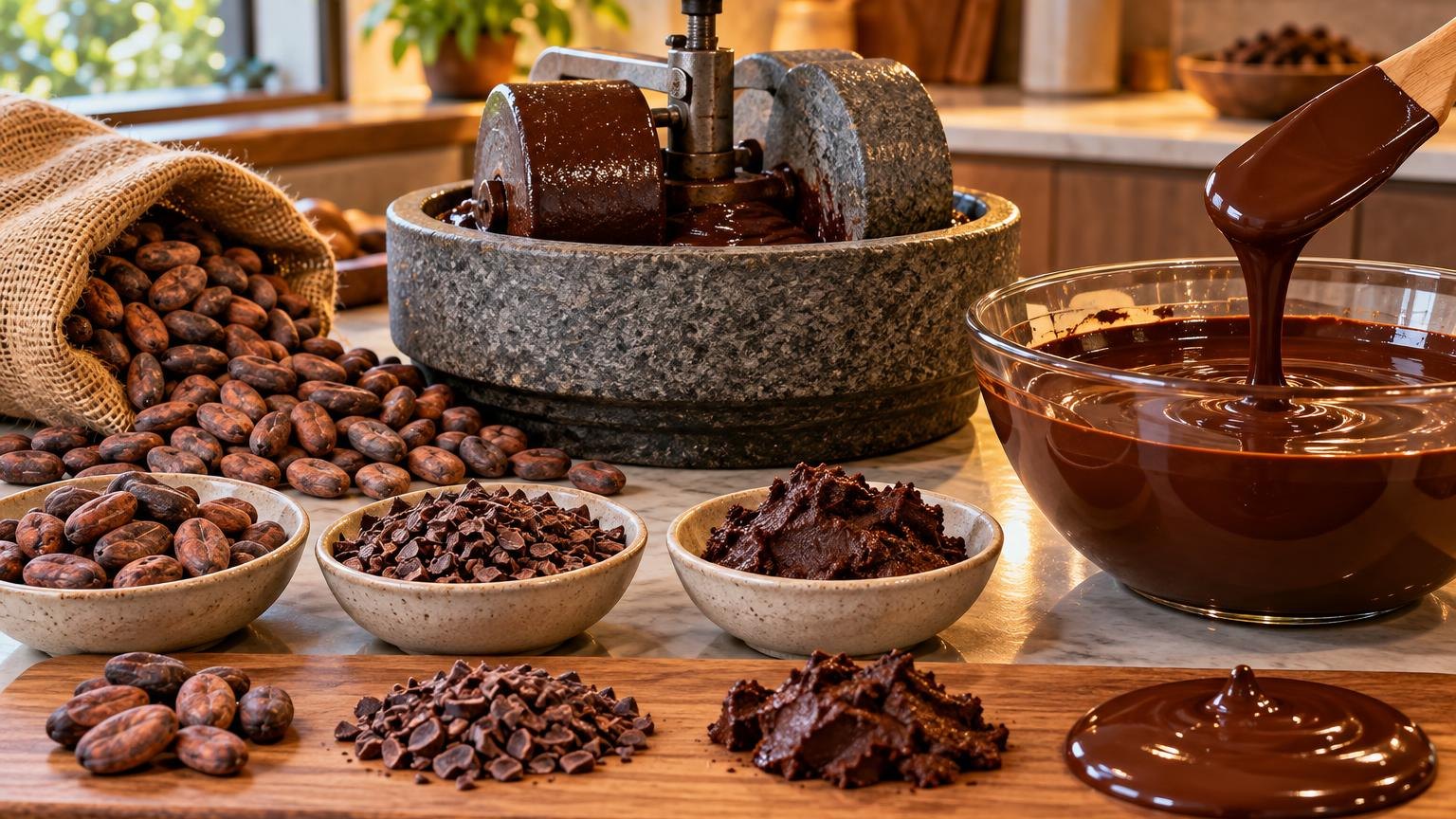
How It Compares to Common Alternatives
Chocolate liquor, chocolate liqueur, and cacao-based spirits occupy entirely different categories. Understanding the distinctions prevents costly mistakes in baking, cocktail-making, and dietary compliance.
Nutritional and Alcohol Comparison
| Product | Alcohol by Volume | Sugar per oz | Calories per oz | Fat per oz |
| Chocolate liquor (cacao mass) | 0% | 0 g | 148 | 13 g |
| Godiva Chocolate Liqueur | 15% | 11 g | 103 | 0 g |
| Crème de Cacao (dark) | 20–25% | 12 g | 101 | 0 g |
| Mozart Dark Chocolate Spirit | 17% | 9 g | 88 | 0.3 g |
| Unsweetened baking chocolate | 0% | 0 g | 145 | 15 g |
| Cocoa powder (natural, unsweetened) | 0% | 0 g | 64 | 3.7 g |
Chocolate liquor’s calorie density comes almost entirely from cocoa butter fat, not sugar or alcohol. It contains roughly 50–55% cocoa butter by weight.
Key Differences in Usage
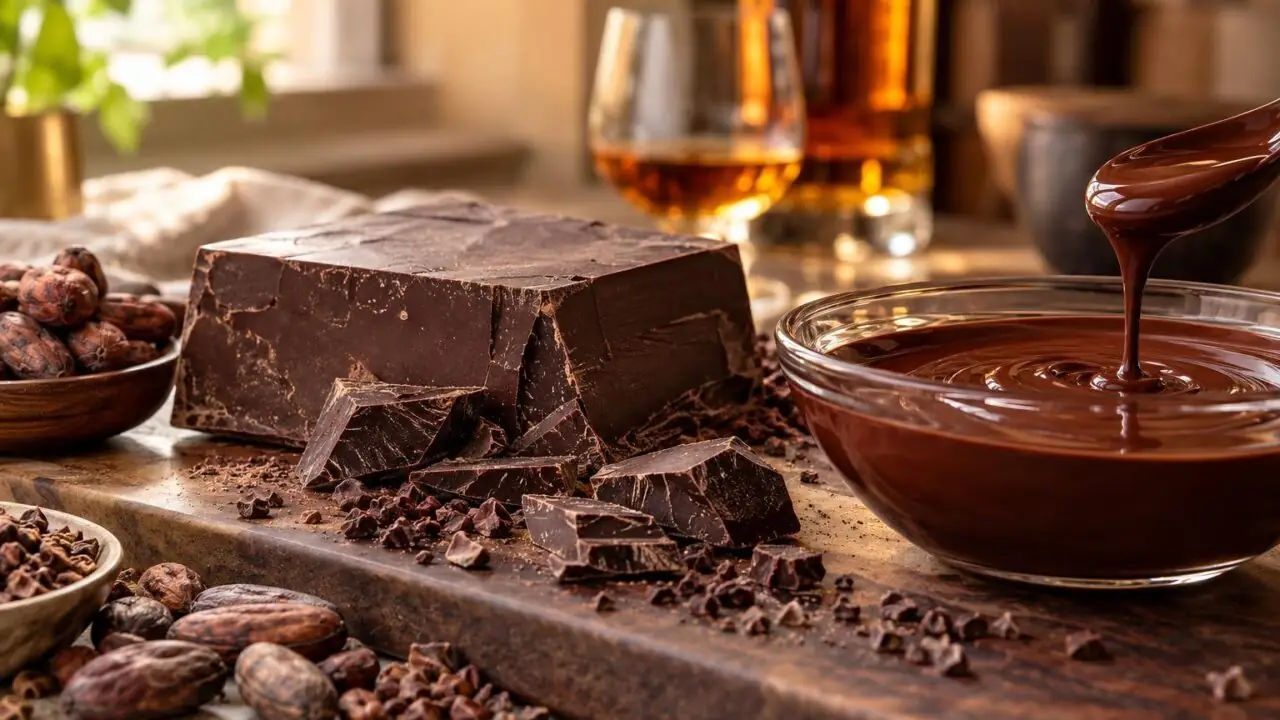
Chocolate liquor functions as a baking and confectionery ingredient. Manufacturers grind roasted cacao nibs into a smooth paste that solidifies at room temperature into blocks.
- Chocolate liquor — the FDA-regulated term for pure cacao mass; required by U.S. standards of identity (21 CFR 163) in any product labeled “chocolate”
- Chocolate liqueur — a sweetened, distilled spirit infused with chocolate flavor; always contains alcohol and typically 15–25% ABV
- Crème de cacao — a specific style of chocolate liqueur; available in dark and white versions, used in cocktails like the Brandy Alexander and Grasshopper
- Cocoa powder — the dry solid remaining after hydraulic presses extract cocoa butter from chocolate liquor; contains 10–22% residual fat
- Unsweetened baking chocolate — solidified chocolate liquor sold in bar form; functionally identical to chocolate liquor in composition
Substitution Ratios
When a recipe calls for one form, direct substitution requires adjustment. These ratios maintain equivalent chocolate intensity.
| If Recipe Calls For | Substitute | Ratio |
| 1 oz chocolate liquor | 3 tbsp cocoa powder + 1 tbsp fat | 1:1 equivalent |
| 1 oz chocolate liquor | 1 oz unsweetened baking chocolate | Direct 1:1 |
| 1 oz chocolate liqueur (in cocktails) | Chocolate liquor | Not interchangeable |
Chocolate liqueur cannot replace chocolate liquor in baking. The alcohol, sugar content, and liquid consistency produce entirely different results in doughs and ganaches.
For those avoiding alcohol due to religious observance, pregnancy, or recovery, chocolate liquor is unequivocally safe.
The word “liquor” here derives from the Latin liquere, meaning “to be fluid,” referencing the melted state of ground cacao — not fermentation or distillation.
Checking labels remains essential. Some manufacturers sell products labeled “chocolate liquor” that are genuine cacao mass, while nearby shelf items with nearly identical names contain 15%+ ABV.
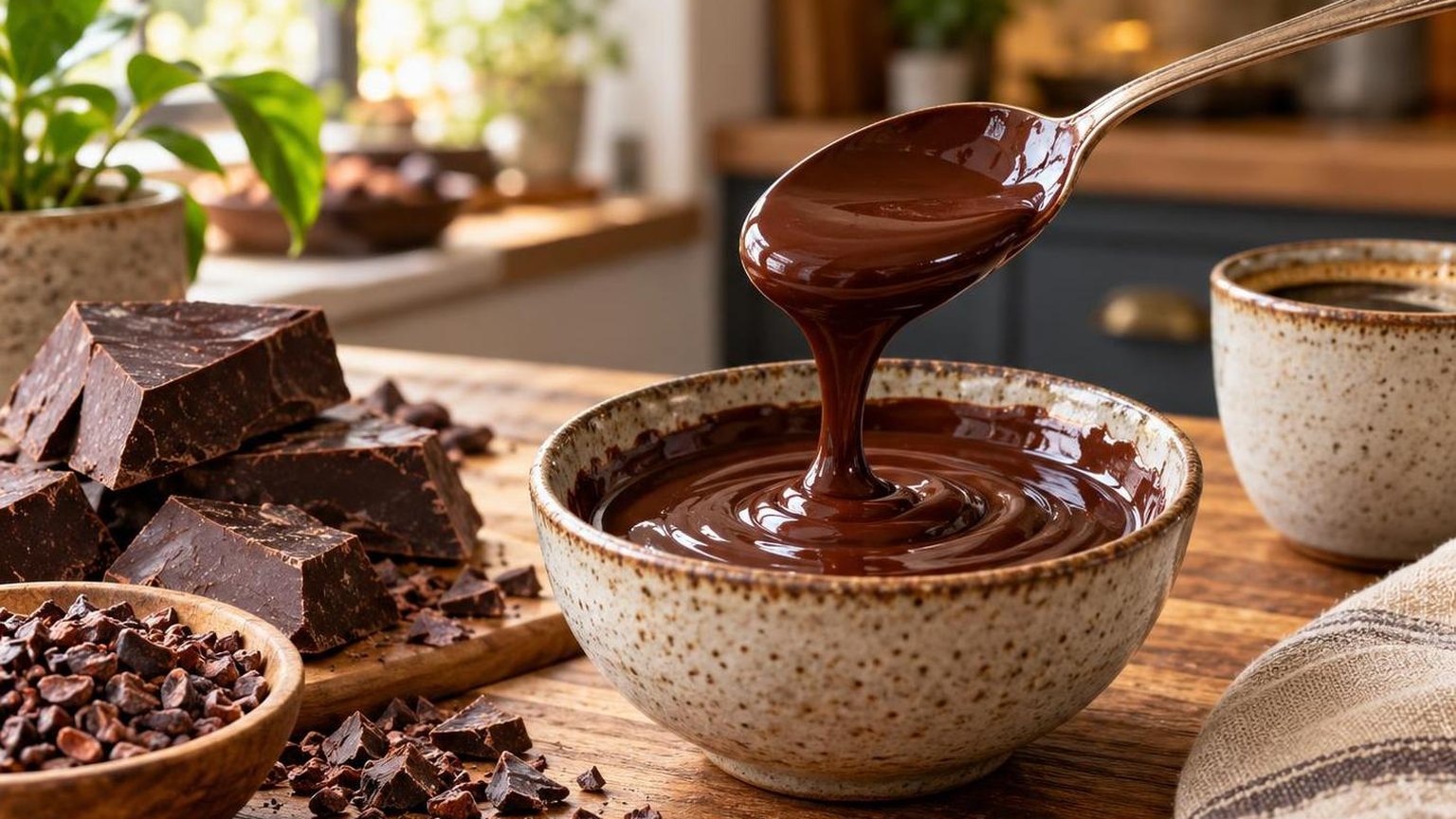
Health, Safety, and Practical Tips
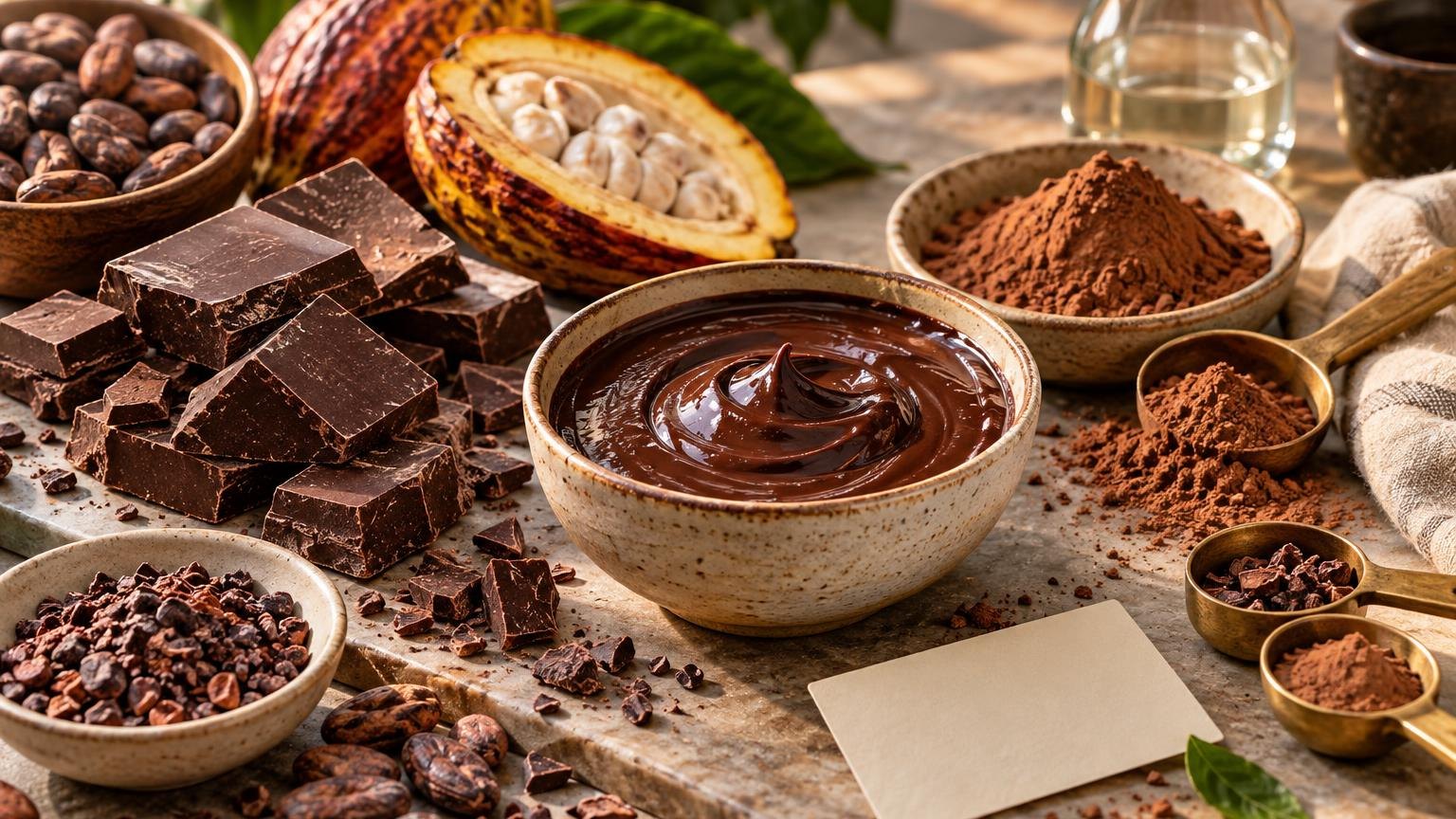
Chocolate liquor contains zero alcohol despite its misleading name. It is simply pure cocoa mass—ground cacao nibs processed into liquid form.
Understanding its nutritional profile and handling properties helps consumers, parents, and home bakers use it confidently.
Nutritional Profile per 28 g (1 oz) Serving
| Nutrient | Amount | % Daily Value |
| Calories | 149 kcal | — |
| Total Fat | 13.5 g | 17% |
| Saturated Fat | 8 g | 40% |
| Carbohydrates | 8.5 g | 3% |
| Dietary Fiber | 3.5 g | 13% |
| Protein | 3.5 g | 7% |
| Iron | 3.2 mg | 18% |
| Magnesium | 82 mg | 20% |
| Theobromine | ~390 mg | — |
| Caffeine | ~23 mg | — |
The high theobromine content—roughly 390 mg per ounce—is safe for most adults but poses a real risk to dogs and cats, who metabolize it far more slowly.
Chocolate Liquor vs. Chocolate Liqueur: Safety Distinction
| Property | Chocolate Liquor | Chocolate Liqueur |
| Alcohol Content | 0% | 15–25% ABV |
| Ingredients | 100% cacao mass | Spirits, sugar, cocoa/cream |
| Safe for Children | Yes | No |
| Halal/Kosher Eligible | Generally yes | No (contains alcohol) |
| Common Brands | Guittard, Callebaut | Godiva, Baileys Chocolat |
Always read labels carefully. Products labeled “chocolate liquor” on ingredient lists—such as those on dark chocolate bars—confirm zero alcohol content.
Practical Tips for Home Use
- Storage: Keep chocolate liquor wrapped tightly in a cool, dry place at 60–70 °F (15–21 °C). Stored properly, it maintains quality for up to 2 years.
- Melting: Use a double boiler or microwave at 50% power in 30-second intervals. Chocolate liquor scorches above 120 °F (49 °C), so monitor temperature closely.
- Substitution ratio: Replace 1 oz of unsweetened baking chocolate with 1 oz of chocolate liquor at a 1:1 ratio—they are functionally identical products.
- Flavor intensity: Chocolate liquor is 100% cacao with no added sugar. Expect intense bitterness comparable to a 99% dark chocolate bar.
Who Should Exercise Caution
Individuals sensitive to caffeine should note that 1 oz delivers roughly 23 mg—about one-quarter of an espresso shot’s caffeine content.
People with nickel allergies may react to cacao products. Cocoa beans accumulate nickel from soil, with concentrations averaging 2.0–5.0 µg/g in processed chocolate liquor according to published food-chemistry analyses.
Pregnant women can safely consume chocolate liquor in moderation. The American College of Obstetricians and Gynecologists advises limiting total daily caffeine to under 200 mg, making occasional use well within safe bounds.
For those observing religious dietary laws, chocolate liquor’s alcohol-free status makes it permissible under halal guidelines—provided the manufacturing facility meets certification requirements for cross-contamination prevention.
Common Questions
Does chocolate liquor contain alcohol?
No. Chocolate liquor is 100% pure cacao — ground cacao nibs heated into a liquid state — with zero alcohol content. The term “liquor” refers to the liquid form of the cacao mass, not to any fermented or distilled spirit.
Why is it called “liquor” if there is no alcohol?
The word derives from the Latin liquor, meaning “liquid” or “fluid.” When roasted cacao nibs are ground, the cocoa butter melts and produces a smooth, pourable liquid; manufacturers adopted the term to describe this physical state.
The FDA classifies chocolate liquor as a non-alcoholic ingredient under 21 CFR 163.
What is the difference between chocolate liquor and chocolate liqueur?
Chocolate liquor is unsweetened, ground cacao with 52–55% cocoa butter and 0% alcohol.
Chocolate liqueur is a sweetened alcoholic beverage — typically 15–25% ABV — made by blending chocolate or cocoa flavoring with a spirit base such as vodka, rum, or cream.
They share a name but are fundamentally different products.
Is chocolate liquor safe for children and people who avoid alcohol?
Yes. Because chocolate liquor contains no ethanol whatsoever, it is safe for children, pregnant women, and anyone abstaining from alcohol for religious, medical, or personal reasons.
It is a standard ingredient in dark chocolate bars, baking chocolate, and cocoa powder sold without age restrictions.
What products are made from chocolate liquor?
Chocolate liquor is the foundational ingredient of virtually all chocolate products. Pressed hydraulically, it separates into cocoa butter and cocoa solids (cocoa powder).
Combined with sugar and additional cocoa butter, it becomes dark chocolate; with the addition of milk solids, it becomes milk chocolate. A typical 70% dark chocolate bar contains roughly 70% chocolate liquor by weight.
Can chocolate liquor trigger a positive result on an alcohol test?
No. Chocolate liquor has 0% ethanol, so consuming it will not raise blood alcohol concentration or trigger a positive breathalyzer or blood-alcohol test.
This distinguishes it from certain confections such as bourbon-filled chocolates or rum truffles, which do contain trace amounts of actual alcohol.
Related Guides
- How Many Grams In A Troy Ounce Of Silver?
- How Much Is A Half Oz?
- Where To Put A Freestanding Wine Cooler? 15 Best Spots (2026 Guide)
- How Many Oz In A Quart?
- 11 Essential Facts About How Many Tons Is A Semi Truck (2026 Expert Weight & Logistics Guide)
- All Blog Guides
- U.S. Food & Drug Administration – CFR Title 21, Sec. 163 Cacao Products (2024)
- USDA FoodData Central – Baking Chocolate, Unsweetened, Liquid (2024)
- TTB – Alcohol and Tobacco Tax and Trade Bureau, Chocolate and Confectionery Labeling (2023)
- Harvard T.H. Chan School of Public Health – Dark Chocolate (2023)
- International Cocoa Organization (ICCO) – Processing Cocoa (2023)
- National Confectioners Association – How Chocolate Is Made (2024)
- Beckett, S.T. – *The Science of Chocolate*, Royal Society of Chemistry (2018)
- PubMed Central – "Cocoa and Chocolate in Human Health and Disease" (2011)
- University of Illinois Extension – Chocolate: Food of the Gods (2023)