How Many Coors Light to Get Drunk? is about 3–5 standard 12-ounce beers for a 160-pound adult, but intoxication varies substantially.
Body weight, sex, drinking speed, food, medications, tolerance, and liver health change blood alcohol concentration. A “standard drink” contains 12 fluid ounces of 5% beer; Coors Light is typically 4.2% ABV.
Use the estimate as a safety reference, not a drinking target. Impairment can begin before feeling drunk, and no beer count guarantees safe driving or a specific blood alcohol result.
The article explains serving sizes, approximate effects, legal limits, alcohol absorption, and warning signs of alcohol poisoning.
Choose a sober driver, stop drinking when impairment appears, and call emergency services for slow breathing, unconsciousness, seizures, or repeated vomiting.
Coors Light Alcohol Content Per Can
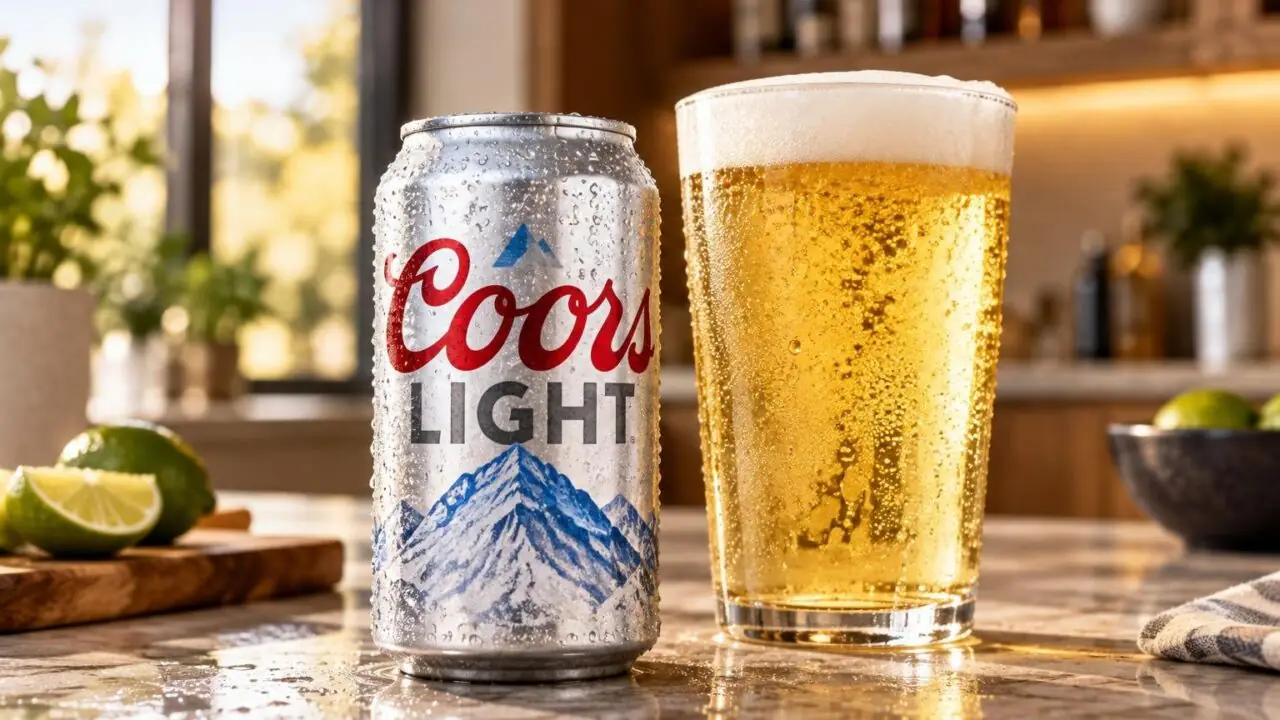
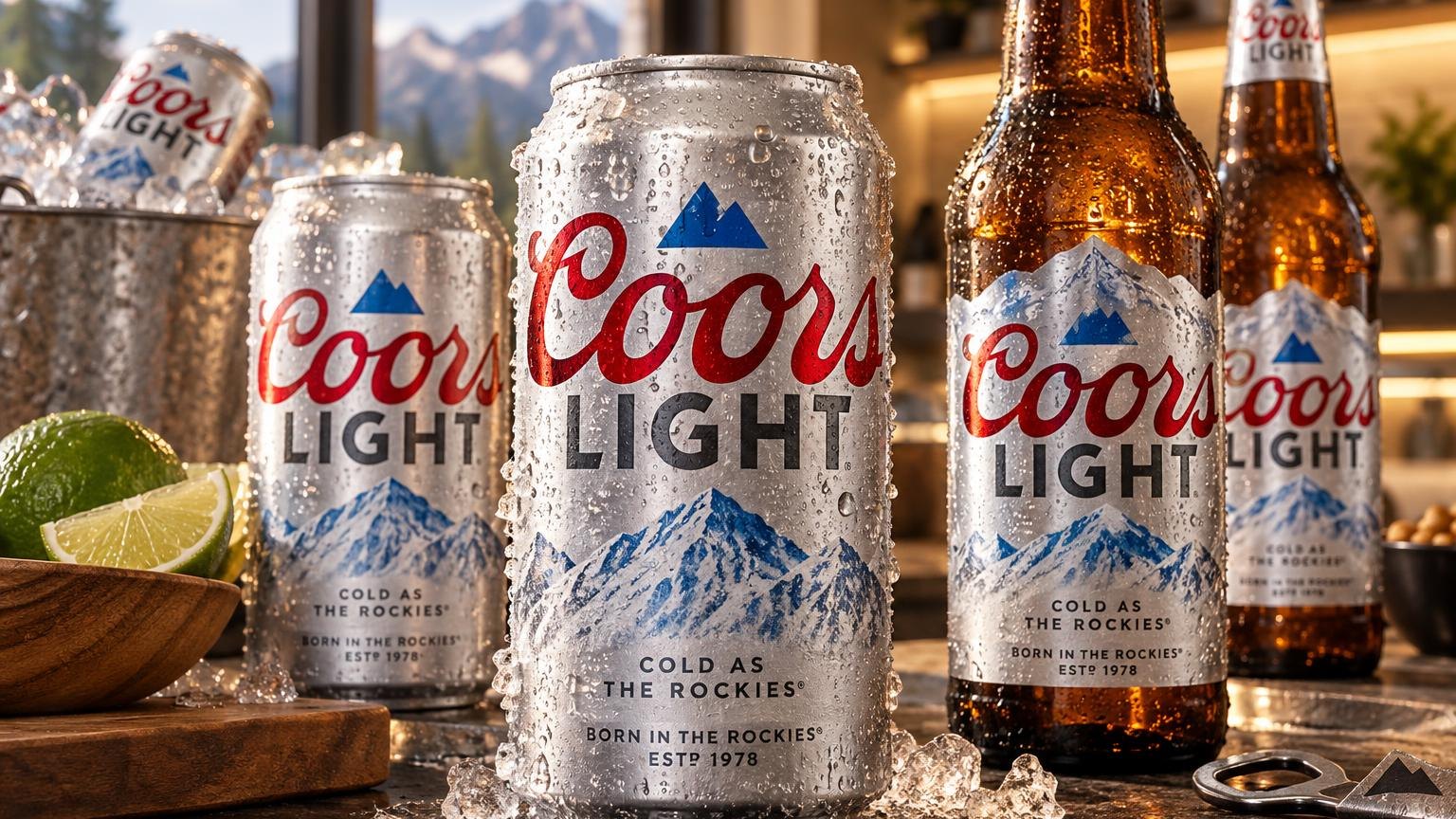
Coors Light contains 4.2% alcohol by volume (ABV), placing it among the lighter mainstream American lagers. Each standard 12 oz can delivers roughly 0.5 oz of pure alcohol—identical to one “standard drink” as defined by the NIAAA.
Understanding exact alcohol content per serving size matters because Coors Light is sold in multiple formats, each containing different total alcohol amounts.
| Serving Size | ABV | Pure Alcohol (oz) | Standard Drinks |
| 12 oz can | 4.2% | 0.50 | ~1.0 |
| 16 oz tallboy | 4.2% | 0.67 | ~1.3 |
| 24 oz can | 4.2% | 1.01 | ~1.7 |
| 25 oz “silo” can | 4.2% | 1.05 | ~1.8 |
| 40 oz bottle | 4.2% | 1.68 | ~2.8 |
The formula is straightforward: multiply the volume in ounces by 0.042 to get pure alcohol ounces. One NIAAA standard drink equals 0.6 oz of pure alcohol.
How Coors Light Compares to Similar Beers
At 4.2% ABV, Coors Light sits in the same bracket as its closest competitors but below full-strength craft and import beers.
| Beer | ABV | Calories (12 oz) |
| Coors Light | 4.2% | 102 |
| Bud Light | 4.2% | 110 |
| Miller Lite | 4.2% | 96 |
| Michelob Ultra | 4.2% | 95 |
| Coors Banquet | 5.0% | 147 |
| Budweiser | 5.0% | 145 |
Coors Light’s 102 calories per 12 oz can come from 5 g of carbohydrates and the alcohol itself. It contains less than 1 g of protein and 0 g of fat.
A key detail: Coors Banquet, the non-light version, is 5.0% ABV. Switching from Light to Banquet increases alcohol intake by roughly 19% per can—a meaningful difference over multiple drinks.
Coors Light’s consistent 4.2% ABV across all packaging formats makes calculating total intake reliable. Unlike some craft beers with batch variation, macro lagers maintain tight production tolerances, typically within ±0.1% ABV.
How Many Cans Cause Intoxication
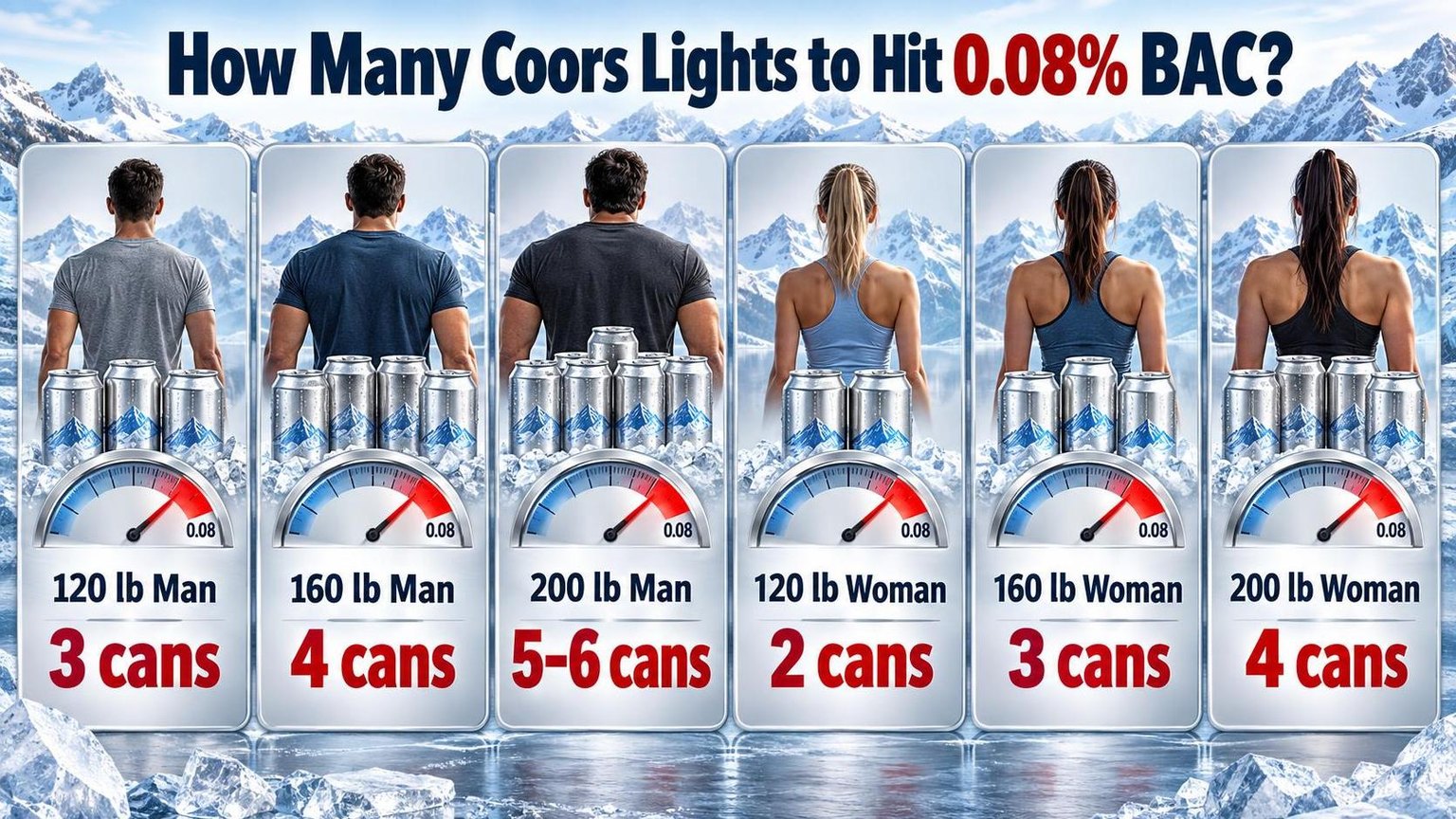
Coors Light contains 4.2% ABV per 12 oz can, delivering roughly 14 grams of pure alcohol per serving. The number of cans needed to reach legal intoxication (0.08% BAC) varies significantly by body weight, sex, and drinking speed.
A standard BAC calculation uses the Widmark formula, factoring body water content and metabolism rate.
Men metabolize approximately 0.015% BAC per hour; women process alcohol at a similar rate but reach higher BAC faster due to lower average body water percentage (52% vs. 61%).
| Body Weight | Men — Cans to 0.08% BAC | Women — Cans to 0.08% BAC |
| 120 lbs (54 kg) | 3 | 2 |
| 140 lbs (64 kg) | 3–4 | 2–3 |
| 160 lbs (73 kg) | 4 | 3 |
| 180 lbs (82 kg) | 4–5 | 3–4 |
| 200 lbs (91 kg) | 5–6 | 4 |
| 220 lbs (100 kg) | 6–7 | 4–5 |
These estimates assume consumption within a one-hour window on an empty stomach. Eating a full meal before drinking can reduce peak BAC by up to 20–25%.
Subjective intoxication—impaired coordination, slowed reaction time, lowered inhibition—often begins well before 0.08% BAC. Most people feel noticeable effects at 0.03–0.05% BAC.
Factors That Shift the Number
- Food intake: A protein- and fat-rich meal slows gastric emptying, delaying alcohol absorption into the bloodstream.
- Tolerance: Regular drinkers may feel less impaired but still reach the same BAC—tolerance masks intoxication without reducing it.
- Hydration: Dehydration concentrates alcohol in a smaller fluid volume, raising BAC faster.
- Medications: Antihistamines, antidepressants, and benzodiazepines amplify alcohol’s sedative effects, making fewer cans feel like more.
- Drinking pace: Spacing cans 60+ minutes apart allows the liver to metabolize roughly one standard drink per hour, keeping BAC lower.
A 160 lb man drinking four Coors Lights in one hour will approach 0.08% BAC. A 140 lb woman reaches the same level after roughly two to three cans at the same pace.
BAC is a physiological measurement, not a feeling. Perceived sobriety does not equal legal or safe sobriety—always use objective measures when making decisions about driving.
Coors Light and Blood Alcohol Level
Each 12 oz Coors Light contains 4.2% ABV, delivering roughly 0.6 oz of pure alcohol per can. That alcohol enters your bloodstream within minutes, and your body eliminates it at a fixed average rate of 0.015% BAC per hour.
Blood Alcohol Concentration (BAC) depends on weight, sex, food intake, and drinking speed. The Widmark formula provides reliable estimates for standard conditions.
Estimated BAC by Body Weight After Coors Light (12 oz, 4.2% ABV)
| Coors Lights | 130 lb Female | 155 lb Female | 155 lb Male | 180 lb Male | 210 lb Male |
| 1 | 0.035% | 0.029% | 0.024% | 0.021% | 0.018% |
| 2 | 0.070% | 0.059% | 0.048% | 0.041% | 0.035% |
| 3 | 0.105% | 0.088% | 0.072% | 0.062% | 0.053% |
| 4 | 0.141% | 0.118% | 0.096% | 0.083% | 0.071% |
| 5 | 0.176% | 0.147% | 0.120% | 0.104% | 0.089% |
| 6 | 0.211% | 0.177% | 0.144% | 0.124% | 0.107% |
These estimates assume all drinks consumed within one hour on an empty stomach, using Widmark r-values of 0.68 for men and 0.55 for women.
The legal driving limit across all 50 U.S. states is 0.08% BAC. A 180 lb male reaches that threshold at approximately 4 Coors Lights in one hour.
A 130 lb woman can hit 0.08% after just 2–3 Coors Lights in the same timeframe. Lighter individuals accumulate alcohol in the blood significantly faster.
Key Factors That Raise BAC Faster
- Empty stomach: Food slows gastric emptying by up to 50%, reducing peak BAC substantially.
- Drinking speed: Consuming 3 beers in 30 minutes produces a higher peak BAC than spacing them over 3 hours.
- Body composition: Higher body fat percentage increases BAC because fat tissue does not absorb alcohol.
- Medications: Antihistamines, antidepressants, and acetaminophen can intensify alcohol’s effects or slow metabolism.
Your liver processes roughly one standard drink per hour. Coors Light at 4.2% ABV is slightly below a full standard drink (0.6 oz vs. the 0.6 oz threshold), but the difference is negligible in practice.
BAC above 0.15% carries serious risk of impaired motor control and vomiting. At 0.30%, loss of consciousness becomes likely. Monitor intake carefully regardless of beer strength.
Body Weight Changes the Answer
Body weight is the single largest variable in how quickly alcohol raises your blood alcohol concentration (BAC). A 120-pound person drinking Coors Light at the same pace as a 220-pound person will reach legal intoxication roughly twice as fast.
Coors Light contains 4.2% ABV and 12 oz per can, delivering approximately 0.6 oz of pure ethanol per serving. BAC depends on how that ethanol distributes through your body’s water volume, which correlates directly with weight.
Estimated BAC by Body Weight After Coors Lights (Male, One Hour)
| Body Weight | 2 Coors Lights | 3 Coors Lights | 4 Coors Lights | 5 Coors Lights |
| 120 lbs | 0.06% | 0.09% | 0.12% | 0.15% |
| 140 lbs | 0.05% | 0.08% | 0.10% | 0.13% |
| 160 lbs | 0.04% | 0.07% | 0.09% | 0.11% |
| 180 lbs | 0.04% | 0.06% | 0.08% | 0.10% |
| 200 lbs | 0.03% | 0.05% | 0.07% | 0.09% |
| 220 lbs | 0.03% | 0.05% | 0.06% | 0.08% |
These estimates use the Widmark formula with an average male body water ratio (r = 0.68) and a metabolism rate of 0.015% BAC per hour. Female values run higher due to a lower average ratio (r = 0.55).
Key Takeaways by Weight Range
- Under 140 lbs: Three Coors Lights in one hour can push BAC past the 0.08% legal limit in all 50 US states.
- 140–180 lbs: Four Coors Lights within an hour typically crosses the 0.08% threshold.
- Over 200 lbs: Five or more Coors Lights in an hour are generally needed to reach 0.08%, but impairment begins well before that number.
The National Highway Traffic Safety Administration notes measurable impairment in reaction time and judgment starting at just 0.02% BAC — reachable with a single Coors Light for most adults under 150 lbs.
Body fat percentage matters too. Fat tissue contains less water than muscle, so two people at identical weights can register different BACs if one carries significantly more body fat.
These figures assume standard pacing on a non-empty stomach. Drinking faster, skipping meals, or dehydration will push actual BAC higher than the table suggests.
Drinking Speed Raises Intoxication Risk
The liver metabolizes approximately one standard drink per hour, equivalent to roughly one 12 oz Coors Light (4.2% ABV). Drinking faster than this rate causes alcohol to accumulate in the bloodstream, pushing BAC higher with each unconsumed interval.
BAC Accumulation by Drinking Pace
A 160-pound male drinking Coors Light on an empty stomach can expect approximate BAC levels based on consumption speed:
| Drinks per Hour | Estimated BAC After 1 Hour | Estimated BAC After 2 Hours |
| 1 Coors Light | 0.02% | 0.02% |
| 2 Coors Lights | 0.04% | 0.05% |
| 3 Coors Lights | 0.06% | 0.09% |
| 4 Coors Lights | 0.08% | 0.13% |
At four Coors Lights per hour, a 160-pound person reaches the 0.08% legal driving limit in roughly 60 minutes. The same four beers spread over four hours would keep BAC near 0.02%.
Why the Liver Cannot Keep Up
Alcohol dehydrogenase, the primary enzyme responsible for metabolizing ethanol, works at a fixed rate. For most adults, this rate eliminates about 0.015%–0.017% BAC per hour regardless of how much alcohol is consumed.
When intake exceeds elimination, unprocessed ethanol circulates through the brain, impairing coordination, judgment, and reaction time progressively.
Practical Factors That Accelerate Absorption
- Empty stomach: Alcohol reaches the small intestine faster, increasing absorption rate by up to 30% compared to drinking after a meal
- Carbonation: Coors Light’s carbonation can speed gastric emptying, pushing alcohol into the bloodstream more quickly than non-carbonated drinks
- Cold temperature: Ice-cold beer is consumed faster because it feels less filling, encouraging a quicker pace
- Social settings: Group drinking increases consumption speed by an average of 0.5 drinks per hour according to observational research
The One-Drink-Per-Hour Rule
Spacing each Coors Light at least 60 minutes apart gives the liver time to clear nearly all the ethanol before the next serving arrives. This keeps BAC below 0.03% for most adults weighing over 140 pounds.
Rapid consumption is the single largest controllable factor determining how quickly Coors Light causes intoxication, outweighing even body weight in many scenarios.
Coors Light Compared With Standard Drinks
Coors Light sits below the threshold of a full standard drink as defined by the NIAAA. Understanding this distinction matters because BAC calculations and drinking guidelines are built around standard drink units, not individual cans or bottles.
The NIAAA defines one U.S. standard drink as 14 grams (0.6 fluid ounces) of pure alcohol. A 12 oz Coors Light at 4.2% ABV contains roughly 0.5 oz of pure alcohol — about 83% of a standard drink.
Alcohol Content: Coors Light vs. Common Beverages
| Beverage | Typical Serving | ABV | Pure Alcohol (oz) | Standard Drinks |
| Coors Light | 12 oz can | 4.2% | 0.50 | 0.83 |
| Budweiser | 12 oz can | 5.0% | 0.60 | 1.00 |
| Modelo Especial | 12 oz bottle | 4.4% | 0.53 | 0.88 |
| IPA (avg craft) | 12 oz can | 6.5% | 0.78 | 1.30 |
| Red wine | 5 oz glass | 13.5% | 0.68 | 1.13 |
| 80-proof vodka | 1.5 oz shot | 40% | 0.60 | 1.00 |
Key takeaways from this comparison:
- Six Coors Lights equal roughly five standard drinks — not six — because each can delivers only 83% of a standard unit.
- You would need approximately 1.2 Coors Lights to match the alcohol in a single shot of 80-proof spirits.
- A typical craft IPA packs 56% more alcohol per 12 oz serving than Coors Light.
- Two glasses of red wine deliver more pure alcohol than three Coors Lights.
This lower per-unit alcohol content is why Coors Light often creates a false sense of moderation. Drinkers consume more cans to reach the same buzz, increasing total liquid and calorie intake along the way.
The Dietary Guidelines for Americans recommend no more than two standard drinks per day for men and one for women. Translated to Coors Light, that ceiling is roughly 2.4 cans for men and 1.2 cans for women.
Always count alcohol in standard-drink equivalents rather than container count. The 4.2% ABV in Coors Light may be low relative to craft beer, but volume consumed still drives BAC and impairment.
When Coors Light Becomes Dangerous
Coors Light becomes dangerous when consumption pushes blood alcohol concentration (BAC) past 0.08%, the legal limit in all 50 US states.
For most adults, this threshold arrives faster than expected — often within 4–5 cans on an empty stomach.
BAC Levels and Associated Risks
| BAC Level | Approximate Coors Lights (160 lb person, 1 hour) | Effects |
| 0.02–0.03% | 1–2 | Mild relaxation, slight impairment of judgment |
| 0.05–0.06% | 3 | Lowered inhibition, impaired coordination |
| 0.08–0.10% | 4–5 | Legally impaired, poor muscle control, slurred speech |
| 0.15–0.20% | 7–9 | Major loss of balance, risk of vomiting, blackout risk |
| 0.30%+ | 12+ | Loss of consciousness, potential alcohol poisoning |
These estimates assume a 160 lb male drinking 12 oz cans at 4.2% ABV within one hour. Women generally reach each threshold 1–2 drinks sooner due to differences in body water percentage.
Alcohol Poisoning Warning Signs
The CDC reports approximately 2,200 alcohol poisoning deaths annually in the United States. Even a “light” beer can contribute to fatal outcomes at high volumes.
- Irregular or slow breathing (fewer than 8 breaths per minute)
- Seizures or uncontrollable vomiting
- Blue-tinged or pale skin, especially fingertips and lips
- Unconsciousness with inability to be awakened
- Hypothermia (dangerously low body temperature)
A 120 lb person consuming 10 Coors Lights in two hours could reach a BAC above 0.25% — a level the Stanford University alcohol education program classifies as life-threatening.
Legal and Health Consequences
A first DUI offense averages $10,000 in fines, legal fees, and increased insurance costs according to the National Highway Traffic Safety Administration. The NIAAA defines binge drinking as 5+ drinks for men or 4+ for women within two hours.
Chronic consumption of 7+ Coors Lights daily exceeds the Dietary Guidelines for Americans limit of two drinks per day for men. This level elevates risk of liver disease, cardiovascular damage, and several cancers.
Frequently Asked Questions
How many Coors Light does it take for an average person to feel drunk?
For a 160-pound male, 4–5 Coors Light cans (12 oz, 4.2% ABV each) consumed within two hours typically pushes blood alcohol concentration (BAC) to around 0.08%, the legal limit in all 50 US states.
A 130-pound woman may reach that threshold with just 3–4 cans in the same timeframe due to differences in body water composition and enzyme activity.
Does Coors Light’s low ABV make it harder to get drunk compared to craft beer?
Yes — Coors Light’s 4.2% ABV is roughly half the alcohol content of a typical American IPA (6.5%–7.5% ABV), meaning you’d need nearly twice the volume to match the same alcohol intake.
One 12 oz Coors Light contains about 0.5 oz of pure alcohol, whereas a 7% IPA contains roughly 0.84 oz per serving.
How does body weight specifically affect how many Coors Lights it takes to get drunk?
A 120-pound person drinking 3 Coors Lights in one hour may reach a BAC of approximately 0.07%, while a 200-pound person consuming the same amount in the same period would likely register around 0.04%.
This difference occurs because larger bodies have more blood volume and water to dilute the alcohol.
Can drinking Coors Light on an empty stomach get you drunk faster?
Drinking without food allows alcohol to pass directly from the stomach into the small intestine, accelerating absorption by up to 3× compared to drinking after a full meal.
Two Coors Lights on an empty stomach can produce the same peak BAC that three or four would on a full stomach, according to research published by the National Institute on Alcohol Abuse and Alcoholism (NIAAA).
How long does it take your body to process the alcohol from one Coors Light?
The liver metabolizes alcohol at a relatively fixed rate of about 0.015 BAC per hour, which translates to roughly one standard drink every 60–75 minutes.
Since one 12 oz Coors Light at 4.2% ABV equals approximately 0.6 standard drinks, most adults fully process it in about 45–60 minutes — meaning back-to-back cans will accumulate alcohol faster than your body can clear it.
Further Reading
- How Many Beers In A Heineken Mini Keg?
- How Many Ounces in a Growler? A Complete, Real-World Guide From Someone Who Actually Uses Them
- How Many Beers In A Pony Keg?
- How Much Alcohol Is In Coors Light? – Get Answer Now
- Guinness Stout Vs Extra Stout — The Ultimate Comparison Guide (2026 Edition)
- All Alcohol Guides
- National Institute on Alcohol Abuse and Alcoholism – What Is A Standard Drink? (2023)
- Centers for Disease Control and Prevention – Dietary Guidelines for Alcohol (2024)
- National Highway Traffic Safety Administration – Impaired Driving (2024)
- USDA FoodData Central – Beer, light (2024)
- National Institute on Alcohol Abuse and Alcoholism – Understanding Blood Alcohol Content (BAC) (2023)
- Cedillo YE et al. – "Effect of Body Weight on Alcohol Metabolism" – PubMed (2023)
- Stanford University Office of Alcohol Policy and Education – BAC and Tolerance (2023)
- Molson Coors Beverage Company – Coors Light Product Information (2024)