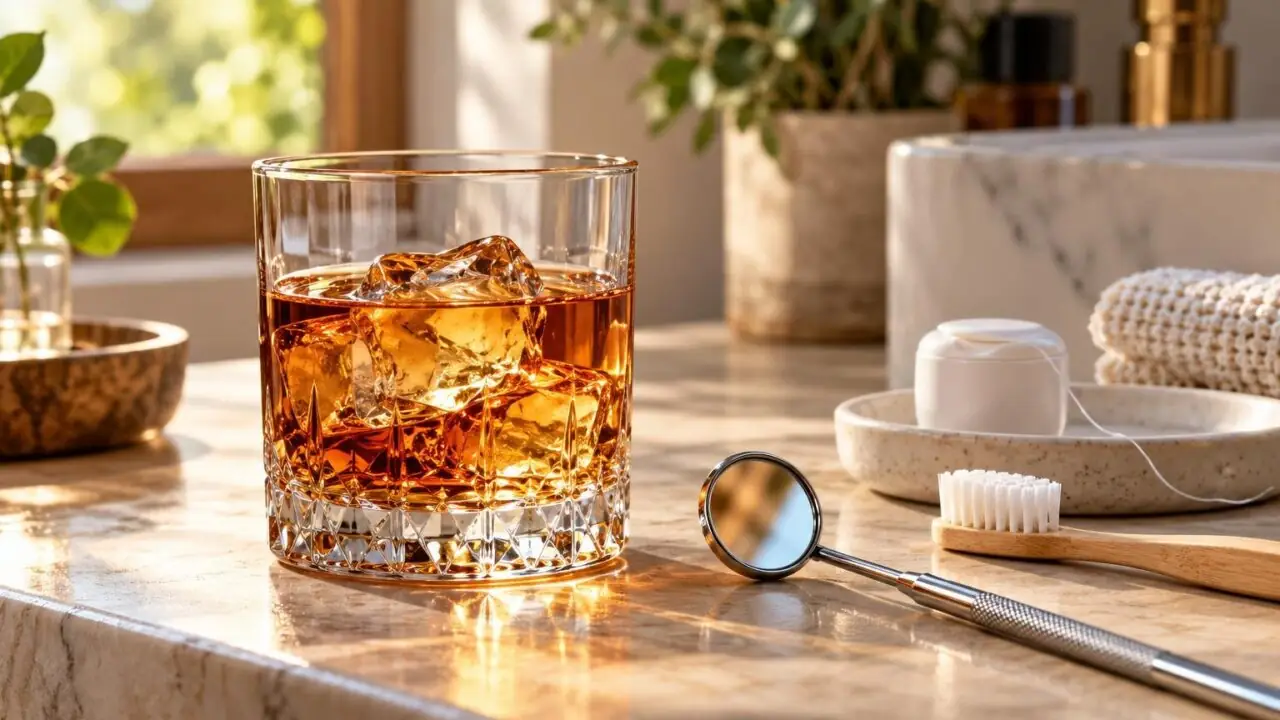
Whiskey is not a proven remedy, so the answer to “Does Whiskey Help Tooth Pain?” is no. Alcohol may briefly dull sensation, but it cannot treat decay, a cracked tooth, gum infection, or an abscess.
Applying whiskey directly to the gums can irritate tissue and worsen inflammation.
Tooth pain usually signals a problem requiring dental evaluation, especially when swelling, fever, bad taste, facial tenderness, or difficulty swallowing occurs.
Rinse gently with warm salt water, use an over-the-counter pain reliever as directed, and avoid placing aspirin or alcohol on the tooth.
Seek urgent dental care for severe or persistent pain; an abscess can spread beyond the tooth and become a medical emergency.
Whiskey’s Temporary Effect on Tooth Pain
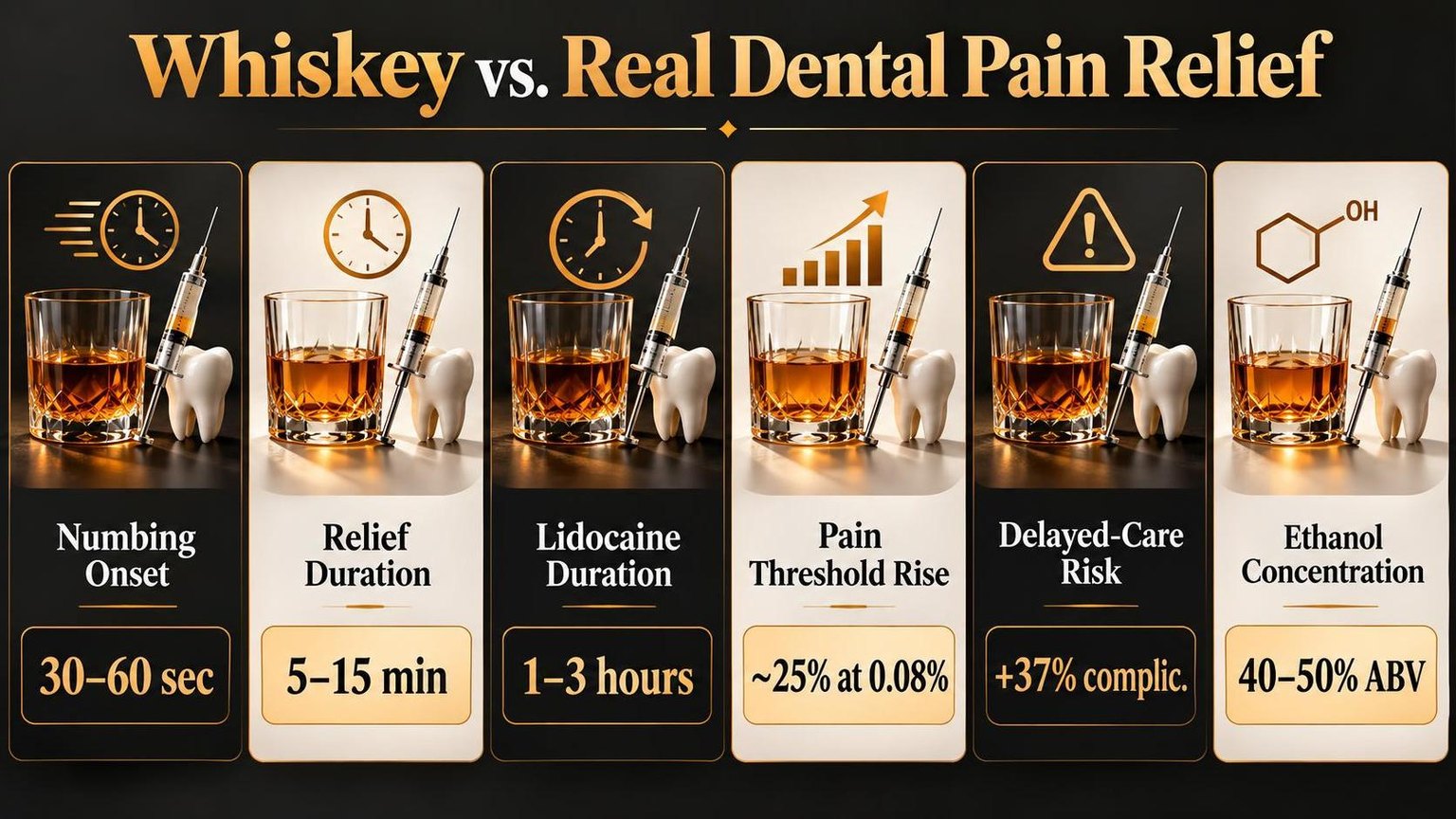
Whiskey contains 40–50% ethanol by volume, and ethanol acts as a mild topical anesthetic when applied directly to oral tissue.
This numbing sensation is real but short-lived, typically lasting only 5–15 minutes before pain returns at full intensity.
How Ethanol Creates a Numbing Effect
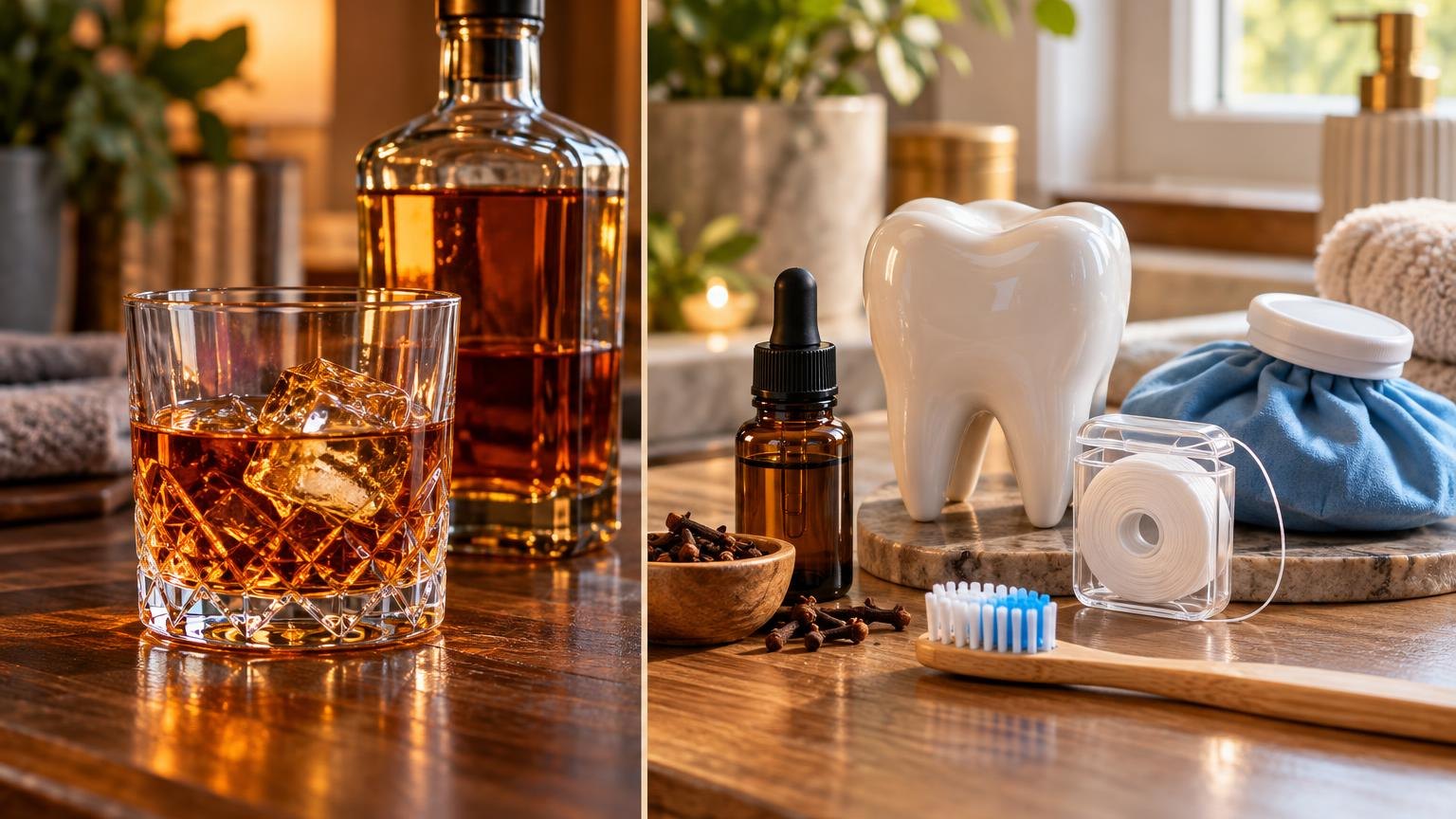
Ethanol temporarily disrupts nerve signal transmission by interacting with GABA receptors and inhibiting voltage-gated sodium channels in peripheral nerve endings.
This mechanism mirrors how clinical local anesthetics like lidocaine function, but at far lower potency.
A 2006 study published in the Journal of the American Dental Association confirmed that alcohol applied topically provides measurable but clinically insignificant analgesic effects compared to purpose-built dental anesthetics.
Whiskey vs. Dental Anesthetics: Efficacy Comparison
| Factor | Whiskey (40% ABV) | Lidocaine 2% (Dental Standard) |
| Onset of numbing | 30–60 seconds | 2–5 minutes |
| Duration of relief | 5–15 minutes | 1–3 hours |
| Depth of anesthesia | Surface-level only | Deep tissue and nerve block |
| Effective against moderate/severe pain | No | Yes |
| FDA-approved for dental use | No | Yes |
The comparison reveals whiskey’s numbing effect is superficial. It cannot reach the dental pulp where most toothache pain originates, particularly in cases of deep cavities or abscesses.
Why the Relief Disappears Quickly
Saliva dilutes the ethanol within seconds of application. The oral mucosa’s rich blood supply rapidly absorbs and clears alcohol from the site, eliminating any localized anesthetic concentration before meaningful pain relief occurs.
Reapplying whiskey repeatedly to compensate introduces new problems. Ethanol at 40% concentration is cytotoxic to oral soft tissue, potentially causing chemical burns to gum tissue and delaying wound healing around the affected tooth.
What Whiskey Cannot Treat
- Bacterial infections causing pulpitis or periapical abscess — these require antibiotics and professional drainage
- Cracked or fractured teeth exposing the dentin layer
- Periodontal disease affecting the bone and ligament structures
- Impacted wisdom teeth causing inflammatory pressure
A 2019 review in BMC Oral Health found that delayed dental treatment due to home remedies increased complication rates by 37% compared to patients who sought professional care within 48 hours of symptom onset.
The Placebo and Distraction Factor
Swallowed whiskey elevates blood alcohol concentration, which raises pain thresholds systemically.
A 2017 meta-analysis in The Journal of Pain analyzing 18 studies and 404 participants found that a blood alcohol level of 0.08% raised pain thresholds by approximately 25%.
This systemic effect requires consuming enough alcohol to reach legal intoxication — a strategy with obvious health and safety risks that no dental professional recommends as a pain management approach.
Why Whiskey Cannot Treat Dental Causes
Tooth pain originates from structural or infectious problems that require physical intervention. Whiskey addresses none of these underlying causes.
Applying alcohol to a damaged tooth is analogous to pouring antiseptic on a broken bone—it cannot fix what is mechanically wrong.
Common Causes of Tooth Pain vs. What Whiskey Does
Dental pain stems from specific pathologies. Each requires targeted treatment that whiskey fundamentally cannot provide.
| Dental Cause | What’s Happening | Required Treatment | Whiskey’s Effect |
| Dental cavity | Bacterial acid erodes enamel, exposing dentin | Filling or crown | None; cannot rebuild enamel |
| Pulpitis (nerve inflammation) | Infection reaches the pulp chamber | Root canal therapy | None; cannot eliminate deep infection |
| Periapical abscess | Pus collects at tooth root tip | Drainage, antibiotics, root canal | None; 40% ABV cannot sterilize enclosed abscess |
| Cracked tooth | Fracture exposes nerve to pressure and temperature | Crown, bonding, or extraction | None; cannot seal a fracture |
| Periodontal disease | Bacterial biofilm destroys bone and gum tissue | Scaling, root planing, surgery | None; alcohol worsens gum tissue health |
Alcohol Concentration Is Insufficient
Effective disinfection requires ethanol concentrations between 60% and 90%, according to the CDC. Most whiskeys contain only 40% to 46% ABV—well below the bactericidal threshold.
At 40% concentration, ethanol shows significantly reduced efficacy against oral pathogens like Streptococcus mutans and Porphyromonas gingivalis. These bacteria drive cavities and gum disease respectively.
Whiskey Cannot Reach the Infection
Dental infections typically reside inside the tooth pulp or beneath the gum line. The pulp chamber is sealed by dentin and enamel, creating a closed environment.
Swishing whiskey contacts only external tooth surfaces. It cannot penetrate through enamel, which is 1–2 mm thick, or reach abscesses embedded in jawbone tissue.
Sugar and Acid Compound the Problem
Many whiskeys contain residual sugars. Bourbon, for example, can contain up to 5 grams of sugar per liter from charred oak barrel aging. This feeds the very bacteria causing decay.
Alcohol also lowers oral pH. A more acidic environment accelerates enamel demineralization, which begins at a pH below 5.5. Repeated whiskey exposure pushes the mouth toward that critical threshold.
Delayed Treatment Worsens Outcomes
Relying on whiskey creates a dangerous false sense of relief. A 2019 study in the Journal of Endodontics found that patients who delayed dental treatment by more than 48 hours had a 37% higher rate of complications including spreading infection.
- Untreated abscesses can spread to the submandibular space, risking airway obstruction (Ludwig’s angina)
- Pulpitis that is reversible becomes irreversible without timely intervention
- Cracked teeth left untreated often require extraction instead of a simple crown
Every hour spent self-medicating with whiskey is an hour the underlying pathology progresses unchecked. No concentration of alcohol substitutes for a dentist’s drill, antibiotics, or surgical drainage.
Risks of Applying Whiskey to Teeth
Applying whiskey directly to teeth and gums carries measurable risks that outweigh any temporary numbing effect. The alcohol content, sugar levels, and acidity of whiskey can each independently damage oral tissues and tooth enamel.
Alcohol-Related Tissue Damage
Whiskey typically contains 40–60% alcohol by volume (ABV). Direct application to inflamed gum tissue causes chemical burns, cellular dehydration, and irritation of the oral mucosa.
A 2018 study in the Journal of Dental Research found that alcohol concentrations above 25% ABV significantly reduce saliva production. Saliva is critical for neutralizing acids and remineralizing enamel.
The American Dental Association explicitly advises against using alcohol-based home remedies for tooth pain, citing mucosal damage and delayed proper treatment.
Acid and Sugar Content
Whiskey has a pH between 3.68 and 4.78, placing it firmly in the acidic range capable of eroding tooth enamel. Enamel begins demineralizing at pH 5.5.
| Whiskey Type | Approximate pH | Sugar (g per 1.5 oz) |
| Bourbon | 3.68–4.00 | 0–0.1 |
| Scotch (single malt) | 4.00–4.30 | 0–0.05 |
| Flavored whiskey | 3.50–4.20 | 4.0–10.8 |
| Tennessee whiskey | 3.80–4.20 | 0–0.1 |
Flavored whiskeys pose the greatest risk. Brands like Fireball contain approximately 10.8 grams of sugar per 1.5-ounce serving — feeding the bacteria that cause decay.
Increased Infection Risk
Alcohol does not sterilize an infected tooth. Studies show ethanol requires concentrations of 60–90% sustained for several minutes to kill bacteria effectively. Whiskey at 40% ABV falls short.
Applying whiskey to an abscess or open cavity can introduce additional irritants while failing to eliminate Streptococcus mutans or Porphyromonas gingivalis, the primary pathogens in dental infections.
Risk to Children
Rubbing whiskey on a teething infant’s gums — a persistent folk remedy — is condemned by the American Academy of Pediatrics. Even small amounts of alcohol can cause hypoglycemia, seizures, or respiratory depression in infants.
An infant weighing 7 kg can experience toxic effects from as little as 2–3 milliliters of 40% ABV spirits. No safe dose exists for pediatric oral application.
Delayed Treatment Consequences
- Masking pain with whiskey delays diagnosis of abscesses, which can spread to the jaw, neck, or brain within days
- Untreated dental infections result in approximately 100 hospitalizations per day in the United States, per a 2023 ADA Health Policy Institute report
- Ludwig’s angina, a life-threatening complication of untreated lower molar infections, has a mortality rate of 8–10% even with treatment
- Chronic alcohol application accelerates enamel erosion, compounding the original problem
The temporary numbness whiskey provides lasts only 2–5 minutes. Over-the-counter benzocaine gels (Orajel) deliver targeted relief lasting 15–60 minutes without these compounding risks.
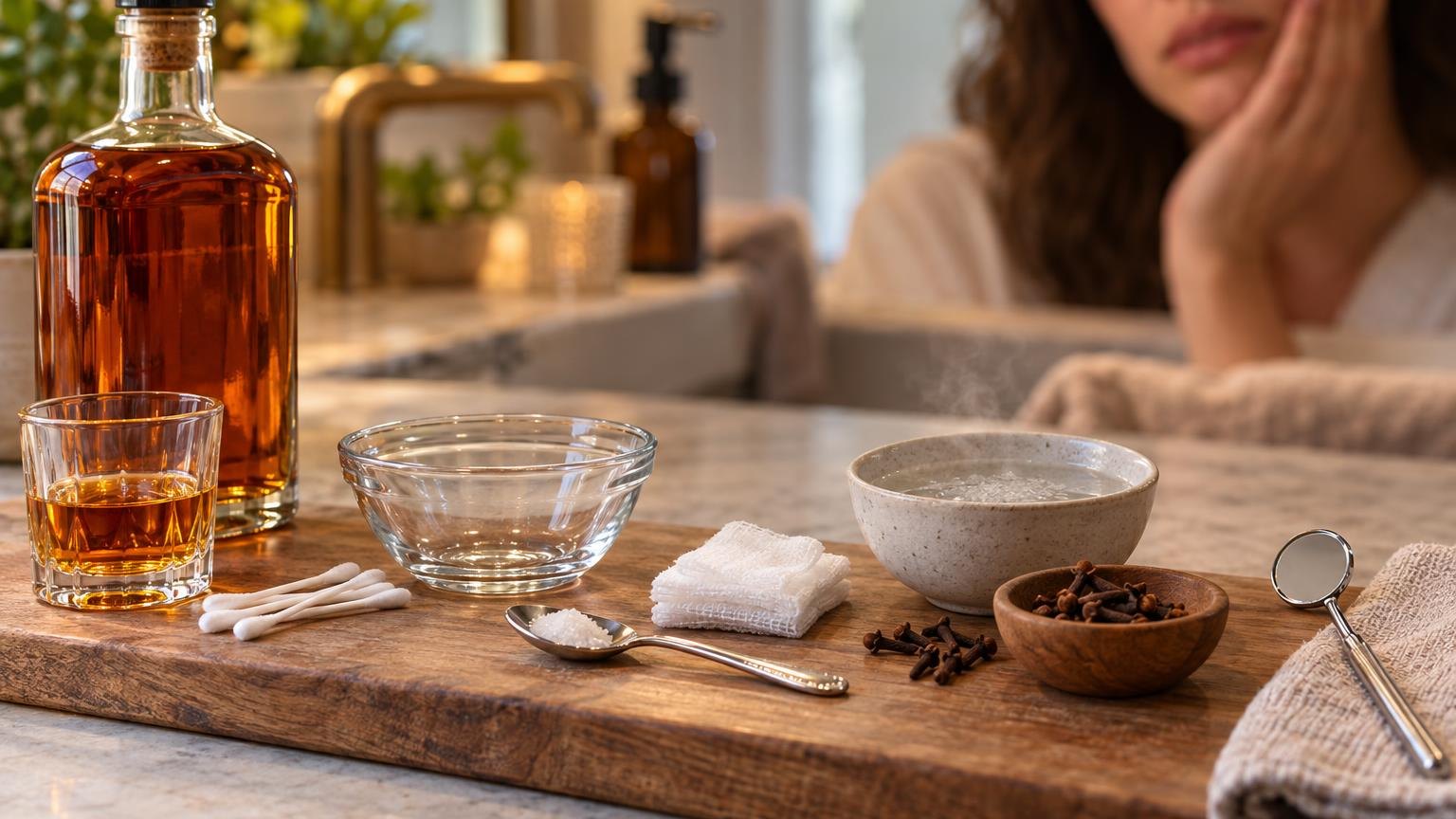
Safer Ways to Relieve Tooth Pain
Evidence-based alternatives outperform whiskey for dental pain relief without the risks of alcohol exposure to inflamed tissue.
Over-the-counter analgesics, cold compresses, and saltwater rinses all carry stronger clinical support than ethanol-based folk remedies.
Over-the-Counter Pain Relievers
Ibuprofen (Advil, Motrin) remains the first-line recommendation from the American Dental Association for dental pain. A standard adult dose of 200–400 mg every 4–6 hours reduces both pain and inflammation at the source.
Acetaminophen (Tylenol) at 500–1,000 mg every 6 hours works for patients who cannot take NSAIDs.
Combining 400 mg ibuprofen with 500 mg acetaminophen has shown efficacy comparable to opioid combinations in post-extraction studies published in the Journal of the American Dental Association (2018).
| Method | Onset Time | Duration | Anti-Inflammatory |
| Ibuprofen 400 mg | 20–30 minutes | 4–6 hours | Yes |
| Acetaminophen 500 mg | 30–45 minutes | 4–6 hours | No |
| Benzocaine gel 20% | 1–2 minutes | 15–30 minutes | No |
| Whiskey (topical) | Temporary numbing | Under 5 minutes | No |
Topical Numbing Agents
Benzocaine gels (Orajel, Anbesol) at 20% concentration numb gum tissue within 60 seconds. Apply a pea-sized amount directly to the affected area up to 4 times daily. Avoid use in children under 2 due to methemoglobinemia risk per FDA warnings.
Saltwater Rinse
Dissolve ½ teaspoon of table salt in 8 ounces of warm water. Swish for 30 seconds, then spit. This reduces bacterial load around the affected tooth and draws fluid from swollen tissue through osmosis. Repeat 2–3 times daily.
Cold Compress
Apply an ice pack wrapped in cloth to the outside of the cheek for 15–20 minutes on, then 20 minutes off. Cold constricts blood vessels, reducing swelling and slowing nerve signal transmission.
This method is particularly effective for pain from trauma or abscess.
Clove Oil (Eugenol)
Eugenol, the active compound in clove oil, has documented analgesic and antibacterial properties. The WHO lists eugenol as a dental material for temporary cavity dressings.
Apply 1–2 drops on a cotton ball and hold against the tooth for up to 10 minutes.
When to See a Dentist
- Pain lasting more than 48 hours without improvement
- Fever above 101°F (38.3°C) accompanying tooth pain
- Visible swelling in the jaw, face, or neck
- Pus discharge or foul taste indicating possible abscess
- Difficulty swallowing or breathing — seek emergency care immediately
No home remedy replaces professional dental treatment. These methods manage symptoms temporarily while you arrange an appointment. Delaying care for infections risks spread to deeper tissues, potentially causing Ludwig’s angina or sepsis.
When Tooth Pain Requires a Dentist
Tooth pain lasting more than 48 hours signals a problem no home remedy can resolve.
The American Dental Association recommends immediate professional evaluation for persistent dental pain, as untreated infections can spread to the jaw, neck, or brain within days.
Warning Signs That Demand Professional Care
Certain symptoms indicate conditions requiring urgent dental treatment. Delaying care increases the risk of complications, higher costs, and tooth loss.
- Fever above 101°F (38.3°C) — suggests active infection spreading beyond the tooth
- Swelling in the face, jaw, or neck — may indicate a dental abscess requiring drainage
- Pain when biting or chewing — often signals a cracked tooth or advanced decay
- Pus or foul-tasting discharge — confirms bacterial infection needing antibiotics
- Bleeding that won’t stop after 10 minutes — requires evaluation for gum disease or trauma
- Numbness or tingling in the lip or chin — indicates nerve involvement from deep infection
- Difficulty swallowing or breathing — a dental emergency requiring immediate ER care
Common Causes of Tooth Pain and Their Treatments
Each cause of dental pain has a specific clinical treatment. Home remedies like whiskey address none of these underlying conditions.
| Condition | Prevalence | Treatment | Average Cost (US) |
| Dental cavity | 90% of adults over 20 | Filling | $150–$300 |
| Pulpitis (inflamed nerve) | Affects ~15% of cavity cases | Root canal | $700–$1,500 |
| Dental abscess | ~2.1 million ER visits/year in US | Drainage + antibiotics | $150–$900 |
| Cracked tooth | 5th leading cause of tooth loss | Crown or extraction | $800–$3,000 |
| Periodontal disease | 47.2% of adults over 30 | Scaling and root planing | $200–$500 per quadrant |
The Real Cost of Delaying Treatment
A cavity treated early with a $200 filling can escalate to a $1,500 root canal within months. Further delay may result in extraction and implant placement costing $3,000–$5,000.
Research published in the Journal of Endodontics found that dental infections left untreated for more than 72 hours have a significantly higher risk of requiring hospitalization.
Between 2008 and 2017, sepsis from dental infections caused approximately 120 deaths annually in the United States.
What to Do Before Your Appointment
While waiting for a dentist, use evidence-based pain management instead of whiskey. The ADA recommends over-the-counter ibuprofen (400–600 mg every 6 hours) for dental pain.
A warm saltwater rinse — half a teaspoon of salt in 8 ounces of water — reduces bacterial load and soothes inflamed tissue. Cold compresses applied externally for 15 minutes at a time help control swelling.
Schedule a dental visit at the first sign of persistent pain. No spirit, whiskey included, treats the infection, decay, or fracture causing the discomfort. Professional intervention remains the only path to resolution.
Questions Readers Ask
Does rubbing whiskey on a toothache actually numb the pain?
Whiskey contains roughly 40% alcohol by volume, which has mild topical anesthetic properties that can temporarily dull nerve endings on contact.
However, the effect lasts only seconds to a few minutes—far shorter than over-the-counter benzocaine gels (Orajel), which provide 15–20 minutes of relief per application.
Dentists do not recommend whiskey as a reliable analgesic because the concentration of ethanol is too low to produce meaningful or sustained numbing.
Can whiskey kill bacteria causing a tooth infection?
Ethanol needs a concentration of at least 60–70% to effectively kill most oral bacteria, according to CDC disinfection guidelines.
At 40% ABV, whiskey falls well below that threshold, meaning it cannot reliably disinfect an abscess or infected tooth.
Swishing whiskey around an infected area may actually irritate inflamed gum tissue and delay proper treatment with prescribed antibiotics.
Is it safe to put whiskey on a baby’s gums for teething pain?
The American Academy of Pediatrics explicitly warns against applying whiskey or any alcohol to an infant’s gums.
Even small amounts of alcohol can be toxic to babies—a child weighing 7 kg can experience dangerous blood-alcohol levels from less than a tablespoon of 80-proof whiskey.
Safe alternatives include chilled teething rings, gentle gum massage, or pediatrician-approved doses of infant acetaminophen.
Does drinking whiskey before a dental appointment reduce pain or anxiety?
Consuming alcohol before dental work is dangerous because ethanol interacts with common dental anesthetics like lidocaine and sedatives like nitrous oxide, increasing the risk of respiratory depression and excessive bleeding.
Alcohol also thins the blood by inhibiting platelet aggregation, which can lead to prolonged bleeding during extractions or surgical procedures.
Dentists recommend discussing anxiety with your provider, who may prescribe a single dose of an oral benzodiazepine like triazolam instead.
What works better than whiskey for emergency tooth pain relief at home?
A 2015 Cochrane review confirmed that 200–400 mg of ibuprofen provides significant dental pain relief for 4–6 hours and is considered first-line treatment for acute toothache by the American Dental Association.
Clove oil (eugenol) is another evidence-backed option—applied directly to the tooth, its active compound acts as a natural anesthetic and has been used in dental cement formulations for over a century.
These remedies are temporary; any toothache lasting more than 1–2 days warrants professional evaluation to rule out abscess or fracture.
- How Many Ounces Are in a Fifth of Whiskey?
- Does Moonshine Go Bad?
- Does Whiskey Go Bad?
- Does Costco Sell Japanese Whisky?
- What Does Scotch Taste Like?
- All Alcohol Guides
- National Institute of Dental and Craniofacial Research (2024)
- U.S. Food and Drug Administration (2011)
- PubMed – Journal of Endodontics: Ethanol's Effect on Oral Mucosa (2007)
- Centers for Disease Control and Prevention – Alcohol and Your Health (2024)
- Harvard School of Dental Medicine – Toothache Causes and Treatments (2023)
- American Dental Association – Home Remedies for Toothaches (2024)
- Mayo Clinic – Toothache First Aid (2023)