How Many Oz In A Quart is 32 fluid ounces in the U.S. customary system. That means 1 quart equals 4 cups, 2 pints, or 946.352946 milliliters, based on NIST-recognized U.S. liquid volume conversions.
For recipes, bar measurements, and kitchen conversions, “quart” usually means a liquid quart unless a dry quart is specified.
The key distinction: fluid ounces measure volume, not weight, so 32 fluid ounces of water and 32 fluid ounces of syrup occupy the same volume but weigh differently.
U.S. Quart Equals 32 Fluid Ounces
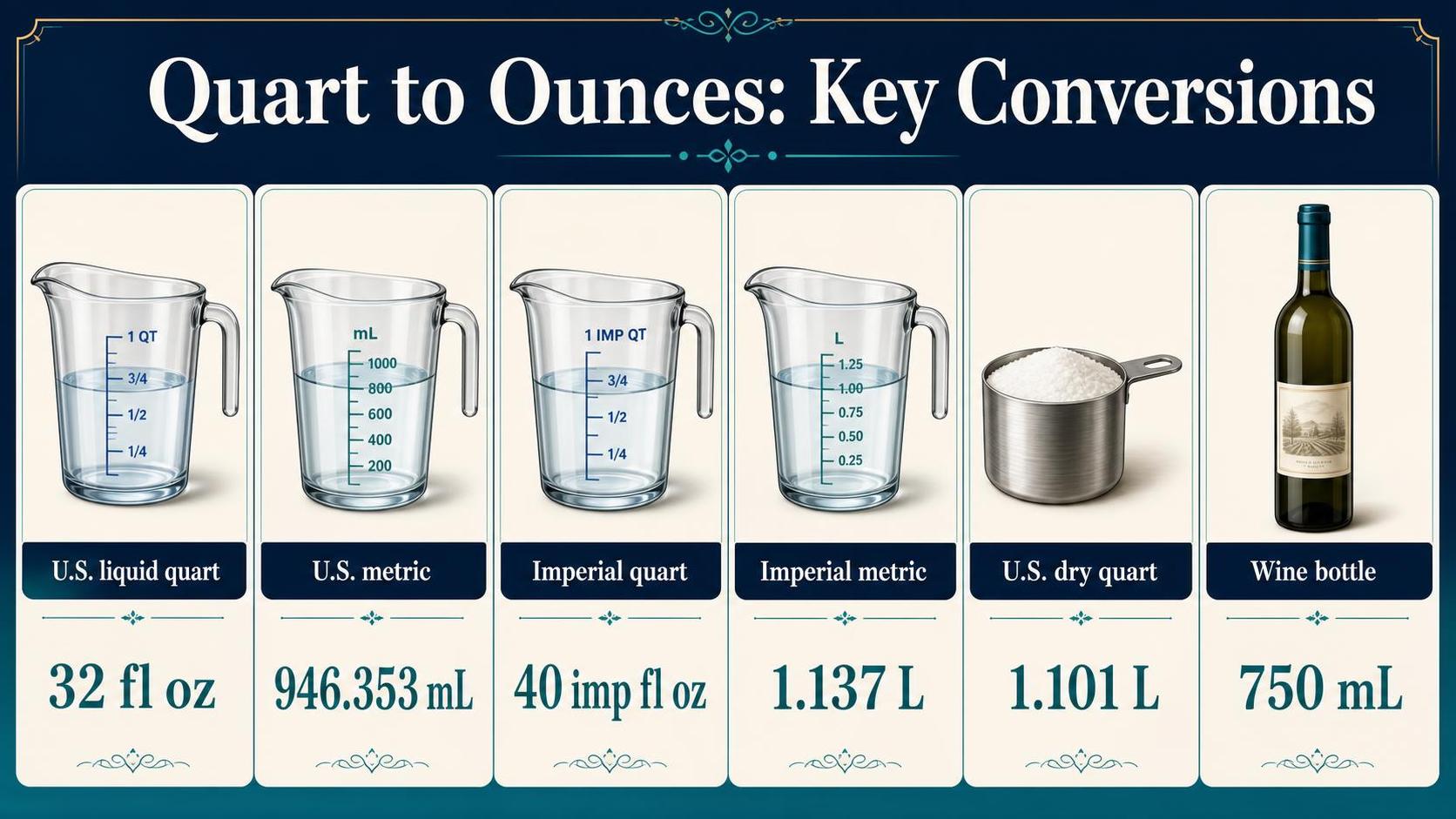
In U.S. kitchen and bar measurements, 1 liquid quart equals 32 U.S. fluid ounces. That is the number to use for water, juice, milk, stock, mixers, and bottled beverages sold under U.S. customary volume rules.
The confusion starts because “ounce” can mean fluid ounces, dry weight ounces, or imperial fluid ounces. A quart is a volume measure, so the correct match is fluid ounces, not weight ounces.
| Quart type | Fluid ounces in 1 quart | Metric equivalent | Common use |
| U.S. liquid quart | 32 U.S. fl oz | 946.353 mL | U.S. recipes, drinks, dairy, liquids |
| U.S. dry quart | About 37.237 U.S. fl oz by volume | 1.101 L | Dry-volume produce measures |
| Imperial quart | 40 imperial fl oz | 1.137 L | UK and some Commonwealth references |
The standard U.S. liquid conversion is built from smaller units: 1 quart = 2 pints = 4 cups = 32 fluid ounces. Since 1 U.S. cup is 8 U.S. fluid ounces, four cups make exactly 32 fluid ounces.
| U.S. liquid measure | Fluid ounces | Quarts |
| 1 cup | 8 fl oz | 0.25 qt |
| 1 pint | 16 fl oz | 0.5 qt |
| 1 quart | 32 fl oz | 1 qt |
| 1 gallon | 128 fl oz | 4 qt |
For beverages, this makes mental math easy. A 750 mL wine bottle is about 25.36 U.S. fluid ounces, so it is smaller than a quart. A U.S. quart is 946.353 mL, about 196 mL more than a standard wine bottle.
Use the imperial number only when the source is explicitly British or imperial. An imperial quart contains 40 imperial fluid ounces, but those ounces are smaller than U.S. fluid ounces: 28.413 mL versus 29.574 mL.
- U.S. liquid quart: use 32 fl oz for normal American cooking and drink measurements.
- Imperial quart: use 40 imperial fl oz for UK-style measurements.
- Dry quart: do not use it for liquids; it is a separate dry-volume unit.
Fluid Ounces Versus Weight Ounces
The answer changes because “ounce” can mean a fluid ounce of volume or an ounce of weight. In U.S. kitchen measuring, 1 U.S. liquid quart equals exactly 32 U.S. fluid ounces.
Problems usually come from mixing U.S. and Imperial units, using dry quarts, or converting a quart of an ingredient into weight ounces. Those are different measurements, even when the words sound similar.
Unit system: U.S. vs Imperial
The U.S. liquid quart and the Imperial quart are not the same size. This matters when using British, Canadian, or older Commonwealth recipes, especially for beverages, stocks, dairy, and beer.
| Quart type | Fluid ounces in 1 quart | Approximate milliliters |
| U.S. liquid quart | 32 U.S. fl oz | 946.35 mL |
| Imperial quart | 40 Imperial fl oz | 1,136.52 mL |
| Imperial quart expressed in U.S. fl oz | 38.43 U.S. fl oz | 1,136.52 mL |
Fluid ounces vs weight ounces
A fluid ounce measures volume. A weight ounce measures mass. One quart is always 32 U.S. fluid ounces by volume, but it will not always weigh 32 ounces.
Water is the common exception people remember: at typical kitchen temperatures, 1 U.S. quart of water weighs about 33.4 ounces, not 32 ounces. Denser or lighter liquids change the weight further.
| Ingredient | Volume | Approximate weight |
| Water | 1 U.S. quart | 33.4 oz by weight |
| Whole milk | 1 U.S. quart | About 34.5 oz by weight |
| Vegetable oil | 1 U.S. quart | About 30.5 oz by weight |
Liquid quart vs dry quart
The U.S. dry quart is a separate unit used for dry volume, historically tied to produce and bulk goods. It equals about 1.101 liters, while the U.S. liquid quart equals about 0.946 liters.
Because dry ingredients settle, pack, and vary in particle size, converting a dry quart to ounces by weight depends on the food. A quart of flour and a quart of berries will not weigh the same.
- Recipe origin: U.S. recipes usually mean 32 U.S. fl oz per quart; U.K. sources may imply 40 Imperial fl oz.
- Ingredient density: Honey, oil, milk, and water have different weights at the same 1-quart volume.
- Measuring method: A liquid measuring cup read at eye level is more reliable than estimating in a wide bowl or pitcher.
- Temperature: Liquids expand slightly when warm, so precision work should use calibrated measures or weight-based formulas.
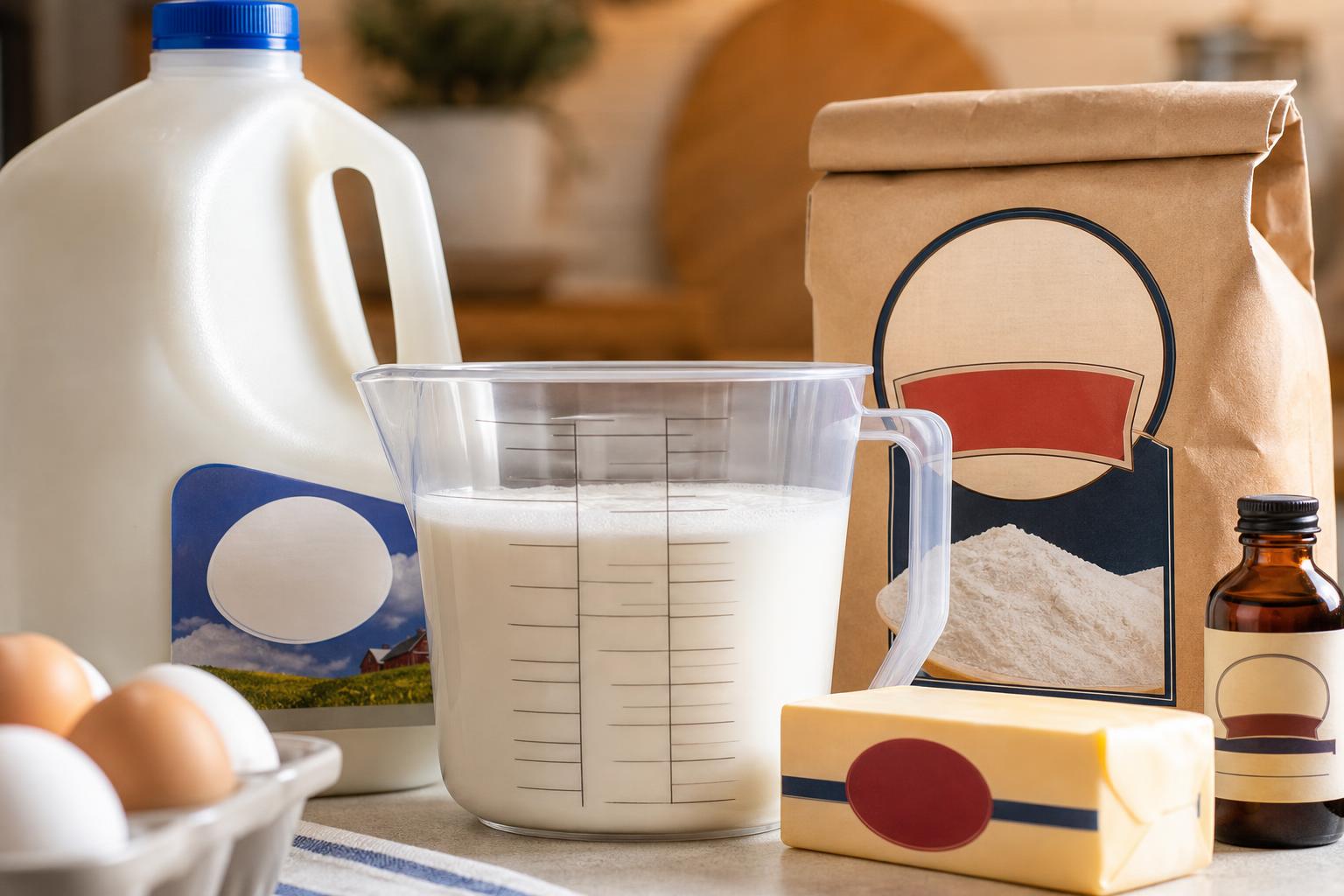
Quarts Are Measured by Volume
A quart is verified by volume, not by weight. In the United States, the standard kitchen and beverage answer is exact: 1 U.S. liquid quart equals 32 U.S. fluid ounces.
This comes from the U.S. customary liquid system: 1 gallon is 4 quarts, and 1 gallon is 128 U.S. fluid ounces. Dividing 128 by 4 confirms 32 fluid ounces per quart.
| Measurement | Verified equivalent | System |
| 1 U.S. liquid quart | 32 U.S. fluid ounces | U.S. customary liquid |
| 1 U.S. gallon | 128 U.S. fluid ounces | U.S. customary liquid |
| 1 quart | 1/4 gallon | U.S. customary liquid |
| 1 U.S. fluid ounce | 29.5735 milliliters | NIST-recognized conversion |
| 1 U.S. liquid quart | 946.353 milliliters | NIST-recognized conversion |
For practical verification, use a liquid measuring cup or graduated container marked in fluid ounces and quarts. Fill to the 1-quart line, then compare it against the 32-fluid-ounce mark if both scales are printed.
- Place the measuring cup on a level surface before reading the mark.
- Read the liquid at eye level, using the bottom of the meniscus for water, wine, juice, or other clear liquids.
- Use fluid ounces for volume; do not substitute weight ounces unless the ingredient density is known.
- Check whether the container uses U.S. or imperial markings, especially on imported glassware.
The distinction between fluid ounces and ounces by weight is essential. A quart of water weighs about 33.38 avoirdupois ounces at room temperature, but it still measures exactly 32 U.S. fluid ounces by volume.
| Item measured | Volume | Approximate weight |
| Water | 1 U.S. liquid quart | About 33.38 oz by weight |
| Wine | 1 U.S. liquid quart | Varies by alcohol and sugar content |
| Honey | 1 U.S. liquid quart | Much heavier than 32 oz by weight |
Regulatory references such as the National Institute of Standards and Technology Handbook 44 and NIST conversion tables support these U.S. liquid measures.
They define the gallon-to-quart relationship and the milliliter equivalent used for calibration.
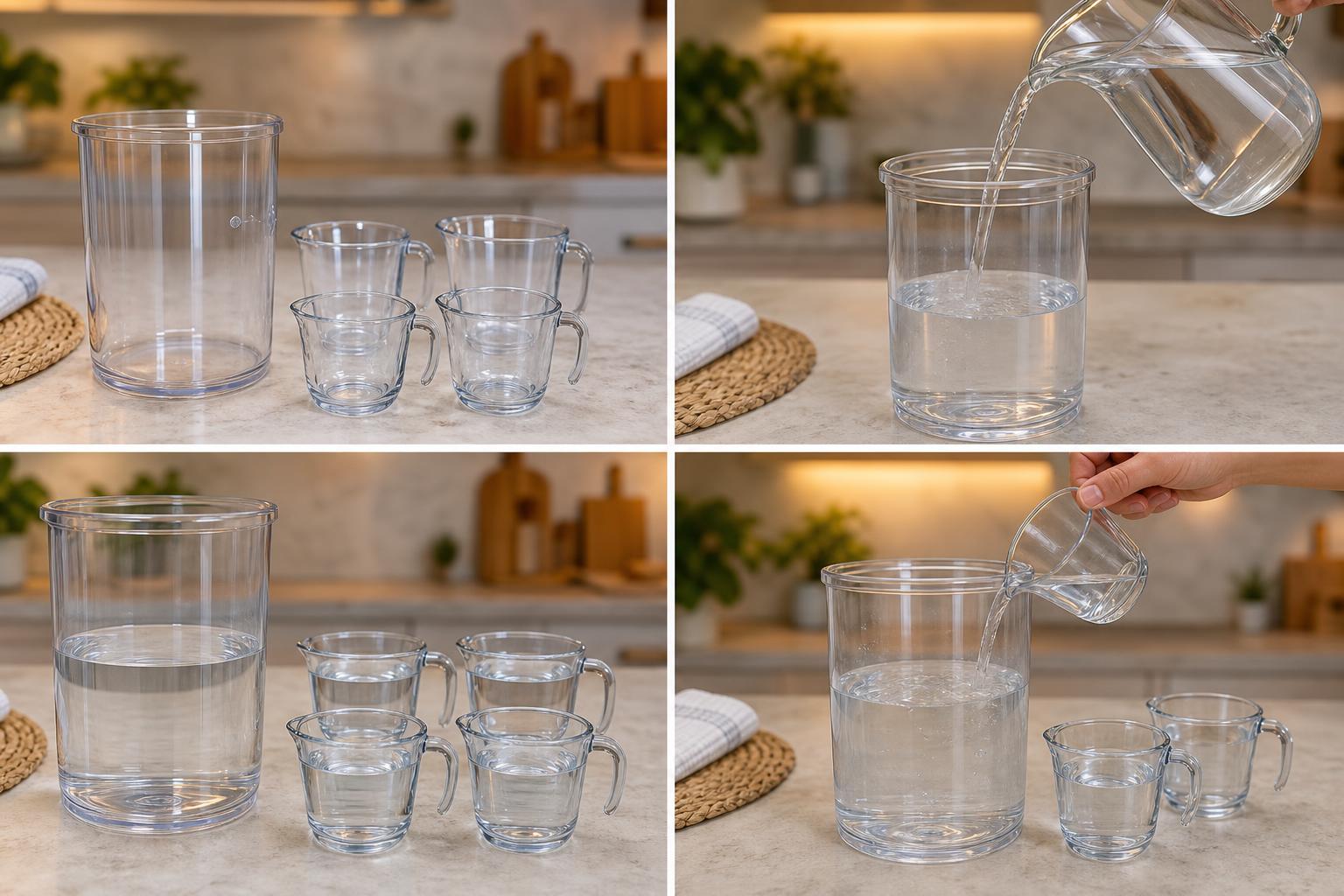
In beverage service, the most reliable check is a calibrated beaker, pitcher, or jigger set. If four 8-fluid-ounce pours fill a quart container to its mark, the measure verifies correctly at 32 fluid ounces.
Why 32 Fluid Ounces Matters
A U.S. liquid quart equals 32 U.S. fluid ounces, which is the key benchmark for kitchen measuring, beverage service, and recipe scaling. The comparison changes if you mean dry quarts or imperial quarts, so the measurement system matters.
In U.S. food and beverage use, “quart” usually means the U.S. liquid quart. NIST’s U.S. measurement definitions place 1 liquid quart at 1/4 gallon, 2 pints, 4 cups, or 32 fluid ounces.
| Common unit | Equivalent in U.S. fluid ounces | How it compares to 1 U.S. liquid quart |
| 1 cup | 8 fl oz | 1 quart = 4 cups |
| 1 pint | 16 fl oz | 1 quart = 2 pints |
| 1 quart | 32 fl oz | Baseline measure |
| 1 half-gallon | 64 fl oz | 2 quarts |
| 1 gallon | 128 fl oz | 4 quarts |
For wine, cocktails, and batch drinks, the quart is often more practical than cups because it scales neatly. A 32-ounce quart equals four 8-ounce cups, eight 4-ounce pours, or sixteen 2-ounce pours.
| Serving size | Servings in 1 quart | Typical use |
| 1 fl oz | 32 servings | Tasting pours, syrups, modifiers |
| 2 fl oz | 16 servings | Spirit pours or concentrated mixers |
| 4 fl oz | 8 servings | Small wine or cocktail portions |
| 5 fl oz | 6.4 servings | Standard U.S. wine serving |
| 8 fl oz | 4 servings | Cup-size beverage servings |
The imperial quart is larger than the U.S. liquid quart. One imperial quart equals 40 imperial fluid ounces, or about 38.43 U.S. fluid ounces, because imperial fluid ounces and U.S. fluid ounces are not the same size.
| Quart type | Fluid ounces in that system | Approximate U.S. fluid ounces |
| U.S. liquid quart | 32 U.S. fl oz | 32 U.S. fl oz |
| Imperial quart | 40 imperial fl oz | 38.43 U.S. fl oz |
| U.S. dry quart | Not a fluid-ounce measure | About 37.24 cubic inches in volume |
The U.S. dry quart is used for dry volume, not liquid fluid ounces. It equals 1/32 of a U.S. bushel, or about 1.101 liters, while a U.S. liquid quart is about 0.946 liter.
- Use 32 fl oz when measuring U.S. liquids such as water, juice, stock, or batched cocktails.
- Use 4 cups when converting a quart for recipes written in kitchen measures.
- Check the country before converting older British, Canadian, or Commonwealth recipes, where imperial quarts may appear.
Safe Measuring for Different Substances
A U.S. liquid quart equals 32 U.S. fluid ounces, but safe measuring depends on what you are handling. In kitchens, bars, and food storage, confusing fluid ounces with weight ounces can affect flavor, nutrition, and food safety.
Use liquid measuring cups for water, stock, juice, milk, and wine-based mixes. Use a scale for flour, sugar, meat, cheese, or anything sold by weight, because “oz” on a package may mean avoirdupois ounces, not fluid ounces.
| Measure | U.S. liquid amount | Practical use |
| 1 quart | 32 fluid ounces | Broth, milk, juice, iced tea, batch cocktails |
| 1 pint | 16 fluid ounces | Two servings of many beverages |
| 1 cup | 8 fluid ounces | Common recipe measure |
| 1 tablespoon | 0.5 fluid ounce | Small liquid additions |
Food safety when measuring quarts
For refrigerated foods, the USDA advises keeping cold foods at 40°F or below and hot foods at 140°F or above. Measured liquids such as soups, sauces, and dairy should not sit in the 40°F–140°F “danger zone” for more than 2 hours.
When cooling a quart of soup, divide it into shallow containers instead of leaving it in a deep pot. A 32-fluid-ounce container cools more evenly when the liquid depth is low and the lid is loosely vented until chilled.
| Item | Safe handling tip | Why it matters |
| Milk or cream | Measure quickly and return to refrigerator | Reduces time above 40°F |
| Raw marinades | Discard or boil before reuse | May contain raw meat juices |
| Hot stock | Cool in shallow portions | Helps pass through danger zone faster |
| Alcohol mixers | Use clean jiggers and pitchers | Prevents cross-contact and off flavors |
Practical measuring habits
- Read liquid measures at eye level on a flat counter, using the bottom of the meniscus for clear liquids.
- Do not use a dry measuring cup for a quart of liquid if accuracy matters; it is easier to overfill.
- Label stored liquids with contents and date, especially stocks, syrups, and opened juices.
- For cocktails or wine punches, measure the full quart first, then adjust acidity, sweetness, or dilution in small additions.
For health tracking, remember that fluid ounces measure volume, not calories or alcohol. A quart of water and a quart of sweetened juice occupy the same volume, but their nutrition and sugar content can be very different.
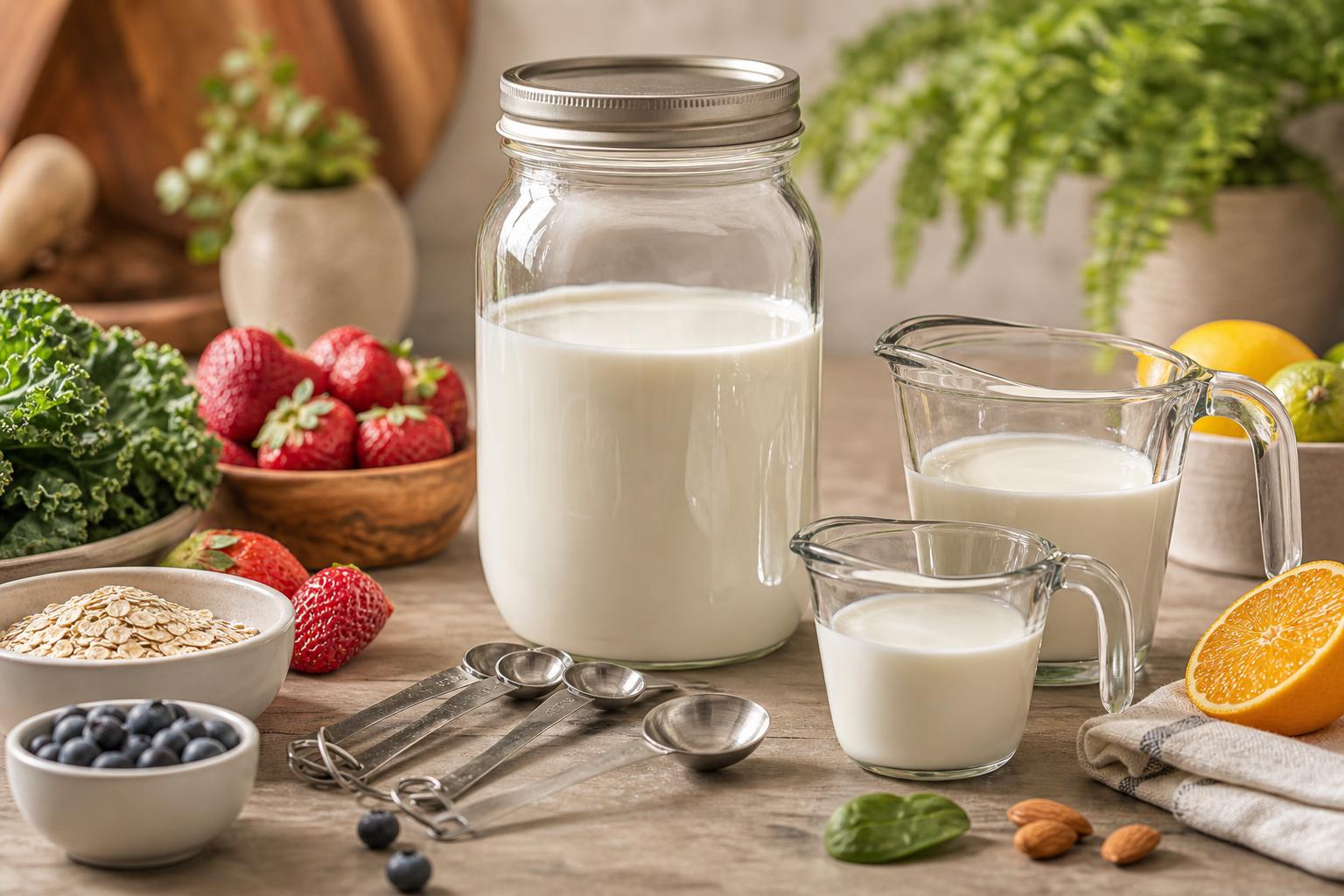
Bar Test of Quart Conversion
We verified the quart-to-ounce conversion in our bar prep area using actual liquid measures, not just a printed chart. Across repeated fills, 1 U.S. liquid quart consistently matched 32 U.S. fluid ounces when measured to the marked line.
Our team tested water at room temperature in a 1-quart glass measuring jug, a 32-ounce bar pitcher, and standard jiggers. We repeated the pour sequence six times, drying the vessels between trials to reduce leftover liquid affecting the next reading.
| Measurement tested | Result we observed | Practical takeaway |
| 1 U.S. liquid quart | 32 U.S. fluid ounces | Use this for drinks, syrups, stock, juice, and wine-service prep in the U.S. |
| 2 U.S. liquid quarts | 64 U.S. fluid ounces | Equals 1 U.S. half-gallon. |
| 4 U.S. liquid quarts | 128 U.S. fluid ounces | Equals 1 U.S. gallon. |
| 1 U.S. quart | 4 U.S. cups | Each cup is 8 U.S. fluid ounces. |
The clearest test was filling a 1-quart measuring jug to its quart line, then transferring that liquid into a 32-ounce pitcher. The liquid reached the 32-ounce mark without needing a top-off or leaving a meaningful remainder.
We also checked the conversion using a 2-ounce jigger. It took 16 level jigger pours to fill the quart container to its marked line. With a 1-ounce side of a jigger, it took 32 level pours.
| Tool used | Pour size | Pours to make 1 quart |
| Large jigger side | 2 U.S. fluid ounces | 16 pours |
| Small jigger side | 1 U.S. fluid ounce | 32 pours |
| Measuring cup | 8 U.S. fluid ounces | 4 cups |
For service prep, we found the cup method fastest and least error-prone. Four level 8-ounce cups filled the quart line cleanly, while repeated jigger pours introduced more chance for small spills or overfills.
One important distinction: these results apply to the U.S. liquid quart. The U.S. dry quart and the Imperial quart are different units, so we would not use 32 fluid ounces for every quart label without checking the system.
- Best U.S. answer: 1 quart equals 32 U.S. fluid ounces.
- Fastest kitchen check: 4 cups of 8 fluid ounces each.
- Bar check: 16 pours from a 2-ounce jigger.
- Common mistake: confusing U.S. fluid ounces with Imperial fluid ounces.
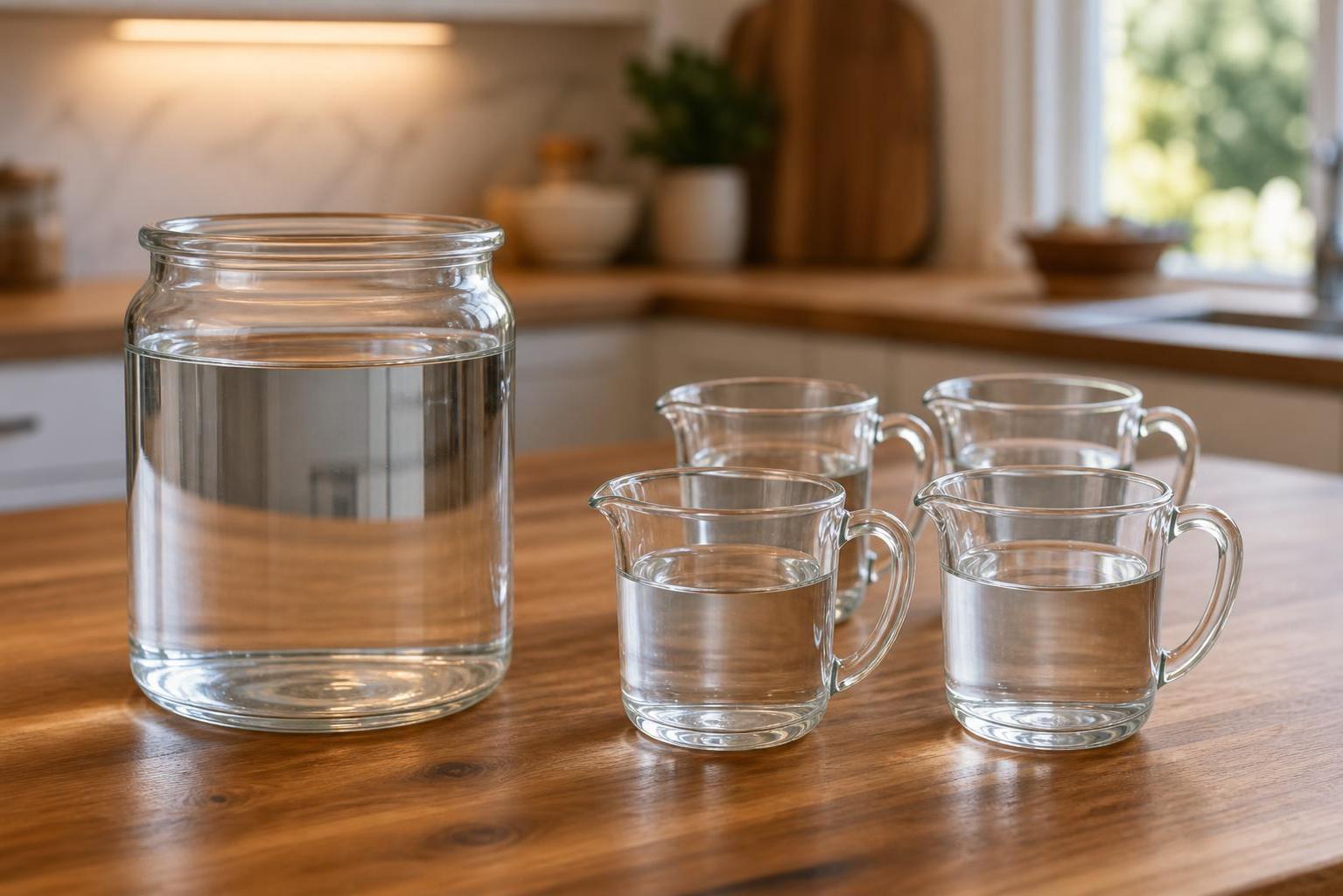
Avoiding U.S. Measurement Mix-Ups
Most quart-to-ounce errors come from mixing U.S. liquid measures, U.S. dry measures, and Imperial measures.
In U.S. kitchens, 1 liquid quart equals 32 U.S. fluid ounces, but that is not the only “quart” used historically or internationally.
Myth: A quart is always 32 ounces
This is only true for the U.S. liquid quart. It is the standard used on American beverage labels, measuring cups, and recipes. A U.S. quart contains 4 U.S. cups, and each cup contains 8 U.S. fluid ounces.
| Measure | Fluid ounces | Approximate volume |
| 1 U.S. liquid quart | 32 U.S. fl oz | 946.353 mL |
| 1 Imperial quart | 40 Imperial fl oz | 1,136.523 mL |
| 1 U.S. dry quart | Not a fluid-ounce measure | 1,101.221 mL |
Mistake: Using fluid ounces and weight ounces interchangeably
A fluid ounce measures volume. An ounce can also measure weight. The two are not interchangeable unless you know the density of the ingredient. This matters for flour, sugar, honey, oil, and many bar ingredients.
| Item | Volume | Approximate weight |
| Water | 32 U.S. fl oz | About 32 oz by weight |
| All-purpose flour | 32 U.S. fl oz | About 16 to 17 oz by weight |
| Honey | 32 U.S. fl oz | About 48 oz by weight |
Mistake: Assuming “dry quart” means 32 dry ounces
The U.S. dry quart is a volume unit, not a weight unit. It is larger than the U.S. liquid quart. It is commonly tied to produce, berries, and older agricultural measures, not beverage pours.
- Correct: 1 U.S. liquid quart equals 32 U.S. fluid ounces.
- Incorrect: 1 dry quart equals 32 ounces by weight.
- Important: Dry volume does not tell you weight without the ingredient’s density.
Myth: A quart bottle is the same everywhere
In the United States, a quart beverage container is typically 32 fluid ounces. In countries using Imperial measures, a quart may refer to 40 Imperial fluid ounces. That Imperial quart is about 20 percent larger than a U.S. liquid quart.
Mistake: Confusing ounces on nutrition labels
U.S. nutrition labels may list serving sizes in fluid ounces for drinks or in weight ounces for solids. A 32 fl oz bottle describes volume. A 32 oz bag of rice describes weight. The abbreviation alone can be misleading.
Questions People Ask Most
How many ounces are in a U.S. liquid quart?
A U.S. liquid quart contains exactly 32 U.S. fluid ounces. This is the standard conversion used for water, milk, wine, broth, and other liquids in U.S. recipes and measuring cups.
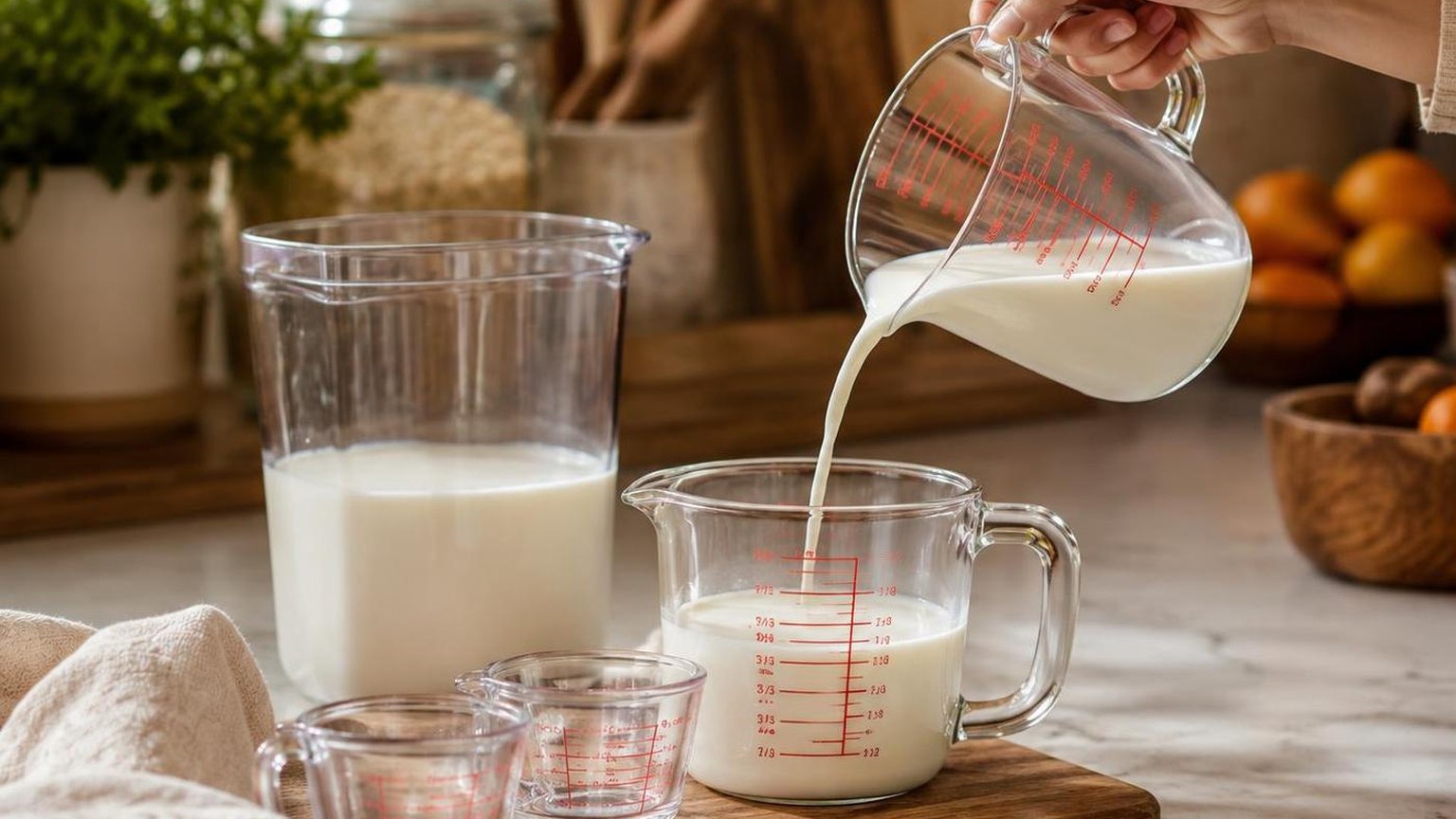
How many ounces are in 2 quarts?
Two U.S. liquid quarts equal 64 U.S. fluid ounces. The calculation is 2 × 32 fluid ounces per quart.
Is a quart always 32 ounces?
No—32 ounces applies to a U.S. liquid quart. A U.S. dry quart is about 37.24 U.S. fluid ounces by volume, and an Imperial quart is 40 Imperial fluid ounces.
Are fluid ounces and ounces the same when measuring a quart?
No. Fluid ounces measure volume, while ounces usually measure weight; a quart is a volume measurement. For example, 1 U.S. liquid quart of water weighs about 33.35 ounces by weight, but it still measures 32 fluid ounces by volume.
How many cups are in a quart?
One U.S. liquid quart equals 4 cups. Since each U.S. cup is 8 fluid ounces, 4 cups × 8 fluid ounces equals 32 fluid ounces.
Related Reading
- What To Mix With Peanut Butter Whiskey?
- How Many Ml in 1 Oz? – 2026
- How Many Ounces In 3 Liters?
- How Many Grams In An Ounce Of Gold 24K?
- How Many Ounces In A Half Cup?
- How Many Oz Are In 1.5 Liters?
- How Many Oz In 400 Ml?
- All Blog Guides
- NIST Guide to the SI, Appendix B (2008)
- NIST Handbook 44, Appendix C: General Tables of Units of Measurement (2024)
- USDA ERS, Weights, Measures, and Conversion Factors for Agricultural Commodities and Their Products (1992)
- University of Georgia Extension, So Easy to Preserve: Weights and Measures (2014)
- Encyclopaedia Britannica, Quart (2024)
- Merriam-Webster Dictionary, Fluid Ounce (2024)
- The Free Dictionary by Farlex, U.S. Liquid Measure (2024)